Heat Treat Today offers News Chatter, a feature highlighting representative moves, transactions, and kudos from around the industry. Enjoy these 11 news items.
Company
By rolling the first hot strip, SMS group put the new high-capacity hot strip mill (HSM) at Jindal Steel Odisha Ltd. (JSOL) successfully into operation. The commissioning and erection of the furnace took place in record time, despite temporary restrictions caused by the COVID-19 pandemic.
Eisengießerei Th. Schultz have placed an order with OTTO JUNKER GmbH for the delivery and commissioning of a medium-frequency coreless induction furnace plant. The 1.7-ton induction furnace will be equipped with a 12-pulse IGBT frequency converter and have a power of 1,200 kW. Apart from a glycol-free air/water re-cooler with integrated heat recovery, the new furnace plant will be fitted with the OCP+ temperature monitoring system for permanent coil monitoring.
Angang Guangzhou Automotive Steel Co., Ltd. and Ansteel Engineering Technology Corporation Limited have signed a contract with SMS group for the supply of a new hot dip galvanizing line (No. 2). The first ready-for-sale coil is scheduled for production in November 2025.
Roughing mill No. 2 in 4 hi-design with attached edgerSMS group to supply new hot dip galvanizing line (No. 2)
Company & Personnel
Control Concepts, Inc. is excited to announce that seasoned employee Tony Busch has been promoted to the position of North American sales manager. Busch has been with the company for 15 years, having most recently served clients as Sales Applications engineer for the past 10 years.
The American branch of SECO/WARWICK has decided to expand its presence on the continent. Mexico is an important market for SECO/WARWICK USA; hence, the decision was made to open a sales and service office in Monterrey as the new SECO/WARWICK, MEXICO division. It will occupy about 2,000 square feet of office space in a high-rise business park, including garage parking and controlled-access reception.
CAN-ENG FURNACES INTERNATIONAL LTD. is pleased to announce that Tim Donofrio, VP of Sales, has reached his 25-year milestone with the company. Tim joined CAN-ENG in 1999 in an outside sales capacity, eventually leading the Company’s Aluminum Products Group, which captured a significant portion of the ICE and Aluminum Structural casting component heat treatment equipment market. With the launch of EVERGREEEN KILN TECHNOLOGIES, LLC in 2024, Tim has the added sales and marketing responsibilities for kilns used in the processing of anode and cathode materials for the emerging BEV (Battery Electric Vehicle) market.
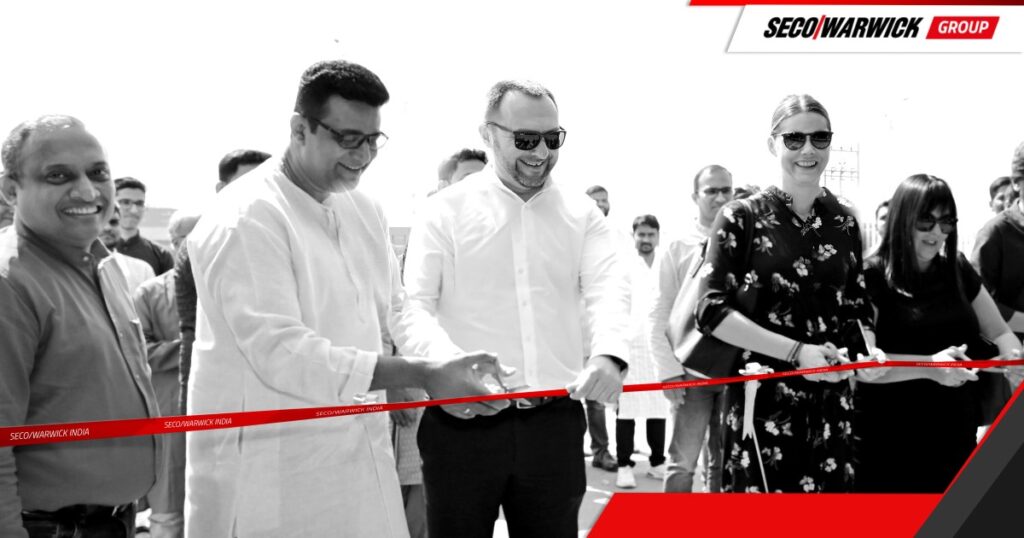
SECO/WARWICK has opened a new production hall in India. This is one of the steps in implementing their global expansion strategy, which aims to deliver the highest quality equipment for metal heat treatment to all continents.
SteelheadTechnologies launched “The Hatchery Roadshow” in April 2024, bringing an interactive and immersive demo experience of its digitization job shop solutions to manufacturers across the U.S.
Ipsen bolstered its aftermarket team with the addition of two new Regional Sales engineers. Tyler Freewill support customers in the Midwest, while Charlie Preston will serve the Southeast region. They join a seasoned team, including Steve Mondorf (West), Tom Sutherland (South), and Chad Mehmel (Northeast).
Allied Mineral Products, LLC has purchased Gemcast, Inc. The acquisition will allow them to have a manufacturing presence in Canada and adopt new lines of business through Gemcast’s industry-leading vacuum-formed products, fiber gaskets, and precast shapes.
Tony Busch, North American Sales Manager, Control Concepts, Inc.Tim Donofrio, VP of Sales, CAN-ENG FURNACES INTERNATIONAL LTD.SECO/WARWICK reports that the opening of the hall will significantly increase the group’s efficiency in this region.Ipsen’s two new Regional Sales Engineers: Tyler Free (Midwest) and Charlie Preston (Southeast)
Kudos
Solar Atmospheres’ Greenville, SC, facility announced that it has been awarded Lockheed Martin Space Systems approval. With this approval, now all five of Solar Atmospheres’ facilities can meet Lockheed Martin requirements for thermal processing services.
Solar Atmospheres of Greenville awarded Lockheed Martin Space Systems approval
Find Heat Treating Products And Services When You Search On Heat Treat Buyers Guide.Com
Heat Treat Today publishes eight print magazines a year, and included in each is a letter from the editor, Bethany Leone. This letter first appeared in the May 2023 Sustainable Heat Treat Technologies print edition.
In order to create a more sustainable future for heat treaters, operators may be looking to “digitalization” as an immediate step for their heat treat systems. Digitalization is an amorphous term that can describe a few things.
This term tends to be broader than just “digitization” — the act of digitizing analog technologies to digital form — though the two terms are often used interchangeably.
An interest in digitalization makes a lot of sense. For one, updating manufacturing plants with digital practices is a huge draw for young people: “People want to work for a technologically advanced company that they can feel good about,” according to Josh Hale, managing recruiter at International Search Partners, when he spoke on Heat TreatRadio . Additionally, Covid-19 labor constraints accelerated adoption of IIoT (industrial internet of things) technologies — digitalization being just one of many. But there are also several intrinsic promises that digitalization has to offer manufacturers, for example:
Efficiency: creating efficient operations that streamline business processes
Accuracy: increasing accuracy by achieving precise control over temperature, atmosphere, and other process parameters
Data and Analytics: real-time monitoring/data collection and rapid data analysis
Safety: reduced need for manual interventions, thus avoiding accidents and improving operator safety
From a sustainability perspective, digitalization means heat treaters can monitor, analyze, predict, test, and adapt energy efficiencies in their operations. This magazine features a conversation with experts in heat treat with an eye for energy, and they’ve commented on this specific topic. “With higher computational capacity on the controllers on a per furnace basis,” John Clarke, technical director at Helios Electric Corporation notes, “we have the ability to start executing real-time analysis on the furnace and potentially implement a thermodynamic model of the furnace and how it’s operating.” Several representatives from Watlow illustrate this point: “Poor thermal uniformity can lead to scrap and rework of material, which both result in excess energy consumption.” Read the eight-page conversation with six international expert contributors on page 19.
But there are drawbacks to adopting this new technology, and in the midst of all of this “good,” I do wonder how difficult this transition has been — or can be — for some in-house heat treaters. Challenges when considering this technology include:
Initial Investment. The initial investment in new technology is always present, and so is the question of who will “dish out the dough.” Will the furnace supplier try to absorb upgrading expenses? Or does it fall to the end-user buying the furnace or upgrade?
Operational Complexity. However easy to operate a technology is now, it was not always the case. I once thought typing at a computer was the most difficult thing in the world. Now, I’m so familiar with a keyboard that I can look over at my husband texting on his phone and know (to a degree) the message he is typing, just by watching his thumb position. What skills does your team have to learn a new system? How much time will it take to train 50%–75% of them? How long until you feel confident in the process?
Overdependence on Technology. We depend on digital technologies for many things (thank you, alarm clocks!), but is the level of dependence compromising something valuable? And to what degree? When it comes to cybersecurity threats, for example, what type of dependence on technology exposes you to more risk versus fortifying your internal systems?
The promises and challenges of digitalization will continue to face-off in offices and plant floors. While the boundary line of digital acceptance may shift, this new frontier towards creating “a holistic virtual representation of heat treat operations” means new technologies and processes that will be tested and adopted by heat treat pioneers, possibly you.
As with any frontier, there are known and unknown dangers. Let us know how your company is considering digitalization and what opportunities are golden nuggets or simply fool’s gold: editor@heattreattoday.com.
Special thanks to Mike Löpke (head of software & digitalization at Nitrex Metal) and Jeffrey Halonen (CEO of Steelhead Technologies) for their insights.
Bethany Leone, Managing Editor, Heat Treat Today
Contact Bethany Leone at bethany@heattreattoday.com.
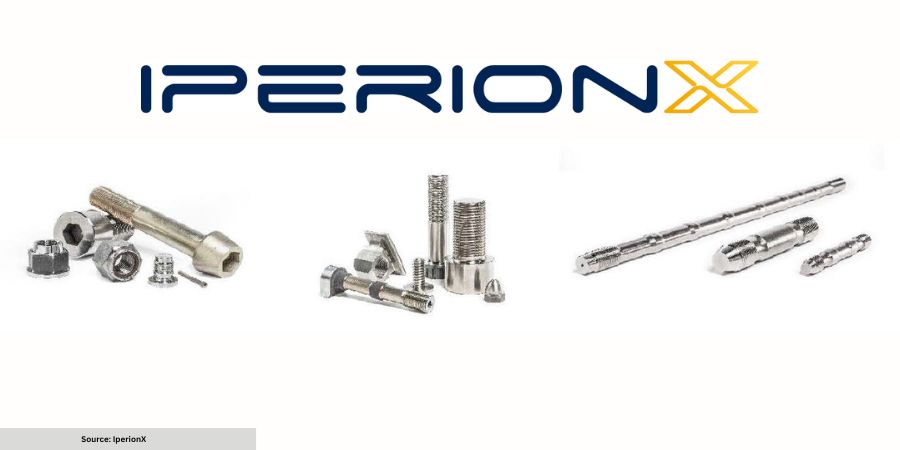
IperionX Limited and Vegas Fastener Manufacturing, LLC (Vegas Fastener) have agreed to partner to develop and manufacture titanium alloy fasteners and precision components with IperionX’s advanced titanium products.
The commercial focus of this partnership is on developing and manufacturing titanium alloy fasteners and precision components for the U.S. Army Ground Vehicle Systems Center (GVSC), which is the United States Armed Forces’ research and development facility for advanced technology in ground systems. GSVC’s research and development includes robotics, autonomy, survivability, power, mobility, intelligent systems, maneuver support and sustainment.
Additionally, the partners will design, engineer and produce titanium fasteners for critical sectors such as the aerospace, naval, oil & gas, power generation, pulp & paper and chemical sectors. These sectors demand fasteners that provide not only high strength-to-weight ratios but also exceptional corrosion resistance for high-performance applications.
Vegas Fastener, headquartered in Las Vegas, Nevada, is a global leader in the development and manufacturing of high-performance fasteners and custom machined components. Together with its allied company, PowerGen Components, Vegas Fastener serves a diverse array of customers in the defense, marine, power generation, oil & gas, nuclear, chemical, and water infrastructure sectors. Vegas Fastener develops and manufactures precision high-performance fasteners using specialized alloys to meet demanding quality specifications.
IperionX’s leading titanium technology portfolio includes high-performance near-net shape titanium products, semi-finished titanium products, spherical titanium powder for additive manufacturing and metal injection molding, and angular titanium powder for a wide range of advanced manufacturing applications. These innovative patented technologies allow for sustainability and process energy efficiencies over the traditional Kroll titanium production process.
Image above: High-performance fasteners manufactured by Vegas Fastener
This press release is available in its original form here.
Solar Atmospheres, Inc. announced their most recent acquisition, Certified Metal Craft (CMC) located in El Cajon (an East County suburb of San Diego). With nearly 55 years of serving the Southern California region, CMC and the Wiederkehr Family have established themselves as a source for heat treating and brazing services. With the addition of CMC to the Solar Family of Companies, CMC establishes Solar’s 6th nationwide location and bolsters their West Coast presence.
Derek Dennis President Solar Atmospheres California
CMC has extensive capabilities to include vacuum, aluminum, atmospheric, endothermic, salt bath and cryogenic processing and currently employs 25 dedicated employees. Servicing the aerospace, medical, and commercial markets, CMC is Nadcap-accredited and holds a long list of customer and prime approvals. Tim Wiederkehr will immediately assume the role of V.P. of Operations and report to Derek Dennis, president of Solar Atmospheres of California, Inc.
Derek Dennis states “Solar is excited to welcome the dedicated CMC team into the growing nation of Solar companies.” He adds, “Together, we will continue to grow our west coast footprint while solidifying our industry leading approach of being the ‘go-to’ choice for all heat treating & brazing needs with an unwavering commitment to honesty and integrity in all relationships.”
This press release is available in its original form here.
Let’s discover new tricks and old tips on how to best heat treat, whatever your application.
In this Technical Tuesday, originally published in the March/April 2024 Aerospace Heat Treatprint edition, Heat Treat Today compiled top tips from experts around the industry to get the best results in your heat treat furnace by optimizing fixtures and fabrications.
#1 Welding Fabrications with Nickel Alloy
Contact us with your Reader Feedback!
“Heat resistant alloys used for heat treating fixtures, muffles, retorts, radiant tubes, and other parts are typically stainless steel or nickel-based austenitic alloys.
“Good welding practices for nickel alloys are centered on the need to remove heat as quickly as possible in order to minimize the time spent in the hot tearing range. The first consideration is to keep the heat input as low as possible to still get a full penetration weld. The actual input in kJ is dependent on the alloy being welded.”
Source: “Marc Glasser on the Tools and Trade Secrets of Heat Resistant Alloy Welding,” reprinted in Heat Treat Today, 2020.
#hottearingrange #austeniticalloys
#2 Consider Corrugated Inner Covers
Inner covers are a component of the batch annealing process in the steel industry. If your inner covers are vertically corrugated, consider horizontally corrugated inner covers instead. Horizontally corrugated inner covers are repairable and, for this reason, offer longer overall life and better value.
Source: Alloy Fabrications
#batchannealing #innercovers #maintenance
#3 Countermeasure To Combat CFC Failure
“It is important to consider the specific process conditions in advance so that unwanted reactions — from carburization to catastrophic melting of the workpieces — can be avoided. Effective countermeasures can be taken.”
Dr. Demmel gives the following countermeasures:
Ceramic oxide coatings such as aluminum oxide (Al2O3) or zirconium oxide (ZrO2) layers placed onto the CFC
Hybrid CFC fixtures having ceramics in key areas to avoid direct contact with metal workpieces
Alumina composite sheets
Boron nitride sprays
Special fixtures made of oxide ceramics
Source: Dr. Jorg Demmel, “CFC Fixture Advantages and Challenges, Part 2,” Aerospace Heat Treating (Heat Treat Today, March 2023).
#CFC #fixtures
#4 Allow for Thermal Expansion
When bringing furnaces to operating temperature, always be aware of thermal expansion of your alloy components. Muffles, retorts, and radiant tubes all expand with heat input. These components must be free to expand within the furnace or early failure may result.
Source: Alloy Fabrications
#thermalexpansion #heattreatfailure
#5 Batch Rotary Retorts — Stay Put and Stay Clean
Batch rotary retorts are positioned on furnace rollers at the front of the furnace. In time, these retorts expand until they no longer track on the rollers. Extend the life of your batch rotary retorts by using adjustable roller brackets (available from Alloy Engineering). And to keep the outlet tubes clean, use Alloy Engineering pigtails and augers to self-clean batch rotary retort outlet tubes.
Source: Alloy Fabrications
#thermalexpansion #heattreatfailure
#6 Corrosion at Every Corner
“[All] materials are chemically unstable in some environments and corrosive attacks will occur. It can often be predicted or modeled. . . In the real world, however, it is important to recognize the various forms of corrosion, namely:
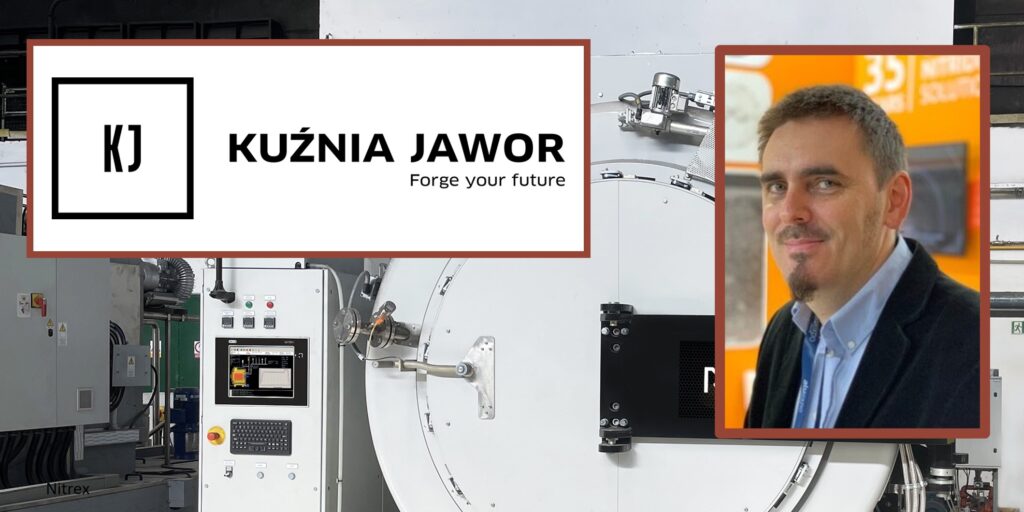
Kuźnia Jawor, a company specializing in the production of hot forged and CNC machined components for the automotive, machinery, mining, and piping industries, has enhanced its manufacturing capabilities through the addition of an oil-hardening furnace and two nitriding furnaces from a supplier based in North America.
Kuźnia Jawor replaced their production line with an oil-hardening furnace and two outdated nitriding furnaces from Nitrex. The decision to upgrade was prompted by the need to eliminate outdated technology and address controls issues. The current production line has been designed using a Nitrex nitriding system and a vacuum hardening furnace.
Kuźnia Jawor leverages its in-house capabilities to design and manufacture forging tools, a crucial element of the production process. This is necessary for obtaining repeatable strength parameters in steel and ensuring their resistance to geometric changes or abrasive wear, factors that are addressed through heat treatment. The new equipment enables them to actively reduce CO emissions, decrease energy consumption, and more.
Nitrex furnace
The company’s forging and CNC processes are marked by meticulous precision, with dies initially undergoing treatment in the vacuum furnace before proceeding to the nitriding phase. This multi-step approach is essential for achieving a zero-white layer, effectively preventing surface cracking in the H11, H13, and WNL hot work steel dies subjected to high-pressure hammer forging. A crucial part of this initiative was the installation of a Nitrex horizontal-loading system, featuring the furnace model NXH-9912, a custom solution designed to facilitate the seamless automatic transfers of loads between operations.
The turnkey system is equipped with Nitreg® nitriding technology, which enhances the wear and corrosion resistance of treated tooling. This technology improves efficiency gains, leading to savings in process time and resources, including electricity and process gases. Furthermore, the system adheres to industry standard 2759/10 controlled nitriding, ensuring the highest quality and precision in the heat treating process.
Interestingly, Kuźnia Jawor is also engaged in an ongoing collaborative research and development project with a local university, exploring hybrid coatings that combine Nitreg® nitriding technology with PVD and CVD processes, with the aim of further enhancing tool performance.
Located in the southwestern region of Poland, Kuźnia Jawor is a provider of forged and CNC automotive parts within Poland and mining parts in international markets such as Czechia and Türkiye.
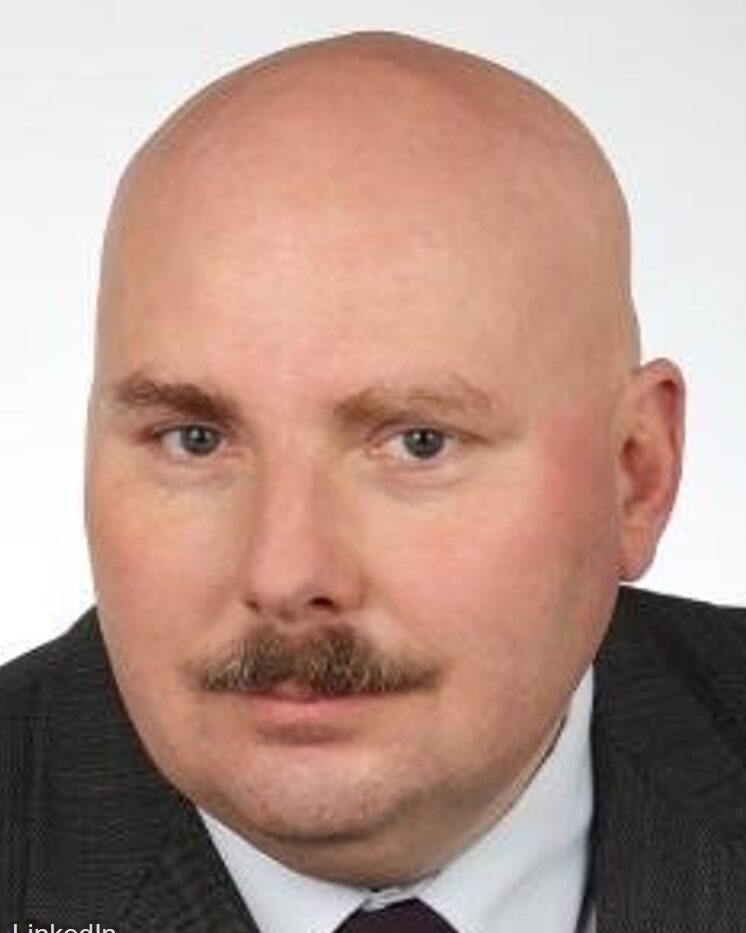
Marcin Stokłosa, Nitrex Technical Sales Manager, NITREX Poland (Source:LinkedIn.com)
Marcin Stoklosa, manager of Technical Sales at Nitrex, who oversaw this endeavor, sums it up, “Kuźnia Jawor’s choice to partner with Nitrex was driven by the need to replace outdated equipment, modernize, and expand their production facility. The result? Improved quality, enhanced performance, and a stronger position in the forging industry.”
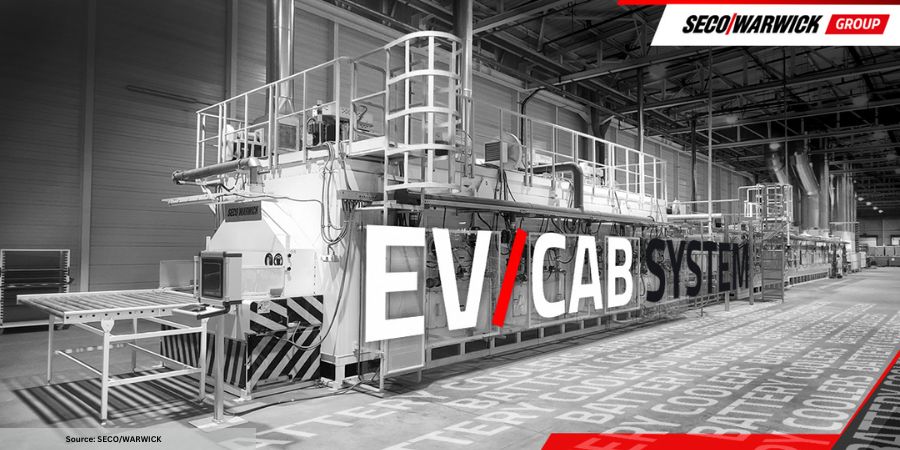
An international manufacturer of heat exchangers is expecting a new EV/CAB line to support their production of components, subsystems, and system solutions for thermal management in cars. The company provides energy-saving and high-performance products for regular petroleum and diesel fueled cars, as well as solutions for new electric vehicles.
Piotr Skarbiński Vice President of Aluminum and CAB Products Segment SECOWARWICK Source: LinkedIn
“The EV/CAB line on order is designed specifically for the production of “Snake” type battery coolers,” said Piotr Skarbiński, VP of the Aluminum Process and CAB Business Segment in SECO/WARWICK. He further commented that the heating and cooling design “contributes to the final product’s exceptional quality using our unique technology that achieves excellent temperature uniformity across the width of the belt, which is the key to successful production.”
The company will execute their first “Snake” battery coolers in SECO/WARWICK furnaces. This is the eighth CAB line which will operate in this automotive industry manufacturer’s plants and the second one with a width of 2,300 mm.
The controlled atmosphere brazing (CAB) line on order will include a convection preheating chamber, a radiation furnace and two cooling chambers. The entire system will be equipped with a dedicated control system.
“This cooperation opens new perspectives for the SECO/WARWICK Group development in our region. The excellent heating and cooling design contributes to perfect temperature uniformity across the 2300 mm belt width, which is the key to successful production. We have already sold over 20 such solutions in China, and the demand for them is constantly growing,” commented Liu Yedong, Managing Director of SECO/WARWICK China.
Around the world, the demand for battery coolers is increasing due to the increasing production of electric vehicles.
This press release is available in its original form here.
A leading heat treat and HIP processing director, Humberto Ramos Fernández has overcome business and technologic challenges to make HT-MX the successful commercial heat treat company it is today.
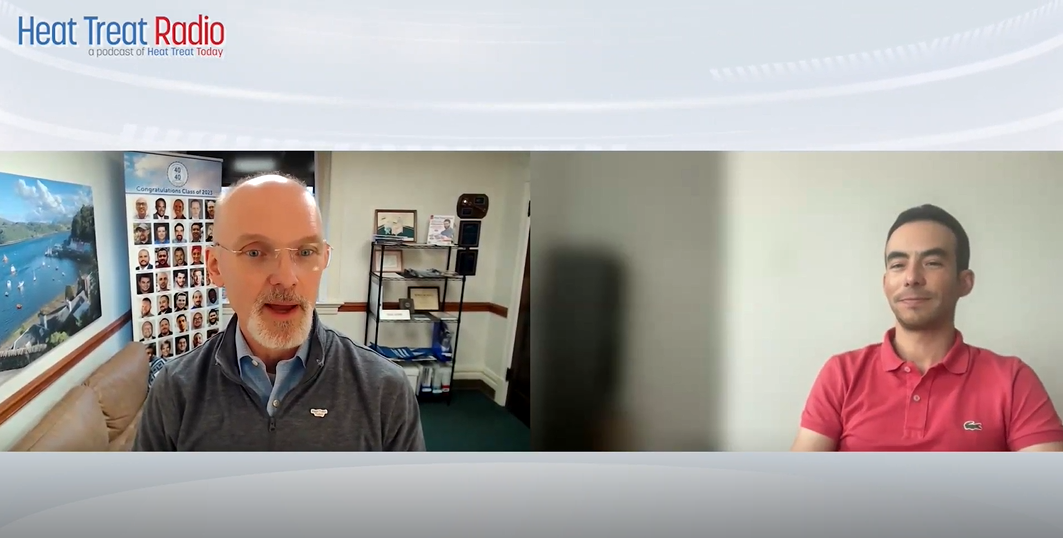
In this NextGen profile on Heat Treat Radio — with host and Heat Treat Today publisher, Doug Glenn — we’re learning the heart of an engineer, from early education and metallurgy interests to cycling and how-to-start-a-business.
Below, you can watch the video, listen to the podcast by clicking on the audio play button, or read an edited transcript.
The following transcript has been edited for your reading enjoyment.
Meet Humberto (00:00)
Doug Glenn: Well, welcome everyone to another Heat Treat Radio episode. We have the great privilege today of having another one of our 40 under 40 award recipients here to tell us a bit about himself.
Contact us with your Reader Feedback!
So, Humberto, I would like for you to tell us your name and tell us a little bit about your upbringing. Where were you educated, for example?
Humberto Ramos Fernández: My name is Humberto Ramos Fernández. I'm born and raised here in Chihuahua, Mexico. I've spent my whole childhood living here, and when I went to college, I moved to , Mexico, had my degree there, and then spent a few years working around there. For a little while, I lived in Houston, Texas. I also lived in Australia for a little bit. I spent a few months in Argentina as well, and then got back to working in Monterrey, and eventually moved back to Chihuahua, where I'm currently living. I am very happy to be here, actually.
Doug Glenn: Do you have a family? I know you have parents, obviously. But married, kids, the dog, a cat. What do we have actually?
Humberto Ramos Fernández: I am actually engaged. I am about to get married in September later this year.
Humberto shares about coming from a family of engineers.
Doug Glenn: Congratulations! Very nice, very nice. Yeah, best to you. That's great.
What was it that first made you think about metallurgy or heat treatment, that type of stuff?
Humberto Ramos Fernández: Well, I always knew I would want to be an engineer. My dad's an engineer. My brother is an engineer. Since a very young age, I've always been into cars and racing and stuff like that. So, engineering and mechanical engineering was kind of an obvious choice for me when deciding my degree after high school.
I never really thought of metallurgy as a career; it was kind of more of a business choice or business decision. When I started as a mechanical engineer I was very interested in the mechanical aspect of the parts and design more than the metallurgy.
But eventually, while still working in Monterrey, I had the opportunity to come back home in Chihuahua and visit for a weekend. I got submerged in the environment of business leaders where there were a lot of opportunities for businesses — one of those was heat treating.
That's when my real interest in it started. It's been around 13 years or so since then. I've learned a lot. I mean, there's a lot to learn yet.
But I'm happy in what I'm seeing and what I'm learning.
"The decision to go into metallurgy and heat treat adventure was a decision I made alongside my dad. You know, we decided that this was a good business opportunity for both of us."
- Humberto Ramos Fernández
Doug Glenn: I do want to mention that besides being one of Heat Treat Today’s 40 Under 40 recipients, you've also authored a couple of articles with us as well. Obviously you're learning. It's been going well, and you've been contributing, giving back to the industry, which is really good.
Family (05:20)
What did your family think of your decision to go into heat treatment and metallurgy?
Humberto Ramos Fernández: The decision to go into metallurgy and heat treat adventure was a decision I made alongside my dad. You know, we decided that this was a good business opportunity for both of us. Even though he's never been involved in the day-to-day operations, he's been very supportive, and he's the actual president of the board at HT-MX.
We started this business together, and he's been with me all the way. We've had some very dark periods within the last 10 years. Pretty much everything that could happen did happen — a pandemic and multiple industry crises and everything.
He's been very supportive. One of the main reasons we've had some success, and I've been able to lead this company through some hard periods is because of his support and his knowledge. It's a very valuable thing to have, and I'm very grateful for sharing the experience with him and still having him give so much.
HT-MX (07:04)
Doug Glenn: Tell us a little bit about HT-MX. I don't think we've really mentioned it in particular. Did it exist before you started, or did you start it from scratch?
Humberto Ramos Fernández: After I graduated as a mechanical engineer, I got a job at GE Oil & Gas. I worked at this facility where we were manufacturing and oil and gas equipment. I spent a couple of years there. I learned a lot on the engineering side of it.
I got to work in the corporate offices in Houston, TX, for a while, and this led me to realize that there were a lot of supply chain gaps in the Mexican industry. There were heat treaters, but none like the ones we were looking for from the quality side of the requirements.
Being from the engineering side of things, I would visit some of these suppliers and realize that there were opportunities everywhere for more .
While that was happening, there was this pretty cool idea here in Chihuahua: A group of businessmen got together and organized a visit “from Chihuahua to Chihuahua,” trying to understand all the manufacturing happening here. A lot of people didn't really know. Over here, there are four OEMs. There's aerospace OEMs. There's a Ford engine plant. There's a lot of industry happening here. They defined several supply chain gaps, and one of that was heat treatment.
One weekend I was here visiting my parents, and we got to talk about the potential opportunities. We just decided to go for it. We started the company officially in 2010, 2012. We've been operating since.
We have a business partner as well. And I think we made a pretty cool team. And you know, we've survived a lot of things throughout this.
What Is the Most Enjoyable Part of HT-MX? (10:04)
Doug Glenn: What's been the most enjoyable part? What do you really enjoy about it?
Humberto Ramos Fernández: I really enjoy whenever we have and then trying to translate that into an actual service — looking at the potential growth and the equipment requirements and the pyrometry and all that.
I think that's what we take a lot of care for at HT-MX, and I think that's one of the parts I enjoy the most.
Also, you know, just walking through the shop and seeing the furnaces — the floor being clean and organized. That’s just relaxing at some point.
“After lunch I used to drive around some of the old neighborhoods where there's these machine shops, and a single part gear or a shaft, and then go and do the heat treatment. And now we're doing hot isostatic pressing for airplane engine parts.”
Doug Glenn: It's got to be relatively satisfying for you to know that you started from zero.
Humberto Ramos Fernández: When we started, during the first few months, after lunch I used to drive around some of the old neighborhoods where there's these machine shops, and a single part gear or a shaft, and then go and do the heat treatment. And now we're doing hot isostatic pressing for airplane engine parts. So that's a big jump, you know.
It’s very satisfying. But at the end of the day, we still have a lot of challenges and a lot of things to do. So it's never about focusing on what we've already done, but what can be done and what lies ahead.
A bigger business also brings extra worries, you know.
More About HT-MX (11:58)
Doug Glenn: Little business, little problems; big business, big problems. Not a lot of people in the world have built a business from the ground up, so I'm sure it's worth taking some time, and just acknowledging that accomplishment.
So how furnaces? How many HIP units? How many employees do you have?
Humberto Ramos Fernández: Since the pandemic we went through an evolution. We refocused our company and became much more focused on the aerospace industry.
We were running high volume, automotive parts, and oil and gas parts. Since the pandemic and the increase in energy prices and a lot of the inflation issues that we had here in Mexico — especially with the energy costs — we were forced to focus on what we believe is the real volume behind a heat treatment. Which is, in my opinion, the engineering of aspect of it.
We started focusing on these clients where their requirements were higher and where we would be able to better service them with what we had. So, we refocused. We're currently running around eight furnaces and one HIP unit.
We’re expecting to add a couple of furnaces this year and we're in the process of adding a couple of other additional services.
So, we're growing. We kind of moved away from the high volumes work, and we're focusing more on more aerospace industry and work.
Top Industry Resources (13:55)
Doug Glenn: What are some of the resources that you use to help yourself stay well informed?
Humberto Ramos Fernández: I guess the Internet, obviously.
Heat Treat Today is one of the main sources. There are other sites out there where heat treatment is focused on that I follow. And I talked to colleagues. I'm very involved in the aerospace cluster here in Chihuahua, also in Aerospace Federation in Mexico, and with the Chamber Commerce in Chihuahua — also federally in Mexico as well.
Nowadays with the Internet, and all that kind of stuff, there's a lot of information around. The key aspect is to kind of know how to filter the good info from the bad info.
“We started focusing on these clients where their requirements were higher and where we would be able to better service them with what we had. So, we refocused. We're currently running around eight furnaces and one HIP unit.”
- Humberto Ramos Fernández
Rapid Fire Round (14:56)
Doug Glenn: Let me ask you a couple of rapid fire questions, just to kind of get to know you a little bit more as a person, if you don't mind.
Are you a Mac or Apple user, as far as your computer goes? Or are you a PC guy?
Humberto Ramos Fernández: No, I'm an Apple user.
Doug Glenn: Is that right? You have an Apple computer.
Humberto Ramos Fernández: Yeah, I'm actually on an Apple computer right now.
Doug Glenn: Are you more of a digital person? Do you like hard copy print, or digital, or both, or neither?
Humberto Ramos Fernández: I grew up reading physical magazines, and I still really enjoy car magazines and stuff like that. But other than that, books and podcasts and all, it's on digital.
Doug Glenn: So I don't know if this applies so much to you, because you own the company. Do prefer a flexible work schedule or a high paying job? Being the owner of the company, you have neither, so maybe you would take either.
Humberto Ramos Fernández: I'll take whatever I can get. I think that the flexibility is a very, very valuable part of any kind of work. And I try to offer that to the people that we work with. But also, you need to have high pay to retain the good employees and the good engineers. We are trying to balance both.
Doug Glenn: Tell me about your car passion. Are you still doing anything with your car passion here? You like car magazines and stuff like that?
Humberto Ramos Fernández: I have a couple of old cars I like to work on. I work with my brother on restoring as well. I still keep that passion going. It's something that I really enjoy.
Doug Glenn: So you gotta tell us: What's the 40 year old car?
Humberto Ramos Fernández: It's a 1983 BMW 320I.
Humberto’s big interest is working on old cars, especially a 1983 BMW 320I.
Doug Glenn: If you could travel somewhere else that you haven't already been, where would you go, and why?
Humberto Ramos Fernández: I haven’t been to Japan. And I would love to experience the culture. I feel fascinated by their history and their culture and even their food. So that would be one of my first options.
Doug Glenn: What was it about Japan in the past that caught your attention?
Humberto Ramos Fernández: Those kind of cultures that are so radically different from what we experience here in Latin America are very interesting to look at and to visit.
I've been through China. I've been through other Asian countries. And you know I've been through some other countries in Europe. So considering that I've never been, never been there I would definitely choose Japan.
Doug Glenn: What do you do with your free time? Assuming you have any?
Humberto Ramos Fernández: I like to spend my weekends cycling. I do a lot of road cycling as well. Endurance sports, mostly cycling. So recently, I've done a lot of long, long days out there on the bike. I love the weather here, and here in Chihuahua, we're close to some very nice mountains and the canyons are absolutely beautiful places to go and visit on your bike.
Doug Glenn: What’s your favorite app on your phone or movie or magazine?
Humberto Ramos Fernández: My favorite movie I think it would be the Shawshank Redemption.
Doug Glenn: What future plans do you have for your company and life? Obviously, I know you're getting married. So that's one. But company life, generally speaking, what are you looking forward to?
Humberto Ramos Fernández: I'm looking forward to a period of continuous growth in the company, and where we can stabilize the operation and allow me to explore new and bigger opportunities within the heat treatment industry. I think there's a lot to be done here, and I think as a country and as a state, we're coming into a very good period of time.
Personally, I feel optimistic of what we can achieve here, and that still drives me every day to try and improve our company and continue to learn and to establish ourselves as a reliable and valuable heat treater for our clients.
Doug Glenn: That's great, Humberto. It's been a real pleasure to talk with you. Thanks for spending some time with us.
About the Expert
Humberto Ramos Fernández is a mechanical engineer with a master’s degree in Science and Technology Commercialization. He has over 14 years of industrial experience and is the founder and director of HT-MX Heat Treat & HIPing, which specializes in Nadcap-certified controlled atmosphere heat treatments for the aerospace, automotive, and oil and gas industries. With clients ranging from OEMs to Tier 3, has ample experience in developing specific, high complexity secondary processes to the highest requirements.
Today’s News from Abroad installment highlights more carbon-cutting trends from the steel industry, ranging from robots in the cast house to recycling best practices.
Heat Treat Today partners with two international publications to deliver the latest news, tech tips, and cutting-edge articles that will serve our audience — manufacturers with in-house heat treat. heat processing, a Vulkan-Verlag GmbHpublication, serves mostly the European and Asian heat treat markets, andFurnaces International, a Quartz Business Media publication, primarily serves the English-speaking globe.
Robots Bring Safety to Casting
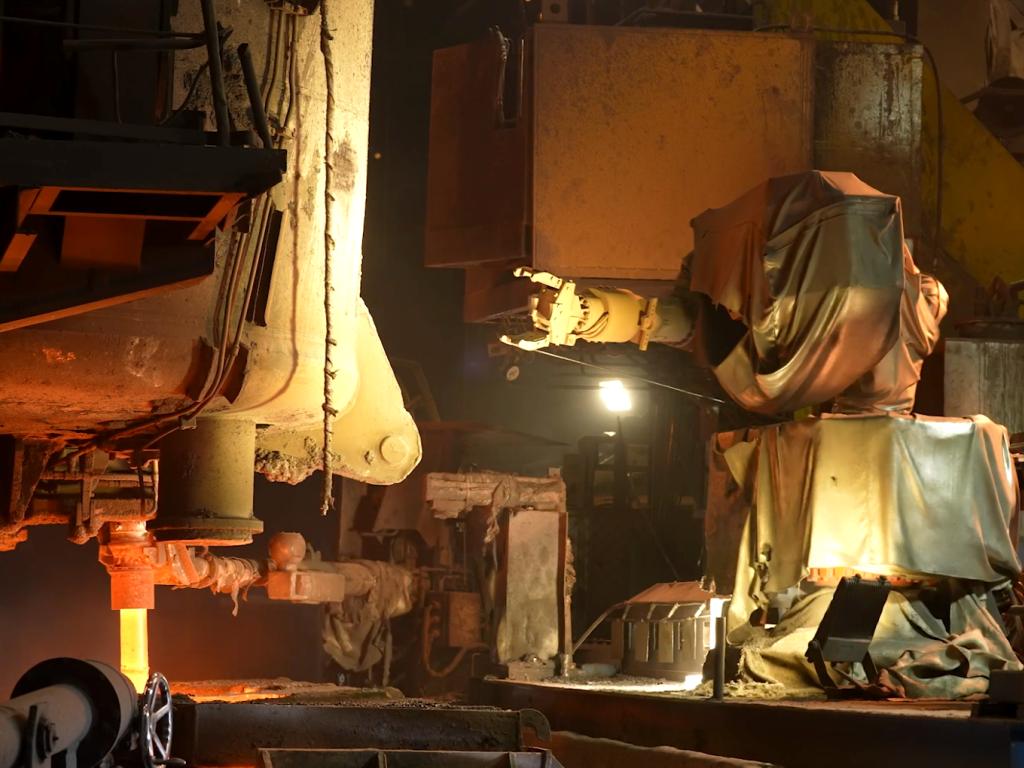
Primetals Technologies’ new customized LiquiRob robotics system in operation at Siam Yamato Steel’s Map Ta Phut plant
Source: Primetals Technologies
“Thai steel producer Siam Yamato Steel has implemented a new robot concept from Primetals Technologies, including LiquiRob, at its steelworks in Map Ta Phut . . .. Thanks to the robotics solution, safety and occupational health in the steelworks have significantly improved. Previously, workers who manually operated the shadow tube had to stand directly next to the distributor and the stream of steel flowing out of the ladle. In the case of a so-called ‘frozen pan.’”
CELES EcoTransFlux™ brings green high heating abilities to the induction heating technology.
Source: Furnaces International
“Nippon Steel Stainless Steel Corporation and Sojitz Group met with our induction team at Fives headquarters in Paris for a detailed design review of the transverse flux induction heating system. CELES EcoTransFlux™ is an induction heating technology with very high heating rates at extremely high temperatures, and a compact footprint. It also has a minimal environmental footprint, making it beneficial for steelmakers to improve their carbon, stainless or electrical steel production.”
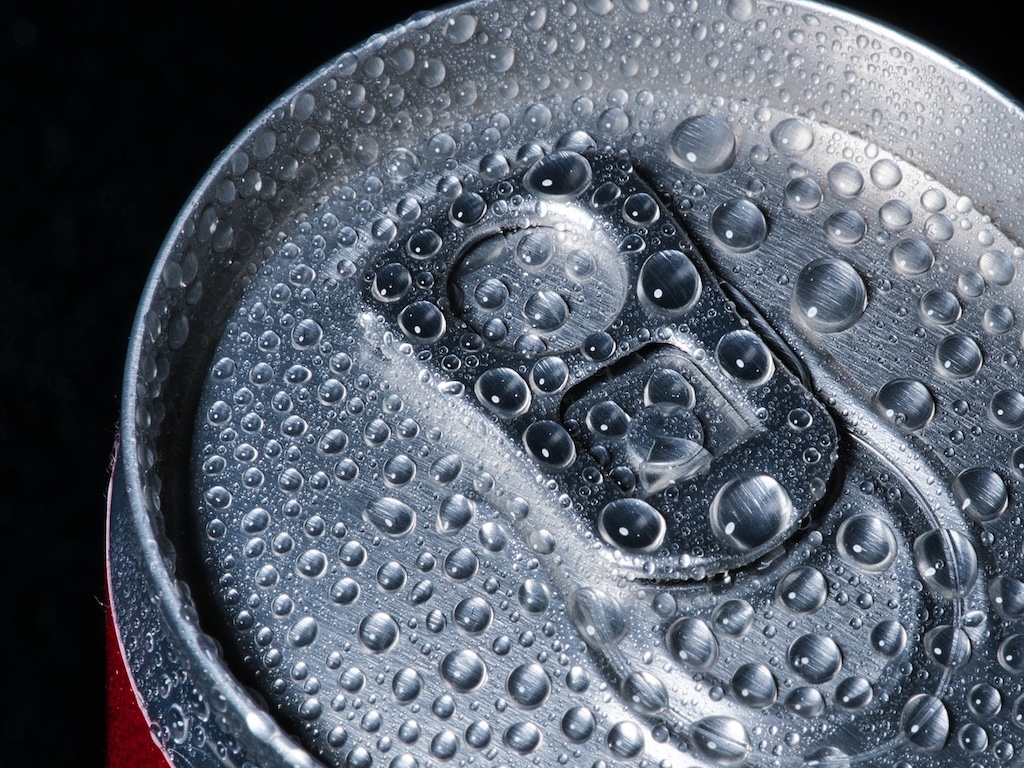
EAGP members signed an agreement to engage in a standardisation project for beverage cans.
Source: Anrita1705/Pixabay
“Four leading flat-rolled aluminium manufacturers and members of the European Aluminium Packaging Group (EAPG), Constellium, Elval, Novelis and Speira, have signed an agreement to engage in a standardisation project to maximise the recycled content levels of the beverage can and thus substantially lower carbon emissions, focused on increased recyclability of the can end.”
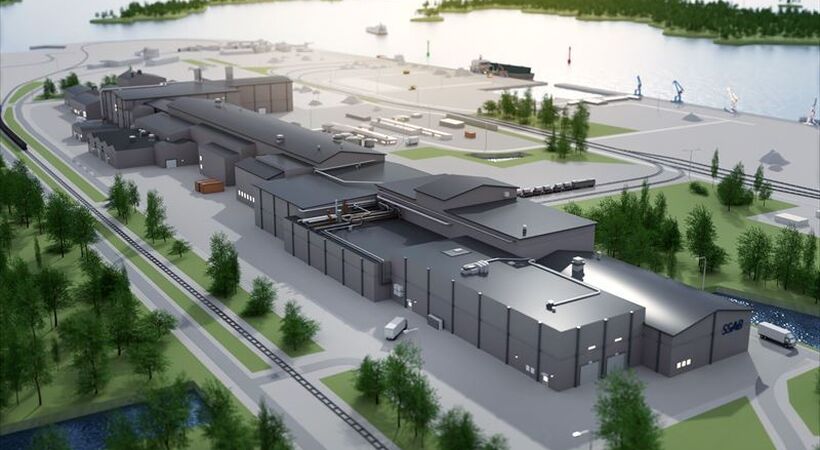
Mini-Mill Investment Transforms Future for Swedish Metal Manufacturer
Fossil-free mini-mill
Source: Furnaces International
“SSAB’s Board of Directors have taken the decision to proceed with the next step in SSABs transition, building a state-of-the-art fossil-free mini-mill in Luleå, Sweden. When completed SSAB will close the current blast furnace-based production system. This will reduce Sweden’s CO2 emissions with 7% in addition to the 3% from the Oxelösund mill conversion.”