Operating a hot isostatic press? The stages for HIP processing can become faster and more effective with gas detection technology. Learn about real-time leak detection analysis and continuous monitoring for outgassing.
ThisTechnical Tuesdayarticle byErik Cox, manager of New Business Development at Gencoa, was originally published inHeat Treat Today’sMarch/April 2024 Aerospaceprint edition.
The Problem in HIP
Hot isostatic pressing (HIP) is a widely employed method for densifying powders or cast and sintered parts. It involves subjecting materials to extreme conditions — high pressure (100–200 MPa) and high temperature (typically 1652°F–2282°F, or 900–1250°C) — in a specialized vessel.
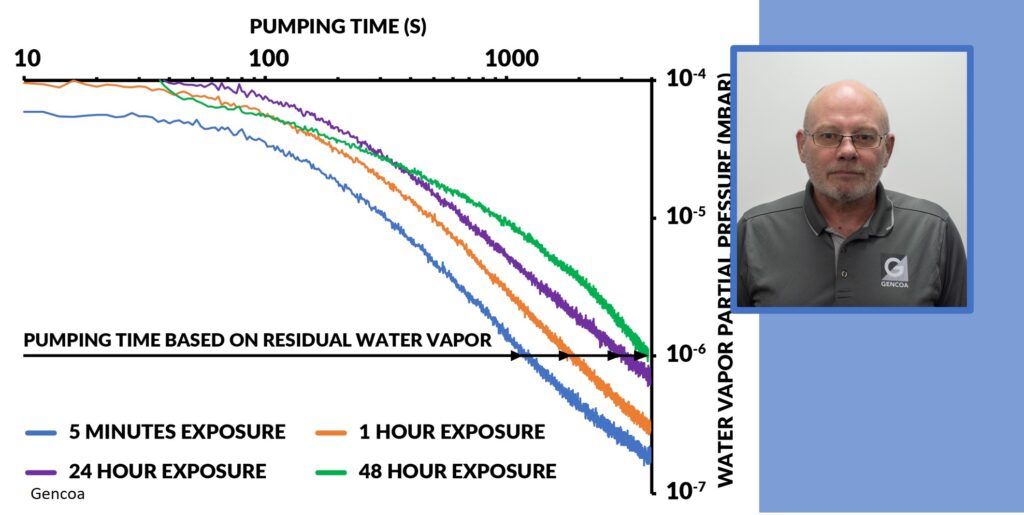
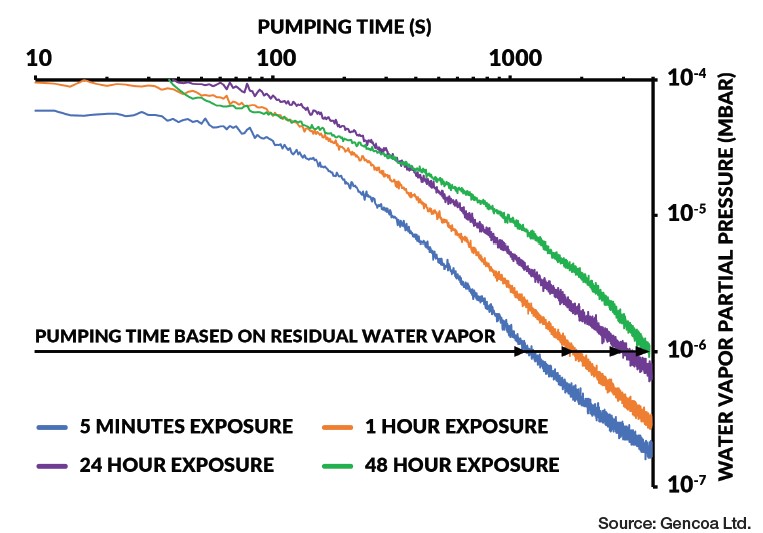
Contact us with your Reader Feedback!Figure 1. Pumping times based on residual water vapor
One aspect of HIP comes before introducing metal or ceramic powders to the vessel: Operators must test for any leaks in the canisters. This ensures that the proper HIP processing can be completed. Secondly, outgassing of the powder must be performed, and thirdly, outgassing the HIP chamber should be done. All three are essential steps that are typically time consuming and inefficient, but new gas detection technology can make this pre-processing stage faster and more effective.
Real-Time Analysis for Leak Detection
Leak detection is normally performed with a helium leak detector, which are expensive and require significant technical knowledge to operate. Some HIP processing providers simply forego leak checking of the canister, fill the HIP canister with powder, and perform the degas; but in this case, any leaks will be identified during the degas process, and powder must then be removed to repair the canister.
HIP users must look to technology that effectively detects leaks before they proceed to outgassing. One example of this is Gencoa’s Optix gas sensor: As the pumping procedure commences and pressure reaches 0.5 mbar (which typically occurs within 15–30 seconds), the device switches on and employs a sophisticated analysis of the nitrogen that enters the canister from the atmosphere to discern the leak rate of the canisters. When a leak is detected, argon gas can be sprayed around the canister to accurately detect the leak point and allow repair.
Outgassing: Traditional vs. Continuous Monitoring
Outgassing is a critical step in the preconditioning of powders for HIP processed components, involving the removal of adsorbed gases and water vapor from the metal powder through vacuum pumping. Traditionally, the endpoint for this process is not monitored, leading to an overly long vacuum pumping stage of up to several days to ensure that the powders are correctly prepared.
Th is challenge is addressed by providing continuous monitoring throughout the entire degassing process, reducing the time to degas through the ability of the Gencoa Optix gas sensor to precisely determine the degas endpoint.
Figure 2. Gencoa Optix
By offering real-time feedback and notifying users when degassing is complete, this sensor saves time and ensures the production of high-quality components with traceability. With the Optix, one user saw their degas times reduced from 24 hours to 4 hours. The sensor is capable of residual gas analysis, providing a comprehensive solution for improved productivity. Its wide-range pressure measurement capabilities, coupled with efficient leak checking of HIP processing enclosures, further enhance the overall operational efficiency.
Optix operates as a highly sensitive, stand-alone device that utilizes a small plasma (“light”) that detects the gas species present. This design ensures that the detector remains impervious to contamination or vacuum issues, maintaining continuous monitoring and avoiding potential damage. Because the device also eliminates the need for filament replacement or disassembly of components for maintenance, the design will perform at 100% operational uptime even in the harshest environments.
Indispensable Tools for HIP Processing
HIP operators need to maintain equipment efficiently and effectively, and technologies that integrate solutions not only enhance overall productivity, leak detection, and control of the degassing process, but are indispensable to improving the overall quality and traceability of components. Leveraging technologies that allow for early detection and increase uptime will only enhance the future HIP can offer to the AM-focused aerospace industry.
About the Author
Erik Cox, Manager of New Business Development, Gencoa
Dr. Erik Cox is a former research scientist with experience working in the U.S., Singapore, and Europe. Erik has a master’s degree in physics and a PhD from the University of Liverpool. As the manager of New Business Development at Gencoa, Erik plays a key role in identifying industry sectors outside of Gencoa’s traditional markets that can benefit from the company’s comprehensive portfolio of products and know-how.
For more information:
Contact Erik at sales@gencoa.com
Find Heat Treating Products And Services When You Search On Heat Treat Buyers Guide.Com
Hubbard-Hall, a provider of specialty chemicals for industrial manufacturing processes, announced the acquisition of Prosys Finishing Technology.
Jeff Davis, SVP—Business Development & Distribution, Hubbard-Hall (Source: LinkedIn)
With this acquisition, Hubbard-Hall expands its product portfolio and welcomes Randy DiSano, former owner of Prosys, to its team as senior product manager under Jeff Davis, SVP—Business Development & Distribution.
DiSano stated, “While it was a difficult decision to sell Prosys after 25 years . . . I am excited to join the Hubbard-Hall team and continue serving our customers with the same dedication and expertise.”
Molly Kellogg, CEO of Hubbard-Hall, commented, “Randy is . . . always in the customer’s corner.” She continues enthusiastically commenting about Pavco’s legacy of innovative plating chemistry.
This acquisition adds to Hubbard-Hall’s product offerings and strengthens customer support in the Northeast plating market. As part of the acquisition, Hubbard-Hall becomes a distributor of Pavco, a leading supplier of plating specialties.
Additionally, Hubbard-Hall will consolidate the distribution of MetalChem EN products in the Northeast, streamlining operations and enhancing customer service. The acquisition also grants Hubbard-Hall the rights to Prosys’s proprietary formulas for cleaning and finishing.
This press release is available in its original form upon request.
In brazing, a filler metal is used to create a strong bond between parts. In business, what holds companies together is the shared vision of its people. That is the philosophy of the team at Thermal-Vac Technology, southern California’s premier brazing facility, where an experienced crew shares a passion for solving complex puzzles and delivering quality outcomes.
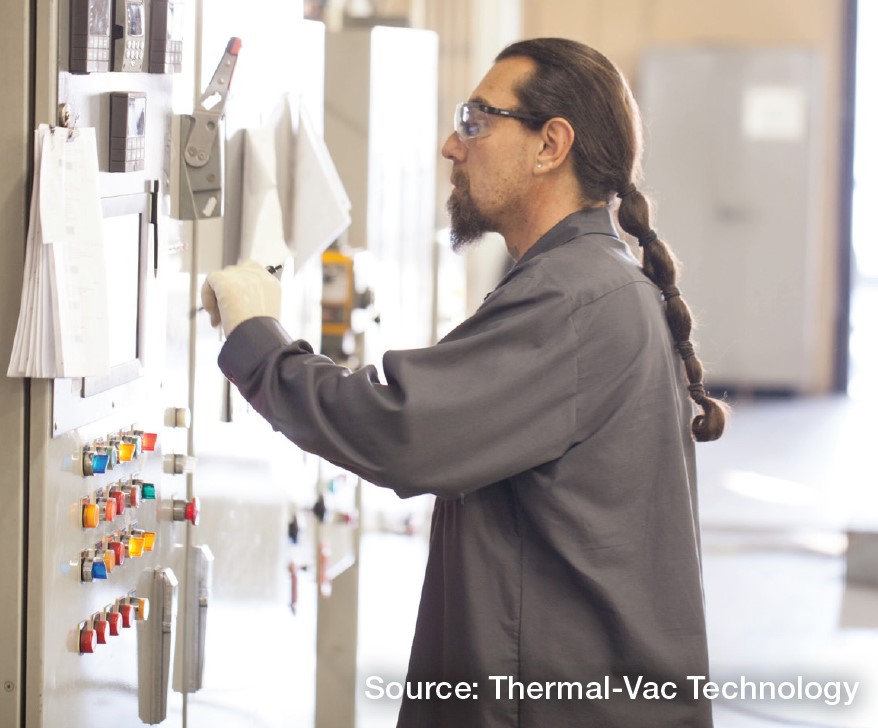
As a supplier to major aerospace programs, Thermal-Vac is united with its customers in its uncompromising approach to quality control. One of the company’s taglines summarizes its mindset: “We build good parts here; at a profit if we can, a loss if we must, but always good parts.” The company has invested in cutting-edge digital systems that provide continual insight into its brazing processes. Monitoring equipment, including digital readouts from load thermocouples inside the furnaces, gathers real-time data from part surfaces. These tools allow operators unprecedented control throughout the braze cycle and the opportunity to review in detail every step of the process to identify opportunities for improvement.
Quality control is critical for the commercial
heat treater.
Incorporating digital technologies into brazing has pushed Thermal-Vac to innovate in exciting ways. Brazing is a well-defined technique, with roots going back to ancient Egypt. But today’s manufacturing requirements push the boundaries of materials science. Exotic materials, elaborate component shapes, and new end-use applications all present opportunities for innovation. Thermal-Vac’s clients have come to rely on the company to find answers to their brazing challenges. To be ready to tackle whatever its clients need, the company has assembled a large, in-house engineering team. Thermal- Vac’s engineers draw upon their specialization in the brazing field to find creative solutions in close collaboration with their customers. Some of their routine achievements include implementing a new alloy, improving component design, or creating specialized tools to achieve the customer’s planned outcome.
The proof is in the product. Thermal-Vac’s quality control standard helped it to be selected to work on NASA’s SLS-Orion project, a space exploration vehicle that will eventually send astronauts to the moon and beyond. Thermal-Vac partnered with L3Harris/Aerojet Rocketdyne in the production of rocket motors by nickel plating 10-ft long tubes that needed to be precisely plated with an even, 0.0001 inch thickness. They also hand-assembled the rocket motors’ heat shields.
The company is proud to have received the 2023 MTI Commercial Heat Treater of the Year award, which it sees as a validation of its approach to constant improvement.
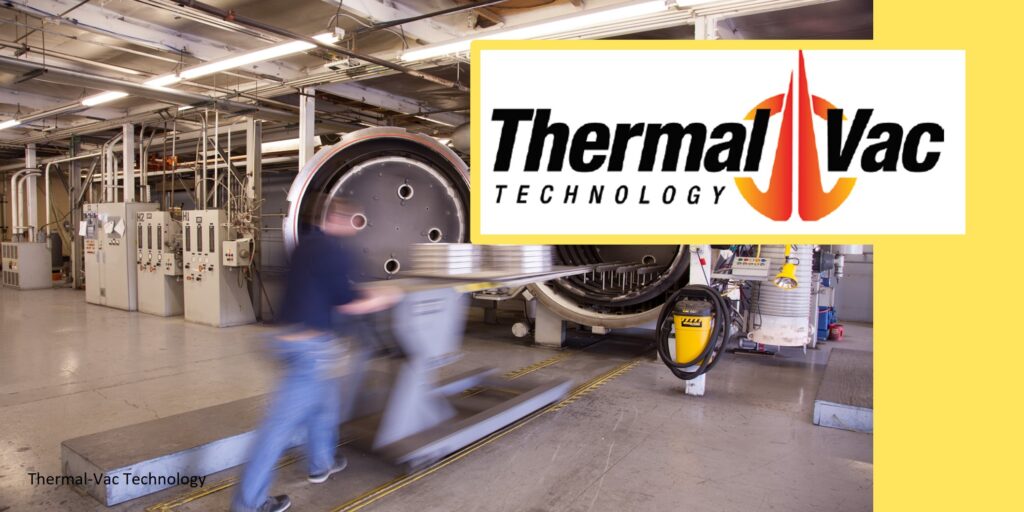
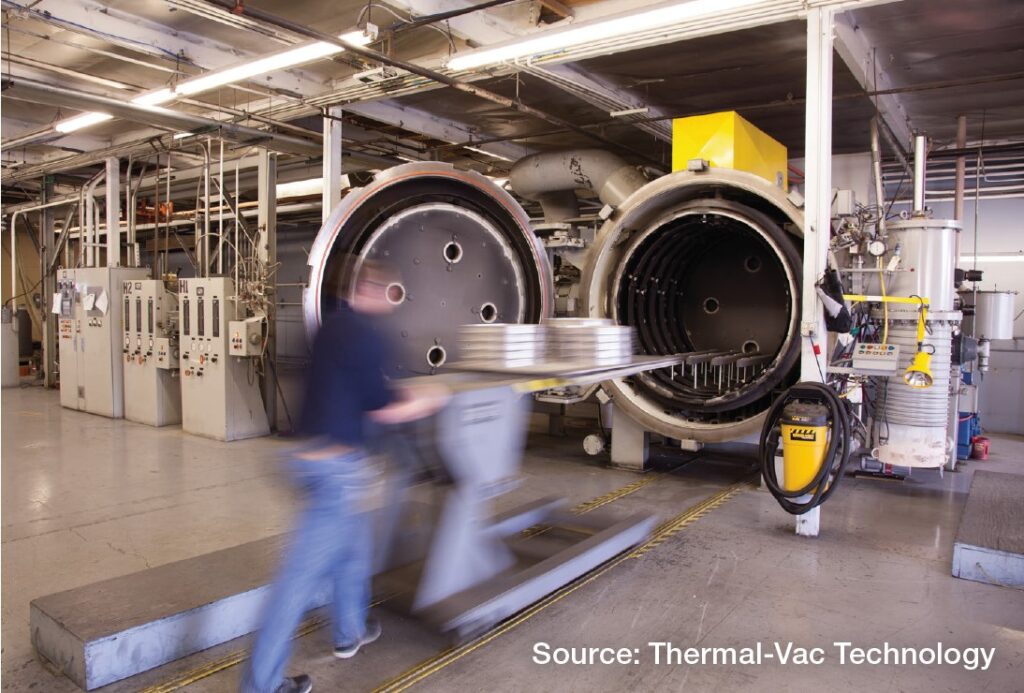
Vacuum furnace at Thermal-Vac Technology
Quality and innovation are not the entire Thermal-Vac story. CEO Heather Falcone sees the strength of the company arising from the way her 45-person team was assembled: by bringing people from all walks of life together to forge a special environment of trust and collaboration. Along with her three brothers — COO Shannon Driscol, Special Projects Expert Shane Driscol, and Sean Driscol, now president of the company’s sibling start-up company, Thermal-Vac Arizona — Heather has led the company’s commitment to diversity, equity and inclusion, and fair chance hiring practices. Heather and her brothers strive to create a workplace where everyone is valued and treated well. To do this, the company introduced well-received cultural initiatives such as a four-day work week, giving out over 20% of net profit in bonuses as featured in the Wall Street Journal, and awarded over $30,000 in charitable donations and scholarships in 2023 alone.
In recent years, Thermal-Vac Technology has been busy consolidating its operations at its Orange location. The company is pursuing numerous initiatives as it prepares for the future. Special focus will be given to streamlining operations and finding new ways to leverage technology so the company can remain agile and responsive. The company is also looking forward to continuing to foster a spirit of community in the North American heat treating industry.
A custom-built vacuum induction melting (VIM) equipment is set to expand thermal processing for a manufacturer, whose operations already has two VIM solutions.
The furnace will be fabricated at the Buffalo headquarters of Retech, a SECO/WARWICK Group subsidiary, to capitalize on available schedule improvements. As custom equipment, the subsidiary’s furnaces are not dependent on assembly-line style construction, so they can be fabricated and assembled just in either location.
While this client prefers not to divulge this VIM’s application, Retech’s solution can handle casting a wide range of materials used in applications from automotive and consumer products to critical, high-value equiaxed, directionally solidified, or single-crystal aerospace parts. Almost every furnace Retech makes is modified to meet the specifications and associated applications of its clients.
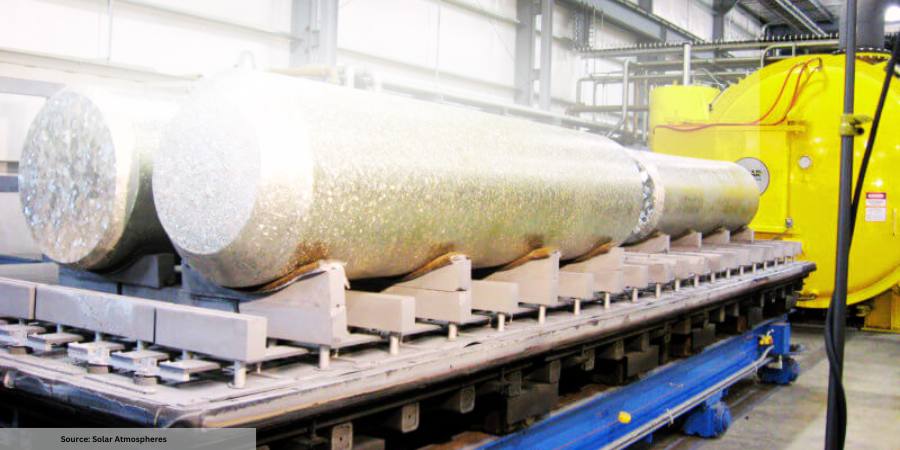
VIM from the Retech Buffalo, NY location.
Source: SECO/WARWICK
“It’s really difficult to speak against ‘quality.’ Who doesn’t want quality?” Read on to discover Doug’s thoughts on this topic.
Heat Treat Todaypublishes eight print magazines a year and included in each is a letter from the publisher, Doug Glenn. This letter first appeared in the March 2024 Aerospace Heat Treatprint edition.
With door plugs flying out of airplanes at scary-high altitudes, it seems an appropriate time to revisit where we are in quality initiatives in the North American heat treat industry from an equally high, 30,000-foot perspective.
It’s really difficult to speak against “quality.” Who doesn’t want quality? Those who even bring it up are bound to be looked at with suspicion. Let the suspicion begin, because I would like to bring it up.
One Standard To Rule Them All
Contact us with your Reader Feedback!
Since my early days in the heat treat industry (late 1980s), there have been discussions about “quality” standards and certifications. I first remember QS-9000, a standard imposed on automotive industry suppliers by the Big 3: General Motors, Ford, and Chrysler. The understanding was if you (a supplier to the Big 3) work and achieve QS-9000, then you won’t need to worry about complying with any other quality certifications, especially from one of the Big 3; it was one standard to rule them all, to borrow language from Lord of the Rings.
Before QS-9000, each of the Big 3 could demand that you comply with their specific quality standards, and each of them could (and would) audit your processes, costing suppliers significant time and money. Saving these costs by complying with JUST ONE standard that would make the Big 3 happy was the driving force behind QS-9000.
But QS-9000 ceased to exist on December 14, 2006, and was replaced by one or two other standards systems (depending on how you look at it). So much for one standard.
During the 1980s and 1990s, the quality industry saw enormous growth. “Quality Assurance” (QA) departments burgeoned, “Quality Managers” became more prevalent, and standards organizations, like SAE and ISO, flourished. Quality had become an industry of its own. In fact, my previous employer, BNP Media, publishes Quality Magazine just to serve the growing quality industry. Quality is now a living, breathing organism that, like all living things, is interested in self-propagation and survival.
“Quality” or Consistency?
One of the first thoughts I remember having about the corporate quality initiative I was involved with was the distinct lack of a definition of what “quality” really meant. For many of the standards, they did not really care what you did (whether or not you did quality work), they just wanted you to prove you had documented your work, that your people knew said documentation existed, and they were following the processes you had described in documentation.
That doesn’t sound so much like true quality so much as it sounds like a consistency check for documentation. Certainly, documenting and complying with documentation is a good thing. To that extent, the quality movement has certainly helped many companies.
“. . . current “quality” standards . . . act [more] as an anchor on a fully throttled ship . . . .”
As the current “quality” movement stands, it seems to be more of a hindrance to quality than a help. Today, most of the current quality standards that exist, as much as they may help in some instances, act as an anchor on a fully throttled ship — slowing progress and innovation.
Regularly, we hear about new technologies that are very innovative. These new technologies, if they could be adopted, would undoubtedly increase true quality and lower costs. They are, however, not being commercialized at a significant rate because suppliers have to conform to quality standards, and it would take heaven and earth to change those standards. In this sense, the quality movement is inhibiting quality instead of supporting it.
Love-Hate Relationship
Even many in the quality industry are aware of this hinderance. Over the past several months, I’ve spoken with quite a few quality people who think their industry is bloated and, in many cases, counterproductive. But it is a huge part of their livelihood. When I ask them if they think the industry would be better off without a quality movement, nearly all of them have a hard time letting go . Most think it would be a bad thing if quality standards and audits went away.
Perhaps in a future column, I can give you one scenario of how we could pivot away from the current “quality” system to a more market-oriented quality system which would do a better job promoting both quality and innovation .
What is the most common scenario for a eutectic reaction? And (for that matter) what constitutes a eutectic reaction?
Contact us with your Reader Feedback!
If your heat treat operations involves vacuum heat treatments, you may already be familiar with this term. With the ability to truly make a bad day worse, this paper uncovers several examples of eutectic reactions, the costs that this “metallurgical experiment” can have on your load and furnace, and what steps you should take to prevent two mating metals from melting together. In this best of the web article, read about the eight examples of how barriers are used in real-world applications.
An excerpt: “To many people, the term ‘eutectic’ is not well understood. The best way to think of a eutectic is a metallurgical meltdown. A eutectic reaction occurs when two components with different melting points and surfaces free of oxides come in contact with each other in the vacuum furnace. This can create an atomic diffusion. For some materials, when a specific atomic composition is reached, they will melt at a temperature much lower than the melting point of the individual metals. If that temperature is reached or exceeded during the heat treating cycle, melting will occur at the contact points. This is referred to as a eutectic melt.”
A hot isostatic press will add a new capability to the research infrastructure already in place at the Sydney Manufacturing Hub (SMH), the advanced manufacturing research facility at the University of Sydney, Australia.
Hot isostatic pressing (HIP) has become a critically important technology for the densification of unconventional microstructures associated with additive manufacturing (AM) across a broad spectrum of industries. It has proven of particular value in developing high-performance materials and building advanced metallic structures for mission-critical applications, for example within the aerospace, hypersonics, defense, biomedicine, energy, mining & minerals, and oil & gas sectors.
According to Professor Simon Ringer, Pro-Vice-Chancellor (Research Infrastructure) at University of Sydney, the SMH (as a research facility) is focused on offering the broadest possible range of advanced manufacturing capabilities, aiming to support the entire AM workflow from design right through to final part conformity in one facility.
“This [Quintus Technologies] hot isostatic press delivers enormous uplift in our university’s contribution to the national advanced manufacturing capability,” states Prof. Ringer. “It aligns critically with our own initiatives such as at the Sydney Biomedical Accelerator and our Net Zero Initiative. Moreover, this is a nationally significant capability that will allow our researchers to partner with industry to blaze new trails in manufacturing-related R&D.”
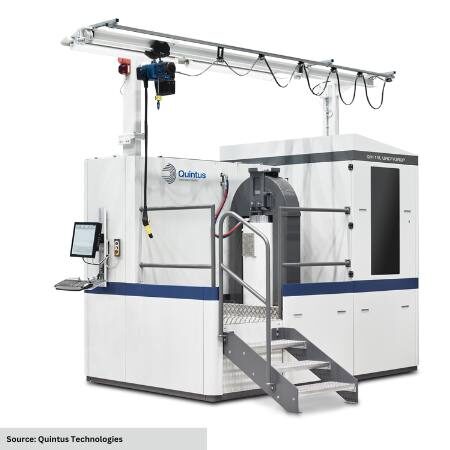
The Quintus Hot Isostatic Press going to the Sydney Manufacturing Hub is equipped with URQ® and URC® technology. Source: Quintus Technologies
The SMH selected the press model QIH 15L M URQ® + URC®, equipped with several proprietary features that streamline the HIP process and produce finished 3D printed parts with maximized theoretical density, ductility, and fatigue resistance. Uniform Rapid Quenching® (URQ) delivers an impressive cooling rate of 103K/minute while minimizing thermal distortion and nonuniform grain growth. HPHT™ (High Pressure Heat Treatment) combines stress-relief annealing, HIP, high-temperature solution-annealing (SA), high pressure gas quenching (HPGQ), and subsequent aging or precipitation hardening (PH) in one integrated furnace cycle.
Quintus’s strong focus on materials science and materials processing research, exemplified by the URQ functionality, was of special interest to the Sydney hub, Prof. Ringer relates. He also cites the intrinsic safety of the vessel and yoke design, along with the rapid cycle time for processing AM parts, as major benefits for the facility, which is geared to enable concept-to-production demonstration capabilities.
“Our new HIP capability will address a significant gap in the AM community in the Australian region and further offer the potential for SMEs (small and medium enterprises) and start-up companies to access this critical process,” Prof. Ringer adds.
SMH’s broad user base extends from its own researchers to those from other local universities and research organizations to private industry and collaborations with international institutions.
Jan Söderström CEO Quintus Technologies
“As the industry leader in advanced hot isostatic pressing technology for over 70 years, we have noted exceptional interest in new manufacturing approaches that improve quality, lower cost, and reduce environmental impacts,” says Jan Söderström, CEO of Quintus Technologies. “We are excited to work with the talented researchers at the Sydney Manufacturing Hub to deepen their expertise and refine processes for pressure-supported heat treatment, laying the foundation to advance both productivity and sustainability for operations in Australia and its neighbors.”
The hot zone of the model QIH 15L M URC® measures 7.32 inches (186 mm) in diameter and 19.7 inches (500 mm) high. The press operates at a maximum pressure of 207 MPa (30,000 psi) and a maximum temperature of 2,552°F (1,400°C). It will be installed in the Hub’s purpose-built facility on the University of Sydney’s Darlington campus in January 2025.
This press release is available in its original form here.
Find Heat Treating Products and Services When You Search on Heat Treat Buyers Guide.com
Dive into the role and benefits of HIP and HPHT™ in the space industry, highlighting how these key processes are shaping the future of space applications.
ThisTechnical Tuesdayarticle by Andrew Cassese, applications engineer, Quintus Technologies was originally published inHeat Treat Today’sMarch/April 2024 Aerospaceprint edition.
The realm of space exploration and technology is rapidly evolving, pushing the boundaries of what’s possible in engineering and material science. Among the key players in this revolutionary change are hot isostatic pressing (HIP) and High Pressure Heat Treatment™ (HPHT™). These processes have become indispensable in manufacturing components that can withstand the harsh conditions of space. In this demanding environment, the longevity and reliability of components are paramount.
Reducing Risk
Space missions have put increasing focus on the need to minimize risk and improve mission safety. Some well-documented, safety-related events include:
Outer space
Soyuz 11 decompression in 1971
Earth’s atmosphere
Soyuz 1 parachute failure in 1967
X-15 controls failure in 1967
Space Shuttle Challenger launch booster failure in 1986
Space Shuttle Columbia re-entry disaster in 2003
Structural integrity is therefore in focus for every single component involved in space missions, with exacting demands on quality and function. Material failure is not an option, and therefore component qualification is one of the main areas of focus. Predictable properties that are reliable and with minimal variation are critical for mission safety. Hot isostatic pressing helps to guarantee this by reducing the spread and variation in mechanical properties.1 It works to do this by using high temperatures and pressures to close internal defects in mission critical parts after casting or additive manufacturing. This increases the density of components and gives them a more anisotropic microstructure which in turn results in more consistent mechanical properties.2
What Properties Are Most Important
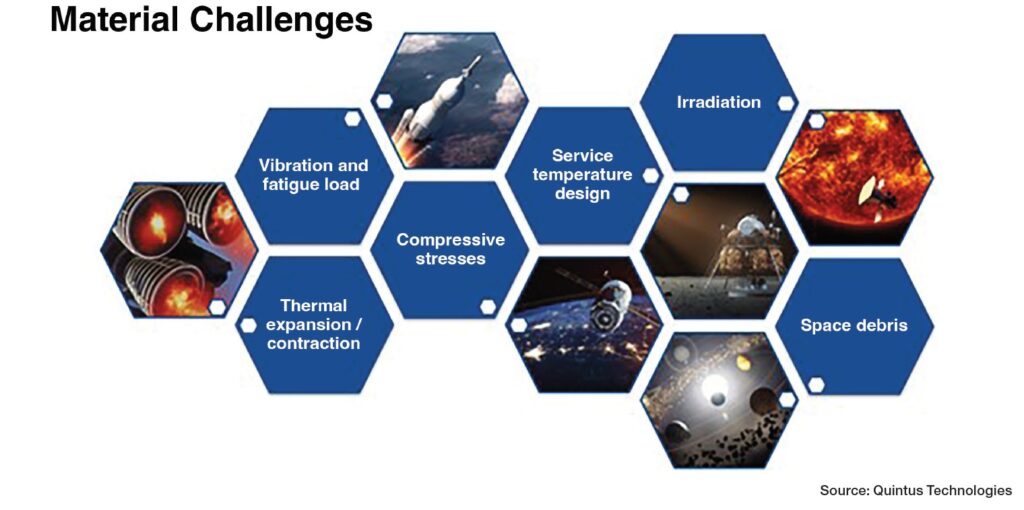
The harsh environment of space demands components with exceptional properties. They must withstand extreme temperatures, resist radiation, endure vacuum pressures, and cope with mechanical stress from vibrations and accelerations. HIP processing plays a pivotal role in this, enhancing material properties to meet these challenges. Space manufacturers also must think about thermal expansion/contraction due to temperature variations, compressive stresses, irradiation, and space debris. All of these can affect mission success and can ultimately prevent loss of life, see Figure 1.
Figure 1. Challenges that space-bound materials must endure
Through HIP, components gain increased fatigue life, improved ductility, and enhanced fracture toughness, which are crucial for surviving in space.
Common Materials and HIP Processing Requirements
Materials commonly processed by HIP for space applications include titanium, aluminum alloys, nickel-based superalloys, refractory alloys, shape memory alloys, and ceramics. High-strength aluminum and titanium alloys are used due to their high strength to weight ratio which is key for space missions to conserve fuel efficiency, increase payload capacity, and improve maneuverability.3 Nickel-based superalloys are used in exhaust valves and turbine rotors due to their exceptional creep resistance properties at high temperatures. Refractory alloys like Nb-C103 and TZM are used in high-performance rocket nozzles because of their high melting point and excellent strength at high temperatures. Newer shape memory alloys developed by NASA can recuperate their original shape when heating above specific critical temperatures, and their applications are expanding beyond just actuators.4
As new alloys and materials are developed in the space industry, certifications and standards are necessary for their adoption. HIP effectively eliminates porosity in these materials, ensuring structural integrity and performance under the extreme conditions of space. This means HIP recipes need to be developed and optimized for materials to be tested with their greatest potential in mind.
Collaborations with universities and national labs on projects at low TRLs will help set the foundation for HIP in the space industry. Quintus Technologies, through its application centers, is actively engaged in research to further enhance the capabilities of HIP for space applications. Optimizing the HIP process to reduce costs and improve efficiency through HPHT is one area where the company has already found success, see Figures 2 and 3.
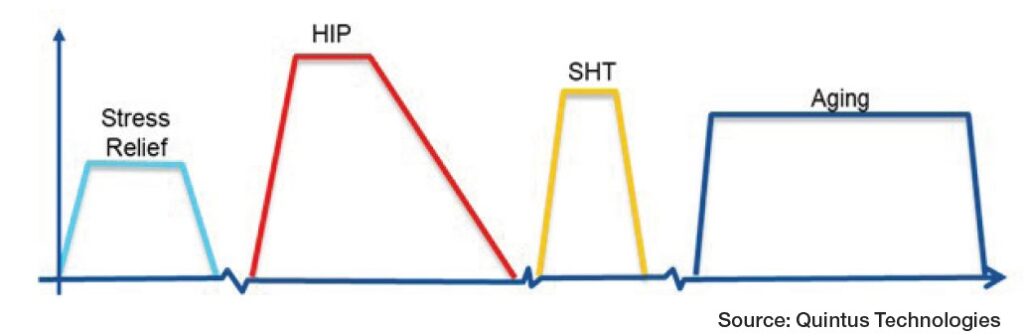
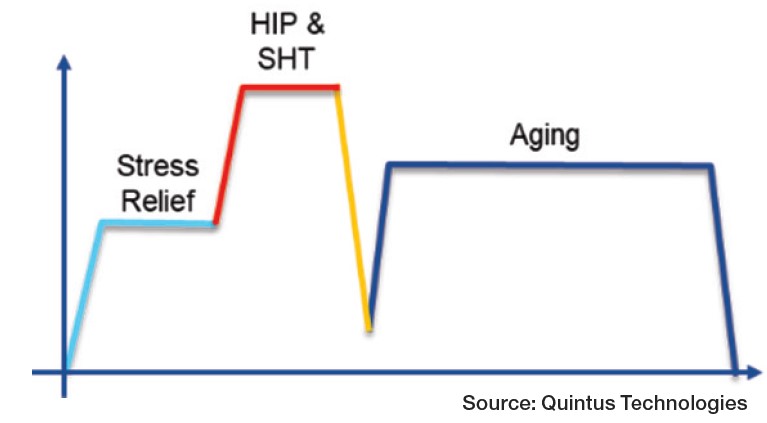
Figure 2. Typical thermal processes for additively manufactured partsFigure 3. High pressure heat treatment with solution heat treatment
(SHT) process for the same parts, using an integrated heat
treatment approach
The HPHT process can combine stress relief, solution annealing, HIP, and aging into one cycle. Aft er a ramp up in pressure and temperature, the part is held for a specified amount of time before being rapidly cooled in the URC furnace. Aft er this, the temperature of the machine can be brought up to the aging temperature of the material for the completion of an in situ heat treatment.
A Space Case – Launcher Engine-2 Rocket Engine
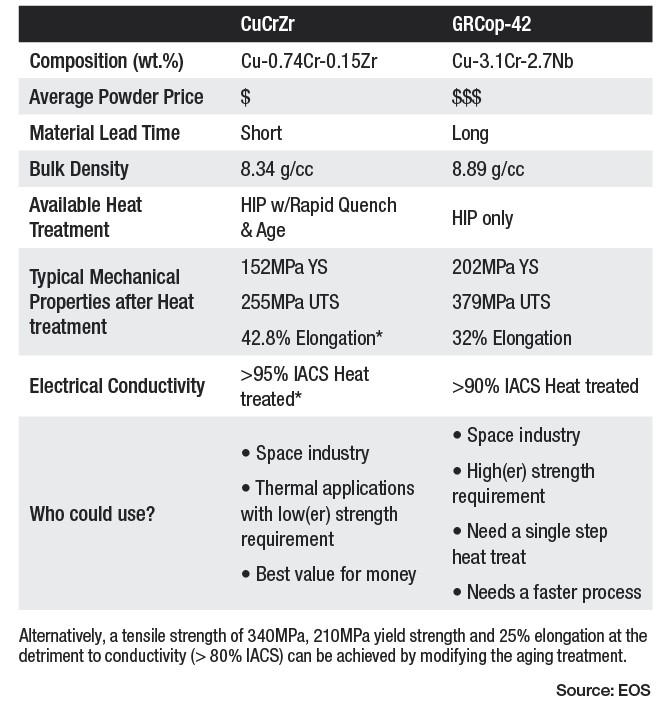
Table 1. CuCrZr vs. GRCop-42: A Comparison
One application of this is on the Launcher Engine-2 (E-2) rocket engine.
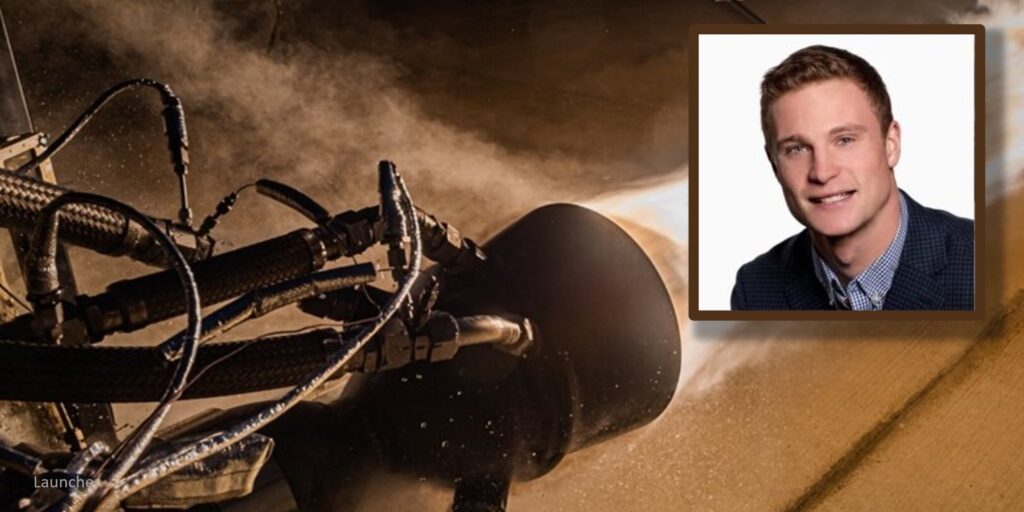
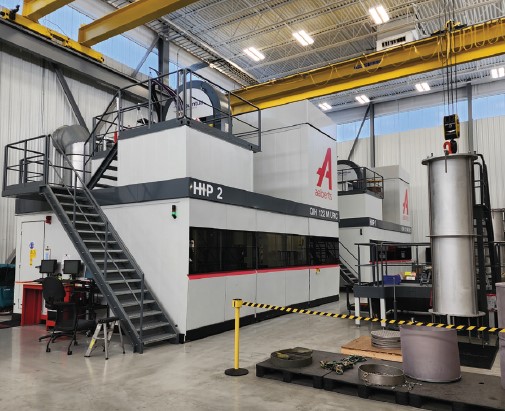
Quintus Technologies, EOS Group, and Launcher worked together to develop a tailored HPHT cycle for Launcher’s 3D printed E-2, first vetted out in an applications center at small scale. The powder alloy in question, CuCrZr, was developed by EOS and printed on an AMCM M4K machine. EOS compared CuCrZr to the NASA alloy of GRCop-42 and found that the CuCrZr alloy was a more economically viable solution for thermal applications with lower strength requirements, see Table 1. The rapid cooling at 200°C/min in the QIH 122 URC furnace at Aalberts surface technologies allowed the team to HIP and solution heat treat the CuCrZr combustion chamber in a single step. The aging treatment was also performed in the QIH 122 directly aft er the solution.5
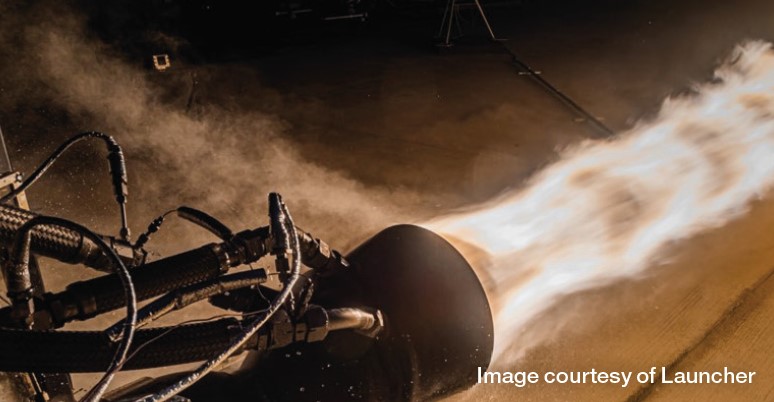
In October 2020, a full-scale test firing of the E-2 injector and combustion chamber was conducted at the Launcher NASA Stennis Space Center test stand. On April 21, 2022, Launcher’s E-2 liquid rocket engine was able to demonstrate full thrust. Continued tests from Launcher have been successful with performance boost testing and the first fully integrated engine was ready for shipping on October 12, 2023.6
As humanity reaches further into the cosmos, the role of HIP and HPHT in manufacturing space-bound components becomes increasingly significant. These processes not only enhance the essential properties of materials for space applications but also address the unique challenges of manufacturing for an environment as hostile as space. With ongoing research and development, HIP and HPHT continue to evolve, promising to unlock new possibilities in space exploration and technology, and their contribution will ensure the success of space missions, safeguarding the lives of those who venture into the final frontier.
Figure 5. Test firing of the High Pressure Heat Treated Launcher Engine 2 produced using additive manufacturing
References
[1] Dominik Ahlers and Thomas Tröster, “Performance Parameters and HIP Routes for Additively Manufactured Titanium Alloy Ti6Al4V. EuroPM,” 2019. https://www.semanticscholar.org/paper/Performance-Parameters-and-HIP-Routes-fortitanium- Ahlers-Tr%C3%B6ster/faeb46e6eb8ef3e30bc00b91cd1bd8a7c0619200. [2] Jake T. Benzing et al., “Enhanced strength of additively manufactured Inconel 718 by means of a simplified heat treatment strategy,” Journal of Materials Processing Technology 322, (December 2023). https://www.sciencedirect.com/science/article/abs/pii/S0924013623003424?via%3Dihub. [3] “Engineering Materials for Space Building Stronger Lighter Structures,” Utilities One, last modified November 2023. https://utilitiesone.com/engineering-materials-for-space-building-stronger-lighter-structures. [4] Girolamo Costanza and Maria Elisa Tata, “Shape Memory Alloys for Aerospace, Recent Developments, and New Applications: A Short Review,” Materials (Basel) 13, no. 8 (April 2020): 1856. https://www.ncbi.nlm.nih.gov/pmc/articles/PMC7216214/. [5] Mahemaa Rajasekar, “Processing Copper Alloys with Powder Bed Fusion,” LinkedIn, last modified November 2022. https://www.linkedin.com/pulse/processing-copper-alloys-dmls-technology-mahemaarajasekaran/. [6] LAUNCHER (@launcher), “The first fully integrated E-2 engine is ready for shipping to @NASAStennis for our upcoming full engine test campaign later this year. E-2 is a 22,000 lb. (10 ft) thrust LOX/Kerosene,” X post, October 12, 2023. https://twitter.com/launcher/status/1712636548997607752.
About the Author
Andrew Cassese, Applications Engineer, Quintus Technologies
Andrew Cassese is an applications engineer at Quintus Technologies. He has a bachelor’s degree in welding engineering from The Ohio State University.
For more information: Read J Shipley, “Hot Isostatic Pressing in Space – Essential Technology to Ensure Mission Safety,” 2020. Contact Andrew at andrew.cassese@quintusteam.com.
Find Heat Treating Products And Services When You Search On Heat Treat Buyers Guide.Com
Heat Treat Todaypublishes eight print magazines a year, and included in each is a letter from the editor, Bethany Leone. This letter first appeared in the January/February 2024 Air & Atmosphere Heat Treatprint edition.
Ever try to learn something that nobody seems to explain in clear English? While this is sometimes the reality in industries chock-full of competitive information, it can also be rooted in simply not knowing the limits of one’s knowledge.
It reminds me of June 2020, when I was entering the heat treat industry as an editor. I had a background in research, teaching, and writing, but certainly not materials science, manufacturing, or any type of engineering. There was an information gap I was keen on closing.
As a millennial, I went about this by supplementing my work hours with videos of iron ore being poured, reading blogs about specific temperature ranges involved in different heat treat processes, and scanning latest news in the four major Heat Treat Today industries (automotive, aerospace, medical, and energy) to learn what to ask about. The long and short of it was that I decided to “work smarter” by absorbing quick information bites that I could use as context for my work. And, at least to this young blood, the smart way means doing the job efficiently and effectively. (Notice how effectively follows efficiently.)
Now, there was absolutely nothing wrong with working smarter! The problem was that I was not getting any smarter. In fact, I was running into one problem a er another. Often, this was in the form of, “Does this equipment piece really matter to our readers?” or, “I understand time and temperature are important, but how do I write about them in this instance?” While I had absorbed information about the subject material, I had not reconciled myself with the reality that arduous work was needed to learn information in a usable way.
My idea of working smarter at this stage, while helpful to an extent, was costing me the time and energy needed that could have been used to dedicate myself to learning one thing at a time, accepting the arduous nature of the process. Since then, I have taken opportunities to learn more about equipment, processes, and heat treat resources through lectures, books, and richer knowledge sources. Now, because I have a richer understanding of industry information, I have the discernment needed to work smarter to be more effective.
As an example, this February issue is dedicated to annealing in roller hearth furnace systems. In preparation for this focus, I:
consulted Dan Herring’s chapter about air/atmosphere furnaces and furnace classifications to identify why this equipment has such a name and some of the equipment highlights,
talked with experts with a history in the heat treat industry about the equipment highlights,
reviewed Heat Treat Radio’s episode on pusher versus continuous systems to better see how a pusher system functions,
located technical articles written on annealing, and
watched short videos of the system in action.
For a B2B editor, this list is sufficient . . . for now. But for heat treat decision makers working for manufacturers with in-house heat treat, more is needed. That is why we have assembled this magazine for you: to be better informed and so make better decisions. There are three features in the pages that follow to help give you greater insight into this one area of heat treat — roller hearth systems (see pages 10, 18, and 26 for these articles). Whether you are a veteran when it comes to using roller hearth furnace systems or a skeptical observer from the sidelines, I hope these articles are resources as you work hard to better learn this topic so you can work smarter when the need arises.
Find Heat Treating Products And Services When You Search On heat Treat Buyers Guide.com
An electric box furnace, currently headed to a Midwest equipment provider, will ultimately be installed at a Snap-on production facility that services tool and die support within the company’s production line.
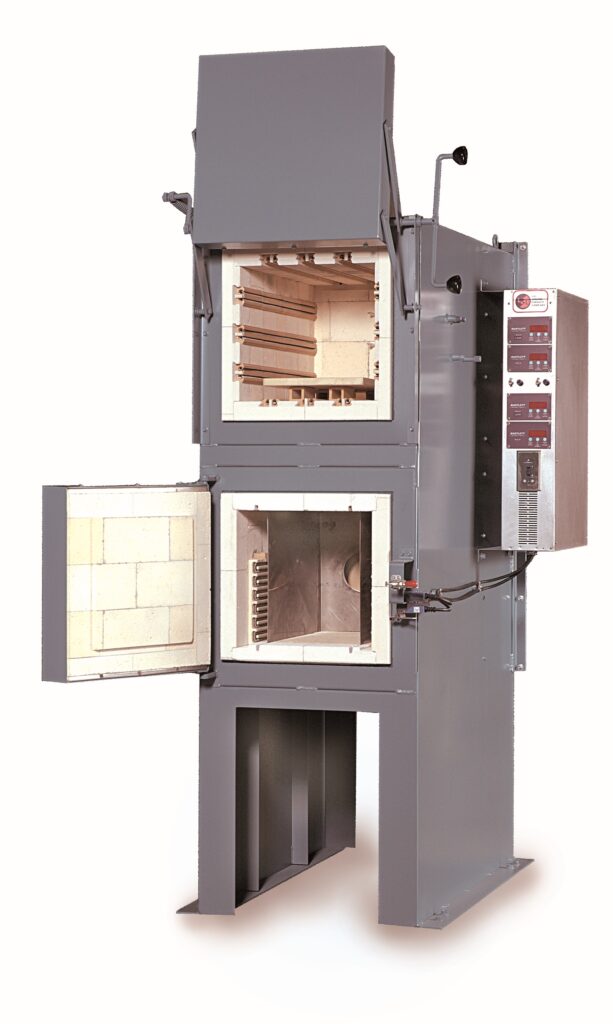
The model QDD29 economical dual-chamber heat treating and tempering oven from L&L Special Furnace has a compact over/under design that saves floor space and provides reliable heat treating in-house.
QDD29 economical dual-chamber furnace (Source: L&L Special Furnace)
The top chamber is primarily deployed for heat treating tool steels at temperatures up to 2200°F; the tempering chamber is suited to temperatures up to 1250°F and has a recirculation baffle that makes it suitable for small aluminum work as well. The hardening and tempering chambers have interior dimensions of 12” wide by 8” high by 24” deep, with total external dimensions of 55” wide by 70” tall by 56” deep.
The QDD29 is controlled with digital single setpoint controls along with overtemperature protection. Solid-state relays drive the heating elements in a control circuit.
This press release is available in its original form upon request.
Find Heat Treating Products and Services When You Search on Heat Treat Buyers Guide.com