Aero Space Power, an MRO facility, has ordered a custom-made vacuum furnace tobe utilized in repair solutions for both complex aircraft engines and gas turbines in the energy industry.
Mark Peter Biro Commercial Sales Manager at Aero Space Power Source: LinkedIn
“We decided to acquire in-house heat treatment because we want to be independent in production. It will also give us much better control over the process and treated part quality," commented Mark Peter Biro, commercial sales manager, Aero Space Power. "By installing production capacity in-house and creating our own heat treatment department, we not only become independent from external suppliers, but we also significantly reduce transportation costs.”
The furnace on order from SECO/WARWICK, a company with locations in North America, is unique due to the size of the heating chamber. It has been adapted to the Aero Space Power requirements and has a working area of 51" x 39" x 59" to enable heat treatment of large components up to 55" diameter especially large aircraft parts, as well as gas turbines for the energy sector. The custom technology on order, in addition to non-standard dimensions, is designed to process work in the presence of two gases: argon (used for partial pressure) and nitrogen, which is used mainly in the cooling process. A dew point sensor for each of the gases will be included with the furnace.
Find heat treating products and services when you search on Heat Treat Buyers Guide.com
Changes are inevitable, but the world today is shifting oh so rapidly, keeping us on our toes. Two men from different parts of the world, both with significant experience within the heat treating community, reflect on the implications of these changes in the heat treat industry. With each new topic, will their views align?
The experts are Thomas Schneidewind, editor-in-chief of heat processing magazine, and Doug Glenn, publisher and founder of Heat TreatToday. Thomas’s expertise lies in the European market while Doug’s resides in the North American market. We will feature their responses in each print magazine. Will their views run parallel or perpendicular? Time will tell. Enjoy this sixth installment of an ongoing column, first published in Heat TreatToday’s March 2023 Aerospace Heat Treatingprint edition.
Has digitalization come to heat treat operations? If so, how?
Thomas Schneidewind, Editor-in-Chief, heat processing magazine
Thomas Schneidewind Editor-in-Chief heat processing Magazine
Have you heard about the speaking furnace in the smart heat treat operations in Kleinachenbuchbach?
Contact us with your Reader Feedback!
You are right! There is no speaking furnace and no city with this name – not as far as I know. But if you think about the future of hardening shops or just have a look in the R&D departments of furnace builders, you will get an idea what the heat treat shop will look like in twenty years. Two topics will clearly shape the industry: decarbonization and digitalization. Decarbonization is the leading theme; digitalization is its enabler.
Digitalization is an important catalyst that makes decarbonization possible. It enables us to create and play out a multitude of scenarios in the shortest possible time, to exchange information globally in seconds, to free ourselves from time-consuming routine work, and to conserve, develop, and pass on knowledge gained from experience. Further, artificial intelligence (AI) has already started to augment all of our businesses, and this trend will continue to accelerate over the next years. Every company needs to think of itself as a technology company, redesign its processes, and ensure its employees have the skills needed for a world where we increasingly collaborate and work with capable and intelligent machines.
Digitalization is a key to success for small and medium sized enterprises in the heat treatment industry and a key to change the traditional heat treat shop into a smart, green, and profitable company. As the owner of a heat treat operation, you can concentrate on your business. While you talk to clients, do business, and invest in green technologies, maybe someday you will talk to your furnace and it will give you answers to much bigger questions than those connected to temperature, time, and hardness.
Doug Glenn, Publisher, Heat Treat Today
Doug Glenn Publisher and Founder Heat TreatToday
The answer to the question is a simple “yes.” Depending on what is meant by “digitalization,” it has been in heat treat operations for a number of years. The proliferation of digital chart recorders, for example, is clear evidence of that digitalization.
What digitalization will mean in the future is a mystery. One might say that digitalization is an ever-expanding final frontier, a place where we will be able to explore strange new worlds, to seek out new life and new civilizations, to boldly go where no man has gone before! (I hope you Trekkies appreciate that reference.)
To view a video, scan the code for “Cutting edge technology allows Quintus Technologies to deliver optimum technical support.”
It is, more seriously, an ever-evolving, strange new world, which currently is not widely embraced in the North American heat treat industry. Where we do see more of it is in larger companies with in-house heat treat operations. These larger companies have the IT and engineering horsepower to invest in deeper and deeper levels of digitalization.
Today, it is common for heat treat furnace manufacturers to perform computer upgrades and equipment troubleshooting remotely. It is rare, however, to see equipment servicing being performed via augmented reality (AR) where an on-site maintenance person or engineer wearing something similar to holographic glasses is helped by a “field” service technician who is hundreds or even thousands of miles away. But this type of AR-assisted field service does happen. For example, a hot isostatic press manufacturing company is promoting their ability to perform remote AR-based service. To view a video, scan the code below or do a web search for: “Cutting edge technology allows Quintus Technologies to deliver optimum technical support.” Pretty inspiring.
Find heat treating products and services when you search on Heat Treat Buyers Guide.com
Are your brake rotors heat treated? Travel back in time to discover how ferritic nitrocarburizing (FNC) became the heat treatment of choice for automakers’ brake rotors and why the tip-up furnace forever altered the production process for this part.
This Technical Tuesday article is drawn from Heat Treat Today's February Air & Atmosphere Furnace Systems print edition.If you have any information of your own about heat treating brake rotors, our editors would be interested in sharing it online at www.heattreattoday.com. Email Bethany Leone at bethany@heattreattoday.com with your own ideas!
The Problem: Brake Rotor Corrosion
Michael Mouilleseaux General Manager at Erie Steel, Ltd. Sourced from the author
In the early 2000s, corrosion was one of the top three issues that U.S. automotive manufacturers found negatively affected the perception of the quality of their cars. Brake rotors are made of cast iron. These components sit out in the elements, and in places like the U.S. Midwest where salt is often used on the roads, unprotected steel or iron will corrode or rust. Even on the coast, there is salt water in the air.
Contact us with your Reader Feedback!
What does rusting cause? The rotor rusts, and first, the cosmetics are negatively affected (i.e., rusty appearance). But more importantly, the first time you step on the brakes, it squeals like a pig, the vehicle shudders, and the driver feels pulsing in the pedal. He’ll also feel it in the steering wheel because the amount of rust coating one area is different from the amount of rust that’s on another. So, these brand new, forty- to seventy-thousand-dollar cars have orange rust over the brake rotor and a shaky drive. . . it’s not a good look!
Now, this is just a superficial coating of rust that will eventually abrade away; the rotor will look alright, the vehicle will stop better, and it won’t squeal. However, since the rust on the rotor wears off unevenly, the car may never have smooth braking.
A Move to FNC
In the early 2000s, all the big players were looking to FNC (ferritic nitrocarburizing) as a solution to corrosion, including Bosch Braking Systems, Ford, General Motors, Akebono, and the truck manufacturers. FNC was becoming popular since the process adds a metallurgical layer — called the “white layer” or “compound zone” — to the part, providing corrosion resistance and the bonus of improving wear.
Source: Oleksandr Delyk/Adobe Stock
To the OEMs, the benefits were perceived as:
The corrosion issue had an answer.
The life of the rotor doubled from roughly 40,000 to 80,000 miles. Although that meant half as many aftermarket brake jobs compared to before, consumers perceived it as a real advantage.
The rotors generated less dust. Brakes generate dust particles as the result of abrasion of the pads and the rotors. This particulate dust has been identified as both an environmental and a health concern. Now, flash forward to 2022: Electric vehicles are largely displacing the need to control emissions from ICE (internal combustion engine) vehicles. So, the new European standard on vehicle emissions implemented a requirement to control this dust that is harmful to the environment and which EV and traditional brake systems can emit.
But there were certain technical and practical challenges that automotive manufacturers faced when trying to implement this process at scale.
#1 Distortion. Brake rotors may distort during FNC. Since rotors are (gray iron) castings, the process temperature for FNC may stress relieve the rotor, causing it to change shape or distort, rendering it unusable as a disc brake rotor. It was determined that if the rotor castings were stress relieved prior to machining and FNC, the distortion issue was rendered moot.
#2 Loss of Necessary Friction. FNC gives the white layer on the surface of a part with a diffusion zone underneath. The compound zone has a very low coefficient of friction, which means excellent wear properties. However, manufacturers want friction between the rotor and the brake pads to slow the car down. Reducing the friction on the rotors extends the braking distance of the car.
". . .[M]anufacturers want friction between the rotor and the brake pads to slow the car down." Source: Unsplash.com/Craig MorolfLet me illustrate this: I ferritic nitrocarburized a set of brake discs for Bosch Braking Systems, which eventually went to Germany and then on a vehicle. The customer absolutely loved the corrosion resistance, but when it was time for the downhill brake test, the car went straight through an instrument house because the brakes couldn’t stop the car! Lesson: For rotors treated with FNC, the brake pads need to be made from a different frictional material!
#3 Cost. Overcoming the technical issues is simple. Stress relieving the casting at FNC temperatures before machining it would help the parts machine better and would eliminate distortion. Modifying the FNC process could reduce the depth of the white layer and, paired with the correct friction material, the acceptable braking capabilities were restored. Yet these additional steps presented a new challenge: higher costs.
The practical constraints of FNC in conventional batch or pit furnaces strained efforts to be cost-effective. The load (size) capacity of the conventional equipment, in conjunction with the time constraints of the FNC process presented a dilemma, as the OEMs’ benchmark was about one dollar per rotor.
Here Comes the Tip-Up
With traditional furnaces for FNC, there was just no way to reach the economics that were necessary for it. A bigger pit furnace might be the way to go, but they really weren’t big enough. So, here comes the tip-up.
Traditionally, a tip-up furnace has been used for processes with just air, no atmosphere. With direct fired burners, the furnace is used for tempering, stress relieving, annealing, and normalizing. Everything loads into the box, gets fired, and unloads, similar to a car-bottom furnace. With the appropriate external handling systems parts could be retrieved from the furnace and then quenched. This additional process increased the usefulness of the equipment and allowed for the processing of tubes, bars, big castings. . . big forgings for the oil industry and the like.
The question of how to heat treat brake rotors on a large scale still needed to be answered. It required a large, tightly sealed furnace with atmospheric integrity for excellent temperature uniformity. In ferritic nitrocarburizing, the processing range is about 950°F to 1050°F. It is well known that properties vary significantly across the temperature range. And they needed to be optimized to create the appropriate frictional properties for the rotors.
So, the answer was: Let’s make a tip-up furnace that can be sealed for atmospheric integrity, has the appropriate temperature uniformity, and can circulate gas evenly. A lot of this would have to be iterative — create, test, compare, repeat.
Tip-up furnace from Gasbarre Thermal Processing Systems Source: Gasbarre Thermal Processing Systems
The development of the perfect tip-up was essentially the work of one furnace manufacturer and one heat treater who together changed the industry.
American Knowhow Makes the Perfect Tip-Up
In the early 2000s, heat treaters worked with OEMs to develop a cost-efficient process in a tip-up. Manufacturers and service providers tested different methods, including atmosphere FNC and salt bath FNC.
By 2009, the perfect atmosphere furnace was complete and high volume brake rotors began to be processed for General Motors. The furnace manufacturer was JL Becker, Co., acquired by Gasbarre in 2011. The commercial heat treater was Woodworth, Inc., located in Flint, MI. Together, they spent a lot of time and money looking into FNC and figuring out how to make it work in a tip-up furnace.
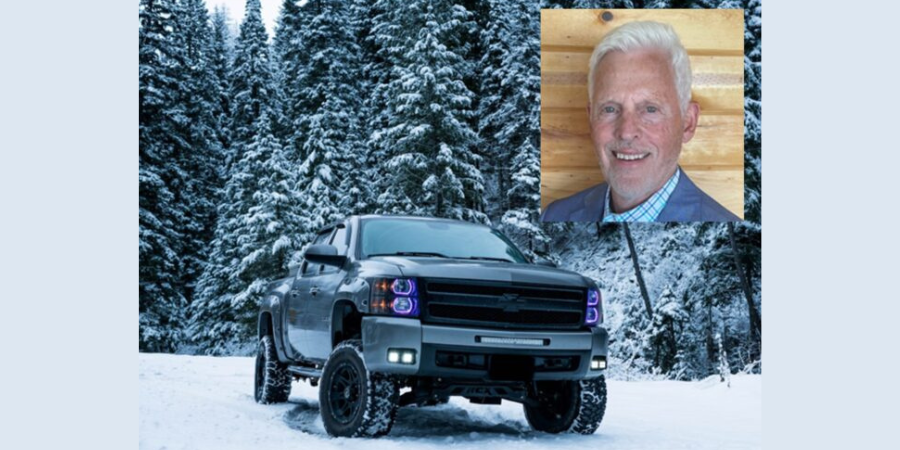
General Motors was the first one to get on board, utilizing the FNC processed rotors on their pickup trucks and big SUVs, like the Escalade and Tahoe. Ford was not far behind using it on their F150 pickup truck. I was shocked the first time I saw the commercial: a Silverado pickup truck, out in the snow, and the speaker saying, “We now have an 80,000-mile brake system because of a heat treating process called FNC!”
It’s a great story of American knowhow and a collaborative effort between someone who saw a need and someone else who saw the way. To this day, if you want to get a replacement set of brake rotors for your car, go to a place like AutoZone; they will tell you that the difference in cost between the OEM parts and an off-brand is the fact that the off-brand is not heat treated.
About the author: Michael Mouilleseaux has been at Erie Steel, Ltd. in Toledo, OH, since 2006 with previous metallurgical experience at New Process Gear in Syracuse, NY, and as the Director of Technology in Marketing at FPM Heat Treating LLC in Elk Grove, IL. Having graduated from the University of Michigan with a degree in Metallurgical Engineering, Michael has proved his expertise in the fi eld of heat treat, co-presenting at the Heat Treat 2019 show and currently serving on the Board of Trustees at the Metal Treating Institute.
Rick Bucher President and CEO at Victaulic Source: LinkedIn
On March 30, 2023, Victaulic, a manufacturer of mechanical pipe joining, fire protection and flow control solutions, acquired Horizon Metals Inc., a foundry with heat treatment capabilities, located in Nephi, Utah. The acquisition supports growth in the infrastructure and waterworks market by increasing capacity for large-diameter piping solutions made in the U.S.
Horizon Metals, Inc. has been a family-owned and operated iron and steel foundry with heat treating capabilities including: austenitizing, normalizing, water/air quench, tempering, stress relieving, and solution annealing. "Horizon Metals represents Victaulic’s fifth foundry in North America and our fourth foundry located in the United States.” commented Rick Bucher, president and chief executive officer of Victaulic.
Find heat treating products and services when you search on Heat Treat Buyers Guide.com
Solar Atmospheres of Michigan took delivery of a new vacuum furnace this week, which will be used primarily for aerospace applications. The Chesterfield, MI, location is set to begin heat treating later this year.
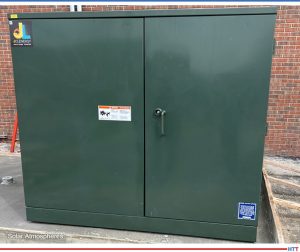
The furnace has a working hot zone of 36” wide x 36” high x 48” deep and can handle workloads up to 5,000 lbs. To power this furnace along with nine other vacuum furnaces, a new 2600kVA transformer was installed. The new facility anticipates being fully operational by the fall of 2023 and will gather all of Solar Atmosphere's Michigan heat treating under one roof.
Find heat treating products and services when you search on Heat Treat Buyers Guide.com
Today’s Heat Treat Radio episode illuminates how Gary Sharp, founder and CEO of Advanced Heat Treat Corp, began the company. Heat Treat Radio host and Heat Treat Todaypublisher, Doug Glenn, will hear from Gary about the technical highlights and capabilities of ion nitriding, including: common applications, real-world benefits, and true limitations.
Below, you can watch the video, listen to the podcast by clicking on the audio play button, or read an edited transcript.
The following transcript has been edited for your reading enjoyment.
Contact us with your Reader Feedback
Advanced Heat Treat Corp.’s Beginnings with Ion Nitriding (01:20)
Doug Glenn: We’re going to be talking about nitriding, specifically, ion nitriding. Gary Sharp has a long history with the technical aspects of ion nitriding.
Tell us a little bit about yourself and Advanced Heat Treat.
Gary Sharp: I started with John Deere in the Chemistry department. I have a degree in Science Chemistry. Then I went into various other areas: production support and different management positions before I ended up ultimately leaving to start Advanced Heat Treat.
The way I became oriented and introduced to ion nitriding was a company who we had done work with wanted to sell John Deere some new technology. They came in for some meetings, and we had several meetings with top management. But in 1979/80, that was one of the first real downturns in the ag market. So, Deere wasn’t really interested in taking on a new technology at that time. While I was still interested, I talked to various management people. Ultimately, I got permission to invest and investigate, on my own, the ion nitriding process.
Doug Glenn: Even while you were still at Deere?
Doug Glenn (l) and Gary Sharp (r) Source: Heat TreatToday
Gary Sharp: While I was still at Deere, but I had to do it on my own. All of my vacations, my holidays, and things were spent doing market surveys, talking to various potential users and so forth, in the marketplace, to see if it had a “fit.” Because, obviously, when an equipment supplier comes in, everything is nice and rosy and so forth and the equipment works for everything. That’s not always the case, of course.
After discussion with the management, they gave us permission to continue our investigation. From 1979 to 1981, we did a lot of research. I took vacations and went and did market surveys with different potential customers and found out that ion nitriding still seemed to have a lot of the glitz and the shine from the company that came in to talk to us.
We went ahead and, after a period of time and evaluation, put together an investor base. We put together a building, equipment was purchased, and then we began to do ion nitriding. We started with a 25 KW lab unit and a 160 kW unit that we would transfer from development into production-sized lots.
Doug Glenn: You say “we,” so this was not Deere though — these were the people outside of Deere — yourself and some others, right?
Gary Sharp: Yes, myself and several others, at the time. Unfortunately, some things happened and partnerships are not always the easiest. That dissolved, and it was pretty much me and my wife and our employee base. That was the start anyway.
The trouble is, early on, the small lab unit worked fine, and we could do out development; but it didn’t transfer over to the larger production unit. We kept having power supply issues. This went on for months and months and months. Ultimately, I had to get legal involved. That churned around for over a year, probably. Here we’re trying to have a startup business and, at the same time, we’re fighting with everything else. The building came together, the lab we put in worked well, but we just had issues.
We weren’t aware of how many pieces of equipment had been sold in the marketplace by this company until we got into legal, and then we started having more serious discussions. They replaced the power supplies with a new source and solved the arc suppression problems and some of the things that were taking place. Basically, we would get into the range of an unstable arc discharge; and instead of heat treating we were melting the parts. Unfortunately, we couldn’t keep many customers doing that! That got resolved, we got additional equipment in the settlement, and then we took off.
Doug Glenn: When did you actually start the company?
Gary Sharp: 1981/82 timeframe.
From the market surveys, we knew there was considerable interest. Obviously, we went back to some of those folks and started doing some development work with them, particularly on applications where ion nitriding was a significant advantage over some other treatments. Where I was in Iowa, they were doing gas nitriding on cylinder liners. Again, with the market going south for a while, they weren’t interested in any new technologies; and they just continued to do the gas nitriding.
Doug Glenn: So, you ran through a little bit of legal issues. When would you say was the first time you felt you were up and running?
Gary Sharp: I think last week, maybe! It took a while.
In our investigation, we found out they had sold quite a few pieces of equipment; and they’d all been mothballed and put on the shelf. In a way, it was a bad deal, but it was good for us because we had the solutions to fix them.
I went around and purchased equipment, 10 cents on the dollar, and bought additional capacity. We would get up to around 70–80% capacity on one vessel, and then I’d go buy another. I’d get that up and established in our plant. It worked out quite well for us, being dumb and stupid, I guess.
Gary Sharp: It kind of evolved over time. We’ve got 50+ units now — ion nitriding as well as gas nitriding. The nitriding field has been our baby for many, many years. We’ve done a lot of development with other suppliers to make sure the applications they run are using the right process.
What Is Nitriding? (09:03)
Doug Glenn: Let’s talk a little bit about nitriding. Then I want to hone in a little bit more into ion nitriding. What is nitriding? How is it different from ion nitriding? What are we doing, and why do we do it?
Gary Sharp: Nitriding is a case hardening process. It is used on a variety of components to improve wear, abrasion resistance, fatigue strength, etc. It’s generally a lower temperature process (than, say, carburizing or anything like that), so you don’t have the resultant distortion and post machining requirements that you do with some of the existing treatments that are out there.
Nitriding is a case hardening process. It is used on a variety of components to improve wear, abrasion resistance, fatigue strength, etc.
As you mentioned, there is ion nitriding, there is gas nitriding, there is salt bath nitriding. All three do similar things, they just have different requirements. Obviously, there are materials and chemistry that are involved with each of those materials, but you can nitride almost anything, at least putting a compound zone or an outer layer on that’s very abrasion resistant. Where the process gets developed is when you have alloy (Chromalloy, malatium, aluminum); these are nitride formers which, combined with the nitrogen at and below the surface, give you a diffusion zone that has longevity and a very high hardness.
Doug Glenn: In the simplest terms, nitriding is in one sense hardening the surface of a metal by infusing nitrogen, basically. It’s done in a variety of ways, and that’s what I wanted to ask you a question about.
If the total universe of nitriding is 100%, what percent of that, do you think, is gas nitriding, salt nitriding and ion nitriding? Your best guess.
Gary Sharp: I’ve heard different numbers. Ion nitriding has grown significantly over the years. Up until that point, gas nitriding and salt bath nitriding were probably 70/80%, I would guess. Ion nitriding is quite visual — it has a purple glow. That’s why I’ve got this purple tie on.
Doug Glenn: I was going to ask why you have the purple tie on. I wondered why www.ahtcorp.com is purple.
The purple glow Source: Advanced Heat Treat Corp.
We won’t go into the details of gas nitriding or salt nitriding; that can be a topic for another day. Let’s talk a little bit about how ion nitriding gets the nitrogen into the surface of the metal. How does that happen? How does that differ from, if you will, gas and/or salt?
Ion Nitriding (13:40)
Gary Sharp: It’s a diffusion process. If you look at a piece of equipment, a hearth plate is a cathode in a DC circuit. The vessel wall is the anode, and the gas is your carrier.
Through the transfer of energy, you bombard the part with ions and neutral atoms. They transfer their kinetic energy, and that is what actually heats up the parts. In the early years, that was the only way you could heat the parts. Later came more developed equipment.
Now, you have auxiliary heating in the walls which adds some advantage, but it also adds a little more complexity in terms of keeping and maintaining a current density on the part adequate to diffuse into the metal itself. Sometimes you put it in a vessel, and you turn on the power supply. All the energy is coming from somewhere else, and you don’t actually diffuse or harden the part itself. It’s been solved, obviously, over the years.
Doug Glenn: Are you making a positively and negatively charged item?
Gary Sharp: The ions bombard the surface.
Doug Glenn: Right. The ions bombard it because they’re attracted magnetically?
Gary Sharp: Yep. And they transfer the kinetic energy. That’s what heated the workpiece up in the early equipment. Like I said, in later equipment, they had auxiliary heating, as well, in the chambers.
Applications of Ion Nitriding (15:17)
Doug Glenn: Typically, what are some of the more common applications? Is it mostly agriculture, like John Deere?
Gary Sharp: By no means. When I was still at Deere and left Deere, we made sure we didn’t have conflict of interest. I didn’t even solicit any Deere parts, and that went on for quite a few years. Since, we’ve done parts for them and so forth.
Anything that has high wear and abrasion. One of the advantages that we haven’t talked about is the ability to selectively harden and the ease of masking. “Ease of masking” means instead of using copper paints or stop-off materials, you can just interrupt the plasma from touching that surface. If you have some threads, you just put a nut on there. It blocks the plasma from touching the threads, and they won’t get hard. It is a physical block. And you have maybe an 8–10 thousandths/8–15 thousandths gap and you still don’t diffuse beyond the masking itself.
There are a lot of ways of masking parts with ion nitriding. Those are generally done on customers’ parts that are repeating, so you don’t have to paint them every time they come in. You let the copper paint dry and all of that. We would just use mechanical masking and just use them over and over. They basically last forever.
Doug Glenn: I’ve heard one of the other real advantages of ion nitriding is blind holes and areas like that where gas flow wouldn’t necessarily get. Even salt might have a little of bit of difficulty getting in there.
Gary Sharp: It is an advantage. There is an L/B ratio we must be aware of. You conform that plasma to go down in the hole, if it intersects itself with the other side (it’s called hollow cathoding). That is extremely hot and can melt the parts.
That’s what we learned early on, before we got some of the equipment issues resolved, is that we would get in that unstable arc discharge range. We’d basically melt the work piece. And the customers weren’t happy with that!
Doug Glenn: It’s a bad day when you open the furnace to a pool of metal. That is not a good day!
We’ve got certain benefits there. Any industry, you’re saying, can do it, anywhere where there’s high resistance. So, automotive parts, yes?
Gary Sharp: Automotive, aerospace. We did the submarine gear for the Seawolf-class submarine, 35,000 pounds, 160 inch diameter. That ran, probably, 400+ hours. Not because it was big, but because they had an extremely deep case requirement. The diffusion took longer, particularly at the lower temperatures that you run, versus other kinds of treatments.
Sea-wolf class submarine Source: Wikipedia.com/Defense.com News photo
Doug Glenn: With ion nitriding, you are typically below the temperature where distortion could occur, I believe. So, you shouldn’t have to do post hardening processes.
Gary Sharp: Yes. That is one of the big advantages, for sure. We found that one of the reasons a lot of our customers transition out of one process into ours was because we eliminated some subsequent operations which they typically had to have and reduced their cost. Even though it wasn’t a direct cost in nitriding, it definitely affected that.
Challenges with Ion Nitriding (
Doug Glenn: What are some possible challenges with ion nitriding?
Gary Sharp: Loading a chamber and the part spacing you need, depending on what level of backing they’re going to run at, will determine how wide the plasma is. That, in turn, affects then how close you can put parts together or close to each other so that you still get treatment on both products or both pieces. And it does allow you to do mixed loads of different types of things, depending on the level of vacuum and how wide the plasma that you’re conducting surrounds that part.
This is a concern, and that’s why we review all those. Generally, we even run some test samples for the customer. We let them compare our metallurgy with theirs before they commit even further production loads.
We had a steering torsion bar we probably ran 10,000 pieces in a load. We masked the bottom portion of that because it got cross-drilled in the assembly and, of course, they didn’t want to have to drill through a hardened piece of material. Consequently, it worked out really well for us; and we did that for 15/20 years.
Special Consideration: Parts Cleaning (22:17)
Doug Glenn: I have heard that when you’re ion nitriding, part cleanliness is a critical part. Can you address that?
Parts cleaning Source: Advanced Heat Treat Corp.
Gary Sharp: Yes. Of course, we clean everything before it goes in the chamber. Typically, it has been either with an alkaline wash or vapor degrease to get rid of any contaminants off the surface. The early part of the cycle, when you turn the DC power supply on, you begin to sputter. So, any oxides and things like that on the surface get sputtered away before you actually ramp up and start the diffusion phase of the cycle.
Cleaning is important. If you have plating, that often blocks out. If you have dirty parts, that will prevent nitriding. Or, an even worse case, it will sputter off and onto other parts and then you contaminate those as well. Cleaning is an important part of the equation.
Doug Glenn: Are there any other common misperceptions about ion nitriding that you would like to address?
Gary Sharp: I don’t know any more. Back then, when we first started, that’s how we learned some of the things we did, of course. The spacing is important, the gaps are important so that you don’t hollow cathode. And, as you touched on a little bit ago, the cleanliness; if it’s really dirty and contaminated, you’re going to have a void in that area and it won’t nitride. Even a fingerprint could cause an issue.
Cleaning parts it’s getting more difficult, right now, with the push to restrict the use of vapor degreasing and things like that. We have to come up with other cleaning methods that are suitable and still meet the end-product requirements.
Wear and abrasion are big benefits. Treating parts at a low enough temperature that you don’t have distortion. You don’t have to set up and post heat treat machine. Those are all key benefits from the process itself.
It’s repeatable. Over and over, we do thousands and thousands of parts and loads at our different locations. It’s been quite successful for us.
Ion Nitriding and FNC (26:07)
Doug Glenn: Can you put ion nitriding (or nitriding, generally) in perspective with things like ferritic nitrocarburizing, maybe carbonitriding? Where does it fall on the scale? What are the differences between those processes?
Gary Sharp: Ion nitriding is most effective when you have Chromalloy, malatium, aluminum, and those types of elements in your product. Of course, with carburizing, that’s not a requirement. With carbonitriding, typically, it isn’t a requirement. Both of those processes are done at considerably higher temperatures which then gets you back into the questions: Is the part going to distort, do we have to post heat machine?
Doug Glenn: I have one last question for you about people who, potentially, could use your services, but I want to dive a little bit deeper into your company before we wrap up. You’ve got three locations, now, correct?
Gary Sharp: We have four.
Doug Glenn: Four locations? Where are they?
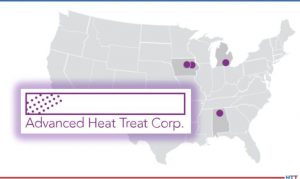
Gary Sharp: Three of them do ion nitriding and the nitriding process. Here, in Waterloo, we have the corporate headquarters where we have the largest ion nitriders. As a matter of fact, we are installing one right now that will do parts upwards of about 30 feet. We have Waterloo, Iowa, and we have the two facilities here in essence where we started. It was risky enough, leaving John Deere, without going somewhere else.
Here, in Waterloo, we have the corporate headquarters where we have the largest ion nitriders. As a matter of fact, we are installing one right now that will do parts upwards of about 30 feet.
Then we added Michigan. Dr. Ed Rolinski was our key “go-to” guy up in Michigan. He lived with me for a year and half. Meanwhile, we were building the facility in Michigan; so he could go back to it.
Then we started a plant in Cullman, Alabama. We’ve got the central Midwest pretty well covered with all types of applications. We’re starting to add some other types of treatments: the black oxide treatment® to kind of subsidize the ion nitriding, if you will.
Doug Glenn: Let me wrap up with this question: Let’s say there is a company out there, a manufacturer, who currently is doing some sort of a case hardening process. They’re thinking, “I wonder if I should look into nitriding/ion nitriding.” What would be your guidance for them? What questions should they be asking themselves?
Gary Sharp: Companies have to go through the some of the same steps we did early on — testing, making sure the parts/the treatment they select is repeatable, and it fits their end-use.
It’s rather expensive equipment. Some equipment is in excess of $600,000–$700,000 apiece. Depending on the size, they can get even more expensive than that.
We do make some of our equipment, now. We have in the past, particularly, when there were things that weren’t available.
If you’re looking to outsource ion nitriding, you’d start first with the material chemistry and see what materials are used. It has to fit the requirements of the end application, as well. That’s probably the biggest thing.
Then, if it’s got alloy in it and you figure out your case steps and your diffusion requirements, next you would do some development testing on parts and see how it worked in the application and go from there.
Doug Glenn: And it’s probably best just to ask an expert! At least call and check it out.
Is there any part (or maybe there is more than one) that if you have this part, you shouldn’t even consider ion nitriding — it’s just not going to work?
Gary Sharp: In ion nitriding, a key thing to be cautious of — assuming the material is compatible with the nitriding reaction — is wide holes, or holes we can’t conform the plasma tight enough to reach. In those cases, you’d have hollow cathode and then you’d have a melting issue or damage to the parts.
Parts that have to be nitrided all over can also be problematic. Oftentimes, in those cases, you would nitride for half cycles and then flip them because where it’s sitting is actually getting masked, where it’s sitting on the hearth plate or on your fixture plate or something similar. So, those are the kinds of applications that you have to give more thought to.
Doug Glenn: We appreciate your time, Gary. You folks have been around a long time, and your reputation is one for doing great work. I hope people will get in touch with you.
About the expert: Gary Sharp founded Advanced Heat Treat Corp., “AHT” for short, in 1981. The company initially went to market with its UltraGlow® ion nitriding & ion nitrocarburizing services, but since then, has expanded its offerings to also include gas nitriding, gas nitrocarburizing and UltraOx® as well as more traditional heat treatments such as carburizing, induction hardening, carbonitriding, through hardening and more.
For more information: Contact with Gary or learn more about Advanced Heat Treat Corp. at www.ahtcorp.com, or call 319-232-5221.
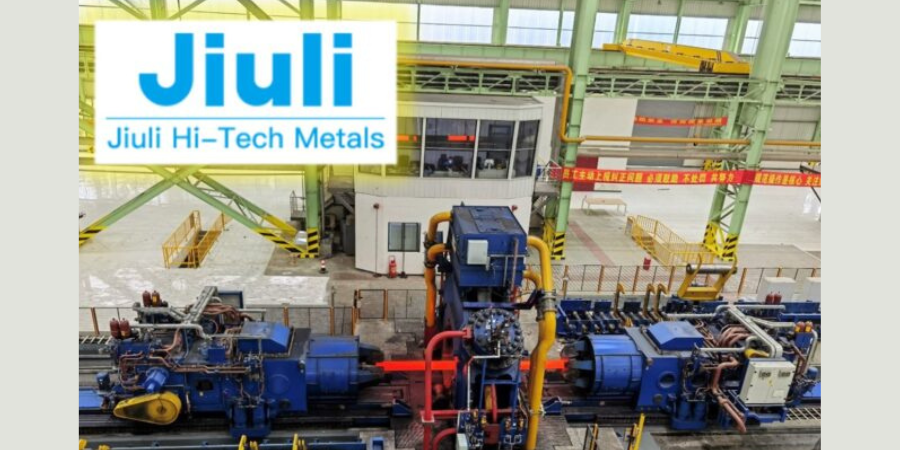
Jiuli has awarded the final acceptance certificate (FAC) for a hydraulic radial forging line to a metals industry technology supplier with North American locations. The plant has a press force of 18 MN for each of the four press cylinders, which will allow sophisticated materials for the aerospace industry to be forged.
"The new SMX forging line enables us to manufacture our products in a highly cost-efficient way. The high productivity and the wide range of products give us the necessary flexibility to respond quickly to changing demands," commented Luo Tongwei, project manager at Jiuli.
In addition to the SMX 900 / 18 MN as the core machine, the plant comprises two fully synchronized eight-ton forging manipulators and equipment for loading and unloading as well as for cutting, marking and cooling of forged bars. SMS group manufactured the plant to provide a forging strategy that is calculated on the basis of a comprehensive material database as well as the preset machine, material, geometry, and product-related parameters.
“SMS group has enjoyed a close working relationship with Jiuli for over ten years and has supplied them with different types of equipment during this period. We are looking forward to the further fruitful cooperation”, says Jia Hui, senior sales manager at SMS group.
Find heat treating products and services when you search on Heat Treat Buyers Guide.com
The days are getting a little longer, you've saved up some vacation hours, it's time for a break this spring!
Make use of some down time to listen in on a couple of Heat TreatRadio series. Putting in some driving miles, relaxing in the sand, or enjoying a staycation all mean some time to peacefully enjoy some heat treat topics. We've put together an original content piece that lets you listen in on a 3-part series on thermocouples, and a back-to-basics series on heat treat hardening. It's nice to know that there is plenty to listen to; you can just click to play each episode!
Thermocouples 101with Ed Valykeo and John Niggle
This series gives the opportunity to learn from an expert all about thermocouples. The first episode digs into thermocouple history, types, vocabulary, and other basics. Hear from Ed Valykeo, as he gives some of his own history and then dives into all things thermocouple.
The second episode covers thermocouple accuracy and classification. Ed Valykeo continues to review and explain necessary information on how thermocouples are calibrated and used.
The final episode in this series gets into discussion with John Niggle about thermocouple insulation types. His review towards the beginning of the episode is helpful, and his discussion of insulation reminds readers that job specifications and requirements are crucial.
Mark Hemsath sits down with Heat TreatRadio to provide an overview of metal hardening basics. In the first part of the series he provides explanation of what it is, what materials can be hardened, why it has to be done, and more.
For the second episode, Mark Hemsath explains five hardening processes: carburizing, nitriding, carbonitriding, ferritic nitrocarburizing, and low pressure carburizing.
In this final episode for the metal hardening series, a discussion is presented on newer advances in metal hardening. A call is even put out for new ideas and engineers willing to experiment with some of these advance.
As you can see above, this resource provides two series -- each with three parts -- that give a comprehensive look at two fundamental components in the heat treat industry. Both the discussion of thermocouples and the investigation of metal hardening provide educational listening with something for everyone in the form of review as well as maybe some basics that have been neglected or forgotten.
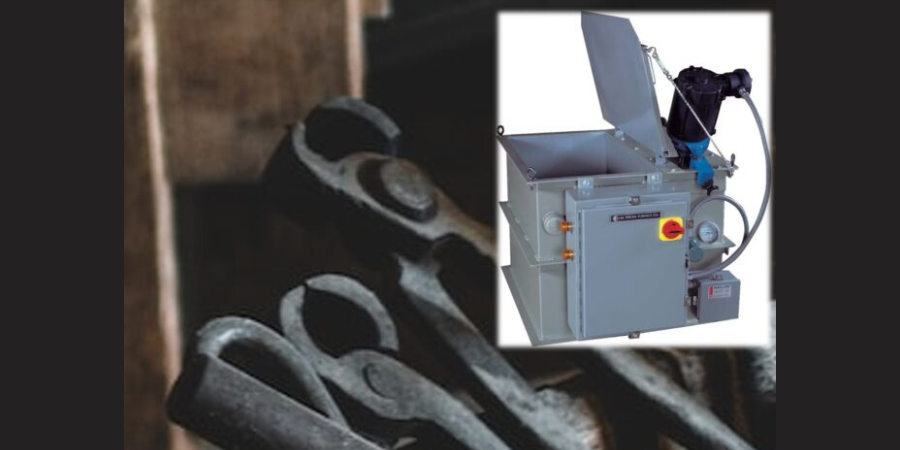
A forging tool manufacturer will receive an agitated heated oil quench tank to be used post-heat treatment in order to set hardness. Tools such as nippers and ladles -- critical components in the foundry and in forging equipment -- are heat treated to the required hardness and then quenched in oil to set that hardness.
The L&L Special Furnace Co. small model QTO1224 heated oil quench tank holds 65 gallons of oil and can quench parts from 50 to 75 pounds. The quench tank oil is agitated by an impeller with a ½ HP explosion-proof motor and is heated with a 4.5 kW immersion heater to maintain the oil at a slightly elevated temperature to help eliminate oil flashing and fire potential.
Find heat treating products and services when you search on Heat Treat Buyers Guide.com
Technicians with a combined 100+ years of metallurgical and heat treating experience . . . one of the largest commercial nitriding departments in the country . . . and the recipient of the 2022 Master Craftsman Award . . . All of these attributes characterize The Cincinnati Steel Treating Company (CST), a heat treater serving clients in multiple industries, a few being the large gear, automotive, and industrial knife, as well as hundreds of general-purpose machine shops.
Contact us with your Reader Feedback!
Heat treatment of long parts Source: Cincinnati Steel Treating
The company was founded in 1941 to accommodate the gear industry’s metal-treating needs in the Cincinnati, Ohio, area. By 1950, they had diversified and moved to 5701 Mariemont Avenue in Cincinnati. Now, after two major expansions, the 45,000 square-foot facility provides heat treating services nationwide. Some of these heat treat services include: carbonitriding, FNC, sub-zero metal treating, and tool steel processing. The dimensional capacities of their furnaces accommodate large loads of smaller parts as well as parts too large for most furnaces. For example, their pit furnace vertically processes parts up to 120” to prevent warpage, and the max capacity of their car bottom and nitriding furnaces is 8’ x 17’ x 6’ and 57” x 107” respectively.
In addition to their heat treatment services, CST also provides metallurgical lab testing services and failure analysis for both in-house and outside treated parts. A fully equipped metallurgical laboratory includes a metallurgical cutoff saw, metallographs, microscopes, stereoscopic equipment, and more. The lab includes capabilities for macro-etching, quench oil testing, and other chemical testing for metallic parts. Some applications of metallurgical analysis include tool steel industrial knives, highly alloyed rolling mill rolls, flat-rolled carbon sheet steel products, and carburized and hardened gears. With experience analyzing various types of materials, such as stainless steel, brass, aluminum, titanium, and cast iron, the company’s lab analysis has saved CST’s clients thousands of dollars, both by helping them to improve their processes and determining the root cause of a failed component.
Cincinnati Steel Treating is proud of the difference that it has made in terms of the parts it has heat treated over the years. Two specific jobs stand out; first, heat treating the armor plating of the military’s Humvee for combat. The client emphasized that the job was an integral part of saving lives, and the company saw letters from soldiers and their families expressing their gratitude.
Carburization of gears Source: Cincinnati Steel Treating
The second job was solution treating and aging an aluminum mounting bracket for the external booster rockets affixed to a space shuttle for NASA. These parts were designed to withstand being jettisoned from the space shuttle (with the external booster rockets) once the rockets’ fuel depleted. Made of aluminum, the components could more easily disintegrate during re-entry into the earth’s atmosphere. CST even purchased a high-speed crane and affixed it to the bridge of their existing overhead crane to maintain the desired quench delay time specific in the military specifications for aluminum. This program ceased when the space shuttle program ended, but the high-speed crane is still used for jobs requiring specific quench delays.
Plans for the future are looking bright as Cincinnati Steel Treating rounded out 2022 with the Master Craftsman Award for Commercial Heat Treater of the Year. At the beginning of 2023, CST added a new IQ furnace and continues to increase capacity and capabilities as needed.
Find heat treating products and services when you search on Heat Treat Buyers Guide.com







 Find heat treating products and services when you search on Heat Treat Buyers Guide.com

















 Technicians with a combined 100+ years of metallurgical and heat treating experience . . . one of the largest commercial nitriding departments in the country . . . and the recipient of the 2022 Master Craftsman Award . . . All of these attributes characterize The Cincinnati Steel Treating Company (CST), a heat treater serving clients in multiple industries, a few being the large gear, automotive, and industrial knife, as well as hundreds of general-purpose machine shops.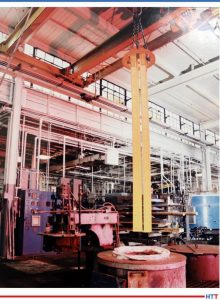
 Cincinnati Steel Treating is proud of the difference that it has made in terms of the parts it has heat treated over the years. Two specific jobs stand out; first, heat treating the armor plating of the military’s Humvee for combat. The client emphasized that the job was an integral part of saving lives, and the company saw letters from soldiers and their families expressing their gratitude.