VACUUM FURNACES NEWS

Vacuum Furnace Builder Goes from Kitchen Startup to Employee Ownership

Signature Vacuum Systems, a small manufacturer of vacuum furnace equipment, recently implemented an Employee Ownership Trust (EOT), placing partial ownership of the company into a trust that benefits its employees. The transition reflects a growing interest among small- to mid-sized manufacturing companies in alternatives to traditional ownership succession — particularly as many in the industry face workforce turnover and the challenge of preserving decades of accumulated knowledge.

While EOTs are still relatively new in the United States, the structure has gained traction as a way to align long-term business stability with employee engagement. For Signature, the decision was rooted in both legacy and practicality, maintaining a close-knit culture while positioning the company for future growth.

To better understand the decision and what it means moving forward, Heat Treat Today compiled key insights from the company’s announcement.

How did Signature Vacuum Systems get its start?

Co-founders Tim Horning (left) and Greg Kimble (right) | Image Credit: Signature Vacuum Systems

Signature Vacuum Systems traces its origins to a long-standing partnership between co-founders Greg Kimble and Tim Horning, who first met in 1978. The company was incorporated in 2002, with its earliest orders fulfilled out of a kitchen and a basement. Today, the company employs 15 people, and has furnaces installed as far away as Japan.

What type of vacuum furnace systems and thermal processing applications does Signature support?

Signature manufactures industrial furnaces for thermal processing applications in the metals and ceramics industries. Standard products include furnaces for processes such as brazing, sintering, and heat treating, and custom-engineered products ranging from steam-heated ovens to high-temperature ceramic sintering furnaces.

Vacuum brazing furnace | Image Credit: Signature Vacuum Systems

What factors influenced the decision to pursue employee ownership?

“We explored a couple of avenues with some folks that were interested in buying the company. But ultimately, we wanted to continue our legacy and keep our team employed here. We’ve developed a real family-like environment over the years, and we care about our people and their wellbeing,” says Greg Kimble.

Why is maintaining company culture an important consideration in this transition?

For smaller, specialized manufacturers, particularly in the heat treat and thermal processing space, culture and technical knowledge are closely intertwined. Maintaining that continuity can be just as important as financial outcomes, especially as experienced workers retire and industry knowledge becomes harder to replace.

What made an Employee Ownership Trust (EOT) the right fit?

“We chose the EOT structure for a couple different reasons. We liked the ease of structure of an EOT, as well as being able to modify aspects as necessary down the road. We’re also a smaller company, and the cost of an EOT was much more feasible for our size and revenue,” said Heather Bell, operations manager at Signature Vacuum Systems.

What is an EOT, and how does it function?

An Employee Ownership Trust is a structure in which a trust holds shares of a company on behalf of employees. Owners can sell stock shares to the trust and typically be paid over time. These shares then give employees some governance of the company. Eligible employees in the trust will participate in profit sharing, which enables employees to share in the company’s success. While widely used in the United Kingdom, the model is still emerging in the United States.

How might this transition affect employee engagement?

“I’m greatly looking forward to higher engagement from all our employees. They have so much to offer and valuable suggestions to give, but they didn’t always have an avenue in the past to make them heard as easily,” said Heather Bell.

Ownership transitions like this are increasingly tied to industry-wide concerns about workforce retention and knowledge transfer. In technical fields like heat treating and furnace manufacturing where expertise is built over decades, models that encourage long-term employee investment can help maintain both capability and continuity.

What support was involved in executing the transition?

The company worked with Common Trust, along with advisors including JHP Advisors and the Strategic Early Warning Network (SEWN), to structure and implement the Employee Ownership Trust.

What does this transition signal for the company’s future?

The move positions Signature to grow from a place of stability, maintaining leadership continuity while creating opportunities for increased employee participation and long-term alignment.

What perspective do company leaders offer to others considering this model?

“I would suggest it to other business owners. I think it’s a great option to have,” said Greg Kimble. Heather Bell adds, “it’s well worth it. We feel that we’ve paved the way for the future of both the company and our employees.”

Press release is available in its original form here.

Vacuum Furnace Builder Goes from Kitchen Startup to Employee Ownership Read More »

New Vacuum Furnace Supports Aerospace Heat Treating at U.S. Facility

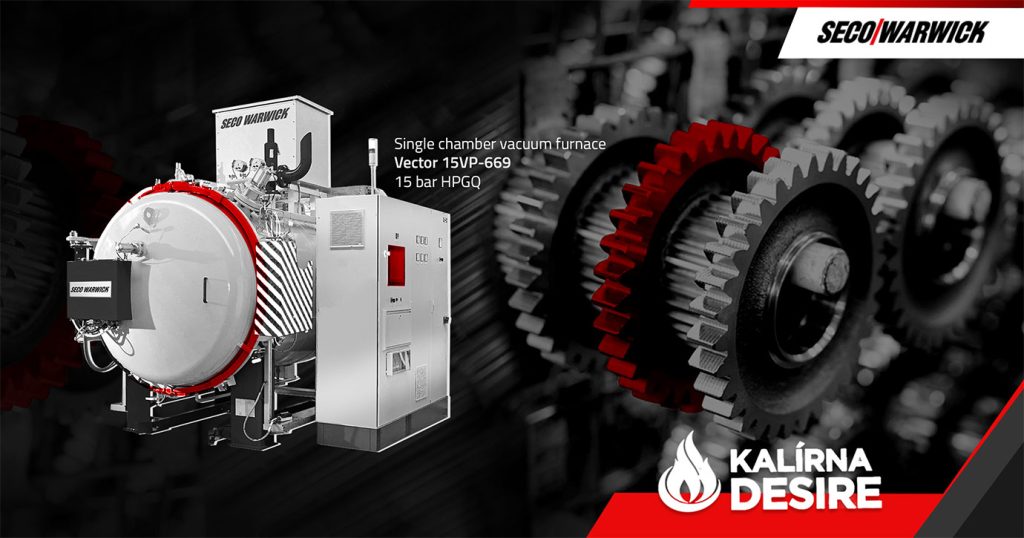
A U.S.-based aerospace manufacturer is expanding its heat treat capabilities for bearing components with the addition of vacuum heat treatment processes, including high-pressure gas quenching and low-pressure carburizing. The move supports increasing production capacity, process quality, and operational flexibility.

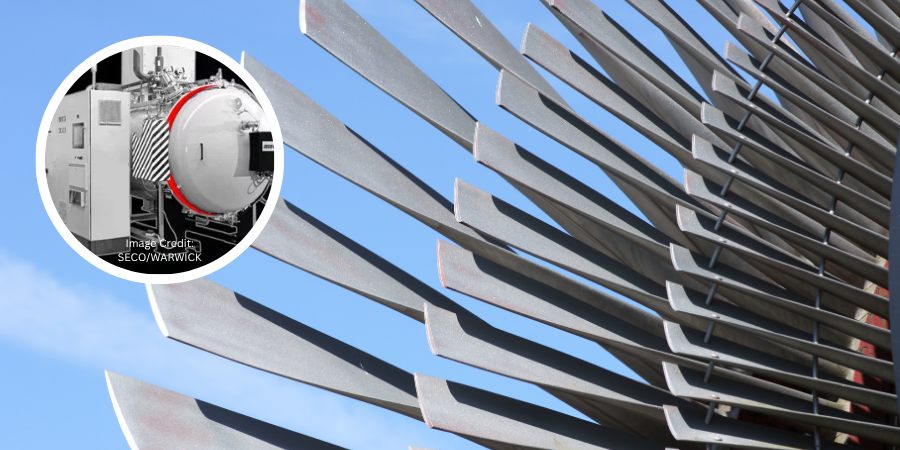
Image Credit: SECO/WARWICK

SECO/WARWICK has supplied a Vector vacuum furnace equipped with a 15-bar absolute high-pressure gas quenching system that has been customized to meet the client’s requirements by integrating the low-pressure carburizing (LPC) option. With a working zone of 900 mm x 900 mm x 1200 mm (36 in x 36 in x 48 in), the system is designed to process large loads, including parts with critical dimensions, while maintaining cleanliness and parameter repeatability.

The furnace configuration includes a cylindrical heating chamber that ensures temperature uniformity of ±5°C (±10°F). A convection heating system improves heat transfer at lower temperatures, while directional gas quenching enables better process control for components with more complex geometries.

Operating under vacuum conditions, the system helps limit sublimation of alloying elements from the load surface, while the gas quenching system provides a maximum quenching pressure of up to 15 bar abs. It is complemented by the LPC option, enabling precise surface hardening within a single, integrated technological cycle.

Maciej Korecki
Vice President of the Vacuum Segment
SECO/WARWICK Group

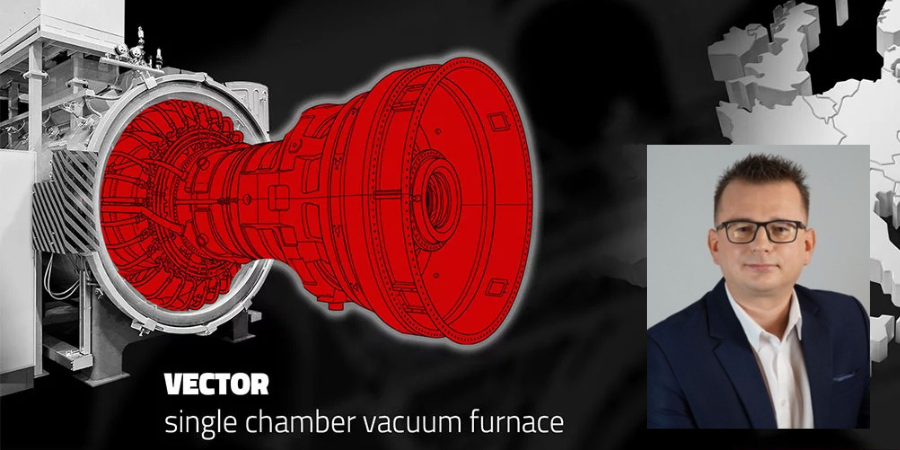
“In this project, the [client] was looking for a solution that would combine a large working area, a short delivery time, and an excellent price-to-performance ratio. Vector meets these expectations, and thanks to the LPC option and advanced quench control, it gives users great flexibility in processing a wide range of components,” emphasizes Maciej Korecki, vice president of the Vacuum Segment at the SECO/WARWICK Group.

The installation enhances the manufacturer’s ability to meet stringent aerospace requirements while increasing throughput for heat treated bearing components used in demanding operating environments.

Press release is available in its original form here.

New Vacuum Furnace Supports Aerospace Heat Treating at U.S. Facility Read More »

Andis Vacuum Furnace Controls Get An Upgrade

Andis Company, a U.S.-based manufacturer of grooming tools, has completed a controls upgrade on a vacuum heat treat furnace used for hardening components. The upgrade supports continued operation of a system critical to its production.

Andis Company finalized a PLC system overhaul on its ECM FLEX vacuum furnace, transitioning from an aging S7-300 processor and Profibus network to a newer S7-1500 series processor with Profinet communication. The upgrade also included remote input/output integration across the system. ECM USA supported the project planning and on-site execution, with the work completed on schedule and with minimal disruption to production.

The three-cell hardening modular furnace operates at approximately 950°C (1724°F) and includes a 20-bar gas quench, along with loading/unloading automation. Installed roughly 15 years ago to replace molten salt baths, the system supports clean heat treatment to avoid part discoloration and reduce the need for post-heat treat cleaning. The furnace remains central to Andis’s Wisconsin operations.

Tom Hoffelder
Director of Manufacturing Support and Innovation
Andis Company

The upgrade was initiated in 2025 following end-of-support announcements for legacy controls. “In 2025, we determined that we needed to fully replace the CPUs in our ECM vacuum heat treat system after Siemens announced end-of-support for significant portions of the controls,” said Tom Hoffelder, director of manufacturing support and innovation at Andis Company. “Because reliable day-to-day operation of our heat treat system is critical to our business, we worked closely [with ECM] to define the project scope and map out the execution plan.”

The project focused on modernizing hardware, improving long-term reliability, and maintaining throughput during installation. The updated controls and HMI remained familiar to operators, allowing the system to return to full production without additional training, Hoffelder added.

Press release is available in its original form here.

Andis Vacuum Furnace Controls Get An Upgrade Read More »

AM Drives Hypersonic Engine Development Demand

Aerospace firm Velontra is leveraging metal additive manufacturing (AM) technology to support hypersonic propulsion development. Their choice of laser powder bed fusion (L-PBF) for rapid prototyping is an AM method that requires post-processing technologies — hot isostatic pressing (HIP) being key to bring these types of AM parts to their full potential.

The original source was published in Metal AM, and the following content has been adapted for our Heat Treat Today audience.


Aerospace firm Velontra is using metal additive manufacturing (AM) technology to advance hypersonic engine development, signaling continued momentum in high-performance propulsion and downstream demand for post-processing capabilities.

Velontra, a Cincinnati, Ohio-based startup, partnered with Innovative 3D Manufacturing, a rapid prototyping company in Franklin, Indiana, to produce propulsion system components using laser power bed fusion (L-PBF) technology from Renishaw. The approach enables rapid prototyping while addressing material use, dimensional tolerances, and cost constraints.

Joel Darin
CTO
Velontra

“Compact hypersonic propulsion systems are highly sought after by space companies, so, to remain competitive, we must develop parts quickly,” explained Joel Darin, CTO of Velontra. “In aerospace, we know that the best way to learn is by doing things, particularly if you want to be the first to launch a new technology.”

While the focus is on AM production, the resulting components require post-processing to achieve final material properties. Parts produced via L-PBF are typically subjected to stress relief and heat treatment to stabilize microstructures formed during rapid solidification. For high-temperature aerospace alloys, hot isostatic pressing (HIP) may also be applied to reduce internal porosity and improve structural integrity.

This requirement is consistent with broader industry findings for nickel-based superalloys used in propulsion systems. As noted in Dan Herring and Nikolai Alexander’s article published in Heat Treat Today’s Annual Aerospace Heat Treating magazine (March 2026) covering IN 718 processing, powder bed fusion methods often rely on post-HIP to heal cracks and homogenize the microstructure.

To learn more about why HIP is critical for AM superalloys, read this overview of IN 718 heat treatment.
Explore this look at emerging technologies to learn more about how HIP is scaling with AM.

As adoption of AM expands in aerospace applications, supporting technologies such as heat treating and HIP are expected to scale alongside it. Industry perspectives highlighted in Heat Treat Today’s Medical & Energy Heat Treat magazine (December 2025) indicate that HIP capabilities are evolving in response to increased demand from additive manufacturing and advanced materials development.

The integration of AM with post-processing underscores the role of heat treating in enabling next-generation propulsion systems, where component performance under extreme conditions remains a key requirement.

Press release is available in its original form here.
Main image shows the additively manufactured afterburner casing for the hypersonic propulsion system with several components combined into one part. | Image Credit: Renishaw

AM Drives Hypersonic Engine Development Demand Read More »

Fringe Friday: US Lab Selects PGA Platform for New Materials Initiative

We’re celebrating getting to the “fringe” of the weekend with a Heat Treat Fringe Friday installment: a plasma gas atomization (PGA) platform selected by a U.S. national laboratory highlights how advanced powder production is being developed at pilot scale to bridge research and industrial application in critical materials.

While not exactly heat treat, “Fringe Friday” deals with interesting developments in one of our key markets: aerospace, automotive, medical, energy, or general manufacturing.


A U.S. national laboratory has selected a plasma gas atomization (PGA) platform in support of a critical materials initiative. The pilot-scale program will enable advanced powder development for next-generation materials used in high-performance manufacturing and emerging technologies.

The system will be supplied by Retech, a division of SECO/WARWICK Group. The PGA system is designed to transition processes from validation to broader industrial deployment.

National laboratories play a role in bridging the gap between metallurgical discovery and manufacturable solutions. While early-stage research confirms material properties, pilot-scale systems evaluate process reliability, repeatability, and economic feasibility. The PGA platform aims to address these requirements through controlled processing and scalable parameters.

The system will contribute to strengthening domestic supply chains and reinforcing U.S. technical capabilities in critical materials.

Earl Good
President
Retech
Source: Retech

“National labs are focused not only on proving what’s possible, but on proving what’s practical,” said Earl Good, president of Retech. The PGA platform enables movement from controlled pilot-scale experimentation to production-scale capability. Its design allows processes to be scaled once validated, without requiring significant redesign, he added.

Beyond individual equipment capabilities, the platform is designed for integration with existing lab infrastructure, allowing coordination across operations, maintenance, and training. This enhances cost efficiency while maintaining performance standards.

As demand grows for domestic production of critical materials, the company continues to develop scalable solutions aimed at strengthening supply chains and materials innovation.

Press release is available in its original form here.

Fringe Friday: US Lab Selects PGA Platform for New Materials Initiative Read More »

Vacuum Furnace Boosts Tool Steel Processing

Treatnorte, a commercial heat treatment company, will add a new vacuum furnace to support vacuum heat treatment of tool steel, improving process control and consistency for components used in manufacturing applications.

Image Credit: SECO/WARWICK

The furnace joining Treatnorte’s machine park is a medium size system from SECO/WARWICK, a global manufacturer of heat treatment equipment with operations in North America. It is configured to provide a broad process range and production flexibility.

The round heating chamber allows processing of relatively large parts, while the combination of high-pressure gas quenching (HPGQ) up to 15 bar abs, combined with dedicated low-pressure carburizing (LPC) technology, enables complete process cycles for a range of steels used by Treatnorte’s clients. The furnace provides temperature uniformity, convection heating at lower temperatures, and directional cooling, supporting control of quenching processes for complex geometries.

The furnace configuration also incorporates FineCarb technology, SECO/WARWICK’s low-pressure carburizing solution carried out in a vacuum atmosphere, where carbon introduction is precisely controlled through successive pulses of carbon-bearing gases. This process allows for uniform and repeatable carburized layers with minimal part distortion and reduced cycle time.

The equipment will serve both the Portuguese and Spanish markets, where it will support ongoing tool steel heat-treatment operations. “The ability to independently perform vacuum hardening and carburizing processes significantly increases operations independence, shortens the supply chain, and allows for better quality control. FineCarb technology, combined with 15-bar gas quenching opens up opportunities for Treatnorte to win more demanding projects for [clients] in Portugal and Spain,” said Nuno Carvalho from Treatnorte.

Press release is available in its original form here.

Vacuum Furnace Boosts Tool Steel Processing Read More »

Allied Graphite Develops Vertical Furnace Systems

Allied Graphite, a U.S.-based graphite materials manufacturer, is advancing the high-temperature thermal processing of its battery-grade material with a new technology partnership. This partnership to develop, validate, and provide engineering data for vertical furnace solutions will support the company’s progress toward commercial-scale production.

The effort aims to design, test, and refine vertical furnace configurations in partnership with Harper International, a U.S.-based global provider of high-temperature thermal processing systems for advanced materials, and ONEJOON GmbH, a global supplier of high-temperature thermal processing equipment. The systems are intended to support processing steps required for battery-grade graphite production.

As part of the collaboration, Harper International is contributing engineering and validation programs conducted at Harper’s Technology Center in Buffalo, New York. Meanwhile, the partnership with ONEJOON GmbH will include joint engineering work and advanced development activities intended to support the design and validation of commercial-scale furnace configurations.

Andy Goshe
Chief Executive Officer
Allied Graphite

“Thermal processing performance is fundamental to delivering consistent product quality at scale. These partnerships reflect our commitment to rigorous engineering validation and disciplined equipment selection as we advance toward commercial-scale operations,” said Andy Goshe, chief executive officer of Allied Graphite.

The collaboration includes engineering development and validation programs to evaluate furnace designs under production conditions. The work is expected to generate process data to inform final equipment selection and support the transition from pilot-scale validation to commercial manufacturing.

High-temperature thermal processing is a key component of graphite production. Vertical furnace systems are being assessed for performance and scalability in production environments, key considerations as demand grows in the battery sector.

Press release is available in its original form here.

Allied Graphite Develops Vertical Furnace Systems Read More »

Custom VIM System Enhances Turbine Blade Production

An aircraft engine manufacturer has purchased a custom-built vacuum induction melting (VIM) furnace to support the production of equiaxed (EQ) turbine blade castings for aircraft engines. The furnace enables melting in a controlled vacuum environment, with unique and intuitive control systems that help improve metallurgical consistency.

A tailor-made vacuum induction melting (VIM) furnace | Image Credit: SECO/WARWICK
Earl Good
Managing Director, Retech
Vice President of Vacuum Metallurgy Segment, SECO/WARWICK Group

The system is a two-chamber 50 kg VIM induction furnace supplied by SECO/WARWICK, a global manufacturer of thermal processing equipment with operations in North America. It was engineered as a tailored solution with configuration and technical parameters adapted to the client’s production needs. “The furnace has a non-standard design in which the mold elevator was replaced with a special trolley that moves horizontally on rails. Thanks to this solution, the furnace fits perfectly into the available space without any impact on its performance,” said Earl Good, managing director of RETECH, a company within the SECO/WARWICK Group, and vice president of the Vacuum Metallurgy Segment at SECO/WARWICK Group.

The system includes a control platform for casting processes, temperature control, and comprehensive data acquisition, delivering the repeatability and throughput essential to the aerospace industry. Its two-chamber design and pumping system allow for continuous operation, and the furnace can be equipped with a mold heater to maintain thermal conditions for the casting mold.

The use of VIM furnaces continues across aerospace applications, where vacuum metallurgy supports the aerospace industry’s constantly changing production needs.

Press release is available in its original form here.

Custom VIM System Enhances Turbine Blade Production Read More »

Boeing Adds Vacuum Heat Treat Capacity

Boeing is adding vacuum furnace capacity at its Tube, Duct and Reservoir Center in Algona, Washington, to expand in-house heat treating capability for aerospace tube and duct assemblies. The investment is intended to address production needs across commercial and defense aerospace programs.

Dave Farmery, president and COO of Vac Aero, speaks at the CP8A Poseidon ITB commitment event on April 2, 2026. | Image Credit: Bolour Studio, courtesy of Boeing
Al Meinzinger
President
Boeing Canada

The investment is part of Boeing’s Industrial and Technological Benefits (ITB) commitments tied to Canada’s CP8A Poseidon aircraft program, which includes a multi-million dollar investment in Vac Aero International to strengthen aerospace manufacturing capabilities in Canada.

“We are pleased to support Vac Aero with the purchase of this new equipment for our Fabrication facility, which serves our commercial programs and select space and defense work,” said Al Meinzinger, president of Boeing Canada. “This ITB investment underscores Boeing’s commitment to Canada following the CP8A Poseidon selection and to modern manufacturing and Canadian small businesses in our global supply chain.”

The expansion includes the installation of two vacuum furnaces for vacuum heat treating and annealing of complex tube and duct assemblies at Boeing’s Algona facility. The furnaces, sized at 60″ x 90″ and 60″ x 60″, will be dedicated assets supporting Boeing’s aerospace manufacturing operations for multiple airplane programs.

The furnaces will be co-located within a single heat treat area, a configuration expected to free up approximately 300 square feet of production space. The equipment is scheduled to be ready for use in April 2027.

Press release is available in its original form here. Additional details provided by Boeing.

Boeing Adds Vacuum Heat Treat Capacity Read More »
Vacuum Furnace Consolidates Multiple Heat Treat Processes

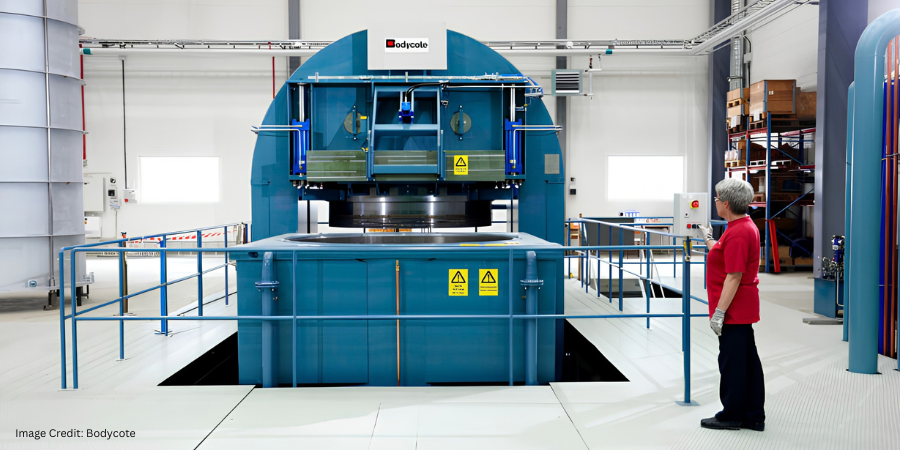
A manufacturer has placed an order for a vacuum furnace system designed to replace multiple heat treating processes, consolidating operations into a single device to streamline thermal processing. The furnace will be used to heat treat components for high-precision small arms intended for civilian markets, including sport shooting and hunting, as well as versions adapted for uniformed services.

Image Credit: SECO/WARWICK

Initial production plans called for four separate units — an oil quenching furnace, tempering furnace, cryogenic unit, and washing system. Following a joint technological analysis, SECO/WARWICK, a global manufacturer of industrial furnaces with operations in North America, demonstrated that these processes could be performed within a single vacuum furnace with gas quenching. Trials confirmed the approach met the client’s requirements while simplifying the overall process.

The system is a horizontal Vector vacuum furnace designed to support multiple heat treating operations in one unit. It features a round heating chamber with temperature uniformity of approximately 5°C (9°F), a convection heating system for improved low-temperature efficiency, and a vacuum pumping system combining mechanical and Roots pump for stable operation.

Additional capabilities include partial pressure control system to limit alloy element evaporation and a 15-bar gas quenching system with inverter controlled to stabilize cooling and reduce power demand peaks. The furnace also supports vacuum carburizing (FineCarb), pre-nitriding (PreNitLPC), low-pressure carbonitriding (LPCN), and deep cryogenic treatment down to −80°C (−112°F) within an automated cycle.

By consolidating these processes, the system is expected to improve repeatability and production efficiency, while eliminating the need for post-quench oil cleaning.

Maciej Korecki
Vice President of Vacuum Business Segment
SECO/WARWICK

“Initially, several separate devices were considered, each handling subsequent stages of the process. After analysis and technological testing, it turned out that all these operations can be carried out in a single vacuum furnace with gas quenching. This means not only substantial investment savings but also simplified production, shorter process times, and reduced labor requirements. For the [client], it is also the first step toward modern vacuum processes and moving away from the atmospheric technologies previously used,” said Maciej Korecki, vice president of the Vacuum Segment at SECO/WARWICK.

Press release is available in its original form here.

Vacuum Furnace Consolidates Multiple Heat Treat Processes Read More »