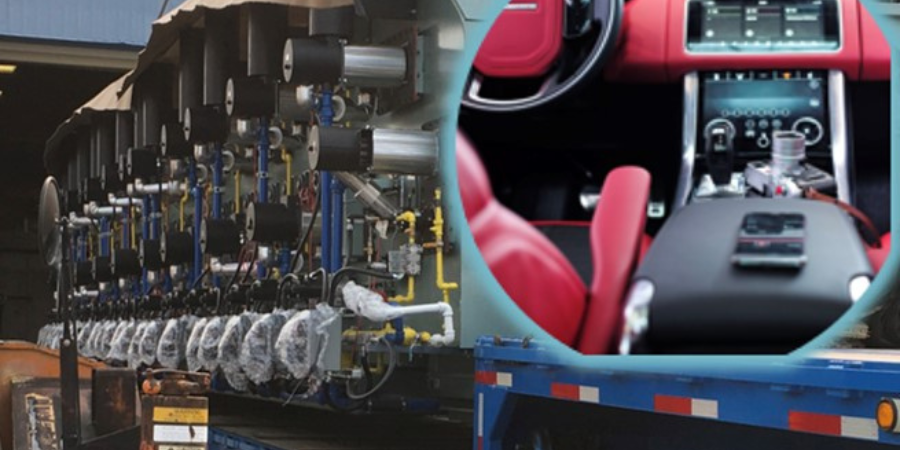
An aerospace, industrial gas turbine, and automotive market leader has expanded its heat treatment operations with a recently purchased air atmosphere furnace. Connecticut-based Doncaster Precision Castings will use the new furnace to support annealing, tempering, and heat treatment of steel and castings.
Doncaster Precision Castings previously received a similar model for use in its heavy-duty industrial processes within the aerospace and automotive sectors. The furnace, supplied by L&L Special Furnace, has a maximum temperature of 1850°F (1010°C) and a capacity to handle a typical load weight of 2,000 pounds.
The press release is available in its original form here.
Each year, the 40 Under 40 initiative at Heat Treat Todayrecognizes 40 rising young leaders (ages 40 and younger) in heat treat who are going above and beyond in the industry. The 40 Under 40 initiative gives names, faces, and words to the next generation of heat treat professionals.
To learn more about what makes someone a quality candidate for this honor, read below to hear from the individuals themselves — alumni of Heat Treat Today’s40 Under 40 — as they share personal updates and industry insights.
Click this link to nominate yourself, or someone you know, by June 28, 2024.
David Cunningham
At the time of David’s nomination for Heat TreatToday’s40 Under 40 Class of 2019, he was working in Process & Mechanical Design as a heat treating furnace engineer for L&L Special Furnace Co., Inc. Here he shares an exciting career (and company) update: “The biggest change since I was nominated to Heat Treat Today’s40 Under 40 is that I have taken over ownership of L&L Special Furnace Co. I became full owner of the business in January 2023.”
David Cunningham L&L Special Furnace, Co., Inc.
Something David finds most fascinating about the heat treat industry is the number of markets it serves. He says, “I am always surprised looking through our list of customers and knowing what their processes are. I never considered how many industries utilize heat treating.”
David’s advice for the incoming 40 Under 40Class of 2024 is to “Keep learning . . . there is so much more to heat treating than just making things hot. There are so many niche markets out there. One of the things that fascinated me most was learning how the glass for the Hubble was heat treated.”
An alum of the 40 Under 40Class of 2023, Kevin describes how he rose “through the ranks” in the heat treat industry starting in 2008: “[I] started out in the field on the ground as a helper and . . . worked myself up through the ranks . . . to Level 1 technician, to Level 2 technician . . . all the way up into management.” He currently works as operations manager of heat treating at ProQual Inspections.
Kevin Norton ProQual Inspections
To Kevin, the most intriguing thing about the heat treat industry is the advancements in technology, reducing manpower and improving safety. He states that, “different processes in heat treating will go far and beyond what we currently have . . . I’m looking forward to that.”
Kevin’s advice to anyone looking to do something different in their work is to “Be inquisitive; ask questions.”
Previous to Miguel’s nomination for Heat TreatToday’s40 Under 40Class of 2023, he worked as a process engineer at Nexteer. Miguel shared an exciting career update that took place soon after: “This kind of recognition gave me a plus to be considered . . . [for] the new position I have had since last year as an Advanced Manufacturing Engineer (AME)” at Nexteer.
Miguel Zempoaltecatl Nexteer
Miguel describes what he enjoys most about working in the heat treat industry, “As a good friend . . . told me, metallurgy is the oldest of the arts but the newest of the science[s], and this relationship between metallurgy and heat treatments, gives me the opportunity to learn more every day . . . I enjoy work[ing] in this area because every day [there] are new challenges.”
Thirteen new manufacturing jobs will open up with the $23.5 million expansion of an Alabama heat containment refractory production facility. The Ohio-based company supplies products used in a variety of industrial applications, including heat treating operations.
Paul Jamieson President & CEO Allied Mineral Products
Allied Mineral Products, an Ohio-based producer of monolithic refractory ceramics, recently broke ground on the major expansion at its Pell City, Alabama, location. The growth project will add a 200,000-square-foot production facility on the company’s current site and expand the workforce with thirteen new manufacturing jobs added to the company’s current workforce of 81 full-time employees. The project is expected to be completed in late 2025, increasing the facility’s production capacity and improve efficiency. State and local officials joined executives and employees of Allied Mineral Products, LLC (Allied) at the groundbreaking ceremonies marking the investment.
“Our partnership with Alabama is strengthened yet again with the expansion of this plant which we originally built in 2019,” said Paul Jamieson, president and CEO of Allied Mineral Products. “Locating our facility in Alabama was part of a long-term strategy to expand our manufacturing presence in the south to be closer to our customers. Because of the quality of this workforce and the local support here, our growth in Alabama has been faster than we planned. We are excited to be expanding our facility so soon and are confident this will help us to continue that growth.”
The press release is available in its original form here.
“It’s really difficult to speak against ‘quality.’ Who doesn’t want quality?” Read on to discover Doug’s thoughts on this topic.
Heat Treat Todaypublishes eight print magazines a year and included in each is a letter from the publisher, Doug Glenn. This letter first appeared in the March 2024 Aerospace Heat Treatprint edition.
With door plugs flying out of airplanes at scary-high altitudes, it seems an appropriate time to revisit where we are in quality initiatives in the North American heat treat industry from an equally high, 30,000-foot perspective.
It’s really difficult to speak against “quality.” Who doesn’t want quality? Those who even bring it up are bound to be looked at with suspicion. Let the suspicion begin, because I would like to bring it up.
One Standard To Rule Them All
Contact us with your Reader Feedback!
Since my early days in the heat treat industry (late 1980s), there have been discussions about “quality” standards and certifications. I first remember QS-9000, a standard imposed on automotive industry suppliers by the Big 3: General Motors, Ford, and Chrysler. The understanding was if you (a supplier to the Big 3) work and achieve QS-9000, then you won’t need to worry about complying with any other quality certifications, especially from one of the Big 3; it was one standard to rule them all, to borrow language from Lord of the Rings.
Before QS-9000, each of the Big 3 could demand that you comply with their specific quality standards, and each of them could (and would) audit your processes, costing suppliers significant time and money. Saving these costs by complying with JUST ONE standard that would make the Big 3 happy was the driving force behind QS-9000.
But QS-9000 ceased to exist on December 14, 2006, and was replaced by one or two other standards systems (depending on how you look at it). So much for one standard.
During the 1980s and 1990s, the quality industry saw enormous growth. “Quality Assurance” (QA) departments burgeoned, “Quality Managers” became more prevalent, and standards organizations, like SAE and ISO, flourished. Quality had become an industry of its own. In fact, my previous employer, BNP Media, publishes Quality Magazine just to serve the growing quality industry. Quality is now a living, breathing organism that, like all living things, is interested in self-propagation and survival.
“Quality” or Consistency?
One of the first thoughts I remember having about the corporate quality initiative I was involved with was the distinct lack of a definition of what “quality” really meant. For many of the standards, they did not really care what you did (whether or not you did quality work), they just wanted you to prove you had documented your work, that your people knew said documentation existed, and they were following the processes you had described in documentation.
That doesn’t sound so much like true quality so much as it sounds like a consistency check for documentation. Certainly, documenting and complying with documentation is a good thing. To that extent, the quality movement has certainly helped many companies.
“. . . current “quality” standards . . . act [more] as an anchor on a fully throttled ship . . . .”
As the current “quality” movement stands, it seems to be more of a hindrance to quality than a help. Today, most of the current quality standards that exist, as much as they may help in some instances, act as an anchor on a fully throttled ship — slowing progress and innovation.
Regularly, we hear about new technologies that are very innovative. These new technologies, if they could be adopted, would undoubtedly increase true quality and lower costs. They are, however, not being commercialized at a significant rate because suppliers have to conform to quality standards, and it would take heaven and earth to change those standards. In this sense, the quality movement is inhibiting quality instead of supporting it.
Love-Hate Relationship
Even many in the quality industry are aware of this hinderance. Over the past several months, I’ve spoken with quite a few quality people who think their industry is bloated and, in many cases, counterproductive. But it is a huge part of their livelihood. When I ask them if they think the industry would be better off without a quality movement, nearly all of them have a hard time letting go . Most think it would be a bad thing if quality standards and audits went away.
Perhaps in a future column, I can give you one scenario of how we could pivot away from the current “quality” system to a more market-oriented quality system which would do a better job promoting both quality and innovation .
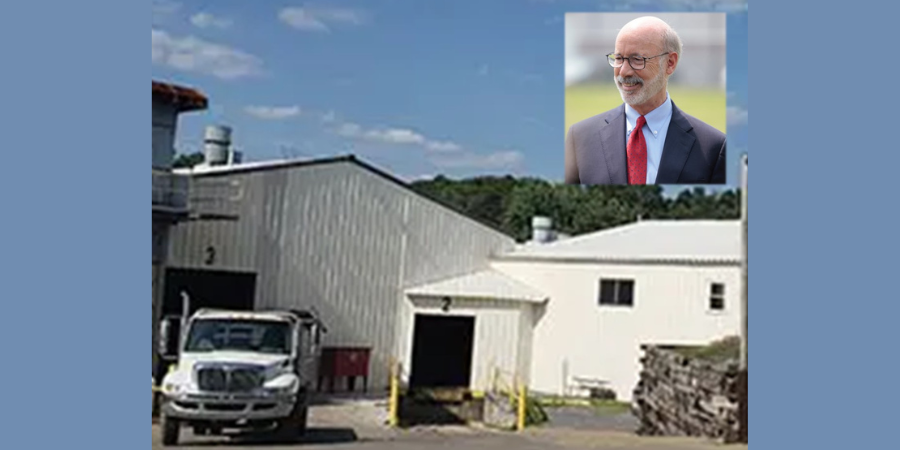
Governor Tom Wolf announced that Gasbarre Products, Inc., an industrial heat treat furnace manufacturer, will create and retain 172 total jobs in multiple Pennsylvania counties as part of a planned expansion at the company’s facility in St. Marys, Elk County.
Gasbarre Products, Inc. has leased a 150,000-square-foot facility at 835 Washington Street in St. Marys. The company also plans to relocate operations from their Plymouth, Michigan, location to this new facility.
Alex Gasbarre CEO Gasbarre Products Source: LinkedIn
“Our investment in the new facility in St. Marys provides an opportunity for Gasbarre to continue to grow and flourish where we have manufactured for nearly 50 years,” said AlexGasbarre, CEO of Gasbarre. “We look forward to adding new team members in the coming months when the move process is completed. The people of Elk County and St. Marys will be key to our success.”
Tom Wolf Governor Pennsylvania Source: governor.pa.gov
“My administration remains committed to investing in businesses that want to grow here or set up shop in Pennsylvania,” said Gov. Wolf. “Gasbarre is creating and retaining good paying jobs in some of our rural counties and helping to boost our competitive manufacturing industry – a true win for the commonwealth.”
Find heat treating products and services when you search on Heat Treat Buyers Guide.com
On June 16, 2022, a heat resistant high alloy casting and fabrication company headquartered in Avilla, Indiana acquired certain assets of Performance Industrial Products, LLC (PIP), a dynamic heat resistance high alloy foundry located in Waupaca, Wisconsin.
"We are excited to add PIP’s casting expertise to our American-based centrifugal and no-bake sand casting capabilities," said Chad Wright, president of WIRCO, Inc. "PIP’s expertise and capacity [. . .] greatly increases our ability to supply the growing demand for highly engineered tubular and sand-based castings."
"We are thrilled to be a part of the WIRCO team," added Chris Robbins, president of PIP. He continues that his company looks forward to "We look forward to contributing to their already exceptional reputation in supplying high quality domestic made heat resistant castings and fabrications to the thermal processing industries."
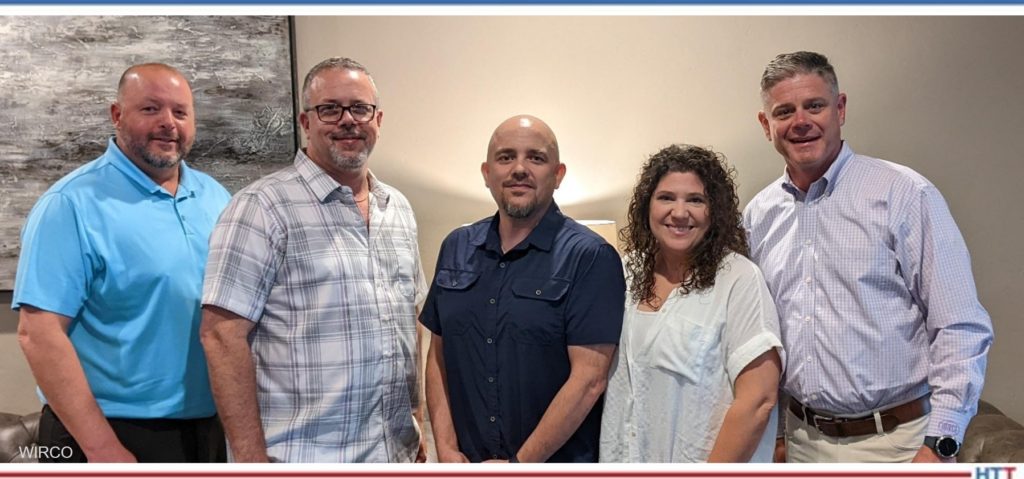
Pictured Above (From Left to Right): Aaron Fisher -Vice President Wirco, Chad Haines – Sales Manager Wirco, Chris and Betsy Robbins PIP, Chad Wright – President Wirco Source: WIRCO
The WIRCO family of companies is headquartered in Avilla, Indiana and is now comprised of three Indiana manufacturing centers along with foundry operations in Champaign, Illinois and Waupaca, Wisconsin.
Find heat treating products and services when you search on Heat Treat Buyers Guide.com
A recent strategic partnership between a North American commercial heat treater and a hot isostatic pressing service provider will open up more immediate options for heat treating customers.
(Source: Solar Atmospheres, CA)
Solar Atmospheres of California, providing vacuum heat treating services, and Kittyhawk, offering hot isostatic pressing (HIP) services for the aerospace, commercial, military, medical, automotive, firearms and oil and gas industries, will partner to offer heat treating and hot isostatic pressing services.
Brandon Creason President Kittyhawk
“This partnership,” says Brandon Creason, president of Kittyhawk, “allows the customer to take advantage of hot isostatic pressing and heat treat without having to look further. I am very excited about the future, and more importantly, providing our customers with two of the best options in the service industry.”
Derek Dennis President Solar Atmospheres California
Derek Dennis, president of Solar Atmospheres of California, adds, “In response to the needs and requirements of our valued customers, Solar Atmosphere is delighted to partner with a high caliber organization like Kittyhawk to provide hot isostatic pressing services.”
(photo source: National Cancer Institute at unsplash.com)
An internationally recognized processor of safety critical automotive fasteners has purchased an industry standard 6000 lb/hr mesh belt furnace to be used in the design and commission of products.
The system includes a computerized loading system, controlled atmosphere mesh belt hardening furnace, oil quench system, post quench system, mesh belt tempering furnace, soluble oil system, and CAN-ENG’s PET™ SCADA System.
The 11th staging of the biggest heat treat show in the world will be held June 12–16, 2023, in Düsseldorf, Germany. The dates for GIFA, METEC, THERMPROCESS and NEWCAST 2023 have been set, and the international leading trade fairs for metallurgy and foundry technology will take place at the fairgrounds in Düsseldorf.
Friedrich-Georg Kehrer, Global Portfolio Director Metals and Flow Technologies at Messe Düsseldorf.
“I am delighted that we have once again found a date in the early summer since this timeline has proven to be very successful,” stated Friedrich-Georg Kehrer, Global Portfolio Director Metals and Flow Technologies at Messe Düsseldorf.
The trade fair’s duration of five days remain the same, but the weekdays have changed. The metal trade fair quartet will start on a Monday and end on Friday. “This meets the expectations of the international industry, as our exhibitor and visitor survey has shown,” explained Kehrer.
With 2,368 exhibitors from all over the world and around 72,500 visitors (with 65% coming from outside of Germany) at the last staging in 2019, the trade fair quartet has confirmed its leading international position.
For further information on visiting or exhibiting at GIFA, METEC, THERMPROCESS or NEWCAST 2023, contact Messe Düsseldorf North America; Telephone: (312) 781-5180; E-mail: info@mdna.com; Visit www.mdna.com; Follow us on twitter at http://twitter.com/mdnachicago
Jack Titus (Photo courtesy of Dagenais Photography)
Jack Titus has managed a R&D metallurgical laboratory with all manner of scientific instrumentation as well as transferred plasma nitriding, LPC and HPGQ (high pressure gas quench) technology from around the world to the U.S. He holds patents on vacuum furnace and vacuum carburizing technology.
In this article for Heat TreatToday, Jack shares his experience as a member of a team whose task was to transfer the nitriding process known as ion nitriding. The lessons he learned are valuable to heat treaters today.
Photo: autosport.com
One of the ways companies advance their technology offering is by transferring technology from other sources, primarily offshore entities that have developed a process that has been successful in their home market. However, there are associated risks because what has been accepted in one market may not be as popular in another. One major variable is the different design culture: an intangible that is easy to overlook. An analogy I often use when explaining this cultural difference deals with race cars. European Formulae One race cars have a sleek-looking, open-wheel design that’s easy on the eye. In contrast, the NASCAR grand-national series of race cars appears bulky and rugged—more like our passenger cars—and look crude compared to Formulae One, but they have huge engines and are fully capable of reaching speeds of well over 200 mph.
European—especially German—engineered furnaces often appear as sleek looking as Formulae One cars and are very capable of successful heat treating, but they are fragile and require more attention to maintenance than their U.S.-based counterparts. This was certainly the case with Degussa and their 20-bar vacuum furnaces and sinter–hip systems, as well as ALD’s low-pressure carburizing (LPC) and high pressure gas quench (HPGQ) systems. The following discussion documents my experience as part of the team that endeavored to transfer the nitriding process known as ion nitriding, developed by Kloeckner Ionon GmbH, a German company that advanced the process in the mid-1970s. The process and events are accurate as far as my memory from that era can muster. I’ll use initials for the names of the companies or the individuals and substitute “The Company” for the U.S. transferee.
The transferee team consisted of a manager, a marketing director, and others tasked with “Americanizing” the product—a big mistake. My task was to spend about a month at a Kloeckner commercial heat treat facility learning how the process was controlled and the do’s and don’ts for preparing loads so I could train potential users on the technology. To further the effort, company S purchased a smaller production unit from Kloeckner with all of the current state-of-the-art (German) controls to be installed in the R&D section of The Company for conducting sales tests.
At that time in the mid-1970s, other U.S.-based companies were just putting their toes in the water to see if the process was real, but Kloeckner was the perceived expert in the field.
The unit placed in R&D was a fully capable vertical unit with a hearth plate 24-in. (609 mm) diameter by 48 in. (1219 mm) high, the result of years of development by Kloeckner. The Company was just entering the digital age, upgrading from analog controls, so the decision was made to develop their own process control for discrete logic and temperature control. All of the voltage, ampere, and temperature controls in the Kloeckner unit were analog with dampening features that made for very smooth outputs. Again, at the time, Allen-Bradley was the primary manufacturer of PLCs used by company S for furnace motion control, but the nitriding unit had no material handling requirements, therefore, all of the controls were process variables, making a full blown PLC unnecessary. Barber Coleman was the other digital controller company that specialized in plastic injection molding process control using their EDAC programmable logic controller, which made it the logical choice for the primary controller. It employed EPROMS that could be programmed and erased at will, making logic changes much easier. The EDAC was also used on The Company’s vacuum furnaces successfully, so using it seemed a wise course.
For those unfamiliar with plasma nitriding, the following is the Reader’s Digest version of the process:
A DC voltage converted from AC via a series of diodes with a maximum of 1000 volts is applied to a work piece and is the cathode of the circuit. Radiation shields and the vessel proper are the anode with a positive ground. When the power is applied to the parts and nitrogen and dissociated ammonia are used, it produces a purple glow. The learning curve associated with plasma nitriding is pretty complex, and dealing with holes—especially blind holes—can be problematic.
When power is first applied to the work piece after evacuation the moisture and/or residue left on parts causes a long delay in heating as an arcing phenomenon begins. Specialized circuitry in the logic measures the voltage drop as arcs occur and “crowbars” the power to a choke, a transformer that absorbs the current and allows it to dissipate to ground. In doing so, a huge magnetic field is created that must be accounted for, and that is one of the reasons the EDAC was used. It was intrinsically hardened against such severe interferences so much that, with the choke side of the cabinet door opened, the image on the EDAC CRT was pulled off the screen momentarily without any damage to the processor.
The glow produced by the energy is referred to as the glow seam: as the partial pressure in the vessel increases, the glow seam becomes thinner and power is concentrated. It could then create a seam overlap resulting in very intense and localized power within holes of a certain size, enough to locally melt the metal. When processing parts of various sizes and shapes, care must be taken to avoid these circumstances.
One of the disadvantages of the process is the very long time it takes for the sparking and arcing to subside and allow enough continuous power to heat the parts. Pre-process degreasing and/or thorough washing was mandatory to reduce the sparking and arcing time. We eventually learned that preheating parts, even in air, to 400°F (204°C) dramatically improved heating time. Part of Kloeckner’s control logic embedded within the solid-state circuitry counted the arcs per second. If the arcing reached a certain level, power was reduced, which allowed a more sustained applied energy—improving the heating time but not nearly the same positive effect as preheating.
During my initial visit to a Kloekner heat treat, I was astounded at the amount of hands-on experience required to control the process. Since nitriding takes place between 900°F (482°C) and 1000°F (537°C)—which is below the visible color range—when viewing through a sight glass, the operator would cover himself and the sight glass with a black photographer’s cape so as to shield out ambient light, allowing him to easily see the dull red of the relative temperature of the parts in the load. Along the way of transferring the process learning curve, it became obvious why Kloeckner only employed pit vessels for plasma nitriding. Since there was no additional heat source other than the energy produced by the glow seam, parts located in the center of the part array would heat much faster than parts positioned around the perimeter of the circular base plate. Therefore, when processing multipart loads, parts expected to take longer to heat would always be placed in the center of the arrangement.
As a typical load was coming up to heat, the operator would visually inspect the parts for color variation and, if detected, pause heating until all parts became uniform before continuing to heat. A thermocouple was used for temperature control; however, placing it required some experience. The end of the TC was protected by an alumina tube to isolate the high voltage and prevent it from shorting to the TC and damaging the analog to digital input board.
I recall that in the mid-1970s, furnace OEMs were just beginning to find ways to relieve the operator from having to make process decisions by incorporating more intelligence into controllers, yet here was a process that required more human intervention not less.
One of the major mistakes The Company made during the learning curve transfer was selling the Kloeckner sales unit to a commercial heat treat in Fort Worth that already had a U.S.-developed (but larger) nitrider. I strongly opposed this move because it would compare Kloeckner’s mature product with years of development behind it and its fluid operation to our new larger unit where development was in its infancy. The Company’s nitrider design reflected the same engineering as their pusher furnaces—over-designed, bulky, and lacking the mature engineering that flows from an evolved design. As a result, the news spread that The Company’s product was not equal to the German unit. Compounding that error in judgment, our marketing director, affectionately known as “Wild Bill”, was promoting plasma nitriding as the end all process before we knew all of the process’s benefits and shortcomings.
Traditional nitriding is still an atmosphere process where little care is required in making up part loads, while plasma nitriding requires careful planning to avoid overlapping the glow seam when parts are placed on the base plate or positioned on racks. As word spread throughout the industry about the special attention and loading complexities required, the honeymoon was short-lived.
A classic example of loading issues arose when I was asked to assist in creating a loading arrangement for synchronizer rings for Chevy Muncie, where the first horizontal vessel was sold. It consisted of two vessels sharing one vacuum system; however, each had its own power supply. Those involved had designed a flat horizontal base plate with vertical posts where rings were placed with spacers between each to avoid the expected overlapping glow seam. The main problem was nonuniform heating from the center to the perimeter, since all parts were the same mass and size. The solution was to orient the load horizontally to align it with the horizontal radiation shields. The rack supporting the rings was circular with an open center. The main support allowed for horizontal posts projecting out on opposite sides of the center support so rings could be slid over the posts while retaining the spacers.
I recall a funny story early in the development when a small laboratory-size ionitrider was designed for experimentation and was sold to two gentlemen who planned on building a commercial enterprise for nitriding. In a rented garage in Iowa with a garden hose supplying cooling water in the evening after normal working hours, I was instructing the two guys and their wives on the operation using the EDAC. Three of the four looking over my shoulder were completely perplexed as I was populating the screen with temperature inputs, pressure, and so on. Suddenly one of the wives blurted out, “Hey! There’s nothing to this! It’s just like my microwave.” And from that beginning we have the rest of the story: Advanced Heat Treat in Waterloo, Iowa.
The moral of this story is this: When transferring technology, change as little as possible, because if do, you are doomed to repeat the evolutionary mistakes that the original design team experienced.










 Governor Tom Wolf announced that Gasbarre Products, Inc., an industrial heat treat furnace manufacturer, will create and retain 172 total jobs in multiple Pennsylvania counties as part of a planned expansion at the company’s facility in St. Marys, Elk County.