featured

A Few (34 Precisely) News Items to Keep You Current

Heat Treat Today offers News Chatter, a feature highlighting representative moves, transactions, and kudos from around the industry. Enjoy these 34 news items, originally featured in the November and December print magazines.


Equipment Chatter

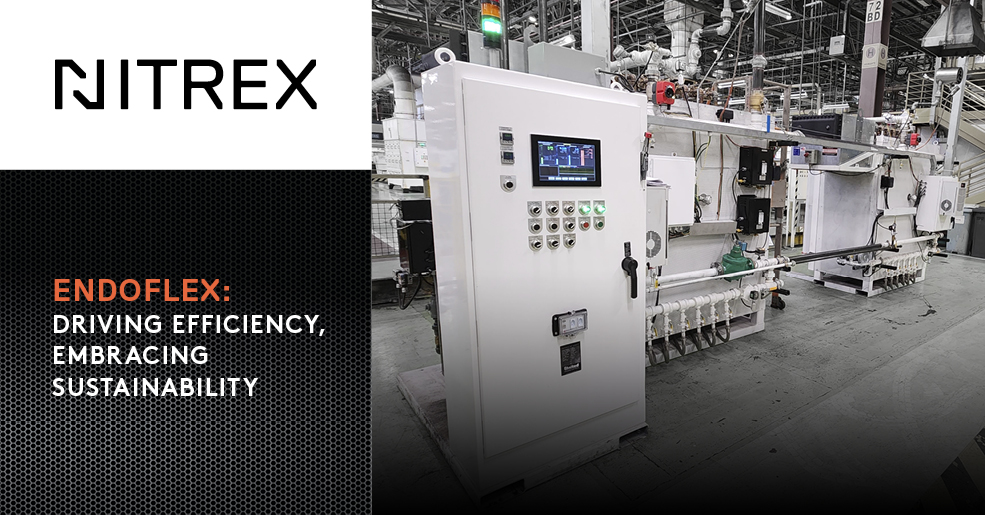
  1. UPC-Marathon, a Nitrex company, commissioned an endothermic gas generator for a major automotive manufacturer in Brazil.
  2. SECO/WARWICK will supply a Vector® vacuum furnace to a South American international manufacturer of weapons and military equipment.
  3. Stahl Gerlafingen ordered from Danieli a K-Weld machine as well as a 2-MW Automation Q-Heat-system.
  4. NITREX has installed a second set of nitriding/nitrocarburizing systems for a European hydraulics manufacturer.
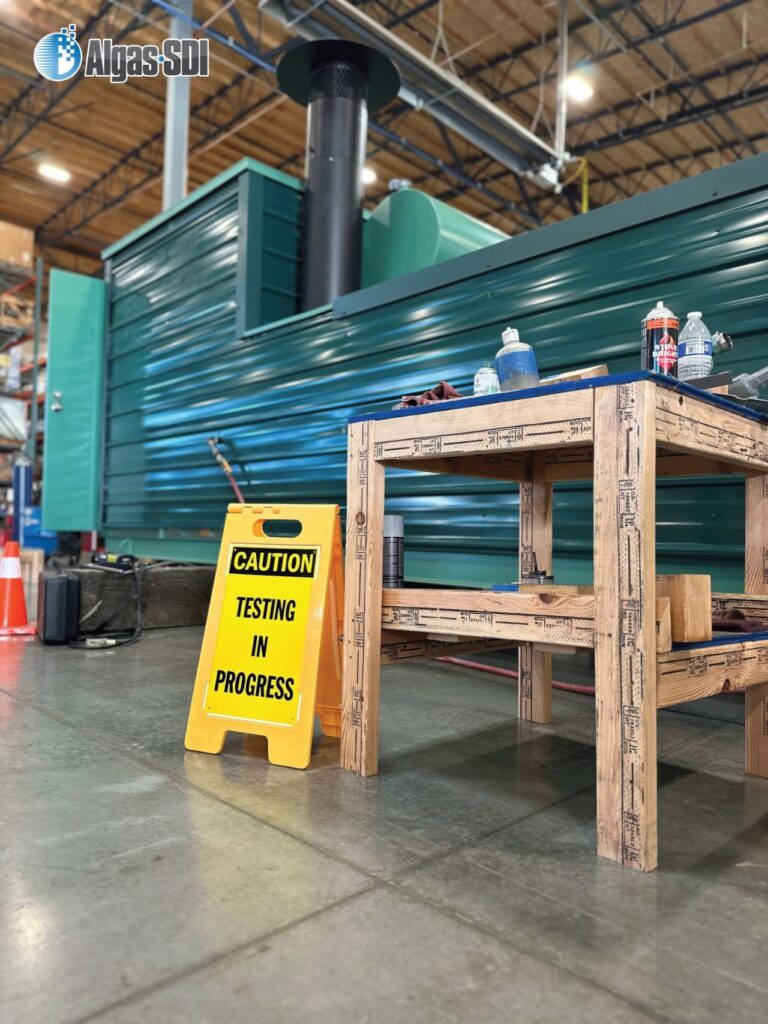
  5. An AQUAVAIRE Q3300H furnace from Algas-SDI is ready for shipment. This equipment is a gas-fired water bath vaporizer that converts liquefied petroleum gas into superheated vapor at a balanced pressure.
  6. A vertical vacuum furnace from SECO/ WARWICK is heading to a company that provides repair and maintenance services for jet engines.
  7. Turkish heat treater Reymak Makine As has integrated a Nitrex nitriding/ nitrocarburizing system.
  8. Tratamientos Termicos Avanzados (TTA), a leader in plasma nitriding services for steel, recently received their first vacuum furnace from Ipsen. The Turbo2 Treater was shipped to their facility located in Monterrey, Mexico.
Company and Personnel Chatter

  1. SAMPE North America announced LaNetra Clayton Tate, Ph.D. as the new vice president; Sarah Cox as the new president; and Daren Davis as the new secretary for the 2023–2024 term.
  2. Donald Crist has been promoted to director of Global Sales at RoMan Manufacturing, Inc.
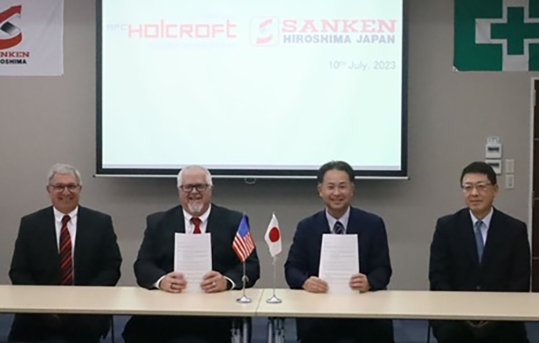
  3. AFC-Holcroft announced a partnership with Sanken Sangyo, a Japan-based company in the thermal processing equipment industry
  4. Partners Outokumpu and SMS group GmbH inaugurated a metal powder atomization plant in the presence of Minister President Hendrik Wüst.
  5. Turgay Ozan started his new additional role as the president and regional manager of Pfeiffer Vacuum in North America.
  6. Vamshi Vardhan Rapole has joined Danieli Group as a graduate engineer trainee.
  7. Sheffield Forgemasters appointed Amy Grey as the chief financial officer.
  8. Michel Siemon has been appointed CEO of Primobius, the lithium-ion battery recycling joint venture between SMS group GmbH and Neometals Ltd.
  9. Bobbi Warren has been promoted to chief financial officer at RoMan Manufacturing, Inc.
  10. Sheffield Forgemasters has announced the signing of a five-year contract renewal with Harsco Environmental.
  11. SMS group GmbH and Steel Authority of India Limited (SAIL) have joined forces in a memorandum of understanding aimed at decarbonizing steel production in SAIL’s integrated steel plants.
  12. Mark Przybylski started a new position as material handler of Manufacturing at Retech, a SECO/WARWICK Company.
  13. SMS group GmbH welcomed Orascom Construction PLC to conclude the agreement signing of an alliance to help with future projects.
  14. Thermal-Vac Arizona has announced the opening of a new Chino Valley, CA, shop for brazing, heat treating, testing, and machining services.
  15. Hydro is set to install solar power at its extrusion factories in Sweden.
  16. Mark Hemsath becomes the new president of Nitrex Turnkey Systems.
  17. Joseph Scala of Leybold USA, Inc. wins Lifetime Achievement award for outstanding lifetime philanthropy after being named regional sales manager of VTS-Midwest for Leybold.
  18. Nitrex and Linde renewed heat treating-focused joint marketing agreement and expansion into Europe.

Kudos Chatter

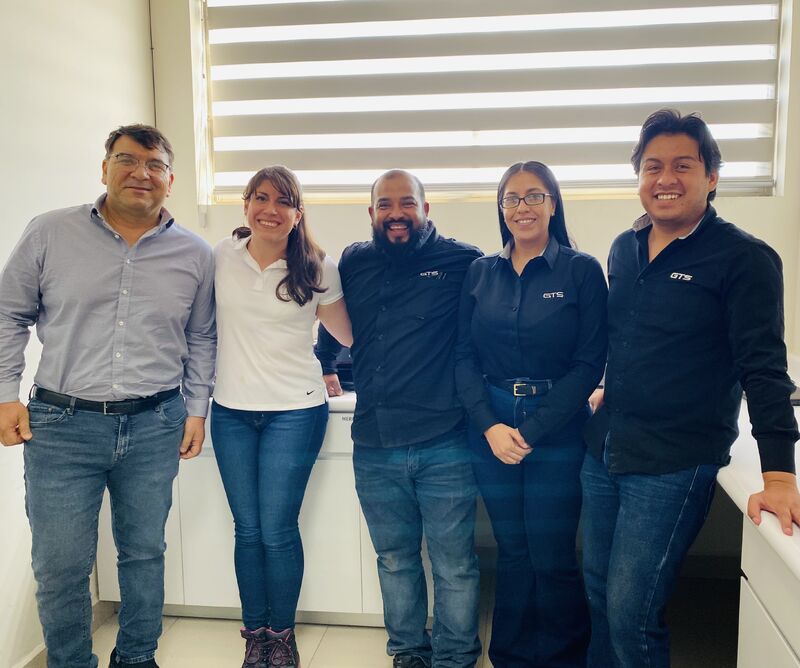
  1. The GTS Mexico team completed a successful ISO/IEC 17025 audit with their accrediting entity.
  2. The Driven to Reach Excellence and Academic Achievement for Males (DREAAM) program in Champaign, Illinois, toured Wirco, Inc.’s Champaign, Illinois, foundry.
  3. SAMPE North America Board of Directors announced that Tim Shaughnessy, president and CEO of Rapid Cure Technologies, has been selected as the SAMPE 2023 Distinguished Service Award recipient. They also announced that Dr. Scott Beckwith, a renowned expert in the field of Materials Science, has been named the recipient of the prestigious Mort Kushner Lifetime Achievement Award.
  4. After a 25-year career, Paulo’s heat treat manager in Murfreesboro, TN, Dave Lee, has retired.
  5. Dan Essenmacher retired from AFC-Holcroft after 28 years with the company.
  6. Paulo celebrates 80 years of heat treating history.
  7. Bill Gasbarre, co-founder of Gasbarre Products, Inc., retired after 50 years.
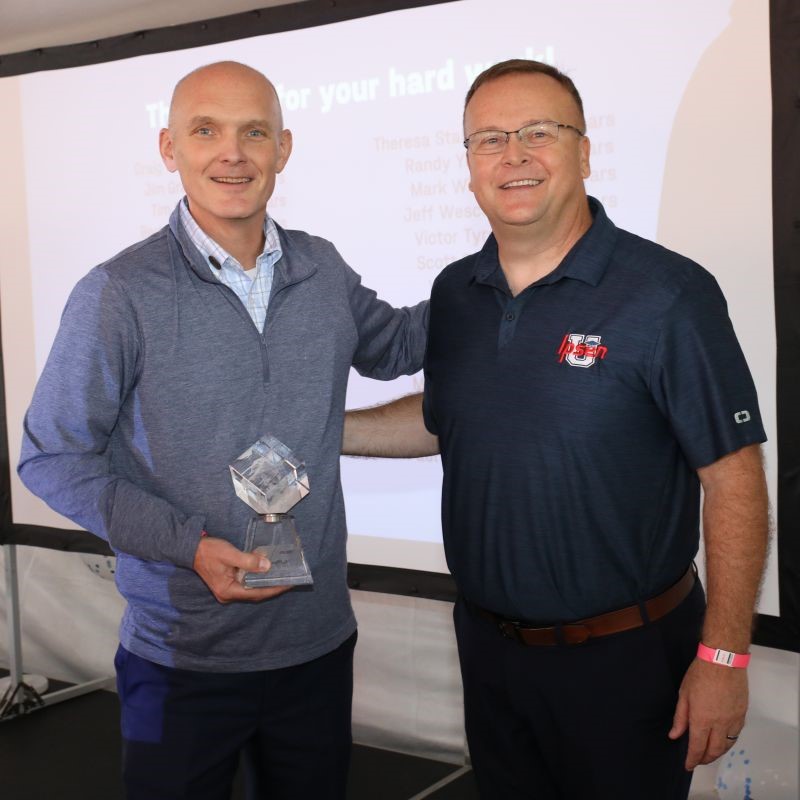
  8. Ipsen celebrates 75 years in Cherry Valley, IL, with a ceremony emceed by Heat Treat Today publisher, Doug Glenn.

Find Heat Treating Products And Services When You Search On Heat Treat Buyers Guide.com 

A Few (34 Precisely) News Items to Keep You Current Read More »

An Overview of Case Hardening: Which Is Best for Your Operations?

Best of the Web

Source: Advanced Heat Treat Corp.

Case hardening is an essential process for many heat treating operations, but knowing the different types and functions of each is far from intuitive.

In this best of the web article, discover the differences between carburization, carbonitriding, nitriding, and nitrocarburizing, as well as what questions you should ask before considering case hardening. You will encounter technical descriptions and expert advice to guide your selection of which case hardening process will be most beneficial for your specific heat treat needs.

An excerpt:

Case hardening heat treatments, which includes nitriding, nitrocarburizing, carburizing, and carbonitriding, alter a part’s chemical composition and focus on its surface properties. These processes create hardened surface layers ranging from 0.01 to 0.25 in. deep, depending on processing times and temperatures. Making the hardened layer thicker incurs higher costs due to additional processing times, but the part’s extended wear life can quickly justify additional processing costs. Material experts can apply these processes to provide the most cost-effective parts for specific applications.

Read the entire article from Advanced Heat Treat Corp. by clicking here: "Case Hardening Heat Treatments"

An Overview of Case Hardening: Which Is Best for Your Operations? Read More »

EV Manufacturer Upgrades with New Nitriding Furnace

HTD Size-PR Logo

An international electric vehicle manufacturer has selected a heat treat furnace supplier with North American locations for a second nitriding furnace to operate in parallel with an existing one.

The car maker already purchased an identical SECO/VACUUM nitriding furnace last year. The added heat treating capacity will ensure that the nitriding step does not become a bottle-neck in the plant’s high-pressure die casting tooling production process.

The retort furnace for gas nitriding has a chamber size of 1.6m (63”) diameter and 2.8m (110”) depth, accommodating a load up to 1m x 1m x 2.6m (40” x 40” x 100”). The furnace has 350 kilowatts of heating capacity divided into 3 heating zones. The durable Inconel 600 retort will offer many years of trouble-free service.

Peter Zawistowski
Managing Director
SECO/VACUUM Technologies
Source: SECO/VACUUM

Peter Zawistowski, managing director of SECO/VACUUM, said of the project, “This heat treat partner’s dies present quite a unique heat treating challenge. At SECO/VACUUM we love a good challenge, so we have built this solution with the dimensions and thermal capacity to nitride these large, heavy parts to exceed customer’s specifications”.

The nitriding furnace is also fitted with a device called a thermal oxidizer. Although the all-electric heat-treating process does not involve any combustion, the combination of ammonia and high temperatures still creates NOx emissions. The thermal oxidizer breaks down the harmful NOx molecules in the furnace discharge.

The tool and die market serving traditional and EV automotive markets uses vacuum heat treating technology extensively to produce bright, high-quality parts.


Find heat treating products and services when you search on Heat Treat Buyers Guide.com


EV Manufacturer Upgrades with New Nitriding Furnace Read More »
Trending Market Insights for Aluminum Thermal Processing

Are there rapid changes in the North American aluminum industry to accommodate trending technology, or does the aluminum market have a different focus? Enjoy this Technical Tuesday article, in which six industry players responded to the following survey from Heat Treat Today’s editorial team in August 2023.


Steady and Increasing Melters’ Demand

Contact us with your Reader Feedback!

Is demand increasing or decreasing for aluminum processing/melting equipment?

AFC-Holcroft: “Yes, we continue to see opportunities for a variety of furnaces for T5, T6, and other aluminum heat treating processes. We recently signed a license agreement with Sanken Sangyo in Japan to offer their aluminum rotary furnace designs in the U.S. and Canada.”

Can-Eng Furnaces Intl., Ltd.: “Yes, particularly in finished component heat treatment systems (T4, T5, T6, and T7 processes). The processing demand is coming from new vehicle (ICE, hybrid, electric) model line-ups that are focusing heavily on lightweighting body in white (BIW), structural, and suspension components that are being converted from steel to aluminum.”

Lindberg/MPH: “We have seen an increase in aluminum scrap melting in the recent past with larger capacity melters being quoted.”

Premier Furnace Specialists: “We’re seeing a steady demand for aluminum processing equipment. Typically, our clients are requesting either aluminum solution furnaces, drop bottom furnaces, or pre-heat furnaces. There has been an increased demand for larger furnace chamber sizes and heavier load capacities as more customers are requesting furnaces that can handle a variety of materials, temperature ranges, and processes. It seems the aerospace industry is driving most of the demand at the moment.”

SECO/WARWICK: “On the molten metal side of the SECO/WARWICK business, there are a few significant projects out there which are active, and the level of inquiries is good!”

Wisconsin Oven: “We have seen an uptick in aluminum solution treat and aging equipment in recent years.”

AM/3D: Allusive Adoption

Has additive manufacturing/3D printing contributed to current business levels?  

AFC-Holcroft: “It’s been an ongoing topic, but volumes are still low, which has kept heat treating equipment investments at a minimum.”

Can-Eng Furnaces Intl., Ltd.: “No noticeable increase.”

Lindberg/MPH: “There have been more requests than in the past few years for sintering applications which, I believe, is largely driven by the increase in 3D metal printing manufacturing.”

Premier Furnace Specialists: “The company has been receiving a number of requests for smaller batch style ovens for the processing of additive manufactured/3D printed materials. We have also fulfilled a number of requests to alter existing or used systems to meet new process requirements.”

SECO/WARWICK: “On the molten metal side, this would be what we call the powdered metals industry, we has not seen much interest in that area this year. One exception is an inquiry that our sister company Retech was fielding.”

Wisconsin Oven: “No contribution.”

Adaptations To Slow Supply Chains

Have international supply chain disruptions impacted demand for your company’s equipment?

AFC-Holcroft: “There are certainly disruptions, but we’re finally starting to see some improvements. Our team has worked hard to mitigate the supply chain challenges through unique forward-looking programs with our suppliers and clients. As far as demand goes, it has not had an impact at all. In fact, we are currently experiencing booking levels that we haven’t seen in more than 20 years.”

Can-Eng Furnaces Intl., Ltd.: “Clients are planning ahead to address the longer lead times.”

Lindberg/MPH: “We have noticed that supply chain issues in general, both domestic and international, have created an environment where lead times to build equipment have more than doubled. This has caused many clients to begin looking for alternative solutions to meet their needs, as they cannot wait two-thirds of a year for equipment. The largest delays are with refractory, gas burners, alloy, and many various control components.”

Premier Furnace Specialists: “Actually, we’ve seen an increase in demand for our equipment from various industries impacted by disruptions. Many companies seem to be reassessing their supply chains and expanding production capacity to avoid future disruptions.”

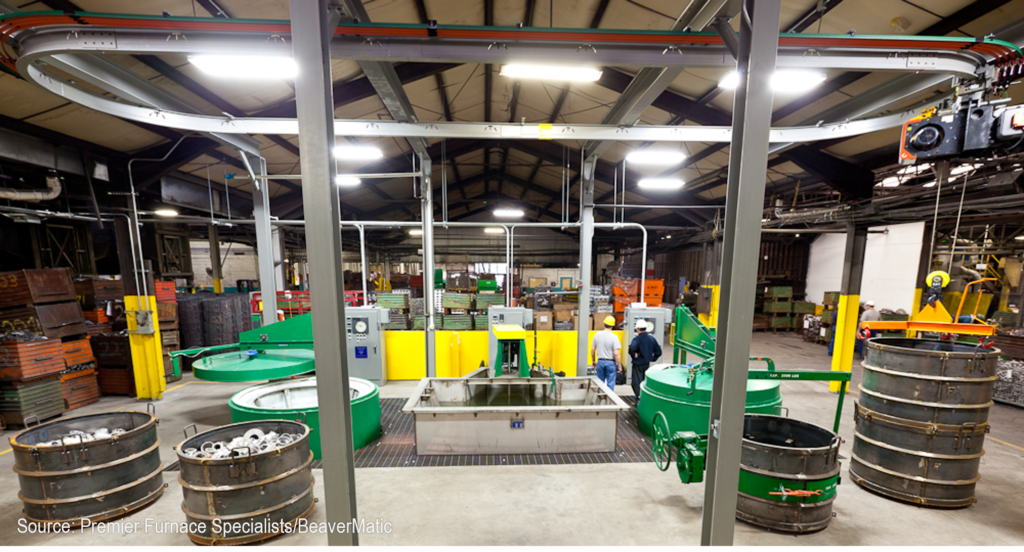
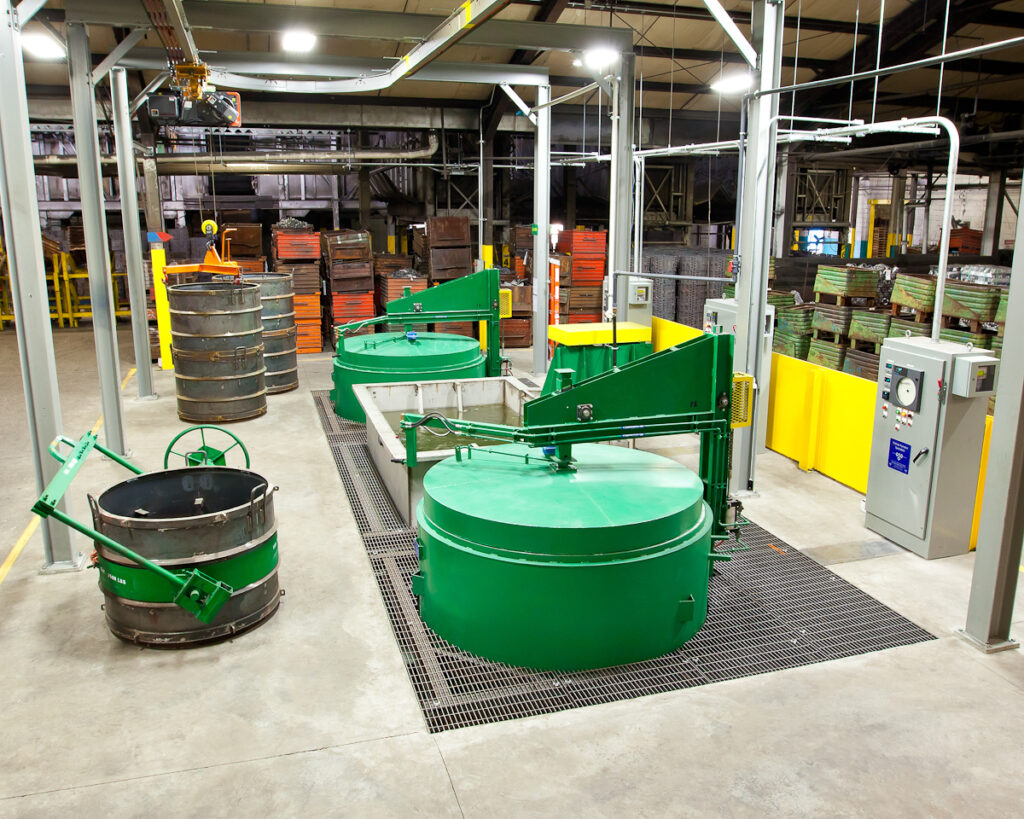
Dual pit furnace and water quench tank system designed and built for a client in the aluminum castings industry. It is used for aluminum solution heat treating of thick walled castings. Each furnace has a 4,000 pound gross load capacity and an operating temperature range of 300°F – 1100°F. (Source: Premier Furnace Specialists/BeaverMatic)

SECO/WARWICK: “Lately our clients are for projects that are further out, 1–2 years in some cases. Most of our end users are aware that prices are still moving up and deliveries are stretched out, however there have been some improvements of deliveries on MCC’s and PLC’s.”

Wisconsin Oven: “Not that we know of.”

The State of Sustainability in Aluminum Market

Has the sustainability push affected demand for your equipment?

Horizontal quench system used for the solution treatment of aluminum parts (Source: Wisconsin Oven)

AFC-Holcroft: “Again, no impact on demand, but our group has been offering many ‘green’ options on our equipment for years to assist our clients in the drive for a reduction in their carbon footprint.”

Can-Eng Furnaces Intl., Ltd.: “Yes, there’s more emphasis on reduced environment impact processes and equipment designs.”

Lindberg/MPH: “Not really. We have had a couple of RFQ[ET7] ’s come in related to green energy, but they are very slow-moving projects with a lot of R&D on the buyers’ end. Additionally, we have been asked to partner with these clients to develop a solution to help them meet the end goal.”

Premier Furnace Specialists: “For a minor segment of clients, the push for sustainability seems to be driving a demand for electrically heated equipment rather than natural gas. Even for those clients, however, the main deciding factors are still local utility costs, existing facility restrictions, and familiarity with existing equipment.”

SECO/WARWICK: “Environmental sustainability has definitely affected what our clients are looking for on most new inquires. Most have strict emissions requirements and are looking for combustion systems with lower NOx and higher fuel efficiency. Peripheral hooding is also commonly requested to capture emissions from around door openings and over charge wells. I would not say that sustainability has diminished the demand, however it has affected what they need with regard to emissions compliance.”

Wisconsin Oven: “Clients occasionally request energy-efficient features and designs, but not more often than in the past.”

Anticipating Growth and Novel Aluminum Applications

What plans are you making to meet future market demand? 

AFC-Holcroft: “We are a global group and have recently restructured our organization to better serve our customers. We have also undergone a facility expansion to help reduce our carbon footprint and provide our clients with the best products and deliveries available in the market. This includes an expansion of our build to stock production planning to greatly reduce lead times on UBQ furnaces and EZ endothermic generators among other products.”

Can-Eng Furnaces Intl., Ltd.: “We have increased emphasis on electric battery vehicle component and materials processes and equipment design development. Additionally, we are planning further use of electric energy as an alternate heating source for system designs.”

Lindberg/MPH: “We are looking to work with vendors to create vendor managed inventory in order to reduce lead times, as well as hire additional employees to reduce labor driven lead times. We continually look for additional vendors to remain cost competitive and reducing the overall cost of manufacturing.”

Premier Furnace Specialists : “We’ve expanded vendor and supplier listings. We have also gained experience implementing existing and new alternatives for almost all of our furnace components. By reassessing our standard component choices and offering a variety to clients, we have been able to substantially reduce lead times which allows for more efficient and flexible production while reducing costs.

“We have also added new technology to aid in our manufacturing. Building parts in-house significantly cuts down on lead times and pricing. Thus, clients know that their equipment will have little or no downtime, saving them the time and stress of not running product.”

SECO/WARWICK: “We are adding engineers, field service technicians, etc. and having our “seasoned veterans” bring them up to speed! We have also moved to a larger new office location to accommodate future growth.”

Wisconsin Oven: “We have acquired additional floorspace in recent years and have been hiring aggressively in the last six months.”

About the Industry Experts

Tracy Dougherty, Chief Operating Officer, AFC-Holcroft LLC. tdougherty@afc-holcroft.com

Dan Peterson, Product Manager, Molten Metal Furnaces, SECO/WARWICK dan.peterson@secowarwick.com

Tim Donofrio, Vice President of Sales, Can-Eng Furnaces International, Ltd tdonofrio@can-eng.com

Kelley Shreve, General Manager, Lindberg/MPH https://www.lindbergmph.com/

Jacob Laird, Mechanical Engineer, Premier Furnace Specialists, Inc./BeaverMatic jlaird@premierfurnace.com

Mike Grande, Vice President of Sales, Wisconsin Oven Corporation www.wisoven.com


Find Heat Treating Products and Services When You Search On Heat Treat Buyers Guide.Com


Trending Market Insights for Aluminum Thermal Processing Read More »

Merry Christmas from Heat Treat Today

We will be celebrating the holidays with family, and our offices will be closed from December 22 to January 1. Look for your next Heat Treat Daily e-newsletter on January 2nd!

2023 has been a year of many new things, and we are thankful to have seen many of you in-person. The heat treat community is one that is warm (pun intended) and vibrant.

We are looking to 2024 with much anticipation and hope for even more opportunities to work together and challenge ourselves and others with new ideas in the North American heat treat industry.

Thank you for the opportunities every day to serve and encourage you in our heat treat corner of the world. From the entire Heat Treat Today team, we wish you a very joyous and restful Christmas celebrating the birth of Jesus Christ!


Merry Christmas from Heat Treat Today Read More »

Fringe Friday: Nippon Steel Corporation To Acquire U. S. Steel

HTD Size-PR Logo

Sometimes our editors find items that are not exactly “heat treat” but do deal with interesting developments in one of our key markets: aerospace, automotive, medical, energy, or general manufacturing.

To celebrate getting to the “fringe” of the weekend, Heat Treat Today presents today’s Heat Treat Fringe Friday: the recent acquisition of U.S. Steel by Japan’s Nippon Steel Corporation and some coverage on what may derail the sale.


Nippon Steel Corporation (NSC), Japan’s largest steelmaker and one of the world’s leading steel manufacturers, and United States Steel Corporation (U. S. Steel), a leading steel producer with competitive advantages in low-cost iron ore, mini mill steelmaking, and best-in-class finishing capabilities, announced that they have entered into a definitive agreement pursuant to which NSC will acquire U. S. Steel for a total enterprise value of $14.9 billion. The transaction has been unanimously approved by the Board of Directors of both NSC and U. S. Steel.

NSC’s acquisition of U. S. Steel will enhance its world-leading manufacturing and technology capabilities and enable it to expand the geographic areas in which NSC can better serve all of its stakeholders. The transaction will further diversify NSC’s global footprint by significantly expanding its current production in the United States, adding to its primary geographies of Japan, ASEAN, and India. As a result of NSC’s acquisition of U. S. Steel, its expected total annual crude steel capacity will reach 86 million tonnes – accelerating progress towards NSC’s strategic goal of 100 million tonnes of global crude steel capacity annually.

NSC President Eiji Hashimoto said, “We are excited that this transaction brings together two companies with world-leading technologies and manufacturing capabilities, demonstrating our mission to serve customers worldwide, as well as our commitment to building a more environmentally friendly society through the decarbonization of steel.”

President and Chief Executive Officer of U. S. Steel, David B. Burritt, said, “For our U. S. Steel employees, who I continue to be thankful for, the transaction combines like-minded steel companies with an unwavering focus on safety, shared goals, values, and strategies underpinned by rich histories. For customers, U. S. Steel and NSC create a truly global steel company with combined capabilities and innovation capable of meeting our customers’ evolving needs. [December  18’s] announcement also benefits the United States – ensuring a competitive, domestic steel industry, while strengthening our presence globally. Our shared decarbonization focus is expected to enhance and accelerate our ability to provide customers with innovative steel solutions to meet sustainability goals.”

Read more about this press release here.

U.S. Response: Pushing Back

There has been some push-back from various effected entities. The United Steelworkers International Union has vocalized concerns for the deal, claiming that this acquisition would be bad for America and the steelworkers. David McCall, president of the United Steelworkers Union, has indicated that there may be legal reasons to make the deal void. U.S. President Joe Biden also has weighed in on the matter, believing that this deal requires scrutiny from a national security and supply chain perspective; comments on how the upcoming presidential election and the significance of Pennsylvania’s support have arisen.

But this pushback is not at all unexpected from a Japanese perspective. In the perspective of Kyodo News, the regulatory authorities in America and “strict antitrust laws” could continue to prove to be an impediment to the full acquisition.


Find heat treating products and services when you search on Heat Treat Buyers Guide.Com


Fringe Friday: Nippon Steel Corporation To Acquire U. S. Steel Read More »

Precision Heat Treater Expands Operations with New High-Pressure Gas Quenching Furnace

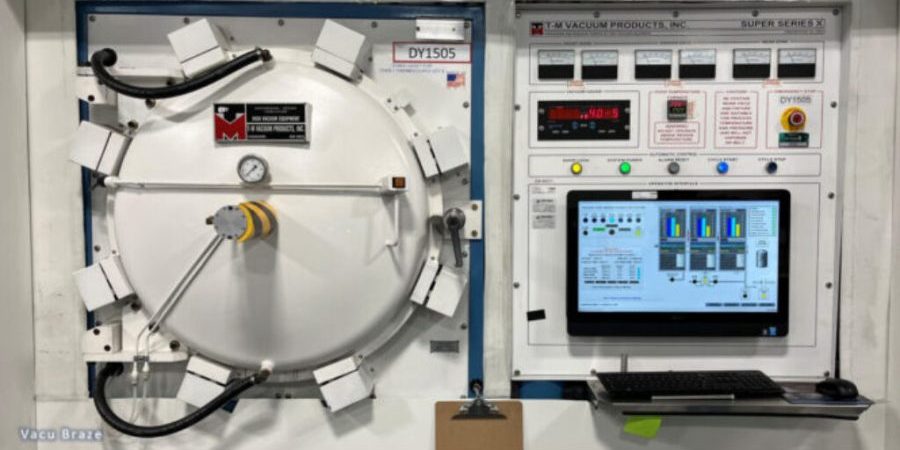
HTD Size-PR LogoA precision heat treatment company Vacu Braze recently partnered with a U.S. furnace manufacturer to procure new equipment to expand its processing capabilities.

The TM8 is the first high-pressure gas quenching furnace to be installed in Vacu Braze’s clean processing room. This high-purity furnace from TM Vacuum Products expands the heat treater’s high-pressure gas quenching capacity for large and small jobs, while offering increased processing cleanliness.

The TM8 is equipped with a molybdenum all-metal hot zone and a cryogenic pump capable of helping the furnace reach the 10-7 vacuum scale. With a qualified work zone of 12” x 12” x 24”, small batches of parts made from a wider array of materials can be processed more quickly than with traditional atmospheric methods.

The new furnace is fully compliant with AMS 2750 class 2 pyrometry and fit for processing critical parts for aerospace applications. As clean processing capabilities expand, Vacu Braze is proud to provide innovative solutions to industries requiring precision, purity, and cleanliness from their heat treatment provider.

.


Find heat treating products and services when you search on Heat Treat Buyers Guide.com


Precision Heat Treater Expands Operations with New High-Pressure Gas Quenching Furnace Read More »

3 Top Tips for Brinell and Rockwell Hardness Tests

OC

Accurate hardness testing is a critical business for numerous industries, not least heat treatment. In this guide, we will offer our “best practice” list for getting the best possible reading for your hardness test with the most efficiency.

This Technical Tuesday article was written by Alex Austin, the managing director at Foundrax Engineering Products Ltd.  


1. Tip for All Tests 

Contact us with your Reader Feedback!
Alex Austin
Managing Director
Foundrax Engineering Products Ltd.
Source: Foundrax

Make sure the test equipment is properly set up. In most instances, this involves keeping the test machine serviced and calibrated in accordance with the international standards (ASTM E-10 for Brinell and ASTM E-18 for Rockwell) or the manufacturer’s instructions — whichever are more strict — along with mounting it on a level, vibration-free surface. The absence of vibration is crucial if you are using a lever and weight machine, but still desirable for hydraulic and motor-driven types, and it is mandated by the standards. 

It is worth noting that for tests made using portable Brinell hardness testers that apply the full test load (albeit without the ability to maintain it uninterrupted for the full ten seconds), while it might not always be possible to mount the machine on a solid and level surface, the rest of the above still applies.  

If the anvil is mounted on a leadscrew, ensure that it is properly secured. Similarly, jigs should be in good condition, correctly mounted and hold the test piece securely. It is easy to become very relaxed about the amount of energy that goes into applying 3000 kg to a 10 mm ball, but if the component shatters under load the results can be dramatic and, potentially, very dangerous. 

Don’t forget your safety boots!  Also, as fingerprint residue is corrosive, always wear gloves.

2. Brinell Hardness Testing 

Preparation 

Before performing a Brinell hardness test, make sure both the test area and the indenter ball are clean and free of all lubricants. Oil or grease on the test surface or indenter could wreck the test by lubricating the path of the indenter, making a very significant difference to the apparent hardness level. For example, at 300 HBW the material may appear around 20 HBW softer than it actually is. Moreover, it can change the appearance of the indentation edge, causing a false diameter measurement. In any case, the hardness standards are clear that test pieces must be clean and lubricant-free. 

Prepare the area of the component surface where the test is to be carried out so that the indenter comes into direct contact with the core material. For this, the skin must be removed, including any decarburized layer, using a hand grinder with 60 grit abrasive (or finer, if appropriate) in 3–5 seconds, if a good automatic Brinell microscope will measure the indentation, or 10–15 seconds for a good manual microscope. This time differential is on the basis that a good automatic system will measure hundreds of diameters and ignore grinding “noise” when identifying the true edge of the indentation. On the other hand, use of a manual microscope is limited to the number one can reasonably measure by the time available and the equipment at hand. However, in the case of both automatic and manual testing, the better the surface, the better the result.    

Next, place the material on the test machine’s table or anvil. Ensure that it is stable and cannot move under the test load (machines with an integral clamp are preferable from this point of view). The clamp should be holding the material so that the test surface is perpendicular to the indenter’s line of operation.  

Carrying Out the Brinell Hardness Test

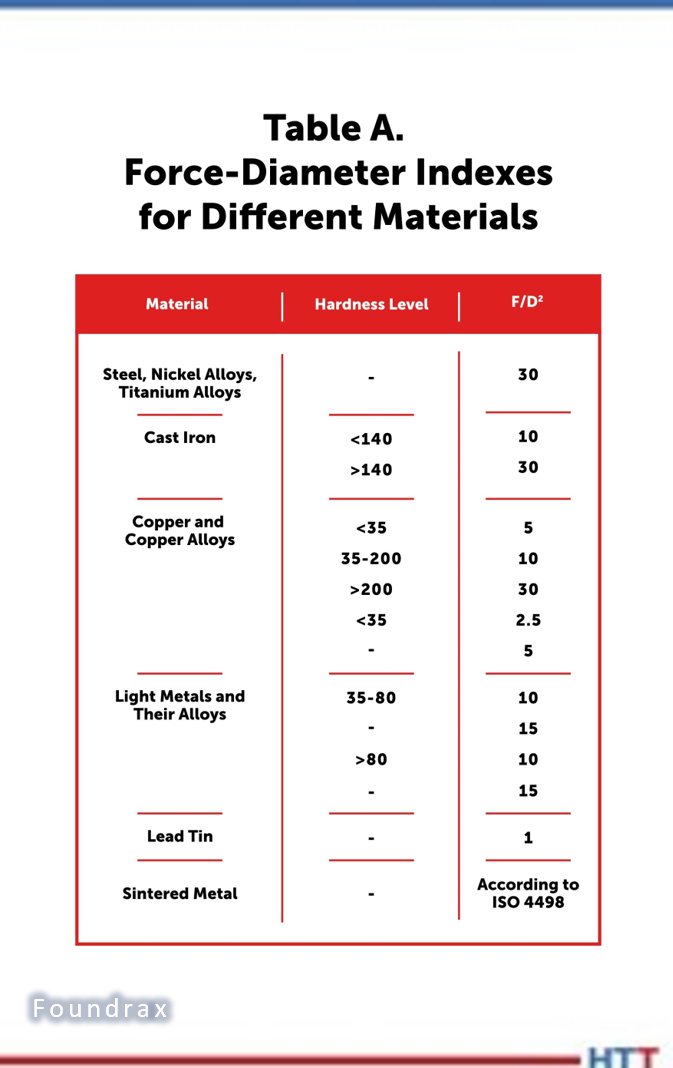
Table A. Force-diameter indexes for different materials

Use the correct force-diameter index (F/D²) for the material being tested; see Table A.

Apply the test force in accordance with ISO6506 or ASTM E-10, as appropriate. While the indenter is in downward motion and in contact with the material, avoid doing anything that might create vibrations that could reach the machine. When the indenter has withdrawn, measure the resulting indentation in a minimum of two diameters perpendicular to each other and convert the mean measurement into an HBW number.  

If using a portable Brinell hardness tester, exercise caution when removing the machine from the component so that the edge of the indentation is not accidentally damaged when the machine is released.  

3. Rockwell Hardness Testing

Preparation 

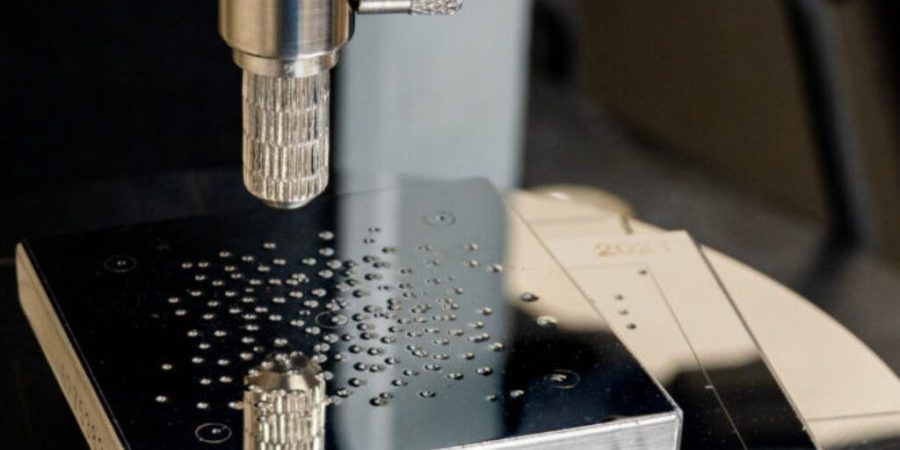
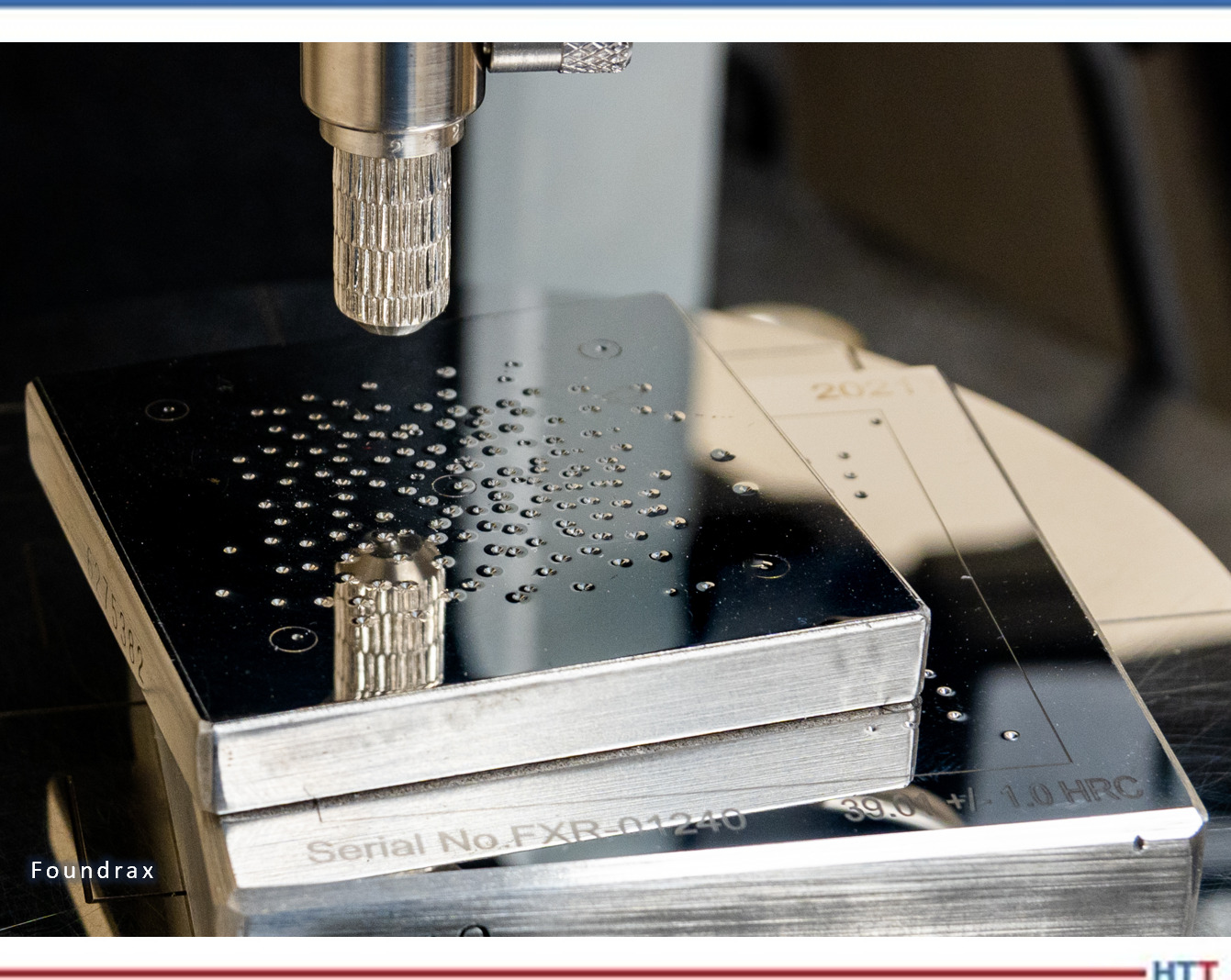
Figure 1. Close-up of Rockwell indentation

Cleanliness is everything in Rockwell testing. The indenters are much smaller than those used in Brinell testing and (as you would expect) so are the indentations (see Figure 1). And because the Rockwell test measures indentation depth, not width, any contaminant or particle that gets between the indenter and the material is a problem. Underside contamination is almost as important. There have been instances of clients finding that the testing block seemed to render two hardness points lower than we stated, yet in every instance, we found a buildup of soft contaminants (e.g., grease, oxides, micro-swarf) on the underside of the block. These contaminants “give” as the indenter is driven into the block, thereby permitting further indenter travel than would occur in the block material alone.

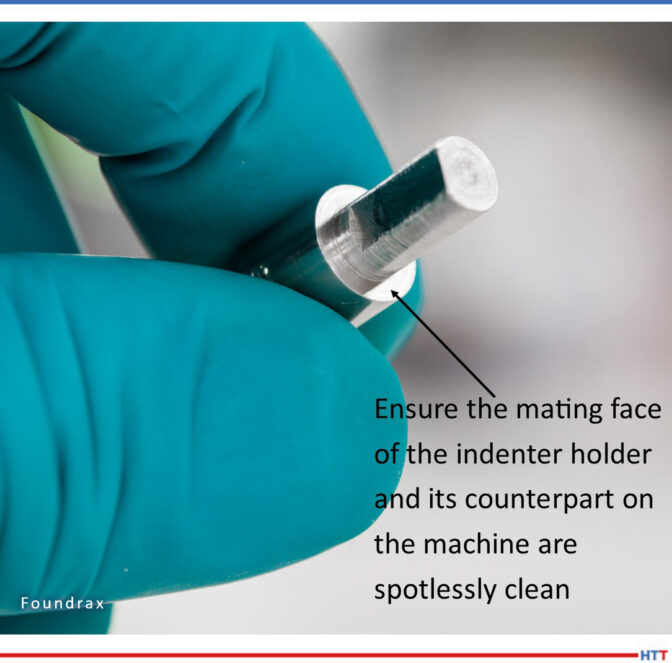
Lubricant contamination on the block surface is obviously extremely problematic. All blocks should be cleaned with a cloth and a liquid solvent that leaves minimal residue (e.g. isopropyl alcohol). Tissue paper can be used for cleaning but can scratch aluminum and brass easily; untreated cotton wipes are preferable. The anvil should also be cleaned by gentle application of a lint-free cloth dampened with solvent, and the indenter itself should be gently wiped at intervals throughout the test session. Another place where contaminants can build up (easily producing an error in excess of one Rockwell point) is the mating face where the indenter holder is inserted into the test head of the machine (see Figure 2). 

Figure 2. Importance in preparation

It is obviously also essential that the anvil mount cannot budge under the indenting load. If it is mounted on a vertical threaded column, the column should be free of excess grease and tightened to the point of no movement. Column “give” is another area where we have detected consequential erroneous readings.  

A further notable check worth performing is that the block, or test piece, has not been dropped and landed on a corner of the underside, which would leave a burr. This would prevent the piece from sitting flush on the anvil and probably negate the possibility of correct readings, as the piece would move under the indenter load. 

Procedure 

Figure 3. Softer block placed over test material during Rockwell test

If the first indentation on a block suggests a lower hardness than the remainder, there is a chance that air was trapped underneath it. The first indentations usually drives any air out, but in the case that air remained trapped beneath the indenter, the hardness reading will be falsely soft; the block will have moved downwards as it displaced the air, and the indenter will, therefore, have travelled further than if the block were truly sitting flush on the anvil. Placing a block that is softer than the test material on top of the test block and putting one indentation into it before commencing the tests will eliminate this problem (see Figure 3). 

Have an aerosol duster to hand during indenting to keep the block surface clear. 

Test blocks should, ideally, be stored in airtight cases to reduce the rate at which oxides form on their surfaces. Better still, wrap them in rust-reducing paper as well.   

(Photo Source: Foundrax Engineering Products Ltd.) 


About the Author: Alex Austin has been the managing director of Foundrax Engineering Products Ltd. since 2002. Foundrax has supplied Brinell hardness testing equipment for 60+ years and is the only company in the world to truly specialize in this field. Alex sits on the ISE/101/05 Indentation Hardness Testing Committee at the British Standards Institution. He has been part of the British delegation to the International Standards Organization advising on the development of the standard ISO 6506 “Metallic materials – Brinell hardness test” and is the chairman and convener for the current ISO revision of the standard.

For more information:

Contact www.foundrax.co.uk


Find heat treating products and services when you search on Heat Treat Buyers Guide.com


3 Top Tips for Brinell and Rockwell Hardness Tests Read More »

Don’t Be the Next Ransomware Victim: How To Detect, Protect, and Recover

op-ed

Ransomware is a threat to all industries, and heat treating is no exception! This article is here to give heat treaters the "how-to" of responding to ransomware, to help keep operations safe and running smoothly. 

Today's read is a feature written by Joe Coleman, cybersecurity officer at Bluestreak Consulting™. This column was first released in Heat Treat Today's November 2023 Vacuum Heat Treat print edition.


Introduction

Joe Coleman
Cybersecurity Officer
Bluestreak Consulting™
Source: Bluestreak Consulting™

Today, the threat of being infected with ransomware is everywhere. Ransomware attacks have grown increasingly sophisticated and widespread, leading to substantial financial harm, emotional distress, and damaged reputation to those unfortunate enough to become victims.

In this article, we’ll cover ransomware — describing what it is, how it works, and most importantly, how you can protect yourself from becoming its next target. Equip yourself with the knowledge and proactive strategies required to protect your digital assets, data, and systems.

What Is Ransomware?

Ransomware is a cyber threat that wreaks havoc on businesses by encrypting computer files and extorting a ransom from victims for their release. Once your system falls victim to this malicious software, it can spread to connected devices, such as shared storage drives and other network-accessible computers. Even if you comply to the ransom demand, there’s no guarantee of full data recovery, because cybercriminals may withhold decryption keys, demand additional payments, or even delete your data. It’s important to note that the federal government strongly discourages paying ransomware demands, as it fuels criminal activity.

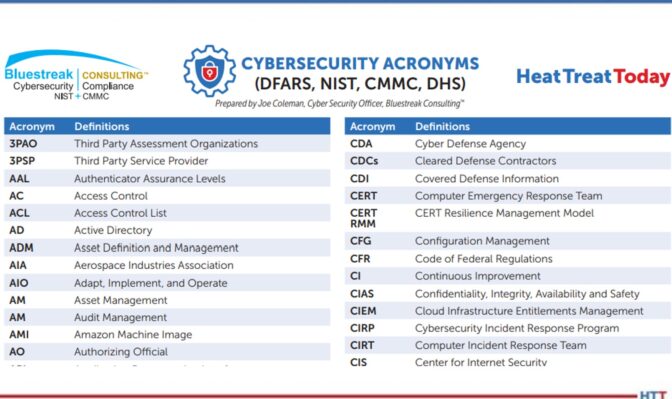
Click on the Image for a full list of Cybersecurity Acronyms

What Can I Do To Prevent Ransomware Attacks?

Frequent and Routine Backups: Perform regular backups of your system and essential files, and consistently verify their integrity. In the case that your computer or system is infected with ransomware, you can restore them to a previous state using these backups.

Keep Software Updated: Ensure that your applications and operating systems are up to date with the latest software/security patches. Most ransomware attacks target vulnerabilities in outdated software.

Secure Backup Storage: The best practice is to store your backups on a separate device that is not connected to the network, such  as an external hard drive. Even better, consider storing your backups offsite at a different location. After completing the backup, disconnect the external hard drive or isolate the device from the network or computer.

Exercise Caution with Links: Exercise caution when dealing with links and entering website addresses. Be especially vigilant when clicking on links in emails, even if they appear to be from familiar senders. It’s advisable to independently verify website addresses. You can do this by reaching out to your organization’s helpdesk, searching the internet for the sender’s organization website, or researching the topic mentioned in the email. Pay close attention to both directly clicking the link to and manually entering the address of a website, as malicious sites often mimic legitimate ones with slight spelling variations or different domains (e.g., .com instead of .net).

Cybersecurity Awareness Training: Businesses should prioritize providing cybersecurity awareness training to their personnel. Ideally, organizations should conduct regular, mandatory cybersecurity awareness training sessions to ensure their staff stay well informed about current cybersecurity threats and techniques employed by threat actors. These training sessions should occur at least once a year. Additionally, organizations can enhance workforce awareness by testing their personnel with phishing simulations that replicate real-world phishing emails, as well as different types of face-to-face social engineering to try to get usernames/ passwords.

Responding To a Ransomware Attack

Isolate the Infected System: Disconnect the infected system immediately from the network to prevent the spread of the infection.

Identify Affected Data: Determine what data have been affected. Sensitive data, such as customer’s electronic CUI (controlled unclassified information), may require additional reporting and mitigation measures.

Check for a Decryption Key: Explore on the internet to see if a decryption key is available. Online resources like www.nomoreransom.org can be helpful.

Restore from Backups: Restore your files from regularly maintained backups.

Report the Incident: Report ransomware incidents. Consider reporting to your local Federal Bureau of Investigation (FBI) field offices or the Internet Crime Complaint Center (IC3) at www.ic3.gov.

Do Not Pay The Ransom: Emphasize the importance of not paying the ransom as it can encourage additional criminal activity.

About the Author:

Joe Coleman is the cybersecurity officer at Bluestreak Consulting™, which is a division of Bluestreak | Bright AM™. Joe has over 35 years of diverse manufacturing and engineering experience. His background includes extensive training in cybersecurity, a career as a machinist, machining manager, and an early additive manufacturing (AM) pioneer. Contact Joe at joe.coleman@go-throughput.com.


Find heat treating products and services when you search on Heat Treat Buyers Guide.com


Don’t Be the Next Ransomware Victim: How To Detect, Protect, and Recover Read More »

Jet Engine Manufacturer Modernizes with Updated Casting Furnace

Sławomir Tomaszewski
Vacuum Melting Team Director
SECO/WARWICK
Source: LinkedIn

HTD Size-PR Logo

One of the world’s largest producers of jet engines has modernized their casting furnace, which was last updated two decades ago.

This company has two casting units supplied two decades ago by RETECH, a North America-based company belonging to the SECO/WARWICK Group. The modernization project was for the VIM EQ furnace - a system for the production of castings in equiaxed crystallization. It will involve replacing almost all the furnace components except the power supply, melting chambers and mold. The platforms will also remain unchanged. The remaining components will be replaced with more modern, ergonomic, and user-friendly parts and assemblies.

Says Sławomir Tomaszewski, vacuum melting team director at SECO/WARWICK, “This order includes the complete elimination of hydraulic components by replacing them with electrical components such as an elevator drive or crucible rotation drive. In addition, two old feeders: one for loading crucibles, the other for removing disposable crucibles, will be replaced with a modern system that can perform both activities."

He added, "An additional advantage of the operation will be the fact that the furnace operator will not have to come into physical contact with hot used crucibles, because they will be removed automatically without human intervention."


Find heat treating products and services when you search on Heat Treat Buyers Guide.com


Jet Engine Manufacturer Modernizes with Updated Casting Furnace Read More »

Skip to content