We will be celebrating the holidays with family, and our offices will be closed from December 22 to January 1. Look for your next Heat Treat Daily e-newsletter on January 2nd!
2023 has been a year of many new things, and we are thankful to have seen many of you in-person. The heat treat community is one that is warm (pun intended) and vibrant.
We are looking to 2024 with much anticipation and hope for even more opportunities to work together and challenge ourselves and others with new ideas in the North American heat treat industry.
Thank you for the opportunities every day to serve and encourage you in our heat treat corner of the world. From the entire Heat Treat Todayteam, we wish you a very joyous and restful Christmas celebrating the birth of Jesus Christ!
Sometimes our editors find items that are not exactly “heat treat” but do deal with interesting developments in one of our key markets: aerospace, automotive, medical, energy, or general manufacturing.
To celebrate getting to the “fringe” of the weekend, Heat Treat Today presents today’s Heat Treat Fringe Friday: the recent acquisition of U.S. Steel by Japan’s Nippon Steel Corporation and some coverage on what may derail the sale.
Nippon Steel Corporation (NSC), Japan’s largest steelmaker and one of the world’s leading steel manufacturers, and United States Steel Corporation (U. S. Steel), a leading steel producer with competitive advantages in low-cost iron ore, mini mill steelmaking, and best-in-class finishing capabilities, announced that they have entered into a definitive agreement pursuant to which NSC will acquire U. S. Steel for a total enterprise value of $14.9 billion. The transaction has been unanimously approved by the Board of Directors of both NSC and U. S. Steel.
NSC’s acquisition of U. S. Steel will enhance its world-leading manufacturing and technology capabilities and enable it to expand the geographic areas in which NSC can better serve all of its stakeholders. The transaction will further diversify NSC’s global footprint by significantly expanding its current production in the United States, adding to its primary geographies of Japan, ASEAN, and India. As a result of NSC’s acquisition of U. S. Steel, its expected total annual crude steel capacity will reach 86 million tonnes – accelerating progress towards NSC’s strategic goal of 100 million tonnes of global crude steel capacity annually.
NSC President Eiji Hashimoto said, “We are excited that this transaction brings together two companies with world-leading technologies and manufacturing capabilities, demonstrating our mission to serve customers worldwide, as well as our commitment to building a more environmentally friendly society through the decarbonization of steel.”
President and Chief Executive Officer of U. S. Steel, David B. Burritt, said, “For our U. S. Steel employees, who I continue to be thankful for, the transaction combines like-minded steel companies with an unwavering focus on safety, shared goals, values, and strategies underpinned by rich histories. For customers, U. S. Steel and NSC create a truly global steel company with combined capabilities and innovation capable of meeting our customers’ evolving needs. [December 18’s] announcement also benefits the United States – ensuring a competitive, domestic steel industry, while strengthening our presence globally. Our shared decarbonization focus is expected to enhance and accelerate our ability to provide customers with innovative steel solutions to meet sustainability goals.”
But this pushback is not at all unexpected from a Japanese perspective. In the perspective of Kyodo News, the regulatory authorities in America and “strict antitrust laws” could continue to prove to be an impediment to the full acquisition.
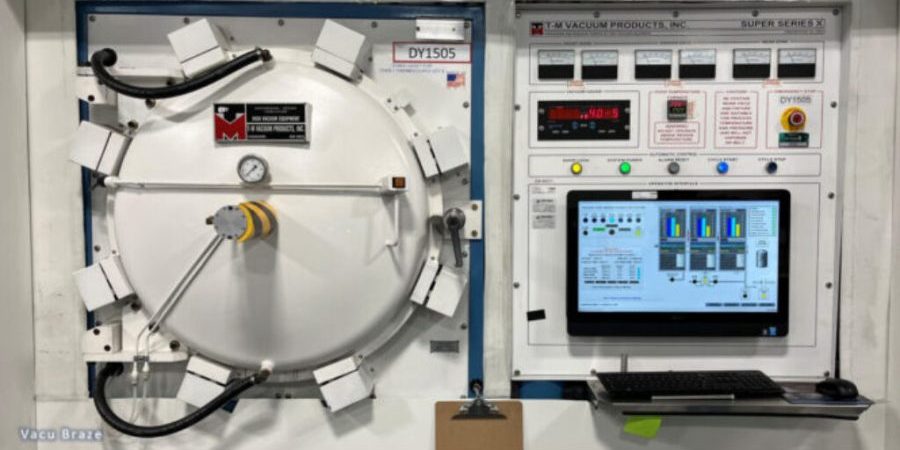
A precision heat treatment company Vacu Braze recently partnered with a U.S. furnace manufacturer to procure new equipment to expand its processing capabilities.
The TM8 is the first high-pressure gas quenching furnace to be installed in Vacu Braze’s clean processing room. This high-purity furnace from TM Vacuum Productsexpands the heat treater’s high-pressure gas quenching capacity for large and small jobs, while offering increased processing cleanliness.
The TM8 is equipped with a molybdenum all-metal hot zone and a cryogenic pump capable of helping the furnace reach the 10-7 vacuum scale. With a qualified work zone of 12” x 12” x 24”, small batches of parts made from a wider array of materials can be processed more quickly than with traditional atmospheric methods.
The new furnace is fully compliant with AMS 2750 class 2 pyrometry and fit for processing critical parts for aerospace applications. As clean processing capabilities expand, Vacu Braze is proud to provide innovative solutions to industries requiring precision, purity, and cleanliness from their heat treatment provider.
.
Find heat treating products and services when you search on Heat Treat Buyers Guide.com
Accurate hardness testing is a critical business for numerous industries, not least heat treatment. In this guide, we will offer our “best practice” list for getting the best possible reading for your hardness test with the most efficiency.
This Technical Tuesday article was written by Alex Austin, the managing director at Foundrax Engineering Products Ltd.
1. Tip for All Tests
Contact us with your Reader Feedback!Alex Austin Managing Director Foundrax Engineering Products Ltd. Source: Foundrax
Make sure the test equipment is properly set up. In most instances, this involves keeping the test machine serviced and calibrated in accordance with the international standards (ASTM E-10 for Brinell and ASTM E-18 for Rockwell) or the manufacturer’s instructions — whichever are more strict — along with mounting it on a level, vibration-free surface. The absence of vibration is crucial if you are using a lever and weight machine, but still desirable for hydraulic and motor-driven types, and it is mandated by the standards.
It is worth noting that for tests made using portable Brinell hardness testers that apply the full test load (albeit without the ability to maintain it uninterrupted for the full ten seconds), while it might not always be possible to mount the machine on a solid and level surface, the rest of the above still applies.
If the anvil is mounted on a leadscrew, ensure that it is properly secured. Similarly, jigs should be in good condition, correctly mounted and hold the test piece securely. It is easy to become very relaxed about the amount of energy that goes into applying 3000 kg to a 10 mm ball, but if the component shatters under load the results can be dramatic and, potentially, very dangerous.
Don’t forget your safety boots! Also, as fingerprint residue is corrosive, always wear gloves.
2. Brinell Hardness Testing
Preparation
Before performing a Brinell hardness test, make sure both the test area and the indenter ball are clean and free of all lubricants. Oil or grease on the test surface or indenter could wreck the test by lubricating the path of the indenter, making a very significant difference to the apparent hardness level. For example, at 300 HBW the material may appear around 20 HBW softer than it actually is. Moreover, it can change the appearance of the indentation edge, causing a false diameter measurement. In any case, the hardness standards are clear that test pieces must be clean and lubricant-free.
Prepare the area of the component surface where the test is to be carried out so that the indenter comes into direct contact with the core material. For this, the skin must be removed, including any decarburized layer, using a hand grinder with 60 grit abrasive (or finer, if appropriate) in 3–5 seconds, if a good automatic Brinell microscope will measure the indentation, or 10–15 seconds for a good manual microscope. This time differential is on the basis that a good automatic system will measure hundreds of diameters and ignore grinding “noise” when identifying the true edge of the indentation. On the other hand, use of a manual microscope is limited to the number one can reasonably measure by the time available and the equipment at hand. However, in the case of both automatic and manual testing, the better the surface, the better the result.
Next, place the material on the test machine’s table or anvil. Ensure that it is stable and cannot move under the test load (machines with an integral clamp are preferable from this point of view). The clamp should be holding the material so that the test surface is perpendicular to the indenter’s line of operation.
Carrying Out the Brinell Hardness Test
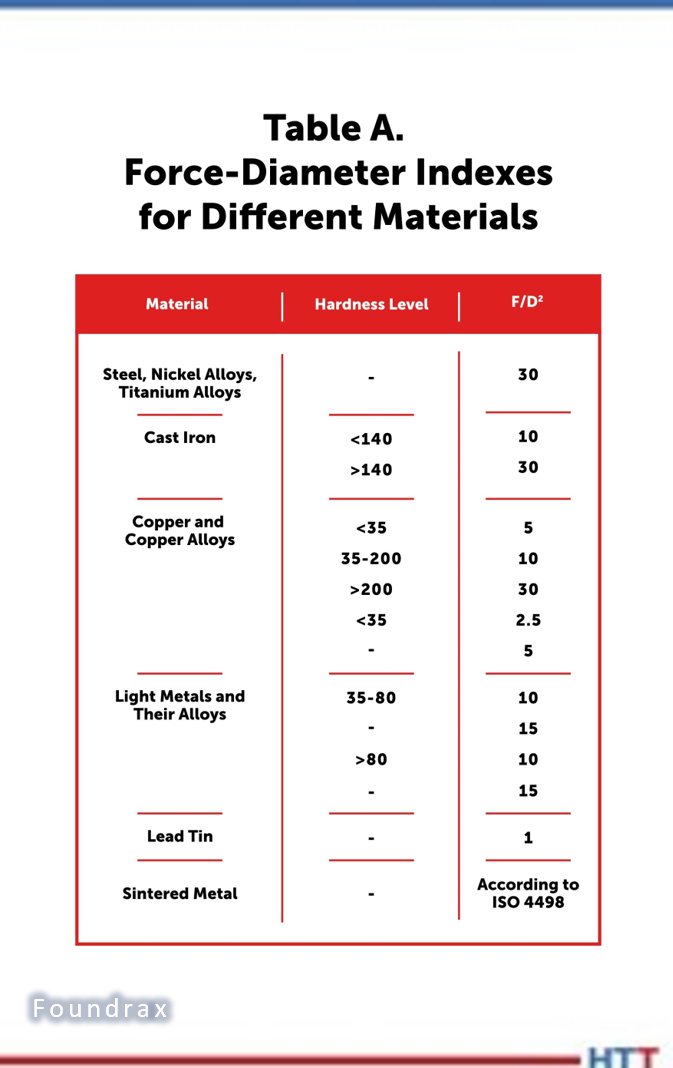
Table A. Force-diameter indexes for different materials
Use the correct force-diameter index (F/D²) for the material being tested; see Table A.
Apply the test force in accordance with ISO6506 or ASTM E-10, as appropriate. While the indenter is in downward motion and in contact with the material, avoid doing anything that might create vibrations that could reach the machine. When the indenter has withdrawn, measure the resulting indentation in a minimum of two diameters perpendicular to each other and convert the mean measurement into an HBW number.
If using a portable Brinell hardness tester, exercise caution when removing the machine from the component so that the edge of the indentation is not accidentally damaged when the machine is released.
3. Rockwell Hardness Testing
Preparation
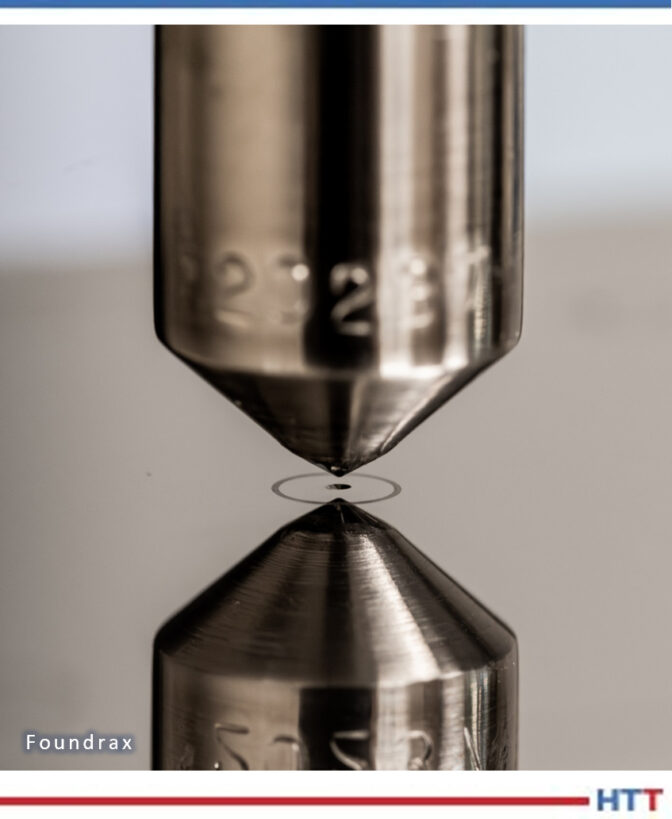
Figure 1. Close-up of Rockwell indentation
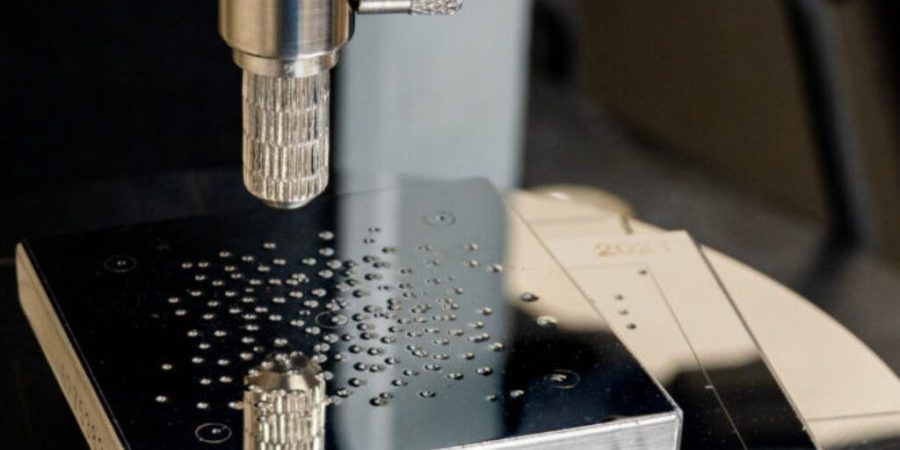
Cleanliness is everything in Rockwell testing. The indenters are much smaller than those used in Brinell testing and (as you would expect) so are the indentations (see Figure 1). And because the Rockwell test measures indentation depth, not width, any contaminant or particle that gets between the indenter and the material is a problem. Underside contamination is almost as important. There have been instances of clients finding that the testing block seemed to render two hardness points lower than we stated, yet in every instance, we found a buildup of soft contaminants (e.g., grease, oxides, micro-swarf) on the underside of the block. These contaminants “give” as the indenter is driven into the block, thereby permitting further indenter travel than would occur in the block material alone.
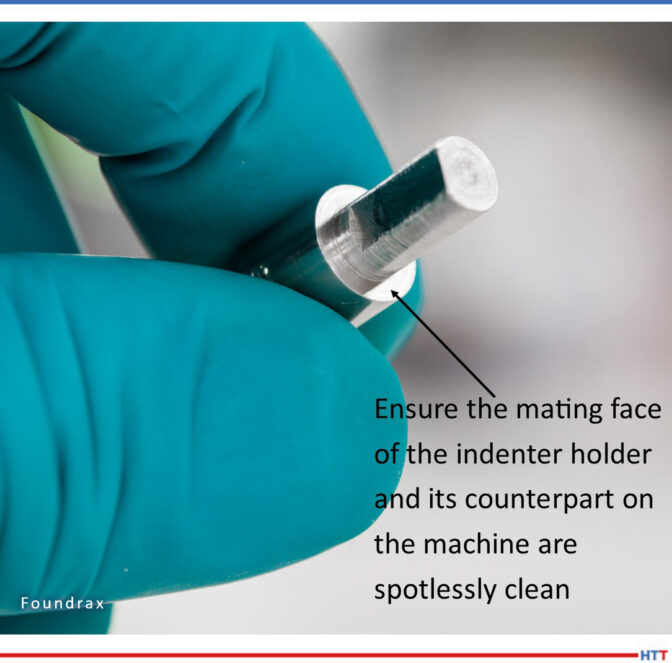
Lubricant contamination on the block surface is obviously extremely problematic. All blocks should be cleaned with a cloth and a liquid solvent that leaves minimal residue (e.g. isopropyl alcohol). Tissue paper can be used for cleaning but can scratch aluminum and brass easily; untreated cotton wipes are preferable. The anvil should also be cleaned by gentle application of a lint-free cloth dampened with solvent, and the indenter itself should be gently wiped at intervals throughout the test session. Another place where contaminants can build up (easily producing an error in excess of one Rockwell point) is the mating face where the indenter holder is inserted into the test head of the machine (see Figure 2).
Figure 2. Importance in preparation
It is obviously also essential that the anvil mount cannot budge under the indenting load. If it is mounted on a vertical threaded column, the column should be free of excess grease and tightened to the point of no movement. Column “give” is another area where we have detected consequential erroneous readings.
A further notable check worth performing is that the block, or test piece, has not been dropped and landed on a corner of the underside, which would leave a burr. This would prevent the piece from sitting flush on the anvil and probably negate the possibility of correct readings, as the piece would move under the indenter load.
Procedure
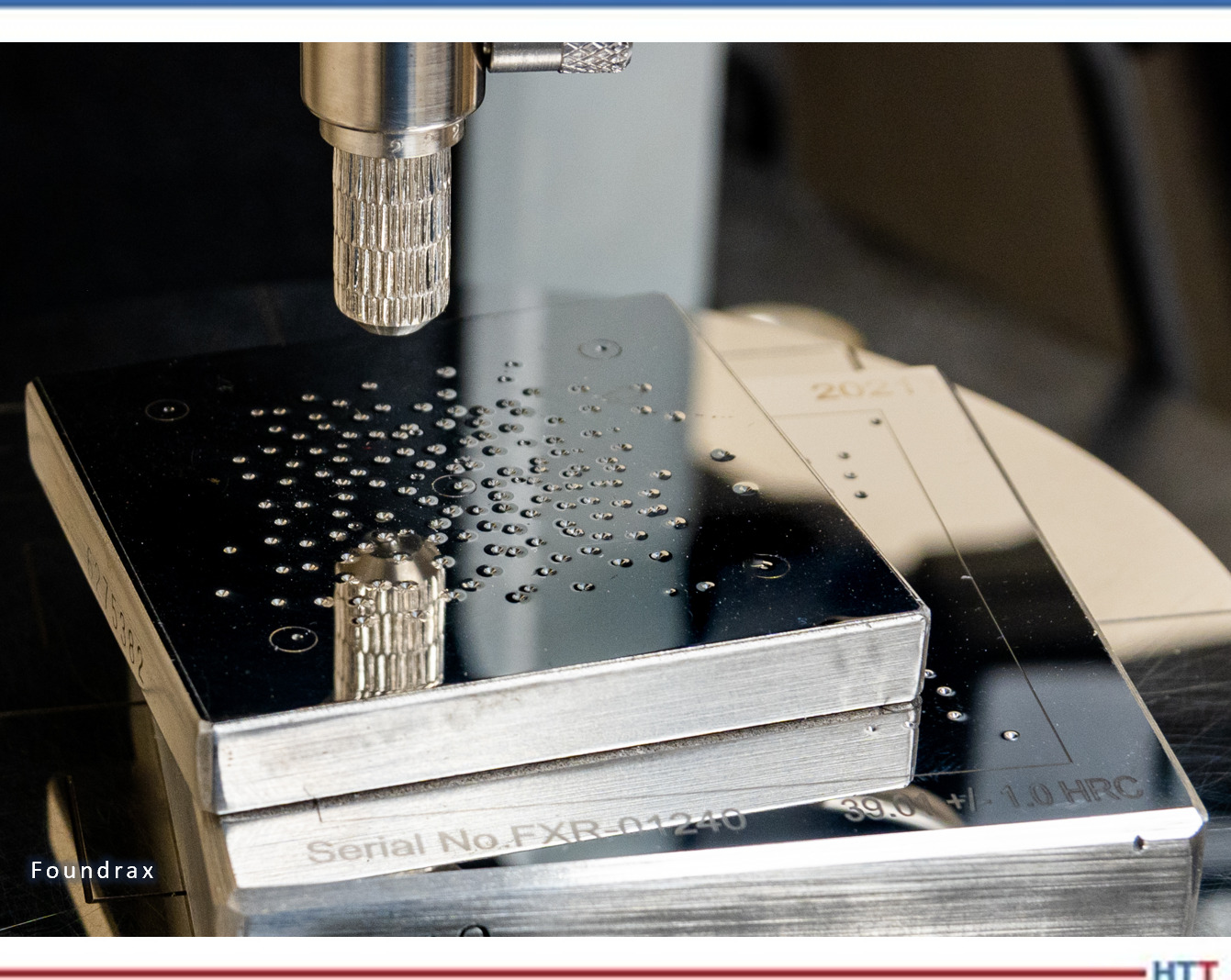
Figure 3. Softer block placed over test material during Rockwell test
If the first indentation on a block suggests a lower hardness than the remainder, there is a chance that air was trapped underneath it. The first indentations usually drives any air out, but in the case that air remained trapped beneath the indenter, the hardness reading will be falsely soft; the block will have moved downwards as it displaced the air, and the indenter will, therefore, have travelled further than if the block were truly sitting flush on the anvil. Placing a block that is softer than the test material on top of the test block and putting one indentation into it before commencing the tests will eliminate this problem (see Figure 3).
Have an aerosol duster to hand during indenting to keep the block surface clear.
Test blocks should, ideally, be stored in airtight cases to reduce the rate at which oxides form on their surfaces. Better still, wrap them in rust-reducing paper as well.
About the Author: Alex Austin has been the managing director of Foundrax Engineering Products Ltd. since 2002. Foundrax has supplied Brinell hardness testing equipment for 60+ years and is the only company in the world to truly specialize in this field. Alex sits on the ISE/101/05 Indentation Hardness Testing Committee at the British Standards Institution. He has been part of the British delegation to the International Standards Organization advising on the development of the standard ISO 6506 “Metallic materials – Brinell hardness test” and is the chairman and convener for the current ISO revision of the standard.
Ransomware is a threat to all industries, and heat treating is no exception! This article is here to give heat treaters the "how-to" of responding to ransomware, to help keep operations safe and running smoothly.
Today's read is a feature written by Joe Coleman, cybersecurity officer at Bluestreak Consulting™. This column was first released in Heat Treat Today'sNovember 2023 Vacuum Heat Treat print edition.
Introduction
Joe Coleman
Cybersecurity Officer
Bluestreak Consulting™
Source: Bluestreak Consulting™
Today, the threat of being infected with ransomware is everywhere. Ransomware attacks have grown increasingly sophisticated and widespread, leading to substantial financial harm, emotional distress, and damaged reputation to those unfortunate enough to become victims.
In this article, we’ll cover ransomware — describing what it is, how it works, and most importantly, how you can protect yourself from becoming its next target. Equip yourself with the knowledge and proactive strategies required to protect your digital assets, data, and systems.
What Is Ransomware?
Ransomware is a cyber threat that wreaks havoc on businesses by encrypting computer files and extorting a ransom from victims for their release. Once your system falls victim to this malicious software, it can spread to connected devices, such as shared storage drives and other network-accessible computers. Even if you comply to the ransom demand, there’s no guarantee of full data recovery, because cybercriminals may withhold decryption keys, demand additional payments, or even delete your data. It’s important to note that the federal government strongly discourages paying ransomware demands, as it fuels criminal activity.
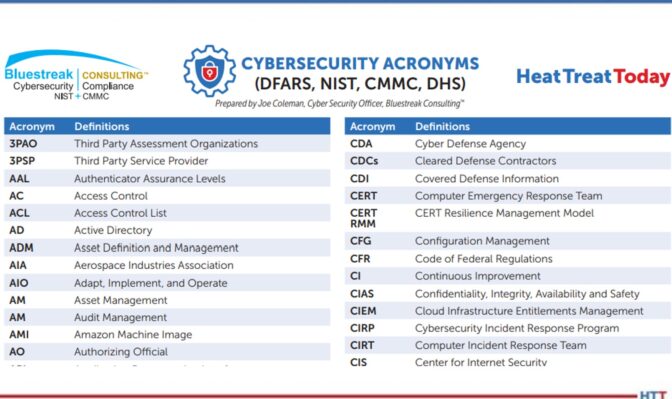
Click on the Image for a full list of Cybersecurity Acronyms
What Can I Do To Prevent Ransomware Attacks?
Frequent and Routine Backups: Perform regular backups of your system and essential files, and consistently verify their integrity. In the case that your computer or system is infected with ransomware, you can restore them to a previous state using these backups.
Keep Software Updated: Ensure that your applications and operating systems are up to date with the latest software/security patches. Most ransomware attacks target vulnerabilities in outdated software.
Secure Backup Storage: The best practice is to store your backups on a separate device that is not connected to the network, such as an external hard drive. Even better, consider storing your backups offsite at a different location. After completing the backup, disconnect the external hard drive or isolate the device from the network or computer.
Exercise Caution with Links: Exercise caution when dealing with links and entering website addresses. Be especially vigilant when clicking on links in emails, even if they appear to be from familiar senders. It’s advisable to independently verify website addresses. You can do this by reaching out to your organization’s helpdesk, searching the internet for the sender’s organization website, or researching the topic mentioned in the email. Pay close attention to both directly clicking the link to and manually entering the address of a website, as malicious sites often mimic legitimate ones with slight spelling variations or different domains (e.g., .com instead of .net).
Cybersecurity Awareness Training: Businesses should prioritize providing cybersecurity awareness training to their personnel. Ideally, organizations should conduct regular, mandatory cybersecurity awareness training sessions to ensure their staff stay well informed about current cybersecurity threats and techniques employed by threat actors. These training sessions should occur at least once a year. Additionally, organizations can enhance workforce awareness by testing their personnel with phishing simulations that replicate real-world phishing emails, as well as different types of face-to-face social engineering to try to get usernames/ passwords.
Responding To a Ransomware Attack
Isolate the Infected System: Disconnect the infected system immediately from the network to prevent the spread of the infection.
Identify Affected Data: Determine what data have been affected. Sensitive data, such as customer’s electronic CUI (controlled unclassified information), may require additional reporting and mitigation measures.
Check for a Decryption Key: Explore on the internet to see if a decryption key is available. Online resources like www.nomoreransom.org can be helpful.
Restore from Backups: Restore your files from regularly maintained backups.
Report the Incident: Report ransomware incidents. Consider reporting to your local Federal Bureau of Investigation (FBI) field offices or the Internet Crime Complaint Center (IC3) at www.ic3.gov.
Do Not Pay The Ransom: Emphasize the importance of not paying the ransom as it can encourage additional criminal activity.
About the Author:
Joe Coleman is the cybersecurity officer at Bluestreak Consulting™, which is a division of Bluestreak | Bright AM™. Joe has over 35 years of diverse manufacturing and engineering experience. His background includes extensive training in cybersecurity, a career as a machinist, machining manager, and an early additive manufacturing (AM) pioneer. Contact Joe at joe.coleman@go-throughput.com.
Find heat treating products and services when you search on Heat Treat Buyers Guide.com
Sławomir Tomaszewski Vacuum Melting Team Director SECO/WARWICK Source: LinkedIn
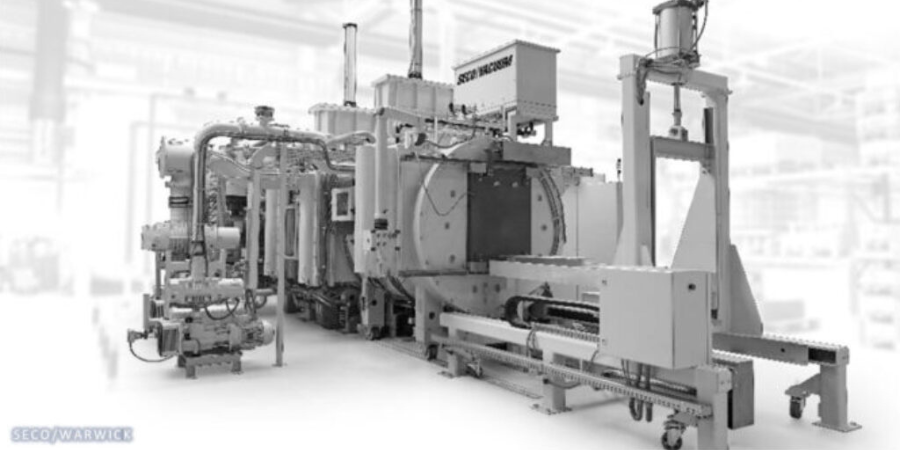
One of the world’s largest producers of jet engines has modernized their casting furnace, which was last updated two decades ago.
This company has two casting units supplied two decades ago by RETECH, a North America-based company belonging to the SECO/WARWICK Group. The modernization project was for the VIM EQ furnace - a system for the production of castings in equiaxed crystallization. It will involve replacing almost all the furnace components except the power supply, melting chambers and mold. The platforms will also remain unchanged. The remaining components will be replaced with more modern, ergonomic, and user-friendly parts and assemblies.
Says Sławomir Tomaszewski, vacuum melting team director at SECO/WARWICK, “This order includes the complete elimination of hydraulic components by replacing them with electrical components such as an elevator drive or crucible rotation drive. In addition, two old feeders: one for loading crucibles, the other for removing disposable crucibles, will be replaced with a modern system that can perform both activities."
He added, "An additional advantage of the operation will be the fact that the furnace operator will not have to come into physical contact with hot used crucibles, because they will be removed automatically without human intervention."
Find heat treating products and services when you search on Heat Treat Buyers Guide.com
Richard B. Conway
Founder/Director/ CTO
DELTA H® Technologies, LLC
Source: DELTA H
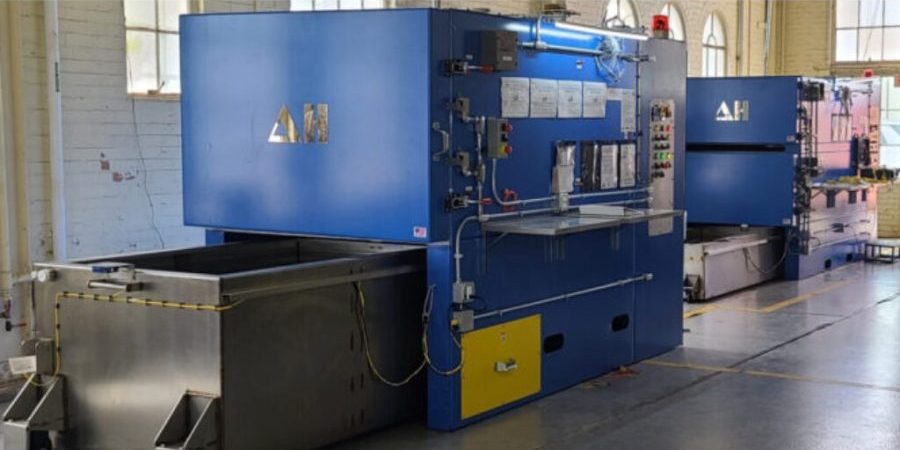
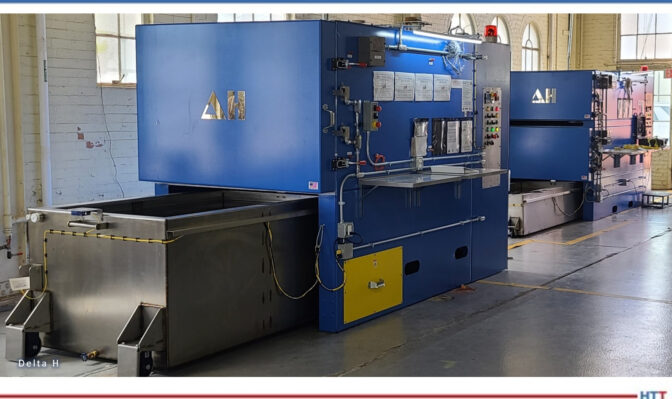
Three heat treat systems have recently been delivered and commissioned to joint base San Antonio-Randolph for maintaining the T-38 Talon Trainer aircraft.
These systems are a dual chamber model DCAHT®-181248-1200/500-MIL, a DCAHT®-241672-1200/500-MIL, and a large single chamber SCAHT®-303048-1200-MIL.
USAF depot level heat treating requires full compliance to AMS2750G. The heat treating systems provided by DELTA H were for replacing existing systems which were too troublesome or costly to try to qualify and were never designed for modern pyrometry standards. The furnace systems were placed into production service the week following qualifying and training.
JBSA-Randolph – SCAHT®-303048-1200-MIL & DCAHT®-241672-1200/500-MIL Includes Power Driven Quench Tank
Source: DELTA H
Richard Conway, director and CTO of DELTA H, states, "We are grateful and humbled to be recognized among the mission critical technology partners supporting this very important project, and pleased to play a part in extending the service life of the valuable T-38 airframe."
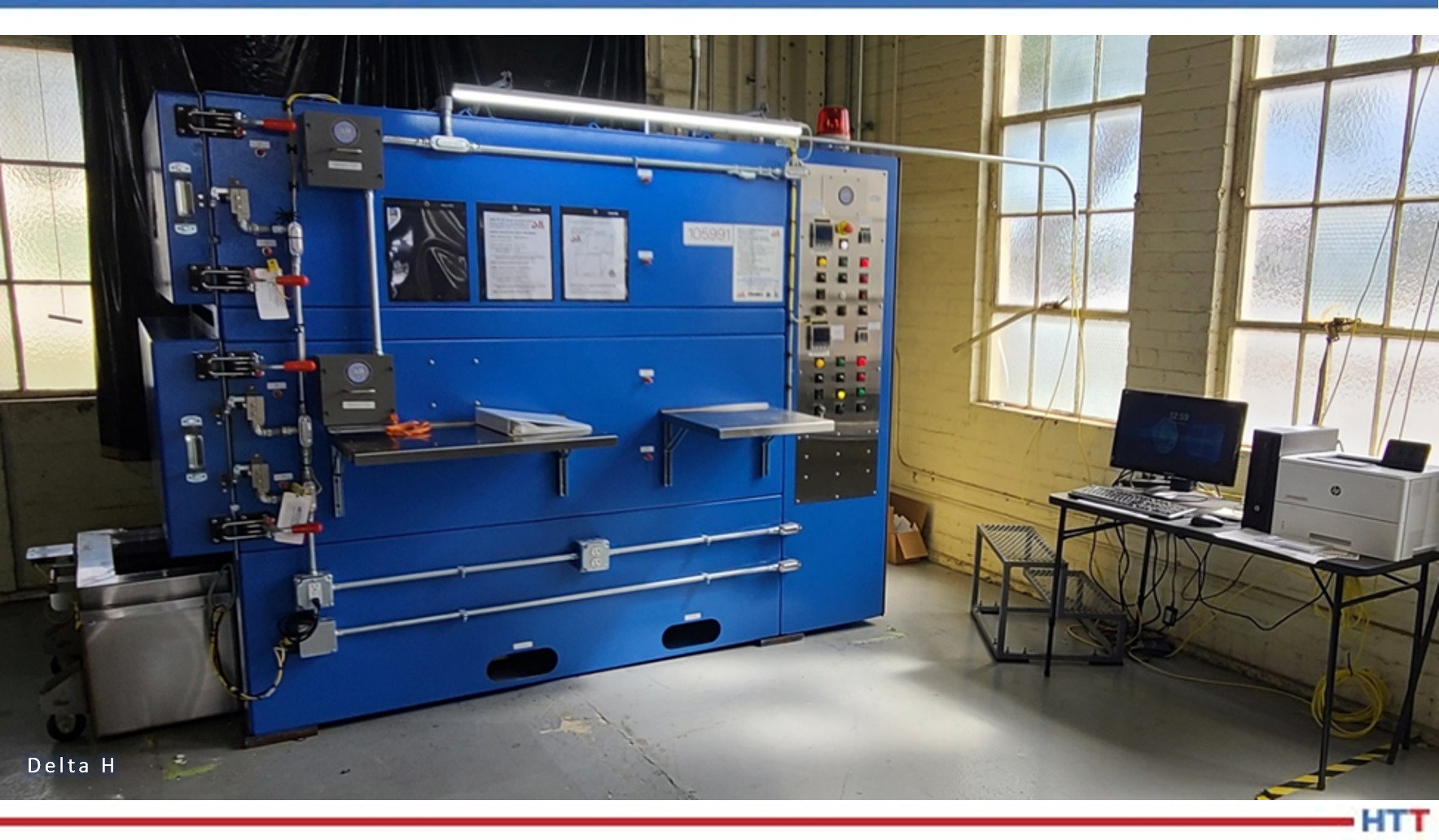
JBSA-Randolph, TX – DCAHT®-181248-1200/500-MIL Heat Treat Computer Work Station
Source: DELTA H
Third party compliance and initial qualifying certification of all 5 chambers were provided by Conrad Kacsik Instrument Systems of Solon, Ohio.
Jake Kacsik, president of Conrad Kacsik Instrument Systems, shares, “The results are always impressive when testing DELTA H furnaces. By far the most reliable and consistent systems for maintaining the strict standards of aerospace pyrometry. Richard and I not only have a career-long professional relationship, but also, we both served in the USAF.”
DELTA H is exclusively represented worldwide by PHILLIPS FEDERAL Division for all military and government sales.
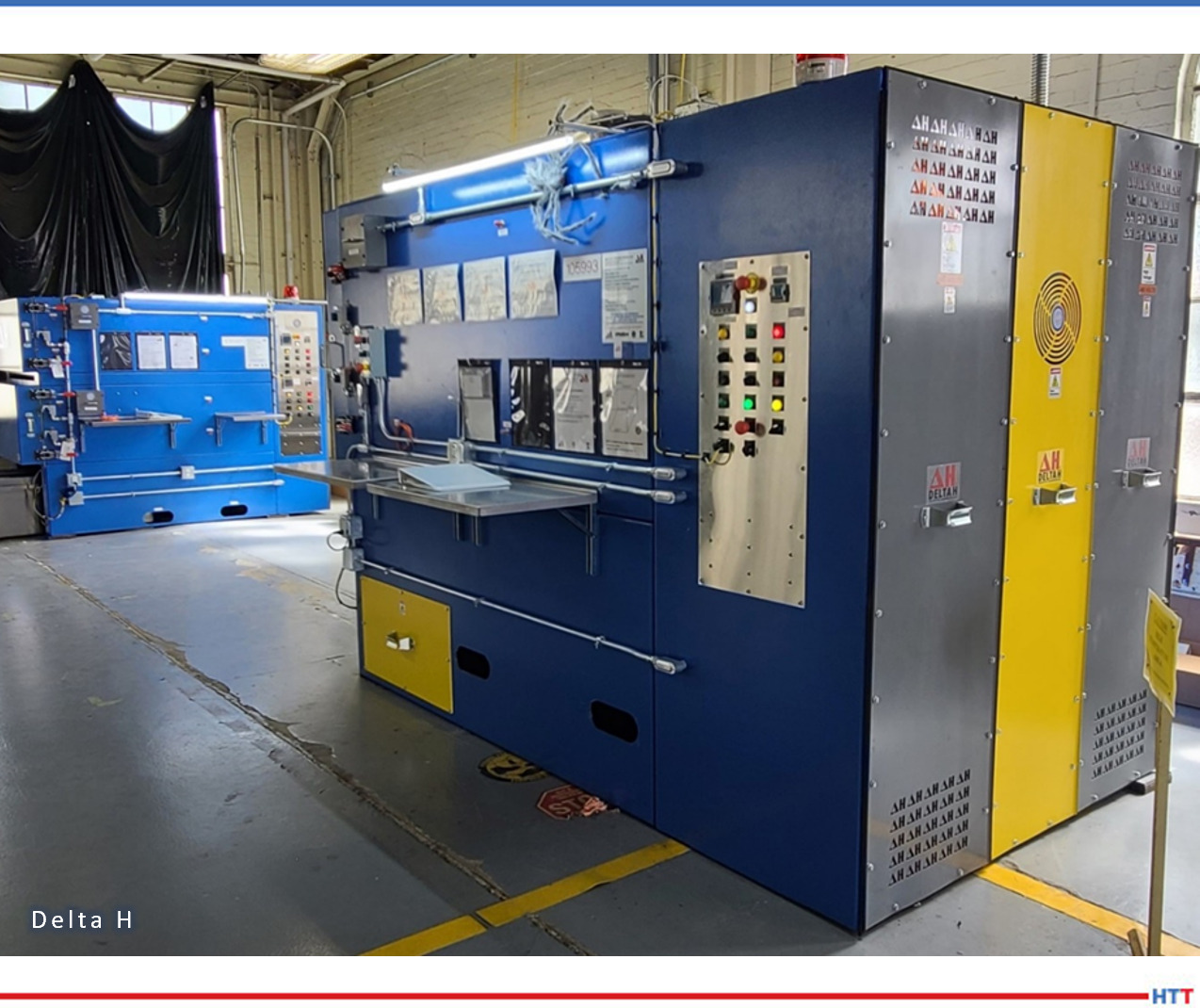
JBSA-Randolph, TX – SCAHT®-303048-1200-MIL & DCAHT®-181248-1200/500-MIL
Source: DELTA H
John Murray, retired SMSgt of USAF and product manager of Phillips Corporation, Federal Division added, “DELTA H compliments our product offerings to Metals Tech facilities. Regardless of traditional machining or additive manufacturing, Phillips Corporation – Federal Division strives to meet the needs of the USAF Fabrication Flight Warfighter, providing the best solutions for their support of US power projection and strategic deterrence. Phillips Corporation – Federal Division stands beside USAF Fabrication Flights around the globe ready to cut, fabricate, manufacture, and metallurgically process any part-anytime-anywhere."
Find heat treating products and services when you search on Heat Treat Buyers Guide.com
Heat Treat Today is partnering with two international publications: heat processing, a Vulkan-Verlag GmbH publication that serves mostly the European and Asian heat treat markets, and Furnaces International, a Quartz Business Media publication that primarily serves the English-speaking globe. Through these partnerships, we are sharing the latest news, tech tips, and cutting-edge articles that will serve our audience — manufacturers with in-house heat treat.
In this article, international companies scale up their equipment and scale down their carbon emission.
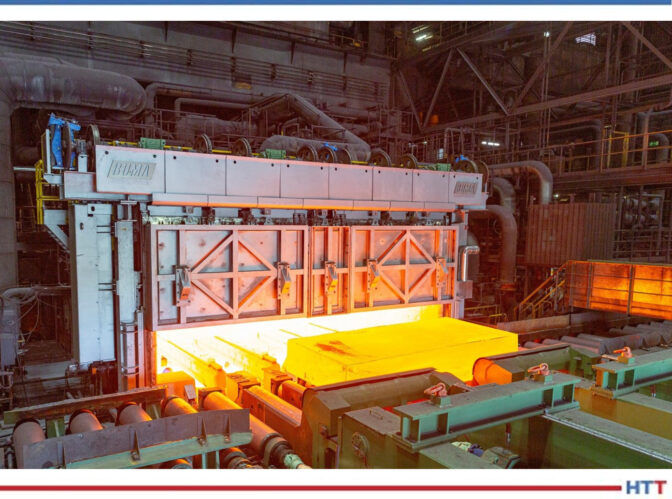
German Steelmaker Dillinger Completes Slab Pusher Furnace in Rolling Mill
"The stock corporation of Dillinger Hüttenwerke (Dillinger) has successfully converted its slab pusher furnace 2 in the rolling mill." (Source: Furnaces International)
"For the customer, this means that the availability of large, heavy sheets increases. With these, weld seams can be saved and, thanks to more efficient production, more offshore foundations can ultimately be produced and installed. The modernization of the slab impact furnace, as well as the new edge milling machine for the delivery of “fabricated” offshore wind sheets, is one of a number of investments in the offshore wind market that are currently being planned and implemented at Dillinger."
Global Steel Producers Partner To Cut Carbon Emissions
Heat transfer supplier Alfa Laval has created a partnership with Finnish steelmaker Outokumpu to cut carbon emissions. (Source: Furnaces International)
“Most of the Alfa Laval steel purchased from Outokumpu, a global steel manufacturer, will now be the low carbon stainless steel variety. This change applies to heat exchangers used in the energy transition towards a more sustainable energy supply, including energy efficiency, waste heat recovery, and heat pumps. These heat exchangers are currently produced in large quantities with the potential for future growth, says Alfa Laval.”
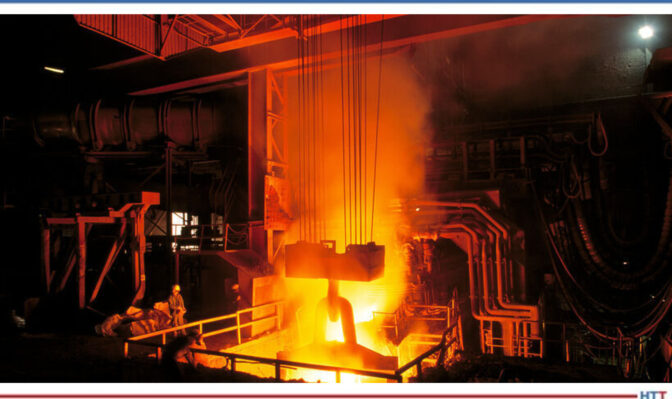
Japanese Steelmaker JFE Steel Plans To Build New EAF To Replace Blast Furnace
JFE's plans for an electric arc furnace will be used for the automotive industry and will reduce carbon emissions. (Source: heat processing)
“The steelmaker is considering building an EAF that can produce 2Mt of high-grade steel when the No.2 unit is due for refurbishment, JFE president Yoshihisa Kitano said. He added that the EAF would reduce CO2 emissions by 2.6Mt/yr from current levels emitted by the blast furnace."
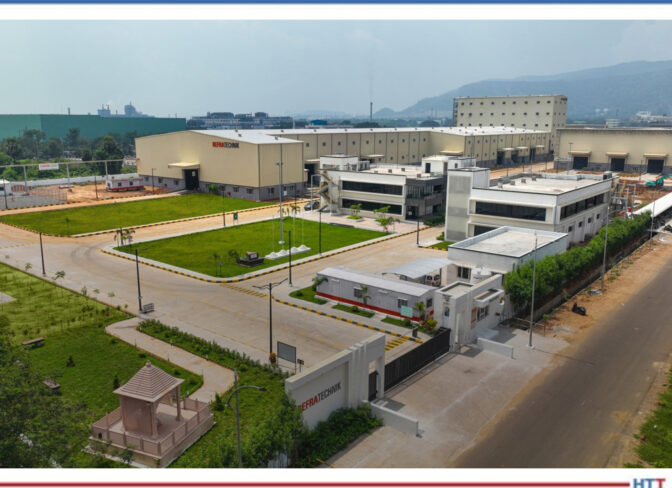
Indian Manufacturer Refratechnik Group Opens New Factory for Metals Industry
"The Refratechnik Group opens its new factory in India." (Source: heat processing)
"The state-of-the-art greenfield factory was built to produce MgO-C refractory products, high-alumina bricks, as well as monolithic products for the steel, cement and non-ferrous metal industries. The plant will employ more than 300 people in the short term and more than 400 people in the long term."
Oil quenching can be a dirty phrase around the heat treat shop. But with vacuum, does it have to be?
This Technical Tuesday article was written by Don Marteeny, vice president of engineering at SECO/VACUUM Technologies,forHeat Treat Today’sNovember 2023 Vacuum Heat Treating print edition.
There are metallurgical advantages to oil quenching for which there are no gas quench substitutes, but for a time, those advantages only came bundled with some disadvantages that proved incompatible with a growing preference for vacuum processes. This drove vacuum oil quenching (VOQ) to evolve and improve, often faster than its reputation. VOQ has since matured into a convenient, safe, and economical choice, offering today’s vacuum heat treaters all the metallurgical advantages of oil quench without any of the compromises.
A Familiar Scene . . .
Don Marteeny
Vice President of Engineering
SECO/VACUUM TechnologiesContact us with your Reader Feedback!
When oil quenching is mentioned in the break room of any heat treat department, it’s a sure bet that those listening have very similar thoughts. With just the mere mention of oil, their thoughts carry them, not to memories of the first time they helped their dad change the oil in their car in the family garage, but instead to a row of furnaces belching flames from their doors. Next, they are sure to see one of the doors open, and the familiar sensation of hot air moves through their mind. They may – for a moment – expect the smell of salt air, the sand between their toes, and the sun from above.
For many heat treaters, this is but a momentary escape. Soon, the taste and smell of hot oil and metal return them to the moment, and they know they are standing next to a row of batch integral quench (aka, batch IQ or BIQ) furnaces.
It’s about then they will feel the heat of those flames at the end of this furnace line or by the transfer car, wiping the sweat from their brow with a sooty hand and anticipating a return to the break room for a cool drink of water.
Sound familiar? If so, you’re one of the hundreds of heat treaters who has had the pleasure of operating a tried-and-true atmosphere integral quench line; it faithfully does its job, hardening and case hardening steels where oil is the only heavy lifter that can do the job.
While heat treaters have been diligently pumping out oil hardened steels, furnace builders and OEMs alike have been trying to find ways to move away from oil to quenchants that, primarily, reduce distortion, but also that are cleaner, require less processing, and present a safer working environment. Despite their efforts working with modified quenchants – including high pressure gas quenching (HPGQ) in vacuum furnaces – oil quenching has proven robust, maybe even stubborn.
Does that mean we are stuck with the integral quench furnace and its fire-breathing ways? Not necessarily. . . .
Figure 2. D-Type double chamber for batch work processing with conventional loading over the oil quench
Source: SECO/VACUUM Technologies
An Invention Waiting on Improvement
The concept of a vacuum oil quenching furnace is nothing new. When first developed, it was unique because it combined the advantages of vacuum heat treating with the ability to oil quench. But at the time, they were an unlikely couple that never really got along as well as the atmosphere furnace with an oil quench tank.
Vacuum oil quench furnaces were expensive, had large footprints, and were not particularly reliable. Plus, if case hardening was required, low pressure carburizing was not particularly attractive as it was still in its infancy, at least compared to gas carburizing. So, VOQ stayed in the shadows, fulfilling limited roles where the application warranted the extra complication of vacuum. In the meantime, the integral quench furnace became the workhorse of choice, churning out oil and case hardened parts for industries worldwide.
HPGQ Drives Improvement in Vacuum Furnace Technology
Despite the success of the integral quench furnace, VOQ remained present, stirring in the shadows. In the meantime, vacuum furnace technology advanced through the development of high pressure gas quenching. The design and construction of a vacuum furnace lent itself to this application well and introduced a host of advantages, such as found in Maciej Korecki’s “Case Study of CMe-T6810-25 High Volume Production”:
• Decreased distortion
• Elimination of intergranular oxidation (IGO)
• No decarburization
Vacuum Furnaces Move from Niche to Standard Issue
In addition, these design developments supported the opportunity to case harden parts through the use of low pressure carburizing (LPC). Coupled with quenching pressures up to 25 bar, the HPGQ-equipped vacuum furnace became a real option for the heat treater interested in through hardening that did not require:
• Special atmosphere generation equipment (atmosphere generator)
• Lengthy furnace-conditioning cycles to assure the correct gas carburizing conditions as is typically necessary in the batch IQ furnace
• Post-heat treating surface cleaning in the form of washing or oxidation removal
VOQ Begins to Follow Suit
Still, vacuum and HPGQ were limited in their ability to serve in the role of hardening some steels when considering common geometries. This meant that, for those steels, oil remained the go-to quenching solution. As a result, the VOQ furnace became the furnace of choice.
It still required:
• Post-quench wash
• Aggressive oil circulation to minimize distortion
• Selection of the appropriate oil
• Careful fixture design
However, the advantages were too many to ignore. The fact that one could through harden steels like 8620 in a clean environment without the safety and cleanliness concerns inherent to integral quench furnaces was a huge advantage. And although furnace footprint remained a concern until the early 2000s, advancements in areas such as mixer design, vacuum pumps, and low vapor pressure quenching oils all contributed to decreasing the footprint and increasing the reliability of VOQ, making it an even more viable option. In more recent times, environmental concerns have also renewed attention to the VOQ furnace because of its vacuum capability.
Advantages include:
• Electric heating – no natural gas consumption
• Inert gas atmosphere or vacuum environment – no atmosphere generator needed • Zero CO2 emissions, even when case hardening using LPC
Figure 3. T-Type triple chamber for continuous batch work – oil quench or gas cooling/quenching with a separate chamber for preheating and semicontinuous operation
Source: SECO/VACUUM Technologies
Which Brings Us to Today
Vacuum oil quenching technology has progressed to overcome the challenges of yesteryear, and technological improvements have made it a flexible and configurable option for a heat treater’s current – and future – needs.
The VOQ is now available in configurations that provide both batch and semicontinuous options. This provides the opportunity to harden or case harden components with increased productivity and efficiency.
A common configuration offered is the two-chamber VOQ furnace as pictured in Figure 2. In this batch type configuration, common working zone sizes – such as 24″ x 24″ x 36″ or 36″ x 36″ x 48″ – are available with load capacities up to 2,650 lbs. A graphite-insulated hot zone provides the capability to achieve working temperatures up to 2400°F while providing the platform to case harden using LPC. This configuration also has the ability to conduct partial pressure heating using nitrogen. When quenching, the use of high-flow oil mixers promotes good oil mixing during quench to minimize distortion. This configuration can also cool in nitrogen above the oil in the quench tank, providing additional process flexibility.
In applications requiring higher productivity, a third preheating chamber can be added to the furnace system to provide the opportunity to preheat the furnace charge. The addition of the preheating chamber provides a semicontinuous operation as opposed to the batch operation provided by the two-chamber furnace. The result is a two times increase in throughput of the furnace system. Depending on the process requirements, production rates of up to 440 lb/hr are possible. The modern vacuum oil quench offers a versatile platform with a compact design capable of multiple processes and high production rates. The traditional two-chamber VOQ offers a batch platform capable of neutral and case hardening through the use of LPC. The three-chamber model provides similar options with the opportunity for high-capacity production through the addition of a preheating chamber with semicontinuous processing. Both demonstrate the advancements and the potential of this modern furnace as flexible, safe, and environmentally-friendly option in oil quenching.
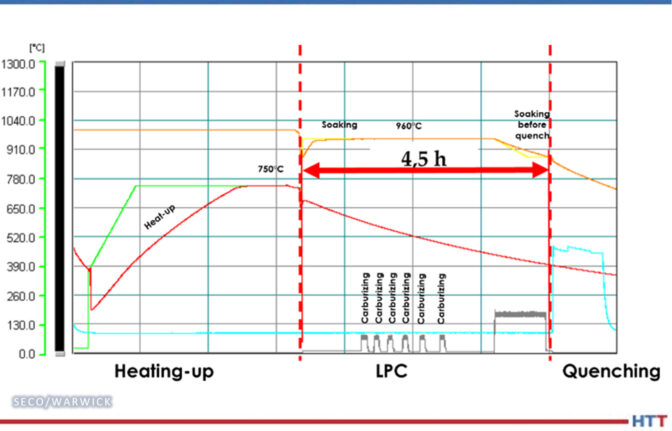
Figure 4. An LPC process that yielded a net 1,322 lb (600 kg) load of gears with an effective case depth of 0.039 in (1 mm). This resulted in a throughput of 294 lb/hr (133 kg/hr). Slight adjustments to this process have rendered production of up to 440 lb/hr. (Source: Maciej Korecki, “Case Study of CMe-T6810-25”)
Source: SECO/VACUUM Technologies
About the Author: Don Marteeny has been vice president of Engineering for SECO/VACUUM Technologies for over five years. He is a licensed professional engineer and has been a leader at the company over the last several years filling project management and engineering leadership responsibilities. Don is a member of Heat Treat Today’s 40 Under 40 Class of 2021.
For more information: Contact Don at Don.Marteeny@secowarwick.com
Find heat treating products and services when you search on Heat Treat Buyers Guide.com
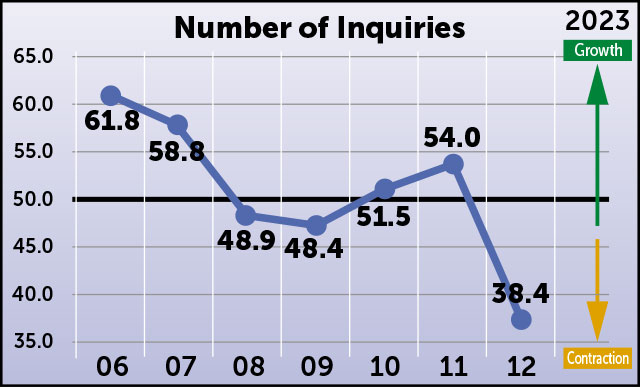
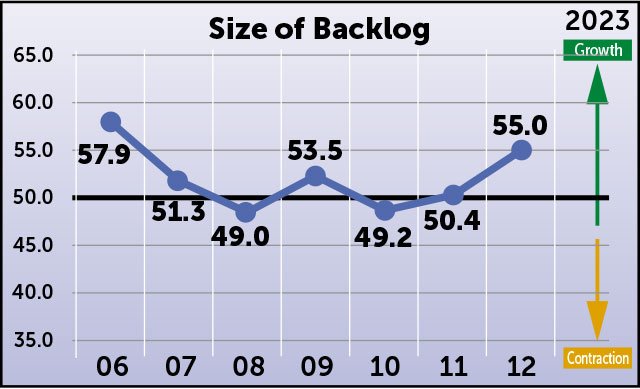
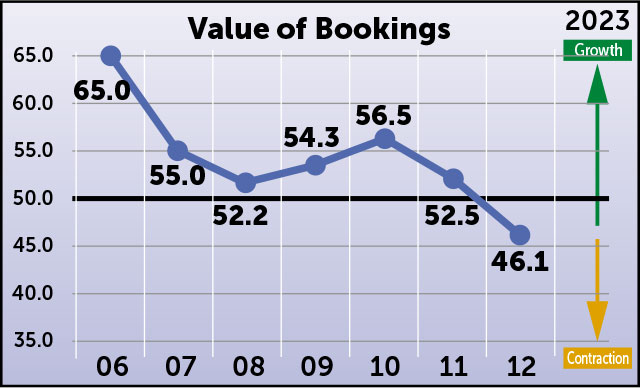
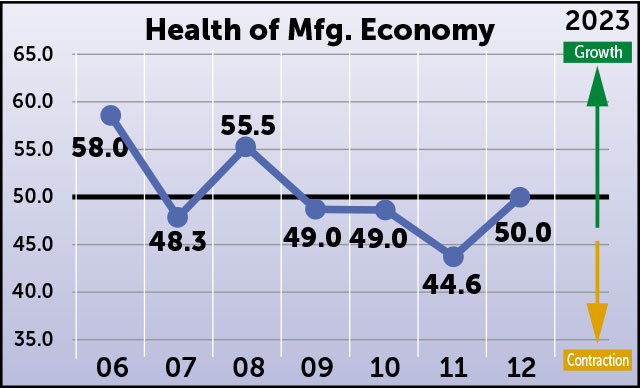
The four heat treat industry-specific economic indicators gathered by Heat Treat Today each month — starting in June of this year — are predicting contraction along with economic growth for just one indicator in the month of December.
The numbers, which were compiled the first week of December, show that responding parties anticipate inquiry levels will contract significantly as compared to November. So also, the value of December bookings shows a drop in expectations for growth and economic contraction being anticipated this month. For the first time in a while, backlogs indicate decisive anticipated growth. The overall health of the manufacturing economy is expected to remain as it was from November. Please keep in mind that this is only the 7th month of data collection, so keep following this study as this bank of information builds.
The results from this month’s survey (December) are as follows; numbers above 50 indicate growth, numbers below 50 indicate contraction, and the number 50 indicates no change:
Anticipated change in the Number of Inquiries from November to December: 38.4
Anticipated change in Value of Bookings from November to December: 46.1
Anticipated change in Backlog Size from November to December: 55.0
Anticipated change in the Health of the Manufacturing Economy from November to December: 50.0
Data for November 2023
The four index numbers are reported monthly by Heat Treat Today and made available on the website.
Heat TreatToday’sEconomic Indicatorsmeasure and report on four, heat treat industry indices. Each month, approximately 800 individuals who classify themselves as suppliers to the North American heat treat industry receive the survey. Above are the results. Data started being collected in June 2023. If you would like to participate in the monthly survey, please click here to subscribe.
Find heat treating products and services when you search on Heat Treat Buyers Guide.com



















 Heat Treat