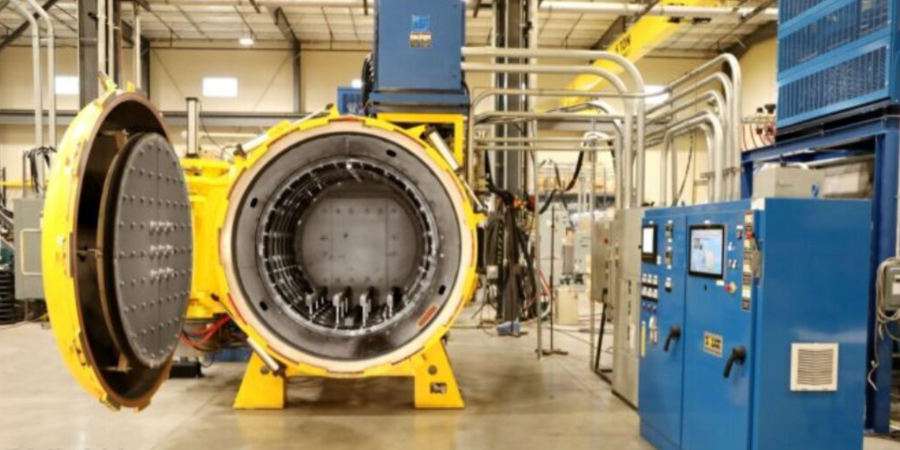
MTU Aero Engines AG will receive a vertical vacuum furnace with the purpose of bringing heat treat in-house. The bottom-loading and gas cooling furnace will be used to process components for civil aircraft jet engines.
SECO/WARWICK Group, a global furnace technologies company with locations in North America, will supply the Vector® vacuum furnace. The equipment has an internal cooling gas blower as well as internal heat exchanger. The system is in accordance with the AMS2750G standard in the second class (II) including B-type instrumentation for the aviation industry.
“The aerospace/MRO industry is facing a major challenge. Interrupted supply chains and the difficult geopolitical situation in Europe means that many AEROSPACE/MRO companies have to revise their existing development and optimization strategies,” says Maciej Korecki, vice president of the Vacuum Segment at SECO/WARWICK Group. “[MTU’s] bringing the heat treatment process in-house with the purchase of this vacuum furnace allows the company to fully control the production process.”
Find heat treating products and services when you search on Heat Treat Buyers Guide.com
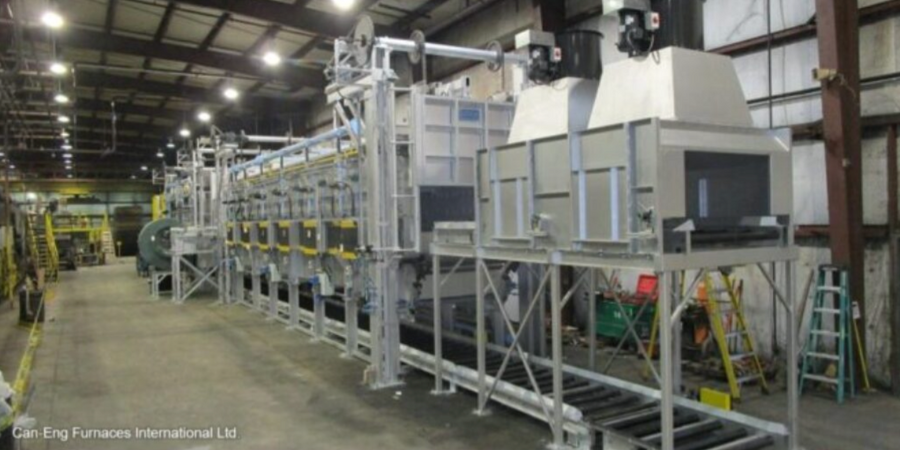
A roller hearth iso-thermal annealing line for steel automotive impression forgings is to be installed for a major American producer located in North Carolina.
The system comes from CAN-ENG Furnaces International Limited. It will be capable of both iso-thermal annealing and normalizing with a high temperature furnace operating under exothermic atmosphere. The line includes a separate low temperature roller hearth furnace, automatic bin dump and loading system, integrated tray/basket return system, and level II automation technology. The time frame for the heat treat line installation is in Q2, 2024.
Prior to the sale of this heat treat furnace, the furnace supplier had provided a mesh belt normalizing furnace, cast link belt normalizing furnace, and a roller hearth iso-thermal annealing furnace to the forgings producer.
Find heat treating products and services when you search on Heat Treat Buyers Guide.com
Heat Treat Today is partnering with two international publications: heat processing, a Vulkan-Verlag GmbH publication that serves mostly the European and Asian heat treat markets, and Furnaces International, a Quartz Business Media publication that primarily serves the English-speaking globe. Through these partnerships, we are sharing the latest news, tech tips, and cutting-edge articles that will serve our audience — manufacturers with in-house heat treat.
Take a look at new tech and equipment, an old furnace, positive profits and reports, and lasting partnerships.
International Heat Treat and Metallurgy Company Sees Doubling Profits
SECO/WARWICK’s positive figures for 2022
Source: SECO/WARWICK
“The great results of the Group were influenced by several factors. The growth of production activities in China and dynamic market development in America. Furthermore, the huge number of orders [are] related to the electromobility industry expansion. In the first three quarters of 2022, the company had over 100% more profit than in the previous year. Sales revenues amounted to PLN 448.87 million in this period (PLN 335.09 million in 2021). . . For SECO/WARWICK, 2023 will be the year of American companies.”
System aids in the production of various steel grades
Source: Tenova
“Tenova, supplier of sustainable solutions for the metals industry, has recently completed the start-up of the new 70t EAF at the Valbruna ASW Inc. plant, located in Ontario, Canada. Valbruna ASW is a specialty steel producer that produces steel and stainless-steel, based in Ontario. Tenova’s latest generation EAF unit has replaced an older EAF vessel. The spout shape of the new furnace will provide an increase in melt shop productivity, says Tenova, as well as an improvement to the
production reliability of manufacturing specific high-quality steel and stainless-steel grades.”
German blast furnace is 50
Source: Furnaces International
“A blast furnace in operation at thyssenkrupp Steel’s Schwelgern steel mill in Germany, turned 50 years old on 6 February. Known officially as Schwelgern 1 – the Black Giant – the blast furnace is 110 meters in height and has a daily capacity of 10kt of pig iron; it is regarded as one of the biggest blast furnaces in the western world.”
Hydrogen-based Steel Production Project, SALCOS, Receives Gov’t Funding
German steelmaker awarded government funds
Source: Salzgitter
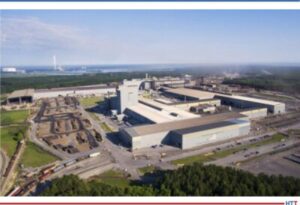
“Salzgitter, Germany’s second-largest steelmaker, has been awarded almost €1billion in government funding for its hydrogen-based steel production project, SALCOS . . . The project will produce around 1.9Mt of raw steel and cut more than 2.5Mt of carbon emissions a year, according to Germany’s economy ministry.”
Foundry Group BIRN Released Its First Sustainability Report
Sustainability Report for BIRN Group
Source: BIRN
“As one of the first in its industry, the foundry group BIRN Group has just released its first sustainability report. The report is an initial step towards a more sustainable business model.”
New Pyrometer for Foundry and Liquid Metal Applications
SPOT MM smart application pyrometer
Source: AMETEK Land
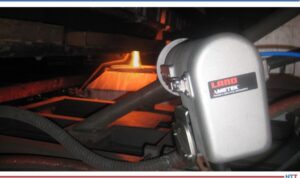
“Liquid steel and metal foundry and tapping operators can now benefit from improved and smart temperature measurements for process control and product quality improvements with the new smart SPOT Meltmaster (MM) application pyrometer from AMETEK Land. The SPOT MM offers a single-sensor solution for liquid metal temperature measurements in foundry and tapping applications. This smart application pyrometer accurately measures tapping stream and liquid steel and metal temperatures independent of surface and condition changes during the process.”
Specialty Steel Provider Joins Steel Manufacturers Association
Mike Williams, President/CEO
TimkenSteel
Source: TimkenSteel
“TimkenSteel has joined the Steel Manufacturers Association (SMA) – the largest steel industry trade association in the United States and is the primary trade association representing North American EAF steel producers. Timken’s president and chief executive offi cer, Mike Williams, has joined the SMA’s board of directors.”
Nucor Steel Berkeley has ordered a new plant for its steelworks from Primetals Technologies
Source: Nucor Steel Berkeley
“Primetals Technologies has received an order from Nucor Steel Berkeley, a division of US steelmaker Nucor Corporation, for a new hot-dip galvanising (FVZ) line for the automotive industry. The line will be installed at Nucor’s plant in Huger, South Carolina. Nucor Corporation is the largest steel producer in North America and the largest recycler of materials in the Americas.”
Investing in the production of high-performance electrical steel in Shanghai.
Source: Baowa
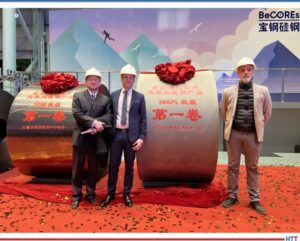
“Fives, a leading engineering group with broad expertise in steel processing and technology, has designed and delivered thermal sections for a new annealing and pickling line (APL) and two new annealing and coating lines (ACL). The lines, designed to produce high quality non-grain oriented (NGO) grades for electric vehicle motors, delivered their first coil between December 2022 and February 2023.”
Successful Trials Will Help Manufacturer Reduce Carbon Footprint
Addressing the issue of plastic waste management.
Source: worldsteel
“Integrated steel manufacturer JSW Steel has accomplished a ‘significant breakthrough in environmental sustainability’ by successfully injecting waste plastic into Blast Furnace 3 at its Vijayanagar steel plant following extensive trials.”
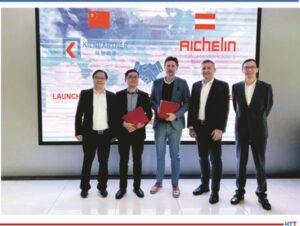
Left to right: Huang Ligang, general manager, Kilnpartner; Zhang Yuejin, Chairman of the board, Kilnpartner; Michael Reisner, CEO, Aichelin Ges.m.b.H.; Christian Grosspointner, CEO, Aichelin Holding; and Fan Xiaochun, CEO, Kilnpartner, after signing the contract.
Source: Aichelin
“The thermal processes used to treat the essential components of Li-ion batteries represent a key technology in this process. These include the cathode as LFP (lithium iron phosphate) or NMC (nickel manganese cobalt) and the active anode material. Only through a highly accurate heat treatment can the crystal structure and morphology of the material be trimmed to “peak performance.” In order to achieve this goal, each manufacturer has its own processes. The common basic requirement is flexible and reliable plant technology, the so-called “kilns.”
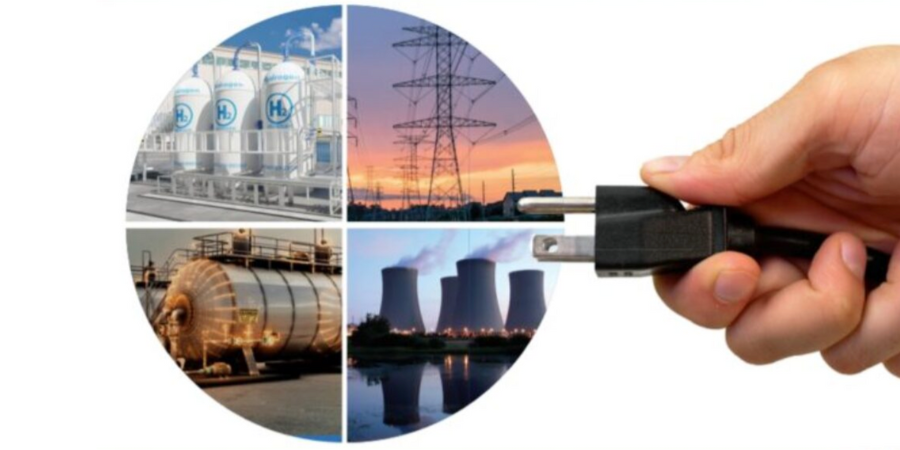
What will the future run on? With growing discontent around current energy sources like natural gas and other fossil fuels, power sources for furnace equipment are due for a makeover. In this article written by Heat Treat Today and media partner Furnaces International, learn from heat treat and energy insiders around the world as they consider current technology investments and future energy opportunities that in-house heat treaters should consider when energizing the future of furnaces.
The four perspectives were written in response to the following questions: 1. What are the short-term and long-term investments for sustainable energy for heat treat furnaces? 2. What role does data and digitalization have in efforts to decarbonize heat treat furnace operations? 3. What other steps can be taken now in heat treat operations to decarbonize heat treat furnaces? 4. What challenges need to be overcome for (North American/European) heat treaters to leverage sustainable technology in furnaces?
This Technical Tuesday article comes from Heat Treat Today’sMay 2023 Focus on Sustainable Heat Treat Technologiesprint edition. If you have any thoughts of your own about furnaces and sustainability, our editors would be interested in sharing them online at www.heattreattoday.com, email Bethany Leone at bethany@heattreattoday.com with your ideas!
1. Wise Heat Treat Decisions for Sustainable Solutions
John B. Clarke Technical Director Helios Electric Corporation Source: Helios Electric Corporation
“Don’t let the perfect be the enemy of the good,” is an excellent principle to follow when heat treaters look at making their operations more sustainable. Particularly when it comes to investments, the first step to reducing carbon output from heat treat equipment should always be to put in place a proper combustion maintenance system. I’ve never seen an investment that did not generate a savings that eclipsed the cost, well within one year. And this not only saves money, it also prolongs equipment life. It’s an all-around good thing to do from any angle.
Another area that heat treaters can improve is efficiently scheduling furnace up-time. All too often, I visit facilities where equipment that is not doing any work remains at operating temperature for a long time, because operators do not know precisely when to introduce more work into the furnace. If possible, idling the furnace at a much lower temperature would save a lot of money.
Programs and scheduling are the low-hanging fruit. Not taking care of them first would be like putting new carpet in the basement before you fix the leak. It’s always best to take care of the fundamentals and make sure you’re doing the best you can with what you’ve got before you go ahead and make those other investments.
In the near term, capital investments are a bit more tricky. There are certainly technologies that will improve efficiency with greater capital investment. These include recuperation or other methods of enhancing heat transfer. For radiant tubes, it could be inserts. The other elements could be pulse firing, particularly in instances where we’re trying to induce an increased rate of heat transfer by creating more mixing within the furnace chamber. These are “on-the-shelf” methods, though they have much longer payback periods, on average.
Switching equipment from gas to electric — or something drastic like that — may not be the answer. We have to focus on the incremental improvement. If I have an investment of 3 trillion dollars to make, it would be wise to first put it towards improving the efficiency of the existing equipment. That one change means fewer tons of CO2 emitted by the end of the year.
Speaking generally, evolutionary technologies must be developed. We have to pursue R&D aggressively, but let’s target the ultimate goal: reduce tonnage of CO2 emitted. That’s the goal. Let’s not confuse the technology or the tool with the ultimate goal.
“If I have an investment of 3 trillion dollars to make, it would be wise to first put it towards improving the efficiency of the existing equipment. That one change means fewer tons of CO2 emitted by the end of the year.”
John Clarke
Source: Pixabay/Geralt
Digitalization Empowers Investments
Digitalization, especially the improvement in data acquisition and analysis, is huge. With higher computational capacity on the controllers on a per furnace basis, we have the ability to start executing real-time analysis on the furnace and potentially implement a thermodynamic model of the furnace and how it’s operating. If I track measurements of total fuel flow, exhaust temperature, and time using the computational powers of a modern PLCs, for example, I can know the core temperature of the piece and exactly when I should pull the piece. That’s digitalization.
The other thing we need to keep in mind is the ability to upload data for analysis. In a sense, this is “the internet of things” (IoT). Let’s say I’m producing 100 tons of steel through a furnace per day. If I monitor the amount of natural gas that system consumes, I know that I have an energy intensity of X cubic feet of natural gas per ton of steel produced. If there’s a deviation, for whatever reason, I know to investigate. It could be the burners are out of tune, it could be something changed in the process, it could be a thermocouple is bad. So, there are a myriad of potential problems that could arise and, if I’m pulling that data, I can know that before I otherwise would.
This modern tendency of collecting and analyzing data is an incredibly powerful tool that should be encouraged and pushed forward. This is an example of the good and not the perfect; we’re trying to take the existing systems and make them more functional and effective.
Digitalization should also be considered holistically — energy is just one part of it, granted a large and expensive part. But it is worth noting that digitalization helps efforts to create safer operations by making systems more consistent.
Next Steps Require a Step Back
As a consultant, I often disrupt facilities, force people to stop thinking about day-to-day activities, and challenge them to think anew about some of these systems. Never underestimate the importance of thinking — and thinking slowly. And thinking requires quiet, but it also requires collaboration, and it requires the plant manager to actually engage with the line operators. Often, we have silos of knowledge — we have maintenance, we have operations, we have management — and they don’t communicate.
Second, in stepping back, make a plan. Prepare the planning process for facility transitions.
Finally, we may always take a step back and ask if a material change to eliminate a heat processing step can be made. In some cases, eliminating the heat processing step entirely will have a big financial impact. Perhaps there are performance specifications that can be met with microalloyed steels that don’t require heat treating! In these cases, be aware that incoming steel costs do not chew up savings.
Source: Pixabay/Martinelle
From a decarbonization point of view, you would need to look at the overall supply chain carbonization and intensity of the mining of these more exotic materials. Depending on the supply chain carbon output of the new material, eliminating heat treating could be a plus on CO2 emissions, though perhaps not a total cost savings.
Challenges Are from Within: Interest Rates and Internal Investment
In North America, rising interest rates mean that we are somewhat in a catch-22. When interest rates are low, investments into changing equity or the treasury level of the companies typically occur versus investing in the core business. Now that interest rates are higher, companies actually may start looking at optimizing the actual performance of their individual company. But too many people are too aggressively pursuing figures, caring more about the return on equity versus focusing on the core performance of the operations. Enterprise is often given a capital budget of X when, in reality, the capital budget really should be based on a two-year hurdle rate. Management wants to invest in the enterprise on all projects that will return 30% on internal investments because they see large corporations making major investments and other businesses are lucky to earn half that kind of return
One of the impediments is simply convincing management and decisionmakers on the validity of internal investment. Your enterprise represents an internal investment opportunity that exceeds the return you’re likely to receive from an acquisition of a new enterprise. I know that runs counter to some of the thinking prevalent in the market today, but it is important to point out. I am an “internal return on investment” kind of guy, so I speak with a bias. But time and time again, I see opportunities go unexecuted because they don’t meet a preconceived budget. If your objective is to make money, invest it to maximize the return.
Our national laboratories and our universities throw out a lot of great technology. Some of it is ready for primetime, some is in the nascent of condition and needs more investment and time to mature. I’m not sure we have enough enterprises to partner with these design and research groups and commercialize the ideas. It’s in this “valley of death” — where the basic technology has been developed and proven to be viable, but the commercialization and the manufacturing is lacking — that we need to overcome and increase enterprise. Particularly in the heat treating industry, there is a problem of fewer “catchers” who will partner with and develop new technologies that could aid in decarbonization. This is because there have been a lot of acquisitions. If you look at the membership of IHEA, it’s the same people and the same businesses but there are fewer people. Everyone is buying everybody else. Larger corporations tend to be less likely to take the risk on a piece of technology that won’t immediately pay back. They also have a lot of “not-invented-here” issues as well.
One solution is for the Department of Energy to invest. Though they already do this, even greater investments into brokers and advocates are necessary to pick up this technology and pass it through instead of simply trying to contact people. During U.S. President G.W. Bush’s time, the Department of Energy had a “Save Energy Now” program during a natural gas spike. The program sent people, like myself, around to plants to run analyses for free. The program was extremely valuable because it gave enterprises motivation. I did speeches at many different automotive plants and participated in collaborative events as part of that program. I think refunding that program and refocusing on something like that would be beneficial.
My idea of the way forward is half technical and half promotional, demonstrating to people that there is another way. That is an effective role for government. I would like to see them redo that. It would be a different emphasis.
About the author: John Clarke is the technical director and owner of Helios Electric Corporation, a company based in Fort Wayne, Indiana, that specializes in energy and combustion technologies. The depths of his knowledge on energy and combustion topics can be seen in the technical articles and columns that John has contributed to Heat Treat Today's Combustion Corner.
Philippe Kerbois Global Industry Manager for Glass AMETEK Land Source: LinkedIn
For the industrial context where the improvement of productivity, energy efficiency, and environmental performance is increasingly essential — especially for temperature furnaces — the coupling between the hybridization of furnaces integrating different technologies becomes a solution to be seriously taken into account.
During the last century, with the appearance of energy and emission constraints, the steel and glass industries used for the most part the same energy saving techniques with heat recovery on flue gases for preheating combustion air, thus reducing energy consumption by 20%–30%. In the 1980s, regenerative burners arrived. Based on the same principle of preheating air — though at higher levels — regenerative burners improved the energy efficiency of the installation, but also increased NOx emissions. This is clear for many large industrial companies in steel, glass, and cement, for whom the industrial electric furnaces reduce emissions and risks, and require little maintenance. But the electrification of existing furnaces, which often run on gas, is far from obvious as fired furnaces are still numerous all over the world.
Today’s Solutions: Which Is the Way Forward, Gas or Electric?
Today, what can be done to improve energy efficiency? Improving energy efficiency in glass or steel reheat furnaces can be achieved by implementing various strategies. The approach for short term investments needs to be pragmatic. It is possible to implement better practices and technologies on any furnace.
We can point to some general short-term steps that can help improve energy efficiency:
Conduct an energy audit
Insulate the furnace
Upgrade insulation
Install energy-efficient motors and drives
Implement energy management systems
Optimize combustion
Use waste heat recovery systems
Upgrade to more efficient equipment
Use advanced process control systems
By implementing these strategies, it is possible to significantly reduce energy consumption and improve the energy efficiency and emission of a fired glass furnace. However, it is important to note that the specific strategies used will depend on the furnace’s operating conditions.
When heat treaters step back from burner-focused solutions and short-term plans, the next question is often: Do we need to change or upgrade our equipment? And is electric the only wise way to go when seeking energy efficiency?
The choice between gas and electric furnaces depends on a variety of factors, and there is no one-size-fits-all solution. It is important to consider the specific needs of the application and weigh the costs, energy efficiency, and environmental impact when making a decision. One might consider the following:
Gas furnaces are generally less expensive to purchase and install than electric furnaces. However, the cost of operating a gas furnace can be higher due to the fluctuating price of natural gas. Electric furnaces, generally more expensive to purchase and install, typically have more stable operating costs.
All the relevant references of use of electrical furnaces in the past were related to lack of flexibility especially in glass when changing the quality and types of glass or colors. This could cause some issues where flexibility is needed for production operations.
Considering the environmental impact, gas furnaces produce carbon dioxide (CO2), and other greenhouse gases that contribute to climate change. Electric furnaces do not produce direct emissions, but their indirect emissions depend on the source of the electricity used to power them. If the electricity is generated from renewable sources such as wind or solar power, then electric furnaces can be more environmentally friendly.
Tomorrow’s Possibilities: Looking Beyond the Short-Term
In order to move into the future, education about the present is key. Focusing on environmental impact looks different regionally, and the lack of awareness and education of local teams needs to be considered as well. Regulations and standards related to emissions and energy efficiency could be regulatory barriers: What is true in China or India is not necessarily fit for Continental Europe, the U.K., or U.S.
From region to region, the compliance with these regulations can be a significant challenge for heat treaters. Meeting these requirements may require significant investments in new technology or modifications to existing systems where electric furnaces are direct impact on the direct emissions.
Many heat treaters or glass manufacturers may not be aware of the benefits of sustainable technologies or may not fully understand how to implement them. Providing education and training sessions on sustainable technologies can help overcome this challenge. Data and digitalization play a critical role in efforts to decarbonize heat treat furnace operations. Here are some ways in which data and digitalization can contribute to decarbonization:
Resistance to change
Real-time monitoring
Predictive maintenance
Optimization of energy consumption
Supply chain optimization
Carbon accounting
Investing in renewable energy sources such as solar or wind power can provide long-term energy savings and reduce greenhouse gases, but for most heat treaters, these are monumental decisions. The approach to long terms investments needs to be pragmatic focusing on renewable energy sources when available near the plants where a power grid is available.
Any end-users can work with experts in sustainable technology to identify opportunities and develop strategies for implementation of Industry 4.0 technology using SCADA systems and predictive tools. It may also be helpful to collaborate with other companies or industry groups to share best practices and insights. Government incentives or funding programs may be available to help off set the costs of implementing sustainable technologies.
“Investing in renewable energy sources such as solar or wind power can provide long-term energy savings and reduce greenhouse gases, but for most heat treaters, these are monumental decisions. The approach to long terms investments needs to be pragmatic focusing on renewable energy sources when available near the plants where a power grid is available.”
Philippe Kerbois
Source: Manny Becerra
In conclusion, data and digitalization are critical tools in efforts to decarbonize heat treat furnace operations. By providing real-time monitoring, predictive maintenance, energy optimization, supply chain optimization, and carbon accounting, data and digitalization can help heat treaters to reduce their carbon footprint and transition towards more sustainable operations, including electric furnaces.
About the author: Philippe Kerbois, previously Regional Sales Manager EMEA – Glass for AMETEK Land, has over 20 years’ experience in high value, complex technical solution sales with specialties in glass, renewable energies, automotive, water filtration, energy production, gas turbines, automation, building automation and oil and gas. He holds a degree in mechanical engineering (Diploma of Higher education) associated to ESTACA degree (Aeronautics and Automotive Engineering school).
A Low Carbon Future Could Be One Investment Cycle Away
Peter Sherwin Global Business Development Manager Watlow Source: LinkedIn
It is helpful to put some numbers around sustainability. Recent reports from the IEA (International Energy Agency) indicate we need to improve energy intensity by around 4% between now and 2030 and about 3% from 2030 to 2050 to be close to achieving net zero goals. The 4% level is double what was achieved over the last decade.
Sustainable investments in heavy industry (steel, cement, chemical) have already started. Blast furnaces and cement kilns last for around 40 years, and 2050 as a net zero target is now less than one investment cycle away. North America is leading the way by investing in electrifying the industry via electric-arc furnaces which aid in cleaning up an industry that has had a high dependency on coal. Newer technologies, including the electrolysis of steel, promise alternative ways of low-carbon manufacturing, but this technology will only likely provide significant production quantities after 2030.
Miranda Pizzella Engineering Manager Watlow Source: LinkedIn
At the lighter end of the industry, industrial furnaces for heat treatment may generally have a slightly shorter lifecycle. Still, investment decisions in new capital equipment today will directly impact the industry’s emission profile over the next 30 years. Therefore, this long-term investment needs to consider the potentially changing energy landscape.
At face value, in many places in the U.S. and Europe, the ratio between gas and electric pricing would steer investment towards gas-fired furnaces if the only criteria were running costs (ignoring heat treat equipment that is only electric-fired, e.g., vacuum furnaces). This cost advantage is starting to change with increasing carbon taxes, potential disruption of fuel supply (currently in Europe), further stringent NOx emission requirements and continued supply challenges for complex gas trains.
Combustion burner design can significantly impact the energy efficiency of a furnace. Straight-through tubes are on the scrap heap, and recuperative and even regenerative burner systems now aid efficient energy use. In addition, dual-fuel burners that can work on hydrogen or natural gas are becoming available. Although the economics of carbon-free hydrogen remains a constraint to its heavy use, this is expected to change over time, with innovations to improve the hydrogen landscape post-2030.
Andy Selvy Chief System Designer Watlow Source: LinkedIn
There is a significant amount of research in next-generation elements for electric furnaces. The element material composition, desired life, and manufacturability are all areas currently being explored. In addition, the controllability of an electrical element is significantly better than its combustion alternative, and unique algorithms are in development to take advantage of this to aid efficient processing.
More Digitalization, Greater Efficiency
Today, heat treat operations lack visibility and access to critical process data, leaving operators reactive when mitigating performance factors such as utilization time, quality, yield, and energy consumption. Data and digitalization provide many opportunities to improve efficiency and reduce overall energy consumption within furnace operations. Poor thermal uniformity can lead to scrap and rework of material, which both result in excess energy consumption.
Process drift can also cause more energy to be consumed over time to achieve the same operational results. Examples of process drift include drift from target program set points, processing times, nominal values such as desired heater power output and thermal uniformity values. Lack of visibility to process drift can create rework when specifications are missed the first time or potentially result in a scrapped batch.
“Through proper data collection and analytics combined with thermal systems expertise, problems can be overcome, which not only reduce carbon emissions but also improve productivity and profitability for heat treaters.”
Source: Adobe Stock/panuwat
It is important to recognize that data can be a powerful input for decision making to improve process efficiency. However, data alone is not enough to act to create significant improvement. To utilize data for process improvements, it must be delivered in a way that is easily consumed and creates clear action to be taken. Thus, it is important that we combine data with subject matter expertise to contextualize and transform data into actionable insights. For example, Watlow and Eurotherm have combined their expertise to enable value creation in collecting, interpreting, and transforming data into actionable insights that can be put in the hands of the operators when they need it, where they need it.
Through proper data collection and analytics combined with thermal systems expertise, problems can be overcome, which not only reduce carbon emissions but also improve productivity and profitability for heat treaters.
Steps Towards Digitalization
A heat treater’s first step towards digitalization should be to work with suppliers to understand what digital solutions are being offered. Watlow and Eurotherm have pooled their skills to find ways to offer better solutions. Driving towards data-driven decisions impacting process performance and energy consumption is relatively simple and gives operators an opportunity to take proactive measures, and it also lays the foundation for future investment through data-driven performance trade-offs and insights.
At a thermal-loop level, find suppliers that are focused on improving the performance of electric-fired furnaces from the transformer to the element to the power controller and process controller/recorder.
Consult your supplier about recording strategies and leveraging power data. First, record data in a format that doesn’t create data islands but protects the integrity of the raw data. And second, leveraging power data in real-time allows you to share information between furnace zones or different furnace equipment, which can help lower peak-power demands by scheduling when the individual SCR power controllers fire.
Recently, we launched a new 14.0 pilot service program which provides data insights to enable peak performance. Tracking process performance through insightful data, correlations related to process inefficiencies can be established. Energy consumption improvements to the process can be made such as identifying and mitigating inefficient combustions.
Consider the Cost
Top of the list of challenges to adopting sustainable technologies is the ongoing cost conversation — the cost of gas versus electricity. The gas and electric prices do differ significantly across all regions. However, this equation is changing in even the most attractive gas districts. Once you add on rising compliance costs to emissions plus the ramp of renewables, this will ultimately favor an electric future.
In the U.S. and most parts of Europe, energy has been plentiful and reliable for a long time. The U.S. has also enjoyed decades of relatively low costs of all forms of energy. Contrast this with some regions of Asia where weekly and sometimes daily power interruptions still occur. As a result, there is a different mentality and behavior around resource use and abuse.
The higher price of energy in Europe, and the current spike in the Ukraine conflict, have started to impact behaviors. For example, we now see customers with a mid cycle refurbishment of a furnace looking to evaluate a move from gas to electric.
About the authors: Peter Sherwin is a global business development manager who is passionate about offering best-in-class solutions to the heat treatment industry. He is a chartered engineer and a recognized expert in heat treatment control and data solutions. He has lived and worked in the U.K., India and the U.S.
Miranda Pizzella holds a Ph.D. in aerospace engineering with a concentration in thermal-fluid science from Parks College, Saint Louis University. Miranda is leading the company’s Industry 4.0 strategy and has accelerated the adoption of related technologies to transform the business through leveraging data to create more value. Miranda currently leads the computational engineering team and the Industry 4.0 development team.
Andy Selvy holds a B.S. in ceramic engineering from Missouri University of Science and Technology and an MBA from Maryville University. In his current role as a chief system designer, he leverages 20 years of solving complex thermal system problems to help grow new technology into scalable products and services.
A Middle Way: Hydrogen in Combination with Fossil Fuels
Stuart Hakes Chief Executive F.I.C (UK) Limited Source: LinkedIn
There are a number of things to be taken into consideration for “energizing the future of glass furnaces.”
In the short-term, it is possible to add electric boost to an operating furnace on-the-run, to reduce the amount of fossil fuel being used. However, the proportion of electrical energy that can be installed, relative to the amount of gas currently being used, makes a very small difference to the CO2 emissions. The reason being that approximately 30% of the total energy is used for “holding heat,” i.e. to keep the structure warm. A fair part of this holding heat is required in the regenerators which pre-heat the air and although 1 kW of electricity should save 2 kW of fossil fuel, in reality with regenerative furnaces it is difficult to get close to this figure. Anything from 1.3-1.8kW is the norm.
The next stage, which is a small incremental investment, is to go to superboost. Superboost, again, is not very effective unless the amount of air and gas going through the regenerators can be reduced, which is nigh on impossible on end-port furnaces and difficult on cross-fired furnaces. Therefore, the other option is to add hydrogen to the natural gas stream and this can only be done by Government edict. But it is relatively easy to do with the existing burner set up, however, this is only feasible up to a maximum of 30% with current technology, before major technical issues are encountered. There are particular capital requirements needed for handling large amounts of hydrogen.
Less Fossil Fuels, More Hydrogen and Electrification
The proper progress for glass furnaces is to convert from fossil fuel, air/gas, regenerative furnaces to oxy-fired. This will give an improvement in thermal efficiency which will have a small impact on CO2 emissions but not significantly. The only way long term to have a major impact is either hydrogen firing or all-electric. In both cases a considerable amount of investment is required. However, the opinion of the author is that hydrogen will be a premium fuel and the only fuel in many industries and therefore if alternatives are available for the glass industry these will more likely to be adopted.
Source: POLEX/Adobe Stock
The issues regarding the safety of using hydrogen presents huge difficulties in terms of mitigating risk. We must also consider that burning hydrogen increases the level of foam in a glass furnace, which is detrimental to melting efficiency a the refining of glass. Whilst these two factors may be overcome, there is the final issue that currently, no refractories exist that can withstand the product of combustion of a hydrogen flame, which is superheated water, possibly at 2400°C (4352°F). This is a major problem for the industry to overcome.
For this reason the author believes that a hybrid furnace with 80% of the melting energy from electric and 20% from some kind of top heat, could be electric heating, or could be hydrogen flame or some other alternative fuel, is the answer. The issue with going all-electric is that a massive investment is needed in the grid reticulation system as well as finding sources to generate green electricity to cover the requirements. This is a major issue for the Government to address as many other industries will need to electrify as well.
The major challenges for hydrogen are as enunciated above. In particular, the safety issue of hydrogen is a huge change, the other issue is that 3 times the volume of hydrogen is required than that of natural gas meaning reticulation systems will have to be changed. And finally, in container forehearths where air/gas mixtures are used for conditioning the glass, this is not possible with hydrogen and so the only way to decarbonize this process is to go all-electric. This technology is currently available and already shows anything between 80-90% both energy reduction and cost reduction. As I stated before, the only other major challenge is the amount of electricity available for industry and the public at large, in order to make these changes.
Short-Term Digitalization Efforts, Investments, and Impact
Big data and digitalization can assist decarbonization efforts, but this requires no more than what is currently available for fossil fuel fired furnaces. Capital investment is low, and the technology is available now.
About the author: Stuart Hakes has 58 years in the glass industry. He studied Glass Technology in England and worked in the United Kingdom with container plants affiliated to the O-I Group. Stuart joined F.I.C. (UK) Limited as CEO in 1999 and has been there ever since.
Heat Treat Today is today releasing the very first economic indicator numbers for four (4) separate heat treat industry specific indices. On a monthly basis, the data will be gathered from suppliers to the heat treat industry and will measure forward-looking expectations about the upcoming month.
The results from the inaugural June survey are as follows; numbers above 50 indicate growth, numbers below 50 indicate contraction, and the number 50 indicate no change:
Anticipated change in the number of inquiries from May to June: 61.8
Anticipated change in value of bookings from May to June: 65.0
Anticipated change in backlog size from May to June: 57.9
Anticipated change in the health of the manufacturing economy from May to June: 58.0
Heat Treat Today’s Economic Indicator results from May 2023 projected for June 2023. Source: Heat Treat Today
These June results reporting on May were forward-looking to June. All four indices registered quite high. Therefore, these results show that suppliers responding to the survey anticipated that June would be significantly better than May.
The four index numbers will be reported monthly by Heat Treat Today and will be made available on our website.
The questionnaire is sent out monthly to over 800 industry suppliers. If you are interested in receiving the monthly survey, please subscribe by clicking here.
Results will be published monthly.
Find heat treating products and services when you search on Heat Treat Buyers Guide.com
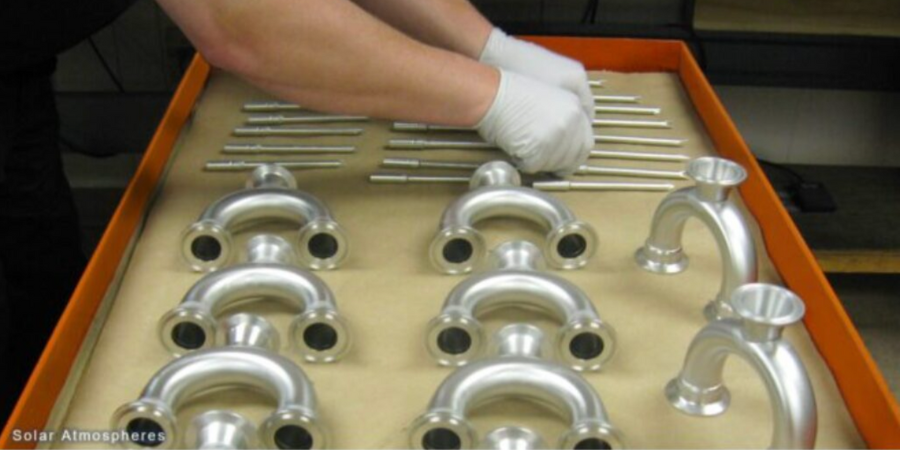
Recently, Solar Atmospheres Eastern PA commissioned a new 25,000 square foot brazing facility aimed at high-volume, high-quality braze production. The facility features six vacuum furnaces dedicated to brazing, including an all-metal hot-zone furnace designed for brazing stainless steel to copper with silver and gold-based braze filler metal (BFM).
The heat treater specializes in the brazing of high-value components utilizing filler metals based on nickel, silver, gold, and copper. The new state-of-the-art production facility has 4,000 square feet of climate-controlled workspace, where technicians assemble and inspect parts, ranging from tiny capillary-tube manifolds to large land-based gas turbine blades. The operation incorporates increased capacity for helium leak testing and pre-braze tack welding of braze assemblies.
“With Nadcap accreditation and AS9100 registration, our new facility operates as one expects from the Solar brand,” states Chip Lahneman, general manager of Brazing at Solar. “The investment in our new facility demonstrates Solar’s commitment to meeting our customers brazing needs, now, and in the future.”
Find heat treating products and services when you search on Heat Treat Buyers Guide.com
A multinational aluminum producer ordered a new 100,000 lb. capacity tilt melting aluminum furnace for one of their regional aluminum extrusion plants. Fabricated in PA, the furnace will incorporate several features to meet the manufacturer’s efficiency, production, and capacity requirements, as well as options to accelerate melting and transfer flow.
SECO/WARWICK USA will fabricate this aluminum reverb furnace. “Most of the damage to a furnace like this is from loading it with a forklift,” comments Marcus Lord, managing director at SECO/WARWICK USA. “Either bumping into the refractory around the door or being a bit clumsy with large awkward chunks of aluminum. It means the door is open a lot, and when it is closed, it might not have the best seal because the sills, jams and lentils are all beaten up. This furnace has a separate loading mechanism, so the door doesn’t need to open nearly as often. It really extends the life of the refractory, but it’s a huge efficiency boost too.”
This furnace will be fabricated with additional features, including capabilities to allow for a magnetic stirrer (supplied by the client) to be mounted under the furnace, saving more energy by increasing the melt rate by up to 10%. It will be capable of completely one full batch cycle in under 6 hours, for four batches a day, yielding a total of 340,000 to 400,000 lbs. per day. These combined factors will result in a fuel economy when the burners are firing in the regenerative mode of less than 1200 BTU per pound during the melt cycle.
Find heat treating products and services when you search on Heat Treat Buyers Guide.com
In the past, manufacturers with in-house heat treat have turned to hot isostatic pressing (HIP) technology to decrease porosity and increase densification in their processed parts. Now, in 2023, is there anything new HIP can offer heat treaters? To find out, Heat TreatToday asked seven HIP equipment suppliers and heat treat users to enlighten us on the world of HIP as it is today.
Enjoy this original content contribution, first released in Heat TreatToday'sMarch 2023 Aerospaceprint edition!
What are the recent, cutting-edge developments in HIP?
Matt Fitzpatrick
Sales Engineer
Engineered Pressure Systems, Inc.
Source: EPSI
Matt Fitzpatrick, sales engineer at Engineered Pressure Systems, Inc., shares, “Self-diagnosing alarms, failures, and power as well as medium consumption savings are key developments in the HIP industry. Enhanced uniform cooling joins with the development of materials (ceramics, metals, insulation fibers) to improve equipment uptime and reduce cycle time. Self-diagnosing alarms may play a key role in HIP’s future. Each HIP control system has alarms to alert when parameters are not met. The future will be in determining why the parameters are not being achieved. For instance, future control systems may be able to diagnose a bad thermocouple, a failed motor solenoid valve, a leaking high pressure valve, etc.
Contact us with your Reader Feedback!
“Unfortunately, there are not very many HIP systems purchased every year. It takes time to develop this technology. A good example would be the automotive industry: sensors tell technicians exactly where the problem in the vehicle is. As the PLCs and computers become more advanced, the specific software programs that are developed for the HIP system — in conjunction with advancements with sensors in motors, pumps, valves, transducers, meters, and components — will make it easier and less time consuming to develop complex troubleshooting programs.
“To some heat treaters, HIP can be an unnecessary evil, given its expensive, long cycle times. HIP, however, cannot be eliminated, because it is the only process that attains the densification required in the aerospace, medical, and high-performance automotive industries.”
Cliff Orcutt
Vice President
American Isostatic Presses, Inc.
Source: American Isostatic Presses, Inc.
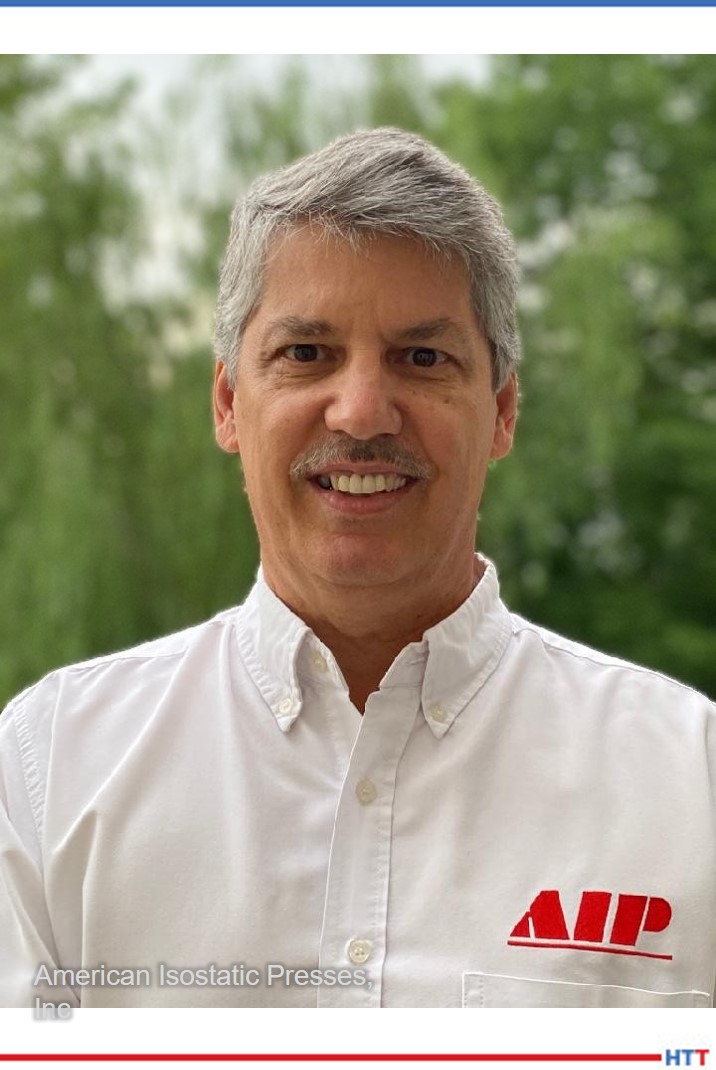
“HIP technology is very mature and reliable,” Cliff Orcutt, VP of American Isostatic Presses, Inc. assures, “however, the cost to use the process is always one major hurdle preventing its use. AIP is working hard to develop lower cost equipment that can still maintain excellent results and bring higher pressure capabilities to the market. We are also expanding our footprint further into the toll HIP arena with similar goals of lower cost and faster turnaround services. Our new facility opening in Columbus, OH, this spring will also provide a world class development resource to help interested manufacturers determine whether the process can be applied to their parts.”
Chad Beamer
Applications Engineer
Quintus Technologies
Quintus Technologies’ Chad Beamer points to the versatility of HIP: “HIP continues to make its mark in many industries by offering a path to consolidate powders and eliminate process related defects for 100% pore and void free material for improved product integrity. With the continued demand for this special process, Quintus Technologies has several key developments driving industry growth due to the expanding functionality of the equipment. The voice of the client consistently demands production efficiency, reduced environmental impact, and improved process reliability. Modern HIP equipment is delivering on this front, creating a promising future for HIP.
“HIP systems equipped with rapid cooling and quenching functionality (URC®/URQ®) are facilitating lean manufacturing with increased productivity by shortening the cooling segment over conventional cooling, while also offering the opportunity to consolidate thermal post processing steps. HIP systems with URC® can cool at rates up to 932°F/min (500°C/min), and compact HIP units with URQ® furnaces are capable of cooling more than 5400°F/min (3,000°C/min). This leads to the opportunity to combine several thermal processing steps into one process performed under pressure. The combined, or integrated, heat treatment approach inside the HIP vessel is known as High Pressure Heat Treatment™ (HPHT™).
“Developments with the controllability of HIP are further expanding the use of HPHT. The cooling rate of the HIP can be steered using thermocouples to set the desired cooling rate from either process gas or component temperature feedback. Steered cooling driven by the component temperature is interesting when considering different thicknesses of parts in the HIP. The machine can therefore autonomously steer the temperature based on the thickest component to achieve desired material properties. See an example of steered cooling from component temperature feedback in the graph above.
“The tailoring of HIP cycles is a new area of development too. Due to the excellent controllability in a modern HIP tailored heating, sustaining, and cooling segments can be programmed and precisely executed. This is an area of interest for materials needing high cooling rates or having a tight tolerance on heating and cooling rate requirements. An excellent example of a tailored HIP cycle can be seen in recent work by Goel et al., at the University West in Sweden (see illustrations above), capturing the possibility to significantly reduce the treatment time for additively manufactured Inconel 718.
“Quintus has also been working to reduce discoloration and oxides on the surface of parts by improving equipment and best practice in terms of clean HIP operations. This is not an easy challenge to overcome. HIP is performed at very high pressures, often above 1000 atmospheres, using high purity Argon gas (>99.99x). Because of the need for additional gas volumes to achieve desired system pressure during regular HIP, the total pressure of contaminants can become high. Despite these challenges it is now possible to produce materials that have a high affinity for oxygen e.g., aluminum, titanium, and chromium, with significantly less oxidation. This can lead to improvement in fatigue and corrosion resistance fulfilling design criteria and gives great opportunities for more sustainable post-HIP.
“Developments with the digitalization of HIP equipment are also playing a role in meeting the demand of the Industry 4.0 mindset. Integration of the equipment into digitalized production lines enables product and process improvements. Digitalization of high-pressure equipment offers many benefits as it creates opportunities to streamline and save time with preventative maintenance tasks, provides valuable insights and trends into the health of the equipment, expands collaboration, improves uptime, and saves cost.”
Humberto Ramos Fernández
Founder and CEO
HT-MX
“In 2023,” Humberto Ramos Fernández, founder and CEO of HT-MX, comments, “HT-MX will continue to establish itself as the main HIP supplier and expert in Latin America. Additionally, with our Honeywell Aerospace approval, we will be pursuing at least three more OEM approvals not only in the aerospace industry but medical and automotive as well.”
Phil Harris
Marketing Manager
Paulo
Phil Harris, marketing manager at Paulo, highlights HIP’s customization: “The primary focus has been on providing customized HIP cycles that either deliver superior mechanical properties for customers or reduce the need for post-HIP to streamline the supply chain and speed up turnaround. We’ve been successful in both and are always looking for opportunities to collaborate on such endeavors.”
Leah Tankersley, marketing manager, Aalberts surface technologies, says, “We added HIP services to our portfolio in 2020. We have two wire-wound HIP vessels, and plan to expand further with a third unit ready to ship from Sweden soon. Each unit boasts the latest HPHT technology. They are equipped with the proprietary Uniform Rapid Cooling (URC) feature. Our HIP technology has the ability to combine stress relief, HIP, solution, and age in a single process. HPHT HIP streamlines the steps involved in material densification and heat treatment. The URC feature enables all processed components to cool uniformly in a controlled environment, resulting in minimal thermal distortion and non-uniform grain growth.”
Doug Puerta
CEO
Stack Metallurgical Group
Source: Stack Metallurgical Group
Doug Puerta responds for Stack Metallurgical Group: “Stack has been active in supporting the advancement of HPHT. Our newest HIP unit, a Quintus QIH-122, includes Uniform Rapid Cooling (URC) technology which enables cooling rates equivalent to what we achieve with traditional gas quenching. This technology not only allows for improved productivity, but also enables the combination of a traditional HIP cycle with stress relieving solution annealing, or even aging, all in one HIP unit.”
In the next five years, what advancements should manufacturers with in-house heat treat operations expect from HIP technology?
“In terms of cycle times,” Matt Fitzpatrick of Engineered Pressure Systems, Inc. says, “HIP systems are limited by how fast materials can be heated and cooled. In the next five years, reduced maintenance, improvements with furnaces and heat shields, and faster cycle times will occur at both the materials and design levels.”
Cliff Orcutt, from American Isostatic Presses, Inc., sees globalization in HIP’s future, “We don’t expect much change other than to see it expanding into new geographic regions and being applied to more products. The main problem affecting our industry is not deficiencies in the HIP equipment or process, but rather how to use it beneficially in a profitable manner. In the next five years I think countries, such as India, will begin to implement it much more widely as the process becomes better known. As more companies implement it their competition must follow to stay on the same page.”
Chad Beamer, from Quintus Technologies, shares the optimistic outlook, “Quintus is witnessing significant growth potential for HPHT, including the addition of this post-process HIP and heat treatment strategy into industry standards. Also, the demand placed by many industries on surface cleanliness requirements to reduce oxidation and discoloration of sensitive material systems will help drive forward clean HIP techniques. These advancements along with delivering new and upgrading existing HIP equipment with machine digitalization will meet the current and future demands placed by the heat treat market and OEMs.”
And what about HIP in Mexico? Humberto Ramos Fernández of HT-MX responds, “Being located in Mexico, the main advances in HIP in our environment will be mostly geared towards near shoring manufacturing for high added value parts. HT-MX´s HIP service is just one example of a high tech and high complexity process being used in Chihuahua to manufacture high end products and thus we expect near shoring to bring in more opportunities for these kinds of parts to be manufactured and assembled in Chihuahua and Mexico.”
Leah Tankersley of Aalberts surface technologies, says, “As a provider of HIP services, we cannot speak to the advancements in HIP technology per se, but we are seeing material advancements and development of new alloys in AM. These advancements will impact HIP cycles and lead to development of more unique cycles for AM that differ from traditional cycles developed for castings. We’re also seeing ASTM International AM Center of Excellence Consortium members from the AM value stream come together to collaborate on standardization of requirements for AM materials data which includes post processing/hot isostatic pressing. We are one of the founding members of this consortium.
“Additionally, we are working with Quintus to beta test their remote assistance fi eld service support through AR equipment and technology.”
Doug Puerta, Stack Metallurgical Group, thinks, “In the next five years, I expect we’ll continue to see aerospace and medical OEMs evaluate and approve HPHT for additional combined-cycle applications. Ultimately, with span time being so important to our customers (and their customers), combining cycles and reducing span is a really big deal.”
What is the #1 thing manufacturers with in-house heat treaters should know about HIP technology right now?
Safety first, says Matt Fitzpatrick at Engineered Pressure Systems, Inc. (EPSI): “Good safety and maintenance programs and experienced operators and technicians are key to a successful HIP system. Confined space rules and regulations, oxygen monitoring, nondestructive testing (NDT) inspections of the vessel assembly components, good maintenance, and end-user HIP plant safety programs are key. Training is provided with every system regardless of whether it’s a HIP system, CIP system, or WIP system. Before delivering a system, EPSI offers training for safety, maintenance, system operation, controls, and system parameters. Then during installation and startup, training occurs. When startup is completed, we offer training at the client’s site. Generally, this is mutually agreed on during the contract phase and delivery.”
“There is not just one thing,” Cliff Orcutt of American Isostatic Presses, Inc. says, “because HIP has so many different applications. For instance, HIP can be used to heal castings, make parts directly from powders, diffusion bond materials together, or pressure infiltrate materials. HIP can be applied to metals, ceramics, composites, and even plastics. I guess really the number one thing they should know is how to contact a reputable HIP company that can provide the information and technology they require.”
Chad Beamer of Quintus Technologies points to HIP’s benefits for both end customers and heat treaters, “Modern HIP units differ significantly from conventional HIP units. The technology has advanced over the decades offering expanded functionality and improved performance. As for all production processes, lean manufacturing is key to improving product quality, minimizing costs, and maximizing productivity. Reducing waste and increasing throughput should always be a focus.
“The addition of modern HIP with HPHT capability and clean HIP functionality as part of the production chain are HIP advancements that will facilitate robust and lean processes through reduction of yield losses, logistics, and quality-related costs. This is not only of strong interest to heat treaters, but also to the end customers in several industries. And with a broad product line of compact, medium, and large HIP capabilities available, commercially in-sourcing the technology to complement other heat treat equipment is now feasible for many companies.”
Humberto Ramos Fernández speaks directly to in-house heat treaters, “In-house heat treaters must know that, although similar, HIP is not heat treatment. Various aspects of the process are similar but there is a learning curve that must be transitioned and experience in heat treat doesn’t necessarily automatically translate into the HIP experience.”
Aalberts’ Leah Tankersley plainly states, “HIP is an expensive investment.”
“Ironically,” says Doug Puerta of Stack Metallurgical Group, “One of the misconceptions is that modern HIP systems offer HPHT as an alternative to general heat treating. The intent of technology is for use when conventional HIP and heat treatment is required for a given application. When HIP is not required, heat treating is performed in a traditional vacuum furnace. The economics don’t really support heat treating in a HIP unit when a HIP segment is not included.”
How is HIP benefiting heat treaters in the industry today?
Matt Fitzpatrick, from Engineered Pressure Systems, Inc., says, “First, we employ heating and cooling software program models to help with cycle times, though cycle time generally depends on the material being processed.”
Fitzpatrick continues, “Loading and unloading a HIP cycle can be time consuming. We have developed tooling that helps operators prepare a HIP cycle and test the thermocouples prior to being loaded into the HIP vessel. In addition to reducing time, this tooling ensures that the load is prepared properly and won’t damage the furnace while it goes into the vessel.”
Cliff Orcutt, American Isostatic Presses, Inc., replies, “We have many clients that use our HIP systems to improve the properties of AM parts, as sintering alone has a limited upper range for density achievement. By utilizing HIP they are able to achieve near theoretical density and remove voids that can degrade performance or affect surface post finishing. In many cases when you have improvement in properties it can allow redesign with less material usage to improve cost efficiency and help the environment.”
Chad Beamer of Quintus Technologies explains, “HIP is a well-established process that has played a role in delivering advanced materials and components since the 1960s. Originally developed as a diffusion bonding process, its use has expanded to the densification of castings and additively manufactured components as well as the consolidation of powder to produce billets of material or complex near net shapes. Several industries benefit from its use today including aerospace, space, power generation, medical, oil and gas, and nuclear to name a few.
“The process offers several benefits related to material performance. One of the main demands for HIP is to eliminate process-related defects in materials for improvement in mechanical properties. Dynamic properties such as fatigue and creep performance are significantly improved, as is ductility and fracture toughness. The elimination of internal defects leads to reduced mechanical property scatter offering more predictive properties. The outcome can offer extension of a component’s lifecycle as well as potential weight-savings and cost reduction. Another benefit of HIP is for the enhancement of surface quality. The absence of internal defects provides a path to produce machined and polished surfaces free of surface connected imperfections for improvement in mechanical properties and corrosion resistance, as well as optical properties for aesthetically critical applications.
“For heat treat service providers there is motivation to invest in HIP capabilities as it provides a natural complement to existing heat treatment equipment often offering a one-stop shop at many facilities. It also broadens the availability and flexibility of HIP and HPHT services to the industry which is an exciting opportunity.
“As for an OEM’s decision to insource HIP, the benefits are broad. The capabilities of modern systems lead to significant reduction in the production cycle time, savings in overall handling and cost, especially with custom HIP cycles. It also provides a path to gain more control of processing techniques with the opportunity to develop novel approaches while improving control of the intellectual property that is developed.”
Humberto Ramos Fernández, HT-MX responds, “For high value parts, such as aerospace engine components, lead times mean money. Being able to reduce, by weeks, the turnaround time for HIP parts in Mexico means that working capital for these parts is significantly reduced allowing our customers to enjoy these savings.”
Paulo’s Phil Harris says, “HIP, in conjunction with customized cycles, is allowing our customers to deliver parts which were previously not possible. Specifically, the ability to meet material property requirements with additive parts. Where traditional HIP cycles (designed for castings) left them short of tensile requirements, we’ve been able to achieve the necessary properties, winning both of us more work in the process. This success in turn drives the adoption of additive manufacturing.”
Leah Tankersley, Aalberts surface technologies adds, “Our customers benefit from the latest HPHT HIP technology to improve the materials characteristics of their parts. HPHT HIP helps clients reach 100% theoretical density after HIP, improve
tensile strength, and improve creep rupture properties.
“Our URC technology allows clients to reduce lead times with the ability to combine stress relief, HIP, solution, and age into one cycle which saves time by reducing the number of individual process steps and handling of parts. If clients choose to not do stress relief in the HIP, stress relief can be done in the vacuum furnaces that are just 50 feet away from the HIP system in our facility.”
Stack Metallurgical Group’s Doug Puerta replies, “We’ve had the good fortune to introduce several of our clients to the benefits of HIP. While HIP has long been mandated in quality critical industries such as aerospace, orthopedic implant, and power generation, there are other applications where significant performance gains can be achieved through HIP.”
For more information, contact the experts:
Matt Fitzpatrick
Sales Engineer, Engineered Pressure Systems, Inc.
mattfi tzpatrick@epsi-highpressure.com
Cliff Orcutt
Vice President, American Isostatic Presses, Inc.
corcutt@aiphip.com
Chad Beamer
Applications Engineer, Quintus Technologies
chad.beamer@quintusteam.com
A vacuum furnace was recently shipped to a firearms manufacturer based in the Midwest United States. The heat treat furnace will primarily be used to anneal firearm components.
Solar Manufacturing, based in Sellersville, PA, shipped a Model HFL-5748-2IQ furnace that has a graphite insulated hot zone of 36” x 36” x 48” with a weight capacity of 5,000 lbs., and maximum operating temperature of 2400°F.
“This was the first vacuum furnace our customer had purchased for their in-house heat treating,” commented Adam Jones, sales manager for the Midwest region at Solar Manufacturing. The company assisted with the furnace installation.
Find heat treating products and services when you search on Heat Treat Buyers Guide.com
Since 2018,Heat Treat Today has been striving to honor young people in the industry. The 40 Under 40 award gives names, faces, and words to the rising generation of industry professionals.
Catch up with exemplary classmates from the past year to hear where they are now and what comments they have about the industry. Pour a cup of coffee while you dig into the resource list that’s full of research and commentary from Heat TreatToday‘s40 Under 40 alumni.
This original content article is released on the final day to nominate someone to Heat TreatToday‘s 40 Under 40 Class of 2023.
Aniket Maske
Aniket provided an update: “Currently, I’m the Chief Metallurgist and Director of Quality and Launch (program management) at ASPC. In addition, I’m now part of the Executive Leadership Team (ELT).”
At Automatic Spring Products Corp., heat treating processes have significantly improved with Aniket as a member of the Senior Leadership Team. Long-term strategic planning, reducing customer complaints, improving customer relationships, and implementing corrective actions to improve processes are all areas that see his influence. He has been an integral part in helping ASPC transition to the latest technology in heat treat controls and fuel injection which will result in significant gas savings and increased quality and control.
This recognition inHeat TreatToday‘s 40 Under 40, Aniket explains, “[has] helped me in networking as I focus on future sustainability – which is important as a heat treat professional. The professionals in the heat treat industry are provided a platform to collaborate and know about the progress – which was not readily available on a mass scale – with larger scope and scale.”
This Class of 2022 alum closes with the fact that he “enjoy[s] reading Doug’s editorial page in Heat Treat Today magazine.”
With a bachelor’s degree in Materials Science and Engineering from Penn State, Sarah worked as a metallurgist, and has been gaining experience in aerospace industry quality systems in the heat treat industry for 18 years, beginning with an internship at Sikorsky Aircraft.
“Things continuously improve,” she explained. “Even though we’ve been heat treating steel for decades, there’s always something new coming out: new material, new processing methodology, etc.”
Sarah has this advice for future leaders in the industry: “Get involved. Join and organization such as MTI; explore the NADCAP program; look into AMEC and writing standards we use everyday. Get involved, and do the networking. It will take you farther than you can imagine.”
During this past year, Casey has completed his MBA from University of Michigan in April. He shares gratitude for those who helped him along the way: “First and foremost I could not have done it without the unwavering support of my wife Anna O’Neill, MBA. I also sincerely appreciate Bob Roth’s encouragement to pursue this degree. It was both a challenging and rewarding experience. Thank you Nelson Sanchez, Kurt Hofman and everyone at RoMan Manufacturing for your guidance, support and and patience as I did my best to juggle all the work we are doing at RoMan along with successfully completing this program.”
Prior to managing RoMan’s sales effort to the heat treating industry, Casey played a pivotal role in growing RoMan’s non-ferrous foundry business. He has proven himself to be a quick technical learner as well as a customer-focused representative of the RoMan values. Casey has contributed very much to his company, and they have appreciated his work. Heat TreatTodayespecially enjoyed meeting Casey last year at FNA. While at the event, Casey picked up five Heat Treat Kids t-shirts for his crew!
On a normal day at Cleveland Electric Laboratories, Jessica often balances multiple expedited requests to assure customer equipment is up and running. Finding ways to creatively beat industry standard lead times has become her norm.
Jessica shares that her life is about to change, as the future holds excitement for her and her husband: “I have been having a very busy year so far! My husband and I bought and renovated a new home, and I’m currently pregnant with our first child! I have been training a temporary replacement to take the reins while I am out on maternity leave. And even though I have been mostly preoccupied with baby stuff, I can say that here at CEL we are on track to have a record year! Acquiring new accounts and expanding our reach within existing accounts has required some creative scheduling on my part! I’m excited to see what the future holds both professionally and personally!”
Since receiving Heat TreatToday‘s 40 Under 40 award, Ben has filled us in on some updates: “The past year was full of exciting developments at Solar Manufacturing and I am proud to be part of the team working on improving our business every day to provide our customers with high quality vacuum furnaces and hot zones.”
An MTI YES Management Training Program graduate, Ben has worked on standardization for vacuum furnace hot zones across Solar Manufacturing’s product line and worked to create designs for improved thermal efficiency, leading to two U.S. patents. He shares, “In the past year, I have focused on providing support to customers with difficult process requirements by assisting in hot zone material selections. I have also worked on vertical integration of several manufactured assemblies to bring more work in house resulting in shorter lead times and lower prices for our customer base. And lastly, I have continued to work on standardizing our existing product lines to increase our efficiency and lower our costs.”