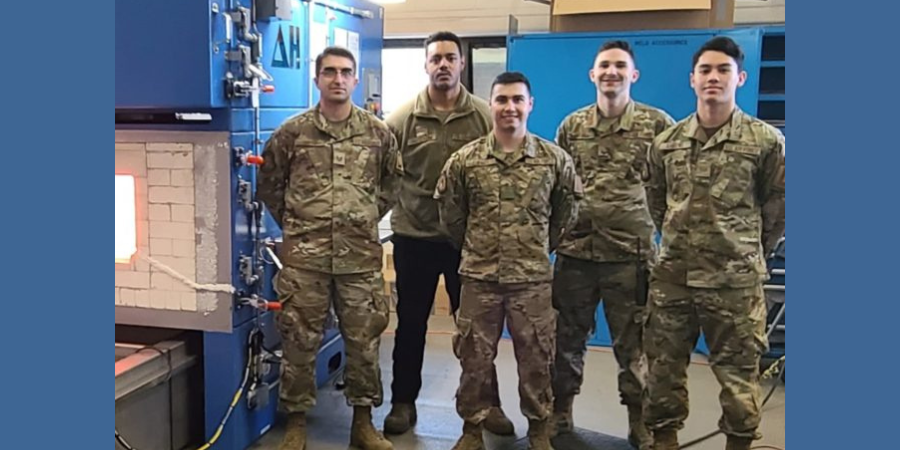
United States Air Force personnel stationed at Royal Air Force (RAF) Base Mildenhall in the United Kingdom recently commissioned and received full training on the use and maintenance of a heat treating furnace for aerospace parts. The furnace will help maintain KC-135, CV-22, C-130 aircraft, and F-15 fighter jets assigned to RAF Mildenhall or nearby RAF Lakenheath air stations. The installation was interrupted by an impromptu visit from the U.S. President.
Richard Conway Chief Technology Officer Delta H Technologies
The DELTA H® TECHNOLOGIES dual chamber heat treating furnace for aerospace (DCAHT®) was designed by the supplier to rapidly heat treat all common aviation grade metals and alloys necessary for aircraft maintenance and is fully compliant with USAF/NAVAIR Tech Order 1-1A-9 and SAE-AMS2750F. The training received by the USAF airmen at RAF Mildenhall included essential instructions in heat treating, as well as furnace calibration practices like temperature uniformity surveys (TUS) and system accuracy tests (SAT) and culminated with each airman receiving Certificates of Training.
The specialized furnace features an upper chamber convection system, 18" wide x 12" high x 48" deep, capable of Class 1 (+/-5°F) from 200°F to 1200°F and a lower chamber radiant heat system, 12" wide x 12" high x 36" deep, capable of Class 3 (+/-15°F) from 1000°F to 2000°F with air or argon atmosphere. A roll-away quench tank features dual baths for water and oil quenchant. The controls and data acquisition provide detailed batch records of heat treated parts, including quench delay, as well as automatic tracking of thermocouple usage and calibration intervals.
Air Force One at RAF Mildenhall
The training was interrupted by an unexpected visitor to RAF Mildenhall. The hangar next to the Metals Tech Shop, where the furnace was being commissioned and the training was being conducted, was the epicenter for the arrival of a top-secret VIP. When the Air Force Band began practicing "Hail to the Chief," it became obvious that U.S. President Joe Biden would be making an unexpected visit to the base. While the President’s visit was not related to the furnace commissioning, Richard Conway, DELTA H® founder and chief technology officer, and wife Mary Conway, witnessed this presidential visit and got a few candid photographs of Air Force One (see above).
On this Technical Tuesday, dive deep into this article to learn Industry 4.0 heat treating solutions to enduring problems. As author and captive heat treater Joseph Mitchell, director of Operations & Technology for The Miller Company, says, "These solutions have the capability to mitigate incessant (and costly) problems in our thermal and metal processing industry." Let's take a closer look at Industry 4.0 solutions to the problem of coil wraps "sticking" during batch annealing.
Joseph Mitchell Director of Operations & Technology The Miller Company
As US manufacturing recovers from the ill effects of a seemingly unremitting pandemic and corollary supply chain challenges, the advance of Industry 4.0 and Industrial Internet of Things (IIOT) necessitates manufacturing industries reevaluate their business practices. For maximum profitability, business "as usual" simply will no longer suffice. Jason Ryska, global chief engineer at Ford Motor Company, suggests even production behemoths overlook the obvious:
In many production processes, data analytics provides the agility to keep up with market trends and technology advancements. An exception to this trend is automotive production, a multi-billion-dollar industry that is underutilizing data collection and underestimating the potential improvement that may come from understanding the data being collected.
This quote is from a technical article written by Ryska in which he discusses current state and offers a glimpse of future state that is gained by a manufacturer investigating potential new solutions for old process problems by applying Industry 4.0 technologies.1
Metal industry leaders may ask, to the quote above, could we replace "automotive production" with "heat treating?" I believe there is a strong argument against such an exchange of words; however, in-depth examination at the plant level indicates deficiencies exist for the heat treating industry related to acceptance of IIOT technology and application of data analytics. Where do we observe the shortcomings? Perhaps, as suggested by Ryska, in our day-to-day comfort zone: "over reliance on employee experience and interpretation vs. physical measurements."
This keen insight into the current state of automotive manufacturing can be equally applied to different manufacturing landscapes throughout U.S. industry. Reviewing a familiar heat treating problem will help to illustrate the need for and applicability of digital monitoring and data collection for decision making and future development of advanced analytics like machine learning and AI. These solutions have the capability to mitigate incessant (and costly) problems in our thermal and metal processing industry.
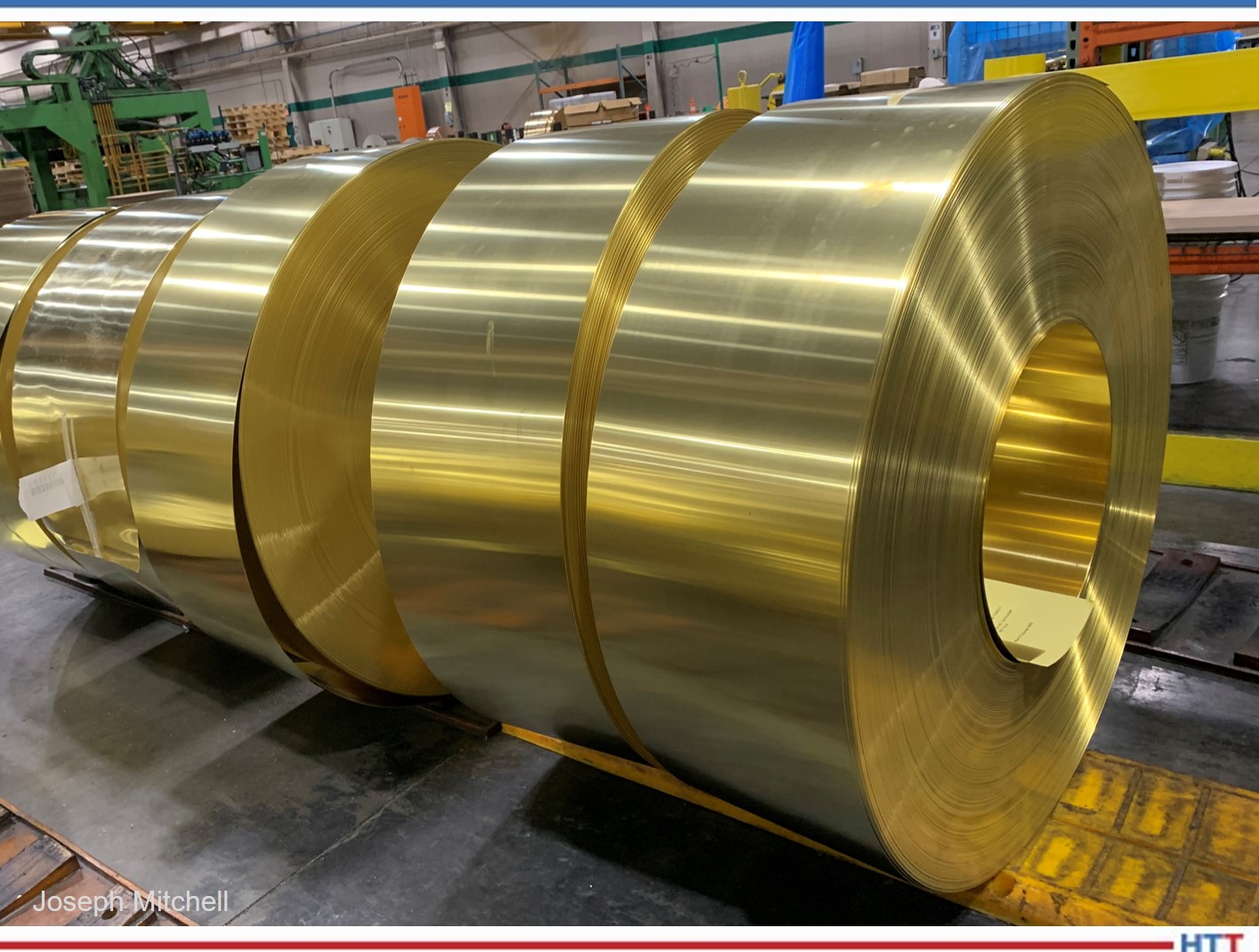
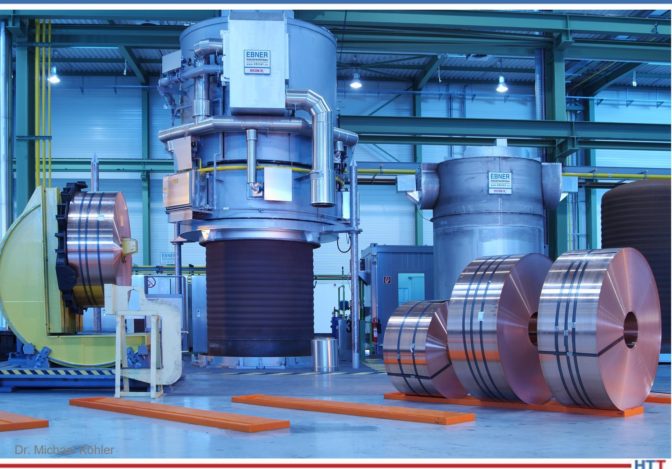
Yellow brass finished width coils; alloy C26800
Heat Treat Industry
In manufacturing, the same problems often occur again and again. In the metals industry, casting and thermal processing, in conjunction with continuing operations, present daily challenges to product quality. Troublesome and costly conundrums – like residual stress, distortion, cracking/poor forming in downstream operations, and poor surface quality/coating adhesion – occur regularly, causing waste, rework, late delivery, and lost profit.
Metallurgists, engineers, and technologists all understand the frustration of untold hours devoted to researching solutions to material processing problems. Some already have well known solutions while others may randomly appear seem, after causing much angst, to disappear (sometimes not as quickly as would be preferred). Regardless of that type of problem, the time, effort, and resources put into finding the solution cannot be redeemed.
The advance of Industry 4.0 and, more specifically, IIOT into modern manufacturing can provide our metal production sector the ultimate tools for unraveling costly and recurring quality issues. We understand this progression will be gradual and very slow.
Nonetheless, implementation of digital technologies is critical for our heat treating/materials processing industry. The fact CQI-9 4th ed. requires all instrumentation and process controls be digital by June 2023 supports the emphasis placed on eliminating analog based instruments and reengineering manufacturing processes for implementation of digital data collection and, thereby, steering heat treaters (automotive suppliers and, hopefully, non-automotive industrial heat treaters) toward eventual adoption of Industry 4.0 technologies.
In this article, we review a specific quandary typically encountered during batch annealing and examine why application of digital monitoring and data collection, and eventual integration of Industry 4.0 technologies, would facilitate understanding and assist in resolving the problem.
Typical gas fired bell annealing furnace; inner cover on base
Gas fired annealing furnace; heating bell being lowered into place
The Problem (Define)
A report, written in 1940 by T.J. Daniels, titled "The Prevention of Sticking in Bright Annealing Sheet Steel" is interesting for many reasons, and, for purpose of this article, provides an example of an early 20th century heat treating headache which, unfortunately, is still with us in the present century.2
The report consists of two parts:
Part I - Investigation of Factors Influencing Sticking
Pressure
Annealing temperature
Length of time at temperature
Part II - Prevention of Sticking
Multiple varieties of trial suspensions tested
Temperature, pressure, and time held constant for each test
Trials performed 2x each
Trials performed 3x for promising suspensions
Despite the efforts and subsequent process improvements in heat treating and manufacturing processes as discussed in Daniels' report, we find the following, equally interesting 21st century report, addressing the same subject in Hot and Cold Rolling Processes, Sticking and Scratching Problems After Batch Annealing, Including Coil Compression Stress Effects, by J.J. Bertrandie, L. Bordignon, P.D. Putz, and G. Volger.3
This 2006 report discusses the same sticking phenomenon (coil wraps adhering together after batch annealing) and expands its research into an accompanying quality problem that may occur in conjunction with or subsequent to batch annealing: material scratching. The report documents field trials and laboratory investigations.
The amount of investigative work described in this second report is noteworthy and the results provide data-backed conclusions. However, the problem addressed, potential causes studied, and solutions prescribed did not eliminate the phenomenon of sticking following batch anneal of ferrous and nonferrous coils. Fast-forward fifteen years to 2021 and the sticking phenomenon remains a topic of discussion (and source of grief) for heat treaters across continents.
My experience with a heat treater located in the Midwest, who occasionally encountered coil wraps sticking together during batch anneal of sheet steel, resulted in experiments with anti-sticking agents applied using a spray system, as well as studies for improved control of cooling the furnace charge. The cooling temperature gradient influences contraction of outer wraps which, if pressure is excessive, may result in wrap adhesion (cementation): growth of crystals across material wraps.
Although sporadic, costs were significant when sticking occurred. Unfortunately, the success of our experiments was limited due to time constraints and production requirements (nothing new here). As we know, a hit-or-miss success rate is not good for business; consequently, continuous improvement (CI) must be built into the system. Fortunately, technology is allowing this CI business approach by way of Industry 4.0.
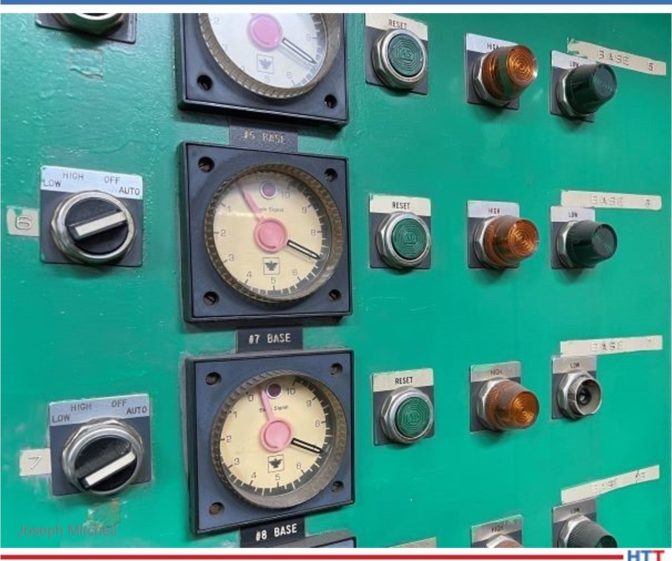
Per CQI-9 rev. 4, analog process monitoring is coming to an end
Descriptive Analytics (Measure)
I first will acknowledge many industrial processing plants operate using, shall we say, not exactly new or sufficiently updated equipment. Also acknowledged is the necessity of skilled and experienced personnel for monitoring and performing critical tasks. Nonetheless, with all else being equal, the fact this quality defect persists suggests industrial heat treaters need new solution for this old and burdensome problem. In short, transformation to digital technologies must occur in the metals processing industry for improved understanding and resolution of regularly occurring problems coming from complex manufacturing/processing systems.
At minimum, for study and resolution of our sticking problem, I recommend a supervisory control and data acquisition system (SCADA). Management should have "eyes" on the process at all times. SCADA allows digital process monitoring (real-time), process alarms (out-of-spec parameters), and automatic control (process adjustment) that will help improve process control at site location or via remote access. Likewise, data acquisition for historical review is critical for answering the question, "what happened and when?"
Digital collection and transfer of data (cloud-based or in-house server) and use of statistical analysis (data analytics) will help a company improve production through the development of predictive maintenance models, building understanding of equipment capability for effective and efficient processing, and defining key process parameters for best quality.
SCADA may be incrementally introduced into a manufacturing system (e.g., a single bell/box annealing furnace) and scaled accordingly. Another strategy is investment in IIOT technology software/apps/system. My experience includes investigation of IIOT as a service with MindSphere. This technology is scalable and can be integrated with legacy equipment for eventual connection with both old and new machines/processes. This is a more practical option considering few small-to-midsize heat treaters have cash for an all-at-once approach.
During initial installation stages, be sure to capture key process variables and the need for strategic placement of data gathering sensors based upon best opportunities for process impact like:
furnace atmosphere / time / temperature
material cleanliness / required microstructure / coil tension
strip thickness / strip width / process routing / pre & post processing
Data input from locations other than annealing furnace are of equal concern:
As noted earlier, I understand use of equipment that is in disrepair or outdated is a reality for some heat treaters; fortunately, use of SCADA system would provide necessary data to justify purchasing new equipment and/or upgrading old equipment. A data driven proposal presented in unbiased digital format is an advantage for showing upper-management current state-of-affairs and possible return on investment (ROI) if funding is provided and investments are made.
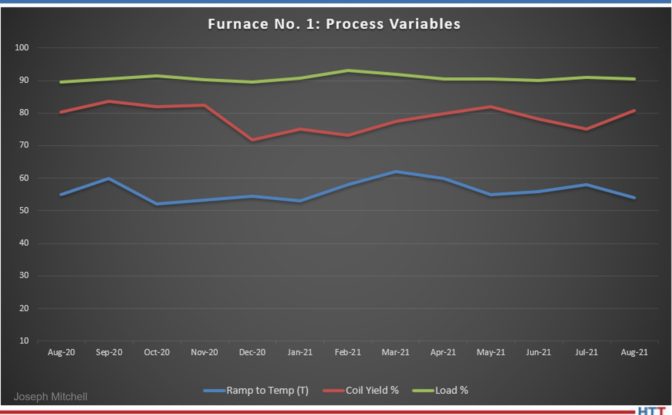
Digital monitoring of process variables: easy access of data for historical review and troubleshooting
Diagnostic Analytics (Analyze)
At this point, we have a SCADA (or similar) system in place, either for a given furnace/machine, work-cell, or eventually for an entire manufacturing/processing system. In our case, the process parameters associated with sticking, and therefore the ones which need to be monitored, include temperature, time, pressure, surface condition, and reactivity.4 The stage for descriptive analytics is set; data is collected/summarized, but no direct decisions/predictions develop from this digital data stream. We learn "what happened” and proceed with the question, "why" did "X" happen? Thereby, we enter the world of diagnostic analytics in the quest for root causes, seeking to understand unusual events: why did no sticking occur when we processed alloy "A" last week, but this week alloy "A" exhibits sticking?
Following our statistical study used in descriptive and diagnostic analysis that was performed using data analysis software, we continue applying statistical methods for our investigation. The objective is discovery and confirmation of relationships and/or trends, which may relate to, or show causes for, sticking (coil wraps adhering together).
Predictive Analytics (Improve)
Rarely in a heat treating/material processing dilemma is the root cause readily disclosed; my experience in heat treating is that "bad" phenomenon often occur and disappear with impunity, leaving root cause analysis a moot point. We breathe a sigh of relief and enjoy the quiet before the next storm.
In the past, this unfortunate scenario likely resulted from one of two things: first, the inability to measure multiple variables simultaneously; and second, if a system is in place identifying and monitoring key variables, then management's inability of correlating (note: correlation may not ≠ causation) effects of multiple process variables. This inability leads to dependency and/or relationships preventing meaningful and/or accurate interpretation of data. At best, this does no more harm than allow the continued ill-effects of current problem, but at worst, it leads to incorrect conclusions, possible worsening of the problem at hand, and new problems.
Here is where management of forward-thinking companies -- focused on developing optimal manufacturing efficiencies, equipment effectiveness, increased profit, and competitive advantage --differentiate themselves by advocating application of digital technologies. In this case, it means moving toward artificial intelligence (AI); smart machines/machine learning.
Many options related to machine learning software and machine connectiveness are available (e.g., Siemens, GE Digital, Samsara, etc.). Your SCADA system provider is a great place for beginning investigation into predictive/prescriptive software solutions using machine learning tools.
Another example of a systems approach for digital transformation is Smart Prod ACTIVE. Profiled in Foundry Trade Journal last winter, this information and communication technology (ICT) platform, designed for optimizing foundry production, illustrates the growing possibilities for increased competitive advantage and profit growth based upon implementation of digital technologies, such as EnginSoft - smart ProdACTIVE.5
Prescriptive Analytics (Control)
Heat treating consists of many interrelated processes and/or systems. Prescriptive analytics, by way of simulation software/modeling tools, leads to applicable solutions; as Luigi Vanfretti, an associate professor of electrical, computer, and systems engineering at Rensselaer Polytechnic Institute, states, "You need to have a way to understand the interaction of the systems, and, in an integrated way, you need to optimize them together."6
Digital data collection and advanced analytics open the door for data-driven decisions and improved understanding of a process. When we are able to investigate cause-effect relationship(s) and our modeling tools suggest appropriate/optimal adjustment for non-normal process variation, we can achieve standardization of a given heat treating process, possibly even aimed at specific equipment in a manufacturing system.
In other words, the optimization factors of bell furnace "A" may not be optimal for bell furnace "B." The parameters for various aspects of the manufacturing system may need adjustment based on equipment performance/condition or other factors (e.g., coil mass, time at soak temperature, surface roughness (rolls), incoming strip cleanliness, etc.).
In this manner, continuous improvement throughout the manufacturing system becomes a part of our day-to-day business.
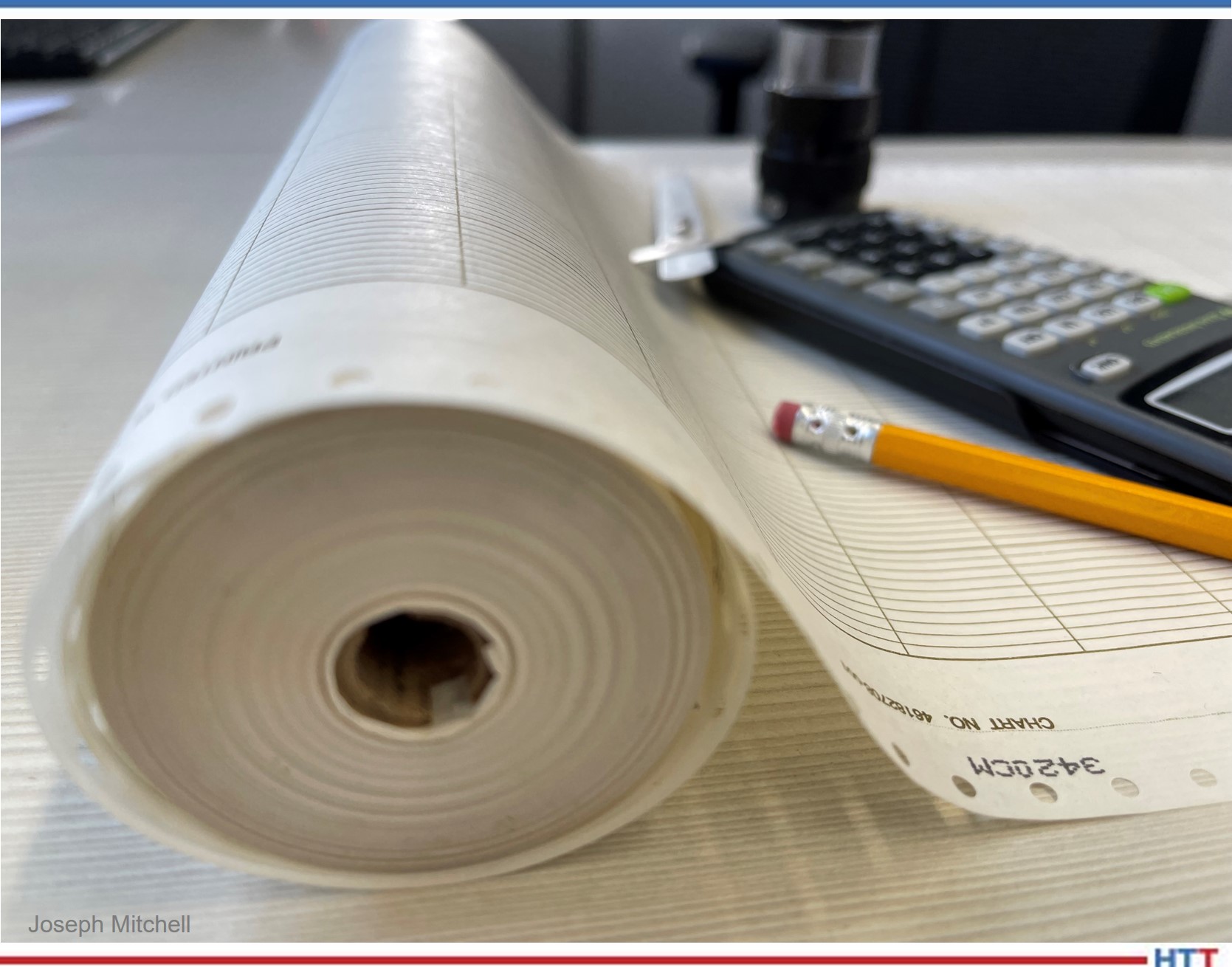
Chart recording; still valid, but not user friendly for data retrieval and statistical analysis
Digital Integration/Transformation
We examined a 21st century approach for resolving a 20th century problem: coil wraps sticking together post-anneal. This material processing phenomenon typically encountered when batch annealing ferrous or nonferrous materials may result from many interrelated process variables; that is, one or more sources of non-normal variation within a thermal processing system and/or manufacturing process.
The heat treating system, as well as the manufacturing system which is comprised of numerous material processes both upstream and downstream, requires continuous monitoring. As supported by CQI-9 (4th ed.), digital instrumentation is deemed necessary (for automotive suppliers) for surveillance and documentation of thermal processing parameters. Acquisition of digital data (e.g., SCADA) facilitates advanced analytics for predicting process outcomes and thereby prescribing optimal solutions which lead to process improvements.
Thus, application of digital monitoring/data collection, advanced analytics, and integration of Industry 4.0 technologies will enhance understanding, provide heretofore unknown process correlations/relationships, and thereby lead to problem mitigation.
As we close this article, some may ask, is digital transformation essential in our heat treating industry? Is IIOT and the all-encompassing Industry 4.0 a necessity for industrial heat treaters and others involved in material processing?
Perhaps a well-worn quote from W. Edwards Deming provides our answer: "It is not necessary to change. Survival is not mandatory."
About the Author: Joseph Mitchell is director of Operations & Technology for The Miller Company, a service slitting center which supplies bronze and specialty copper alloy precision metal strip. With a BS in Industrial Management and MBA from Lawrence Technological University, his interests include metallurgy and practical application of Industry 4.0 concepts/digital technologies for developing business strategy that provide optimal use of assets, energy, and process controls within the metals and automotive industry.
References
1 J. Ryska, Industry 4.0 Meets the Stamping Line - Ford Motor Company's stamping division looks to leap into Industry 4.0 the same way Henry Ford led the transformation from Industry 1.0 to 2.0, Advanced Materials and Processes, Feb/Mar 2020, Vol 178, NO 2, p 25-28.
2 T. Daniels, "The Prevention of Sticking in Bright Annealing Sheet Steel,” Thesis; submitted for degree requirements, MS Chemical Engineering, Georgia School of Technology.
Heat treating any aerospace projects? Then you know titanium is up there when it comes to VIP alloys in the industry. This best of the web is pulled from an aerospace magazine in which Michael Johnson of Solar Atmospheres answers five questions about creep flattening titanium:
Typical temperatures for creep flattening titanium parts
Whether of not creep flattening can only be done in a vacuum
Best fixturing for creep flattening titanium parts
Can creep flattening minimize movement
Will reheating titanium over 1,000°F affect certification
An excerpt:
"Give your heat treater your material certifications. Many mills will certify to aerospace material specification AMS 2801, AMS 4905, AMS 4911, AMS-H-81200, etc. The material often can be re-annealed while simultaneously creep flattening." - Michael Johnson, Director of Sales, Solar Atmospheres
A European machinery group will receive a vacuum furnace for hardening and tempering processes, and its design has been customized in order to meet the group’s need to harden aviation steel used as landing gear. The heat treatment solution will improve the process economy in European plants and is characterized, in part, by low energy consumption.
Maciej Korecki Vice President of Business for the Vacuum Furnace Segment SECO/WARWICK
To meet this particular application, SECO/WARWICK engineers fitted the Vector® vacuum furnace with a non-standard system for subquenching with liquid nitrogen that enables the required quick cooling down of landing gear components. The solution has also been expanded with a vacuum system designed with a diffusion pump and is equipped with a directional cooling option and convection heating system with a specially designed fan.
“This is already the fourth purchase order for a furnace from this product segment from this customer,” commented Maciej Korecki, VP of Business Segment for Vacuum Heat Treatment Furnaces at SECO/WARWICK, the sister company to North American heat treat supplier SECO/VACUUM. He also added that “The product solves the customer’s problem with the hardening of special aviation steel, significantly increases the capacity of the existing production line of this component, and also improves process parameters, since the current devices used by the customer are not fitted with a subquenching system using liquid nitrogen. It will certainly be one of the unique solutions completed this year.”
Welcome to another Technical Tuesday for 18 hard-hitting resources to use at your heat treat shop. These include quick tables, data sets, and videos/downloadable reports covering a range of heat treat topics from case hardening and thermocouples to HIPing and powder metallurgy.
Defining Terms: Tables and Lists
Table #3 Suggested Tests and Frequencies for a Polymer Quench Solution (in article here)
Case Hardening Process Equipment Considerations (bottom of the article here)
Two simulations of a moving billet through heating systems (in article here)
Fourier’s Law of Heat Conduction (in article here)
Webinar on Parts Washing (link to full webinar at the top of the review article here)
Materials 101 Series from Mega Mechatronics, Part 4, Heat Treatment/Hardening here
Heat Treat TV: Press-and-Sinter Powder Metallurgy here
BONUS: 39 Top Heat Treat Resources
Heat Treat Today is always on the hunt for cutting-edge heat treat technology, trends, and resources that will help our audience become better informed. To find the top resources being used in the industry, we asked your colleagues. Discover their go-to resources that help them to hone their skills in the 39 Top Heat Treat Resources on this page of the September print magazine.
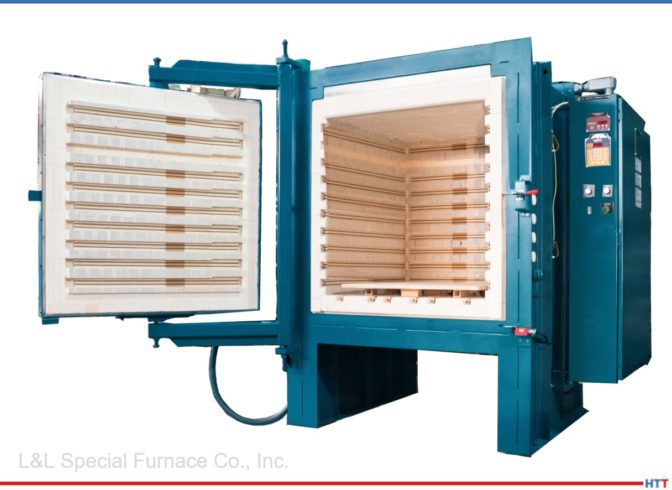
A high-uniformity box furnace has been delivered to Soil Lab, a community-based workshop based in Chicago, as part of the 2021 Chicago Architecture Biennial. The furnace received a fast-track shipment of four weeks to be part of the biennial workshop program in which local community groups will experiment and gain knowledge of ceramic production and various processes.
TheL&L Special Furnace Co., Inc. Model XLE 3636 is a front-loading, refractory-lined box furnace and has an effective work zone of 34” wide by 34" high by 32" deep. There is a horizontal double pivot door with a safety power cutoff switch. A ceramic hearth and standoffs are provided as a workspace for various ceramics and ceramic-based products. Additionally, the furnace has a series of inlets on the side and an outlet on the top. These can be capped off when not in use to preserve heat, and can provide a "candling" effect where various ceramic byproducts can be removed from the furnace. Some of these byproducts can be corrosive and need to be removed from the system.
Pictured in the main image above: Soil Lab team photo, (L to R) Vester, Bruun, Martin, Ni Chathasaigh
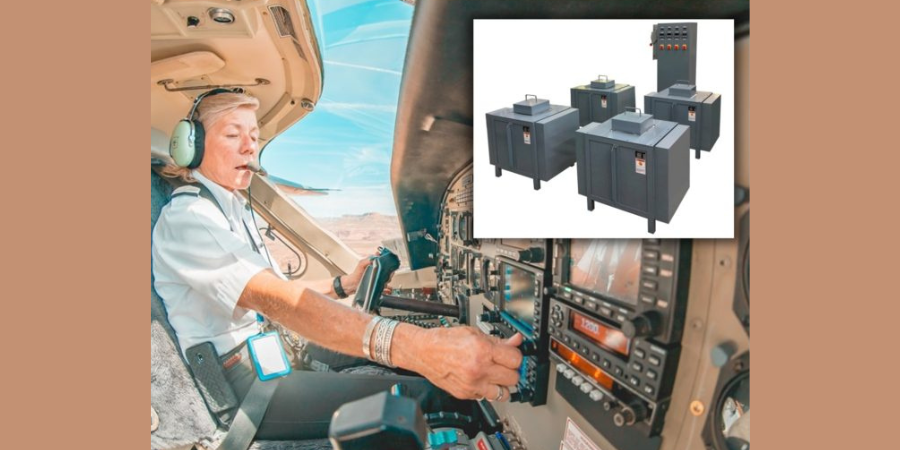
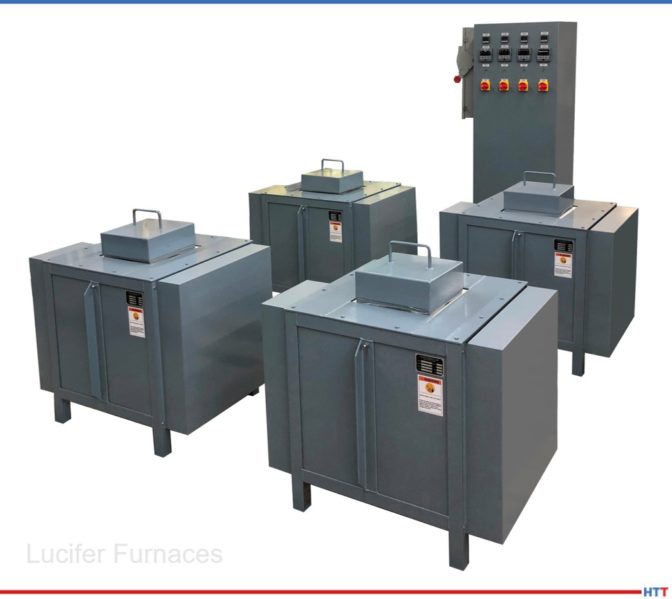
A multi-unit modular pot furnace system has been set for an aerospace manufacturer in the U.S. to help the end user increase heat treat capacity.
Each of the four Lucifer Furnaces Model 2057 pot furnaces is connected to a single freestanding NEMA 1 control panel. Each furnace is heated electrically with 18 KW of power to heavy duty coiled elements in removable holders on all 4 side walls. Roof and side covers bolted to the frame of each furnace can be removed for easy service access.
The units are insulated with 5" of multi-layer insulation consisting of dry-fit hot face lightweight firebrick backed by cold face mineral wool. A vestibule at the top of each furnace reduces heat loss between the pot wall and firing chamber. Controls onboard include Honeywell DC3500 digital multiprogrammable cascade controllers which automatically interpret multiple thermocouple readings and adjust the inside/outside pot temperature to achieve the desired set point. Additional energy efficiency and power uniformity is maintained with SCR power units.
Happy Halloween! Instead of the spook, we wanted to give you something to celebrate this weekend the way YOU know how to: through heat treating. Whether you know a heat treater on a tight budget or your shop is ready to "try something new", we want to show you TWO uses of pumpkins for your shop this Fall.
Pumpkins as Furnaces
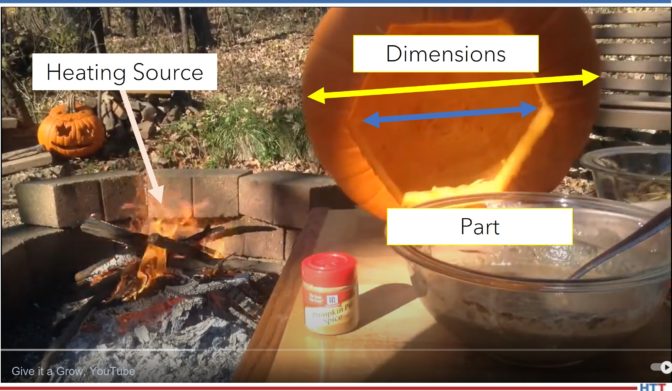
Pumpkins make great ovens. The orange gourds, commonly converted into jack-o-lanterns this late-October, have a proven degree of structural integrity that can maintain heat for one cycle.
This process works best for heat treating parts that need to be introduced to gaseous H2O during the cycle time.
As you can clearly see below, the pumpkin can serve as a "furnace" for special parts.
Dimensions: 11.5" outer diameter x 11" total height; heating chamber is 10.75" diameter x 10.25" height; wall thickness is 3/4"
Temperature: range from 0-450 degrees Fahrenheit lasting 1 cycle (max)
Materials: organic matter derived from Cucurbita pepo
Cycle times may vary depending on the size and quality of vessel. For the example used in this article, the cycle ranged from roughly 0.75-1.25 hours. Controls are not included.
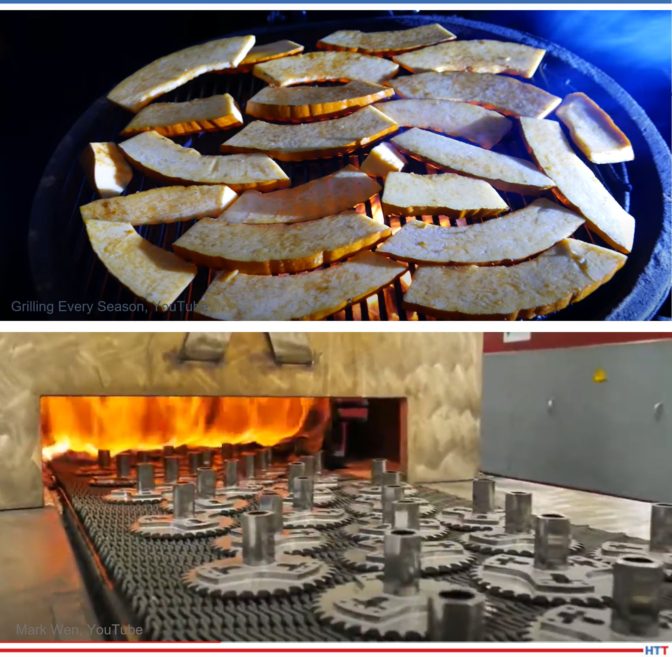
Pumpkins don’t just make great furnaces, they are also parts to be heat treated. If it's slow on the shop floor this Fall, just take a lousy pumpkin from your doorstep and get to work!
While a pumpkin does have more prep involved, word has it this “part” is edible, too. Follow these steps when these parts come to your shop:
Be sure that the coating used for the part is of highest quality. Cinnamon, allspice, and a hint of salt with olive oil have the right chemical composition for this part.
When applying the coating, it is imperative to evenly distribute it across all parts in order to achieve consistent, predictable results.
I'll leave the heat treating to you, but I recommend an open flame furnace for these parts. In this instance, discoloration is to be expected, but this is typically what customers want to see. Bonus: No quenching or cleaning required.
Transfer parts to a cooling location.
For best results, heat treat parts in small batches.
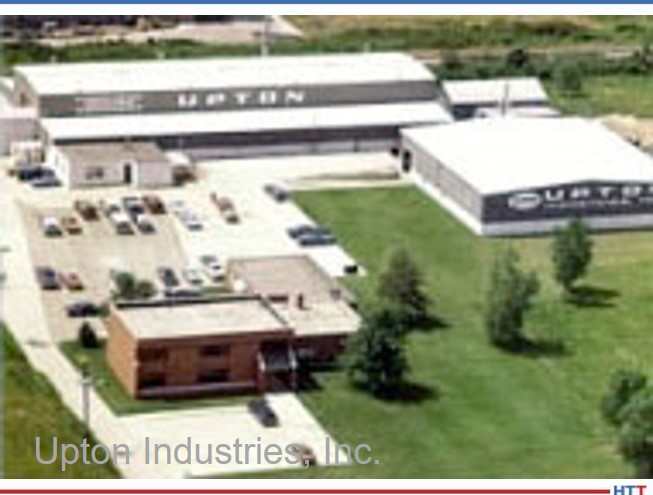
Heat treat solution manufacturer in Roseville, MI has been acquired by Kolene Corporation, a global leader of custom-designed and engineered molten salt bath equipment and specialty chemical formulations.
Upton Industries, Inc.
"We are proud to carry on Upton's strong brand and legacy as a part of Kolene Corporation as we move forward," commented Roger L. Shoemaker, chairman & CEO of the company.
Founded in 1937, Upton Industries, Inc. design and manufacture thermal processing systems in the metal heat treating industry. They apply their Engineered Thermal Solutions methodology to heat treat equipment including box type, car bottom, lift-off and specialty furnaces that utilize either electric heating or gas-fired systems.
Kolene will maintain both its Detroit headquarters location and the Upton Roseville location, which will be home to all Kolene’s manufacturing and fabrication. Bringing the two companies together will give the new company 50,000 sq. ft. of manufacturing, fabrication, and commercial processing capabilities.
W. Scott Schilling President Kolene Corporation
"After thoroughly evaluating Upton’s capabilities," said W. Scott Schilling, president of Kolene, "it was apparent that there are tremendous synergies between the two companies. Capitalizing on these synergies will allow [the company] to expand into applications and revenue segments where we have not historically been. [We] will also have the ability to become more vertically integrated due to Upton’s manufacturing and fabrications capabilities, which will allow us to strengthen our overall margins."
In its 82nd year, Detroit-based Kolene Corporation provides custom-designed and engineered equipment, specialized chemical formulations, and processes for cleaning and conditioning metal surfaces. Currently, their products are used worldwide for casting cleaning, alloy descaling, coatings removal, engine rebuild and other demanding automotive, industrial, and military applications.
Designing ultra-efficient aircraft, lightweight automobiles, and modern power generation systems requires new materials with higher strength-to-weight ratios that can withstand higher operating temperatures for longer periods of time. These lighter weight, heat-tolerant materials help increase fuel efficiency and save energy, but characterizing these materials poses several challenges.
In this Technical Tuesday article, Dr. Erik Schwarzkopf, staff scientist at MTS Systems, will help you discover solutions to these challenges that will improve high-temperature testing of composites. This is the special focus article that appears in the Heat TreatToday November 2021 Vacuum Heat Treat Systems print edition. Return to our digital editions archive on Monday November 15, 2021 to access the entire print edition online!
Dr. Erik Schwarzkopf Staff Scientist at MTS Systems
Testing at high temperatures can be complicated because “elevated temperature” means different things to different researchers. In general, there are three distinct temperature ranges for materials that have the highest strength-to-weight ratios. The first is for polymer matrix composites, or PMCs, from 392°F to 932°F (200°C to 500°C). The second is for metals, from 1472°F to 1832°F (800°C to 1000°C). The third is for ceramic matrix composites, or CMCs, which are tested up to 2732°F (1500°C). In each range, there are tradeoffs that test engineers need to consider in order to measure material properties at elevated temperatures and acquire high-quality results.
Problems arise when dealing with objects that need to touch the specimen or be near the specimen, such as grips, extensometers, furnaces, and chambers. The problems tend to be systemic, so solving an issue with one component tends to raise issues with another component.
In many cases, these issues start with specimen geometry. For example, PMC and CMC specimens are flat, and they cannot be grabbed in the same way as a round, threaded, or button-head metallic specimen. For gripping PMCs, cost-effective and easy-to-use hydraulic wedge grips are a good choice. Hydraulic wedges can apply consistent pressure to protect the fragile PMC specimen fibers from crushing and are able to maintain the correct pressure even as the chamber and wedge head heat up. These grips are relatively large, so they are often paired with a larger environmental chamber. The environmental chamber is typically larger than the furnaces required for higher temperature tests, but the thermal mass of the grips and chamber leads to very stable temperatures.
However, the larger chamber makes it difficult to use contacting extensometers, which test engineers would normally use in these applications. With a smaller chamber, you can situate the sensing technology outside the chamber and allow it to translate motion from the contact arm; but with a larger chamber, you cannot effectively translate that motion outside the chamber because the arm gets too long. The extensometer needs to be inside the chamber — but the elevated temperature damages the sensitive electronics.
"One of the best ways to increase high-temperature testing success is to work with a solution provider who understands the entire test."
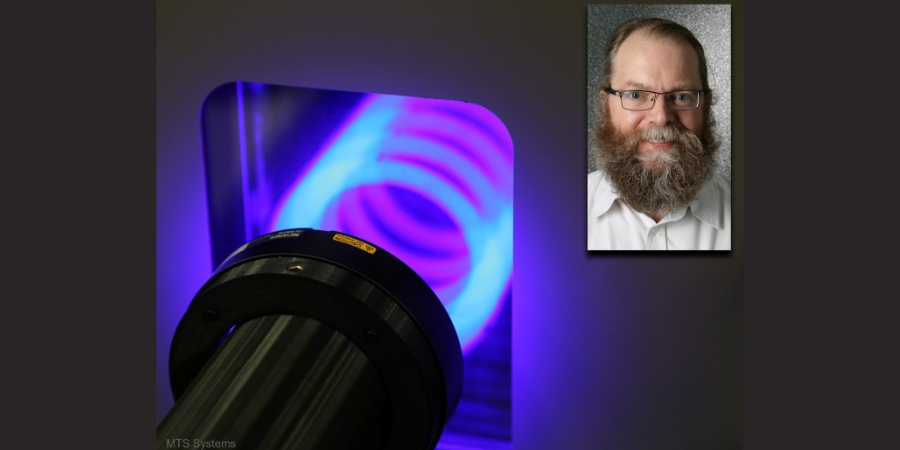
One way to solve this issue with contacting extensometers is to use video extensometry and digital image correlation. These non-contacting strain measurement devices can be located outside the chamber, away from the heat that would damage other extensometers. A chamber with a window will let you look inside and measure motion in real-time. But this solution is not without its complications, either. You need a light inside the chamber to illuminate the specimen for the camera, and at some temperatures, the specimen’s illumination (or blackbody radiation) reduces the contrast and accuracy of video extensometry. You can mitigate these problems by using blue LEDs to illuminate the chamber and optical filtering to minimize blackbody effects and enhance contrast.
PMCs and CMCs are typically engineered as flat structural components, but given the gripping challenges presented by flat specimens, some people have wondered why we cannot just use round specimens instead. Even with metals, it is often not possible to obtain a large enough portion of the material to make a round specimen, especially if the goal is to test material that has been in service. Sometimes, a small specimen is extracted from a larger component — specifically, turbine blades from jet engines. The blades that see the hottest application temperatures are grown from single crystal seeds with cooling holes to let air through. These intricately shaped blades do not have enough bulk to create a round specimen. Also, when the interdendritic spacing of a single crystal is similar to the specimen dimensions, the specimen might act quite differently than a bulk, round specimen.
Gripping specimens in high-temperature applications remains a challenge. A test engineer would normally use high-temperature grips for most high-temperature applications. But the CMC testing temperature range exceeds 1832°F (1000°C) and these grips would start to lose strength. Ideally, the grip should be as hot as possible to minimize the gradient, just not so hot that the grip itself starts to get soft. If a specimen is long enough, cold grips could be used. But some specimens cannot be made long enough, for the same reasons they cannot be made round. Even if cold grips are used, larger gradients are then introduced, which means more tests need to be run due to the variations in those gradients, and that adds expense.
To address these challenges in the highest temperature ranges, look for a grip that can be actively cooled in two different ways, depending on what temperature range is required. These versatile grips can be placed in an area of the furnace that is relatively less hot than the center zone. If the center zone is 2192°F (1200°C), the top and bottom portions are closer to 1832°F (1000°C). With active cooling, the grip can stay in the cooler part of the chamber and still hold the specimen in place with an acceptable gradient. For testing metals up to 1832°F (1000°C), you can use a grip that is moderately cooled. For testing CMCs up to 2732°F (1500°C), look for a grip that is aggressively cooled.
One of the best ways to increase high-temperature testing success is to work with a solution provider who understands the entire test. Many labs attempt to build high-temperature testing solutions by assembling components from different providers. Unfortunately, the interdependencies and tradeoff s are too entangled. The extensometry expert may not understand how to make their offering work through a window or inside of a chamber. Grip experts may be able to make cold grips work, but the gradient is so large that it calls the test results into question. Find a provider that can offer the systems integration expertise you need to reduce testing variability, allowing you to run fewer tests and get accurate results.
About the Author: With more than 30 years of experience in materials testing, metallurgy, and system engineering, MTS Systems staff scientist Dr. Erik Schwarzkopf frequently shares his testing expertise in technical articles and conference presentations.
For more information: Contact Dr. Schwarzkopf at erik.schwarzkopf@mts.com





 United States Air Force personnel stationed at Royal Air Force (RAF) Base Mildenhall in the United Kingdom recently commissioned and received full training on the use and maintenance of a heat treating furnace for aerospace parts. The furnace will help maintain KC-135, CV-22, C-130 aircraft, and F-15 fighter jets assigned to RAF Mildenhall or nearby RAF Lakenheath air stations. The installation was interrupted by an impromptu visit from the U.S. President.