


MANUFACTURING HEAT TREAT

Sustainability Insights: Vacuum Heat Treating in a Carbon-Conscious Market

Reducing the industrial carbon footprint has been at the forefront of much discussion, heat treat industry-specific or otherwise. How can heat treaters dealing with vacuum operations consider sustainability in a carbon-conscious market? 

This Technical Tuesday Sustainability Insight article was written by Bryan Stern, the product development manager at Gasbarre Thermal Processing Systems, for Heat Treat Today's November 2023 Vacuum Heat Treating print edition.


Bryan Stern
Product development manager
Gasbarre Thermal Processing System
Source: Gasbarre

There is a growing understanding that changes in environmental policy and corporate initiatives will have an increasing impact on the landscape of domestic processing and manufacturing industries in the near future. This is of particular interest to the heat treating industry as thermal processing intrinsically consumes large amounts of energy.

Contact us with your Reader Feedback!

Energy has always been a financial reality for heat treaters, but the impact of transitioning environmental reform will reach beyond monthly utility bills. This is because large players in primary heat treat markets will seek to integrate low-carbon service and equipment suppliers into their direct and indirect supply chains to meet decarbonization objectives.

As a result of this impending trajectory, there has been more attention on furnace design and energy sources within the thermal processing industry. One topic that has received a great deal of focus is the potential benefit of vacuum furnaces as a less emissions-intensive approach to heat treating. Although fundamentally based on electrification, it would be difficult to argue that at least some of the interest in vacuum does not stem from a reactionary desire to distance thermal processing from the image of fire-breathing fossil fuel furnaces given the current political environment.

But beyond the undeniably more marketable aesthetic, the legitimate question remains: Does vacuum heat treating provide tangible environmental advantages over combustion-fired atmosphere alternatives?
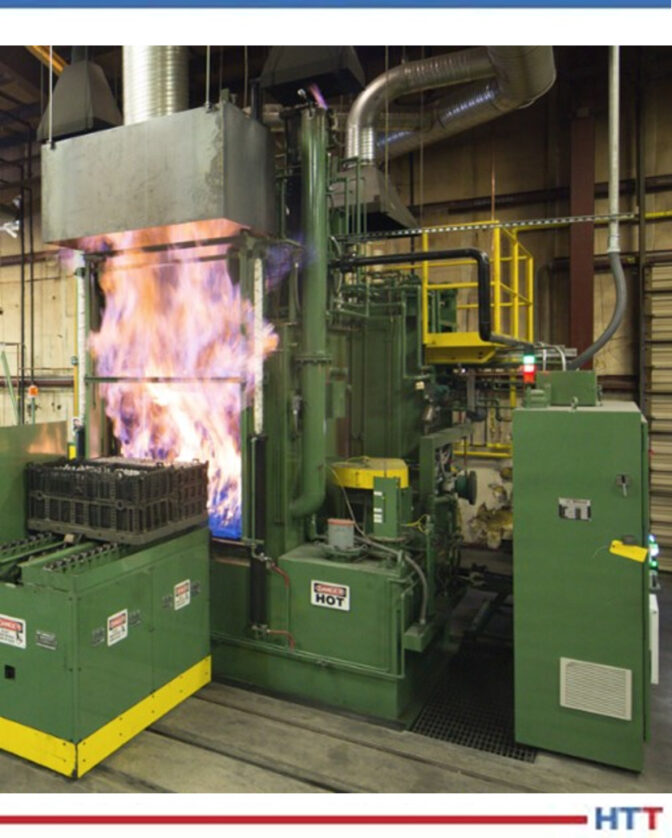
Atmosphere integral quench furnace

The soundness of the argument for electrification and vacuum is not as obvious as it might first appear. To start, eliminating on-site combustion does not eliminate CO2 emissions. Electrical utilities still have emissions factors (reported in CO2 equivalent emissions per kWh) that must be accounted for as part of Scope 2 supply emissions. Counterintuitively, the national average emissions factor for electric power is 2.2 times that of natural gas to produce an equivalent amount of thermal energy.1,2 This is primarily due to the inefficiencies associated with generating and transporting electricity versus converting fossil fuels directly to thermal energy on site.

In addition to having higher emissions, electricity is 3.6 times the cost of natural gas for an equivalent amount of energy based on national averages for 2022.3,4

The cost effectiveness of gas fired atmosphere furnaces historically has been the motivator behind their use, unless the process benefitted in some other way from vacuum processing.

If electricity has a greater carbon footprint and is more expensive per unit of energy than fossil fuels, why is the industry transitioning to electrification and increasingly favoring vacuum processing? The answer lies with several factors both internal and external to the equipment itself.

Within the scope of the equipment, gas fired furnaces are intrinsically inefficient. Burners exhaust hot gas which continuously siphons energy away from the process. Although less significant for direct fired burners, this effect is amplified for indirect burners, which are commonly used. Recuperators and regenerators can dramatically improve efficiencies by recycling exhaust to pre-heat combustion air, but additional energy is always required for burner systems beyond what is needed to heat the work and overcome losses through insulation. Electric furnaces, on the other hand, have no such additional demand, and the energy they consume is more directly applied to the process. Although the type of energy used is more financially and environmentally costly per unit, electric vacuum equipment uses that energy more efficiently.

In addition to the demands from the burner exhaust, gas fired furnaces usually depend on a blanketing atmosphere to protect the work from oxidation. Endothermic gas is commonly used for this purpose, and in addition to the heat input required for endothermic gas generation, CO and CO2 are products of the reaction. Although it is an objective of endothermic gas generation to minimize the amount of CO2 present in the furnace, the CO exhausted to the atmosphere eventually reacts to form CO2, leading to a higher effective emissions rate. The use of a vacuum as a protective atmosphere is less carbon-intensive as it relies primarily on the power required to operate the vacuum pumps. This leads to much lower emissions to create the processing atmosphere.

Looking outside of the equipment at the overall manufacturing process, heat treating in vacuum can often eliminate post processing steps required when using other types of equipment. This may come in the form of less oxidation or scale, meaning less part cleanup, or low distortion gas quenching, allowing final machining to be moved forward in the manufacturing process or removed altogether. These potential production cost savings are not new, but the value of eliminating the emissions associated with additional manufacturing steps will only serve to further incentivize vacuum equipment moving forward.

There is one final dynamic outside the scope of the equipment that contributes to the explanation of the industry’s push toward vacuum. The emissions factors associated with electric power generation are decreasing, a trend which is expected to continue. The contribution of renewable energy to the domestic power grid is projected to more than double in the next seven years.5
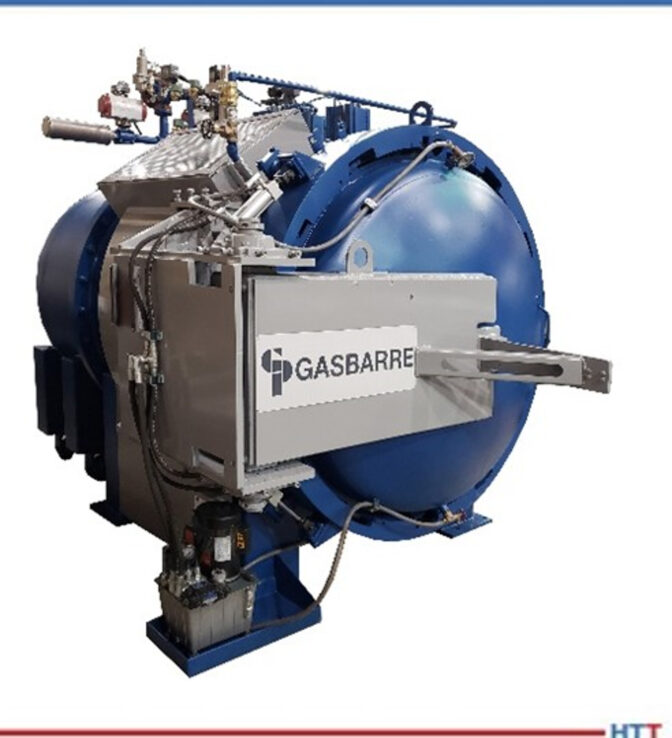
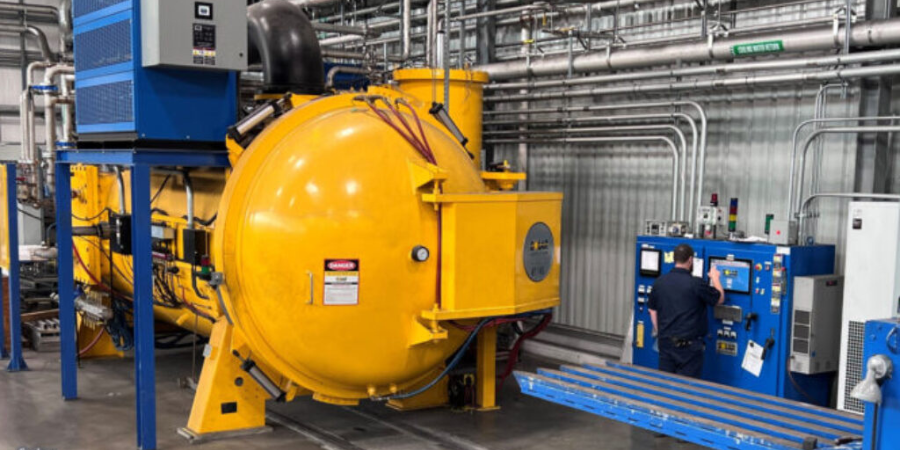
Single chamber vacuum furnace

Although the contribution from renewable sources is still significantly less than fossil fuels, changes in generation are not the only factors at play. Significant efforts are being made to develop grid-scale energy storage solutions. Although most often associated as a prerequisite for intermittent production from renewables, these storage solutions serve an important function for the existing infrastructure. By storing excess power during low demand and releasing it during peak hours, grid scale energy storage would allow fossil fuel power plants to run at more optimized efficiencies without having to ramp up and down to match demand.

Beyond the process efficiencies of vacuum discussed above, investing in electric fired equipment is the only way to capture the benefits of ongoing improvements to electric supply and generation infrastructure. While the benefits of electrification may currently depend on contextual variables such as geographic location and equipment design, natural gas fired processing has a relatively fixed ceiling for future improvement. As an added advantage of electrification, the carbon accounting reductions from the improvement in emissions factors can be captured passively after the initial investment.

While the above advantages of electrification and vacuum do help explain the industry’s push in that direction, it is worth considering how vacuum equipment will continue to evolve to maximize energy efficiency and reduce emissions. Historically, the majority of vacuum furnaces have been single chamber batch style pieces of equipment. This configuration usually requires that loading and unloading occur at, or near, room temperature to avoid oxidation of sensitive materials. In addition to longer floor-to-floor times, this means that the energy required to heat the furnace is thrown away at the end of each cycle.

The competitive demand for low-carbon solutions will drive the use of multi-chamber batch and continuous style furnaces that allow stored energy to be conserved between cycles. This will be especially true as we see more high-volume manufacturing shift away from traditional continuous atmosphere heat treating. In the past, batch vacuum processing has been too restrictive to both part cost and throughput to be competitive. As emissions concerns gain prominence, vacuum furnace configurations that offer higher energy efficiencies and throughput will begin to close that gap.

The processing and energy advantages of electric vacuum furnaces have positioned them well to meet the low-carbon demands of an increasingly emissions-conscious market. It will be exciting to see how the equipment continues to develop to meet those needs in the future.

References
[1] “Data Explorer: CO₂ total output emission rate (lb/MWh),” United States Environmental Protection Agency, last modified September 26, 2023, https://www.epa.gov/egrid/data-explorer.
[2] “Carbon Dioxide Emissions Coefficients,” U.S. Energy Information Association, released September 7, 2023, https:// www.eia.gov/environment/emissions/co2_vol_mass.php.
[3] “Natural Gas Summary,” U.S. Energy Information Association, released September 29, 2023, https://www.eia.gov/ dnav/ng/ng_sum_lsum_a_EPG0_PCS_DMcf_a.htm.
[4] “Electricity Data Browser,” U.S. Energy Information Association, accessed October 3, 2023, https:// www.eia.gov/electricity/data/browser/#/topic/7?agg=0,1&- geo=g0fvvvvvvvvvo&endsec=6&freq=A&start=2001&end=2022&ctype=linechart&ltype=pin&rtype=s&pin=&rse=0&maptype=0.
[5] “Renewables,” International Energy Agency, last modified July 11, 2023, https://www.iea.org/energy-system/renewables.

About the author:

Bryan Stern is the product development manager at Gasbarre Thermal Processing Systems. He has been involved in the development of vacuum furnace systems for the past 7 years and is passionate about technical education and bringing value to the end-user. Bryan holds a B.S. in Mechanical Engineering from Georgia Institute of Technology and a B.A. in Natural Science from Covenant College. In addition to being a member of ASM, ASME, and a former committee member for NFPA, Bryan is a graduate of the MTI YES program and is proud to have been included in Heat Treat Today's 40 Under 40 Class of 2020.

For more information:
Contact Bryan at bstern@gasbarre.com or IHEA.org.


Find heat treating products and services when you search on Heat Treat Buyers Guide.com


Sustainability Insights: Vacuum Heat Treating in a Carbon-Conscious Market Read More »

“Quench” Your Thirst: 3 Technical Articles To Satisfy Your Needs

Thirsting for knowledge about quenching, but not sure where to start? Heat Treat Today has coalesced technical information across articles and podcast episodes from key experts, including significant quenching methods, innovative developments with quenching, and how to control temperature during the process.

Discover more about these three topics in today’s Technical Tuesday original content feature.


Monitor Quench Temperatures with Unique Thermal Barrier Designs

Automotive heat treating operations require repeatable operations to ensure that the composite parts within an automobile perform reliably. Steve Offley, also known as “Dr. O," the product marketing manager at PhoenixTM, outlines case studies of several temperature-critical operations to demonstrate how unique thermal barrier design for thru-process monitoring systems can solve temperature measuring problems. These processes include sealed gas carburizing into an integrated oil quench as well as LPC followed by transfer to a sealed high-pressure gas quench chamber.

Offley comments on the quenching process following LPC, saying, "During the gas quench, the [thermal] barrier [for temperature monitoring] needs to be protected from Nitrogen N2(g) or Helium He(g) gas pressures up to 20 bar." If you are facing heat treat processing with integrated quench, learn more about this temperature monitoring solution.

Read the full article here: Discover the DNA of Automotive Heat Treat: Thru-Process Temperature Monitoring

Intensive Quenching: An Answer for a "Greener" Heat Treat? 

Gas furnaces have the potential to be a significant source of carbon emissions in many essential heat treat processes. However, an innovative approach combining induction through heating with intensive quenching could be one answer for greener heat treating, particularly for steel production.

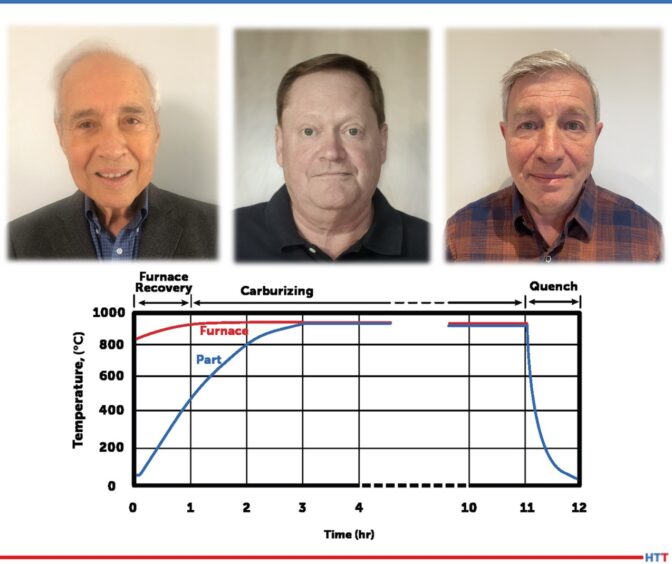
In this article, Chris Pedder, Edward Rylicki, and Michael Aronov share that an “ITH + IQ” technique "eliminates, in many cases, the need for a gas-fired furnace when conducting through hardening and carburizing processes." A lot of this comes down to shortening the time it takes to perform this process, but there is so much more that the authors illuminate in their tests and graphs.

Read the full article here: Induction Through Heating + Intensive Quenching: A “Green Ticket” for Steel Parts

Drinking from a Firehose: Answering Your Quench Questions with a Thorough Radio Review 

Stay afloat in a sea of quenching tips with this Heat Treat Radio review, summarizing three recent podcast episodes centered around quenching tips, techniques, and training — especially applying to the auto industry.

Explore the "green" process of salt quenching with Bill Disler of AFC-Holcroft, the topic of water in your quench tank with Greg Steiger of Idemitsu Lubricants America, and a broad review of auto industry quenching with Scott MacKenzie of Quaker Houghton, Inc.

Read the full article here: Heat Treat Quench Questions Answered with Radio Review


Find heat treating products and services when you search on Heat Treat Buyers Guide.com


“Quench” Your Thirst: 3 Technical Articles To Satisfy Your Needs Read More »

2 Horizontal Quench Systems Expand Semiconductor Operations

Two electrically heated horizontal quench systems have been shipped to a supplier for the semiconductor industry. The systems will be used for the annealing and rapid cooling of various high purity alloy parts.

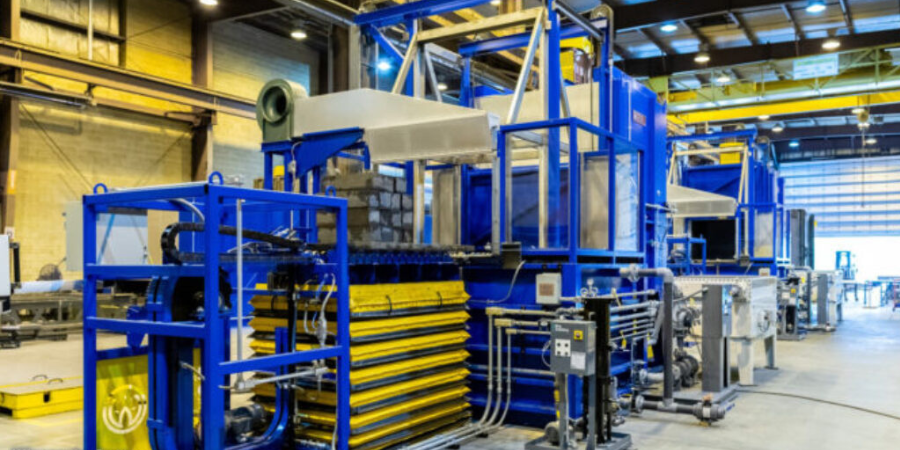
The operating procedure for each horizontal quench system from Wisconsin Oven includes loading the product on a work grid located on the loading platform. Once the load is lifted into place, a pusher/extractor mechanism located at the front of the quench tank moves the load onto the quench lift platform, then the furnace pusher/extractor mechanism pulls the load into the furnace for annealing.

After completing the heating cycle, the vertical lift door opens, the furnace pusher/extractor transfers the load onto the quench lift platform, and the load is lowered into the water quench tank. After the load has sufficiently cooled, the quench lift is raised, and the front mounted pusher/extractor mechanism pulls the load back onto the scissor lift. While the load is pulled onto the scissor lift, a blow off system removes the majority of the water from the load.

See below to watch a video of this system in operation.

https://www.youtube.com/embed/U64eD4tpPBE?si=W3EU1y_7gANzYMyZ

Find heat treating products and services when you search on Heat Treat Buyers Guide.com


2 Horizontal Quench Systems Expand Semiconductor Operations Read More »

South Carolina Facility To Increase Titanium Processing Potential with Heat Treat Furnace

Solar Atmospheres has announced the order of a new 10-bar vacuum furnace for their Greenville, South Carolina, heat treat facility.

This horizontal vacuum furnace (48” wide x 48” high x 96” deep) will be manufactured by sister company Solar Manufacturing. The furnace is capable of processing up to 12,000-pound loads and is scheduled to be installed in late 2024. This new vacuum furnace will feature a vacuum pumping system capable of achieving an ultimate vacuum of 1x10⁻⁶ Torr, which is crucial for processing titanium and other high grade alloys. Additionally, this furnace will apply newly developed designs for the uniform and rapid cooling of large workloads.

Steve Prout, president of Solar Atmospheres Southeast, states, “We are proud to be offering our customers another regional option for high pressure quenching of large components and workloads, as well as the opportunity to leverage economies of scale to reduce their cost of thermal processing in the midst of the challenging economic environment we are all facing.”


Find heat treating products and services when you search on Heat Treat Buyers Guide.com


South Carolina Facility To Increase Titanium Processing Potential with Heat Treat Furnace Read More »

Exothermic Atmosphere Generator Supplied to Skana Aluminum

Skana Aluminum Company in Manitowoc, Wisconsin, has recently been supplied with an Exogas™ exothermic atmosphere generator.

The atmosphere generator from SECO/WARWICK USA, an American SECO/WARWICK Group subsidiary, provides an indirect-chilled exothermic atmosphere for annealing, brazing, normalizing, drawing, and tempering.

Says Marcus Lord, managing director of SECO/WARWICK USA, “At 30,000 CFH, it is one of the largest atmosphere generator units we’ve made to date. It should be plenty large enough to meet the exothermic atmosphere needs of the multiple processes within the Skana plant.”

Skana has also placed an order with the furnace supplier for a smaller atmospheric gas drier for use elsewhere in the plant.


Find heat treating products and services when you search on Heat Treat Buyers Guide.com


Exothermic Atmosphere Generator Supplied to Skana Aluminum Read More »

Nitriding and Nitrocarburizing: The Benefits for Surface Treatment

Source: Advanced Heat Treat Corp.

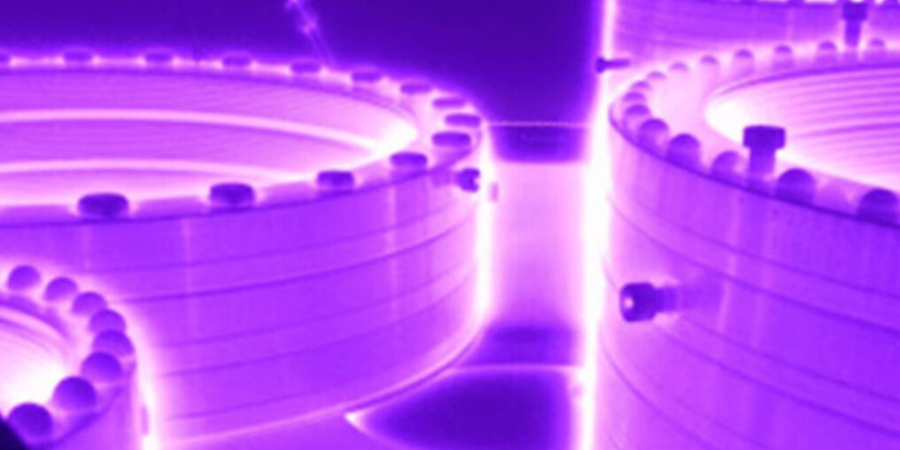
Nitriding and nitrocarburizing may be familiar terms in the industry, but which process — ion/plasma nitriding, gas nitriding, or nitrocarburizing — is best for your heat treat operations?

In this best of the web article from Advanced Heat Treat Corp., discover the specifics of each of these surface treatments and compare their benefits for wear resistance and corrosion resistance. Explore also the innovative technologies developed by the North American heat treater for optimization of these processes. for optimization of these processes. You will encounter technical diagrams, high quality images of nitrided/nitrocarburized parts, and in-depth technical comparisons of these processes.

An excerpt:

Well-controlled nitriding significantly enhances wear resistance and lowers coefficient of friction in many applications of steel components. For certain steels, nitrided samples show even better tribological behavior than carburized samples of the same steels. 

Read more: “Wear and Corrosion Resistance: Benefits of Plasma Nitriding, Gas Nitriding and Nitrocarburizing“


Find heat treating products and services when you search on Heat Treat Buyers Guide.com


Nitriding and Nitrocarburizing: The Benefits for Surface Treatment Read More »

Find Your Success by Giving Back

What are qualities and best practices of a good leader? Joe Theismann, former quarterback for the Washington Redskins and present-day entrepreneur, invites Heat Treat Today's readers and 40 Under 40 honorees to contemplate leadership, specifically the successful leadership that is found by giving back. 

This article was originally published in Heat Treat Today's September 2023 People of Heat Treat print edition.


Joe Theismann
Entrepreneur, Former Washington Redskins Quarterback, Football Analyst
Source: Heat Treat Today

Congratulations to the 40 Under 40 Class of 2023. What an honor to be recognized as up-and-coming leaders in the heat treat industry. I am excited for you and the opportunities you have to lead and help those around you succeed. Because success is found by giving back. That may be something you don’t hear often, but I truly believe we must measure success by the way we are helping others.

Contact us with your Reader Feedback!

With leadership comes responsibilities. As a former professional quarterback as well as an owner of several businesses, I’ve learned a few key principles that I hope will be helpful as you grow as leaders. When performed effectively, they will set up you and your team well.

To succeed by giving back to others, start with the 3 E’s — environment, expectations, and execution.

Environment

The environment, or culture, encompasses the people with whom you work and lead. Being intentional about the kind of culture you create is vital to fostering innovation and freedom of communication. Enthusiasm is the engine that drives, and your attitude precedes everything.

Relationship building is key. Mentoring others by sharing your experiences and expertise is as important as learning from your mentees. Listen and learn — seek knowledge every day and don’t think you have all the answers. It’s the whole of the team that matters. Asking yourself what you can do to help others succeed is a vital component to building a healthy culture that will enable others to shine.

Expectations

Lead by explaining your “why” — be sure you know it and articulate it well. The details are critically important; ensure your team understands your expectations.

To know your why, identify your direction and practice disciplined leadership. Bill Parcells, former head coach of the New York Giants, talked about the importance of direction and discipline. Be definitive in providing direction and model discipline to stick with the task. Embrace the failures, learn from them, and encourage others to not fear them; it’s a process. Share these insights with your team!

Execution

Finally, if you’ve built a healthy environment and your team understands your expectations, lead with present-minded execution.

So, think about today, not yesterday; ask, “What is prevalent today?” And, with every day, be sure you are available to those who need you.

Be reliable in showing up to do the hard work. And be accountable to those you are leading and those to whom you report. Have their backs. Be proud of who you are and who you represent. Execute with confidence.

When Roadblocks Open Doors to True Success

What happens when you experience an unexpected roadblock in this wild adventure called life? Because you know it’s going to happen!

In 1985, during a Monday night game against the Giants, I suffered a severe fracture to my right leg between the knee and ankle that eventually led to my retirement from football. Sure wasn’t expecting that.

What I had to do was find another path that provided me with the same passion as the one that just closed. Was it difficult at first, yes, but because I spent time learning my trade, I was able to work as a sportscaster and pro football analyst for many years and loved it!

Mental toughness will be necessary when you hit those curves. It may not throw you out of the game, but it might throw you off. Focus on persevering, finding that passion, and remembering that success is found in giving back.

Congratulations! I look forward to seeing your success in the lives of the people you lead.


About the Author:

Joe Theismann is the former two-time Pro Bowl star quarterback for the Washington Redskins where he played for 12 seasons and led them to winning Super Bowl XVII. Most recently, he spent the last two decades working for ESPN and the NFL Network as an NFL analyst. He is also a successful restauranteur.

For more information:
Visit www.joetheismann.com


Find heat treating products and services when you search on Heat Treat Buyers Guide.com


Find Your Success by Giving Back Read More »

The First of Eight Vacuum Furnaces Migrates Across Michigan

Solar Atmospheres of Michigan has begun the relocation of the first of eight existing vacuum furnaces from the old Vac-Met premises.

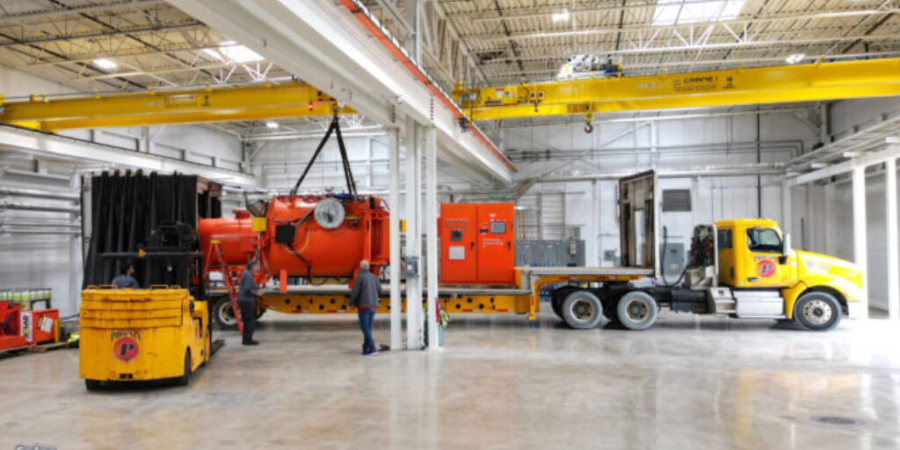
The first vacuum furnace (38” wide by 28” high by 72” deep), decommissioned from the Fraser Michigan plant, will be fully operational this week in the Chesterfield, Michigan, facility.

The migration of the next seven vacuum furnaces and other ancillary equipment, originating from both the Fraser, MI, and Warren, MI, plants, will occur every two weeks. By the end of 2023, the transferred assets will join the new existing Solar vacuum furnaces to form a new state of the art vacuum thermal treating facility in Michigan.

Robert (Bob) Hill, president of Solar Atmospheres of Michigan, comments, “To have all of our operations under one roof is a massive step for our employees and our company. Ownership of the vacant lot next to us gives the opportunity to grow the business more efficiently in one location. We are excited to get through this transition phase and look forward to 2024 and beyond!”

To view a video of the relocation process, see here.

https://www.youtube.com/embed/ySZJX9EIRr0?si=vGgkb67lIHWsxeYm

Find heat treating products and services when you search on Heat Treat Buyers Guide.com


The First of Eight Vacuum Furnaces Migrates Across Michigan Read More »

News from Abroad: Hydrogen Processing and a Greener Future

Heat Treat Today is partnering with two international publications: heat processing, a Vulkan-Verlag GmbH publication that serves mostly the European and Asian heat treat markets, and Furnaces International, a Quartz Business Media publication that primarily serves the English-speaking globe. Through these partnerships, we are sharing the latest news, tech tips, and cutting-edge articles that will serve our audience — manufacturers with in-house heat treat.

In this article, all eyes are on CO2 and hydrogen. 


RATH Limiting CO2 Emissions with Furnace Operations

At the RATH plant in Krummnußbaum, Lower Austria, two new vacuum nitriding furnaces are being operated. (Source: heat processing)

“[Two] new vacuum nitriding furnaces, used exclusively for the production of silicon carbide plates and bricks in a nitrogen atmosphere, are now being operated with electricity. The result: CO2 emissions are around 70% lower than with the previous gas-fi red furnace, and fossil fuels are reduced to a minimum.”

Read More: “RATH reduces CO2 emissions by 70% in silicon carbide production” at heat-processing.com

Bigger, Greener, and Employee-Centered Growth in France

Pfeiffer Vacuum Technology AG announced in May 2023 a seven-year, €75 million investment plan for its Annecy site. (Source: heat processing)

“Our investment plan will serve to modernize and digitalize our production in order to continue our growth. We want to double the operations of our French subsidiary with a sales target of €600 million by 2030 and create 100 to 150 additional jobs,’ emphasized Dr. Britta Giesen, CEO of Pfeiffer Vacuum. During the same period, the Group intends to accelerate its course to reduce its CO2 emissions in Scope 1 and 2 to net zero by 2030.”

Read More: “Pfeiffer Vacuum invests €75 million in its location in France” at heat-processing.com

£4.6m Grant Assistance for Novelis To Establish Hydrogen
Burning Trials

With the recently awarded grant by the Department for Energy Security & Net Zero, Novelis’ Latchford plant will test the use of hydrogen on one of its recycling furnaces in a demonstration phase in 2024.
(Source: Furnaces International)

“Depending on the final configuration, replacing natural gas with hydrogen to feed the remelting furnace could reduce CO2 eq emissions by up to 90% compared to using the same amount of natural gas.”

Read More: "Toward Carbon Neutral Production: Novelis to Trial Use of Hydrogen in Recycling Furnaces” at furnaces-international.com

Fives and Hydro Successful Batch of Hydrogen-Fueled Recycled Aluminum

Green hydrogen is one of the most promising emission-free fuels to address the environmental challenges of heavy polluting industries, including aluminium.
(Source: Furnaces International)

"The test in Hydro Extrusion’s plant is the world’s first on an industrial scale. The natural gas was successfully replaced with green hydrogen in the recycling of aluminium, a key step towards decarbonization of Industry.”

Read More: “Fives and Hydro partner to produce the world’s first batch of hydrogen-fueled recycled aluminium” at furnaces-international.com


Search for heat treat solution providers and suppliers on Heat Treat Buyers Guide.com


News from Abroad: Hydrogen Processing and a Greener Future Read More »

Traveling through Heat Treat: Best Practices for Aero and Auto

Thinking about travel plans for the upcoming holiday season? You may know what means of transportation you will be using, but perhaps you haven't considered the heat treating processes which have gone into creating that transportation. 

Today’s Technical Tuesday original content round-up features several articles from Heat Treat Today on the processes, requirements, and tools to keep planes in the air and vehicles on the road, and to get you from one place to the next. 


Standards for Aerospace Heat Treating Furnaces 

Without standards for how furnaces should operate in the aerospace, there could be no guarantee for quality aerospace components. And without quality aerospace components, there is no guarantee that the plane you're in will be able to get you off the ground, stay in the air, and then land you safely at your destination.

In this article, written by Douglas Shuler, the owner and lead auditor at Pyro Consulting LLC, explore AMS2750, the specification that covers pyrometric requirements for equipment used for the thermal processing of metallic materials, and more specifically, AMEC (Aerospace Metals Engineering Committee).

This article reviews the furnace classes and instrument accuracy requirements behind the furnaces, as well as information necessary for the aerospace heat treater.

See the full article here: Furnace Classifications and How They Relate to AMS2750

Dissecting an Aircraft: Easy To Take Apart, Harder To Put Back Together 

Curious to know how the components of an aircraft are assessed and reproduced? Such knowledge will give you assurance that you can keep flying safely and know that you're in good hands. The process of dissecting an aircraft, known as reverse engineering, can provide insights into the reproduction of an aerospace component, as well as a detailed look into the just what goes into each specific aircraft part.

This article, written by Jonathan McKay, heat treat manager at Thomas Instrument, examines the process, essential steps, and considerations when conducting the reverse engineering process.

See the full article here: Reverse Engineering Aerospace Components: The Thought Process and Challenges

Laser Heat Treating: The Future for EVs?

If you are one of the growing group of North Americans driving an electric vehicle, you may be wondering how - and how well - the components of your vehicle are produced. Electric vehicles (EVs) are on the rise, and the automotive heat treating world is on the lookout for ways to meet the demand efficiently and cost effectively. One potential solution is laser heat treating.

Explore this innovative technology in this article composed by Aravind Jonnalagadda (AJ), CTO and co-founder of Synergy Additive Manufacturing LLC. This article offers helpful information on the acceleration of EV dies, possible heat treatable materials, and the process of laser heat treating itself. Read more to assess the current state of laser heat treating, as well as the future potential of this innovative technology.

See the full article here: Laser Heat Treating of Dies for Electric Vehicles

When the Rubber Meets the Road, How Confident Are You?

Reliable and repeatable heat treatment of automotive parts. Without these two principles, it’s hard to guarantee that a minivan’s heat treated engine components will carry the family to grandma’s house this Thanksgiving as usual. Steve Offley rightly asserts that regardless of heat treat method, "the product material [must achieve] the required temperature, time, and processing atmosphere to achieve the desired metallurgical transitions (internal microstructure) to give the product the material properties to perform it’s intended function."

TUS surveys and CQI-9 regulations guide this process, though this is particularly tricky in cases like continuous furnace operations or in carburizing operations. But perhaps, by leveraging automation and thru-process product temperature profiling, data collection and processing can become more seamless, allowing you better control of your auto parts. Explore case studies that apply these two new methods for heat treaters in this article.

See the full article here: Discover the DNA of Automotive Heat Treat: Thru-Process Temperature Monitoring


Find heat treating products and services when you search on Heat Treat Buyers Guide.com


Traveling through Heat Treat: Best Practices for Aero and Auto Read More »