

evelyn@heattreattoday.com

Ahorro de energíapara hornos industriales

La baja efi ciencia energética en los hornos industriales suele impactar los costos de producción de las empresas, ya que se requiere más consumo de energía para alcanzar la temperatura deseada. Esto, a su vez, tiene un impacto tangible en su huella de emisiones de carbono.

This article was originally published in Heat Treat Today’s May 2024 Sustainable Heat Treat Technologies 2024 print edition.

To read the article in English, click here.


De acuerdo a la Agencia Internacional de Energía, el sector industrial es uno de los principales culpables en lo que respecta al consumo global de energía. En muchas situaciones, los hornos industriales tienden a ser los equipos que más la consumen.

En este artículo, compartiremos una serie de soluciones que pueden implementarse para mejorar la efi ciencia energética, reducir los costos de producción y ser social y ambientalmente responsables.

Factores que pueden estar afectando tu efi ciencia energética

Existen un par de factores obvios que pueden estar perjudicando tus índices de eficiencia energética.

Pérdidas de calor en el proceso del horno

Estas pueden deberse a daños estructurales en el aislamiento o a una distribución incorrecta del fl ujo de gas dentro del horno.

Procesos de combustión inefi cientes

Contact us with your Reader Feedback!
Gran atención al detalle en el mantenimiento predictivo

Probablemente debido a relaciones aire/combustible inadecuadas o excesivas, o a una mala mezcla causada por daños internos en el quemador.

  • Algunos consejos que podemos brindarte para ayudarte a mejorar el ahorro de energía en el horno son: Monitorear la temperatura en el lado frío del horno, verifi cando cuidadosamente que no haya puntos calientes.
  • Analizar periódicamente la composición de los gases de combustión del horno, asegurándose de mantener los niveles esperados de oxígeno y CO.
  • Verifi car periódicamente que los fl ujos de aire de combustión y combustible estén en una relación estequiométrica.
  • Revisar al menos dos veces al año que los quemadores estén en buenas condiciones y no presenten daños.
  • Evitar la infi ltración de aire frío en el horno que pueda afectar la efi ciencia del proceso.
  • Mantener ajustados los lazos de control de temperatura. Si no hay un lazo de control de temperatura, recomendamos integrarlo.
  • Monitorear periódicamente el consumo, ya sea manual o automáticamente.
  • Garantizar un programa de mantenimiento predictivo en el sistema de combustión.

¿Cómo funciona el mantenimiento predictivo?

Revisión de fl ujos de hornos industriales

Este tipo de mantenimiento se basa en el almacenamiento, monitoreo y análisis de datos y variables cuantifi cables de los equipos en tiempo real, como temperatura, vibración y frecuencia.

Para que este enfoque funcione, es necesario comprender a fondo los procesos e identifi car qué aspectos necesitan ser analizados. Estos aspectos incluyen:

  • Temperatura: monitorear la temperatura puede revelar cambios anormales, indicando un posible sobrecalentamiento o falla de componentes.
  • Vibración: una vibración inusual puede indicar desgaste o desequilibrio de la maquinaria, lo que resultará en daños más severos si no se aborda a tiempo.
  • Frecuencia: analizar patrones y comportamientos particulares puede proporcionar una idea de lo que puede convertirse en futuros problemas potenciales.
  • Estas acciones dependerán de sistemas de control de medición y detección adecuados. Los sensores y algoritmos constituyen los principales sistemas de medición de variables y detección de problemas.

Por un lado, los sensores juegan un papel fundamental en el mantenimiento predictivo, ya que pueden detectar cambios sutiles en el desempeño del equipo, permitiendo identifi car posibles fallas antes de que ocurran. Es recomendable tener acceso a un inventario de marcas reconocidas de sensores y repuestos, lo que te permitirá medir las variables de tu equipo.

Por otro lado, los algoritmos identifi can patrones y tendencias indicativas de posibles problemas mediante el procesamiento de grandes cantidades de datos, lo que permite intervenciones oportunas y planifi cadas. Factores que infl uyen en el tiempo de medición.

El tiempo que puede llevar medir variables durante un proceso de mantenimiento predictivo depende de muchos f actores internos y externos. A continuación, abordamos algunos de ellos.

Factores externos

  • El proceso. Cada procedimiento industrial tiene sus propias características y requerimientos particulares. Por ejemplo, en un proceso continuo se podría requerir un monitoreo constante y en tiempo real, mientras que en otras situaciones un enfoque de intervalos específi cos podría ser el mejor.
  • El producto. Algunos productos pueden requerir un monitoreo frecuente o estricto debido a su naturaleza y características.
  • La fi losofía del cliente. Algunos clientes pueden tener estándares más estrictos o solicitar un monitoreo más frecuente para garantizar la calidad y confi abilidad de sus productos.

Factores internos

  • Capacidad. Puede ser necesaria una planifi cación estratégica y una programación de las mediciones si el equipo es limitado o se emplea para otros procesos.
  • La disponibilidad de personal califi cado. Es fundamental garantizar que haya personal califi cado disponible en el momento adecuado para interpretar los datos obtenidos.
  • Soluciones de ahorro de energía para hornos industriales. Aquí es donde necesitas poder confi ar en tu socio experto en combustión para que lo asesore sobre las soluciones de.

Sistemas de recuperación de energía

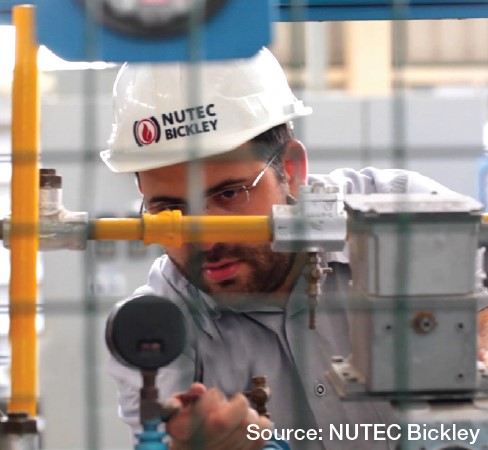
Personal altamente capacitado de NUTEC Bickley

Hoy por hoy, se pueden implementar algunos sistemas que pueden ayudar signifi cativamente a reducir el consumo de energía en hornos, previniendo así pérdidas y/o eliminando procesos inefi cientes. Estos son algunos de los que manejamos en NUTEC Bickley:

Sistemas de recuperación de energía

Se pueden agregar a los hornos para recuperar el calor de los gases de combustión y reutilizarlos calentando el aire de combustión. Algunas opciones para estos sistemas son quemadores autorrecuperativos y quemadores regenerativos.

Sistemas de medición de gases de combustión

Garantizan que los hornos siempre tengan la proporción correcta de aire y gas en su sistema. Con ellos, puede monitorear continuamente el estado y así tomar decisiones basadas en estos datos para luego ajustar cualquier nivel desproporcionado.

Servicios de mantenimiento preventive

Además de los consejos y sistemas de ahorro de energía ya mencionados, existen otras acciones que pueden ayudar a prevenir fallas en hornos industriales, mejorar su funcionamiento y más.

Servicio de auditoría y diagnóstico: Se miden las variables de entrada y salida del horno para indicar los niveles de eficiencia actuales e identifi car posibles áreas de mejora.

Servicio de calibración de quemadores: Se verifi a la relación aire/combustible para asegurar que los quemadores operen en el rango correcto.

Conclusión

En resumen, si deseas mejorar la efi ciencia energética en hornos industriales y reducir signifi cativamente tus costos operativos, recuerda seguir nuestras recomendaciones.

Acerca del autor

Alberto Cantú, Vice President of Sales, NUTEC Bickley

Alberto Cantú es vicepresidente de Ventas de NUTEC Bickley. Cantú tiene más de veinte años de experiencia profesional y ha escrito prolífi camente para una gran variedad de revistas y publicaciones. Cantú es uno de los galardonados por Heat Treat Today’s 40 Under 40 Class del 2020.

Para mayor información: Contactar a Alberto escribiendo a albertocantu@nutec.com.


Find Heat Treating Products And Services When You Search On Heat Treat Buyers Guide.Com

Ahorro de energíapara hornos industriales Read More »

Anatomy of Induction Coils

Contact us with your Reader Feedback!

Consider the numerous systems in your heat treat operations. What makes up the anatomy of each furnace or system? In this “Anatomy of a . . .” series, industry experts indicate the main features of a specific heat treat system. In this feature, the full-page spread identifies main features of induction coils.

The mark-ups for these reference images are provided by John Gadus, design and sales specialist, Induction Tooling, Inc.

View the full graphics by clicking the image below.

This Technical Tuesday article is drawn from Heat Treat Today’s April/May 2024 Sustainable Heat Treat Technologies print edition, that had a special focus on green heat treat technologies.

Search www.heattreatbuyersguide.com for a list of induction equipment providers to the North American market. If you are an induction equipment supplier and are not listed here, please let us know at editor@heattreattoday.com.

This series will continue in subsequent editions of Heat Treat Today’s print publications. Stay tuned!


Find Heat Treating Products And Services When You Search On Heat Treat Buyers Guide.Com

Anatomy of Induction Coils Read More »

Vacuum Furnace for Nitriding Service Provider

A nitriding service provider in Brazil will increase their production line with a single-chamber vacuum furnace from a manufacturer with North American locations.

Peter Lutz, president of Nitrion do Brasil says, “We were looking for a solution that would help not only increase our metal processing capabilities, but also efficiency and effectiveness.”

The SECO/WARWICK Vector vacuum furnace will operate in a new production hall and will handle Nitrion do Brasil’s increasing order volume. This order is a result of cooperation between SECO/WARWICK and their strategic partner in Brazil, Combustol.

Maciej Korecki
Vice President of Business of the Vacuum Furnace Segment
SECO/WARWICK

“Combustol supports SECO/WARWICK not only in sales but also in service activities and the supply of spare parts. Such a partner in such a remote location is a huge advantage,” commented Maciej Korecki, VP of the Vacuum Furnaces Segment in the SECO/WARWICK Group. He added, “[Nitrion do Brasil] bought a furnace that we could deliver quickly.”

The furnace on order will solve the commercial heat treater’s problem of hardening larger elements, because the furnace is equipped with a large working space. This will affect the process economics (energy savings and the graphite chamber’s increased efficiency) as well as the process cleanliness and speed. The furnace is equipped with convection heating – a system that improves the heat transfer efficiency when heating at lower temperatures, as well as directional cooling, which allows the system to efficiently cool parts with problematic shapes in various ways.

The original press release is available here.


Find Heat Treating Products And Services When You Search On Heat Treat Buyers Guide.Com

Vacuum Furnace for Nitriding Service Provider Read More »

The Role of Heat Treatment in Space Exploration

Precise heat treating is essential to enable components to withstand space exploration. In this Technical Tuesday, Mike Grande, vice president of Sales at Wisconsin Oven Corporation, discusses the role of aluminum solution treatment and aluminum aging in heat treating space exploration components.

This column was first released in Heat Treat Today March 2024 Aerospace Heat Treat print edition.


Contact us with your Reader Feedback!

In space exploration, the various parts, electronic components, and materials used to make the rockets, crew capsules, rovers, and other equipment, are subjected to brutal extremes of temperature, vacuum, and radiation. In order to withstand these extreme environments without failure, the parts must be manufactured to very tight tolerances and precisely heat treated. Therefore, convection heat treatment emerges as a critical process in the manufacturing of space exploration components and materials, offering tight control over temperature profiles and the microstructure of materials.

Heat treatment involves heating a material to a specific temperature, holding it at that temperature for a certain duration, and then cooling it down at a controlled rate, which can be rapid or gradual, depending on the objective. The purpose of heat treatment is to improve the material’s mechanical properties, such as strength, ductility, and toughness. Probably the most common metal used in space exploration is aluminum. It is an excellent choice for spacecraft components because it is lightweight, durable, and has excellent thermal conductivity, which is necessary for components that need to dissipate heat.

The first stage of the Falcon 9, for example, utilizes four legs used during landing. They are manufactured from an extremely light, rigid, aluminum honeycomb material that also contains carbon fiber and has a very high strength to weight ratio. Another aluminum component common in space exploration is gas transfer tubes, used to transfer gases, such as methane, between chambers in the interior of rocket propulsion systems. Additionally, there are composite overwrapped pressure vessels (COPVs), which carry compressed fuels such as hydrogen and oxygen, among other gases. These are made of an aluminum tank covered with filament-wound, resin-impregnated composite material, which forms an extremely robust structure capable of withstanding the high pressures created by compressed gases and the rigors of high-speed propulsion. For aluminum to be useful in space applications, it must be heat treated to give it the strength and durability required.

Aluminum Solution Treatment

Since aluminum has such widespread use in space exploration, aluminum heat treatment plays a central role in this industry, with solution treatment and aging being the most common heat treatments utilized. All aluminum materials that require high strength are solution heat treated, then subsequently aged, in two separate heat treat processes. The purpose of solution heat treatment is to evenly dissolve the alloys contained in the aluminum, such as manganese, magnesium, copper, zinc, and silicon, and then rapidly quench it to retain the grain structure. The aluminum alloy is heated and held at a temperature of 800°F to 1000°F (420°C to 540°C), which is just below its melting point. The aluminum is then quenched in water or a water/glycol mixture quickly (within 7 to 15 seconds) to essentially “freeze” the microstructure before the alloying elements can redistribute themselves.

Aluminum Aging

After quenching, aluminum is precipitation hardened. Also known as artificial aging, this process involves heating the aluminum at a lower temperature, typically in the range of 200°F to 400°F (93°C to 204°C) for several hours. This final process dramatically increases the hardness, yield strength, and ultimate strength of the aluminum, making it suitable for use in space applications.

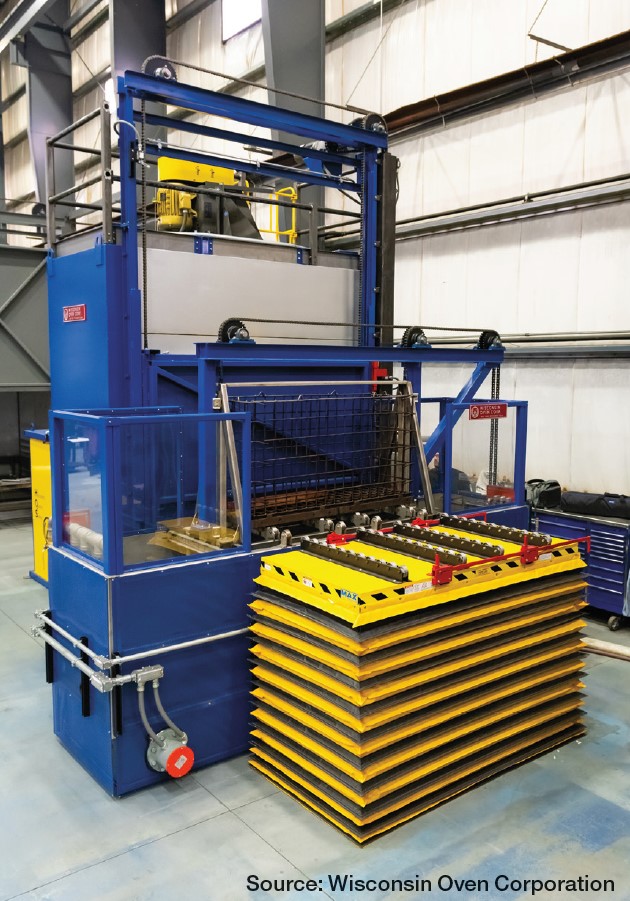
A solution treatment system for processing aluminum

The above is just a sample of the many types of heat treatments for materials used in space exploration. Other examples are annealing, tempering, normalizing, and hydrogen embrittlement relief, to name a few. In conclusion, heat treatment plays a critical role in the manufacturing of parts used in space exploration and is essential to the reliability and safety of space missions.

About the Author

Mike Grande, Vice President of Sales, Wisconsin Oven Corporation

Mike Grande has a 30+ year background in the heat processing industry, including ovens, furnaces, and infrared equipment. He has a BS in mechanical engineering from University of Wisconsin-Milwaukee and received his certification as an Energy Manager (CEM) from the Association of Energy Engineers in 2009. Mike is the vice president of Sales at Wisconsin Oven Corporation.

For more information: Contact sales@wisoven.com.

Find Heat Treating Products And Services When You Search On Heat Treat Buyers Guide.Com

The Role of Heat Treatment in Space Exploration Read More »

Manufacturer Adds Endo Generators for Wind Turbine Gearboxes

NGC Gears, a manufacturer of wind power gearboxes, has completed the installation of two additional Endothermic generators from a manufacturer with North American locations. 

UPC-Marathon, a Nitrex company, installed the Endo generators at NGC Gears‘ its new facility in Jinhu, China. This acquisition brings the total of generator sets to five since 2022, collectively generating an impressive 800 m³/h (22,252 ft3/h) capacity of Endothermic gas supplied to carburizing and hardening furnaces used for processing various gear components. The latest installations in February and March of 2024 support the heat treating operations of the company’s wind energy gearbox production.

NGC’s decision to expand capacity is in response to the growing demand for wind power solutions in China and globally. The new Endothermic gas generating systems will significantly enhance the company’s production capabilities, enabling NGC to meet increasing market needs with greater efficiency and reliability.

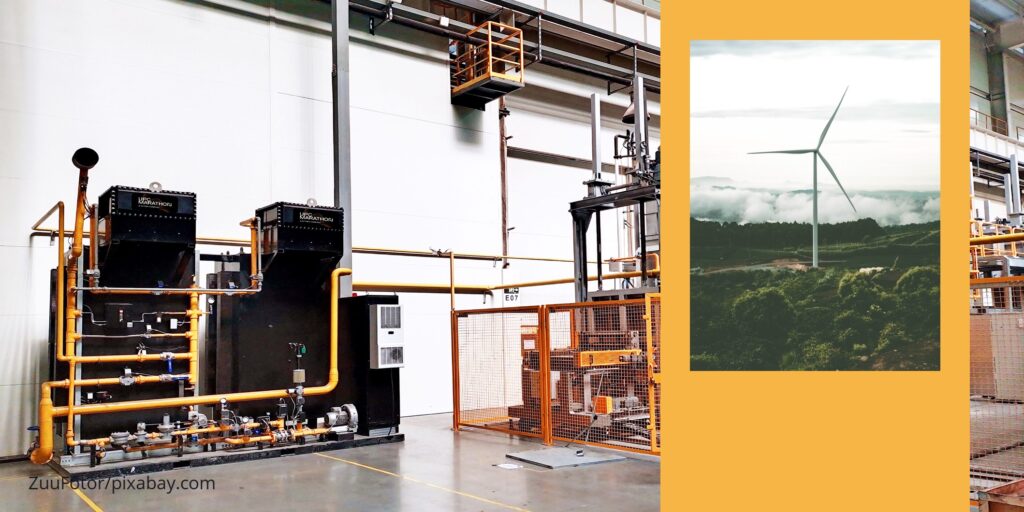
EndoFlex generators from UPC-Marathon (Source: Nitrex)

EndoFlex offers precise control of production media to the carburizing and hardening environments, leading to higher quality gear production with improved longevity and performance. The result is improved carburizing and hardening processes, higher-quality hardened gears, reduced operating costs, and increased efficiency, as well as immediate cost savings through reduced electricity and gas consumption and minimized waste.

Johnny Xu, general manager at UPC-Marathon China, shared, “The latest EndoFlex investments align with NGC’s development of low-consumption, high-efficiency gearbox products for large-scale onshore and offshore wind turbines.”

This press release is available in its original form here.


Find Heat Treating Products And Services When You Search On Heat Treat Buyers Guide.Com

Manufacturer Adds Endo Generators for Wind Turbine Gearboxes Read More »

All About the Quench and Keeping Cool: Thru-process Temp Monitoring and Gas Carburizing

The future of heat treating requires new manufacturing solutions like robotics that can work with modular design. Yet so also does temperature monitoring need to be seamless to know how effectively your components are being heat treated — especially through being quenched. In this Technical Tuesday, learn more about temperature monitoring through the quench process.

Gas Carburization

Contact us with your Reader Feedback!

Carburizing has rapidly become one of the most critical heat treatment processes employed in the manufacture of automotive components. Also referred to as case hardening, it provides necessary surface resistance to wear, while maintaining toughness and core strength essential for hardworking automotive parts.

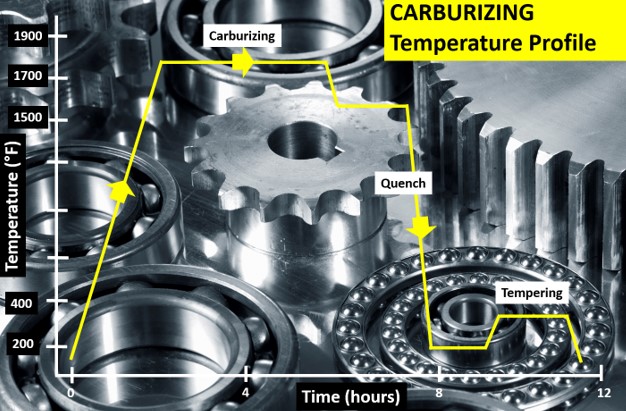
Figure 1. Typical carburizing heat treat temperature profile showing the critical temperature/time steps: (i) carburization, (ii) quench, and (iii) temper. (Source: PhoenixTM)

The carburizing process is achieved by heat treating the product in a carbon rich environment (Figure 1), typically at a temperature of 1562°F–1922°F (850°C–1050°C). The temperature and process time significantly influence the depth of carbon diffusion and other related surface characteristics. Critical to the process is a rapid quenching of the product following the diffusion in which the temperature is rapidly decreased to generate the microstructure, giving the enhanced surface hardness while maintaining a soft and tough product core.

The outer surface becomes hard via the transformation from austenite to martensite while the core remains soft and tough as a ferritic and/or pearlitic microstructure. Normally, carburized microstructures following quench are further tempered at temperatures of about 356°F (180°C) to transform some of the brittle martensite into tempered martensite to enhance ductility and grindability.

Critical Process Temperature Control

As discussed, the success of carburization is dependent on accurate, repeatable control of the product temperature and time at that temperature through the complete heat treatment process. Important to the whole operation is the quench, in which the rate of cooling (product temperature change) is critical to achieve the desired changes in microstructure, creating the surface hardness. It is interesting that the success of the whole heat treat process can rest on a process step which is so short (minutes), in terms of the complete heat teat process (hours). Getting the quench correct is not only essential to achieve the desired metal microstructure, but also to ensure that the physical dimensions and shape of the product are maintained (no distortion/warping) and issues such as quench cracking are eliminated.

Obviously, as the quench is so critical to the whole heat treat process, the correct quench selection needs to be made to achieve the optimum properties with acceptable levels of dimensional change. Many different quenchants can be applied with differing quenching performances. The rate of heat transfer (quench rate) of quench media in general follows this order from slowest to quickest: air, salt, polymer, oil, caustic, and water.

Technology Challenges for Temperature Monitoring

When considering carburization from an industry standpoint, furnace heat treat technology generally falls into one of two camps, embracing either air quench (low pressure carburization) or oil quench (sealed gas carburization/LPC with integral or vacuum oil quench). Although each achieves the same end goal, the heat treat mechanisms and technologies employed are very different, as are the temperature monitoring challenges.

To achieve the desired carburized product, it is necessary to control and hence monitor the product temperature through the three phases of the heat treat process. Conventionally, product temperature monitoring would be attempted using the traditional trailing thermocouple method. For many modern heat treat processes including carburization, the trailing thermocouple method is difficult and often practically impossible.1 The movement of the product or product basket from stage to stage, often from one independent sealed chamber to another (lateral or vertical movement), makes the monitoring of the complete process a significant challenge.

With the industry driving toward fully automated manufacturing, furnace manufacturers are now offering the complete package with full robotic product loading that includes shuttle transfer systems and modular heat treat phases to process both complete product baskets and single piece operations. Although trailing thermocouples may allow individual stages in the process to be measured, they cannot provide monitoring of the complete heat treat journey. Testing is therefore not under true normal production conditions, and therefore is not an accurate record of what happens in normal day to day operation.

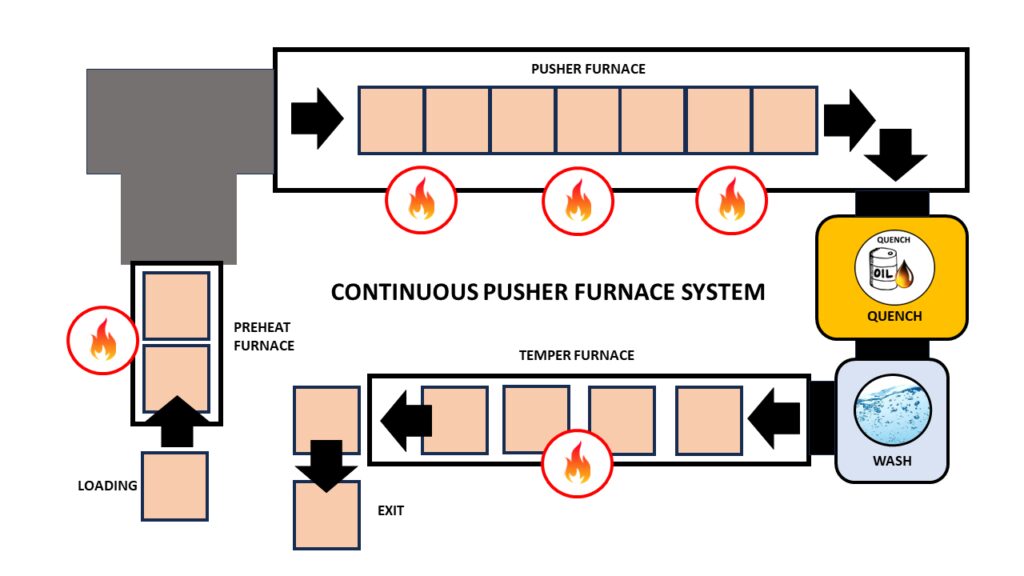
Figure 2 shows schematic diagrams of two typical carburizing furnace configurations that would not be possible to monitor using trailing thermocouples. The first shows a modular batch furnace system where the product basket is transferred between each static heat treat operation (preheat, carburizing furnace, cooling station, quench, quench wash, temper furnace) via a charge transfer cart. The second shows the same heat treat operation but performed in a continuous indexed pusher furnace configuration where the product basket moves sequentially through each heat treat operation in a semi-continuous flow.

Figure 2.1. Modular batch furnace system (Source: PhoenixTM)
Figure 2.2. Continuous pusher furnace schematic (Source: PhoenixTM)

Thru-process temperature monitoring as a technique overcomes such technical restrictions. The data logger is protected by a specially designed thermal barrier, therefore, can travel with the product through each stage of the process measuring the product/process temperature with short, localized thermocouples that will not hinder travel. The careful design and construction of the monitoring system is important to address the specific challenges that different heat treat technology brings including modular batch and continuous pusher furnace designs (Figure 2).2

The following section will focus specifically on monitoring challenges of the sealed gas carburizing process with integral oil quench. Technical challenges of the alternative low pressure carburizing technology with high pressure gas quench have previously been discussed in an earlier publication.3

Monitoring Challenges of Sealed Gas Carburization — Oil Quench

Figure 3. “Thru-process” temperature monitoring system for use in a sealed carburizing furnace with integral oil quench — (3.1) Monitoring system entering furnace with thermocouple fixed to automotive gears, product test pieces (3.2) System exiting oil quench tank (3.3) System inserted into wash tank with product basket (Source: PhoenixTM)

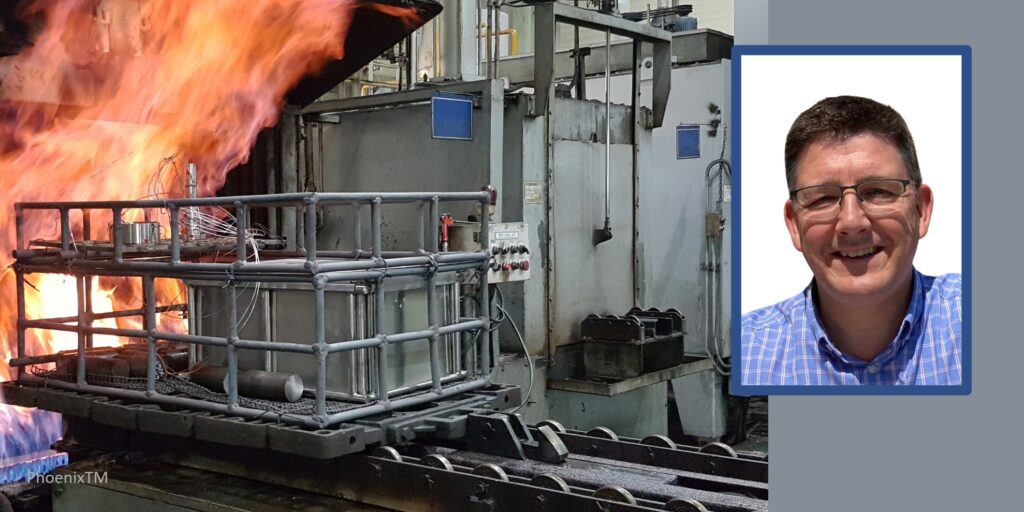
Presently, the most common traditional method of gas carburizing for automotive steels is often referred to as sealed gas carburizing. In this method, the parts are surrounded by an endothermic gas atmosphere. Carbon is generated by the Boudouard reaction during the carburization process, typically at 1562°F–1832°F (850°C –1000°C). Despite the dramatic appearance of a sealed gas carburizing furnace, with its characteristic belching flames (Figure 3), from a monitoring perspective, the most challenging aspect of the process is not the heating, but the oil quench cooling. For such furnace technology, the historic limitation of “thru-process” temperature profiling has been the need to bypass the oil quench and wash stations, missing a critical process step from the monitoring operation. Obviously, passing a conventional hot barrier through an oil quench creates potential risk of both system damage from oil ingress and barrier distortion, as well as general process safety. However, the need to bypass the quench in certain furnace configurations by removing the hot system from the confined furnace space could create significant operational challenges, from an access and safety perspective.

Monitoring of the quench is important as ageing of the oil results in decomposition (thermal cracking), oxidation, and contamination (e.g. water) of the oil, all of which degrade the viscosity, heat transfer characteristics, and quench efficiency. Control of physical oil temperature and agitation rates is also key to oil quench performance. Quench monitoring allows economic oil replacement schedules to be set, without risk to process performance and product quality.

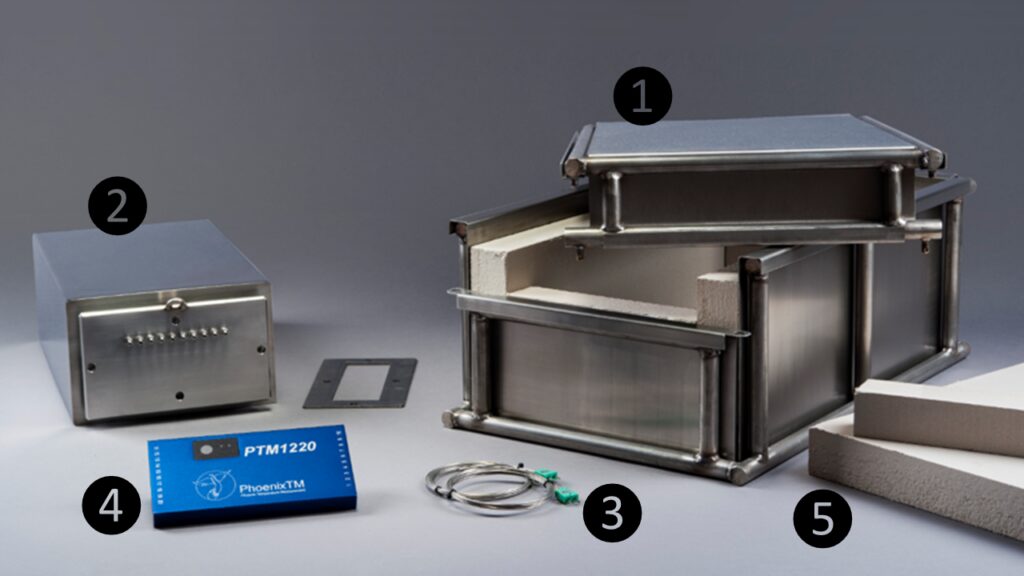
Figure 4. “Thru-process” temperature monitoring system oil quench compatible thermal barrier design: (1) Robust outer structural frame keeping insulation and inner barrier secure; (2) Internal thermal barrier — completely sealed with integral microporous insulation protecting data logger; (3) Mineral insulated thermocouples sealed in internal thermal barrier with oil tight compression fitting; (4) Multi-channel high temperature data logger; and (5) Sacrificial insulation blocks replaced after each run. (Source: PhoenixTM)

To address the process challenges, a unique thermal barrier design has been developed that both protects the data logger in the furnace (typically three hours at 1697°F/925°C) and also protects during transfer through the oil quench (typically 15 mins) and final wash station (Figure 3). The key to the barrier design is the encasement of a sealed inner barrier with its own thermal protection with blocks of high-grade sacrificial insulation contained in a robust outer structural frame (Figure 4).

Quench Cooling Phases

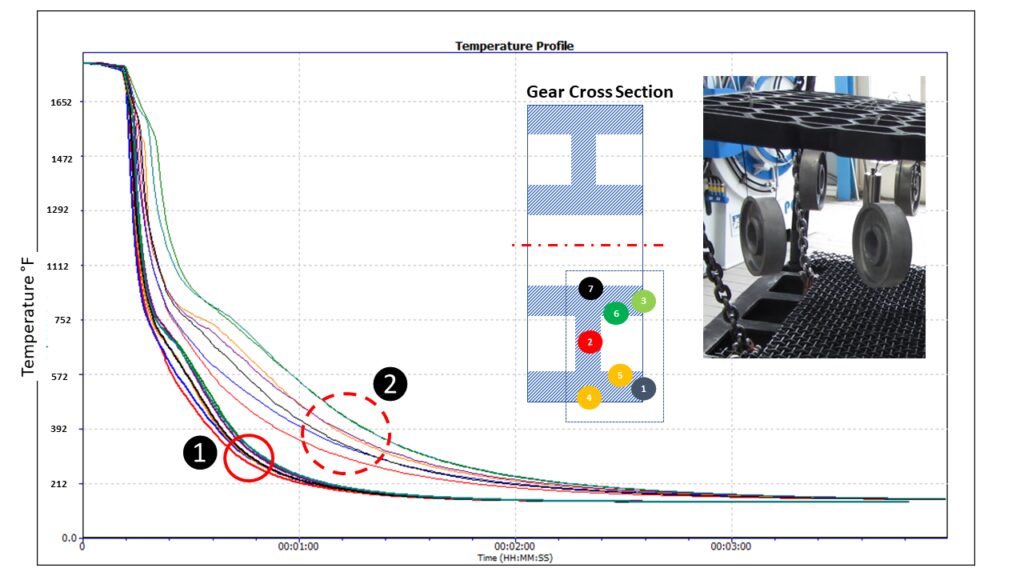
Monitoring the oil quench in carburization gives the operator a unique insight into the product’s specific cooling characteristics, which can be critical to allow optimal product loading and process understanding and optimization. From a scientific perspective, the quench temperature profile trace, although only a couple of minutes in duration, is complex and unique. From a zoomed in quench trace (Figure 5) taken from a complete carburizing profile run, the three unique heat transfer phases making up the oil quench cool curve can be clearly identified:

Figure 5. Oil quench temperature profile for different locations on an automotive gear test piece shows the three distinct heat transfer phases: (1) film boiling “vapor blanket”, (2) nucleate boiling, and (3) convective heat transfer. (Source: PhoenixTM)
  1. Film boiling “vapor Blanket”: The oil quenchant creates a layer of vapor (Leidenfrost phenomenon) covering the metal surface. Cooling in this stage is a function of conduction through the vapor envelope. Slow cool rate since the vapor blanket acts as an insulator.
  2. Nucleate boiling: As the part cools, the vapor blanket collapses and nucleate boiling results. Heat transfer is fastest during this phase, typically two orders of magnitude higher than in film boiling.
  3. Convective heat transfer: When the part temperature drops below the oil boiling point. the cooling rate slows significantly. The cooling rate is exponentially dependent on the oil’s viscosity.

From a heat treat perspective, the quench step relative to the whole process (hours) is quick (seconds), but it is probably the most critical to the performance of the metallurgical phase transitions and achieving the desired core microstructure of the product without risk of distortion. By being able to monitor the quench step, the process can be validated for different products with differing size, form, and thermal mass. As shown in Figure 6, the quench curve profile over the three heat transfer phases is very different for two different automotive gear sizes.

Figure 6. Oil quench temperature profile for different automotive gear sizes (20MnCr5 case hardening steel) with different thermal masses: Passenger Car Gear (2.2 lbs) and Commercial Vehicle Gear (17.6 lbs) (Source: PhoenixTM)

Summary

As discussed in this article, one of the key process performance factors associated with gas carburization is the control and monitoring of the product quench step. Employing an oil quench, the measurement of such operation is now very feasible as part of heat treat monitoring. Innovations in thru-process temperature profiling technology offer specific system designs to meet the respective application challenges.

References

[1] Dr. Steve Offley, “The light at the end of the tunnel – Monitoring Mesh Belt Furnaces,” Heat Treat Today, February 2022, https://www.heattreattoday.com/processes/brazing/brazing-technical-content/the-light-at-the-end-of-the-tunnel-monitoring-mesh-belt-furnaces/.

[2] Michael Mouilleseaux, “Heat Treat Radio #102: Lunch & Learn, Batch IQ Vs. Continuous Pusher, Part 1,” interviewed by Doug Glenn, Heat Treat Radio, October 26, 2023, audio, https://www.heattreattoday.com/media-category/heat-treat-radio/heat-treat-radio-102-102-lunch-learn-batch-iq-vs-continuous-pusher-part-1/.

[3] Dr. Steve Offley, “Discover the DNA of Automotive Heat Treat: Thru-process Temperature Monitoring,” Heat Treat Today, August 2023, https://www.heattreattoday.com/discover-the-dna-of-automotive-heat-treat-thru-process-temperature-monitoring/.

About the Author

Dr Steve Offley (“Dr O”), Product Marketing Manager, PhoenixTM

Dr. Steve Offley, “Dr. O,” has been the product marketing manager at PhoenixTM for the last five years after a career of over 25 years in temperature monitoring focusing on the heat treatment, paint, and general manufacturing industries. A key aspect of his role is the product management of the innovative PhoenixTM range of thru-process temperature and optical profiling and TUS monitoring system solutions.

For more information: Contact Steve at Steve.Offley@phoenixtm.com.

Find Heat Treating Products And Services When You Search On Heat Treat Buyers Guide.Com

All About the Quench and Keeping Cool: Thru-process Temp Monitoring and Gas Carburizing Read More »

Automotive Manufacturer Orders Second Endo Generator

An automotive manufacturer in South America has recently placed a follow-up order for a second Endothermic generator from a manufacturer of industrial process control, automation, and digitalization solutions with North American locations.

UPC-Marathon, a Nitrex company, installed a 200 m³/h EndoFlex unit last year. The new generator, with a similar capacity, aims to enhance stability, to ensure consistent composition and gas flows, and to prioritize quality of automotive gear boxes while achieving efficiencies in heat treatment operations.

UPC-Marathon EndoFlex unit (Source: Nitrex)

Prior to adopting the EndoFlex solution, the manufacturer relied on four generator units, each with a capacity of 70 m³/h and consuming 80 kW of power. With the same 80 kW of power consumption, the EndoFlex generator delivers a 200 m³/h capacity.

This transition to the new unit represents a 75% reduction in power consumption and a contribution to operational efficiency and sustainability efforts. The new generator streamlines maintenance procedures, adheres to stringent quality standards, and reduces CO2 emissions. Control over gas quality and production for the neutral hardening furnace enhances product quality, reduces operating costs, and optimizes energy consumption. By automatically adjusting gas production to match real-time furnace demand, the generator eliminates overproduction and waste.

Marcio Boragini
Sales Director for Brazil at UPC-Marathon

“We’re proud to continue our partnership with this automotive customer,” remarked Marcio Boragini, UPC-Marathon’s Sales Director for Brazil. “Moreover, EndoFlex . . . empower[s] the manufacturer to achieve their business objectives fast, while reinforcing our commitment to [drive] success together.”

This press release is available in its original form upon request.


Find Heat Treating Products And Services When You Search On Heat Treat Buyers Guide.Com

Automotive Manufacturer Orders Second Endo Generator Read More »

Half-a-Dozen Fixtures and Fabrication Tips

Let’s discover new tricks and old tips on how to best heat treat, whatever your application.

In this Technical Tuesday, originally published in the March/April 2024 Aerospace Heat Treat print edition, Heat Treat Today compiled top tips from experts around the industry to get the best results in your heat treat furnace by optimizing fixtures and fabrications.


#1 Welding Fabrications with Nickel Alloy

Contact us with your Reader Feedback!

“Heat resistant alloys used for heat treating fixtures, muffles, retorts, radiant tubes, and other parts are typically stainless steel or nickel-based austenitic alloys.

“Good welding practices for nickel alloys are centered on the need to remove heat as quickly as possible in order to minimize the time spent in the hot tearing range. The first consideration is to keep the heat input as low as possible to still get a full penetration weld. The actual input in kJ is dependent on the alloy being welded.”

Source: “Marc Glasser on the Tools and Trade Secrets of Heat Resistant Alloy Welding,” reprinted in Heat Treat Today, 2020.

#hottearingrange #austeniticalloys

#2 Consider Corrugated Inner Covers

Inner covers are a component of the batch annealing process in the steel industry. If your inner covers are vertically corrugated, consider horizontally corrugated inner covers instead. Horizontally corrugated inner covers are repairable and, for this reason, offer longer overall life and better value.

Source: Alloy Fabrications

#batchannealing #innercovers #maintenance

#3 Countermeasure To Combat CFC Failure

“It is important to consider the specific process conditions in advance so that unwanted reactions — from carburization to catastrophic melting of the workpieces — can be avoided. Effective countermeasures can be taken.”

Dr. Demmel gives the following countermeasures:

  • Ceramic oxide coatings such as aluminum oxide (Al2O3) or
    zirconium oxide (ZrO2) layers placed onto the CFC
  • Hybrid CFC fixtures having ceramics in key areas to avoid direct
    contact with metal workpieces
  • Alumina composite sheets
  • Boron nitride sprays
  • Special fixtures made of oxide ceramics

Source: Dr. Jorg Demmel, “CFC Fixture Advantages and Challenges, Part 2,” Aerospace Heat Treating (Heat Treat Today, March 2023).

#CFC #fixtures

#4 Allow for Thermal Expansion

When bringing furnaces to operating temperature, always be aware of thermal expansion of your alloy components. Muffles, retorts, and radiant tubes all expand with heat input. These components must be free to expand within the furnace or early failure may result.

Source: Alloy Fabrications

#thermalexpansion #heattreatfailure

#5 Batch Rotary Retorts — Stay Put and Stay Clean

Batch rotary retorts are positioned on furnace rollers at the front of the furnace. In time, these retorts expand until they no longer track on the rollers. Extend the life of your batch rotary retorts by using adjustable roller brackets (available from Alloy Engineering). And to keep the outlet tubes clean, use Alloy Engineering pigtails and augers to self-clean batch rotary retort outlet tubes.

Source: Alloy Fabrications

#thermalexpansion #heattreatfailure

#6 Corrosion at Every Corner

“[All] materials are chemically unstable in some environments and corrosive attacks will occur. It can often be predicted or modeled. . . In the real world, however, it is important to recognize the various forms of corrosion, namely:

  • Uniform (or general) attack
  • Intergranular attack
  • Galvanic (or two metal) action
  • Erosion
  • Dezincifi cation (or parting)
  • Pitting
  • Stress corrosion
  • Electrolytic (or concentration) cells

Source: Dan Herring, The Heat Treat Doctor©, Atmosphere Heat Treatment, vol. II, 2015, pp. 621.

corrosion #heattreatmaterials

Article provided by Heat Treat Today Editorial Team

Find Heat Treating Products And Services When You Search On Heat Treat Buyers Guide.Com

Half-a-Dozen Fixtures and Fabrication Tips Read More »
Forging Provider Elevates In-House Heat Treat Department

Kuźnia Jawor, a company specializing in the production of hot forged and CNC machined components for the automotive, machinery, mining, and piping industries, has enhanced its manufacturing capabilities through the addition of an oil-hardening furnace and two nitriding furnaces from a supplier based in North America.

Kuźnia Jawor replaced their production line with an oil-hardening furnace and two outdated nitriding furnaces from Nitrex. The decision to upgrade was prompted by the need to eliminate outdated technology and address controls issues. The current production line has been designed using a Nitrex nitriding system and a vacuum hardening furnace.

Kuźnia Jawor leverages its in-house capabilities to design and manufacture forging tools, a crucial element of the production process. This is necessary for obtaining repeatable strength parameters in steel and ensuring their resistance to geometric changes or abrasive wear, factors that are addressed through heat treatment. The new equipment enables them to actively reduce CO emissions, decrease energy consumption, and more.

Nitrex furnace

The company’s forging and CNC processes are marked by meticulous precision, with dies initially undergoing treatment in the vacuum furnace before proceeding to the nitriding phase. This multi-step approach is essential for achieving a zero-white layer, effectively preventing surface cracking in the H11, H13, and WNL hot work steel dies subjected to high-pressure hammer forging. A crucial part of this initiative was the installation of a Nitrex horizontal-loading system, featuring the furnace model NXH-9912, a custom solution designed to facilitate the seamless automatic transfers of loads between operations.

The turnkey system is equipped with Nitreg® nitriding technology, which enhances the wear and corrosion resistance of treated tooling. This technology improves efficiency gains, leading to savings in process time and resources, including electricity and process gases. Furthermore, the system adheres to industry standard 2759/10 controlled nitriding, ensuring the highest quality and precision in the heat treating process.

Interestingly, Kuźnia Jawor is also engaged in an ongoing collaborative research and development project with a local university, exploring hybrid coatings that combine Nitreg® nitriding technology with PVD and CVD processes, with the aim of further enhancing tool performance.

Located in the southwestern region of Poland, Kuźnia Jawor is a provider of forged and CNC automotive parts within Poland and mining parts in international markets such as Czechia and Türkiye.

Marcin Stokłosa, Nitrex Technical Sales Manager, NITREX Poland
(Source:LinkedIn.com)

Marcin Stoklosa, manager of Technical Sales at Nitrex, who oversaw this endeavor, sums it up, “Kuźnia Jawor’s choice to partner with Nitrex was driven by the need to replace outdated equipment, modernize, and expand their production facility. The result? Improved quality, enhanced performance, and a stronger position in the forging industry.”


Find Heat Treating Products And Services When You Search On Heat Treat Buyers Guide.Com

Forging Provider Elevates In-House Heat Treat Department Read More »

Improve HIP Productivity with Leak Detection and Outgassing

Operating a hot isostatic press? The stages for HIP processing can become faster and more effective with gas detection technology. Learn about real-time leak detection analysis and continuous monitoring for outgassing.

This Technical Tuesday article by Erik Cox, manager of New Business Development at Gencoa, was originally published in Heat Treat Today’s March/April 2024 Aerospace print edition.


The Problem in HIP

Hot isostatic pressing (HIP) is a widely employed method for densifying powders or cast and sintered parts. It involves subjecting materials to extreme conditions — high pressure (100–200 MPa) and high temperature (typically 1652°F–2282°F, or 900–1250°C) — in a specialized vessel.

Contact us with your Reader Feedback!
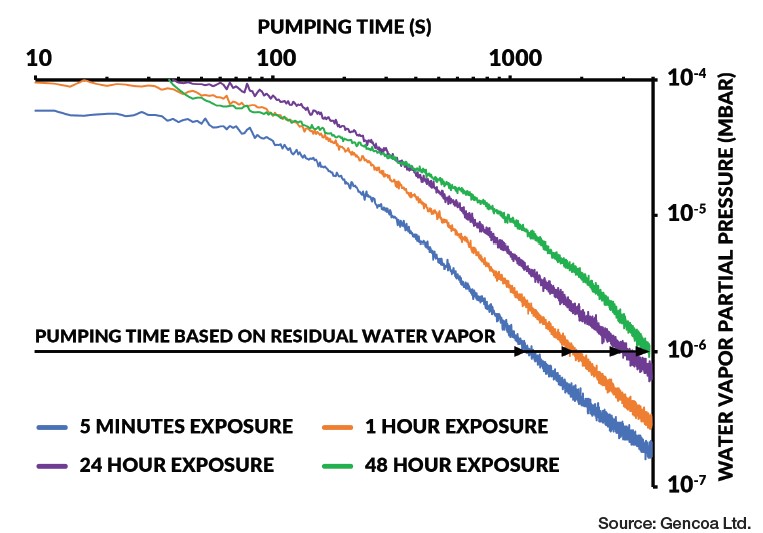
Figure 1. Pumping times based on residual water vapor

One aspect of HIP comes before introducing metal or ceramic powders to the vessel: Operators must test for any leaks in the canisters. This ensures that the proper HIP processing can be completed. Secondly, outgassing of the powder must be performed, and thirdly, outgassing the HIP chamber should be done. All three are essential steps that are typically time consuming and inefficient, but new gas detection technology can make this pre-processing stage faster and more effective.

Real-Time Analysis for Leak Detection

Leak detection is normally performed with a helium leak detector, which are expensive and require significant technical knowledge to operate. Some HIP processing providers simply forego leak checking of the canister, fill the HIP canister with powder, and perform the degas; but in this case, any leaks will be identified during the degas process, and powder must then be removed to repair the canister.

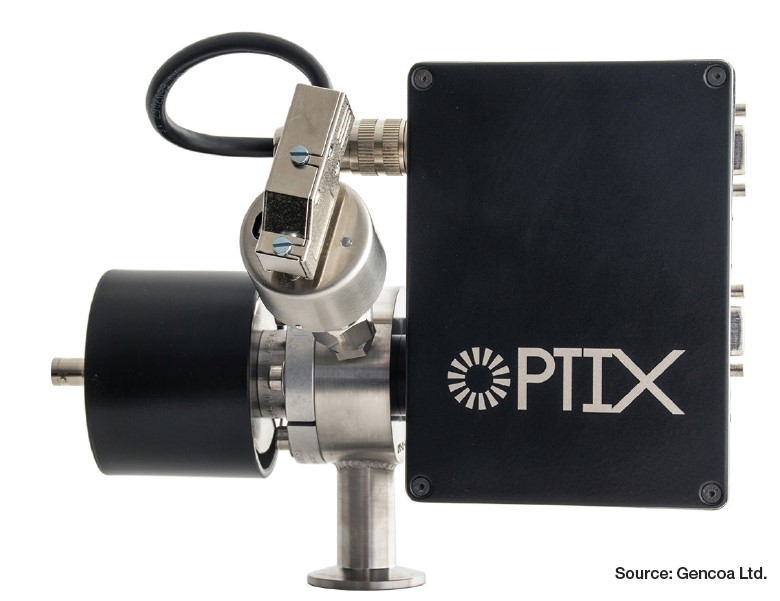
HIP users must look to technology that effectively detects leaks before they proceed to outgassing. One example of this is Gencoa’s Optix gas sensor: As the pumping procedure commences and pressure reaches 0.5 mbar (which typically occurs within 15–30 seconds), the device switches on and employs a sophisticated analysis of the nitrogen that enters the canister from the atmosphere to discern the leak rate of the canisters. When a leak is detected, argon gas can be sprayed around the canister to accurately detect the leak point and allow repair.

Outgassing: Traditional vs. Continuous Monitoring

Outgassing is a critical step in the preconditioning of powders for HIP processed components, involving the removal of adsorbed gases and water vapor from the metal powder through vacuum pumping. Traditionally, the endpoint for this process is not monitored, leading to an overly long vacuum pumping stage of up to several days to ensure that the powders are correctly prepared.

Th is challenge is addressed by providing continuous monitoring throughout the entire degassing process, reducing the time to degas through the ability of the Gencoa Optix gas sensor to precisely determine the degas endpoint.

Figure 2. Gencoa Optix

By offering real-time feedback and notifying users when degassing is complete, this sensor saves time and ensures the production of high-quality components with traceability. With the Optix, one user saw their degas times reduced from 24 hours to 4 hours. The sensor is capable of residual gas analysis, providing a comprehensive solution for improved productivity. Its wide-range pressure measurement capabilities, coupled with efficient leak checking of HIP processing enclosures, further enhance the overall operational efficiency.

Optix operates as a highly sensitive, stand-alone device that utilizes a small plasma (“light”) that detects the gas species present. This design ensures that the detector remains impervious to contamination or vacuum issues, maintaining continuous monitoring and avoiding potential damage. Because the device also eliminates the need for filament replacement or disassembly of components for maintenance, the design will perform at 100% operational uptime even in the harshest environments.

Indispensable Tools for HIP Processing

HIP operators need to maintain equipment efficiently and effectively, and technologies that integrate solutions not only enhance overall productivity, leak detection, and control of the degassing process, but are indispensable to improving the overall quality and traceability of components. Leveraging technologies that allow for early detection and increase uptime will only enhance the future HIP can offer to the AM-focused aerospace industry.

About the Author

Erik Cox, Manager of New Business Development, Gencoa

Dr. Erik Cox is a former research scientist with experience working in the U.S., Singapore, and Europe. Erik has a master’s degree in physics and a PhD from the University of Liverpool. As the manager of New Business Development at Gencoa, Erik plays a key role in identifying industry sectors outside of Gencoa’s traditional markets that can benefit from the company’s comprehensive portfolio of products and know-how.

For more information:

Contact Erik at sales@gencoa.com

Find Heat Treating Products And Services When You Search On Heat Treat Buyers Guide.Com

Improve HIP Productivity with Leak Detection and Outgassing Read More »

Skip to content