FEATURED NEWS

4 Heat Treat Radio Episodes To Boost Your Confidence in Compliance

OC Twice a month, Heat Treat Today publishes an episode of Heat Treat Radio, a unique-to-the-industry podcast. Whether it’s AMS2750 or CQI-9, these episodes will boost your knowledge about all things heat treat. Listen to these four episodes to gain confidence in compliance. Enjoy this original content, and happy listening!


Justin Rydzewski
Director of Sales & Market Development
Controls Service, Inc.

Heat Treat Radio: Justin Rydzewski on CQI-9 Rev.4 (Part 1 of 4) – Pyrometry

In this episode of Heat Treat Radio, hear directly from a committee member involved in updating CQI-9. Justin Rydzewski, director of Sales and Marketing at Controls Service, Inc. sheds some light on the automotive equivalent to AMS2750: CQI-9. From translation issues and formatting to new process tables and caveats regarding thermocouples, this episode of Heat Treat Radio provides all the necessary information heat treaters need to use the new revision. It's about more than just pyrometry; it's also about heat treat system assessment and heat treat operation.

To get the run-down on CQI-9, listen to this episode of Heat Treat Radio.

"How like is one test to the next one?  What is your means of collecting data and what is your response plan when that data is unfavorable?  Having that predetermined, so that you’re not doing in on the fly, can be incredibly helpful."

Heat Treat Radio: Andrew Bassett on AMS2750F (Part 1 of 3)

Andrew Bassett, President, Aerospace Testing and Pyrometry

In this three-part episode, Andrew Bassett of Aerospace Testing and Pyrometry discusses all things AMS2750F. Questions on thermocouples, calibrations and thermal processing classification, SATs, or TUSs? This series of Heat Treat Radio episodes has the answers.
In this first episode, Andrew focuses on thermocouples and sensors and the different thermocouple types that AM2750 Revision F addresses compared to past revisions. The use of nickel/nickel-moly thermocouples and the use of resistant temperature devices are just two of the additions found in Rev. F.

To get an overview of the changes to AMS2750 made in Revision F, as well as to hear a bit about the process for writing the specification book, listen to this series of episodes on Heat Treat Radio.

"I’m an end-user, so I’m able give my input and say, 'Hey, this doesn’t make sense.  What you want to add into the spec is not real world.' It’s nice that people such as us get involved with these specifications."

Heat Treat Radio: Reimagining Furnace Compliance with C3 Data’s Matt Wright

Matt Wright
Chief Marketing Officer,
C3 Data
Source: C3 Data

The future of compliance could be in the palm of your hand. Matt Wright, chief marketing officer at C3 Data, describes how C3 Data has encapsulated everything required to be AMS2750 or CQI-9 compliant into one platform: a user-friendly system that can run on a smart phone. No more clipboards, spreadsheets, or post-it notes. Using optical character recognition, heat treaters can complete SATs in real-time. With QR codes, operators can scan thermocouples and access the appropriate table within a specification book.

To learn more about what C3 Data is doing to make compliance easier, listen to this episode of Heat Treat Radio.

"When I look at our industry, one of the things that is the biggest challenge is the flow of information — getting information from where it resides to where it needs to be in the format that it needs to be."

Heat Treat Radio: Justin Rydzewski and James Hawthorne on CQI-9 Rev.4 (Part 3 of 4) – Process Tables & New Resources

James Hawthorne
Corporate Heat Treat Specialist,
Acument Global Technologies

There's more new material in CQI-9 Rev. 4 than just pyrometry updates. James Hawthorne of Acument Global Technologies, zooms in on changes to CQI-9's process tables and new resources. One of these new resources, a glossary of terms used within the document, was created specifically because of end-user requests. Maintenance request forms, helpful illustrations, and informative figures are just a few other new resources added to the latest version of CQI-9.

"Read the document.  Read as much of it as you can and try to understand as much as you possibly can."

To hear more about what's new in CQI-9 Rev.4, listen to this episode of Heat Treat Radio.


.

Search for heat treat solution providers and suppliers on Heat Treat Buyers Guide.com


4 Heat Treat Radio Episodes To Boost Your Confidence in Compliance Read More »

What Are the Real Threats to the Economy?

op-edIs the sky falling? Are we all doomed? Are we on the cusp of stagflation or hyper-inflation? Is this the beginning of the worst recession since the 1930s? The short answer is no.

Chris Kuehl, PhD, managing director of Armada and economic analyst at Industrial Heating Equipment Association, explains why the future may not be all doom and gloom. Read on to discover a positive outlook on the economy in this original content piece, originally published in the June 2022 Heat Treat Buyers Guide print edition.


Chris Kuehl
Managing Director, Armada, Economic Analyst, IHEA

The frothy coverage of the economy has been an exercise in extremes and one has to wonder why. Especially when we look at the actual data. The signals that are being sent are not all that dire. This is not to say that there are no problems to be aware of and there are most definitely some impending threats, but the near hysteria that shows up almost hourly is not justified by the facts — at least not as they are emerging right now. Why do some economists present these extremely pessimistic assessments and assert that a major catastrophe lies ahead?

The truth is that economists are not all that good at forecasting and predicting despite the fact this is supposed to be our job. The reality is that we have predicted 13 of the last three recessions. The comparisons between an economist and a meteorologist are not flattering but both professions have the same challenge. The data changes and it changes fast. The real purpose of the dire economic forecast is to warn. It is essentially pointing out that the economy is headed for a brick wall unless something changes. The prediction of a major recession in 2030 or 2035 or 2050 is nothing more than a call to action. If the issues that are affecting the economy are not dealt with, the likely outcome will indeed be the recession or other economic calamity that has been forecasted.

The predictions of doom and gloom are designed to call attention to major issues that demand attention sooner rather than later. All are driving the negative performance of the current economy. None of these will be easy to deal with and failure to either prepare for the impact or find a way to avert the disaster will indeed mean the economy could be headed for strains that will significantly hamper growth.

At the top of the list is the supply chain. It is safe to assume that the old system will never return. The breakdown in globalization has been due to everything from geopolitical tension to the desire on the part of companies to have better control of their processes. It is estimated that there will be a trillion dollars of reshoring in the U.S. this year alone. Nearly 70% of those doing business in China want to shift significant production to the U.S. or at least to North America. Robotics and technology allow companies in the U.S. and Europe to compete with those low production cost platforms in other countries. Despite these moves, China and other nations provide trillions of dollars of goods to the U.S. and the rest of the world which means that the reshoring effort will not eliminate the importation of material from China and elsewhere, but the dependence that has developed on the Chinese export sector will diminish. Along with the effort to bring production back to the U.S., there will be diversification when it comes to these overseas sources. There will be expansion to other Asian states such as Vietnam, Thailand, and Malaysia and there will be efforts to expand to more Latin markets such as Colombia and Brazil. Even states in Africa such as Nigeria, South Africa, Ghana, and Kenya will see efforts to expand. It is important to note that all these nations provide opportunities but also challenges.

The next challenge is connected to both the labor issue and the supply chain. Companies that struggle to find the people they want to hire will turn increasingly to automation and robotics. This has already occurred in the manufacturing sector as machines have largely replaced the people who once worked on the line in the factories. Now the automation revolution has reached the service sector with developments such as online buying, self-serve retail, and complete conversion to consumer driven interactions. The need for the labor that once dominated the service sector has largely diminished. The technology demands a higher-level worker, and those people are in even shorter supply than other skilled workers. The future is one of cobots — people interacting with and working alongside machines that have the ability to do their own problem solving. It is the robot and technology revolution that has spurred so much of the reshoring effort as the machines allow U.S. companies to compete with the low wage and low production cost operations overseas.

About the Author: Chris Kuehl is the managing director of Armada and an economic analyst for IHEA. Over the last 21 years, Chris has worked with many private clients and professional associates. He writes a bi-weekly publication for Fabrinomics on the impact of economic trends for manufacturers. Among other advanced degrees, Chris has a doctorate in Political Economics and is a well-known keynote speaker, giving nearly 100 presentations a year.


Find heat treating products and services when you search on Heat Treat Buyers Guide.com


What Are the Real Threats to the Economy? Read More »

Endogas Generator Increases Efficiency for OWZ Ostalb

HTD Size-PR Logo

Daniel Panny
Product Manager
UPC-Marathon in Germany
Source: LinkedIn

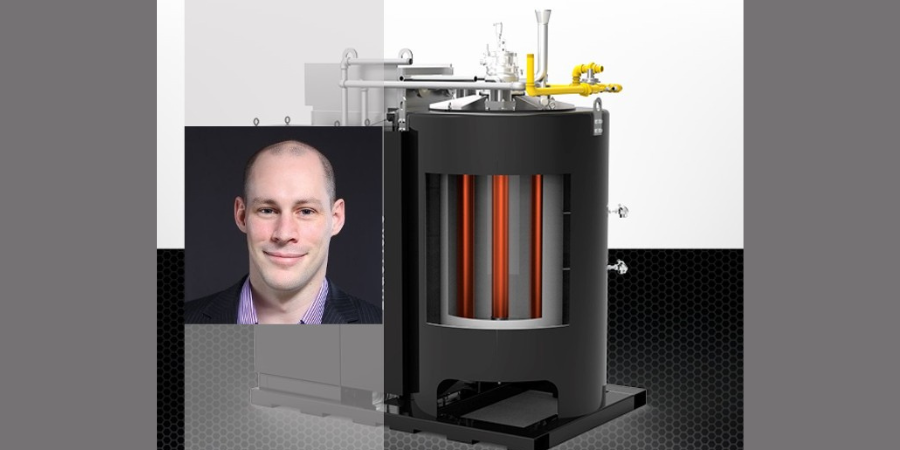
OWZ Ostalb received a new electrically heated endothermic gas generator. The company wanted to replace the old generator since it had no automatic process control and was unable to control the dew point efficiency in situations where the ambient air changed too much. The old components, which were difficult to replace, further reduced the generator’s overall efficiency.

OWZ Ostalb, a commercial heat treatment company in Aalen, Germany, received the EndoFlex™ S from UPC-Marathon, a Nitrex business unit, in late 2021.

"The customer chose us," says Daniel Panny, product manager at UPC-Marathon in Germany, "because we offered [a] gas mixing and control system, the EndoInjector™, and the [. . .] ReactionCore™ multi-retort system to deliver a reliable, on-demand supply of quality endogas, resulting in significant CO2 savings for their heat-treating operations."

The EndoFlex™ S that was purchased is the electrically heated version with an air cooler, an automatic nitrogen purge system, and additional CH4 monitoring to meet the highest safety standards.


Find heat treating products and services when you search on Heat Treat Buyers Guide.com


Endogas Generator Increases Efficiency for OWZ Ostalb Read More »

What Does It Mean To “Heat Treat Green”?

OCWhat does it mean to "heat treat green"? Between the hype and the cynicism of abilities of "green solutions" to meet climate concerns, there is a robust conversation going on about the real world effects of heat treat technologies and heat treat innovations. In this Technical Tuesday, we'll examine three topics that have been paramount in the discussion over the course of the past year and a half.

If you'd like to read more robust original content from Heat Treat Today, subscribe to the Heat Treat Daily here. Or, if you have a technical article you'd like to share with the North American heat treat industry, contact our editors at editor@heattreattoday.com.   


Heat Treating Equipment: Furnaces and Induction Heating

Recently, Solar Atmospheres demonstrated how their new vacuum oil quench furnace is both efficient and safe as well as a "green" alternative to other VOQ methods. Additionally, talk of the greenness of the induction heating process continues to be highly vocalized due to the repeatable and electric method of heating components. Compare these two heat treating equipment technologies below:

Vacuum Oil Quench

"Solar Atmospheres of Western PA announced their newly designed vacuum oil quench furnace (VOQ) has passed startup protocol. There were zero flare and smoke-ups during the quench cycle and the transfer mechanism moved 2000 pound loads with no issues."

Read more: "Western PA Heat Treat Facility VOQ Passes Startup Protocol"

Induction Heating

"Induction heating is a fast, efficient, precise, repeatable, non-contact method for heating metals or other electrically conductive materials."

Read more: "Why Induction Heating Is a Green Technology"

Renewable Energy Combustion

Using renewables in the combustion arena of heat treating is a complex topic: real energy used, efficiency, costs, and time to adjust all factor into the discussion. While there still doesn't seem to be one solution to this problem, individuals and companies are drawing lines in the sand to help them make equipment investment decisions for their heat treat operations now.

Overview of the "Renewables" Question

"Using a broad spectrum of green energy sources, likely generated in a decentralized manner, and with regional focus on infrastructure capabilities such as transportation and storage of energy carriers, seems more plausible than focusing purely on an electricity-based energy system."

Read more: "Future of Heat Treat: Renewable Energy"

Energy Expert Weighs In

"But there is really no easy path to replacing the efficiency, both thermodynamic efficiency and economic efficiency, of high temperature heat (flames) — that’s the nature of processing materials. So then, you’re only option is the current affection for “green hydrogen.” This is a profoundly misplaced aspiration."

Read more: "Heat Treat Radio: Energy’s Bright Future with Mark Mills, Senior Fellow at the Manhattan Institute"

Related: Steel Manufacturing With Hydrogen

Water vapor instead of CO2. A huge part of steelmaking is retrieving the pure iron itself in a blast furnace. But this traditional method of getting iron into its usable form requires a lot of heat and a lot of energy. Alternative options that companies are wrestling with are using electric arc furnace (EAF) mills and replacing CO2 with hydrogen. This is a "fringe" conversation to heat treaters, but it is still relevant as downstream manufacturers engineers.

CO2: BOF and EAF Furnaces

"There are a few shifts that need to happen. We must move away from blast furnace steel making. Every product based on that will create huge amounts of CO2. Electric arc furnace (EAF) mills are running the world."

Read more: "Going Carbon Free: An Interview with H2 Green Steel"

HYBRIT Use of Direct Reduction

"Around 71 per cent of steel produced today comes from an iron-ore-based method. This typically uses a blast furnace at temperatures of around 1,500°C in which carbon, usually coal, is used to remove oxygen and impurities from the ore to make pig iron. The latter is then turned into steel via a basic oxygen furnace whereby oxygen is blown onto the liquid iron to burn unwanted elements."

Read more: "Fringe Friday: Making Steel 'Green'"

New Technology vs. Practical Solutions

"At Cliffs, we don’t want to rely on breakthrough technologies, but rather deal with practical decarbonization options. Our efforts involve the use of the hydrogen contained in natural gas, which is actually a mix of 95% CH4 and 4% C2H6."

Read more: "Green American Steel: The Envy of the World with CEO Lourenco Goncalves"


Find heat treating products and services when you search on Heat Treat Buyers Guide.com


What Does It Mean To “Heat Treat Green”? Read More »

Happy 4th of July!

Whether you’re at the beach, at home, or sneaking in a few workaholic hours on the job, we hope everyone in the United States will be able to celebrate the ideals of freedom and liberty introduced at the signing of the Declaration of Independence in 1776.

Wishing you and yours happy celebrations, and we’ll see you on Tuesday, July 5th when Heat Treat Today comes back to the office!

- Bethany Leone, Managing Editor, Heat Treat Today

Happy 4th of July! Read More »

Spotlight on 40 Under 40 Alumni

OCHeat Treat Today’s 40 Under 40 was created to bring recognition to young professionals in the industry, giving names, faces, and words to the rising generation of industry professionals. In this original content article, released on the final day to nominate someone to Heat Treat Today’s 40 Under 40 Class of 2022, we caught up with exemplary classmates from past years to hear where they are now and what comments they have about the industry.


Justin Powell

It has been 15 years since, "at the age of 19, I started working for a company that serviced high temperature furnaces and industrial combustion systems. I cut my teeth in the industry by doing burner retrofits and turnkey system installations."

Since being nominated to receive Heat Treat Today’s 40 Under 40 award, Justin says he has "started a company called MP Combustion with my very good friend, Ryan McClain. We literally started the company working out of our basements in 2019 and with the support of this wonderful industry have since grown to a team of six with hopes to expand to more employees soon. Our team works hard to support the heat treat community by supplying the best combustion equipment and technical support in the industry." Justin notes that starting MP Combustion is "easily the highlight of my career so far."

When asked what his favorite thing about the industry is, he commented, "The never-ending learning curve. I love to learn, and this industry has a seemingly endless supply of new skills to learn and hone. I also have a great admiration for the people in this industry, they are always willing to help teach and learn from one another. It's an amazing community to be a part of!"

As a final word of advice for the winners being selected to Heat Treat Today’s 40 Under 40 Class of 2022 this summer, Justin encourages them, saying, "My friends, this is only the beginning. I wish you all great success throughout your career and hope that our paths meet along the way!"

Read more about Justin here.

Jaime Sanchez

Jaime got involved in the world of heat treat seven years ago, seeking "a job opportunity in Engineering and Project Management and in automotive, power generator, or automation." Since receiving the award, Jaime has "received a promotion from Engineering Manager to Operations Manager in MATTSA FURNACE COMPANY, expanding my area of responsibilities to equipment manufacturing without [fully] leaving engineering and project management."

His aptitude to pivot is evident in what he finds most exciting about heat treating: "Every day is a new challenge for me, from receiving and managing new projects to helping our clients to solve issues or coordinate the activities of MATTSA plant with all the personnel involved. All these activities and the way I solve them make me excited every day when I arrive at my workplace."

"Receiving this nomination is an honor," Jaime shares, "it is a way of showing the world the talent you have, in addition to showing that being young is not synonymous with being inexperienced, but that our generation can do great things with a lot of dedication and effort. Never stop fighting for what you want and show that your talent is world class."

Read more about Jaime here.

Miguel Humberto Fajardo

For Miguel, it has been six years of service in the heat treat industry. "I started in 2016," he commented, "with an internship program, in the John Deere materials laboratory. I had the opportunity to collaborate in the development of suppliers, certify the quality and mechanical properties of treated parts, participate in the design of new heat treat recipes and the introduction of new processes. Those were the first steps in the world of heat treat. After the internship and thanks to that experience, I was hired as the engineer in charge of John Deere's heat treatment lines."

Over the past few years since nomination, Miguel notes that his role in heat treatment "has changed a lot. My position evolved to a Sr. level with more responsibilities and challenges, including renewing the technology of our lines, implementing improvements to make processes more efficient and achieving cost and expense reductions. I was awarded trade secrets for these upgrades." He continues, saying, "I am currently working on fully exploiting the capacity of our equipment, focusing on cost reductions, reducing gas consumption, and improving emissions."

It's the science paired with experimentation in heat treat that continues to interest Miguel: "What I like the most is that it is a true science, it requires a lot of experimentation and generating hypotheses. My colleagues tell me that they are like occult arts or magic, since two parts that look the same can be completely different inside."

To the upcoming 40 Under 40 Class of 2022, Miguel offers a challenge: "Although the literature on HT is many years old, there is always an opportunity to innovate and create different things and different ways of doing things. Experiment and ask yourself many things. and this will become more than a job, a different experience day by day. Very challenging and fun."

Read more about Miguel here.

Heat Treat Today's 40 Under 40 Authors

Check out some of the technical content that 40 Under 40 award winners have published with Heat Treat Today over the years:

Alberto Cantú - 40 Under 40 profile

Ben Gasbarre - 40 Under 40 profile

Josh Hale - 40 Under 40 profile

Mike Harrison - 40 Under 40 profile

Kyle Hummel - 40 Under 40 profile

Trevor Jones - 40 Under 40 profile

Ellen Conway Merrill - 40 Under 40 profile

Shawn Orr - 40 Under 40 profile

Justin Sims - 40 Under 40 profile

Andy Wilkosz - 40 Under 40 profile


Find heat treating products and services when you search on Heat Treat Buyers Guide.com



Spotlight on 40 Under 40 Alumni Read More »

Vacuum Heat Treat Capabilities Expand for Magnetic Shields Ltd

HTD Size-PR Logo

Colin Woolger, Director, MSL Heat Treatment
Source: LinkedIn

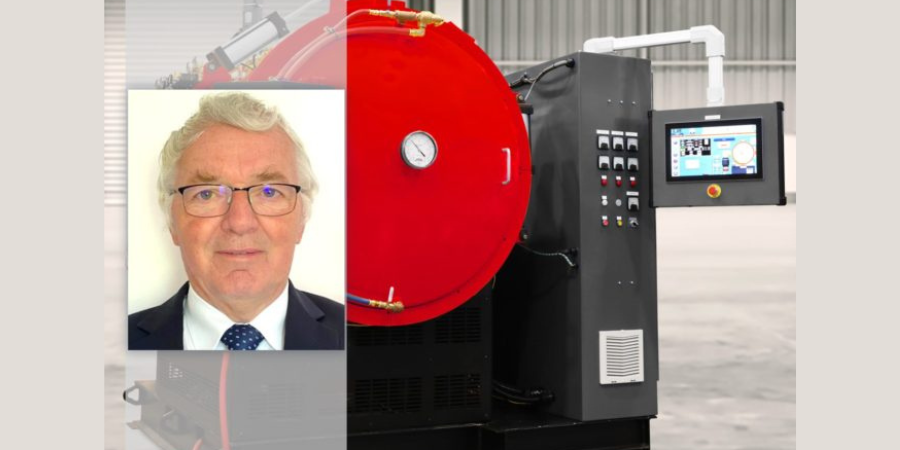
A U.S. manufacturer of heat treat furnaces will supply a new vacuum furnace to the heat treat subsidiary of Magnetic Shields Limited (MSL) of Kent, United Kingdom. MSL Heat Treatment will use this furnace in the manufacture of medical and scientific devices.

The partnership between Solar Manufacturing and MSL began in 2016, and this new Mentor® Pro vacuum furnace (HFL-3036-2IQ) will be manufactured in accordance with CE standards including the vacuum chamber being built to ASME/UKCA requirements.

This furnace has a working hot zone area of 18” wide x 18” high x 36” deep (457mm x 457mm x 914mm) with a weight capacity of 1,000 pounds (455 kgs). It will be able to reach temperatures up to 2400°F (1315°C) and will feature a three gas partial pressure system and an internal quench system designed for 2-bar (15 PSIG) positive pressure quenching.

"MSL Heat Treatment specialize in brazing and controlled heat treatment for medical and scientific applications," Colin Woolger, director of MSL Heat Treatment added, "This latest furnace [. . .] will enable us to continue to provide high quality solutions to our growing customer base. The inclusion of hydrogen as a process gas also allows us to utilize the furnace for magnetic annealing to a very high specification."

"[We're] pleased to continue working with MSL as a supplier for their thermal processing needs," stated Rick Jones, vice president of International Sales at Solar Manufacturing. This will be the third vacuum furnace that the heat treat furnace provider will supply to MSL Heat Treatment.


Find heat treating products and services when you search on Heat Treat Buyers Guide.com



Vacuum Heat Treat Capabilities Expand for Magnetic Shields Ltd Read More »

12 of 38 Aerospace Furnaces Brought Up to Spec

HTD Size-PR Logo

Andrew Bassett, President, Aerospace Testing and Pyrometry

A pyrometry compliance company in the heat treat industry recently reported the successful launch of a program to bring 12 of 38 heat treating furnaces up to pyrometry compliance standards for a large manufacturer with a focus in the aerospace industry located on the West Coast. Aerospace Testing & Pyrometry (ATP), an Easton, Pennsylvania-based pyrometry compliance company, reported earlier this week on LinkedIn that their West Coast Division had started assessing the heat treat furnaces for this large manufacturer with a focus in the aerospace industry.

ATP personnel involved in the project included Ivan Mayorga, John Hollman, and Anthony Gomez.

ATP did not disclose the name of the aerospace manufacture for whom they were doing work nor did they comment on the status of the other 26 furnaces not being serviced by ATP.

To see the LinkedIn post from which this press release was taken, click here.


Find heat treating products and services when you search on Heat Treat Buyers Guide.com



12 of 38 Aerospace Furnaces Brought Up to Spec Read More »

Heat Treating in Red, White, and Blue

OCIndependence Day is right around the corner, and Heat Treat Today wanted to share some red, white, and blue processes from across the heat treating industry. We're highlighting induction hardening, gas nitriding, and hydrogen generation. Curious? Get ready for Independence Day with this red, white, and blue Technical Tuesday.


Red Hot Basics: Induction Hardening: Understanding the Basics

Induction hardening in action
Photo Credit: Contour Hardening

"The induction coil is a copper conductor that is shaped in order to harden the specified area of the part. The current that flows through the coil is what produces the magnetic field, which in turn heats the part. Coils are typically part specific, since they need to be precisely constructed to heat a particular portion of the part."


White Layer Cases in Gas Nitriding: Elevate Your Knowledge: 5 Need-to-Know Case Hardening Processes

White layer from nitriding
Photo Credit: SECO/VACUUM

Gas nitriding is a valuable case hardening process. In gas nitriding, a white layer made up of a nitrogen-rich compound is formed. This white layer is hard and wear-resistant, but is also very brittle.

"This compound layer depth is dependent on processing time. In the more traditional two-stage process, the case depth produces a gradient of hardness from surface to core that commonly ranges from 0.010-0.025”, with minimal white layer, typically between 0-0.0005”."


Blue Water Gas: On-Site Hydrogen Generation: A Viable Option for Reducing Atmospheres in Heat Treating

Water and electricity: that's all the materials that are needed to generate hydrogen on site. Water electrolyzers for hydrogen generation are compact, portable, and reliable, as well as being safer than storing gases. Could the future of heat treating — and perhaps the end of natural gas — be "blue"? Now, unless you live on the beach in the Bahamas, the water you're used to probably isn't blue, but you catch our drift.

"Electricity and water come into a plant in pipes and wires and are highly reliable. Additionally, there are no hydrogen storage tanks taking up a large amount of unusable space."


Find heat treating products and services when you search on Heat Treat Buyers Guide.com



Heat Treating in Red, White, and Blue Read More »

DUAL PERSPECTIVES: The Heat Treat Shop of 2050

op-ed

Changes are inevitable, but the world today is changing so rapidly that it’s constantly keeping us on our toes. Do two men from different parts of the world, both with significant experience within the heat treating community, have vastly different perspectives on the happenings in the heat treat industry?

We want to find out, so we asked a question that focuses on the world of heat treating to Thomas Schneidewind, the editor-in-chief of heat processing magazine, and Doug Glenn, the publisher and founder of Heat Treat TodayThe question: What does the heat treat shop of 2050 look like?

Thomas’s expertise lies in the European market while Doug’s resides in the North American market. We will feature their responses in each print magazine. Will their views align? Time will tell. Enjoy this second installment of an ongoing column. This column was first published in the June 2022 Heat Treat Buyers Guide print edition.


What Does the Heat Treat Shop of 2050 Look Like?

Thomas Schneidewind, Editor-in-Chief, heat processing magazine

The Limits of Digitalization

Thomas Schneidewind
Editor-in-Chief
heat processing Magazine

Do you still remember the New Economy? The predictions of some economists at the beginning of the internet economy heralded the end of the classic business cycle when it vanished into thin air in March 2000 – just like the internet bubble on the stock market.

However, a look back at the turn of the millennium shows that many ideas were formulated back then that are only now – more than 20 years later – changing our lives. At this point, I would like to recall The Cluetrain Manifesto, the internet bible of the first hour. This document sets out 95 theses for the new corporate culture in the digital age. Thesis 1 states, “Markets are conversations.” Thesis 19 says, “Companies can now communicate directly with their markets. If they don’t seize this opportunity, it could be their last.”

Today, real-time communication is commonplace. Many companies are designing their workflows to be flexible and able to respond quickly to the needs of their customers and employees. One example: LOI Thermprocess GmbH relies on networked working at its new location in Duisburg, Germany. The central component of the concept is a digital room. From here, employees around the world can take virtual tours with customers. They walk through the plant with a terminal device and employees of the plant manufacturer interact with them remotely.

The SMS group will also implement even closer cooperation along the entire value chain at its new site in Mönchengladbach. The Technology, Service, and Digitalization Campus currently under construction will enable agile working in a 5G infrastructure and offer generous social and communication areas.

In heat treatment, digitization is making an important contribution to implementing the changeover in automated drive technology production. Significantly higher speeds of electrified drives and the resulting change in stress on components require heat treatment that meets these requirements. The high number of variants in drive technology also leads to smaller production sizes – the plants have to be designed more flexibly. In this context, digitization plays an important role.

Another aspect is the work in plant engineering with digital twins. Digital models can be used to increase efficiency in production. It is also about speed in the development of plants and the optimization of processes. The result of any digitization strategy is an increase in competitiveness.

Since almost anything is technically feasible today – at least in theory – the question is rather about the limits of digitization. These are manifold in nature: starting with heterogeneous IT landscapes in companies. These make cross-process integration difficult in regard to data security, (which apparently cannot be guaranteed), to dystopian fears of the replacement of humans by machines, (which stands in the way of the acceptance of digital solutions). In other words, digitization must always remain only a tool, not an end in itself. We recognize this most when the digital space prevents genuine personal communication.

Doug Glenn, Publisher, Heat Treat Today

Doug Glenn
Publisher and Founder
Heat Treat Today

Roughly 30 years ago, I asked this same question to the publishing staff of Industrial Heating magazine. I was their publisher at that time and the answers were intriguing. One person predicted that we would not have phones on our desks and that we would do most of our communication over our computers. Smart phones were not a thing at that time, so that prediction seemed far-fetched, but the “no phones on our desks” prediction has proven to be pretty much true.

What a 2050 heat treat shop/department will look like will be largely dependent on the type of work being processed. For captive shops, we should fully expect that these shops will be nearly 100% automated and self-governing. This includes incoming material analysis, load configuration optimization, multi-furnace utilization schedules, and part-by-part processing analysis – all will be done without human intervention. We will undoubtedly see more artificial intelligence including the resolution of unexpected problem situations that arise during the heat treating process.

More importantly, the idea of a distinct heat treat department will be less and less prevalent. By 2050, the vast majority of captive heat treatments will be done in-line with the manufacturing process with little or no interventions from humans. Washing, fixturing/loading, temperature measuring and control (most of which will be done continuously with full-part, non-contact infrared scanning), and inspection will all be done autonomously.

Most parts will be heat treated individually with single-part traceability/accountability.

The need for heat treat will be minimized with advances in the development of nanomaterials and the ability to designer-build alloys with specific metallurgical/mechanical properties.

Equipment controls and process control will be remote and cloud-based. These are some of the characteristics for captive shops where product variability is low and volumes are high.

For commercial heat treat shops where variability is high and volumes are relatively low, much of the same will be true with less and less human interaction needed. Nonetheless, these job shops will still have a higher need for human interaction than the captive shops. Commercial shops, however, will be much more highly automated than they are today, especially when it comes to part recognition and the recipes associated with those parts.

Finally, I don’t see heat treating as a carbon-free activity in 30 years. In fact, as the need for energy grows, I see the heat treat industry continuing to use carbon-based fuels. The only thing that will change in the next 30 years is the opinion that carbon is the devil. Although much slower moving, I think the world’s opinion about the evils of carbon will change much like the anti-cancer diet du jour in today’s world. In 2050, carbon will no longer be a dirty word.


Find heat treating products and services when you search on Heat Treat Buyers Guide.com


DUAL PERSPECTIVES: The Heat Treat Shop of 2050 Read More »

Skip to content