featured

Ask The Heat Treat Doctor®: Why Use Partial Pressure in Vacuum Furnaces?

Ask The Heat Treat Doctor® has returned to bring sage advice to Heat Treat Today readers and to answer your questions about heat treating, brazing, sintering, and other types of thermal treatments as well as questions on metallurgy, equipment, and process-related issues. In this installment, Dan Herring explains how partial pressure atmospheres prevent evaporation and achieve bright, oxide-free parts in vacuum furnaces.

This informative piece was first released in Heat Treat Today’s December 2025 Annual Medical & Energy Heat Treat print edition.

Have questions or feedback? We’d love to hear from you — reach out to our editorial team at editor@heattreattoday.com.


Operating in vacuum can often lead to problems related to evaporation, that is, literally “boiling away” elements present in the materials being heat treated. This affects surface integrity, functionality, performance, and in some rare cases altering the chemical composition of the base (or filler) metal.

One way to overcome this problem is to introduce a gas partial pressure higher than that of the material’s vapor pressure. Different gas choices, introduction methods, and controls are available to the heat treater. The natural question is, how and when should they be used? Let’s learn more.

What is Partial Pressure?

In simplest terms, the partial pressure of a gas introduced into a vacuum furnace is the force exerted by that gas (or gases) constrained in the vacuum vessel. If only a single gas is present, the partial pressure of the system is the same as the total pressure. For a multi-gas system, air is a good example to look at. At sea level with atmospheric pressure 760 torr (760 mm Hg) and at an altitude of 3,657 m (12,000 ft), the atmospheric pressure is only 483 Torr (Table A).
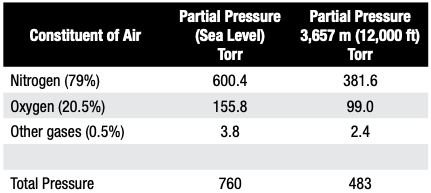
Table A. Partial Pressure of Individual Gases Present in Air | Source: Jones 1997

In vacuum systems, when the chamber atmosphere is evacuated to a high enough vacuum level — commonly between 10⁻³ Torr (0.1 micron) and 10⁻⁵ Torr (0.01 microns) — issues of evaporation are likely to occur during heat up and holding at temperature. As such, nitrogen or a truly inert gas is introduced below a predetermined temperature at a controlled rate to a fixed partial pressure range and then controlled within this range. One then isolates the high vacuum portion of the pumping system and employs bypass circuitry using the mechanical pump to introduce a continuous flow of gas equal to the pumping capacity (throughput) at the required operating pressure (Figure 1 below).
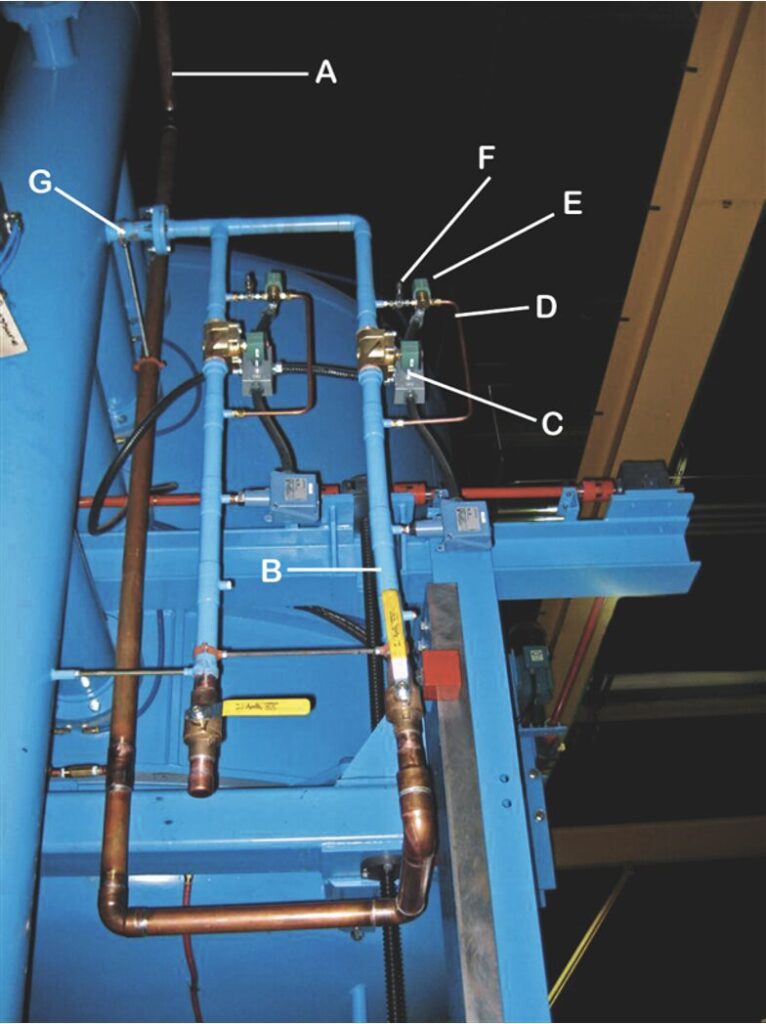
Figure 1. Typical partial pressure piping on a vacuum furnace
Key:
A: Incoming gas supply line
B: Backfill line
C: Quench solenoid
D: Partial pressure line
E: Partial pressure solenoid valve
F: Partial pressure (micrometer) needle value
G: Inlet into furnace
Source: Courtesy of Vac-Aero International

Why Do We Need to Use Partial Pressure in a Vacuum Furnace?

There is no hard and fast rule for partial pressure settings used for processing various materials in the heat treat industry. However, from a practical standpoint, there are two process considerations for determining partial pressure. The first is the metal-oxide reduction partial pressure. The partial pressure of oxygen at a given temperature determines the direction of the reaction and consequently whether the part is “bright” or “discolored” (oxidized). These values are typically in the range of 10⁻⁶ Torr to 10⁻² Torr. This is why materials like titanium alloys and superalloys must be processed at extremely low vacuum levels. The second consideration is the vaporization of metal at high temperature and hard vacuum. The metal solid-to-vapor partial pressures require higher pressures to avoid alloy depletion. These higher pressures often produce sufficient dilutions of contaminants to drive the reaction to be reducing.

What is often overlooked or misunderstood is that higher levels of partial pressure “dilute” any oxygen or water vapor partial pressure but still can produce oxide free “bright” parts at higher pressures. This dilution also occurs, for example when a retort is purged with nitrogen or argon to achieve clean parts. The oxygen partial pressure is reduced by dilution rather than by vacuum. In addition, it cannot be overemphasized that oxidation present on parts from exposure to the atmosphere and moisture absorbed by the furnace lining when the door is open are critical in running clean work. Oxidation occurs on heat up, but when the temperature is high enough and conditions are right, we can reverse the oxidation reaction so the parts will clean up. This is why it is harder to bright temper than to bright harden.

In batch vacuum furnaces, combination hardening and tempering cycles are used to take advantage of the furnace configuration in which parts stay in the furnace for the full process. Often, the same parts will discolor if tempered in the same furnace after they have been removed and the furnace exposed to air.

Also, a thorough understanding of the required component properties and material characteristics (e.g. alloy composition, grain size, hardenability response) is needed to design the final vacuum heat treat cycles and select the final partial pressure settings.
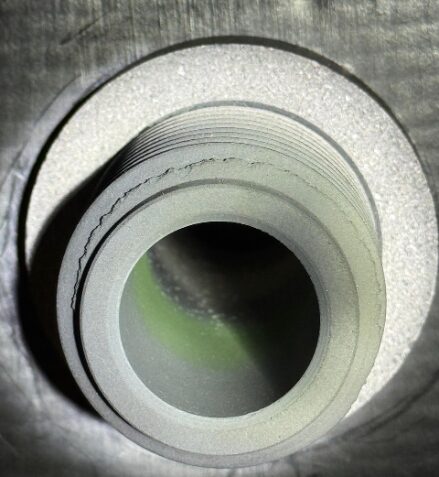
Figure 2. Chromium deposits / discoloration in the area of a graphite cooling nozzle | Source: The HERRING Group, Inc

For example, stainless steels, tool steels, and more exotic alloys run in a vacuum furnace will benefit substantially from the use of partial pressure atmospheres. In most heat treat shops, partial pressure cycles begin around 760°C (1400°F) at pressure from 1–1.5 Torr (1000–1500 microns). This is primarily because chromium present in many of these materials and in our baskets/fixtures evaporates noticeably at temperatures and pressures within normal heat treatment ranges. At around 990°C (1800°F), chromium will vaporize rapidly as a function of both vacuum level and time. In general, the practical operating vacuum level for most materials is significantly above their equilibrium vapor pressures. It is also helpful at times to know the temperature at which individual elements exceed a critical (10⁻⁶ g/cm²-s) vaporization rate (Herring 2015).

In practice, heat treaters often observe greenish discoloration (chromium oxide) on the interior of their vacuum furnaces (Figure 2), the result of chromium vapor reacting with air leaking into the hot zone. Otherwise, the evaporation deposit is bright and mirror-like. To avoid these types of deposits contaminating both the furnace and the parts run in it, an operating partial pressure between 1 Torr and 5 Torr (1,000 microns to 5,000 microns) is typical for parts that will boil away their elemental constituents.

Chromium Coloration

Heat treaters should be aware that although the most common color of chromium discoloration is green, the color is dependent on chromium’s oxidation state (Table B). For example, Cr (II) compounds typically appear blue, Cr (III) compounds appear green, and Cr (VI) compounds appear orange or red.
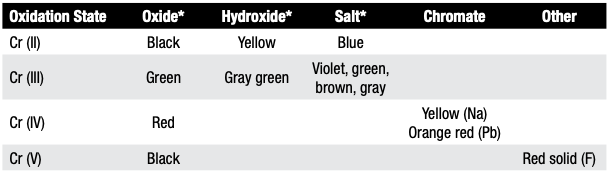
Notes: * Most commonly observed colors
Table B. Oxidation Colors of Chromium and Chromium Compounds

Table B provides a more detailed breakdown of chromium’s oxidation states and associated colors.

Which Partial Pressure Gas(es) Can We Use?

Argon, nitrogen, and hydrogen are the most common partial pressure gases. Often, argon is preferred as it is a truly inert gas and tends to “sweep” the hot zone; that is, being a heavier molecule, it tends to reduce evaporation compared with nitrogen or hydrogen. Specialized applications, such as those in the electronics industry, may use helium or even neon (if an ionizing gas is needed). Gases having a minimum purity of 99.99% and a dew point of -60°C (-76°F) or lower should be specified.

Certain cautions are in order. For example, nitrogen may react with certain stainless steels and titanium bearing alloys resulting in surface nitriding. In the case of hydrogen, the normally near neutral vacuum atmosphere can be sharply shifted to a reducing atmosphere to prevent oxidation of sensitive process work or for furnace/fixture bakeout/cleanup cycles. Embrittlement by hydrogen is a concern for certain materials (e.g., Ti, Ta).
In Summary

Partial pressure atmospheres are required in many heat treating and brazing operations to achieve desired results. Introduction of the partial pressure gas into the furnace hot zone at one or more locations and controlling the partial pressure injection gas stream as a continuous flow, rather than trying to operate at a specific pressure, are critical considerations. The choice of partial pressure gas is also important both from a cost and quality standpoint.

References

Herring, Daniel H. 2014. Vacuum Heat Treatment. Vol. 1. Troy, MI: BNP Media.

Herring, Daniel H. 2015. Vacuum Heat Treatment. Vol. 2. Troy, MI: BNP Media.

Houghton, R., Jr. n.d. Private correspondence, Spectrum Thermal Processing.

Jones, W. R. 1997. “Partial Pressure Vacuum Processing – Part I and II.” Industrial Heating, September/October.

Jones, William. n.d. Private correspondence, Solar Atmospheres Inc.

Fabian, R., ed. 1993. Vacuum Technology: Practical Heat Treating and Brazing. Materials Park, OH: ASM International.

The Boeing Company. n.d. “Practical Vacuum Systems Design Course.”

About the Author

Dan Herring
“The Heat Treat Doctor”
The HERRING GROUP, Inc.

Dan Herring has been in the industry for over 50 years and has gained vast experience in fields that include materials science, engineering, metallurgy, new product research, and many other areas. He is the author of six books and over 700 technical articles.

For more information: Contact Dan at dherring@heat-treat-doctor.com.

For more information about Dan’s books: see his page at the Heat Treat Store.


Ask The Heat Treat Doctor®: Why Use Partial Pressure in Vacuum Furnaces? Read More »
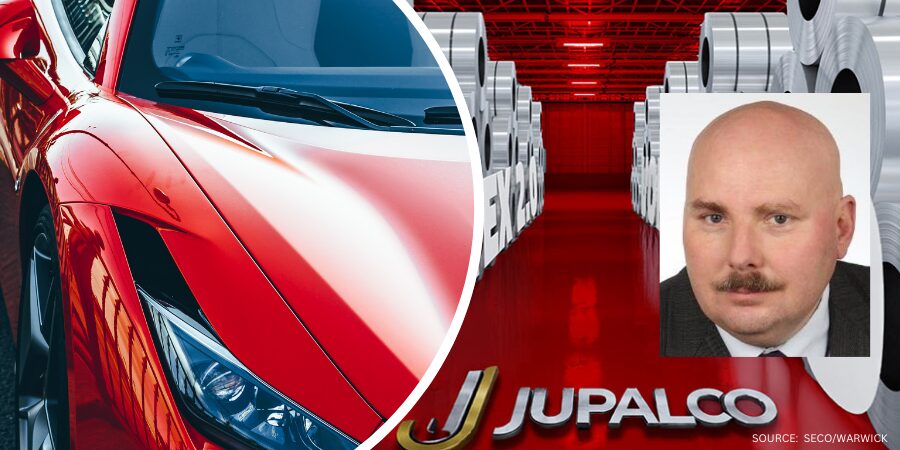
JUPALCO Expands Aluminum Coil Annealing Capacity

Jupiter Aluminum Industries (JUPALCO), part of the Jupiter Group, has ordered two aluminum coil annealing furnaces to support production at its rolling mill operations, strengthening capacity and consistency for flat-rolled aluminum products serving automotive, construction, and packaging markets. The investment reflects continued global demand for advanced aluminum heat treating capacity.

The furnaces, slated for installation at JUPALCO’s rolling mill operations in India, are designed to handle large aluminum coils, with a maximum outside diameter of 2,600mm, widths up to 2,300mm, and a total gross load capacity of 93.6 metric tons. Multi-zone chamber configurations and advanced control systems are engineered to deliver precise temperature uniformity and repeatable annealing results across high-volume production runs.

Piotr Skarbiński
Vice President of Aluminum and CAB Products Segment
SECO/WARWICK

The equipment will be supplied by SECO/WARWICK, a furnace supplier with North American locations, and incorporates the company’s Vortex 2.0 aluminum coil annealing technology, which uses high-velocity airflow to improve heat transfer, shorten cycle times, and reduce the risk of localized overheating. The design also supports energy-efficient operation while maintaining tight temperature tolerances throughout the annealing process.

According to Piotr Skarbiński, vice president of the CAB and Aluminum Products Segment at the SECO/WARWICK Group, the Vortex 2.0 is designed with a system of appropriately directed nozzles that support consistent aluminum processing while reducing cycle times and energy consumption.

The Indian market for flat-rolled aluminum products is growing rapidly, with its value expected to rise from USD 4.5 billion in 2025 to USD 12 billion by 2035. Investments by manufacturers like JUPALCO in new rolling mills highlight both the domestic growth potential and the wider demand for advanced annealing technologies in global markets.

Press release is available in its original form here.

JUPALCO Expands Aluminum Coil Annealing Capacity Read More »

Century Aluminum Backs New U.S. Smelter Built Around Next-Generation Smelting Technology

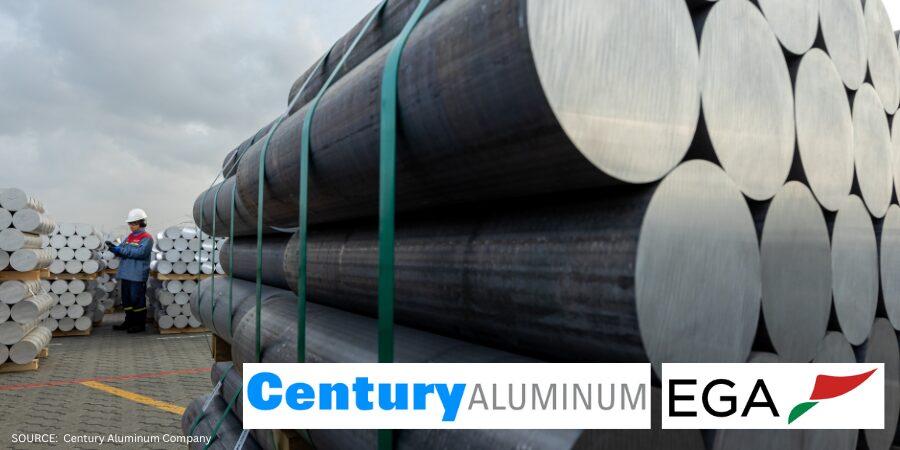
Century Aluminum Company has emphasized that next-generation EX smelting technology will be critical to the development of its new primary aluminum smelter, one of the most advanced technologies deployed in the U.S. This platform is designed to improve productivity, reduce energy consumption per ton, and lower emissions, reinforcing both economic competitiveness and environmental performance in primary aluminum manufacturing.

Click on the image above to read more about Century Aluminum’s recent restart to boost U.S. production by 10%.

Planned for Inola, Oklahoma, at the Tulsa Port of Inola industrial park, the proposed facility is expected to produce up to 750,000 metric tons of primary aluminum annually, more than doubling current U.S. smelting capacity once fully operational. Century Aluminum will partner with Emirates Global Aluminum (EGA) on the project, with EGA contributing its proprietary EX smelting technology and holding a majority ownership stake, while Century Aluminum provides operational expertise and leadership in the U.S.-based aluminum production. The project aims to strengthen material availability for downstream manufacturers serving automotive, aerospace, energy, and defense markets.

Jesse Gary
Chief Executive Officer
Century Aluminum Company

“Our partner EGA brings world-class smelting technology and construction expertise that are fast-tracking our collective efforts to realize a new era of domestic primary aluminum production,” said Jesse Gary, chief executive officer of Century Aluminum Company. “This expanded production will benefit critical U.S. industries and create thousands of American manufacturing jobs, reinforcing the vital role of aluminum in national defense and economic vitality.”

EX technology is EGA’s next-generation smelting platform, featuring reduction cells that provide higher productivity per square meter than EGA’s previous DX+ Ultra technology. The cells are larger and have improved current efficiency, enabling greater aluminum production from each smelting cell. The technology supports more cost-effective aluminum production with lower emissions intensity, reinforcing the project’s operational and environmental goals.

For background on the initial announcement of this historic smelter project, click on the image above for our May coverage.

The use of EX technology also positions the project within the broader global landscape of aluminum smelting innovation, strengthening its appeal as an alternative source of advanced smelting capability at a time when governments and manufacturers are increasingly focused on supply chain resilience, domestic capacity, and technology diversification. EGA’s own communications highlight EX as a key step toward large-scale industrialization and a foundation for future growth as a smelting technology provider of choice in the global aluminum industry.

Construction is expected to begin as early as 2026, with commercial production anticipated before the end of the decade. Once completed, the facility is expected to support approximately 1,000 permanent direct jobs and support roughly 4,000 construction roles, while helping reduce reliance on imported aluminum and reinforcing domestic manufacturing capabilities. Industry leaders have described the project as a critical step toward rebuilding U.S. primary aluminum production and supporting long-term supply stability for North American manufacturers.

Press release is available in its original form here. Additional information comes from EGA’s June 2025 press release here.

Century Aluminum Backs New U.S. Smelter Built Around Next-Generation Smelting Technology Read More »
Hybrid Heating Systems Unlock Heat Process Decarbonization

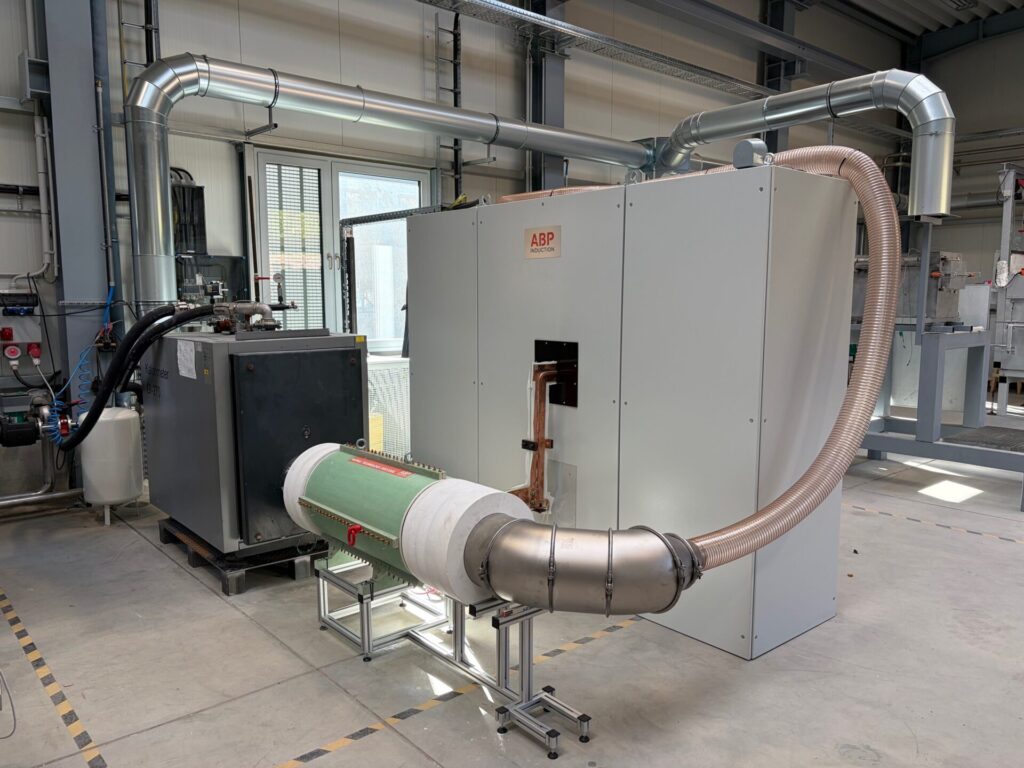
As pressure mounts to cut industrial CO2 emissions, hybrid heating systems are emerging as a compelling pathway to decarbonizing industrial process heat. In this Technical Tuesday installment, Dr.-Ing. Marco Rische and Dr. Martin Ennen of ABP Induction Systems GmbH explore how integrating induction technology at the front and end of traditional gas-fired furnace heat treating can reduce energy consumption, improve temperature control, lower operating costs, and offer a realistic bridge to full electrification.

This informative piece was first released in Heat Treat Today’s January 2025 Annual Technologies To Watch print edition.


The metalworking industry is undergoing a profound transformation, as the pressure to reduce emissions and replace fossil fuels continues to shape technological strategies across all areas of the value chain. In addition to melting technology, process heat is increasingly coming into focus — namely the heating, warming, and tempering of materials, which is required in virtually every production process.

With hybrid approaches that combine conventional gas furnaces with induction heating units, energy consumption, CO2 emissions, and costs can be reduced simultaneously. ABP Induction, a global provider of electric heating and melting technologies, has continued to refine and expand hybrid heating concepts over the past several years. Its strategy aims to help shape the path to CO2 neutrality as a partner to the metalworking industry through holistic solutions that balance technological advances and cost efficiency.

The Pressure to Act in the Industry

The starting point is both a challenge and an opportunity; the metalworking industry ranks among the largest industrial producers of CO2 emissions worldwide. The steel industry, in particular, is at the center of the decarbonization debate, accounting for roughly one quarter of global industrial emissions. Natural gas was the preferred fuel for many years: affordable, easy to control, and simple to transport. But with rising CO2 prices and increasing political pressure to decarbonize, the balance is shifting. While primary processes like pig iron production are increasingly shifting toward direct reduction using hydrogen, heat input in downstream processing steps, such as melting, heating, or rolling, still primarily relies on fossil energy sources.

At the same time, the economic landscape is shifting; rising CO2 prices, high energy costs, and the need for stable supply chains are driving a reassessment of conventional technologies and laying the foundation for induction-based burner substitutes to gain economic traction. The megatrends of digitalization, deglobalization, demographic change, and decarbonization are now shaping business decisions across the metalworking industry. After all, the energy policy framework is creating incentives to deploy electric solutions, especially where they can be powered by green electricity. This makes induction — contactless heating of metallic materials using electromagnetic fields — a key technology on the path to CO2 neutrality.

Induction Heating as a Foundational Technology

The physical principle of induction is well established. An alternating electromagnetic field transfers energy directly into the workpiece, heating it evenly and in a controlled manner. The advantages lie in high energy efficiency, dynamic controllability, and reliable process stability. While gas burners rely on convective and radiant heat, induction applies energy directly without intermediate losses — a decisive efficiency advantage that enables practical efficiencies of up to 90%.

For many applications, the technology is already widely adopted. In foundries, induction furnaces are increasingly replacing cupola furnace systems, while in forges and aluminum plants, induction systems are used for efficient preheating and heating. New application areas are emerging in the steel sector, particularly in the fields of reheating and heat treatment.

However, the limitations are equally clear; induction works optimally only where the material to be heated is electrically conductive and the electromagnetic field can be efficiently coupled. For large-volume or indirect heating processes, such as those involving gas flows or non-metallic materials, complementary concepts are required.

The Principle of Hybrid Heating

This is precisely where hybrid heating systems come into play. They combine proven induction technology with conventional furnace systems, typically gas-fired continuous or chamber furnaces. The goal is to leverage the strengths of both systems and compensate for their weaknesses.

A typical hybrid system integrates an induction section before or after the gas-fired furnace. When the induction unit is positioned upstream, it handles the rapid heating phase, bringing the workpiece to a defined temperature in a short time, which effectively reduces the load on the gas-fired furnace. It can then operate with reduced energy input. When the induction unit is positioned downstream, it ensures precise temperature control, homogenizes the temperature profile, or compensates for fluctuations in transport speed.

The benefits are multifaceted: gas consumption decreases, temperature distribution becomes more uniform, production speed can increase, and CO2 emissions are significantly reduced. Pilot projects have achieved savings of up to 60% in previous fossil energy consumption.

In addition, the hybrid solution enables a gradual transformation process. Existing furnace systems can continue to be used, keeping investments in new infrastructure to a minimum. This provides operators with an economically and technically viable path to decarbonization and allows them to stay close to the existing process without compromising production reliability.

Process Integration and Control

Hybrid heating systems are highly adaptable. The design of the induction section depends on material, geometry, throughput, and process objective. Modern control technology ensures precise coordination between induction and furnace operation.

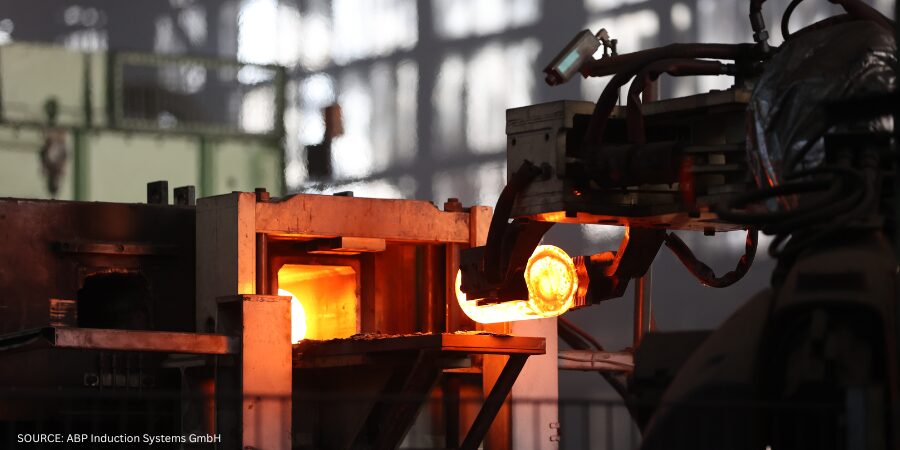
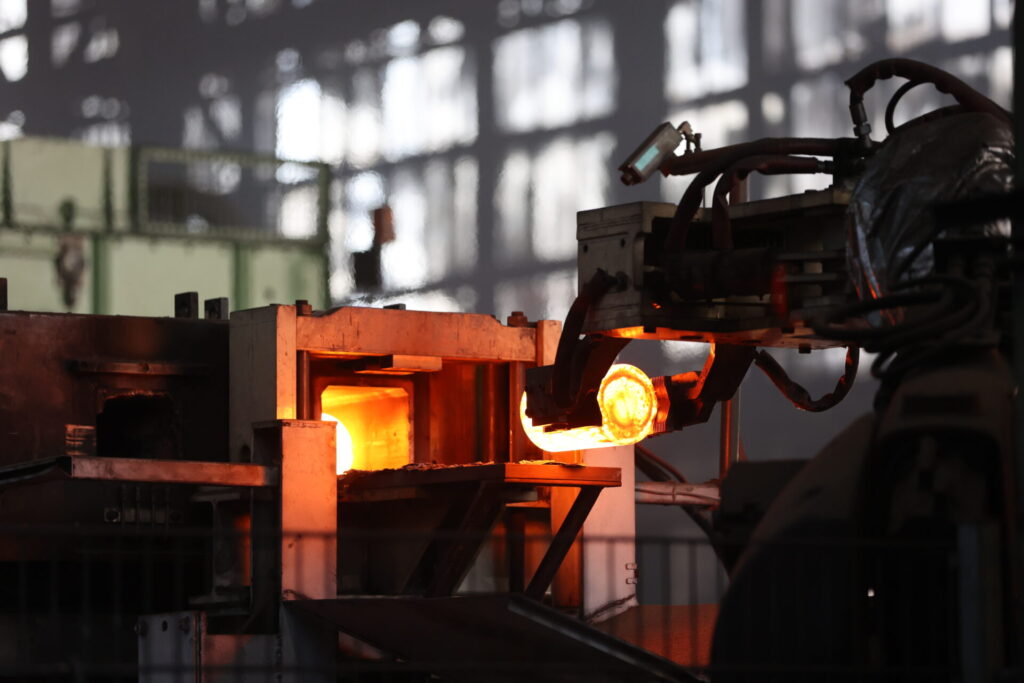
Figure 1. Billet after induction heating process | Source: ABP Induction Systems GmbH

In the area of reheating slabs or billets in rolling mills, for example, an inductive preheating station can be installed in front of the furnace. Here, the induced power density is utilized to significantly shorten the heating time. At production rates of up to 200 tons per hour for long products and 1,000 tons per hour for flat products, induction systems achieve electrical efficiencies of 85% to 90%. Downstream of the furnace, a post-heating unit can help maintain a uniform temperature profile, a critical factor for product quality, dimensional accuracy, and potentially reduced wear on subsequent forming equipment. Process stability also benefits. Gas-fired furnaces are sluggish systems whose temperature responds slowly to process changes. Induction systems, on the other hand, can be controlled within fractions of a second, adding a dynamic component to the overall system. This allows temperature fluctuations to be compensated, which helps to prevent product defects.

A Tool for Transformation

The idea of replacing fossil fuel burners with induction systems is not new. Pioneers in the field considered this decades ago and developed alternative processes and methods, but it was never cost-effective. Fossil fuel usage remained cheaper and allowed existing processes to continue unchanged. Now the situation is different.

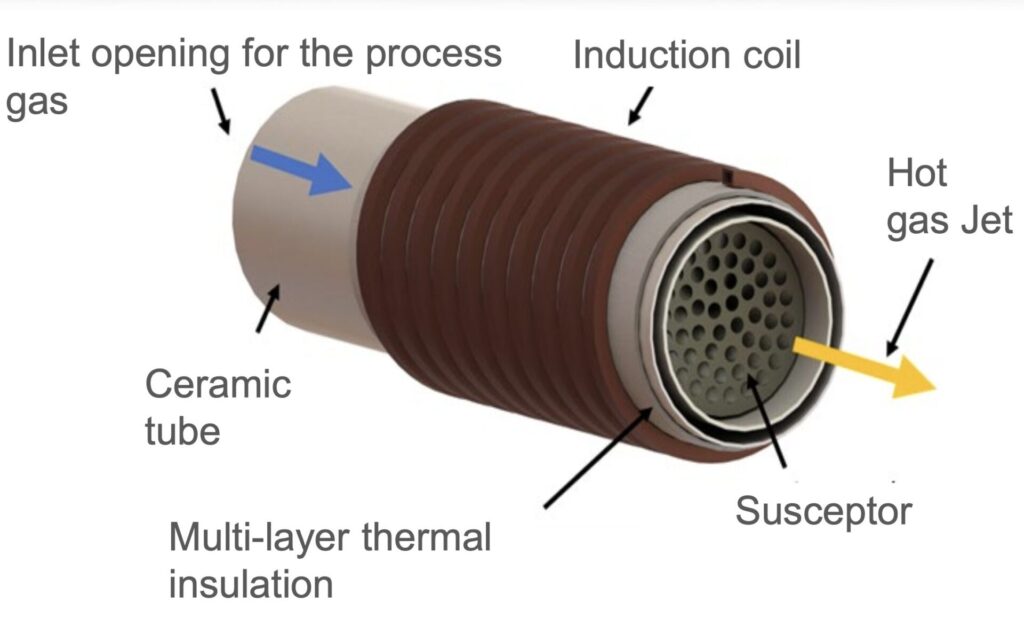
Figure 2. UHT Thermo Jet UHT200® — Induction heating concepts for fluids | Image Credit: TUBAF University of Freiberg

A key element in ABP Induction’s strategy for electrifying process heat is the Ultra-High-Temperature (UHT) Thermo Jet, a newly developed high-temperature hot gas technology that replaces conventional fossil fuel burners and electrifies industrial thermal processes. The innovation marks a decisive step toward fully electric process heat, demonstrating that even high-temperature applications are feasible without the combustion of fossil fuels.

The system is based on an inductively heated metallic susceptor located inside a high-temperature-resistant, thermally insulated channel. A process gas flows through it, typically air, though inert gases or exhaust gases can also be used. The induction coil generates an electromagnetic field (Figure 2) that heats the susceptor without physical contact. The susceptor then transfers the heat to the gas flowing past it. The result is a hot gas jet with temperatures well above 1000°C (1830°F), fully replicating the thermal characteristics of a natural gas flame. Industrial test series have already achieved stable temperatures of up to 1400°C (2550°F) with response dynamics that surpasses conventional burners.

The technology transfers energy in two stages: first, the susceptor is heated via induction; then, the heat is transferred to the gas stream. This decoupled structure enables precise control of temperature, gas flow, and power input. The key lies in synchronizing the electrical power control with the gas flow to ensure a consistent and reproducible hot gas quality. The system responds to load changes within seconds, offering a level of controllability for high-temperature applications that has never been achieved before.

Technologically, it operates with minimal losses, as no exhaust gases are produced and the heat is transferred almost entirely to the process. By using closed gas circuits, the residual thermal energy of the exhaust stream can be reused without generating pollutants or releasing combustion residues into the atmosphere. This not only reduces energy consumption but also improves the process atmosphere, for example, through low-oxygen conditions that enable high-quality heat treatment.

Another key feature is its ability to integrate into existing systems. The design enables direct replacement of gas burners in many industrial applications without requiring fundamental modifications to the furnace architecture. This provides a fast and cost-effective path to decarbonizing existing installations.

The concept was developed at the Foundry Institute of TU Freiberg. To bring the technology from the lab into real-world application, an alliance was formed: the university as the originator and development partner, Primetals as the system integrator, and ABP Induction for induction technology, contributing its insights in control systems, coil design, and power supply. Following successful lab trials with power levels between 10 and 35 kilowatts, an industrial demonstrator rated at 200 kilowatts is currently undergoing testing, serving as the foundation for market entry (Figure 3). The results demonstrate that the system is scalable — from compact applications to large-scale processes in the steel industry as well as glass, ceramics, and chemical.

Figure 3. UHT Thermo Jet UHT200® — test facility for 200kW heating power | Image Credit: TUBAF University of Freiberg

The UHT Thermo Jet transfers the principle of induction to indirect process heat. While previous systems exclusively heated metallic workpieces directly, the new technology now enables controlled generation of hot gas streams — a decisive step toward full electrification of industrial heat supply. By combining efficiency, responsiveness, and sustainability, this solution paves the way toward a CO2-neutral future while ensuring cost-effective operation.

3 Stages: Technical Application Development

The development of hybrid heating systems follows a clear technological logic:

  • In the short term, fossil-based systems are supplemented by complementary induction modules.
  • In the medium term, they are replaced by electric heat sources, such as the UHT Thermo Jet.
  • In the long term, they are fully electrified.

This evolution creates multiple advantages: first and foremost, a rapid entry into decarbonization through the retrofit of existing systems, resulting in lower operating costs due to reduced gas consumption and decreased maintenance requirements. This also leads to an increase in product quality thanks to precise temperature control. Companies also stand to benefit from the energy transition in the market, with long-term supply security, as electricity from renewable sources can be generated locally.

At the same time, new requirements are emerging for control and integration. Electric heating systems respond instantly to grid fluctuations and can be integrated into digital energy management systems. This makes it possible to optimize load profiles, adapt production processes flexibly to energy availability, and manage energy consumption with full transparency — a key milestone on the path to climate-neutral industrial production.

The ecological impact of hybrid heating systems is thus directly measurable. By partially replacing fossil burners, CO2 emissions can be reduced significantly. At the same time, nitrogen oxide and particulate emissions, which are typically generated during combustion, are reduced.

The economic picture is similar; while the investment costs for electric systems are higher, operating costs decrease due to lower gas consumption and improved energy efficiency. In addition, expenses for emission certificates, burner maintenance, and exhaust gas treatment are eliminated. In many cases, the investment pays off within a few years, especially when funding programs for the decarbonization of industrial processes are utilized.

In addition, the resilience of production systems improves. Electrically operated systems are less dependent on geopolitical energy imports and can potentially be powered directly by locally generated green electricity or by synthetically produced energy (via power-to-X processes) in the future. New energy storage concepts will also play a role here.

Practical Considerations

There are four key megatrends in industry: digitalization, deglobalization, demographic change, and decarbonization. Electrification of process heat is a key area of action, following the three-stage logical flow to implement fully electric, CO2-free process heat solutions. This approach reflects the reality in many industrial enterprises, which, due to their investment cycles, cannot implement an immediate transition. Hybrid solutions provide the essential bridge — both technologically and economically.

Despite these innovations, it is clear that the transformation of industrial process heat will not happen overnight. It requires time, investment, and a high degree of technical integration. Nevertheless, the electrification of thermal processes is considered an indispensable component of industrial decarbonization.

Hybrid heating systems represent a key enabling technology in this context. They enable the gradual replacement of fossil fuels, increase efficiency, and open up new degrees of freedom in production control. With innovations such as the UHT Thermo Jet, the range of applications expands significantly — reaching into areas like process gases and high-temperature applications that were previously considered the domain of fossil combustion.

Hybrid technology does not mark the end, but rather the beginning of a new generation of industrial heating systems — efficient, flexible, and climate-neutral.

About The Authors:

Dr.-Ing. Marco Rische
Chief Technical Officer and Director System Business
ABP Induction

Dr.-Ing. Marco Rische is a highly qualified professional in induction heating systems technology with over 26 years of experience as the vice president of service, chief technical officer (CTO) and director system business with ABP Induction. He has demonstrated a deep technical understanding as a leader, leveraging his management and engineering background to solve complex technical and organizational challenges.

Dr. Martin Ennen
Application and Development Engineer
ABP Induction

Dr. Martin Ennen has studied electrical engineering and obtained his PhD in the field of electrical process engineering, with a focus on inductive heating processes. He has been working for three years at ABP as an application and development engineer. He is responsible for research and development work that entails numerical process simulation leveraging state-of-the-art FEM methods.

For more information: Contact Dr.-Ing. Marco Rische at Marco.rische@abpinduction.com and Dr. Martin Ennen at Martin.ennen@abpinduction.com.

Hybrid Heating Systems Unlock Heat Process Decarbonization Read More »
Aero Heat Treater Enters New Growth Phase

A long-standing aerospace manufacturer has made a major investment in new thermal processing capacity, marking a new phase of growth for its in-house heat treating operations. This customized solution is representative of aerospace manufacturers continue to position themselves to support sustained production growth, tighter regulatory requirements, and increasingly complex materials.

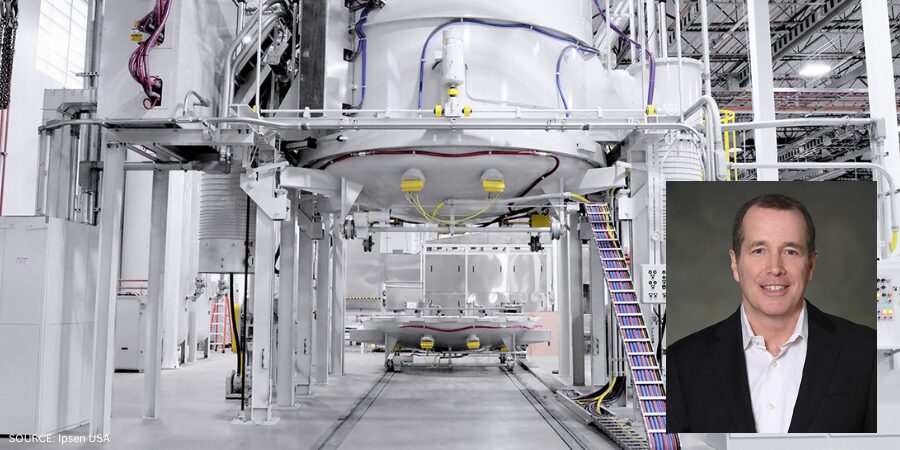
The order was placed with Ipsen USA and consists of fully customized, non-standard thermal processing systems engineered to support advanced aerospace manufacturing requirements. While specific furnace types were not disclosed, the systems were designed to provide tighter process control, repeatability, and the ability to support complex materials and part geometries while aligning with evolving quality and certification standards.

Geoffrey Somary
CEO
Ipsen Global

The equipment order is a fleet-scale installation of thermal processing systems designed for advanced aerospace applications. Rather than expanding incrementally, the aerospace manufacturer elected to deploy multiple systems as part of a coordinated expansion of its heat treating operations.

CEO of Ipsen Global, Geoffrey Somary, says that large, repeat orders like this reflect long-term confidence built on consistent equipment performance, service responsiveness, and process expertise.

The scale of the order reflects how aerospace manufacturers are approaching in-house heat treating through larger, coordinated equipment investments intended to support long-term capacity planning and tighter control over critical thermal processes.

Press release is available in its original form here. Additional information provided by Ipsen.
Main image features Ipsen’s MetalMaster furnace, courtesy of Ipsen.

Aero Heat Treater Enters New Growth Phase Read More »
Atlantic Fire Brick Acquisition Strengthens Refractory Services

Atlantic Fire Brick & Supply has been acquired in a move that strengthens refractory solutions for industrial thermal processing operations across the southeastern United States. The acquisition expands access to refractory materials, technical expertise, and field services critical to heat treating and other high-temperature manufacturing sectors, supporting increased uptime, safety, and performance in thermal systems.

Founded in 2004 and based in Charleston, South Carolina, Atlantic Fire Brick & Supply provides refractory products and installation services to industrial customers operating furnaces, kilns, and other heat-intensive equipment. The acquisition was completed by Plibrico Company, LLC, a global manufacturer and supplier of refractory materials and engineered solutions. Atlantic Fire Brick & Supply will integrate into a broader network while maintaining its regional presence and customer relationships.

John Paul Surdo
President and CEO
Plibrico Company, LLC

For heat treaters and other thermal processors in the region, the acquisition is expected to improve refractory availability and service responsiveness, helping facilities maintain equipment reliability as production demands and efficiency requirements continue to rise.

“This combination is centered on delivering greater value to customers,” said John Paul Surdo, president and CEO of the Plibrico Company. “Atlantic Fire Brick & Supply has earned the trust of clients through responsive support and strong partnerships. By reinforcing that foundation with Plibrico’s technical depth and expanded product capabilities, clients across the Southeast are better supported in solving complex refractory challenges and improving performance.”

Press release is available in its original form here.

Atlantic Fire Brick Acquisition Strengthens Refractory Services Read More »
IperionX To Produce Titanium Components for Military Vehicles

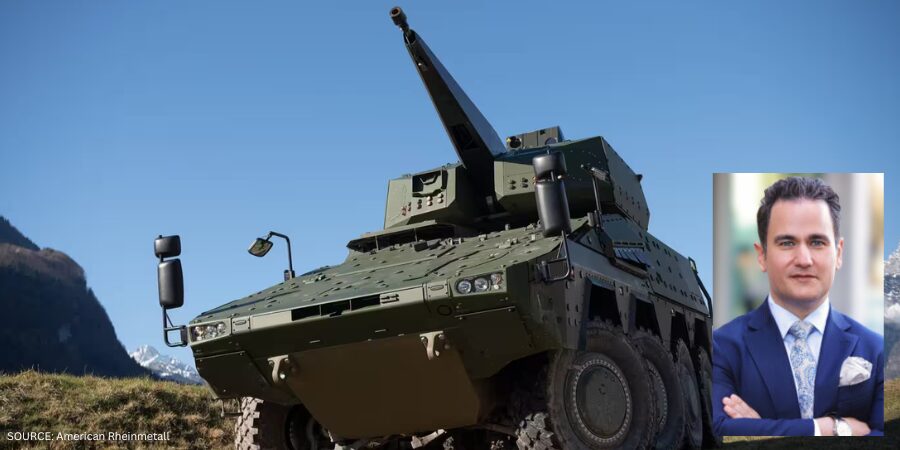
IperionX has received a prototype order for lightweight titanium components intended for U.S. Army heavy ground combat systems. The order directly supports U.S. Government priorities to reshore and secure critical materials supply chains, reduce reliance on foreign titanium sources, and expand domestic manufacturing capacity using recycled feedstock.

Anastasios (Taso) Arima
CEO
IperionX
Source: IperionX

The prototype order from American Rheinmetall calls for approximately 700 components, with a potential to lead to a significantly larger agreement upon successful delivery of this initial scope of work. IperionX will manufacture the parts in the U.S. using 100 percent recycled titanium through its patented HAMR™ (Hydrogen Assisted Metallothermic Reduction) and HSPT™ (Hydrogen Sintering and Phase Transformation) technologies. These technologies enable the domestic production of high-performance titanium components at materially lower cost relative to conventional titanium production routes.

Replacing steel with titanium is expected to reduce component weight by roughly 40–45 percent, improving vehicle mobility and operational performance.

“This purchase order demonstrates the practical application of IperionX’s recycled titanium technologies on important U.S. ground combat platforms. As the only domestic producer of commercial primary titanium, IperionX is uniquely positioned to support domestic defense priorities with secure, low-carbon, and cost-competitive titanium products manufactured in the United States,” says Anastasios (Taso) Arima, CEO of IperionX.

Press release is available in its original form here.

IperionX To Produce Titanium Components for Military Vehicles Read More »

Zero-Emission Heat Treating Gains Momentum

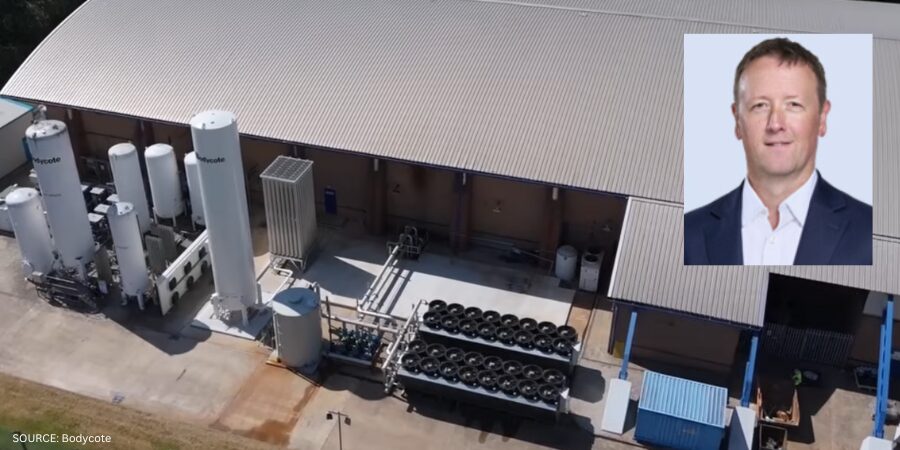
Sustainability pressures are reshaping heat treating as aerospace and automotive suppliers across North America face growing demands to reduce the carbon footprint of thermal processing. Lower-emission operations are increasingly influencing customer decisions, with companies seeking partners who can help meet bold decarbonization targets. Against that backdrop, Bodycote has reached a zero-emissions milestone that highlights how decarbonized heat treating can be achieved at scale.

Jim Fairbairn
CEO
Bodycote
Source: Bodycote

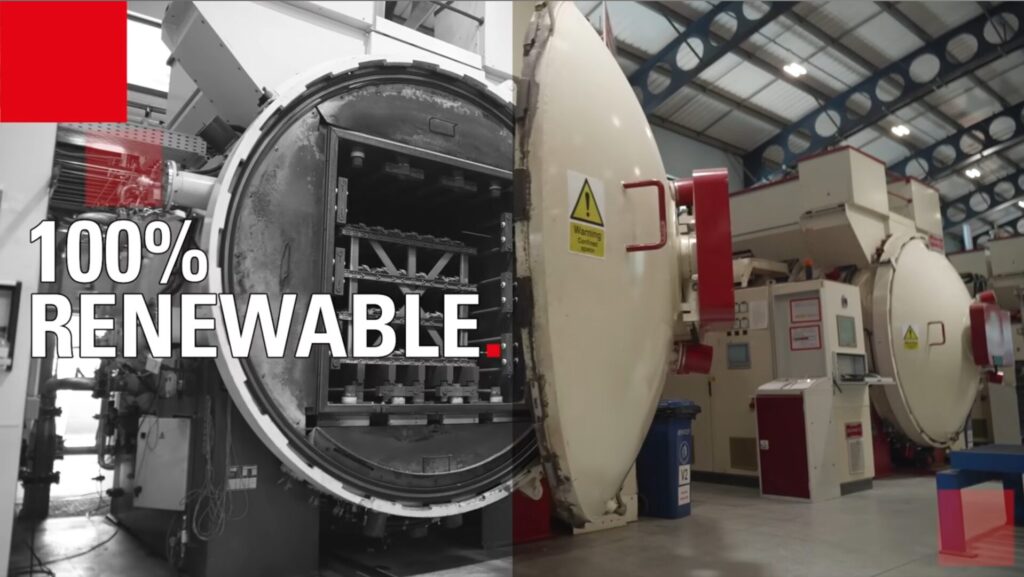
The milestone was achieved at Bodycote’s Derby and Rotherham heat treatment facilities in the United Kingdom, which now operate with zero direct carbon emissions. The plants, which specialize in heat treating turbine blades for Rolls-Royce jet engines, are fully electric and powered by 100 percent renewable electricity, eliminating the need for fossil fuels or carbon offsetting.

“Our customers, many with ambitious 2030 targets, are looking for suppliers who can support their decarbonization efforts. Recently, a customer with a 90% carbon reduction goal came to us because of the impact offered by our lower-carbon thermal processing. These are real demands, and the clock is ticking,” said Jim Fairbairn, CEO of Bodycote. The development reflects broader efforts to address industrial energy use while maintaining process reliability for demanding applications.

Source: Bodycote

Bodycote’s transition to zero emissions is achieved through investment in industrial heat electrification, energy efficiency, and renewable energy sourcing. A new closed-circuit adiabatic cooling system was recently introduced at the Derby plant, located alongside the Rolls-Royce site. Replacing evaporative cooling towers, this installation delivers electricity consumption savings — including peak-load reductions — of 73%, cuts water usage by more than 85%, and avoids the need for chemical dosing and cleaning.

“For Bodycote, leading in this space is not only the right thing for the planet, but also the right thing for our global business,” said Fairbairn. “As well as the progress made in Derby and Rotherham, we are running pilot decarbonization projects across Europe and North America.”

Those pilot efforts are intended to inform broader adoption across the company’s global footprint, including North American facilities serving aerospace, automotive, and other demanding markets. By sharing best practices and scaling proven technologies, Bodycote aims to support customer sustainability goals while maintaining quality, consistency, and process reliability.

Press release is available in its original form here. Additional information provided by Bodycote.

Zero-Emission Heat Treating Gains Momentum Read More »

Answers in the Atmosphere: Nitrogen — The Swiss Army Knife for Thermal Processors

In this installment of Answers in the Atmosphere, David (Dave) Wolff, an independent expert focusing on industrial atmospheres for heat treat applications, explores the versatile role of nitrogen gas in thermal processing.

This informative piece on nitrogen’s critical functions in safety, as a diluent, and as an atmosphere component — including production methods and purity requirements — was first released in Heat Treat Today’s November 2025 Annual Vacuum Heat Treating print edition.


As discussed in the introduction for this series of gas-focused columns, nitrogen gas is ubiquitous in thermal processing — by far the most-used delivered or generated gas in secondary metallurgy. This column covers many important considerations for the use and availability of nitrogen gas, featuring the insights from my recent interview with Air Products experts: John Dwyer, principal engineer; Bryan Hernandez, commercial technology sales engineer; and Emily Phipps, strategic marketing manager. Because of its key role in thermal processing, we expect to have additional columns on nitrogen gas in this series.

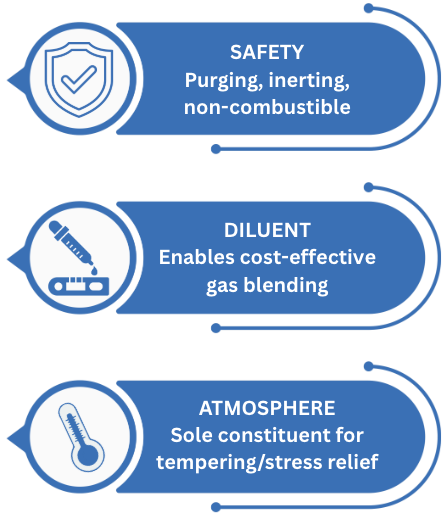
Nitrogen serves three important purposes in secondary metallurgy:

  1. Safety
  2. Diluent
  3. Atmosphere

Regarding safety, the Air Products experts shared important attributes of nitrogen and several applications it is most often used in. According to them, nitrogen:

  • will not react with most metals used in fabrication applications until reaching extremely high temperatures
  • will not support combustion or oxidation
  • has about the same density as air (which is 78% nitrogen)
  • is the least expensive industrial gas on a volumetric basis.

For those reasons, nitrogen is used as a purging and inerting gas in metallurgical applications, such as inerting the furnace in preparation for a flammable atmosphere to be introduced, as well as expelling flammable atmosphere at the end of a furnace cycle. They further noted that the National Fire Protection Association (NFPA) Standard 86 for Ovens and Furnaces mandates that nitrogen be always available for furnace inerting except for very specific exceptions where alternative approaches are used (burn in and burn out). Beyond the strict safety considerations, nitrogen protects furnace linings and components from high temperature oxidation.

Dwyer, Hernandez, and Phipps emphasized that when used as a diluent, nitrogen makes it possible to use relatively small volumes of a more expensive reactive gas or gas blend and ensure that the diluted active gas can provide benefits for an entire furnace load of parts. Examples include nitrogen/hydrogen atmospheres where nitrogen gas can enable a relatively small volume of very powerful reducing gas hydrogen to be mixed with a higher volume of nitrogen to fill the furnace interior. I would add that a blended atmosphere of nitrogen/hydrogen will have a higher density than hydrogen alone, and hence may distribute more widely in the furnace rather than just pooling at the ceiling level.

They further discussed how nitrogen can be used as a sole constituent in a furnace atmosphere in many cases, especially at lower temperature ranges, such as tempering and stress relief. In situations where surface finish is a secondary consideration, or where additional operations are going to be performed, they note that the part lower finish quality provided under inert nitrogen alone might be acceptable.

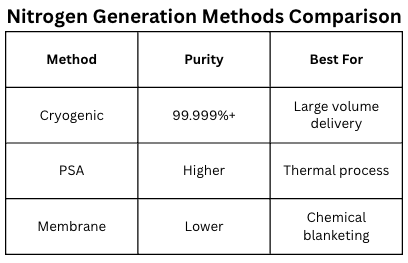
The team then reported that nitrogen forms the bulk of the atmosphere and cryogenic air separation is now available virtually worldwide; because of this, liquified or gaseous compressed nitrogen can also be delivered to clients virtually worldwide. Cryogenically separated nitrogen is, by the nature of the process, extremely pure, and can be assumed to be 99.999% or purer as delivered into the client’s storage vessel. Nitrogen can also be made at the client’s site, using non-cryogenic or cryogenic air separation techniques. For secondary metallurgy, non-cryogenic techniques are the most common because the volumes of nitrogen required are too low for a dedicated cryogenic air separation unit.

Continuing along this line, they explained that while both pressure swing adsorption (PSA) and hollow fiber membrane techniques can be employed to generate nitrogen for a single customer site, the PSA technology is the one primarily used to supply generated nitrogen for thermal processes. This is because the membrane technique for non-cryogenic nitrogen generation makes relatively impure nitrogen, with too much oxygen to achieve the desired surface properties sought by heat treaters. As such, membrane generated nitrogen is primarily used for chemical blanketing and similar low temperature air displacement applications.

The final discussion point I will share from the interview today is about the variability in accepted purity based on the planned usage of nitrogen. The three Air Products experts pointed out that NFPA86 mandates that the atmosphere in a furnace must be below 1.0% oxygen before any flammable gas species can be introduced. So, they continued, nitrogen used solely for safety purging can be relatively impure and still achieve the 1.0% maximum oxygen allowed. When used as the sole atmosphere component (i.e., 100% N₂), or as a carrier gas blended with an active gas like hydrogen, they explained that nitrogen purity must be much higher in order to achieve acceptable surface quality. In general, for atmosphere uses, it should be assumed as a general rule that the purer the nitrogen is, the easier it is to achieve satisfactory heat treat results. The three concluded this thought noting that in blended atmospheres it may be possible to use slightly higher levels of active gases (like hydrogen) to react with excess oxygen in the nitrogen supply, but that approach is unlikely to make sense economically since nitrogen is typically far less expensive than an active gas.

In the December 2025 installment of Answers in the Atmosphere, I’ll share further insights that my interview uncovered. Until then, consider your unique nitrogen needs and therefore whether having direct access to this gas for the benefit of your heat treat operations is essential.

About The Author:

David (Dave) Wolff
Independent expert focusing on industrial atmospheres for heat treat applications

Dave Wolff has over 40 years of project engineering, industrial gas generation and application engineering, marketing, and sales experience. Dave holds a degree in engineering science from Dartmouth College. Currently, he consults in the areas of industrial gas and chemical new product development and commercial introduction, as well as market development and selling practices.

For more information: Contact Dave Wolff at Wolff-eng@icloud.com.

Answers in the Atmosphere: Nitrogen — The Swiss Army Knife for Thermal Processors Read More »

PROENERGY Expands Heat Treatment Capacity

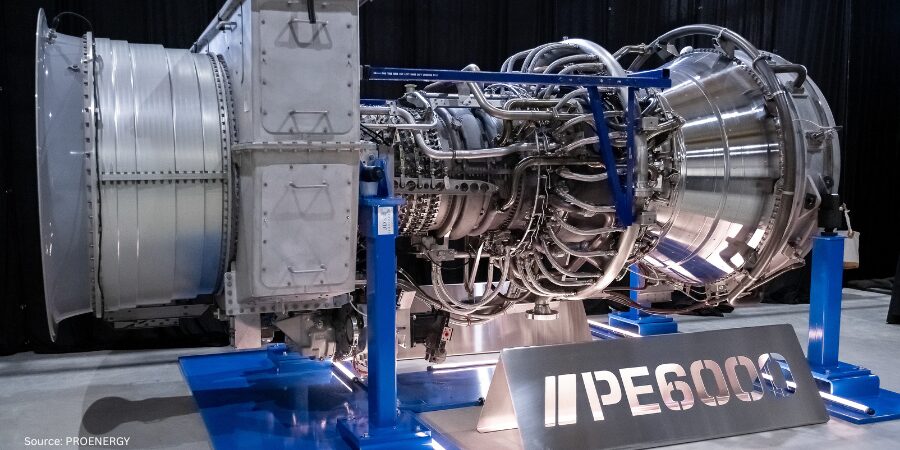
PROENERGY, a manufacturer of power-generation equipment and services, has ordered four vacuum furnaces to support operations at its new Houston Center for Excellence in Lifecycle Care. The 455,000-square-foot facility will serve fast-start gas turbine overhauls, maintenance, and onsite repair services, expanding capacity for the power industry.

John Spilker
Senior Vice President of Operations
PROENERGY

PROENERGY has selected three TITAN series vacuum furnaces and one TurboTreater system supplied by Ipsen USA to equip the Houston operation. “As we expand production of the PE6000 aeroderivative engine, we also needed additional vacuum furnace capacity,” said John Spilker, senior vice president of Operations at PROENERGY.

Ipsen USA will deliver and install one TITAN H2 2-bar vacuum furnace with an 18 x 18 x 24-inch work zone and a 1,000-pound capacity, two TITAN H6 2-bar vacuum furnaces, each with a 36 x 36 x 48-inch work zone and a 3,000-pound capacity, and one TurboTreater model H6672 featuring a 48 x 48 x 72-inch work zone and a 3,500-pound capacity. “Ipsen furnaces have served us well for years in both manufacturing and repairing turbine parts. Based on the accuracy and reliability of these furnaces, we worked closely with the Ipsen team to meet operational requirements, optimize cost, and minimize lead time,” said Spilker.

Press release is available in its original form here.

PROENERGY Expands Heat Treatment Capacity Read More »