Once a month, Heat Treat Today publishes an episode of Heat Treat Radio, a unique-to-the-industry podcast that covers topics in the aerospace, automotive, medical, energy, and general manufacturing industries. Each episode features an interview with an industry leader and is full of in-depth descriptions of technical content as well as heart-felt stories from industry legends.
Today's articlefeatures three industry leaders, ranging from young rising stars to seasoned industry staples. With two former 40 Under 40 honorees and one Heat Treat Legend, these are leaders you don't want to miss getting to know!
Enjoy this highlight reel of three industry leaders recently featured on Heat Treat Radio: John Becker, Sasha Tupalo, and Nic Willis.
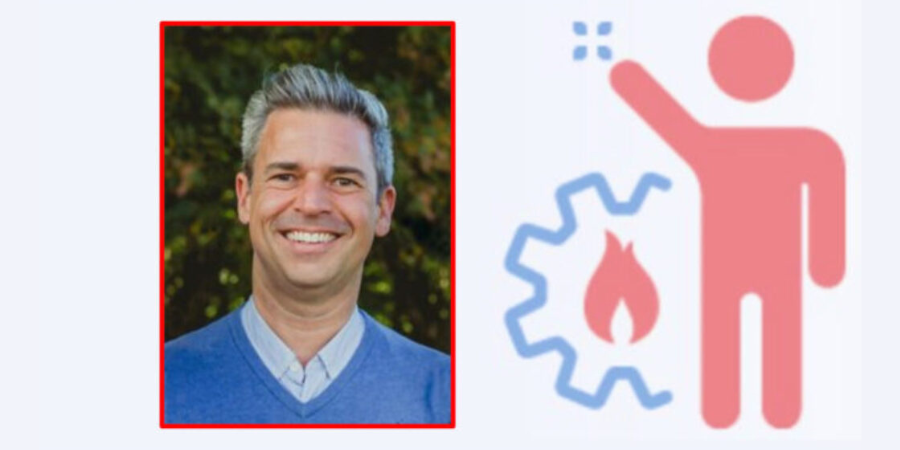
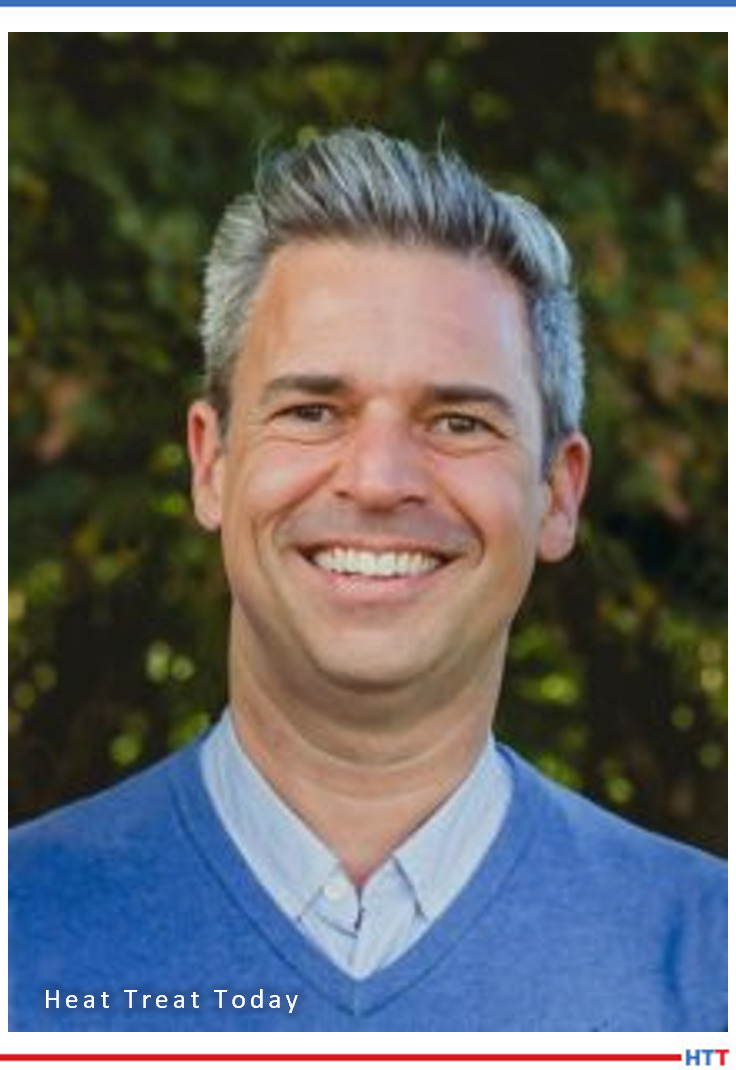
Heat Treat Radio: Heat Treat Legend John Becker
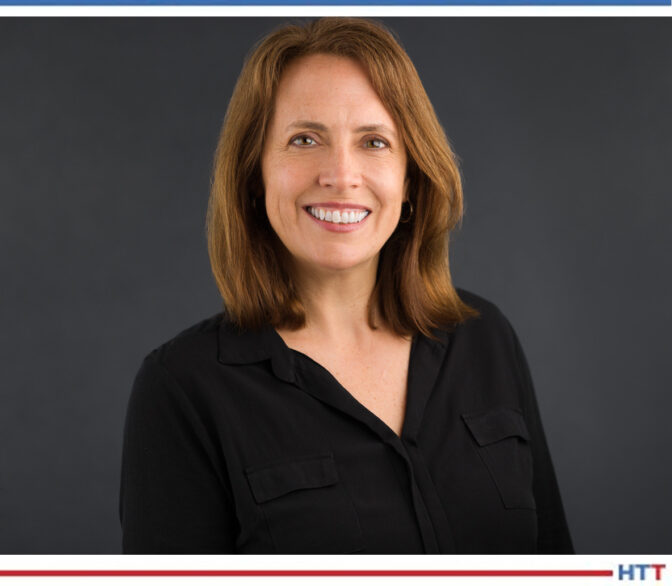
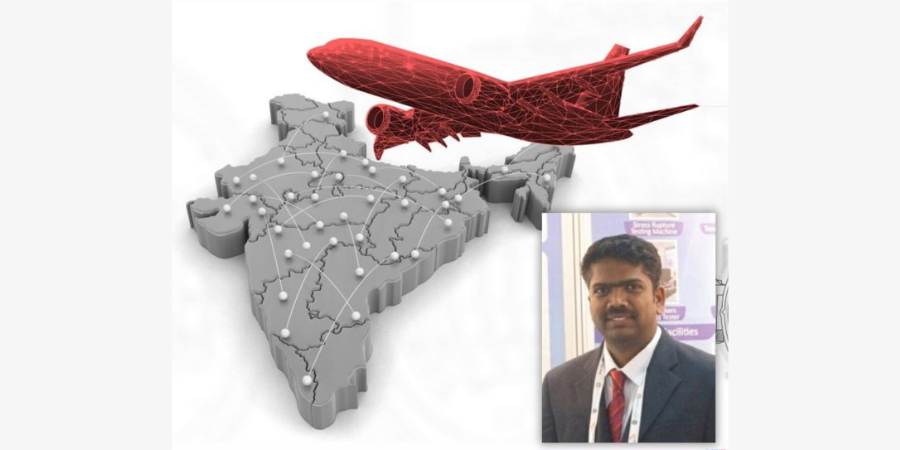
John Becker
President
Heat Treat Equipment
Source: Heat Treat Today
Meet the heat treat legend who describes himself as "tenacious like a bulldog." John Becker, experienced salesman, manufacturer, and founder/president of Heat Treat Equipment (est. 2011), shares his heat treat story and offers advice to the next generation of heat treaters in this Heat Treat Radio episode.
Before becoming the inspirational leader in the industry that he is today, Becker got his start in the early 60's as a janitor working in for his now-wife's father, sweeping up the steel division. Becker quickly progressed from a janitor to a small business owner, running the J. L. Becker Company out of the basement of his Michigan home.
An example of true American grit and determination, he expanded his company internationally, building equipment in places as diverse as Israel, Saudi Arabia, Thailand, China, Korea, Russia, and Ukraine. In 2011, Becker sold his first company to Gasbarre and founded Heat Treat Equipment, which he still runs today at the age of 79. His advice to the young heat treater: "If you don’t come home laughing and having a good time and enjoying yourself, you’re in the wrong business."
Read the transcript, and listen to or watch the podcast here.
It is rare to find a young person who says they are working their dream job, but in Sasha Tupalo, just such a person can be found! A 2019 40 Under 40 honoree, Sasha has since more than lived up to this award in her years in the industry. Born and raised in the Ukrainian town of Dnirpo, Tupalo offers a unique and helpful perspective to the North American Heat Treat Industry. Tupalo says she got into metallurgy by sheer curiosity after graduating from high school. This curiosity first led her to obtain a master's degree in Material Science and Engineering in 2014 and to her current role as the Manager of Thermatool Labs at Thermatool Corp.
In this episode, Tupalo speaks about her experience as a female in a male-dominated industry, her expertise in the heat treat industry, and her progression from applications engineer to materials engineer to senior materials engineer, and now to lab manager. When asked to offer a word of encouragement to the rising heat treating generation, Tupalo says, "There are lots of opportunities for growth. It’s fun. It’s a really fun industry — for me, it is, at least. If it’s something that interests you, I say go for it."
Read the transcript, and listen to or watch the podcast here.
Heat Treat Radio: Making the Leap to Laser Heat Treat with Nic Willis
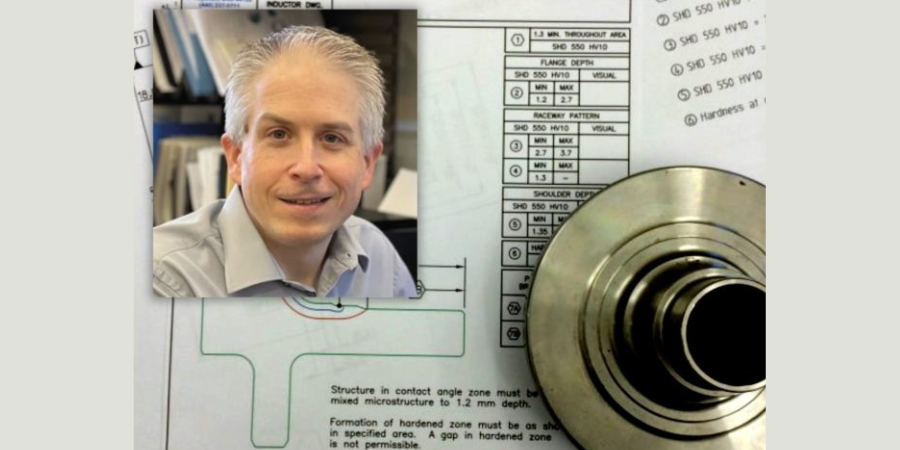
Nic Willis
Metallurgist/heat treat supervisor
Emerson Professional Tools — RIDGID® TOOLS.
Source: Heat Treat Today
This heat treat leader is not only the major player implementing laser heat treat in-house, but he is also a recipient of Heat Treat Today's 40 Under 40 recognition in 2020. Nic Willis is the metallurgical authority for all Emerson Professional Tools operations worldwide and is the metallurgist/heat treat supervisor of the RIDGID® TOOLS division.
It is no wonder that this young industry leader would accomplish great things in the world of heat treating. Willis has only been in the heat treat industry for about five years, but in that time, he has been a key figure in the modernization of the company's heat treat department, and he projects that laser heat treating will be brought in-house and on site for his company within the next few years.
"But what," the reader may ask, "is laser hardening?" Such a reader has come to the right podcast! Willis states, “It’s a form of selective hardening where you want some of the part to have a hard case for wear resistance. The rest of the part keeps its ductility. In this case, you’re using a laser — rather than an induction field or a flame — to heat up this specific area that you want to harden.” To find out more about Nic Willis and the laser-hardening process for heat treat, tune in to the full episode!
Read the transcript, and listen to or watch the podcast here.
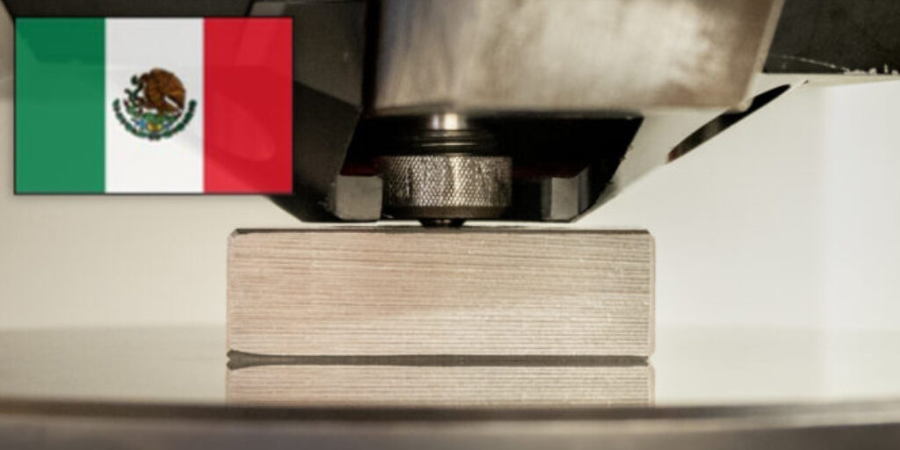
Cuáles son las características más deseables de un probador de dureza Brinell? Esta reseña del equipo le permitirá evaluar si debe o no incorporarlo a su departamento de tratamiento térmico.
Read the Spanish translation of this article in the version below or read the English translation when you click the flag to the right. Both the Spanish and the English versions were originally published in Heat Treat Today's August 2023 Automotive Heat Treat print edition.
Toda empresa dedicada al tratamiento térmico deberá practicar ensayos de dureza, algunos de ellos utilizando la medición Brinell que data desde el año 1900, lo que lleva a que se amerite el análisis de tan perdurable técnica. La prueba en mención requiere de un penetrador de bola de carburo de tungsteno que impacte de manera vertical sobre la superficie del material a ser ensayado, previamente ubicado éste sobre un yunque fijo. Paso seguido, se mide el diámetro de la “huella” generada por la bola, mínimo por los ejes “x” y “y,” y se toma el promedio de estas mediciones como cifra operativa de la que se pueda valer el técnico para establecer la dureza, bien sea alimentando una ecuación o mediante la lectura de una tabla de valores en la que se relacione diámetro frente a dureza.
Contact us with your reader feedback!
Para el ensayo Brinell se dispone de una amplia gama de cargas de fuerza, al igual que de diámetros de penetradores, reflejando la gran variedad de metales a ser probados; no obstante, en la mayoría de ensayos se implementa una bola de 10mm bajo una carga de 3.000 kg. En las grandes máquinas de apoyo a suelo por lo general el penetrador es motorizado, aunque otras operan a partir de palancas y pesas, mientras que también las hay hidráulicas o neumáticas.
Existen tres razones principales por las que la prueba Brinell no deja de ser el método más opcionado para la medición de la dureza en muchas industrias de tratamiento térmico.
1. Preparación de la superficie
La preparación de la superficie de una muestra para las pruebas Brinell toma solo unos segundos con una amoladora. Siempre que la muestra esté firmemente asentada sobre el yunque presentando la cara superior en dirección perpendicular a la dirección de la fuerza del penetrador, de acuerdo a lo exigido por las normas, no es necesario lograr una superficie demasiado lisa.
Figura 1. Robusto probador Brinell in situ
2. Contaminación de la superficie
Es poco probable que los contaminantes diminutos en una superficie generen una “prueba errónea” bajo un penetrador Brinell, a diferencia de la prueba de dureza Rockwell (el método más común en la industria). En esta prueba un pequeño indentador de diamante penetra menos de una centésima de pulgada, arrojando como resultado el que cualquier contaminante o anomalía en la superficie que pueda impedir o favorecer el progreso del penetrador (incluído el paralelismo) represente un problema, y obligando a que las muestras para la prueba Rockwell se deban preparar cuidadosamente antes de realizar la misma.
3. Portabilidad
Quizás el factor más significativo es que los robustos equipos portátiles de mano Brinell, con cabezales de prueba hidráulicos, permiten probar, in situ, piezas grandes, pesadas, de superficies rugosas o formas irregulares. Esta característica es de tal utilidad en la industria que ha motivado a que los órganos de normalización internacional otorguen una dispensación especial, una excepción si se quiere, a las máquinas portátiles, pese a que la ejecución de las mismas no sea susceptible de verificación directa como sí lo es la de sus equivalentes, las máquinas fijas.
Con fuerzas que van desde los 3000 kg hasta 1 kg, y bolas penetradoras tan pequeñas como 1 mm, las pruebas Brinell se pueden usar en una amplia gama de metales, pero los lugares en los que existiría la mayor probabilidad de encontrar un equipo de 10mm/3000kg son las forjas, las fundiciones, las plantas de tratamiento térmico, los laboratorios y las áreas de control de calidad. Previamente mencionamos que no se requiere que la superficie de las muestras de prueba sea absolutamente lisa; de hecho, es posible medir con un grado importante de precisión las superficies irregulares en materiales de configuración gruesa ya que el diámetro de la hendidura es tan grande en relación con cualquier irregularidad en la superficie.
Figura 2. Probador de Brinell, grado calibrador, en primer plano
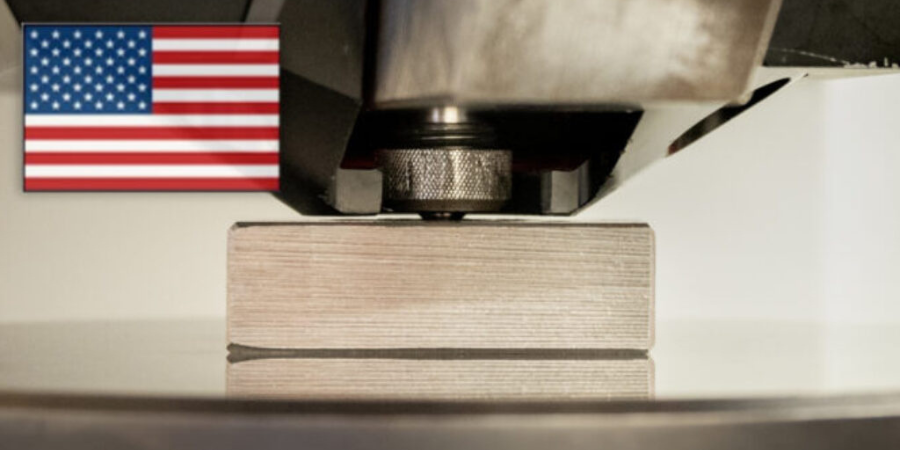
En la Figura 2 se puede apreciar cómo un probador Brinell de grado calibrador introduce la bola de carburo de tungsteno en la muestra de prueba. Se mantiene la bola en posición para estabilizar la deformación plástica.
Las normas que rigen de manera detallada las pruebas Brinell son la ASTM E-10 y la ISO 6506, pero el procedimiento práctico para los técnicos es muy sencillo, tanto que el entrenamiento no debería tardar más de una hora. Para ensayar piezas forjadas, palanquillas y otras muestras, una hendidura debería bastar aunque, desde luego, en ciertas aplicaciones de extrema importancia se podrá utilizar más de una para mayor seguridad.
Saber si analizar o no cada muestra en un lote determinado deberá decidirse con base en la inconsistencia de las muestras mismas, más no responde a problemática alguna con las pruebas de Brinell en sí. En ciertas industrias se prueba cada pieza que se produce debido a que el riesgo de error es demasiado alto. Un buen ejemplo lo encontramos en la producción de los componentes de los eslabones para las orugas utilizadas en tanques y maquinaria pesada (retroexcavadoras y demás). Cada eslabón de cada oruga de un tanque en uso en el ejército británico ha sido probado por Brinell en una máquina totalmente automática, de alta velocidad, que cuenta con una poderosa abrazadera integral para mantener el componente absolutamente rígido durante la prueba. Por cierto, esa máquina es la de la primera foto. Con un cuidado adecuado y razonable, un probador Brinell robusto podrá generar cientos de miles de pruebas; de hecho, el probador de la Figura 1 ha realizado varios millones.
Las pruebas duran aproximadamente quince segundos ya que el penetrador se debe dirigir hacia el material de manera uniforme sin permitir la posibilidad de un “rebote” y evitando por completo llegar a golpear el material. Por otro lado, el metal debe recibir la presión por un período de tiempo suficiente que garantice que la hendidura se deforme de la manera más plástica posible, es decir, minimizando al máximo el riesgo de la más ligera contracción de la hendidura una vez retirado el penetrador.
Figura 3. Medición de una hendidura de prueba de dureza Brinell
Sin embargo, es en este punto que se presentan las complicaciones. Después de generar cuidadosamente la hendidura y retirar la muestra de prueba de la “boca” de la máquina probadora, es necesario medir la hendidura en al menos dos diámetros. Dado que las hendiduras de Brinell tienen como máximo 6 mm de ancho y que una diferencia de 0,2 mm en el diámetro podría equivaler a 20 puntos de dureza, obtener la medición correcta es esencial y de alta complejidad. La mayoría de los técnicos usan un microscopio iluminado para lograrlo, pero aún así puede ser un desafío. Considere la Figura 3.
Los microscopios de medición manual han mejorado a lo largo de los años, y cuando se obtiene una hendidura relativamente “limpia” con una retícula nítidamente iluminada, se le puede facilitar al técnico experimentado realizar una medición precisa. La Figura 4 presenta un escenario menos complejo que el anterior pero, aun así, ¿cómo podemos saber si realmente se ha juzgado con precisión la posición del borde?
Figura 4. Medición con microscopio mejorado y retícula bien iluminada.
Al crearse la hendidura se genera un cordoncillo en el perímetro de la misma debido a que el metal no solo presiona hacia abajo, sino también hacia los lados. Este cordoncillo puede difi cultar la ubicación del punto en el que comienza realmente la hendidura, y tres técnicos diferentes pueden hacer fácilmente tres estimaciones diferentes de su lugar de inicio. Es esta variación en la interpretación de los resultados por parte de los operadores la que ha llevado a que, durante más de 80 años, la prueba Brinell se haya considerado un poco “ordinaria”, apta tal vez para el maquinista en el taller, pero de dudoso valor para el científi co en el laboratorio.
En 1982 llegó a los mercados el primer lector automático, siendo éste la culminación de años de investigación, y valiéndose de software privado que llevó a las computadoras de la época a sus límites. El equipo podía hacer cientos de mediciones de un lado a otro de la hendidura y calcular el diámetro medio en una fracción de segundo. Poco después llegó a ser parte integral de una máquina de prueba Brinell. La noticia de la aparición de este equipo pronto llegó a algunos usuarios importantes en la industria de las herramientas petroleras quienes exigieron a sus proveedores valerse de él; quince años más tarde se había diseminado ampliamente el uso de esta tecnología generando la transformación de la percepción que se tenía de la prueba Brinell. Podríamos decir que la prueba Brinell había llegado a la mayoría de edad.
Figura 5. La última versión de ese microscopio automático en acción
Desde luego, como con cualquier equipo de medición importante, la calibración y el mantenimiento regulares son aconsejables, si no obligatorios. Los fabricantes mismos suelen estipular un cronograma de mantenimiento que se debe tener en cuenta junto con las reglas de calibración establecidas por las agencias internacionales.
Al considerar las opciones para la prueba de dureza en muestras con tratamiento térmico, en última
instancia existen tres métodos: Brinell, Rockwell y Microdureza (Vickers o Knoop).
Pese a que no es adecuada para muestras muy pequeñas o demasiado delgadas, la prueba Brinell es relativamente “inmune” a los contaminantes pequeños, los penetradores no son costosos, y, gracias al ancho de la hendidura, las pruebas de superficies con acabado áspero e irregular no presentan dificultades. Con el desarrollo, hace 40 años, de la medición automática de la hendidura, se superó la única deficiencia grave de la prueba Brinell, proporcionando las garantías que tan vital importancia revestían para los proveedores de piezas esenciales en industrias de toda índole, incluídas las de petróleo y gas, aeroespaciales y de defensa y transporte.
Sobre el autor: Alex Austin se viene desempeñando desde 2002 como gerente de Foundrax Engineering Products Ltd. Foundrax es proveedor de equipos de prueba de dureza Brinell desde1948, siendo en realidad la única compañía en el mundo especializada en el campo.
Alex funge en el Comité de Prueba de Dureza por Hendidura ISE/101/05 del British Standards Institution. En su calidad de miembro de la delegación británica de la Organización Internacional de Normalización, ha aportado como consultor para el desarrollo de la norma ISO 6506 “Materiales metálicos–prueba de dureza Brinell” y preside en la actualidad la revisión ISO de dicha norma.
The brain drain is real. As new professionals enter the industry, Heat TreatToday is helping to ensure that young and old inquiring minds can connect with and grow from the experiences of high-value industry experts. Get to know the second Heat TreatToday Consultant: Thomas Wingens.
Thomas Wingens, President, WIIC - Wingens LLC
International Industry Consultancy
I am Thomas Wingens, masters in material science, MBA. During my over 35 years in the heat treat industry, I have worked with Bodycote, Ipsen, SECO/ WARWICK, Tenova, and IHI-Group in executive positions. Since 2011, I have been president of WIIC - Wingens LLC International Industry Consultancy in Pittsburgh, PA.
Thomas Wingens began his career in heat treat in 1987 as a metallurgist, heat treater, and consultant. Today, Thomas is an executive manager, experienced metallurgist, and hands-on heat treater with a knack for improving sales, solving technical problems, giving furnace advice, doing his due diligence, and advising executives. If it weren’t for NDAs, Thomas would love to share stories about the many exciting projects he has been fortunate enough to work on, but Thomas is able to share about his experience in developing novel processes for clients in the semiconductor, battery, rare earth magnet, and rocket industries. At Wingens LLC International Industry Consultancy, Thomas’ strengths are on full display. Thomas describes himself as a “hands-on” heat treater, as he consults 100% of the time on heat treating, leveraging his background as a metallurgist. His key assets strengths are his deep thermal processing knowledge and his perfect furnace selection abilities.
Powder metallurgy and thermal processing of specialty materials are areas of expertise for Thomas. These specialty materials include: titanium, tantalum, niobium, neodymium, and rare earth elements. Along with these specialty materials, Thomas has an extensive knowledge of brazing, metal cleaning, hydriding/dehydriding, tool and die heat treatment, high speed heat treating, brazing heat exchangers, and debinding/sintering, as well as sputter targets and reduction and diffusion processes. Thomas has served the medical and aerospace industries, working with medical components and heat treatment of landing gears. Thomas agrees with Elon Musk’s opinion on what comes next: “making stuff ” is the future. In the U.S., 50 years of off- shoring industrial manufacturing is finally coming to an end, and America is reindustrializing. Mines are reopening, raw material processing is becoming a trend, however, a large portion of intellectual property and practical skillsets have been lost. State of the art, environmentally friendly, safe, and automated equipment is needed to meet today’s technical and economical standards.
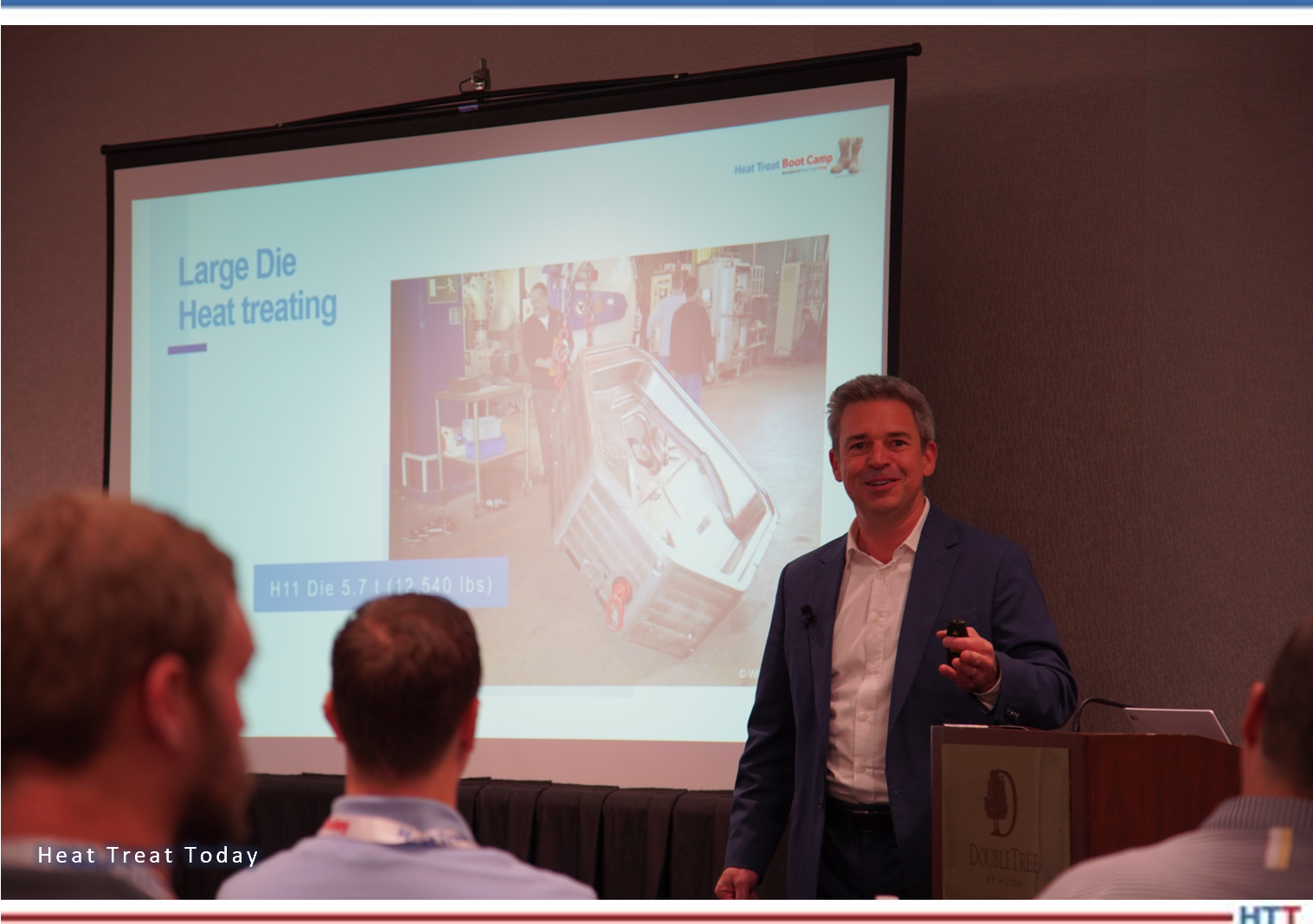
Thomas was also one of two keynote speakers at Heat TreatToday'sHeat TreatBoot Camp. Thomas’ lectures centered on the processes and materials of the North American heat treat industry; he shared some of his vast knowledge of heat treating for attendees, speaking on common processes, various alloys used in heat treating, and exciting new developments in the future of heat treating.
Thomas at Heat TreatBoot Camp (Source: Heat TreatToday)
See www.wingens.com for further info or visit Thomas’ consultants page at HeatTreatToday.com.
Find heat treating products and services when you search on Heat Treat Buyers Guide.com
What are the most desirable attributes of a Brinell hardness tester? Does it belong in your heat treat department? Read this equipment overview to decide.
Read the English translation of this article in the version below or read the Spanish translation when you click the flag to the right. Both the Spanish and the English versions were originally published in Heat Treat Today's August 2023 Automotive Heat Treat print edition.
Alex Austin
Managing Director
Foundrax Engineering Products Ltd
Source: Foundrax
All heat treatment companies must test hardness; many with a Brinell tester. Existing since 1900, a review of this time-tested method is in order.
Contact us with your Reader Feedback!
The Brinell test requires a tungsten carbide ball indenter to be forced vertically into the surface of the test material, placed on a rigid anvil. The diameter of the indentation made by the ball is then measured across both its x and y axes as a minimum, and the average of these measurements is taken as the working figure. The technician can then either feed that figure into an equation to determine the hardness or read from a “diameter-to-hardness” chart.
There are various forces and indenter diameters available for Brinell testing reflecting the very wide range of metals that need to be assessed, but most tests involve a 10 mm ball under a 3,000 kg load. In large, floor standing machines, the indenter is usually motor-driven, but some machines use levers and weights, while others are hydraulic or pneumatic. The Brinell test remains the default method for hardness measurement in many heat treatment facilities, for three primary reasons.
1. Surface Preparation
Preparing the surface of a sample for Brinell testing takes just a few seconds with a grinder. Provided the sample is sitting steadily on the anvil and the top face of the sample is perpendicular to the direction of force of the indenter — as mandated by the standards — the surface does not need to be particularly smooth.
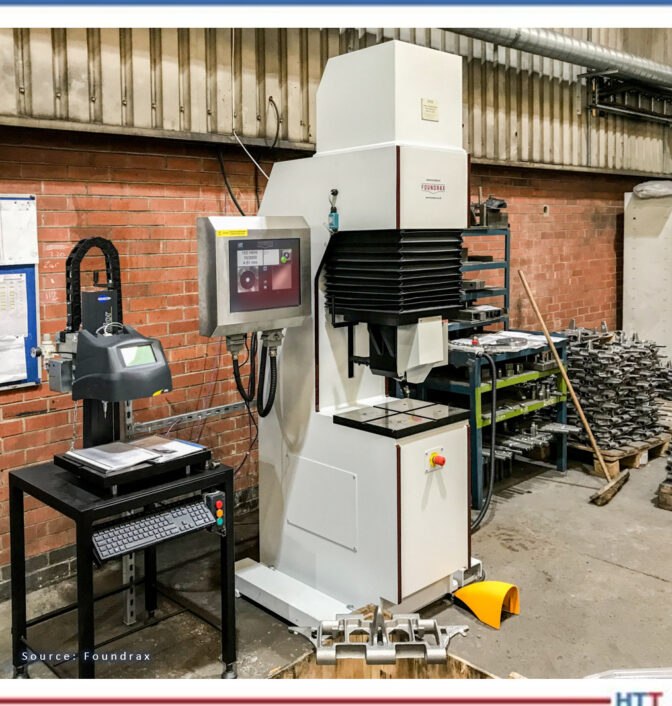
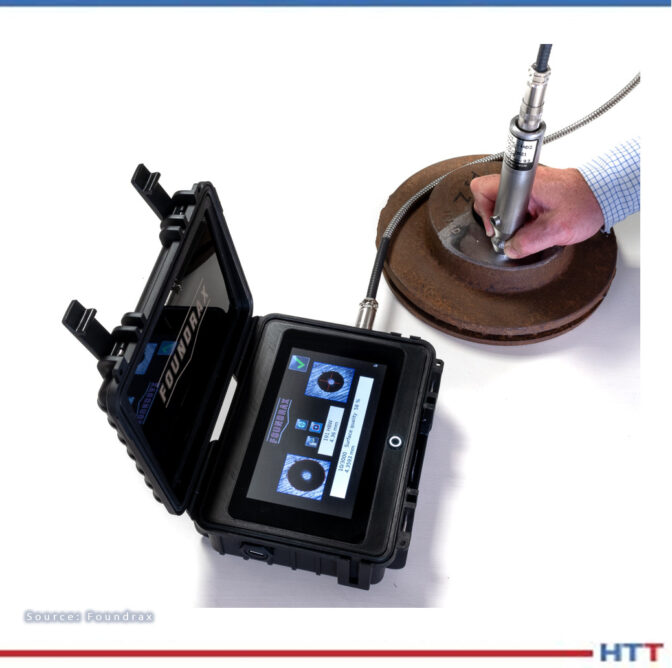
Figure 1. Heavy-duty Brinell tester in situ
2. Surface Contamination
Minute surface contaminants under a Brinell indenter are unlikely to cause a “mis-test.” By comparison, during Rockwell testing, the most widely used method across all industries, a tiny diamond indenter penetrates the surface by less than one hundredth of an inch, and any contaminants or surface abnormalities (including parallelism) that could impede or assist the progress of the indenter are a problem, which means that Rockwell samples must be carefully prepared before testing.
3. Portable
Perhaps most significant, rugged, hand-held portable Brinell testers with hydraulic test heads enable large, heavy, and awkwardly shaped components of rough surface finish to be tested in situ. This feature is of such utility in industry that the international standards authorities give a dispensation — a special designation — to portable machines, although their performance cannot be directly verified like their floor-standing cousins.
With forces ranging from 3000 kg down to 1 kg and indenter balls as small as 1 mm, Brinell testing can be used on a vast range of metal, but forges, foundries, heat treatment plants, quality control areas, and laboratories are the places one would most likely find a test machine working at 10 mm/3000 kg. It was mentioned earlier that the surface of test samples doesn’t need to be particularly smooth, in fact roughly- ground surfaces on materials with a coarse grain structure can be measured quite safely because the diameter of the indentation is so large relative to any irregularities on the surface.
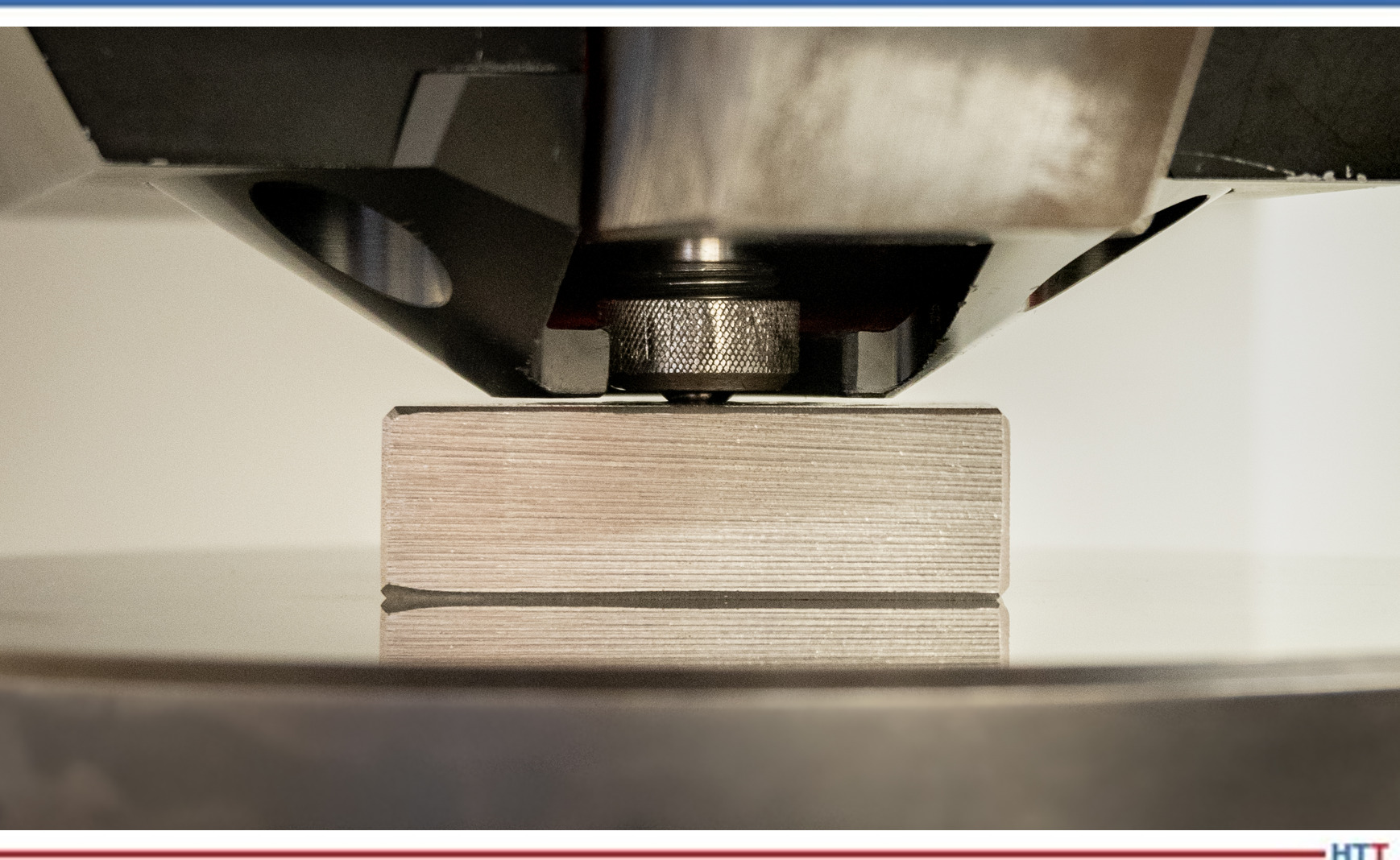
Figure 2. Close-up of a calibration-grade Brinell tester
In Figure 2, a calibration-grade Brinell tester drives the tungsten carbide ball into the test sample. The ball is being held in position to stabilize plastic deformation. ASTM E-10 and ISO 6506 — the authoritative documents for Brinell testing — lay out standards in detail, but the practical procedure for workshop technicians is very straightforward; training should not take longer than an hour. When testing forgings, billets, and other samples, one indentation should suffice but in certain critical applications more than one indentation may be used for assurance.
The question of whether to test every sample in a batch will depend on how inconsistent those samples might be; it has nothing to do with any issues with Brinell testing itself. In certain industries, every single product is tested because the risk of failure is too high. A good example of this is the production of links for the tracks used on tanks and other armored vehicles. Every link in every tank track in use by the British Army has been Brinell tested on a high-speed, fully automatic machine that features a powerful integral clamp to keep the component rigid during the test. You can view the machine in Figure 1 on page 44. Subject to reasonable care, a heavy-duty Brinell tester will perform many hundreds of thousands of tests. The machine in Figure 1 has performed several million.
Tests take approximately fifteen seconds. The indenter must be driven uniformly into the material with no possibility of either a rebound or a speed that would “punch” the indenter into the material. Also, the metal must be loaded for a sufficient length of time to ensure the indentation is properly (plasticly) deformed, that is, the risk of an indentation shrinking very, very slightly after the indenter is withdrawn is kept to a minimum.
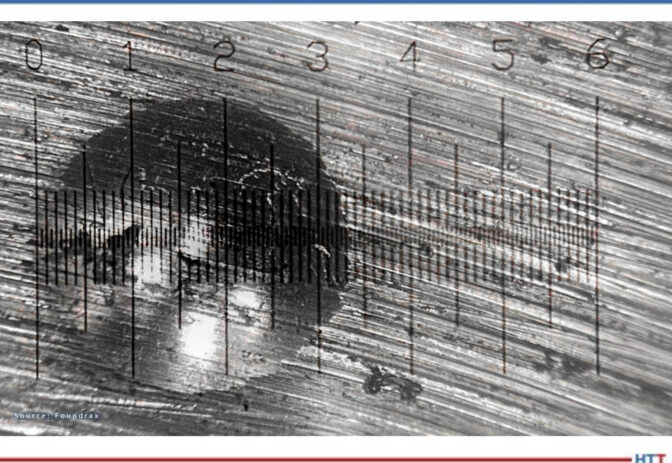
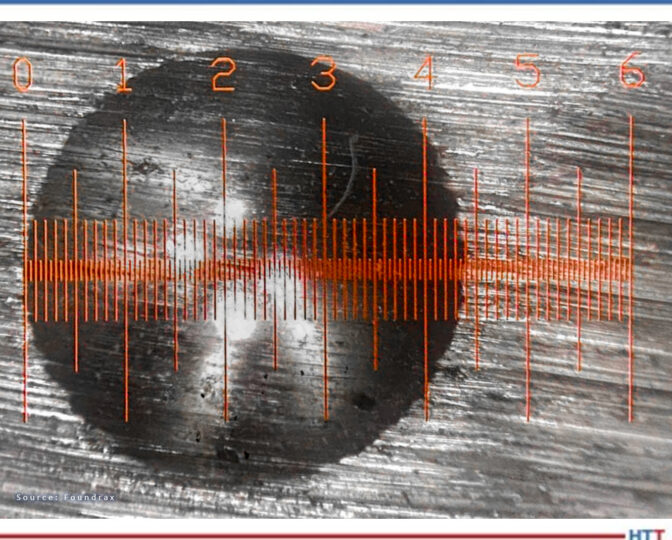
Figure 3. Measurement of Brinell hardness test indentation
Measuring the indentation is more challenging. After carefully making the indentation and withdrawing the test sample from the “jaws” of the test machine, one must measure the indentation across at least two diameters. Given that Brinell indentations are at most 6 mm across and that 0.2 mm difference in diameter might equal 20 hardness points, getting the measurement right is critical — and tricky. Most technicians will use an illuminated microscope to do this, but even then it can be a challenge. Consider Figure 3 on the next page.
Making an indentation leaves a “ridge” at the indentation perimeter because metal is not just pushed downwards, but also sideways. This ridge can obscure where the real indentation begins, and three different technicians can easily make three different estimates of where that is. And this variation in operators’ interpretation of results is why, for over 80 years, the Brinell test was seen as a little “rough and ready,” for the workshop machinist, perhaps, but probably not for the laboratory scientist.
Manual measurement microscopes have improved over the years, and a relatively “clean edged” indentation with a crisply illuminated graticule can be less challenging for the experienced technician to make an accurate measurement. Figure 4 is a less difficult scenario than the one above. Even so, how can we know if we have really judged the position of the edge precisely?
Figure 4. Measurement with improved microscope and well-illuminated graticule
In 1982, the first automatic reader hit the markets. This was the culmination of years of research and used proprietary software that pushed the computers of the day to their limits. The equipment could make hundreds of measurements across the indentation and calculate the mean diameter in a split second. Not long afterwards, it was available as an integral part of a Brinell test machine. Word of this equipment soon reached critical users in the oil tool industry, and they mandated its use to their suppliers. Within 15 years, the use of this technology was widespread and the perception of the Brinell test’s accuracy had been transformed. The Brinell test, in a sense, had come of age. See Figure 5 for the latest version of that automatic microscope in action.
Finally, like any important measuring equipment, regular calibration and servicing is desirable, if not compulsory. Manufacturers typically stipulate a service schedule which must be considered alongside the calibration rules dictated by international agencies.
When considering options for hardness testing of heat treated samples, there are ultimately three test methods: Brinell, Rockwell, and Microhardness (Vickers or Knoop).
Figure 5. Latest version of the automatic microscope in action
While Brinell testing isn’t suited to very small or very thin samples, it is relatively “immune” to small contaminants, the indenters are not expensive, and the width of the indentation means that testing of coarse grained and roughly finished surfaces is not problematic. With the development of reliable automatic indentation measurement, the one serious deficiency of the Brinell test was overcome, providing the assurance that was vital to critical components suppliers in all types of industries such as oil and gas, aerospace, defense, and transportation.
About the Author:
Alex Austin has been the managing director of Foundrax Engineering Products Ltd. since 2002. Foundrax has supplied Brinell hardness testing equipment since 1948 and is the only company in the world to truly specialize in this field. Alex sits on the ISE/101/05 Indentation Hardness Testing Committee at the British Standards Institution. He has been part of the British delegation to the International Standards Organization advising on the development of the standard ISO 6506 “Metallic materials – Brinell hardness test” and is the chairman and convenor for the current ISO revision of the standard.
For more information:
Contact www.foundrax.co/uk.
Find heat treating products and services when you search on Heat Treat Buyers Guide.com
The brain drain is real. As new professionals enter the industry, Heat TreatToday is helping to ensure that young and old inquiring minds can connect with and grow from the experiences of high-value industry experts. Get to know the first Heat TreatToday Consultant: Dan Kay.
Daniel Kay
Owner
Kay & Associates
I am Dan Kay (which is a shortened form of my birth name: William Daniel Kay). Although I was born in Ohio, I grew up in New Jersey, went to college (Rensselaer Polytechnic Institute) in New York State, and graduated with a degree in Metallurgical Engineering. I grew up in a wonderful family, as the third child out of six children that my parents had. They were both strong spiritual leaders, too, shaping our Christian faith and helping us to make it a strong foundation in our lives. I am married to a wonderful woman, and we’ll be celebrating our 55th wedding anniversary together in June. She continues to be a real blessing to me in so many ways. My home is in Simsbury, CT, where we have now lived for the past 25 years
Dan Kay lectures at one of his popular seminars on brazing.
Source: Kay & Associates
Dan Kay’s biggest strength is teaching and training. Being able to effectively communicate to others, verbally and in writing, to bring about positive change in others is not easy in today’s world, but it is something Dan believes he has learned to do well. Currently, Dan uses his teaching skills at brazing seminars that help to increase productivity and reduce scrap and rework.
For almost 60 years, Dan has been involved in the heat treating industry. His specialty is brazing: the joining of metal parts together to form complex assemblies, using a brazing filler metal (BFM) that melts and flows by capillary action into joints between the component parts making up that complex assembly. Out of these 60 years, Dan has many stories, but one stands out: discovering the cause of a mushy joint in tweezers used in the medical industry. After carefully studying the manufacturer’s operations, Dan suggested waiting several seconds after brazing by induction heating and before quenching, allowing the filler metal to solidify completely. After this, the tweezers no longer broke when doctors used them to stitch up patients.
Dan Kay's biggest strength is teaching and training.
Source: Kay & Associates
In Dan’s opinion, brazing and heat treating need to form a stronger partnership in the years ahead. Increasingly more metals require heat treating to obtain optimal properties for end-use service conditions. Brazing is also a growing industry, enabling more and more complex parts to be created, many of which need enhanced properties for successful use in the field. This will typically require more and more vacuum brazing/heat treat to be done, and heat treat personnel need to become familiar with brazing and its requirements, so that mistakes will not occur. Vacuum furnaces need to have additional complex internal heat treat and quench capabilities for a wide variety of metals, including aluminum, to allow such parts to be brazed, and then heat treated and quenched in multi-bar furnaces.
To learn more from Dan, visit his website kaybrazing.com/seminars to attend his next seminar
Find heat treating products and services when you search on Heat TreatBuyers Guide.com
Those familiar with vacuum heat treatments are surely acquainted with the vacuum heat treatment of titanium and how such furnaces create the ideal environment for titanium's heat treatment. However, not all titanium and its alloys are created equal. Enter the beta titanium alloy.
In this best of the web article from TAV Vacuum Furnaces, discover the potential applications for beta titanium alloys, as well as the effects that various vacuum heat treatments can have on the mechanical properties of the alloy. Additive manufacturing (AM) technologies, specifically laser powder bed fusion, are gaining increased interest in the treatment of beta titanium alloys, due to their efficiency and their cost-cutting potential. Learn more about the chemistry and applications of this unique material below.
An excerpt:
Beta titanium alloys have an unique combination of desirable properties: their high specific strengths, creep resistance, oxidation and corrosion resistance, excellent temperature resistance up to 600°C and hardenability, make them very attractive for aerospace applications. On the other hand, the excellent biocompatibility and low elastic modulus, closer to that of human bone compared to other alloys, make Ti beta alloys an excellent material for biomedical applications.
For this release from our September print edition, specifically concerned with the different “People of Heat Treat,” Heat TreatToday was curious what a group of distinguished women taking the lead in North America’s heat treat industry had to say about their experiences in a space where women are the minority. Hear a bit of their personal stories of challenge and success in the roundtable below.
This article originally appears in Heat Treat Today'sSeptember2023 The People of Heat Treat print edition.
1. What is your “origin story” of entering the
heat treat industry?
Contact us with your Reader Feedback!
Deidra Minerd, Operations Manager & Metallurgical/Process Engineer, The Euclid Heat Treating Company: I entered the heat treating industry because it was a family business. That wasn’t my original plan, though, as I started my college career in pharmacy. Summer jobs were at the family heat treating business that my grandfather started, and one summer I decided to change schools and study metallurgical engineering, with the intent to join the business after college.
Debra James, President/CEO at METALEX THERMAL SPECIALTIES: I began working for a company that did ion nitriding in 2012. I was hired as the office administrator, but it was a small company, so we wore many hats that included helping the guys in the shop loading and unloading parts when they needed a hand. From there, it was a learning process of understanding the heat treating industry, working with customers to meet their expectations, and developing business relationships.
The gentleman that owned the company was a great mentor who encouraged growth and development. He wanted me to purchase the company, and we had started down that path when he passed away. In 2019, his successors took over the company, but they did not focus on customer service, growing the company, or making improvements.
Debra James, President/CEO of METALEX (Source: METALEX)
That is when we began looking for an outside company to purchase. We were able to purchase a small heat treating company in Berthoud, Colorado. Immediately, we took steps to focus on customer service and offering updated processes to our customers. We have received very good feedback from our customers, and we have been able to grow our sales by 20% each year. We also took steps to get our Women’s Business Enterprise National Council (WBENC) certification, as well as our AS9100 certification. In addition, we were able to relocate the business to a much larger facility that will enable us to continue to grow and expand.
Mary Springer, Executive Vice President at ThermTech Of Waukesha, Inc: In 1968, my dad started his own heat treating company called Midland Metal Treating in Franklin, WI. I was 10 years old. He had worked as a tool and die heat treater at Simmons Company, and other places. He was very proud of his heat treat journeymen’s card.
Midland was very much a family endeavor. There were four of us and we all went to work with dad, mostly to spend time with him. I became an expert at running the induction hardening department. I was a tomboy, so I loved the shop environment. I worked as much as I could, in the beginning for root beer and Cheetos! However, spending hours and hours pushing a button and watching a part heat up became pretty monotonous.
My dad never dissuaded me from working with him, but I got the sense that he wanted me to go to college, yet the subject of engineering never really came up. I wanted to be an oceanographer and follow Jaques Cousteau around the globe, but found that I really did not want to leave my family. So, I ended up with several of my friends in nursing school, working for dad in the summer.
After obtaining a master’s degree in Nursing and a minor in Business Management, I worked as a nurse educator for a large hospital system and taught at the local university. In the late 1970s, the recession took its toll on Midland, and my dad had sold the company under duress.
A year later, at the age of 54, he decided to roll the dice again and started ThermTech. My brother was studying metallurgy at UW-Madison, and my older sister was working in the office. I felt a longing to be a part of it again. In 1987, I left my job at the hospital and joined my dad and siblings. Everyone did everything they could to make a go of it and little by little, we grew ThermTech. I kept a job working weekends as a home IV oncology nurse until 2004, as I did miss my old job!
As ThermTech grew, my older sister left, and my brother and I learned to work together sharing the duties of running a business. My dad retired when he was 70, and my brother and I became equal stock owners.
2. Have there been any challenges that you’ve
encountered in heat treat?
Mary Springer received MTI’s Heritage Award in 2019, an award which recognizes an individual’s lifetime commitment to the betterment of the commercial heat treating industry. (Source: MTI)
Deidra Minerd: One challenge I faced when I started was translating what I learned in college to what was happening on the shop floor. I had a lot of book knowledge, but I didn’t know how to run a heat treating furnace. I had to make the effort to learn from people on the shop floor, ask questions (even if they sounded like stupid questions), and get my hands dirty so I could learn and earn their respect.
Debra James: Occasionally I encounter people who do not think women really belong in the heat treating industry and assume that I am just an employee rather than an owner of the business. The other major hurdle that we have encountered is getting financing for equipment. Our equipment purchases are usually used equipment due to the prohibitive costs of new equipment and being able to access financing for used equipment can be difficult.
Mary Springer: Heat treating is VERY challenging. Different problems every day. That is what I love about it. I work hard to develop relationships with employees. Currently, we employ 155 people, we run 3 shifts 24 hours/6 days a week. I love planning expansion, figuring out financing on large projects, and solving problems.
3. What solidified your leadership in this industry?
Deidra Minerd: While I certainly don’t feel like an expert, I’m reminded every now and then that I have certainly collected quite a bit of expertise over the years. An important lesson I learned, however, is that having the most technical knowledge does not necessarily make you the best leader. There is an additional set of skills necessary to successfully lead a group of people and/or a business, and that set includes humility, patience, integrity, good communication skills, and the ability to see the big picture and be open to change. Years ago, my mentor, Roger Fabian, suggested that I would be a good leader in my company, and that was an important moment for me. He had been a leader in the heat treating industry, and I valued his opinion and appreciated that he noticed that in me.
Debra James: The key factor that solidified my desire to own our heat treating business was first the support and encouragement that I had received from the gentleman that originally owned the ion nitriding company I worked for. He was a very knowledgeable person and knowing that he thought I could run my own heat treating business made me see that possibility. In addition, knowing that I could do a better job of owning, managing, and operating a company than the successors that took over his business was also a motivating factor.
Mary Springer: As a company, the realization that my brother and I have built a “brand” in the industry, watching our sales/profit grow, and knowing how proud our mom and dad would be of what we did with the great opportunity they afforded us . . . feels very nice. Also, we each have a son in the business, and they are coming into their own, hearing their ideas for the future . . . exciting! I guess I do not consider myself an expert in the industry, only someone who is hardworking and always curious!
4. Any advice you’d give to women in heat treat to enjoy and “own” their position?
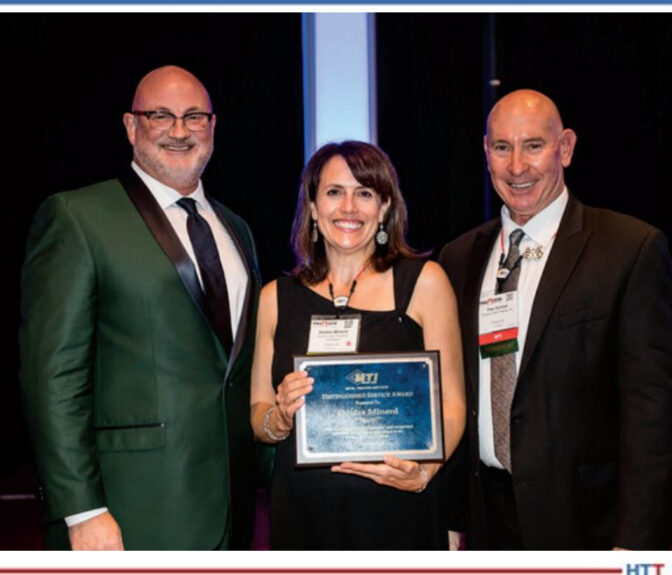
Deidra Minerd receiving Distinguished Service Award in 2018.
Deidra Minerd: My advice to women would be to “own” their knowledge and be confident in it, but also be willing to ask questions. I think young people may be hesitant to say they don’t know something, for fear of not being perceived as “smart.” However, a lot of knowledge is gained from peers instead of from books, so the ability to constantly learn is important.
Debra James: First of all, embrace this industry and realize all that there is to learn. Always be looking at ways to improve what you do and how you can best meet your customer’s needs. Establish yourself as the person the customer/contact needs to talk to.
Mary Springer: For me this has never been about being a “woman in a man’s world.” I have never experienced anything but acceptance in this industry. Working hard is working hard. If you put your best effort forward, you will enjoy the fruits of that effort. Dedication earns respect, there’s no other way around it. Never stop learning, and remember, no one can “have it all.” Choices have consequences, good and not so good. But never complain about the consequences of your choices, you have to own it. Don’t do it if you don’t love it!
5. What is the best part of the heat treat industry?
Deidra Minerd: What I love about heat treating is the history and consistency of metallurgy. You can have a very fancy furnace that follows a program minute-by-minute with thermocouples to monitor the temperature of the part, or you could heat it up in an open-fire furnace and quench it with tongs in a 5 gallon bucket of oil, and it will respond the same way. New technology doesn’t change the basics of metallurgy.
Debra James: The best part of the industry is that there is always something to learn and new avenues to explore for growth and development of yourself personally and professionally. I truly enjoy our customers and the relationships that we have built with them. It is so rewarding when they tell us how much they appreciate what we do for them.
Mary Springer: In commercial heat treating, I find it very challenging to anticipate the needs of our regional market, to be able to reinvent ourselves technically to serve new demands. It is exciting to bring new equipment in and see the growth. I love to see our people grow and learn, prosper from their careers here. We have many people with over 15 years’ experience. Figuring out how to connect with the younger generation has been a journey . . . . Also, it is always interesting, but difficult to learn from mistakes. Surviving whatever! I remember in late 2019, my sales manager came in one day and said, “Do we have a plan for a pandemic? There is this COVID thing going on in China . . .” I kind of chuckled and said, “It’s just the flu!!!!” HA! You just never know where the next challenge will come from. Try always to keep a light heart.
About the Industry Leaders
Deidra Minerd is the Operations Manager & Metallurgical/Process Engineer at The Euclid Heat Treating Company.
Debra James is the president/CEO at METALEX THERMAL SPECIALTIES.
Mary Springer is the Executive Vice President at ThermTech of Waukesha, Inc.
Find heat treating products and services when you search on Heat TreatBuyers Guide.com
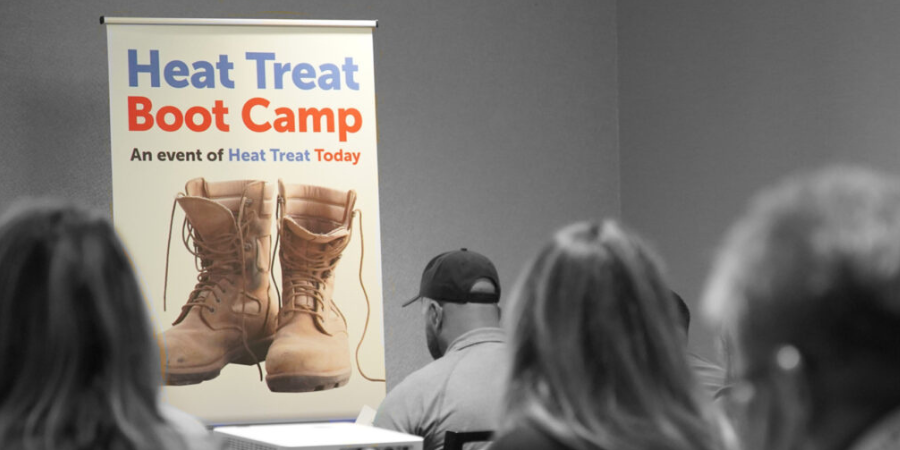
Another Heat Treat Boot Camp has come and gone. Yesterday marked the end of a successful second year in Pittsburgh, Pennsylvania. This intensive basic training for the heat treat industry had attendees networking, gaining new practical knowledge, and getting their "boots" on the ground and up Pittsburgh's Duquesne Incline and Penna Flame's flame hardening plant.
The event opened on a Steelers vs. Browns Monday, September 18, where the trainees got to know one another over food and drink at a reception. Seven sessions ensued between Tuesday, September 19, and Wednesday, September 20. Instructors Doug Glenn, publisher and founder of Heat Treat Today, and Thomas Wingens, president/CEO and founder of WINGENS International Industry Consultancy took these two days to bring the 40+ trainees up-to-speed on "Heat Treat Players," "Latest Heat Treat Developments," and more. Questions and discussion were encouraged during the formal sessions, and heat treaters had plenty of informal, additional learning time through interactions with each other and the instructors.
Highlights of the Event
“We had substantial growth of the number of people here, about a 33% increase [in attendance from last year]. We had over 40 people that attended, and the interaction was really remarkable," commented Glenn. He added, "One of the best benefits we had was the networking that went on. The presentations were good, we even made improvements over last year. I’m very, very pleased with the results; I think it was a great event."
At the end of the first day of lectures, nearly all of the attendees boarded a rented school bus to visit the Duquesne Incline on Mount Washington and enjoy the view of Pittsburgh. Following another day packed with training and resources, attendees had the option to visit the Penna Flame to check out the flame hardening services. Over half of the attendees ventured out to the Zelienople-based plant, applying what they learned about heat treat processes, parts, and markets that had been discussed during lectures. Andrew Orr, vice president at Penna Flame, gave the group a first-class tour of the facility to witness induction hardening, collaborative robots, quenching, and flame hardening in action.
Attendees gathered on the last day of lectures for a final picture. Doug Glenn, publisher of Heat Treat Today, is pictured second row back on the far left. Thomas Wingens, WINGENS LLC, stands second row back on the far right.
Heat Treat Today thanks everyone for their participation in this amazing year #2 Heat Treat Boot Camp. Plans are underway for Heat Treat Boot Camp2024. Stay tuned for registration information; see you next year!
Photo Source: Heat Treat Today
Find heat treating products and services when you search on Heat Treat Buyers Guide.com
Nitrex and Linde announced they have renewed and expanded their heat-treating focused joint marketing agreement. What started as a local agreement 13 years ago, between Nitrex and Linde, formerly known as UPC-Marathon and Praxair, respectively, has evolved into an international marketing agreement and now covers Europe and North America.
To date, Nitrex and Linde have worked together on over 30 projects. By using their complementary offerings, they have upgraded essential equipment and have helped customers achieve quality results. Nitrex provides Linde customers with equipment and analyses to control first-rate gas atmospheres, thanks to its competence in the heat treatment and electrical fields, technical solutions, support, and world-class gas panels.
“Our competencies complement each other,” says Roman Grosman, National Director of Business Development for Linde in the U.S. “In the event that Linde’s heat treatment clients require equipment that we do not offer, Nitrex can meet this need.”
“This continues to be a win-win relationship,” says Paul Oleszkiewicz, President, CPO & CSO of UPC-Marathon, a Nitrex company. “We can supply Linde gas customers with process controls, and in turn, Linde offers a reliable gas supply network. We are both aiming for the highest quality, efficiency, performance, and a greener tomorrow and providing optimal service for our customers.”
Find heat treating products and services when you search on Heat Treat Buyers Guide.com
GKN Aerospace has expanded its capabilities with additive manufacturing (AM) machines, accelerating its industrialization of sustainable aero engine solutions. This new technology will offer more reliable and sustainable alternatives to traditional castings and forgings.
The supplier of these machines is Nikon SLM Solutions, whose NXG XII 600's printing area and 12 lasers align with GKN Aerospace's vision to produce large parts with high productivity. Two systems have been ordered, one to be used with In718 and another for Ti64.
In the words of Martin Thordén, VP of Permanova, the newly formed business unit for material solutions within GKN Aerospace, "Partnering with Nikon SLM Solutions is a key milestone in our journey to create better, more sustainable aerospace products. . . . This collaboration provides us access to cutting-edge additive manufacturing capabilities necessary to propel us towards our net zero ambition."
Find Heat Treating Products And Services When You Search On Heat Treat Buyers Guide.com