


featured

Thermal Processing for Space and Additive Manufacturing

The race to space is in full swing with public and private sector companies staking their claim in this new frontier. And breakthroughs in technology and materials offer the potential to propel humanity to unprecedented distances. Success hinges not only on the ability to discover novel solutions but also on the capacity to prepare those solutions for efficient, large-scale production.

This Technical Tuesday article by Noel Brady of Paulo was originally published in Heat Treat Today’s March/April 2024 Aerospace print edition.


Space Today: Making Life on Earth Better, Safer, and More Connected

Noel Brady, Metallurgical Engineer, Paulo
Source: Paulo

According to NASA, 95% of space missions in the next decade will stay in low Earth orbit (LEO) and geostationary orbit (GEO). Th at means the first wave of commercial activity in space will be largely focused on making life on Earth better.

Several worldwide broadband satellites are already in orbit, offering more consistent, reliable internet signals around the globe. Defense campaigns are using advanced satellite machine learning to improve asteroid and missile detection, along with revolutionary laser technology that has made intersatellite communication possible for the first time — and the travel of information faster. And to help make
life in space safe and successful, NASA is developing a scalable network of public GPS receivers for easy, short-range space navigation and tourism.

All this to say, parts are being developed for a wide range of applications, a huge portion of which are being additively manufactured.

Thermal Processing Standards Necessary for AM Adoption

However promising additive manufacturing is for space, the adoption of AM has still been limited due to the lack of standards for proprietary material and 3D printing applications. Many thermal processing experts are joining research institutions and OEMs in the drive to bring AM into mainstream manufacturing with new industry standards and production-ready solutions that help achieve ROI.

The R&D process for discovering these standards can be lengthy and expensive because it requires trial and error. A prototype or small run of parts must be manufactured, then heat treated, and tested for the desired properties. If a test part’s yield strength is not where it should be, for example, then the heat treating recipe is adjusted, perhaps by lowering the temperature and increasing the pressure, and can be tested again on a new batch of parts.

Coach vs. Custom Cycles

In heat treating, there are two different types of cycles, and it’s important to know the difference when you’re working with any commercial heat treater. Coach cycles tend to be more economical because these are shared cycles — existing recipes that are in high demand and run on a regular schedule — with the potential to have multiple clients’ parts in the furnace at once. For example, a heat treater may have a standard titanium coach cycle they run once a day. See Table A for several coach cycles run at Paulo.
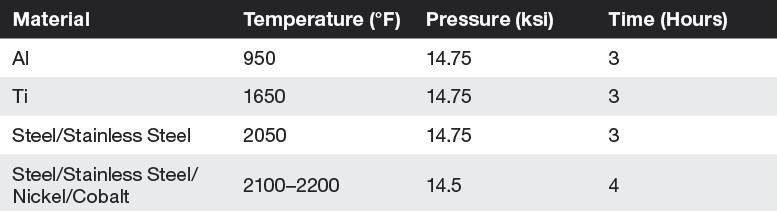
Table A. Example of Coach Cycles for Space Alloys

Coach cycles use recipes that were designed for cast parts and have been around since before additive was a viable form of manufacturing. While it’s true that cast parts and AM parts have similarities, such as their high porosity, it doesn’t mean that the recipes are optimal for preparing today’s parts for heavy space applications. That’s where custom cycles come into play.

Custom cycles are ideal for new or proprietary materials that don’t yet have recipes defined or that are not commonly heat treated enough to run on a regular schedule. The distinction between the two is important because not all heat treaters are equipped to run both types. While you may be able to find a coach recipe that gets you close to where you need to be, it certainly may not be optimal, especially for parts that will have a heavy life of service.

Heat treaters with flexibility of custom and coach cycles, along with full-cycle data reporting, offer a high level of control that is vital for helping the industry progress and scale for production. This is also a big reason why some in-house heat treating operations may choose to outsource some of their work: first collaborating with experienced commercial heat treaters to prove the specification for a new part with custom cycles before scaling for production.

Common Cycle Adjustments for AM

There are five primary parameters that can be adjusted in the heat treating of AM parts to achieve the desired results: temperature, pressure, time, cooling rate, and heating rate. For AM parts, adjustments to the temperature and pressure are a go-to for achieving parts with higher yield strength. For example, running a cycle 50°F cooler, but at 5 ksi higher pressure may yield better results.

There may also be certain heating ramp rates and intermediate holds before parts get to the max temperature, to allow for consistent heating and enhance the material properties. The same goes for the cooling process: controlling the rate at which a part cools with specific holding times and intermediate quenches.

Hot Isostatic Pressing, Space, and Additive Manufacturing

Hot isostatic pressing (HIP) combines high temperature and pressure to improve a part’s mechanical properties and performance at extreme temperatures. The sealed HIP vessel provides uniform pressure to bring parts to 100% theoretical density with minimal distortion. The high level of control and uniformity has made HIP the gold standard for AM parts for space.

Similar to cast parts, 3D-printed materials tend to have porous microstructures that can compromise part performance. HIP is the only process that’s able to eliminate these pores without compromising the complex geometries and near-net dimensions that are achieved in the printing process.

Benefits of HIP for space parts include the following:

  • Better fatigue resistance
  • Greater resistance to impact, wear, and abrasion
  • Improved ductility

For this process, Paulo’s Cleveland division is equipped with a Quintus QIH-122 HIP vessel, which is specially modified with additional thermocouples for more precise temperature control and greater data collection. A higher level of accuracy allows us to iterate with confidence and find an efficient path to production-ready development.

One primary benefit of the Quintus QIH-122 HIP is the ability to have faster cooling at a controlled rate, which allows you to heat treat and solution treat in one furnace. This cooling rate allows great efficiency that cannot be seen with other HIP vessels on the market.

It is critical that heat treaters adapt to meet the needs of this fast-evolving industry. Many commercial heat treaters do not yet have the level of data or dynamic cycle offerings necessary and will only run HIP coach cycles with set parameters. In other words, many are not equipped to economically iterate and adapt heat treating recipes for new parts. Without custom cycles, controlled cooling, and a higher level of data, it is impossible to push the boundaries of what’s possible.

Space Parts Requiring Thermal Processing

The future of space travel requires parts that can not only perform under high levels of mechanical pressure and extreme temperatures but are also durable enough for long-range and repeat missions. Heat treatment is a critical step in preparing rocket engine components, among others, for commission. Other space components commonly heat treat treated are:

  • Volutes
  • Turbine manifolds
  • Bearing housings
  • Fuel inlets
  • Housings, support housings
  • Bearing supports
  • Turbo components

Since the inception of NASA’s Space Shuttle Program, Paulo has treated integral components for launch and propulsion, along with many parts currently in orbit on the International Space Station.

Materials Used in Space Parts

New materials and applications are being explored every day. Proprietary alloy blends bring unique properties and promising potential in the push for stronger, faster, longer-lasting parts. But with unique properties comes the need for unique heat treating processes. Several high-performance superalloys used for space include:

  • Inconel 718, 625
  • Titanium (Ti-6Al-4V)
  • Hastelloy C22
  • Haynes 214, 282
  • GRCop Copper

Inconel 718, a championed space alloy, was originally used as a premier casting material before being adopted for AM. This nickel-based material features an extremely high tensile and yield strength that makes it ideal for components taking on a high mechanical load in extreme environments ranging from combustive to cryogenic — making this a natural material to adopt for space in the early days of 3D printing.

Because casting and 3D printing both result in similar porous microstructures, the heat treating process used for Inconel castings could also be adapted. Finding new opportunities within existing alloys like this is a highly efficient way to gain material advantage in today’s race to space.

To learn more about adapting alloys and heat treating processes for AM parts, download the full space guide.

About the Author

Noel joined Paulo in 2011 and spent several years as quality manager before stepping into his current role as a metallurgical engineer. Noel holds a bachelor’s degree in engineering and metallurgy materials science, and he is responsible for thermal process development and hot isostatic pressing process development.

For more information: Contact Noel Brady at nbrady@paulo.com or visit this link to download the full space guide from Paulo.

Find Heat Treating Products And Services When You Search On Heat Treat Buyers Guide.Com

Thermal Processing for Space and Additive Manufacturing Read More »

2 CAB Lines for American Auto Part Manufacturer

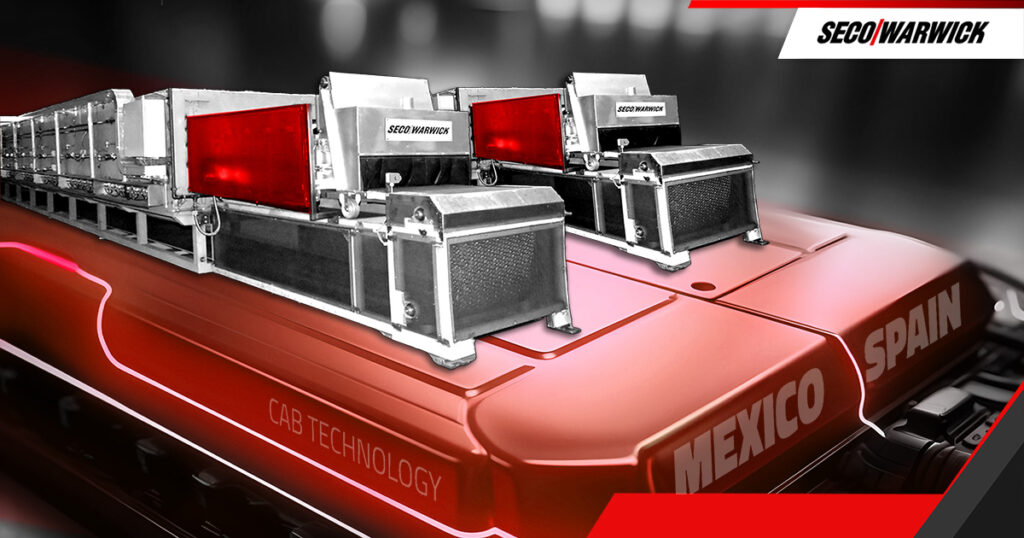
A heat treat furnace manufacturer with North American locations will provide an American partner with two identical continuous CAB lines for brazing aluminum heat exchangers, specifically battery coolers. The furnaces will be used in Mexico and Spain.

The SECO CAB lines will be used for protective atmosphere brazing aluminum of heat exchangers. Such solutions are used by leading automotive parts manufacturers and are used for mass production of battery coolers among other types of heat exchangers. This purchase was preceded by tests in the R&D laboratory.

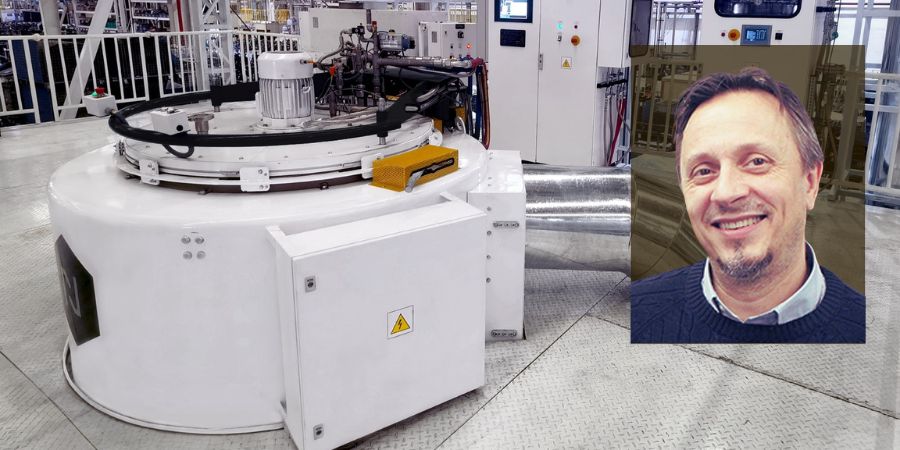
Piotr Skarbiński, Vice President of Aluminum and CAB Product Segments, SECO/WARWICK Group (photo source: secowarwick.com)

“The purchased CAB lines,” explained Piotr Skarbiński, VP of Aluminum and CAB Product Segments, SECO/WARWICK Group, “will be the first solutions of this type in the customer’s factories.”

This press release is available in its original form here.


Find Heat Treating Products and Services When You Search on Heat Treat Buyers Guide.com

2 CAB Lines for American Auto Part Manufacturer Read More »
This Week in Heat Treat Social Media

Welcome to Heat Treat Today’s This Week in Heat Treat Social Media. We’re looking at some compelling developments in aviation manufacturing, sharing a few metallurgy quizzes, and of course, bringing some fun, social heat treat videos to you.

As you know, there is so much content available on the web that it’s next to impossible to sift through all of the articles and posts that flood our inboxes and notifications on a daily basis. So, Heat Treat Today is here to bring you the latest in compelling, inspiring, and entertaining heat treat news from the different social media venues that you’ve just got to see and read! If you have content that everyone has to see, please send the link to editor@heattreattoday.com.


1. The Power of Engineering vs. Gravity

We usually like to share something rich and technical, but check out this compelling video of dual F119 engines powering an F-22 in an attack maneuver.! “F-22 with a combat capacity of; 1× 20 mm M61A2 Vulcan rotary cannon, 6× AIM-120C/D AMRAAM or 4× AIM-120A/B AMRAAM 2× AIM-9M/X Sidewinder, 2× 1,000 lb (450 kg) JDAM or 8× 250 lb (110 kg) GBU-39 SDB, 4× under-wing pylon stations can be fitted to carry weapons, each with a capacity of 5,000 lb (2,270 kg) or 600 U.S. gallon (2,270 L) drop tanks”

2. It’s a Beautiful Day in the Heat Treat Neighborhood

What’s everyone been up to on the social channels?

Gamifying Quality?? Count Us In!

Marking Milestones

When Precision Meets Creativity

3. Learn with Us – 3 Quick Visuals

Sometimes, it’s the small things on social media that grab your attention or give you the “ah ha!” moment. Do any of these short posts make you say “eureka”?

Rotate Rotate Rotate Rotate. . .
Spring is Here, depending on the Temperature
Quiz Time

4. Open Your Ears: The Podcast Corner

You can’t read everything, we get it. Heat Treat Today is here to recommend one informative podcast to enjoy on your daily commute, suggest a quick video on laser heat treating, and put a comprehensive article on surface treatments for automotive on your radar!

Tune in to Listen to Heat Treat Radio #107! Not Your Average Painting Class
The “Dougs” Talk

a Brazing Celebrity

5. Post-March Madness

Ever wonder the manufacturing processes behind the jump shots? Take March Manufacturing Madness: The Quiz below!

Have a great weekend!


Find Heat Treating Products and Services When You Search on Heat Treat Buyers Guide.com

This Week in Heat Treat Social Media Read More »
USAF Metals Technology Personnel – Qualified to Heat Treat on 50+ Systems

Richard B. Conway
Founder/Director/CTO
DELTA H® Technologies, LLC
Source: DELTA H

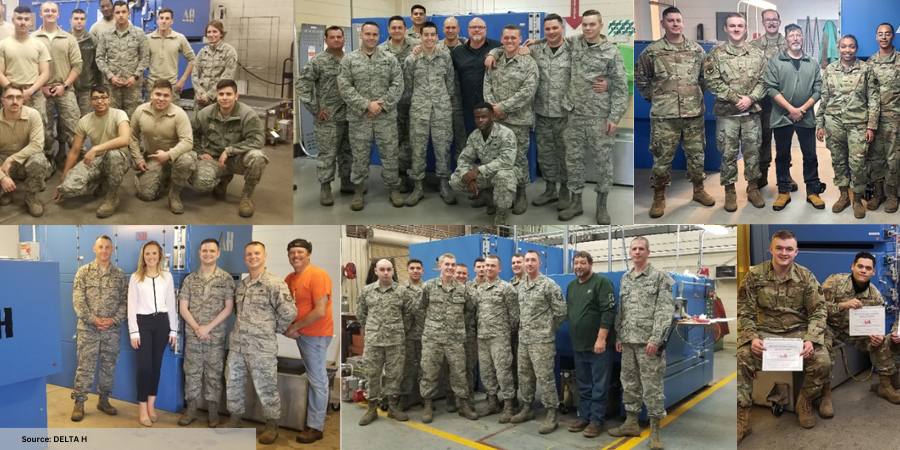
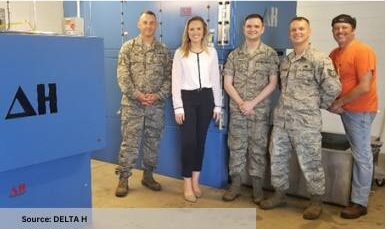
Multiple military facilities now operate more than 50 heat treat systems from a North American furnace and oven supplier. These facilities include Air National Guard bases, USAF bases stateside, Guam, Alaska, and Hawaii, Air Bases in Japan, Germany, United Kingdom – Royal Air Force, Middle East, the U.S. Navy, U.S. Coast Guard, and U.S. Army facilities.

The systems from DELTA H included either single, dual or triple chamber designs of both the heavy duty commercial aviation standard models DCAHT® / SCAHT® Series, the supplier’s Defender Series – developed for the armed forces, and aircraft composite walk-in ovens.

All systems are in full compliance to NAVAIR Tech Order 1-1A-9, and meet AMS2750 accountability standards for accuracy, temperature uniformity, calibration, and secure batch records.

Ellen Conway Merrill with USAF Metal Technology personnel
Source: DELTA H TECHNOLOGIES, LLC

Richard Conway, director & CTO of DELTA H®, shares: “It is a deep honor and humbling for the DELTA H team to support our armed forces. We take the utmost care to ensure the best of our craftsmanship and abilities are utilized to deliver the finest heat treating equipment for aircraft maintenance to our Warfighters.”

Military personnel are provided full operator and heat treating and maintenance training, as well as on-site qualifying assistance to meet and maintain the stringent pyrometry standards. Successful trainees receive Certificates of Training as qualified to use their DELTA H® furnace for heat treatment of aircraft parts.

This press release is available available upon request.


Find Heat Treating Products and Services When You Search on Heat Treat Buyers Guide.com

USAF Metals Technology Personnel – Qualified to Heat Treat on 50+ Systems Read More »
Motorcycle Manufacturer Embarks on Sustainable Heat Treat Future

Guangdong Tayo Motorcycle Technology Co. Ltd., a Chinese manufacturer of motorcycles and bicycles, has invested in a nitriding/nitrocarburizing system, increasing sustainability and growth for its new production facility in Jiangmen City, located in southern China’s Guangdong province.

Heat treat solutions company Nitrex was commissioned to deliver a comprehensive turnkey system, geared towards enhancing the performance and durability of multiple components within Guangdong Tayo Motorcycle, including those for the brands Haojiang, Daye, Shengshi, and Qidian.

Nikola Dzepina
Nitrex Regional Manager – Asia
Source: NITREX

Nikola Dzepina, Nitrex account executive, said, “Our partnership with Guangdong Tayo Motorcycle Technology Co. Ltd. will help them in fulfilling their mission of delivering top-notch, highly durable, and reliable motorcycles and bicycles to their global customer base.”

As part of their development strategy, Guangdong Tayo Motorcycle has placed sustainability, product quality, service excellence, and market expansion at the heart of their mission. Paving the way for superior motorcycles and bicycles, the company evaluated various options and ultimately selected Nitrex for its precision-controlled processes, process stability and repeatability, equipment longevity and reliability, and commitment to environmental friendliness.

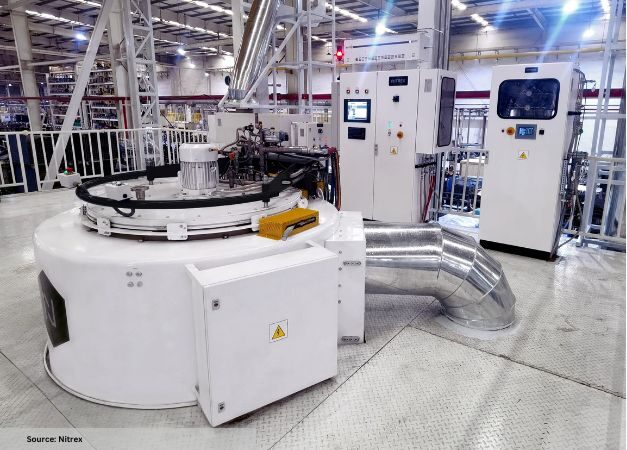
Nitrex pit furnace
Source: Nitrex

The turnkey system comprises a large pit-type furnace, model NX-1225, with a 4000-kg load capacity and the Nitreg® controlled nitriding and Nitreg®-C nitrocarburizing technologies. These surface treatments augment the properties of motorcycle and bicycle metal components, significantly enhancing wear resistance and providing protection against rust and corrosion. Additionally, the system features an ammonia dryer and accelerated cooling system, facilitating the delivery of high-purity ammonia and fast cycle times to optimize production efficiency.

Tao Liu, sales manager at Nitrex China, emphasized, “This system’s exceptional reliability, engineered for longevity with minimal maintenance requirements and low utility and production media consumption costs, aligns perfectly with Guangdong Tayo Motorcycle’s vision for a sustainable future.”

This press release is available in its original form here.


Find Heat Treating Products and Services When You Search on Heat Treat Buyers Guide.com

Motorcycle Manufacturer Embarks on Sustainable Heat Treat Future Read More »
Advantages of Laser Heat Treatment: Precision, Consistency, and Cost Savings

Laser heat treating, a form of case hardening, offers substantial advantages when distortion is a critical concern in manufacturing operations. Traditional heat treating processes often lead to metal distortion, necessitating additional post-finishing operations like hard milling or grinding to meet dimensional tolerances.

This Technical Tuesday article was originally published in first published in Heat Treat Today’s January/February 2024 Air & Atmosphere print edition.


In laser heat treating, a laser (typically with a spot size ranging from 0.5″ x 0.5″ to 2″ x 2″) is employed to illuminate the metal part’s surface. This results in a precise and rapid delivery of high-energy heat, elevating the metal’s surface to the desired transition temperature swiftly. The metal’s thermal mass facilitates rapid quenching of the heated region resulting in high hardness.

Key Benefits of Laser Heat Treating

Consistent Hardness Depth

Laser heat treatment achieves consistent hardness and hardness depth by precisely delivering high energy to the metal. Multiparameter, millisecond-speed feedback control of temperature ensures exacting specifications are met.

Minimal to Zero Distortion

Due to high-energy density, laser heat treatment inherently minimizes distortion. This feature is particularly advantageous for a variety of components ranging from large automotive dies to gears, bearings, and shafts resulting in minimal to zero distortion.

Precise Application of Beam Energy

Unlike conventional processes, the laser spot delivers heat precisely to the intended area, minimizing or eliminating heating of adjoining areas. This is specifically beneficial in surface wear applications, allowing the material to be hardened on the surface while leaving the rest in a medium-hard or soft state, giving the component both hardness and ductility.

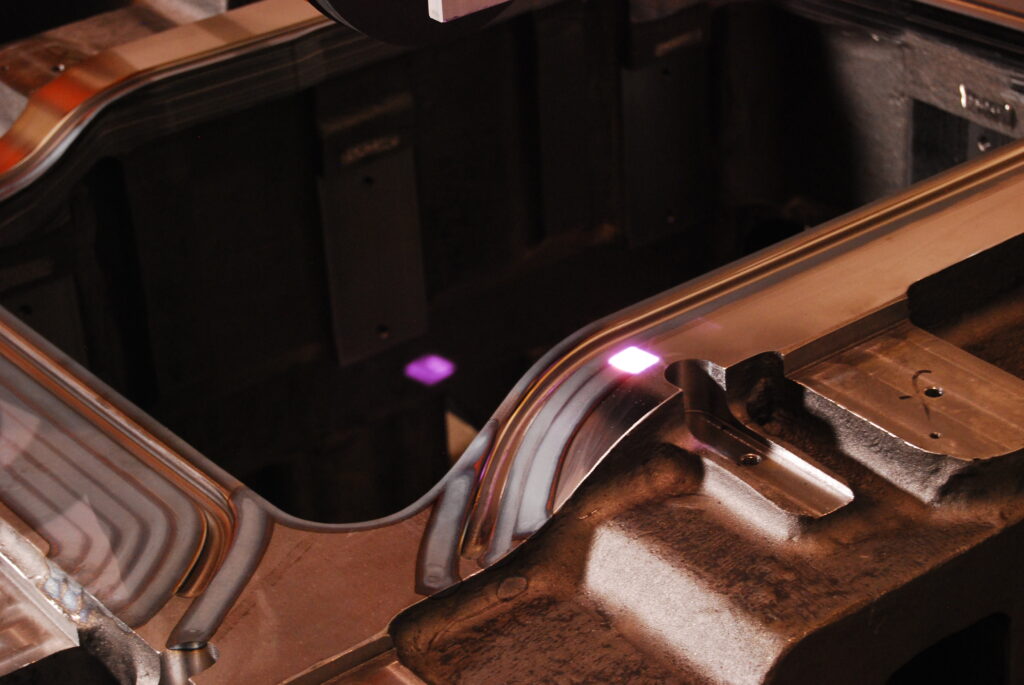
Figure 1. Laser heat treating of automotive stamping die constructed from D6510 cast iron material (Source: Synergy Additive Manufacturing LLC)

No Hard Milling or Grinding Required

The low-to-zero-dimensional distortion of laser heat treatment reduces or eliminates the need for hard milling or grinding operations. Post heat treatment material removal is limited to small amounts removable by polishing. Eliminating hard milling or grinding operations saves substantial costs in the overall manufacturing process of the component. Our typical tool and die customers have seen over 20% cost savings by switching over to laser heat treating.

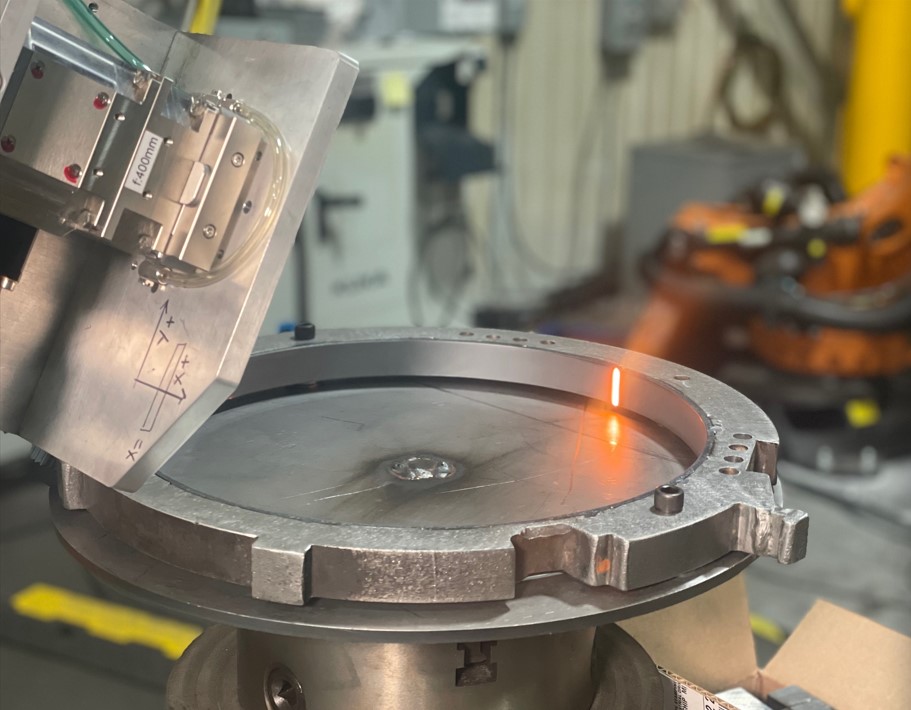
Figure 2. Laser heat treating of machine tool
components (Source: Synergy Additive Manufacturing LLC)

Applicable for a Large Variety of Materials

Any metal with 0.2% or more carbon content is laser heat treatable. Hardness on laser heat treated materials typically reaches the theoretical maximum limit of the material. Many commonly used steels and cast irons in automotive industry such as A2, S7, D2, H13, 4140, P20, D6510, G2500, etc. are routinely laser heat treated. A more exhaustive list of materials is available at synergyadditive.com/laser-heat-treating.

Conclusions

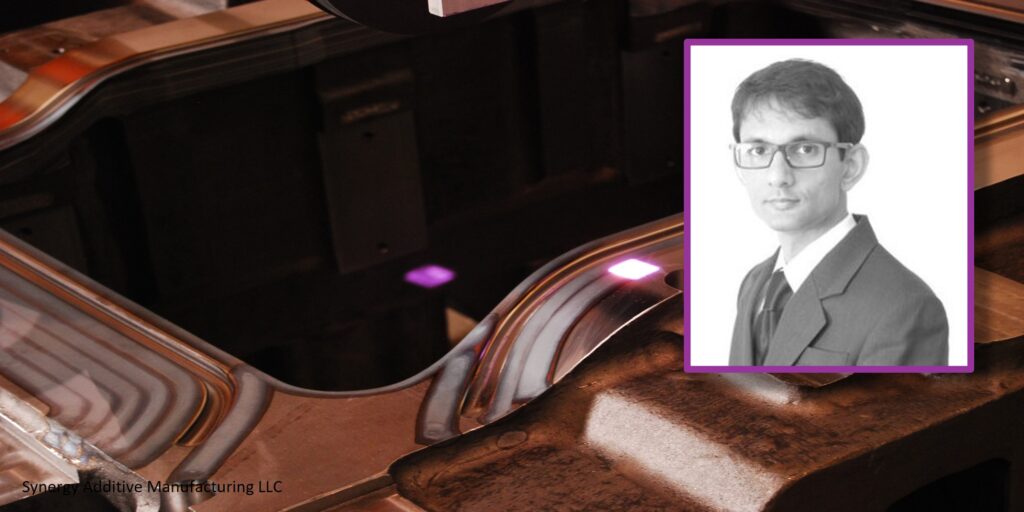
Aravind Jonnalagadda CTO and Co-Founder Synergy Additive Manufacturing LLC Source: LinkedIn

Laser heat treatment is poised to witness increased adoption in the automotive and other metal part manufacturing sectors. The adoption of this process faces no significant barriers, aside from the typical challenges encountered by emerging technologies, such as lack of familiarity, limited hard data, and a shortage of existing suppliers. The substantial savings, measured in terms of cost, schedule, quality, and energy reduction, provide robust support for the continued embrace of laser heat treatment in manufacturing processes.

For more information: Contact AJ at aravind@synergyadditive.com or synergyadditive.com/laser-heat-treating.

Find Heat Treating Products And Services When You Search On Heat Treat Buyers Guide.com 

Advantages of Laser Heat Treatment: Precision, Consistency, and Cost Savings Read More »
3 Heat Treat Furnaces for Annealing Aluminum

Jupiter Aluminum Industries (JUPALCO), a newly established aluminum factory which will be part of the Jupiter Group in India, has ordered three furnaces for annealing aluminum coils from a heat treat furnace manufacturer with North American locations.

The equipment ordered by the Jupiter Group from SECO/WARWICK includes three Vortex® 2.0 furnaces for aluminum annealing, two cooling chambers, and one loader. A system configured in this way will ensure the optimal production volume of the Indian rolling mill.  

The aim of JUPALCO’s new plant will be to achieve the highest level of domestic aluminum production in history and to create an ecosystem of comprehensive aluminum-based solutions. This is the first cooperation between SECO/WARWICK and the Jupiter Group.

The three Vortex furnaces are effective systems for annealing aluminum coils. In the Vortex 2.0 version, a system of straight nozzles has increased the heat transfer efficiency. The systems key feature is the increased heat transfer coefficient, achieved by directing high-velocity air to both sides of the coil. This allows air to flow over the coil edges, not just through its outer layer.

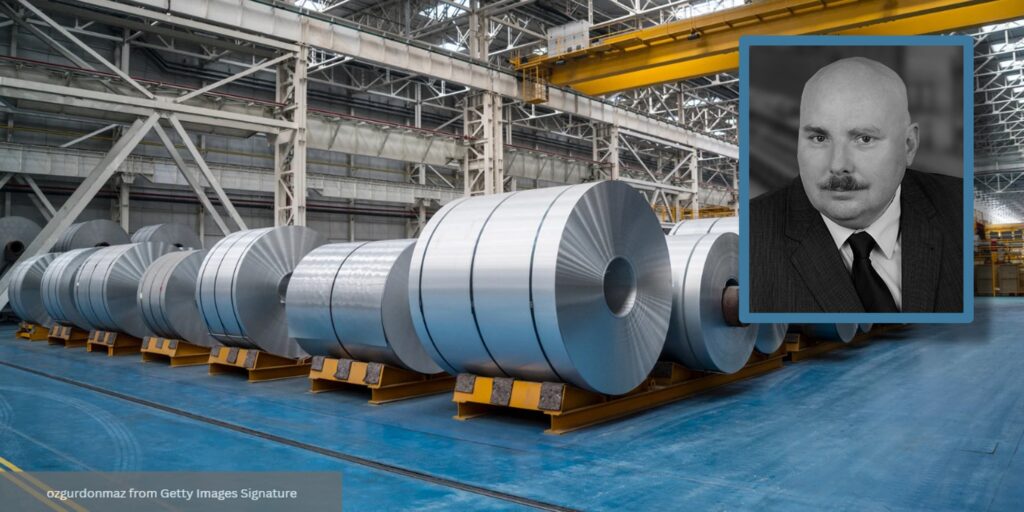
Piotr Skarbiński, Vice President of (Source: secowarwick.com)

With the use of patented air flow technology, the aluminum coil annealing systems operate with process cycles that are significantly shorter. This in turn ensures energy savings, increased efficiency, and improved surface quality of the finished coils.

“In the case of coil annealing,” commented Piotr Skarbiński, VP of the CAB and Aluminum Products Segment at the SECO/WARWICK Group, “the challenge is to optimize the process by reducing the cycle time as much as possible while maintaining the desired metallurgical properties throughout the entire load.”

The Jupiter Group plans to recycle over 50,000 tons of aluminum scrap every year once fully operational. This scrap will come from both in-house and customer scrap, purchased scrap, and recycled cans/foils etc. The new rolling mill in India will help the Group expand its footprint in the aluminum industry and produce Made in India products which will be known for its quality and reliable products and services. 

“Since the 1990’s,” says Mr. Sandeep Bajaj, CMD of Jupiter Aluminum Industries, JUPALCO, “the Jupiter Group processes aluminum as a partner of the converting and packaging industries. Ecology is an important value for us. It is included in our mission, just like our Partner’s. The rolling mill in India will be one of the most modern facilities of this type in this region, which is why we are equipping it with the best solutions available on the market.”

This press release is available in its original form here.


Find Heat Treating Products and Services When You Search on Heat Treat Buyers Guide.com

3 Heat Treat Furnaces for Annealing Aluminum Read More »
Happy Easter Weekend!

May you have a blessed Easter weekend! Heat Treat Today offices are closed today (Friday, March 29), but will be back open Monday morning.

As we’ve come to Good Friday, we’d like to take a moment to reflect on the gift of the resurrection of the Savior, our Lord Jesus Christ. Through his death and resurrection, we can have eternal life! At Heat Treat Today, our prayer is that as we are helpful to you, you would also see the light of Christ shine through us. See you Monday!

Happy Easter Weekend! Read More »
All 13 News Chatter To Keep You Current

Heat Treat Today offers News Chatter, a feature highlighting representative moves, transactions, and kudos from around the industry. Enjoy these 13 news items.


Company

  1. IHEA celebrate 95 years with an anniversary dinner at the industry association’s annual meeting. 
  2. Furnaces North American 2024 registration is open, with the event scheduled for October 14–16, 2024. 
  3. EVERGREEN KILN TECHNOLOGIES, LLC, located in Niagara Falls, U.S., and SUZHOU KILNPARTNER Mechanical Technology Co., Ltd., located in China, officially announced their strategic partnership to service and support the growing demands of the North American lithium-ion battery market. 
  4. SECO/WARWICK opened SECO/LAB, a production automation and mechatronics laboratory, at the University of Zielona Góra in Poland.  
  5. Tenova will partner with De Nora, Snam, and other European steel producers and RTOs on the HyTecHeat project, a Horizon Europe program funded by the EU with the goal to validate hybrid heating technologies based on natural gas with a progressive increase of hydrogen up to 100% in downstream processing. Within this project, Tenova will install an electrolyzer at the Demo headquarters in Castellanza (Italy).  
  6. Tenova’s SafeForPorts project has won a call for proposals issued by the Istituto Italiano di Tecnologia (IIT) under the banner of RAISE (Robotics and AI for Socio-economic Empowerment). The project is aimed at revolutionizing the safety and efficiency of port operations through cutting-edge Industry 4.0 technologies.  
  7. Indian steel producer JSW STEEL (Dolvi Works) has placed an order with SMS group to supply its trailblazing CSP® Nexus plant, which will fundamentally transform flat steel production. 

Company & Personnel 

  1. Hubbard-Hall welcomes John Forlenzo as supply chain manager. In this role, he will oversee the global purchasing activities for the company, including logistics and inventory. 
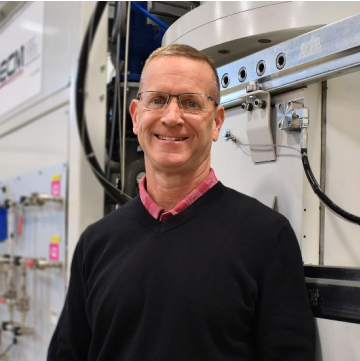
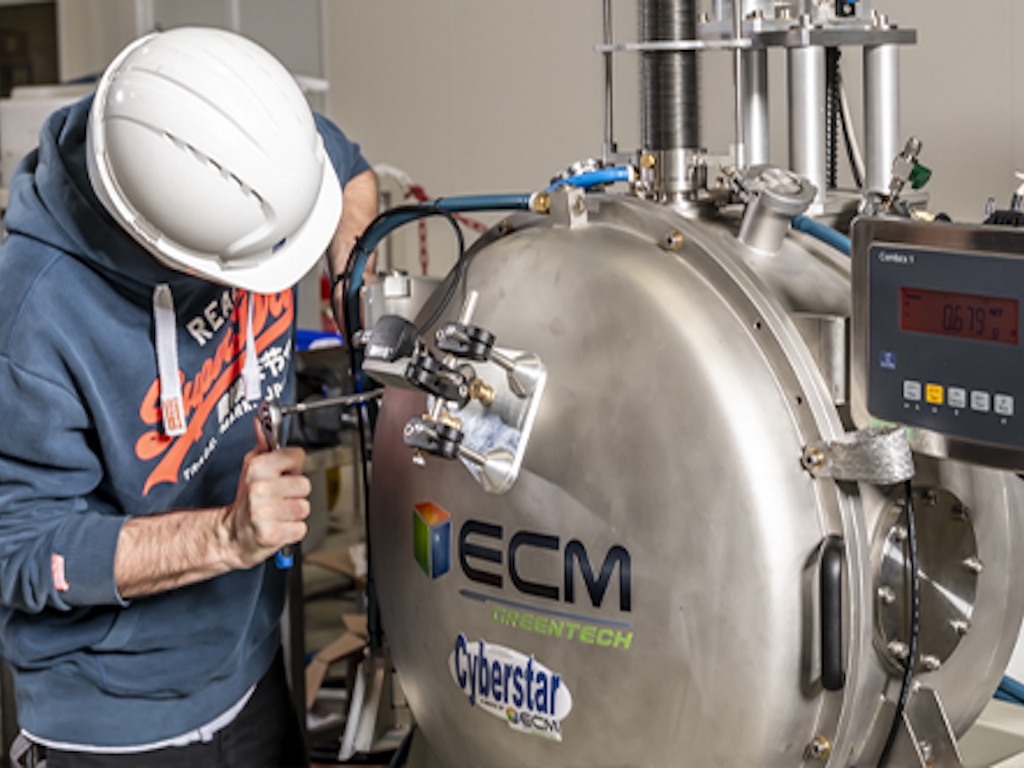
  2. David Wolfe joins ECM USA as senior sales engineer. As a former east coast sales representative for ECM, Wolfe brings important industry knowledge to the role. 

Kudos 

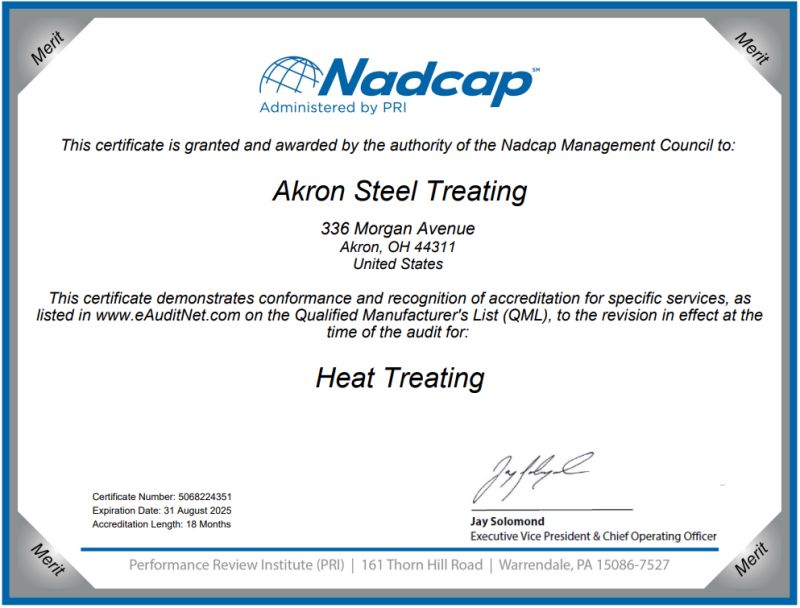
  1. Akron Steel Treating is pleased to share we are now in the Nadcap 18 Month Merit Program. The Nadcap Merit Program is an allowance for extending the accreditation lengths between audits and is only awarded to companies which have proven themselves as exceeding Nadcap’s already highly stringent standards. 
  2. Steelhead Technologies is proud to be a winner of the Top Performer award from SourceForge, the world’s largest software reviews and comparison website. 
  3. Ipsen USA celebrated 75 years in operation on February 27, 2024.  
  4. Advanced Heat Treat Corp. has renewed its Nadcap accreditation in heat treating and passed its Aerospace Quality System (AC7004) audit. 

Find Heat Treating Products And Services When You Search On Heat Treat Buyers Guide.Com


All 13 News Chatter To Keep You Current Read More »

News from Abroad: Shifts for Sustainability in Steel 

Today’s News from Abroad installment shares exciting news from the steelmaking world that is of international importance.  

Heat Treat Today partners with two international publications to deliver the latest news, tech tips, and cutting-edge articles that will serve our audience — manufacturers with in-house heat treat. heat processing, a Vulkan-Verlag GmbH publication, serves mostly the European and Asian heat treat markets, and Furnaces International, a Quartz Business Media publication. primarily serves the English-speaking globe. 

French ECM Group Expands with IOS Acquisition in Europe 

ECM Group to consolidate its presence in Germany 
Source: heat-processing.com

“With the acquisition of IOS, the French ECM Group strengthens its presence in Germany and Northern Europe as well as its service activities. The medium-sized company IOS – Industrie Ofen Service is based in Arnsberg (Hochsauerlandkreis) and specialises in the maintenance of industrial furnaces for vacuum heat treatment. IOS currently employs around a dozen people and is mainly active in the German-speaking and Northern European markets. The company has extensive expertise, is a competent partner for its customers and focuses on rapid response and high quality.” 

READ MORE: “ECM Group takes over Industrie Ofen Service GmbH” at heat-processing.com 

R&D Funds for Forging 

Center set to help forgers explore modern processes and new integrated digital technologies.
Source: furnaces-international.com

“A research and innovation hot forging platform has announced it [would open] on the 21st March at the University of Strathclyde’s Advanced Forming Research Centre (AFRC), part of the National Manufacturing Institute Scotland, connecting the $75 billion global forging sector with the Scotland-based team and industry-scale testbed, no matter where they are in the world.” 

READ MORE: “World unique research hub set to transform the global forging sector” at furnaces-international.com 

Forging Facility Folds in Prerov, Czech Republic 

Metso has decided to discontinue foundry operations in Prerov, Czech Republic.
Source: heat-processing.com

“According to the statement of Metso, the decision is based on fundamental changes in the market environment, which have negatively impacted the foundry’s competitiveness. The decision affects around 160 manufacturing-related positions. Operations at the foundry will be ramped down during the second quarter of 2024.” 

READ MORE: “Metso shuts down its foundry in Prerov” at heat-processing.com 

Tenova Takes on Sustainable Steel with RINA Partnership 

Caption: Schematic for Hydra project 
Source: furnaces-international.com

“Tenova, announced it is partnering with RINA on the ambitious European Commission-backed Hydra project. This partnership will drive innovation in sustainable steel production leveraging Tenova’s cutting-edge technologies. The €88M project is funded by the European Commission’s NextGenerationEU and backed by the Italian Ministry of Enterprises and Made in Italy.” 

READ MORE: “Tenova joins RINA’s 100% hydrogen-fueled Hydra project backed by the European Commission” at furnaces-international.com 


Find Heat Treating Products And Services When You Search On Heat Treat Buyers Guide.Com

News from Abroad: Shifts for Sustainability in Steel  Read More »