We’re celebrating getting to the “fringe” of the weekend with a Heat Treat Fringe Friday installment: Riverspan Partnershas acquired United Titanium, a leading U.S. manufacturer of engineered, mission-critical fasteners, fittings and precision components made from titanium, zirconium, and other specialty metals. United Titanium serves critical industries such as defense, aerospace, medical and dental, electronics, petrochemical processing and marine engineering.
While not exactly heat treat, “Fringe Friday” deals with interesting developments in one of our key markets: aerospace, automotive, medical, energy, or general manufacturing.
Dave Thomas Partner Riverspan Partners.
Based on Wooster, Ohio, United Titanium was founded in 1962 and offers comprehensive services such as precision machining, custom fabrication, and advanced inspection and testing.
“We have built a remarkable business together over the past five decades, and I am thrilled that the team has found an ideal partner for the next chapter,” said Mike Reardon, president of United Titanium. “Riverspan deeply appreciates the people and processes that have contributed to our success and is keen to build on those strengths to capitalize on the significant growth opportunities in our core markets. Their expertise will help United Titanium to reinforce its commitment to quality, innovation and high-touch service through further investment in our people and technology. I am excited to see the company continue to prosper.”
“We have tremendous respect for the outstanding business … United Titanium team has built, and we are excited to build on that rich legacy,” said Dave Thomas, partner at Riverspan Partners.
The company will continue to be led by the same senior team and will remain headquartered and an active community member in Wooster, Ohio. As part of the transaction, longtime industry executive Paul Schwarzbaum will join the United Titanium Board of Directors.
Press release is available in its original form here.
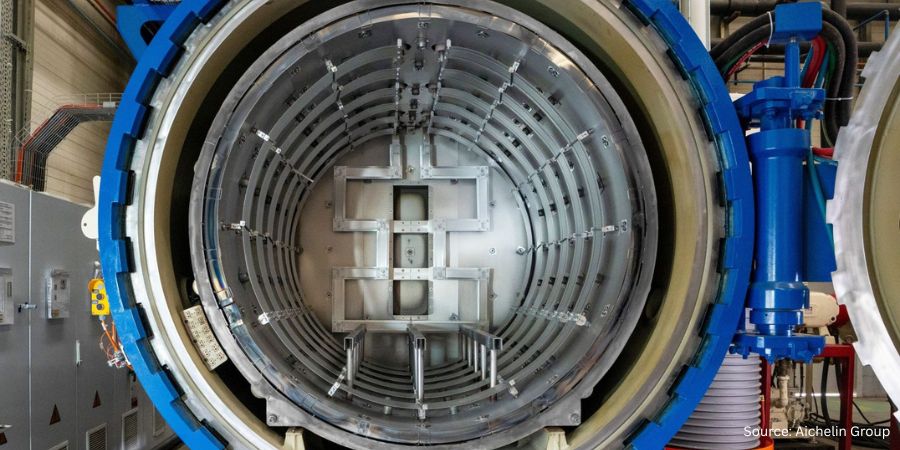
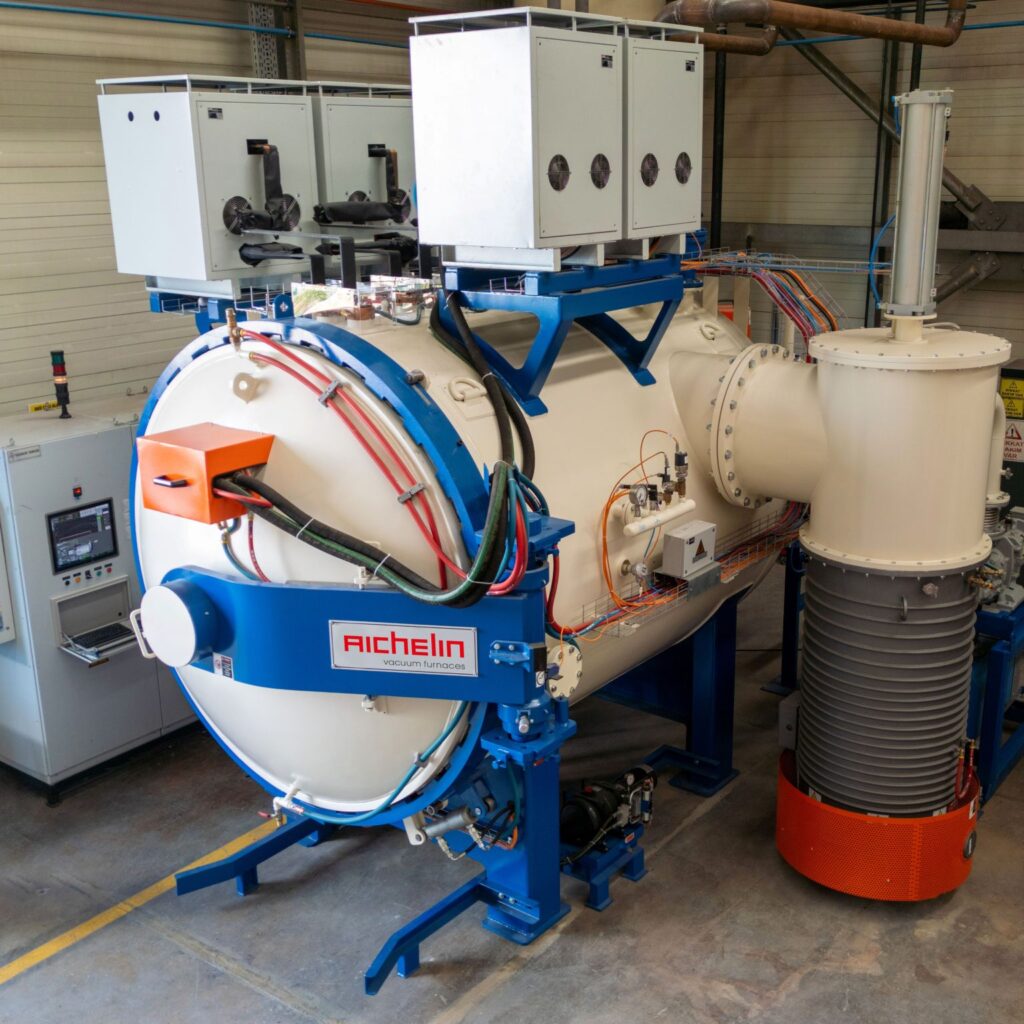
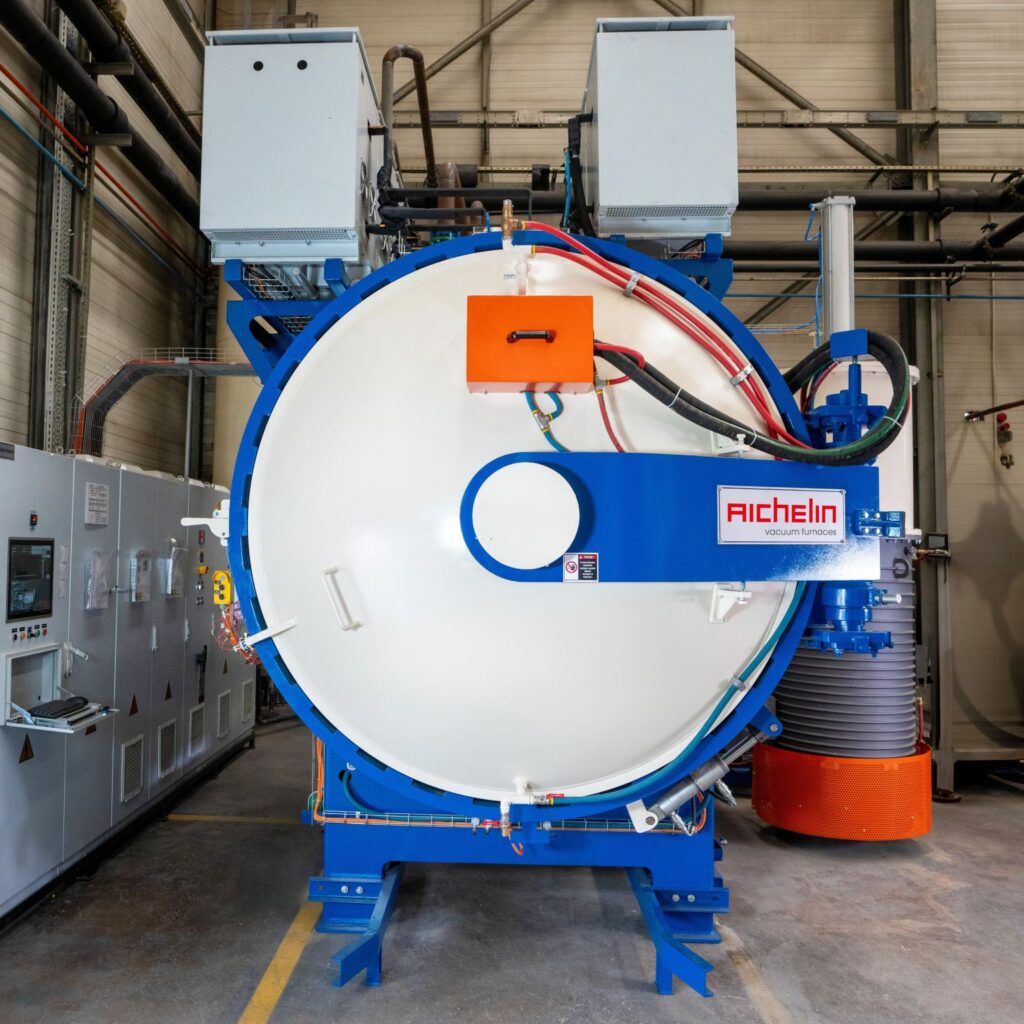
A leading aerospace specialist has received a high-precision vacuum furnace. The system was specifically designed to meet the particularly stringent requirements of this sector with a hot zone of 900 x 1200 x 900 mm.
Aichelin will provide furnace, which is equipped with high-grade insulation made from molybdenum and stainless steel, as well as a multi-zone heating control system.
Vacuum furnace for aerospace Source: Aichelin GroupVacuum furnace for aerospace Source: Aichelin Group
The furnace has a dual gas supply system with independent lines and valves for nitrogen and argon. The separate gas supply provides reproducible, stable, and precise quenching operations. Additional features include 10 bar quenching pressure, up to 10⁻⁶ mbar vacuum level, and below 10 micron leak rate.
Press release is available in its original form here.
In today’s News from Abroad installment, we highlight a $46.9 million USD investment for an aluminum recycling expansion, a transition from a gas-fired billet treater plant to electric, and a new $46.9 million USD electric furnace to meet decarbonization efforts.
Heat TreatTodaypartners with two international publications to deliver the latest news, tech tips, and cutting-edge articles that will serve our audience — manufacturers with in-house heat treat. Furnaces International, a Quartz Business Media publication, primarily serves the English-speaking globe, and heat processing, a Vulkan-Verlag GmbH publication, serves mostly the European and Asian heat treat markets.
€40M for New Aluminum Recycling Capacity
A new recycling facility now covers a third of the Rheinwork site in Germany
“Speira has invested €40M in additional can recycling capacity at its Rheinwerk site, with the aim of reaching CO₂ savings of up to 1.5mt per year. As part of the investment a new melting furnace was installed specifically for scrap at the German site, with production scheduled for early 2026.
“Volker Backs, managing director of Speira, said: ‘Speira has moved away from energy-intensive primary production. This decision was inevitable in light of Germany’s energy policy outlook and our responsibility for the future viability of our entire company. And our transformation into a pure recycling group — a path we began over 20 years ago – has been accelerated once again.'”
Decarbonization Aluminum Upgrade in Strangpresswek
Herren Schatko, Technical Manager of the Neuman Aluminium pressworks and Stefan Krieger, Otto Junker Service Department Source: Furnaces International
“Otto Junker has completed a decarbonisation project at Neuman Aluminium’s Strangpresswerk facility. The companies converted a gas-fired billet heater plant to electric heating — a major step towards climate-neutral production. Originally commissioned as a gas-fired convective billet heater in 2016, the plant has now been modified to the EcoJet type. Neuman Aluminium can now heat its 8-inch aluminium rods with clean, CO₂ free energy. Depending on production throughput, the aluminium rods are heated from ambient temperature to a target temperature of up to 480°C.”
€40 Million Electric Furnace for Decarbonization Efforts
From left to right: District Administrator Roland Grillmeier hands over the permit for the new electric melting tank to Schott CEO Dr Torsten Derr. Source: Schott / Dominik Garban
“Schott has broken ground on its first electrified melting tank in Mitterteich, Germany. The €40 million investment is partially funded by the German government. Schott said the new tank would be a major step in decarbonising pharmaceutical glass production. Using 100% green electricity, the tank will produce Schott’s FIOLAX Pro Optimised Carbon Footprint (OCF) tubing. This could see up to 50% fewer CO2 emissions per vial.
“Schott CEO Dr Torsten Derr said: ‘The transformation of our industry toward decarbonisation and significantly lower-carbon processes begins with concrete projects. This pilot tank is an example that sends a strong signal. We are investing specifically in technology that avoids emissions while also strengthening the competitiveness of our site.’”
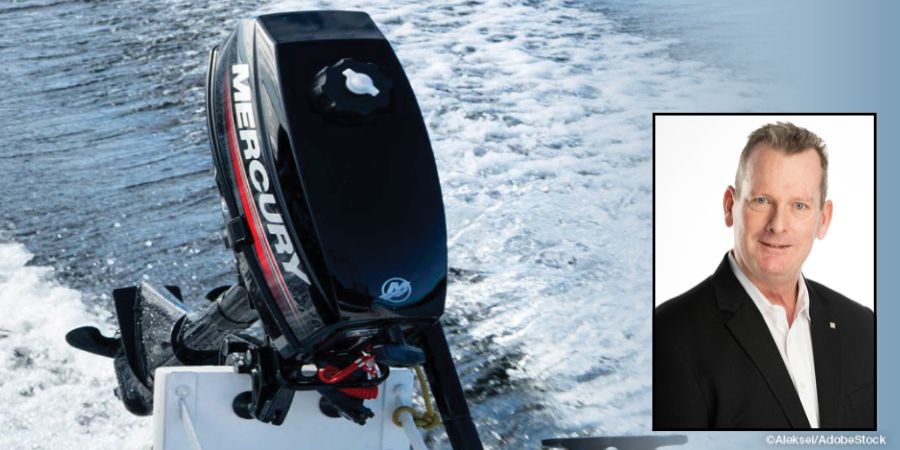
What are the ways to improve the cleaning process of component parts and reduce smoke from residue and environmental impact? Mercury Marine faced this challenge head on with a new system. Learn more about their solution in today’s Technical Tuesday case study written by Chris Tivnan the sales manager for North America at SAFECHEM North America Inc.
This informative piece was first released inHeat Treat Today’sAugust’s 2025 Annual Automotive Heat Treating print edition.
Mercury Marine’s Need for Clean
Mercury Marine is a world leading manufacturer of marine propulsion systems headquartered in Fond du Lac, Wisconsin. A subsidiary of Brunswick Corporation, Mercury Marine designs, manufactures, and distributes engines, services, and parts for recreational, commercial, and government marine applications.
Mercury Marine has an in-house heat treatment facility for the components they manufacture. These components include gear case parts, such as propeller shafts, pinions, forward and reserve gears, and clutches. The parts undergo typical manufacturing steps like turning, milling, or gear tooth generation. Some machines allow for dry cutting, while others involve hydraulic oil. In total, more than 170 distinct metal parts require cleaning before undergoing vacuum carburizing, hardening, tempering, and/or cryogenic treatments.
Carburizing with Closed-Vacuum Solvent Cleaning
But vacuum carburizing has not always been the technology of choice for Mercury Maine. Prior to 2023, parts and components underwent initial cleaning in an aqueous washer before proceeding to atmospheric carburizing. Then, they were quenched in oil and then underwent another round of cleaning with a water-based cleaner.
Figure 1. NANO vacuum carburizing system from ECM
Mercury Marine made the strategic decision to transition from atmospheric carburizing to vacuum carburizing in 2023. The shift was motivated by concerns related to smoke and environmental impact, particularly the evaporation of oil residuals during tempering. The desire for an overall environmentally friendlier process further fueled this change.
Vacuum carburizing benefits from more stringent cleanliness requirements on parts whereby all residue oils, greases, and debris must be removed entirely to prevent contamination of the furnace and the vacuum pump system. As a result of these considerations, Mercury Marine replaced their existing aqueous cleaning process with solvent-based cleaning, convinced that this solution provided superior and consistently reliable cleaning results.
Figure 4. With lipophilic and hydrophilic properties, DOWCLENE™* 1601 removes oils and greases just as effectively as certain polar contaminants like cooling emulsions or solids (e.g., particles and abrasives). Source: ECM USA
Their furnace equipment manufacturer ECM recommended a closed-vacuum solvent-based cleaning machine (Model: SOLVACS 3S) from the manufacturer HEMO. This design could be seamlessly integrated into their NANO vacuum carburizing system.
The vacuum cleaning machine runs on the modified alcohol solvent DOWCLENE™* 1601. Because of its lipophilic and hydrophilic properties, DOWCLENE 1601 can remove oils and greases just as effectively as certain polar contaminants like cooling emulsions or solids (e.g., particles and abrasives). The solvent also has low toxicity and good biodegradability.
Enabling High Environmental and Safety Standards
The switch from aqueous to solvent cleaning initially raised some safety concerns within Mercury Marine’s environmental safety committee. However, these concerns were swiftly addressed once the committee understood the operation of a closed vacuum cleaning machine and how it contributes to the highest safety and sustainability standards.
First, the airtight design of the machine virtually eliminates air emissions. The hermetically sealed construction means there is minimal risk of contaminating groundwater. Additionally, full machine automation removes operator handling and minimizes chemical contact.
Figure 2. While closed vacuum cleaning machines enable high-quality cleaning results with strong safety and sustainability standards, HEMO designs integrate seamlessly into furnace lines
Second, the machine’s built-in distillation unit enables continuous solvent recovery — as high as 95% in Mercury Marine’s case — thereby significantly reducing chemical consumption and waste while lowering overall cleaning costs. Distillation ensures that parts are consistently cleaned in fresh solvent. The effective cleaning result is further warranted by the high solvent quality in the rinsing step, followed by vapor degreasing as the last cleaning step, which is highly effective due to high temperature difference between parts and vapor. With the drying process below 0.1 psi, a perfect drying of the parts is guaranteed.
Additionally, unlike aqueous cleaning, solvent cleaning does not consume significant water, nor does it require wastewater treatment, providing a considerable cost and environmental advantage.
Using a simple test kit, solvent conditions can be easily monitored on a regular basis. Solvent lifespan can also be extended by adding stabilizers, reducing the need for frequent bath exchanges. Due to the high stability of the cleaner, only minimal stabilizer additions have been required since the machine was first put into operation.
Leveraging CFC for Solvent Cleaning
Another crucial factor supporting solvent cleaning is the use of carbon fiber composite (CFC) workload trays and fixturing of the heat treat batch in the cleaning machine. After cleaning the parts, the CFC fixtures are directly transferred into the vacuum furnace. This streamlined workflow eliminates the need to transfer parts between different fixtures, minimizing part damage or contamination while saving time. The durability and thermal stability of CFC fixtures make them ideal for such demanding applications.
Figure 3. Industrial robots streamline the loading and unloading of components in ECM’s vacuum furnaces and facilitate part transfers between systems, ensuring a fully automated heat treatment line
Since CFC is a highly absorbent material, it can soak up liquids during the cleaning process. Any remaining residue in CFC fixtures can be released during a vacuum heat treatment process, contaminating the oven, which will impact the process and cause improper heat treatment outcomes. Unlike aqueous cleaning, which leaves some liquids behind, solvent cleaning under vacuum conditions effectively removes these absorbed residues.
Additionally, CFC fixtures must be properly dried and moisture-free before entering the vacuum furnace. Moisture can lead to contamination, inefficient carburizing, oxidation, or vacuum system problems. Solvents dry much faster than water, mitigating the risk of water vapor migration into the vacuum carburizing system.
Superior Controllability and Quality Results
Since transitioning from atmospheric to vacuum carburizing, Mercury Marine has experienced many benefits due to a significantly more consistent and repeatable heat treatment process.
It is known that residual oxygen within the furnace atmosphere can react with alloying elements on the component’s surface. This interaction can lead to the formation of an oxidation layer, potentially affecting the compressive stress profile. Such layers need to be ground off. However, with vacuum carburization, these intergranular oxidations (IGO) no longer occur.
The vacuum carburizing process follows a precise “boost and diffuse” cycle, where the presence of carbon is transferred via acetylene. This approach provides superior controllability compared to atmospheric carburizing, where natural gas is used. Additionally, the absence of open flames and the energy-efficient design contribute to reduced greenhouse gas emissions.
In the past, Mercury Marine faced cleaning challenges following oil quenching. While maintaining clean quench oil is essential, frequent oil changes can be costly. When the quench oil was not cleaned frequently enough, deposits adhered to parts, especially drive shafts with spiral oil grooves for passage. Despite attempts at aqueous cleaning, such debris could persist, and additional blasting was needed to remove them.
Vacuum carburizing has eliminated this problem as the parts now undergo gas quenching instead of oil quenching, removing the aqueous cleaning step altogether.
The investment in a new furnace system, along with the integrated closed vacuum solvent cleaning machine, has proven highly beneficial. The fully automated system ensures that technicians are not manually handling baskets, while parts are cleaned to the highest standard, enabling a seamless vacuum carburizing process. Mercury Marine has expressed great satisfaction with the results, recognizing the system as a valuable addition to their manufacturing operations.
About The Author:
Chris Tivnan Sales Manager North America SAFECHEM North America Inc.
With two decades of experience in the chemical industry, Chris assists manufacturers in determining the right choice of cleaning agent and their parts cleaning operation. He also manages relationships with regional distributors as well as local OEMs/OEAs.
A vacuum furnace is being supplied for the heat treatment of 3D printed metal components used in the aviation and energy industries. The furnace will meet the requirements of stress-relieving processes for large components produced using additive technology and highly controlled hardening processes.
Maciej Korecki Vice President of Business of the Vacuum Furnace Segment SECO/WARWICK
SECO/WARWICK, a furnace provider with North American locations, will provide the new equipment. The furnace has a working space of 900 x 900 x 1200 mm and an advanced vacuum system which enables clean processes.
“The new investments of our partner in 3D printing are among the most dynamic undertakings in the field of precision metalworking … Our device is a key element in the chain of post-processing technology and has been designed to perfectly respond to the needs related to annealing and stress removal in additively manufactured elements,” commented Maciej Korecki, vice president of the Vacuum Segment at SECO/WARWICK.
The vacuum furnace is equipped with an efficient high vacuum system (HPGQ) based on two SV300 Leybold pumps, a Roots WH2500 pump, and an HS-32 AGILENT diffusion pump, allowing for vacuum in the 10⁻⁴ mbar range. The device also features a partial pressure system for technical gases, which counteracts the sublimation of alloying elements and contamination of the hot zone. An important addition is the dew point sensor, which protects against moisture condensation in the heating chamber and minimizes the risk of oxidation of the batch surface.
SECO/WARWICK Vector furnace produced image Source: SECO/WARWICK
The recipient plans to use the device primarily for post-3D printing stress-relief processes, but also for hardening turbine and engine system components.
Press release is available in its original form here.
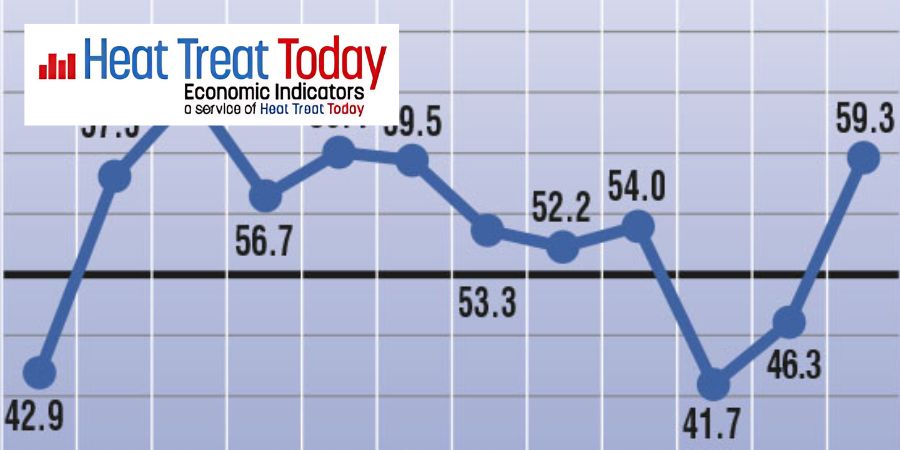
Heat Treat Today has gathered the four heat treat industry-specific economic indicators for September 2025. August industry-specific economic indicators showed stagnation with hope for a future upswing and September predicts a positive surge of growth.
September’s industry-specific economic indicators showed all four indices jumping into growth. The Inquiries index rose from no change into growth at 56.0 (from 50 in August). Bookings leaped up to 64.4 (from 47.2 in August). The Backlog index rose to 59.3 (from 46.3 in August). Finally, the Health of the Manufacturing Economy index increased to 58.4 (compared to 48.0 in August).
The graphs overall suggest that the undercurrent of growth, which began in late summer, is seeing a substantial increase, giving hope for a positive fourth quarter of 2025.
The results from this month’s survey (September) are as follows: numbers above 50 indicate growth, numbers below 50 indicate contraction, and the number 50 indicates no change:
Anticipated change in Number of Inquiries from August to September: 56.0
Anticipated change in Value of Bookings from August to September: 64.4
Anticipated change in Size of Backlog from August to September: 59.3
Anticipated change in Health of the Manufacturing Economy from August to September: 58.4
Data for September 2025
The four index numbers are reported monthly by Heat Treat Today and made available on the website.
Heat TreatToday’sEconomic Indicatorsmeasure and report on four heat treat industry indices. Each month, approximately 800 individuals who classify themselves as suppliers to the North American heat treat industry receive the survey. Above are the results. Data started being collected in June 2023. If you would like to participate in the monthly survey, please click here to subscribe.
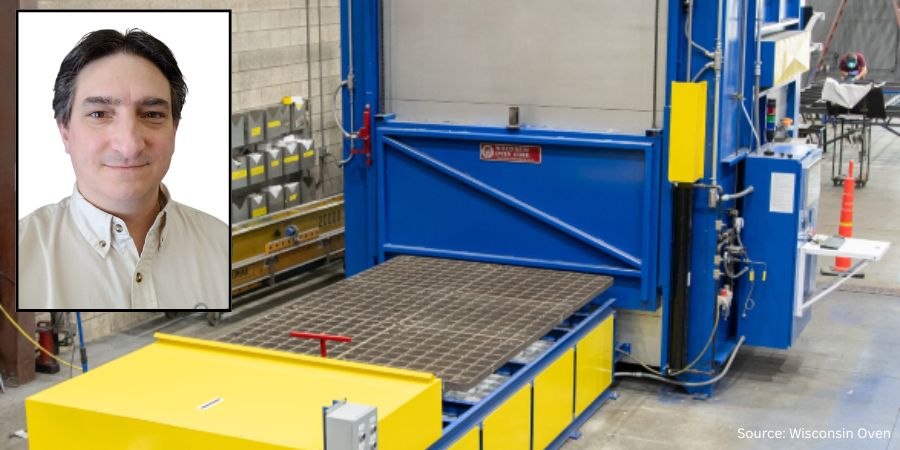
An electrically heated batch oven has been shipped to a leading space exploration company. The custom batch oven will be used to stress relieve titanium parts.
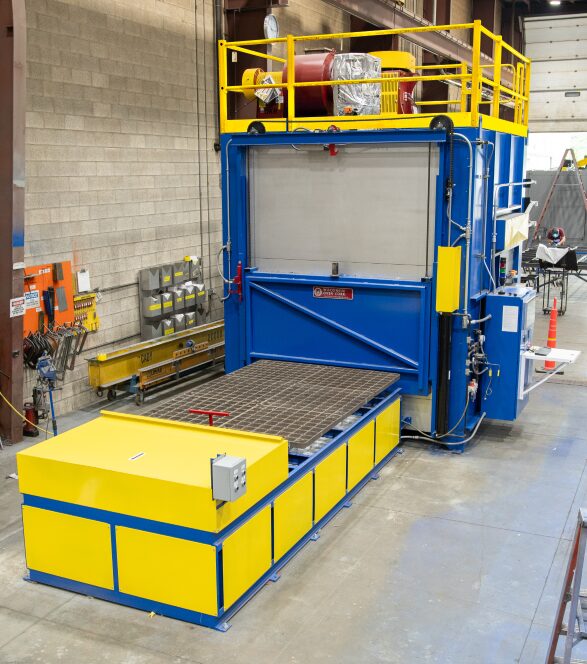
Wisconsin Oven Corporation is providing the stress relieving oven, which includes a powered load/unload table. The oven is designed for a maximum operating temperature of 1250°F and provides temperature uniformity of ±15°F at three set points. Uniformity was verified through a nine (9) point profile test before shipment.
The oven is designed to heat and cool loads up to 1,200 pounds per cycle. Parts are placed on a high strength grid and transferred into the 7’ wide x 10’ long x 3’ high work chamber by an automated pusher/extractor system. After processing, the load is extracted onto the load table where 6 high speed fans direct ambient air upwards across the parts for further cooling.
A top-down airflow system delivers heats air vertically down through the chamber for even distribution across the product load. This oven is capable of meeting the requirements of AMS2750G, Class 3, Instrumentation Type A.
The control system features an Allen-Bradley CompactLogix PLC, a Eurotherm programmable temperature controller with advanced auto-tune, and a Eurotherm digital recorder for precise temperature control and data logging.
Mike Grande,
Vice President
of Sales,
Wisconsin Oven
Corporation
“This custom batch oven was designed to deliver exceptional temperature uniformity…and optimized airflow distribution ensures consistent processing and superior part quality,” commented Mike Grande, vice president of Sales for Wisconsin Oven Corporation.
This stress relieving oven was fully factory tested and adjusted prior to shipment from the furnace supplier’s facility. All safety interlocks were checked for proper operation and the equipment was operated at the normal and maximum operating temperatures. This equipment is backed by Wisconsin Oven’s 3-Year WOW™ warranty.
Press release is available in its original form here.
Two intensive furnace projects are poised to bring heat treating to the automotive brake rotor and marine propulsion systems industries. An FNC furnace has been completed which will process approximately 600,000 brake rotors per year for the automotive industry. An additional pit nitriding furnace has a capacity of 80,000 lb. and will be utilized for the production of large marine gears.
Brake Rotor Furnace
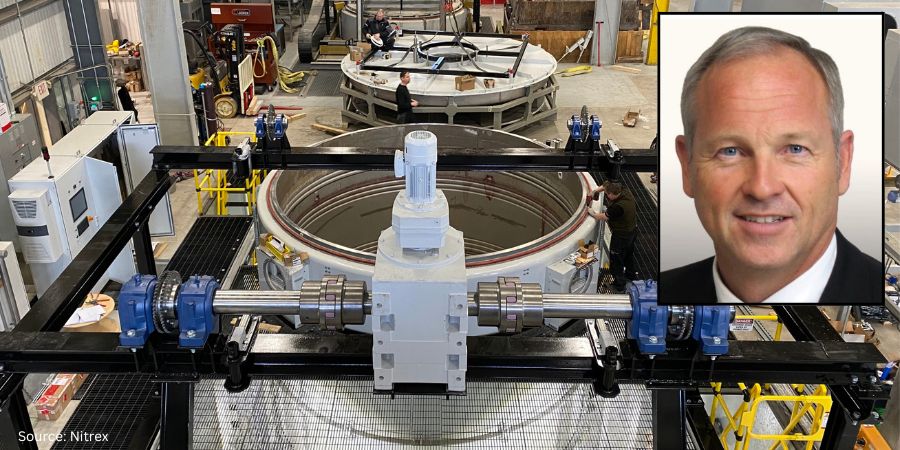
Mark Hemsath President Nitrex/UPC-Marathon Source: Linkedin
“In August our Team received Final Acceptance on two of the most difficult projects in Nitrex history…Our most sophisticated brake rotor semi-continuous FNC furnace is installed at a subsidiary of a major auto maker in Europe. Again, our team worked tirelessly to meet customer demands. I am so proud of our team and what they accomplished,” remarked Mark Hemsath, president of Nitrex/UPC Marathon.
The scale of the brake rotor furnace highlights its uniqueness. The furnace processes approximately 600,000 rotors per year, or about 1.6 metric tons per hour. If run continuously, output could approach nearly a million rotors annually.
The brake rotor furnace integrates a post-oxidation (ONC®) process, allowing control over both the color and oxide layer. This feature sets it apart from furnaces currently in use for brake rotors.
The standard load size of the brake rotor furnace is: 1200 mm x 1200 mm x 1800 mm, with a gross load capacity of up to 4 metric tons. Nitrex was able to offer an extended charge size to 2400 mm deep, which could raise throughput to about 2 metric tons per hour.
Brake rotor furnace Source: Nitrex
Pit Furnace
Nitrex’s largest pit nitriding furnace Source: Nitrex
The pit furnace represented another leap forward with a capacity of 80,000 lbs. Engineering efforts centered on maximizing productivity while maintaining the precision nitrided layers expected from smaller systems.
This furnace presented significant logistical challenges due to its sheer size and complexity in transport and installation.
Mark Hemsath remarked: “I am so proud of the effort our entire team exerted to meet schedules, quality demands and design improvements. Our largest ever precision Nitrider (4.5 meter diameter!) for deep-case nitriding of large gears was built on-site with no prior testing.”
The pit furnace is built to handle extremely large gears, typically for marine propulsion systems in very large ships where double-helix gears are standard. These gears, which can weigh 20,000 lb., require 12 days to nitride, not including heating or cooling — a stark contrast to the two-hour cycle time of the afore mentioned semi-continuous rotor furnace, which is for high volumes in automotive settings.
The furnace stands at 4.5 meters (177 inches / 14.75 feet) in diameter and 3.5 meters deep (11.48 feet), marking one of the largest precision nitriding capacities ever built with a retort lining.
Project Highlights
These projects were collaborative, drawing expertise from across the organization.
In Canada, Janusz Szymborski came out of retirement to contribute design enhancements. Lead Designer Kamil Szczudlo and Chief Engineer Marcin Doroszko from Nitrex’s Poland facility drove the design, automation, and gas flow systems, while plant manager Robert Sokolinski coordinated production and logistics. Karl Michael Winter, vice president of Engineering in Germany, worked on advanced brake rotor layer formation.
Heat TreatToday original press release, last updated on 01/21/2026 at 12:22pm.
Ask the Heat Treat Doctor® has returned to bring sage advice to Heat Treat Today readers and to answer your questions about heat treating, brazing, sintering, and other types of thermal treatments as well as questions on metallurgy, equipment, and process-related issues.
This informative piece was first released in Heat Treat Today’sSeptember 2025 People of Heat Treat print edition.
If you’ve ever experience internal cracking, surface blistering, loss of ductility, or high pressure hydrogen attack, today’s Technical Tuesday might contain just the information you need to avoid it. Read below to learn from Dan Herring as he addresses what hydrogen embrittlement is, how to avoid it, and what solutions should not be pursued in order to fix it.
The other night, The Doctor decided to relax and watch a rather whimsical movie, The Great Race (1965), directed by Blake Edwards, who is perhaps better known for directing Breakfast at Tiffany’s and The Pink Panther. It is most memorable not for the actors, nor the plot, but for the infamous pie fight involving over 4,000 pies in a scene that took more than five days to film but lasted only four minutes on the big screen. Not one actor was spared the embarrassment of being hit by (multiple) pies in the face!
So, what does THIS have to do with heat treatment, you ask? Well, try as he may to believe the subject has been explained well in the past, The Doctor has been inundated recently with questions about hydrogen embrittlement (aka hydrogen-assisted cracking). Let’s learn more.
What Is It?
Hydrogen-assisted cracking (HAC) is an embrittlement phenomenon responsible for a surprising number of part cracking issues in heat treatment and is found to be the cause of many delayed field failures, especially if the components undergo secondary operations such as plating (Figure 1).
It is generally agreed that hydrogen in atomic form will enter and diffuse through a metal surface at elevated or ambient temperatures. The simple rule to remember about hydrogen is fast in, slow out. Once absorbed, atomic hydrogen often combines to form molecular hydrogen or other hydrogen molecules (e.g., methane). As these are too large to diffuse through the metal, pressure builds at crystallographic defects (e.g., dislocations and vacancies) and/or discontinuities (e.g., voids, laps/seams, inclusion/matrix interfaces) causing minute cracks to form. Whether this absorbed hydrogen causes immediate cracking or not is a complex interaction of material strength, external stresses, and temperature.
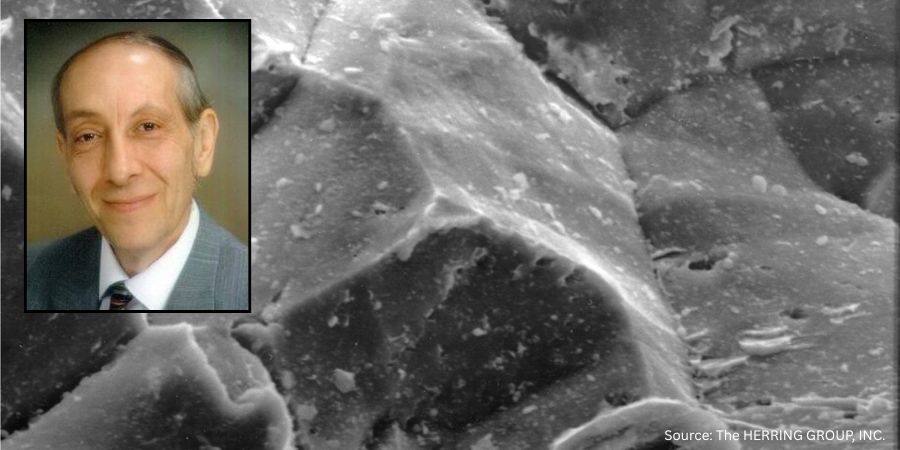
Figure 2. Intergranular fracture of a plated component (SEM image)
Most heat treaters associate hydrogen embrittlement with the plating process and the lack of a proper bake-out cycle. However, there are many other sources of hydrogen, including heat treating atmospheres; breakdown of organic lubricants left on parts; the steelmaking process (e.g., electric arc melting of damp scrap); dissociation of high-pressure hydrogen gas; arc welding (with damp electrodes); grinding (in a wet environment); and the end-use environment.
Parts undergoing electrochemical surface treatments, such as etching, pickling, phosphate coating, corrosion removal, paint stripping, and electroplating, are especially susceptible (Figure 2).
What Is The Nature and Effect of Hydrogen Attack?
Although the precise mechanism(s) is the subject of active investigation (Figure 3), the reality is that components fail due to HAC. It is generally believed that all steels above 30 HRC are vulnerable, as are materials such as copper, titanium and titanium alloys, nickel and nickel alloys, and the like. See Table A below for examples of hydrogen damage and ways to avoid it.
Figure 3a and 3b. Hydrogen embrittlement mechanism models
Since a metallurgical interaction occurs between atomic hydrogen and the atomic structure, the ability of the material to elastically deform or stretch under load is inhibited. Therefore, it becomes “brittle” under applied stress or load. As a result, the metal will break or fracture at a much lower load or stress levels than anticipated by designers. Since failures can be of a delayed nature, hydrogen embrittlement is insidious.
Table A. Problems with hydrogen damage and ways to avoid them
In general, as the strength of the steel goes up, so does its susceptibility to hydrogen embrittlement. High strength steel, such as quenched and tempered steels (e.g., 4140, 4340), or precipitation hardened steels are particularly vulnerable. It is often called the Achilles heel of high strength ferrous steels and alloys.
Nonferrous Materials and Hydrogen Embrittlement
Nonferrous materials are also not immune to attack. Tough-pitch coppers and even oxygen-free coppers are subject to a loss of (tensile) ductility when exposed to reducing atmospheres. Bright annealing in hydrogen bearing furnace atmospheres or torch/furnace brazing are typical processes that can induce embrittlement of these materials.
In copper, the process involves diffusion and subsequent reduction of cuprous oxide (Cu₂O) to produce water vapor and pure copper. An embrittled copper often can be identified by a characteristic surface blistering resulting from expansion of water vapor in voids near the surface. Purchasing oxygen-free copper is no guarantee against the occurrence of hydrogen embrittlement, but the degree of embrittlement will depend on the amount of oxygen present. For example, CDA 101 (oxygen free electronic) allows up to 5 ppm oxygen while CDA 102 (OFHC) permits up to 10 ppm. A simple bend test is often used to detect the presence of hydrogen embrittlement. Metallographic techniques can also be used to look at the near surface and for the presence of voids at grain boundaries.
Are Low Hydrogen Concentrations Also Problematic?
Of concern today is embrittlement from very small quantities of hydrogen where traditional loss-of-ductility bend tests cannot detect the condition. This atomic level embrittlement manifests itself at levels as low as 10 ppm of hydrogen — in certain plating applications it has been reported that 1 ppm of hydrogen is problematic! Although difficult to comprehend, numerous documented cases of embrittlement failures with hydrogen levels this low are known.
This type of embrittlement occurs when hydrogen is concentrated or absorbed in certain areas of metallurgical instability. This concentrating action occurs via either residual or applied stress, which tends to “sweep” through the atomic structure, moving the infiltrated hydrogen atoms along with it. These concentrated areas of atomic hydrogen can coalesce into molecular type hydrogen, resulting in the formation of high localized partial pressures of the actual gas.
How Does Hydrogen Get Out?
Hydrogen absorption need not be a permanent condition. If cracking does not occur and the environmental conditions are changed so that no hydrogen is generated on the surface of the metal, the hydrogen can re-diffuse out of the steel, and ductility is restored. Performing an embrittlement relief cycle, or hydrogen bake-out cycle (the term “bake-out” is misleading as the process involves both inward diffusion and outgassing), is a powerful method in eliminating hydrogen before damage can occur. Key variables are temperature, time at temperature, and concentration gradient (atom movement).
Contact us with your Reader Feedback!
Electroplating, for example, provides a source of hydrogen during the cleaning and pickling cycles, but by far the most significant source is cathodic inefficiency. To eliminate concerns, bake-out cycles and recommended temperatures/times are shown in ASTM B850-98 (latest revision) as a function of steel tensile strength (see Table 1 of the specification). However, in this writer’s eyes, a “bake-out” cycle of at least 24 hours at temperature is required for the effective elimination of hydrogen as a concern regardless of the tensile strength of the material. Also, caution should be exhibited to prevent over-tempering or softening of the steel, especially on a carburized, or induction hardened part.
Next time we will talk about quench and temper embrittlement, as well as embrittlement due to overheating during forging, all of which are often mistaken for hydrogen embrittlement.
References
ASTM International. 2022. ASTM B850-98 (Reapproved 2022), Standard Guide for Treatments of Steel for Reducing the Risk of Hydrogen Embrittlement. West Conshohocken, PA: ASTM International. https://www.astm.org.
Herring, D. H. 2004. “A Heat Treater’s Guide to Hydrogen Embrittlement.” Industrial Heating, October.
Herring, D. H. 2006. “The Embrittlement Phenomena in Hardened & Tempered Steels.” Industrial Heating, October.
Herring, D. H. 2014–2015. Atmosphere Heat Treatment, Volumes I & II. Troy, MI: BNP Media.
Krause, George. 2005. Steels: Processing, Structure, and Performance. Materials Park, OH: ASM International.
About the Author
Dan Herring “The Heat Treat Doctor” The HERRING GROUP, Inc.
Dan Herring has been in the industry for over 50 years and has gained vast experience in fields that include materials science, engineering, metallurgy, new product research, and many other areas. He is the author of six books and over 700 technical articles.
Join Heat TreatToday in welcoming a new group of rising industry leaders for the eighth year in a row! Heat Treat Today is honored to recognize forty young professionals in the North American heat treat industry as the 40 Under 40 Class of 2025.
The Heat TreatToday40 Under 40 initiative is an opportunity for the heat treat community to give loud applause to the ladies and gentlemen rising up as leaders in the North American heat treat industry.
We are honored to conduct this annual recognition for the eighth year.