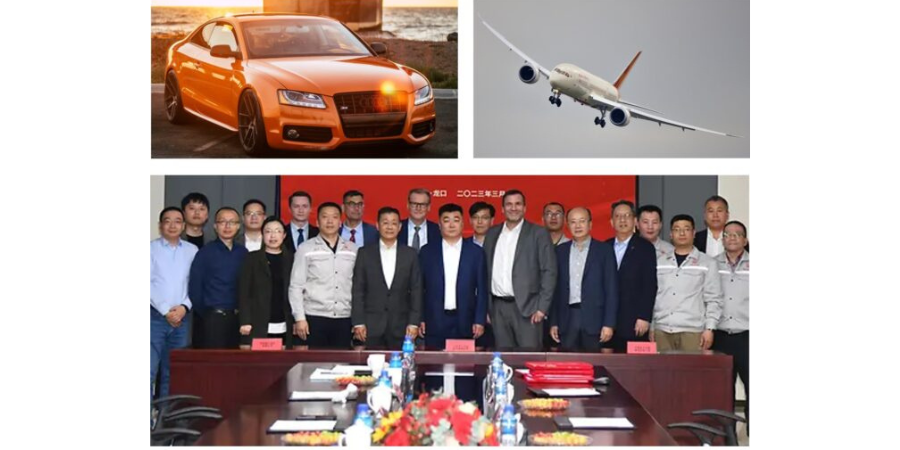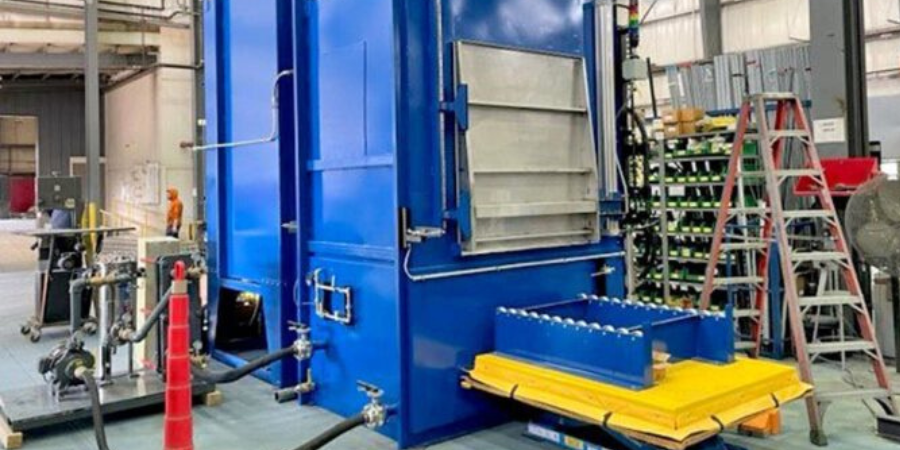
A producer of aluminum and aluminum alloy sheets for the automotive and aerospace industries has ordered two continuous heat treatment lines (No. 3 and No. 4) and one continuous process treatment line (No. 4) from a manufacturer with North American locations.
The Andritz Group will supplyShandong Nanshan Aluminum Col, Ltd, China with the engineering, equipment supply, supervision of erection, and commissioning of the complete lines, including the electrical and automation equipment. Start-up will take place in 2025. Shandong Nanshan Aluminum Co., Ltd has built the complete aluminum processing industrial chain in its region.
Wang Tao, director of the Nanshan production plant, commented, "technology, focusing on excellent aluminum process lines, and the extensive local network of experts and service specialists" were factors in the decision.
Find heat treating products and services when you search on Heat Treat Buyers Guide.com
The Metal Treating Institute (MTI), recently held its 2023 Spring Meeting in Naples, FL. The three-day event included a mixture of business and fun with highlights including money raised for the scholarship fund, keynote speaker Joe Theismann, and educational/informative sessions for attendees.
MTI CEO Tom Morrison discussed the diversity of the events encapsulated in the three days of the meeting:
"What is great about MTI’s Spring Meeting is when you have the best minds in heat treating in one room, only great things can happen. Through key experts and round table discussions, MTI members worked through key issues like workforce development, lean manufacturing, predictive maintenance, and managing costs in inflationary times. MTI also raised $35,000 for the MTI Educational Foundation through raffling off a series of NFL jersey’s, footballs and helmets signed by MTI’s featured speaker, Super Bowl winning quarterback, Joe Theismann from the Washington Redskins."
MTI Board of Directors under the leadership of President Jim Orr (center) meets to help guide the organization to greater heights. Source: Heat Treat Today
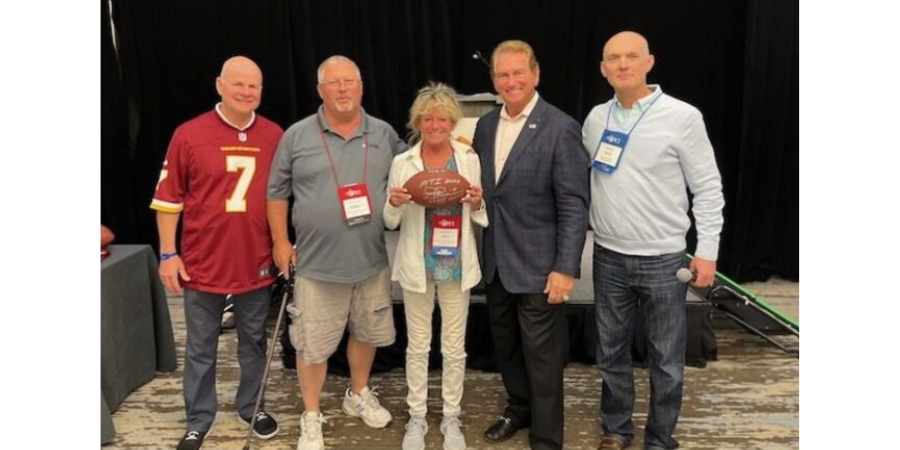
L-R: Jim Orr, Penna Flame & MTI President; Robert & Judy Rudy, Queen City Steel Treating; Joe Theismann, Featured Speaker; Doug Glenn, Heat Treat Today & MTI Educational Foundation Treasurer Source: Heat Treat Today
L-R: Joe Theismann, Featured Speaker; Lesley Wright, Wirco, Inc. Source: Heat Treat Today
L-R: April Uhlenburg, former MTI First Lady & Tom Morrison, MTI CEO Source: Heat Treat Today
L-R: Doug Glenn, publisher of Heat Treat Today & MTI Educational Foundation Treasure awards a custom Washington Redskins helmet to the highest bidders – Leslie & Chad Wright of Wirco, Inc. Also pictured is DL Wright, Wirco, and George Motes, who custom designed the helmet. Source: Heat Treat Today
L-R: Stacey Liebke, ECM USA & Karen Gantzer, Associate Publisher of Heat Treat Today. Source: Heat Treat Today
Joe Theismann autographs the back of Jim Orr, Penna Flame & current MTI President during an MTI Educational Foundation fundraising event with raised in excess of $35,000. Source: Heat Treat Today
MTI Spring Meeting evening dinner at the Naples Grand Hotel, Naples, FL Source: Heat Treat Today
Find heat treating products and services when you search on Heat Treat Buyers Guide.com
In December 2022, the first HIP batch on Latin American soil was performed. The journey to success in HIP, as any HIP user will agree, is a bumpy road. What are the challenges that aerospace manufacturers with in house heat treating should be aware of when considering HIP processing? Learn how HT-MX Heat Treat & HIPing — the heat treater who ran the first HIP batch in Latin American history — navigated the transition from small tooling jobs to HIP processing for aerospace parts.
Read the English version of the article below, or find the Spanish translation when you click the flag above right!
This original content article, first published in English and Spanish translations, is found in Heat Treat Today's March Aerospace Heat Treatingprint edition.
Writing this story as the first Latin American company to offer Nadcap accredited hot isostatic pressing brings a flood of memories and images to mind. HT-MX’s beginnings were simple, but also filled with challenges, failures, and lessons. When the company began, we were certain that, though small, we were still a “heat treat plant” and not just a shop.
Contact us with your Reader Feedback!
Being located in Mexico means that there were large companies with headquarters located far away — potential customers — that would be deciding on their heat treat supplier close to their location. We worked hard to be and to present ourselves as being very professional. But a lesson soon learned was that achieving trust with partners takes a lot more than a good speech and a clean plant.
Unsurprisingly, the first jobs were simple tooling work, like quench and tempering tooling and carburizing gears. A junior engineer and I would drive around in my old hatch-back to local machine shops and pick up a small shaft or gear and bring it back to the plant. We would get so excited when we got the case depth right.
With minimal resources, we decided to complete quality control ourselves. We became friends with a quality manager from a local company, and he came over to help on weekends and after 6:00pm until the audit date came. His knowledge is still in use at HT-MX to this day. I remember celebrating with a “Carne Asada” (a Mexican style barbecue) when we finished that first audit, thinking we had just made a huge step forward, not realizing how far away we still were from our vision.
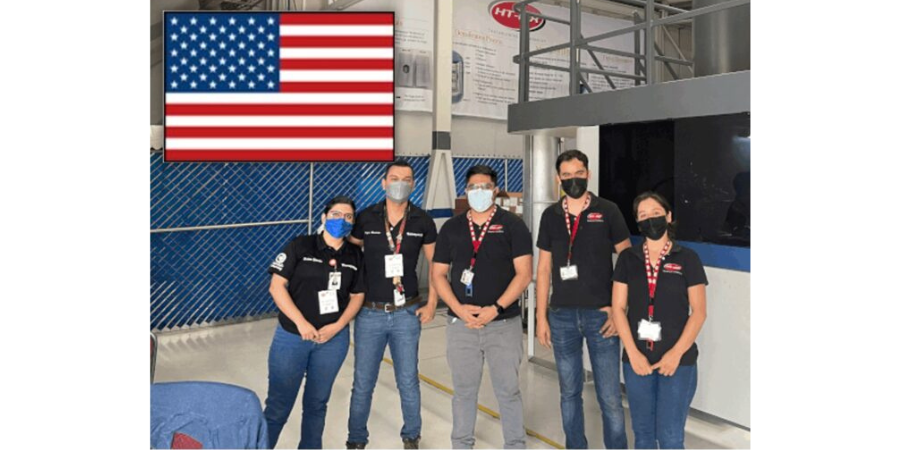
HT-MX Team
Source: HT-MX Heat Treat & HIPing
But as time passed, we turned our attention to the aerospace industry in Chihuahua, a city with four OEMs. We received the AS9100 certification and started working on Nadcap accreditation. This required time, but by then, a pretty strong engineering team was in action, and successfully obtained Nadcap accreditation in late 2019. Again, we celebrated with a Carne Asada, this time, with a better understanding on where we were and what future challenges we needed to face.
Taking On Hot Isostatic Pressing
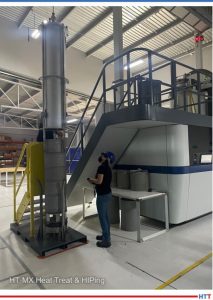
HIP system at HT-MX
Source: HT-MX Heat Treat & HIPing
The pandemic hit. Boeing’s 737 Max crisis continued to impact the industry. Moving into aerospace was slow with limited volume, especially compared to what we had seen in the automotive and oil and gas industry. But by now, international companies were more willing to transfer heat treat operations to Mexican suppliers, and we were ready, beginning with running aluminum batches, precipitation hardening, annealing, and other standard processes. It was during this early start to serve the aerospace industry that we heard about hot isostatic pressing (HIP).
Around 2019 during an aerospace cluster event, an OEM with a local presence approached us with their HIP requirements. I had only heard of HIP, but I was immediately interested — until I found out how much one of those machines cost!
But good financing through government programs helped make this HIP project a reality. Timing was not the best, as the federal election in Mexico caused a temporary Mexican currency depreciation, handicapping the project at its beginning.
Getting the proper certifications and validations proved to be a long and complex process, too. Theoretically, we knew what to expect, in terms of getting the Nadcap checklist approved, but the reality was a little different. Gaining Nadcap certification slowly builds a certain culture into any company in its day-to-day activities. Translating that culture into a completely different business unit, new crew, and new process proved to bring its own challenges.
HIP Challenges: Pressure, Temperature, Thermocouples, and Argon Supply
Heat treating usually handles temperature, atmosphere control (or lack of), and regular traceability requirements. HIP, however, adds a few new dimensions to what we usually see: internal pressure, very high temperatures — up to 3632°F (2000°C) — and argon supply. It was the first time HT-MX dealt with a process that incorporated up to 30,000 psi and also used a lot of high purity argon.
Pressure has its own challenges, though the HIP press takes care of those challenges. Still, the internal workings on these kinds of presses are fundamentally different than that of a regular heat treat furnace. Yes, you need to heat it up, but apart from that, it’s not even a furnace but a press. Understanding how the machine works, what happens inside with all that pressure, how it affects the components undergoing hot isostatic pressing, and how it affects the baskets you’re using is a critical learning curve.
High temperatures change everything about running these types of cycles. We work with metals, which means temperatures range between 1832°F and 2372°F (1000°C and 1300°C). This has an impact on thermocouple selection, calibration, and more; with the company’s thermocouple product suppliers based in the U.S., this entails more challenges and extra costs. I have lost count on those urgent same-day trips to the border to retrieve critical spares in time. It’s an 800-km/498-mi roundtrip! We have fortunately found a great supplier that has offered the technical feedback we needed, and we have started to finally understand and control our thermocouple consumption. Although, I must be honest here, we still have a lot to learn in this aspect.
Then, there’s the argon supply. HT-MX never expected it to be a challenge, but it turns out getting the proper supplier — one that understands the requirements and is willing to work with you from validation to production — is key. You might be able to start your validation process using argon transported in gas containers but eventually you will need to switch to liquid argon. That proved to be more difficult than expected. There are not many projects requiring these kind of alliances locally. Getting the right supplier was key and more of a challenge than expected. And then came the lessons on efficiently using the liquid argon, avoiding excessive venting of the tank, and being all around smart with the HIP schedule. This has been a constant learning process, one that has high costs.
Final Hurdles: Certifications, Current Events, and Energy Costs
Once our company had the Nadcap certification, we still needed to get the OEM’s approval for the HIP process, then the approval for the specific version of the HIP process, and then the actual approval for the part numbers.
These approvals were handled by the headquarters’ engineering department and not locally. It was a time-consuming process, with several test runs, lab testing, multiple audits, visits, and more testing, etc. And while all of this was happening, we still had to design the operation, locate critical suppliers not available in Mexico, create alliances with suppliers, etc. Writing this down in a few lines makes it seem simpler and quicker than it really was.
Additionally, in instances like this, Mexican companies, especially small ones, face much more scrutiny than U.S. or European-based companies, and must prove themselves in every single step. It makes sense, even if it feels a little unfair, as HT-MX had no proven track record of high tech processes such as HIP. It does cost extra time, extra care, and sometimes extra testing, but it is the reality we face and we must overcome the extra hurdles.
While navigating HIP approval, the pandemic hit. Months later, the war in Europe began with significant impacts on the cost of energy. Our main clients were high volume and low margin, and with energy prices rising, our competitiveness began to diminish. To adapt and evolve, we decided to add some smaller furnaces for smaller parts, invest in training and increased sales efforts, and focus on AMS/Nadcap-based customers, letting go of major clients. Slowly, things began to turn around.
The First Official HIP Batch in Latin America History
In December 2022, HT-MX ran the first official HIP batch in Latin American history. It was a long time coming. I always thought that running that first batch would feel like reaching the Everest summit. When the day came, it just felt like reaching Everest’s base camp. We still have a long way to go to be truly an established HIP supplier. Now, it’s back to climbing and shooting for that summit, that summit that will perpetually precede the next summit.
There are still several challenges: stabilizing new processes and improving established ones. But I am confident we will move forward in this new stage. And I am so looking forward to the next Carne Asada.
About the Author: Humberto Ramos Fernández is a mechanical engineer with a master’s degree in Science and Technology Commercialization. He has over 14 years of industrial experience and is the founder and current CEO of HT-MX Heat Treat & HIPing, which specializes in Nadcap-certifi d controlled atmosphere heat treatments for the aerospace, automotive, and oil and gas industries. With customers ranging from OEMs to Tier 3, Mr. Ramos has ample experience in developing specific, high complexity secondary processes to the highest requirements.
En diciembre de 2022, se realizó la primera horneada de HIP en suelo latinoamericano. El camino hacia el éxito en HIP, como cualquier usuario de HIP estará de acuerdo, es un camino lleno de baches. ¿Cuáles son los desafíos que deben tener en cuenta los fabricantes aeroespaciales con tratamiento térmico interno al considerar el procesamiento HIP? Aprenda directamente de HT-MX Heat Treat & HIPing, un tratador térmico que ejecutó la primera horneada de HIP en la historia de Latinoamérica, cómo navegaron la transición desde trabajos pequeños de herramentales hasta el procesamiento HIP para piezas aeroespaciales.
Read the Spanish translation of this article in the version below, or see both the Spanish and the English translation of the piece where it was originally published: Heat Treat Today's March Aerospace Heat Treating print edition.
Si quisieras aportar otros datos interesantes relacionados con HIP, nuestros editores te invitan a compartirlos para ser publicados en línea en www.heattreattoday.com. Puedes hacerlos llegar a Bethany Leone al correo bethany@heattreattoday.com
De herramientas simples al tratamiento térmico aeroespacial
Humberto Ramos Fernández Founder and CEO HT-MX
Escribir esta historia de como llegamos a ser la primera compañía latinoamericana en ofrecer prensado isostático en caliente acreditado por NADCAP trae a la mente una avalancha de recuerdos e imágenes. Los comienzos de HT-MX fueron simples, pero también llenos de desafíos, fracasos y lecciones. Cuando comenzamos la compañía, estábamos seguros de que, aunque éramos pequeños, éramos una “planta de tratamiento térmico” y no solo un taller.
Contact us with your Reader Feedback!
Estando ubicados en México quiere decir que hay grandes plantas con corporativos lejos de aquis — clientes potenciales — que estarían decidiendo sobre su proveedor de tratamiento térmico lejos de nuestra ubicación. Trabajamos arduamente para ser y presentarnos como profesionales y confiables. Pero pronto aprendimos que lograr la confi anza con los clientes requiere mucho más que un buen discurso y una planta limpia.
Como era de esperar, los primeros trabajos fueron trabajos simples de herramentales, algunos templados y revenidos de herramentales y carburizado de engranes. Recuerdo como un ingeniero junior y yo dábamos la vuelta en mi viejo hatchback alrededor de talleres locales y recogíamos un pequeño eje o engranaje y lo llevábamos de regreso a la planta. Nos emocionábamos mucho cuando lográbamos la profundidad de capa correcta.
HT-MX Team Source: HT-MX Heat Treat & HIPing
Con recursos mínimos, decidimos implementar el sistema de calidad nosotros mismos. Nos hicimos amigos de un gerente de calidad de una empresa local, venía a ayudarnos los fines de semana o después de las 6:00 p.m. hasta que llegó la fecha de la auditoría. Su enseñanzas aún se usan en HT-MX hasta el día de hoy. Recuerdo celebrar con una “Carne Asada” cuando terminamos esa primera auditoría, pensando que habíamos dado un gran paso adelante, sin darme cuenta de lo lejos que aún estábamos de nuestra visión.
Con el tiempo, dirigimos nuestra atención a la industria aeroespacial en Chihuahua, una ciudad con cuatro OEMs. Recibimos la certificación AS9100 y comenzamos a trabajar en la acreditación NADCAP. Esto requirió tiempo, pero para entonces contábamos con un equipo de Ingenieros bastante sólido y obtuvimos con éxito la acreditación de NADCAP a finales de 2019. Nuevamente, celebramos con una Carne Asada, esta vez con una mejor comprensión de dónde estábamos y qué futuros desafíos tendríamos que enfrentar.
Entrándole al Prensado Isostático en Caliente
La pandemia llegó. La crisis del 737 Max de Boeing continuó afectando a la industria. Empezar en sector aeroespacial fue lento y con un volumen limitado, especialmente en comparación con lo que habíamos visto en la industria automotriz y de oil&gas. Pero para entonces, las empresas internacionales estaban más dispuestas a trasladar las operaciones de tratamiento térmico a proveedores mexicanos, y estábamos listos, comenzando a procesar aluminio, endurecimiento por precipitación, recocido y otros procesos estándar. Fue durante estos inicios en la industria aeroespacial que escuchamos hablar del prensado isostático en caliente (HIP) por primera vez.
Alrededor de 2019, durante un evento del Cluster Aeroespacial de Chihuahua, un OEM con presencia local se acercó a nosotros con sus requerimientos de HIP. No conocíamos mucho de HIP, pero de inmediato me interesé . . . ¡hasta que descubrí cuánto cuesta una de esas máquinas!
Pero un buen financiamiento a través de programas gubernamentales ayudó a hacer realidad este proyecto de HIP. El momento no fue el mejor, ya que las elecciones federales en México causaron una depreciación temporal de la moneda mexicana, lo que obstaculizó el proyecto al principio.
HIP system at HT-MX Source: HT-MX Heat Treat & HIPing
Obtener las certificaciones y validaciones adecuadas resultó ser un proceso largo y complejo también. Teóricamente, sabíamos qué esperar en términos de obtener la aprobación para el checklist de NADCAP, pero la realidad fue un poco diferente. Obtener la certifi cación de NADCAP construye lentamente una determinada cultura en cualquier empresa en sus actividades diarias. Traducir esa cultura a una unidad de negocio completamente diferente, con un nuevo equipo y un nuevo proceso, demostró traer sus propios desafíos.
Retos en el HIP: presión, temperatura, termopares y argon
El tratamiento térmico generalmente trata de temperatura, control de la atmósfera (o la falta de ella) y los requisitos regulares de trazabilidad. HIP, sin embargo, agrega algunas dimensiones nuevas a lo que normalmente vemos: presión interna, temperaturas muy altas, de hasta 3632°F (2000°C) y suministro de argón. Fue la primera vez que HT-MX lidiaba con un proceso que incorporaba hasta 30,000 psi y también usaba mucho argón de alta pureza.
La presión tiene sus propios desafíos, aunque la prensa de HIP se encarga de ellos. Aún así, el funcionamiento interno en este tipo de prensas es fundamentalmente diferente al de un horno de tratamiento térmico regular. Sí, necesitas calentarlo, pero aparte de eso, no es ni siquiera un horno, sino una prensa. Comprender cómo funciona la máquina, qué sucede dentro con toda esa presión, cómo afecta a los componentes sometidos a prensado isostático en caliente y cómo afecta a las canastas y fi xtures que estás utilizando, es una curva de aprendizaje crítica.
Las altas temperaturas cambian todo sobre el funcionamiento de estos tipos de ciclos. Trabajamos con metales, lo que significa que las temperaturas oscilan entre 1832°F y 2372°F (1000°C y 1300°C). Esto tiene un impacto en la selección de termopares, calibración y más; con los proveedores de termopar basados en EUA, esto implica más desafíos y costos adicionales. He perdido la cuenta cuantos viajes urgentes de ida y vuelta por refacciones a la frontera he hecho. ¡Es un viaje redondo de 800 km! Afortunadamente, hemos encontrado un gran proveedor que nos ha ofrecido la retroalimentación técnica que necesitábamos, y finalmente hemos comenzado a comprender y controlar nuestro consumo de termopares. Aunque, debo ser honesto aquí, todavía tenemos mucho que aprender en este aspecto.
Luego está el suministro de argón. En HT-MX nunca esperamos que fuera un desafío, pero resulta que conseguir el proveedor adecuado, un que entienda los requisitos y esté dispuesto a trabajar contigo desde la validación hasta la producción, es clave. Es posible que puedas iniciar tu proceso de validación usando argón transportado en contenedores de gas, pero eventualmente necesitarás cambiar a argón líquido. Eso resultó ser más difícil de lo esperado. No hay muchos proyectos que requieran este tipo de alianzas a nivel local. Conseguir el proveedor adecuado fue clave y resultó ser un desafío mayor de lo esperado. Y luego vinieron las lecciones sobre cómo utilizar eficientemente el argón líquido, evitar el excesivo venteo del tanque y ser inteligente con el calendario de HIP en general. Esto ha sido un proceso de aprendizaje constante, uno que tiene altos costos.
Últimos obstáculos: certificaciones, eventos globales y costos energéticos
Una vez que nuestra empresa obtuvo la certificación NADCAP, todavía necesitábamos la aprobación de los OEM para el proceso HIP, luego la aprobación para la versión específica del proceso HIP y luego la aprobación real para los números de parte.
Estas aprobaciones fueron manejadas por el departamento de ingeniería del corporativo y no localmente. Fue un proceso que consumió mucho tiempo, con varias pruebas, pruebas de laboratorio, múltiples auditorías, visitas y más pruebas, etc. Y mientras todo esto sucedía, todavía teníamos que diseñar la operación, localizar proveedores críticos que no estaban disponibles en México, crear alianzas con proveedores, etc. Escribir esto en pocas líneas parece más simple y rápido de lo que realmente fue.
Además, en casos como este, las empresas mexicanas, especialmente las pequeñas, enfrentan mucho más escrutinio que las empresas estadounidenses o europeas, y deben probarse en cada paso. Tiene sentido, aunque se siente un poco injusto, ya que HT-MX no tenía un historial comprobado de procesos de alta tecnología como HIP. Cuesta tiempo extra, cuidado adicional y a veces pruebas adicionales, pero es la realidad que enfrentamos y debemos superar los obstáculos adicionales.
Mientras navegábamos en la aprobación de HIP, llegó la pandemia. Meses después, comenzó la guerra en Europa con impactos significativos en el costo de la energía. Nuestros principales clientes eran de alto volumen y bajo margen, y con el aumento de los precios de la energía, nuestra competitividad comenzó a disminuir. Para adaptarnos y evolucionar, decidimos agregar algunos hornos más pequeños para piezas más pequeñas, invertir en capacitación y aumentar los esfuerzos de ventas y enfocarnos en clientes basados en AMS / NADCAP, dejando ir a clientes principales. Poco a poco, las cosas comenzaron a mejorar.
La Primera Horneada Ofi cial de HIP en la Historia de Latinoamérica
En diciembre de 2022, HT-MX llevó a cabo la primera horneada oficial de HIP en la historia de Latinoamérica. Tomo bastante tiempo. Siempre pensé que hacer esa primera horneada se sentiría como llegar a la cima del Everest. Cuando llegó el día, solo se sintió como llegar al campamento base del Everest. Todavía nos queda mucho camino por recorrer para ser realmente un proveedor de HIP establecido. Ahora, volvemos a escalar y apuntamos a esa cima, esa cima que perpetuamente precederá a la próxima cima.
Todavía hay varios desafíos: estabilizar nuevos procesos y mejorar los establecidos. Pero estoy seguro de que avanzaremos en esta nueva etapa. Y estoy muy emocionado por la próxima Carne Asada.
Acerca del Autor:Humberto Ramos Fernández es un ingeniero mecánico con una maestría en Ciencia. Tiene más de 14 años de experiencia industrial y es el fundador y actual CEO de HT-MX Heat Treat & HIPing, que se especializa en tratamientos térmicos de atmósfera controlada, con certifi cación NADCAP, para las industrias aeroespacial, automotriz y de petróleo y gas. Con clientes que van desde OEM hasta Tier 3, el Sr. Ramos tiene una amplia experiencia en el desarrollo de procesos secundarios específi cos de alta complejidad para los requisitos más exigentes.
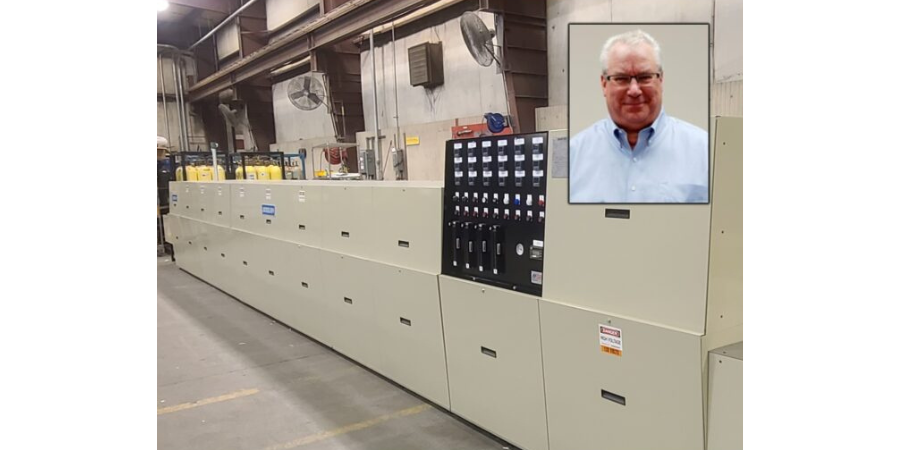
Bill St. Thomas Business Development Manager Lindberg/MPH Source: Lindberg/MPH.com
An electrically heated, full muffle, mesh belt conveyor furnace was recently shipped from its Michigan manufacturer. This heat treat furnace is designed for treating pressed powdered material.
Lindberg/MPH'sfurnace is designed for applications with a maximum process temperature of 1,832°F that utilize a nitrogen or clean dry filtered air process atmosphere. The unit includes a water-cooling section. The conveyor system features a 14 inch wide mesh belt with belt stop alarm to provide an audible and visual indication in case of a conveyor stoppage.
“This furnace utilizes nine high temperature zones which provides the customer the flexibility for time/temperature profile adjustments to develop and meet their specific process requirements.” commented Bill St. Thomas, business development manager at Lindberg/MPH. "
Find heat treating products and services when you search on Heat Treat Buyers Guide.com
This message from Bethany Leone, managing editor of Heat Treat Today shares some reflections on self-healing across time. Looking at ancient structures and then progressing to modern-day applications, there is some room for wonder within the realm of science.Use the Reader Feedback button below to comment.
This article first appeared inHeat Treat Today'sMarch Aerospace Heat Treatingprint edition. Feel free to contact Bethany Leone at bethany@heattreattoday.com if you have a question, comment, or any editorial contribution you’d like to submit.
Let’s talk Ancient Roman engineering. Aqueducts (elevated bridges made of concrete) stretched for miles to convey water from hilltops down to citizens and industries in city centers. Scientific studies covered by the University of Utah Blog, Engineering and Technology, and National Geographic have shown many cases where these concrete structures and other 2,000-year-old concrete Roman piers submerged in water have not just survived but thrived; it’s an ancient technology that’s stronger than modern methods.
Chemical reaction with the salty seawater is believed to be one reason for the lasting success of maritime concrete: seawater filters through the concrete, interlocking minerals grow within the structures, and the concrete ages with strength because of this added cohesion between the minerals and concrete. Additionally, assumptions for the ancient concrete’s strength pointed to pozzolanic materials as the strengthening composition.
But recently, researchers have identified “self-healing properties” of Roman concrete across applications — maritime piers, aqueducts, and roads, to name a few. The key component? Bright, white mineral fragments called “lime clasts” made of various calcium carbonate forms that were created under high heat. When cracks fractured into the concrete and broke across the lime clasts, water could enter and react with the material, creating a calcium-saturated solution. This solution can: recrystallize as calcium carbonate, thus filling the crack that allowed the water to enter in the first place, or react with pozzolanic materials, thus further strengthening the concrete.
"Aqueducts stretched for miles . . ." Source: Adobe Stock/Kushnirov Avraham
Reading this research on ancient building methods, I remembered the “self-healing” that has recently been introduced to metallurgy by Rice University. Researchers developed a sulfur-selenium alloy that is corrosion-resistant and, when used as a coating for steel, could repair perforations when heat was applied (sometimes it even self-repaired without heat application). In moments like these, I look at my pinewood table and my ceramic mug and want to yell, “It’s alive!!”
Seeing these miraculous properties of material scientists and researchers does not lessen the amazing abilities that heat, water, and minerals continue to have after thousands of years. This excitement also does not stand alone but builds on the extensive knowledge of physics and chemistry as well as logic (no good engineer can do without that!) and creativity. Self-healing, while a trendy word, is not a tool that the engineer can use all on its own.
This liveliness in the world is ancient and present, integrated with other experiences, and also personal; as humans, we know the extent of “self-healing” and the interventions that are required to fully heal. There are points in life — perhaps childhood, apprenticeships, sports, or simply facing the daily grind — when it becomes necessary for someone to heal us, help us, and sometimes temper us. And, as an engineer or engineering-minded reader, you know that this is natural and good.
As we pull out another bar of chocolate to watch another video about how practical visionaries are developing technologies like self-healing materials for real-world solutions, we may see the heat treat industry under pressure to adapt old methods of processing parts to gain better results with new alloys. Especially in the open-mouth-gaping-at-new-technologies times we find ourselves in human history, we can still remember that however mind-blowing the discoveries — even in the face of something so crazy-sounding as “self-healing” — we can be like the Ancient Romans and (thoughtfully) embrace the miraculous material reality, too.
Find heat treating products and services when you search on Heat Treat Buyers Guide.com
For heat treat operations, use of hydrogen comes with questions about price-point, safety, and storage or delivery. Read this case study to learn how a manufacturer with in-house heat treat, Riverhawk Company, contended with these questions and decided to meet stringent production requirements for pivot bearings by leveraging on-site hydrogen and a hydrogen furnace.
This original content article was written by Marie Pompili, a freelance writer, for Heat Treat Today's May 2023 Sustainable Heat Treat Technologies print edition.
For companies using hydrogen furnaces for heat treating operations, questions always surface surrounding the provision of the necessary hydrogen. Should we have it delivered in cylinders? Do we have the room outdoors for a large storage tank? Can we generate it ourselves? For Randy Gorman, maintenance supervisor at Riverhawk Company, the overriding question is always, “How do we handle hydrogen safely?” The ultimate solution the company chose was the installation of an on-site hydrogen generator. How and why the in-house heat treater came to that conclusion is an interesting story.
Making a History
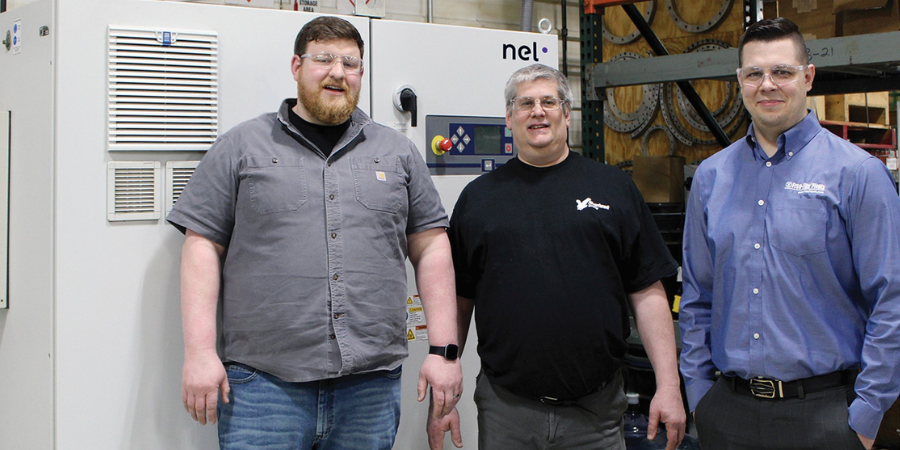
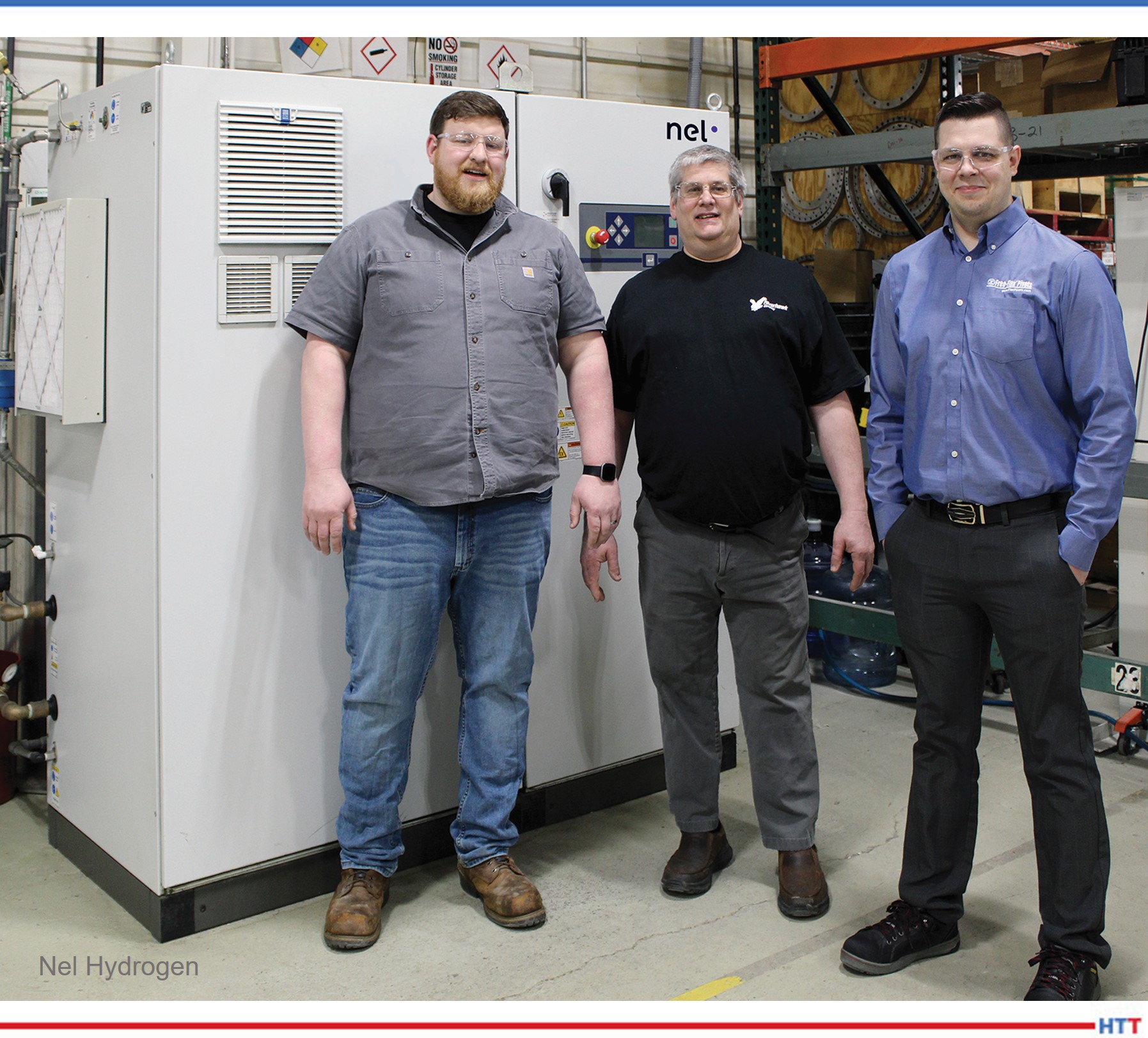
Riverhawk staff (L to R): Spencer Roose, Flex Pivots Manager; Randy Gorman, Maintenance Supervisor; and Josh Suppa, Pivot Department Engineer Source: Nel Hydrogen
Contact us with your Reader Feedback!
Located in New Hartford, NY, Riverhawk Company was established in 1993 as a value-added provider of hydraulic tooling. The company quickly grew from a “buy and assemble” operation to a manufacturer with 14 CNC machine tools, 21 conventional machines, and all the necessary peripheral devices, tools, and software. Through a period of smart acquisitions and the development of new product lines, Riverhawk became one of the leading manufacturers of tensioners, powertrain couplings, and accessories for the turbomachinery industry; the instrumentation product line of legacy torque and vibrations measuring instruments; and the Free- Flex® pivot bearings, which are very well known in high performance industry sectors.
Pivot Bearing Line Requires Improved Heat Treat Abilities
The Free-Flex® pivot bearing line is the focus in this heat treat/hydrogen story. Riverhawk purchased this line from Goodrich in 2004. It is the same product that was developed by Bendix more than 60 years ago. In fact, many of the original part numbers are the same, and the manufacturer strives to maintain the quality and performance characteristics that Bendix established more than six decades ago. Many of the manufacturer’s clients have been purchasing flex pivots for long-running applications, some of which are 25 to 50 years old.
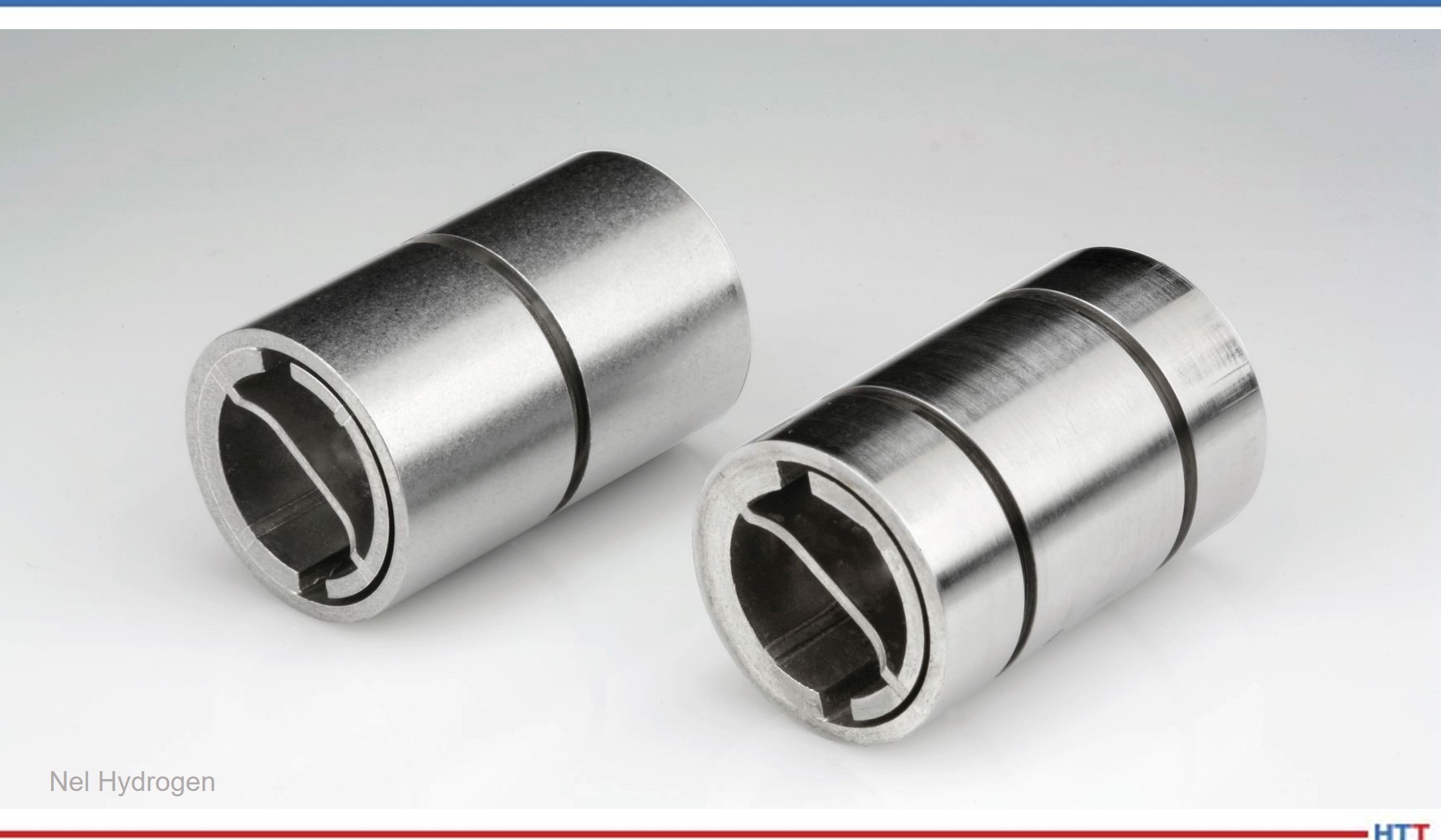
Cantilevered-double ended thick spring. Riverhawk purchased the Free-Flex® pivot bearing line from Goodrich. Many of the company’s clients, in a wide range of critical industries, have been purchasing flex pivots for long-running applications. Source: Nel Hydrogen
If a product line could talk, the flex pivots could share some tales and compelling accounts about all it has seen and done in the world’s most critical and sophisticated applications — many in the military, commercial aerospace, outer space, industrial robotics, medical, clean rooms, information technology, semiconductors, and many more. In all of these challenging sectors, clients are well-known and demand exacting results.
Shortly after integrating the pivot line into its existing production processes, it became clear that the company needed to improve its heat treat function. After researching several options, Riverhawk purchased a new Camco batch hydrogen furnace.
The pivot line consists of flat springs crossed at 90° and supporting cylindrical counter-rotating sleeves. Standard Free-Flex® pivots are made from 410 and 420 stainless steel; however, certain special material compositions include 455 stainless, Inconel 718, titanium, and maraging steel. During the manufacturing process for the flexure bearings, Riverhawk uses the batch atmosphere heat treat furnace to braze the springs to the body halves using a braze alloy, and to simultaneously heat treat certain components in the assembly. The atmosphere used for the heat treating and brazing is a 100% hydrogen atmosphere — chosen because it is universally applicable to all the different metallurgy used for the flex pivots.
The Tension: Delivered vs. On-site Hydrogen?
The use of a batch atmosphere heat treat furnace requires that the hydrogen atmosphere be flushed from the furnace with inert nitrogen when a finished batch is unloaded and a new load is added. Likewise, the furnace must return to inert atmosphere again with nitrogen after the new load is added, and before hydrogen is again injected; hence, hydrogen is used in a batch-wise fashion. The function of the hydrogen atmosphere is to prevent oxidation of the metal surfaces, and to promote fluxing of the braze alloy during the thermal cycle.
Until 2009, Riverhawk used hydrogen-filled cylinders to provide hydrogen to their batch heat treat furnace. Each run of the furnace would use several cylinders of hydrogen. Increases in production rates required careful management of hydrogen gas supply to the furnace. Running out of hydrogen mid-run could sacrifice a whole batch of nearly completed parts.
In 2009, the company elected to move away from hydrogen cylinders and transition to a hydrogen supply approach less disruptive to their production process. The choices were either bulk stored hydrogen or on-site hydrogen generation. After extensive consideration, they chose a model H2 hydrogen generator from Nel Hydrogen because the zero-inventory hydrogen generation saved the company money as compared to the cost of permitting, construction, and compliance for bulk stored hydrogen approaches.
The approach that was not chosen — delivered, stored bulk hydrogen — was unappealing for several reasons. Chief among these were the capital cost of the hydrogen storage infrastructure, the requirement for permitting for the necessary hydrogen storage, the accompanying project schedule risk for permitting, the continuous compliance issues with stored hydrogen, and the price volatility of delivered hydrogen that would have made cost accounting more difficult.
“The state and local regulations were likely necessary; however, there was a lot to wade through to become compliant,” said Gorman.
Finding the Best Way
Fast forward 14 years to today and Riverhawk is once again analyzing its approach to handling its hydrogen requirement.
“The H2 model generator that we have has served us well for 14 years, several years beyond the typical life of a cell stack,” said Gorman. “But we need more capacity and redundancy due to the increased demand for our Free-Flex® products and to cost-effectively mitigate the risk of a hydrogen generator issue, leaving us without the use of our furnace.”
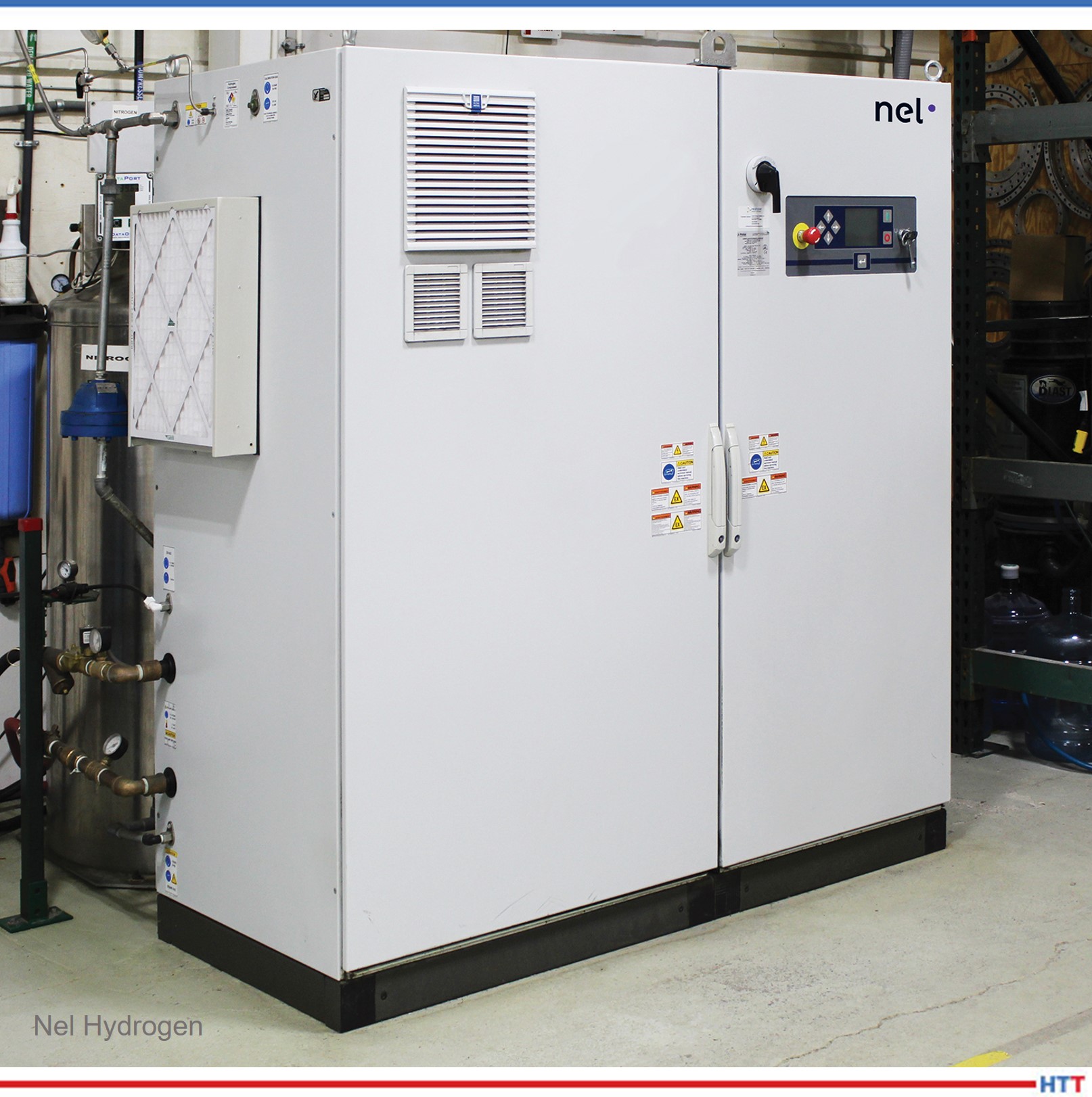
The company decided to go with a model H4 hydrogen generator from Nel Hydrogen, which doubles their capacity with two cell stacks and the capacity for three if and when needed. The new system features the same footprint as the former H2 model, which is important to them, and they are even gaining floor space as they will eliminate the number of cylinders formerly stored nearby. The additional free space to move about also appeals to Gorman’s top mandate for safety.
Josh Suppa — engineer of the Pivot Department at Riverhawk — has had hands-on experience with this particular generator series (pictured above). “The maintenance of it is easy, and if there ever is a rare issue, Nel is quick to respond either in person or if it’s something that they can walk us through, they take all the time we need to resolve the matter and get us back online quickly. From a product line and customer satisfaction perspective, we cannot take the risk of our heat treat operation to go down for long. It’s that integral to our success. It’s essential, really, and one of our core competencies.”
Riverhawk will soon use a model H4 hydrogen generator from Nel Hydrogen, which doubles their capacity with two cell stacks and the capacity for three if and when needed. The new system features the same footprint as the former H2 (pictured here). Source: Nel Hydrogen
Choosing On-Site Hydrogen Generation
Looking back on the initial decision to generate on site, one of the important issues that Riverhawk and Nel personnel had to determine was the most cost-effective configuration of the hydrogen generator and ancillaries to supply the hydrogen required for thermal processing. Had the manufacturer used a continuous furnace such as a belt furnace, then the calculations would have been easy, as the flow rate required would have been level and continuous. Instead, the batch furnace required more complex calculation because the hydrogen flow rate varies depending on the stage of the furnace cycle: fast hydrogen flow to fill the furnace, then slow to maintain the atmosphere, then no flow during parts removal and during loading. Additionally, there were many factors that affected the precise furnace cycles employed, including the size of the pivots in each batch, the number of parts loaded, and the specific metallurgy of the flex pivots in the batch. Overall, the cycle times can vary between 6 and 12 hours per batch.
It is important to seek out a knowledgeable hydrogen partner in this endeavor to specify exactly what’s needed, no more and no less. For heat treat applications, users generally would want compact equipment, extreme hydrogen purity, load following, near-instant on and instant off, and considerable hydrogen pressure that make it flexibly suited for a variety of thermal processes.
By combining on-site hydrogen generation with a small amount of in-process hydrogen surge storage if needed, on-site hydrogen generation can be used to meet the needs of batch processes, such as batch furnaces. By carefully choosing generation rate and pressure, and surge storage vessel volume, the process can provide maximum process flexibility while minimizing the amount of hydrogen actually stored.
In practice, client priorities such as minimum hydrogen storage, or lowest system capital cost, or highest degree of expandability, or least amount of space occupied can be met by choosing the specific hydrogen generator capacity and surge storage system employed for any particular production challenge.
In this case study, the optimum solution chosen was based on lowest capital cost and operating cost (including maintenance) while preserving the maximum possible expandability for production increases, and safety. These sound like common reasons and may be yours as well. Success continues at Riverhawk with the arrival of the new H4 generator in the coming weeks.
About the Author: Marie Pompili is a freelance writer and the owner of Gorman Pompili Communications, LLC.
Heat TreatToday would like to wish everyone a peaceful Memorial Day. The holiday, formerly known as Decoration Day, gives us all a time to reflect with gratefulness on those who have served our country well.
Our offices will be closed on Monday, May 29; and we will resume Tuesday morning, May 30. We grieve with those who have lost a loved one in the service of the U.S. military, and we look forward with joy to the future under the care of those who protect us. Thank you to those who have served.
If you, or someone you know, is a veteran and is also in the heat treat industry, we would like to know a little more about you. Please fill out the Heat TreatVeteranssubmission form to share the information about time in service. Thank you.
A new, fully automated quenching system is nearing completion and will be installed at C/A Design’s heat treat facility in Exeter, NH, which serves the aerospace and defense industry. It has been custom designed and developed specifically to service aluminum brazing applications, expanding capabilities and services.
The system, from Wakefield Thermal, adheres to the guidelines set by both AMS2750 and AMS2770, ensuring proper heat treatment for aluminum brazements and adherence to critical specifications. The custom solution for C/A Design includes temperature and quenching control technology.
Find heat treating products and services when you search on Heat Treat Buyers Guide.com
If you are considering making the leap to laser heat treat, buckle up. Nic Willis, metallurgist/heat treat supervisor of Emerson Professional Tools — RIDGID® TOOLS, and recipient of Heat TreatToday's 40 Under 40 recognition in 2020, shares how he led the company to look at laser hardening for some of their induction heat treated projects. It’s a fascinating story that includes the decision-making process, the transition itself, and the continued implementation of this technology.
Below, you can watch the video, listen to the podcast by clicking on the audio play button, or read an edited transcript.
The following transcript has been edited for your reading enjoyment.
Doug Glenn: We’ve interviewed you before, and it’s good to have you back. You are one of our 40 Under 40 Class of 2020 winners. Give a brief history about yourself.
Class of 2020, 40 Under 40 Source: Heat Treat Today
Contact us with your Reader Feedback!
Nic Willis: I’ve been in the heat treat world for about 5 years now. I’m the metallurgist and heat treat supervisor at RIDGID® TOOLS in Elyria, Ohio. We have a captive heat treating department where we specialize in neutral hardening, carburizing, carbonitriding, salt tempering. We do some induction hardening, vacuum hardening, and flame hardening, as well. There are a lot of heat treating applications at RIDGID, and it’s pretty exciting.
The Project: Bringing Induction Hardening In-House (02:56)
Doug Glenn: RIDGID is a manufacturer with in-house heat treat. You do some outsourcing, but for the most part, you do your own heat treating.
Let’s talk a bit about your recent decision to change from one type of heat treating over to another type of heat treating.
Nic Willis: This particular project started when I was tasked with finding a way to bring an outsourced process in-house to our facility. That process was the induction hardening of a particular product line. I began by reaching out to different machine builders of induction hardening equipment.
One thing I noticed when I started to get some quotes was how much the tooling cost was going to be and what percentage of the project that was going to account for. Being somewhat new to induction hardening at the time, I was really taken aback.
We had also seen some quality issues with cracking of these components. I just happened to listen to an episode of Heat TreatRadio that had to do with laser hardening. After I got done listening to the podcast, I reached out to Laser Hard, Inc. We started a conversation about learning more about laser hardening and if it was a fit for this particular product line.
Did you consider any other possibilities besides bringing an induction process in or laser?
Nic Willis: It was pretty much between those two technologies. These components, like a lot of parts that are going to make use of either of these two technologies, have one area we want to keep ductile and then another (contact) area we want to have wear resistance. These particular components will get furnace-hardened first, and then they go out for the selective hardening process.
Induction vs. Laser Heat Treating (06:48)
Doug Glenn: What did the rest of the process look like? How long did it take, who was involved, what were some of the key questions that needed to be answered before a final decision could be made?
Nic Willis: For this particular application, it just so happened that the specifications that we required were a good fit for the laser process, namely case depth. One of the limitations of laser hardening versus induction is you’re not able to get as deep of a case with laser as you can with induction. For these components, that wasn’t really a factor. So, there was some initial vetting that went on.
After that, we sent some sample parts to Laser Hard that they would have processed. It took some testing on that end to get their parameters set up, and they cut up a lot of parts to check the case depth. Once we got that dialed in, the parts would’ve come back here to RIDGID where we did some life testing. We have a test apparatus that we use that basically cycles these parts to failure. From there, it turned out that these met or exceeded the life of the induction hardened components. At that point, we would have updated the drawings and approved laser hardening as a substitute process.
The Cost (08:34)
"[The project] needs to be somewhat, or at least, cost neutral." Source: Unsplash.com/Alexander MillsDoug Glenn: Do you have any sense or was there any calculation done of what you anticipated the cost savings would be?
Nic Willis: I can’t get into any specifics; but in order to get any type of substitution like this off the ground, it needs to be somewhat, or at least, cost neutral.
Doug Glenn: How about the maintenance of the equipment — laser versus induction?
Nic Willis: Like I mentioned before, the maintenance of the coils themselves is something that you don’t have to account for with laser. Any type of specialized tooling for laser is going to be on the work-holding end of the spectrum which can be adapted after the fact to improve cycle times and things like that.
Laser does not make use of a quenchant. The parts self-quench, meaning that the core material doesn’t get heated up and is cool enough to quench out the heated area. Anybody that’s familiar with induction knows that the quenching process can be kind of messy and needs to be contained.
The Winner: Laser Heat Treating (10:30)
Doug Glenn: Those are all good additional cost savings items. Laser won the day on this one. Have there been other parts that you’ve looked at potentially going to laser but decided to not do it?
Nic Willis: Yes. In Elyria, the parts that we make are our pressing tools to make our pipe wrenches and threading machines. With the threading machines, there is a lot of gearing. We’ve looked at some of our gears that we flame hardened, and they’re a lot bigger. It’s just not a good fit with laser. You would have to go tooth by tooth, which is going to really increase your cycle time. In those parts, you run into that issue with case step requirement.
Doug Glenn: Can you tell us what laser hardening is?
Nic Willis: It’s a form of selective hardening where you want some of the part to have a hard case for wear resistance. The rest of the part keeps its ductility. In this case, you’re using a laser — rather than an induction field or a flame — to heat up this specific area that you want to harden.
Doug Glenn: You mentioned “part holding.” I don’t want you to give away more than you can and want to respect all the propriety measures. Is this something where you’re spinning a part and laser, so you’re just actually lasering a specific area?
Nic Willis: Correct.
Doug Glenn: I know with flame hardening they’re actually spinning the part as it goes — or they can spin the part. Is laser something you can do that with?
Nic Willis: Yes, absolutely. But then you’re starting to talk about additional costs to build a specialized machine to do the hardening process. For me, I wanted something “off the shelf,” for lack of a better term. I didn’t want a super specialized piece of equipment.
Doug Glenn: In the decision-making process itself, did you and the team require to see laser hardening be done other places or did you work basically just with Laser Hard and make sure they could prove the process? How much of a pioneer were you willing to be? Were you willing to be one of the first people to ever do laser heat treating?
"[W]e sent some sample parts to Laser Hard that they would have processed." Source: Laser HardNic Willis: There is a company that is pretty close to Laser Hard, and some of their products are laser hardened (it’s not the same but it’s a similar application). I was aware of them. Laser hardening has been around for a long time. I think what’s made it more attractive nowadays is that the laser equipment itself has become more affordable. It’s not a new process, by any means. I would assume that it’s been around since lasers have been around.
Success with Laser Heat Treating for RIDGID® (16:40)
Doug Glenn: You’ve been through the decision-making process, and you’ve got it up and running. I assume you’re happy with what’s going on now. You’ve got it down now, and it’s a relatively smooth process?
Nic Willis: Absolutely. We’re looking at bringing the process in-house in the next few years. I’d like to say that it’s a dream of mine to see it done here on site in Elyria.
Doug Glenn: Looking back on the whole process of moving from wanting to bring it in-house, to deciding to go with laser — is there anything you would’ve done differently now, knowing what you know?
Nic Willis: That’s a good question. I think one thing that I really learned through the process was anytime you’re switching from a tried-and-true process to something new, whatever your reasons may be, it takes some time to get people on board. [blocktext align="left"]I think one thing that I really learned through the process was anytime you’re switching from a tried-and-true process to something new, whatever your reasons may be, it takes some time to get people on board.[/blocktext]
Like I mentioned earlier, we were setting the parameters with the laser, doing the metallurgical testing, doing the life testing — it wasn’t a bang, bang, bang type thing. More and more people were brought into the discussion. The commercial side has to be addressed, as well. There are always some question marks when you’re moving from one supplier to another, and that took some time.
I don’t know if I’d do anything different, but I’d tell myself to be a little more patient, given the opportunity.
Doug Glenn: That’s probably the great lesson, honestly. It does take patience and a little perseverance because you’ve got to prove the process. You’ve got to prove it, not only metallurgically, like you said, but you’ve got to prove it commercially.
Nic Willis: From the conceptual stage to when we actually were putting parts into the field, it was probably about two years.
Doug Glenn: When you first started, how long did you think it was going to take?
Nic Willis: I thought it would be relatively quick!
Doug Glenn: Right. A 6-month process turns into 2 years, easily, huh?
Nic Willis: Exactly.
Doug Glenn: Are there any other thoughts regarding the whole process of that transition or laser heat treating or anything that you’d like to share?
Nic Willis: A challenge that I’ve run into is you see success with one product line, and you want to see how far you can take it and expand it to these other product lines. We talked about how sometimes it’s not a good fit. I mentioned that with some of the gears and larger cylindrical-type components. I think induction definitely still has its place.
I’m working on some projects to bring some of our induction parts in-house. In these cases, based on case depth, part geometry, and things like that, induction, in some cases, is a better fit than laser. Although in this particular case, it made sense to switch from induction to laser, it’s not always a one-for-one type switch.
Doug Glenn: That’s excellent advice; you’ve got to take each part in its turn and figure out which is the best process for it.
About the expert:
Nicolas Willis is metallurgist/heat treat supervisor at Emerson Professional Tools — RIDGID® TOOLS. Nic is the metallurgical authority for all Emerson Professional Tool operations worldwide. He has been leading the modernization of the heat treatment department throughout the company, upgrading capital equipment and developing new processes to improve safety, increase throughput, and improve quality of RIDGID and Greenlee brand products. He was elected to the position of secretary of the Cleveland ASM chapter in 2020 and has served on the Research Committee of the Heat Treat Society.