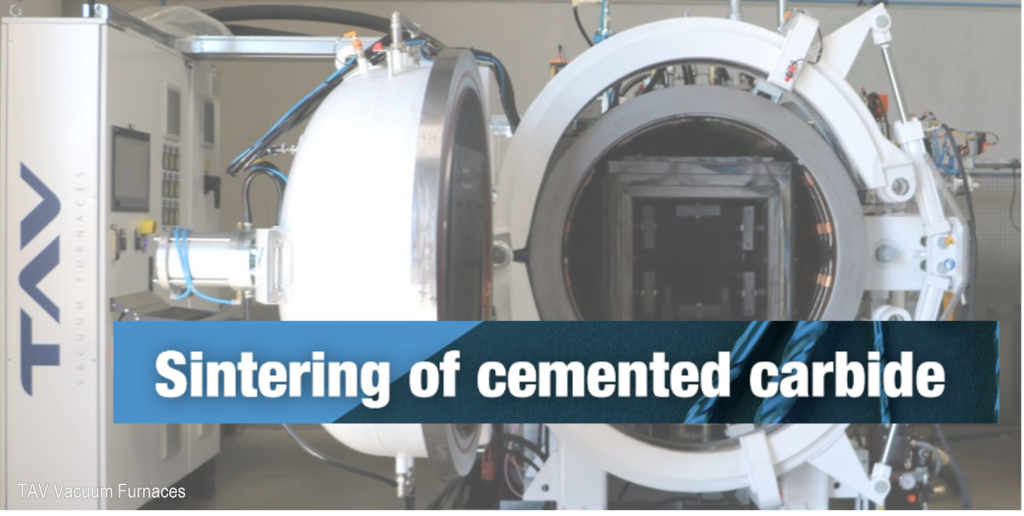
Cemented carbide is often used interchangeably with other terms in the industry to describe a popular material for tool production. However, the specifics of what makes up a cemented carbide, and how this material can be processed, are not so widely discussed.
In this best of the web article, discover the composition, applications, and processes involved in sintering cemented carbide, as well as how vacuum furnaces play an essential role for this material. You will encounter helpful diagrams and resourceful images depicting each step of the process.
An Excerpt:
“Hard metal, or cemented carbide, refers to a class of materials consisting in carbide particles dispersed inside a metal matrix. In most cases, the carbide of choice is tungsten carbide but others carbide forming element can be added, such as tantalum (in the form of TaC) or titanium (in the form of TiC). The metal matrix, often referred as ‘binder’ (not to be confused with wax and polymers typically used in powder metallurgy) is usually cobalt, but nickel and chromium are also used. This matrix is acting as a ‘cement,’ keeping together the carbide particles (hence the ‘cemented carbide’ definition).”
Welcome to Heat Treat Today’sThis Week in Heat Treat Social Media. As you know, there is so much content available on the web that it’s next to impossible to sift through all of the articles and posts that flood our inboxes and notifications on a daily basis. So, Heat Treat Today is here to bring you the latest in compelling, inspiring, and entertaining heat treat news from the different social media venues that you’ve just got to see and read!
This week, we dive into innovations in several heat treat processes, take a look at some fascinating technological applications for heat treaters, tune into a conversation on batch vs. continuous furnaces, and explore an unexpectedly beautiful result of AM.
If you have content that everyone has to see, please send the link to editor@heattreattoday.com.
1. Bikes of the Future: the titanium revolution
Titanium has historically been limited as a material for bikes, despite its excellence as a material, due to its high cost and difficulty to process. Check out this post by IperionX on LinkedIn, sharing the revolutionary innovations they intend to bring to titanium processing, with applications for biking.
2. Metallurgical Moments: from Medicine, to rust removal, to atomic structure
As all heat treaters know, the world of metals is a vast one. Here are a few fascinating metallurgical moments to inform you and hopefully put a smile on your face.
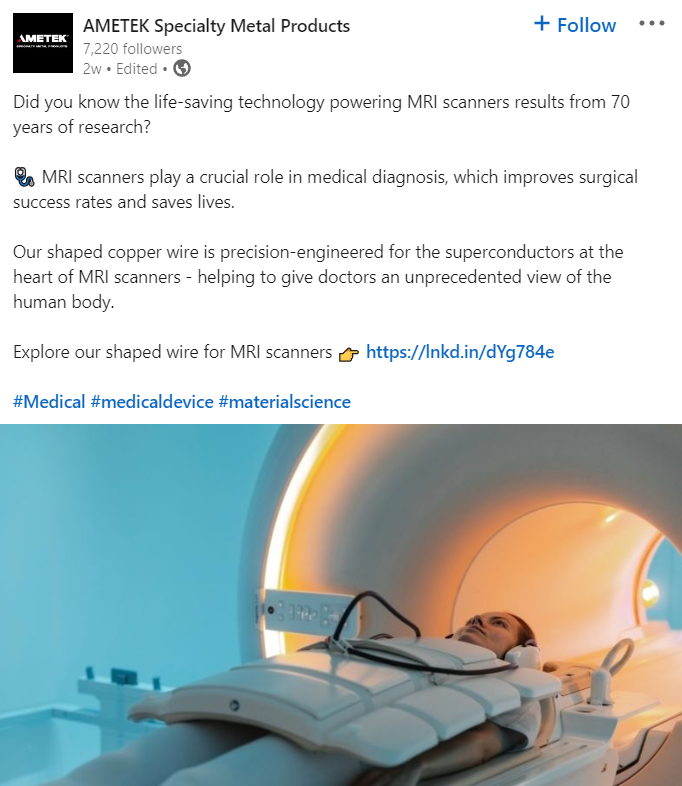
The Power of Metals in MRI
Laser Cleaning: Heat Treat Potential Of The Future (Or Past?)
Did you know that the first lasers were created in 1960? They may have a futuristic look, but these devices have been around for quite a while, and their potential applications in the heat treating industry continue to grow. Check out this fascinating video from @Metallurgical Engineering on LinkedIn to get an up-close look at how lasers can be used to clean rust and perhaps streamline your heat treating maintenance in the future.
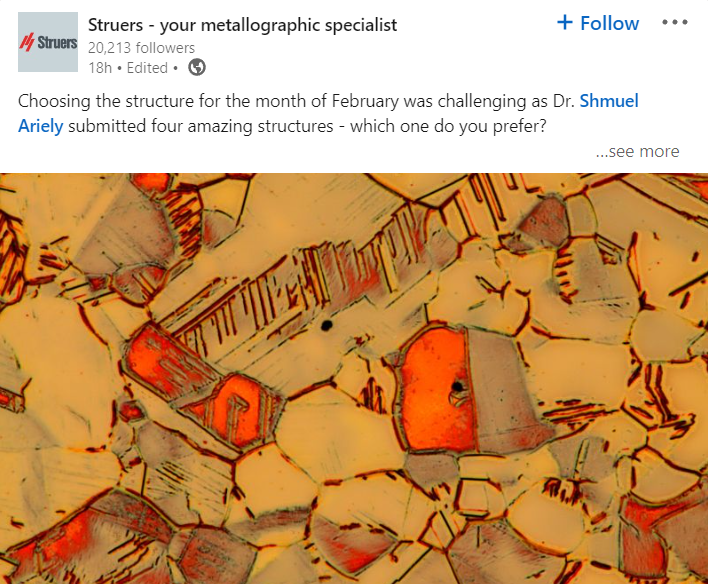
Metallurgical Art: The Structure of Metals
3. Continued Learning
Each of these posts brings an educational aspect of part of the heat treat world you may or may not be familiar with.
A Brief Overview of Quenching
HIP: What the Cool Heat Treaters Are Up To
https://www.youtube.com/watch?v=xPqvquxw9BE
4. Reading (and Podcast!) Corner
You can’t read everything, we get it. Heat Treat Today is here to recommend one informative podcast to enjoy on your daily commute, suggest a quick video on laser heat treating, and put a comprehensive article on surface treatments for automotive on your radar!
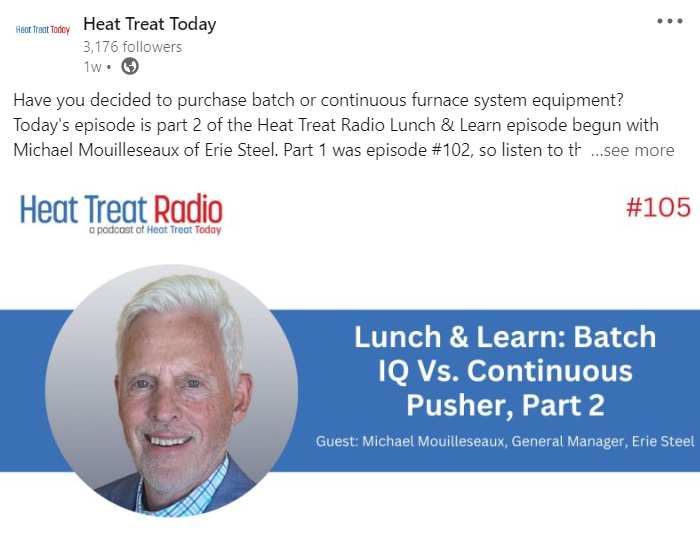
The Highly-Anticipated Sequel is Here! Tune in to Listen to Heat Treat Radio #105: Batch IQ Vs. Continuous Pusher Part 2, with Michael Mouilleseaux.
Interested in Surface Treatment? This Article from Race Engine Technology/Race Engine Suppliers magazine is for you!
In case you missed it: An overview of laser heat treating with Aravind Jonnalagadda (AJ), CTO and Co-founder at Synergy Additive Manufacturing LLC
5. AM is the Name of the Game
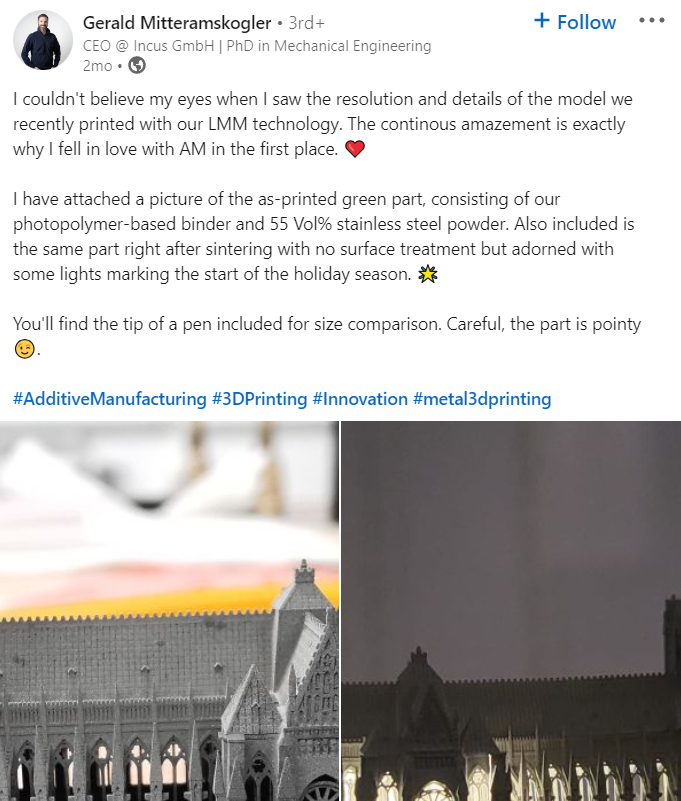
Additive Manufacturing (AM) is taking the heat treating world by storm, but it’s not often we get to sit back and appreciate the beauty that this technology is capable of creating. Check out this amazing gothic cathedral creating using LMM technology. Be sure to click below to see the full post.
Have a great weekend!
Find Heat Treating Products and Services When You Search on Heat Treat Buyers Guide.com
Compact, turnkey systems designed for the medical and dental industries. Fully automatic operations provide consistent and precise results. Benefits include data collection, optimal operator safety, and full customization.
SECO/VACUUM offers professional maintenance services for medical device vacuum heat-treating furnaces. We offer preventive maintenance to keep furnaces running at peak efficiency, including furnaces from other manufacturers! Click to discover!
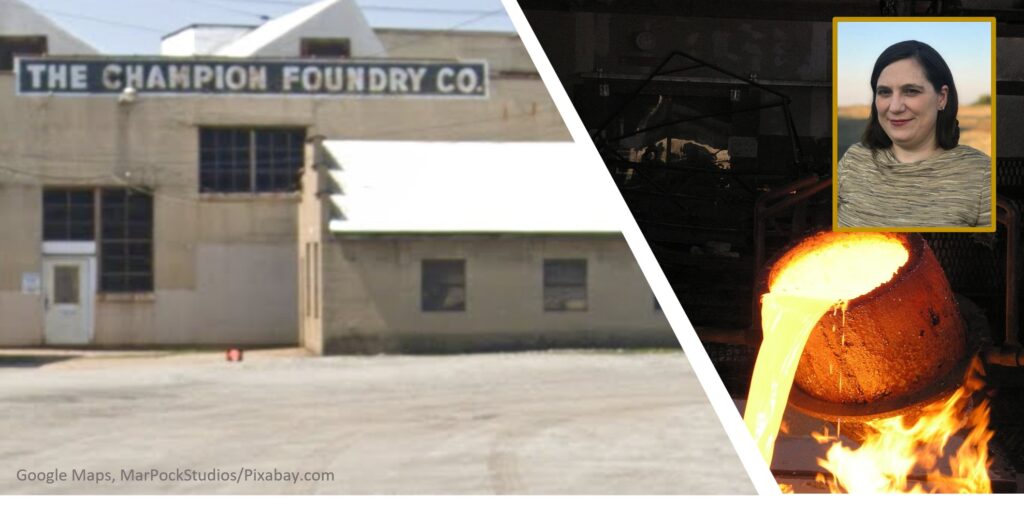
Skuld LLC announced that they had purchased the site belonging to the former Champion Foundry in Piqua, Ohio, a gray and iron foundry that had closed in March 2017. The company will continue to be focused on innovation in the metals industry, serving their clients through a number of innovations related to novel materials and manufacturing technologies.
The four buildings with nearly 32,000 square feet of space are being refurbished to be capable of casting a wide range of ferrous metals (gray, ductile iron, steels) and nonferrous metals (aluminum, brass, bronze, copper, nickel alloys). The plant will initially have 3,000 tons of capacity but plans are in place to expand to ten times that capacity in the next few years.
Skuld will be installing machining, foam blowing, a printer farm, and heat treating, adding to their current 5 small heat treat furnaces and adding to their operations, which primarily consist of lost foam casting. The new installations will aid the company as they serve the defense, tooling, and heavy equipment industries. They are also beginning to target production of heat treat fixtures and baskets.
Sarah Jordan, CEO, Skuld LLC
Production at the new site is scheduled to begin in April 2024. Sarah Jordan, CEO of Skuld LLC, commented, "Skuld is looking forward to getting our induction melting furnaces installed so that we can produce higher temperature iron, steel, and nickel alloy castings." She continued, "many [heat treaters] have custom furnace components and fixtures that require high temperature metals. These parts can have extremely long lead times, sometimes over a year, which is a problem if they are stocked out." By using their new tooling free processes, Jordan says that they can help clients drive lead times down to less than a month, if not a day for emergency spares.
Skuld is a company founded by two metallurgical engineers, Mark DeBruin and Sarah Jordan, with ties to the heat treat industry. DeBruin is the former CTO of Thermal Process Holdings. Jordan formerly worked in heat treating at Timken and Commercial Metals and was a staff engineer for Nadcap heat treat.
The full press release from Skuld LLC is available upon request.
Bringing forward plans by two years, Wallwork Group have signed for a second hot isostatic press. Following hot on the heels of opening their £10 million Wallwork HIP Centre, Wallwork Group is installing this HIP to meet and serve increasing demand from various manufacturers.
David Loughlin Business Manager Wallwork HIP Centre
This second HIP from Quintus Technologies, a high pressure manufacturer with North American locations, has been contracted following Quintus completing the commissioning of the first HIP in the third quarter of 2023.
“We expected strong demand from UK castings, 3D printing, powder fabrication, and near-net-shape manufacturers. Especially, as the UK is currently under-served with hot isostatic pressing capacity,” says Wallwork HIP Centre, business manager, David Loughlin.
Adds Simeon Collins, group director of Wallwork, “Demand from customers for processing components in our first hot isostatic press has been astonishing. It is prudent to bring forward planned investment for the next HIP, knowing it will take most of 2024 to build and install. We hope to have it up and running by early 2025. Deciding to prepare pits for expansion during the first installation has proved right.”
The second HIP will be identical to the first, operating at pressures from 40 to 207 MPa (5,800 to 30,000 psi) and temperatures up to 2282°F (1250°C). It will also have the latest rapid cooling technology, as well as the capability to offer increased cycle pressures at elevated temperatures, complements engineering advances in metal 3D printing and more.
This press release from Wallwork Group can be found in its original form here.
Metal 3D additive manufacturing has grown dramatically in the last five years. Nearly every metal printed part needs to be heat treated, but this presents some challenges. This article will address some of the challenges that a heat treater faces when working with these parts.
This Technical Tuesday article, written by Mark DeBruin, metallurgical engineer and CTO of Skuld LLC, was originally published in December 2023’sMedical and Energy magazine.
Mark DeBruin Metallurgical Engineer and CTO Skuld LLC
In my experience, on average, about 10% of all 3D metal printed parts break during heat treatment; this number varies depending on the printer and the unique facility. While materials can be printed with wire or even metal foils, I’m going to mainly focus on the approximately 85% of all metal 3D printed parts that are made from metal powder and either welded or sintered together.
Most metal printed parts normally have heat added to them after printing. In addition to the heat of the printing process and wire electrical discharge machining (EDM) process to separate the part from the build plate, heat may be added up to five times. These steps are:
Burnout and sintering (for some processes such as binder jet and bound powder extrusion)
Stress relieving
Hot isostatic pressing (HIP)
Austenitizing (and quenching)
Tempering
3D printing can create a non-uniform microstructure, but it will also give properties the client does not normally desire. Heat treating makes the microstructure more uniform and can improve the properties. Please note that heat treating 3D printed parts will never cause the microstructure to match a heat treated wrought or cast microstructure. The microstructure after heat treating depends on the starting point, which is fundamentally different.
If the part is not properly sintered, there is a high chance it will break during heat treatment. It may also exhaust gases, which can damage the heat treat furnace. The off gases will recondense on the furnace walls causing the furnace to malfunction and to need repair. This can potentially cost hundreds of thousands of dollars.
During powder 3D printing, there is a wide variety of defects that can occur. These include oxide inclusions, voids, unbonded powder, or even cracks that occur due to the high stresses during printing. Even if there are not actual defects, the printing process tends to leave a highly stressed structure. All of these factors contribute to causing a print to break as the inconsistent material may have erratic properties.
In a vacuum furnace, voids can be internal and have entrapped gas. Under a vacuum, these can break. Even if something was HIP processed, the pores can open up and break. Even if they do not break and heat is applied, the metal will heat at different rates due to the entrapped gas.
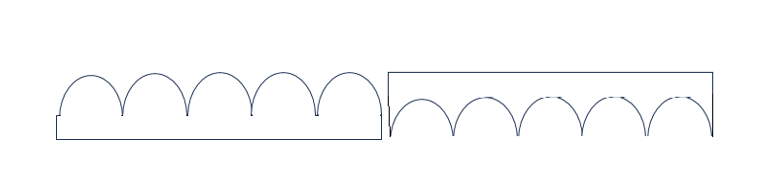
Figure 1. Macroscopic view of a 3D printed surface (left) compared to machined surface (right) (Source: Skuld LLC)
There are also issues during quenching due to the differences in the surface finish. In machining, the surface is removed so there are not stress concentrators. In 3D printing, there are sharp, internal crevices that can be inherent to the process that act as natural stress risers (see Figure 1). These can also cause cracking.
When 3D printed parts break, they may just crack. This can result in oil leaking into the parts, leading to problems in subsequent steps.
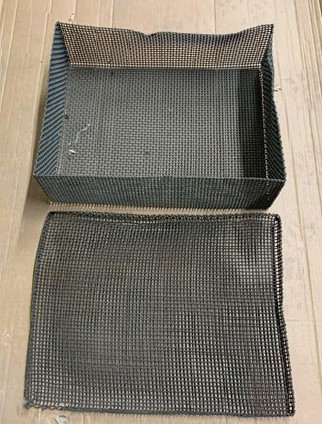
Figure 2. Example wire mesh basket (Source: Skuld LLC)
However, some parts will violently shatter. This can happen when pulling a vacuum, during ramping, or during quenching. This can also cause massive damage to the furnace or heating elements. It can potentially also injure heat treat operators.
A lot of heat treaters protect their equipment by putting the parts into a wire mesh backet (Figure 2). This protects the equipment if a piece breaks apart in the furnace, and if a piece breaks in the oil, it can be found.
Print defects in metal 3D printed parts can be a challenge to a heat treater. Clients often place blame on the heat treater when parts are damaged, even though cracking or shattering is due to problems already present in the materials as they had arrived at the heat treater. As a final piece of advice, heat treaters should use contract terms that limit their risks in these situations as well as to proactively protect their equipment and personnel.
About The Author
Mark DeBruin is a metallurgical engineer currently working as the chief technical officer at Skuld LLC. Mark has started five foundries and has worked at numerous heat treat locations in multiple countries, including being the prior CTO of Thermal Process Holdings, plant manager at Delta H Technologies, and general manager at SST Foundry Vietnam.
This message from Bethany Leone, managing editor at Heat Treat Today, shares some reflections on the season of winter and the opportunity this season provides to ponder the stories that inspire us towards the coming spring.
This article first appeared in December 2023’s Medical and Energy Heat Treatprint edition. Feel free to contact Bethany Leone at bethany@heattreattoday.com if you have a question, comment, or any editorial contribution you’d like to submit.
Do you feel the cold of the coming winter?
Beneath the surface of earth is a realm of darkness and death, ruled by Hades. By his throne, the ever-youthful Persephone soon will join him for these winter months, as she has pledged to do each year.
Contact us with your Reader Feedback!
Perhaps you know this Greek myth: Hades, enraptured by the sweetness of Persephone, stole Persephone down to his kingdom of darkness to be his queen. While Persephone was confined below ground for what would be eternity, her mother, Demeter, went into great mourning. Side note: Persephone is a goddess. So, when we say her mother went into mourning, we mean the goddess of the harvest caused drought in the lands, weeping for her daughter.
Clearly, this could not go on. Zeus, the head god of all gods and master of the sky, intercedes on behalf of all humanity for Persephone to return to her mother. Hades agrees, after all, he’s not an evil guy; just selfish through and through, like all anthropomorphic gods. . . But before the Maiden leaves, he offers her seeds from a refreshing pomegranate, which she takes. One, two, three, perhaps six seeds she ate. She is reunited with Demeter, and all is well.
Wrong.
For in eating these seeds from the Underworld, Hades may now claim his bride to dwell with him for several months in the year.
So, each year, while Persephone is confined below ground, the Greek goddess of the harvest roams the earth in mourning, withholding grain from the land. We know that precious Persephone returns to her mother by the telltale signs of spring (yes, she is known as being the goddess of spring).
As winter descends, this tale often breaks through my mind. Why? As a student of history, I do not believe it is true, neither does the myth cohere perfectly with my religious beliefs. But this story of six unassuming pomegranate seeds, the power of a mother’s will, and the cruel edge of mourning carries me through cold winter with thoughts of spring.
The myth, though untrue, is truer because it is not true. (For more on this tongue-in-cheek insight, read G. K. Chesterton’s chapter, “The Ethics of Elfland,” in Orthodoxy).
I enjoy telling variations of this myth to myself and turning over and over these subtle implications about life, as well as the humanizing and “just-so” element of why we may have a winter to begin with . . . well, why many of us have a true winter.
But it does not take time-tested myths to inspire. At the recent ASM Heat Treat show, I met a man who shared his passions for the industry, for serving others, for volunteering, and for making the most of 16-hour car drives to make calls to his family. While the details are a blur, the story I left with was that the reason to live was to give. While sales were important — that was his job! — this was just a part of his life story of giving.
What stories inspire you? Perhaps a successful installation of a new vacuum oil quench furnace that you supported brings to mind challenges of logistics, cooperation with culturally different people, or memories of near disasters. Were there themes of endurance, commitment to doing the hard thing so you could get smart enough to do the smart thing?
Whatever the story, remember it so whenever a “winter” in work or life comes, the themes may encourage you of a coming spring.
Find Heat Treating Products And Services When You Search On Heat Treat Buyers Guide.Com
Norsk Titanium, a global additive manufacturing supplier for aerospace-grade structural titanium components, announces delivery of flight critical aircraft structure to General Atomics Aeronautical Systems, Inc. (GA-ASI), a leading developer of unmanned aircraft systems and prime contractor to the US Department of Defense.
Under a development contract with GA-ASI’s Additive Design & Manufacturing Center of Excellence, Norsk Titanium has delivered RPD® final machined components for test and evaluation. GA-ASI will conduct destructive testing in support of specification and part development.
Said Nicholas Mayer, president of commercial at Norsk, “After an extensive collaborative qualification effort over the past few years with Norsk Titanium, GA-ASI plans to apply the qualified process to structural components within their next generation platforms currently under development, and is planning on their first flight of a critical, structurally loaded component, within the 2024-2025 timeframe.”
Norsk Titanium has recently announced qualification and production milestones in their core commercial aerospace titanium market.
This press release can be found in its original form here.
Find Heat Treating Products And Services When You Search On Heat Treat Buyers Guide.com
Stephen Harris
Group Chief Executive
Bodycote
Source: LinkedIn
Bodycote has announced its acquisition of Lake City Heat Treating, based in Warsaw, Indiana, which was successfully completed on January 19, 2024. The midwestern heat treater is a leading medical market provider of hot isostatic pressing (HIP) and vacuum heat treatment services, primarily supplying the orthopedic implant market as well as civil aerospace.
Stephen Harris, group chief executive of Bodycote plc, commented: "This acquisition is an excellent fit, and it allows us to better address the growth opportunities in the medical and aerospace markets." With this acquisition, the heat treater will increase their range of specialist thermal processing and heat treatment solutions available to these industries.
Lake City Heat Treating is forecast to have achieved 2023 full year revenues of around $14m (£11m). The business revenue grew 30% in 2023 and looking ahead is expected to continue to deliver good progress.
Their constant growth reflects the high-quality business that has successfully gained share among distinguished medical and aerospace OEMs. The acquisition fits with Bodycote’s strategy to grow its Specialist Technologies businesses.
This Bodycote press release can be found in its original form here.
Find Heat Treating Products And Services When You Search On Heat Treat Buyers Guide.Com




















 Norsk Titanium, a global additive manufacturing supplier for aerospace-grade structural titanium components, announces delivery of flight critical aircraft structure to General Atomics Aeronautical Systems, Inc. (GA-ASI), a leading developer of unmanned aircraft systems and prime contractor to the US Department of Defense.