Steelmaker Sanbao Group has expanded its heat treatment operations with three annealing and coating lines for non-grain oriented (NGO) silicon steel. The equipment enhancement is part of the company’s entry into the field of silicon steel production.
Sanbao contracted with Tenova LOI Thermprocess, an industrial furnace supplier, for the heat treatment furnaces intended for processing metals. Two electric arc furnaces (EAF) previously supplied by Tenova Group have been installed and put into operation.
A signing ceremony was held at the headquarters of Sanbao Iron & Steel Co., Ltd., in Zhangzhou, China, as part of the company’s “Cold rolled Silicon Steel and Metal Products Deep Processing Project”, a new greenfield project for electrical steel that aims to obtain the highest surface quality and best magnetic properties in NGO electrical steel for Southeast China.
Sascha Bothen Senior Vice President of Sales Tenova LOI Thermprocess Source: LinkedIn
“Tenova and Sanbao have already collaborated successfully establishing Tenova’s Consteel® technology and the successful references of Tenova LOI Thermprocess in the heat treatment of electrical steel and great efforts in the research & development in this sector fully convinced us to this investment,” stated Wang Guangwen, chairman of Sanbao Group.
“It was a great honor for us to participate in the signing ceremony of the Sanbao Group in Zhangzhou, which emphasizes their trust in our technology,” stated Sascha Bothen, senior vice president sales, Tenova LOI Thermprocess. “We are proud to further strengthen the cooperation and work together to help propel forward the green energy transition in the steel industry.”
Included in the featured image: Wang Guangwen, chairman of Sanbao Group; Dong Guibo, vice general manager of Sanbao Group; Sascha Bothen, senior vice president of sales, Tenova LOI Thermprocess; and Wolfgang Eggert, general sales manager, Tenova LOI Thermprocess.
The press release is available in its original form here.
Stainless steel has crept into our kitchens and now also our garages, the Tesla Cybertruck being the latest product to sport a stainless steel layer. What most people don’t realize is that while stainless steel is corrosion resistant, it will rust in a lot of circumstances. In this Technical Tuesday article, Sarah Jordan explores how stainless steel can be compromised by improper heat treatment and the steps heat treaters can take to prevent corrosion.
This column was adapted from a #MetallurgyMonday post written by Sarah Jordan in June 2024 and shared at her LinkedIn account. It appeared as an article in Heat Treat Today’sAugust 2024 Automotive print edition.
I’m starting to see Cybertrucks out in the wild more, so I decided to talk about stainless corrosion for #MetallurgyMonday. (If you don’t know what #MetallurgyMonday is, it is a weekly educational post on metallurgy topics that I’ve been writing on LinkedIn for the past two years.)
First a little up front. I’m not a fan of the aesthetics of the Tesla Cybertruck. Plus, we need about twice the load capacity for our work purposes since Skuld actually uses our truck as a truck.
More to the point, stainless steel is not rust proof. It is corrosion resistant and will rust in a lot of circumstances.
To understand why, we need to understand what prevents corrosion in the first place. The key elements are chromium and nickel. Chromium reacts with oxygen to create a thin layer of chromium oxide. This is on the surface and blocks further oxidizing of the underlying layers. Meanwhile, the nickel enhances the corrosion resistance. It also makes the material more formable and weldable.
The short story is that if the chromium oxide layer gets compromised, stainless steel will corrode.
Improper heat treating can also contribute to stress corrosion cracking.
Sarah Jordan
Pitting corrosion: If you have a scratch or a pit, this can damage the protective film, and then corrosion begins. It’s worse in environments with chloride ions, such as seawater or pool water. Chlorides break down the passive layer, leading to rapid and severe corrosion in small areas.
Crevice corrosion: This occurs when two objects come together, especially things like fasteners or where there is a gasket. Inside the crevice you will have a lack of oxygen. The lack of oxygen prevents the reformation of the protective chromium oxide layer. Once corrosion gets started, it can get very severe by propagating in the crevice.
Stress corrosion cracking (SCC): Corrosion is made worse where there is a combined effect of tensile stress and a corrosive environment. It typically affects stainless steel used in structural applications that are exposed to chloride or sulfides. SCC can cause sudden and catastrophic failure of the metal structure.
Galvanic corrosion: Galvanic corrosion happens when two metals are put together. One of them almost always wants to preferentially corrode. The one that corrodes is the one that is higher on the galvanic series.
Intergranular corrosion (IGC): Sometimes this is called intergranular attack (IGA). In this case, corrosion occurs preferentially at grain boundaries. This can occur in stainless if the grain boundaries get depleted of chromium because a minimum amount is needed to ensure the passive film can form to protect the metal. When this occurs, there can also be localized galvanic corrosion.
Composition variation: If the composition has segregation, then there are some areas that have less of the corrosion-helping elements. And on top of that, galvanic corrosion can start happening within the material.
What does all of this have to do with heat treating? Improper heat treating can contribute to corrosion.
For instance, intergranular corrosion can be caused if the material is exposed to 842–1562°F (450–850°C) for too long as this will cause chromium carbide to form at the grain boundaries and deplete the chromium. This process is called “sensitization.” It is avoided by making sure quench rates are fast enough through the risky temperature range.
A somewhat similar situation can occur during heat treating if sigma phase forms in super duplex stainless steel. Sigma phase is an iron chromium phase which can also deplete the chromium.
Improper heat treating can also contribute to stress corrosion cracking. When material is quenched, it can cause residual stresses that, if not relieved, can become an issue.
Corrosion in stainless steel can often be traced to improper heat treatment. When stainless steel is heated between 842–1562°F (450–850°C), chromium carbides can form at the grain boundaries, depleting the surrounding areas of chromium and making them susceptible to corrosion.
All of this to say, things like the Cybertruck (or for that matter stainless fridges and appliances) can be prone to corrosion since they are exposed to a lot of abuse and aggressive environments. It is critical to ensure they are properly manufactured, including good heat treating practices. It is also critical to provide them with proper maintenance to keep the corrosion resistance and appearance lasting as long as possible.
About the Author:
Sarah Jordan Founder & CEO Skuld, LLC Source: Author
Sarah Jordan is an accomplished metallurgical engineer and entrepreneur. She received a bachelor’s of science and master’s of science in this discipline from The Ohio State University and has been pursuing a PhD in Metallurgical Engineering from WPI. Skuld is a certified WOSB and EDWOSB startup focused on 3D printing, advanced manufacturing, and advanced materials.
An isostatic press manufacturer based in Columbus, Ohio, has expanded its operations facility to increase its heat treating capacity and technological capabilities.
Amercian Isostatic Presses, Inc., which manufactures temperature and pressure products, including hot isostatic pressing (HIP), cold isostatic pressing (CIP), warm isostatic pressing (WIP), SinterHIPs, vacuum furnaces, and other equipment and accessories, serves the aerospace, automotive, energy, defense, and medical sectors.
Hot isostatic pressing (HIPing) is most commonly used in the medical and aerospace industries. The HIPing process is a high pressure, high temperature technique that can be used for both composite materials and powder metals. HIPing results in the decreased porosity in parts and a densification in powder metals.
HIPing is in an autoclave style furnace, where parts are exposed to high temperatures and high gas pressure and later cooled. Parts made of tool steel, duplex, martensitic, and austenitic stainless steels, nickel-based alloys, cobalt-based alloys, titanium and even some carbon steels are frequently HIPed. The combination of temperature and pressure reduces the part’s porosity while maintaining its original shape. Decreased porosity gives the finished component part increased mechanical properties.
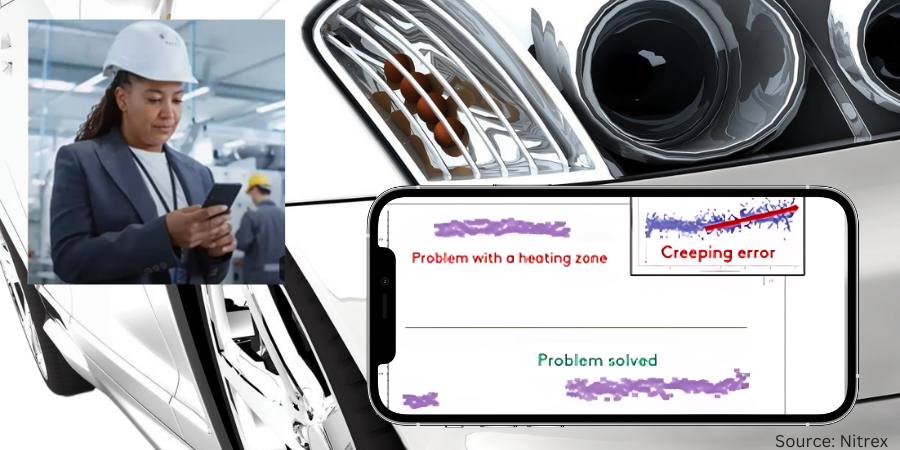
An automotive component supplier has digitized its heat treatment operations with the implementation of a digitalization platform, an upgrade intended to align the company’s operations with the accuracy and precision requirements of the global automotive market.
Daniel Gonschorek Sales Manager UPC-Marathon Technical Source: LinkedIn
With this upgrade, the manufacturer has transitioned from using multiple systems to manage its heat treatment processes, streamlining furnace operations with the QMULUS digitalization platform from UPC-Marathon, a Nitrex company.
“Our collaboration with this tier 1/2 supplier has yielded significant improvements in their operational workflows,” said Daniel Gonschorek, technical sales manager at UPC-Marathon.
“The integration of QMULUS is not only advancing their internal processes but also delivering tangible gains in efficiency and performance,” he added. “By enhancing production efficiencies and reducing waste, QMULUS supports their commitment to innovation and aligns with the highest quality and sustainability standards. This digital transformation positions them strongly within the competitive automotive supply chain.”
The press release is available in its original form here.
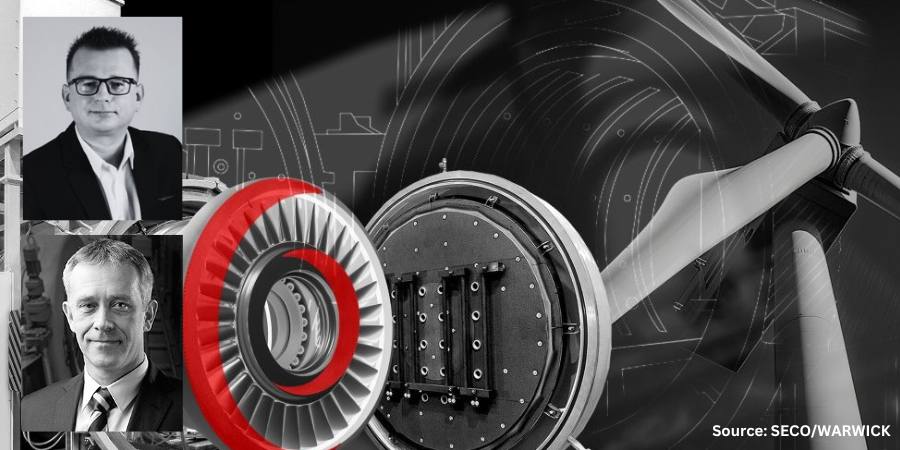
A manufacturer of wind and gas turbines is bolstering its heat treatment capabilities with a vacuum furnace to process oversized gas turbine structural components.
Maciej Korecki Vice President of Vacuum Business Segment SECO/WARWICK Source: SECO/WARWICK.com
The vacuum furnace provides a work zone that accommodates the company’s need to heat treat large-sized parts and uses three process gases, argon, nitrogen, and hydrogen, to increase the process purity and reduce gas consumption costs during the cooling process. This is the eighth vacuum furnace the company has purchased from SECO/WARWICKand will be installed at the manufacturer’s European location.
“The demand for gas and wind turbines is systematically growing all over the world, and renewable energy is currently the focus of attention in all industries. It plays an important role in mitigating climate change, which is why it is important for us to be able to support a Partner who focuses on sustainable, renewable, and unlimited green energy,” said Maciej Korecki, vice president of the vacuum segment, SECO/WARWICK Group.
“The furnace’s three-gas partial pressure system helps prevent evaporation and sublimation of alloying elements from the load surface during vacuum heat treatment or vacuum brazing. Partial pressure control is important when processing many materials to prevent the hot zone evaporation and contamination,” said Kamil Siedlecki, sales manager at SECO/WARWICK.
The press release is available in its original form here.
The four heat treat industry-specific economic indicators have been gathered by Heat Treat Today each month since June 2023. Last month, suppliers had anticipated most indicators to grow. This month, the four economic indicators are split between anticipated growth and no change or contraction.
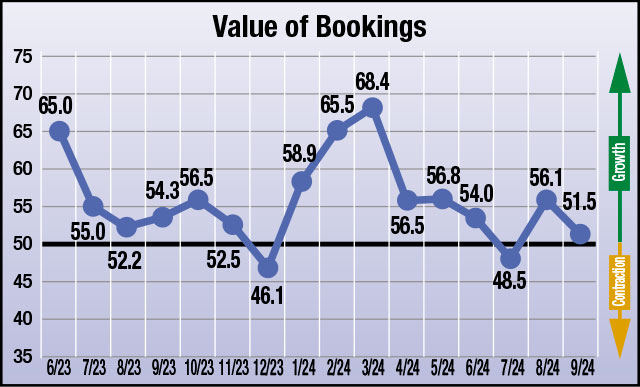
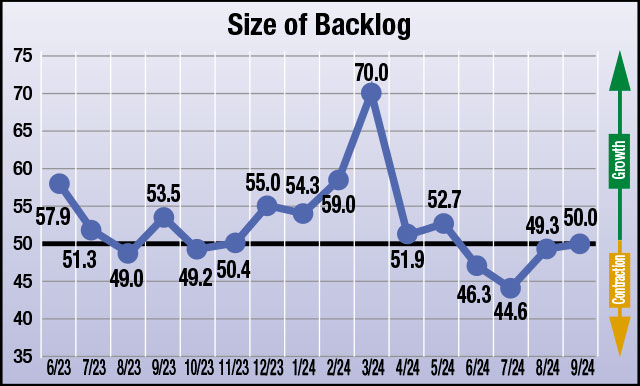
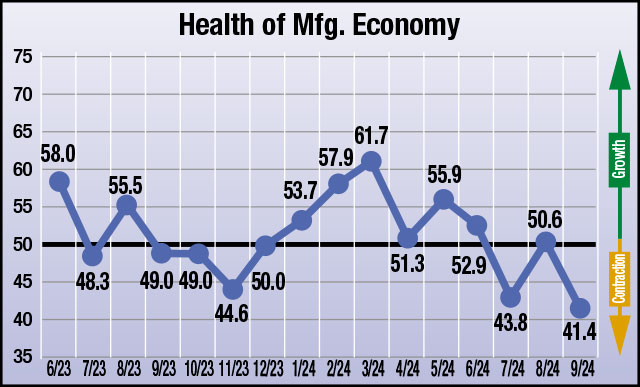
The numbers, which were compiled in the first week of September, show that responding parties expect the economy to experience growth in two of the four indices, in the number of inquiries and value of bookings. Anticipation for growth in backlog size is neutral, and suppliers anticipate contraction in health of the manufacturing economy.
The results from this month’s survey (September) are as follows; numbers above 50 indicate growth, numbers below 50 indicate contraction, and the number 50 indicates no change:
Anticipated change in Number of Inquiries from August to September: 54.0
Anticipated change in Value of Bookings from August to September:51.5
Anticipated change in Backlog Size from August to September: 50.0
Anticipated change in Health of the Manufacturing Economy from August to September: 41.4
Data for September 2024
The four index numbers are reported monthly by Heat Treat Today and made available on the website.
Heat TreatToday’sEconomic Indicatorsmeasure and report on four heat treat industry indices. Each month, approximately 800 individuals who classify themselves as suppliers to the North American heat treat industry receive the survey. Above are the results. Data started being collected in June 2023. If you would like to participate in the monthly survey, please click here to subscribe.
Find heat treating products and services when you search on Heat Treat Buyers Guide.com
What are advanced management systems and how does deep integrative system management software help automotive heat treaters improve processes while saving on time and unnecessary expenses? Explore the future of software technology for the management of heat treating operations in this Technical Tuesday by Sefi Grossman, founder and CEO of CombustionOS.
The heat treating industry is on the brink of a technological transformation. Just as the momentous adoption of websites and emails transformed the nature of work for manufacturers, the advanced software systems are thrusting us into a new era of simplicity, automation, and deep integrations.
This article explores how advanced systems — an application of ERP (enterprise resource planning) and MES (manufacturing execution systems) combined with the power of AI — is revolutionizing facility operations, enhancing quality, efficiency, and profitability.
What Are Advanced Systems?
Advanced systems simplify, streamline, and automate operations by lifting the data burden off of plant personnel. While most existing systems focus on the part inventory workflow, more advanced systems go beyond by directly integrating into the heat treat process to track at bin/tray/tree level.
This requires real-time scheduling control, barcode scanning, digitizing recipe and process (no more paper), and direct sensor/PLC integration. Because of its critical nature, an advanced system is most likely an on-premise and cloud “hybrid solution” that is not crippled by internet connectivity issues. This allows it to still utilize rapidly evolving cloud systems that provide external services like messaging, big data storage, and AI to name a few.
Precise Processing
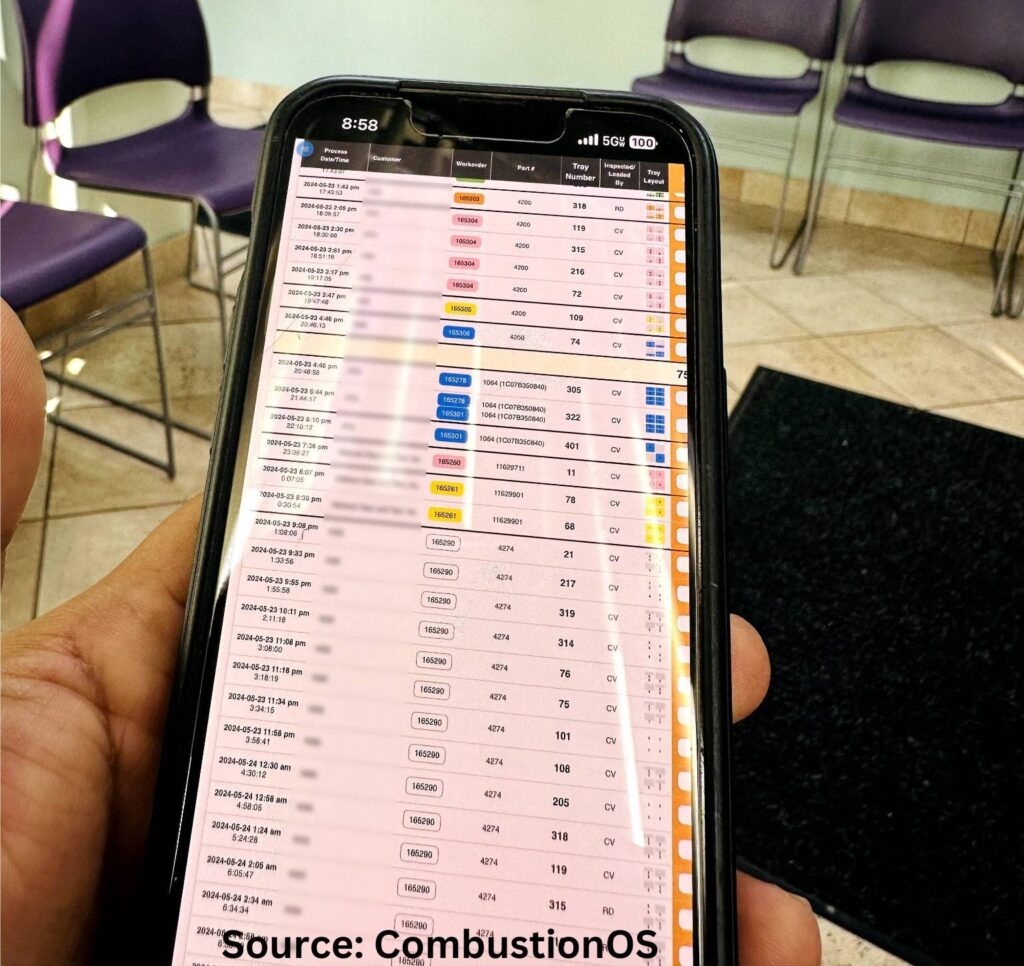
Figure 1. CombustionOS developers spend extensive time with operators and plant managers to create interfaces that are intuitive and easy to use. Pictured is access to job data stats from a mobile device being used outside of the manufacturing plant.
Repeatable, accurate methods to ensure optimal time, temperature, and atmosphere of the decided heat treatment processes are possible with advanced systems.
Utilizing existing sensors and hardware interfaces, data is collected in short intervals, transformed into meaningful data formats, and stored in a database. Network technologies such as HTTP, Modbus, and other analog to AI technologies make this possible with minimum additional hardware. The data is managed locally on the facility network, and synchronized with cloud services for further processing, analysis, and long-term history storage.
With a close monitoring of all these variables, facilities can tighten acceptable specification ranges. Deep integration with equipment ensures that data flows seamlessly from sensors and devices to the central system.
This real-time data collection and processing enables facilities to monitor operations continuously and make informed decisions quickly. For example, integrating data from temperature sensors, pressure gauges, and other monitoring devices ensures that all critical parameters are tracked and managed effectively. Additionally, if a temperature reading deviates from the acceptable range, the system can immediately alert the relevant personnel, allowing them to take corrective action before it becomes a critical issue.
In addition to quality assurance, integrated artificial intelligence tools optimize job scheduling. Unlike traditional date/time calendar methods, AI systems predict job completion times based on real-time process data. This is particularly useful for roller furnace setups, where continuous processing occurs, but it is also beneficial for batch furnaces. Optimized scheduling improves resource allocation and operational efficiency, ensuring that jobs are completed on time and to the required specifications. The difference between a “calculation algorithm” and AI is that, with AI, you do not have to pre-program it. It automatically learns and adjusts for known variability in your hardware and even the personnel that are operating the equipment.
Finally, the automation of these systems captures and records all necessary information accurately. This reduces the risk of non-compliance, improving the overall quality of the final product. For example, a Detroit-based heat treating facility reported that accessing real time data to ensure compliance with industry standards has allowed them to spend 40% less time on documentation tasks.
Figure 2. Having increased control over the process gives more peace of mind to operators that components perform as needed.
Alleviating Burden on Maintenance and Inventory
Predictive maintenance is one of the most significant applications of AI in the heat treating industry. Traditional maintenance schedules are often based on fixed intervals, which can lead to unnecessary downtime or unexpected failures. AI driven predictive maintenance, on the other hand, uses real-time data to determine the optimal times for maintenance activities. This approach not only reduces downtime but also extends the lifespan of equipment.
A Detroit-based heat treating facility implemented an AI-driven predictive maintenance system (PMs) and saw a 25% reduction in equipment downtime. By analyzing data from critical parts, inventory, process tracking history, and various sensors, the AI system could predict when components were likely to fail, allowing the maintenance team to inspect and address issues proactively beyond their standard PMs. This not only improved operational efficiency, but also saved significant costs associated with emergency repairs and unplanned downtime.
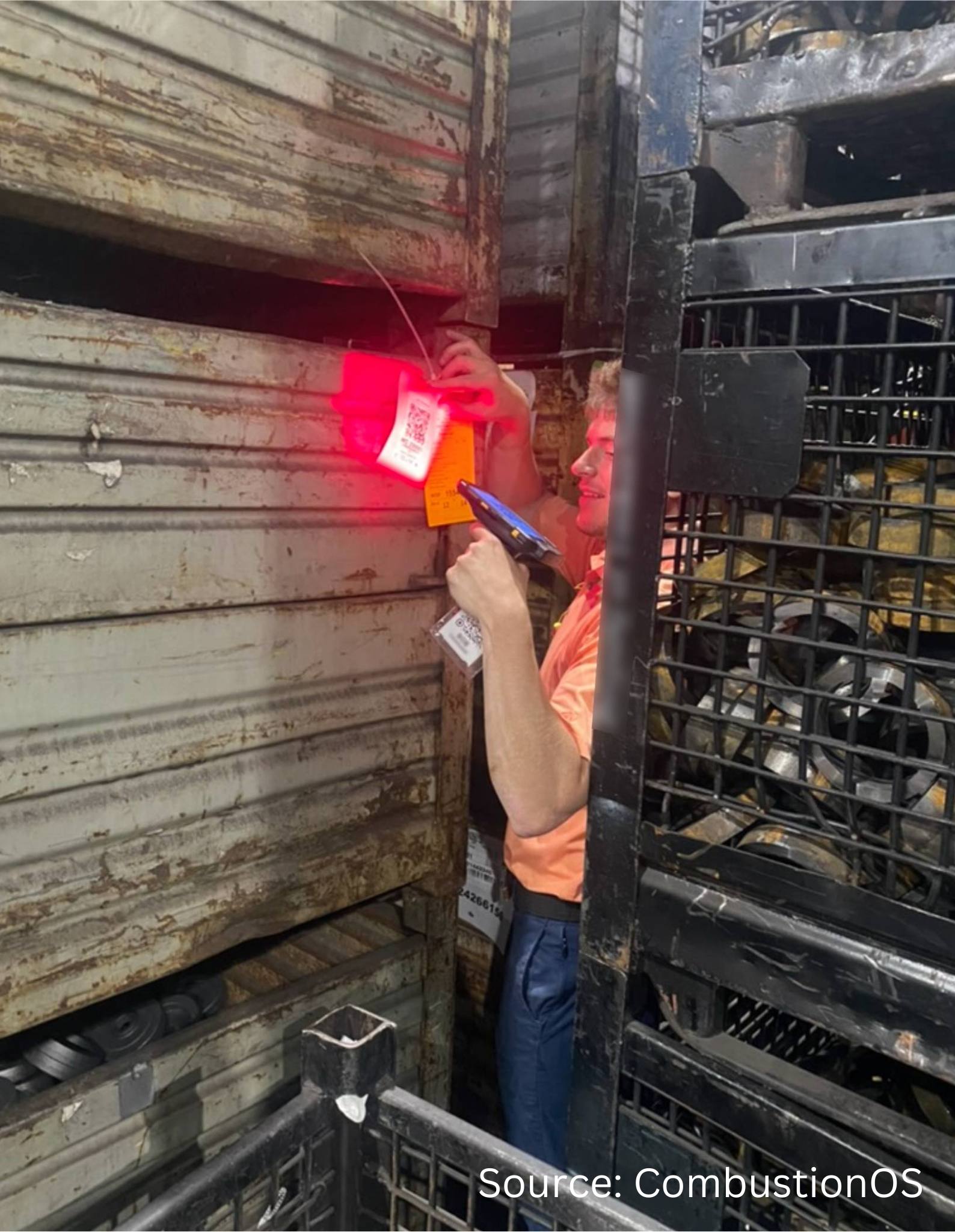
Additionally, the integration of QR codes for inventory and process tracking enables quick and accurate data entry compared to manual logging. For instance, when racking parts out of bins, operators can simply scan QR codes, which automatically update the system with the relevant information. This not only speeds up the process but also minimizes the chances of human error.
Reducing Operational Costs
The adoption of advanced ERP and MES systems has led to substantial cost savings for many facilities. These systems reduce operational costs through the implicit automated integrations that technologies like CombustionOS bring. Here are just a few ways that operational costs have been cut:
Decreasing shipping and receiving management from three to just one employee
Minimizing rework costs by timely process alerts
Reducing personnel by replacing constant manual oversight with accurate, digital tracking systems
Lowering administrative costs by utilizing a more efficient and accurate invoice automation platform
Case Study: A client reported comprehensive cost savings, including a 20% reduction in shipping and receiving time, fewer logistics and furnace operators needed, a 33% decrease in rework costs, a 15% savings in maintenance costs, and a 25% reduction in accounting overhead. These efficiencies translate into substantial payroll savings and improved profitability.
How To Implement
Figure 3. When racking parts out of bins, operators can simply scan QR codes, which automatically update the system with the relevant information.
One of the most significant advancements in heat treating technology is the deep integration with various equipment types. Unlike traditional ERP systems, which often lack true integration, advanced systems work backwards from equipment data, building ERP functionalities around this integration to ensure seamless and accurate data flow.
First, there are advanced systems that can handle data from both digital and analog sensors. So, for heat treaters who are juggling a variety of sensors and systems, looking for an integrative advanced system that has adaptability will ensure compatibility with existing equipment while keeping an eye on cost. Facilities can continue using their current equipment while benefiting from advanced monitoring and control capabilities.
Second, advanced ERP/MES systems can take collaboration with multiple vendors. Rather than uproot current systems and relationships, work with an advanced systems provider who is able to collaborate with other software and systems. Advanced ERP/MES systems provide comprehensive solutions that include deep equipment integration and full ERP functionalities. This approach reduces the complexity and cost of integration, ensuring that all components work together seamlessly.
Key Applications
Most operations in a heat treat department will benefit from advanced systems due to the time-saving automations that the system integrates. But many heat treaters are looking to adapt and integrate older systems and often more complex designs, like roller hearth furnaces. Here are some steps that experts will take to guide you through to make the digital integration smooth and effective:
First, it is important to understand you don’t need to boil the ocean. Starting with a more advanced inventory tracking system that employs barcodes can set the underpinnings for a more integrated system while providing immediate benefits to your logistics.
Then, it is also key to get a deep understanding of your current process and map out your operational workflow. Using a flowchart program helps visualize the process to make sure all stakeholders are on the same page.
Some aspects of your current process are probably outdated (perhaps created by someone who is no longer at the company), while others are key to the core of how you operate. Understanding the difference is crucial to make sure you unlock potential automation without disturbing your core process and flow.
You’ll then need to prepare every required form, document, chart etc. that you use in the operation. For process control, recipes, and lab testing, provide many parts/iterations to capture the complexity.
Finally, take inventory of any existing digital systems you have adopted, like inventory tracking, spreadsheets, or custom software. The existing system network, including servers, Wi-Fi setup, and hardware (PCs, printers, scanners, etc.) will be utilized as much as possible in the transition to reduce the need to purchase and set up different equipment.
The future will require constant innovations and thoughtful leveraging of increasingly advanced systems. Unlike static, homegrown, or “pieced together” solutions, the most advanced systems are constantly updated with new features, ensuring they remain at the cutting edge of technology. Engaging directly with plant personnel to understand their needs and challenges allows systems like CombustionOS to evolve and improve continuously.
The heat treating industry is on the cusp of a technological transformation, driven by advancements in ERP, MES, and AI. These technologies offer the potential to enhance quality, efficiency, and profitability, making them essential for the future of manufacturing. By embracing automation, integrating advanced AI capabilities, and committing to continuous innovation, the industry can achieve new levels of operational excellence.
About the Author:
Sefi Grossman Founder & CEO CombustionOS Source: Author
Sefi Grossman has been at the forefront of technology revolutions for the past two decades and has been leading the technology company CombustionOS for nearly seven years.
For the seventh year in a row, Heat TreatToday shines the spotlight on a remarkable cast of rising young leaders in the North American heat treat industry. Forty men and women who have already made their mark on the field through innovation, service, communication, and expertise. It’s an honor and a pleasure for us to present theHeat TreatToday 40 Under 40 Class of 2024, and we hope to see all of you at this year’s Furnaces North America Show in Columbus, OH, October 14-16.
For the past 20+ years, software has played a pivotal role in every part of the heat treating industry, seamlessly integrating into virtually every process from initial part design to final product inspection. It would be hard to find a heat treater that doesn’t currently rely on one or more software platforms to run their business. More recently, heat treaters are expanding their use of software platforms for material specification compliance, easing the burden on furnace compliance to manage the increasing complexity of industry regulations.
Material Specification Compliance: More and more heat treaters are turning away from spreadsheets in search of better software solutions to assist them in their effort to ensure compliance with the ever-increasing demands of material specifications such as AMS2750, AMS2769, BAC-5621, GE P10TF-3, RPS-953, BAERD GEN-007, etc. There are software programs designed to organize general compliance data across multiple industries in a one-size fits all approach, but those programs fail to meet many of the unique compliance challenges that Nadcap heat treaters experience.
A shift toward a more targeted approach to compliance involves utilizing software explicitly designed with the heat treater in mind. This specialized software is becoming increasingly common across the industry. Some software options, like C3 Data, digitally connect to many of the industry’s vendors (i.e., thermocouple vendors and pyrometry service providers). These digital connections eliminate manual data entry and play a significant role in ensuring continuous compliance. In contrast, some specialized software programs provide the organization platform but have limited digital integration options and organizational flexibility. Heat treat specific software that digitally integrates with a broad supplier base offers the most process flexibility and efficiencies.
A Comparison of Material Specification Software Types
Heat Treat Specific Integrated Software. If done correctly, the software will offer heat treaters seamless data connections to virtually any applicable supplier worldwide, allowing them to maintain the freedom to choose their suppliers while also fully leveraging the benefits of digital access to all their data. In this effort, C3 Data’s Furnace Compliance Software continues to build out its worldwide network of digital integrations with all Nadcap heat treaters in mind. The C3 digital network was not built on software alone but on relationships, including virtually every prominent thermocouple manufacturer in the U.S., UK, and France, most pyrometry laboratories in the U.S., as well as a growing list of pyrometry labs in the EU. C3 is also now digitally integrated with MES software platforms such as Bluestreak™ that cater to the heat treat world.
A growing number of heat treaters are incorporating heat treat specific integrated software solutions to reduce their dependencies on human resources, eliminate human error, and increase efficiency. When evaluating such software, it’s impossible to overemphasize the importance of ensuring your digital integration options are functional, plentiful, and ever-growing.
About the Author
Nathan Wright is known for his expertise in the aerospace and automotive industries, specifically in furnace compliance and pyrometry laboratories. He built his first pyrometry laboratory in the late 1990s. It was then that he first began exploring the idea of creating a customized software solution for the heat treat industry. In 2013 he became the CEO of C3 Data where he is responsible for building software that helps heat treaters and calibration laboratories ensure furnace compliance with industry material specifications.