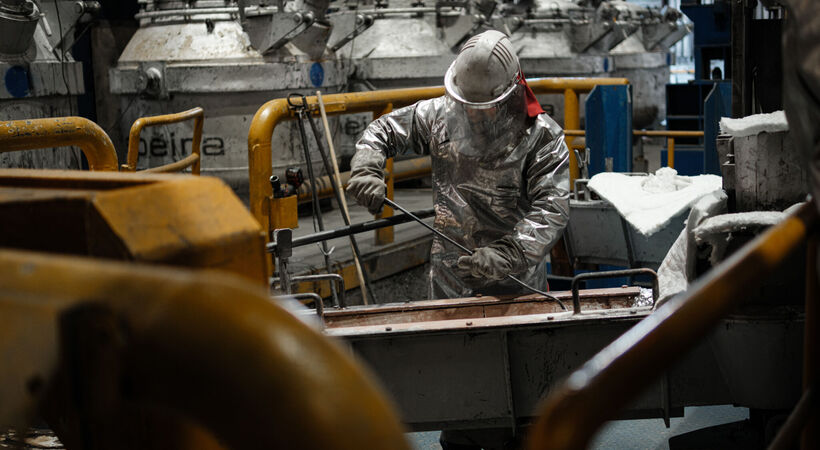
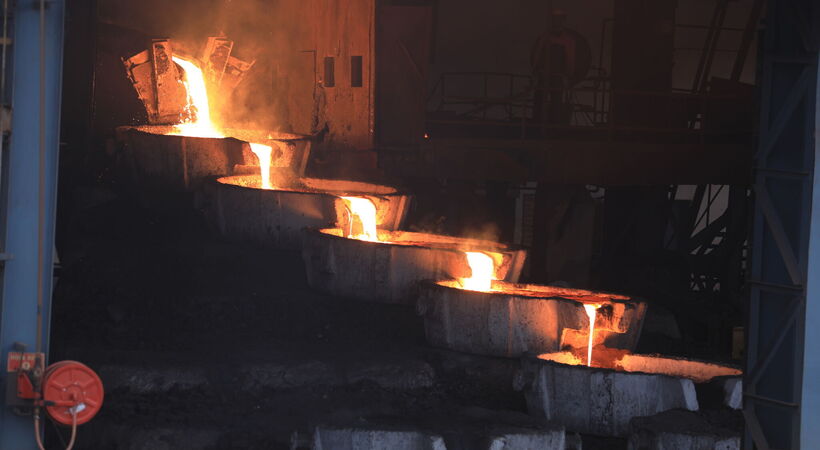
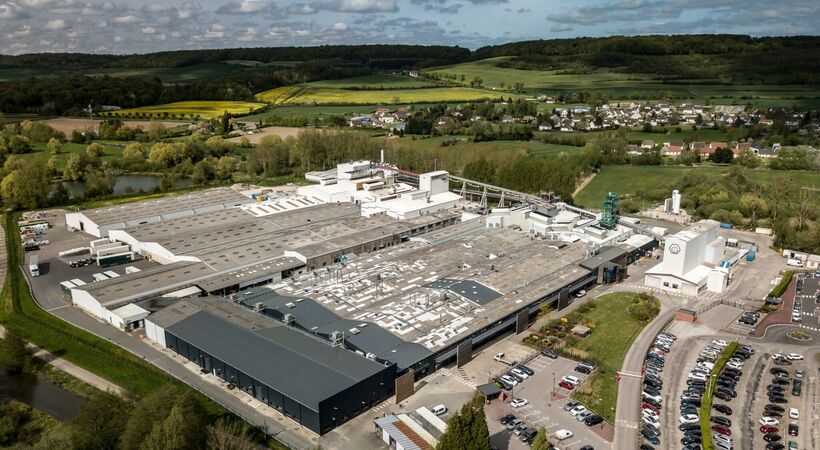
Łukasiewicz – the Institute of Non-Ferrous Metals (Łukasiewicz – IMN) recently expanded its heat treating operations with a VIM furnace for melting metals and metal alloys on a laboratory scale. The new equipment will be used to develop new types of alloys, make individual castings, and conduct research on melting processes.
The vacuum induction melting furnace, ordered from SECO/WARWICK, has a maximum operating temperature of 2000˚C (3,632°F) and a single-chamber VIM furnace. It was designed to produce metal and alloy castings weighing up to 20 kg in vacuum, or under pressure using an inert gas (argon).
Sławomir Woźniak President & CEO SECO/WARWICK Group Source: SECO/WARWICK
This is the second processing solution the furnace supplier has designed for the institute. Łukasiewicz – IMN, a member of the Łukasiewicz Research Network, received a targeted subsidy for the implementation of an investment related to scientific activities for the purchase of research equipment granted by the Ministry of Education and Science (currently the Ministry of Science and Higher Education).
“Scientific institutions are one of the group of recipients for our solutions,” said Sławomir Woźniak, CEO of the SECO/WARWICK Group. “For example, we have supplied solutions to the Karlsruhe Institute of Technology (KIT), which ordered a non-standard, 12-meter vertical rotary retort furnace for the heat treatment of a gyrotron part, as a contribution to the ITER experimental thermonuclear reactor. We have also supplied laboratory furnaces for the Institute of Precision Mechanics. We invest heavily in research and development ourselves. We have our own R&D centers, which allow us to continuously improve the technology we offer.”
The press release is available in its original form here.
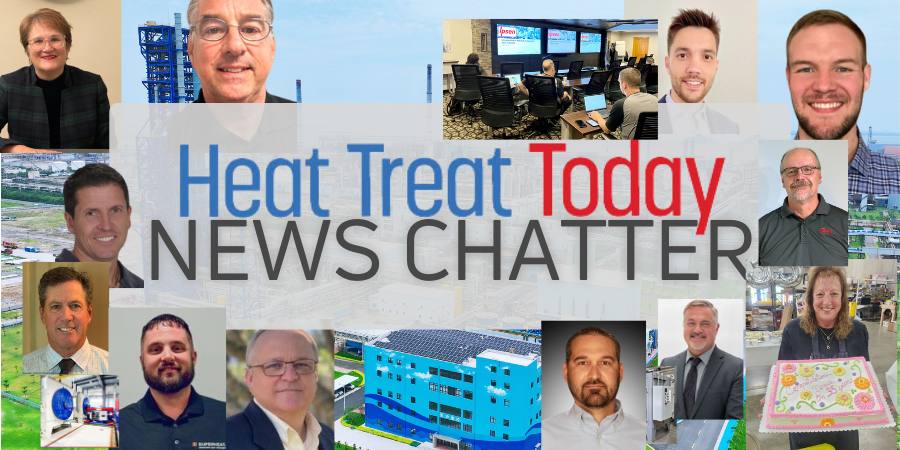
Heat TreatToday offers News Chatter, a feature highlighting representative moves, transactions, and kudos from around the industry. Enjoy these 18 news items.
Equipment
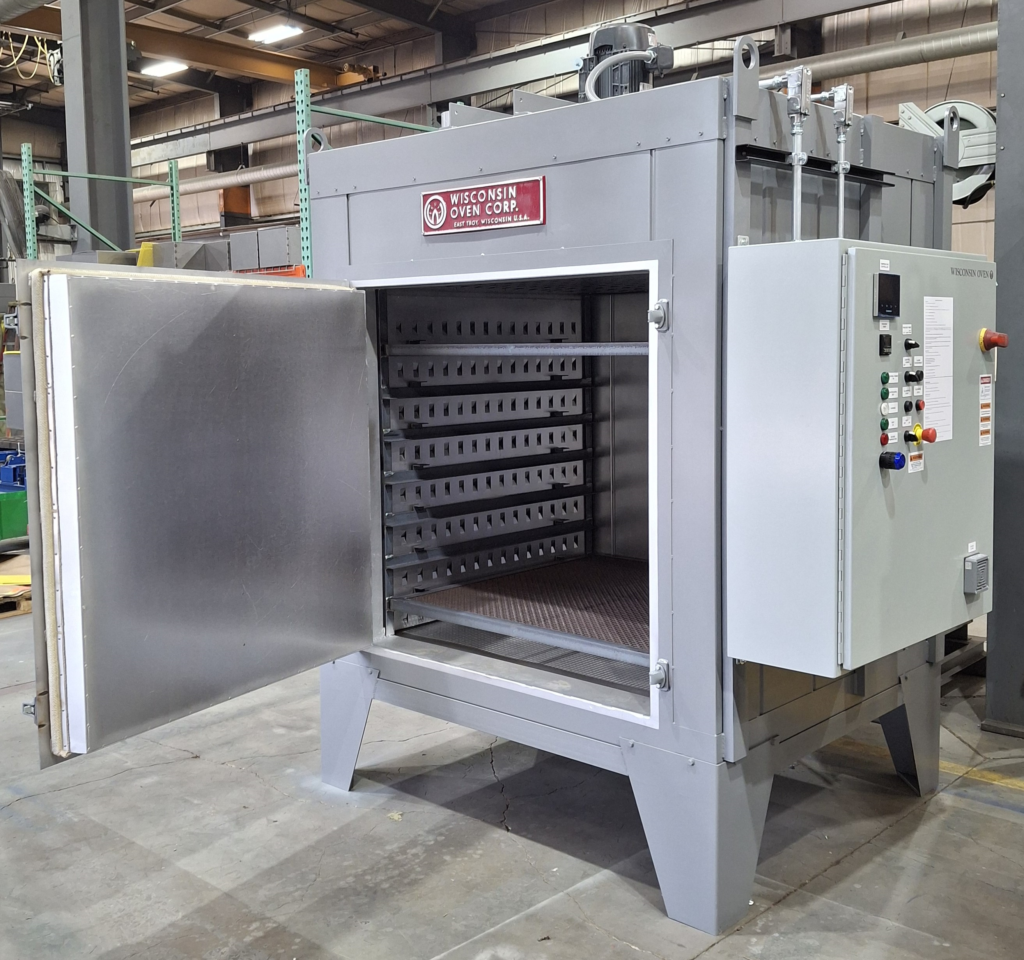
A Canadian automotive components manufacturer recently expanded its operations with an electrically heated small batch oven to be used for curing arts. The small batch oven was manufactured by Wisconsin Oven, designed to utilize combination airflow to maximum heating rates of 650°F and temperature uniformity.
With the successful conversion to a four-stand finishing mill, Henan Yirui New Materials Technology Co, Ltd, officially began production. SMS Group converted an existing hot rolling mill into a tandem finishing mill by adding three new finishing mill stands, developed for refurbishing and integrating components.
KALLER, a manufacturer of gas springs and gas hydraulic systems based in Sweden, recently launched its fully automated line of hardening furnaces for surface coatings on gas springs. The hardening systems were supplied by Ipsen International.
Electrically heated small batch oven to be used for curing arts at Canadian automotive components manufacturer. Source: Wisconsin OvenFully automated line of hardening furnaces installed at Kaller Source: LinkedInFAC Signing Ceremony L-R: Rüdiger Roger Wiechmann, Project Manager at SMS group, with Zheng Guoqiang, Project Manager at Henan Mingtai Aluminium). Source: SMS Group
Company & Personnel
Steve Fuller has joined the team at Nitrex HTS as the new plant general manager at their Michigan location. He brings 45 years of experience in commercial heat treating, machine tool manufacturing, fabrication, quality management, and more.
Bobby Boom, Tim Litchauer, and Wade Sholmire, have been added to the Superheat team as business development managers. Wade is the new National BDM, Tim will oversee the Greater Houston Area, and Bobby will manage the Southeast Texas, Louisiana, and Arkansas regions.
Chris Martin has been promoted to regional sales manager for the Southeast by Ipsen. Chris will be responsible for leading a team of seven that includes six field service engineers and one service administrator.
Adam Woelber has been promoted to manager of aftermarket parts and service at AFC-Holcroft.
Ethan Castle has been appointed the St. Louis plant manager for Paulo Heat Treating, Brazing, and Metal Finishing, recognized for his leadership, technical capability, and mentoring role, in addition to representing the company within the North American Diecasting Association and National Tooling and Machining Association. Ethan has also been named to Heat TreatToday‘s 40 Under 40 Class of 2024.
Gary Doyon has stepped down from his role as CEO of Inductotherm Group, after 15 years in the position and 38 years with the company. Mick Nallen and Satyen Prabhu have taken as co‐leaders at the company, which provides thermal processing technologies. Mr. Doyon will remain actively involved with the company, assisting with specific operational needs of other businesses owned by the Rowan family and pursuing new business avenues and opportunities for the Inductotherm Group.
Ipsen USA has launched its Field Service Engineer Academy, designed to be a 20-week in-depth program with classroom training and experience in the field with veteran service technicians. Darci Johnson, program and transformation manager at the company, is leading the implementation of the FSE Academy. Content will focus on the fundamentals of vacuum furnace repair.
Industrial furnace equipment manufacturer Gasbarre welcomed Dan Hill as product development manager; he will be based at the company’s Livonia, Michigan, facility. A licensed professional engineer, Dan brings a diverse background in capital equipment, spanning material handling, control systems, boilers and furnaces, combustion systems, and industrial washing/deburring equipment.
The U.S. Navy recently selected StandardAero to serve as its engine depot-level repair prime contractor to perform Rolls-Royce T56-A-427A engine MRO services, supporting the Navy’s fleet of E-2D Advanced Hawkeye aircraft. The aerospace aftermarket service supplier has also announced that Turkish and European Boeing 737 Operator Corendon Airlines has extended its contract for the support of CFM LEAP-18 engines.
Ipsen USA recently announced the formal launch of its Service HUBmodel, marking a significant shift in how the company delivers customer service and support across the United States. The program has been under the direction of Geoffrey Somary, the company’s global CEO. Currently being led by John Dykstra, chief service officer, the HUBs now provide services across a large portion of the Midwest and Southeastern United States. Lu Chouraki, manager of business development, is leading the implementation of the HUBs.
Steve Fuller Plant General Manager Nitrex HTS Source: Nitrex Wade Sholmire National Business Development Manager Superheat Source: SuperheatTim Litchauer Business Development Manager for the Greater Houston Area Superheat Source: SuperheatBobby Boom Business Development Manager for Southeast Texas, Louisiana, and Arkansas Superheat Source: Superheat
Chris Martin Regional Service Manager for the Southeast Ipsen Source: IpsenAdam Woelber Manager of Aftermarket Parts and Service AFC-Holcroft Source: AFC-HolcroftEthan Castle St Louis Plant Manager
Source: PauloGary Doyon Retiring CEO Inductotherm Group Source: Inductotherm Group The launch of Ipsen USA’s Field Service Engineer Academy Source: Ipsen USADan Hill Product Development Manager Gasbarre Source: Gasbarre
Kudos
James Wellborn, gas nitride manager at Advanced Heat Treat Corp, celebrates 25 years with the company.
Patricia Miller, director of technical services at Uddeholm, has been named the Technical Committee Member of the Year by North American Die Casting Association (NADCA).
Denise Blaubach, who is known as the resident flow meter assembly expert at UPC-Marathon in Wisconsin, recently celebrated 35 years with the company.
Constellium today announced it has achieved Aluminum Stewardship Initiative (ASI) Performance Standard Certification for all its operations, and for its corporate office in Paris.
Sinosteel E&T and Tenova have successfully completed the performance test for the ENERGIRON DRI Plant at the Baosteel Zhanjiang site in China. The sustainable hydrogen-based 1,000,000 tonnes/year ENERGIRON Direct Reduction (DR) plant demonstrated the nominal production of DRI, reducing carbon dioxide emissions and marking a significant step in the green steel industry.
James Wellborn Gas Nitride Manager Advanced Heat Treat Corp Source: Advanced Heat Treat Corporation Patricia Miller Director of Technical Services Uddeholm Source: UddeholmDenise Blaubach celebrates 35 years at UPC-Marathon Source: UPC-MarathonENERGIRON DRI Plant at the Baosteel Zhanjiang site in China where Sinosteel E&T and Tenova complete performance test Source: Tenova
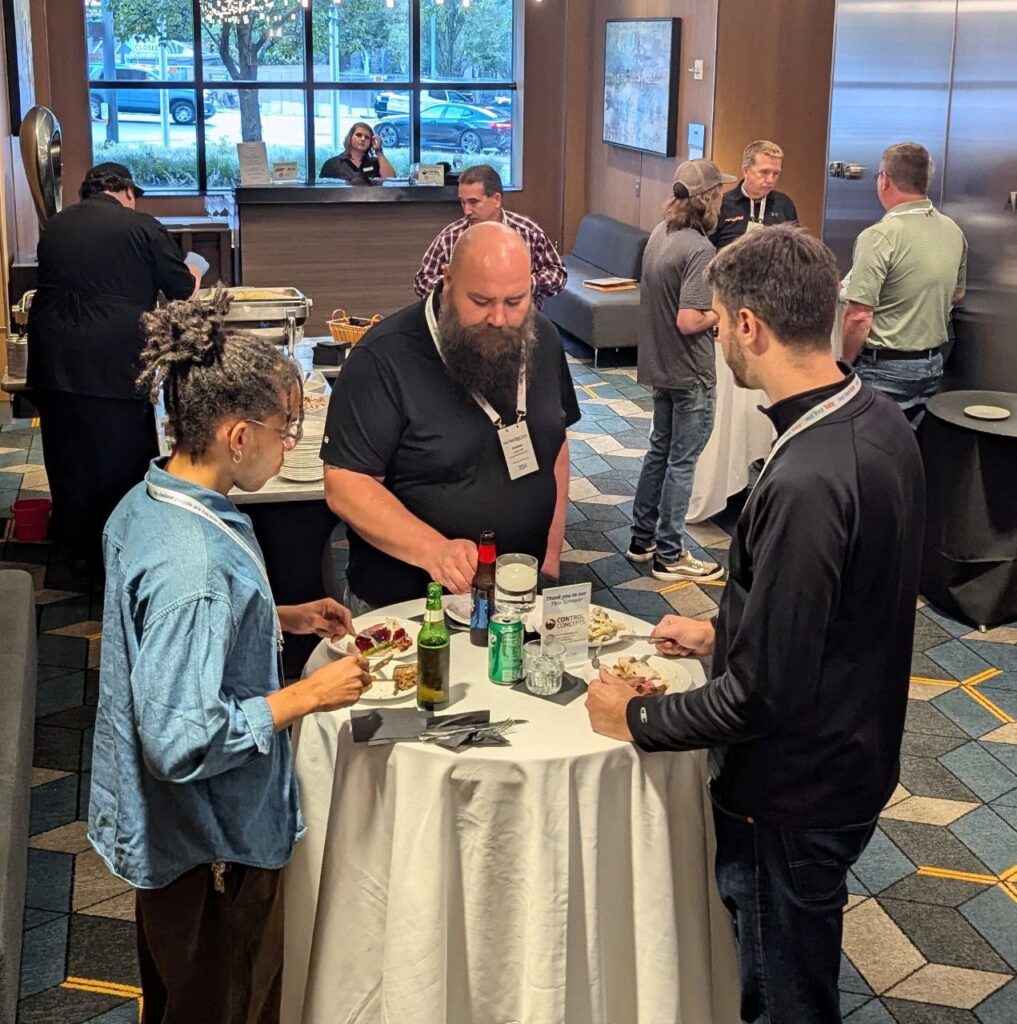
Heat treat industry players from across a spectrum of facilities, suppliers, and manufacturing specialties landed in Pittsburgh, Pennsylvania, on Monday, September 24, 2024, to kick off Heat TreatBoot Camp 2024. Attendees networked, gained new practical knowledge, and participated in a tour of a local commercial heat treating facility. It wasn’t all work; an opportunity to get to know one another at a meet-and-greet reception upon arrival and later on a trip up Pittsburgh’s Duquesne Incline allowed boot campers to relax and connect, balancing work with fun.
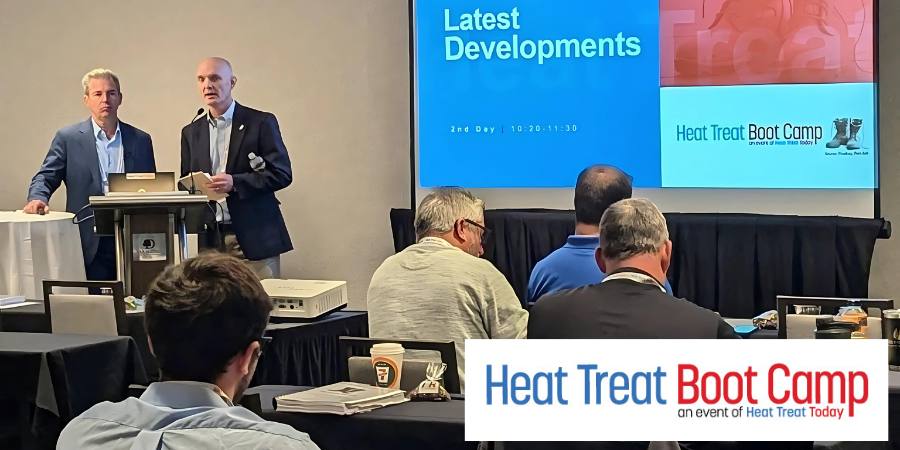
A day and a half of sessions led by instructors Doug Glenn, publisher and founder of Heat TreatToday, and Thomas Wingens, president/CEO and founder of WINGENS International Industry Consultancy, brought the 39 trainees up-to-speed on “Processes & Materials,” “Heat Treat Players,” “Latest Heat Treat Developments,” and more. Questions and discussion were encouraged during the formal sessions, and heat treaters had plenty of informal, additional learning time through interactions with each other and the instructors.
At the end of the first day of lectures, nearly all of the attendees boarded a school bus to visit the Duquesne Incline on Mount Washington and enjoy the view of Pittsburgh. Following another day packed with training and resources, attendees had the option to visit Solar Atmospheres in Hermitage, Pennsylvania, to tour the in-house vacuum heat treating and brazing facility.
Ike Okoh Product Engineer Dry Coolers
“I’ve enjoyed talking about the different types of heat processes and the types of furnaces — vacuum and atmosphere air systems,” said Ike Okoh, a product engineer with Dry Coolers, Inc, based in Michigan. “The questions I had before the course started were answered during the course, and the most beautiful part of the program was that it’s not always you get to see CEOs and or business owners in the training sessions with you. It’s wonderful to get to meet them and find out more about them and their companies.
“The instructors, Doug and Thomas, were really nice, went through the course and broke down some of the issues, took questions and answered them,” Okoh added. “All in all, it’s been an enlightening experience.”
“Every group that’s been here is different,” said Glenn. “This group has been really fantastic; it’s an engaging group, and overall, we’ve heard positive feedback that the sessions and networking have been helpful. So, thanks to everyone who has come, and we look forward to seeing others next year.”
Highlights of the Event
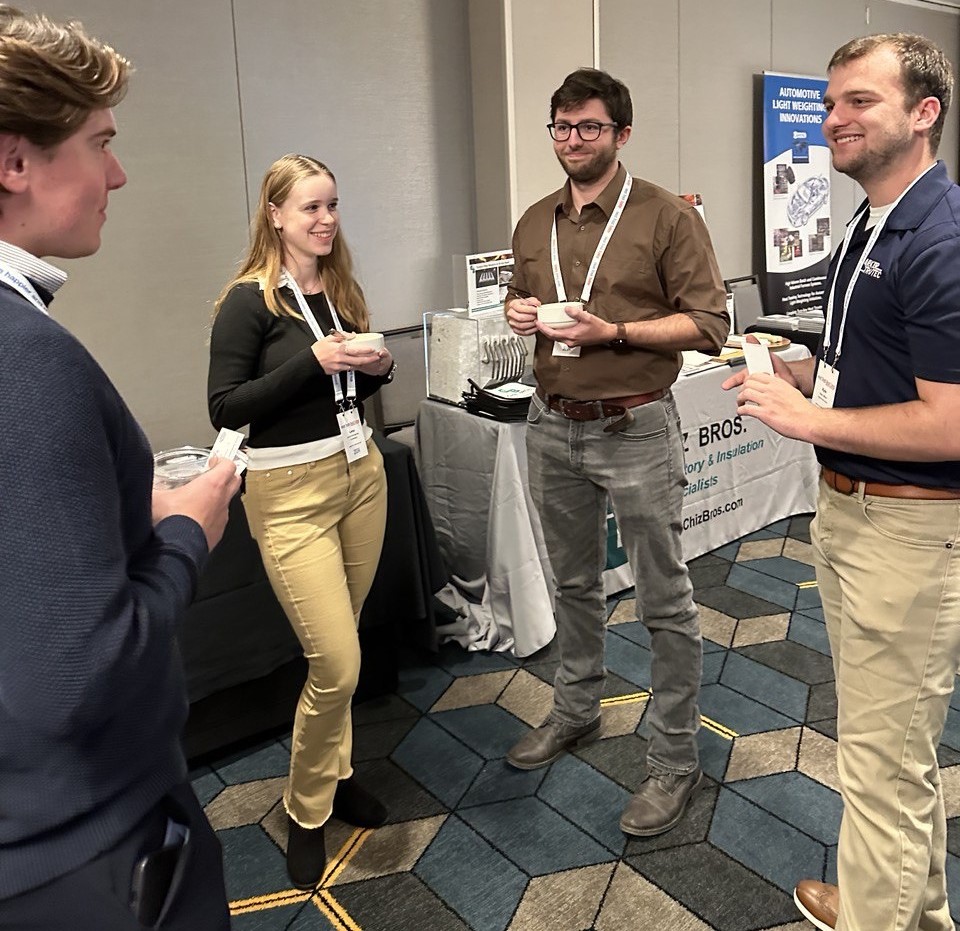
Monday evening’s meet-and-greet allowed participants to network and connect.
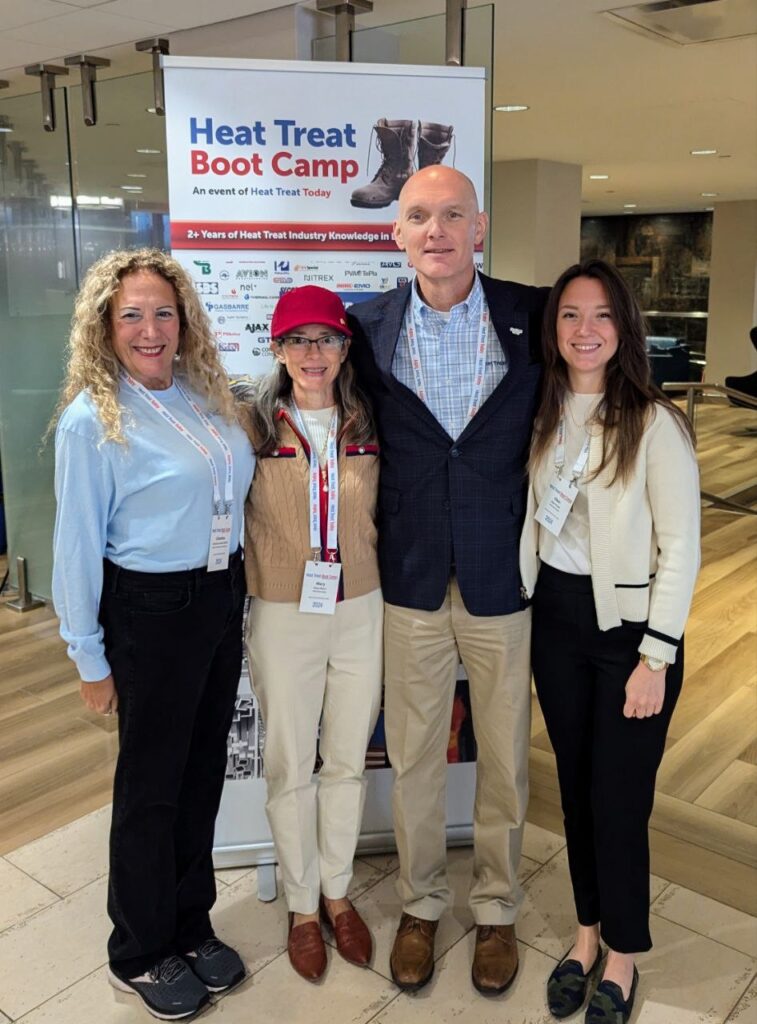
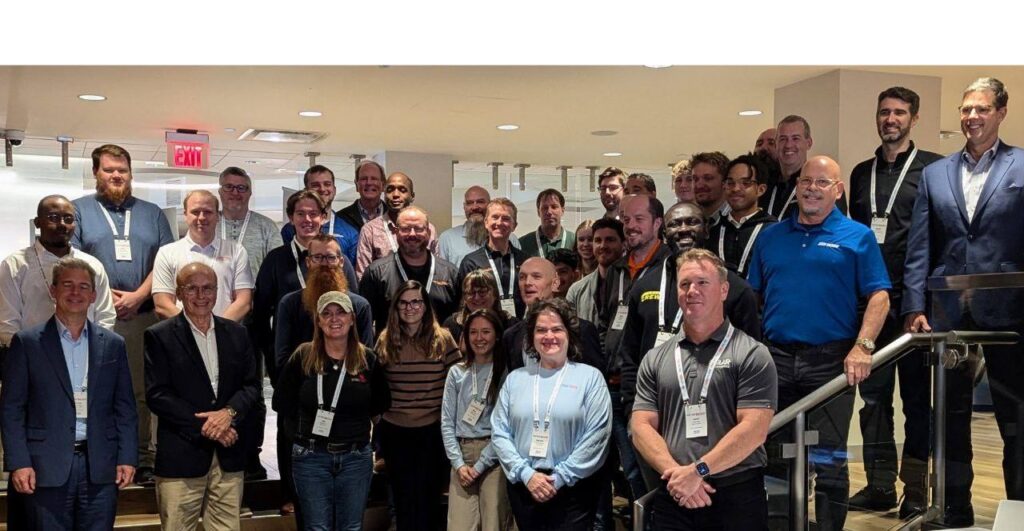
Days 1 and 2 of instruction from Doug Glenn and Thomas WingensField trip to Pittsburgh’s Duquesne Incline after Day 1 of instructionHTBC 2024 team and attendees
Keep your eyes open for your invitation to join us in 2025 for our fourth year of training up heat treaters of the future. Be sure to register early and bring friend and coworkers!
No matter the craft, disappointment is inevitable when the end result doesn’t turn out as planned. But in heat treatment, distortion is more than just a disappointment, it could contribute to weakness in a component, putting lives at risk. The industry can be credited for its commitment to determining the causes and manners in which parts distort and how to eliminate the risk.
Today’s best of the web article examines the inevitability of distortion in heat treating and demonstrates how to predict changes in size and shape of parts during processing, acknowledging that “maintaining dimensional accuracy is essential, especially for mission-critical and safety-critical components with the tightest tolerances.”
An Excerpt:
“Every part you heat treat will have some degree of ‘ballooning’ and distortion, but there are ways to predict how much your parts will deform. Knowing how your parts will change during heat treatment allows you to account for that change in the design of the part and, in a perfect world, avoid an additional round of machining after heat treatment.”
Like most power systems, power control dates back to vacuum tube technology. Like radios, amplifiers, and other industrial equipment, the furnace market started using transistors as the technology evolved. Vacuum tubes were not generally balanced and contained poisonous elements and were phased out of usage in almost all industries. In this Technical Tuesday installment, guest columnist Stanley Rutkowski III, senior applications engineer at RoMan Manufacturing, Inc., distinguishes the different methods used to regulate power input to furnaces.
An ERT/SCR power control Source: RoMan Manufacturing, Inc.
In today’s furnace market, there are generally three primary types of control systems: VRT, SCR, and IGBT. Each of these control technologies employs different methods to regulate the power input to the furnace, which in turn generates the required heat. These control systems transfer the power from the plant power system to a transformer in line with the load (heating elements). Power is delivered to a plant in a three-phase system from the utility company. The least costly and highest power factor systems have a balanced load across the three phases during the operation of any furnace.
VRT (Variable Reactance Transformer)
A VRT incorporates a feedback mechanism to either increase or decrease the amount of DC injected into the controlling reactor in the system. This increases or decreases the amount of current in the system to control the heat in the furnace by comparing it to the scheduled setpoint. A VRT system can have the following configurations:
Single-phase power controller for single load applications
Scott-T three-phase power controller (this is a system that allows all three phases of the incoming power system to be utilized in a two-phase load application)
Three-phase power controller (in either a Delta or Wye configuration) for three zone load applications
SCR (Silicon Controlled Rectifier)
An SCR control system uses a pair of thyristors (gated diodes) to control the amount of power applied to the primary of a transformer. The SCR control delays the start of the waveform, and the control point is reset when the waveform crosses the zero line. An SCR system can have the following configurations:
Single-phase, phase-angle controlled for single load applications
Single-phase, zero-cross controlled for single load applications
Single-phase, on-load, tap-changing controlled (this incorporates multiple pairs of the thyristors together to lessen the losses of the SCR system)
Scott-T three-phase power controlled (this is a system that allows all three phases of the incoming power system to be utilized in a two-phase load application)
Three-phase, phase-angle controlled (in either a Delta or Wye configuration) for three zone load applications
Three-phase, zero-cross controlled (in either a Delta or Wye configuration) for three zone load applications
IGBT (Insulated-Gate Bipolar Transistor)
An IGBT power control Source: RoMan Manufacturing, Inc.
An IGBT uses a diode bridge, capacitor, and switching transistors to control the amount of power applied to the primary of a transformer. The input frequency to the transformer is controlled by the switching transistors. The diode bridge is connected to the three-phase system allowing single, Scott-T (two zone), or three zone systems all to pull a balanced load across the three phases of the plant power system. A line reactor is incorporated to maximize the power factor in the system, minimizing the total power usage of the furnace. The IGBT system also uses a square wave into the transformer and a rectifier after the transformer to remove inductance out of the power delivery system to reduce costs of cables, breakers, and other components in the total package.
About the Author:
Stanley F. Rutkowski III Senior Applications Engineer RoMan Manufacturing, Inc.
Stanley F. Rutkowski III is the senior applications engineer at RoMan Manufacturing, Inc., working on electrical energy savings in resistance heating applications. Stanley has worked at the company for 33 years with experience in welding, glass and furnace industries from R&D, design, and application standpoints. For more than 15 years, his focus has been on energy savings applications in industrial heating applications.
Heat TreatToday publishes eight print magazines a year, and included in each is a letter from the editor, Bethany Leone. In this letter, Bethany reviews the recent dip in enthusiasm about electric vehicles (EVs) and raises some questions about what this means for the future of the industry. This letter first appeared in the August 2024 Automotiveprint edition.
Feel free to contact Bethany at bethany@heattreattoday.com if you have a question or comment.
How much do you care about whether or not electric vehicles (EVs) are being manufactured?
I have a family member who loves his Tesla. Honestly, it’s quite epic. The engineering is seamless; the ride is smooth. Out west, the incentives to buy, paired with the warm climate, made it a sensible move. Top it off with an at-home charging station and plenty of access to compatible charging stations in his city, and you’ve got it made.
The constant stream of new information about electric vehicles brings a juxtaposed vision of amazing technological realities alongside stubborn supply chain and infrastructure mishaps.
In Q4 2023, demand reached an all-time high, with 8.1% of all new vehicle purchases being EVs. Yet 2024 has seen turbulent lows (Q4 2024 market share lower than Q1 2020) and Hertz being caught $750 million in debt after a failed EV integration strategy. This has since tapered, though interest in hybrid grows rapidly.
With the narrow adoption of EVs, as well as the uncertain projections of the automotive industry based on Tesla’s movements, the impetus to learn more about heat treating components for this new technology may feel . . . less than imperative.
But there are two realities to consider.
1. New Tech Ebb & Flow
The slump in EV enthusiasm is often attributed to limited access to reliable charger ports. Source: CanvaPro
Uncertainties abound with any new technology, especially one that carries the burden of contributing to decreasing carbon emissions. (At the current rate, sales will not allow the market to reach the Biden administration’s 50% EV sales goal by the 2030 target.)
EVs are losing traction in market demand: The excitement from early wave adopters seems to have come to an end. The long-anticipated second wave of users from the middle class may not happen this year. And grumblings about range anxiety, long charge time, high insurance and repair costs, and battery efficiency in cold weather environments continue to keep customers from the lot.
The biggest burden nationwide has been limited access to reliable charger ports, especially for non-Tesla drivers. The WSJ covered this problem in an LA case report, noting that almost half of non-Tesla chargers had one of these top three issues:
Out of order
Payment issues
Connection issues between charger and vehicle
In the U.S., nearly half (46%) of current EV owners are likely to switch back to ICE, McKinsey & Company reported in June 2024. The culprits ranked by the full global set of responders indicated the following reasons for their hesitation.
35% Charging infrastructure in public not yet good enough for individual
34% High total costs of ownership
32% Driving patterns on long distance trips too much impacted
24% Cannot charge at home
21% Needing to worry about charging is too stressful
16% Changing mobility requirements
13% Do not like the driving experience
Among other issues under discussion is the efficiency and sustainability of recycling batteries, and the reality is that EV sales are slowing, yet this is likely the natural lag before further improvements and a second wave adoption. Source: CanvaPro
But to be fair, these are growing pain problems. The issue of access to charging stations is set to be alleviated within the next year as major EV automakers adapt to shared charging station technology. Car manufacturers including Audi, BMW, Ford, and GM signed an agreement that will allow their EV models to use the NACS charging stations developed by Tesla.
For dense, old cities where there is no room for a personal garage at the home and parking is first come, first serve — this is coming from someone who lives and drives in Pittsburgh — at-home charging solutions will need to be created, but it’s not impossible.
And the issue of clean electrification infrastructure, cost, and recycling batteries continues to be discussed, to varying degrees of success. So, while the reality is that EV sales are slowing, this is likely the natural lag before further improvements and a second wave adoption.
2. Heat Treating Is Inspired, Not Limited, by EV Advances
While going electric in your in-house heat treat operations may have you looking to integrate induction hardening for your gears and valves, the future of EV does not seem to impact the value of significant skills your department needs to learn across automotive heat treat. “When it comes to heat treating,” writes Rob Simmons, metallurgical engineering manager at Paulo, “innovations are rarely exclusive to EVs.” (Read his full article about processes and components here.)
It’s encouraging. We will still brace for change across the automotive industry because of new demands from the EV sector. Despite slowing demand, the increasing attention on hybrid vehicles will certainly keep us busy making vehicles lighter, more durable, and more efficient.
Today’s News from Abroad installment highlights global accomplishments from pilot programs in gas recovery and a successful trial run of biomass usage in ferrochrome making to the first electric furnace for luxury bottles and state-of-the-art furnace upgrades – all with a goal of achieving production efficiency and sustainability.
Heat TreatTodaypartners with two international publications to deliver the latest news, tech tips, and cutting-edge articles that will serve our audience — manufacturers with in-house heat treat. heat processing, a Vulkan-Verlag GmbH publication, serves mostly the European and Asian heat treat markets, and Furnaces International, a Quartz Business Media publication, primarily serves the English-speaking globe.
Bolstering Sustainable Operations with Cutting Edge Gas Recovery
Industrial hydrogen recovery plant with process piping and equipment Source: Outokumpu
“Outokumpu, a supplier of sustainable stainless steel, and ON2Quest, an innovator in the field of industrial gas purification and generation, are piloting a cutting-edge gas recovery system that will enable the recovery of hydrogen from their production processes. The collaboration aims to enhance sustainable operational efficiency by integrating hydrogen recovery into the stainless steel production cycle at Outokumpu’s production plant in Krefeld, Germany. The gas recovery system is designed to recover hydrogen – a by-product of the stainless steel manufacturing process – where the gas will undergo a rigorous cleaning and compression process to ensure that it will be suitable for use again. The purified hydrogen will then be blended with natural gas, creating a hybrid fuel that will be used to power the burners.”
Reinforcing Capacities with State-of-the-Art Furnace Upgrades
Speira upgrades its plants in Grevenbroich and Töging with two new furnaces each. Source: Speira
“Speira, a European aluminum rolling and recycling company, is upgrading its plants in Grevenbroich and Töging with two new furnaces each, replacing the previous units with state-of-the-art systems. With the four tiltable rotary furnaces, the aluminum recycler is reinforcing its capacities specifically for the recycling of so-called ‘low grades’ such as heavily contaminated scrap and dross produced during the melting process. ‘We take a holistic view of our contribution to a functioning circular economy. That’s why we don’t just look at the pure, easy-to-recycle scraps, but also at the more difficult lower grades and by-products. Wherever aluminum is in it, we want to get the maximum out of it and put it back into the cycle,’ explains Ralf Köring, Head of Recycling Services, which are provided for Speira’s other business areas as well as for external customers, for example in the automotive and packaging industries. Speira is investing around eleven million euros in the four furnaces. This includes charging machines, suction hoods, thermal afterburners, piping and other infrastructure.”
Biomass Usage in Ferrochrome Trial Marks Progress in Reducing Carbon Footprint
Tata successfully conducts trial of biomass usage at Ferrochrome Plant. Source: Tata Steel
“Tata Steel, has successfully conducted the trial of biomass usage in ferrochrome making at its Ferrochrome Plant in Athagarh of Odisha’s Cuttack district. The plant, operating under the Ferro Alloys and Minerals Division (FAMD) of the company, becomes first in India to have performed the trial run as part of its sustainable alternative to traditional carbon sources. Marking a significant step towards sustainable ferrochrome production and reducing the carbon footprint, the trial involved substitution of conventional fossil fuels with biomass, a renewable energy source derived from organic materials. This initiative is expected to lower CO2 emission by 0.08/t of Ferrochrome (5% use of biomass) which is around 6% of total CO2 emission from Ferrochrome plant.”
France’s First Electric Furnace To Impact Sourcing Green Energy
Groupe Pochet and ABO Wind join forces to source first electric furnace in France. Source: Groupe Prochet
“Groupe Pochet and ABO Wind announce the signing of a power purchase agreement (PPA) for the commissioning of the developer’s largest photovoltaic (PV) park in France. The PV park, with an installed capacity of around 20 MWp, will be in operation by early 2025, and will accompany the project to build France’s first electric furnace for luxury bottles. Through this agreement, Groupe Pochet is acting to reduce its impact on the planet by sourcing green energy and securing the long-term purchase price of electricity. Pursuing its ‘Sustainable Beauty’ CSR roadmap, and in line with its decarbonization plan, Groupe Pochet has teamed up with ABO Wind, a major player in the development of renewable energies worldwide, by signing a 20-year Power Purchase Agreement. As a major project under the decarbonization plan, the electric furnace, which will be operational by the end of 2024, will be partly supplied by green energy from the future photovoltaic plant.”
Adamus, a punch tool manufacturer for the pharmaceutical industry, has enhanced its heat treating operations with a vacuum furnace. The company manufactures punch tools and spare parts for tablet presses, capsule presses, and blister machines, and the new furnace is intended for processing a wide range of punches used in tablet production.
Maciej Korecki Vice President, Vacuum Furnace Segment SECO/WARWICK Source: SECO/WARWICK
“Adamus contacted us for the fourth time,” said Maciej Korecki, vice president of the vacuum furnaces segment at SECO/WARWICK. “This time, the partner wanted to replace an older, inefficient vacuum furnace with oil hardening, with a modern, more ecological and more economical vacuum furnace with gas hardening. Vector will perfectly meet these needs. It is compact, so it will not take up much space, it is efficient and ensures process purity, which is extremely important in the pharmaceutical industry.”
Vector vacuum furnace Source: SECO/WARWICK
The Vector vacuum furnace on order solves Adamus’s challenge to grow production in order to meet their increased demand for the number of punch hardening processes for tablet production. The presses produce components that are integral to the manufacturing process in the pharmaceutical industry, which maintains demanding standards, procedures, and technical parameters.
“The challenge is the constantly growing demand for our punches and spare parts used for units operating in pharmaceutical plants,” said a representative of Adamus, based in Poland. “However, it is important to choose well-thought-out solutions which will be used in many processes when expanding the machine park, ensuring the highest quality of production.”
The press release is available in its original form here.
Furnaces North America (FNA) 2024, the leading trade show for the heat-treating industry in North America, is thrilled to announce that attendance has grown by 25% compared to its last event in 2022, as of this week.
FNA 2024 will take place from October 14-16 at the Columbus Convention Center in Columbus, Ohio.
Tom Morrison, FNA Show Producer, expressed enthusiasm about the event’s growth: “With technology evolving at such a rapid pace, both commercial and captive heat treaters are finding immense value in attending FNA 2024. It’s a unique opportunity for them to connect with over 160 top suppliers, covering every facet of thermal processing, all in one place. It’s an incredibly efficient use of their time.”
Click the video image below to hear more from Tom and heat treat industry players to hear more.
Suppliers have highlighted the unparalleled benefits of FNA 2024, stating, “There’s no other event where buyers, heat-treating professionals, metallurgists, and engineers can see, experience, and learn about the latest advancements in technology, services, and processes. These innovations are crucial for improving productivity, throughput, and quality. In the face of a labor shortage, FNA 2024 will demonstrate how AI and emerging technologies can automate many aspects of plant operations.”
FNA 2024 will feature 35 technical sessions across 10 specialized tracks, bringing together industry experts to explore cutting-edge developments in areas such as equipment maintenance, digital transformation, pyrometry, operational efficiency, quality control, audit compliance, and energy management.
With demographic data predicting that labor shortages will persist over the next decade, it’s crucial for companies to attend FNA 2024 and discover innovative solutions for maximizing automation, efficiency, and productivity.
For more details and to register, visit www.FurnacesNorthAmerica.com. Use the following coupon codes for exclusive savings:
EXPOFREE: Free entry to the trade show ($25 savings)
50OFF: $50 off a full conference pass, which includes the opening night reception, access to all 35 technical sessions, and the trade show
Don’t miss this chance to stay ahead of the curve in the heat treating industry! Miss FNA 2024 and miss the future.
Joe Coleman, cybersecurity officer at Bluestreak Compliance, discusses critical aspects of NIST 800-171 and CMMC with host Doug Glenn. Joe touches on how to become compliant, how long compliance takes, compliance pricing, and the limitations companies may face if not compliant. Learn more in this episode of Heat TreatRadio.
Below, you can watch the video, listen to the podcast by clicking on the audio play button, or read an edited transcript.
The following transcript has been edited for your reading enjoyment.
What Is CMMC? (03:34)
Doug Glenn: Let’s jump in. Cybersecurity, while it’s not unique to heat treaters, is across all manufacturing sectors. But there are some unique elements of it that tie into the metal treating industry.
Let’s start with some basic definitions for those who don’t know: What is CMMC and what’s the purpose of it?
Joe Coleman: CMMC stands for Cybersecurity Maturity Model Certification. And we’re currently on version 2.0. It’s a verification program to ensure that defense contractors and subcontractors are able to protect sensitive information from the DoD (Department of Defense). That includes FCI, which is federal contract information, and CUI — or some people call it “coui” — which is Controlled Unclassified Information.
Cybersecurity acronyms “cheat sheet” available as a free download. Click on the image for a link.
It’s going to affect about 300,000 companies in the U.S. Also, it’s going to start impacting companies later this year or early next year. That’s when it’s said to be fully released, and they’ll start adding it to contracts and RFQs and things like that.
Doug Glenn: So, in CMMC 2.0 version, the DoD is asking companies, “Do you comply with CMMC 2.0?”
Joe Coleman: Rather, it is saying you must comply by 2025 and at a certain level; there are three levels.
Doug Glenn: What are these requirements based on?
Joe Coleman: DFARS 252.204-7012 was implemented in 2016. In it, they were saying that people must be NIST 800-171 compliant by December 2017. If you’re not, you’re way behind the ball. They just haven’t pushed it until recently. Now they’re really pushing it. It’s based on NIST 800-171 recommendations — that’s Rev 2, and a subset of NIST 800-172.
Doug Glenn: You mentioned DFARS. Can you just briefly explain that?
Joe Coleman: DFARS is Defense Federal Acquisition Regulation Supplement.
Doug Glenn: Also, I’m kind of curious about this: Who’s actually pushing it? Is it the Department of Defense, or is it government in general, or is it controlled by (kind of like Nadcap and things of that sort) an independent organization outside of the federal government?
Joe Coleman: No, CMMC does cover other things, but it’s mostly by the DoD. They are the ones pushing itbecause of foreign adversaries stealing our information and ransomware attacks and things like that.
Doug Glenn: Right, okay. So that’s CMMC 2.0. Is NIST 800-171 is a sub part of that, or is NIST 800-171 something different?
Joe Coleman: That’s something different. NIST 800-171 is published by the National Institute of Standards and Technologies. DoD doesn’t have a lot to do with NIST. They are two different standards; the DoD is just borrowing NIST 800-171 for CMMC’s requirements.
Doug Glenn: I see. They’re using NIST’s package that’s already there as part of their requirement.
I think you’ve already kind of hit on it, but let’s just be explicit about it. What started the push by the DoD to require CMMC or require any type of enhanced security?
Joe Coleman: The DoD finally realized just how vulnerable defense contractors are and how vulnerable their computer systems and networks are to cyberattacks and to sensitive information being leaked by the DoD or contractors, that kind of thing. They’re trying to pull everything together to improve national security and to help secure this important data.
Doug Glenn: So, in a sense, it’s really the DoD just trying to cover their rear end, so to speak, and protect sensitive, national defense type information.
What Is DFARS? (08:45)
We talked about DFARs briefly. I’ve heard a DFARS interim rule mentioned. What is that?
Defining DFARS
Joe Coleman: That came about in November of 2020. It plays along with the DFARS 7012 — 252.204-7012. They came up with three new clauses to improve how cybersecurity is handled and enforced.
The first one is clause 252.204-7019. It mandates that you when you do your assessment: you come up with an assessment score based on 110 controls, and your score can be from a positive 110 (the perfect score) to a negative 203. That score needs to be turned into the SPRS, the Supplier Performance Risk System, so other companies can see what your score is.
So, 7019 mandates that you do turn in your score and that it can be no older than three years old. They are requesting that if they say you’re DFARS-required on a contract, things like that, you need to be NIST 800-171 compliant.
The next one is 252.204-7020. And that one states that you have to give full access to your company — your internet system, your IT, all of your information, and your employees, if they decide to come in and do a medium or high assessment or just an audit. You will have to turn over that control to them.
Joe Coleman: There are three different levels of assessments that can be done under NIST 800-171. There is a basic level which you attest yourself. It’s all self-attestation for NIST 800-171. There’s a medium level which means you have to have a DoD official come in and do your final assessment. And then there’s a high, which you also need a DoD official to come in and do that. The majority of them are basics, which you can self-attest to.
Doug Glenn: How does a company know if they need to even have the CMMC?
Joe Coleman: If your company is a defense contractor, subcontractor, vendor/supplier, or if you’re in the DIB (the defense industrial base), you will need to be compliant if you process, store, transmit, or handle FCI or CUI in any way. If you handle CUI or FCI, you must become CMMC certified at one level or another.
Doug Glenn: Let’s just take an example. Say I’m almost third tier down in a supply chain, and the guy I’m doing business for is obviously doing defense work. Do I need to be CMMC certified at that point, even on the basic level?
Joe Coleman: Well, it depends on what type of data you’re handling. There is a flow down process. It starts with the prime contractor. Then it goes to the contractor and then on down the line. And if you are dealing with CUI or FCI, you need to have that same certification level as your client or as your contractor.
Doug Glenn: Would my client in that case, the person I’m doing business with, would it be incumbent upon them to tell me that I am dealing with FCI or CUI?
Joe Coleman: Yes. It would be in your contract.
Doug Glenn: If someone listening has a specific question about whether they’re required, I’m sure they could contact you and you could probably help them on that just to make sure.
Joe Coleman: Anytime. I also have an ebook that I made that is ready to be sent out, so I can always send them a free copy of that.
Doug Glenn: Now, I think you’ve already answered this question, but how many maturity levels are in CMMC and what are they?
Joe Coleman: A little, there are three levels. There is level one, which is the foundational level, and that is for contractors or vendors or suppliers that deal with only FCI. They do not deal with CUI. So, there’s a much smaller set of requirements for level one. And about 60% of the 300,000 companies will be going for level one.
Then there’s level two, which is advanced, and that is for contractors and vendors and suppliers that deal with CUI in any way. It can come in an email and leave. But as long as they have access to CUI, they need to be at least a level two certification. And there are about 80,000 companies that are going to be impacted by that of the 300,000.
Level three is expert, and level three is based on the 110 controls in NIST 800-171 plus a subset of controls that are in 800-172. Level two mirrors NIST 800-171. It’s borrowing all the requirements from NIST 800-171, enhancing them a little bit, and putting them into CMMC. So, there are a few more hoops you have to jump through to be CMMC certified.
Doug Glenn: We’ve talked about two different sets of levels. We talked about a basic, medium, and high. And then we talked about level one, two, and three. Are these things the same or are they different? Can you help me understand the difference between those?
Joe Coleman: The basic, medium, and high is an assessment level that assesses your whole system and facility, and that’s based on NIST 800-171. CMMC, you have three different maturity levels, and that’s level one, level two, and level three.
Doug Glenn: When you say maturity levels, that shows the degree to which your company has gone to implement these things.
Joe Coleman: Yes. It is a certification.
On CMMC level one, you can self-attest your own certification. Level two and level three, you will have to have it’s called C3PAO (or a CMMC third-party assessment organization). They will have to come in and do your final assessment. Bluestreak Compliance can take you all the way to that assessment audit ready. But then you’ll have to have a C3PAO come in and do the final audit and the certification level.
Doug Glenn: That was going to be one of my questions because you guys mentioned that you’re a registered practitioner organization. You don’t actually do the assessments, but you can get everybody up to the door, right? You prepare them for it?
Joe Coleman: Yes. You would need a CMMC certified assessor to do that.
Doug Glenn: All right. And when is all this going to be required? Right now, it’s not required but it will be required?
CMMC: Mark Your Calendars! Companies will need to prepare for the eventual implementation of CMMC level two certification. A phased rollout is planned to simplify the process; however, a shortage of registered practitioner organizations (RPO) may lead to a backlog.
Joe Coleman: CMMC is not required currently. It’s in the last phase of being released for approval. Either late this year or early next year, it’s going to be a phased rollout. Later this year or early next year, you’re going to have phase one, which is that if you need to be level one certified, you will need to become certified right away. That’s the one you can self-attest.
Six months after that, they’re going to start requiring that CMMC level two is implemented. This means you’ll have to go through the process of getting a C3PAO. And that’s when it comes time to hire an RPO (registered practitioner organization), because they’ve got the training and the certification to get you there.
Now, one thing on the C3PAO: there are currently only 54 C3PAOs in the entire country. So, there’s going to be a huge backlog. You could be talking a year backlog, so plan accordingly.
Finally, at level three, an enhanced version of level two because it has more requirements, you’re also requiring a C3PAO for certification.
What’s Involved in Becoming NIST Compliant? (21:14)
Doug Glenn: Joe, let’s talk for a second about the process, if you will. What’s involved in becoming CMMC certified?
Joe Coleman: That all depends on if you are NIST 800-171 compliant already. If you are not NIST compliant already, you need to get NIST compliant as soon as possible. That has a big impact on your CMMC implementation.
Doug Glenn: Can you address that then: What do you have to do to become NIST compliant?
Joe Coleman: To become compliant, you have to do an assessment on your network and your facilities to come up with an assessment score. So, it’s the same as CMMC.
Then, you will have to do a gap analysis. You will come up with a POAM list (a plan of action and milestones); that is your to-do list based on your assessment, your shortcomings, or what you’re not compliant to. And you’ll need to come up with a system security plan (an SSP). That’s mandatory; you cannot be compliant without an SSP.
Once you get your SSP and your POAM list, then you need to take your score, your beginning score/baseline score, and submit that to the SPRS. And that is the library that holds all of the scores and shows your level.
From there, you start remediating and implementing your POAM list. But that also includes coming up with policies and procedures, plans, and a lot of documentation — everything gets documented based on where you stand and where you’re going, until the end when you do your final score.
Now, the SSP is a living document. It’s going to constantly change. If you have a change in your network, a major change, you’ll need to go in and update that right away.
How To Become CMMC Compliant? (23:46)
Doug Glenn: So that’s how you get to be NIST compliant. For CMMC, is there more to it?
Joe Coleman: There’s a few more requirements in CMMC, but the major difference is that with NIST 800-171 it’s all self-attestation. CMMC you will need to have a C3PAO.
Doug Glenn: That is, somebody’s going to need an outside validator, so to speak.
Joe Coleman: And they’re very expensive.
Now, another reason they came up with CMMC is because people were saying that they were compliant to NIST 800-171, and they really weren’t. That gets into the False Claims Act and things like that. They really go after people that do that.
Doug Glenn: Yeah. Any sense of the time frame for either becoming NIST compliant and/or CMMC compliant?
Joe Coleman: If you are not NIST compliant yet, that can take up to 6 to 12 months. I’ve seen it take more. You can do CMMC and NIST together if you need to because you’re using the same documents. If you’re not NIST compliant, that can take up to 18 months or more. If you are NIST compliant already, you’re talking 6 to 12 months to be CMMC certified.
Joe discusses the limitations of not being NIST compliant.
Doug Glenn: Okay. You just alluded to it, but I just want to make it clear. Can you do them both at the same time in parallel tracks?
Joe Coleman: Yeah, I’m working with clients that are not currently NIST compliant. So, we’re just rolling it into one using the same documents. It’s just that we’ll have to have a different assessor at the end.
Doug Glenn: Let’s say a company just decides they’re not going to be either NIST or CMMC compliant. You can still be a company, right?
Joe Coleman: Oh yeah, you can still do business; you just can’t do business with the DoD. A lot of companies base it on how much of their workload or how much of their business percentage is based on DoD work or from a contractor or subcontractor. If it’s 1%, 2%, 3%, 5%, you need to take a good hard look and say, is it worth putting a lot of money into?
Cost of Certification (26:52)
Doug Glenn: So, they can still be in business and doing well, but they just can’t do any DoD work. So, any ballpark figures? And I realize this probably varies widely depending on the size of the company and everything, but any ballpark sense of how much change we’re talking about here?
Joe Coleman: There’s no official word from the DoD on this, but there are some guesses out there. For NIST 800-171 compliance, depending on your current cybersecurity program that you currently have and how involved it is, I’ve seen it from $15,000 to $60,000.
Doug Glenn: Okay. That’s just for NIST?
Joe Coleman: Just for NIST. For CMMC, and again depending on if you’re NIST compliant, if you are not NIST compliant you’re going to do them together, it could be over $200K (probably easily) to become CMMC certified because you’re also becoming NIST compliant.
Doug Glenn: I’m curious. How come it’s going to cost you maybe 3x as much?
Joe Coleman: One of the main reasons is that with CMMC, you’ll want to hire a registered practitioner organization to guide you through the process and to do the documentation for you. The other is the C3PAO. There are only 54, and they can name their own price.
I can imagine it’s going to be over $100K just for the final assessment.
Doug Glenn: Right, that’s helpful. I think that gives everybody a pretty good sense of what we’re talking about here with CMMC 2.0 and NIST 800-171.
What Can a Registered Practitioner Do for You? (29:02)
Your division of your company, which is Bluestreak Compliance (you’ve already mentioned you’re a registered practitioner), can you give a brief summary of what it is? What do you guys bring to the table?
Joe Coleman: A registered practitioner organization has been certified by the Cyber Accreditation Board (Cyber AB), or CMMC accreditation body. A registered practitioner organization (RPO) works with and hires RPs (registered practitioners) or RPAs (registered practitioner advanced). I happen to be an RPA. And we’ve gone through all the training that we need to have so that the Cyber AB says, okay, you are qualified to do this.
So, when I quote a job, I usually quote it two different ways. One way is just guiding you through the process, so you’re going to do all the heavy lifting. I can supply you with templates and things like that for your documentation and guide you through each step. Or I can quote it where we manage the whole process. We will do all your documentation for you.
Joe Coleman: “You’re going to have at least 1 or 2 full-time employees doing nothing but this.”
Your team will have to be involved in the implementation process. And that’s true both ways. But we normally quote it two different ways, and they choose which one they want based on their budget and things like that.
Doug Glenn: It sounds like what you’re bringing to the table is the ability to get that company from where they are now, wherever they self-assess to start with, up to the point where they can bring in one of the third-party auditors and actually have a reasonable shot at passing the CMMC 2.0 assessment.
Joe Coleman: Correct. And it’s going to take a lot of input from the client or from the companies, too, because you’re going to have at least 1 or 2 full-time employees doing nothing but this. You’ve got to build that cost into it.
That’s what I tell people when we say we can quote it either guiding you or leading the project. It’s not as much work if I am leading the project. But if I’m not leading the project, you’re going to need a team of people to do this. It’s a lot of work.
Cybersecurity Areas To Be Aware Of (31:48)
Doug Glenn: I’m not sure there is an easy answer to this question, but can you give a list of top 3 to 4, or 4 to 5, areas that a company needs to look at when they start doing the NIST and CMMC checklists? Where do you see most companies falling down, or what are the areas they need to be aware of?
Joe Coleman: A lot of the smaller companies do not have a robust cybersecurity program. That is going to be a big pitfall. That’s going to be a big jump for them, not just the work that they have to put into it, but the expense; a lot of small companies just can’t afford that.
Joe Coleman: Some of the things are making sure that your network is totally secure and locked down, firewalls. Along with that, you’re going to need endpoint protection on all your devices, mobile device manager. You’re going to have to track every device that has access or could have access to CUI. You have to have a full inventory of that. Your IT system has to be locked down.
Now, this also includes your facility; it includes physical security. That’s talking about your door locks, your alarm systems, things that are going to protect CUI. Camera systems, your server rooms have to be locked down. It’s a lot of physical security, too.
Doug Glenn: Interesting. As well as the protocols for how you handle emails, how data is transferred, where it’s stored, and backups, stuff like that?
Joe Coleman:Yes. And you need to have a policy and a procedure for each one of those. They have to be fully documented every step of the way.
Doug Glenn: Wow. Okay. Sounds like fun, Joe.
Joe Coleman: It is. I enjoy it, but it’s a lot of work.
Doug Glenn: Well, that’s good, I appreciate it. The columns and things that you’ve written for our publication have been helpful to people, I know. And I think this podcast will also be helpful to them. But do you know, for those who are listening and might be attending Furnaces North America, do you know when your talk is?
Joe Coleman: It’s going to be on the 16th at 8:50 a.m., and it’s in room 222.
Doug Glenn: All right.
All right, Joe. Thank you very much. I appreciate your time. We’ll look forward to more of your input.
Thanks everyone for listening.
About The Guest
Joe Coleman Cyber Security Officer Bluestreak Consulting
Joe Coleman is the cybersecurity officer at Bluestreak Compliance, which is a division of Bluestreak | Bright AM™. Joe has over 35 years of diverse manufacturing and engineering experience. His background includes extensive training in cybersecurity, a career as a machinist, machining manager, and an early additive manufacturing (AM) pioneer. Joe will be speaking at the Furnaces North America (FNA 2024) convention, presenting on DFARS, NIST 800-171, and CMMC 2.0.