AMS2750F, a rewrite of the specification that covers pyrometric requirements for equipment used for the thermal processing of metallic materials, was released at the end of June. For this Technical Tuesday feature, Heat Treat Today asked a few experts in the aerospace industry to share their insights of this much anticipated revision that helps to better clarify issues with the previous revision. Specifically, Heat Treat Today wanted to know what they perceived to be the top 2-3 most important changes in revision F; what companies should do to prepare for these changes; and additional thoughts about the revision as it relates to aerospace heat treating.
Andrew Bassett was on the subteam for AMS2750F as well as the previous revision AMS2750E and has been a member of AMEC and SAE Committee B since 2006. He shares some “inside baseball” background about this four year process, “The AMS2750F subteam utilized the Nadcap Pyrometry Reference Guide, the Nadcap Heat Treat Audit Advisories that pertained to Pyrometry, and the collective experience from the sub-team which dealt with the previous revision issues and problems. The AMS2750F sub-team had a broad range of backgrounds, with representatives from Boeing, Safran, Arconic, GeoCorp Inc, Nadcap-PRI, and Aerospace Testing & Pyrometry.”
What do you believe to be important changes in revision F?
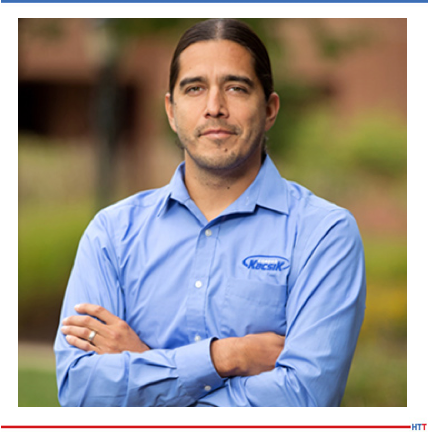
Jason Schulze, Director of Technical Services; Special Process – Metallurgy, Conrad Kacsik Instrument Systems, Inc.
Jason Schulze comments on offsets saying, “Offsets have often been a confusing subject throughout the years. How they are applied, removed and documented has caused confusion and has been a source of Nadcap findings. With the changes to the offsets section of AMS2750 in the new revision, these issues will be greatly reduced. Offsets have now been split into two categories; correction offsets and modification offsets. It will be important for suppliers to understand and implement the new requirements as well as use the same verbiage as this will hopefully alleviate further confusion.”
Andrew Bassett, President, Aerospace Testing and Pyrometry
Andrew agrees this is an important change regarding the offsets and further clarifies, “A “Modification Offset” is when an instrument is purposely, either through electronic means or manual means, shifts the accuracy away from the nominal temperature. This is typically done to “center a temperature uniformity” that may be skewed in one direction or another. The modification offset, when used properly, will shift the temperature uniformity more towards the set point of the thermal processing equipment. A “Correction Offset” is used to bring the instrument back to the nominal temperature. As always, a well defined procedure will be required on how the “Correction Offset” and “Modification Offset” will be introduced into your system.”
“One of the biggest changes that caused a lot of controversy was the restricted re-use of expendable test thermocouples,” Andrew notes. “The AMS2750F subteam provided studies and data that showed that there was considerable drift of certain types of base metals thermocouples, especially when it came to Type “K” thermocouples. The previous revision of AMS-2750 already had restrictions on these types, but after providing data of the drift of these thermocouples, the team felt further restrictions were required for Expendable Base Metal SAT & TUS Sensors. Section 3.1.7.3 describes the limitations of these type thermocouples. Types “M”, “T”, “K” & “E” shall be limited to 3 months or five uses, whichever occurs first between 500F and 1200F (260C and 650C) and is limited to single use above 1200F (650C). Types “J” and “N” shall be limited to 3 months or ten uses, whichever occurs first between 500F and 1200F (260C and 650C) and is limited to single use above 1200F (650C).”
Peter Sherwin, Global Business Development Manager for Heat Treat, Eurotherm by Schneider Electric
Peter Sherwin comments on instrumentation, “From an instrument perspective our no.1 focus is the instrument accuracy specification. This has not changed for Field Test or Control and Recording Instruments (now in Table 7), however the impact of the decimal place for digital recorders could cause some issues for less precise instrumentation. In 3.2.3.1 All control, recording and overtemp instruments shall be digital 2 years after release of AMS2750F – this was not a surprise, and today’s overall cost (paper, pens, storage etc.) of paper chart recorders cannot match their digital counterparts. Digital time synchronization (3.2.3.19) is also sensible to ensure you have an accurate time record across a number of Furnaces/Ovens and charts – we are used to this for other regulations (e.g. FDA 21 CFR Part 11) and offer a SNTP/Time Synchronization feature in our Recorders.”
Jim Oakes, President, Super Systems, Inc.
Jim Oakes shared his pleasure with section 3.2.3.12, “I was happy to see the document address integrated recording/controlling data. It states in section 3.2.3.12when the control and recording system is integrated such that the digitally displayed control value and digitally recorded value are generated from the same measurement circuit and cannot be different, it is only necessary to document a single displayed/recorded value for the control reading. This is happening through direct communications, so what you see on the controller is what you are recording electronically. This saves a step and eliminates the need for additional documentation.”
Doug Shuler, Lead Auditor, Owner, Pyro Consulting LLC
Doug Shuler cites the auditor advising piece, “The top of the list has to be the overall progress we made by incorporating auditor advisories and pyrometry reference guide FQS into the body of the specification so users don’t have to ask themselves “What did I miss.”
How should companies prepare for these changes?
Jason Schulze’s advice to companies focuses on training, “Companies should receive concise training regarding the revisions within AMS2750F, including administrative and technical. As with any training, continuous courses may be necessary to ensure comprehension. I recommend performing a characteristic accountability for each and every requirement stated within AMS2750F.”
Peter Sherwin encourages companies to ready instrumentation for the standards, “Recent feedback from the MTI indicated that 3rd party audits to the new standard would probably start next year. However, if you are in the market for a new instrument then it only makes sense to ensure this meets the requirements of the updated standard.”
Doug Shuler sees the benefit of analysis, “Users should prepare by performing an internal or perhaps an external gap analysis to establish where their pyrometry system is today, and what has to be changed going forward. Users don’t have to wait until AMS2750F and AC7102/8 Rev A are released and in effect before making changes. The key is that if a user has an audit before the revised Nadcap Checklist AC7102/8 Rev A becomes the law of the land, they will have to declare compliance to AMS2750E or AMS2750F in full and will be held to that revision’s requirements. Once AC7102/8 Rev A takes effect (best guess after January 1, 2021) all audits will be done to AMS2750F.”
Andrew Bassett recommends, “First and foremost, get a copy of AMS2750F and start the review process. Since the document was a complete re-write, there is no change summary or change bars to point the supplier in the direction of what has changed. Spend time creating a matrix of the previous requirements (AMS2750E) and comparing to the new requirements (AMS2750F). I would suggest breaking this matrix down into four main sections: Thermocouples, Calibrations, System Accuracy Testing, and Temperature Uniformity Surveys. This will allow suppliers to work on each section without getting overwhelmed by the entirety of the specification. Currently at the time of writing this, there is no formal implementation requirement for AMS2750F. Typically this will either be dictated by the suppliers’ customers, or in the case of Nadcap, they will issue a “Supplier Advisory” as to when their expectation for implementation will be.”
Final Thoughts
Planning for the future will serve companies well for the long term encourages Doug Shuler, “With a number of significant changes, nearing a complete rewrite, now is a good time to take a look at your internal procedures that may have become fragmented over the years and streamline them to the new revision. Auditing for Nadcap for over 10 years has shown me one thing for sure. Those companies that have a thermocouple procedure, a calibration procedure, a SAT procedure, an alternate SAT procedure, a TUS procedure, and maybe even multiple TUS procedures for different kinds of furnaces (Air, Vacuum, Atmosphere, etc.) usually have a more difficult time with audits because the SAT procedure also addresses thermocouples, but doesn’t address correction factors because that’s in the instrument calibration procedure… See where this is going? Consider writing one pyrometry procedure with sections in it just like the specification. Then, the SAT section can refer to the thermocouple section for test thermocouples and to the instrument section for test instruments, etc. It’s like re-writing AMS2750, but customized for your facility, your equipment, and your practices. In the end, remember that the pyrometry portion of your Nadcap audit follows my P.I.E. acronym. Procedures that Include all requirements and Evidence to show compliance.”
Paying close attention to the right data solution will alleviate potential headaches when dealing with both the new AMS2750F revision and the CQI9 (V.4 update) says Peter Sherwin, “Many commercial heat treaters will also have to cope with the update to CQI9 Version 4 at the same time! According to the MTI, your ‘end’ customers may request you perform your self-audit to the new standard from this point forward. There is a bit more time allocated to move to digital (3 years), but my advice would be to take advantage of digital solutions sooner rather than later. The right data solution should save you money over time compared to the paper alternative.”
Finally, amidst all the new changes AMS 2750F has offered, Jim Oakes assures, “…the pyrometric requirements that most of us are used to will still be very familiar as this document becomes the new standard.”
Announcing Heat Treat Today's newest feature: Heat Treat Today Guest Column/Op-Ed. These releases feature content from the world of heat treat, which doesn't directly include news or technical content.
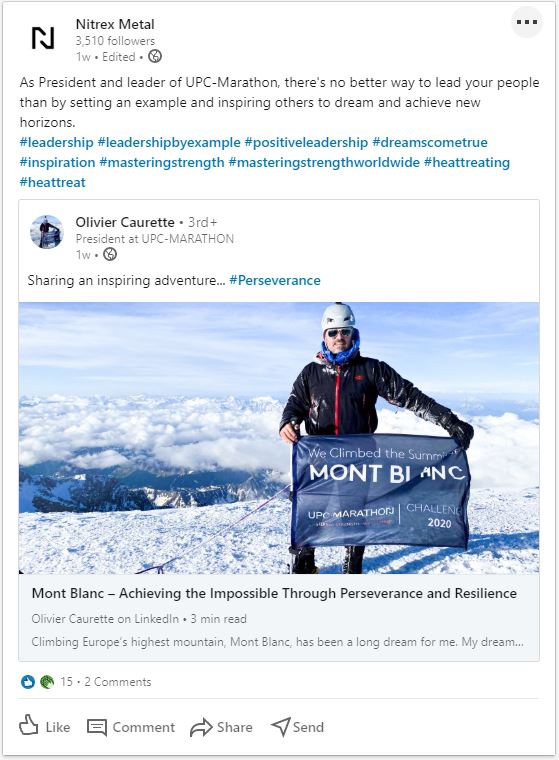
Today's column highlights UPC-Marathon President, Olivier Caurette's ascent of Mont Blanc in the Alps along the eastern border of France.
If you have any suggestions for future content, be sure to contact Heat Treat Today editor Karen at karen@heattreattoday.com.
Climbing Europe’s highest mountain, Mont Blanc, has been a long-standing dream of mine. One that has lived on for many years and was finally fulfilled this month. What you read below is my journey of perseverance and resiliency towards unlocking my potential.
After 6 months of training to get fit for the climb and to my great satisfaction, I succeeded in summiting this majestic mountain in the French Alps. My sincere thanks to my family who supported me throughout every step of this journey and to my guide Jonath who pushed me at the right moments to give me that extra boost.
Success did not come easily. I attempted my first climb in 2019, but, at 4300 meters (14,000 feet) elevation into my trek, I was forced to return to camp because of poor weather conditions. With 120 km/h (75 mph) winds, a heavier than expected snowfall, and a temperature of -20°C (-4°F) and dropping, mountain conditions were not ideal. Consequently, the planned climb was stopped over safety concerns, and I dispiritedly returned home. Of course, this was not my first or last lesson in the limits of my potential. When you set yourself a goal, you want to reach it – mostly, to prove that you can. Dispirited but not defeated, I was inspired again in 2020 to succeed. While the environment in 2019 was not favorable, 2020 in contrast was amazing with early summer daylight and the summit above the clouds. Even though my efforts were similar in 2019 and 2020, the result was so very different. The 2019 experience fueled the 2020 success. There is no bad experience, just an opportunity to learn a lesson along the way. Don’t stop trying if you fail once. As professional tennis player Arthur Ashe once said, “Success is a journey, not a destination. The doing is usually more important than the outcome.”
I see so many parallels between my adventure and UPC-Marathon’s journey to success. Both are driven by one strong objective, a team that helps you get prepared and is ready to help, support from experts, the ability to overcome doubts, as well as the strength and determination to keep going forward and make things happen again and again – ultimately succeeding in our day to day achievements and taking us to the pinnacles of success.
I’ve learned a lot about myself and my limits during the ascend, but also during the long descent. At UPC-Marathon, the process of transforming our company to achieve greater success and be more resilient during difficult times and situations is our common Mont Blanc. Staying in control, never giving up, trusting your guide/leader, leaving your comfort zone when needed, staying confident in your competence, and relying on your best self will open your mind to what’s possible and what it takes to succeed. By the same token, we must focus on our goals and embrace the everyday challenges to reach our personal and professional summit. Once we are engaged and appreciate the necessity and benefits of challenges, there is no barrier to stop us in the face of new and emerging challenges and our quest to seek solutions. We are the best ourselves only when we give the best of ourselves.
To sum up, I leave you with one of my favorite quotes from Mike Horn, the world’s greatest living professional adventurer who has repeatedly demonstrated that there are no limits to the potential of the human spirit, “The impossible exists only until we find a way to make it possible." By expanding our view of what’s possible, we all have the potential to unlock creativity, innovation, rewards, and fulfillments.
A heat treat company in Poland has been faced with online defamation after waves of libelous messages filtered into the inboxes of partners, suppliers, and contractors of SECO/WARWICK Group. After many months, they have released the following statement.
As one of the top five heat treatment leaders and an entity involved in the world economy, SECO/WARWICK confronts numerous challenges in everyday business life. Currently, such a challenge has become the network, specifically Internet hate.
Sławomir Woźniak, President of the SECO/WARWICK Group
Almost every entity operating on the market has a presence on the Internet where it builds its reputation every day and confronts the opinions of the environment. SECO/WARWICK consciously uses the Internet to create and manage content, applying a great deal of effort in it, because we care about a reliable and positive perception and representation or our brand.
Anonymous hate aimed at the company
The Internet is a huge environment that can help but also harm, because it allows anonymity of the recipient and sender, including certain anonymous vilification that SECO/WARWICK has experienced. Initially, our partners, suppliers and contractors received e-mail correspondence alleging alarming and misleading information about the situation of the Group. Now employees and customers have joined the group of consumers flooded with black PR. We are concerned that after a wave of hate sent to customers, hate speech on the Internet will start. SECO/WARWICK says NO to this prospect.
“The author, writing under a pseudonym (currently as: Suresh Manish) and attacking SECO/WARWICK, is the so-called internet troll who wants to discredit our company’s activities and arouse controversial discussions. According to specialists researching the phenomenon of online hate, such a person feeds his low self-esteem, harms someone who is jealous or stands in the way of his alleged success. Our online
troll, by providing information extracted from the context and presenting it in a selective manner, manipulates the facts. This attack is an act of economic hate,” says Sławomir Woźniak, President of the SECO/WARWICK Group.
It is not the competition that works under the pseudonym, but one of our former contractors, who formulates unfounded claims and negative opinions, and then slanders and sends this information to a wide audience. SECO/WARWICK is pending litigation against this contractor, but it turns out that legal sanctions for violating our good name and reputation are not relevant to the author of the email. Despite the conviction, he continues to slander the company, which is done, among other means, via anonymous e-mails which, although not identified explicitly, suggest the authorship of the entity: a former contractor who has been in litigation with SECO/WARWICK for many years. The operating scheme and the way the wording is formulated clearly indicates that the emails are authored by the same and former SECO/WARWICK contractor.
We will fight these anonymous slanders, because the good name of the company and its employees is vilified, and the information itself misleads our partners. As a listed company, SECO/WARWICK is guided by the principle of transparency in business, relations and communication. We are not anonymous in what we do, because we believe that the facts speak for themselves.
The authorities stand behind the SECO/WARWICK wall
“Cyber-bullies who feed on the possibility of making others’ lives miserable are a very severe phenomenon and I am sorry that the sign of the times is affecting such a reputable company as SECO/WARWICK” says prof. Jolanta Baranowska from the West Pomeranian University of Technology.
“I have cooperated with SECO/WARWICK Group for decades. This is the first time I have met a situation in which a global leader must defend itself against online frustration. A wave of hate poured out by this man hiding under a pseudonym offends and touches us, the scientific support team of the Group,” comments prof. P. Kula from the Lodz University of Technology.
“As heat treaters we all work hard to promote the many benefits of our industry and spread the word that we are the most cost-effective solution to the needs of manufacturing. The last thing we need or want is unnecessary distraction, especially from an unknown source questioning our motives and damaging our industry’s reputation” wrote Daniel H. Herring, “The Heat Treat Doctor.”
“Over my long career, I have had the privilege of working with most of the original equipment manufacturers (OEMs) worldwide and many of our suppliers as well. Each is highly ethical, acts in a professional manner and, simply stated, have their hearts (and focus) in the right place, serving the industry we love. SECO/WARWICK, both here in the United States, in Europe and around the world is no exception. Any attempt by anyone to suggest otherwise detracts from our ultimate goal, the advancement of the thermal processing industry so as to offer our customers the best tools to succeed. In this way, we all serve our better angels”, added Daniel H. Herring.
The industry is telling the hater – ENOUGH
Nobody wants to be publicly defamed, because destroying reputations affects employee morale, business, decisions of potential clients and partners, or can weaken relationships. But SECO/WARWCIK, with a faithful group of suppliers and customers in 70 countries, and always taking care of relations with partners, can boast and show that in this situation our partners are with us.
“This defamation is an offense that involves slandering a company that could expose it to loss of credibility and trust. We have not lost confidence in SECO/WARWICK; we believe and confirm its credibility and the credibility of its devices. Proof – years of collaboration and dozens of solutions for this brand,” says Mike Jarvis, Engineering Director, Wallwork Heat Treatment Ltd.
“After receiving the e-mail, our reaction was to forward correspondence to SECO/WARWICK without asking us to explain the matter. Because we do not respond to anonymous correspondence. As a transparent company, we require transparency from partners and those who want to be in dialogue with us. Anonymity does not embrace dialogue or transparency,” comments Sebastien Matray, GAUBERT MATRAY INDUSTRIES CEO.
“We were surprised by the correspondence received and the information contained therein. The surprise was all the greater because we’ve been working with SECO/WARWICK for 10 years, on 10 projects. We know who our contractor is and our relationship has long since we crossed the threshold of partnership and are now at the stage of business friendship. As a friend, we tell the hater – NO”, noted Sylwester Pawęta, Chief Operating Officer and Commercial Proxy at HART-TECH.
“In response to the defaming emails sent about SECO/WARWICK, Rex Heat Treat has not experienced any out-of-the-norm difficulties in our dealings with the company. RHT has purchased standard vacuum furnaces, first of its kind vacuum oil quenching furnace, bell style tempering furnaces, and the tallest oil quenching vacuum furnace in the world from SECO/WARWICK. We have found the entire group to be professional and highly creative for our unique needs. Rex Heat Treat looks forward to our continued relationship and next purchase from SECO/WARWICK and SECO/VACUUM Technologies,” said Johnathan W. Rex, General Manager.
“Metals India and SECO/WARWICK relations are not impacted with such kind of communication as we have had a wonderful experience in the past and continuing through present day”, commented Ankit Gupta, Managing Director of Modern Metals India.
“I was extremely disheartened to read this slanderous correspondence about SECO/WARWICK. This absolutely does not fit the standard of business behavior. All the more so because working with SECO/WARWICK as a business partner is always a great pleasure, combined with mutual respect and trust; with such experiences, it is impossible to believe these accusations,” adds Magdalena Nizik, General Director of CPP Poland.
Although the presented circumstances are completely independent of the Company, we apologize to our partners for any inconvenience caused. We declare that we have taken legal steps related to the situation that misrepresents our situation to our partners. We are guided by the principle of transparency, one of the most powerful forms of defending the good name of the company and its employees. Thus, this public message from the Group.
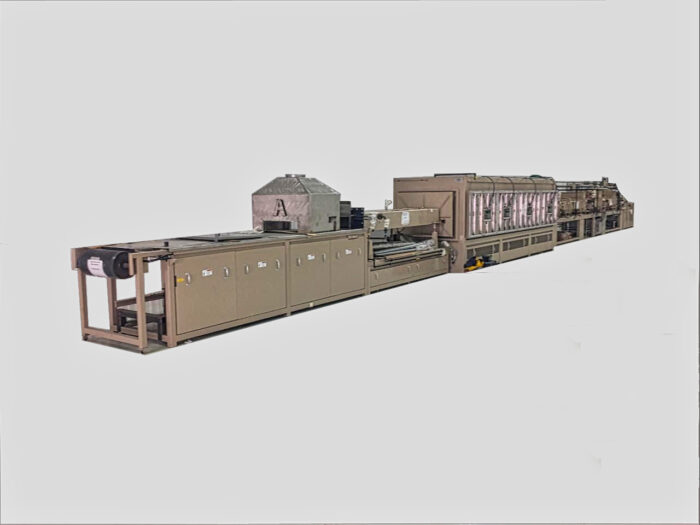
A global automotive supplier has placed an order for an electrically heated continuous belt brazing furnace to be installed in Mexico in the 4th quarter of 2020.
Abbott Furnace Company will design and manufacture the industrial furnace for brazing of fuel delivery components and their Mexico location will install and provide after sale support of the four (4) zone line that is rated for 2,150° F and includes a 24” wide belt and silicon carbide domed muffle.
Welcome to another episode of Heat TreatRadio, a periodic podcast where Heat TreatRadio host, Doug Glenn, discusses cutting-edge topics with industry-leading personalities. Below, you can either listen to the podcast by clicking on the audio play button, or you can read an edited version of the transcript. To see a complete list of other Heat TreatRadio episodes, click here.
In this conversation, Heat TreatRadio host,Doug Glenn, publisher of Heat Treat Today, discusses the heat treating resources available to members of the Center for Heat Treating Excellence (CHTE) as well as the background and current look of this collaborative endeavor. Featured in this conversation is member and current chairman of CHTE, Jeffery Fuller, metallurgy manager at Amsted Rail Company and Professor Richard Sisson, key heat treat researcher and lecturer at Worchester Polytechnic Institute (WPI).
The following transcript has been edited for your reading enjoyment.
Doug Glenn (DG): Today we are talking about the Center for Heat Treating Excellence (CHTE) and the role it plays in connecting researchers and heat treaters across North America. The topic is especially relevant to manufacturers with their own in-house heat treat departments who want to know how to join innovative research with their everyday practical heat treat needs. One of CHTE's members and current chairman, Jeffery Fuller (JF), metallurgy manager at Amsted Rail Company Inc. with the Brenco division in Petersburg, VA, will talk about his experience at CHTE and the diverse projects that the center has undertaken. We will also hear from Richard Sisson (RS), the key heat treat researcher and lecturer at Worcester Polytechnic Institute (WPI), as he shares his input on both his history and the present operations of the center.
DG: Jeff, can you share with our readers where you stand in the world of heat treat?
JF: I got my Bachelors degree in materials engineering at Virginia Tech. My first job was actually at an iron foundry. Then I transferred to a manufacturing company in upstate New York and there I was exposed to a lot of heat treating very, very quickly. I was heat treating tool
Screenshot from Amsted Rail PRECISION MANUFACTURING Video. (photo source: www.amstedrail.com)
steels, I was heat treating stainless steels, I was heat treating copper alloys and so I had a lot of experience with a wide range of atmospheres, a wide range of types of furnaces and a wide range of materials when I was working at that company. That was my first real exposure to heat treatment, particularly the tool steel part where I was working with a wide range of tool steels and we had a couple of Ipsen batch furnaces that we were using. It was like going to metallurgy school all over again because I had such a wide variety of things to work with. After that I spent several years working at a specialty steel manufacturer in upstate New York as well. I ended up transferring over to Brenco. Brenco used to be its own independent company in the mid '90s and this was where I spent the bulk of my career. I've been here since 1995 and we have a large captive heat treating operation here and we primarily produce bearings for the rail industry. We are doing a lot of carburizing. We have pressure furnaces, pit furnaces, and batch hardening furnaces, so I've spent a lot of time dealing with carburization and some of the idiosyncrasies of the carburizing process. We've seen how to make parts well and some things that don't make parts quite as well. Brenco is now part of what is called Amsted Rail.
DG: Tell us about your involvement in your current position with the Center for Heat Treating Excellence.
JF: Sure! I was looking for an opportunity to branch out and get some more support for heat treating research and other kinds of research into heat treating issues. We are actually a fairly small company, even though the Amsted Group is a large company with many employees. We are also spread out in many locations and a lot of our locations are fairly small. Our particular location here in Petersburg, VA is only
CHTE Event with Members (photo source: www.wpi.edu/CHTE)
about 400 employees and the metallurgical engineering group consists of myself and another metallurgist, and then our lab technicians. There are occasions where we run into issues where we were looking for a little more support and the opportunity to engage with other people that might be able to answer questions and solve problems that were beyond our particular knowledge. So we started looking for a group that could help us out, whether it was going to be just a professor at a university or some other kind of group, and we became aware of the industry university consortium type model. So we started looking around and wanted to see if there was a consortium that would suit our needs. And we found a few. But what drew our attention to the CHTE up at Worcester Polytech was the fact that it was focused specifically on heat treating, that it was run by physical metallurgists and, to be perfectly honest, one of the main draws for us was that the membership fee is very, very reasonable compared to some of the other consortiums that we've talked with. When we put all of those things together, we wanted to give this a try and see if we think this is the kind of thing that is going to be beneficial for us. That was around 2015, so I guess my company has been a member for about 5 years. I was asked to join the board of directors and become the chairman of the board of directors in 2018, so I've been chairman for my fourth meeting as chairman.
DG: Let's move to Rick Sisson. Rick, you sort of represent the research end of this collaboration with your work at WPI. Why don't you give us an understanding of how CHTE operates and also why it might be helpful for heat treaters?
RS: The mission is to provide a research home for the heat treating industry in the United States, even though we have had international members, but to provide a home to work on current issues in the heat treating industry. We also provide graduates who do go to work in the industry. We have some undergraduates who work with us, but it is mostly MS and PhD students and a lot of post docs who work on this as well.
The Center for Heat Treating Excellence is an industrial sponsored and led consortium. We conduct industry-proposed and industry-selected research on topics that are important to the heat treating industry today. Our organization is focused on timely research to immediately support the industry's needs. We are made of up of large and medium OEMs as well as heat treat suppliers and furnaces manufacturers (I can give you the full list of companies later), but it's their collective wisdom that really guides the project selections and implementation. The process we use is- the companies propose the research, they work with me and we development a project plan to the board, all of which is people from industry. You get my input, but it’s projects and industries which is important to them.
DG: So this is a primarily academic/industrial partnership?
RS: Yes. We use our relationship with these companies to get some fairly large federal and military money to continue the research which support research that is going on at the Center, but research within the Center is driven by the industry and their needs.
DG: Is CHTE a Worcester Polytechnic Institute entity? Is it owned by them?
RS: Actually, a group called the Metal Process Institute, which is several centers, the oldest one being the Advanced Casting Research Lab that's been led by Diran Apelian for over 30 years, and that is the model we use that he developed working with the aluminum casting industry. There is the Center for Heat Treating Excellence. We also have CR3 which is the Center for Resource Recovery and Recycling which is part of that, but it is also funded by the government directly through the National Science Foundation. We also are a part of an ASM initiative that is looking in data: How do you collect data, analyze data? We work with the University of Connecticut and the University of Rochester on that.
DG: So from 30,000 feet then, the Center for Heat Treat Excellence is an industry/academic partnership has obviously some ties with government funding as well. WPI first. Underneath that is an entity called the Metal Processing Institute and then the Center for Heat Treat Excellence is part of that.
RS: Yes. And if you look at all the companies that are members of what we call the MPI (metal process institute), it has been as many as one hundred.
DG: Let's talk specifically about how the Center for Heat Treating Excellence got started. How long ago was it, the founding members, and things of that sort.
RS: It's was started about 16 years ago and it was an idea from the ASM heat treat society R&D as part of a planning entity, and they had determined that heat treating needed a research home in the United States. If you look around, a lot of the universities have a little bit here and a little bit there, but they determine that. The whole effort was really led by Bob Gassler and Bruce Boardman at John Deere, but also with a lot of other OEMs, people from CAT, people from the automotive as well as the aerospace industries.
DG: You said Bill Bernard from Surface Combustion, correct?
RS: Yes, Bill Bernard. Bill is mostly retired, but his son B.J. is the president and Ben Bernard is one of the other head guys there.
We had a lot of support from the major induction companies, besides the regular furnace companies, and the quenching fluid providers when we were getting started.
DG: If you're a member of the organization, what's the typical calendar look like for you in a year? How often do members meet? How often do they have to do work outside of meeting times?
RS: We have two review meetings a year; one in June and another one in December. In addition, almost every member company is either a member the board or a member of the project selection committee and they meet periodically by conference call or by zoom to conduct business when necessary. The project selection committee is the one who meets the most because they need to collect all the project proposals and get together and discuss them and make their determination about what would be the most interest. And then they decide, is this something you guys could do; does this fit into whatever capability you have?
DG: So Jeff, what perspective can you give us on how the Center of Heat Treating Excellence benefits members and their companies?
JF: There are a lot of things benefits that with being part of the CHTE. But one of the things you hear people talk about the most is they like the networking that happens at the meetings. We meet twice a year, once usually in June and once in December, and there are usually a couple of social events associated with that, and a lot of people get to talk with colleagues that are in other industries and things and there is a lot of sharing that goes on. Of course people are always careful to watch their proprietary information and be noncompetitive and things like that. But the simple truth is, there are not that many times you get to get a bunch of heat treaters together, put them in a room and let them talk. I've had some very, very good conversations with people that are in industries that are very different than mine but happen to have a lot of the same problems. I've talked with some people, for example, that make parts for heavy trucks and we've been able to sit down and say, “Hey, you know, we both have the same problem. Let's share some information here.”
CHTE Members (photo source: www.wpi.edu/CHTE)
Some of the other benefits people have if they're members of CHTE, is first of all, the staff at CHTE is available for phone consults to members at any time. So for example, if I'm scratching my head over a particular issue and I'm not quite sure how to approach it, or if there is some information that I need, I can all CHTE and get a hold of Dr. Sisson or Dr. Zhang or whoever, and I can say, “What do you guys think about this?” Or they may say, “We don't have your answer, but we have some modeling software and we can run that for you. Send us some information and we'll run the model for you and get you the results.” So you have this kind of thing where the staff is available for you to consult and that's basically at no charge.
The other benefit is if you say, “I have a particular research project that I want to do, but I don't really want this to be a part of the consortium because this is going to be proprietary, something just for me.” Then we're able to engage the resources of Worcester Polytech without having to pay any overhead fees. If you've ever looked at any university research contracts, the overhead fees can be substantial. So it's a nice discount if someone wants to get something like that done, they can get some directed research and get a pretty substantial discount on what would be if you went to another university where you don't already have a standing relationship.
DG: I'd like to know how the CHTE projects are managed and distributed to benefit CHTE members. Could you nail down or discuss one or may two research projects that have been most helpful to you to Amsted?
JF: Ok, sure! One of the projects has been helpful to us and was actually one of the ones that drew my attention early on. Worcester Polytech was looking at creating a carburizing calculator, which they call CarbTool. I had worked with some of the commercially available carburizing calculators that you can get out there and they're okay; they all have their own little benefits to them. But what really attracted me to CarbTool was the fact that it had more detailing. I could put in different geometries, I could put in a lot of different kind of processing steps, and I was able to get more information out of the CarbTool than out of some of the more commercial software packages that were out there. In fact, it was so interesting to me, that at one point I actually went to them and said, “Hey guys, I really like this, but the user interface is a little clunky.” And so they got me in touch with one of the computer science people up at Worcester and we helped make the user interface much more usable and we went through several versions of that. Now it is a tool that is available for members; they can all download that and use that license for free. They are working on another one now that's going to be for nitrocarburizing. It's kind of nice because in addition to the straight research projects (we've done projects on induction tempering, a research project on how to extend furnace fixture life and we're currently doing some projects on distortion control and we did some on nondestructed testing), we also have some practical projects where you end up with a tool that you can actually use going forward.
Current research project, "CarboTool" (photo source: www.wpi.edu/chte)
DG: The CarbTool that you were talking about, and the one that might be coming around for nitriding, is it commercially available to nonmembers?
JF: No. It is not available at all to nonmembers. At various times we've talked about it; in other words, should we look at trying to commercialize some of this or should we not? We've had some discussions with some other nonprofits about it, asking if there was some way maybe some of our research could be distributed through other channels. But the truth is, the consortium exists for the benefit of the consortium members, so we have to be careful about that. We want to make sure that people are getting their value, and that we aren't giving things away. The consortium members paid for it and they have a right to it. People that haven't paid for it, don't. We haven't really looked at how we would price that out and that's not really our model. Our model really is: join consortium, participate with us, help sponsor the research and then we all get to share the benefits.
DG: Dr. Sisson, who is involved in these projects and the programs?
RS: First, the membership kind of goes up and down with the economy. In general, the current memberships include a new member ArcelorMittal which is a very large steel company. Amsted Rail. We've always had ASM international as a member. Bodycote has always been a big supporter being a very large heat treating operation. Then we have Caterpillar, Cummins, Fiat Chrysler, John Deere, Pratt & Whitney, Sikorsky, and those kind of OEMs. We have DANTE Solutions which does heat treat modeling and then the Thermo-Calc software that does all the thermodynamics in phase productions. We have GKN Sinter Metals that does a lot of work with us recently, because we're doing more in additive manufacturing. A new focus that has emerged over the last 2 or 3 years is in post-processing of additives.
DG: So Jeff, have those relationships with suppliers in the industry been helpful?
JF: I think it has. And I think that's a really great point. We are always looking for new members and for greater diversity in our membership base. The more members we get, the more projects we can take on and the more work we can do. But one of the things we find that is really great is, for example, we have a project right now where we need a particular kind of access to a piece of equipment in order to do part of the testing. And one of our equipment manufacturers says, “Yes, we can do that. We can put that piece of equipment together and you guys can use that for purposes of this test.” We've had this happen both with the kind of the more traditional heat treating equipment, we've had that done with some of the induction heat treating equipment and we've had the ability to pair up with certain members. When we create a project, the project selection committee goes out to the different members and they ask, “What do you want to work on? What is of interest to you in the industry?” We get a lot of different ideas and then they look at the degree of interest in the different ideas. We also look at the diversity of the ideas, because what we want to make sure of is that we don't completely drive projects in one direction and then leave some of our membership out in the cold. So, we look at the diversity of the projects and we look at the interest in the projects and we also look at the relative success of the project. Can we be successful with this project or is it completely off the wall? We'll then come up with a project scope and then a project description. Then what ends up happening is a focus group is put on that project. What we will do is put people on that focus group that have a high interest in the project and also have resources to provide for the project. For example, we had a project here recently where we have one member who is interested in something that is induction related and we also have an induction company that is one of our members as well. So, we’re going to put them on that focus group and they can work together directly along with the WPI staff to help drive that project forward and bring it to a conclusion. It's great, because instead of us sitting around going, “Gee, who's going to do that?”, we've already got people in the room associated with the project that will know how to get things done, or may even already have the equipment or the resources that we need to get something done.
DG: So you at least have an implicit commitment already to provide whatever resources need to be provided to get the task done.
JF: Right. Now it's subject to cost and things like that, as every company has their own resource constraints, but yes, it's been very successful so far. It's because we have that breadth and diversity of membership. If we had only users, then we would be much more dependent on having to use only the facilities at WPI or only commercial services that we had to hire to accomplish tasks that we didn't already have. If you think about it, if we're doing research, we probably don't have that equipment. If we already had that equipment or that set-up, we'd already be using it. Just by the very nature of it, we often talking about things we don't have. If it was just users, it would take us a lot longer to get things done and it would be a lot more difficult. Having the equipment manufacturers and fluid suppliers and things like that involved is a big, big, big help.
DG: Rick, when all the research is done, frankly, who owns it? And how is it shared?
RS: Formally, WPI owns it. We hold it confidential mostly. And a company can use anything that has been developed on these projects royalty free. If we decide we want to pursue a patent, and even if we get a patent, then they can use this royalty free. In cases where WPI doesn't pursue a patent, then a company can. We have a semiformal process to say, “I'd like to get a patent on what you guys did.” Then you've got to let the other members know and see how that's going to work out. But we rarely have any issues with doing that. So it's owned by WPI but the content is strictly for the members.
JF: And that's my understanding as well. We had an interesting project a few years ago where we came up with a really great process for doing a kind of treatment that would help extend fixture life. Turns out, none of our members are in that fixture business. Some discussions were held, but it didn't actually go anywhere. We still have this knowledge how it could be done, how it might be done. But, a lot of the other things are much more immediately available, if you will.
One of the other things people are going to have to remember is that if they're going to join a consortium, every project isn't going to be relevant to what you do. For example, a few years ago we did a big project on induction tempering. Fascinating project. I don't do any induction heat treating. I learned a lot by going through and having access to all of that information and research, but that doesn't affect my position here because I don't use induction heat treat in this job currently. But there are a lot of other things. When I go to my boss and we talk about the justification for our membership, one of the things I talk about is, of the projects, how many of them that are current are relevant to what we do and what's coming up and what's in the pipeline? Because they're not 100% going to be projects that are going to mean something to me. But that's okay, because we're all benefiting. Some of the carburizing projects are beneficial to me but aren't beneficial to the induction people, but we're all working on it together and we all get benefit out of it.
DG: Roughly how many projects are going on at one time?
JF: Right now we have two main projects and one sort of a side project. This is completely based on how many members we have. Right now, we're running around 14 members in the consortium, some big companies and some smaller companies (you can see the member list on the CHTE website). If we had 25 members, we'd probably be running three or four projects.
DG: And do those projects tend to last a year? Two years?
JF: They tend to last usually two years as a project length. It takes awhile to get a team together, get things moving, start getting results and then put everything together and do the report, so typically it's about two years long.
Doug Glenn, Heat Treat Today publisher and Heat Treat Radio host.
To find other Heat Treat Radio episodes, go to www.heattreattoday.com/radio and look in the list of Heat Treat Radio episodes listed.
One of the great benefits of a community of heat treaters is the opportunity to challenge old habits and look at new ways of doing things. Heat TreatToday’s101 Heat TreatTipsis another opportunity to learn the tips, tricks, and hacks shared by some of the industry’s foremost experts.
Today’s tips come to us from Nel Hydrogen covering atmospheric solutions and Wisconsin Oven Corporation with a tip on gas chamber issues. Additionally, Pelican Wire provides 4 quick tips on Thermocouples.
Heat TreatToday welcomes you to submit your own heat treat tip for Heat TreatToday's 2020 Fall issue to benefit your industry colleagues. You can submit your tip(s) to karen@heattreattoday.com or editor@heattreattoday.com.
Heat TreatTip #11
Compliance Issues? Try On-Site Gas Generation
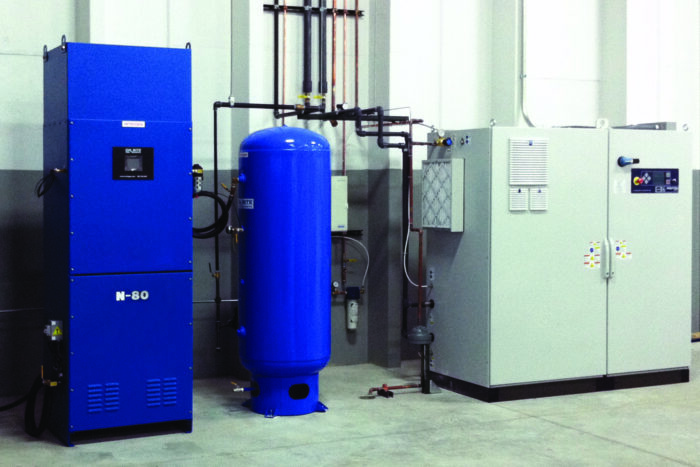
On-site gas generation may help resolve compliance issues. Growth and success in thermal processing may have resulted in you expanding your inventory of reducing atmosphere gases. If you are storing hydrogen or ammonia for Dissociated Ammonia (DA), both of which are classed by the EPA as Highly Hazardous Materials, expanding gas inventory can create compliance issues. It is now possible to create reducing gas atmospheres on a make-it-as-you-use-it basis, minimizing site inventory of hazardous materials and facilitating growth while ensuring HazMat compliance. Modern hydrogen generators can serve small and large flow rates, can load follow, and can make unlimited hydrogen volumes with virtually zero stored HazMat inventory. Hydrogen is the key reducing constituent in both blended hydrogen-nitrogen and DA atmospheres—hydrogen generation (and optionally, nitrogen generation) can be used to provide exactly the atmosphere required but with zero hazardous material storage and at a predictable, economical cost. (Nel Hydrogen)
Generate H2 and N2 on-site – saving money, improving safety, and reducing carbon footprint.
Heat TreatTip #12
Oven Chamber Failing the Test? Try This!
When having difficulties passing a temperature uniformity test, check the pressure of the heating chamber. This can be done with a pressure gauge that reads inches of water pressure. The best uniformity is achieved when the pressure is neutral or slightly positive (0” to +.25” wc). If the pressure is negative (even slightly), it can draw a stream of outside cold air into the chamber, causing cold spots. For the best results and ease of analysis, permanently mount a gauge to read the pressure. Any issues with pressure can be easily recognized and corrected. (Wisconsin Oven Corporation)
Heat TreatTip #70
Type N Thermocouple (Nicrosil / Nisil)
Type N Thermocouple (Nicrosil/Nisil): The Type N shares the same accuracy and temperature limits as the Type K. Type N is slightly more expensive and has better repeatability between 572°F to 932°F (300°C to 500°C) compared to Type K. (Pelican Wire)
Heat TreatTip #71
Know Your Thermocouple Wire Insulations
Know your thermocouple wire insulations. When is Teflon® not Teflon®? Teflon® is a brand name for PTFE or Polytetrafluoroethylene owned by Chemours, a spin-off from Dupont. FEP is Fluorinated Ethylene Propylene. PFA is Perfluoroalkoxy Polymer. All three are part of the Fluoropolymer family but have different properties. Of the three compounds, PTFE has the highest heat resistance, PFA second highest and FEP third. The higher the heat resistance the more expensive the insulation. Keep that in mind when specifying the insulation and only pay for what you need. (Pelican Wire)
Heat TreatTip #72
Resistance Temperature Detectors (RTDs)
Resistance Temperature Detectors (RTDs) are replacing thermocouples in applications below 1112°F (600°C) due to higher accuracy and repeatability. Typical constructions are multiconductor cables with nickel-plated copper conductors. (Pelican Wire)
Heat TreatTip #74
When to Use Type K Thermocouples
Type K thermocouples should only be used with the appropriate Type K thermocouple wire. Type K measures a very wide temperature range, making it popular in many industries including heat treating. An added benefit with Type K is that it can be used with grounded probes, ungrounded probes, and exposed or uncoated wire probes which are attached to the probe wall, measure without penetration, and have a quick response time respectively. (Pelican Wire)
Heat TreatTip #100
The Right Furnace Atmospheres Will Pay Dividends
Precision blended gas system provides the atmosphere needed at the most economical cost.
Save money on your furnace atmospheres by employing the driest and leanest furnace atmosphere blends possible. Furnace atmospheres are a compromise between keeping it simple and supplying exactly the atmosphere to meet the unique requirements of each material processed. Organizations have different priorities when it comes to atmospheres—heat treat specialists may want to be able to run as many different materials as possible using a limited array of atmosphere types, while captive heat treating operations often want exactly the atmosphere approach to maximize the benefits for their specific processes/products.
The dewpoint (water content) of the atmosphere in the furnace is a key factor in its performance. At high temperatures, water in the atmosphere can break down, releasing oxygen that can cause oxidation. You must maintain a high degree of reducing potential to achieve the surface finish and processing results desired. If the furnace atmosphere gas is wet, you’ll need a gas blend richer with hydrogen than you would if your atmosphere blend had a lower dewpoint (less water vapor content). Since hydrogen costs 10 times more than nitrogen, it is more economical to run a leaner atmosphere than a richer atmosphere. By running the driest atmosphere blend possible, you may find that you can lean down your atmosphere (consistent with the metallurgical needs of your product/process) by reducing the proportion of hydrogen and increasing the nitrogen. In doing so, you may recognize meaningful savings.
Check your furnace atmosphere raw materials and process and obtain the driest atmosphere possible. Control your atmosphere dewpoint by adding humidity as needed to the driest starting blend possible rather than accepting a wet atmosphere and trying to process your parts. You’ll achieve the best compromise of excellent results at the lowest cost. (Nel Hydrogen)
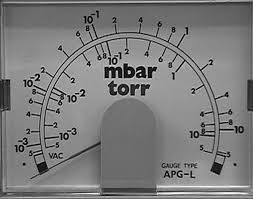
"Vacuum gauges all measure the pressure readings in the range from atmospheric pressure down to some lower pressure approaching absolute zero pressure, which is not attainable. Some gauges read the complete range and others can only read a portion of the range, usually used for very low pressures."
A typical vacuum furnace can have at least three electronic vacuum gauge heads to monitor the level of vacuum at various positions. These gauges send signals back to the control systems, and "the vacuum readings are used to ensure that the vacuum pumps are working correctly and that the process chamber is at the correct low pressure (vacuum) for the specific process."
In this Heat Treat Today Best of the Web feature, VAC AERO International shares how different vacuum measurement units are being used around the world today.
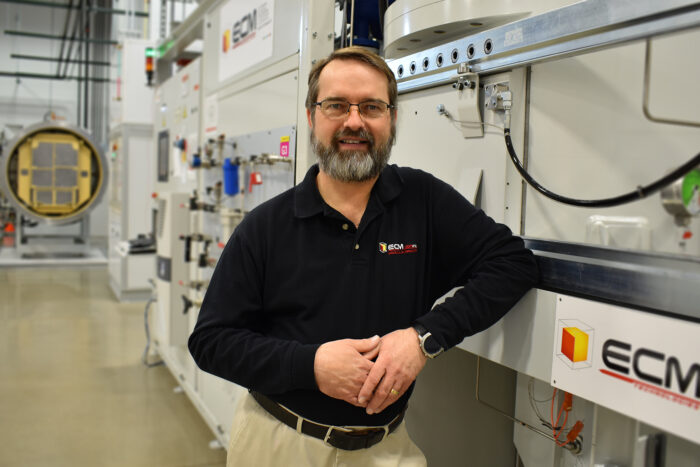
Evolution of ideas and transitions to more innovative and efficient methods of heat treating are common themes in this ever-changing world. In this article, Dennis Beauchesne, GeneralManager atECM USA, Inc., explores the integration of heat treatment for in-line machining cells and the benefits and efficiencies experienced.
This articlearticle first appeared in the latest edition (June 2020) of Heat TreatToday’sAutomotive Heat Treat magazine.
Introduction
Dennis Beauchesne, General Manager, ECM-USA, Inc.
Heat treating in the automotive industry has evolved tremendously over the last 20 years. From the dinosaur pusher furnaces of yesterday to the low-pressure carburizing and high-pressure gas quenching of today, we are now embarking on new concepts with not only in-line processing, but also automated single piece and bulk loading in small batches. Modern heat-treating equipment is now being sized to fit into single-piece flow lines with small batches and in-line with pre- and post-machining centers. This article will examine the integration of heat treatment for in-line machining cells, and the influences for the customer to provide an overall quality system. These details will be compared to batch or continuous batch heat treatment as commonly known in the automotive industry.
Over the last 20 years, low pressure vacuum carburizing (LPC) has been proven as the choice for carburizing high production parts in a variety of markets all over the world. It is the process of choice for many high-fatigue and low-distortion parts; thus, it can be used in conjunction with vacuum oil quenching (VOQ) and, in most cases, high pressure gas quenching (HPGQ). Advantages of this process include the fact that equipment is more easily maintainable, flexible, and independent from operators’ intervention than traditional atmosphere carburizing. In addition, reduction of effluents from the process are significantly decreased. A benefit of this process is that the furnace equipment is used more along the lines of a machining cell, which has most commonly been reserved for induction heat treating in the past. With the added benefits of LPC, the importance of strength and fatigue life have increased beyond previous process capabilities; in turn, LPC in-line processing has been considered more frequently.
The rapid shut-down/cool-down (5-6 hours) of a vacuum system is a significant advantage compared to the convoluted days of cooling an atmosphere system. Simply shutting down one day per week due to scheduled maintenance, without the need for supervision, or use of additional utilities required for idling during downtime, is also highly desirable. Other facets of the equipment and process have allowed vacuum furnace equipment to be more conducive to high production manufacturing. This includes recipe ease, process repeatability, and load-to-load processing flexibility in a continuous flow environment. These additional benefits allow the use of part-specific “recipes” while allowing for high production through the system and insuring individual metallurgical requirements.
High pressure gas quenching (HPGQ), using a dedicated quenching cell, is often linked with LPC for several reasons. Some of the most important reasons are:
to provide a cleaner environment in the plant
to remove oil-quenching tanks and the need for oil on a production floor
to eliminate the need for pits in the floor or managing oil containment
to obtain a safer, more ergonomic environment via the elimination of open flame and hot surfaces
to achieve more precise distortion control of dimensionally critical parts
to reduce or eliminate post-heat treat machining needs
to eliminate post-heat treat blasting (for cleanup)
to eliminate post-heat treat washing (for quench oil removal)
to eliminate post-heat treat washer effluent (sludge) removal
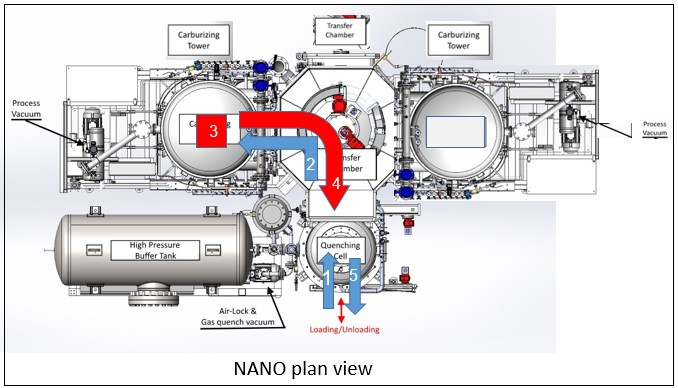
Plan view of in-line heat treatment system
ECM Technologies has been manufacturing LPC and HPGQ systems for over 25 years and designed an innovative in-line system, called NANO. The name NANO is appropriate in terms of the equipment design as the load size is smaller than traditional loads and the physical equipment is more compact than furnaces more commonly used today. The system has also been designed with maintenance and expandability in mind. The premise of the design is to be able to process loads as quickly as
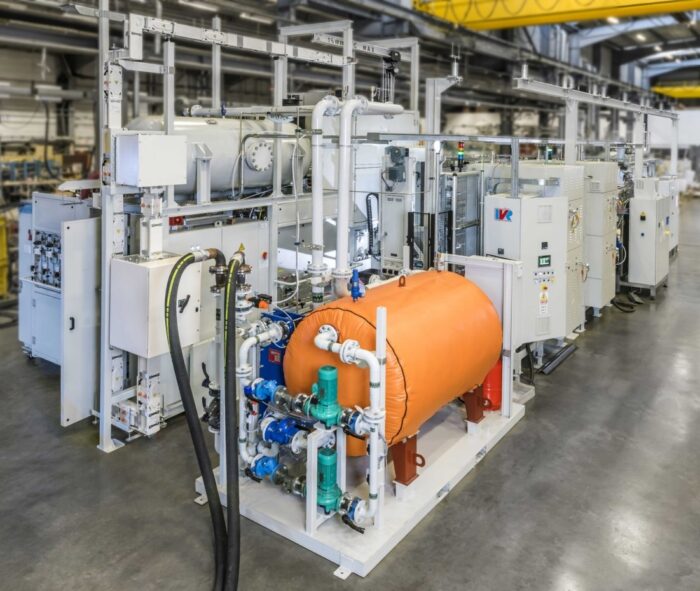
In-line heat treatment system being fully-tested prior to shipment to customer
every 7.5 minutes per load. The system is modular in production capacity with growth from three to six heating cells, which can be supplied. The system is ready for a low number of loads, with flexible needs for varying part requirements, or can be maximized to provide throughput for modern high-demand production needs. The NANO consists of four basic modules, the heating module (typically two), the transfer module, and the high-pressure gas quench module. The gas quench module uses a 20 bar gas quench system. With a smaller chamber size and the ability to quench at 20 bar, materials that were not able to be quenched in gas are now applicable for gas quenching. This gas-quenching method will open up this technology to more applications that were limited by core and surface hardness requirements in the past.
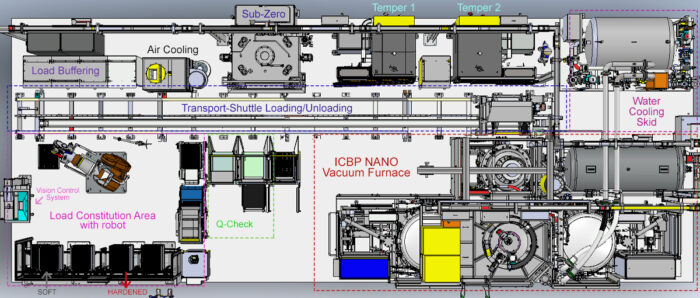
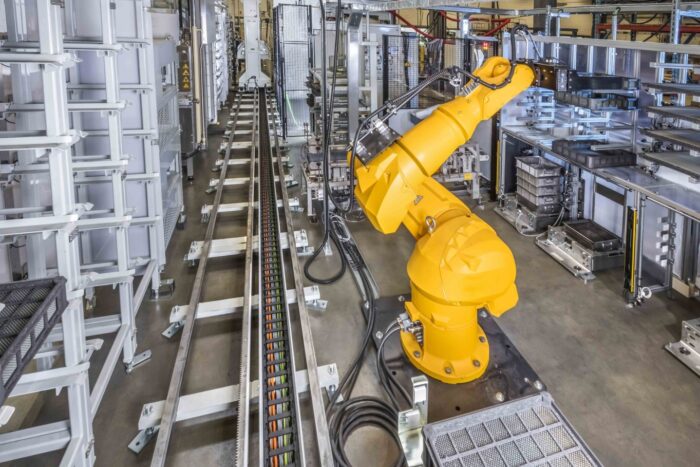
Using the NANO as the heat treat equipment base, automation completes the overall single- piece flow system to provide true in-line heat treating. The parts can be presented to the system in bulk or in single-piece trays. These parts can then be loaded and virtually tracked through the system using vison systems.
In-line heat treat installation showing robotic arm facilitating automated loading/unloading
The NANO accommodates a workload size of 24” wide x 20” deep x 10” high (600mm wide x 500mm deep x 250mm high); see Figure 1. Workload parts can be processed on industry-typical alloy fixturing or more preferably on CFC fixtures. The goal of designing the system, beyond better maintenance accessibility and gradual production increase, is low distortion and in-line production flow.
By processing loads with less work pieces, part uniformity and distortion are identical from part to part as the “3D” or 3-sided heating elements heat the parts uniformly and homogenously. These elements are designed not to sag onto the parts and provide adequate clearance for the automated loader to perform accurate transfers within the system.
Automation and Integration
The system has been designed for manual or automated loading. Manual loading can be as simple as manually loading basic fixtures or baskets, and manually loading through the system and subsequent processes. Automated loading can be from a simple robot platform that loads parts onto a small fixture from a single part flow to the handling of many pieces in a bulk load. The robot can handle all functions of the installation from loading single parts on to the fixture to placing the loads in the furnace, and then, cryogenic treatment, tempering and eventually back to a single-piece flow. The system is also capable of checking surface hardness and registering the data to be kept with the load report. This total integration can allow for a smaller footprint and less manpower in the heat treat area.
In addition, automation can handle typical small bulk-loaded parts. Some of these parts are traditionally processed using mesh belt furnaces but can now be processed by this vacuum furnace in-line system. Bulk loads are loaded into basket-like CFC trays and can be weighed and processed as needed to ensure the quality of each load.
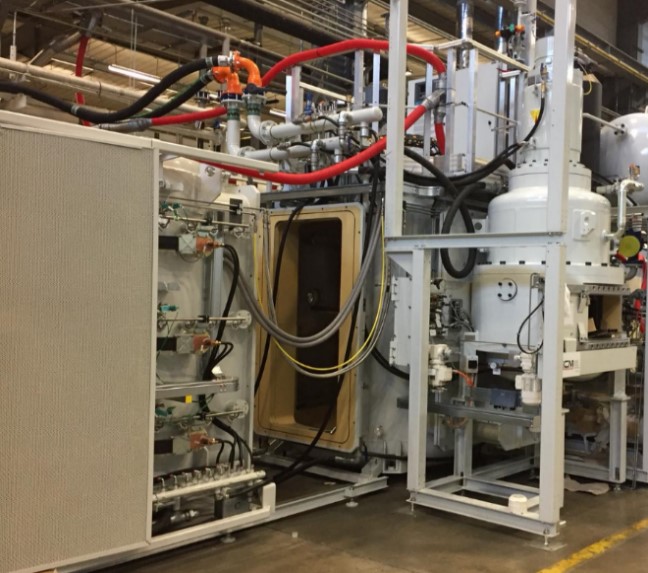
Low pressure carburizing installation showing easy access for maintenance
In-line heat treating is not just for carburized products, it can be for hardening, brazing, annealing, and integrated with post treatments—such as cryogenic and complex tempering operations. This allows the NANO to fit into various markets for many different types of heat treatments, not only steel parts, but for special heat-treating processes as well.
Equipment layouts are typically developed to accommodate specific applications. They can be as simple as a manual load station to a robot loading single-piece flow parts onto smaller fixtures or loading bulk parts into baskets for processing.
Maintenance Features
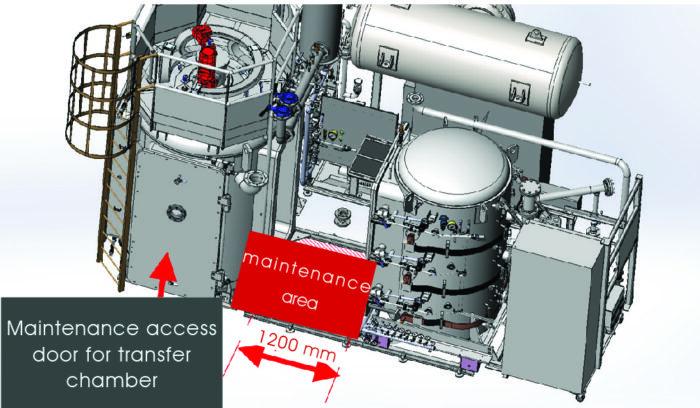
In-line processing, as well as bulk processing, together with automation to load and unload single-piece production are not the only key items in this design. Maintenance and operation were high on the list of criteria as well. Maintenance features such as ease of access are important on production equipment, but especially within heat treating. With the smaller load sizes and equipment, cool-down is significantly faster resulting from the smaller, water-cooled heating zones. Once cooled and released to atmospheric pressure, the system can then be opened via the full opening maintenance access door for easy, internal service effort. However, this is rare because all mechanisms that require control and quick review are located on the exterior of the system and outside the vacuum chamber. This allows for ease of access to all major components and reduces the need to stop or interrupt production. Additionally, for hot zone service, each heating module can be rolled away from the central transfer module to allow easy access to all hot zones in that module. This allows for easy-open access without the hindrance of confined spaces.
Distortion Evaluation
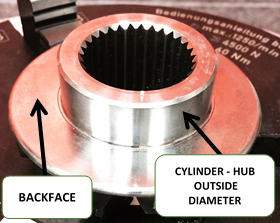
Figure 2. Differential gear used for distortion evaluation
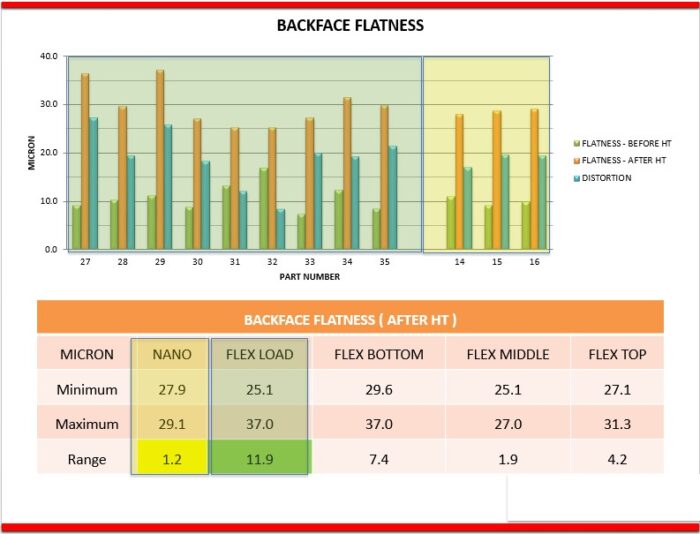
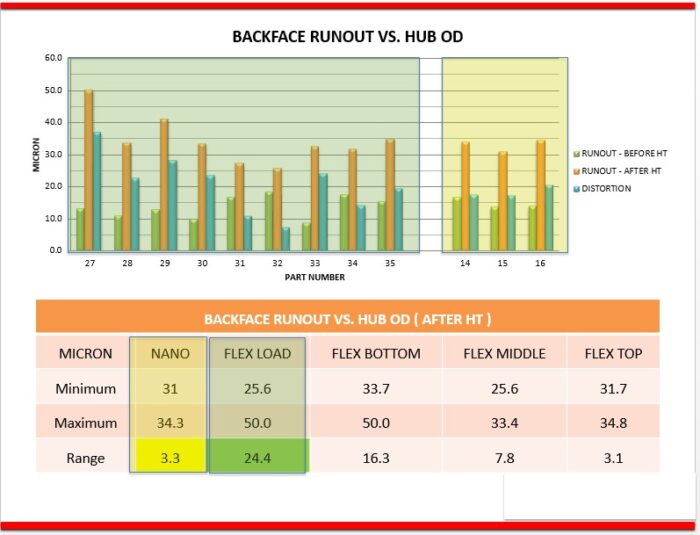
Using a differential gear (Figure 2), we monitored two characteristics, which are usually requested for this type of gear, and tabulated the results. This evaluation was done using a current day load that will be illustrated as a large batch (FLEX) and those processed in the NANO will be a small batch (NANO). The two characteristics that have the most influence: (1) Cylindricity (circularity) of the outside diameter and the runout between the same diameter and (2) “Backface” flatness of the gear teeth.
Backface flatness (Figure 3) shows greater variance through the large batch with further distance from the nitrogen used in quenching in the range of 11.9 µm. For the small batch results, the backface flatness distortion range was limited to only 1.2 µm. This uniform result is directly connected to the uniform quenching in the smaller load. This allows for parts to be processed closer to actual machined dimensions (near net shape), as well as being handled on an in-line production basis.
The runout analysis (Figure 4) shows a uniformity for the small batch with a spread of only 3.2 µm across the load. In the large batch, you will see a wider range of distortion uniformity using 10 bar nitrogen quenching with a spread of 24 µm. This is most likely due to the lower layers being further from the vertical down flow of gas through the load. These results are quite extraordinary for a full-size load.
Figure 4. Backface flatness comparing large batch processing (FLEX LOAD) and one-piece processing (NANO)
Conclusion
In-line processing can now be a common thought in the layout of future facilities. In practice, it is a growing aspect of the heat-treating world. With the new NANO vacuum furnace system and automation options, better part-to-part quality can be achieved along with better control of metallurgical parameters and results. Overall, streamlining heat treating into production cells throughout the facility allows for better part flow, and optimally sizing products for the production of particular throughput requirements.
References
[1] Beauchesne, D., “FNA2016 - LPC with OIL & GAS Quenching” (2016)
[2] Esteve, V. & Lelong, V., “LPC - What Does it Mean to Metallurgy” (ASM-Mexico 2016)
[3] Welch, A. & Lelong, V., “How it’s done and Why: Transitioning Parts from Atmosphere Carburizing to Low Pressure Vacuum Carburizing” (HT 2015)
About the author: Dennis Beauchesne is the general manager of ECM USA and brings experience of over 200 vacuum carburizing cells installed on high pressure gas quenching and oil quenching installations. He has worked in the thermal transfer equipment supply industry for almost 30 years, 18 of which have been with ECM USA.
Recently, the United States imposed a 25% tariff on thousands of products from China, but permitted U.S. companies to request an exclusion from paying tariffs. In this article, Omar Nashashibi, founding partner of The Franklin Partnership, LLC, and a resource of Industrial Heating Equipment Association (IHEA), explains the latest news regarding the exclusion and its relevance to structural components for industrial furnaces.
Omar Nashashibi, Founding Partner, The Franklin Partnership, LLC
The United States Trade Representative (USTR) has extended an exclusion for importers from paying a 25% tariff on industrial furnace components from China. The exclusion to the China Section 301 tariffs for structural components for industrial furnaces was extended in the Federal Register notice published on July 9, 2020 (85 FR 41267). The exclusion to the 25% tariffs, originally granted in July 2019 and set to expire on June 9, 2020, is now extended through December 31, 2020. The extension of the exclusion to industrial furnace components is one of twelve announced by USTR. Nearly 100 other products, including furnace casings, will see their tariff exclusions expire.
In July 2018, the United States imposed 25% tariffs on $34 billion worth of products imported from China (List 1). Of importance to the industrial heating industry, included in List 1 were parts of industrial electric furnaces and ovens as well as industrial induction or dielectric heating equipment (HTS 8514.90.80).
With this extension, all products meeting the description of “structural components for industrial furnaces” and are classified under the HTS code 8514.90.8000, will continue to be excluded from the 25% tariff. To claim the extended exclusion, importers must report the regular HTS code for the product, as well as the exclusion HTS code: 9903.88.52.
Heat TreatToday’s 40 Under 40 was created to bring recognition to young professionals in the industry, giving names, faces, and words to the rising generation of industry professionals. In this article, released in the final nomination period for Heat TreatToday’s 40 Under 40 Class of 2020, exemplary classmates from previous years share their views on the industry, giving words of encouragement to other young professionals, both current and future.
Kyle Hummel, P.E.,Sr Metallurgical Engineer at Contour Hardening
In 2019, Kyle was nominated by Contour Hardening to receive the 40 Under 40 recognition. Since receiving the nomination, Kyle has begun an Executive MBA program at Purdue to, “expand my education in business and leadership,” Kyle wrote, “in order to improve my effectiveness in my current position as well as prepare myself for future roles.”
Over the years, Kyle has found the broad range of processes and technologies in the heat treat industry to be appealing. The heat treat industry, Kyle noted, “can offer the perfect balance of hands on work experience as well as quality and process improvement that can keep you engaged for years as you grow your career. Another advantage is that heat treaters typically supply a number of different industries, so you can get experience in multiple fields that will help steer your career choices.”
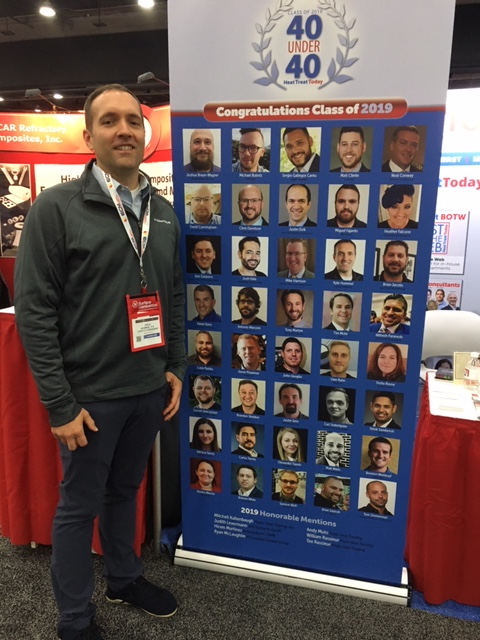
Similarly, Matt Clinite was recognized in last year’s 40 Under 40 Class of 2019. Over the past year, Matt has been leading his remote team of regional sales engineers, who help Ipsen’s customers secure aftermarket parts, retrofits, and field service technicians. For him, the switch to online platforms and less face-to-face contact in the era of COVID has brought him to consider the fact that the “forced adjustment” may have lasting effects on business in years to come. “For many of us extroverted professionals,” wrote Matt, “[it] is a real bummer, but I’m optimistic this will be a blip in time, and some day we will be able to continue meeting face to face.”
As a 31 years old young professional, a manager, and a father of two, Matt has critical insight into hiring and maintaining future young leaders: While many believe that the industry needs to attract young people, Matt flips the onus saying, “If you ask 10 successful people in the industry to tell you their story, 9 of them will say they fell into the industry by accident…the industry needs to retain the young people that ‘fall’ [in].” His suggestions are that employers take care of their young employees and “provide a career path that will allow them to grow financially and professionally.”
For young professionals beginning in this industry, both Kyle and Matt emphasize the importance of initiative and focused learning, especially on the job.
Kyle Hummel, Contour Hardening
“Learn as much as you can, and get out on the floor and understand the equipment and talk to the people who have been working in heat treat for years.” – Kyle Hummel
“Find someone who can be a mentor to you and help you through the learning curve – working with huge expensive furnaces and equipment can be intimidating at first, and having someone help guide you through the process will be very beneficial.” – Kyle Hummel
“Take it upon yourself to become known inside your organization. Find ways to get in front of senior leadership and the technical staff. Once they know who you are, find ways to continually insert yourself into projects and discussions with them.” – Matt Clinite
When invited to important meetings or discussions early on, “It’s ok (and often times
best) to sit back and simply listen to the discussion. Take it all in and become a sponge.” – Matt Clinite
“Don’t be afraid to request meetings with leadership around topics such as: career advancement, merit increases or to voice your ideas.” – Matt Clinite
The Role of 40 Under 40
These two honorees, as well as fellow classmate Tim Mohr, Director of Strategic Programs at Paulo, and 2018 honoree, Danielle Cote at Worcester Polytechnic Institute (WPI), explained how the recognition has benefited them, and why they would encourage others to nominate their young colleagues this year or in future years.
Matt Clinite, Ipsen USA
Kyle Hummel: “Being a part of the 40 Under 40 class assists in making those connections to current or future customers, suppliers, or even competitors that you might not have made otherwise. Heat treat is a close knit industry, and you never know when you will work with one of the other 40 under 40 winners, so it is nice to have that connection.”
Danielle Cote: Professor Cote indicated thankfulness of the honor to be a part of 40 Under 40 Class of 2018 as it provided recognition to an unrecognized field. Hear her full message at this link.
Matt Clinite: “It’s a fun thing to “tout” at the trade show and to post on LinkedIn. And of course to share the magazine with family and friends always makes for good dinner table talk. To me the best part is the comradery. I really enjoyed reaching out to (and having been reached out to) by other recipients… In 2019 I felt flattered when a well-recognized individual from the industry nominated me. I hope I can show other young professionals in the industry my appreciation by nominating them.”
Tim Mohr: Tim also recognized the networking value of his nomination. He says that his acceptance into the 40 Under 40 Class of 2019 allowed him to meet new people throughout the industry. Listen to his full testimonial below.
Read more: If you haven’t already, head over to Heat TreatToday’s 40 Under 40 to nominate a young professional in the industry.
(photo source: Hirvana Arvizu Soyhivan on www.unsplash.com)




 AMS2750F, a rewrite of the specification that covers pyrometric requirements for equipment used for the thermal processing of metallic materials, was released at the end of June. For this Technical Tuesday feature, Heat Treat Today asked a few experts in the aerospace industry to share their insights of this much anticipated revision that helps to better clarify issues with the previous revision. Specifically, Heat Treat Today wanted to know what they perceived to be the top 2-3 most important changes in revision F; what companies should do to prepare for these changes; and additional thoughts about the revision as it relates to aerospace heat treating.