


FEATURED NEWS

Timken Acquires American Roller Bearing Company

HTD Size-PR Logo

Richard G. Kyle
President and Chief Executive Officer
The Timken Company
Source: The Timken Company

The Timken Company, a producer of engineered bearings and industrial motion products, has acquired the assets of American Roller Bearing Company (ARB), a North Carolina-based manufacturer of industrial bearings.

ARB employs approximately 190 people and operates manufacturing facilities in Hiddenite and Morganton, N.C. Prior to this transaction, three generations of the Succop family owned and operated ARB since its founding in 1911.

The Timken Company designs a growing portfolio of engineered bearings and industrial motion products. "ARB's end-market mix, customer base and aftermarket position fit our Timken business model extremely well," said Richard G. Kyle, president and chief executive officer at Timken.


Find heat treating products and services when you search on Heat Treat Buyers Guide.com


Timken Acquires American Roller Bearing Company Read More »

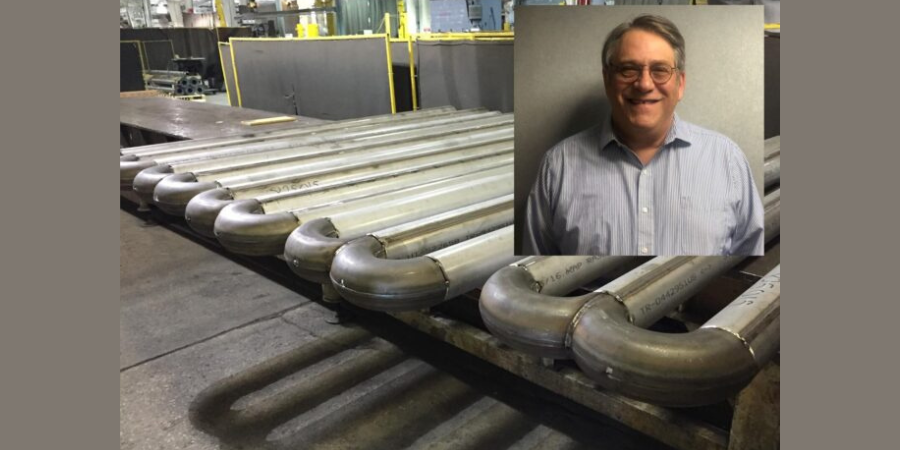
Radiant Tubes: Exploring Your Options

OC There are many radiant tube options on the market, so which one is best for your furnace and your budget? In this column that compares radiant tubes in carburizing and continuous annealing furnaces, discover how two major types of radiant tubes stack up.

Marc Glasser, director of Metallurgical Services at Rolled Alloys, investigates more deeply the two choices. This Technical Tuesday discussion on radiant tubes options will be published in Heat Treat Today's February 2023 Air & Atmosphere Heat Treating Systems digital edition.


Introduction

Marc Glasser
Director of Metallurgical Services
Rolled Alloys
Source: Rolled Alloys

Radiant tubes are used in many types of heat treating furnaces from carburizing furnaces to continuous annealing of steel strip. Generally, a heat treater has three options for radiant tubes: cast tubes, wrought tubes, and ceramic silicon carbide tubes. Silicon carbide tubes are rarely used by heat treaters, so this article will not delve too deeply into this option. Suffice it to say, ceramic materials can often handle much higher temperatures at the expense of ductility; ceramics are more brittle than metals, making them prone to failure from the small impacts, so metal cages are sometimes fabricated to protect them. Most of the tubes being used today are cast radiant tubes. With new casting technology — primarily centrifugal casting — thinner tubes are being cast at a lower cost, which then results in a shorter life.

The primary factors for choosing radiant tube material are tube temperature and carbon potential of the furnace atmosphere. Cost-benefit analysis should also be considered. There are multiple applications for radiant tubes, including carburizing furnaces, continuous annealing furnaces for steel sheet galvanizing, steel reheat furnaces, and aluminum heat treating. This article will explore two of the aforementioned radiant tube options, specifically for carburizing and continuous annealing furnaces.

Radiant Tubes for Carburizing Furnaces

Gas carburization is traditionally performed between 1650°F and 1700°F at a carbon potential of 0.8% approximating the eutectoid composition. In today’s competitive environment, more heat treaters are increasing temperatures to 1750°F and pushing carbon potentials as high as 1.6% to get faster diffusion of carbon while spending less time at temperature. INCONEL® HX (66% Ni, 17% Cr) has been a common cast alloy seen in carburizing furnaces. This alloy is regularly selected for its resistance to oxidation and carburization up to 2100°F. Super 22H is more heavily alloyed than HX and is seeing more use as carbon potentials increase but at a premium price. With advances in centrifugal castings, cast tube wall thicknesses have decreased from 3/8-inch to 1/4-inch. Some heat treaters have shared that this decrease in wall thickness has also led to shorter tube life.

Fabricated and welded radiant tubes in alloys 601 and RA 602 CA® have been tested in industry. When tested, these wrought alloys were fabricated to have a wall thickness of 1/8-inch. At the extremes, tubes fabricated from 601 only lasted 50% as long as cast HX. Historically, HX tubes have been approximately 33% higher in cost than that of 601 and utilize heavier 3/8-inch walls. A little-known fact is that by switching to a thinner wall cast tube, the life drops by 50%. By switching to 1/8-inch wall thickness, RA 602 CA tube life has been extended to eight years or more, while running at 1750°F and up to 1.6% carbon potential, at just a 33% premium over cast HX. Life cycle data are presented in Figure 1.

Figure 1. These life cycle comparisons were done in carburizing furnaces only. In non-carburizing furnaces, justification of alloy selection is dependent on actual operating conditions and each individual operator’s own experience.
Source: Rolled Alloys

Radiant Tubes for Continuous Annealing Furnaces

In the area of continuous annealing, the cast alloy of choice is HP/HT (35% Ni, 17% Cr, 1.7% Si, 0.5% C). Here again, this casting has been compared to 601 and RA 602 CA, with the same results. The total life data from these trials are also incorporated into Figure 1. During the collection of this data, there has been no effort to measure the actual tube temperature, so the effect of tube temperature is not clearly defined. In these continuous annealing furnaces, it has been reported that the tubes at the entry end are subject to more heat absorption as burners are firing more due to the continuous introduction of cold material; in trials, the operators have not kept adequate documentation of specific tubes, making justification more diffcult.

Justification for the higher cost wrought alloy needs to take into consideration initial fabricated tube cost, actual tube life, AND the lost production of each anticipated downtime cycle as these downtime costs are often much more than material costs. Only individual fabricators can determine these costs.

The Economics

Table 1
Source: Rolled Alloys

Table 1 above shows the economics of metal alloy choice. To properly interpret, understand that the costs are not actual, but rather relative to 601, so a round number of 1000 was used. With a 30% greater cost of cast tubes, that translates to a relative cost of $1300. The annual cost is the amortized cost over the life of the tube. The total eight-year cost is the relative cost times the number of tubes that would have to be purchased to obtain the life cycle of one tube of the longest-lasting material over its full life cycle.

Missing in this analysis is the additional cost of downtime and lost production. For the replacement of radiant tubes in a carburizing furnace, this typically entails a full week to turn a furnace off, allow it to cool, replace the tubes, and then heat it up again. Many heat treaters do not consider this, and therefore it is a hidden cost. Even without the downtime being considered, by examining the total cost of materials (including replacements) compared to the longest-lasting tube, it turns out that the most expensive tube is the cheapest tube. The obstacle to overcome is whether the heat treater is willing to wait eight years to realize these cost savings.

There can be additional factors to consider. With improvements in the efficiency of casting, the actual costs of the thinner wall casting may be somewhat less, but to match the overall cost of the longest-life material, it would have to be less than half the expected cost. As better, more expensive cast alloys become accepted and actual life data becomes available, these more costly alloys can be added to this table for comparative analysis, too.

This same method of analysis can be applied to radiant tubes for continuous annealing furnaces, but more details will need to be added including furnace position. Different alloy candidates will have to be put to the test in actual operations, carefully document what alloy is in what position or location, and when it gets changed out. This becomes quite cumbersome when annealing furnaces (depending on design and manufacture) can have over 200 radiant tubes.

Conclusion

Currently, cast alloy tubes dominate the market. The concept of total life cycle cost has been introduced as a means of more accurately justifying one’s choice of radiant tube. This comes into play more as processes are pushed beyond traditional process conditions. Cost-benefit analysis must be balanced over acceptable amortization time, of course. However, performing the full analysis as well as the costs saved from downtime may lead some heat treaters to some alternate materials.

About the author: Marc Glasser is the director of Metallurgical Services at Rolled Alloys and is an expert in process metallurgy, heat treatment, materials of construction, and materials science and testing. Marc received his bachelor’s degree in materials engineering from Rensselaer Polytechnic Institute and a master’s degree in material science from Polytechnic University, now known as the NYU School of Engineering. Contact Marc at mglasser@rolledalloys.com


Find heat treating products and services when you search on Heat Treat Buyers Guide.com


Radiant Tubes: Exploring Your Options Read More »

NAS Announces Expansion, New Jobs in Kentucky

HTD Size-PR Logo

North American Stainless (NAS), a stainless steel producer in the United States, will proceed with a $244 million expansion to its Ghent, Kentucky facility in Carroll County. This expansion adds 70 new jobs to the plant.

For its 13th expansion since 1990, NAS will build a new cold rolling mill, roll grinders, an extensive upgrade of its annealing and pickling lines to support the new rolling mill, a new temper mill and the expansion of the Melt Shop Building to include a 400-metric ton crane. The new expansion will grow NAS’ 4.4 million-square-foot facility in Carroll County. NAS offers a full range of stainless flat and long products. All of NAS’ production lines are located onsite at its 1,600-acre headquarters.

Andy Beshear
Governor of Kentucky

"Our latest expansion will bring more clean, sustainable and American-made stainless to consumers and directly compete with the subsidized imports of stainless,” said Cristobal Fuentes, CEO at NAS. “Our parent company Acerinox was eager to further invest in Kentucky to demonstrate its commitment to our customers and the U.S. market.”

“I’m excited to announce more growth in Kentucky’s metals industry with this latest investment from North American Stainless,” said Andy Beshear, Governor of Kentucky.


Find heat treating products and services when you search on Heat Treat Buyers Guide.com


NAS Announces Expansion, New Jobs in Kentucky Read More »

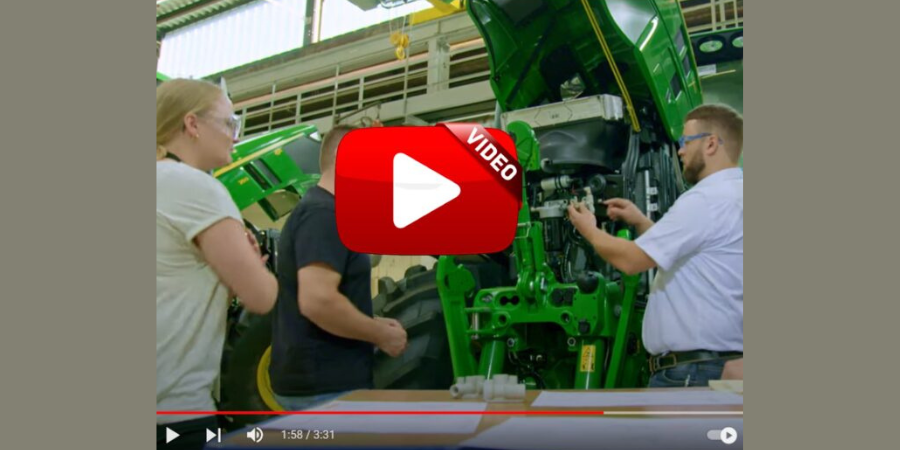
Fringe Friday: 3D Printing Premium Performance Tractor Valves

Click to watch the helpful video for the topic
Source: John Deere UK IE/YouTube

Source: Forbes

Sometimes our editors find items that are not exactly "heat treat" but do deal with interesting developments in one of our key markets: aerospace, automotive, medical, energy, or general manufacturing. To celebrate getting to the “fringe” of the weekend, Heat Treat Today presents today’s Heat Treat Fringe Friday best of the web article that investigate the success of 3D printing an engine part for John Deere.

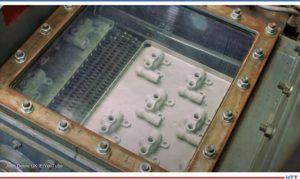
In collaboration with GKN Sinter Metals, the project team was able to develop, qualify and introduce the Thermal Diverting Valve 3.0. – a stainless steel component in the fuel system. This is the company’s first 3D printed metal part in production. Using this production method, results are showing significant cost savings and less materials usage. R&D phase worked to develop a part that would outperform, in cold weather, the current valve. Testing in the lab and in the field have gone well; other projects could benefit including printing of replacement parts.

Thermal Diverter Valve 3.0 prototypes
Source: John Deere UK IE/YouTube

An excerpt: "The new thermal diverter valve on the latest versions of John Deere 6R and 6M tractors isn’t just an innovative application of increasingly accessible metal 3D printing technology, it’s the culmination of about two years of R&D."

Source: Forbes


Find heat treating products and services when you search on Heat Treat Buyers Guide.com


Fringe Friday: 3D Printing Premium Performance Tractor Valves Read More »

Burner Technology Enhances thyssenkrupp’s Annealing Plant

HTD Size-PR Logo

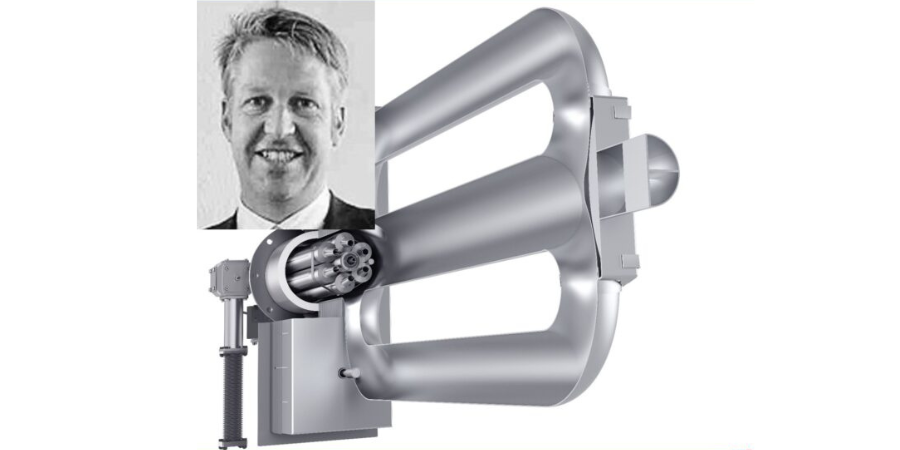
Dr.-Ing. Joachim G. Wünning
President
WS Wärmeprozesstechnik GmbH

thyssenkrupp Steel, a steel manufacturer with North American locations, recently inaugurated its newest hot-dip galvanizing line 10 (FBA 10) in Dortmund, Germany. The plant has a total of three vertical strip-processing lines and is a location for annealing and surface finishing of steel strip.

thyssenkrupp Steel, by using modern regenerative burners from WS Wärmeprozesstechnik GmbH (with Ohio, U.S., and Renningen, Germany locations) in double-P radiant tubes, will save between 15% and 30% fuel as compared with conventionally heated furnaces. The patented FLOX® combustion process helps achieve low NOx emission values. The heating system is set for a later switch to green fuels such as hydrogen.

"All continuously operated strip lines are . . . suited for a future with green combustion gases," says Dr.-Ing. Wünning, President of WS Wärmeprozesstechnik GmbH.


Search for heat treat services and products on Heat Treat Buyers Guide.com


Burner Technology Enhances thyssenkrupp’s Annealing Plant Read More »

Massive H13 Extrusion Dies Heat Treat Hardened for Ohio Companies

HTD Size-PR Logo

Michael Johnson
Director of sales
Solar Atmospheres of Western PA

Two large H13 extrusion dies for two separate companies were vacuum heat treated in a high pressure gas quench vacuum furnace that fully hardened the dies in successive cycles.

Solar Atmospheres, using a furnace from Solar Manufacturing, provided two Ohio companies as-quenched dies with hardness of HRC 50-52 using nitrogen as the quench gas. The hollow die was 30” outer diameter x 15” inner diameter x 103” long and weighed 16,000 pounds. The solid die, belonging to a different customer, was 34” outer diameter x 64” long and weighed 14,000 pounds. Post-quench each component was triple air tempered resulting in a final hardness of HRC 46-48.

The 10-bar 600 HP high pressure vacuum furnace permits the company to obtain the desired cooling rates, commented Mike Johnson, director of sales at Solar Atmospheres.


Search for heat treat services and products on Heat Treat Buyers Guide.com


Massive H13 Extrusion Dies Heat Treat Hardened for Ohio Companies Read More »

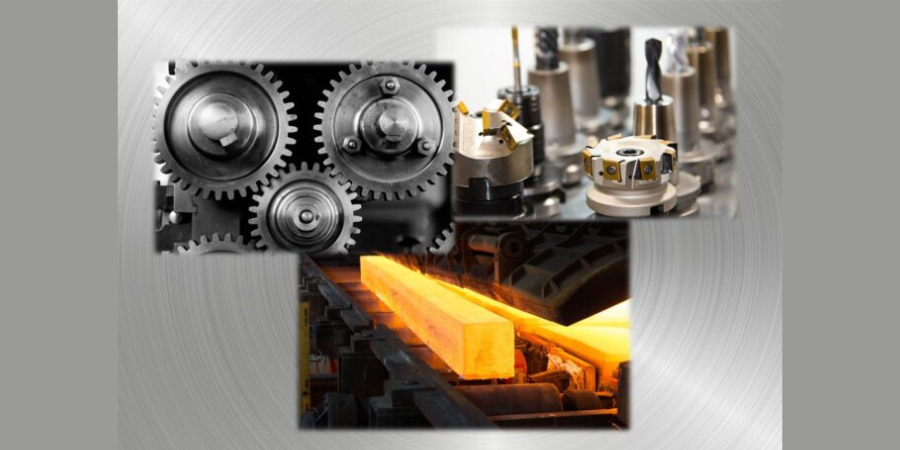
Forging and Metalcasting Resources To Keep You Informed

OCWe've assembled some of Heat Treat Today's resources on forging and metalcasting. Read or listen to what the experts have to say on these important topics in the heat treat industry.

This Technical Tuesday original content piece will help you wade into an introduction of these heat treatment processes. Follow the links to dive deeper into the studies.


The span of articles, radio episodes, and TV clips below are compiled to learn more about forging and casting. Heat treating is developing and changing through the years, and it's wise to keep swimming with the current of information.

Simulating Induction Heating for Forging

What can simulation software do for you? Manufacturers are able to run the software to act upon the steel billet prior to forging. Read more about the process here. The simulation shows results in the metal to help the user best plan for desired results. One of the decisions that can be helped is, "the selection of right forging temperatures for plain carbon and alloy steels to avoid possible damage by incipient melting or overheating."

A Look at Steel and Iron

Dan Herring
"The Heat Treat Doctor"
The HERRING GROUP, Inc.

Read or listen to this episode of Heat Treat Radio with expert Dan Herring who discusses metals such as stainless steel, tool steel, cast iron, high and low carbon steels, and more. He looks at their production and their uses.

"I wanted to set the stage for it to say that it’s the end-use application by the customer that fuels the type of steel being produced and fuels the form in which the steel is produced," says Herring.

Investment Casting in Turbine Blades

Take a look at how an alumina and silica (quartz) mix are improving metal casting for support rods used in aerospace manufacturing. "LEMA™, a range of proprietary alumina-based materials that provide double the mechanical strength of quartz while providing significantly improved leaching times, compared with typical high purity alumina," provides many benefits for metal casting. Jump into this piece to find out more about this metal casting example.

Direct From the Forge Intensive Quenching

President
Akron Steel Treating Co & Integrated Heat Treating Solutions, LLC

In this discussion, expert Joe Powell says, "My thing is  to develop a robust process that can be applied and implemented using automation and new equipment with the proper pumps and material handling that is all integrated into a seamless process." He plunges in to talking about immediate quenching pieces in water after heat treating and what they are learning at the forge shop.

Heat Treat TV

Here are a few episodes to keep you afloat while moving into deeper waters.


Click on these two illustrations to watch the full episodes.


Search for heat treat services and products on Heat Treat Buyers Guide.com


Forging and Metalcasting Resources To Keep You Informed Read More »

Cybersecurity Best Practices: Dos and Don’ts

op-edCybercrime is hands-down one of the quickest growing crimes around the globe and it continues to impact organizations from all industries. Being protected from cyber-attacks is becoming more and more challenging. While cyber criminals are constantly looking for ways to take advantage of your security vulnerabilities, it’s very difficult for most organizations to keep up with them.

This fourth article in the serieswritten by Joe Coleman, cybersecurity officer at Bluestreak Consulting™, will give you a better understanding of some general cybersecurity best practices for all businesses, and a few tips for what you should and shouldn’t do.

This column is found in Heat Treat Today's December 2022 Medical and Energy print edition.


Joe Coleman
Cybersecurity Officer
Bluestreak Consulting™
Source: Bluestreak Consulting™

What Are the Risks of Having Poor Cybersecurity?

It’s difficult to remain 100% protected 100% of the time, but the risks from failing to have proper cybersecurity are hefty. The risks include: malware that can delete your entire system; the selling of your data or your customers’ data; an attacker hacking your system and altering files; an attacker using your computer to attack others; or an attacker stealing your credit card information and making unauthorized purchases.

12 Best Practices To Reduce the Chance of Cyberattacks

Follow these cybersecurity best practices to minimize the risks of cyberattacks and improve your cybersecurity:

  1. Use complex passwords: Use at least 12 to 16 characters, including letters (upper and lower case), numbers, and special characters. Remember to change your passwords frequently.
  2. Keep software up to date, including antivirus and antimalware: Install software patches as soon as they become available. Also, be sure to enable automatic virus definition updates to ensure maximum protection against the latest threats.
  3. Utilize a firewall: Firewalls may be able to prevent some types of attacks by blocking malicious code before it can infect your computer. Enable and properly configure the firewall as specified.
  4. Enable Multi-Factor Authentication (MFA) or 2-Factor Authentication (2FA): This gives you an additional layer of protection that helps to verify that you are an authorized user.
  5. Be suspicious of unexpected emails: Phishing emails are currently one of the biggest risks to a user. The goal of a phishing email is to gain information about you, steal money from you, or install malware on your device (if you click on something in the email).
  6. Click the Image TO Download More Than 350 Cybersecurity Acronyms

    Use VPNs to ensure connections are private: To have a more secure and private network connection, use a VPN (virtual private network). Your connection will be encrypted, and your private information protected.

  7. Look for HTTPS on websites (instead of just HTTP): On websites that do not use HTTPS, there’s no guarantee that the information between you and the site’s servers is secure.
  8. Scan external storage devices: External storage devices have the same risk as internal storage devices. Always scan external storage devices for malware before accessing them.
  9. Train your employees: If your cybersecurity program has any chance of working, make sure your employees are well trained and always using security best practices. It only takes one mistake. Educate your staff to be aware and on the lookout for different types of malicious social engineering (including a simple phone call asking for a username and/or password).
  10. Backup your important data: Critical data can be lost with security attacks. Make sure you backup your important data frequently to the cloud or local storage device (preferably multiple devices).
  11. Don’t use public networks: Avoid public networks or use a VPN to connect. All of your information is vulnerable on public networks at hotels, coffee shops, airports, and other similar locations.
  12. Use secure file-sharing to encrypt data: When sharing sensitive or confidential information, always use a secure file-sharing solution. If emails are intercepted, unauthorized users will have access to your data.

Improve Your Cybersecurity Weaknesses

NIST SP 800-171 is an excellent best practice, even if you are not in the DoD downstream or military-related supply chain, to ensure your data and your customer’s data is always secure.

My fifth article in this Cybersecurity Desk series will be: “Performing Your Basic & Your Final NIST 800-171 Assessments.”

About the Author:

Joe Coleman is the cybersecurity officer at Bluestreak Consulting™, which is a division of Bluestreak | Bright AM™. Joe has over 35 years of diverse manufacturing and engineering experience. His background includes extensive training in cybersecurity, a career as a machinist, machining manager, and an early additive manufacturing (AM) pioneer. Joe will be speaking at the Furnaces North America (FNA 2022) convention, presenting on DFARS, NIST 800-171, and CMMC 2.0. Contact Joe at joe.coleman@go-throughput.com.


Find heat treating products and services when you search on Heat Treat Buyers Guide.com


Cybersecurity Best Practices: Dos and Don’ts Read More »

Shopping Cart and Display Case Manufacturer To Expand Heat Treat Capabilities

HTD Size-PR Logo

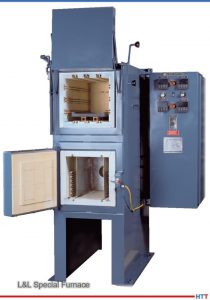
A southeastern U.S. manufacturer will receive a dual-chamber heat treating and tempering furnace. The recipient, a leading manufacturer of shopping carts and display cases, will be using the furnace to thermally process various projects.

The L&L Special Furnace Co. model QDS124 has two chambers: the top chamber (10"X11"X22") rated to 2,350°F is used for heat-treating various steels and other non-ferrous materials; the bottom chamber (10"X10"X20") rated to 1,250°F includes a recirculation fan and baffle for tempering, stress relieving or preheating.

The furnace was painted with custom colors to match the customer’s existing equipment. Shipped with the furnace was an accompanying QTO1224 oil quench tank.


Find heat treating products and services when you search on Heat Treat Buyers Guide.com


Shopping Cart and Display Case Manufacturer To Expand Heat Treat Capabilities Read More »

Heat Treat Radio #88: Lunch & Learn — 3 Most Underrated Processes

Get ready to watch, listen, and learn about the three most underrated heat treat processes in today’s episode. This conversation marks the continuation of Lunch & Learn, a Heat Treat Radio podcast series where an expert in the industry breaks down a heat treat fundamental with Doug Glenn, publisher of Heat Treat Today and host of the podcast, and the Heat Treat Today team.

Below, you can watch the video, listen to the podcast by clicking on the audio play button, or read an edited transcript. 



The following transcript has been edited for your reading enjoyment.

Doug Glenn: There are some underdog heat treat processes out here. I’d like to get to three today. What do you think is number one?

Michael Mouilleseaux: Let’s start with stress relieving. All ferrous materials, all steels, during the course of manufacturing or processing, have some residual stress that is left in them. A common thought about stress relieving is you have a weldment, and you stress relieve it so that the weldment stays.

Contact us with your Reader Feedback!

There is a mechanical action in the material during any cold working operation (cold forging, stamping, fine planking, etc.) because it's done at ambient temperature. Those all impart stress on the part.

Machining, turning, grinding. . . all of those things impart stress into a part. How is that relieved? It can be done thermally, or it can also be done mechanically. Thermally is the most common of them.

What I would like to talk about is not so much stress relieving weldments, it is stress relieving manufactured components. If you’re going to have a comprehensive analysis of the heat treat operation that needs to be performed on a manufactured component, a gear, a shaft, something of that nature, they need to take into consideration what are the prior existing stresses in the part. Then what effect is that going to have on the part?

Many times during the course of my career, I’ve had a customer come to me and say, “The part I gave you was correct, and you’ve given it back to me and then fill-in-the-blank. It’s warped, it’s changed size, it’s shrunk, all of those things.” What have you done in your heat-treating process? You have to back up all the way to the beginning of how this part was manufactured and deal with all of those component steps in order to answer that question properly.

Stress relieving is one of the answers. It’s not the answer. It’s not the only answer, but it is one of them that has to be considered.

"Stress Relieving Tips from Heat Treat Today"

Doug Glenn: For those of us who might not know what a “stress” is in a part, can you simply explain? For example: a coat hanger. If I bend it, is that inducing stress? Is that what’s causing stress? What makes stress in a part?

Michael Mouilleseaux: You’ve cold-worked the part. In the cold working, you’ve passed the yield strength. You’ve bent it, and it’s not going to snap back. You’ve cold-worked it enough that you’ve actually got plastic deformation, and there is stress.

Doug Glenn: That’s one way we get stress. That’s the mechanical way of getting stress.

Michael Mouilleseaux: Right. Now, consider stamping. Even though a stamping is flat (because the die has come down in the perimeter of that and maybe internal holes and things), where you’ve sheared the material, you’ve imparted stress there.

If you harden it or case harden it or whatever you might do with that stamping, you have to take into consideration how much stress is there. If I don’t relieve it, is it going to do that at some point in the part’s future that’s going to be detrimental to the part?

Doug Glenn: When you get a stress in a part, that’s the area that’s a weak spot, right? It potentially could break before other parts?

Michael Mouilleseaux: At the absolute extreme, that could happen, yes. More often than not, what you have is an area that’s been cold worked, and it’s been deformed. When it stresses, it’s going to somewhat relieve itself. It may not relieve itself 100% all the way, but it will somewhat relieve itself. Whatever shape of form you’ve put that part into; it’s not going to hold that form forever.

Alyssa Bootsma: You mentioned that stress relieving is not the only way to alleviate the problems. What would be some alternatives to stress relieving?

Michael Mouilleseaux: Thermal stress relieving is, by far, the most common. There is a process that’s called vibratory stress relieving. In order to relieve the stresses in a part, you have to impart some energy in it. Something between 800 and 1200 Fahrenheit is typically used in stress relieving. That thermal energy goes into the part and relieves the stresses.

You could also do that mechanically by a high frequency vibration. It’s not as common. I believe that it’s actually a propriety process, if not patented. It would be for something that you did not want to subject to 800-1000 degrees Fahrenheit because that doesn’t come for free. Obviously, in a ferrous material at that temperature, you’re going to have some oxide forming on the part. You may or may not be able to utilize the part in its final function with that oxide on it.

Those are typically the two ways to do it. Can it occur naturally over time? Yes, but none of us have that kind of time.

Alyssa Bootsma: You did mention how it doesn’t necessarily mean that it’s more likely to break if that part is not relieved, but what parts would suffer the most if this process was done incorrectly?

Michael Mouilleseaux: Probably weldments. The detrimental effects of not having stress relieved of weldment would be the most significant. In welding there is a whole range of temperatures proximate to the weld — everything from room temperature to maybe 3000 degrees. That whole range of things changes the structure of the steel.

Leaving it in that condition makes it susceptible to any number of things — embrittlement, accelerated corrosion, and others. There is every reason to stress relieve something like that and almost no reason not to.

Doug Glenn: That’s weldment. Do they do a stress relieve after a braze as well, or is that not as common?

Michael Mouilleseaux: Typically not. The reason for that is, in brazing, the entire assembly is brought up to the same temperature. Then it’s cooled at the same rate.

Bethany Leone: I have two brief questions: 1. How long does stress relieving typically take? 2. Would we see the effects of incorrect stress relieving, or failure to, once something goes to quench?

Michael Mouilleseaux: The first question — would you necessarily see a failure? Those would be extremes. I’m more familiar with stress relieving fabricated components that are machined. Take a gear. They forge a blank and maybe machine out the center of the gear, machine the exterior of the gear, cut the teeth in a shaping operation (a hobbing operation or skiving or other ways of generating teeth).

"You have this part, and it needs to be heat treated. To assume that all of those machining operations would have no effect upon that whatsoever is not a good thought."

Then comes a comprehensive program of evaluating how best to heat treat a part. It doesn’t matter if it’s out of a medium carbon alloy steel or it’s a low alloy steel and we’re going to carburize it, what’s critical is that it’s going to get heated. The material is going to transform into austenite and cool rapidly or quench it. That’s what’s going to cause the hardening operation on the part.

In doing that, there are going to be changes in size. In hardening a part, you get a volumetric expansion. Thin sections are not going to expand as much as larger sections. A misnomer is, “You shrunk the hole.” You haven’t shrunk the hole! The material around the hole has expanded, the exterior portion of that area has increased, and the interior portion of that has decreased.

If you have a spline in that hole, now you’re on for something else because their teeth form in that spline. If it’s in a long section, then how uniform it’s been hardened has to do with whether or not it goes out of round or their taper. There are any number of things there. Those are all critical to the operation of this gear.

But what we have to take into consideration is the broaching operation. We drill a hole, and we put a broach bar through it and cut all of these teeth. All of that has imparted stress in the part.

One of the preliminary things that needs to be done is you stress relieve the part and give it back to the manufacturer. They measure it and say, “Oh, oh, it changed!” That change is not something the heat treater can do anything about. That’s the physics of what happens when you work-harden a part. This all has to be taken into consideration and addressed before we talk about what’s the heat treat distortion.

Bethany Leone: And the other question I had: How long does it take to stress relieve?

Michael Mouilleseaux: Typically, if it’s held at an hour or two at temperature, it’s thought that 1000 degrees for an hour at temperature will relieve most stresses.

Now, in a component part, we’re going to go higher in temperature. Although we’re not going to go high enough to austenitize the part, we’re going to go high enough in temperature that we know we’re going to relieve it.

Michael Mouilleseaux: They’re cousins. Stress relieving, the implication is that you are doing that simply to relieve prior existing stresses. In annealing, the implication is that you are going to reduce the hardness of the microstructure for the purposes of machining or forming. In annealing, there’s subcritical and supercritical and a hundred different flavors of that.

Doug Glenn: I’m trying to get a sense of what percentage of heat treating is stress relieving. Is it super popular? It seems to me it would be very common.

Michael Mouilleseaux: Interestingly enough, I’m going to say that the majority of the gearing product that we do, we incorporate a stress relief in the initial stages of heat treating. By putting the part in and raising the temperature to a stress relieving temperature and then taking it up into the austenitizing temperature, you’re not shocking the part. You’re not just taking it from room temperature to carburizing temperature or hardening temperature, and thereby you’re reducing the thermal stresses. So, you’re not imparting any more.

Doug Glenn: Stress relieving may often be done as a part of another process?

Michael Mouilleseaux: It can be, definitely.

Doug Glenn: Let’s move on to the second forgotten heat treatment.

Michael Mouilleseaux: I don’t know about forgotten. I’m going to say that it’s getting short shrift, and that is conventional atmosphere carburizing. What’s sexy in heat treating? It’s low pressure carburizing and gas quenching. It’s growing very rapidly and it’s being used in a lot of applications.

We’re subject to the same ills that Mark Twain identified years ago, and that is, “To a man with a hammer, every problem looks like a nail.” Low pressure carburizing and gas quenching, they can save every distortion issue that’s ever been known to man in heat treating, and they don’t. They are other tools in the box, applicable to a lot of application. They are great processes, very targeted and specific. You know, sometimes you need a screwdriver instead of a hammer.

Conventional carburizing: It’s been around for a hundred years. What’s different today than what it ever was? Certainly it has everything to do with the control systems that are being used to control it. It’s eminently more controllable now than it has ever been. It is a precision operation, and it has many applications. By the way, it’s far more cost effective than carburizing would be. In vacuum carburizing, the cost is multiple; is it two, three or four times more expensive? It depends on how you calculate cost of capital and all of those things. But it’s a multiple, more expensive than conventional carburizing.

Doug Glenn: To do vacuum carburizing?

Michael Mouilleseaux: To do vacuum carburizing, yes. Should it be used in every application? I’m going to say no. Are there definite applications? Definitely.

Doug Glenn: Conventional carburizing, atmosphere carburizing is another area largely forgotten. I know it’s quite popular, but it’s not getting a lot of discussion these days.

Michael Mouilleseaux: Right. Any time there is an issue with a carburized part, everyone knows to ask the question, “Why don’t you vacuum carburize it?” The answer to that is, “Let’s solve the problem before we decide what it is that we need to do.”

Karen Gantzer: Mike: At a very basic level, can you explain why do heat treaters use endothermic gas?

Michael Mouilleseaux: In atmosphere carburizing, we need a method of conveying carbon to the part so that we can enrich it; that’s what carburizing is. The carburizing portion of the atmosphere in endothermic gas is carbon monoxide. Carbon monoxide — that’s the reaction at the surface of the part — the carbon diffuses into the part. That’s how you generate a case in the part.

It’s a relatively inexpensive form of carburizing. You use natural gas and air in what we call a “generator”, and that’s how endothermic gas is generated. Then, it’s put into the furnace. There’s almost no air in a furnace. People think you’re going to look in a furnace, and you’re going to see flame. You never do because the amount of oxygen in the furnace is measured in parts per million. You put additional natural gas to boost the carburizing potential of the atmosphere, and that’s what allows you to diffuse carbon into the part. That is the case hardening process.

Doug Glenn: Conventional carburizing is done in a protective atmosphere, typically as an endothermic atmosphere which is rich in carbon monoxide.

Michael Mouilleseaux: Yes.

Doug Glenn: A lot of times we’re worried about oxygen in the process because of potential oxidation. Why is it that we use a gas that has oxygen in it to infuse carbon? I know it’s got carbon, but it’s also one C and one O, right? Don’t we run into problems of potential oxidation?

"Comparative Study of Carburizing vs. Induction Hardening of Gears"

Michael Mouilleseaux: In endothermic gas there is hydrogen, nitrogen and carbon monoxide, and there are fractional percentages of carbon dioxide and some other things. The hydrogen is what scrubs the part; that’s what kind of takes care of all of the excess oxygen. The nitrogen is just a carrier portion of it, and the carbon monoxide is what is the active ingredient, if you will, in the carburizing process.

The carbon diffuses into the part. If there is an oxygen, it’s going to combine with the hydrogen. Preferentially, you’re not going to have any free oxygen in the furnace, but you can have a little water vapor. One of the ways of measuring the carbon potential in the furnace is a dewpoint meter. The dewpoint meter is measuring the temperature at which the gas precipitates out, and that’s a monitor or a measure of the carbon potential.

Doug Glenn: A dewpoint analyzer helps you know what the carbon potential is.

Michael Mouilleseaux: Yes. It’s not as good as an oxygen analyzer.

Doug Glenn: An oxygen probe.

Michael Mouilleseaux: The oxygen probe is in the furnace, measuring constantly. You get a picture; you have continuous information. It’s not that there aren’t continuous dewpoint analyzers, but you have to take a sample from the furnace. It has to be taken to an analyzer wherein it is then tested. Best case scenario is you have both of them and you compare the two of them. That gives you a really great picture of what the atmosphere conditions are in the furnace.

Alyssa Bootsma: For a bit of background knowledge: What is the difference between endothermic gas and exothermic gas?

Michael Mouilleseaux: Endothermic gas has 40% hydrogen and 20% carbon monoxide. 60% of it is what you would call a reducing atmosphere. The way that you make endothermic atmosphere is 2.7 parts of natural gas and one part of air. You heat it up to 1900 degrees, and it’s put through a nickel catalyst. You strip off the hydrogens. The gas dissociates, and that’s what results.

Exothermic gas is six parts of air in one part of natural gas. You only have 10 or 15% hydrogen. Although it’s not an oxidizing atmosphere, it’s very mildly reducing.

It can be used in annealing, clean annealing. If you’re annealing at 12-1300 degrees or more or in that ballpark, that kind of an atmosphere is going to keep the work clean. If you did it in air, it would scale.

Bethany Leone: Is there an industry (automotive, aerospace, energy) that it would be most helpful for those parts to be typically atmosphere carburized, and/or is it just generally helpful for all types of industries?

Michael Mouilleseaux: First of all, the transportation industry is the lion’s share of heat treating — automotive, truck, aircraft. Atmosphere carburizing is extremely popular and commonplace in those industries.

If we said that we were going to have a seminar and I’m going to talk about atmosphere carburizing. Somebody else is going to talk about low pressure carburizing in a vacuum furnace. Everybody’s going to go over to the other room. Folks feel they already know what this is all about, and they know what all the problems are. They think that the vacuum carburizing is going to solve all of them.

When you work with the proper kinds of controls, the proper kinds of furnace conditions, the right way of fixturing parts and cleaning them ahead of time, you can have extremely consistent results. You can have extremely clean parts, and you can have very good performance from these things.

What the Europeans call “serial production”: we run millions of gears per year, and we have very consistent case steps in hardnesses as a result of good practice. All of these things need to be monitored and controlled and taken care of. But the results are also very consistent and very predictable.

Doug Glenn: Interesting. And it’s more cost-effective, I’m guessing. Conventional atmosphere carburizing, on a per part basis, is going to be substantially less expensive.

Michael Mouilleseaux: We’ve looked at it. Is it two times, is it three times, is it four times more expensive to vacuum carburize a part? The answer is yes. The question is, does that component justify that? There are any number of them where it does.

Doug Glenn: Where it does justify it?

Michael Mouilleseaux: Yes, absolutely.

Doug Glenn: Let’s go on to #3, the third underdog in heat treating.

Michael Mouilleseaux: Number three is marquenching. Marquenching, martempering, and hot oil quenching are in the family that describes this process.

Martempering is different than just quenching in oil, quenching in regular fast oil. Regular oil is going to be 100 vis, and it’s going to be from 90 degrees to 150 degrees. All kinds of low hardenability, or parts that don’t have a lot of adherent alloy in them, you utilize that so that they can be fully hardened. But components that are distortion-critical, quenched in that manner in regular oil, there is going to be a high degree of distortion. How is that addressed? It’s addressed in marquenching.

Let’s take an example of a carburized gear. A carburized case is heated to 16-1700 degrees and carburized. Best practice would say that I’m going to reduce the temperature before I quench it, and then I’m going to quench it in oil. Do I understand that: I have to have loading that spaces the part; and the parts need to be fixtured in such a way that, physically, they don’t impede on each other; and I get full flow of oil, and all of those things? The answer is yes, yes, and yes.

The martensite starts to form in the case at, let’s say, 450 and it’s plus or minus 25 or 30 degrees or so. Take that part and put it into the range where the martensite starts to form, and hold it at that temperature and let the entire part cool down to that 450 degrees where the martensite is starting to form. Then we remove the part from the furnace and allow it to cool in air to room temperature. At that point, the cooling rate is much lower than it it’s going to be where you’re conducting that in a liquid medium. Because of that, the stresses are going to be less, the distortion is going to be less. That is a strategy for reducing distortion.

You ask, “Why do you need to do that.?” Again, the man with the hammer: I’m going to gas quench this part because I have the opportunity to gas quench it, and the gas quenching doesn’t come for free. The shadowing effects of a gas flow has to be taken into consideration, orientation of the parts. There are a number of things that need to be taken into consideration.[blocktext align="left"]There are a number of applications where in marquenching a part, the distortion can be controlled. We process a lot of gears, and we maintain 20/30 microns of total distortion in ID bores on gears. It is a viable way of controlling distortion.[/blocktext]

Doug Glenn: We say marquenching.

Mike Mouilleseaux: Or martempering or hot oil quenching.

Doug Glenn: The “mar” part of that comes from martensite? I want have you explain what exactly martensite is. But is that where it comes from?

Mike Mouilleseaux: Yes. We’re getting right into the start of the martensite transformation.

Doug Glenn: There are different microstructures in metals. Austenite is pretty much the highest temperature, and it’s where the molecules are almost “free floating.” They’re not liquid, but they can move around. (This is very layman’s terms.) That’s austenite.

What causes distortion is when you’re cooling from austenite down to the point where that thing is, kind of, locked in; that can cause distortion in there because the molecules are still free to move. Some areas cool faster than others, and when you have that, you can get twists and turns or bulges. Once it gets down to the martensite temperature, that’s when things are, locked in. Is that fair?

Michael Mouilleseaux: The other thing that happens is you’re going from a cubic structure to a tetragonal structure. You’re asking, “Why are we there?” That’s where the expansion comes. The close-packed tetragonal structure takes up more volume than the austenitic or cubic structure. That’s where the volumetric expansion takes place.

Doug Glenn: At a higher temperature, the molecules are arranged in such a way that they take up more space; there’s more space between them.

In the cooling process with marquenching, if you bring it down just to the point where it’s, what Mike referred to as, the ‘martensite start temperature,’ that’s the temperature where things are just locking in. But it’s not so drastic that you’re dropping way down in temperature so that there are larger temperature differentials and things are really starting to get torqued out of contortion because of the difference in the cooling rates in the part.

Michael Mouilleseaux: The other part of that is that the formation of martensite is not time dependent. It’s not like you would have to hold it at 400 degrees for a longer period of time than you would at 200 degrees to get martensite. At 400 degrees, you’ve got some percentage of transformation. Say, it’s 30%. The transformation is temperature dependent. Because it’s temperature dependent, you can take it out and slow down the cooling rate. Then, as the transformation takes place, there is less stress, and if there’s less stress, then there is less distortion.

Again, it’s typically going to be distortion-sensitive parts.

The simplest geometric shape is a sphere. There aren’t any changes in section size in a sphere. It can be rotated, and you’ve got the same section size. You don’t have the kind of thing where one area is cooling more rapidly than another.

A major source of distortion is varying mass. Like a hole in a block: one portion of the block is two inches wide, and another portion is an inch wide. To think that that hole is going to stay straight all by itself, that won’t happen because there’s more mass around one end. By marquenching it and slowing down the transformation, you’re giving yourself an opportunity to reduce the amount of stress that’s generated. It’s the volumetric expansion in the thicker section than in the thinner section. Your opportunity to maintain that hole so that it stays round and it stays straight is much better. Otherwise, the thin section is going to completely transform before the thicker section does.

Doug Glenn: Transform to martensite or whatever, yes.

Michael Mouilleseaux: The extreme case in that is if that happens rapidly enough, and there’s a large enough differential in section size, the part cracks.

Doug Glenn: That’s the nightmare for the heat treater.

Guest Michael Mouilleseaux with the Heat Treat Today team

Bethany Leone: Are there any instances where it’s definite that another way to manage distortion would be better than marquenching?

Michael Mouilleseaux: Sure. Again, what’s currently sexy in this industry is gas quenching things. I’m going to say that cylindrical parts that have a thin wall, when properly gas quenched, will give you better distortion control, better size control than it would if you’d quench them in a liquid medium such as oil. We don’t want to forget that marquenching can be performed in salt, as well.

If we were going to talk about a fourth one, it might be salt quenching because that’s one of those things that’s not commonly utilized. There is some real opportunity with it.

Doug Glenn: Mike, thanks for ‘dumbing this down’ for us. We appreciate it! It’s sometimes a struggle to state things simply, but you did a great job.

Are there any closing thoughts you’d like to leave with us regarding the nearly-forgotten, popular heat treat processes, or anything else?

Michael Mouilleseaux: How about the combination of all three that I just spoke about?

Doug Glenn: Okay. Well, how about that?

Michael Mouilleseaux: I’ve got a distortion sensitive gear, and we’ve figured out that there is some stress in the part as a result of the final machining operation. We stress relieve the part, we carburize it conventionally, and then we marquench it. Those gears that I spoke about where we’ve got 20 or 30 microns of ID bore distortion — that’s exactly what’s done there.

Doug Glenn: Okay. Stress relieve first, conventional carburize, and then marquench. A combination of three.

Mike, thank you very much. This has been really helpful and it’s been good to learn a little bit on our Lunch & Learn. We’ll hope to have you back sometime to make other things understandable for us.


About the expert: Michael Mouilleseaux is general manager at Erie Steel LTD. Mike has been at Erie Steel in Toledo, OH since 2006 with previous metallurgical experience at New Process Gear in Syracuse, NY and as the Director of Technology in Marketing at FPM Heat Treating LLC in Elk Grove, IL. Having graduated from the University of Michigan with a degree in Metallurgical Engineering, Mike has proved his expertise in the field of heat treat, co-presenting at the 2019 Heat Treat show and currently serving on the Board of Trustees at the Metal Treating Institute.

Contact: mmouilleseaux@erie.com


Doug Glenn <br> Publisher <br> Heat Treat Today

Doug Glenn
Publisher
Heat Treat Today


To find other Heat Treat Radio episodes, go to www.heattreattoday.com/radio .


Search heat treat equipment and service providers on Heat Treat Buyers Guide.com


Heat Treat Radio #88: Lunch & Learn — 3 Most Underrated Processes Read More »