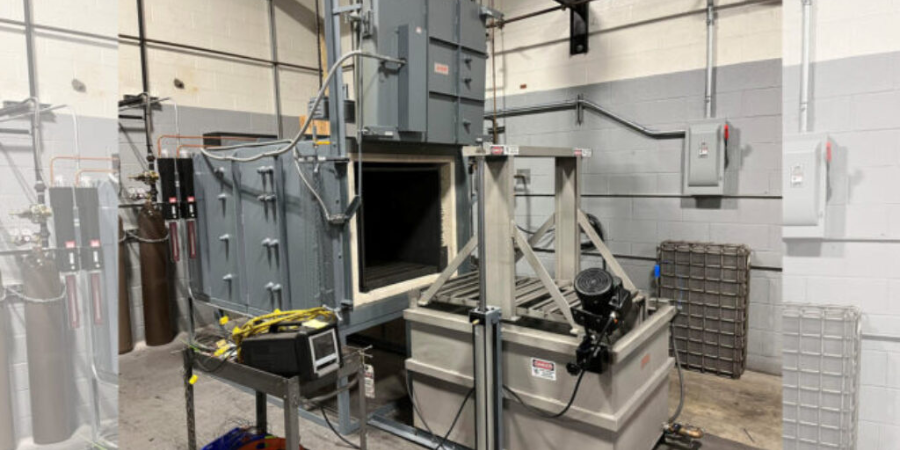
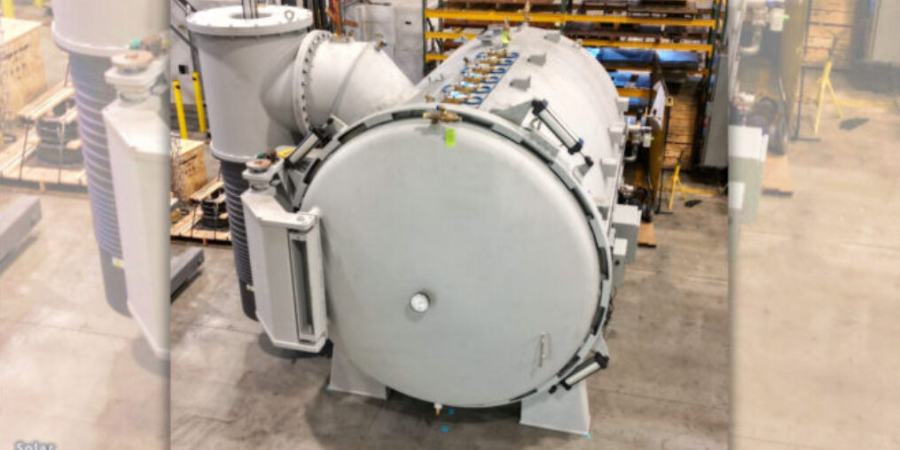
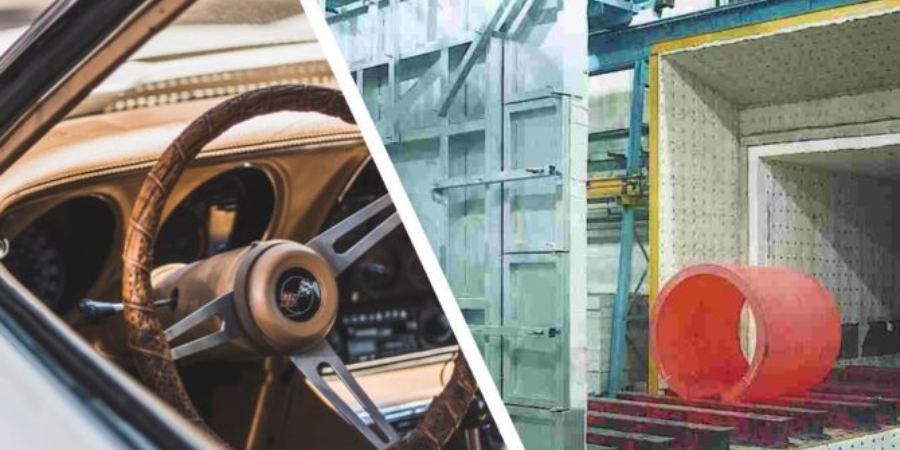
Vacu-Braze recently installed a new water quenching furnace in their Quakertown, PA, facility. This acquisition will allow for the expansion of capabilities to include rapid quenching of specialty aerospace materials such as steels or titanium.
The new furnace from LuciferFurnaces, measuring 45.5”x29.5”x28,” contains argon and nitrogen atmosphere capabilities which allow for processing in a protective atmosphere even at high temperatures while maintaining AMS 2750 compliant uniformity. The pyrometry team at Vacu-Braze was able to achieve Class 2 pyrometry, opening up more available processes such as annealing, austenitizing, normalizing, stress relieving, solution treating, and tempering.
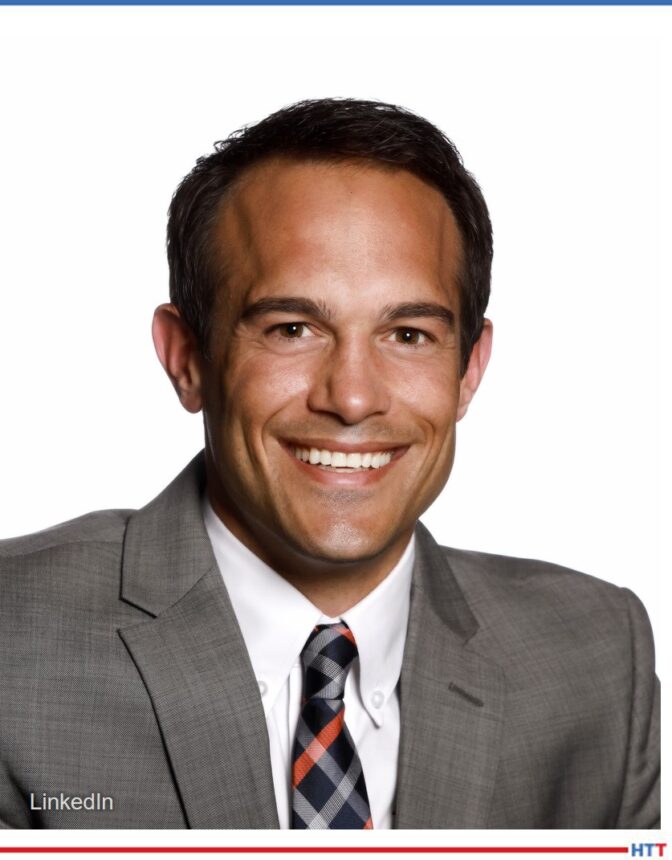
"Lucifer Furnaces was selected for the order," commented Jerry Novak, process engineer at Vacu-Braze, "[as their furnaces] are locally made and could be custom designed for the application. They are built in Eastern Pennsylvania to our desired specifications. Vacu-Braze is always happy to partner with companies that manufacture quality equipment and products in the USA."
The heat treat company also noted that this piece of equipment expands their services to existing clients while providing processes for new clients.
Find heat treating products and services when you search on Heat Treat Buyers Guide.com
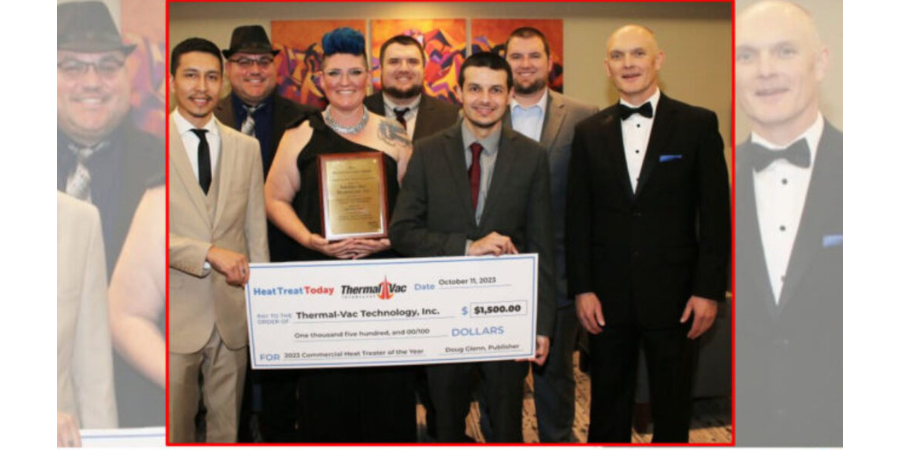
On October 11, 2023, Heat Treat Today, in cooperation with the Metal Treating Institute (MTI), presented the 2023 Master Craftsman Award (also known as the Commercial Heat Treater of the Year Award) to Thermal Vac Technology CEO, Heather Falcone, and her team.
The award was presented at the formal awards presentation banquet at the MTI national conference in Tucson, AZ. Pictured above from left to right Thermal-Vac Technology representatives Julio Salazar, Christopher Falcone, Heather Falcone, Shane Driscol, Ryan Dourte, and Shannon Driscol with Doug Glenn, publisher of Heat Treat Today.
This award is given to the company that demonstrates making a positive impact on their community and their industry. Recognition is based on quality programs, pollution & hazardous waste control, community involvement, and industry leadership and judged by a panel of previous recipients.
At the award presentation, Doug Glenn highlighted that since “this Golden State company uses Best Practices for hazard prevention and waste management, the local fire company actually uses their facility to train new firefighters and other first responders.” Additionally, their track record for community involvement and leadership included mention of onsite AA meetings and sobriety support, as well as participating in Fair Chance Hiring, offering jobs to those recovering from homelessness, addition, poverty, incarceration, or other unfortunate life situations.
Thermal-Vac Technology received a plaque commemorating this auspicious recognition and a scholarship fund of $1500 from Heat Treat Today that was matched with another $1500 from MTI’s Education Foundation. The heat treater will award this $3000 to a high school or college student who is pursuing an education in heat treat.
Congratulations to Thermal-Vac Technology on this award.
Find heat treating products and services when you search on Heat Treat Buyers Guide.com
“Plan, do, check, act.” When it comes to caring about carbon footprint, a path forward to may seem too out-of-reach. But breaking down process heating and how to efficiently consider carbon use can be possible with industry resources.
This Sustainability Insight article was composed by Michael Stowe, PE, the senior Energy Engineer at Advanced Energy for Heat Treat Today'sSeptember 2023 People of Heat Treatingprint edition.
Michael Stowe, PE
Senior Energy Engineer
Advanced Energy
Source: IHEA
Over the past several years, process heating energy markets have shifted in response to significant global pressures. The need to understand the impact of greenhouse gases (GHGs), especially carbon based emissions, on climate change is gaining more interest from organizations that have industrial process heating. Organizations that manufacture or use process heating equipment need to understand the impact their equipment can have on carbon emissions. The terms “carbon emissions” or “carbon footprints” use the word “carbon,” but these terms can include other GHGs, and the carbon refers to carbon dioxide gas (CO2).
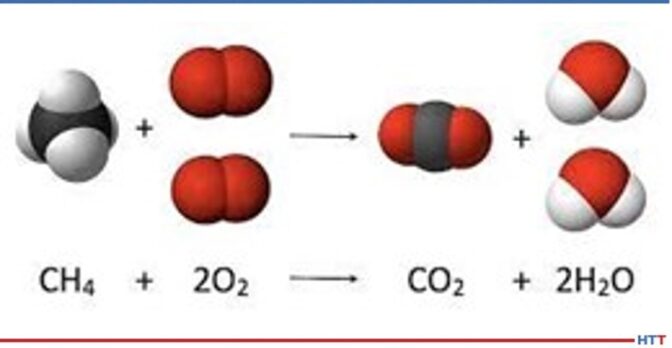
Process heating requires energy input. The energy sources for process heating most frequently include the combustion of carbon-based fossil fuels such as natural gas, propane, fuel oil, diesel, or coal. Also, most combustion processes have a component of electricity to operate combustion air supply blowers, exhaust blowers, circulation fans, conveyors, and other items. Figure 1 shows the chemical process for the combustion of methane (i.e., natural gas).
Figure 1 demonstrates that during combustion, methane (CH4) combines with oxygen (O2) to form carbon dioxide (CO2) and water (H2O). This same process is true for any carbon-based fuel. If you try to imagine all the combustion in progress across the globe at any given time, and knowing that all this combustion is releasing CO2, then it is easy to see the problem and the need for CO2 emission reduction.
Figure 1. Chemical process for methane combustion
(Source: Advanced Energy)
In basic terms, if you have a combustion process on your site, then you are emitting CO2. The electricity consumed to support the combustion processes also has a carbon component and the consumption of this electricity contributes to a site’s carbon footprint. Climate change impacts due to these carbon emissions have prompted government and corporate actions that are creating unique new opportunities for more sustainable and lower carbon process heating methods.
So, combustion and electricity consumption on your site contribute to your carbon footprint. Knowing this, organizations may now want to understand the actual level of their carbon footprint and ways to reduce it. There are many methods and resources available to help organizations understand and work to improve their carbon footprint.
The Industrial Heating Equipment Association (IHEA) has recognized this need to understand carbon footprints and is in the middle of a four-part webinar series on this topic. Session three (held on July 20, 2023) covered methods and resources to help organizations determine and improve their carbon footprint.
Session 3: DOE Tools and Programs for GHG Reduction
There are many options available to help determine carbon emissions for equipment, processes, sites, and organizations. This presentation will review some of these available tools and how to apply them to different situations. Carbon emissions are directly tied to energy consumption, so it is very important to understand how all your energy is consumed on site by energy type. This presentation will provide tools and programs to help you understand your energy consumption and thereby understand your carbon emissions. Additionally, energy improvement projects are also carbon emission reduction projects. This session will help you understand how to determine the impact of energy projects on your carbon footprint.
Session 4: Ongoing Sustainability — Industry Best Practices for Continual Improvement
Carbon reduction is not a project, it is a process, and must be ongoing. Earlier sessions will help you determine your carbon footprint and understand ways to track and improve your carbon footprint. In this presentation, we will review methods and programs to ensure the continual improvement of your carbon reduction efforts. Following the “plan, do, check, act” method used in many continual improvement programs, we will review steps to take for keeping your momentum moving in the right direction. We will also plan to have industry case studies for success in ongoing and improving carbon reduction programs.
Registration for these sessions can be found on the events page of www.ihea.org. If you or your organization want to learn more about your carbon footprint and how to measure and reduce it, you will not want to miss this opportunity.
In summary, heat treating, and other process heating methods, require significant energy, much of which is fueled with carbon-based fossil fuels, and associated with support electricity consumption. Both combustion and electricity consumption contribute to an organization’s carbon footprint. One of the best ways to help manage your carbon footprint is to understand and manage your energy consumption. For more information on this topic, please check out the IHEA Sustainability & Decarbonization Initiatives.
About the author:
Michael Stowe (PE) is the senior energy engineer at Advanced Energy. Michael focuses on process heating and energy efficiency in manufacturing plants. He has significant experience in the manufacturing industry serving in various roles as design engineer, production manager, plant engineer, and facilities engineer over the past 27 years.
Find heat treating products and services when you search on Heat TreatBuyers Guide.com
FPM Heat Treating has placed an order for a vacuum furnace. The HFL-7472-2IQ vacuum furnace features a graphite insulated hot zone of 48” x 48” x 72” with a 5,000 pound weight capacity, and the SolarVac® Polaris Controls.
The furnace fromSolar Manufacturing is equipped with features for temperature control, uniformity, and rapid heating and cooling cycles, which are crucial for achieving superior metallurgical results. “We are thrilled to integrate this advanced vacuum furnace into our operations,” said Bob Ferry, VP of Engineering and Quality at FPM Heat Treating. “This acquisition is a testament to our unwavering commitment to excellence and our dedication to providing our clients with superior quality and precision in every project.”
Find heat treating products and services when you search on Heat Treat Buyers Guide.com
Scrambling to stay up to date on all the publications that Heat TreatToday's experts have been releasing? If you are attending the ASM Heat Treat show in Detroit today or tomorrow, you can hear them present in live panels on the latest and greatest in the heat treat industry. Learn from the technical expertise of Heat TreatToday'sauthors, interviewees, 40 Under 40 honorees, and other affiliates.
Check out the technical sessions for Tuesday and Wednesday. For a complete list of all technical sessions offered over Tuesday, Wednesday, and Thursday, see ASM's Heat Treat show page.
Tuesday, October 17
Applied Technology / Processes and Applications: Energy Consumption and Efficiency
311 AB, 9-10am
This session features experts Dennis Beauchesne of ECM-USA, Inc. and MadhuChatterjee of AAT Metallurgical Services. Explore topics from adiabatic fluid coolers to the application of artificial intelligence, as well as heat treating emissions and decarbonization strategies. For more details, see here.
Chad Beamer
Applications Engineer
Quintus Technologies
Atmosphere Technology and Surface Engineering I
312 AB, 9-10am
Explore the development of clean HIP processing with Chad Beamer (Quintus Technologies) of Heat TreatToday's40 Under 40 Class of 2023 as well as "Changing Cost Environment Favors Self-Generation of Thermal Process gGases" with David Wolff of Nel Hydrogen. For more details, see here.
"Green” Heat Treating / Low Carbon I
312 AB, 10:30 AM-11:30 AM
Fascinated by the question of how carbon emissions can be reduced during the heat treatment of steel parts? This technical session with Ed Rylicki of Ajax TOCCO is for you! For more details, see here.
Ryan Van Dyke
Applied Technology / Processes and Applications: Quality Control
311AB, 10:30-11:30 AM
Explore the topic of quench cracking during heat treatment with Ryan Van Dyke (Paulo) of the 40 Under 40 Class of 2023 in this technical session chaired by Ben Bernard (Surface Combustion, Inc.). For more details, see here.
Microstructural Development / Characterization II
313 AB, 10:30 AM-11:30 AM
In this technical session, chaired by Dennis Beauchesne, explore topics from nano-crystalline martensitic stainless steel to the pretreatment of steel during carburization. For more details, see here.
New Trends in Global Heat Treating
311 AB, 1:00-1:40pm
Chaired by Angella Sell of Aalberts Surface Technologies (40 Under 40 Class of 2023) and featuring the expertise of Chad Beamer (40 Under 40 Class of 2023), Jianyu Liang (Worcester Polytechnic Institute), Richard D Sisson (Worcester Polytechnic Institute), and Edward Rolinski (Advanced Heat Treat Corp.), this technical session will keep you up to date on global heat treatment, exploring topics as diverse as high pressure heat treatment, plasma nitriding, and boronization. For more details, see here.
Maciej Korecki
Vice President of Business of the Vacuum Furnace Segment
SECO/WARWICK
(Source: SECO/WARWICK)
"Green” Heat Treating / Low Carbon II
312 AB, 1:00 -2:20 PM
Curious for more technical information on "Green" Heat Treating? This follow-up session features Jim Oakes (Super Systems Inc.), Bryan Stern (Gasbarre Products), Don Marteeny (SECO/VACUUM Technologies, LLC), Maciej Korecki (SECO/WARWICK) and Dennis Beauchesne. Topics to be covered include the carbon impact of oil quenching, energy consumption and CO2 footprint, and the environmental impacts of low pressure carburizing. For more details, see here.
Vacuum Processes and Technology
313AB, 1:00 PM-2:20 PM
This technical session features all things vacuum heat treat, with presenters discussing high pressure gas quench, the effect of sintering atmosphere on vacuum sintered stainless steel, the development of CFC-fixtures for industrial heat treat (presented by Jorg Demmel of High Temperature Concept), and the impact of vacuum furnace power on ESG criteria. For more details, see here.
Wednesday, October 18
Simulation & Modeling I: Process Simulation (CFD/FEA)
311 AB, 1:00 PM-2:40 PM
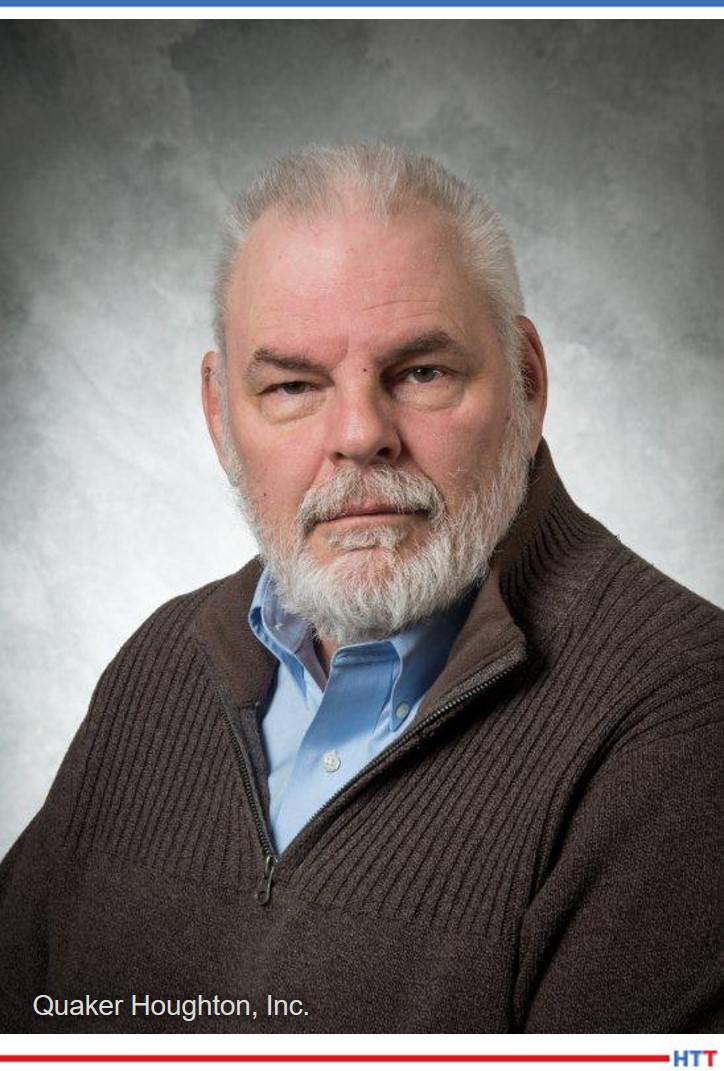
In this technical session, 40 Under 40 honoree Justin Sims (DANTE Solutions, Inc.) will be featured in a discussion of model development for aluminum, while Richard Sisson (Worcester Polytechnic Institute) will discuss phase distributions in heat treat gas atmosphere, and Dr. D Scott Mackenzie (Quaker Houghton) will present on the challenges of visualizing and optimizing the flow inside gear oil quenching tanks. For more details, see here.
Mr. Jason Orosz (Nitrex) of the 40 Under 40 Class of 2020 will be chairing this technical session, featuring 40 Under 40 Class of 2018 honoree Dr.Lesley Frame (University of Connecticut) and Matt Fischer (Castalloy Corp.), presenting on guidelines for alloy trays and fixtures. For more details, see here.
Residual Stress / Panel Session
313 AB, 1:00 PM-3:00 PM
Chaired by Dr. Lesley Frame, a 40 Under 40 honoree, this technical session will explore topics from the relationship between deep case carburizing and residual stress to recent upgrades to the residual stress diffractometer. For more details, see here.
Heat Treating: Induction Heat Treating
313 AB, 3:30 PM-4:50 PM
Fascinated by the topic of induction heat treating, including improvements on performance and induction fatigue following carburizing? Be sure to attend this technical session featuring David Lynch (Induction Tooling, Inc.), Justin Sims, and RichardSisson. For more details, see here.
Industry Internet of Things
312 AB, 3:30 PM-4:50 PM
This technical session explores the topics of AI, furnace smart data, and predictive maintenance, all in relation to the heat treating industry. Featuring experts Trisha Rouse (General Motors), Peter Sherwin (Eurotherm LLC), and Aymeric Goldsteinas (Ipsen USA), discover information on these pertinent questions. For more details, see here.
D. Scott MacKenzie, Ph.D
Senior Research -- Metallurgy
Quaker Houghton, Inc.
Quenching Technologies I: High Pressure
311 AB, 3:30 PM-4:50 PM
This final technical session for Wednesday features a discussion of quenching technologies, with topics ranging from nitrogen gas quench to induction hardened cylinders. Finish off your Wednesday with experts Dennis Beauschesne, Chad Beamer, Tom Hart (SECO/VACUUM), and D Scott McKenzie. For more details, see here.
Find heat treating products and services when you search on Heat Treat Buyers Guide.com
Today is a little-known holiday: National Veterans BBQ day, on which Americans are encouraged to treat veterans to a cookout as a “thank-you” for their service.
At Heat Treat Today’s, we wanted to take this opportunity to recognize veterans who have donned the hat of heat treating, although we can’t offer a physical celebration. Thank you for your service and sacrifice for our country.
Below, you will find profiles of Heat Treat Veterans from our archive. Heat Treat Today is continually updating our records of individuals in the heat treat industry who have served/are serving in the U.S. military. If you are or know a military veteran whom we can add to this living archive, please reach out via the online form or email Bethany Leone, managing editor, at bethany@heattreattoday.com.
This article as originally published in Heat Treat Today’sSeptember 2023People of Heat Treatmagazine.
Larry Bradley
Bradley has been in the heat treat industry for two years and works as quality manager at Bodycote. Military Branch: Army Active Service: January 1972 to December 1979 Highest Rank Achieved: E-6 Staff Sergeant Service Details:
• Vietnam War • Basic — Fort Knox • AIT — Fort Benning • Airborne School — Fort Bragg • Aberdeen Proving Ground in Maryland (Introduction to Quality) • Bronze Star, Silver Star, Purple Heart, Army Commendation Medal • Also stationed at Kaiserslautern Germany, and 100th Division Echo Company at Morehead, KY • Mobilized for Operation Enduring Freedom and stationed at Camp Atterbury, IN
Bradley Johnson
Johnson has been in the heat treat industry for 8 years and works as quality engineer at Bodycote. Military Branch: Army Active Service: October 2000 to August 2007 Highest Rank Achieved: E-5 Sergeant Service Details:
• Involved with Operation Enduring Freedom • Basic Training at Fort Leonard Wood, MO • AIT at Fort Lee VA • First duty Station at 400th QM • Also stationed at Kaiserslautern Germany, and 100th Division Echo Company at Morehead, KY • Mobilized for Operation Enduring Freedom and stationed at Camp Atterbury, IN
“As far as stories, I tend to not delve too deep into my tenure as a serviceman, but what I will share is: There are very few people in the United States that truly understand what it means to sign a blank check of your life, being willing to risk it for the county that you love, as well as the millions and millions of its citizens, at the drop of a hat, if called to action. With regards to basic training, I as well as numerous others I am sure, believe that the experience was the most fun and exciting adventure that I would never do again. I was in AIT when the 9/11 attacks happened, and on that day, we all knew we were going to war. It was just a couple short years later when I was mobilized for OEF. I was attached to the 658th out of Mississippi, and we traveled to Camp Atterbury, IN, for our pre-deployment training. We were there for around 3–4 months, chomping at the bit, to go do our part in protecting our country and for a lack of better terms, enact revenge for the ones we tragically lost that fateful day in September 2001. We were three days away from boarding the plane and heading overseas when we got word from the Pentagon that our particular mission was cancelled, and they were sending us home. Come to find out, we were going to be sent to the southeastern part of Turkey, to be able to invade Iraq at its northwestern border. When Turkey denied our access, that was the ticket home. After getting back home I submitted a transfer request to be able to join the 100th Division. It took about a month, but the transfer went through, and I was now a part of a drill sergeant unit (Echo Company) and was making trips to Ft. Knox to push troops through their basic combat training. To be able to come full circle in that regard was one of the most rewarding adventures I have ever had. To clarify, I was not a drill sergeant myself, merely cadre, but I was an NCO, and just by having that rank, the fear in the recruits’ eyes when you walked into the room took me back to being in their shoes. And this is where I ended my career.”
Jon Tirpak
Tirpak has been in the heat treat industry for 42 years. Branch of Service: United States Air Force Active Service: 1982 to 1988 Highest Rank Achieved: Captain Service Details: Captain, United States Air Force, Norton Air Force Base, CA, 1986 to 1988.
Led an $18M Air Force-wide, integrated effort to evaluate materials and structures in underground nuclear tests and managed Small Business Innovative Research Projects.
Lieutenant, United States Air Force, Wright Patterson Air Force Base, OH, 1982 to 1986.
Served as an Executive Officer within Project Forecast II (an Air Force “think tank”) and focused expertise on advanced materials and manufacturing in Plans and Programs.
Office of the Air Force Materials Laboratory — conducted structural failure analyses; characterized effects of plastic bead paint removal. Centrifuge test subject with 43 tests, some approaching 8.5 Gs. Designed and conducted data generation programs to characterize the fatigue and fracture of cast aluminum and generated static and dynamic property data for various metallic alloys.
“My military career took off in 1982. Earning a Bachelor of Science degree in Metallurgical Engineering at Lafayette College and completing four years of Air Force ROTC Training, the best assignment for me was the Air Force Materials Laboratory at Wright Patterson Air Force Base. Those formative years linked me to heat treating, for most alloys without thermal processing are just metallic chemistries! For example, a popular alloy then was A357 comprised primarily of aluminum, silicon, and magnesium. To impart useful properties after casting, heat treating is required, and in the case of A357 industry specified -T6. We can’t have one without the other; we need alloy suppliers and metal workers (foundries, forges, etc.) AND heat treaters. We don’t need a lot of them; we need just the best, world class producers with the passion, people, processes, and purpose for serving humanity. Back in ‘82, my take off for success was via the Air Force and cast aluminum alloy A357 with a heat treat “afterburner” of -T6. In 2023, I have yet to land!”
Awards: • United States Air Force Commendation Medal • United States Air Force Achievement Medal with two Oak Leaf Clusters • United States Air Force Outstanding Unit Military Ribbon • United States Air Force Service Longevity Ribbon • United States Air Force Training Military Ribbon • United States Air Force Centrifuge High G Test Subject Certificate • Lifetime Member Air Force Materials & Manufacturing Alumni Association, Dayton, OH
Danny Woodring
Woodring has been in the heat treat industry for 28 years and works as manager of the Quality/ISO & Flow Team at UPC-Marathon. Branch of Service: Army Secondary Branch: Army National Guard Active Service: 1982 to 1996 U.S. Reserves: 1996 to 2022 Highest Rank Achieved: Sergeant Major/E9 Service Details: • Participated in three Combat Tours
Timothy Wright
Wright has been in the heat treat industry for 30+ years. He was founding owner of WIRCO. Branch of Service: Army Secondary Branch: Army National Guard Active Service: Yes U.S. Reserves: Yes Highest Rank Achieved: Major General Service Details: • Vietnam War • Desert Storm • United Nation’s SFOR in Bosnia-Herzegovina • Indiana National Guard • Silver Star, Legion of Merit, Bronze Star, Meritorious Service Medal x8, Air Medal x27 (1 for Valor), Army Commendation Medal x5 (1 for Valor), Kuwait Liberation Medal, and more.
Heat Treat Today interviewed MG Wright and will be releasing the full story of his extraordinary service and sacrifice on Heat Treat Radio in fall 2023. Watch for it at www.heattreattoday.com/radio.
Find heat treating products and services when you search on Heat Treat Buyers Guide.com
A component supplier in the automotive industry has secured a multimillion-dollar contract to receive a turnkey automated nitrocarburizing furnace system for the production of electric passenger vehicle brake components.
Under the contract, Nitrex will design, manufacture, commission, and test continuous-line furnaces, part of the NXL furnace series, which are capable of processing millions of brake parts annually.
In addition to the furnace design, Nitreg®-C and ONC® technologies are integral to this order. This ferritic nitrocarburizing process with post-oxidation improves metal corrosion resistance and effectively reduces rust formation. It is designed to achieve lower non-effluent emissions associated with electric vehicle braking systems.
Furthermore, Nitrex will integrate QMULUS, an AI and machine learning IoT platform, to enhance the supplier’s manufacturing capabilities and drive continuous improvement throughout its operations.
"[This project] empower[s] our customers to thrive as the transition to electric vehicles and more advanced solutions accelerates,” expressed Nitrex CEO Jean-Francois Cloutier.
Find heat treating products and services when you search on Heat Treat Buyers Guide.com
A supplier of aviation and defense industry components, a NASA and Formula 1 partner has recently purchased a horizontal two-chamber furnace with oil quenching and LPC. The furnace will be used for the heat treatment of aviation parts.
SECO/WARWICK is supplying the CaseMaster Evolution® two-chamber, horizontal vacuum furnace with oil quenching consisting of a heating chamber and a quench bath equipped with a loading and unloading vestibule. The load cooling can be carried out in two different centers: dynamically in inert gas (1.5 bar abs) and in quench oil. This solution enables users to implement a variety of heat treatment and thermo-chemical processes, such as vacuum carburizing.
Noted Maciej Korecki, vice president of the Vacuum Segment at SECO/WARWICK, “[This model] is one of the most frequently chosen furnaces for metalworking by the aviation industry."
The furnace can be switched on and off without additional time and energy expenditure. It does not require users to maintain the system at specific temperature parameters when at standstill, as is the case of traditional gas furnaces.
Find heat treating products and services when you search on Heat Treat Buyers Guide.com
Two new specialist technology focused businesses, Lake City Heat Treat and Stack Metallurgical Group, have been acquired by Bodycote.
Bodycote has agreed to acquire Lake City Heat Treat based in Warsaw, Indiana, a Medical market HIP and vacuum heat treatment business; and Stack Metallurgical Group based in the Pacific Northwest of the U.S., a key provider of HIP, heat treatment and metal finishing services.
The businesses are complementary to the commercial heat treater’s existing operations and will both expand its geographic footprint in North America and provide additional customer reach. Comprising of two HIP and three heat treatment sites, the businesses will be integrated into Bodycote’s existing specialist technologies business and aerospace, defense and energy classical heat treatment business respectively.
Stephen Harris, Group Chief Executive of Bodycote plc, commented, “These investments are an important and exciting enabler of our strategy to further enhance and grow our Specialist Technologies businesses. In addition, they will also expand our footprint in Aerospace and Medical heat treatment on the West Coast and in Indiana in the U.S."
The heat treater also announced plans to open a new HIP plant utilizing one of their existing sites in greater Los Angeles. The capacity is intended to support the rapid growth in space and civil aviation markets in the Los Angeles area.
The combined gross consideration for the acquisitions is 119 million pounds ($145 million) on a cash and debt free basis. The net economic consideration is approximately 106 million pounds ($130 million).
Find heat treating products and services when you search on Heat Treat Buyers Guide.com
The four heat treat industry-specific economic indicators gathered by Heat TreatToday each month --- starting in June of this year --- are predicting continued growth along with some economic contraction in the month of October.
The numbers, which were compiled the first week of October, show that responding parties anticipate inquiry levels will turn the corner and be up for October as compared to September and that the value of October bookings will continue to show growth. Backlogs are anticipated to contract by a fractional amount, and the overall health of the manufacturing economy remains slightly down. Please keep in mind that this is only the 5th month of data collection, so keep following this study as this bank of information builds.
The results from this month’s survey (October) are as follows; numbers above 50 indicate growth, numbers below 50 indicate contraction, and the number 50 indicates no change:
Anticipated change in the Number of Inquiries from September to October: 51.5
Anticipated change in Value of Bookings from September to October: 56.5
Anticipated change in Backlog Size from September to October: 49.2
Anticipated change in the Health of the Manufacturing Economy from September to October: 49.0
Data for October 2023
The four index numbers are reported monthly by Heat TreatToday and made available on the website.
Heat TreatToday'sEconomic Indicatorsmeasure and report on four, heat treat industry indices. Each month, approximately 800 individuals who classify themselves as suppliers to the North American heat treat industry receive the survey. Above are the results. Data started being collected in June 2023. If you would like to participate in the monthly survey, please click here to subscribe.
Find heat treating products and services when you search on Heat Treat Buyers Guide.com