


SECO/WARWICK

Hardening and Tempering Capabilities “Take Off” for Aviation Heat Treaters

HTD Size-PR LogoA European machinery group will receive a vacuum furnace for hardening and tempering processes, and its design has been customized in order to meet the group’s need to harden aviation steel used as landing gear. The heat treatment solution will improve the process economy in European plants and is characterized, in part, by low energy consumption.

Maciej Korecki
Vice President of Business for the Vacuum Furnace Segment
SECO/WARWICK

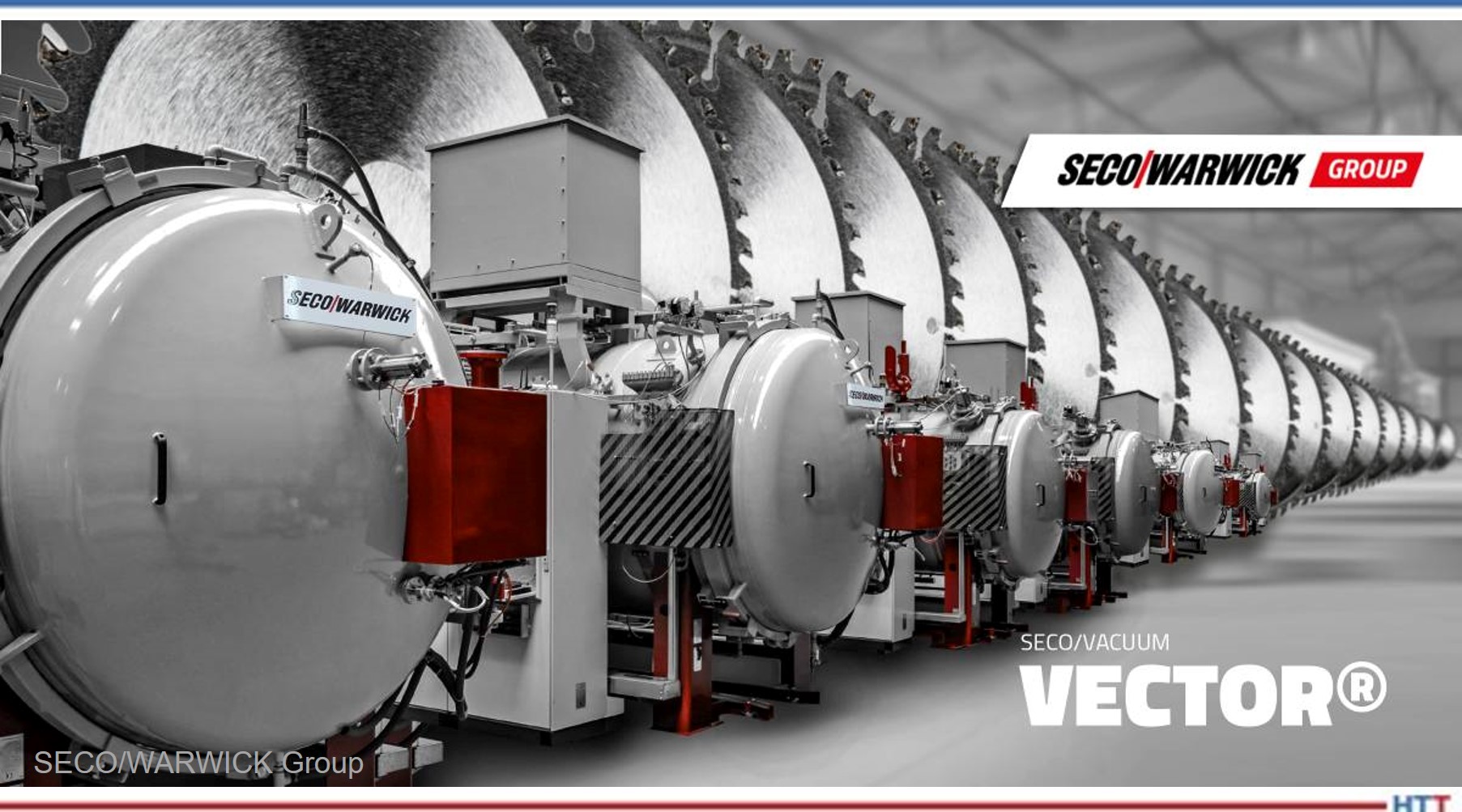
To meet this particular application, SECO/WARWICK engineers fitted the Vector® vacuum furnace with a non-standard system for subquenching with liquid nitrogen that enables the required quick cooling down of landing gear components. The solution has also been expanded with a vacuum system designed with a diffusion pump and is equipped with a directional cooling option and convection heating system with a specially designed fan. 

“This is already the fourth purchase order for a furnace from this product segment from this customer,” commented Maciej Korecki, VP of Business Segment for Vacuum Heat Treatment Furnaces at SECO/WARWICK, the sister company to North American heat treat supplier SECO/VACUUM. He also added that “The product solves the customer’s problem with the hardening of special aviation steel, significantly increases the capacity of the existing production line of this component, and also improves process parameters, since the current devices used by the customer are not fitted with a subquenching system using liquid nitrogen. It will certainly be one of the unique solutions completed this year.”

Hardening and Tempering Capabilities “Take Off” for Aviation Heat Treaters Read More »

Automotive Heat Treater To Receive Vacuum Aluminum Brazing Furnace

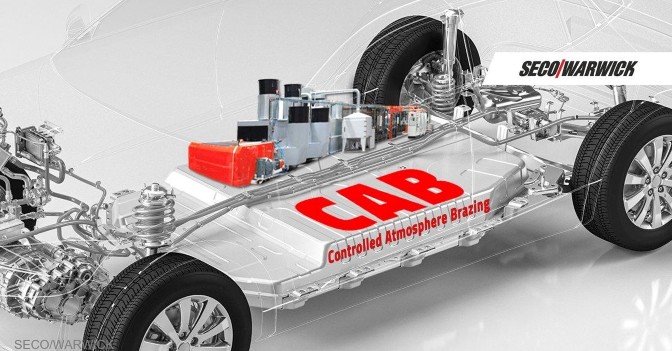
HTD Size-PR LogoA manufacturer in the automotive industry has placed an order for a large-capacity, high vacuum furnace, equipped with a cooling station to increase the performance of the system. This furnace will complete their new production plant and aid in vacuum aluminum brazing various components.

Maciej Korecki
Vice President, Business Segment Vacuum Heat Treatment Furnaces
SECO/WARWICK
(source: SECO/WARWICK)

SECO/WARWICK, the sister company of North American manufacturer SECO/VACUUM, provided the furnace to the automotive manufacturer of engines, filters, electric equipment, and cooling systems. For this project, the client required that the vacuum furnace have automatic loading and transportation of parts, as well as an increase in precise control of temperature uniformity and distribution.

"The equipment [. . .] has been installed in a new production plant that will significantly improve the capacity of the entire group," explains Maciej Korecki, vice president of the Business Segment of Vacuum Heat Treatment Furnaces at SECO/WARWICK. "A key to success in this project was the huge trust displayed by our partner and close cooperation at the design stage."


heat treat buyers guideLooking for vacuum aluminum brazing furnaces? See listings for services and products in the Heat Treat Buyers Guide


Automotive Heat Treater To Receive Vacuum Aluminum Brazing Furnace Read More »

Looking to a Future with FNC or Nitriding?

OCWhat's the future of ferritic nitrocarburizing and how does it compare to other hardening processes? When it comes to metal hardening, there are many variations on central processes, including recent innovations in how to apply hardening processes.

This Technical Tuesday brings you a quick overview of how hardness technologies differ, specifically nitriding and FNC, and how certain heat treaters have developed these specific hardness technologies.


Understanding the Various Hardening Processes

If you want to know the future, the best you can do is understand the past and present. Let’s begin with looking at the most common hardening processing methods. Here are a few excerpts from “Elevate Your Knowledge: 5 Need-to-Know Case Hardening Processes” by Mike Harrison, engineering manager of Industrial Furnace Systems Division at Gasbarre Thermal Processing Systems:

Read more about these 5 processes in Mike Harrison's article. Click to read.

Carburizing: “Gas carburizing is a process where carbon is added to the material’s surface. The process is typically performed between 1550-1750°F, with carburizing times commonly between 2-8 hours [this spec is disputed, and times may run up to 24 hours]; of course, these values can vary depending on the material, process, and equipment. The most common atmosphere used for atmosphere gas carburizing is endothermic gas with additions of either natural gas or propane to increase the carbon potential of the furnace atmosphere.”

Nitriding: “Gas nitriding is a process where nitrogen is added to the material surface. The process is typically performed between 925-1050°F; cycle times can be quite long as the diffusion of the nitrogen is slow at these temperatures, with nitriding times typically ranging from 16 – 96 hours or more depending on the material and case depth required. Nitriding can be performed in either a single or two-stage process and has the potential to produce two types of case, the first being a nitrogen-rich compound layer (or “white layer”) at the surface that is extremely hard and wear-resistant but also very brittle.”

Carbonitriding: “Despite its name, carbonitriding is more closely related to carburizing than it is to nitriding. Carbonitriding is a process where both carbon and nitrogen are added to the material surface. This process is typically performed in a range of 1450-1600°F [this spec is disputed, and temperatures may go up to 1650°F] and generally produces a shallower case depth than carburizing.”

Ferritic Nitrocarburizing (FNC): “In the author’s opinion, just like with carbonitriding, ferritic nitrocarburizing (FNC) is named incorrectly as it is more closely related to nitriding than it is with carburizing. FNC is a process that is still mostly nitrogen-based but with a slight carbon addition as well. The added carbon helps promote compound layer formation, particularly in plain carbon and low alloy steels that do not contain significant nitride-forming alloys. This process is typically performed in a range of 1025-1125°F with cycle times much shorter than nitriding, typically 1-4 hours.”

Low Pressure Carburizing (LPC): “Low-pressure carburizing (LPC), or vacuum carburizing, is a variation of carburizing performed in a vacuum furnace. Instead of the atmospheres mentioned previously, a partial pressure of hydrocarbon gas (such as acetylene or propane) is used that directly dissociates at the part surface to provide carbon for diffusion. After LPC, the workload is transferred to a quench system that could use oil or high-pressure gas, typically nitrogen.”

Nitriding

Learn more about the basics of hardening at Heat Treat Radio. Click to listen,

Gas nitriding, a process over 100 years old, is a hardening process that involves diffusing nitrogen into the surface of steel to create a hard, wear-resistant case. Among many benefits, the part will have enhanced fatigue properties, anti-galling properties under load, and a resistance to softening at elevated temperature. This makes it an excellent choice for the aerospace industry.

There is some recent history regarding problems related to the “white layer”. In a typical microstructure, the “white layer” is a nitrogen-rich surface layer and the diffusion layer exists beneath it.1 It is essential that the surface layer be controlled to avoid an overly brittle part. Mark Hemsath the vice president of Sales – Americas for Nitrex Heat Treating Services, elaborated on this in a Heat Treat Radio episode:

"Doug Glenn: I assume, with all the modern day technology and whatnot, we're able to control that white layer and/or depth of nitriding layer through your process controls and things of that sort."

"Mark Hemsath: Yes. Nitriding has been around a long time, but one of the problems that they had was controlling the white layer. Because they basically would just subject it to ammonia and you kind of got what you got. Then they learned that if you diluted it, you could control it. That's with gas nitriding. Then plasma nitriding came around and plasma nitriding is a low nitriding potential process. What that means is it does not tend to want to create white layer as much. It's much easier to control when the process itself is not prone to creating a lot of white layer, unlike gas. Now, in the last 10 – 15 years, people have gotten really good at controlling ammonia concentrations. They've really learned to understand that."

Recently, SECO/WARWICK shared their nitriding technological developments in their product, ZeroFlow.

"ZeroFlow nitriding is ammonia-based gas nitriding," commented Dr. Maciej Korecki, PhD Eng., vice president of the Vacuum Furnace Segment at SECO/WARWICK Group. "It is distinguished by the fact that the nitrogen potential is controlled by introducing the right portion of ammonia at the right time and only ammonia, instead of a continuous flow of a mixture of ammonia and diluent gas."

"Consequently, the ZeroFlow method uses the minimum amount of ammonia needed to achieve the required nitrogen potential and replenish the nitrogen in the atmosphere, taking into account the situation where no ammonia is supplied to the furnace at all, no flow, hence the suggestive name of the solution," he continued. "Using ammonia alone in the nitriding process, we are dealing with a stoichiometric reaction (as opposed to some traditional methods), that is, one that is uniquely defined and predictable based on the monitoring of a single component of the atmosphere. Therefore, the ZeroFlow process controls very precisely through the analyzer only one gas, obtaining an improvement in the quality and repeatability of the results compared to various traditional methods."

According to Dr. Korecki, the process is about going back to the basics of nitriding: "The inventor of the method is Prof. Leszek Maldzinski of the Poznan University of Technology, who developed the theoretical basis and confirmed it with research. Then, more than 10 years ago, a partnership between SECO/WARWICK and the Poznan University of Technology initiated a project to develop and build the first industrial furnace designed to perform the ZeroFlow nitriding processes. The furnace was launched at SECO/WARWICK's research and development department (SECO/LAB®), where the method has been implemented and validated on dozens of industrial-scale processes."

Ferritic Nitrocarburizing

This nitrogen-based process can produce a deeper compound layer than nitriding, which is great for industrial machinery applications where this deep layer is needed for increased wear resistance and the critical strengthening of a deep case depth is not essential.

FNC has gone through a technical evolution with different heat treaters in the industry developing their own unique applications with method in mind. We'll look at two recent examples: AHT's Super Ultra Ox and Bodycote's Corr-I-Dur.

Edward Rolinski
Senior Scientist
Advanced Heat Treat, Corp.
(Source: https://www.ahtcorp.com/)

According to experts at Advanced Heat Treat Corp. (AHT), Edward Rolinski (Dr. "Glow"), Jeff Machcinski, Vasko Popovski and Mikel Woods, "Thermochemical surface engineering of ferrous alloys has become a very important part of manufacturing. Specifically, nitriding and nitrocarburizing (FNC) processes are used since their low temperature allows for treatment of finished components. They are applied to enhance the tribological and corrosion properties of component surfaces.2 In many situations, nitriding replaces carburizing even if the nitrided layer is not as thick.3 A post-oxidizing step, applied at the end of FNC, leads to significant enhancement of corrosion properties by formation of a magnetite layer (Fe3O4).

"AHT’s newly developed process, UltraOx® Hyper, results in superior wear and corrosion resistance and allows for good control of the parts’ blackness. The latter is very important when the treatment is used for firearms. While the parts’ corrosion resistance improves with nitriding alone, the additional steps in UltraOx® Hyper significantly extend corrosion resistance. AHT is committed to achieving its customers’ desired metallurgical and cosmetic results through R&D and investing in state-of-the-art equipment. These innovations allow for flexibility in these areas."

In recent news, wave energy pioneer CorPower Ocean will be using Bodycote's thermochemical treatment, Corr-I-Dur®, for CorPower’s high-efficiency WECs.
Image Source: www.waterpowermagazine.com

From Bodycote, they say that their proprietary Bodycote thermochemical treatment “Corr-I-Dur® is a combination of various low temperature thermochemical process steps, mainly gaseous nitrocarburising and oxidising.”

They explain, "In the process, a boundary layer consisting of three zones is produced. The diffusion layer forms the transition to the substrate and consists of interstitially dissolved nitrogen and nitride precipitations which increase the hardness and the fatigue strength of the component. Towards the surface it is followed by the compound layer, a carbonitride mainly of the hexagonal epsilon phase. The Fe3O4 iron oxide (magnetite) in the outer zone takes the effect of a passive layer comparable to the chromium-oxides on corrosion resistant steels.

"Due to the less metallic character of oxide and compound layer and the high hardness abrasion, adhesion and seizing wear can be distinctly reduced. Corr-I-Dur® has very little effect on distortion and dimensional changes of components compared to higher temperature case hardening processes."

How to Implement?

We’ve seen a lot of development in way of nitriding and ferritic nitrocarburizing (FNC), but for many heat treaters, you inherit specific processes and traditions of accomplishing heat treatment and do not have the chance to understand how to implement each process. Read the full 21 point comparative resource at FNC vs. Nitriding

Conclusion

The more informed you are, the better decisions you can make. For example, knowing these recent developments in metal treating and hardening is sure to help you decide whether to shift directions in how you company process parts for electric vehicles, or if you are ready to expand your offerings for your aerospace clients. It is clear that each of these processes have a future all-their-own. It’s up to you to decide whether that future should be yours, too.

For more information on the basics of hardness, listen to the what, why, and how of hardening with Mark Hemsath, an expert on metal hardness and vice president of Sales – Americas for Nitrex Heat Treating Services, on this Heat Treat Radio episode with Doug Glenn, publisher of Heat Treat Today. You can also review the resources below that were referenced in today’s article.


References

1 Daniel H. Herring, “The Heat Treat Doctor”, “Case Hardening of Steel, Part Three: Gas Nitriding,” PowerPoint Presentation, © 2004 – 2010 The HERRING GROUP, Inc.

2 “Thermochemical Surface Engineering of Steels”, Woodhead Publishing Series in Metals and Surface Engineering: Number 62, Ed. Eric J. Mittemeijer and Marcel A. J. Somers, Elsevier, 2015, pp.1-769.

3 J. Senatorski, et. al, Tribology of Nitrided and Nitrocarburized Steels”, ASM Handbook Vol 18, Friction, Lubrication and Wear Technology, ed. G. Totten ASM International, 2017, pp. 638-652.


Resources

  1. Herring, “Case Hardening of Steel, Part Three: Gas Nitriding,” PowerPoint Presentation, © 2004 – 2010 The HERRING GROUP, Inc.
  2. Harrison, “Elevate Your Knowledge: 5 Need-to-Know Case Hardening Processes,” Heat Treat Today, https://www.heattreattoday.com/processes/hardening/hardening-technical-content/comparative-study-of-5-case-hardening-processes/.
  3. Hemsath and D. Glenn, “Heat Treat Radio: Metal Hardening 101, Part 2 of 3,” Podcast and Transcript, Heat Treat Today, https://www.heattreattoday.com/media-category/heat-treat-radio/heat-treat-radio-metal-hardening-101-with-mark-hemsath-part-2-of-3/.
  4. Orosz, T. Wingens, and D. Herring, “Nitriding vs. FNC,” Heat Treat Today, https://www.heattreattoday.com/processes/nitrocarburizing/nitrocarburizing-technical-content/integrated-nitriding-and-fnc/.
  5. Senatorski, J. Tacikowski, E. Rolinski and S. Lampman, “Tribology of Nitrided and Nitrocarburized Steels”, ASM Handbook Vol 18, Friction, Lubrication and Wear Technology, ed. G. Totten ASM International, 2017.
  6. “Thermochemical Surface Engineering of Steels”, Woodhead Publishing Series in Metals and Surface Engineering: Number 62, Ed. Eric J. Mittemeijer and Marcel A. J. Somers, Elsevier, 2015, pp.1-769.

Looking to a Future with FNC or Nitriding? Read More »

Tecnovacum to Heat Treat with New Vacuum Furnace

HTD Size-PR LogoBrazilian commercial heat treater Tecnovacum recently received a vacuum furnace, produced in cooperation between a Polish-based furnace suppler and a Brazilian-based furnace manufacturer.

For the first time in the history of the SECO/WARWICK Group, parent company to North American SECO/VACUUM Technologies, the order was executed in a 50/50 cooperation system – Tecnovacum’s financing plan with an industry development bank stipulated that at least 50% of the equipment production would be in Brazil with Combustol Fornos Ind Com. Ltda, who was the partner for this project.

Maciej Korecki
Vice President of the Vacuum Furnace Segment
SECO/WARWICK
(source: SECO/WARWICK)

The Vector vacuum furnace is the first product that the supplier has provided to Tecnovacum. To implement the government subsidy program, the equipment must have 50% of the production in the territory of Brazil. The furnace was developed in close cooperation with the Brazilian partner – Combustol Fornos Ind Com. Ltda. Cooperation between the two companies has been ongoing for six years in terms of sales, supplies and start-ups of furnaces in Brazil.

"This is an exceptional situation, the first one, but certainly not the last," commented Maciej Korecki, vice-president of the Vacuum Segment of the SECO/WARWICK Group. "Under our supervision and in close cooperation, the Brazilian partner made the casing and the control cabinet in Brazil, and the company was also responsible for the equipment assembly and start-up [. . .] We are glad that we have a partner who is not only able to carry out the assembly, start-up and service of our equipment on site, but also build the entire vacuum furnace in cooperation with us."

Tecnovacum to Heat Treat with New Vacuum Furnace Read More »

HTA Group Increases Heat Treat Capability with 2 Vacuum Furnaces

Source: SECO/WARWICK

HTD Size-PR LogoHTA Group (HTA) purchased two vacuum furnaces to augment its support for Australian defense capabilities. The equipment will provide heat treatment processes for HTA’s manufacturing customers in the region to meet defense customer and quality specifications. The project was developed in response to customer demand and market analysis identifying gaps in Australia’s advanced manufacturing industrial framework.

The two new Vector® single chamber high-pressure quench vacuum furnaces from SECO/VACUUM will go to HTA's Melbourne and Sydney commercial heat treatment facilities to provide expanded processing capabilities to support the Australian defense industry.

"HTA is the only Australian Nadcap-approved thermal processor and has had ongoing success with commercial and aerospace operations to date," commented Dr. Karen Stanton, director of Corporate and Strategy at HTA (pictured in the headline image above). "Increasing the footprint of heat treatment assets through the establishment of this capability in Melbourne and Sydney will increase the ability of defense component manufacturers to deliver projects faster and allow them direct access to a qualified local supply chain."

Norm Tucker
Director of Operations
HTA Group

"SECO/WARWICK Group has the most advanced and user-friendly vacuum furnaces on the market," added Norm Tucker, director of Operations at HTA. "But equally important to me is the way we can collaborate with their team to determine the best furnace features and capabilities to do the job. These two new Vector furnaces will be the first of their capability in Sydney and Melbourne and will be used to heat treat high strength components such as landing gear or brazing engine parts and opening up advanced processing capabilities to our new and current customers."

Piotr Zawistowski
Managing Director
SECO/VACUUM TECHNOLOGIES, USA
Source: secowarwick.com

"HTA has been very smart about how they approach their growth, measuring business opportunities through research and thoughtfulness and looking carefully at the potential upside of their investments," noted Piotr Zawistowski, managing director at SECO/VACUUM. "We are proud to be an integral partner in their planning and execution."

The addition of Vector® vacuum furnaces to HTA’s processing capabilities follows 7 other installations of SECO/WARWICK products in Brisbane and Los Angeles CA, including high-pressure gas quench vacuum furnaces, vacuum aluminum brazing furnaces, and tempering/stress relieving furnaces.

HTA Group Increases Heat Treat Capability with 2 Vacuum Furnaces Read More »

Manufacturer of EV Chassis Components Orders Furnaces for In-House Tooling

HTD Size-PR LogoAn international electric vehicle (EV) automaker has ordered high-pressure gas quenching (HPGQ), tempering, and nitriding furnaces for heat treatment of large high-pressure casting dies, which will be used in the production of aluminum underbody components for electric vehicles.

The tool & die market serving traditional and EV automotive markets use vacuum heat treating technology extensively to produce bright, high-quality parts. SECO/VACUUM Technologies, a SECO/WARWICK Group company, will provide two furnaces and auxiliaries with working zones that can accommodate loads with dimensions up to 1000mm x 1000mm x 2400mm (40″ x 40″ x 96″) and up to 7.5 metric tons of weight.

“[We] have built a reputation with [this client’s] engineering team,” explained Piotr Zawistowski, managing director of SECO/VACUUM, “[and so] we are capable of achieving the required quenching rates within such a large envelope, which will be accomplished with a powerful 500kW quenching system. The [client] also appreciated the custom engineering that we put into handling such a heavy workload.”

The Vector® vacuum hardening furnace is equipped with a convection heating system to improve heat transfer at lower temperatures, thus reducing internal stresses; the cooling system can quench with nitrogen at pressures up to 25 bar. The furnace will exceed NADCA 207 requirements for the quenching process and Class 2 temperature uniformity requirements per AMS2750F.

The nitriding furnace is a pit-type configuration, with working dimensions to match the hardening furnace. The patented ZeroFlow® nitriding process uses uniform high convection heating, precision nitriding potential, and ammonia control, along with vacuum purging to reduce operating costs.


Manufacturer of EV Chassis Components Orders Furnaces for In-House Tooling Read More »

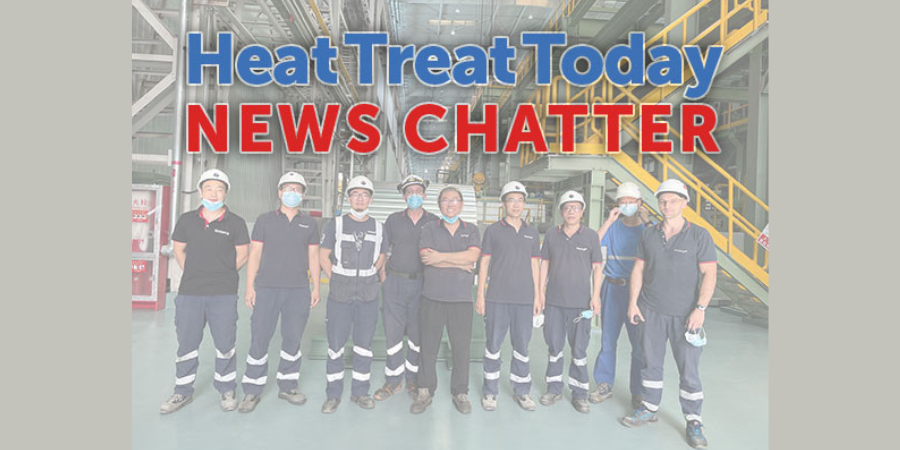
12 Quick Heat Treat News Chatter Items to Keep You Current

Heat Treat Today offers News Chatter, a feature highlighting representative moves, transactions, and kudos from around the industry.


Personnel Chatter

  1. Isaiah Arnold joins Schneider Electric as a services sales engineer.
  2. Vacuum & Atmosphere Services Ltd. has new heads of departments: Aaron Long, head of Vacuum Products; Greg Walker, head of Atmosphere Products; Adam Greenway, head of Fabrications; and Mike Oldham, head of New Business.
  3. Hubbard-Hall Inc. has hired Jodie Menze as customer service manager. In this newly-made position, Menze will take a hands-on approach to enhancing the customer experience.
  4. Hubbard-Hall has transformed its Sales & Technical Departments and promoted several key staff: Larry Ensley, director of Technical Applications, is assuming company-wide responsibility for technical service teams and lab operations, overseeing ten technical experts. These individuals include Robin Deal and Faith Mierzejewski. Secondly, Mike Valenti is expanding his role as the director of Cleaning Technology. Lastly, Ted Saltzman, newly named Specialty Sales manager & Business Development, will direct the Specialty Sales group’s field account team and oversee the inside account management team. All three individuals will report to Scott Papst, vice president of Specialty Sales and Business Development.


Company Chatter

  1. Ramco Steels Pvt. Ltd. in India has installed its first SCADA-controlled quenching & tempering furnace in-house. Now, they offer spherodised annealing, normalising, isothermal annealing, through hardening and tempering, induction hardening/tempering, and soft carburising operations in-house.
  2. Service Heat Treating announced the completion of a multi-year plant expansion, expanding their space by 40,000 sq.ft. and adding heat treat capacity.
  3. Solar Manufacturing Inc., Sellersville, Pa. announced the receipt of U.S. Patent No. 11053560 issue date July 6, 2021.
  4. Kanthal launches a second generation flow heater control system, developed to assist customers to run the flow heater safely and efficiently.
  5. Advanced Heat Treat Corp. announced a new black oxide option which offers a darker black color oxidation than their original offering. The additional option will be available as a standalone black oxide treatment and as part of the UltraOx® heat treatment (referred to as UltraOx Hyper).


Kudos Chatter

  1. China’s Tiangong International Company Limited acquired a Quintus Technologies hot isostatic press (HIP).
  2. Bodycote Greenville is now certified by GE for the heat treatment of both titanium and aluminum.
  3. On SECO/WARWICK’s 30th Anniversary, they introduced a new website – www.secowarwick.com — and a new book — the DNA Book.


Heat Treat Today is pleased to join in the announcements of growth and achievement throughout the industry by highlighting them here on our News Chatter page. Please send any information you feel may be of interest to manufacturers with in-house heat treat departments especially in the aerospace, automotive, medical, and energy sectors to bethany@heattreattoday.com.

 

12 Quick Heat Treat News Chatter Items to Keep You Current Read More »
Solvera Gawel Technology S.A. to Expand Heat Treat Process Line

HTD Size-PR LogoGlobal bolt manufacturer Solvera Gawel Technology S.A. (SGT) is expanding their heat treat process line with a contract to purchase an electrical belt conveyor unit (ATE) comprising an electrical mesh belt PTE furnace. The new line will be intended mostly for carbonitriding and hardening processes (under endothermic atmosphere enriched with methane and ammonia) and for washing and tempering of high-quality screws and other hardware manufactured near Rzeszów.

SECO/WARWICK, the parent company of a North American based furnace manufacturer received the order. This ATE is almost identical to the first line they delivered in 2017. An electrical belt conveyor unit is a device that is well-suited for the manufacture of small hardware that requires perfect repeatability, therefore, this is one most often selected by manufacturers of bolts and hardware, and by commercial hardening plants.

Piotr Skarbiński
Vice President of the Aluminum Process and CAB Products Segment
SECO/WARWICK Group
(Source: SECO/WARWICK)

The dynamic growth of this manufacturer of hardware items such as wood, metal and plastic screws and their pursuit of expansion in the Western markets led SGT to expand operations.

“I am very glad about the very dynamic growth of Solvera Gawel Technology and that the company again selected SECO/WARWICK," expressed Piotr Skarbiński, vice president, the Aluminum Process and CAB products segment.

The ATE process line which will be delivered in 2022 to the Solvera Gawel Technology S.A. plant will be adapted for operating with endothermic atmosphere supplied from an external endothermic generator.


Solvera Gawel Technology S.A. to Expand Heat Treat Process Line Read More »

National Mint of Egypt Secures Vacuum Heat Treating Furnace

HTD Size-PR LogoThe Mint of Egypt which manufactures both circulation and numismatic coin will receive a vacuum heat treat furnace. The furnace will be used to heat treat circulation and numismatic coin, embossing dies, medals, and special orders. This furnace to the Mint of Egypt is the first furnace provided by the furnace manufacturer to the country of Egypt.

The Mint of Egypt was established in 1950. After 70 years of operation, the first Egyptian Museum of Circulating Coins was created at the mint. It displays a rare collection of special coins representing important historic figures and events, such as the construction of the Suez Canal and the Aswan High Dam. The Vector furnace will be used by the Mint of Egypt mostly for producing collection seals.

"We needed equipment that would significantly increase our production capacity," commented General / Hossam Khedr, head of Egyptian Mint Authority, "With heat treatment in the vacuum furnace, our embossing dies will provide the highest possible quality and the durability that is important for the customers. Mints are very special companies. The ban on carrying embossing dies outside the mint prevents us from using commercial hardening plants. That is why it was extremely important to us that the equipment for upgrading our mint represented the highest quality."

Vector Vacuum Furnace by SECO/WARWICK

The Vector® vacuum furnace with 15 bar high-pressure gas quenching -- a product sold by North American SECO/VACUUM Technologies, which is the sister company to vacuum furnace supplier SECO/WARWICK --  is equipment that fits the operating performance requirements of mints.  Furnaces with a graphite round heating chamber can be used for a majority of standard hardening, tempering, annealing, solution heat treating and brazing processes.

In the mint industry, these vacuum furnaces are popular as they ensure powerful, uniform gas cooling, which guarantees the high hardness and durability of mint tools. The perfect quality of mint punches and other products is ensured by the very high purity vacuum atmosphere. The parameters of the equipment purchased by the Egyptian Mint are very similar to the solutions delivered by SECO/WARWICK last year to the Mint of Poland — one of the most technologically advanced mints in the world. Some of the equipment installed by the Polish supplier has been operated by this customer for over 9 years.

Maciej Korecki
Vice President of the Vacuum Furnace Segment
SECO/WARWICK
(source: SECO/WARWICK)

"Mints are very demanding customers. They manufacture high quality products that requires perfect details and production repeatability. Collectors, who are the customers of mints, expect the highest care, durability and quality of the finished products," said Maciej Korecki, Vice-President, Vacuum Furnace Segment, SECO/WARWICK Group. "This makes us even more happy that our flagship product — the Vector vacuum furnace — will be installed in another national mint."

Worldwide, there are 70 national mints and several dozen privately-owned mints, manufacturing almost 800 various coin denominations. The oldest mint in the world that has been continuously operated since 864 and the eighth oldest company in the world is Monnaie de Paris in France. The British Royal Mint is the tenth oldest company in the world, established in 886. National Mints provide the official currency for their home countries. They need to comply with rigorous standards that guarantees the weight, purity, and face value of the bullion they produce. This guarantee enables the bullion products manufactured by the state to enjoy a global reputation as the ideal source for investment in high-quality noble metals.

National Mint of Egypt Secures Vacuum Heat Treating Furnace Read More »

Heat Treat Radio #56: Metal Hardening 101 with Mark Hemsath, Part 3 of 3

Heat Treat Today publisher Doug Glenn finishes his conversation with Mark Hemsath about metal hardness basics. Mark, the vice president of Sales - Americas for Nitrex Heat Treating Services, was formerly the vice president of Super IQ and Nitriding at SECO/WARWICK. Learn all about the what, why, and how of hardening. This episode builds upon previous episodes in Part 1 and Part 2.

Below, you can either listen to the podcast by clicking on the audio play button, or you can read an edited transcript.


The following transcript has been edited for your reading enjoyment.

Doug Glenn (DG):  This is our third episode with you, Mark, and the first episode basically we were just dealing with very general, kind of like “Hardness 101” – what is it, why is it important, what materials can be hardened, etc.  The second episode we delved a little bit further into specifics processes like carburizing, nitriding, etc.  If any of the listeners are listening now, they haven't listened to episode one and two, I would recommend that they go back and take a listen to those at their leisure.  What we wanted to do today really was just deal with some of the newer advances, why we're seeing some of those newer advances, why some of the processes are having a bit of a resurgence and talk through some of those things.

What we want to do today is to just deal with some of the newer advances, why we're seeing some of those newer advances, why some of the processes are having a bit of a resurgence and talk through some of those things.

Before we start, I'll just ask you straight up, is there anything from the last episodes that you think we need to reiterate or review, or do you think we did okay on those last ones?

Mark Hemsath (MH):  I think we did well, and I just wanted to say thank you, again, for letting me talk about this.  I think these are some great subjects and I really enjoy doing this.

". . . nitriding, and really its cousin FNC (ferritic nitrocarburizing), are actually fairly inexpensive treatments and they can be performed on final dimension parts.  There is no post machining and there is minimal distortion.  That's kind of my opinion of why it has done well."

DG:  Let's talk about this:  From my perspective, from what I hear around the industry, nitriding seems to be getting a lot of play time, to throw in a radio term.  You hear it a lot.  Why is that?  Why is it that nitriding seems to be growing in popularity?

MH:  Well, Doug, if you were to ask me, which you did, I think it's mainly due to the discovery that nitriding, and really its cousin FNC (ferritic nitrocarburizing), are actually fairly inexpensive treatments and they can be performed on final dimension parts.  There is no post machining and there is minimal distortion.  That's kind of my opinion of why it has done well.  Like I said, nitriding, not quite as much as FNC; they get lumped together but they are distinctly different.

DG:  So, FNC is really the most cost saving?

MH:  Yes, you're going to get a fairly hard surface on the part at fairly short cycle times and low temperature.  So, again, you can use that final dimension part.  You can control that white layer or compound zone, not only in terms of thickness, but also in terms of composition, in other words, how much epsilon versus gamma prime, and its porosity.  This allows for repeatable results and repeatable performance today.  This was not as easy 20 years ago, but it is today.

DG:  And that's because?

MH:  The enhancements of the equipment and controls technology.  We've come a long way with process control, and that sort of thing; it's substantially different.  I always make a joke when we do proposals for equipment, the thing that changes all the time is controls.  Electronics are constantly changing and improving.

DG:  One other question about nitriding before we move off of that:  Are we seeing that growth in popularity in any particular industries or any particular types of products, or would you classify it as across the board?  You and I have spoken before about brake rotors and things of that sort.

Find out more on nitrocarburizing by clicking the image above.

MH:  It has, you're correct.  They've found new uses for it, and brake rotors are one excellent example.  Whole new companies have emerged just to do that sort of process because of the volumes that are out there.  I think a lot of things are being done.  The nice thing about FNC white layer generation on a part is it also has corrosion control, and for automotive that makes a lot of sense.  They're discovering new uses for FNC.   And then nitriding, in general, has the ability in a lot of instances, as well as FNC, to replace carburizing, depending upon how you engineer the part.  There are a lot of reasons to be using nitriding.

DG:  You mentioned carburizing, so let's talk about the next process that I'm hearing a lot about, and that's low pressure carburizing.  Is it actually growing in popularity?  Are we hearing more about it?  And if so, why?

MH:  This is when I think it's a bit different, in my opinion.  I think the surge came many years ago when automakers discovered LPC and it had a lot of good benefits at the same time.  Now, aerospace has discovered it but the volumes aren't as high as they were with automotive.  LPC is a great process, however, I have been scratching my head as to why it has not become more prevalent, and I think I might have some answers for that.

DG:  What are they?  Why not more prevalent?

MH:  First, many applications of LPC, being vacuum in nature, were performed with high pressure gas quenching.  Quenching with high pressure gas limits both load size and materials that you can use that can be quenched in gas, as well as some part geometries, thicker cross sections, etc.  They're very hard to quench when you're dealing with certain steels or alloys with high pressure gas quenching.  Carburizing, which LPC is trying to replace or compliment, it's really a high volume championing of surface hardening.  Hence, per pound, prices are low.  Loads are large and dense and you bring in a better quality methodology but you have a lot of limitations on productivity.  It's going to get more expensive.

DG:  So, you're saying the reason LPC (low pressure carburizing) hasn't taken off is because of the high pressure gas quenching essentially, because you have to do smaller loads?

MH:  Yes.  To get good quenching with gases because of the nature of how the gases flow around the parts and quench them, even at 20 bar nitrogen or helium, it's just extremely difficult to get the quench rates for certain steels that are required.  It is very easy with liquids.

DG:  Right.  So, you've got to either lighten the density of the load so you get more of the gas flow, or more loads or whatever.

MH:  Yes.  In vacuum processing typically they spread the parts out further.  You have to do that for gas quenching because, depending upon where the gases come from, you don't want to be having one part in the path of another part because you're not going to get the same quench rate.  That's still somewhat possible with liquids like oil or water polymer, but certainly not as predominant.

DG:  So that begs the question: Can we do LPC with an oil quench or some sort of quench?  It's not high pressure gas?

MH:  Yes.  And it's been done for quite a long time.  They call it low pressure carburizing or vacuum oil quenching.  You can do both through hardening and carburizing in a vacuum chamber and then you can transfer to oil quenching.  Typically, the way that's been done, over all the years, is you transfer it in-vacuum from the vacuum heating chamber to the vacuum that's over the oil and then you put it into the oil.  That's what you call classical vacuum oil quenching.

DG:  We're talking about high pressure gas quenching and density of loads and things of that sort.  One of the things I have been hearing about is companies trying to do more either small lot semi-continuous processes or, in fact, single piece flow so that they can get around the issue of having to oil quench, they can, in fact, do single parts, high pressure gas quenching and things of that sort.  Comment on that for a little bit.  Are you seeing a growth there?

MH:  As you know, we do offer that product line for single piece flow, so yes, we've been working at it for many years.  One of the driving forces behind single piece flow is that people are already doing it with so-called press quenching.  In those instances, they're taking it out of, typically, a reheat furnace, taking the part out one by one and putting it into a fixture and then quenching it with oil in the fixture to stop distortion as that product cools.

That's a very slow process, very expensive, and very labor intensive unless you can automate that with robots etc.  It typically, like I mentioned, involves, if you're surface hardening, you're probably going to do that in a separate unit, carburize that, slow cool it and then you're going to put it back into a reheat furnace.  So, it really adds to the cost of those parts, but you get some tremendous distortion control on the parts.

"What we're seeing with [press quenching] is the distortion is very, very low, we're not using any oils, we're not using a press quench, we have very low labor inputs and we can put it in line with the manufacturing cell.  The only issue with that technology, and one of the reasons it's been a little bit slow to grow, is that you need relatively uniform part sizes and shapes and pretty large volumes.  But this would usually be part of the process plan."

DG:  That's in press quenching you're talking?

MH:  Yes, that's in press quenching.  Now, what we've come up with is something that we call a UniCase Master when you're doing case hardening with it, we also utilize what we call our 4D Quench.  The 4D Quench is a high pressure gas quench that actually takes many, many nozzles of high pressure gas and puts it right on the part.  The fourth dimension is that we actually spin that part.  If you have an irregular gear, you're getting that gas distribution that's coming out of many, many nozzles, distributed very uniformly all over the part.

What we're seeing with that process is the distortion is very, very low, we're not using any oils, we're not using a press quench, we have very low labor inputs and we can put it in line with the manufacturing cell.  The only issue with that technology, and one of the reasons it's been a little bit slow to grow, is that you need relatively uniform part sizes and shapes and pretty large volumes.  But this would usually be part of the process plan.  We've come up, now, with some varieties of that where we can actually change that 4D press quench to cover a range of sizes and you can program that into the software.

DG:  And on the 4D Quench or the UniCase Master in the quenching process, are you able to treat most of the grades of steel, even oil quench graded, most of those, or is it fairly limited?

MH:  No, it's actually very good.  What we've found is, because we're concentrating that cooling of the high pressure gas is very close to the surface.  I've mentioned before- you're in a batch load, let's say you're in a 24 x 24 x 36 inch load geometry with high pressure gas quench, well those gas nozzles are coming from very far away.  If you go to more standard large size, like a 36 x 36 x 48 inch, the nozzles are even further away from the source.  So, yes, you're getting mass flow across the products, but you're not getting much impingement.  In convective cooling you need jet impingement.  I spent my whole life on this.  As you may recall, I was involved with my father and he had patents on jet impingement.  We come from a long history of working with convection and jet impingement.  Our 4D Quench perfectly optimizes those gas jets coming out and at 4, 6 or 8 bar, we can do the same cooling rate on a gear that you can get with oil.  That's phenomenal.

DG:  How about some of the other advances that we've seen?  I've got a couple of others thrown down here that I'd like you to comment on.  Again, for the listeners, I want the listeners to know that Mark's a very gracious guy.  Even though he works with Seco Vacuum, I've asked him to comment on some other products that are not his, but he'll give you a good perspective on these things, at least an introductory perspective.

Let's talk about hybrid systems, if we can.  We're talking about an integral quench-type system which is where a lot of this hardening process goes on that we've been talking about.  Talk about the hybrid system.

MH:  As we talked before, the vacuum oil quenching has been done for a long time as has integral quench furnaces.  Gas carburizing or gas integral quench furnace has remained pretty much the same for 50 years.  You utilize an oil quench, you try to get as quickly as you can into that oil quench, you have agitation in the oil, which gives you pretty decent quenching.  When you do that in a vacuum oil quench, because you're putting a vacuum over the oil, you'll get too much out-gassing with standard oil so they've had to develop special oils for vacuum oil quenching.

A couple things with vacuum oils: Number one is they're not as fast, they're slower quenching because of the nature of how they make them and the other thing is they're kind of hard to wash off.  They tend to varnish on and give you more problems with that.  People that have to do vacuum oil quenching have learned to like it and do it, but people that are used to doing standard interval quench furnaces, if they like oil at all, which a lot of them don't, a standard oil integral quench furnace has fairly fast oil.  That allows you to put some pretty good sized loads, a lot of productivity, through a standard interval quench furnace.

What we decided to do was, we said, we want to keep that standard interval quench, and if we do that and marry it to a vacuum chamber that can do low pressure carburizing, how would we go about employing that?  We were able to create a furnace that did that.  We're using a standard quench standard oils and instead of having endogas as a blanket atmosphere, we use only nitrogen, dry pure nitrogen.

Then, in the heating chamber, number one is that if you're doing through hardening, you don't have any atmosphere; you're under vacuum.  The good news with being under vacuum is that you don't have any problem with decarb or picking up carbon of your part.  Under vacuum, the nature is that the carbon does not move around, it does not leave the part, and it does not go into the part.  It becomes very easy.  Regular integral quench furnace, you have to condition it and try to get it at the same carbon potential that you have in your part.  It gets a little tricky.  With this furnace, it's very, very simple.

As far as carburizing, when you do it in a low pressure mode – what we call LPC (low pressure carburizing) use only acetylene – you're doing it at fairly low pressure levels, typically in the 5-10 bar range and you're using just acetylene.  You're using what they call a boost diffuse.  Now the key to doing low pressure carburizing, and one of the reasons I think that it has had some issues is in the past, is you need good simulation software.  We happen to offer one called SIM-Vac* and it has years and years, if not decades, of experience behind it so that it's now a very handy tool for the heat treater to know what his cycles and recipes are going to look like in an LPC type furnace.

DG:  Basically, you're doing a vacuum heat cycle, pulling it out of vacuum into a nitrogen chamber and dunking it into a standard oil quench.

MH:  Yes.  We will back-fill with nitrogen at the end of the cycle.  You typically want to drop a little in temperature anyway before you quench, so there's no problem putting cold nitrogen in there.  You get to your transfer temperature and you transfer into the oil.

DG:  Cost comparison between a full vacuum oil quench and this hybrid type system?

MH:  We've done quite a few.  We have two things going against us.  We have electric heating and we're using nitrogen.  However, the gas guys have quite a bit of gas usage because they're using endo generators and there is quite a bit of energy consumed in those endo generators.  When you do the comparison, in a same temperature processing scenario, it's about equal.

However, because our equipment can go to higher temperatures without any challenge at all to our heating furnace, we can go with much faster carburizing cycles.  So, when you start those shorter carburizing cycles, you're using less energy and you're using less gases.  We actually will end up being a little more competitive.  It's kind of counter intuitive, but this is how it really is helping us.  Only going 100 degrees Fahrenheit higher, which is not very uncommon going from 1700 to 1800 degrees Fahrenheit, results in almost 50% faster carburizing times.

DG:  You're actually being more efficient with your equipment.

MH: Very efficient.  And you'll actually get more productivity out of our units if you take advantage of the higher temperature.  By going 100, 150, 200 degrees higher in Fahrenheit, you're not going to hurt the furnace, unlike a gas fired radiant tube where you're going to tear it up.

DG:  Comment a little about the true vacuum oil quench systems.

MH:  They are wonderful systems.  We make a great one called Case Master Evolution and we've had that for over 10 years.  It's a great product line.  A lot of other furnace companies have it.  I just read that one vacuum furnace company is going to be offering it in the next year or so.  I saw another vacuum furnace came out with a new line kind of touting the ecological aspects of it.  But we've been doing it for a long time, so we know how good it is.

The only issue with the vacuum oil quench is the equipment is a little more expensive.  For aerospace, that's not a problem.  The equipment is typically not quite as productive and it costs maybe 50% more than standard, basic integral quench furnaces.  That's why we came up with, what we call, our super IQ- try to get the costs down and have the benefits.

Then, based on that, can we also increase the productivity?  We found that we could and it turns out to be much more advantageous money-wise.  However, there are still specifications, there are still people that want to have that vacuum to vacuum transfer.  There are people that want to have that type of aerospace grade type processing.  Our equipment has done very well and I'm sure some of the other guys are selling theirs as well.

DG:  So, there is still a place, obviously, for a full vacuum oil quench system.  Back on the hybrid then, are there other companies that you know of?

MH:  No, I'm not aware of any.

DG:  So, the hybrid system, basically at this point, you guys are the only ones doing it.

MH:  There are two barriers to entry, obviously, into that market.  One obviously is having the vacuum oil quench technology and then converting that technology to what we have which is nitrogen gas, etc.  The other thing is, as I mentioned before, if you don't have the simulation programs, it's going to be hard for you to place it into very high production shops.  In an aerospace shop, you've got a lot of high end people around that can do that for you, that can set up the recipes, etc.  If you're in a basic commercial heat treat shop, you're not going to have that kind of personnel who can be doing that on cycles that change fairly rapidly, without a good tool, and we have that tool.

DG:  I want to ask you one last question.  It's kind of unrelated, kind of related, a little bit different.  We had a podcast we did recently, a four part series we did with Joe Powell with Integrated Heat Treat Solutions.  I'm curious your opinion on this.  He talked about this process of basic quenching, getting the whole surface of the part down to the martensite start temp which basically forms a case around the part and then you can, basically, slow conductive cool from the core inside out.  It has to do with hardening, so I wanted to just throw it out to you.  Did you get a chance to listen to those podcasts or parts of them, and what do you think of that whole process?

MH:  I did.  As you requested, I looked at the podcast on intensive quenching by Joe Powell.  I'll tell you that, I actually can't remember which show it was, one of the last or two heat treat shows, I actually ended up sitting next to him out in the hall somewhere and he handed me a piece of paper and said, “Here!  This is what we're doing.”  I was exposed to it before, but I got into it more now that you showed it to me.  It certainly is science based and he understands the issue of quenching very well.  I point out that our 4D Quench solves many of these issues, but he's coming from his angle on it, and I certainly agree with him.

As you may recall, I probably mentioned it before, my father was in the industry and had 65 patents, mostly heat treat related inventions.  Rarely did we make money off of these ideas.  So, I'm used to a lot of great ideas, but you can't make money.  I think it's challenging in this world of mass production heat treating, where we have carburizing being performed at 50 cents a pound to get engineers, like Joe is wanting to do, to focus on the whole part life cycle and combining that final quench phase with the part design.  I think it's a great idea but I just think it's hard to do.

We kind of know this from experience, and I won't get into it too much, but I think you may know that we have a process called PreNite where we prenitride our parts.  That is a similar type thing where we're trying to take advantage of things that we know are possible in heat treating and prenitriding it allows the grains to not grow when you go to higher temperature to try to get more productivity out of a piece of equipment.

The one thing you've got to do, though, is convince the engineer to use a different alloy so that you don't get grain growth in the core.  Convincing those guys is tough.  We just don't see engineers engaged enough to do this complex reengineering.  That's my opinion only.  I think that's where Joe is going to get some resistance.  I think his ideas are great, and of course, I totally agree with his approach to it.  I could go through some other ideas that I came up with just reading his is almost like should you misquench first before you dunk it in the oil so you get that outer case, as he talked about.  I think it's a lot of great of ideas.

What we need to do is find some really good engineers to break the barrier of those low risk takers that we have in engineering, and I think that's possible.  You may know everybody's out there talking to people like Tesla and SpaceX and some aerospace companies.  These guys are starting to break some of these barriers.  They're starting to saying we don't want to do the status quo, we want to do something different.  If we can do that, a lot more of these technologies will take off.

DG:  We need some early adopters to step up.

MH:  Early adopters.  And people who want to not just be yes-men but really think it through – the whole life cycle of a part, how it's designed and everything else.

DG:  So, dear listener, if you are one of those people, please call us.  We're interested.  We've got a couple of different technologies.  Mark, thanks a lot for your Hardness 101 and helping us out on these three.  I think we covered some good ground.

Doug Glenn <br> Publisher <br> Heat Treat Today
Doug Glenn
Publisher
Heat Treat Today


To find other Heat Treat Radio episodes, go to www.heattreattoday.com/radio and look in the list of Heat Treat Radio episodes listed.


Heat Treat Radio #56: Metal Hardening 101 with Mark Hemsath, Part 3 of 3 Read More »

Skip to content