


op-ed

Is It Stuffy in Here? Exhaust Systems

In each installment of Combustion Corner, Jim Roberts, president of U.S. Ignition, reinforces the goal of the series: providing informative content to “furnace guys” about the world of combustion. The previous column examined the air supply inlet — the inhale, and this month, Jim is examining the exhaust system — the exhale, and how to inspect it, maintain it, and manage it.

This informative piece was first released in Heat Treat Today’s March 2025 Aerospace print edition.


A guy walks into a room full of furnace guys and says, “Is it just me, or is it a tad stuffy in here?”

We have all been able to imagine that it is hard to focus and do your job in an environment where it seems like it’s hard to breathe. Well, our hard workin’ buddy, the furnace, is continually stuck in a cycle of trying to breathe in, breathe out — and then somewhere in between, the magic of combustion and heat happens! We talked last month about the “breathe in” part of the combustion process. This month, we are going to remind you that if you take a really good, productive, inhaled, life giving breath, you are probably going to want to exhale at some point, too!

Tip 2: Ensure Exhaust Systems Are Properly Functioning and Clean

Inhale, exhale. It makes sense that if we were earlier having issues with the air supply inlet, the exhaust should also be checked. Today’s combustion equipment is sophisticated and sensitive to pressure fluctuations. If the exhaust is restricted, the burners will struggle to get the proper input to the process. I used to use the example of trying to spit into a soda bottle. Try it. It’s tough to do and invariably will not leave you happy. Clean exhaust also minimizes any chance of fire. Read on for three examples.

A. Check the Flues and Exhausts for Soot

If you are responsible for burners that are delivering indirect heat (in other words, radiant tubes), you have a relatively easy task ahead to check the flues/exhausts. Each burner usually has its own exhaust, and one can see if the burners are running with fuel-rich condition (soot/carbon). Soot is not a sign of properly running burners and will signal trouble ahead. Soot can degrade the alloys at a chemical level. Soot can catch fire and create a hot spot in the tubes. Soot obviously signals you are using more fuel than needed (or your combustion blower is blocked, see the first column in this series).

As a furnace operator or floor person, it should be normal operating procedure to look for leakage around door seals.

Here’s a sub tip: If you cannot see the exhaust outlets directly, look around the floor and on the roof of the furnace up by the exhaust outlets. Light chunks of black stuff is what is being ejected into the room when it breaks free from the burner guts (if it can). That will tell you it’s time to tune those burners. If you do not have a good oxygen/flue gas analyzer, get one. It can be pricey, but it will pay for itself in a matter of months in both maintenance and fuel savings.

B. Seriously … Check the Flues and Leakage Around Door Seals

If you are running direct-fired furnace equipment, or furnaces that have the flue gases mixed from multiple burners, it gets a little trickier. All the same rules apply for not wanting soot. Only now, it can actually get exposure to your product, it can saturate your refractory, and it can clog a flue to the point that furnace pressure is affected. An increase in furnace pressure can test the integrity of your door seals. It can back up into the burners and put undue and untimely wear and tear on burner nozzles, ignitors, flame safety equipment, etc. As a furnace operator or floor person, it should be normal operating procedure to look for leakage around door seals.

C. Utilize Combustion Service Companies

Ask the wizards. Combustion service companies can usually help you diagnose and verify flue issues if you suspect they exist. It’s always a great idea to set a baseline for your combustion settings. Service companies can help you establish the optimum running conditions. Again, money well spent to optimize the performance of your furnaces. I’m sure you already have a combustion service team; some are listed in this publication. Otherwise, consult the trade groups like MTI and IHEA for recommended suppliers of that valuable service.

Check flues monthly. It should be a regular walk around maintenance check.

Don’t let the next headline be your plant. See you next issue.

About The Author:

Jim Roberts
President
US Ignition

Jim Roberts, president at US Ignition, began his 45-year career in the burner and heat recovery industry directed for heat treating specifically in 1979. He worked for and helped start up WB Combustion in Hales Corners, Wisconsin. In 1985 he joined Eclipse Engineering in Rockford, IL, specializing in heat treating-related combustion equipment/burners. Inducted into the American Gas Association’s Hall of Flame for service in training gas company field managers, Jim is a former president of MTI and has contributed to countless seminars on fuel reduction and combustion-related practices.

Contact Jim Roberts at jim@usignition.com.


Is It Stuffy in Here? Exhaust Systems Read More »

CMMC 2.0: Why Waiting Is a Costly Mistake

The Cybersecurity Maturity Model Certification (CMMC) 2.0 compliance process is detailed and complicated, and businesses in the defense industrial base (DIB) may be tempted to delay this regulatory hurdle. In this Cybersecurity Desk column, which was first released in Heat Treat Today’s March 2025 Aerospace print edition Joe Coleman, cybersecurity officer at Bluestreak Compliance, a division of Bluestreak | Bright AM™, explains why companies putting off CMMC 2.0 compliance may end up scrambling to meet deadlines, incurring costly delays, and even facing potential disqualification from future DoD contracts.


Introduction

The Cybersecurity Maturity Model Certification (CMMC) 2.0 is not only a regulatory hurdle, it represents a fundamental shift in the cybersecurity landscape for the Defense Industrial Base (DIB). Ignoring this critical initiative can have severe and potentially irreversible consequences for your company’s future.

Many companies mistakenly believe they can afford to delay their CMMC 2.0 compliance efforts, assuming they have plenty of time to prepare. This is a dangerous assumption. Achieving CMMC 2.0 compliance is a detailed and complicated process that typically takes 12–18 months. Delaying implementation can leave your company scrambling to meet deadlines and increase the risk of costly delays, missed opportunities, and even potential disqualification from future DoD contracts.

The High Cost of Inaction

The consequences of failing to prioritize CMMC 2.0 compliance are significant:

  • Loss of revenue and market share: Non-compliance directly impacts your ability to bid on and win DoD contracts. This translates to lost revenue, limiting growth and a significant competitive disadvantage against companies that have already achieved compliance
  • Erosion of trust and reputation: Failing to meet cybersecurity standards can damage your company’s reputation within the DIB. This loss of trust can impact not only your relationship with the DoD, but also with other key stakeholders, including clients, contractors, partners and investors. Some of your clients may have already asked if you are compliant.
  • Increased vulnerability to cyberattacks: A weak cybersecurity posture leaves your company highly susceptible to cyberattacks. These attacks can have devastating consequences, including data breaches, system disruptions, and significant financial losses. The key cybersecurity component of CMMC is NIST Special Publication 800-171.
  • Significant financial penalties: Non-compliance can result in substantial financial penalties, including fines and contract termination. These penalties can severely impact your company’s bottom line and long-term growth.
  • Operational disruption: The process of implementing and maintaining CMMC 2.0 controls can require significant amounts of time and resources. Delaying these efforts can disrupt your company’s operations, impacting productivity and potentially hindering critical projects.

The Benefits of Proactive Action

By proactively addressing CMMC 2.0 compliance, your company can gain a significant competitive advantage to win more business:

  • Competitive head start: Companies that prioritize CMMC 2.0 compliance gain a significant first-mover advantage. They can demonstrate their commitment to enhanced cybersecurity to the DoD, build stronger relationships with government agencies, and position themselves as preferred partners for future contracts.
  • Reduced stress and increased efficiency: Starting early allows for a more gradual and less stressful implementation process. This reduces the risk of last-minute scrambling and allows for a more efficient and effective integration of cybersecurity measures into your existing workflows.
  • Enhanced cybersecurity posture: The CMMC 2.0 framework provides a structured approach to enhancing your overall cybersecurity posture. By implementing these controls, you not only improve your compliance but also strengthen your defenses against a wide range of cyber threats.
  • Improved operational resilience: A robust cybersecurity program enhances your company’s operational resilience. By minimizing the risk of cyberattacks and their potential disruptions, you can ensure business continuity and maintain a competitive edge in the market.
  • Building a culture of security: CMMC 2.0 implementation encourages a shift towards a culture of security within your company. This includes raising awareness among employees about cybersecurity risks, fostering a sense of shared responsibility, and promoting best practices at all levels.

Conclusion

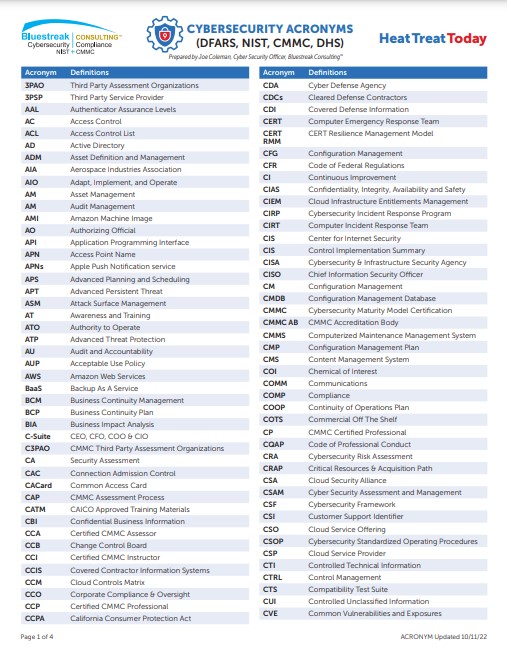
Click image to download a list of cybersecurity acronyms and definitions.

CMMC 2.0 is not an option; it is a critical requirement for any company seeking to do business with the DoD, its prime contractors, and/or downstream service providers. Procrastination is not an option. By taking proactive steps to understand and address CMMC 2.0 requirements, your company can mitigate risks, enhance its cybersecurity posture, and gain a significant competitive advantage in the evolving defense landscape.

For an up-to-date resource list of common cybersecurity acronyms, click the image to the right.

About the Author:

Joe Coleman
Cyber Security Officer
Bluestreak Consulting
Source: Bluestreak Consulting

Joe Coleman is the cybersecurity officer at Bluestreak Compliance, which is a division of Bluestreak | Bright AM™. Joe has over 35 years of diverse manufacturing and engineering experience. His background includes extensive training in cybersecurity, a career as a machinist, machining manager, and an early additive manufacturing (AM) pioneer. Joe presented at the Furnaces North America (FNA 2024) convention on DFARS, NIST 800-171, and CMMC 2.0.

For more information: Contact Joe at joe.coleman@go-throughput.com.


CMMC 2.0: Why Waiting Is a Costly Mistake Read More »

US DOE Industrial Decarbonization Initiative Update: January 2025, the Trump Effect

The heat treating industry is under pressure to reduce its greenhouse gas emissions (GHGE), and the response has been a noble effort to attain sustainability. In 2024, Heat Treat Today published a series of articles by guest columnist Michael Mouilleseaux, general manager at Erie Steel, Ltd., regarding the U.S. Department of Energy’s initiative related to the decarbonization of industry and its potential impact on the heat treating industry.

This update was first published in Heat Treat Today’s February 2025 Air & Atmosphere Heat Treating Aerospace print edition in response to recent changes in the U.S. administration. To catch up on previous columns by Mike, check these out: US DOE Strategy Affects Heat Treaters appeared in the March 2024 Aerospace print edition; “U.S. DOE Strategy: Ramifications for Heat Treaters” appeared in the May 2024 Sustainability print edition; and “US DOE Strategy: Why the Heat Treating Industry?” appeared in the June 2024 Buyer’s Guide print edition.


As described in previous articles, President Joe Biden issued an executive order in 2021 that committed the federal government through the Department of Energy (DOE) and the Environmental Protection Agency (EPA) to reduce GHGE attributable to “process heating” by 85% by 2035 and attain net zero CO2 emissions by 2050.

These goals were to be achieved by implementing four largely unproven technologies:

  • Energy efficiency
  • Industrial electrification (using green electricity)
  • Adoption of low-carbon fuels (e.g., hydrogen), feedstocks, and energy sources (LCFFES)
  • Carbon capture, utilization and storage at the generated source (CCUS)
On www.heattreattoday.com/factsheetDOE, you can utilize the one-page resource to let governmental officials know what our industry is, who we are, who we employ, and the effect this effort has in regulating us out of business.

We further described the negative effect the implementation of these efforts would have on the heat treating industry — specifically, an increase in energy costs from 4x to 15x, with a companion reduction in energy reliability. This is not the combination that portends success in business.

In November of 2024, the people of the United States made a statement. They decided the direction of the country for the past four years was not what they wanted and chose another path, a path they chose based on what they had experienced from 2017 through 2020. As it pertains to industrial policy, they knew that reduced regulation and policies favorable to business growth were the guiding principles.

What may we reasonably expect from a Trump administration relative to this Industrial Decarbonization Effort?

At a minimum, we should expect a sober understanding of the issues and agreement that any low-carbon replacement energy technologies will come with the assurance they are cost competitive with current sources, and that they will be reliable and secure.

Is this to say that all efforts toward the achievement of a reduction in greenhouse gas emissions (GHGE) should be abandoned? Absolutely not, however, they should not be implemented with a religious zeal that places implementation above practicality. We need to recognize that if our way of life is to be maintained, these changes will be evolutionary — not revolutionary.

Should we anticipate this effort to revise the “timing” of GHGE reductions will be easy to achieve? It will not; the Biden administration has made every effort to obligate a maximum amount of the funding from the IRA earmarked for “clean energy,” understanding any funds not so obligated can be rescinded. Additionally, a concerted effort to place these funds in Republican states was made to make any recission as politically painful as possible for the incoming administration.

The incoming administration has made it clear they will scrutinize all existing funding sources that support those clean energy initiatives that distort and undermine energy independence and reliability. They have stated they intend on immediately pausing all regulatory activities until they have the opportunity to review them. They intend on rescinding all executive orders that further the clean energy agenda.

Do we have a part in this? Yes, our industry, although crucial to the manufacturing community and national security, has very little visibility. Now is the time to act and to let our representatives and senators know how important it is to pause, if not reconfigure, this Industrial Decarbonization Initiative to assure our businesses remain vibrant and vigorous.

Attend the 2025 SUMMIT to find out more about the DOE’s actions for the heat treat industry.

About the Author:

Michael Mouilleseaux
General Manager
Erie Steel, Ltd

Michael Mouilleseaux is general manager at Erie Steel, Ltd. He has been at Erie Steel in Toledo, OH since 2006 with previous metallurgical experience at New Process Gear in Syracuse, NY, and as the director of Technology in Marketing at FPM Heat Treating LLC in Elk Grove, IL. Michael attended the stakeholder meetings at the May 2023 symposium hosted by the U.S. DOE’s Office of Energy Efficiency & Renewable Energy.

For more information: Contact Michael at mmouilleseaux@erie.com.  


US DOE Industrial Decarbonization Initiative Update: January 2025, the Trump Effect Read More »

Most SMBs Unprepared for CMMC 2.0, Risk Losing Contracts 

“The Cybersecurity Maturity Model Certification (CMMC) 2.0 aims to improve cybersecurity across the defense industrial base (DIB), but many small to mid-sized businesses (SMBs) struggle to meet the standards, putting them at risk of losing crucial contracts.” In this Cybersecurity Desk column, Joe Coleman, cybersecurity officer at Bluestreak Compliance, a division of Bluestreak | Bright AM™, raises the alarm if small to mid-sized heat treaters neglect compliance standards and guides companies through the minefield of cyber threats facing all SMBs.

Read more Cybersecurity Desk columns in previous Heat Treat Today’s issues here.


Despite an increasing cyber threat landscape, many small to mid-sized businesses (SMBs) in the Department of Defense (DoD) supply chain remain unprepared for compliance with NIST SP 800-171 R2 and CMMC 2.0. The Cybersecurity Maturity Model Certification (CMMC) 2.0 aims to improve cybersecurity across the defense industrial base (DIB), but many SMBs struggle to meet the standards, putting them at risk of losing crucial contracts. Surveys suggest that nearly 70% of SMBs are unready for the new requirements, and the real figure could be even higher due to some businesses inaccurately reporting compliance by inflating their assessment scores. 

Understanding CMMC 2.0 

Contact us with your Reader Feedback!

CMMC 2.0 simplifies the original five-tier framework into three levels: 

  • Level 1: Basic cyber hygiene for contractors handling Federal Contract Information (FCI). 
  • Level 2: Advanced practices for those working with Controlled Unclassified Information (CUI). 
  • Level 3: Stringent requirements for contractors involved in national security projects. 

Compliance is mandatory for any contractor bidding on DoD contracts, including those working indirectly for federal contractors and subcontractors. SMBs should anticipate customers clients inquiring to inquire about their compliance as these standards will soon impact their business relationships. Achieving compliance is a lengthy process, typically taking 12 to 18 months. 

Low Readiness and Risks 

The lack of readiness among SMBs threatens both business continuity and national security. Many smaller contractors lack the resources and expertise to meet CMMC 2.0’s standards. Given the defense sector’s reliance on a wide variety of contractors, this gap could create widespread repercussions. 

Financial Implications of Non-Compliance 

Irreversible consequences from waiting to comply

Compliance with CMMC 2.0 can be financially burdensome. Implementing measures such as multi-factor authentication, encryption and continuous monitoring can be costly, especially for businesses with limited resources. The lack of in-house cybersecurity expertise compounds this issue, requiring companies to hire or train specialized personnel, further increasing costs. 

Failing to comply with CMMC 2.0 could result in losing valuable DoD contracts, which can be a significant portion of SMB revenue. Such losses could lead to layoffs, revenue declines or even business closures. 

Challenges to Compliance 

Several challenges contribute to the widespread unpreparedness among SMBs: 

  • Unclear timelines: Uncertainty surrounding DoD’s compliance timelines complicates planning and prioritization for SMBs. 
  • Complexity of requirements: While CMMC 2.0 simplifies the original framework, its specific requirements remain difficult to interpret for many SMBs, particularly in identifying necessary security measures. 
  • Resource limitations: The cost of achieving and maintaining compliance strains smaller businesses, which often lack the budgets for the required technology and expertise. 
  • Lack of cybersecurity expertise: A shortage of qualified personnel poses a significant obstacle, as demand for cybersecurity professionals is high across industries. 

Government Support Initiatives 

To help SMBs, the DoD has introduced various programs, including training, grants and educational resources. A phased implementation timeline also provides additional preparation time. However, industry experts suggest that further support, such as tax credits or subsidies, could help SMBs offset the costs of compliance. Clearer guidance from the DoD would also be beneficial in helping businesses navigate the certification process. 

Path Forward for SMBs 

Click image to download a list of cybersecurity acronyms and definitions.

To secure future contracts, SMBs must prioritize cybersecurity. This involves conducting internal risk assessments, identifying vulnerabilities, and creating compliance plans. Partnering with cybersecurity experts or managed service providers can help SMBs develop cost-effective strategies. Additionally, leveraging government resources and adopting critical security measures early will better position SMBs for CMMC 2.0 certification. 

Conclusion 

The widespread lack of preparedness for CMMC 2.0 poses significant risks to both SMBs and the defense supply chain. As deadlines approach, proactive measures from both businesses and the government are necessary to close the readiness gap and ensure the continued participation of SMBs in the defense sector. 

About the Author

Joe Coleman
Cyber Security Officer
Bluestreak Consulting
Source: Bluestreak Consulting

Joe Coleman is the cybersecurity officer at Bluestreak Compliance, which is a division of Bluestreak | Bright AM™. Joe has over 35 years of diverse manufacturing and engineering experience. His background includes extensive training in cybersecurity, a career as a machinist, machining manager and an early additive manufacturing (AM) pioneer. Joe presented at the Furnaces North America (FNA 2024) convention on DFARS, NIST 800-171, and CMMC 2.0.

For more information: Contact Joe at joe.coleman@go-throughput.com.


Find Heat Treating Products And Services When You Search On Heat Treat Buyers Guide.Com


Most SMBs Unprepared for CMMC 2.0, Risk Losing Contracts  Read More »

What Is Thermal Expansion?

The Heat Treat Doctor® has returned to offer sage advice to Heat Treat Today readers and to answer your questions about heat treating, brazing, sintering, and other types of thermal treatments as well as questions on metallurgy, equipment, and process-related issues.

This informative piece was first released in Heat Treat Today’s December 2024 Medical & Energy Heat Treat print edition.


The subject of thermal expansion and contraction is a very important one to most heat treaters given that the materials of construction of our furnaces and our fixtures experience these phenomena every day. However, to find a simple explanation of what it is and how we can help minimize the issues caused by it can be difficult. What we need is an explanation in laymen’s terms, along with some simple science and a few examples. Let’s learn more.

Thermal Expansion Effects

Contact us with your Reader Feedback!

When exposed to a change in temperature, whether heating or cooling, materials experience a change (increase or decrease) in length, area, or volume. This not only changes the material’s size but also can influence its density. The freezing of ice cubes is a common example of a volume expansion (on freezing or cooling), while as they melt (on heating), we see a volume contraction.

As most of us recall from our science classes, as temperature increases, atoms begin to move faster and faster. In other words, their average kinetic energy increases. With the increase in thermal energy, the bonds between atoms vibrate faster and faster creating more distance between themselves. This relative expansion (aka strain) divided by the change in temperature is what is known as the material’s coefficient of linear thermal expansion.

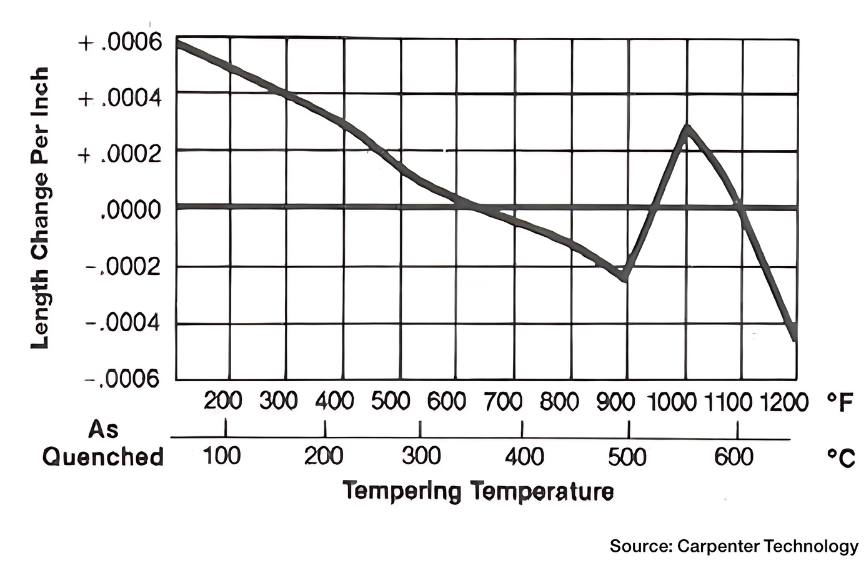
We must also be aware, however, that a number of materials behave in a different way upon heating. Namely, they contract. This usually happens over a specific temperature range. Tempering of D2 tool steel is a good example (Figure 1). From a scientific point of view, we call this thermal contraction (aka negative thermal expansion).

Figure 1. Change in length of D2 tool steel as a function of tempering temperature (Image courtesy of Carpenter Technology — www.carpentertechnology.com)

A related fact to be aware of is that thermal expansion generally decreases with increasing bond energy. This influences the melting point of solids, with higher melting point materials (such as the Ni-Cr alloys found in our furnaces and fixtures) more likely to have lower coefficient of thermal expansion. The thermal expansion of quartz and other types of glass (found in some vacuum furnaces) is, however, slightly higher. And, in general, liquids expand slightly more than solids.

Effect on Density

As addressed above, thermal expansion changes the space between atoms, which in turn changes the volume, while negligibly changing its mass and hence its density. (In an unrelated but interesting fact, wind and ocean currents are, to a degree, effected by thermal expansion and contraction of our oceans.)

What Is the Effect of the Coefficient of Thermal Expansion?

In laymen’s terms, the coefficient of thermal expansion (Table 1) tells us how the size of an object changes with a change in temperature. Specifically, it measures the fractional change in size per degree change in temperature at a constant pressure. Lower coefficients describe lower tendency to change in size. There are several types of thermal expansion coefficients — namely linear, area, and volumetric. For most solid materials, we are typically concerned in the heat treat industry with the change along a length, or in some cases a change in volume (though this is mainly of concern in liquids).

Table 1. Comparative values for linear and volumetric expansion of selected materials

Heat Treat Furnace Examples

When calculating thermal expansion, it is necessary to consider whether the design is free to expand or is constrained. Alloy furnace muffles, retorts, mesh and cast link belts, and radiant tubes are good examples. The furnaces that use them must be designed to allow for linear growth and changes in area or volume. If not, the result is premature failure due to warpage (i.e., unanticipated movement).

If a component is constrained so that it cannot expand, then internal stress will result as the temperature changes. These stresses can be calculated by considering the strain that would occur if the design were free to expand and the stress required to reduce that strain to zero, through the stress/strain relationship (characterized by Young’s modulus). In most furnace materials it is not often necessary to consider the effect of pressure change, except perhaps in certain vacuum furnaces or autoclave designs.

A Little Science

For those that are interested, here are the formulas most often used by heat treaters to calculate the coefficient of thermal expansion.

Estimates of the Change in Length (L), Area (A), and Volume (V)

Linear expansion is best interpreted as a change in only one dimension, namely length. So linear expansion can be directly related to the coefficient of linear thermal expansion (αL) as the change in length per degree of temperature change. It can be estimated (for most of our purposes) as:

where:

  • ΔL is the change in length
  • ΔT is the change in temperature
  • αL is the coefficient of linear expansion

This estimation works well as long as the linear expansion coefficient does not change much over the change in temperature and the fractional change in length is small (ΔL/L <<1). If not, then a differential equation (dL/dT) must be used.

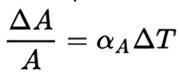
By comparison, the area thermal expansion coefficient (αA) relates the change in a material’s area dimensions to a change in temperature by the following equation:

where:

  • ΔA is the change in area
  • ΔT is the change in temperature
  • αA is the coefficient of area expansion

Again, this equation works well as long as the area expansion coefficient does not change much over the change in temperature ΔT(ΔT), if we ignore pressure and the fractional change in area is small (ΔA/A <<1)ΔA/A<<1. If either of these conditions does not hold, the equation must be integrated.

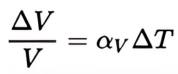
For a solid volume, we can again ignore the effects of pressure on the material, and the volumetric (or cubical) thermal expansion coefficient can be written as the rate of change of that volume with temperature, namely:

where:

• ΔV is the change in volume
• ΔT is the change in temperature
• αV is the coefficient of volumetric expansion

In other words, the volume of a material changes by some fixed fractional amount. For example, a steel block with a volume of 1 cubic meter might expand to 1.002 cubic meters when the temperature is raised by 90°F (32°C). This is an expansion of 0.2%. By contrast, if this block of steel had a volume of 2 cubic meters, then under the same conditions it would expand to 2.004 cubic meters, again an expansion of 0.2% for a change in temperature of 90°F (32°C).

Thermal Fatigue

In many instances, we must consider the effect of thermal fatigue as well as thermal stress. One example is on the surface of a hot work die steel as H11 or H13: one must ensure that in service, when it experiences a (rapid) change in temperature, it will avoid cracking.

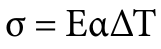
The equation for thermal stress is:

where:

  • σ is the thermal stress
  • E is the Young’s modulus of the material at temperature
  • α is the coefficient of linear thermal expansion at temperature
  • ΔT is the change in temperature

Here both E and α depend on temperature and the resultant stress will either be compressive if heated or tensile if cooled, so we must use these constants at both maximum and minimum temperatures. Considering the temperature dependent stress-strain curve, this stress may exceed the elastic limit (tensile or compressive) and contribute eventually to thermal fatigue failure. There are software programs to aid in the calculation of the resultant thermal stresses. Thermal expansion at a surface at a higher temperature than the core results in a compressive stress, and vice versa.

Final Thoughts

The effects of thermal expansion will be highlighted in a forthcoming article in Heat Treat Today, but it suffices for all heat treaters to remember that this phenomenon is responsible for a great deal of downtime and maintenance in our equipment. It also can affect the end product quality (disguising itself as distortion) and hence create additional cost or performance issues for our clients.

References

Chandler, Harry, ed. Heat Treater’s Guide: Practices and Procedures for Irons and Steels, 2nd Edition. ASM International, 1995.

Herring, Daniel H. Vacuum Heat Treatment. BNP Media, 2012.

Herring, Daniel H. Vacuum Heat Treatment Volume II. BNP Media, 2016.

Special thanks to Professor Joseph C. Benedyk for his input on the topic.

About the Author

Dan Herring
“The Heat Treat Doctor”
The HERRING GROUP, Inc.

Dan Herring has been in the industry for over 50 years and has gained vast experience in fields that include materials science, engineering, metallurgy, new product research, and many other areas. He is the author of six books and over 700 technical articles.

For more information: Contact Dan at dherring@heat-treat-doctor.com.

For more information about Dan’s books: see his page at the Heat Treat Store.


Find Heat Treating Products And Services When You Search On Heat Treat Buyers Guide.Com


What Is Thermal Expansion? Read More »

Dual Chamber Vacuum Furnaces vs. Single Chamber Vacuum Furnaces — An Energy Perspective

The need to understand how certain furnace designs operate comes at a time when heat treaters are weighing each energy cost and benefit of their systems and processes. Read on for a quick summary on how dual chamber furnaces preserve energy.


On April 17-19, 2024, TAV VACUUM FURNACES provided a speaker at the 4th MCHTSE (Mediterranean Conference on Heat Treatment and Surface Engineering). The speech focused on the energy aspects of vacuum heat treatment, a subject towards which all of us within the industry need to pay attention for reducing the carbon emissions aiming at a zero net emissions future.

We have already analyzed the essential role that vacuum furnaces will play in this transition, with a focus on the optimization of energy consumption in our previous article. With this new presentation, we wanted to emphasize how selecting the right vacuum furnace configuration for specific processes may impact the energy required to perform such process. For doing so, we compared two different furnace designs — single chamber vs. dual chamber vacuum furnaces — detailing all of the components’ energy consumption for a specific process.

TAV DC4, dual chamber vacuum furnace for low pressure carburizing and gas quenching
Source: TAV VACUUM FURNACES

As a sneak peek into our presentation, we will summarize below how the main features of the two vacuum furnaces design are affecting their energy performance.

Let’s start by introducing the protagonist of our comparison: a single chamber, graphite insulated vacuum furnace, model TAV H4, and a dual chamber furnace TAV DC4, both having useful volume 400 x 400 x 600 mm (16” x 16” x 24”) (w x h x d).

In a single chamber vacuum furnace, like the TAV H4, the entire process is carried out with the load inside the furnace hot zone. This represents a highly flexible configuration that can perform complex heat treatment recipes with a multiple sequence of heating and cooling stages and to precisely control the temperature gradients at each stage.

Configuration of the TAV DC4 dual chamber vacuum furnace
Source: TAV VACUUM FURNACES

Alternatively, a dual chamber vacuum furnace, like the TAV DC4, is equipped with a cold chamber, separated from the hot zone, dedicated for quenching. Despite the greater complexity of this type of vacuum furnace, the dual chamber configuration allows for several benefits.

First, in dual chamber furnaces, the graphite insulated hot chamber is never exposed to ambient air during loading and unloading of the furnace; for this reason, the hot chamber may be pre-heated at the treatment temperature (or at a lower temperature, to control the heating gradient). But in single chamber vacuum furnaces, the hot zone must always be loaded and unloaded at room temperature to avoid damages due to heat exposure of graphite to oxygen.

Because dual chamber furnaces have more controlled heating, this will result in both faster heating cycles and lower energy consumption, as a substantial amount of energy is required to heat up the furnace hot zone. This advantage obviously will be more relevant in terms of energy savings the shorter the time is between subsequent heat treatments.

View of the cold chamber of the TAV DC4 dual chamber vacuum furnace
Source: TAV VACUUM FURNACES

Secondly, since the quenching phase is performed in a separated chamber, the hot zone insulation can be improved in dual chamber vacuum furnaces by increasing the thickness of the graphite board without compromising cooling performance. This translates into a significantly lower heat dissipation, to the extent that at 2012°F (1100°C) the power dissipation per surface unit (kW/m2) is reduced by 25% compared to an equivalent single chamber vacuum furnace.

Additionally, quenching in a dedicated cold chamber allows to obtain higher heat transfer coefficients and higher cooling rates compared to a single chamber vacuum furnace. Since the cold chamber is dedicated solely to the quenching phase, it can be designed for optimizing the cooling gas flow only without the need to accommodate all the components required for heating. All things considered, the heat transfer coefficient achievable in the TAV DC4 can be, all other things being equal, even 50% higher compared to a single chamber vacuum furnace. Secondly, since the cold chamber remains at room temperature throughout the whole process, only the load and loading fixtures need to be cooled down; as a result, the amount of heat that needs to be dissipated is significantly less compared to the single chamber counterpart.

CFD simulation showing a study on the cooling gas speed in a section of the cooling chamber for the TAV DC4 dual chamber vacuum furnace
Source: TAV VACUUM FURNACES

For heat treatments requiring high cooling rates, it is possible to process significantly higher loads on the dual chamber furnace compared to the single chamber model; translated into numbers, the dual chamber model can effectively quench as much as double processable in a single chamber furnace, depending on the alloy grade, load configuration and overall process. The savings in terms of energy consumption per unit load (kWh/kg) achievable in the dual chamber furnace for such processes can be as high as 50% compared to the single chamber furnace.

In the end, the aim of the speech was to highlight how the energy efficiency of vacuum furnaces is highly dependent on the machine-process combination. Choosing the right vacuum furnace configuration for a specific application, instead of relying solely on standardised solutions, will improve significantly the energy efficiency of the heat treatment process and drive the return on investment.

About the Author

Giorgio Valseccchi
R&D Manager
TAV VACUUM FURNACES

Giogio Valsecchi has been with the company TAV VACUUM FURNACES for nearly 4 years, after having studied mechanical engineering at Politecnico di Milano. 

For more information: Contact Giorgio at info@tav-vacuumfurnaces.com.


Find Heat Treating Products And Services When You Search On Heat Treat Buyers Guide.Com


Dual Chamber Vacuum Furnaces vs. Single Chamber Vacuum Furnaces — An Energy Perspective Read More »

Reverse Engineering Aerospace Components: The Thought Process and Challenges

op-ed

You can take the aircraft apart, but can you put it back together? Reverse engineering, as anyone who has ever taken apart the TV remote will tell you, is more complicated than it first appears. It is, however, far from impossible. Learn the essential steps to reverse engineering, the role of heat treating, and the challenges the thought process presents.

For this Technical Tuesday piece, take a few minutes to read Jonathan McKay's, heat treat manager at Thomas Instrument, article drawn from Heat Treat Today's March Aerospace Heat Treating print edition. Heat Treat Today is always pleased to share pieces from one of our 40 Under 40 alumnus like Jonathan!

If you want to share ideas about the aerospace industry, our editors would be interested in featuring it online at www.heattreattoday.com. Email Bethany Leone at bethany@heattreattoday.com with your own contributions!


Contact us with your Reader Feedback!
Jonathan McKay
Heat Treat Manager at Thomas Instrument
Source: Thomas Instrument

Reverse engineering (RE) is the process of taking a component or design and dissecting it all the way down to the raw material. Reverse engineering can range from a singular component such as a piston or gear, to multiple components that make up an overall assembly such as an engine or mechanical actuator. This process allows engineers to analyze and gain an understanding of a component’s overall function and design through deductive reasoning. RE can range in the type of analysis, from geometric measurements and material analysis to electrical or mechanical testing. Each analysis reveals clues of how something can be reproduced. The idea of reverse engineering is to look beyond what’s in front of you and find the unexposed clues that can show why something was designed or possibly the thought process of the original designer.

Reverse engineering typically happens through a third-party manufacturer usually not affiliated with the original equipment manufacturer (OEM). Often this is done because the original manufacturer no longer supports the product, or the original design is outdated and needs to be modernized to improve efficiency, functionality, or life expectancy. To put this in perspective, the U.S. Airforce received its first B-1 Bomber in 1984. Since then, over 100 aircrafts have been delivered. After nearly 50 years the aircraft is still flying, but many OEM manufacturers have moved on to newer programs, thus allocating their capabilities and capacity towards the present and future market demands. This creates a market for fabrication of replacement components and assemblies to support aging platforms. In most cases, the OEM’s retain proprietary data thus creating a need for RE processing.

"[T]he U.S. Airforce received its first B-1 Bomber in 1984.
Source: Unsplash.com/midkiffaries

With aerospace products in particular and specifically aging aircrafts, one will encounter obsolescence issues. The goal is to maintain the aircraft with replacement parts that conform to all form, fit, and function requirements while also assuring they have proper life expectancy with respect to maintenance cycles. With this in mind, you typically work with low volume production and invest more time into the design and planning phase of the process. When engaged in this process, it is critical that one understands and implements a fabrication plan that will yield a product that is equivalent or better than that of the OEM. Some engineers would say “Well, let’s make it bigger and better,” but with aerospace components this is not always the case. Typically, the main focus is to replicate the original design intent to the best of your ability because you have a specific footprint and weight to maintain as well as functionality. The exchangeability of the original design and RE design is key. The reverse engineered product needs to possess the same functional and physical characteristics and be equivalent in the performance, reliability, and maintainability. This allows both items to be exchanged without concern for fi t, performance, or alterations to its adjoining component(s).

Another key point in RE processing could be to limit long lead phases by minimizing the need for additional qualification testing where possible. As plating, heat treat, or materials begin to deviate from the initial design, you must consider requalification testing to prove those changes are not detrimental to the application and do not cause more harm than good. Sometimes engineers create features within a design that are meant to be a weak point; this prevents a more critical component from breaking or being destroyed. When you begin to make deviations, it may push the weak point closer to the critical component.

While there are certainly many steps to RE, the essential steps include:

  1. Collect as much data as possible from an external standpoint without destroying or disassembling; i.e., note the overall measurements, orientation, special features, electrical or mechanical properties, etc. It is also a good idea to analyze mating components and/or the system in which the component is utilized. Mating parts are a big part of the discovery; the mating parts can help determine what alternate materials, plating, heat treat, or finishes can be used.
  2. Start creating preliminary drawings with detailed dimensions, notes, and features that were inspected from Step 1.
  3. Slowly disassemble the part (if an assembly) and inspect key features and create preliminary drawings for sub-assembly components. In some cases, it helps to reassemble the product to ensure an understanding of how it goes back together in order to optimize the assembly process once new components are manufactured.
  4. Evaluate the product(s). Conduct material analysis to acquire chemical and mechanical property data. This will aid in defining the appropriate layout for machining, material conditioning (i.e., heat treatment), external finishes/coatings, etc.

While the design and planning phase may pose some challenges, the more critical challenges that occur during reverse engineering are in the execution of the manufacturing, assembly, and qualification testing. To elaborate, once you begin machining and processing components, there may be special methods of manufacturing that require discovery because standard methods may not have worked when the OEM produced it. When this happens, you go back and forth on updating and fine-tuning the process plans, fixturing, programs, etc. Sometimes this means scrapping parts and starting over or validating if parts are still usable for prototyping. Along the same lines, when the process progresses into the assembly and testing phase, engineers typically discover variability, errors, or weak points that require adjustments. In those cases, the engineer’s drawings must be revised. A large percentage of these issues can be limited through experience with similar components or assemblies, but in most cases, there is a lot of analysis and some trial-and error involved in the manufacturing, assembly, and testing phase that is not apparent upon initial RE processing.

References:

  1. Boeing. “The Bone.” https://www. boeing.com/defense/b-1b-bomber/
  2. DLA. “Master List of Technical and Quality Requirements Version 14.”
  3. MIL-STD-280A. “Handbook for definitions of item levels, item exchangeability, models, and related terms.”
  4. DOD Washington, D.C. 20301.

Special thanks to David V. Jones and Thomas R. Blackburn IV at Thomas Instrument for their input on this topic.

About the Author:

Jonathan McKay is a mechanical engineer at Thomas Instrument, a company specializing in reverse engineering critical aerospace components. At the company, he is manning the establishment of heat treat operations, has created procedures and process plans for Thomas Instrument to be an approved heat treater for an aerospace prime, and has attained Nadcap accreditation for heat treat.

Contact him at Jonathan.mckay@thomasinstrument.com


Find heat treating products and services when you search on Heat Treat Buyers Guide.com


Reverse Engineering Aerospace Components: The Thought Process and Challenges Read More »

Fusion and Our Future

op-ed

Current energy developments turn our thoughts to the possibility of future innovations. For example, is there a way to generate energy, usable energy, from fusion? Is there hope that this energy can be created and made available to the heat treat industry and other sectors? There seem to be many, many questions that have yet to be answered in the production and utilization of fusion energy.

John Clarke, technical director at Helios Electric Corporation, holds out confidence in the future by standing on the foundation of the past. Comparing the current position of science and research on fusion energy to the early days of aviation exploration, he thinks the sky is the limit for what can be accomplished.


John B. Clarke
Technical Director
Helios Electric Corporation
Source: Helios Electric Corporation

Contact us with your Reader Feedback!

On December 5, 2022, scientists at Lawrence Livermore National Laboratory conducted the first controlled fusion experiment in history. This experiment produced more energy from fusion than the laser energy used to drive it. In this test, the nuclei of two lighter elements were combined to form one new, heavier nucleus. During the process, some of the mass of the lighter elements was converted to energy.

How will this incredible breakthrough affect our lives? Will the promise of limitless, clean, and cheap energy be realized, and if so, when?

I don’t think we can know the answers to the above questions with certainty.  It has always been difficult to foresee the final results of any technological leap forward, and even more difficult to provide a timeframe that encompasses the change.

Think about a time before jumbo jets and commuter flights. That was a time when not a single person had been carried by airplane through the skies. History shows that scientists and thinkers were able to come up with ideas and machines that flew through the air while carrying many. Look at a brief overview of how quickly the aircraft improved.

On December 17, 1903, at Kill Devil Hills, near Kitty Hawk, NC, Orville Wright completed the first powered flight of a heavier-than-air aircraft known as the Wright Flyer. The flight lasted just 12 seconds, traveled 120 feet, and reached a top speed of 6.8 miles per hour. 15 years later, we saw the first airmail and scheduled commercial service. 24 years later, Lindberg flew across the Atlantic. 36 years later, we witnessed the introduction of jet engines, and Chuck Yeager broke the speed of sound just 44 years after the first flight in North Carolina.

Example from early advances in aviation: the Wright Flyer
Source: unsplash.com/historyhd

Obviously, Orville and Wilber Wright would have had difficulty foreseeing the aircraft's advancements and would never have predicted a time frame. Why is timing the rate of advancement so difficult?  Airplane development benefited from the convergence of multiple independent and unrelated technology, and there was the will to develop more advanced aircraft for both military and civilian use.

So, back to the first question posed – will the promise of limitless, clean, and cheap energy from fusion be realized? I am going to say yes. Not that I know much about fusion, it is simply that history teaches us not to bet against technology. As for when, well that is a known unknown.

About the Author:

John Clarke, with over 30 years in the heat processing field, is currently the technical director of Helios Corporation. John’s work includes system efficiency analysis, burner design as well as burner management systems. John was a former president of the Industrial Heating Equipment Association and vice president at Maxon Corporation.


Find heat treating products and services when you search on Heat Treat Buyers Guide.com


Fusion and Our Future Read More »

Future of Heat Treat: Renewable Energy

“In the near term, the thermal processing industry faces landmark decisions and the most commonly postulated future, based entirely on electricity is only one of many possible outcomes. This option, however, is not realistically implementable… there is insufficient green energy surplus to meet expected demand in its entirety.”

Everyone is talking about the future of heat treat and how to process parts for the future. Technology, such as systems related to IoT and 4D, is seen as the solutions. So what about the future of combustion? The color is green.

Read this guest column from WS Thermal which summarizes a few key caveats which stand in the way of transforming energy sources. Give it a read, and email editor@heattreattoday.com if you have an op-ed or guest column that you would like to submit to Heat Treat Today!


WS is well known when it comes to low NOx combustion of natural gas in industrial furnaces. By means of the patented FLOX® technology, WS burners can achieve NOx emissions lower than 0.07 #/MMBTU in most operating scenarios, which sets the benchmark for modern gas heated furnaces around the globe. The future, however, belongs to renewable energy sources. Aside from their ecological advantages, it is foreseeable that the economic benefits will become reality far sooner than previously predicted. Even more so, if external effects such as an adequate carbon tax are considered.

In the [short] term, the thermal processing industry faces landmark decisions and the most commonly postulated future, based entirely on electricity is only one of many possible outcomes. This option, however, is not realistically implementable. At this point in time, there is insufficient green energy surplus to meet expected demand in its entirety: heating of thermal process applications, electrolytically generated hydrogen for direct reduction of iron ore, or for fueling long-haul transportation, battery electric mobility, space heating and cooling via heat pumps and many additional applications. Renewable electricity faces demand many times greater than its short or medium-term generation capacity. All this does not even take into consideration the necessity of simultaneous demand and generation in the electric network.

Using a broad spectrum of green energy sources, likely generated in a decentralized manner, and with regional focus on infrastructure capabilities such as transportation and storage of energy carriers, seems more plausible than focusing purely on an electricity-based energy system. However, at this point in time it is impossible to foresee which energy carrier will play the dominant role, or which market shares the various options will garner over time. Hydrogen from electrolysis or from reforming biogas, bio propane, synthetic fuel like ammonia synthesized in sunny regions, or synthetic CH4 which could utilize the existing global transportation infrastructure and current end user devices. The only thing that seems certain is that chemical energy carriers will continue to play a large role in the future. Only they offer the unique advantages such as high availability, high energy density and storage capability, which ultimately enable an airplane to fly, or make it possible to supply thermal processing applications with enough green energy to reliably maintain process temperature for long periods. Therefore, at WS we are committed to our core message: We are …

Regardless of which renewable chemical energy carrier you will ultimately be using in the future, it is already in our focus. Even now, we are implementing technologies aiming at our green future in WS combustion systems. For example, we are exploring technologies that minimize NOx emissions even when combusting ammonia or hydrogen. On a case-by-case basis, we can determine if your WS burners are suitable for use with a given new energy carrier or if a retrofit kit is needed. In any case, due to the long service life of your equipment, what is essential for you to know today is: WS will provide you a state-of-the-art combustion system solution – even if the future comes faster than anticipated.


(photo source: Johannes Plenio)


All other images are from WS Thermal.

Future of Heat Treat: Renewable Energy Read More »

Skip to content