



heat treat radio

Heat Treat Radio #84: Heat Treat Tomorrow — Digital Security with 4 Industry Experts

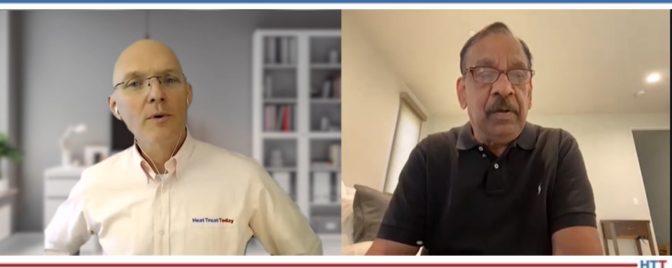
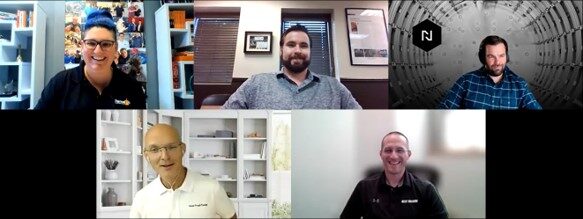
What does cybersecurity look like in a heat treat shop? In this episode, Doug Glenn, publisher of Heat Treat Today and host of Heat Treat Radio, will be speaking with four industry experts about this challenge: Heather Falcone, CEO of Thermal-Vac Technology, Inc.; Brian Flynn, plant manager at Erie Steel Ltd.; Mike Löpke, head of software & digitalization at Nitrex Metal; and Don Marteeny, VP of Engineering at SECO/VACUUM Technologies LLC. Watch, listen, and learn all about the risks, preventions, practical steps, and future outlook that this panel has to share.

Below, you can watch the video, listen to the podcast by clicking on the audio play button, or read an edited transcript.




The following transcript has been edited for your reading enjoyment.

Doug Glenn (DG):  Welcome to another episode of Heat Treat Radio. We’re going to talk about a relatively serious issue today. I hope to have a little bit of enjoyable time doing it. I’m really happy to have these four people on the call with us. We’re going to talk about cybersecurity -- probably one of the most pressing issues. Obviously, it’s not heat treat specific, but we’re hoping to take some of the specific issues that deal with cybersecurity and, if possible, drill them down into the heat treat industry, as best we can.

So, I’d like to introduce our prestigious crowd here today. They’re going to talk a little bit about it.

Contact us
with your
Reader Feedback

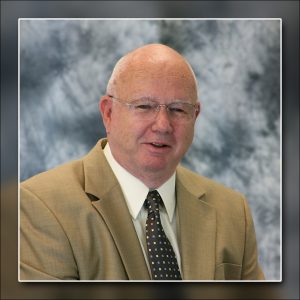
Heather Falcone
CEO
Thermal-Vac Technology, Inc.

First, I’d like to introduce Heather Falcone who is the CEO of Thermal-Vac Technology, Inc. out of California. Heather is the CEO, as I mentioned, and currently serves as a member on the board of directors of the Metal Treating Institute. She is a recognized trainer, writer, public speaker on a variety of topics such as leadership, business, and heat treat equipment. At her company, she has led them to be fully compliant in missed 800-171 and DFAR 252.204-7012 -- that’s important, I’m sure -- cybersecurity program as well as EOS system. Heather is, in fact, a member of Heat Treat Today's 40 Under 40 Class of 2019. And I, also -- I don’t know if they’re going to be able to see this; I’ll put it up on the screen if not -- there’s Heather’s picture in a really nice magazine that we got about leadership. Anyway, I am glad to have you here, Heather.
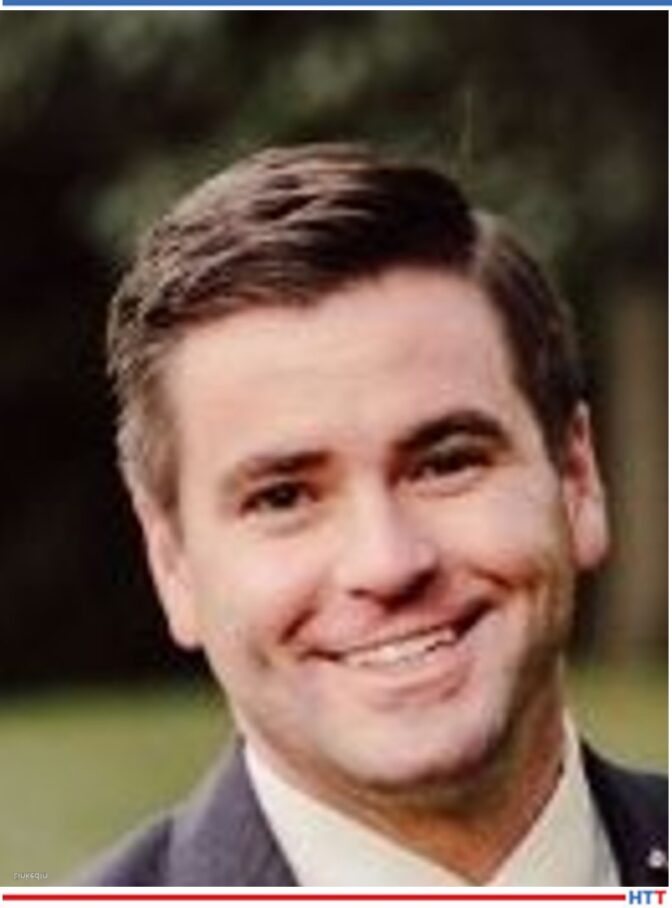
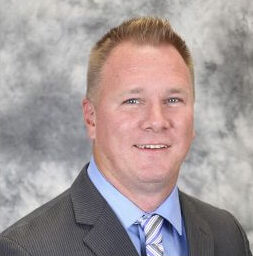
Brian Flynn
plant manager
Erie Steel Ltd.

Next is Brian Flynn from Erie Steel, Ltd. Brian is a third-generation heat treater. He attended the University of Cincinnati earning a Bachelor of Science and Chemical Engineering degree with a minor in Material Science. He’s also completed an executive MBA from the University of Toledo. As a plant manager, he has close familiarity with technology development, people skills, customer service, and management of technical services. He is also a member of Heat Treat Today's 40 Under 40 Class of 2021. We’ve asked Brian to get involved here because I think he’s probably got a good perspective on implementing some of this cybersecurity stuff. I appreciate you being here, Brian, thank you.

Mike Löpke
head of software and digitalization
Nitrex Metal

Next on our list we have an international entry -- Mike Löpke from Nitrex, actually. He’s working out of Germany, right now, but let me read what we’ve got here. Mike has been with Nitrex going on two years and is leading the creation, implementation and marketing of new digital platform for the Nitrex group. He has a background in mathematics and physics as well as substantial knowledge in R&D and metallurgical modeling and is currently in charge of Nitrex software and digitalization department. His expertise in AI (artificial intelligence) and process prediction led Nitrex to develop the very first IIoT-based platform called QMULUS. His thirst for knowledge enables him to remain ahead of evolving technologies. As I mentioned, he’s working out of Germany and he was, and maybe still is, a professional wind surfer. I did enjoy the videos, by the way, Mike. It was very, very good.

Mike Löpke (ML):  Thank you very much!

DG:  It’s interesting and it looks exciting. You certainly went to some nice places there.
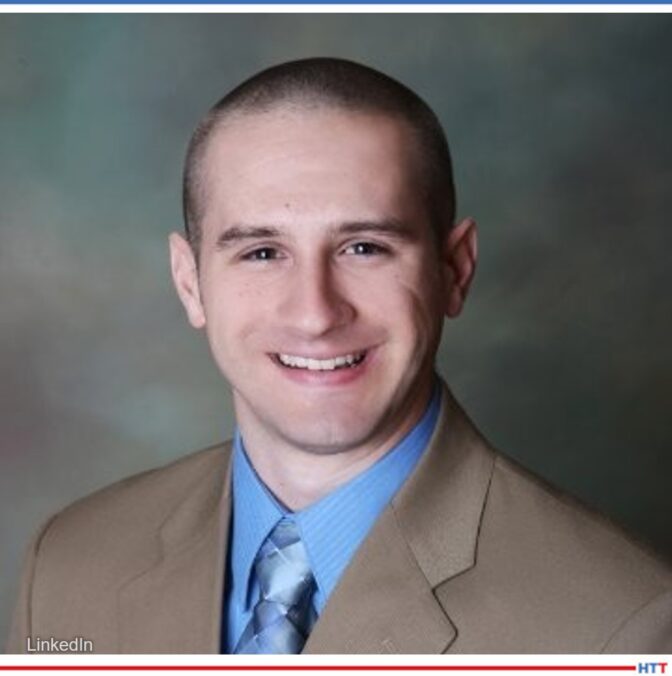
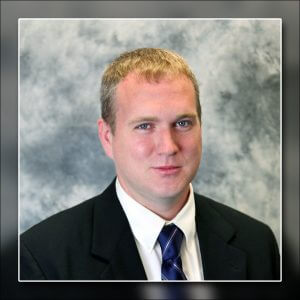
Don Marteeny
VP of Engineering
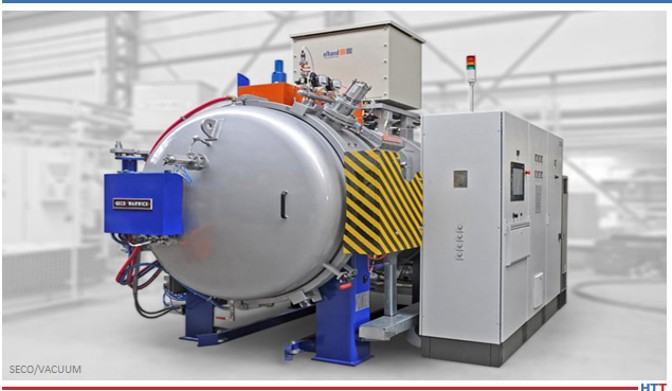
SECO/VACUUM Technologies LLC

Finally, I would like to introduce Don Marteeny (DM) who I’ve had the pleasure of working with in the past. Don, it’s always good to see you. Don is the VP of engineering at SECO/VACUUM Technologies for over 5 years. During his career, Don has fulfilled many roles including 3 years as a project engineer, 2 years project manager and 2 years as the engineering team leader. He’s a licensed professional engineer. Don led the implementation of a 3-D modeling tool at SECO/WARWICK, when he is not busy being a Cub Scout den leader, which is great, Don presents papers on state-of-the-art heat-treating technologies. Don is also a Heat Treat Today's 40 Under 40 Class of 2021 recipient; congratulations on that. And Don’s just a heck of a nice guy all around, which I’m sure all of you are!

It's good to have you all.

Let’s jump in, guys. This is a relatively serious topic that we’ve got going on here but let me just throw out some questions to you. Heather, maybe I’ll start with you, if you don’t mind.

When we look at the risk potential in the heat treat market, I guess the first question that comes to my mind is: Okay, who should really be worried about this? Who are some of the people? Brian, maybe I’ll jump to you after Heather is done with some input on that, as well. Go ahead, Heather.

Heather Falcone (HF):  Well, the short answer is literally everybody. Literally every person in the United States is subject to being a target for a nation-state level adversary such as China, Russia, Iran, North Korea. No one is safe, no one should assume they are safe, and every single person in this country, regardless of whether you’re a businessperson or not, should protect the data that keeps us safe.

DG:  Do we have a sense, Brian, maybe over to you on this -- and again, as I mentioned before we started, if somebody doesn’t have a comment on this, just pass on it -- but are there people or organizations or systems in the heat treat industry, specifically, that are at a higher risk? What do you think as far as risk?

Brian Flynn (BF):  In terms of age group demographics the Baby Boomers as well as Gen Z and younger are considered the most vulnerable for cyberattacks. Baby Boomers didn’t have great exposure to today’s brand of cyberattacks nor did they grow up with the internet and computers as we know them today. Gen Z and younger, there is a certain carelessness in terms of sharing personal information they’re too trusting. On top of that, Covid created new types of uncertainty in conjunction with the influx of new users going online since 2020.

But more from a business perspective, I guess it depends. Healthcare, government and financial-like institutions pose the highest potential reward but also the highest risk. In terms of frequencies, small businesses, like myself as a commercial heat treater, are the number one target as they typically lack resources and capital expenditures in order to invest in the infrastructure. And it might just be a pipeline where they’re going through the small businesses to get to my bigger Fortune 500 customers, but it’s really mainly phishing emails that are infected with malware. Over the past 12-18 months, it’s been crazy how many have made it through our firewall.

DG:  Over to our equipment guys. I should mention -- Heather and Brian are both commercial heat treaters, Mike and Don are really both kind of equipment guys, although Nitrex also does some commercial heat treating, as well. Don, why don’t we start with you. The same question: Who’s at risk here? And then, Mike, we’ll end with you, please.

Don Marteeny (DM):  Well, in addition to what Brian said, which I found interesting on some of the demographics, it’s important to realize, too, that it’s not just people, it’s also equipment. The equipment is becoming more and more interconnected, especially with the IIoT capabilities that most of them have now and all the unique features that that brings, but what that means is -- in order for that technology to function as it intended, it has to be connected to the internet which opens up more doors for access to sensitive data. And it’s not just data that you receive, it’s data that you generate, right? And that’s the important thing, I think, that everybody’s got to realize is that once you’re in that chain of subcontracts, shall we say, and you’re working with those folks that are contracting to the government -- handling sensitive data, you’re in that, too. It’s important to recognize that it’s not just you and your users but also your equipment and how it’s interconnected to the network.

DG:  I’m reading a book right now -- I’ll give a plug to this guy -- Mark Mills, who we’ve interviewed before, on this show actually -- it’s called The Cloud Revolution and he’s been talking a little bit about this. The amount of data that is out there, because we’re able to get data off of machines and things like that now and are doing more and more, is just skyrocketing. It’s that data that’s going to be an issue.
Mike, over to you; I just want to wrap up as far as risk assessment, here. Who are the people, organizations, equipment or whatever that is most at risk?

ML:  From our perspective, there’s not that much to add. We covered already the topic so we have this human factor which plays a really, really big role in terms of cybersecurity, how people are really sloppy and do not have the right mindset to treat data as they should. We have also, a lot of times, not the right policy in place, we do not have the education needed and so on. There is always this human factor.

But also, with heat treatment as a really old industry and steel manufacturing, as well, we have a lot of facilities with outdated infrastructure. This is also a also big topic. Outdated infrastructure, old, dated network designs firmware which we do not need to talk about it’s 20 years old and older so nobody knew about the potential risks that arise during the last decade and during the last years. This is also a really important factor. That’s it, from my perspective. Everyone, as said, is at a high risk, so, summing it up -- it’s literally everyone and everywhere.

DG:  If you think you’re safe, you’re not, right? I think when Heather first started talking, I thought, “Boy, this is going to be a horror show.” If you think you’re safe, you’re not; you’re most at risk.

Let’s talk about data and data storage. Those types of things are really at the core of this, I think. Where are we going to store of all our data? How do we do it safely? When it comes to data storage, what problems have you witnessed or are you aware of, and how about solutions for data storage?

Don let’s start with you on this one then we’ll go to Mike. I know a lot of companies say, “Well, I just want to keep my data in-house.” Is that the answer? What are we doing with data?

DM:  That varies. From my observations, it varies from customer to customer, industry to industry. There is a sense to move it to the Cloud, just because it’s easier to manage there, but with that brings risks. I think everybody’s got to be aware of that when they make that decision. On one hand, do I maintain my own servers, do I hire the people to man those servers, etc., or do I pay somebody else to do that in the Cloud? Do I take that risk of the data being someplace I don’t know and I rely on the Fortune 500 company who I’m contracting to maintain the Cloud to secure it, or do I do it myself? Especially for small businesses, these are not easy questions to answer. Like I say, I’ve seen both. And, again, with the invent of Industry 4.0 and IIoT, the pressure to move to the Cloud is pretty high, so, if you want to take advantage of those technologies.

DG:  Mike, how about you? What do you think as far as data storage and things of that sort?

ML:  I think Don mentioned already the two options we have. We could take of all the data storages ourselves, having big data service on premises, having people responsible for it, managing everything, keeping it running, no creation of redundancy, call it like this, having back-up systems -- all of these things you would need to manage by yourself. And the requirements are getting tougher. If you think of having data for the aerospace stored, you’re talking about decades of years, so that’s it.

The alternative is to put everything to the Cloud so then you’d just say, “Ok, I need more data” and more data storage space is available. You can also make use of all the security measures created, for example, by the big Cloud infrastructure providers like AWS in Asia. They are professionals in this. If they say your data is secure because we are using the latest technologies, I think you can be sure that it is. We, at Nitrex, rely fully on this. We say we could not do it better. There are thousands of people working every day on Cloud security, on infrastructure security, and so on and so on. I think our facilities could not be safer.

DG:  Brian, let’s go to you on this one and then, last, to Heather. Data security -- if you want to make comments on that and maybe even, if I can put a little sharper point on the pencil on this -- just because a person keeps data in-house, does that make them safe from cyberattacks? General question, or if you want to answer that specific one, Brian.

BF:  In today’s climate, the security of the data storage remains at the top of our lists. Knock on wood, very fortunately, we haven’t been on the receiving end of any of those types of cyberattacks, likely because we have a good firewall in place. More relevant to Erie Steel, the problems we face are data storage limits, length of data retention and scalability, and also accessibility -- whether it be video records, furnace records, quality records, shipping records, the list goes on, as far as how long do we want to retain that data and how accessible does it need to be? We utilize surveillance cameras, not spying on employees but really more  proof of key operations, proof of start, proof of completion. The cardinal sin of heat-treating is don’t ship a green part back to the customer, so what better way to prove that other than by surveillance systems.

But that poses an issue -- we make sensitive cameras, increase the sensitivity, length of retention goes down. It’s a nice balance between form and function as well as retention, whether we use IP high-definition cameras or low-definition cameras. But that’s on its own internal server, on-site.

A lot of our continuous furnace trending software is continuously recorded -- that’s on its own separate dedicated server with off-site back-ups. Then we have all of our PLC data -- that could fill up a server in a matter of weeks if we really wanted it to. At times, we were recording every second; we don’t need to do that for most operations. Every minute, make the data accessible for a month and then, after that, we send it off to the Cloud.

For our ERP system and our quality management system, we utilize Bluestreak which is a web-based platform. We used to have on-site grid-based platform and that frees up a tremendous amount of space for the server so we can A. keep it 70% or less for capacity reasons. The only issue then, of course, is if we have a power outage, we lose internet -- but those are risks, at this point, that we’re willing to take.

DG:  Heather, how about you? Data storage, generally speaking, what’s the situation?
HF:  I think whether you’re deciding to store locally or in the Cloud, there are a couple things to consider: your digital rights management and your data loss prevention. If you’re working in-house, that means isolating assets on the land to make sure that, if there is an infection, it stops immediately. That’s one of the basic controls in, what is now, level 1. You have to have some of that in place so that if someone does get into your system, and we’re not talking a brute force attacker, we’re talking a person with the password of 1 2 3 4. We’re talking about the person that has not changed their password in 23 years and they’re still working on a DOS-based system. All those legacy systems that are not yet updated, that’s where the real risk comes from -- storing data locally. It’s really user behavior oriented that’s backed up by the solid digital rights management and data loss protection, as far as storing locally. One thing to be very careful about when moving to Cloud solutions, most commercially off the shelf available Cloud solutions are not compliant within the 800-171. If you’re talking about just Office 365, you have to move to the government version. Now we’re on zoom.gov instead of regular zoom, Doug, I don’t know.

DG:  We are not, so be careful what you say.

HF:  The problem with that is when you move to those Cloud solutions, they are inherently user prohibitive. They’re awful to work with, and they’re extremely expensive. You are kind of in a rock and a hard place: do we store locally and take on more risk and more in-house compliance cost or do we trust these big guys who have a billion-dollar backing them up who seems to know what he’s doing but also humans are humans and it’s still an inherent broken system? We all have to be careful and take our ownership of the programs that we’re putting in place -- that we have working knowledge where our data is going, how it’s being backed up, how it’s being stored or retained.

DG:  Just a quick round-robin question, just kind of a yes or a no, and if you want to elaborate a little bit, feel free:  Do you think, in today’s day and age, that it’s just as safe to store things in the Cloud as it is locally? Mike, what do you think?

ML:  Yes. But you have to respect the requirements.

DG:  Don, what do you think?

DM:  Yes, for the most part. Like we said, the larger companies have teams of people working on this every day, so not only can they react, they can be more proactive in staying out in front of it than the rest of us can because they the resources.  So, in theory, yes.

DG:  Heather, what do you think? Just as safe to store in the Cloud as local?

HF:  I believe that it has the potential to be more safe because you can rely on a group of resources that you don’t have to actively manage yourself. However, it takes a lot of oversight and research. It might be easier for a smaller company to create a very small locus of control as opposed to moving to a large collect Cloud solution during their migration to CMMC.

DG:  Brian, how about you? Just as safe?

BF:  I think the short answer is yes but, you know, it depends on which Cloud are we talking about and what does your internal infrastructure look like as well as what are your internal policies. Then it gets into more of a convenience discussion. How do you need that data? How frequent do you access it? But, I think, there’s the potential to be as safe or potentially more safe.

DG:  I want to take a brief break and ask Heather a question. If you can just do a 30-second/60-second explanation of CMMC for us, and then we want to ask some questions about that. But I want to make sure that those who are listening who might not know what that is -- what is that? CMMC -- it’s important.

HF:  It’s the Cybersecurity Maturity Model Certification. The government, in all of their perpetual wisdom, decided that they’re really tired of getting attacked by all the bad guys. To protect the state of the defense infrastructure and, I guess, maybe protect themselves because they have to do it too, they designed this system. Now, for today’s talk, I want to make sure that we understand that I’m personally going to be vacillating between CMMC 1.0 and CMMC 2.0. They are drastically different  -- CMMC 2.0 is in rulemaking, but it’s got a lot of exciting, better things, potentially, in it versus CMMC 1.0. The point is, CMMC 1.0 is the law of the land and has been since 2019, so, it’s up to everyone who deals with the federal government to ensure that they are up to the minimum standard requirements for CMMC 1.0 which is just, basically, a self-assessment and some basic controls.

The government really wants to put in place the supply chain that is not full of holes for the enemy to take our most trusted and effective data.

DG:  I’m curious, when it comes to CMMC then, implementation, best strategies for implementation, how do we find out about it more? Heather, I’ll stick with you on this one and then maybe we’ll move down to Mike and Don and then over to Brian.

CMMC -- what are some good strategies for implementing this?

HF:  The first thing is to identify what you’re going to attack. If your whole company does not deal with CUI or FCI (control of unclassified information or federal contract information), then you don’t need to be talking about CMMC. The first step is to get your senior leadership team together and start with a block of information that’s manageable, either by location, by area, by contract, by project. Start at that top level and read the flow-downs to find out if you even have to do this, then decide a plan of action. I strongly recommend a phased integration approach over a period of about 18 months. If you’re trying to jam this into a 6-month process, it likely will be unsuccessful, strictly because that’s not enough time to even get the written policies and procedures in place. Plan for this to take about 18 months to 2 years and plan for it to cost you about $180,000; it’s about 60 grand a year. This is what the government, the Department of Defense says it will cost.

"The first thing is to identify what you’re going to attack. If your whole company does not deal with CUI or FCI (control of unclassified information or federal contract information), then you don’t need to be talking about CMMC. The first step is to get your senior leadership team together and start with a block of information that’s manageable, either by location, by area, by contract, by project. Start at that top level and read the flow-downs to find out if you even have to do this, then decide a plan of action." - Heather Falcone, Thermal-Vac Technology, Inc.

DG:  Alright. You’re speaking from experience though, yes? You guys have done this?

HF:  Absolutely, yes. It took us closer to 2 ½ years but, luckily, we started early enough to where that phased approach was okay.

DG:  Mike, how about to you -- CMMC. Are some of your customers needing to do it? Are you guys needing to do it? What do you think?

ML:  Nitrex is a solution provider so we are not only having commercial heat treatment, but we are also creating furnaces, we are building furnaces. We are also creating this control software and lately we released our QMULUS IIoT platform. We are really involved with this topic because we need to make sure that our customers are getting a solution which is CMMC compliant in the end. One thing which I really would like to mention here is that it does not only stop with the software. It’s not only software, it’s also controllers, it’s a hardware on the controllers, it’s even the network. Let’s say, a component on your controller which has to be CMMC compliant, in the end, which makes it really hard for small companies to take care of it. I suggest that you outsource a lot of these things. You can make your suppliers responsible for it, for sure. This would come with rising prices and so on, but for small heat treatment shops, it’s not maintainable, I guess. Maybe with the new approach of the CMMC release, which is relaxing a lot of things, it might be better, but we still do not know.

DG: Your suggestion is to outsource a lot of these, whether it be components or whatever.

ML:  I would just like to add -- because we spend a lot of time to figure out what it really means (the CMMC things) and, as Heather already said, it will take you months to understand everything and if you’re not a professional in cybersecurity and maybe created these policies, you are lost.

DG:  Don, how about you?

DM:  I think I would echo a lot of what Mike is saying. As the whole industry goes more towards the IIoT implementing things, CMMC will be more and more difficult and you need help. Bottom line, unless you’ve got enough resources internally that can address the needs and understand, first off, as Heather mentioned, understanding the law (the regulations), in and of itself is usually enough to keep someone occupied for quite some time. But, even after that, then knowing what it means in implementing it, getting the right person on it, would certainly help the process.

DG:  Brian?

BF:  I think Heather really hit the nail on the head. The first step is to make sure it matches your strategic plan and your business plan. Currently, this is not a certification that Erie Steel possesses. It’s on our business plan as a threat under SWAT analysis but based on our current and forecasted customer base, this isn’t something that we plan on moving forward on here in the near future.

DG:  Heather, you had mentioned about the control of unclassified information. Can you just expound on that a little bit? If I remember what you were saying, you were saying that it’s important to know whether you’re in that category, right? Because if you are, you need to do certain things; if you’re not, you don’t need to do certain things.

HF:  Yes, if you handle CUI at your company or if you create CUI, then you’re likely going to be subject to the DFAR’s requirements when they’re flowed down to you. If you’re a federal contractor, it’s likely you don’t have a choice in this; it’s going to be in your contract flow-downs.

If you want to know more about control of unclassified information, there is an ongoing and everchanging list that’s available to you on the National Archives’ website which is archives.gov. If you go in there and you search controlled, unclassified information, it has a subsection list by industry. If all you do is firearms, cool, click on firearms and it’s going to tell you which CUI you have. If you only work defense, ok cool, here’s a nice little chart. It’s an invaluable resource on picking out key terms of your parts of your business to see if it matches up with the CUI.

But also, FCI, which is the Federal Contract Information, grand jury data is protected. Now, do we all deal with that? No. But financial transactions and general data information that you might not think is protected is protected. Spend some time in the National Archives -- it’s not boring, I promise, it’s actually pretty easy reading. It has nice charts and hyperlinks.

DG:  It sounds boring, if I may just say so. Being the National Archives doesn’t sound like a place I want to spend my Friday afternoon.

HF:  Well, call me, I’ll make it more exciting for you.

"Lately, we started with education because, we said it already multiple times in this discussion here, that the human factor is the most important part. We need to sensitize people about all the risks and all the things the internet brings. That’s why we started to have these security trainings, web-based and so on, which really help, also, to make people aware of these things."

DG:  I want to deviate a little bit from the questions that we sent and maybe wrap up with two questions. We’ll deal with them individually but I’ll get you thinking about it just a little bit. Because we want to make this fairly practical for people, question one will be: Can you tell us what your company has done, thus far, to address cybersecurity? Again, it’s going to be a range of things; some have done a lot, some have done a little. Then, the second question I want to ask you which we will wrap up with is: If you could put on your prognostication hat here and you’re looking into the future -- what do you see being some of the major movements that we’re going to have to be dealing with as far as cybersecurity? It’s a little bit of fun looking into the future and seeing what we’re going to have to deal with in the heat treat industry.

Mike, if you don’t mind, we’ll start with you with Nitrex. What have you had to do so far to really deal with the whole cybersecurity threat?

ML:  In the past, we started with the human factor. Until 6 years before, everyone had administrator rights on his local PC and everyone was installing everything -- malware, spyware and even things which were ‘unsuspicious.’ But a lot of things happen in the background without even noticing and these actions are opening doors for cybersecurity things. That’s why we installed something like MS LAPS which is a local admin password solution so that we can make really sure that people are only installing things which have been approved and so on. This was one of the things. Then, we also introduced something like MS Defender as an antivirus solution which is hosted in the Cloud which is making use of AI-identifying things before they get really serious. This for all internal IT infrastructure, making use of the latest approaches and software solutions we can get.

Lately, we started with education because, we said it already multiple times in this discussion here, that the human factor is the most important part. We need to sensitize people about all the risks and all the things the internet brings. That’s why we started to have these security trainings, web-based and so on, which really help

In terms of our solutions which we are offering, we planned accordingly a roadmap on how to make it CMMC compliant. All our hardware, we have to rework our whole controller infrastructure which we are offering to make our furnace CMMC compliant. The same for our MES software which we are having on premise for QMULUS, as well, which is our IIoT solution which is hosted in AWS. Here, it really depends on our customers if you’re hosting it in the Cloud or in the usual, let’s say, public Cloud. That’s what we are doing. We’re investigating our needs and to the needs of our industry.

DG:  Good. And we will get to what do you plan on doing in the future, too.

Brian, why don’t we jump up to you on this. So far, what is Erie Steel been up to?

BF:  As I stated during the risk assessment portion of management review, cybersecurity is regularly listed as a consistent internal and external threat. Historically, it’s been less relevant than it is today so little action was done. Now, over the past few years, we’ve really focused in this area and targeted internally on internal infrastructure. With that, we always try to keep a focus on understanding current environmental trends in cybersecurity, but with anything, any policy, any initiative, it should start and end with a strategic plan. Plans need to be well thought out, employee expectations clearly communicated prior to rollout, and feedback welcomed throughout these transitions.

Here, we practice self-audits and realize that server capacity as well as the life expectancy of our server was a great concern. We met with IT several times and came up with the plan to replace and upgrade our existing server and came up with it in four separate phases -- phase 1 being clean up the current system, phase 2 being change the system over, phase 3 being the new file structure for day-to-day operations, and phase 4 is to implement our new cybersecurity policy. Right now, we’re approaching the end of phase 3; so we’ll be sitting down again and reviewing the cybersecurity policy. Like I said, though, if you have doubts, self-audit, or you can always have a third-party auditor come in and share their two cents.

Some other things we’ve done are antivirus, antispyware software -- those should be givens. When individuals need to access the servers remotely, make use of VPN’s, utilize firewall security, ensure management has a firm understanding on the server capacity and requirements, regularly back-up the critical data, have redundant back-ups in different locations, of course make sure your Wi-Fi is secure, passwords should regularly change, same for all the usernames. You’ll see this with a lot of larger companies -- you really want to limit access to data and limit authority to make changes.

One thing we have done is our PLCs are operating locally on our own internal internet in case there is a server storm, in case there is a power outage. Well, a power outage wouldn’t help us in that situation but in case there is a server storm or internet outage, we can still operate locally, we just don’t have all the trending software to support it like day-to-day operations.

DG:  That, just by itself, sounds like a huge task. Just switching over a server sounds like a lot of work. I think a lot of companies are going to be listening to this, especially some of the smaller captive heat treaters. Where to start? I think self-audit is a good idea and good advice.

Don let’s go to you then we’ll finish up this question with Heather then we'll move into thinking about the future.

DM:  From our perspective, we’re focusing on the human factor. We’re trying to increase training and then once it’s out there, we test it. Once in a while, you’ll get forewarned that sometime within the next 24 hours you’re going to get a phishing email and what do you do with it? Sometimes they won’t tell us and all of a sudden, it’s, “Oo, what’s that?” I’m not going to click on that link. But honestly, those are the doors that are easier to close that we need to.

Some other activities have been like adding multifactor authentication where it’s necessary. Yes, it takes longer, yes, it’s a pain, but it’s necessary to make sure it is you and not somebody else. And then, as everybody else has mentioned, the usual firewalls, protecting Wi-Fi data networks, etc.

I did want to touch a little bit more on the equipment side, for just a minute. In my experiences with customers, sometimes an easier way to deal with this, especially because the interconnectivity to the equipment is becoming more and more prevalent, it’s just basically have a separate service, a separate internet connection that you control. And it’s basically if you need help, if you need to connect that piece of equipment to the internet, you physically plug it in, if not, you take it out. And when it’s out, you are in control. On your network, you’re passing data where you need to and that’s it. It’s back under that umbrella. Then, when you physically plug it in, you’re doing so making that decision consciously to say, “Okay, for this period of time, I need it to be connected.” But at least, then, you have some direct control. Is it rudimentary? Yes. Is it maybe not the most convenient? Yes. But, until you’re to the point where you can research all the needed data and regulations, they can get you to the point where, at least, you have some control.

DG:  Right. Nothing like a physical line to plug in and unplug to help you feel safe.

Heather, how about you? What has Thermal Technology been doing?

HF:  We started with an assessment that we paid people to do -- an expert that came in and evaluated our system against the CMMC requirements. That was very scary and expensive and it felt like someone was speaking Greek to me and, frankly, I got bored within the first 30 minutes of him giving me the report. But that’s where you start. And don’t be afraid if you get a negative score on the darn test because you’ve got to pick a place and you’ve got to get the baseline.

The nice thing about CMMC is it’s progressive; it’s meant to be transitional. You’re not going straight to level 3 and your whole life is going to change. You go from that assessment and then you work your way into phase 1. The CMMC level 1 is meaning we’re doing this stuff; we just can’t repeat it and we don’t have any documentation. And then level 2 -- okay, now we’re doing stuff and now we’re going to make it repeatable by documenting it. Then phase 3 is now we’re going to make machines manage the processes that are documented so we can repeat them and do them. It builds upon itself. So, embrace the stages. That’s what we’ve done and we started all the way back when we were a .79.

DG:  Out of what?

HF:  Out of the level 1 – 3. We were .79. Now, I’ve seen people who are minus numbers (-2, etc.) and that’s okay. Everyone starts somewhere, and if you haven’t had to look at infrastructure as related to information technology in 20 years, then why would you have ever looked at it? Take it in the phased approach. That’s what we did and we baby-stepped our way in and took all the painful points and broke them down into 1,000 substeps and that was the best thing we could have done.

DG:  We’re going to go backwards in order, if I can, and let’s talk about the future. I guess, what I want to get a sense from you guys, to wrap up, is 1.What do you see as being the greatest risks to your companies, and, I think, especially with our equipment guys with Nitrex and with Mike and Don, if you’re able to address from your customer’s perspective, 2.What are the issues with new equipment going in? What are the biggest risks that you’re seeing, if there are any, and what do you see us doing in the future differently than what we’re doing now as far as mitigating any of those risks?

Heather, back to you on this one?

HF:  The biggest risk is complacency or denial. This will come to you and it already has. If you take the viewpoint of, “Well, I’ll do it when my customer makes me,” you will be so far behind the ball, it’s going to be painful. The absolute worst risk you could possibly take is not looking at it or denying that you’re involved in it. If you’re in heat treating, it is 90% likely that this is going to apply to you in some way. Now, the great news is CMMC 2.0 -- over 60% of the industrial supply base is only going have to be a level 1 -- that’s a self-report annually. That’s not that big a deal. Anybody can do that. And there are great resources that are being developed to help people that want to get that basic level of CMMC compliance.

So, don’t wait, don’t deny it, get your customers to pay for it, put it in your RFPs. It is an allowable cost for reimbursement; don’t let anyone tell you otherwise. If you need more help on that, let me know.

"On the note of chaos, when it sets in, communication is key. If you’re the responsible party, designate primary and secondary points of contact for cybersecurity support. Have performance incentives in place for the responsible managers. If you’re rolling out a new policy, based on the successful rollout of that policy, put some incentives in place. Maintain open lines of communication and welcome feedback."

DG:  That’s one of the questions we didn’t get to and that was how to make your customers pay for it which sounds like a very intriguing question, but yes, you mentioned it there.

Don, how about you? We’ll go over to you on this one.

DM:  I think, moving forward, a couple of things are happening: The labor market is changing; it’s changing to a demographic that’s more familiar with this technology, which is a good thing. Although, as we said, I think it was Brian that said earlier on, some of those generations may not be as sensitive as they need to be. But what that means is that the older days when we relied heavily on operators to know what’s going on, now we’re switching more towards the technology managing the equipment from the equipment’s point of view. What that means is there will be fewer people managing more equipment from fewer places. So, if you’re looking at a multilocation operation that’s managing data from a central location, that becomes pretty complex pretty quick; but it’s becoming more commonplace in the industry than it used to be. Obviously, that opens up a lot of doors for cybersecurity risk and that’s got to be carefully managed, in the light of CMMC and others as far as cybersecurity goes.

I think the future is -- the technology is there, it’s available, but it has to be implemented carefully and it has to be well thought out by people who know what they’re doing.

DG:  Brian, I think we go to you and then we end with Mike.

BF:  When chaos sets in, the one standing by your side, without flinching, can be considered your family. When chaos sets in manufacturing, managers must remain flexible, patient and understanding which leads to the difference between a leader and a manager. A good manager is not always a leader, and good leaders are always managers. Managers have people work for them while leaders have people follow them. On the note of chaos, when it sets in, communication is key. If you’re the responsible party, designate primary and secondary points of contact for cybersecurity support. Have performance incentives in place for the responsible managers. If you’re rolling out a new policy, based on the successful rollout of that policy, put some incentives in place. Maintain open lines of communication and welcome feedback. Make sure that training materials are available. Something that I’ve come to realize is that employees often shy away from asking for help. Instead, try to get the help at their fingertips and ask specific, strategic questions to prove they’re understanding.

Really, at the end of the day, conduct your risk assessments. You don’t know what you don’t know, and that’s 95% of what is knowledge today. Be cognizant of what’s out there. Let’s face it -- cyberwarfare, cyberterrorism are very real, very selective, quick and cheap attacks from the hacker’s perspective, and they remain anonymous.

DG:  And devastating for the companies that are on the receiving end, potentially.

BF:  On the microscale, it’s real, especially for small businesses.

DG:  You’ve hit on an interesting thing, Brian, and obviously we can’t spend time talking about everything but, it’s just the way you address this from a personnel perspective inside your company -- are you having someone there that’s the point person for cybersecurity? This shows my ignorance, but that’s okay, it’s easy to do. Do they have a chief security officer, a CSO, now, I assume, adding to the ‘C-suite’?

But yes, I think that’s a good point.

Let’s go over to Mike. What do you see as being the future threats and how are we going to be mitigating them?

ML:  I think there is not that much to add here. We talked about the human factor, as I said, is the most important thing. Education and also more of education is needed here. Also, with the people on the shop floor, they are often working still with pen and paper -- they are not really used to going with the digital mediums and components and so on. So, really, we have to be sensible there, as well. You mentioned that the management has to take care that they are not "steamrolled" by all these approaches. This is really important.

The other thing, I already mentioned as well, is to outsource as much as possible, if it’s possible. Talking about the hardware, the software components and solutions and so on -- if you can get a solution which is CMMC compliant and the vendor is stating it, get it, because it’s taking a lot of work from you.

DG:  The last thing we’ll do, and you may or may not have anything for this -- any final thought you want to leave with the people that might be listening to this, watching this? These are basically going to be people who are manufacturers who have their own in-house heat treat shops, commercial heat treaters, suppliers to the industry. Are there any last comments that you want to leave?

Don, anything?

DM:  The only thing I’d add is just to be proactive. That always helps in these cases. And what that means is up to you but be proactive to address it.

DG:  I was thinking the same thing: Don’t stick your head in the sand. Or, if it is there, get it out. Get it out of wherever it is and pay attention. Be proactive.

Heather, how about you?

HF:  That’s exactly right. And some of us have larger egos that prevent us from reaching out for help. Understand that the literal federal government wants to help you, and there are so many resources out there that can be a nightmare to navigate but start with the people on this call. Reach out, talk to someone, get outside your circle and start figuring out how to make it work for you.

DG:  Mike, how about you and then we’ll end with Brian, if you have any other comments. Again, if you don’t, no problem.

ML:  That statement of Heather’s, I think, of being proactive, ask for help, don’t be shy. Invest the money. It will be worth it to invest.

DG:  Brian, how about you?

BF:  I think, find what works best for your organization and remain flexible. Solutions to cybersecurity should not be a one size fits all approach, so plan for the worst and strive for the best.

DG:  Guys, thanks very much. I appreciate it. This is a huge, huge topic. I know we’ve just skimmed across the top.

 

Doug Glenn <br> Publisher <br> Heat Treat Today

Doug Glenn
Publisher
Heat Treat Today


To find other Heat Treat Radio episodes, go to www.heattreattoday.com/radio.


Search heat treat equipment and service providers on Heat Treat Buyers Guide.com


Heat Treat Radio #84: Heat Treat Tomorrow — Digital Security with 4 Industry Experts Read More »

Heat Treat Radio #80: Lunch & Learn with Heat Treat Today – Mill Processes and Production, part 2

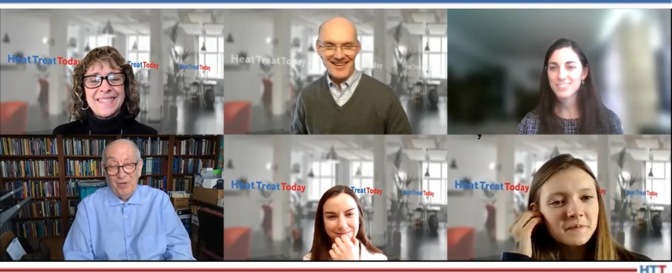
Heat Treat Radio host, Doug Glenn, and several other Heat Treat Today team members sit down with long-time industry expert Dan Herring, The Heat Treat Doctor® of the HERRING GROUP, to finish the conversation about mill processes and production. Enjoy this third informative Lunch & Learn with Heat Treat Today

Below, you can watch the video, listen to the podcast by clicking on the audio play button, or read an edited transcript. 


The following transcript has been edited for your reading enjoyment.

Dan Herring (DH):  When it comes to heat treating, the mill will do what we typically call ‘basic operations.’ They will anneal the material and, if you’ll recall, annealing is a softening operation (it does other things, but we will consider it, for the purpose of this discussion, a softening operation) so that the steel you order from the mill will be in a form that you can then manufacture a product from. You can machine it, you can drill it, you can bend it and things of this nature.

Contact us with your Reader Feedback!

There are various forms and various types of steel that can be ordered directly from the mill. So, the mill typically does annealing operations and normalizing operations. The difference between annealing and normalizing is that annealing has a slower cooling rate than normalizing does.

In the aluminum industry, we don’t talk about normalizing but talk about homogenizing. Homogenizing is to aluminum what normalizing is to steel; it’s a crude analogy, but it’s true. The mill can do other processes; they can do other heat treatments, they can do specialized rolling and things of this nature to give you enhanced mechanical properties. In today’s world, there is a lot of what we call “custom” or “specialty mills” that can manufacture very specialized products. There are mills that primarily make pipe and tube, there are mills that make primarily wire, there are mills that make primarily strip. There are some very customer-specialized mills out there. In general, a mill will produce most of the type of products that we see or use in industry (or the steel for those products), and they will make it in a form that is usable for the end user and heat treated to a condition where the end user can make a product with it. Now, obviously, once you make a product, you may then have to further heat treat that product, for example, to harden it or to give it certain characteristics that you need. We’ll talk about those things in later discussions about this.

What I did want to talk about is the types of steel that are produced by the mills. I’ll do this, hopefully, in a very, very broad context, but I think it will make sense to everybody. Again, metallurgists aren’t known too much for their creativity, so we start out with something called carbon steel. Very original. There is low carbon steel, medium carbon steel and high carbon steel. Low carbon steel has low carbon, medium carbon steel has medium carbon, and a high carbon steel has high carbon.

Now, to be more serious, a low carbon steel typically has less than or equal to 0.3% carbon, or less than 0.3% carbon. A medium carbon steel has between .3% carbon and .6% carbon, and a high carbon steel is greater than .6% carbon. An example of a medium carbon steel might be a 1050 or 1055 grade of steel. Those are commonly used for stampings, for example. So, all of your seatbelt, both the tongue and the receptacle are made of a 1050/1055 steel and they’re austempered to give them both strength and toughness so that in an accident, the buckle won’t shatter because it’s hard but brittle and it won’t bend abnormally and therefore release because it has inherent toughness.

So, there are various things you do with these carbon steels in the heat treat mill to enhance their properties. Carbon steels are used because they’re low cost and they’re produced in tremendous quantities. If you went to a hardware store and bought a piece of steel, it is very likely it will be a simple carbon steel.

On the other hand, we also make alloy steels and, interestingly enough, there are low alloy steels, medium alloy steels, and guess what, high alloy steels. Again, metallurgists are very creative with their names. But idea here is you get higher strength than a carbon steel, a little better wear resistance and toughness, you get a little better corrosion resistance, for example, you might even get some specialized electrical properties and things like this.

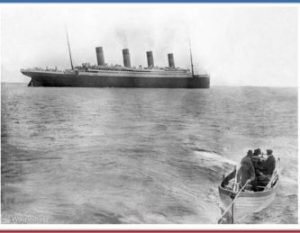
But low carbon steel, just to go back to that for a minute, as I said, is produced in huge quantities. Examples are steel for buildings, steel for bridges, steel for ships. We learned our lesson, by the way, with the Titanic; we got the steel right this time. The problem with that steel, by the way, was high in sulfur which embrittled it, interestingly enough, in cold water. So, when it hit the iceberg, the steel shattered because it was brittle because it had too much sulfur. But we learned our lesson.

Titanic, 1912
Source: Wikipedia

There are also various construction materials; anything from a wire that’s used in fencing to automotive bodies to storage tanks to different devices.

When you get into medium carbon steels, because they have a little better strength and a little better wear resistance, you can use them for forgings, you can use them for high strength castings. So, in other words, if you’re producing gears or axles or crank shafts, you might want to consider a medium carbon steel, or seatbelt components as we talked about.

Then there is the family of high carbon steels. Again, they can be heat treated to give you extremely high hardness and strength. Now, they’re obviously more expensive than medium carbon or low carbon steels, but when you’re making knives and cutlery components, (knives and scissors, for example), when you’re making springs, when you’re making tools and dyes. Railroad wheels are another example of something that might be made out of a high carbon steel. As a result of this, the type of product that your company is producing, means that you’re going to order a certain type of steel that you can use to make your product and give it the longevity or the life that your customers are expecting.

One of the things about steel that differentiates it from aluminum: Aluminum has a very good strength to weight ratio. But so again does steel, but obviously the strength to weight ratio, the weight is specifically much more, from that standpoint. But we can take steels that we produce from the mill, and we can do processes like quench and temper them. If we do that, we can make things like pressure vessels, we can make the bodies of submarines, for example, we can make various pressurized containers and things.

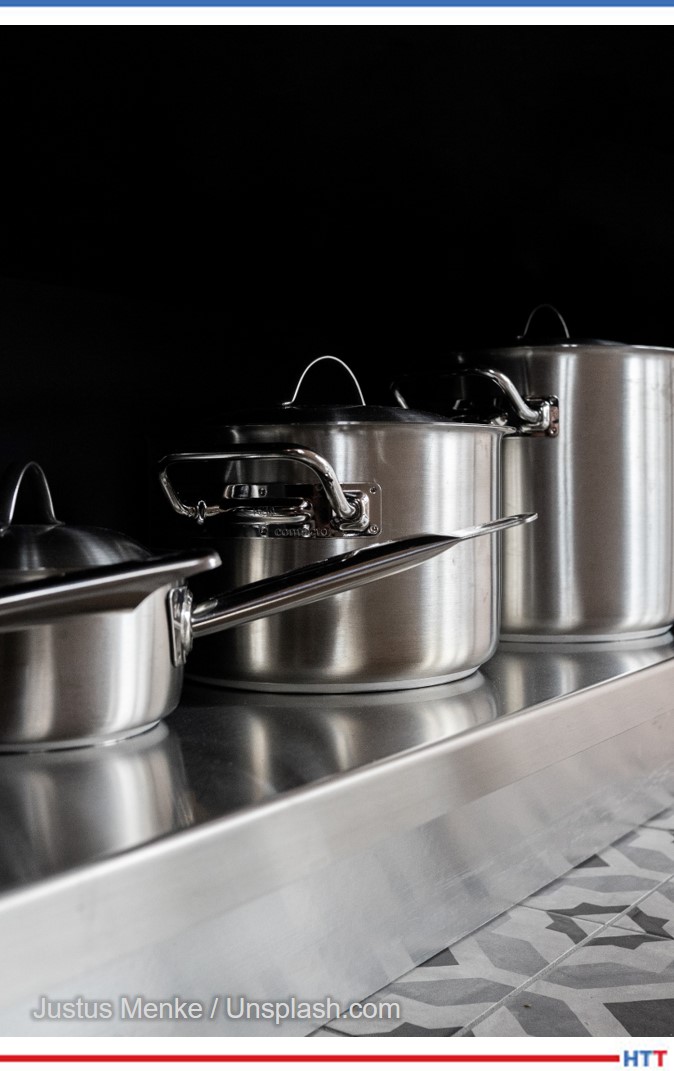
Stainless steel pots
Source-Justus Menke at Unsplash.com

There are a lot of different things we can do with steels to enhance the products that we’re producing. Besides just low carbon steel or carbon steels and alloy steels, we then can go into the family of stainless steels, for example. Most people think of stainless steels as being corrosion resistant. I’ll warn you that not all stainless steels, however, are corrosion resistant; some of them can corrode in certain medias or chemicals, if you will. But with stainless steels, a good example of that is food processing containers or piping or things that will hold food or food products, and again, we can make with stainless steels a variety of different products. We can make different components for buildings, for example, or for trim components and things.

Besides stainless steels, of course, we can make tool steels. Now, tool steels represents a very, very high alloy steel. The alloying content of tool steels is typically 30 to maybe 50% alloying elements: molybdenum and vanadium and chromium and these types of materials. As a result, we can make a lot of dyes and we can make a lot of cutting tools, we can make taps and other devices that are used to machine other metals, if you will. So, tool steels have a lot of application.

But there are a lot of specialty steels that are made by the mills, as well. One example of that, that I like to talk about or think about, is spring steels because you can make various things like knives and scraper blades, putty knives, for example, besides cutlery knives. You can make reeds for musical instruments, the vibrating instruments in the orchestra, if you will. You can make springs and you can make tape measures, tapes and rules and things of this nature out of these various spring steels, if you will.

Depending on what your end-use application is, the bottom line here is that whatever your end-use application is, there is a particular type of steel that you should be using and there is a form of that steel that you can use. Again, those steels can be produced by a variety of different processes; they can be forged, they can be rolled, hot and cold rolled, again. And when I’m talking about hot rolling, I’m talking about temperatures in typically the 1800-degree Fahrenheit to 2200/2300-degree Fahrenheit range. When I talk about hot rolling, the metal is, indeed, hot, if you will.

By the way, roughly, iron will melt at around 2800 degrees Fahrenheit, just to give you a perspective on that, if you will.

The key to all this is that the form that is produced by the mill meets the needs of their customers and their customers’ applications. If you need a plate, for example, they will produce plate in various sizes and thicknesses.

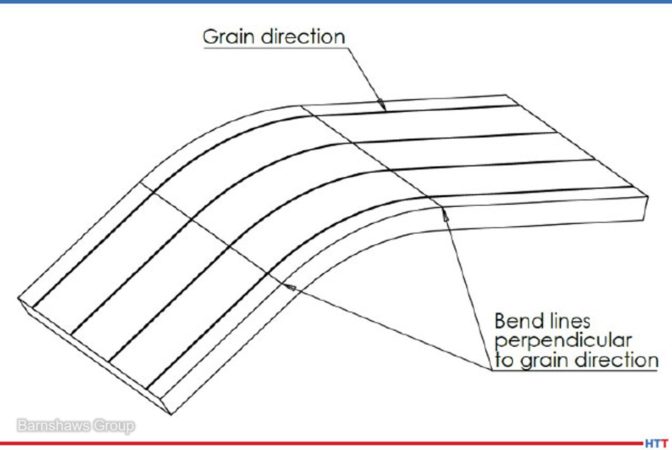
Rolling direction
Source: Barnshaws Group

By the way, just a quick note, and this is for all the heat treaters out there: Be careful of the rolling direction in which the plate was produced. We have found that if you stamp or cut component parts out of a plate with the rolling direction, or transverse or across the rolling direction, you can get vastly different properties out of the products. It’s amazing that you can get tremendous distortion differences from heat treated products depending on the rolling direction. If you’re stamping or forming out of a plate, you’re transverse or in line with the rolling direction. Most people don’t even think of that. They take the plate, they move it into the stamping machine, and they could care less about the rolling direction. Then, when the poor heat treater does his heat treating and distorts all the parts, the man comes back and says, “What’s wrong?”

By the way, that little example took only nine years of my life to solve. We had some, what are called, "springs" that are the backing on a knife. When you open a knife blade, there is a member that it’s attached to called a spring. Those springs were distorting horribly after being oil-quenched in an interval quench furnace. It happened to be a conversation around the coffee machine where one of the guys made the comment that, “You know, it’s really funny, we never had problems with distortion until we got that new stamping machine in.” Low and behold, in investigating it, the old machine took the plate in one direction, the new machine had to take the plate in a different direction and it rotated. . . . End result.

So, I guess for everybody listening, the key to this is that no matter what the material is that’s being produced, we need to use it sometimes in its cast form, we need to use it sometimes in its finished forms, which again can be bar and sheet and plate and wire and tube and things of this nature. And to get those shapes, we need to do things like hot and cold rolling, we need to do forging, we need to do operations like piercing to actually produce rings and things of this nature. So, although I didn’t go all the details about that, there is a lot of information out there about it. I wanted to set the stage for it to say that it’s the end-use application by the customer that fuels the type of steel being produced and fuels the form in which the steel is produced.

Perhaps as a last comment, on my end anyway, at this point, is the fact that a mill is a business just like anyone else’s business. We’re always looking for ways to cut costs, (not cut corners, but reduce cost), and mills have found that in the old days — and the old days weren’t necessarily the “good old days” — a mill made everything; they made all types of steel, they made all types of shapes and forms. But today, a lot of mills are saying it’s not economical to produce that particular type of steel or that particular form of steel, so we’ll leave that steel production to someone else, and we’ll only concentrate on high volume production.

You know, it’s very producing steel, a typical heated steel (and people will probably correct me on this), is somewhere in the order to 330,000 pounds of steel. So, if you’re a small manufacturer and don’t happen to need 330,000 pounds of steel, you have to go to a distributor and, more or less, maybe compromise a little bit to get the steel that you need. But the mills are producing large quantities of steel and very specialty steel grades, in general, today.

Doug Glenn (DG):  It’s essentially specialization of labor so it helps keep each individual mill’s cost down, but it doesn’t have the variety it used to.

Let’s open up for questions, really quick. I’ve got one if nobody has one, but I hope somebody else has one. So, fire away if you’ve got one.

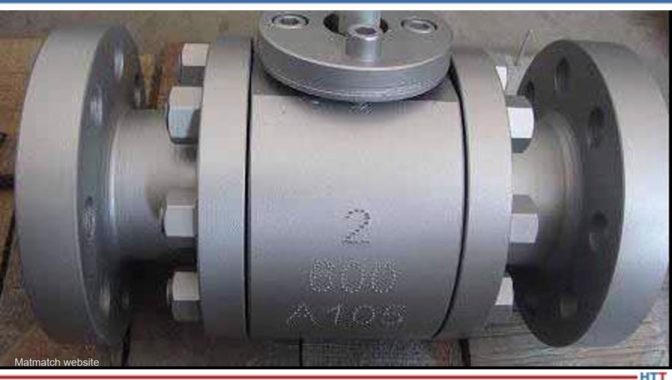
Carbon steel gate valve
Source: Matmatch

Bethany Leone (BL):  When you said that, Doug, my question jumped out of my head. I had 3 questions though but the ones I remember aren’t that important. One is — I recently visited an old blast furnace in Pittsburgh, Carrie Blast Furnaces; everybody should go, if you’re in the Pittsburgh area), so some of this sounds familiar. The second thing I was wondering is just how high can the carbon percentages go in carbon steels, .6%+, right?

DH:  Yes, greater than .6%, and it’s not uncommon for carbon in various types of steels to go over 1%. It typically can go in certain tool steels and things higher than that. But one of the things that differentiates a steel from a cast iron is the percentage of carbon in the material. And carbon over 2% is considered a cast iron as opposed to a steel. Steel has a carbon percentage from .008 all the way up to 2%. That’s a great question and something to be aware of. When you buy a cast iron skillet, for example, you’re getting a material that has greater than 2% carbon in it.

BL:  The other question I had is sort of more on the business end, if you know any of this, is- with the high energy that it takes to process iron, I imagine there have been efforts to try to reduce costs to produce energy that’s used to be a technology and innovation and especially right now with many people concerned with sustainability in those practices, are there ways that maybe even clients have influenced how businesses iron manufacturers in the iron manufacturing world have been trying to keep those environmental  loads down, do you know?

DH:  That’s a very intriguing question. I don’t have all the facts and information on it, but I’ll share a few things. As opposed to the production of aluminum, which is primarily using electricity, steel production uses typically natural gas. There were, in the old days, oil-fired equipment and things of this nature but today it’s typically gas-fired furnaces and things of this nature. Now, I have to be careful when I say that because some of the steel refining methods, (for example, the vacuum arc remelting furnaces and things of this nature), again, use carbon electrodes and use electricity, if you will, in the process. But essentially, what they’re trying to do is they’re trying to, for example, capture waste heat and reuse it to preheat different materials and processes and things of this nature, and they’re using methods that are trying to make the overall equipment more energy-friendly; if you will, better insulations, better fit of components than the old days when they didn’t care too much about if we got heat pouring out into the shop, we don’t care. Today, we really care about those things.

But steelmaking, again — for a different reason than aluminum — is a very energy intensive process; it uses a lot of energy to produce steel.

I’ll make a quick comment also, and I’m not saying this especially from anyone internationally who happens to be listening in to this: I’m not saying this is an “America only” comment, if you will, but in 1900, the largest industry, the largest company in the U.S. was U.S. Steel. United States Steel was the number one most profitable company in the country. If you think about it, throughout what would be the 20th century, steel and steel production has fueled, if you will, the American economy. We’ve since transitioned to other more angelic materials, if I can use that phrase; I won’t define it. However, who do you think produces over 50% of the world’s steel today? Anyone want to guess?

DG:  The U.S.?

DH:  No! China. And where is the manufacturing growth taking place? So, the production of aluminum, the production of steel, fuels manufacturing is my message here.

Yes, there are environmental consequences, but I often use the phrase and, again, this is not intended to be insultive to any one country, but for all the recycling, for all the energy saving, for all the environmental progress we can make in the United States, if we could reduce coal consumption in China (and India, of course), it would have major, major impact on the environment. And that’s not having 100-year-old steel mills, like we have here in the U.S., will go a long way, if you will.

DG:  I’m going to give you 30 seconds, Dan, to answer one more question, okay? Here’s the question: Aluminum doesn’t rust, most steels do. Why is that?

DH:  In simple terms, because aluminum reforms an aluminum oxide on the surface and that oxide is impenetrable, virtually, to further oxidation, whereas iron produces an iron oxide on the surface in the form of rust, it flakes off and you can reoxidize the surface. Now, there are steels — core10 is an example — self-rusting steels, that once they rust, they don’t reoxidize, but that’s the basic difference, Doug, between them.

DG:  Perfect, perfect.

Alright guys. Thank you very much, Dan. I appreciate it. We’re going to get you on deck for another one here pretty soon on another topic, but we appreciate your expertise.

DH:  Always a pleasure and, as I’ve said, I’ve reduced 3,000 pages into 30 minutes so hopefully people that are interested will read up more on these processes.

DG:  Yes. Appreciate it. Thank you!

For more information, contact:

Website: www.heat-treat-doctor.com

Doug Glenn <br> Publisher <br> Heat Treat Today

Doug Glenn
Publisher
Heat Treat Today


To find other Heat Treat Radio episodes, go to www.heattreattoday.com/radio .


.

Search heat treat equipment and service providers on Heat Treat Buyers Guide.com


Heat Treat Radio #80: Lunch & Learn with Heat Treat Today – Mill Processes and Production, part 2 Read More »

Heat Treat Radio #79: All Things Auto Industry Quenching with Scott MacKenzie

Heat Treat Radio host and Heat Treat Today publisher, Doug Glenn, sits down with Dr. D. Scott MacKenzie, the senior research scientist and metallurgist at Quaker Houghton, for a deep dive into quenching in the automotive heat treat industry. We’re talking the implications of electric vehicles (EV), aluminum and automotive manufacturing, simulation, and training in quench and heat treat.

This automotive industry-focused episode about quenching comes on the heels of Heat Treat Today's August 2022 Automotive print edition.

Below, you can watch the video, listen to the podcast by clicking on the audio play button, or read an edited transcript.


The following transcript has been edited for your reading enjoyment.

Doug Glenn (DG):  We’re here today with Dr. D. Scott MacKenzie from Quaker Houghton. We’re going to talk a little bit about quenching. Scott, first off, welcome to Heat Treat Radio.

Scott Mackenzie:  Thank you. And I just go by “Scott.”

Contact us with your Reader Feedback!

DG:  Very good. You and I have known each other long enough, I can probably do that and get away with it, so that’s okay.

SM:  Everybody calls me Scott. I don’t like being called doctor.

DG:  Let me give the folks a bit of an intro and then I’m going kind of highlight some of the stuff we’re going to be covering today. We’re going to be talking quenching because Scott is obviously the “quench king” here. We’re going to talk about EV (electric vehicles) a little bit. We’re going to talk about aluminum in the automotive industry, modeling and simulation and, briefly, we’re going to talk about a product that Quaker Houghton came out with not too terribly long ago called GREENLIGHT. We’re also going to talk about training for captive and/or commercial heat treaters in regard to quenching. So, that’s stuff to look forward to.

First, let me just mention that Scott is presently the senior research scientist and metallurgist for Quaker Houghton (formerly Houghton International) in Conshohocken, PA. He joined Houghton International in 2001 as a technical specialist heat treating marketing and moved into the heat treat laboratory, to the supervisor position, in 2007. Prior to joining Houghton, he worked as an associate technical Fellow in failure analysis, at the company actually, for six years and manufacturing engineer for the steel and aluminum heat treating departments for twelve years. He was past president of IFHTSE (International Federation for Heat Treatment and Surface Engineering) from 2018 to 2020. He is an active member of ASM and served on a lot of committees at ASM as well as member or chairman. You’ve authored, Scott, several books and over one hundred peer-reviewed papers.

So, I expect to see an increase in induction hardening or, at least, stay the same, but more atmosphere, traditional atmosphere, endothermic atmosphere and quenching and quenching in a quenchant — that’s going to be drastically hit in the next five to ten years.

Scott got his BS in metallurgical engineering from Ohio State University and got his MS and PhD from the University of Missouri Rolla. Bottom line, Scott is well qualified to talk about quenching and that’s what we want to do.

Scott, before we jump in and ask the first question, is there anything else you’d like to share with us about your background: where you’ve been, some of your more interesting experiences, or things that would be of interest?

SM:  One, I got my PhD late in life. I started on my PhD when I was 45. So, I already had practically 15 years of experience on the shop floor, mostly doing heat treat with doing all the landing gear for the F/A-18, the F15, the AV-8B Harrier, wing skins for aircrafts like MD-80, DC-9, DC-10, MD-11 and then later when I was at Boeing, some of the 737 wing skins and all that sort of stuff. A lot of manufacturing on the shop floor.

DG:  It’s a real advantage going to school late in life, too, because you come there with a real different perspective. You’re not green, you know the questions to ask, you know what’s BS and what’s not BS.

SM:  Well, the trouble with that is twofold: One, you’re not willing to take any BS from the professors, right? And also, you are more willing to challenge them. In that, from a teacher’s perspective, you’re a much more difficult student because you question more. But, by the same token, you’re also easier to teach because you’re more motivated — you’re not just there because mommy is paying the bill.

"Well, there’s a big thing about EV that is going to drastically impact heat treating and the heat treating industry, as well as quenchants." -- Scott MacKenzie

DG:  Yes, absolutely. I taught school a little bit, not college level, but I’d much rather have students that are engaged.

Let’s talk about electric vehicles. It’s a transition that seems to be coming on. Let’s talk about it in terms of heat treating, in general, and quenching, in particular. What do you think about this EV thing? How is it going to impact heat treat?

SM:  Well, there’s a big thing about EV that is going to drastically impact heat treating and the heat treating industry, as well as quenchants. Presently, approximately 50% of the heat treaters, (at least in the U.S. and probably globally), are related to heat treating of gears. . . transmission gears, etc. Then we have doing other suspension components, like the tulips with the drive shaft, etc. But should the complete EV — and I’m not talking hybrids, I’m talking about a complete EV . . . EV’s drive by, you put your foot on the accelerator, it goes through, like, a potentiometer computer and that will control the four motors at each wheel, or just two. There’s no transmission involved. So, since there’s no transmission involved, there is no requirement for gears and since there is no requirement for the gears, there is no requirement for heat treat. And so, if we get a full implementation of electric vehicles, we’ll have roughly 50% excess capacity in the heat treat industry, which means the grid people won’t be selling as many grids and the quenchant people won’t be selling as much quenchant.

Even in the racing world — why, even Formula 1 is going to electric, they have Formula E which is all electric. You look at even the super cars. Aston Martin just announced a fully electric vehicle. Pagami just came out with a [indiscernible] last night. (I’m a big fan of Aston Martin.) You have the Lamborghini, Ferrari – they’re all coming out with electric vehicles, either hybrid or fully electric. Volvo is committed to 100% electric by 2025. So, we need to pay attention to where the industry is going.

Now, you will still the suspension components, for instance the tulips, the drive shaft where the motor attaches to the wheel, and back shafting. But that will be predominantly not by traditional atmospheric quench, it’s going to be done by induction hardening. So, I expect to see an increase in induction hardening or, at least, stay the same, but more atmosphere, traditional atmosphere, endothermic atmosphere and quenching and quenching in a quenchant — that’s going to be drastically hit in the next five to ten years.

DG:  So, gears, I assume, cam shafts — we’re not going to see that? Drive shafts to a certain extent, not the same type of drive shafts that you’ve got now, but they’ll be a different type — there will be four independent ones, I suppose. Does the move to EV add anything? Are we doing heat treating of armatures or anything in the motors, motor laminations or anything of that sort? Does it add to the heat treat load?

SM: Certainly, the motor laminations- that requires a special thermal process. It’s not quite heat treating because the thermal lamination is going to require different materials (right, silicon steels). You are also going to see much more, leading into your other question about aluminum heat treating, because the structures are going to be moving in either much higher strength steels or bodies to meet crash tests. You’re either going into aluminum because of lighter weight or for very high performance, you’re going to go into carbon fiber. Carbon fiber will require the resins and the pre-peg will require thermal processing. But that’s more like in an autoclave, like airframers do.

Aluminum will require a different mindset. This will require, and it’s already starting to happen where automotive manufacturers are starting to do aluminum heat treating, and a lot of them are adopting a lot of the aerospace specifications, for good or bad, by AMS 2770 or heat treating recipes. It eliminates a lot of research and development on their part.

DG:  Right, you’ve got to stick the AMS 2770.

SM:  Or, you can do like the Japanese have done, in many cases. They’re not going to aluminum. What they’re doing is higher strength steel and just making it thinner and they’re going to add using special design steels, much more highly refined grain, you’ve got other stuff in there, you’ve got other stuff, to get the high hardness. Then, what they’re doing is, for instance, they’re forging it at a high temperature, and the Germans are also doing this, too, as part of Audi and Mercedes, is they forge the sheet, they take the forge sheet, they put into a pour compress, they heat it up to the forging temperature, then what they do is then they stamp it into the sheet, into the form, the very complicated form, and then what they do is they quench it while it’s in plaque. In other words, they have all kinds of pulls in the dye and so it’s actually acting like the quench press, in this case, by quench press. So, then they have a fully heat-treated part as it exits the forging press.

DG:  And that was steel or aluminum?

SM:  Steel.

DG:  Steel, ok. High strength steel, specially designed, let’s say, “designer steels,” or whatever. Okay.

SM:  So, all it does is once it gets out of the forge press, it’s stamped and goes out. It goes directly into the tempering process. Sometimes it goes directly out without tempering, it gets painted and then puts into a [indiscernable] and that does the tempering operation.

DG: As far as the quenching part, obviously you’re quenching through the dye, as you mentioned, so that’s changing. Is any impact the same type of polymer quenching, I assume?

SM:  No, it’s just the mass of the dye. They may use air and the mass of the dye. You know, when you think of it, a dye has to buried large compared to my sheet metal; it’s a thermal mass. So, they’re using the thermal mass of the dye to quench the part.

DG:  Which they’re obviously cooling that dye because it’s going to be warming up. Okay, very interesting.

SM:  One of the problems is cooling the dye and cooling the dye quick enough, so they have to use all kinds of very special panels, high velocities of water, etc.

DG:  Just a quick editorial comment about this:  There is a debate out there — maybe you can comment on this if you’d like, Scott — in the “green” world regarding the use of aluminum panels versus steel in the automotive industry with body and white type of panels for cars. Those who are “green” seem to say, “We need to push for aluminum.” But the fact of the matter is aluminum takes a lot more energy and actually has a higher carbon footprint to produce than most steels do when the steels are created. So, it’s an interesting thing that the Japanese and the Germans are moving towards custom design, high strength steels as opposed to potentially aluminum. What do you think?

SM:  Well, if you look at aluminum, and it depends on at what point in the process you look at it. If you look at just the overall of aluminum, because of the high degree of recycling of aluminum, we’re not mining anything, we’re not mining bauxite, so all of it goes in and then it’s all ready. All you have to do is melt it and alloy it but grade the alloy.

So, instead of making it with the high energy cost of the bauxite process — which is interesting, some of the cheapest is up in Iceland. It’s just tremendous because of the cost of electricity. It’s really interesting seeing those in Iceland. Anyway, that’s neither here nor there. If you look at the whole process from a cradle to grave aspect, aluminum is very attractive. Steel, on the other hand, while we’re doing a lot more recycling and we’re putting it in instead of the old process where you take the taconite and you make a series of blast furnaces and then you put it into a mixer and then you put it into the open hearth or BOF cast and ingot, etc., now we’re running scrap nearly 100% scrap in an electric arc furnace, put into a caster and out.

So, from electricity required to melt it, it obviously doesn’t take as much electricity to melt the aluminum as it does steel just because the temperature is different. You’re looking at 2700 versus 1200 for aluminum. So, in terms of an environmental impact, you have to look at all the numbers. Aluminum would come out the winner because you don’t have to mine it.

DG: Our next topic I want to talk about with you is simulation and modeling. We’ve talked a bit about that offline, and the developments there. As far as quenching goes, what can you tell us in the quenching world, as far as simulation and modeling? What is happening?
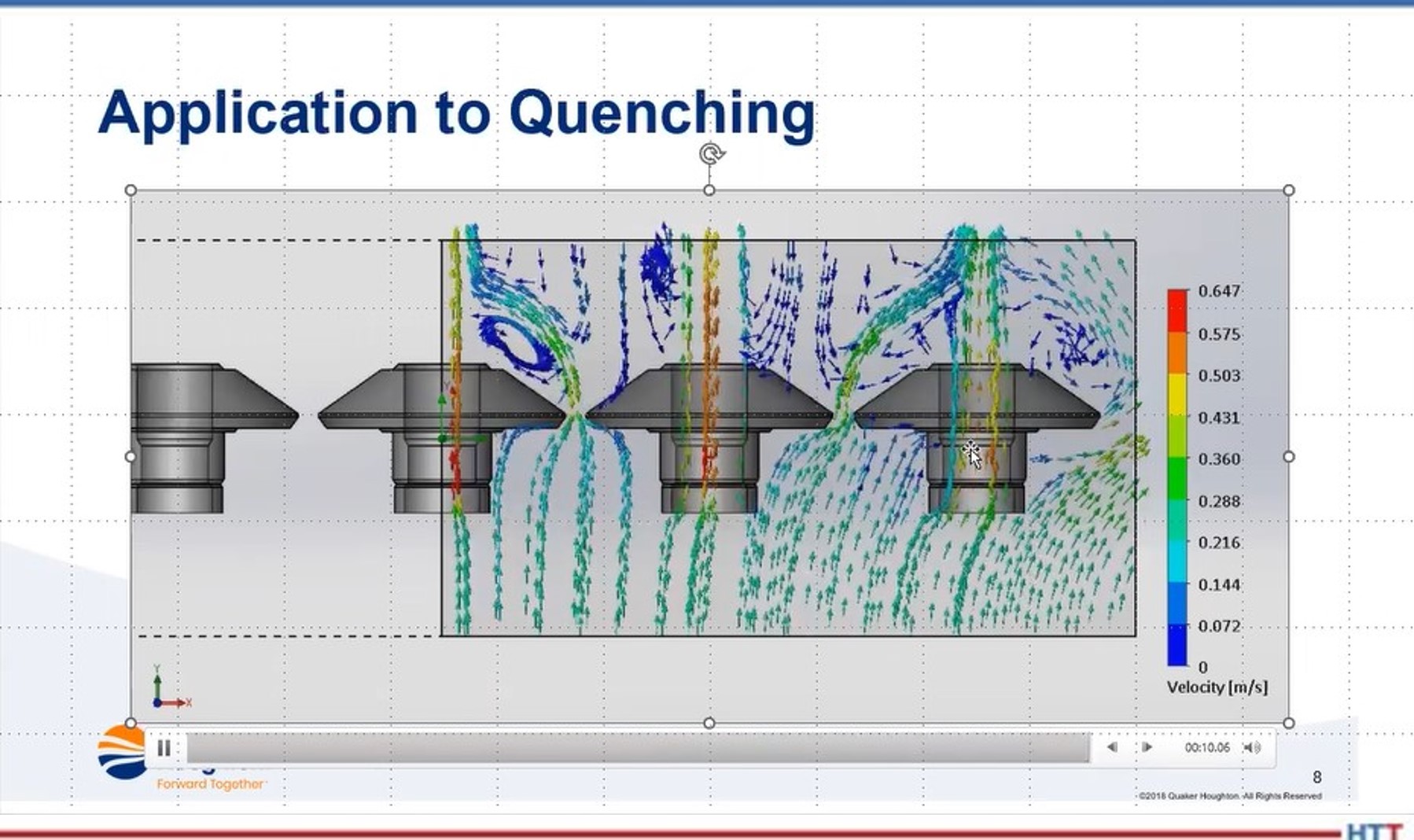
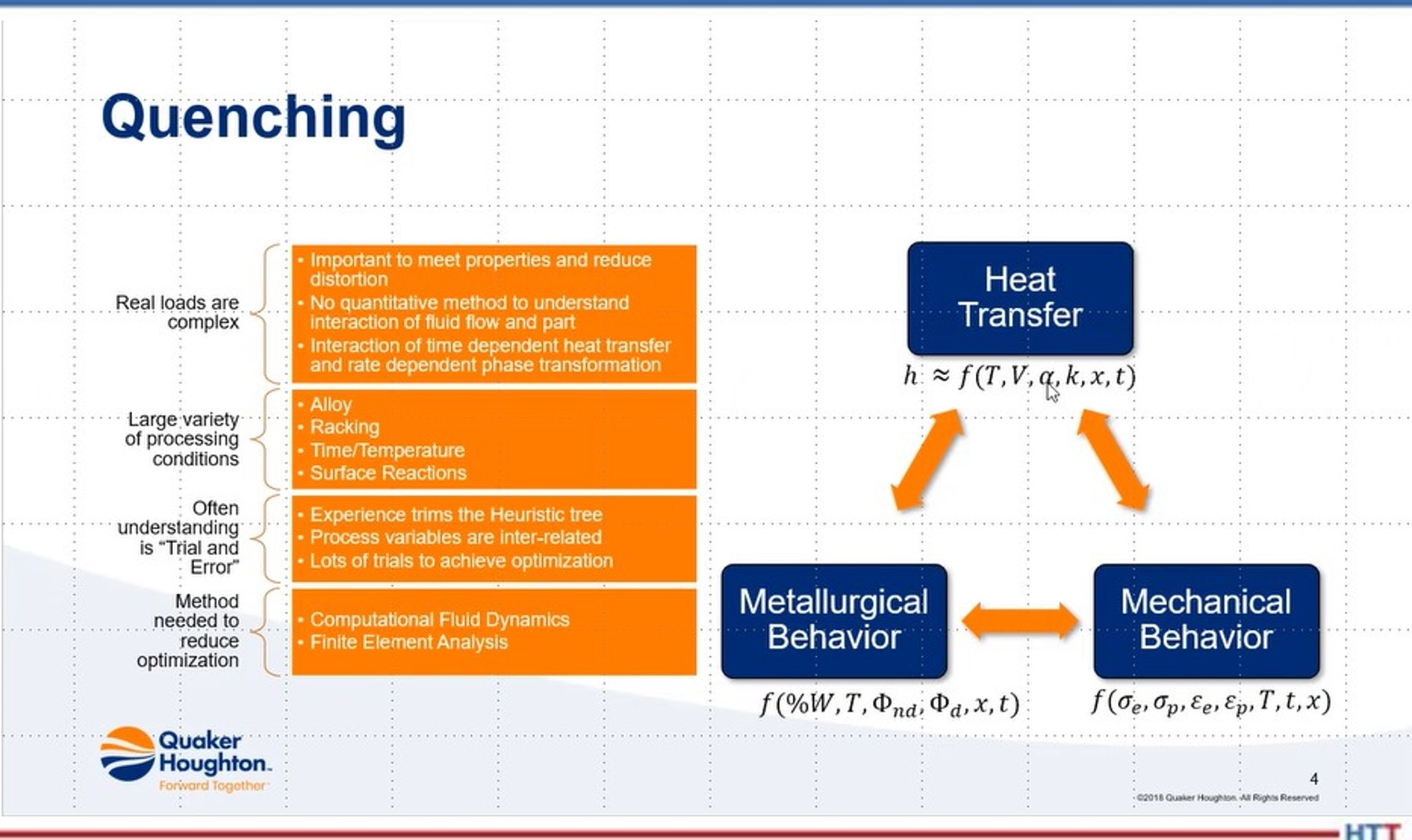
SM:  It can be done, and it can be done accurately. But part of that is dependent upon the quality of your materials data. That’s the part. We need to know how that will respond as a function of the constituent of equations within the part. For instance, if I put a stress on it or put a strain on it, what’s the plasticity of the part? How will it perform?

The next thing you have to understand is the quenchant itself. You have to understand the physical properties. Let me share something if I may. Can you see the screen?

DG:  Yes, I can actually.

SM:  We have to look at the heat transfer. We have to look at the temperature, we have to look at the thermal conductivity, thermal detectivity as well as the position and space (X, Y, Z), as well as time, because you know, obviously it’s a time function. So, we have to understand that within the part.

Now, we also have to do the same sort of thing on the quenchant, but now it’s a function of space on the surface of the part. Now we have to look at velocity, we have to look at surface temperature, velocity, thermal conductivity as well as X, Y, Z, and time.

That’s why there’s been so much modeling and good effect with, for instance, high pressure gas quenching. Because the properties of the gases used are well known, well documented. You just look them up in a table someplace. Quenchants, on the other hand, the quenchant suppliers have done a lousy job of documenting the thermal properties. That’s starting to change. So, that’s one of the problems that you see is that the thermal properties of the quenchant are not well established.

The second thing is, is looking at the boundary conditions of the part is that changes as a function of position and agitation — the agitation rates can change around a part. If I look a part, the quench rates change as a function of velocity. Well, the suppliers have not done a real good job of characterizing their quenchants as a function of velocity. That’s a problem, which is getting worked on.

In terms of the simulation, it can be done if you’ve got good boundary conditions. The boundary conditions being the stuff on the outside of the part and the stuff inside the part. Once you do that, and you can do this with either using something like computational flow dynamics and then applying that as whatever velocity heat transfer coefficient that you get out of that and apply to the boundary of the part, then you can use a variety of different software programs, such as Dante or SIMHEAT — both of those are good, just a difference in their material databases. Each will give similar results but it’s a function — garbage in, garbage out. You have to have good material properties and good boundary conditions. If you have those, then you can get a reasonable result. But, if you don’t, you’ll just get garbage results.
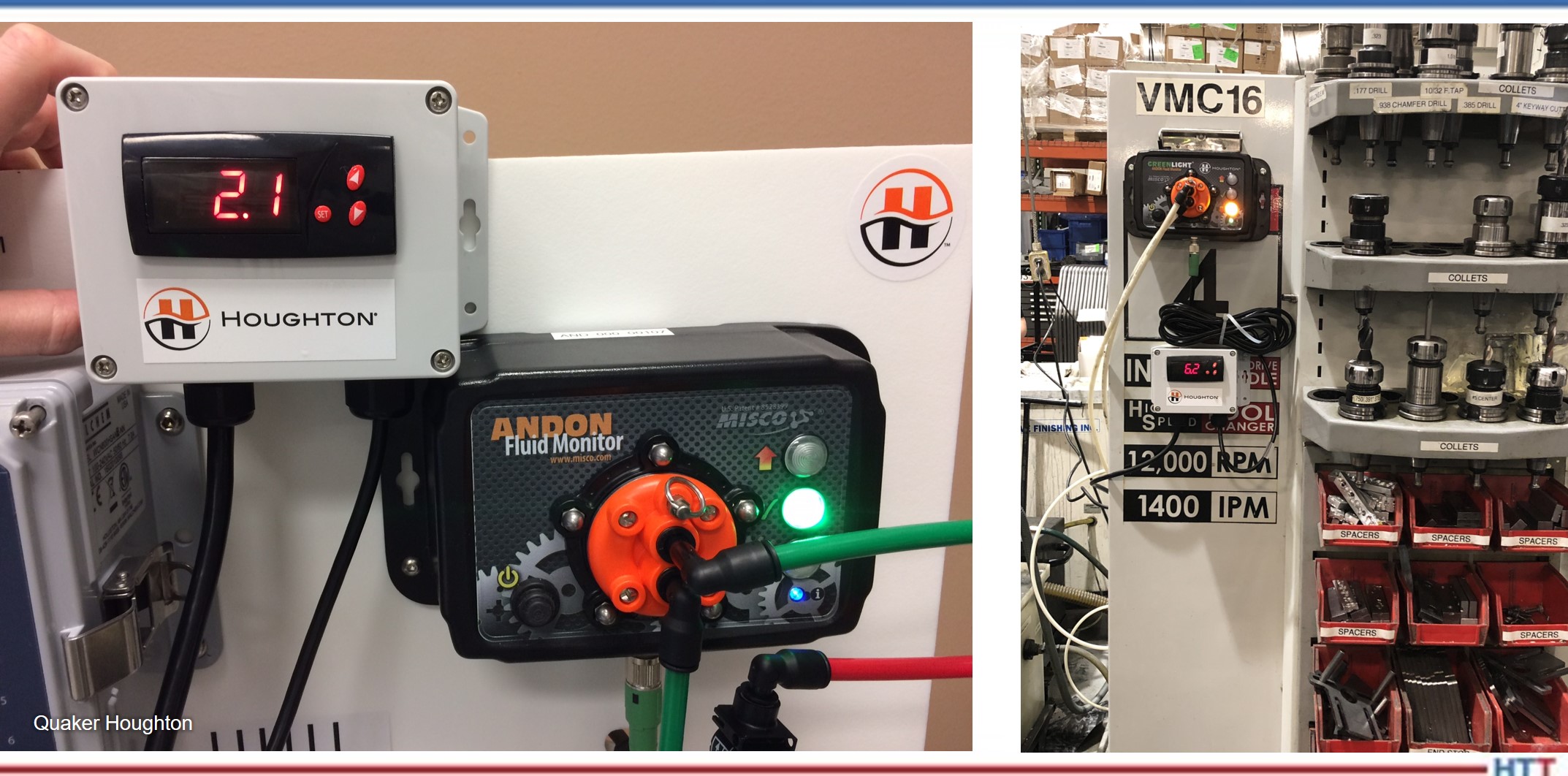

DG:  As far as simulation goes, obviously it’s something that can be done. Do you see the use of it growing significantly over the next 5-10 years and, if so, any particular areas do you see it growing? I’m assuming it’s going to be in high value parts, right? You’re probably going to see it more there than in your nuts and bolts.

SM:  I see it more in the higher value parts. And also, induction hardening. Let me explain: One, in the high value parts because they want to be able to characterize the parts. Either as, “Oops, I sent this part out and it cracked, what happened” as an analysis tool to prevent or to explain why something broke. I see this occurring more in the automotive world at the OEM level. You see some of it in the second-tier aerospace where they’re trying to understand to reduce residual stresses, reduce distortion. At the commercial heat treat? No. They just get paid to quench the part and shove it out the door.

DG:  Is it genuinely accessible today? You mentioned Dante and things of that sort. I know Quaker Houghton probably is, but are most of the quench companies working with modeling or is it not that commonplace?

SM:  It’s not that common. Part of it is because, you know, the quenchant business is a very competitive business. It just is. A lot of people look at it as strictly a commodity. Quite frankly, we’ve lost sales, I’ve lost sales, over a penny a gallon. And so, one of the things that’s very difficult, and it’s more difficult for the salespeople is to look at the value ad and that value ad can either be we’re not the cheapest quenchant out there. We’re the Cadillac, we’re not the Chevy. So, to justify that higher price (and my salary), we have to sell the value ad, and that value ad can be help with making sure that when I quench my parts in it, I’m going to make properties.

For instance, most quenchant suppliers do not have a metallurgist. One, metallurgists are hard to find anyway, so they’ll get a materials science person which may or may not be exposed to heat treating. So, they have to help them understand whether or not they’re going to make parts. In other words, to mitigate the risk in changing to another quenchant. The value ad is the back-up support from the metallurgical point of view. That’s help understanding, not only just the chemistry of the quenchant and what it does, but what happens to the part. Why is my part stained? Why did my part crack? Or why did my part work this way as opposed to that way? How can I approve the residual stress state in that part? How can I reduce distortion? How can I achieve better properties? Those are the things that we can help with.

Some of the other suppliers can also do it, but they’re not doing using modeling or using computational flow dynamics or using the modeling program, they’re doing it based on their experience. It’s something I do too, but I can do that with the modeling and my experience to get it even closer.

Did that answer your question?

DG:  Yes. Basically, I was just trying to get a sense from our listeners, many of them are going to be manufacturers with heat treat in-house, “captive heat treaters,” as we call them. I’m just curious how accessible it is. Is it something they can call today and say, “Can you help me with this, and can we model it?” It sounds like, “yes” but not with all quench suppliers, but it is possible.

SM:  There are also consultants out there that can do it.

DG:  Speaking of green, speaking of money, Quaker Houghton, several years ago, probably three or four years ago. . .

SM:  Three years, next month.

GREENLIGHTTM

DG:  . . . came out with this product called Greenlight Unit and I’ve been wanting to talk to somebody over there about that. From a 30,000-foot view, what is it, why does it work, why should people care about it?

SM:  What the GREENLIGHT unit is, at it’s very simplest — you’re measuring something and that measuring something could be, for instance, polymer concentration using [indiscernible]. You’d be measuring ph. You could be measuring some other physical property. You tell the unit — these are the ranges that I want to use. You can use it to computer interface or PLC interface, and I set this box on, for instance, my induction hardener which is very common. I have a concentration range for the polymer quenchant. If I go below that it puts a big red flag. If everything is good, it waves a green flag. If it’s either too high or too low, it waves a red flag and says, “pay attention.” Now, that red flag can be either I could add water or add polymer and I could tell either a person to do that, you know, “Operator, come and do this for me” or it can tell a PLC to actuate a pump — either add water or to add polymer. All automated, don’t have to pay attention to it.

DG:  And that works, not just on induction equipment, just to be clear. You can do this on quench coolant tank or whatever.

SM:  Yes, absolutely, anywhere. I can put it on polymer quenchant, for example. Most commonly, it is being used on induction. In fact, it’s standard on some of the induction hardening equipment.

DG:  So basically, just a simple human-machine interface or human-quench fluid interface is going to tell you whether it’s within spec or not and if it’s not in spec, the green light goes out and the red light comes on.

SM:  And some alarm comes on and some enunciation, whether it’s visual or audible or both.

DG:  And you either fix it manually or you’ve got it programed so that a PLC can make whatever adjustments.

SM:  You can contact those so that you can tell a PLC to do some action.

Training for quench and heat treat knowledge is available, and the next generation of metallurgists and engineers need it: "As far as training goes, the fact of the matter is, if you don’t have in-house resources to help you understand heat treating and/or the quenching aspect of it, I think, point being, there are consultants out there that can do it, there are quench companies like Quaker Houghton, for example." - Doug Glenn

DG:  Let’s hit one other main topic before we wrap up today. You’ve already kind of hinted at it, but I think that it’s something that’s important. We’ve talked a lot about “brain drain” in the industry and the fact that, and you and I actually spoke off-line not too long ago about, metallurgy programs versus material science programs and the fact that sometimes material science graduates don’t necessarily have a full grasp on what metallurgy is and how it works. . . .

When companies that are manufacturers with their own in-house heat treat are needing help, how are they going to get training? Where can, in fact, they go to get questions answered and things of that sort. And how bad is that problem?

SM:  One, it’s a global issue. Metallurgy is kind of like a forgotten science. I was one of the last at Ohio State to actually graduate with a metallurgy degree, metallurgical engineering. After that they changed to material science.

The reason is because one of our illustrious funding [parameters] for grant-funding says: We already know everything there is to know about heat treatment metallurgy; we need to be focusing our energies on nano-this or green-this or additive manufacturing or whatever kind of buzz word. In other words, I’ll send something in, toss in those buzz words and you can get a grant. In other words, it’s because the universities are chasing the government cheese when, really, what the industry needs is people who have a strong grasp of the metallurgy of something. For instance, when I went to school, back in the dark ages (about 1980), back when we still used slide rules (I still have mine), we actually had whole courses, multiple semesters on heat treating. How does a steel react when I change the quench rate? We have the different microstructures you get. Looking at the microstructure, what do we get?

Now, with a material science degree, what we were exposed to in multiple semesters, they may get mentioned in a single lecture.

DG:  And spend the rest of the time talking about plastics, polymers, composites and high-faulting new stuff, which is important, but. . . .

SM:  Just to give you an idea: I had a customer, and they were having, roughly, 95% cracking. They asked me to help. They’re using our quenchant. What they were doing is that they were taking the parts and they were putting them into the high temperature in the austenizing furnace. They would then quench them into our polymer quenchant, and these were parts like 4340, big parts. They only had one furnace. So, what they would do is after they quenched it, they’d take up the parts then they would put them outside in the snow so they could let the furnace cool down so they could then temper them. Usually, it would take overnight. But when they would come around the next morning, all these big, expensive, large — and we’re talking several hundred-pound parts — were sitting there in multiple pieces because of quench cracking. They wanted to understand why this was happening. So, I go in there and I meet and talk to their metallurgist, and I said, “Ok, the problem you’re having is an issue with quench cracking which is due to transformation martensite, and you need to get rid of the residual stresses by putting in to temper immediately. The metallurgist looked at me and asked me, “What’s martensite?” I had to control my . . . yeah. And I asked her, “Where did you go to school?” She went to Carnegie Mellon.

DG:  Not that it’s not a good school; your point being they’re not covering the metallurgy that they need.

SM:  I looked at her and I said, “I know a lot of the professors there. In fact, I flunked out of Carnegie Mellon.” You know, I got lousy grades, I flunked out of Carnegie Mello. I was accepted and then flunked out, so I know! I mean, Metallurgical and Materials Transactions A is by Dave Laughlin who is at Carnegie Mellon. He is a wonderful person; I think he may have retired now. He was a wonderful professor, and he gave me my first metallurgy program. He was also very supportive of me throughout my career. But I looked at him and said, “As I recall, we were taught these courses, I had. . . I mean we were taught these courses.” I mean we had Massalski, Laughlin, I had a whole bunch of people that were well up in the [field]. She looked at me and said, “Well, it was a material science degree, and I took the ceramic option.” So, anyway, we had to go through and do all the training, what’s required and all that stuff. We got it and so we understood what was going on, we understood the ramifications of different quench rates and got that all resolved.

Then I talked to this When I was working on my. . . . Afterwards, I talked to one of my professors who has since passed away at University of Missouri Rolla (or now known as Missouri Institute of Science & Technology), and he said that’s unfortunately truth. If you want somebody that’s knowledgeable in heat treatment, don’t hire a material science person, hire a mechanical engineer because at least they will be exposed to it.

DG:  That’s a good point. It’s possible that the mechanical engineers are going to have more exposure to, at least, the effects of heat treat and understand heat treat more than maybe materials engineers do who may have one course. You mentioned before, Scott, that there are only a couple of schools in the U.S. now that still maintain an actual metallurgy degree. Do you recall who they are?

SM:  Yes. I believe the University of Missouri Rolla (Missouri Institute of Science & Technology) in beautiful and scenic Rolla, Missouri. There is the University of Arizona, but I believe they are focused strictly on, mostly, mining. . .

DG:  Yes, because there’s a heavy metallurgy emphasis in mining, as well.

SM:  . . . There is the University of South Dakota and maybe the University of Idaho, but I’m not sure on that one.

DG:  The Colorado School of Mines? I think they, at least, used to.

SM:  Yes, they still do. But that’s four colleges.

DG:  I guess an application here is for companies who are looking to hire people to help them with metallurgy because what we’re talking about here is training and getting the brain-drain, is to be very careful who you’re hiring and where they came from. Not to say that all materials engineers are not worth their salt, because that is not the case, but you need to ask the question: “How much exposure, what has been your experience in metallurgy, specifically?” I think that’s the point.

Click to read about Sergio Gallegos Cantu

SM:  And I’ll tell you what. The industry right now is a bunch of old guys. We’re retiring. I’m going to be retiring probably in the next up to three years. But if you look at other people in the world, we’re all getting up there, and the young people to replace us will have to be knowledgeable, otherwise we’re going to repeat all the same mistakes all over again.

DG:  Well, I want you know, there are a lot of young people coming up in the industry, right there, 40 Under 40. There are some good, good people. It’s amazing. But your point is very well taken.

SM:  And one of those 40 Under 40 has been brought along. Sergio.

DG:  Sergio, wonderful, wonderful.

SM:  That said, somebody that is very knowledgeable in heat treatment, is still going to be needed —whether you’re doing for production of gears, not necessarily for transmissions, but gears or wind turbines. Heat treatment of turbine blades, heat treatment of . . . whatever. Somebody who’s knowledgeable in heat treatment, a young person, will be able to write their own ticket.

DG:  I agree with you!

SM:  One of the beauties of heat treatment that I’ve had is I’ve never had to worry about losing my job, I’ve never had to be worried about being laid off, and I’ve been through some ugly layoffs. When I was at McDonnell Douglas, we had 64,000 people at one time; the next morning we had 30,000. In one day, they laid off 35,000 in one location. So, I’ve never had to worry about being laid off. I’ve never had to worry about — if something happens, will I be able to find a job? I’ve never had that issue.

DG:  It’s never been an issue for you. That’s great.

SM:  And I think that that will be true of any young person in heat treating. You’ll always be able to find a position.

DG:  That’s great, Scott. I appreciate it. Just to wrap this one little segment up as far as training goes, the fact of the matter is, if you don’t have in-house resources to help you understand heat treating and/or the quenching aspect of it, I think, point being, there are consultants out there that can do it, there are quench companies like Quaker Houghton, for example.

SM:  And there are heat treating societies, for instance, ASM heat treat society. Since this is global, all of the heat treating societies, whether it is the Chinese heat treating association, the Chinese heat-treating society (there are two of them), ASMET which is the Austrian, IWT which is the German, the Italian heat treat society, the Czechoslovakian, Indian heat treat society (which is actually part of ASM) — all those societies have their own training programs and they’re good. I taught some of them and other people have taught. Take advantage of your local heat treating society. And do the training of your own people. Or you can use consultants.

DG:  Right. And I was going to say to anybody listening, if they need help finding those resources, you can feel free to call us. I’m sure that Bethany will put some information in this podcast about how you can get ahold of us to help. If nothing else, we can put people in touch with you, Scott, which leads me to the final question: How much information are you willing to give away as far as people contacting you. And don’t worry, you’re probably not really allowed to retire, so even if you do, these people will find you. How can they contact you?

SM:  Well, you have my email address — scott.mackenzie@quakerhouton.com. Right now, I’m not taking any consulting positions. I get asked routinely. Part of that is because it’s a conflict of interest with my existing job. If you’re using our quenchants, I can help you. Or, if you’re looking to use our quenchants, I can help you. And that isn’t just choosing a quenchant. Obviously, I can help you select a quenchant if you’re unhappy with your existing product. But I can also help you minimize distortion, better reproduce better properties, whether that’s now we do do a company can come to us and ask for CFP modeling of a quench tank — we can do that. Or we can do that as part of the modeling of the part, we can do that. And we can do it and tie them together, as best we can, depending on the position of the quench tank, and we can do that on as-needed basis. So, I can help you in that fashion. But there are also other people out there — Andy Banka at Airflow Sciences, which can do CFP work; Dante Technologies; TRANSVALOR in Europe and in the U.S. can also do stuff. We happen to work with TRANSCALOR. They can all do that, and they can do it for a consulting fee.

So, it can be done. When I figure out when I’m going to retire, then I’m going to try and figure out what I’m going to do after that.

DG:  We’ll find you, don’t worry; you won’t be able to hide.

SM:  That’s what I’m afraid of.

DG:  Exactly. Very good, Scott. I appreciate it. Are there any closing comments you’d like to make? Is there anything we missed that you’d want to include? I think we’ve hit on most of the major stuff we were thinking about.

SM:  I think probably the biggest thing is encourage your young people to go to conferences, and I’m not just talking about where they’re laying out a whole bunch of equipment. Not just an exhibition so you can look at equipment. They need to go to the events so one, they can meet other experts, so they can be educated, and I’m not just talking about taking an ASM course; I’m talking about going to the conference, being able to ask questions of other experts as well as talk to their peers. What are the problems their peers are having? The point is, it’s likely the same sort of problem. And be able to expand the horizon by seeing the conference, the conference proceedings, etc. Encourage them to go to those sorts of things. And also submit papers, etc. because that’s the only way they’ll grow. And that’s what you want, you want the people to grow within the organization, and encourage them to grow within the organization so they become more of a value to that organization.

DG:  Yes. There’s no better way to learn than to teach. Once you decide you’ve got to teach, you’ve got to learn the stuff.

Well, you’ve done a great job of that over the years, Scott. I know there’s many, many people in the industry who have appreciated your expertise and we certainly appreciate you being with us here today. Thank you very much for your time and we’ll look forward to talking with you again. Don’t retire too soon — we’ll need you here, so stick around!

SM:  Ok. Thank you.


For more information, contact:

Website: quakerhoughton.com

Contact Scott: scott.mackenzie@quakerhoughton.com 


Doug Glenn <br> Publisher <br> Heat Treat Today

Doug Glenn
Publisher
Heat Treat Today


To find other Heat Treat Radio episodes, go to www.heattreattoday.com/radio .


.

Search heat treat equipment and service providers on Heat Treat Buyers Guide.com


Heat Treat Radio #79: All Things Auto Industry Quenching with Scott MacKenzie Read More »

Heat Treat Radio #78: Heat Treat Legend Suresh Jhawar

Heat Treat Today publisher and Heat Treat Radio host, Doug Glenn, meets another Heat Treat Legend, Suresh Jhawar. In this third installment of the Heat Treat Legend series, you’ll hear how Suresh became the president of G-M Enterprises, what he believes are the key skills of leaders, and what words of advice he has for budding leaders.

Below, you can watch the video, listen to the podcast by clicking on the audio play button, or read an edited transcript.


The following transcript has been edited for your reading enjoyment.

Doug Glenn (DG):  Well, welcome everyone. This is Doug Glenn, once again, with Heat Treat Today speaking with the great honor of talking with another Heat Treat Legend. Today, we’re going to meet with Mr. Suresh Jhawar who was very instrumental in the founding of a vacuum heat treating company, and other experiences. I’ll let him tell some of that story. But, first off, Suresh, thank you so much, it’s really, really nice to have you with us.

Contact us with your Reader Feedback!

Suresh Jhawar (SJ):  Thank you and you are welcome.

DG:  I want to have you spend a little bit of time telling people about some of your work background: Where did you start? How did you get in this industry? Where you went and what did you ended up doing?

SJ:  I came to the United States in 1962 and attended Marquette University in Milwaukee. I graduated with Master of Science in mechanical engineering and an MBA in marketing. After that, in 1970, I started at Ipsen Industries as a senior project engineer for the vacuum furnaces. Within a year, I was promoted to the position of manager of engineering services. Soon after that, I was promoted to the director of heavy equipment division, handling large and complex projects.

Mr. Wesley Gable, who was a senior vice president of Ipsen Industries, inspired me and was really helpful in my career growth. He appreciated that I was hardworking and talented in performing well to challenges and did all that was possible for meeting difficult deadlines. When my car had a problem, he even loaned me his Cadillac to go back and forth to work.

So, that is, briefly, how I got into the vacuum furnace business.

Check out more episodes from the Heat Treat Legend series!

DG:  So that was with Ipsen. You started with Ipsen in roughly what year?

SJ:  1970, and I left them in 1982.

DG:  Where was Ipsen at that time?

SJ:  Rockford, Illinois and they are still.

DG:  So, where after Ipsen did you go?

SJ:  Well, I was very happy there. We had almost 400 people in Rockford and there were about 300 in Germany. I was doing good. There were two vice presidents and a president and then after that, I was part of that management team. I was in the top five people at Ipsen and driving the company in cost savings, improving products, and customer relations. I was very happy.

But I was contacted and recruited by Abar, and I was not interested. Still, I thought, “Let’s go and see.” I had close to five interviews with them, up to the chairman of [indiscernible] and they offered me the job. I always wanted a position where I could run the entire operation. Ipsen was also considering that kind of a growth for me, but they said that it would take three to five years, and I was not patient at all. When the Abar position came, it doubled my compensation. So, I took that challenge, and I ran to Abar.

My boss [at Abar], John Henry, when he stepped into my office, I said, “John, you guys screwed me.” He said, “What do you mean?” I said, “You know, I came from a nice company, and you have such a bad company here. But I’m very excited now because any idiot can improve upon this thing.”

DG:  I’m sure you made him feel really good about that!

SJ:  I was asked by John Henry, then the president of Abar, to write a justification. I was in Monterey in L.A., California, attending a management seminar on how to be an effective manager. They don’t let you get any phone calls, but there was an emergency and John Henry was calling. He said, “I met with Ipsen people. Can you write why it makes sense for Ipsen and Abar to join together?” In the night, (I had a nice room with a fireplace), I opened a wine bottle, and I wrote thirty pages in all caps, handwritten. The next morning, I overnighted that to John Henry and that is where it all started.

During the merger, John Henry — who was a Harvard MBA — was not happy where he was, so he was looking for jobs. I know he had resumes out, but he couldn’t find one. When this situation came, I was supposed to take over; when this opportunity [the merger] came, then I was the odd man.

DG:  Ok, ok. You wrote the justification and then you got booted.

SJ:  Yes. So, for a year and a half, I did a few projects. I worked in Germany, then I went with Sauder in Houston. Every weekend, I used to fly back and forth — I had an apartment. At Sauder, in less than a year, we sold three vacuum furnaces. But I was not happy. They were doing 5 million and losing a million dollars. It did not fit my objective.

Then, a customer, Continental Heat Treat, their president put me in contact with Keith Grier [founder of G-M Enterprises], so that’s how we met. In the beginning, I wanted $110,000/year; they offered me $55,000. Initially, I said no, and I went away. Later, when things did not go well at Sauder (or I didn’t like the company), Veena pushed me, and I took it. So, I came down and joined them and they said, “How much?” I said, “Your number.”

DG:  I want to interject because I want to get a few names straight for people. You and I know who these people are, but others might not. First off you mentioned Keith Grier. Was Keith, at that time, one of the owners of GM? G-M existed at that time, yes?

SJ:  Yes. And he had a partner, Mac McGuire.

DG:  So, that’s the ‘G’ and the ‘M’ of G-M Enterprises. And you mentioned Veena, which you and I know who that is, you especially, but that’s your wife. You said Veena was pushing you to go ahead and take the job.

And you decided to take the position at GM?

SJ:  Yes, as a partner with a 15% interest. Later, I bought McGuire out within a year. He was then out, so then Keith and I were the partners.

DG:  What year was that?

SJ:  1987.

DG:  So, in 1987, you entered in and basically started taking ownership, or took a portion of ownership, with GM.

SJ:  You know, Keith was a nice guy and a good friend. He was very good with customers, and he was a good service tech. So, I helped in developing the product line. However, Keith wanted orders, and we could not make money, and we were kind of a break-even company. I was tired and so I went to Keith, and I said, “You buy me out.” He said, “No. I have a first right, you buy me out.” We talked and he wanted too much money which I could not afford. For six months, I dragged my feet, and I was losing interest. I went back and I said, “Okay, I accept.” In 2005, I took total ownership and changed the name from Greer Jhawar Industries to Jhawar Industries doing business as GM.

DG:  Ah, okay! I had not heard that official business name.

That’s enough to let us know at least where you are. People should know right off that Suresh was the owner of G-M Enterprises; it is no longer owned by Suresh and is actually owned, now, by Nitrex.

I want to move on to the next question: In your years, as you were starting to either get involved with the industry or when you were in the industry, can you think of one or two people that had a significant impact on you, that maybe encouraged you in the industry?

SJ:  Yes. One was Wesley Gable, who was a senior vice president [of Ipsen]; another the president of Ipsen, Les Senet, and then the next president (I’m trying to remember his name), he was very supportive of me — Lu Clay.

DG:  And these guys all were just an encouragement to you in the sense of “Hey, get out there, and do it”, or how were they encouraging?

SJ:  They liked the way I approached people, the business, customers, I was hardworking, meeting goals; so, I was number one choice for them.

DG:  When you look back, Suresh, over your career, can you think, in your mind, what might have been the top two or three major accomplishments that you’ve done?

SJ:  At Ipsen, I became, technically, the assistant to the president and traveled with him extensively to Poland and Armenia. Ten times I visited Poland in less than two years, every other month.

DG:  Just curious, but why Poland? What was there?

SJ:  The steel mill and annealing of silicon steel coils for the transformer steel. At Ipsen, we sold eight furnaces to Armco Steel in Middletown, Ohio. So, there was a large project of ten furnaces. Remember, at that time, Ipsen was doing only 12 or 13 million and that project was like a 6- or 7-million-dollar project.

The president and vice president were handling the commercial aspect, but before that, you have to convince the technical people that you have the right product and the right solution. That was my task. Ipsen was then successful in the booking the order for ten large car bottom furnaces. They were 84 inches wide x 45 inches high x 32 feet long. Furnaces were made in four sections, bolted. At the same time, Ipsen was also working on the license agreement with Elterma, which later became SECO/WARWICK. So, I was assisting the president and the vice president on the technical side of this license agreement and that was also signed.

I also brought Wessman Engineering from Kolkata, India, as a sales agent for Ipsen. Later, after I left, it became a joint venture and, eventually, Ipsen established a manufacturing base in India wholly owned by Ipsen. So, it was started with me by bringing Wessman Engineering into the position.

Mrs. Veena Jhawar, G-M Enterprises COO; Mr. Jean-François Cloutier, Nitrex CEO; Mr. Suresh Jhawar, G-M Enterprises President

Under my leadership with a period of three years, Abar grew and had a very, very good profit, and that’s when Abar and Ipsen came to a merger.

DG:  That’s interesting. To me, there are a couple of good things there. One is one of your major accomplishments was that merger between Abar and Ipsen, which was great. But you should mention the success you’ve had with G-M Enterprises, as well; that’s got to be one of your top accomplishments.

SJ:  In 1987, I joined G-M as a minority partner. At that time, G-M Enterprises was doing about 1.8 million annually and was a break-even company. In 2005, I acquired total ownership of G-M and brought in Veena Jhawar as director of supply chain and the oversee man of the operation while I was concentrating on developing customer base and innovating state of the art vacuum furnaces with superior designs and construction.

By 2018, G-M became a leading supplier to GE all over the world from Singapore to Japan and to Brazil. Pratt Whitney, Rolls Royce, Bodycote France, Precision Castparts, PCC, U.S. Airforce, and DLA, to name a few.

I was also instrumental in developing the MIM furnace, and proud to say that I developed a strong relationship with the founder and the chairman of INDO-MIM. At that time, they had only five people in their group; today they have over 3500 people.

DG:  What was the name of the company again?

SJ:  INDO-MIM, Inc.

Then, about five years back, they established the U.S. division because it became that customers in the U.S. wanted U.S.-made things. So, they took the space from Kelly Airforce base in San Antonio — I don’t remember how many square feet it was, maybe a 40,000 square foot building — and ordered two furnaces for their U.S. plant. By then we had already put thirteen furnaces in India. Last year, G-M got orders for three more furnaces, and before I left and when I was working as a consultant, sold two furnaces and then wrote a multi-year contract and on that basis, they bought three more. So, they have well over twenty furnaces in India and about five furnaces in the U.S. These are good-sized. They are 36 x 30 x 84 inches long. In the MIM industry, I believe, these are the biggest furnaces.

Now, INDO-MIM is the world’s largest supplier. Before, Advanced Forming Technology – AFT in Denver, CO — that’s the company with whom Indo-MIM signed a license agreement/joint venture — and then they separated.

DG:  I want to talk about G-M just a little bit and speculate a little bit. G-M Enterprises, obviously, is one of your great accomplishments, if you ask me. What do you think it was that made G-M as successful as it was? If you were to look back on it now, what do you think were the keys to making it so successful?

SJ:  During my career, I learned that in order to have a satisfied customer base, it is very important to have a talented, dedicated and happy staff. What I believe is “happy, happy, happy”: happy employee, happy customer, happy bottom line. In any business, it’s very important to listen to the customers’ requirements rather than just throw what you have in your basket and offer innovative solutions and then listen. It’s very important that customers feel that they were a critical part of the solution.

"The other very important aspect of business is after-market customer service. G-M built up a high level of customer support in family business." -Suresh Jhawar

The other very important aspect of business is after-market customer service. G-M built up a high level of customer support in family business. In other places, if a customer has a warranty problem or has a problem, they call the home office and the first thing that people say is give [indiscernible]. But listen, at General Electric and Pratt Whitney, these guys cannot [indiscernible]. So, we used to jump on a plane, and we’d go and take care as GM. After solving the problem, we’d say, “Hey, customer, you screwed this thing up. You’ve got to pay us.” I would say, half the customers would pay the full charge, 25-30% of the people would spread the cost, and 10-15% would say, “screw you.” So, it was a good average.  That was one of the key defenses between us and other furnace suppliers.

DG:  So, your point is, you just immediately responded. Let’s get out and fix the problem, then we can talk about terms later.

SJ:  Just imagine: For $5000, half a million-dollar or three-quarter million-dollar equipment is down. It’s not good! So, you go and take care. That’s how you develop a good customer loyalty — they can depend on you.

I’m pretty sure that we had the highest bottom-line in the industry. We had the highest at Ipsen when I was there, it was the highest at Abar, and then at GM.

DG:  Well, I’m starting to see a trend here, Suresh. Every place you’ve gone, if you weren’t making a happy bottom-line, it was an issue. You like the happy bottom-line.

SJ:  I say, “Happy, happy, happy.” Then, I had a song. In Muslim religion, they raise their hand up, they say, “Allahu Akbar.” I used to say, “Bye GM, bye GM, bye GM.”

"What I believe is “happy, happy, happy”: happy employee, happy customer, happy bottom line. In any business, it’s very important to listen to the customers’ requirements rather than just throw what you have in your basket and offer innovative solutions and then listen. It’s very important that customers feel that they were a critical part of the solution." -Suresh Jhawar

DG: ~chuckles~ That’s a good mantra, right there! How many years would you say you’ve been in the industry?

SJ:  Over 50.

DG:  So, looking back on your 50 years, given your experience, what is the top one or two lessons that you’ve learned? What do you wish you would’ve known when you first started that you know now?

SJ:  What I know now, that’s what we practice: respecting employees and rewarding them for their contribution is the fundamental recipe for success. We always treated our employees as a family member and gave them due respect for their contribution. With the right and dedicated employees, it’s very easy to provide quality and timely support to customers. Customers felt very comfortable when they call, even after 10 years, that they were talking to the same highly loyal staff, and business continuity is very important. Customers have said that when they called our competition, every two or three years, they were talking to new people. So, that was very important.

DG:  So, maintaining good people basically is the point here, right? For consistency. It certainly helps with efficiency internally, but on the customer facing thing, it’s very good.

SJ:  Very comfortable, yes. I used to go late in the morning, 10 o’clock or so, to work and then I’d stay until 6 or 7 o'clock. Many days, the guy in Parts [Department] was still working! And you didn’t have to ask them.

DG:  Well, you know, if they find a good work environment, they’re happy to stay and they’re happy to work, which is good.

Let me ask you this question: Were there any disciplines in your life, things that you did/developed, (again, this doesn’t have to be work-related, so much, although it probably has a positive impact on your work), that were very helpful to you in advancing your career, your life, your happiness?

SJ:  One was to meet deadlines. We used to have production control meetings. I was given a task, by the president, to design and manufacture a tube and shell heat exchanger. You could buy them outside, but he was bent on making in-house, and so I was given the project. And, like today being Wednesday, at 8 o’clock we were having a production control meeting and I did not do anything, and all the drawings were due tomorrow. In the production control meeting, people were laughing at me because they were looking at throwing darts at me. In a way, they were saying, in a calm voice, “Son of bitch, he puts pressure on us, but he doesn’t do his own job.”

Do you know, I never went home? And the next day I was supposed to go on a trip — I had a 10 o’clock flight from O’Hare. I worked through the night and at 7:30am when the engineering crew came in, I gave them all the drawings, bill of material, left for O’Hare, and took a nap on the plane.

What I’m trying to convey is: Meeting deadlines and commitment, to me, is always number one. No excuses.

DG:  Get it done and get it done when you say you’re going to get it done.

SJ:  That helps you to expect from other people, when they see you, that you do that, so they follow.

DG:  They know you’ve got a platform to stand on when you’re talking to them about doing the same thing.

So, you just talked about a very interesting situation where you worked through the night to get something done. This kind of sets up for the next question, and that is: How did you, Suresh Jhawar, handle the work/life balance? Or was there no work/life balance, was it all work?

SJ:  You know, it was difficult when I was at Abar, because I took a big responsibility, and I was traveling internationally quite often. So, I missed a lot of family functions of children in their school and then, finally, when Andy [son of Suresh] was getting an award at his high school, I was coming from Europe, either Poland or some place, and the plane comes to Chicago, and I have to change. And the flight was late, so I missed my connection. Now it became difficult as to how to get to Philadelphia to attend that awards ceremony for my son. I called Veena and said, “You guys go ahead. I don’t know whether I’ll make it or not.” I went from one airline to another. I got on a plane, reached Philadelphia airport at the time when the program started, but I was at the school at the right moment when Andy’s name was called. I was there!

DG:  That is great! Well, you do what you can, you know? You’ve got to get there. And you’ve got what, two children, correct?

SJ:  Yes, Andy and Sheri.

DG: Looking back on your career, what was one of the most memorable things that happened to you?

SJ: At GM, it was easy, because Veena and I worked together. It was pretty balanced; we were both colleagues and had the same goals. It was much easier compared to other places.

"My parents didn’t support me, but I went and got my passport, got visa and I was determined. I landed in 1962 to the U.S. That is the most memorable, yes." -Suresh Jhawar

Coming back to that: I was an average student in India, a B student, or so. My parents didn’t want me to leave India. But I was interested. I researched UK, Germany and U.S. I found that in the UK and Germany, it would take me 4-5 years to get a Bachelor or Science degree in Engineering. The cost was half of the USA. But, in the U.S., I could do it in 2 years, and the reason was because I already had a Bachelor of Science degree from India, so they were giving me advanced credit, so I started as a sophomore. I did my undergraduate in 2 years here and the 2-year cost was the same as 4 or 5 years in UK than U.S. I used to go the U.S. library, do this. My parents didn’t support me, but I went and got my passport, got visa and I was determined. I landed in 1962 to the U.S..

That is the most memorable, yes.

DG:  Coming to the U.S. And achieving it even though your parents weren’t necessarily fully on board.

SJ:  The other thing to highlight is: Before marriage, when Veena and I met many times, Veena had rejected over 20 people. She even told me no. But she said, “You have to tell it to my father because I cannot say that I’m rejecting you, because they are tired of you.” She was surprised when I said, “Okay, I will.” And the other boys, they would not leave her. So, that brought us together.

By the way, in front of my father, I was a very shy guy. I didn’t speak much, just, “Yes, sir. Yes, sir. Yes, sir.” She thought, up to marriage, “What kind of a guy is this? So timid!” Anyway, then we got on a plane, and I ordered two scotch, and she saw me entirely different! That was another highlight.

DG:  Last question for you, Suresh: If you were to give some of the young people in the industry a little advice, what would you give them? I can say this as a fellow ‘old-timer’ in the industry, what would you say to them?

SJ:  The most important thing is to treat your employees like you treat yourself. When I worked at GM, out of any of the other places, I didn’t work as being “the boss” or on a high platform; I worked shoulder to shoulder with them. That gained their trust. I trusted them, they trusted me. That is very important. Business cannot succeed unless you have people — the right people and dedicated people.

DG:  Well, Suresh, thank you very much. I appreciate the time that you spent with us. I know, personally, you’re one of the guys who is always very positive and very encouraging to me. . . . Even though you insulted me a lot! ~chuckle~

SJ: That was in a friendly manner! I don’t stop anybody on the street and insult them. Only between friends. ~chuckle~

DG: On a more serious note, I have appreciated your encouragement over the years. You’re a good friend and a person who has always been encouraging. I appreciate that.

Thanks for your time, today.

Doug Glenn <br> Publisher <br> Heat Treat Today

Doug Glenn
Publisher
Heat Treat Today


To find other Heat Treat Radio episodes, go to www.heattreattoday.com/radio .


.

See Fives North American Combustion, Inc. listing on Heat Treat Buyers Guide.com


Heat Treat Radio #78: Heat Treat Legend Suresh Jhawar Read More »

Heat Treat Radio #75: Reimagining Furnace Compliance with C3 Data’s Matt Wright

Heat Treat Radio host and Heat Treat Today publisher, Doug Glenn, talks with Matt Wright, the chief marketing officer at C3 Data, to hear how the company has reimagined furnace compliance to fit in your pocket.

Below, you can watch the video, listen to the podcast by clicking on the audio play button, or read an edited transcript.


The following transcript has been edited for your reading enjoyment.

Doug Glenn:  Matt, Welcome to Heat Treat Radio. This is your first time on.

Matt Wright:  It’s good to be with you.

DG:  I do want you to spend a little bit of time giving our listeners a little bit about your background and then, also, if you don’t mind, a quick summary of what C3 Data does, just so our listeners have a concept.

MW:  I’ve been in the heat treat industry now for about 15 years. My brother, Nathan, and I together, we own a few — twenty-five — accredited pyrometry labs. C3 Data really comes as an outgrowth of that. Looking for an opportunity or way to reduce errors,  a human element, and to save time with all of our technicians doing all the work that they’re doing. And so, it really became something that we did for ourselves and realized that it could be something that the industry as a whole could use.

When you look at our industry, there are two ways that you can comply with the AMS2750 CQI-9 specifications. One is what I would call the “roll your own method” which is what everyone has been doing from the beginning: that is using a whole panoply of different technologies, whether that’s an Excel spreadsheet, a clipboard, post-it notes, or what have you — anything and everything that you can do to try to remember to do all the things that need to be done, and then you go to the audit and hope that nothing fell through the cracks. What C3 Data does is takes all of those requirements and starts with the spec and encapsulates everything in one platform, one system, so you don’t have to think about and remember to do those things, you just follow what we have you do, and you come out and you’re ready for your audit.

DG:  I want to jump back onto the labs you were talking about. Very briefly, how many where are they?
MW:  We’ve got one in Ohio and one in Mexico that has three different offices in Mexico.

DG:  And these are metallurgical labs, or did you say testing labs?

MW:  They are labs that go on site to perform temperature uniformity surveys, system accuracy tests, instrument calibrations and those types of things.

DG:  Let’s talk about compliance. Compliance with AMS2750 CQI-9 NADCAP is really an issue that is important to a lot of our listeners and readers, primarily those manufacturers who have their own in-house heat treat and have their own furnaces. Let’s talk about some of the latest developments, the latest technologies in that field. What are you seeing out there, Matt?

MW:  When I look at our industry, one of the things that is the biggest challenge is the flow of information — getting information from where it resides to where it needs to be in the format that it needs to be. I think the technologies that have been successful in our industry are technologies that help lubricate that flow, if you will.  A good example, I think you had mentioned some of the specs, but one of them is ITAR, the International Traffic in Arms Regulations specifications. In that case, you’re trying to prevent information from going to malign influence and so they’re going to use things like the Cloud and mobile technology. And those are the platforms that we’ve been built on, as well. But we’re kind of using it in reverse; we’re trying to disseminate information and getting it there as quickly as possible. So, the Cloud and mobile technology, I think, are the two biggest forms of technology that have been really helpful.

A couple other ones that we’re actually using that we’re seeing a little bit more and more of is OCR- optical character recognition. This is the ability to take a static document that has information on it and digitize it and get it to where it needs to be. We’re using that to be able to scan, for example, thermocouple cert, so that our customers, irrespective of who they’re buying their certs from, can just take a cert, scan it and build it right into their platform so they can use it to do an SAT in real-time.

Another one is the QR code. You know, with the things that are going on, it’s kind of made a comeback in recent days. Now you can get your wine list by scanning a QR code at the restaurant. Well, we’ve been using it since before it was cool to do that; we’ve been using to scan your thermocouples or your field test instrumentation, so you don’t have to go and look up something in a database or a table, you can just scan it in and, boom, you’re ready to go.

DG:  This OCR is interesting regarding the certifications on the thermocouples. So, a thermocouple comes in, it’s got its stats and whatever you’re scanning, that becomes part of your data, if you will, correct? And are they using it for anything else? For example, I’m thinking in my mind, a company who wants to transition over to using a system like yours, perhaps they’ve got a lot of historical documents that, at least, would be helpful. Is that also an application?

MW:  Certainly, a potential application could exist for that. We’ve got other tools with forms and things that we’ve put in place to make that transition from going from, what I call the “roll your own” in the static thing and pulling all of that information in. We’ve really made it, and strive to make it, more and more seamless every time.

DG:  And the QR codes? Are you using those on furnaces, on thermocouples, or where are you using those?

MW:  Any equipment that you use, whether it’s a thermocouple, a field test instrument, a data logger, any certification data that is associated with that, you can print a QR code and affix it to that. You’re not having to go and enter that in manually, you’re just scanning it in using our mobile app that has a QR code scanner built right in — it’s pulling that directly in. The whole idea is to reduce that bottle neck, if you will, and to get that information flow in so that these guys can do more value at a time out on the plant floor.

DG:  I also wanted to ask you, because you mentioned about Cloud-based and mobile apps and things of that sort — let’s talk about security for just a second. I just got done doing an interview with a guy by the name of Mark Mills that hasn’t been released yet. He’s a fascinating guy and I’m going to give that one a plug right here- you need to listen to that when it comes out. But he was talking about cybersecurity- he wrote a book called The Cloud Revolution. I’ve also heard at some of the industry meetings that there have been real concerns where some of the larger companies are not wanting their data to go “outside,” if you will- they don’t want to break the ceiling and get into the Cloud, they want it on site. Are you guys seeing much of that? If so, how are you handling that?

MW:  It’s a mix. We do see that. Every corporation has their own policies and procedures and what they’ve determined is a safe way to operate. So, on one side of the spectrum, we’ll get people that will be concerned and say, “Nothing in the Cloud,” and we have to have that conversation. Usually, the conversation revolves around what is the purpose of this information? And really, when you peel back and look at it, if someone were able to access the information in our system (which we have very tight security around), the only thing they’re going to find out is the very thing that those same preparations are bragging about on their website, and that is that they’re NADCAP compliant. There is no process-related data, there is no secret sauce involved in anything that we’re doing and so, it’s not something that we believe, and most people do end up seeing it our way that needs to be curtailed from a Cloud perspective.

DG:  I know a lot of companies’ concerns are not so much that something will get out about them as it is this Cloud connection is a gateway for the nefarious amongst us to break in and get it. I’m sure you’re seeing that, right? Let me ask you it this way:  What percentage of your clients are actually saying to you, “Listen, we want this to not be Cloud-based, we want it to be just on-site.”

MW:  If I could swag, I would say maybe 5–10% ask the question, “Hey, is this something that we can just have locally because we would just like to have it for ourselves?” And the answer is, it’s not; it’s not something that we can have locally, just by nature of what it is — it’s an ongoing, continually improving and updated thing.

DG:  Let’s talk about another hot point that we have here besides internet security. I don’t know if you guys have been affected by this, but it has to do with supply chain issues. We’ve got Covid to blame, we’ve got Russia to blame, we’ve got all kinds of things as far as supply chain. Are you experiencing any of that yourself for your business or are you seeing it from any of your customers?

MW:  I think we are fairly isolated from that in that we’re not producing a tangible product; we’re a software company. Happily, we’re not experiencing that so much. I will say that, from our customers’ perspective, the big catchphrase now is “flexibility.” With those things that you mentioned, the ability to be able to adapt to not knowing from one day to the next if the guy that was supposed to do your SATs or TUSs today is even going to show up because he might test positive for Covid, or something else, really drives home the need to be flexible — to not put all your eggs in one proverbial basket. We’re striving asymptotically, if you will, to get closer and closer to that point where someone who’s never done a calibration before, can pick up an app and literally, the same day, start doing calibrations. There are a lot of hills to climb and obstacles to overcome, but we’re pretty close and we’re going to strive to keep doing that so that people don’t have to worry about what if this guy quits, or what if this guy gets a promotion? The system is going to run, and they can pick up and run with it with the next guy.

DG:  When we talk supply chain, I start to think to myself, to a certain extent, I start to think internationally a little bit because a lot of the issues are bottlenecks at the border and things of that sort. But it makes me wonder — how about you guys, C3 Data, are you just North America or are you seeing business outside?

MW:  Being a software company, one of the benefits of it is that you don’t have to ship anything anywhere. Being a U.S.-based company, we started out here and most of customers are here. We have a fair number of customers in Mexico, we have a few in the United Kingdom and we’re expanding currently, bringing on customers in France. Right now, we’ve got about four or five different languages that the website and the app is translated into, and we’re interested in expanding. It’s a great question and one that we’re really excited about — being able to not just be so parochial in the United States, but to expand into Europe.

DG:  Tell me a bit about the mobile app. Let’s say you’re a manufacturer and you’ve got an in-house heat treat department. How often are you going to be using that mobile app as opposed to how often are you going to be using a desktop application, and how is the mobile app used?

MW:  The decision to go with the mobile app came from our experience as a heat treat lab. Having to schlep around a laptop in a laptop bag or a cart with a computer on it, it’s really kind of a pain, quite frankly. Virtually everyone owns a cellphone. So, if we can put this into the power of a cellphone and enable that person to carry one less thing and to have the flexibility to not need to have to have that to do an SAT, to do a calibration, to change a sensor and those types of things, that’s what we wanted to do. You can use the app, you can run it on a laptop if you wish, and we have a few customers that just do that, but most of our customers (I would say over 90%), use the app, and depending on how fat their fingers are, they might go to a tablet.

DG:  On a typical day when they’re using the app, they’re using it to do what? Run us through what would be a typical application.

MW:  The mobile is primarily just used to do instrument calibrations and system accuracy tests. When you go out to do these tests, there is a whole lot of information that you need to have, and you need to be able to record information. Everything that you need is on the app, whether it’s defining what test sensor you’re using, what field test instrument you’re using, what furnace class the furnace is — everything is there. So, they’re using it just to record information. As they’re using that app and putting that information in, their reports are literally being generated in real-time and waiting for the quality manager to review whenever he or she wants to.

DG:  I wanted to ask you about the different standards that you guys are covering. The three biggies we always think about are NADCAP, AMS2750, and CQI-9, and I’m sure you’ve got compliance with all of those. Are there any other major ones that you think any of our captive heat treaters might be interested in? I know the commercials will be interested in all of them, but any our captives might be interested in?

MW:  Yes. Those two are the big ones — the AMS2750 spec and CQI-9 — that’s going to cover your aerospace and your automotive specification. We have the ability to give our customers, and a lot of our users do take advantage of it to create their own custom specs. They can just define their custom specs, their criteria, their frequencies, and then use the same platform that we built for these two specs, out of the box, to drive the compliance to whatever spec they want. So, it’s very open — it’s kind of agnostic in that regard. But we just built in those two AMS2750 and CQI-9 specs because that’s going to hit over 90% of what everybody wants.

Just a thing about those specs: Whenever those specs revise, like when CQI-9 went from rev 3 to 4 and when AMS2750 revision from E to F, and now, coming up in June when it revises to G, one of the benefits of having a Cloud-based solution is that all of our customers, when it went to F, all they had to do was log into the portal, find their furnace and go from E and select F and they’re off and running. That’s all they had to do. No training is required. It saves a lot on time of training, and you don’t have to redo the paperwork. The reports and all those things are now current revision.

DG: And Rev G of AMS2750 is probably out. I was just at some industry meetings and the big stink about the AMS2750 is going to a tenth of a degree on some measuring tools and things of that sort. Are you guys are able to handle that? I assume, being the software guys, it probably doesn’t really matter to you whether it’s a tenth or a hundredth or whatever. But you can cover that?

MW:  Yes, absolutely. Now the tenth of a degree thing, I believe, is going to be extended for another year so that users are going to have one more year for that. The date we’re hearing and looking at is the end of June, so I think June 29th, which I think is the two-year anniversary of Rev E to F, so it will be coming out then, if nothing else changes.
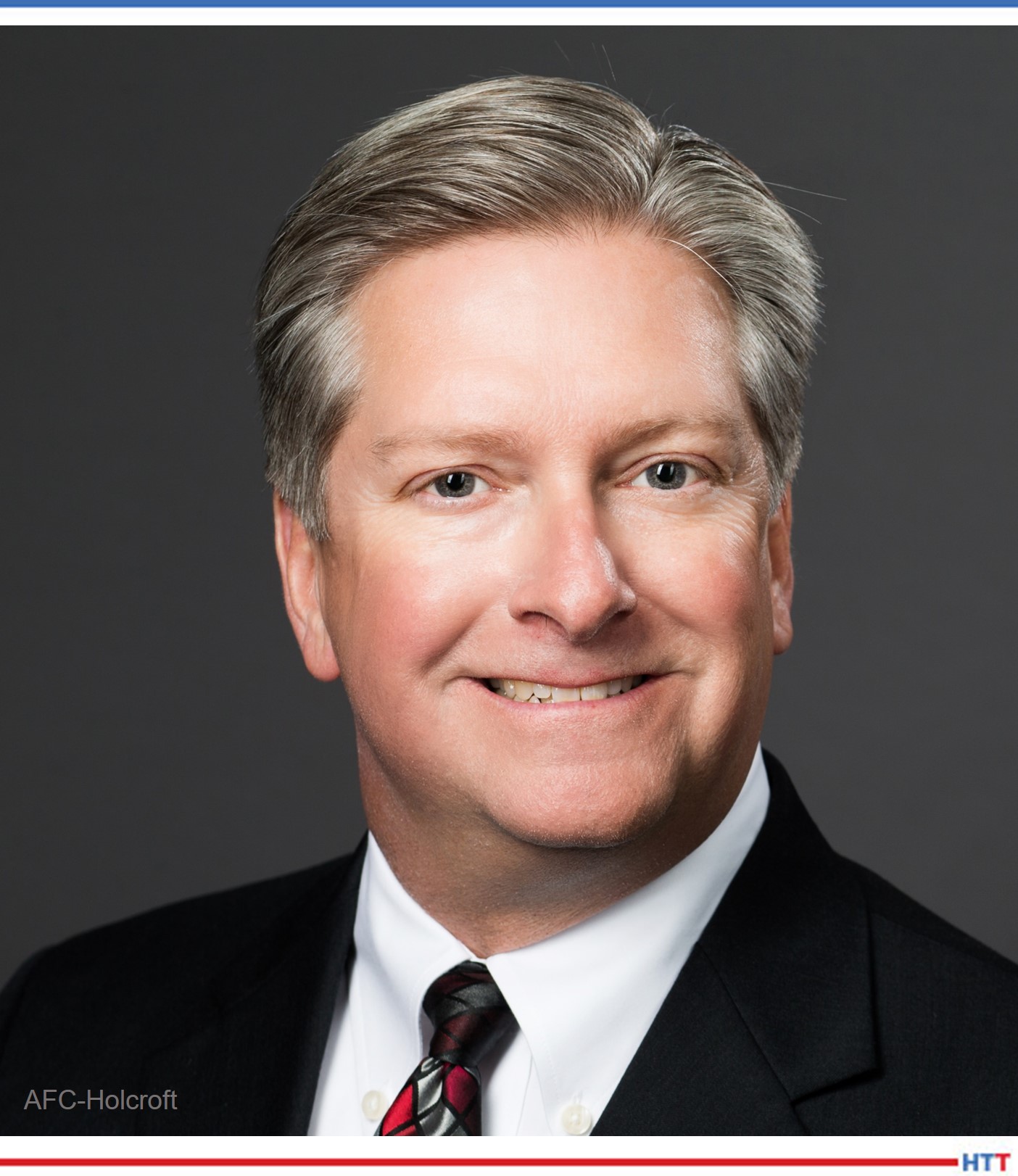
DG:  The fellows I was hearing from were saying basically there is talk of the extension, but they’ve got to get it passed to actually get the extension, otherwise end of June is the date that most people are going to have to nail that with.

Your C3 Data tool is basically Cloud-based, portable, whether it’s website, phone, tablet or whatever, to help people comply. When the auditor walks in to get the information they want, how easy is it for your clients? What do they need to do? I assume this is where the real time and money-savings come in, correct?

MW:  Correct. What we like to tell people is, in a nutshell, C3 Data is going to save you time and help you pass your audits. The time saving is happening all during the year. Every SAT you do, you’re saving an enormous amount of time because you’re not writing in your reports, you’re not doing any calculations — you’re aggregating and gaining time throughout the year.

You’re also going to gain time in your audit preparation because, as you mentioned, when you log into your portal, your ability to find all of your documentation, along with our furnace dashboard which shows you, furnace by furnace, the compliance status of each one of them. You can see, in real-time, the compliance status is a huge timesaver and a real peace of mind that you can walk in with your hand on your heart and know from the auditor’s perspective, you’re going to have a good experience, because if he wants to see something, it’s very easy to find and you’re well prepared.

DG:  Timesaving has got to be enormous. I know there are a lot of companies investing a lot of time in these audits and in compliance-related things.

You guys do a lot of work in this area. Are there any good tools out there for any of our viewers/readers if they want to go and find out more information, whether it’s dealing with compliance, what is AMS2750, what is CQI-9, any of that kind of thing? Any suggestions from you on where people might want to go?

MW:  On our website, c3data.com, we’ve got a portion there that you can look up for training. We have a curriculum of training courses where they can come and educate themselves, whether it’s, like you say, to learn about what the spec is or maybe take a deeper dive into some of those fields — we have those available. We love talking to our customers and our prospects, too.

One of the things I will mention: In going back to the web as a software service model, one of the things that’s ongoing is the ability to support. We’ve been through so many of these audits and we know the spec probably more than the next guy and when you look at some of the testimonials on our website, you’ll see that they obviously love the product, but they love the ability to call one of us, and if we don’t know the answer, we’ll find out the answer and get them plugged into what they need. We enjoy talking about it.

This year, we’re going to be at the Furnace North America show in Indianapolis which is my hometown which will make it quite easy for me to get there. But we’re going to have a special guest, Doug Shuler, who’s going to be joining us at our booth. So come on by the booth and get all your questions answered by Doug.

DG:  If his name is Doug, he can’t be all bad.

Matt, thanks a lot. I really appreciate your time. I’m looking forward to seeing you guys continue to grow and you’re offering a great service to heat treaters, so best of luck to you.

MW:  I enjoyed it, Doug, thank you.

DG:  You bet.

For more information:

Matt's email: mwright@c3data.com

C3 Data website: www.c3data.com.

Doug Glenn <br> Publisher <br> Heat Treat Today

Doug Glenn
Publisher
Heat Treat Today


To find other Heat Treat Radio episodes, go to www.heattreattoday.com/radio and look in the list of Heat Treat Radio episodes listed.


Find heat treating products and services when you search on Heat Treat Buyers Guide.com


Heat Treat Radio #75: Reimagining Furnace Compliance with C3 Data’s Matt Wright Read More »

Heat Treat Radio Snapshots

OC

Twice a month, Heat Treat Today publishes an episode of Heat Treat Radio, a unique-to-the-industry podcast. Hear some good news about the future of the energy industry, learn about the benefits of salt quenching, and discover some surprising ways to increase cost to part ratio in this snapshot of three episodes. Enjoy this original content, and happy listening!
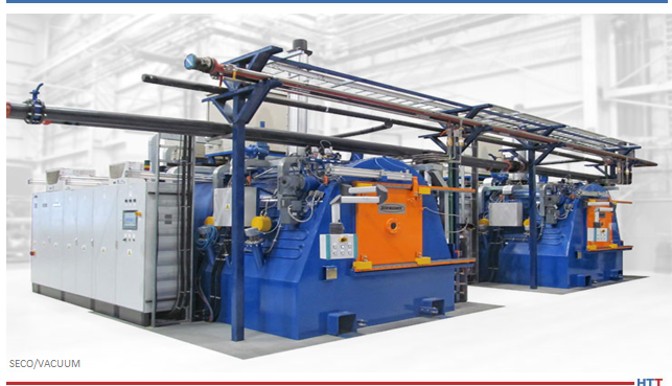

Heat Treat Radio: The Greenness and Goodness of Salt Quenching with Bill Disler

Bill Disler
President, CEO
AFC-Holcroft
Source: AFC-Holcroft

What comes to mind when you think of salt quenching? Do the words "green technology" or "environmentally friendly"? Bill Disler, president and CEO of AFC-Holcroft, thinks they should. Quenching is a critical step in most heat treating processes, and, as most heat treaters know, boiling oil on part surfaces and contaminated washers can make quenching a nasty business.
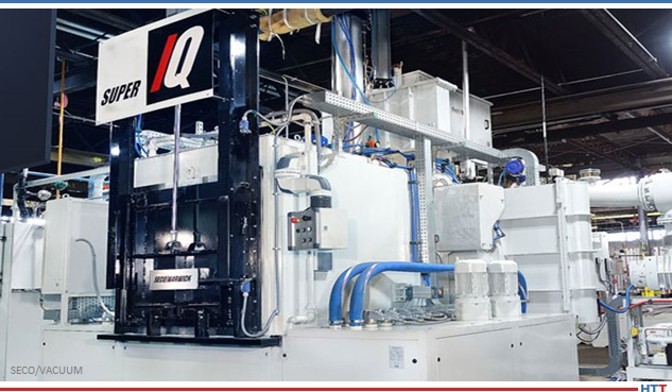
Quenching with sodium nitrate/sodium nitrite salts gets rid of all the "nasties." It is green and it is good, because salt does not boil at temperatures used for quenching, and heat treaters can recycle 99% of quenching salt. No more rinsing oil down the drain.
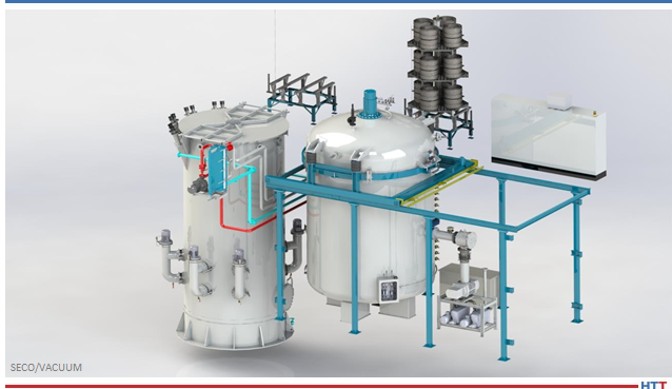
To learn more about how salt quenching compares to gas quenching, oil quenching, and polymer water quenching, listen to this episode of Heat Treat Radio.

Heat Treat Radio: Energy’s Bright Future with Mark Mills, Senior Fellow at the Manhattan Institute

Mark Mills
Senior Fellow
Manhattan Institute
Source: Manhattan Institute

After the COVID-19 pandemic and the outbreak of the war in the Ukraine, the world is badly in need of some good news. In this episode of Heat Treat Radio, Mark Mills, host of the podcast The Last Optimist and author of the book The Cloud Revolution: How the Convergence of New Technologies Will Unleash the New Economic Boom and A Roaring 2020s, provides some much-needed good news. According to Mark, energy's future is bright. "There is essentially," Mark says, "an infinite supply of energy. Energy is all around us in all kinds of forms. It is always a question of what technologies are available to tap into nature's energy forms[. . .]."

In this optimistic episode, Doug Glenn and Mark Mills discuss how new technologies emerge at just the right time throughout history to solve the energy crisis of the day.

Interested? To hear Mark's thoughts on energy's future, Russia's role in the natural gas industry, and renewables' feasibility in the heat treating industry, listen to this episode of Heat Treat Radio.

Heat Treat Radio: High-Temperature Material Selection with Marc Glasser, Rolled Alloys

Marc Glasser
Director of Metallurgical Services
Rolled Alloys
Source: Rolled Alloys

"Expensive is cheaper." Not convinced? In this episode of Heat Treat RadioMarc Glasser of Rolled Alloys sits down with Doug Glenn to change the way the heat treat industry thinks about increasing profit per part. Selecting the cheapest part or component does not make economic sense in the long-run. And when it comes to cost savings, the long-run is what really matters.

Glasser asks crucial questions like: Will the weight of a fixture create a heat sink when a lighter (and possibly more expensive) fixture would solve this problem? How many times will the cheaper part need to be replaced compared to the more expensive part? How much will downtime for multiple replacements cost?

To hear the discussion of these questions, as well as practical tips on logging the lifetime of components, listen to this episode of Heat Treat Radio.


.

Search for heat treat solution providers and suppliers on Heat Treat Buyers Guide.com


Heat Treat Radio Snapshots Read More »

Heat Treat Radio Reminisces

OCWhether you're a long-time follower or a recent listener, Heat Treat Radio has a history of hits that we're highlighting in today's original content article. Read below to see how this resource for heat treaters developed and check out one of the "Top 5 Most Listened to Episodes" or “Top 5 Short Technical Episodes."


Quick History of Heat Treat Radio

Began in April 2016 by Doug Glenn, publisher of Heat Treat Today announcing the first ever episode: "Metallurgical Posterchildren: Hayley Sandgren." To date, there is a total of 70 episodes that have been released on the podcast.

Over the years, several changes in how Heat Treat Radio presented these interviews occurred. If you've been following the podcast for awhile, you've probably seen the change in images that are used to promote the episode:


Additionally, beginning in July 2018, each episode was published with a transcript: "John Vanas on SX Oil Lifters."

The podcast has also changed in terms of delivery. Heat Treat Radio began with asking guests questions and delivering concise, clear answers. This helped the podcast deliver information to listeners, and you can listen to this yourself if you click almost any episode released before 2020. However, a shift to more conversational content happened over the years so that by 2020, you could tune in and listen to heat treating experts chat back-and-forth with Heat Treat Radio host, Doug Glenn, as if you were taking a walk around the plant with them. Now, the podcast is moving to deliver content in a fully visual form to give you the opportunity to watch and "sit in" to the conversation with them.

A quick run down of some interesting HTR facts (only according to SoundCloud listens) include what types of guests have been featured, how many episodes have been run, and who has been listening:

As a final interesting note, we found that you like to listen to Heat Treat Radio episodes the day or day after they come out; but if there is an episode that is particularly pertinent/relevant to heat treaters -- like "Heat Treat’s Tight Labor Market: Gaining and Maintaining Works with Josh Hale" -- listeners tune in on the weekends and in the afternoons during the week. Sound familiar??

Below, we compiled a series of statistics that may help you select the next episode for your Thursday, Tuesday 2:00pm, or weekend listening session.

TOP 5 MOST POPULAR EPISODES OF ALL TIME

TOP 5 SHORT TECHNICAL EPISODES

  1. Heat Treat Radio: Heat Treat Radio: Thermocouples 101 with Ed Valykeo, Pelican Wire (Part 1 of 3)
  2. Heat Treat Radio: Metal Hardening 101, Part 1 of 3
  3. Heat Treat Radio: A Discussion with David Wolff, Nel Hydrogen, COVID-19 Update
  4. Heat Treat Radio: James Jan & Andrew Martin on Development of Modeling Software
  5. Heat Treat Radio: Ben Gasbarre on Nitriding

Heat Treat Radio Reminisces Read More »

Heat Treat Legend #67: Bill Jones, CEO, Solar Atmospheres Group of Companies

Heat Treat Today publisher and Heat Treat Radio host, Doug Glenn, sits down with Bill Jones, CEO of the Solar Atmosphere Group of Companies, to launch this new periodic feature called Heat Treat Legends where senior individuals in the North American heat treat market share their expertise and experience with those less senior.

Below, you can watch the video, listen to the podcast by clicking on the audio play button, or read an edited transcript.


The following transcript has been edited for your reading enjoyment.

Doug Glenn (DG):  Welcome, everyone, to our inaugural episode of Heat Treat  Legends.  We're going to start with a true heat treat legend, a gentleman by the name of William Jones from Solar Atmospheres and Solar Manufacturing. We're going to talk to him about his life experiences and some of the things that we'd like to get his perspective on. So, Bill, first off, I just wanted to thank you for joining us. I appreciate you joining us for this episode of Heat Treat Radio.

Bill Jones (BJ):  Thank you, very much, Doug, I appreciate the opportunity. As you know, I've had a long life, and to be a legend is something I never really expected. Most of us don't.

DG:  Let's just talk a brief introduction — who you are, where you are right now, and what your role is in the companies that you own.

BJ:  I've been a technocrat all my life. It started when I was very young, when I was about 7 or 8 years old. I've always been very technically oriented and technically driven. As a matter of fact, the various people that I have worked for have always complained about that, and they said, "You know, Bill, you're always interested in technology, and you're not interested in whether you're making or losing money.  We don't want to hear about the technology, we want to see what's on the bottom line."  That's sort of where I came from.

"I've been a technocrat all my life. It started when I was very young, when I was about 7 or 8 years old. I've always been very technically oriented and technically driven." - William Jones, CEO, Solar Atmospheres Group of Companies

After I graduated from college, I went to work for a small company, and we were involved in electromechanical things. A lot of our work was development work out of the DuPont company from their experimental station in Wilmington, Delaware, which was one of the premiere development centers in the country at the time. I don't think it's that way so much anymore, but, at the time, it really was a pyramid sort of place.

In my early days, I was introduced particularly into dew point analyzers. They had developed, what they called, a trace moisture analyzer which would measure down to about one or two parts per million. It was right out of the development laboratory and our company built it, and my boss, at that time, worked out to have a license to build the instrument. I ended up being the engineer in charge of putting the thing into production.

Like I say, at the time, (and we're talking about in the late 1950s or ‘60s), there was no real continuous recording of moisture or dew point. I'm talking about low, like down around -100 degrees Fahrenheit, a few parts/million. That was, sort of, a breakthrough. It was an interesting instrument. The instrument is still being built. So, I was very instrumental in that instrument.

That was my introduction into the technology, so to speak. Then, I went on and I became involved in optical pyrometers. As a matter of fact, I was going to bring with me, and I didn't, one of the early temperature optical pyrometers which was built by Leeds and Northrup.  That was developed in the 1930s and it is still used today. It was the standard in the industry for many, many years. Anyway, that introduced me into the furnace industry, measuring temperatures with that instrument and then with an electronic optical pyrometer that was developed by another company. I learned all the problems with optical pyrometers respect to emissivity and all that sort of thing.

Those were my early years. I went to work, really, then, in about 1963 for Abar; I was the eighth employee with the company. That put me into the furnace business. Now, the Abar furnaces, at that time, were very high tech. They were designed to operate at temperatures of 4000 degrees Fahrenheit and up, above temperatures where you could really use thermocouples. That fit with my optical pyrometer experience; it was one of the reasons I went there. So, we were building these furnaces. We built them for the electronics industry, particularly for sintering of tantalum anodes, and so I had a very wide experience with that particular product. Then, it graduated into, and we got involved in, other technology. Particularly, we got involved with more normal, what I'll call, industrial processing, because this high temperature technology was either solid-state related, like with the tantalum capacitor or, at that time, with the development of the space launching and all that sort of thing.

With the changes in administration, we went away from space technology, to some extent, in the middle 60s, so it meant that we had this furnace technology and we had to put it to use. So then, we looked at industrial processes. We started to look at things like jet engine processing- processing parts for jet engines and all that sort of thing.

Those were my early years to get into this business. I went into the production aspect of the furnaces. And, of significant note, we built a number of furnaces for, what was, the atomic energy people, particularly at Oak Ridge, Tennessee. There was a bid that came out for a horizontal vacuum furnace, and it had a one-line drawing of a hot zone with a ring. (I shouldn't say a ring, we made it into a ring.)  But it was this line drawing of a round hot zone with this part sitting in the center of it, which I really can't say too much about. But anyway, I didn't design that, but we had a couple of engineers that designed the hot zone

At that time, Abar was owned by a man by the name of Charlie Hill, and he overlooked the whole project. At the end of the day, after the thing was built, (but not turned on), they handed it over to me. I was like the equivalent of chief engineer for the company, so I had the task of starting that furnace up. It was a very interesting experience. It was, for the first time, when I really saw what that ring hot zone could do. I didn't really recognize all its advantages when we first put it online and started to test it, but we realized that we had something different. But, whenever you have something different, you don't always know what to do with it. That's about where we were. In a year or year and a half, we started to see the advantages of that hot zone.

I was instrumental in the development of the gas cooling system. The original system did not have any recirculation abilities, in other words, it would not quench; it was just static cooling. That whole thing of how to do that, I worked on, and after a lot of failures, I might say, we got it to work satisfactorily, and it has grown and grown and grown ever since.

There are other things about the furnace technology that I've had my fingers on and it's been a very pleasant experience, Doug. I could go on for the rest of our time talking about this, but I won't!

DG:  That's good, that's good. At least it gives our listeners some sense of your background. And, I might mention Bill, besides being a technocrat, is also an author. He's authored a book called The Golden Nugget which came out in 2017. It goes into a lot of detail, mentioning a lot of the things you've mentioned here, and much, much more. If anybody is interested in getting a copy of that book, we'll put some information up at the end where people can either contact myself or you directly, Bill, and they can get a copy of that book.

BJ:  Thanks, Doug, for the plug. Let me say this: Anyone who wants a copy of that book, I will be happy to send it to them at no charge, postage paid.

DG:  Very good! You're being much more generous than I was going to be. I was going to say, feel free to call me, I'm going to charge you $50 for this book and you have to pay postage. ~chuckle~

Let's move on. Let me ask you a couple questions because people are going to be interested in knowing some of the life lessons that you've learned and things of that sort. When you look back on your career, which has been a good 50 years, I'm guessing, what would be the top one, two, even three accomplishments? When you're taking that 30,000-foot view and looking back, what do you see as far as major accomplishments?

BJ:  The major accomplishment, obviously, is the development of the vacuum furnace, and that particular horizontal ring furnace. We didn't patent it at Abar, unfortunately. We should have, but we didn't know what we had, honestly, and then it got out into the field anyway and we couldn't patent it. Aside from that, that particular approach — that round furnace approach — has been duplicated by all our competitors around the world. That is a major accomplishment and it, really, has my name on it, which nobody will tell you, but that's okay.

DG:  That's why we do these interviews. Just so people know, if you look behind you, Bill, on your screen, you've got a round cylinder furnace there. I think that's the type of thing you're talking about, there, with the flat band heating element.

"That was almost unheard of back then. Now it's been adopted all over the place, today. That's some of the major accomplishments."

BJ:  Yes, round elements. It's a graphite hot zone which we developed. Our original hot zones at Abar were all metal. They were molybdenum and the elements were molybdenum, and the elements were all riveted together. Now, the advantage of graphite is that you don't have to rivet anything and, actually, part of my development was to be able to design the furnace, the elements anyway, so that they could be bolted together. Originally, the graphite heating elements, particularly the ones that were in the Ipsen furnace, and even predecessors before that, they were all tubular. They were put together not with threads, but they were put together, not like an erector set, but where you have pins and . . .

DG:  Yes, couplers of some sort.

BJ:  Yes, I'm not thinking of it right. But anyway, they were just pushed together, really, literally. They were troublesome; the joints loosened up. They were difficult. Cheap, yes. The graphite tube was very, very inexpensive. That was done at VFS (Vacuum Furnace Systems) when I established that company. We developed the round, and flat, thin, graphite heating elements which were bolted together with graphite screws and nuts. That was almost unheard of back then. Now it's been adopted all over the place, today. That's some of the major accomplishments.

DG:  That is a major one.

BJ:  Before you get off this, Doug, I selected the picture, that you noticed, on purpose. To heat treat something of that size and to bring it to full metallurgical properties, which they are (they are actually H-11 or H-13, I'm not sure which), but that's not exactly a forgiving alloy to heat treat and bring to full hardness of that size and weight. That's the advantage of our vacuum gas quenching over pressure. That furnace, or almost any one of ours, if you design it right, will do that job. I can tell you, in my early days getting into the heat-treating business, I tried to do big rolls like that and fell right on my nose.

This work was done out at our Hermitage plant which Bob Hill runs and it's an everyday thing, rolls like this and otherwise. That's why I put it up there.

William Jones, CEO of Solar Atmospheres Group of Companies, shares pinnacle moments from his life and lessons learned along the way.

DG:  Right. That Hermitage plant is in western Pennsylvania and, yes, I've been in there and it's a great plant. You've got a lot of furnaces and much bigger furnaces than that, even.

I want to get to the human side of things. You've had a significant impact on a lot of people in the heat treat industry, me being one of them, to be quite frank. But I'm curious: When you were a young man getting involved in the industry, who were a couple of people who had a significant impact on you? Who helped you along?

BJ:  I worked for a company up in Attleboro, Massachusetts for two years or so and they had developed a two-color optical pyrometer, and that's why I went to work for them. It had all sorts of problems because of emissivity — that’s a technical thing I don't want to get into — but the two-color pyrometer has not been well accepted because of that stumbling block.

Anyway, the owner of the company was Dr. George Bentley. I was with him for 2 years and I decided I wanted to leave the company. I was a field engineer for them in the mid-Atlantic operating out of Philadelphia. That company is in Boston. George called me on the phone, and he said, "Bill, I'd like to talk to you. I know you're leaving the company, but I want to have a time with you."  I said, “ok.”  This was back in the day when travel was not particularly great, so it took me most of the day to get up there. The next day I went in to see him about 9 or 9:30 in the morning.

I sat down with George and we both chitchatted for 15 or 20 minutes. The most important thing he said to me, at the end of the conversation, was, "Bill, I want to tell you something. I have observed you over the years and I can tell you, you are never going to be happy until you run and own your own business."  I looked at him and that went right over the top of my head. That was never a thought, ever, in my mind. It didn't really have any impact for several years, but later I realized he was right. Until you're sitting in the top chair and until you're making the decisions of winning and losing, you don't know what it's all about. That was a prime moving event.

"[George said,] "Bill, I want to tell you something. I have observed you over the years and I can tell you, you are never going to be happy until you run and own your own business."  I looked at him and that went right over the top of my head. That was never a thought, ever, in my mind. It didn't really have any impact for several years, but later I realized he was right." - William Jones, CEO, Solar Atmosphere Group of Companies

There were two people that were quite influential, and in a negative way: One was George Bodine from Lindberg, and the other was Sam Whalen from Aerobraze. Back towards the end of my Abar career, I had decided I wanted to go into the heat-treating business here in Philadelphia. My wife, Myrt, and I, independently, met with each one of them and their wives and we had dinner. And they said, "Ugh, Bill, you do not want to go into the Philadelphia area in the heat-treating business. It will never be successful."  They both poured ice water down my back about going to business in the greater Philadelphia area in the heat-treating business. I cataloged that and, later, did it anyway. In a negative way, those two were very influential.

There were a lot of other people, too. Abe Willan at Pratt & Whitney. I had some people at General Electric that were very influential. There is a whole litany of people that I could thank for what they've done in my life and for what they've added to my career.

DG:  Let's advance on here to the next question. I think this is always interesting to find out from somebody: One of those things if you knew at the beginning of your career, something you know now, what would it have been?  Given your experience, what are the top two or three lessons that you've learned during your career that you think have been most helpful to you.

BJ:  There are a lot of lessons learned. We, as practical people in the heat treat industry, tend to pooh-pooh education, not always, of course; I have metallurgists and PhD's working for us in the company. Anyway, my point is, those of us who are practical engineers and others who have come up through the ranks, like my son Roger and others, we tend to look at the practical aspects of heat treating.

What is the lesson learned from that? Well, education is really part of it. The basis of what we do comes from the field of chemistry. Metallurgy grew out of chemistry. If you don't have a decent educational background, then you don't know the basis of where we came from because that's the basis of where we're going. What I'm trying to say is: What is the lesson learned? The lesson learned is don't reinvent the wheel because the wheel does not have to be reinvented.

I think those of us in our younger years tend not to look over things like that. We tend to say, "Well, we're going to develop this and we're going to do it" come hell or high water and we end up falling on our nose. That's the point: take the time and effort to study what's been done and then go from there.

I would say, also, the other thing is to listen to what people in the field want and what their comments are about what you're trying to do. I think that's the most important lesson to share.

DG:  Listen and learn, learn, and listen. Those are good, Bill. I appreciate that.

Are there any disciplines that you've developed, your work disciplines, your workday, or your work week? Are there any disciplines that you've developed over the years that have been helpful?

BJ:  As I said, part of your discipline is your educational background. I don't want to emphasize that too much, but that's an important base to start from. My life has been a very workaday place. I have put all kinds of hours into my career and my work. I didn't do it to make money: I did it because, as I said in my early comments, I'm a technocrat. If I see something that needs to be developed, I work on it and I get to it.

I think work ethic, in our business, is very important. People who are successful, certainly in the heat-treating business and in almost any engineering discipline, have to put work into what they're doing. I'm talking about more than 40 hours a week; you're going to work 40-60 hours a week in order to accomplish. I know, Doug, you're doing that in what you do because I see the development of your magazine and all the things that you do; you're putting endless hours into the development of that thing.

The development of a business is like pushing a big cart up a hill. You're going to push, push, push, and get that cart up onto the top of the hill and you never stop pushing. You get to the top of the hill, and you think you're just going to relax and go from there, but you can't. There is always another mountain.

DG:  Yes, another hill or portion of the hill. Let me ask you this, because it addresses the next question I wanted to ask you, and that was about work life balance. Have you had to struggle with that and how have you dealt with it?

BJ:  Well, that's a very interesting comment. If my wife were here, she would tell you that I've dedicated my life to my work and I've abandoned her. That's not really quite true, except. . . . My wife, Myrt, and I have been married for more than 60 years and she is a wonderful helpmate. She has run the household since our early marriage and raised our children. I did too, but she was principal. The mother is the core of the family; the father is just a procreator, I guess. Getting your life in balance with work is always a challenge. I have been involved in church things for many years and one of our pastors once came to me with something he wanted me to do. His name was John Clark, and I said, "John, don't you realize how busy I am? To take this on is more than I really want to do."  And he said to me, "Bill, don't you know, if you want something done, you go to a busy person?" So, I did it.

DG:  I've got a two-part question for you, now. I'm sure over your career, you've had many ups and many downs. I want to start with one of the downs. What was one of the most difficult, trying times of your career? Then, after that, I want to know what was a highlight? What do you think was one of the pinnacles of your career?

"There is nothing that beats hard work and dedication . . . ." - William Jones

BJ:  I would have to say the most trying time in my career is that I've been involved in three lawsuits. If you get involved with lawyers and with the court, believe me, that is a trial. I was successful in each one of these and not being litigated to the point where I had to either pay or go to jail or what have you. But when you get involved with the law and with attorneys, number one, it becomes expensive, and number two, you're going to have a lot of sleepless nights over it. That's just bad.

Now, I have learned to avoid that, at all costs, if I can. Look, when you're in the business world, there are going to be challenging things — something doesn't work or whatever, and somebody is going to come back at you if they can. We live in a very litigious world, that's the problem.

People don't always live up to their obligations. I've learned it's best to do that. I'll give you an example: Just within the last two years, this was not a legal problem, but we had a furnace that was in the field. It had a deficiency in the furnace, and it was not easy to fix. So, I made the decision to completely bring that furnace back here to our main plant and to give the customer a brand-new furnace. By the way, we're talking about something that is $600,000.  It's better to do that than it is to suffer the consequences.

Now, we brought that furnace back and I, personally, went over that with a fine-tooth comb to find out what in the world was wrong with it. We located the problems (it was in the chamber) and I had the chamber remachined on the front flange and that meant tearing the whole furnace apart and putting it back together again. It was only 2 years old. We completely fixed the problem, put it back online and then we resold it. We, obviously, lost money in the whole process, but our customer ended up happy with a new furnace, we satisfied him, and we went on from there. There is just a highlight of some of the issues that you can get into.

There are personal issues that sometimes hurt, but there is also a lot of gratification, too. A lot of people have appreciated the things that we've done, and I've appreciated more what they've done!

DG:  Right: lawsuits and things of that sort are, obviously, kind of the low point. Can you nail down one, when you look back? What was the most enjoyable highlight of your career so far?

BJ:  When I tested that first round hot zone, I did it by myself at night in a plant where I was the only one there. We had a big sight glass in the front of the furnace, and I could see the entire hot zone, the heating element, the heat shield, the ring and so forth, and I was able to measure the temperature and it was a WOW. This thing works! That was a highlight.

DG:  If I had answered this question for you, I would have thought you would have said something like starting your company and building two furnace manufacturing companies. You've got four successful commercial heat treat companies, as well. I would have thought that a lot of the accomplishments along those lines would have been highlights for you.

BJ:  You're right. And, along those lines, the car bottom furnaces that we've built, particularly the ones that are at Hermitage in western Pennsylvania, are a highlight. The very first one is a chapter on how that furnace came to be.

Anyway, it was designed and built by a group of engineers. I was on top of that. We met weekly during the design phase. We didn't put it together completely here at Souderton, we put it together to know that it was vacuum tight and so forth, then we took the furnace all apart, shipped it to Hermitage, put it all back together again and we ran test cycles on that furnace, empty. It did everything that we wanted it to empty, but that's not putting a workload in it.

One of the reasons for building that furnace was to process these big titanium coils that were very heavy. So, we put six of them into the furnace. I said, "I want to process six of these coils," and we had like a 20-25 thousand-pound workload of titanium in the furnace worth a lot of money, we're talking about probably a million dollars of work in the furnace. At the time, Bob Hill said, "Bill, you're not going to run the final product first. I think we should make a run with just some scrap steel that we have around."  I said, "No, Bob. I am thoroughly convinced this furnace is going to work and work right. Let's put the coils in there and run it."  And we did. You know what?  It was 100% right. It worked. It was a big success. There have been other things, too, but that was one of the highlights.

DG:  Let me ask a couple final questions. Based on what you're seeing going on today in the world, in the industry, wherever you want to take this one, Bill, is there any advice or wisdom that you'd give to today's up-and-coming heat treat industry people?

"I think, from my prior comments you'll get this. There is nothing that beats hard work and dedication to what you're trying to do." - William Jones, CEO, Solar Atmospheres Group of Companies

BJ:  Yes, I would say this and I think, from my prior comments, you'll get this: There is nothing that beats hard work and dedication to what you're trying to do. So, what would I say to a young person, let's say, somebody that is in college, and they want to think about their career?

First, you want to do something that you're happy doing. You don't want to work at something that you're unhappy at. If you're unhappy, get out of it and do something else. You want to be happy at your job. That's number one.

Then, you must be properly prepared for it. You must have enough education to go forward. If you're going to be a writer or something involved in marketing, you must have some experience and training in that field. I have a marketing person sitting in the room with me, so I have to say that. She's a young person, so I can talk to her. That's the kind of advice I would give to a young person. You want to be dedicated, you want to be happy, and you want to work at it. You have to work at it. You're not going to have it handed to you. At least here, in our economy, in the United States, which we have a wonderful opportunity, the only opportunity in the world is, really, here in the United States.

DG:  Last question. This is a question that I'm curious about. The group of companies that you've established — Solar Manufacturing, Magnetic Specialties, all the Solar Atmosphere companies — are all US-based, family-owned and a single business, separate entities but all owned by you and Myrt.

BJ:  That's right. I can tell you that 100% of our companies are owned by Myrt and I. We have no other shareholders or stockholders. Originally, at VFS, I did. That long story is in my book, but no, today, 100% Myrt and I own the businesses.

Of course, this is a two-edged sword. If all these businesses were up and running and they are all successful, like they are today, and if I were 40 years old, I would have another, possibly, 40 years to look forward to and to operate these businesses. Now, at my age, I'm over 80 years old, so how many years do I have ahead of me? You can count them on one hand if that. We don't know.

DG:  I was going to say, let's not put a limit on that, the Lord knows.

BJ:  That's right, exactly. That's exactly what I was going to say. You and I understand that all too well. It's all in the Lord's hands. Myrt and I both feel that we've got a few years ahead of us, but we just don't know. Someone else commented to me, they said, "Well, your other competitors, and so forth, have been bought and sold by other businesses and you have not."  I've looked at these companies that have been bought. Somebody made some money when they were sold, but I can tell you the employees certainly didn't make out on that. Any employee that's involved, particularly if you're at the higher end of the company, your life is in jeopardy because you don't know what the new owners are going to do. Half the time, within two years, you're going to be out on the street and all the hard work that you've put into the company is going to go down the drain.

DG:  Right. This is getting to the core of the question that I wanted to ask, and that was that you've got successful companies going on, their family owned, they're going into a third generation of Jones, who is going to be helping to run the business and things of that sort. So many of your competitors, whether they be furnace manufacturers or actual commercial heat treaters, have either been sold, consolidated into bigger companies or, on the furnace side of things, many of them are now owned by international companies, companies outside of the United States.

My question to you, specifically, is why do you think it is that Solar has been one of the few companies that has been successful in maintaining a privately-owned, family-owned business where others haven't?

BJ:  We are a family-owned company and the fact that we have not been bought or sold, (and we’ve had the opportunity, but I didn't want any part of it), what's the bottom line? Why? Well, it's very simple: Money is not a driving factor in my life or in my wife's life. Money is not it. You know, the old saying is, when you go to the grave, there's not going to be a U-Haul behind you. You're going there with what you came with, which is nothing. My father once said, "Money doesn't really mean anything except that you can live a little more comfortably," and he was right about that. But, at this point in our lives, my wife and I are comfortable enough, and we certainly don't need to add on and on and on to our personal wealth.

I guess, to put it in simple terms, there is no reason for us to sell the company. If we can turn it over to our operating people who now are running it, and if they can do it successfully, God bless them, and what I and my wife, Myrt, have started can continue. And, you're right – in the room with me is Trevor, my grandson, and he is the third generation. Behind him is another Jones, his name is Cole, who is now 14 years old. He's not working for the company; I don't know what he's going to do. Trevor worked in this company since he was 16 years old, maybe a little bit earlier. He's saying, “Yes, I think you're right” His whole life, like mine, has been dedicated to this business. I don't know if that answers your question.

EDITOR’S NOTE: Jamie Jones, a grandson of Bill Jones, brother of Trevor Jones, and the father of Cole Jones, is also one of the key third generation leaders. Jamie is president of Solar Atmospheres in Souderton and Trevor leads Solar Manufacturing in Sellersville.

DG:  Yes, I think it does. I think your quick answer- you're not a money driven person says a lot.

Well, Bill, that's it. I really appreciate the time you've taken to spend with us. I want to encourage people in the industry to make sure that they pick up a copy of your book, The Golden Nugget - An Entrepreneur Speaks, by William Jones and Heather Idell. It's worth reading. Bill, thank you very much. I really appreciate the time you spent with us, today, and congratulations on being a heat treat legend.

BJ:  Thank you very much. The Lord's blessed us in that respect, Doug, and you.

DG:  Yes. Thank you very much.

BJ:  You're welcome. Bye-bye.

Doug Glenn <br> Publisher <br> Heat Treat Today

Doug Glenn
Publisher
Heat Treat Today


To find other Heat Treat Radio episodes, go to www.heattreattoday.com/radio and look in the list of Heat Treat Radio episodes listed.


Heat Treat Legend #67: Bill Jones, CEO, Solar Atmospheres Group of Companies Read More »

Heat Treat Radio #66: Heat Treat’s Tight Labor Market: Gaining and Maintaining Workers, with Josh Hale

Heat Treat Radio host Doug Glenn has a timely discussion with Josh Hale of International Search Partners, North America’s only heat treat specific headhunter organization, about the exceptionally tight labor market and what captive and commercial heat treat shops can do to gain and maintain the valuable workers they’re in need of.

Below, you can either listen to the podcast by clicking on the audio play button, or you can read an edited transcript.


The following transcript has been edited for your reading enjoyment.

One of the canine "workers" at International Search Partners

Doug Glenn (DG):  I don't think that we've had a non-technical issue that is as important as this one, and that is the labor shortage that is real and that most people believe is going to get only worse over the next several years.  Here to discuss that with us is Josh Hale who is with International Search Partners.  Josh, first off, welcome to Heat Treat Radio.  If you don't mind, if you would give our listeners just a brief background about you, where you come from, and your role in helping people fill roles in the heat treat industry.

Josh Hale (JH):  Yes, for sure.  Thanks for having me, Doug.  I've been recruiting since about 2004, and when I say recruiting, I mean helping different companies identify, hire and engage, and eventually bring on board employees at all various types of levels.  We are International Search Partners.  We are actually founded in 1998, so for over 20 years we've been working pretty exclusively in the heat treat space.  I always kind of say we do about half our business with furnace and other manufacturers, about half with commercial heat treaters and then a mix of stuff tangential to the industry, whether that be forging companies or other kind of industrial manufacturing.  Again, I've been recruiting in personnel, hiring, and job market space for a long time. I came and joined ISP and acquired the company about six or seven years ago now.  ISP has a long history in heat treat, I've got a lot of history in recruiting, and here we are.

DG:  You're in the right business at the right time, I can tell you, because it seems very interesting out there.  I was looking at your website and I've got to deviate a little bit.  So, it's not just you – apparently you've got at least one other person and two canines that are helpful to you, yes?

JH:  Haha, yes!  In fact, one of the canines is here in the room.  If the computer wasn't mounted up I could show him off.

DG:  So, you've got Jessica Maier as one of your helpers?  A partner?

Jessica Maier
Senior Recruiter
International Search Partners

JH:  Yes, exactly.  Jessica works with us.  She's based out of San Diego.  I'm based out of Austin Texas.  We both work remote, working from home.  I've got the weekend vibes with the Hawaiian shirt today.  I don't need to go into the office or anything.  But yes, we work very consistently and tightly together.  Then, there is Jim McNeal, who actually founded our company in 1998.  We jokingly call him "President Emeritus," but with that emeritus status, he works with us on a few select clients here and there.  Then, we've got a rotating group of consultants that we bring on board on more of an ad hoc basis, so we're prepared and able to scale, as necessary, for hot markets like this.  But, the core is me and Jessica, and for smaller industries like heat treat, that works pretty well.

I would be remiss not to mention that we also have a new junior recruiter- Jessica just recently had a baby, so 2-month old Lincoln is practicing to be able to pick up the phone here pretty soon to help us out too.

DG:  Well, at the time of this recording, since we're talking about babies, one of our staff members is actually in the hospital delivering.

JH:  In about 25 years we'll be celebrating the new 40 Under 40 class between them.

DG:  Right, exactly.  And, you know, I should mention that Josh was a member of our 40 Under 40 Class in 2019.

Let's talk about this:  Based on your business, you, probably more than anybody in the heat treat industry, have a good 30,000 foot view of the labor situation.  Is it severe?  How severe is it and what can we say about that at this point?

JH:  I haven't seen anything like this in all my years of recruiting, in or outside of heat treat.  I think it's affecting a lot of industries.  Most of the data points I would reference on this are a little more empirical, but for example, I was in St. Louis for the ASM Heat Treat show a couple weeks ago.  I was just kind of making my rounds and saying “hi” to people as I like to go to these shows to put a face behind a name with people I typically spend time on the phone with or emailing, and everybody was telling me, "Hey, we need help.  Please help me find a candidate.  We need candidates.  Please send us resumes."  That was the consistent theme.  So, there is an empirical data point.

We tend to keep track of our open searches in a fluid way, if you will.  Without getting into the weeds too much, what I mean by that is that we've got clients that come to us with, "Hey, we've got an empty seat, we need to fill it.  Go out there and find somebody."  We've got clients who come and retain our services for really urgent searches, but we actually do quite a lot of business in, what I call, “keeping our eyes open.”  Like, you don't necessarily have an opening but you like to see a good talent when you come across it.  Since I specialize in the industry, I can keep you in mind.  We do a lot of work that way too which is less of an open position and more of a “keep your eyes open” situation.

With that, it's how we work.  Typically, we may have anywhere between 20-30 real open positions and then maybe 50% more on this “keep your eyes open” thing.  Right now, I have probably 50-55 actual open positions.  This is twice as much as normal.  Honestly, in this type of market, this is with me not doing any kind of real outbound efforts to generate new positions because I have too much to work on.  Again, it's kind of empirical- it's not real data driven, but from my experience, I've never seen it like this.

DG:  So, in essence, it is real; I don't think we have to convince anyone of that.  From your perspective, it's pretty nearly doubled the number of open positions that you're actively looking for, and I'm sure there would be a lot of other people in that other category you mentioned about- if you find somebody, let me know.

JH:  And, certainly, there is an opportunity for a lot more open positions if I were to chase after it.  I'm just in a situation where there is so much business right now for existing clients that getting a new client would be difficult.

DG:  Well, after this airs, you might have to hire a third and fourth partner to get things going, because, I can tell you, there's a lot of people looking.

Just anecdotally from our side, myself and my wife just got back from attending the Metal Treating Institute fall meeting this year down in your neck of the woods, down in San Antonio.  To a man, to a company, to a person, everybody was looking for people to work.  It could be in key, higher level management areas as well as shop floor- I need a guy that knows how to load a furnace.

In your company, specifically, very briefly: Are you guys dealing with furnace operator type people or do you tend to deal with more of the engineer/management type folks?

JH:  More of the engineer/management type folks is where we really specialize.  We placed a furnace operator or two in the last couple of years, but it's very rare for us.  But, from talking to customers/clients/people, those hourly production type positions are definitely a situation where companies are struggling.  It's kind of a long way to answer your question but historically we haven't really done a lot of work in that space because at that hourly production level you can hire somebody off the street and train them.  You're not going to necessarily pay my fee to go out there and find that type of person, while in this market, more and more companies are telling me they're willing to pay a fee if we can find somebody, so it's coming up more and more.

DG:  And that is the operative word – if you can find someone, which is not easy.  Obviously, a lot of those jobs tend to be more regional – you can hire people locally, but it is difficult.

I want to delve into causation a bit.  We know we've got a very, very tight labor market, and there are a lot of theories around about why that is.  I'm curious, from your perspective, Josh, what's causing it?  What's the issue here?

JH:  There is a lot of theorization out there.  I could spend hours going down the rabbit hole.  There are some really interesting theories.  In fact, did you listen to the guy speak the keynote at MTI?  He talked a little bit about this idea of men not coming back to the workforce.  I've listened to some of his talks and one thing that he mentions that I really buy into is this idea that the boomer generation had dual incomes, they were working and they really generated a lot of wealth and that wealth now about to get inherited by younger generations.  These younger generations see that and aren't necessarily motivated to work as much.

People are moving towards the “YOLO  Economy”

This is the kind of theory that I would buy into because one of the other aspects that I'm seeing a lot of in the market (and I've heard people pine on in some of the editorials out there) is this idea they call the "YOLO Economy."  The YOLO Economy is, basically, the idea that you only live once.  Now people are coming at this, especially coming out of COVID, like, "I don't want to go back to that job.  I want to try to get the band back together.  I want to go write a novel.  I want to do crafts and they start a little Etsy business and sell those on-line.  I can travel more."  They maybe want to work part-time and travel, especially if they've got some foundation from an inheritance, I see that as a real factor here.

For someone like me, a hardworking, nose-to-the-grindstone kind of guy, this is so hard to put my mindset around, but I hear it come up a lot.  It's like, "Hey, I'm done going into the office 40 hours a week."

DG:  Very, very interesting.  First off, YOLO is great; I hadn't heard that before, so that's helpful.  But, you know, it is interesting the change in psychology, if you will.  It's something only a first world nation, first world economy, which is a lot of the western hemisphere is these days, where there is enough wealth out there that they don't really need to worry about working.  I'm a boomer, right?  I'm on the tail end of the boomers, so yes, double income or whatever, the kids wouldn't necessarily need to worry about working and, if you don't need to work, you don't.  That is the nature of man.

JH:  Another factor that I think has come into play here, speaking of not working (especially COVID affected this): people are retiring earlier.  If you were going to retire in three or four years and then COVID hits, "I might as well do it now," that kind of thing is coming up.  That affects heat treat, especially, as it's kind of an older industry in terms of the core workforce.  We're seeing a lot of that too.  So, people retiring, people not wanting to go back to work- all those factors definitely affect it.  There is a confluence of things.  Like I said, we could go hours going down this rabbit hole – it's really interesting.

DG:  Even things as political as immigration policy are certainly having an effect on the labor market.

Let's move on to this:  What kind of advice would you give, Josh, to companies nowadays who are looking to fill a position, which is, essentially, as we said, pretty much everybody?  From your perspective, what are some of the fundamentals they ought to be thinking about?

JH: The analogy I like to use, when people talk about recruiting or hiring, is the sports team: If you were trying to build out the world's greatest basketball team – just like you're trying to build out the world's greatest heat treat or the world's greatest furnace OEM – if you're going to try to do that, you want the best people to try out for your team.

If you take this analogy down further, when you're trying to build the world's best basketball team, you're not going to hope that LeBron James applies to join your team.  You're going to go out there and tap him on the shoulder and say, "Hey, my team's really good.  Come and join us.  We're a championship squad."  You need to take that proactive recruiting approach.  That's part of the services that obviously our company offers; we specialize in this, we're in this day in and day out, and we're building up this bench of people to go out there and proactively recruit, again, not coming in and applying to a job.

But you can do that if you have your own company too.  I would advise anybody who owns a business or is managing a business to have a good pipeline of people at the ready all the time.  It's easy to get comfortable – I've got my team, I've got my department set up.  It's not going to be like that a lot.  Somebody like me might go in there and pull somebody away.

"The 'LeBron James' style of recruiting is proactive and necessary."-Josh Hale

DG:  You're not doing yourself any favors with that, Josh.

JH:  Well, you know, if it happens, I always tell people, you can either be a client or you can be a source, one or the other.  But yes, somebody might retire, somebody might take that YOLO philosophy and leave.  So, you should always have that bench going, always continually be networking.  I tell people, too, you don't want to be afraid to “top-grade”: If you do have the opportunity to bring somebody in who's maybe better than the existing person, that can help you and your team and can build up the morale and the overall core a little bit better.

DG:  What do you mean by that?  Are you suggesting you replace a person with whom you are currently happy with somebody who’s better, or just hire them in addition to that person?

JH:  If you can hire in addition to is the best solution because it widens your bench a little bit, to use the sports team analogy, if you can replace your starter, put your starter on the bench, and have a great guy who can come in and pinch hit or whatever, that helps a lot.

So just have that kind of philosophy.  It's kind of a forward thinking philosophy, it's a proactive-type philosophy.  I think that's the biggest thing.  You can't wait until someone gives notice and leaves, now you've got an empty seat and now you’re struggling and your hair is on fire.  You really need to do this constantly.  That's my biggest piece of advice.

The other bullet point that comes up when I think about this, (and there are people out there that don't want to hear it), but you really need to kind of loosen your requirements a little bit.  People come to me saying, "Hey, I've got an opening.  We need to have XYZ on the resume and everything else."  And I say, "Look, that person you're looking for just doesn't exist."  You've got to be a little more realistic in your requirements and hopefully that will help attract the right people.

DG:  Once they've got that person in house, one of the other big concerns here is they can gain the right people, but how do you maintain them?  What type of advice would you give companies for keeping good workers?

JH:  Again, it goes back to the idea of trying to be a little more forward thinking.  I think COVID shifted a lot of things.  I've seen a lot of stats.  More and more people are allowing people to work from home.  That's not always possible in the heat treat or commercial manufacturing type environment, but if it is possible to spend a day at home doing some CAD drawings, let them do that.  That engages them more and makes them feel more at home.

Being creative with some of the compensation.  More and more companies are paying more and more.  I think wages are going to generally increase.  But, at the end of the day, the market is the market, so I don't expect anybody to overpay just to hire somebody.  There are other creative ways of compensation.  Vacation is a big one, some work-life balance. . .  There are types of benefits.  Those kinds of things go a long way.

Offer autonomy, purpose, and mastery in your workplace to maintain workers.

And then, too, trying to have good morale.  Morale is kind of a cliche word, but I think it carries a lot of weight.  It gives you a reputation in the market as a place that you want to work for.  I've heard it said that people like to work for, basically, three things:  autonomy, purpose, and mastery.  Get somebody in there and give them those things.  Give them some opportunity to work and 'do their thing' with that autonomous nature, not being micromanaged.  Give them some ability to be trained to grow and develop to create that mastery.  And, if you can get them on there for a bigger purpose, that really helps a lot too.  People don't want to be just a cog in the system.  If they know they're contributing to, whatever it is, growth or more market share or new R&D development, these kinds of things.  If they're contributing to something bigger, that's going to keep them on board and it's going to keep them passionate about it and it's going to probably help them maybe think they want to bring their friends into the fold.  That's another great way to hire- the internal referral program.

DG:  Have you seen, over the time you've been doing this, the motivation for people who want to work change?  I know the guys you were talking about, the fellow who gave the presentation at the most recent MTI meeting, they talked about the differences in the generations- the boomers, the X, the Y, the millennials, whatever.  Have you seen tangible evidence of a shift in the motivation of what really does engage the different age groups?

JH:  I'm going to answer that a couple different ways.  At the end of the day, nobody is working for free.  Salary is a consistent hot bun for anybody looking to make a move.  But I have seen, and a lot of people tell me, that one of their reasons they are looking to leave their company is stagnation.  So, I talk about that kind of overall purpose.  A lot of people I talk to are saying, "The company I'm with has been doing the same thing in the same way for 50 years and I'm interested in making some upgrades."  I can't tell you how many times I've placed a candidate.  I ask everybody I work with, "Why are looking to make a move?  Why would you consider leaving your current company?"  One of the consistent answers I get is, "Well, you know, I made a suggestion for an improvement and my boss told me that we're not going to do that.  I know it's going to make an impact and they're not letting me."  Having that, again, forward thinking, engaged employees, try their ideas out, be willing to invest in new technology.  If you've still got microfiche in your company, you're doing something wrong.

DG:  For those of you who don't know what that is, you better Google that one: microfiche.

JH:  But I am serious.  Move on to the touchscreen computers or the iPads.  People are still doing stuff in triplicate in field service reports and things like this.  People want to work for technologically advanced company that they can feel good about.

People want to work for technologically advanced companies that they can feel good about.

DG:  I'm going to see if you know this one:  I was telling somebody the other day, I said, "I still remember when I was in school using a mimeograph machine."  I don't know if you know what that one is.

JH:  I don't think I've heard of that!

DG:  That was the way before Xerox machines.  When you did hard copies, you put this thing on a drum and you basically turn it and it would crank out copies in blue.  Anyhow, it's an old time one.

Let's move from the company’s perspective of advice to help a company who's looking to hire someone to just talking to the individual who might be in a position that you just talked about or maybe some other motivation like, "You know what?  It's time for me to move."  They need to make a move for whatever the reason might be.  Is there any advice you can give those people for entering a labor market?  Obviously, it's a job seeker's market, right?

JH:  I'd say a couple things:  One, my first piece of advice is, as you said, it is a job seeker's market.  But it's now.  This is not a job seeker's market forever.

Strike while the iron is hot.  If you have any potential idea or any inkling that maybe there is something better out there for you, I'm of the opinion, nothing ventured, nothing gained.  I use the idea of big mistake, small mistake.  It would be a big mistake to pass on the opportunity to land your dream job, but the small mistake to spend 30 minutes on a phone interview with a company.  I would encourage somebody to talk to anybody, to put those feelers out there, have those initial phone interviews.

Now, when you get down the process of an interview, if you decide you don't want to work for the company, you don't want to waste people's time, but for an initial phone interview, sending a resume off, it is truly nothing ventured, nothing gained.  It's a big mistake to miss an opportunity but a little mistake to not even try.  I would definitely encourage that.

Also, if people are really looking out for their career, if at all possible, opening up the geography helps a lot.  I know for some people that's just not possible, but if you could be just a little bit more bold in looking at some potential different regions/areas, that definitely opens up the door for a lot more potential.

People ask for my advice that are looking for the next step.  People have in their mind this idea that their career progression is going to be on a linear upgrade.  I tell people it's not always going to be like that.  If you think of it more like a step up, across, up, across – with that visual – I think it sometimes helps people.  What you're going to want to do is leverage your current skills to get to that next company that can then catapult you up a bit.  But it's not necessarily going to be going from engineer to engineering manager; it might be going from engineer to senior engineer with opportunity to move to engineering manager.

Be realistic in some of those expectations and not being afraid to utilize your skill set and leverage that to a new company.  I hear a lot of times people saying, "Well, I've been an engineer for 10 years.  I'm kind of bored with it.  I don't want to do CAD drawings anymore."  And I say, "But you're really good at that and that's in demand right now.  Maybe get with a company where you can do 80% CAD instead of 100% CAD and spend 20% of your time on projects you like."  You kind of step up instead of just going linear with the growth.

DG:  What do you say to those people, (some might call them naysayers, others might call them very pragmatic people), who say, "Well the grass is always greener."  What do you say to those folks who are kind of discouraging employees from looking at something else because, "You're going to go over to that company and it's not going to be what you thought it was.”

JH:  There is certainly some validity to that.  But, also, like I said, it's kind of a nothing ventured, nothing gained situation.  I think that people who have really successful careers are bold, and they take some of these risks.  Also, you've got to look at it on a case by case basis.  There has been many a time when I've talked to somebody who's had a jumpy work history and maybe has had that "grass is greener" mentality a little too often.  I've told them, "Look, you should probably get a couple years under your belt before you talk to me."

Find the happy medium between being too jumpy and being too stable in your career.

There are cases where that makes sense, but I think especially in heat treat, I've seen a lot of people that have been stable, they stay at their company a long time.  If you've been with your company, especially going on the 10 year mark, it's kind of time to think about it.  I'd say between 7-12 years, you've got to start thinking, "Are you going to retire at the company you are at now or are you going to start to make a move?"  There is the opposite of being too jumpy and that's being too stable.  Sometimes people look at someone like, "You've been with only one company for 30 years?  You're not going to learn our ways."

There is kind of a happy medium there.  Like I said, I'd tell people, look, be bold.  Don't be afraid to take risks.  This is a good market, and your skills are in demand.  If you land with the wrong company, you'll find something else.  It's not that big of a risk.  But, when you're going through the interview process, ask a lot of questions.  The candidate is interviewing the company as much as the company is interviewing the candidate.

DG:  It's a scary thing to change jobs.  I've heard statistics say that the one thing that frightens people more than public speaking is losing their job.

Now you mentioned, one of your first pieces of advice for potential job seekers was strike while the iron is hot.  This is the time.  You mentioned it's not going to last forever.  How long do you think this tight labor market is going to be around?  What's you prognostication here?

JH:  For my business, I hope forever.  But, seriously, I don't think so.  These things are cyclical.  I would say that we've probably got at least another 2-3 years that it's going to be like this.  And then we'll probably see the broader economy start to shift at that time.  I think, too, it's going to depend a little bit on how our industry is affected, specifically.  There are some political implications.  I think COVID helped quite a bit in bringing some of the manufacturing on shore, which I've read about in Heat Treat Today a couple of times.  There are some things in our industry that might make it even tighter for longer.

I think, too, and maybe you have some comments on this, Doug, from the MTI meeting [in October 2021], but there seems to be a little bit of resistance in heat treat to get with some technology that can bring in some robotics and things of this nature, that would probably help with the labor market, but I think in our industry and specifics, it doesn't go that way as fast as some other industries.

DG:  I think that's true.  I was listening to those conversations when they were talking about the introduction of robotics. To me, my initial thought was, "Well that's easy.  Robotics are easy if you've got high volume, low variable production."  In other words, you're running a lot of the same part.  Especially with commercial heat treating, which is not necessarily a large portion of the audience that we have, a lot of what we have are the captive heat treater, but, especially in the commercial heat treat world, you're dealing with basically a job shop which is very hard to automate.

But, with our more typical listener/reader with the captive heat treat shops, there is the opportunity for that and those things could, definitely, make a difference in the labor market.  Yes, it's important.  I think those people will move in that direction.  I think we all will, the more comfortable we become with automation and artificial intelligence and things like that, the more we'll move in that direction.

Strike while the iron is hot.

This has been good.  Is there anything else?  I always like to ask the question just in case there is anything that has popped to your mind that you think would be helpful to our listeners.  Anything else you would want to add?

JH:  It's a really interesting time right now.  I don't know that I'd add anything than what we've talked about.  There is a lot of speculation out there.  There are a lot of interesting analyses about what's happening.  Like I said, it could be a rabbit hole we spend a lot of time going down.  But, for sure, if there is anybody thinking there is even a potential opportunity, I'd strike now while the iron's hot.  And, for companies looking to hire, I would get creative and try to be proactive and reach out to people and try to have that bench of candidates and try to think about how you can loosen your requirements, whether it be in-house training or maybe have somebody who hits 8 out or 10 bullet points you want instead of 10 out 10, that helps a lot.

For more information, contact Josh Hale:

internationalsearchpartners.net

https://www.linkedin.com/in/joshhale/

joshh@internationalsearchpartners.net

Doug Glenn <br> Publisher <br> Heat Treat Today

Doug Glenn
Publisher
Heat Treat Today


To find other Heat Treat Radio episodes, go to www.heattreattoday.com/radio and look in the list of Heat Treat Radio episodes listed.


Heat Treat Radio #66: Heat Treat’s Tight Labor Market: Gaining and Maintaining Workers, with Josh Hale Read More »

Heat Treat Radio #65: The Future of Heat Treat, a Conversation with Piotr Zawistowski

Heat Treat Today publisher, Doug Glenn, sat down with heat treating specialist, Piotr Zawistowski, the managing director at SECO/VACUUM, to hear what he believes the future of heat treat holds. Karen Gantzer and Bethany Leone from Heat Treat Today also joined the conversation, recorded at the ASM Heat Treat Show 2021. In this episode, you’ll learn why Piotr believes LPC, automation, and predictive maintenance are the future of heat treat and  how to get there.

Below, you can watch the video, listen to the podcast by clicking on the audio play button, or read an edited transcript.


The following transcript has been edited for your reading enjoyment.

Bethany Leone (BL): Peter first shared how SECO/WARWICK was on a mission to actualize the future of heat treat.

Piotr Zawistowski (PZ):  I think we are on a mission, that is, SECO/WARWICK and I.  I think the future of heat treatment will be LPC for carburizing, and gas quenching for quenching instead of oil.  I think the future is LPC and hydrogen quenching, to be honest.  Right now, most of carburizing is done in a carburizing atmosphere, and most of the quenching, as I know it.  I think that everything is moving in the vacuum direction, if you will, but we're not there yet.  So, that's our mission, in general.

Members of Heat Treat Today sat down with Piotr Zawistowski, managing director of SECO/VACUUM, at the ASM Heat Treat Show 2021.

I think I showed you a graph with what is the difference in quenching between oil and gas.  Right now, with 25 bar quenching, we are on the level of slow oil.  To get there, we have to use helium, but it's expensive, it's not economical.  We can go to hydrogen, which is the speed of oil and it's everywhere, it's cheap.  I think this is the future.

BL: This idea that the future of heat treat will be LPC and gas quenching – specifically with hydrogen – means moving in the vacuum direction, as Peter noted. But how fast will this transition come, especially given safety concerns with the use of hydrogen as a quenchant?

PZ: Exactly, that is the concern right now.  I think it will come, but we are far away from it.  Anyway, we don't have to go to hydrogen immediately, but I think we should go to nitrogen for now.  We have some solutions for that, and on top of that, I think we will go from regular carburizing to LPC.  It's not easy for people to switch, so our mission is for us to try to convince people to switch to LPC.  We would like to make it as easy as possible for them so that's why—maybe 20 years ago—we thought about starting.  Because we had quenching and carburizing, we thought, let's maybe leave quenching the same and start with carburizing.  So, we developed vacuum oil quench furnaces just to make it easier so they only have to change one thing at a time.  But then, we thought, it's a leap for them anyway because those are different oils and it's a vacuum oil.  So, right now, we're introducing a furnace with vacuum carburizing with the regular atmosphere is a quenching chamber in regular oils that all the heat treaters have known for years.

DG:  This is the SuperIQ?

PZ:  This is the SuperIQ.  I don't want to make it commercial, but this is another step.  If you look at our wall here, we have six different products and five of them are for carburizing.  It starts with Vector.  It can have carburizing but it doesn't have to be, but anyway, they all are connected with carburizing.  I think the mission is to convince people and to switch, in the industry, from all the messy dangerous, open-fire furnaces to new, clean, better technology.

Piotr sharing SECO/WARWICK vision for the future of heat treating.

BL: As we just heard, these are big transitions. So, if the first step towards heat treat with LPC is for heat treaters to use atmosphere carburizing with oil quench, what are the next steps to move to a fully vacuum-based future?

PZ:  Step number two is vacuum oil quench and step number three is vacuum carburizing or LPC and high pressure gas quench.  That is the future, in my opinion, and with hydrogen.

BL: As a review, moving to LPC could look like, first, using a traditional vacuum furnace with atmosphere capabilities, then, heat treating with vacuum oil quench, and finally, heat treating with LPC and high pressure gas quench. If such a transition is appealing, it would be good know what the productivity improvements of LPC are. . .

PZ:  So, it depends; there are a couple factors.  First, we have to take into account what kind of a case that we're talking about.  But, in general, I can tell you that the productivity increase should be 50%, or even 100%, or more.

DG:  You can double the amount of product through in the same amount of time?

Piotr walks through challenges to overcome to achieve an LPC and hydrogen heat treat future.

PZ:  Yes.  And, it's just as simple with increasing the temperature, so we are not limited with low pressure carburizing with the temperature, whereas there is a limit that atmosphere carburizing can be done. So, we have a lot of possibilities here.

BL: So, a 50-100% increase in productivity and an increased temperature range comes along with low pressure carburizing, LPC. When considering LPC, there is the question of how traditional specification, which clearly state the necessity of atmosphere carburizing, can be compatible with this newer technology.

PZ:  Yes, and those specs are changing.

DG:  Is that going to be a hindrance?

PZ:  Yes, it is right now, especially in aerospace.  The automotive industry, they moved already to LPC, but aerospace we are trying to help to change those specs, and they are changing as we speak.  A lot of those specs are still from the '80s, and there was no LPC back then.  As you know, in aerospace, it is not easy to change a spec, but this is happening right now, as we speak.

DG:  Are you guys involved with changes from Nadcap and all?

PZ:  Yes, and we are involved in major aerospace players.  We are doing tests for them and we are delivering them LPC furnaces.  Some of them are still doing R&D, but this is a first step.  With some of them, we are starting to see real production with LPC in aerospace, so we are getting there.

BL: To be sure, integrating the technical creation of specs by bringing heat treaters in touch with key end-users in the industry is necessary to have standards reflect effective heat treating techniques. Aside from standards, is there any resistance to adopting low pressure carburizing?

PZ:  I think, people are afraid of what is new: atmospheric carburizing is very simple and it is well known, vacuum carburizing is something different.  So, for atmosphere carburizing, it's only to control the potential in the furnace and time of carburizing.  In vacuum carburizing, it's not that easy- you have to have a special simulator to create a recipe.  People are afraid of it, but they shouldn't be because there is software.  We have software that can make that recipe really easy and pretty quick.  People are just afraid of something new.

SECO/WARWICK's SimVac

We have it [simulator] to create a recipe for LPC for the purpose of carburizing and we actually provide it.  This is our own simulator and we provide it with the equipment so it's very, very easy.

BL: In addition to an aversion to the new and the changes that may be involved, folks have a real concern with distortion. Peter then addressed this concern. . .

PZ:  High pressure gas quenching, in general, is better, but there are other methods.  It is not only us, but we are all trying to limit the distortions; we cannot say “eliminate” because that is impossible, but we can try to limit the distortion and control the distortions.  What we introduced to the market is our 4D quench technology, “fourth” dimension is that we rotate the part during quenching.

BL: While there is resistance that may be from outdated industry specs, a suspicion of the new, or technical concerns which the industry is continually addressing, Peter was sure note that there are, in fact, drivers that are encouraging heat treaters to move towards LPC.

PZ:  I think, the driver is both productivity and safety.  As an example, the [US] Biden administration just committed to reduce CO2 emission by 50% by the end of the decade.  This is good technology and there is a lot of fuel to emission out of atmosphere carburizing, internal and external.  But, there will be a push for climate change and CO2 emission.  I think, it's not only mandates, but, I think, in Europe, for example, they have a lot of grant; there is a lot of government money you can get if you are reducing the CO2 emission.  I think, for the heat treaters, it should be easy to capitalize on it.  As I said, no CO2 emission on LPC.  There is no emission at all.  That is the beauty of the technology.

Kanthal notes the electric shift that is predominantly occurring in Europe

Find this article in the August 2021 digital edition

BL: Certainly, financial incentives to adopt “greener” technologies as well as personal desire to do so would be motivating. Is there anything about the heat treated parts cosmetically that would make LPC attractive?

PZ:  Of course.  And, you don't have to wash it after, which is great.  It depends, as we still can have LPC and oil quench, you have to wash it, but if you can get to the gas quench, you've eliminated the wash part.  They just look nice and shiny and bright.  The color is better and you can eliminate washing.

BL: It is clear that LPC, one of the factors that plays into the future of heat treat as Peter envisions, has challenges and benefits for heat treaters to consider. Peter then talked about two additional factors for the future of heat treat: automation and predictive maintenance.

PZ:  There are two other factors.  One is automation, which is something big and it's more and more especially nowadays with the labor issue.  But, it is to eliminate the human error part of it.  On top of that, it is the traceability of the parts.  More and more customers would like no operators and the machine has to run by itself.  We have that—a full system of equipment.  You just place the basket with parts, or several baskets, and then the robot takes it to the furnace, carburizes, quenches, tempers, washes and then it comes out, completely untouched.  Robots are the automated loader. That is the direction.

Another is predictive maintenance, which is a big deal right now.  By predictive maintenance, I mean that the system has to predict the failures or the downtimes.  A lot of systems, which are available on the market are called “predictive maintenance”, but they are reactive.  For example, they have sensors on the machine and if something breaks, it sends you an email message, or whatever.  Our SECO/PREDICTIVE, which is our predictive maintenance, is based on an algorithm.  The algorithm is written in such a way that the system learns on failures and the more equipment we have connected to it, the more data we have, like everything we have around us right now, all the Googles and Amazons and so on.  I think this is the future, as well.  So, everything has to be connected to one database to predict what will happen before it happens.

DG:  Can you give me an example?  Let's say you've got a high temperature fan inside a vacuum furnace.  How would the SECO/PREDICTIVE or predictive maintenance work on that?

PZ:  I think we would control the vibration on it.  I think that's one way to do it.  And, at a certain level, it would send a signal – "Watch out! - you are about to have a problem".  It is better to do it that way because, then, there is time to order a replacement or schedule something so it will not break.  But, the goal is to predict the failure before it happens.

BL: With thoughts of LPC, automation, and predictive maintenance on our minds, we then walked over to a display of various furnaces to see how SECO/VACUUM applied these insights to their own furnaces. Peter began with the Vector, a versatile high pressure gas quench furnace.

PZ:  This is a single chamber, multipurpose furnace.  It is for LPC carburizing and high pressure gas quenching.  This is the main furnace and, I think, 70% of what we sell. Maybe this is, like 50%.

Then 20% are the vacuum oil quench furnaces.  The vacuum oil quench furnaces heat processing chambers are the same as the Vector but then we can quench it in oil or we can have three chambers that can be continuous production or you can have oil quench on one side and high pressure gas quench on the other side.  We call it CaseMaster Evolution.  This is our middle step.  As I said, our goal is to go for LPC.

But, then, there is another one, the new baby in the family. [Peter then gestures to, what they call, the Super IQ vacuum furnace.]

For people, it was not easy to make a switch, so this is like a hybrid.  The processing chamber is vacuum carburizing but the quenching chamber is like a traditional atmosphere quench.  It is like a pure replacement: you can take one out and put this guy in.  You have all the benefits from low pressure carburizing but you operate mainly like an old and traditional furnace.  This is to make it easier in the transition.

BL: After learning how certain furnace designs can be helpful to heat treaters who have different processing needs or who are trying to convert to LPC, we then moved to see how LPC is being brought to pit-furnace size loads.

PZ:  This is another one, another tool in our mission, I would say.  This is a pit carburizing furnace but with LPC.  Right now, for big, heavy parts, they are carburizing atmosphere in pit furnaces and then they open the furnace and they just transfer it with a crane to an oil tank.  This is basically the same, but the pit furnace is with LPC.  There is nothing like this on the market right now.

We are trying to bring the LPC advantages to big parts and pit-style carburizers, as well.

BL: From LPC for large loads, we ended our tour with an LPC furnace with an interesting way to maintain traceability.​

PZ:  This is a single-piece carburizing furnace which we talked about.

So “CaseMaster”, which was the name of our traditional integral quench carburizing furnace in the past, we no longer do. Right now, if we have an RFQ for atmosphere carburizer, we go with LPC.

Thank yous from the group.

Doug Glenn <br> Publisher <br> Heat Treat Today

Doug Glenn
Publisher
Heat Treat Today


To find other Heat Treat Radio episodes, go to www.heattreattoday.com/radio and look in the list of Heat Treat Radio episodes listed.


Heat Treat Radio #65: The Future of Heat Treat, a Conversation with Piotr Zawistowski Read More »