Today’s News from Abroad installment investigates the influence AI is bearing on the global field of heat treating, as well as a 2023 sustainability report and a future-looking question about the German foundry model amid transformations and a shortage of skilled workers.
Heat TreatTodaypartners with two international publications to deliver the latest news, tech tips, and cutting-edge articles that will serve our audience — manufacturers with in-house heat treat. heat processing, a Vulkan-Verlag GmbH publication, serves mostly the European and Asian heat treat markets, and Furnaces International, a Quartz Business Media publication, primarily serves the English-speaking globe.
AI News No.1: Smart Manufacturing Proves Its Value
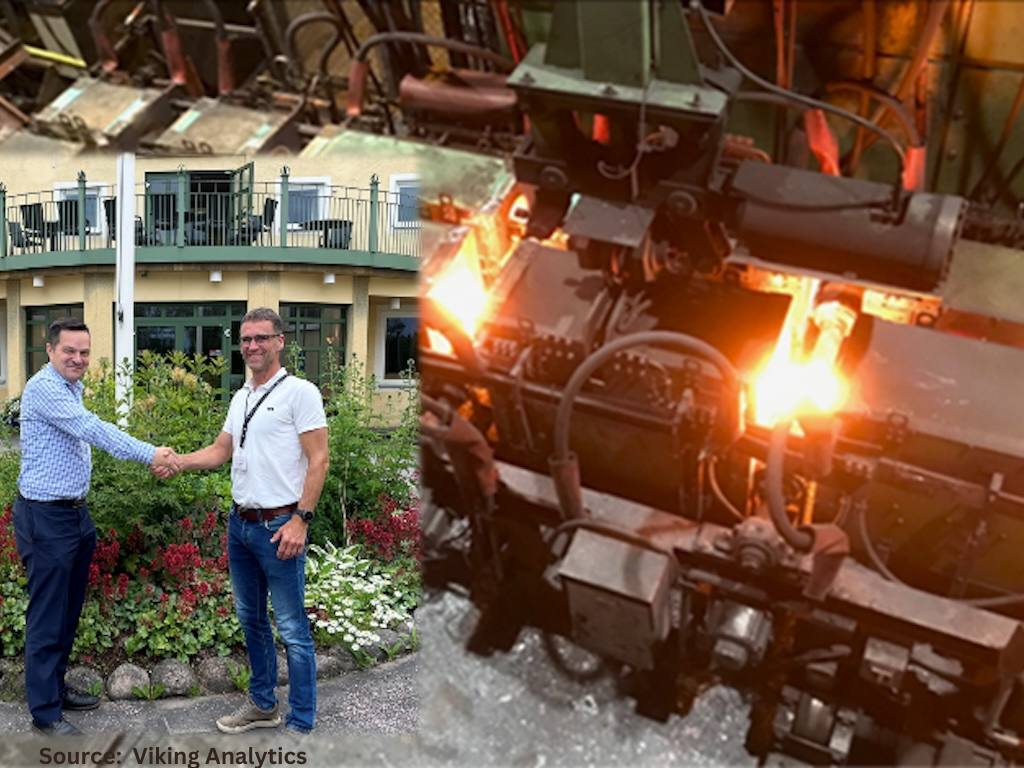
Viking Analytics and Bharat Forge sign a three-year contract
“A new agreement has been signed between Viking Analytics and Bharat Forge Kilsta (BFK) from Karlskoga. The agreement, which is for three years, provides BFK with the AI-based optimization tool ‘Smartforge’ after a 10-month implementation phase. Smartforge optimizes the forging process, primarily in the critical heat keeping process where the problems with scrap are greatest. The goal is to reduce discarded products by 50% and contribute to energy savings and a more environmentally friendly production.”
AI News No. 2: Global Industry Goes “All In” With AI
Digital transformation and the concept of a sustainable economy go hand in hand with energy and environmental challenges.
“According to a report by the Boston Consulting Group (BCG), nearly 80 percent of companies around the world consider innovation to be one of their three main priorities this year, and 66% of them plan to increase spending for this purpose, of which 42% are ready to invest up to 10% more than before. Innovation is one of the SECO/WARWICK Group’s values, embedded in its DNA. Industry 4.0 is the guiding principle in the Group’s mentality and strategic direction, which identifies AI, automation and digitization as a priority.”
A Sustainability Commitment to a Greener, Equal Future Shows Results
Tenova’s 2023 Sustainability Report illustrates the company’s ESG-guided sustainability framework, including energy efficiency initiatives, circular economy solutions, and sustainable innovation.
“Tenova has announced the launch of its new Sustainability Report, which tracks the progress the company has made against its sustainability agenda over the past year. The Report illustrates the company’s ESG-guided sustainability framework, including energy efficiency initiatives, circular economy solutions, and sustainable innovation. . . . Tenova’s flagship technologies–Direct Reduction Iron (DRI), Electric Arc Furnaces (EAFs), and the Silicon Steel ones–are essential in driving the decarbonization of both the metals industry and the planet. This is demonstrated by its major international projects, which are set to make a substantial impact on sustainability in Europe, China, and other parts of the world.”
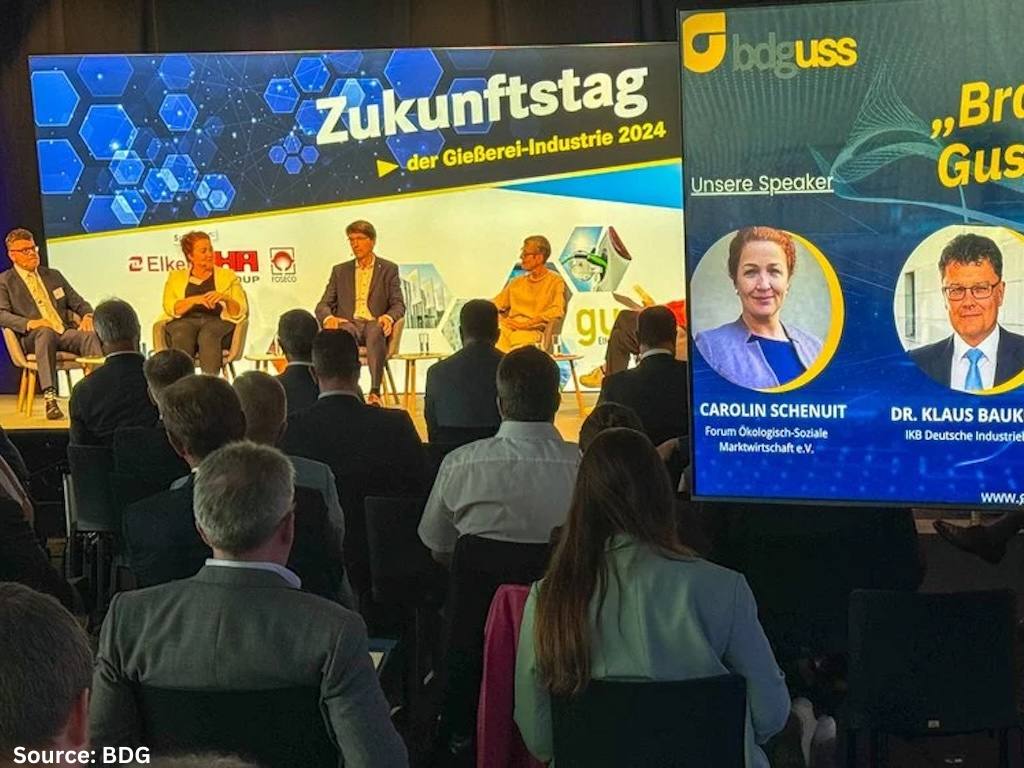
At its third “Zukunftstag“ (Future Day), the German Foundry Association (BDG) discussed: Do we still need casting from Germany? And why is the industry currently facing such difficulties?
“At its third ‘Zukunftstag’ (Future Day), the German Foundry Association (BDG) posed a rhetorical question to stakeholders and the industry: Do we still need casting from Germany? And why is the industry currently facing such difficulties? The Federal Association of the German Foundry Industry launched the ‘Future Day’ format in 2020 in order to visualize and establish generally applicable topics from corporate management and framework conditions in open discourse with experts from outside the industry, in addition to the industry’s technically focused conferences. In addition to economic policy framework conditions, the program revolved around skilled workers in the afternoon. The German foundry industry, part of the energy-intensive SME sector, is struggling amid transformations and a shortage of skilled workers.”
Understanding abrasion can be the key to extending the life of your refractory lining. The following article provided by Plibrico Company examines abrasion resistance, its role in choosing a refractory solution, and what factors to take into consideration when assessing counter-measures.
Refractory material is designed to be very durable, withstand extreme service conditions and defy mechanical abuse in many different types of thermal-processing operations. However, severe conditions that cause abrasion in the form of high levels of mechanical scraping and airborne particulate matter can challenge refractories, shortening their service lives.
Abrasion resistance is one of the most critical and possibly the most misunderstood considerations when choosing a refractory solution. A clear understanding of what abrasion is and, perhaps more importantly, what it is not can prevent needless repair costs and lead to significant savings. This is especially important when evaluating refractory designs for a new application or when considering upgrades for an existing one.
What Abrasion Is
Abrasion is the destructive process that causes a material to wear away through mechanical scraping or scratching. Anyone who has ever grated cheese or sanded wood has experienced the abrasion encountered in everyday life. As abrasion continues, thin layers of the abraded material are removed, leaving the object thinner and usually making its surface smoother.
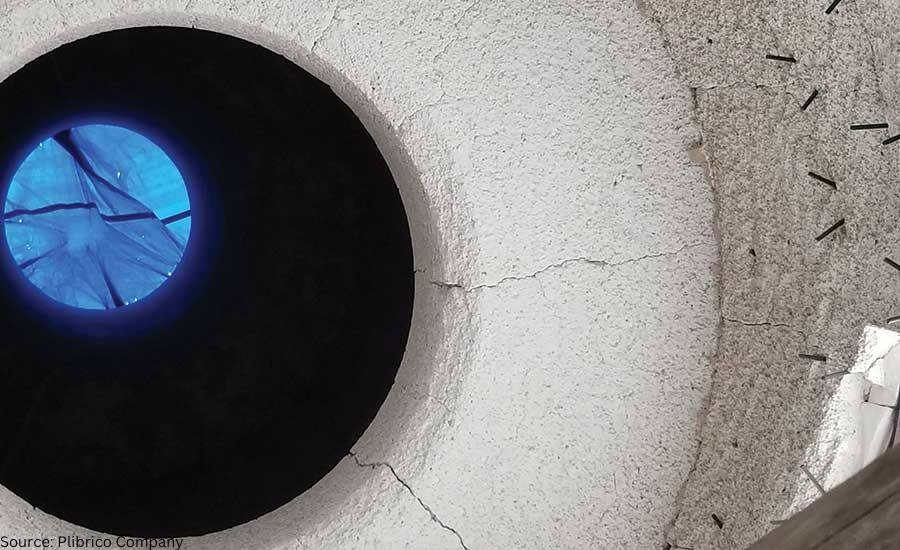
The same process can be observed in the refractory world. Refractory linings are abraded by high-velocity airborne particulate, cleaning tools and fuel/process materials that pass through the unit and come into contact with the lining. The telltale sign of abrasion is a refractory lining that has steadily become thinner while its surface has become smoother. The surface may even shine as if it had just been polished, which is not surprising when we consider that polishing is another common form of abrasion.
Fig. 1. Abrasion damage to the refractory bottom of a choke ring of a thermal-oxidizer unit
What Abrasion is Not
Abrasion is considered a type of mechanical abuse, but it is not the only type of mechanical abuse to which refractory linings are subjected. Equally common is impact: the sudden, forceful collision between the refractory lining and a moving object. Impact can come from a variety of sources. The moving object may be a cleaning tool, a piece of process material, a chunk of fuel or a dislodged mass of refractory or slag, depending on the application. Impact with such objects typically results in chips and cracks in the refractory lining.
Refractory materials designed for abrasion resistance tend to have increased strength and hardness compared to those found in traditional refractories, and these abrasion-resistant materials may provide some resistance to impact. Abrasion-resistant properties can also lead to increased brittleness. This is because if the impact exceeds the strength of the material, chipping and cracking could potentially be worse than in traditional refractories.
Compression and tension are also forms of mechanical abuse and can be caused by changes in the shape of the refractory lining as it is heated or cooled or by movements of the furnace shell itself – by intentional design or otherwise. Here again the increased strength and corresponding brittleness of the material could potentially result in a negative effect on the refractory lining.
All types of mechanical abuse can cause thinning of the refractory lining, so it is important to conduct a detailed investigation into the destructive mechanism before drawing any conclusions. Refractory solutions designed to resist abrasion may not be helpful against damage caused by impact, compression or tension.
Similarly, solutions designed to address other types of mechanical abuse may be ineffective against abrasion. For example, stainless steel needles are commonly incorporated into refractory linings to extend service life when impact resistance is required. The needles bridge cracks formed as a result of the impact, making it more difficult for these cracks to grow and connect. This helps the refractory lining hold together longer. The bridging provided by needles has no effect in an abrasion situation, however, since crack growth is not caused by the abrasion process.
Meeting Abrasion-Resistance Demands
Once abrasion is identified as the main mode of failure, there are several options to counter it. Selecting a refractory material based on a raw material hard enough to resist the abrasion is a common technique. For one material to abrade another it must be harder than the material being abraded. For instance, a diamond can be used to scratch glass, but glass cannot be used to scratch a diamond.
It follows that refractory materials based on very hard raw materials, like silicon carbide, can be used to resist abrasion and extend the life of the lining. It should be remembered, however, that a refractory lining is made up of many different materials, not just the main constituent raw materials. Clay, cement, silica and other softer components will still be exposed and abraded even if abrasion of the main aggregate is stopped completely.
Another option is to investigate the source of the abrasion and make adjustments to the process. Can a less-abrasive cleaning tool be used? Is there a way to limit the contact of the abrading process materials with the refractory lining? Is it possible to adjust the angle between the refractory lining and the incoming airborne particulate?
A seemingly minor change in the process, with minimal cost and no downsides to the operation, can save in refractory replacement costs. When changes to the process are not an option, it is best to consider the abrasion resistance of the lining as a whole and select a specifically designed abrasion-resistant solution. A qualified, knowledgeable refractory solution expert with genuine experience will help you make the best decision for your specific application, taking into consideration the following:
Speed of installation
Service life
All-in price
Fig. 2. Airborne particle matter has contributed to the abrasion damage seen in the refractory of a thermal-oxidizer choke ring. Notice on the left side of the photo how the abrading of the refractory lining becomes worse.
Abrasion-Resistance Testing
The most common measure of holistic abrasion resistance used to compare refractory solutions is the ASTM 704 test. This test exposes refractory lining materials to a stream of abrasive particulate that cause a portion of the sample to be abraded over time. By keeping sample size and shape constant – along with particle velocity, particle material and test duration – various refractory materials can be compared on an apples-to-apples basis.
This testing can be performed by any qualified refractory testing lab and most reputable refractory manufacturers. Test results are recorded based on the volume of material lost from the sample during the test and are reported in cubic centimeters. Products with excellent abrasion resistance consistently test at 5 cc of loss or less, while elite materials can score less than 3 cc of loss.
Products designed specifically for abrasion resistance will report ASTM 704 results on their material technical data sheets. It is important to remember that the abrasion-loss numbers reported on material technical data sheets are based on samples prepared in a lab under controlled conditions. Achieving these same properties in the field under real-world, job-site conditions would require a high-quality refractory installer partnered with a world-class refractory manufacturer.
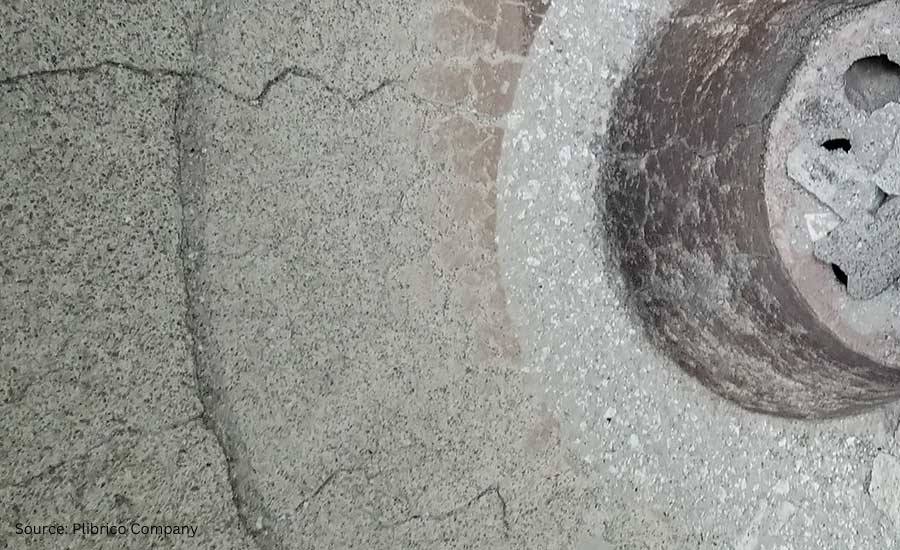
Fig. 3. Severe conditions lead to abrasion damage in the refractory lining of this dry-ash hopper. Notice the abrasion damage goes past the anchor line, leaving the bottom-left anchors exposed.
Conclusion
The thinning of a refractory lining due to abrasion is a source of frustration for many thermal-processing operations and is one of the most common modes of failure encountered in the refractory world. But, by taking the time to understand the failure mechanism and learn about the options available, you can realize significant savings by avoiding needless costs in the future.
A company developing advanced alternative renewable energy technologies large-scale industrial applications is expanding their heat treat capabilities with two identical vacuum furnaces.
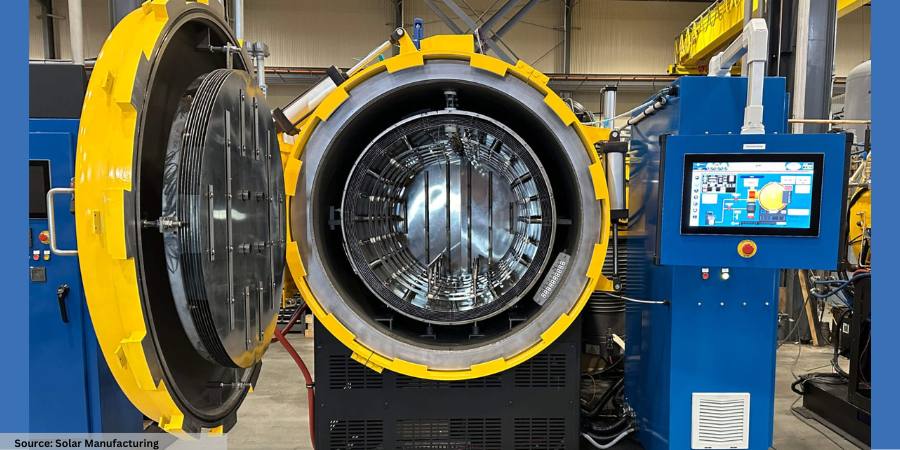
The Research and Development team of Solar Manufacturing, Solar Atmospheres, assisted the client’s engineers to verify the process in the Mentor® Pro vacuum furnace prior to sending this furnace. Solar Manufacturing shipped the identical vacuum furnaces and assisted the company’s engineers to verify the molybdenum shielded hot zone operation of the new equipment at the developer’s facility. The furnace’s internal gas quenching system processes workloads to quench at 2 bar positive pressure in either nitrogen or argon gas, a flexibility that assists the company in achieving results across a wide range of metallurgical applications.
The client also finds benefit from the compact design of the Mentor® Pro features a molybdenum shielded hot zone measuring 18” wide x 18” high x 36” deep, capable of temperatures up to 2500°F, and a workload weight capacity of up to 1,000 lbs.
The press release is available in its original form here.
Heat TreatToday offers News Chatter, a feature highlighting representative moves, transactions, and kudos from around the industry. Enjoy these 10 news items.
Equipment
Premier Furnace Specialists received orders for nine pieces of heat treating equipment to be delivered to a range of manufacturing operations, all of which are currently in various stages of completion and testing or delivery and installation.
A manufacturer in the composites industry recently received shipment of a cabinet oven from Gruenberg, an industrial oven and sterilizer manufacturer. The furnace will be used for curing composite parts under a vacuum.
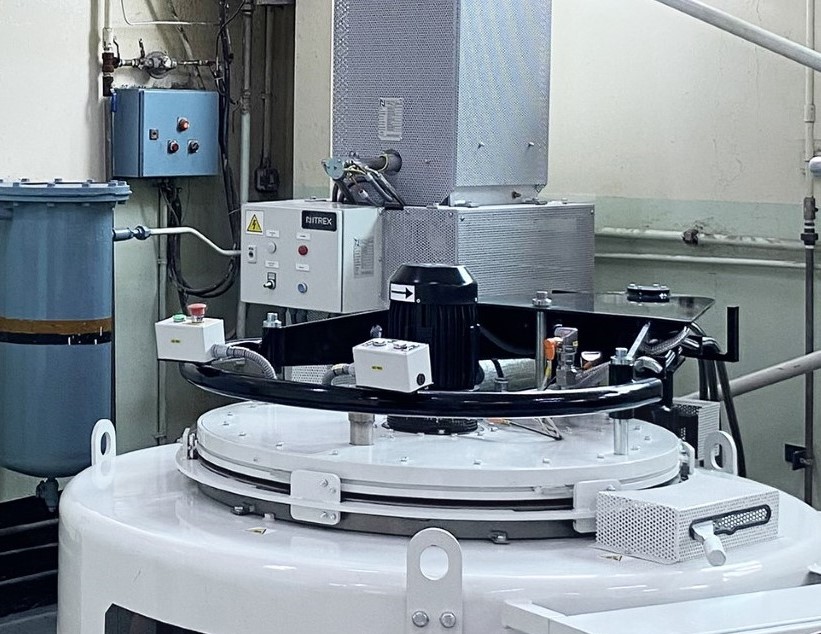
A second nitriding system was installed by Nitrex to increase capacity at Balexco, an aluminum extrusion company in Bahrain focusing on increasing production capacity.
Nine furnaces in various stages of completion and testing on the floor at Premier Furnace SpecialistsGruenberg cabinet oven shipped to composites manufacturerNitrex nitriding system installed at Balexco
Company & Personnel
Greg Miller National Business Manager Superheat
Cognizant, a professional services company that helps clients modernize technology, announced intent to acquire Belcan, a global supplier of digital engineering services for multiple industries, including aerospace, defense, and automotive.
Greg Miller has joined Superheat as national business development manager for the United Kingdom and Ireland. Greg will continue to work from his base in Lanarkshire, Scotland, bringing experience in manufacturing and preventative maintenance, with a foundation in induction heating.
Kudos
On July 2, 2024, David Lynch celebrated 40 years with Induction Tooling, Inc. This milestone was accomplished by his commitment to excellence and consistent hard-work and dedication.
Superheat, an on-site heat treatment service provider based in New Lenos, IL, recently received two Industrial Safety Training Council (ISTC) Safety Achievement Awards: one for achieving three consecutive years with zero recordable injuries and another for celebrating five years without an OSHA lost workday case. Bret Cadenhead, regional HSE manager at Superheat, represented the company at the awards event in Beaumont, Texas.
StandardAero celebrates 60 years of providing service to Pratt & Whitney Canada’s PT6A turboprop across four overhaul locations worldwide. In 1964, Dallas Airmotive (acquired by the company in 2021) became the first independent MRO provider to enter into a turboprop agreement with Pratt & Whitney Canada.
Centorr Vacuum Industries celebrates its 70th year in business in the vacuum furnace industry. The company was founded in Somerville, MA, as Vacuum Industries in 1954, and Centorr Furnace Company in 1962 in Suncook. NH. The two companies merged in 1989 in their current facilities in Nashua, NH.
Sławomir Woźniak, CEO of the SECO/WARWICK Group, celebrates five years in the position, managing all three brands: SECO/WARWICK, Retech, and SECO/VACUUM.
StandardAero’s engine overhaul center in San Antonio, TX, has completed correlation of its first test cell for the CFM International LEAP-1B turbofan engine, as part of its introduction of LEAP-1A and LEAP-1B maintenance, repair and overhaul (MRO) capabilities.
Bill Stuehr (L), president & CEO of Induction Tooling, Inc., congratulates David Lynch (R) on 40 years with the companyBret Cadenhead, Superheat (R), receives ISTC Safety Achievement AwardSławomir Woźniak President & CEO SECO/WARWICK GroupCentorr Vacuum Industries, Nashua, NH, location
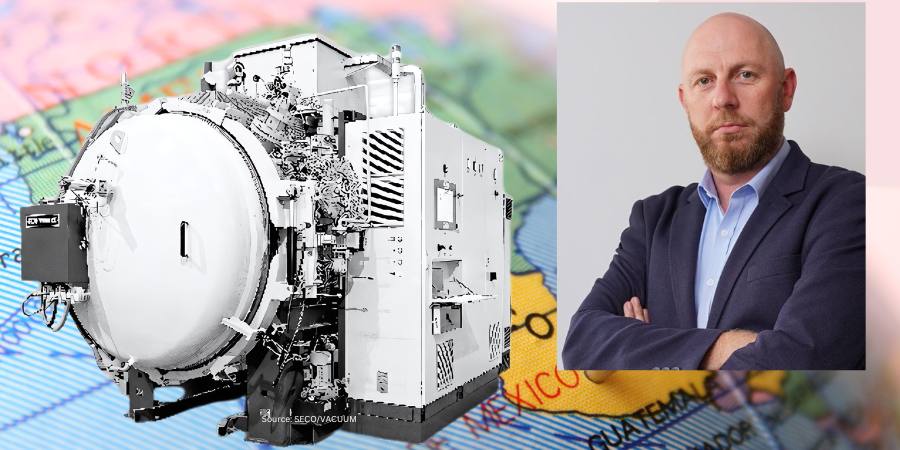
A U.S.-based automotive manufacturer is expanding its production capacity for brazing stainless heat exchangers with the order of a single-chamber vacuum furnace. The equipment will be integrated into an existing line’s thermal process operations, which is located at their Mexico facility.
Peter Zawistowski Managing Director SECO/VACUUM TECHNOLOGIES, USA Source: SECO/WARWICK
The heat treater ordered the furnace from SECO/VACUUM specifically for immediate delivery, allowing brazing of automotive components to begin without delay.
“We built this furnace to be ready to be shipped and put into operation very quickly, which is just the solution they were looking for,” said Piotr Zawistowski, managing director of SECO/VACUUM.
The press release is available in its original form here.
A Georgia-based provider of natural gas measurement and control products and solutions has announced the acquisition of a distribution and service center for the natural gas industry, extending its capabilities for heat treating manufacturers.
“We’re excited to welcome the Tri-State team to Equipment Controls,” said Jeb Bell, president of Equipment Controls Company. “Tri-State has built its reputation on a foundation of exceptional service. Their motto, ‘The Service Matters,’ resonates with our values, and we’re eager to extend that level of service to our customers.”
“We look forward to our future with ECCO. Our shared vision and complementary strengths will enable us to deliver exceptional value to our customers and the natural gas industry as a whole,” said Paul Hayes, president of Tri-State Meter and Regulator Service, Inc.
ECCO will be keeping Tri-State’s brand, team, offices, products, and service offerings.
This press release is available in its original form here.
The need to understand how certain furnace designs operate comes at a time when heat treaters are weighing each energy cost and benefit of their systems and processes. Read on for a quick summary on how dual chamber furnaces preserve energy.
On April 17-19, 2024, TAV VACUUM FURNACES provided a speaker at the 4th MCHTSE (Mediterranean Conference on Heat Treatment and Surface Engineering). The speech focused on the energy aspects of vacuum heat treatment, a subject towards which all of us within the industry need to pay attention for reducing the carbon emissions aiming at a zero net emissions future.
We have already analyzed the essential role that vacuum furnaces will play in this transition, with a focus on the optimization of energy consumption in our previous article. With this new presentation, we wanted to emphasize how selecting the right vacuum furnace configuration for specific processes may impact the energy required to perform such process. For doing so, we compared two different furnace designs — single chamber vs. dual chamber vacuum furnaces — detailing all of the components’ energy consumption for a specific process.
TAV DC4, dual chamber vacuum furnace for low pressure carburizing and gas quenching Source: TAV VACUUM FURNACES
As a sneak peek into our presentation, we will summarize below how the main features of the two vacuum furnaces design are affecting their energy performance.
Let’s start by introducing the protagonist of our comparison: a single chamber, graphite insulated vacuum furnace, model TAV H4, and a dual chamber furnace TAV DC4, both having useful volume 400 x 400 x 600 mm (16” x 16” x 24”) (w x h x d).
In a single chamber vacuum furnace, like the TAV H4, the entire process is carried out with the load inside the furnace hot zone. This represents a highly flexible configuration that can perform complex heat treatment recipes with a multiple sequence of heating and cooling stages and to precisely control the temperature gradients at each stage.
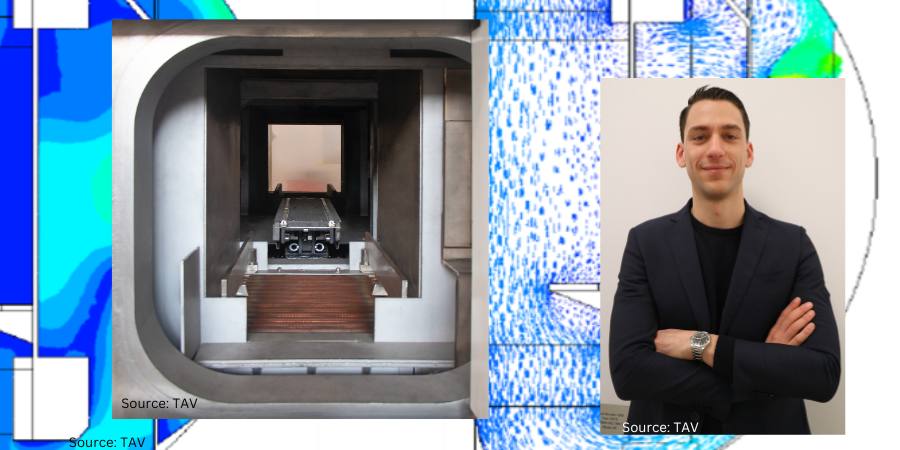
Configuration of the TAV DC4 dual chamber vacuum furnace Source: TAV VACUUM FURNACES
Alternatively, a dual chamber vacuum furnace, like the TAV DC4, is equipped with a cold chamber, separated from the hot zone, dedicated for quenching. Despite the greater complexity of this type of vacuum furnace, the dual chamber configuration allows for several benefits.
First, in dual chamber furnaces, the graphite insulated hot chamber is never exposed to ambient air during loading and unloading of the furnace; for this reason, the hot chamber may be pre-heated at the treatment temperature (or at a lower temperature, to control the heating gradient). But in single chamber vacuum furnaces, the hot zone must always be loaded and unloaded at room temperature to avoid damages due to heat exposure of graphite to oxygen.
Because dual chamber furnaces have more controlled heating, this will result in both faster heating cycles and lower energy consumption, as a substantial amount of energy is required to heat up the furnace hot zone. This advantage obviously will be more relevant in terms of energy savings the shorter the time is between subsequent heat treatments.
View of the cold chamber of the TAV DC4 dual chamber vacuum furnace Source: TAV VACUUM FURNACES
Secondly, since the quenching phase is performed in a separated chamber, the hot zone insulation can be improved in dual chamber vacuum furnaces by increasing the thickness of the graphite board without compromising cooling performance. This translates into a significantly lower heat dissipation, to the extent that at 2012°F (1100°C) the power dissipation per surface unit (kW/m2) is reduced by 25% compared to an equivalent single chamber vacuum furnace.
Additionally, quenching in a dedicated cold chamber allows to obtain higher heat transfer coefficients and higher cooling rates compared to a single chamber vacuum furnace. Since the cold chamber is dedicated solely to the quenching phase, it can be designed for optimizing the cooling gas flow only without the need to accommodate all the components required for heating. All things considered, the heat transfer coefficient achievable in the TAV DC4 can be, all other things being equal, even 50% higher compared to a single chamber vacuum furnace. Secondly, since the cold chamber remains at room temperature throughout the whole process, only the load and loading fixtures need to be cooled down; as a result, the amount of heat that needs to be dissipated is significantly less compared to the single chamber counterpart.
CFD simulation showing a study on the cooling gas speed in a section of the cooling chamber for the TAV DC4 dual chamber vacuum furnace Source: TAV VACUUM FURNACES
For heat treatments requiring high cooling rates, it is possible to process significantly higher loads on the dual chamber furnace compared to the single chamber model; translated into numbers, the dual chamber model can effectively quench as much as double processable in a single chamber furnace, depending on the alloy grade, load configuration and overall process. The savings in terms of energy consumption per unit load (kWh/kg) achievable in the dual chamber furnace for such processes can be as high as 50% compared to the single chamber furnace.
In the end, the aim of the speech was to highlight how the energy efficiency of vacuum furnaces is highly dependent on the machine-process combination. Choosing the right vacuum furnace configuration for a specific application, instead of relying solely on standardised solutions, will improve significantly the energy efficiency of the heat treatment process and drive the return on investment.
About the Author
Giorgio Valseccchi R&D Manager TAV VACUUM FURNACES
Giogio Valsecchi has been with the company TAV VACUUM FURNACES for nearly 4 years, after having studied mechanical engineering at Politecnico di Milano.
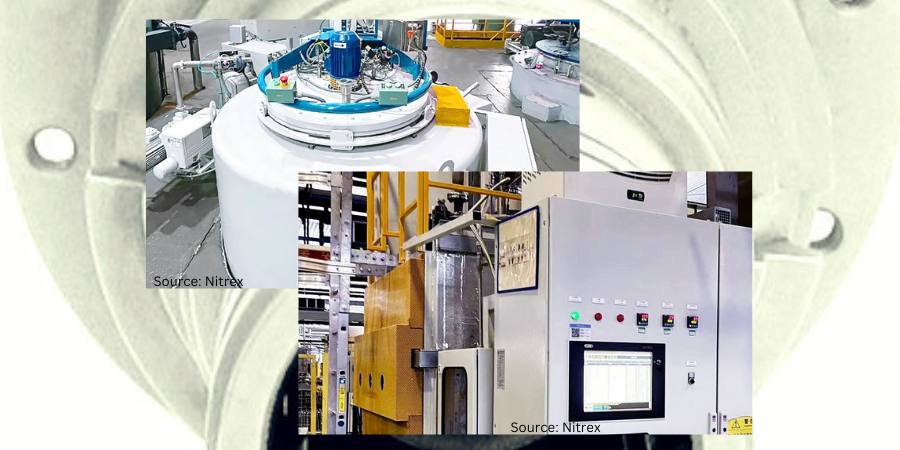
Nitriding systems have expanded the operations at two global companies: a gear manufacturer for the automotive industry and a fuel injection systems manufacturer for the marine machinery industry. In both cases, the systems will be integrated into existing installations in order to increase production capacity.
NXHL-910512 nitriding furnace Source: Nitrex
A Chinese gear manufacturer has added a fourth Nitrexnitriding furnace to its automated gear production, which includes the manufacturing of transmission gears, transfer case gears, synchronizers, and engine-gear rings for both local automotive OEMs and global markets.
“This expansion goes beyond capacity enhancement; it elevates the manufacturer’s in-house capabilities and tightens production controls,” said Tao Liu, sales manager at Nitrex China. “It allows the company to focus resources on driving innovation and sustainability across domestic and international vehicle markets, including the growing new energy vehicle (NEV) sector.”
A third Nitrex nitriding system has been installed at a manufacturer specializing in high-performance fuel injection systems for diesel engines in maritime vessels. The new NX-815 batch furnace with a 3300 lb. (1,500 kg) load capacity is specifically tailored for processing carbon steel and stainless steel parts and meets stringent requirements of the shipbuilding and industrial marine industries.
“As environmental regulations propel the shift towards alternative energy-powered ships, our advanced nitriding technologies play a crucial role. We are proud to support their expansion into stainless steel applications,” said Tao Liu.
Press releases are available in their original form hereand here.
Robert (Bob) Hill, FASM President Solar Atmospheres of Michigan Source: Solar Atmospheres
After successfully relocating and commissioning ten vacuum furnaces into their current facility, Solar Atmospheresof Michigan Inc. is poised for further expansion. Bulldozers have commenced work on a new 20,000-square-foot building, which will more than double the current footprint at their Chesterfield, Michigan, location.
Bob Hill, president of Solar Atmospheres of Michigan, commented, “This expansion will create a larger shipping and receiving area to better serve our customers’ needs and position us for future growth. Come watch us grow!”
Source: Solar Atmospheres
This press release is available in its original form here.
If curiosity were a person, Brynna Keelin Kelly-McGrath would be her name. Having risen at Moog, Inc. to the position of materials and process engineer, Brynna shares her early STEM interests and how she stays up-to-date on industry trends and ideas. In this highly engaging NextGen profile on Heat TreatRadio — with host and Heat TreatToday’s publisher, Doug Glenn — get to know this talented metallurgist.
Below, you can watch the video, listen to the podcast by clicking on the audio play button, or read an edited transcript.
The following transcript has been edited for your reading enjoyment.
Meet Brynna Keelin Kelly-McGrath (01:00)
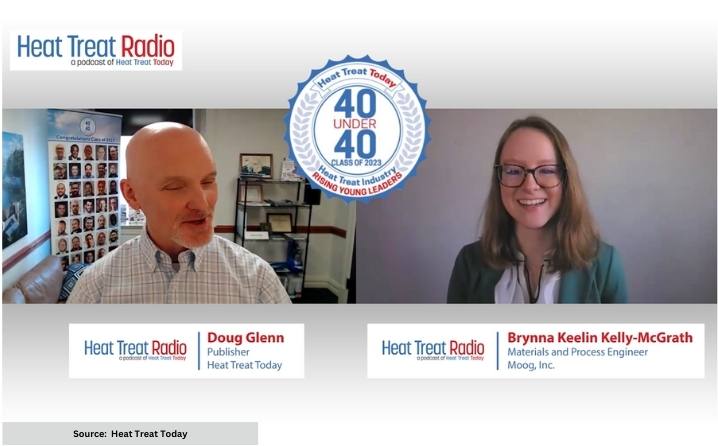
Doug Glenn: Let’s jump into today’s Heat Treat Radio episode with Brynna Keelin Kelly-McGrath from Moog, Inc. It’s a great pleasure to be here today with Brynna, who is one of our 40 Under 40 Class of 2023 award recipients. First off, congratulations on that award, and welcome to Heat Treat Radio.
Brynna Keelin Kelly-McGrath: Thank you so much. That was an honor.
Doug Glenn: Brynna lives just south of Buffalo, New York. As you know, this interview is to get to know you a little bit more — how you got into metallurgy, heat treating, and all that good stuff. Let’s start way back. Give us a little bit about yourself as a younger person, maybe high school age and moving on up through, and then how you got involved with heat treating and metallurgy.
Check out Brynna’s 40 Under 40 profile. Click the logo.
Brynna Keelin Kelly-McGrath: Sure. I grew up in a little town called West Falls, south of Buffalo, New York, and about 20 minutes from Moog. While I was in high school, I took AP chemistry and physics and fell in love with those topics. I knew from a younger age that I was going to wind up being an engineer eventually; I just didn’t know what kind. But I was pretty sure I wanted to be a chemical engineer, so I toured a couple of colleges.
At one of them, I met with a materials science professor to talk about the differences between chemical and materials science engineering. I was sold. I was all set and ready to go be a polymers engineer. I picked Purdue University, started going there, and was absolutely loving it.
The summer after my freshman year, I got an internship with Moog, which was right around the corner from my hometown. The internship was primarily metallurgical, due to the nature of Moog’s products, and I absolutely loved it. I was not expecting to like it, and it was just so great. So, I transitioned all of my coursework over to metallurgy, and I kept coming back to Moog for internships, and that was fantastic.
Learning from Industry Experts (03:32)
When I started off at Moog, it was right around the time when two of our subject matter experts in heat treatment were transitioning to retirement. I started learning as much as I could as fast as I could about heat treatment. There was obviously a lot to learn there, but it was a great time.
After working at Moog for a couple of years, I decided I wanted to go back and pursue my other passion, which was manufacturing engineering. So, right now I’m working on a master’s degree after work to combine metallurgy and manufacturing.
“When I started off at Moog, it was right around the time when two of our subject matter experts in heat treatment were transitioning to retirement. I started learning as much as I could as fast as I could about heat treatment.”
Brynna Keelin Kelly-McGrath, Moog
Doug Glenn: Wow. You’re a classic overachiever. That’s pretty good. And you said Purdue, correct?
Brynna Keelin Kelly-McGrath: Yeah.
Doug Glenn: Okay. And you did your undergrad there. Did you actually end up graduating with a materials engineering degree or a metallurgy degree?
Brynna Keelin Kelly-McGrath: Materials science and engineering.
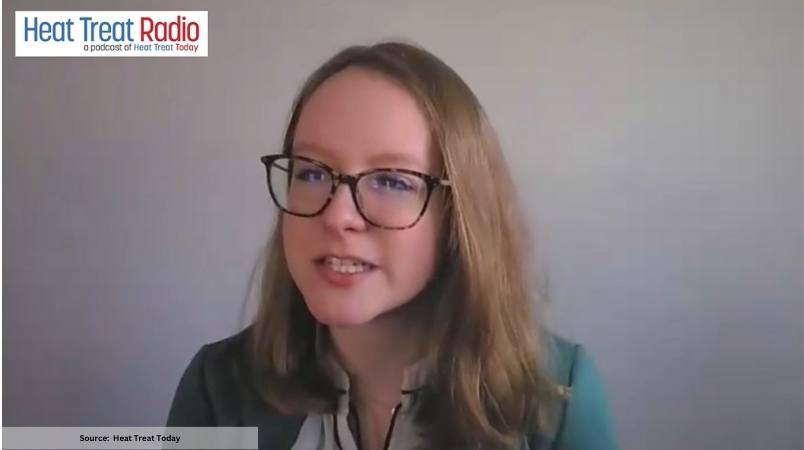
Brynna shares how she got started in the industry. Source: Heat Treat Today
Doug Glenn: All right. Good. You spent the summers back at Moog and enjoyed that. You know, we see a lot of the older generation retiring, so you’re filling the brain drain, as we say, which is great. Are there are many other young people at Moog?
Brynna Keelin Kelly-McGrath: Yeah, their internship co-op program has been fantastic in bringing in a lot of students right out of college and getting them hooked on our product line and the sort of manufacturing we do. And we’re definitely getting more recent college graduates. But, you know, with people retiring, those are some awfully big shoes to fill.
Doug Glenn: For sure. What exactly does Moog make at your facility? They’re a large corporation; I know they usually make a lot of automotive, maybe aerospace, components but are you able to say specifically what Moog does there?
Brynna Keelin Kelly-McGrath: We specialize in high precision motion actuation systems. From a metallurgical side, we’re working with a ton of really cool materials. So it’s not just steels or aluminum, it is a lot of aerospace applications, defense. The materials and process engineering group is physically orchestrated on our headquarters campus as well as the space and defense building, so we do get to see quite a bit of that. From the metallurgical perspective, there is a lot to see and work on.
Doug Glenn: You mentioned you were thinking about being a chemical engineer, but then you saw the materials. Do you remember what it was about that and metallurgy that attracted you? Anything specific?
Brynna Keelin Kelly-McGrath: I remember sitting through that talk with a materials professor at Purdue, and he was talking about what the day to day of a chemical engineer versus materials engineer looks like. I will not pretend that he wasn’t biased, because he was a materials professor. But the work he described for materials engineering was so diverse, and there were options for different settings and what you could end up working on — from being in a steel mill to working in a lab like I do. There are a lot of options, a lot of cool things. The slogan at Purdue was something along the lines of: you can’t make it without materials.
Brynna’s Family Background (07:30)
Doug Glenn: That’s really neat. So, I haven’t asked you about your family at all. What did they think when you told them, hey, I’m thinking about being a materials engineer or a metallurgist?
Brynna Keelin Kelly-McGrath: My father is an industrial engineer, and my mother is a pharmacometrician, so they’re both in the stem field already. I think it was no surprise that I was going to pursue engineering and then, metallurgical engineering specifically. I think they were happy to encourage me to pursue any of my passions. And my father knew a couple of materials engineers and thought that it would work out for me. They were excited.
Undergraduate Research (08:16)
Doug Glenn: They were very supportive. That’s great. When you did your undergrad at Purdue, did you have to work on a final paper or any specific projects that were of interest to you?
Brynna Keelin Kelly-McGrath: I did some undergraduate research in the metallurgy realm. But my senior project for graduation was along the lines of characterizing shot for shot peening and the degradation of shot and the residual stress that it imparts. It was like a cool mix of FEA modeling with actually characterizing the material. It was a neat project.
Doug Glenn: Have you had to do any of that at Moog?
Brynna Keelin Kelly-McGrath: There’s a fair deal of materials characterization. We have shot peening, but I’m not super involved with it.
Current Work at Moog (09:35)
Doug Glenn: Gotcha. That’s interesting. Can you describe what your typical day at Moog looks like now and what you’re working on?
Brynna Keelin Kelly-McGrath: Sure. My typical day is a good deal of talking with all types of engineers, explaining metallurgical concepts. Because we work on a lot of different materials, there’s a lot to understand there. A good portion of my role is talking with other engineers about how a heat treatment procedure works or what’s metallurgically happening, how to modify a manufacturing sequence, how to design so that the product’s going to work.
But then I also specifically work in a failure analysis lab. This could be anything from something’s coming off the manufacturing line a little bit wrong or something failed in the field. We’ve got a beautiful characterization lab full of all the toys that you could think of, including two SEMs and a chemical lab. There’s a good deal of analysis there, too.
Doug Glenn: You seem like a person who enjoys your work. Is there any specific story or instance of something happening, either in school or at work, that really made you happy that you were in metallurgy and heat treat?
Brynna Keelin Kelly-McGrath: Oh, goodness. That’s a good question.
I would have to say I’ve had a couple projects at work, without getting into too many specifics, where we discovered something new metallurgically that we didn’t know was happening before. And then working through that, how did we not know it before? What do we know about it now? And what are we going to do to utilize this new thing that we discovered and take advantage of it? From a heat treat perspective, sometimes that means modifying our procedures, modifying our fixturing, creating something new.
It’s neat to see the modifications happen and come up with the new parts on the other end. It’s been very exciting to work on interdisciplinary teams like that.
“My typical day is a good deal of talking with all types of engineers, explaining metallurgical concepts. Because we work on a lot of different materials, there’s a lot to understand there. A good portion of my role is talking with other engineers about how a heat treatment procedure works or what’s metallurgically happening, how to modify a manufacturing sequence, how to design so that the product’s going to work.” Source: Heat Treat Today
Doug Glenn: Yeah. I’m curious about this. You’ve been out in the work world for how many years?
Brynna Keelin Kelly-McGrath: Three and a half.
Doug Glenn: Okay. So, you’ve been out of school and working four years, and the amount you know about metallurgy and heat treating now is four years’ worth. Does it kind of amaze you the amount of stuff we don’t know?
Brynna Keelin Kelly-McGrath: Absolutely. Metallurgy is an old science, but you know we’re still [developing] the tools and technology and it’s great to find out new things.
Doug Glenn: Right. A lot of people get involved and say, “Well, I don’t want to go into metallurgy and heat treat because it’s a mature industry,” but I was curious if you felt the same way.
It’s really quite fascinating because there is a lot that happens. Like you were saying at Moog when you discovered things, a lot of stuff that’s happening and we really don’t know why. The more we can discover about it, the better.
Brynna Keelin Kelly-McGrath: Absolutely.
Top Industry Resources (12:58)
Doug Glenn: Let me ask you this. You obviously come from a smart family; you’ve got parents who are well educated, and you are as well. What are some of the metallurgical/heat treat resources that you use to stay current?
Brynna Keelin Kelly-McGrath: I think the best resource that’s out there is people. The network that I’ve been growing comes from a variety of different sources. I’m part of a few industrial committees, and it’s just a great way to meet people from all ends of the spectrum of metallurgy — from those producing the material to those making something out of it to the people who are going to use it all the way down the line.
Finding other metallurgists in those realms, and also through venues like ASM and our local Buffalo chapter — meeting people who have more experience than I do and have seen it before. If I’m seeing something for the first time, there’s definitely someone who spent their whole career on that. It’s really great to tap into those resources. That’s my number one.
And then my second choice would be the ASM handbooks. I’ve always got at least two open on my desk.
“I think the best resource that’s out there is people.”
Brynna Keelin Kelly-McGrath, Moog
Doug Glenn: Those are great resources. ASM over the years has pumped out some very, very good stuff. Is there anything else about your work or your schooling that is of interest or excited you that you’d like to share?
Brynna Keelin Kelly-McGrath: I really liked working at Moog because it’s a cool application where I can use my metallurgical knowledge along with this new manufacturing knowledge that I’m building up. That was my favorite intersection with my undergrad degree. And now I get to actually try that out in a working sense. That’s been great.
Doug Glenn: And you’re doing a master’s in industrial engineering?
Brynna Keelin Kelly-McGrath: The University of Michigan.
Doug Glenn: Remotely, I’m assuming?
Brynna Keelin Kelly-McGrath: Yes.
Doug Glenn: Very nice. And how far along are you, and how much longer do you have to go there?
Brynna Keelin Kelly-McGrath: I’m hoping to graduate in December, so I’m coming closer to the finish line.
Doug Glenn: Congratulations. That’s really good.
Rapid-Fire Round (15:44)
Doug Glenn: I want to move off of metallurgy and heat treat just to learn a little bit more about Brynna. All right, so these quick questions are what I call the rapid-fire round. Brace yourself. Are you a Mac or a PC person?
Brynna Keelin Kelly-McGrath: I am a Mac person through and through. I love my Mac.
Doug Glenn: Do you use a Mac at work?
Brynna Keelin Kelly-McGrath: I wish, but no.
Doug Glenn: We have an ongoing debate here. We had a couple people that came into the organization with Macs, and I’ve always been a PC guy. So, anytime there’s a computer problem, we tease each other, “Well, that’s because you’re working on a Mac/you’re working on a PC.” Well, that’s good to know. And for your phone: Are you an Apple phone person?
Brynna Keelin Kelly-McGrath: Yeah, I’ve got an iPad. And I just got a new MacBook Air the other day.
Doug Glenn: You’re hardcore. Very good.
So, we’re a publishing company here at Heat Treat Today. And I like to ask this question: When you consume media, do you prefer hard copy or digital?
Brynna Keelin Kelly-McGrath: I prefer digital. I like to have all of my work life very organized by topic, and it’s way easier for me to organize everything if I have a digital copy of it. So even if it’s a print copy, I’ve been known to scan and file it the way that I file everything else.
Doug Glenn: Okay. Now what do you value more in work — a flexible work schedule or high pay?
Brynna Keelin Kelly-McGrath: I’m going to go with flexible work schedule. I’ve had some people close to me who have the high pay but no flexibility. And they’re the ones more jealous, so I’m going to go with that. I’ll take the flexibility.
Doug Glenn: That’s a great answer. Here’s one: Would you rather work remotely or in an office?
Brynna Keelin Kelly-McGrath: In an office 100%, I am definitely of the variety that likes to be around people. I would rather have people to talk to face to face than doing it over Teams.
Doug Glenn: I kind of assumed you were like that. How did you handle all the isolation that came with the recent pandemic?
Brynna Keelin Kelly-McGrath: I was still in college at that time for most of Covid. Purdue was only remote for half of one semester. It was a reasonably short time. And then the rest of the time we had limited capacity in classrooms and things. But when I was coming back for my internships, our department was classified as essential. We were coming into the office every day, and that was good, I enjoyed that.
Doug Glenn: So, you didn’t necessarily really have a lot of the isolation or as much as you might have had.
Brynna Keelin Kelly-McGrath: Yep.
Doug Glenn: That’s good. Okay, I won’t keep going down that road. I think that whole time period has been very impactful on our society. And I’m curious how people feel it has affected them.
I know you love working at Moog, but if you had a dream job, what would it be?
Brynna Keelin Kelly-McGrath: I don’t know. I think someday down the line, it would be cool to have my own manufacturing business. I don’t have a product in mind at the moment, but in my thoughts it has to do with metallic components and heat treatment, because that’s my passion. That would be great.
Doug Glenn: Very interesting, owning your own company and manufacturing something metal. You know what? That’s where it starts. You’re three and a half years out, and you’ve got time to develop more specificity over time. But that’s good to even know that you’re moving in that direction.
I assume you don’t work all the time. What do you do? What do you do in your free time? What do you like? What are your passions outside of work?
Brynna Keelin Kelly-McGrath: The number one time consumer at the moment is that master’s degree. But then, you know, on a pure fun basis, my husband and I are avid golfers. And all of the very short Buffalo summer we’re trying to be out there on the golf course.
“But then, you know, on a pure fun basis, my husband and I are avid golfers. And all of the very short Buffalo summer we’re trying to be out there on the golf course.” Source: Richard-7 / Getty Images Signature
Brynna Keelin Kelly-McGrath: I’m also a bluegrass fiddler. I play in a couple bands. And that’s pretty fun, too. It’s almost Saint Patrick’s Day.
Doug Glenn: You’re a musician? You know, I’ve heard that there are some engineering schools who don’t ask you if you play an instrument, they ask you what instrument you play because there is a correlation somehow or other between music and engineering. Maybe it’s the methodical-ness, the orderliness, and all that stuff.
Brynna Keelin Kelly-McGrath: Neat, I didn’t know that.
Doug Glenn: If you’re playing bluegrass fiddle, I assume you play some by ear. I mean, I assume you’ve got some sort of natural talent there. Is that safe to say?
Brynna Keelin Kelly-McGrath: Yeah, I started that at a decently young age. And now my husband and I are learning piano as well, so it’s been fun.
Doug Glenn: What does your husband do by chance?
Brynna Keelin Kelly-McGrath: He’s a software engineer.
Doug Glenn: Two engineers in one house. That’s got to be interesting dinner time talk. That’s wonderful.
Okay. Last question for you. I give people an option here. You can answer any one of these three. What would be your favorite app, movie, or magazine?
Brynna Keelin Kelly-McGrath: The first thing that came to my mind when you asked that question was Audible. At the moment, I’m hooked on reading, or listening, to a lot of books. I consider it reading in the little bits of downtime here and there grocery shopping and driving in the car and things like that. It’s nice to spend that time a little bit more productively.
Doug Glenn: I’m with you. I think that’s great. I assume maybe you can even do some of your school reading on Audible?
Brynna Keelin Kelly-McGrath: I haven’t tried that yet. Honestly.
Doug Glenn: Sometimes people learn better by actually reading. But other people learn better by listening, so that’s fine.
If you were to encourage young people to really look into metallurgy materials, what would you tell them? What would be your encouragement to them?
Brynna Keelin Kelly-McGrath: I think the most impactful thing for me at that age was actually getting to see what they do. At Moog, I act as a tour guide for a lot of high school students. I try to show them as closely as possible what we do and what a day looks like. Because it’s great to think about the theory, but at the end of the day when you graduate with that degree, you’ve got to go work. I encourage high school students to get out there and see as many jobs as possible. Shadow people — I guess that would be my advice.
Doug Glenn: That’s good. Well, Brynna, thanks so much. Congratulations again on being awarded 40 Under 40 this last year. And thanks for taking some time to chat with us.
Brynna Keelin Kelly-McGrath: Thank you so much.
About The Guest
Brynna Keelin Kelly-McGrath Materials and Process Engineer Moog, Inc. Source: Brynna Keelin Kelly-McGrath
Brynna Keelin Kelly-McGrath received her bachelor’s degree in Materials Science and Engineering from the Purdue University Honors College. She is currently working on a master’s degree in Manufacturing Engineering from the University of Michigan Ann Arbor. Brynna conducts metallurgical support for day-to-day heat tree issues and non-conformances across several divisions within Moog, Inc. She was recognized in Heat Treat Today’s 40 Under 40 Class of 2023.
Contact Brynna by visiting Moog, Inc.’s website: www.moog.com.