Robert (Bob) Hill, FASM President Solar Atmospheres of Western PA Source: Solar Atmospheres
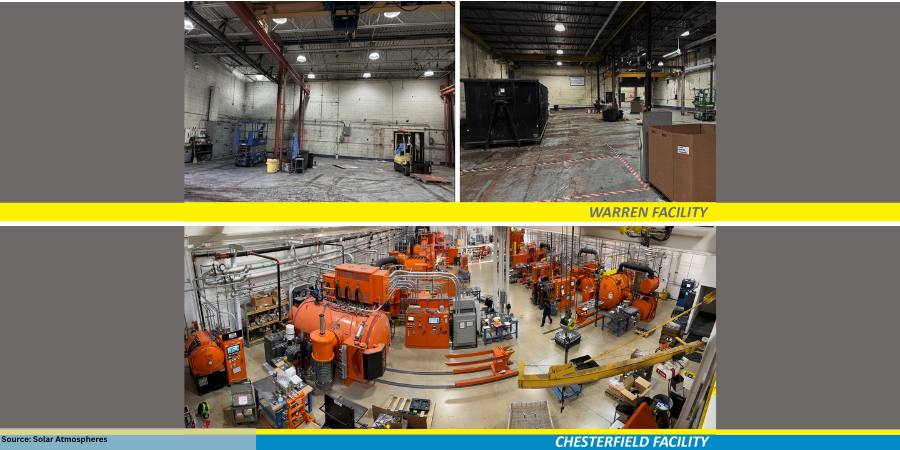
Solar Atmospheres of Michigan has successfully relocated from the old Fraser and Warren facilities to a new location in Chesterfield, Michigan. All ten furnaces (both new and existing) are fully operational at the Chesterfield plant, heralding a new era of efficiency and productivity.
This spring, construction will begin on a 15,000 square foot expansion on an adjacent lot. The expansion will allow for the investment in cutting-edge vacuum furnaces from Solar Manufacturing.
Bob Hill, president of Solar Atmospheres of Michigan, states, “Our future is very bright in Michigan. The consolidation and expansion will allow us to elevate our service standards and meet the evolving demands of our clientele across Michigan and the surrounding states. Solar of Michigan remains steadfast in its dedication to innovation, service excellence, and customer satisfaction as it ventures into this new chapter of growth and expansion.”
This press release is available in its original form here.
Find Heat Treating Products and Services When You Search on Heat Treat Buyers Guide.com
There are four heat treat industry-specific economic indicators gathered by Heat Treat Today each month since June 2023, and this month, we are seeing a marked downturn in expectations across all indicators.
The numbers, compiled in the second week of April, show that responding parties strongly anticipate all four indices — number of inquiry, value of bookings, size of backlogs, and health of manufacturing economy — to grow. However, all projections are significantly down, which would seem to indicate that industry suppliers are approaching April with far more conservative expectations as compared to Q1 2024.
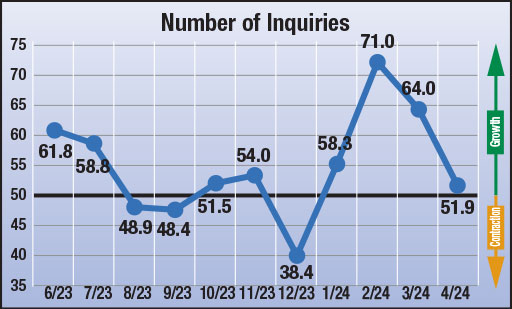
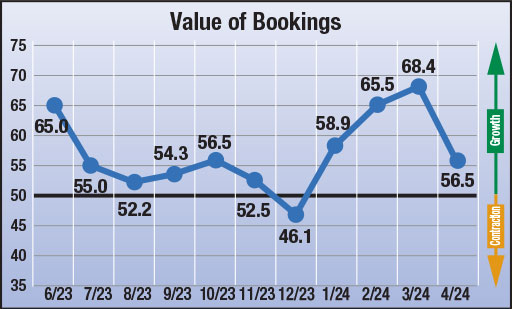
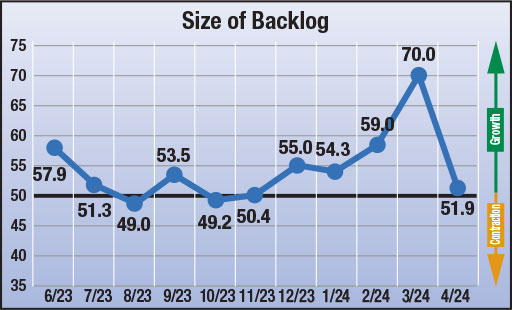
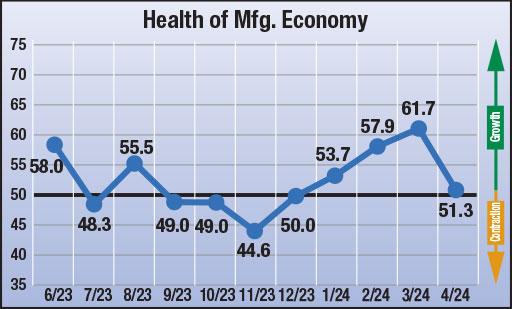
The results from this month’s survey (April) are as follows; numbers above 50 indicate growth, numbers below 50 indicate contraction, and the number 50 indicates no change:
Anticipated change in the Number of Inquiries from March to April: 51.9
Anticipated change in Value of Bookings from March to April: 56.5
Anticipated change in Backlog Size from March to April: 51.9
Anticipated change in the Health of the Manufacturing Economy from March to April: 51.3
Data for April 2024
The four index numbers are reported monthly by Heat Treat Today and made available on the website.
Heat TreatToday'sEconomic Indicatorsmeasure and report on four, heat treat industry indices. Each month, approximately 800 individuals who classify themselves as suppliers to the North American heat treat industry receive the survey. Above are the results. Data started being collected in June 2023. If you would like to participate in the monthly survey, please click here to subscribe.
Find heat treating products and services when you search on HeatTreatBuyersGuide.com
2024 is a big year for heat treaters who work for the DoD.AsJoe Coleman, cybersecurity officer at Bluestreak Consulting, explains, Controlled Unclassified Information is a key topic you need to understand if you want to maintain or grow contracts with the DoD this year.
This Cybersecurity Corner installment was released in part inHeat Treat Today’s March 2024 Aerospace print edition.
If you are a prime contractor for the Department of Defense (DoD) or a subcontractor, then you have CUI in one form or another whether it is in paper or digital format. Learn what is, and is not, considered Controlled Unclassified Information (CUI).
What Exactly Is Considered CUI?
Click to share your Reader Feedback!
The DoD handles CUI in many forms across its operations. CUI includes sensitive information that requires safeguarding but does not meet the criteria for classification as classified information. Examples of DoD CUI include:
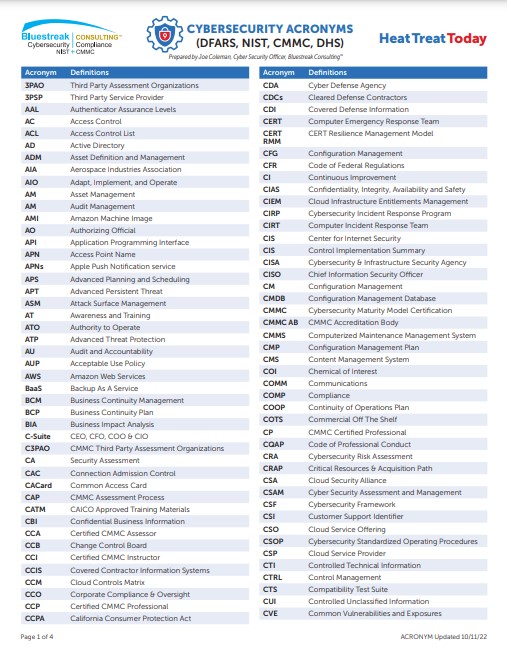
Click image to download a list of cybersecurity acronyms and definitions.
Export Controlled Information (ECI): Information that is subject to export control laws and regulations, such as technical data related to defense goods and services.
For Official Use Only (FOUO): Information that is not classified but still requires protection from unauthorized disclosure for official government use.
Critical Infrastructure Information (CII): Details about critical infrastructure elements like facilities, systems, networks, and assets that are essential for national security, economy, or public health.
Privacy information: Personal information of individuals (e.g., Social Security numbers, medical records) that needs to be protected under privacy laws and regulations.
Sensitive But Unclassified (SBU) Information: Information that, although unclassified, is sensitive and requires protection due to its potential impact if disclosed.
Contract-related information: Non-public details within contracts, such as proprietary information, financial data, or technical specifications.
Proprietary information: Data owned by an entity and protected by intellectual property rights or confidentiality agreements.
In the heat treating industry, DoD CUI might include various sensitive details related to heat treatment processes, materials, or specifications used in defense-related applications. Here are some potential examples of DoD CUI within the heat treating industry:
Material specifications: Specifications for heat treated materials used in defense equipment, weapons systems, or components. This could include details about specific alloys, heat treatment methods, tempering, or hardening processes required for certain applications.
Process documentation: Detailed procedures and technical information regarding heat treatment processes employed in the production of defense-related materials or components. This might involve specific temperature ranges, cooling rates, or other proprietary methods used in heat treating.
Quality control data: Information related to quality control measures specific to heat treating in defense-related manufacturing. This could involve data on testing methodologies, inspection techniques, or standards compliance for heat treated materials used in critical defense systems.
Research and development (R&D) information: Research findings, experimental data, or proprietary knowledge related to advancements in heat treatment technologies tailored for defense applications. This may include innovative heat treatment methods for enhancing material properties, durability, or performance in defense systems.
Supplier information: Details about suppliers providing heat treatment services or materials to the defense industry, including contractual agreements, proprietary processes, or specifications specific to DoD projects.
Cybersecurity measures: Information about cybersecurity measures employed within heat treatment facilities that handle DoD contracts or projects to safeguard sensitive data from cyber threats.
Facility security protocols: Details regarding security protocols, access controls, and clearance requirements within heat treating facilities handling defense-related projects to prevent unauthorized access to sensitive information.
Other items that may be identified as CUI provided by the DoD or generated in support of fulfilling a DoD contract or order include, but are not limited to (in both paper and digital formats):
Research and engineering data
Engineering drawings and lists
Technical reports
Technical data packages
Design analysis
Specifications
Test reports
Technical orders
Cybersecurity plans/controls
IP addresses, nodes, links
Standards
Process sheets
Manuals
Data sets
Studies and analyses and related information
Computer software executable code and source code
Contract deliverable requirements lists (CDRL)
Financial records
Contract information
Conformance reports
What Is Not Normally Considered CUI?
Here are several examples of items that may not typically fall under DoD CUI for the heat treating industry:
General industry standards: Information related to commonly accepted industry standards, processes, or procedures that are widely available and not specific to defense-related applications.
Non-proprietary heat treatment techniques: Basic information about standard heat treatment methods or techniques that are publicly known and not proprietary to a particular organization or application within the defense sector.
Publicly available research: Scientific or technical research findings, publications, or data that are publicly accessible, not subject to proprietary rights, and not specifically tied to defense-related advancements.
Commonly shared best practices: Information regarding widely accepted best practices in heat treating that do not involve proprietary or classified techniques applicable solely to defense-related materials or components.
Non-sensitive business operations: Routine business operations, administrative documents, or general non-sensitive communications within the heat treating industry that do not pertain to defense contracts or projects.
Information approved for public release: Data that has been officially approved for public release by the DoD or other relevant authorities, ensuring it does not contain sensitive or classified details.
Basic material specifications: Information about materials, alloys, or heat treatment processes widely used in commercial applications and not specifically tailored or modified for defense-related purposes.
I hope this information has been helpful to you. Please contact me with any questions and for a free consultation, with a complimentary detailed compliance ebook.
For more information: Contact Joe Coleman at joe.coleman@go-throughput.com.
Find Heat Treating Products and Services When You Search on Heat Treat Buyers Guide.com
As heat treaters strive for a sustainable future, pressure mounts to make the right choices while running commercially viable operations. This guest column by Michael Mouilleseaux, general manager at Erie Steel, Ltd., explores how and why heat treat operations are now coming under the focus of the U.S. Department of Energy.
This informative piece was first released inHeat Treat Today’s March 2024 Aerospace print edition.
The iron and steel industry contributes approximately 2.1% of energy-related CO2 emissions from primary sectors in the U.S. These statistics may seem insignificant or far removed, but the federal government has now determined that heat treating is a significant contributor and has set in motion critical changes for U.S. heat treaters.
Background
Click to share your Reader Feedback!
On December 8, 2021, President Joe Biden issued an executive order that committed the federal government to “lead by example” in U.S. efforts towards carbon-free and net zero emissions solutions. Since then, the executive has delegated the Department of Energy (DOE) and the Environmental Protection Agency (EPA) to spearhead these initiatives aimed at reducing greenhouse gas emissions (GHGE) and promoting energy efficiency across various sectors of the U.S. economy. To support these efforts, $10,000,000,000 in incentives are being allocated for the DOE and EPA to investigate and promulgate regulations.
Specifically, the government sees the “industrial sector” as responsible for close to a quarter of all greenhouse gas emissions (GHGE); the five industries named within this sector are chemical processing, petroleum processing, iron & steel production, cement production, and food & beverage manufacturing. The DOE is leading the efforts of “supercharging industrial decarbonization innovation” and leveraging the potential of “clean hydrogen.”
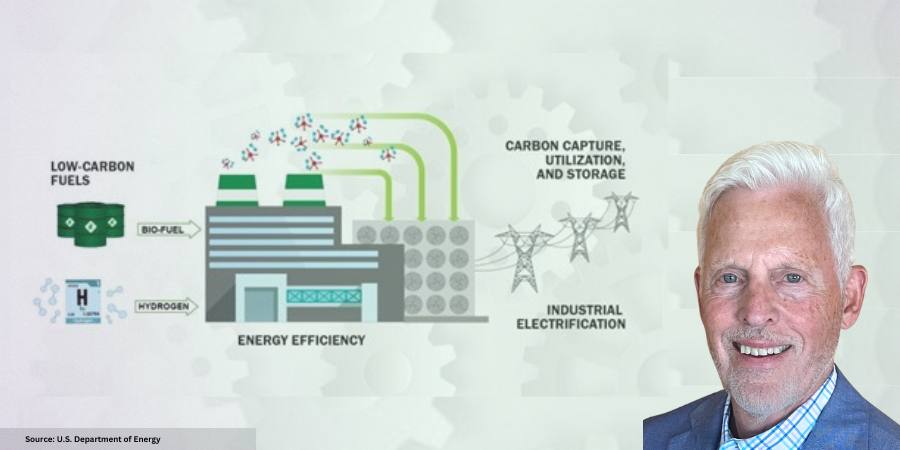
Following these directives, the DOE unveiled the “Industrial Decarbonization Roadmap” in September 2022. This strategic plan will guide decarbonization efforts of the five key industrial sectors to mitigate GHGE. The four pillars are:
Energy efficiency
Industrial electrification (using green electricity)
Adoption of low-carbon fuels, feedstocks, and energy sources (LCFFES)
Carbon capture, utilization, and storage at the generated source (CCUS)
The DOE determined that process heating — accounting for 63% of energy usage within the iron and steel industry — would be the best opportunity to apply these four pillars. However, until May 2023, heat treating had not been explicitly mentioned as a target for decarbonization efforts.
Why Should Heat Treaters Care?
In May 2023, the Industrial Efficiency & Decarbonization Office — an office within the DOE’s Office of Energy Efficiency & Renewable Energy — held a symposium to refine its commitment to the decarbonization of the industrial sector. It was then that heat treating was specifically defined as a process targeted for the reduction of GHGE in the steel, aluminum, and glass manufacturing industries.
The DOE’s refined commitment focuses on two things: reduce GHGE attributable to “process heating” by 85% by 2035 and achieve net-zero CO2 emissions by 2050. To reach these ambitious goals, the DOE emphasized the importance of adopting LCFFES, green electrification, and implementing strategies that promote industrial flexibility, advanced heat management, smart manufacturing, and alternative technologies.
The potential ramifications of the DOE’s efforts on the heat treating industry are momentous. With the development of regulations to support these efforts, businesses within this sector must prepare for significant changes. The focus on green hydrogen, biofuels, and electrification, coupled with advanced technological solutions like ultra-efficient heat exchangers, artificial intelligence, machine learning, and alternative no-heat technologies, are strategies being considered for potential regulation.
Conclusion
The heat treating industry stands at a crossroads, with the DOE’s decarbonization initiatives signaling a shift to adopt cleaner energy practices. As these regulations take shape, businesses will need to adapt, investing in new technologies and processes that align with the nation’s clean energy goals. In the next column, we’ll address potential ramifications of the DOE effort for industrial decarbonization in the heat treating industry to help you be better informed and prepared.
About the Author:
Michael Mouilleseaux General Manager at Erie Steel, Ltd.
Michael Mouilleseaux is general manager at Erie Steel, Ltd. He has been at Erie Steel in Toledo, OH since 2006 with previous metallurgical experience at New Process Gear in Syracuse, NY, and as the director of Technology in Marketing at FPM Heat Treating LLC in Elk Grove, IL. Michael attended the stakeholder meetings at the May 2023 symposium hosted by the U.S. DOE’s Office of Energy Efficiency & Renewable Energy. He will be speaking on the MTI podcast about this subject on March 5, 2024, 2:30 EST, and will present on this topic at the April 3, 2024, MTI Mid-West chapter meeting.
For more information: Contact Michael at mmouilleseaux@erie.com.
Attend the SUMMIT to find out more about the DOE’s actions for the heat treat industry.
Find Heat Treating Products and Services When You Search on Heat Treat Buyers Guide.com
The development of China’s steel industry has been a crucial driver of the country’s rapid economic growth. Within the steel industry, steel pipes are hailed as the “blood vessels” of modern industry, playing an irreplaceable role in the development of the national economy and industrial upgrading. From January to June 2023, China’s steel pipe production reached 48.67 million tons, a year-on-year increase of 12.2%, solidifying China’s position as a major producer of steel pipes.
Processing Technology:
A Key Driver of Progress in the Steel Pipe Industry
Processing Technology directly impacts product specifications and performance. High-precision processing techniques enable steel pipes to better meet diverse application requirements, enhancing production efficiency and reducing costs. Innovative processing technologies are crucial elements in ensuring industry competitiveness and sustainable development.
The rise of heat treatment technology has transformed the mechanical, physical, and chemical properties of metal components, significantly improving their quality. More importantly, green environmental protections have become the core of the future development of the steel industry. Heat treatment-related technologies provide greater feasibility for steel production, supporting the industry’s transition towards a low-carbon and environmentally friendly direction.
Source: THERMPROCESS China
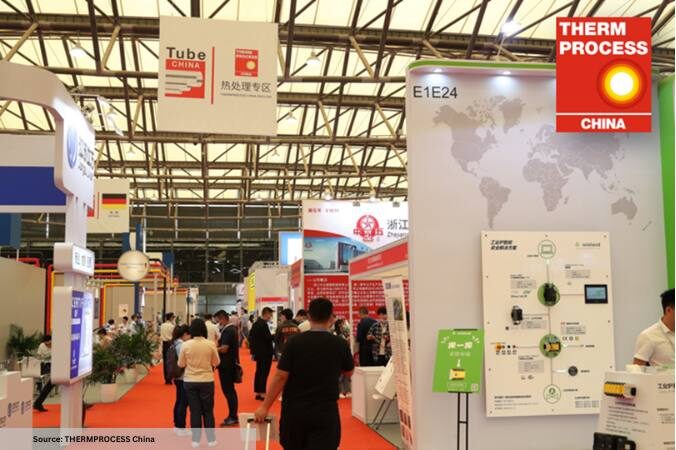
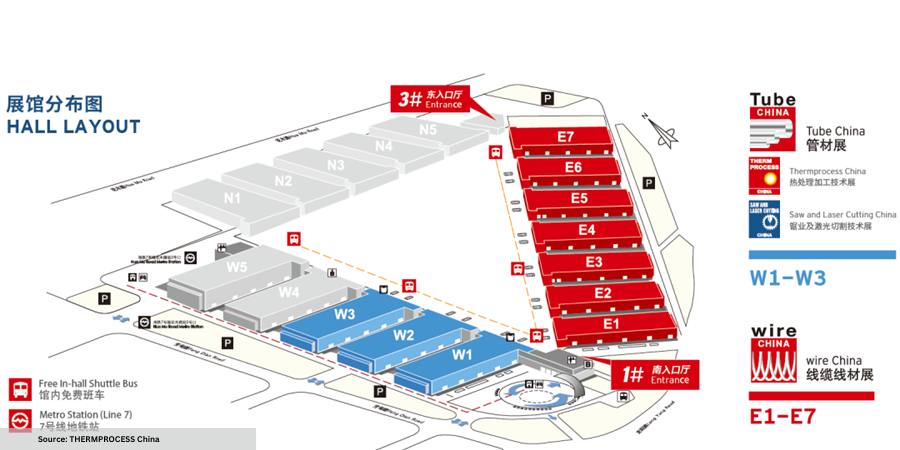
Depending on the excellent reputation and international acclaim of the “Heat Treatment” theme within the Düsseldorf GMTN (GIFA, METEC, THERMPROCESS and NEWCAST), as well as the strong support from domestic industry associations, this year, the organizers upgrade the Thermprocess China Pavilion which was held at Tube China 2023.
Holding Thermprocess China aims to provide a solid communication bridge for heat treatment system and equipment suppliers from all over the world.
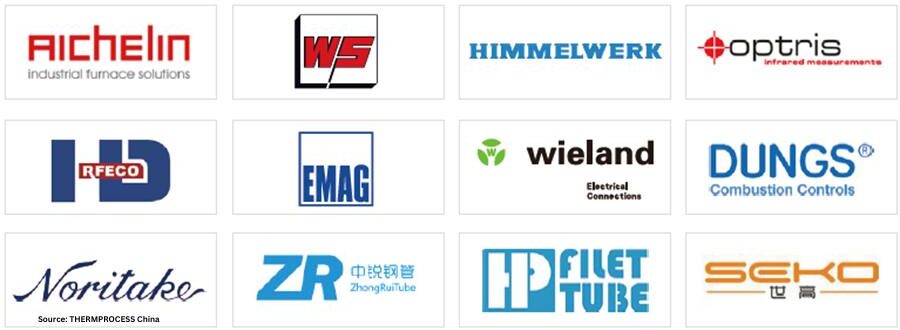
▼ Only part of exhibitors are listed, ranking in random
Beginnings and endings often come together. As we prepare to begin a new year next month, we want to pause to remember a few lives that came to an end. Although the following are by no means the only important endings,Heat Treat Todaywould like to honor the memory of the following individuals who left their mark in the heat treating world.
This article first appeared in Heat TreatToday’sDecember 2023 Medical and Energy print edition. Feel free to contact Bethany Leone at bethany@heattreattoday.com if you have a question, comment, or any editorial contribution you’d like to submit.
Scott Hoensheid, Commercial Steel Treating Corp. (c. 1959–2022)
Scott Hoensheid retired as the president of Commercial Steel Corp., a commercial heat treater based in Highland, MI. As president of Commercial Steel Corp. since 1979, he served the heat treating industry diligently for over 40 years. He leaves behind his wife, Anne, and two children, Allison (John) VanHaverbeke and Katherine Hoensheid.
(Source: dignitymemorial.com)
John “Jack” Marino, Hauck Manufacturing and Denton Corporation (c. 1938–2023)
Well-known as a capable educator through several online IHEA courses, Jack Marino was an industry expert with more than 40 years of experience in the heat treating industry. Jack became the president of not one, but two companies: Denton Corporation and Hauck Manufacturing. Throughout his career, he obtained six U.S. patents in combustion technology and was the author of Ok, You’re a New Executive. Now What? Jack leaves behind his wife, Jean, and six children.
Clint Ooten was an incredible resource to Bluewater Thermal Solutions where he used his background in human resources for skillful team building and management. Included in Clint’s impressive background were four years as an HR director at GE. He began his time at Bluewater Thermal Solutions as the director of HR, and later went on to become the President — Industrials. Surviving Clint are his three daughters.
(Source: cannonbyrd.com)
Ross Pritchard, VAC AERO (c. 1929–2023)
Ross Pritchard began his career in the heat treating industry with a metallurgical engineering degree. In 1959, Ross founded VAC AERO International, Inc., a provider of vacuum furnaces and a source of excellent technical content for those in the industry. Ross led the company through building new plants, expanding the workforce from two employees to 200+, and continually keeping up with the changing technology of the industry. He is survived by his three daughters.
(Source: Tribute Archive.com)
David Pye, Pye Metallurgical International Consulting (c. 1939–2023)
David Pye was the founder of Pye Metallurgical International Consulting, a company he began after years of practical experience in the heat treating industry, both in commercial and in-house environments. At the end of his life, David had amassed over 45 years of metallurgical consulting, and therefore helped countless clients and friends throughout the industry, both in the U.S. and in the U.K. David was skilled not only in technical sales but also in metallurgical laboratory processes. He passed away on June 12, 2023, in Virginia.
(Source: Industrial Heating.com)
William Edward Terlop, Sr., Jackson Transformer (c. 1938–2023)
William (Bill) Terlop was part of the induction heating industry for over 68 years. Bill became both a friend and mentor to many others in the industry, always willing to share knowledge and advice on transformers and magnetics. His career in the industry began when he was a young man working for a company; through his R&D, Bill grew their magnetics products division. He later purchased this division in 1986, creating Jackson Transformer Company. Everyone at the company is proud to honor Bill by carrying on his legacy.
(Source: trinitymemorial.com)
James Joseph Van Etten, Alhern-Martin Industrial Furnace Company (c. 1944–2023)
The owner of Alhern-Martin Industrial Furnace Company for over 40 years, James Van Etten was dedicated to the heat treating industry and leveraged his knowledge and expertise to help clients with their equipment needs. His dedication grew the business to be the dynamic company it is today. James is survived by his wife, Sandra, and his children, Julie and James. His son is currently the vice president of Alhern-Martin Industrial Furnace Company.
(Source: detroitnews.com)
Find Heat Treating Products and Services When You Search on Heat Treat Buyers Guide.com
The race to space is in full swing with public and private sector companies staking their claim in this new frontier. And breakthroughs in technology and materials offer the potential to propel humanity to unprecedented distances. Success hinges not only on the ability to discover novel solutions but also on the capacity to prepare those solutions for efficient, large-scale production.
ThisTechnical Tuesdayarticle by Noel Brady of Paulo was originally published inHeat Treat Today’sMarch/April 2024 Aerospaceprint edition.
Space Today: Making Life on Earth Better, Safer, and More Connected
Noel Brady, Metallurgical Engineer, Paulo Source: Paulo
According to NASA, 95% of space missions in the next decade will stay in low Earth orbit (LEO) and geostationary orbit (GEO). Th at means the first wave of commercial activity in space will be largely focused on making life on Earth better.
Several worldwide broadband satellites are already in orbit, offering more consistent, reliable internet signals around the globe. Defense campaigns are using advanced satellite machine learning to improve asteroid and missile detection, along with revolutionary laser technology that has made intersatellite communication possible for the first time — and the travel of information faster. And to help make life in space safe and successful, NASA is developing a scalable network of public GPS receivers for easy, short-range space navigation and tourism.
All this to say, parts are being developed for a wide range of applications, a huge portion of which are being additively manufactured.
Thermal Processing Standards Necessary for AM Adoption
However promising additive manufacturing is for space, the adoption of AM has still been limited due to the lack of standards for proprietary material and 3D printing applications. Many thermal processing experts are joining research institutions and OEMs in the drive to bring AM into mainstream manufacturing with new industry standards and production-ready solutions that help achieve ROI.
The R&D process for discovering these standards can be lengthy and expensive because it requires trial and error. A prototype or small run of parts must be manufactured, then heat treated, and tested for the desired properties. If a test part’s yield strength is not where it should be, for example, then the heat treating recipe is adjusted, perhaps by lowering the temperature and increasing the pressure, and can be tested again on a new batch of parts.
Coach vs. Custom Cycles
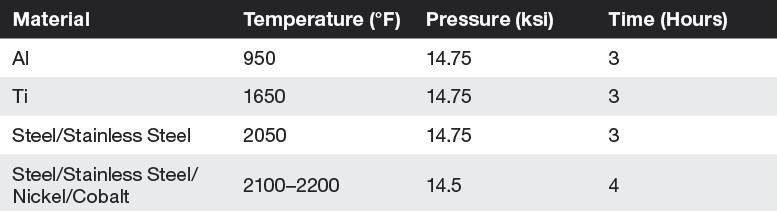
In heat treating, there are two different types of cycles, and it’s important to know the difference when you’re working with any commercial heat treater. Coach cycles tend to be more economical because these are shared cycles — existing recipes that are in high demand and run on a regular schedule — with the potential to have multiple clients’ parts in the furnace at once. For example, a heat treater may have a standard titanium coach cycle they run once a day. See Table A for several coach cycles run at Paulo.
Table A. Example of Coach Cycles for Space Alloys
Coach cycles use recipes that were designed for cast parts and have been around since before additive was a viable form of manufacturing. While it’s true that cast parts and AM parts have similarities, such as their high porosity, it doesn’t mean that the recipes are optimal for preparing today’s parts for heavy space applications. That’s where custom cycles come into play.
Custom cycles are ideal for new or proprietary materials that don’t yet have recipes defined or that are not commonly heat treated enough to run on a regular schedule. The distinction between the two is important because not all heat treaters are equipped to run both types. While you may be able to find a coach recipe that gets you close to where you need to be, it certainly may not be optimal, especially for parts that will have a heavy life of service.
Heat treaters with flexibility of custom and coach cycles, along with full-cycle data reporting, offer a high level of control that is vital for helping the industry progress and scale for production. This is also a big reason why some in-house heat treating operations may choose to outsource some of their work: first collaborating with experienced commercial heat treaters to prove the specification for a new part with custom cycles before scaling for production.
Common Cycle Adjustments for AM
There are five primary parameters that can be adjusted in the heat treating of AM parts to achieve the desired results: temperature, pressure, time, cooling rate, and heating rate. For AM parts, adjustments to the temperature and pressure are a go-to for achieving parts with higher yield strength. For example, running a cycle 50°F cooler, but at 5 ksi higher pressure may yield better results.
There may also be certain heating ramp rates and intermediate holds before parts get to the max temperature, to allow for consistent heating and enhance the material properties. The same goes for the cooling process: controlling the rate at which a part cools with specific holding times and intermediate quenches.
Hot Isostatic Pressing, Space, and Additive Manufacturing
Hot isostatic pressing (HIP) combines high temperature and pressure to improve a part’s mechanical properties and performance at extreme temperatures. The sealed HIP vessel provides uniform pressure to bring parts to 100% theoretical density with minimal distortion. The high level of control and uniformity has made HIP the gold standard for AM parts for space.
Similar to cast parts, 3D-printed materials tend to have porous microstructures that can compromise part performance. HIP is the only process that’s able to eliminate these pores without compromising the complex geometries and near-net dimensions that are achieved in the printing process.
Benefits of HIP for space parts include the following:
Better fatigue resistance
Greater resistance to impact, wear, and abrasion
Improved ductility
For this process, Paulo’s Cleveland division is equipped with a Quintus QIH-122 HIP vessel, which is specially modified with additional thermocouples for more precise temperature control and greater data collection. A higher level of accuracy allows us to iterate with confidence and find an efficient path to production-ready development.
One primary benefit of the Quintus QIH-122 HIP is the ability to have faster cooling at a controlled rate, which allows you to heat treat and solution treat in one furnace. This cooling rate allows great efficiency that cannot be seen with other HIP vessels on the market.
It is critical that heat treaters adapt to meet the needs of this fast-evolving industry. Many commercial heat treaters do not yet have the level of data or dynamic cycle offerings necessary and will only run HIP coach cycles with set parameters. In other words, many are not equipped to economically iterate and adapt heat treating recipes for new parts. Without custom cycles, controlled cooling, and a higher level of data, it is impossible to push the boundaries of what’s possible.
Space Parts Requiring Thermal Processing
The future of space travel requires parts that can not only perform under high levels of mechanical pressure and extreme temperatures but are also durable enough for long-range and repeat missions. Heat treatment is a critical step in preparing rocket engine components, among others, for commission. Other space components commonly heat treat treated are:
Volutes
Turbine manifolds
Bearing housings
Fuel inlets
Housings, support housings
Bearing supports
Turbo components
Since the inception of NASA’s Space Shuttle Program, Paulo has treated integral components for launch and propulsion, along with many parts currently in orbit on the International Space Station.
Materials Used in Space Parts
New materials and applications are being explored every day. Proprietary alloy blends bring unique properties and promising potential in the push for stronger, faster, longer-lasting parts. But with unique properties comes the need for unique heat treating processes. Several high-performance superalloys used for space include:
Inconel 718, 625
Titanium (Ti-6Al-4V)
Hastelloy C22
Haynes 214, 282
GRCop Copper
Inconel 718, a championed space alloy, was originally used as a premier casting material before being adopted for AM. This nickel-based material features an extremely high tensile and yield strength that makes it ideal for components taking on a high mechanical load in extreme environments ranging from combustive to cryogenic — making this a natural material to adopt for space in the early days of 3D printing.
Because casting and 3D printing both result in similar porous microstructures, the heat treating process used for Inconel castings could also be adapted. Finding new opportunities within existing alloys like this is a highly efficient way to gain material advantage in today’s race to space.
Noel joined Paulo in 2011 and spent several years as quality manager before stepping into his current role as a metallurgical engineer. Noel holds a bachelor’s degree in engineering and metallurgy materials science, and he is responsible for thermal process development and hot isostatic pressing process development.
For more information: Contact Noel Brady at nbrady@paulo.com or visit this link to download the full space guide from Paulo.
Find Heat Treating Products And Services When You Search On Heat Treat Buyers Guide.Com
Heat Treat Today publishes eight print magazines a year, and included in each is a letter from the publisher, Doug Glenn. This letter first appeared in the January/February 2024 Air & Atmosphere Heat Treatprint edition.
On the evening of October 11, 2023, at the El Conquistador Resort in Tucson, Arizona, a crowd of roughly 300 individuals associated with the Metal Treating Institute experienced something I’m quite sure NO ONE in the room had ever experienced before. Following that evening’s gala dinner event, Mr. Wally Bamford (more about Wally below) addressed the crowd with a few remembrances and thoughts on the over 50 years he has spent in the North American heat treating industry and then announced to the crowd that he and his wife Betty were establishing a $1,000,000.00 scholarship fund to be administered by the Metal Treating Institute’s Educational Foundation.
In typical Wally Bamford style, Wally tacked on the word “Canadian” (as if to minimize the amount!) after wowing the crowd with “one million.” This resulted in both a roaring round of applause mixed with sprinkles of laughter for Wally’s characteristic humility and humor. The smile on Wally’s face was so genuinely happy.
Wally Bamford donating $1,000,000.00 CN at the 2023 MTI Fall Meeting (Source: MTI)
What a great guy! Even before this exceptionally generous donation, Wally was known to be one of the most kind, gracious, and generous individuals in the industry. He and Betty were one of the first people my wife Mary and I met when we first entered the industry back in 1994. The four of us, along with two other couples, went hiking in the mountains near Whistler, British Columbia, on one of the free afternoons of an industry annual meeting. It was a memorable time not only for the beauty of the scenery but also for the kindness and impressive physical fitness of both Wally and Betty. Consistently, from hat day forward, Wally and Betty have been stalwarts in the industry — always kind, always interested in other people.
For those who don’t know Wally, he is now in his late 80s or early 90s and was the founder of Can-Eng Furnaces International Ltd. He’s been involved with a variety of commercial heat treating ventures as well as high-temperature furnace manufacturer, Harper International. His list of accomplishments is too long to list here but suffice it to say that Wally is a true heat treat legend and a genuinely nice person.
Buster Crossley, of Texas Heat Treating in Austin, Texas, is the current president of the MTI Educational Foundation. Along with Tom Morrison (CEO of MTI) and me (the current treasurer of the Foundation), he gratefully and humbly received Wally’s very generous donation. According to Mr. Crossley, the donation and earnings from the donation will be used over the next 10 years to establish a strong and lasting scholarship program to be administered by the Foundation.
The North American heat treating industry is a better place with Wally and Betty Bamford. Everyone affected would like to say a HUGE thank you to both of them for their exceptionally generous donation.
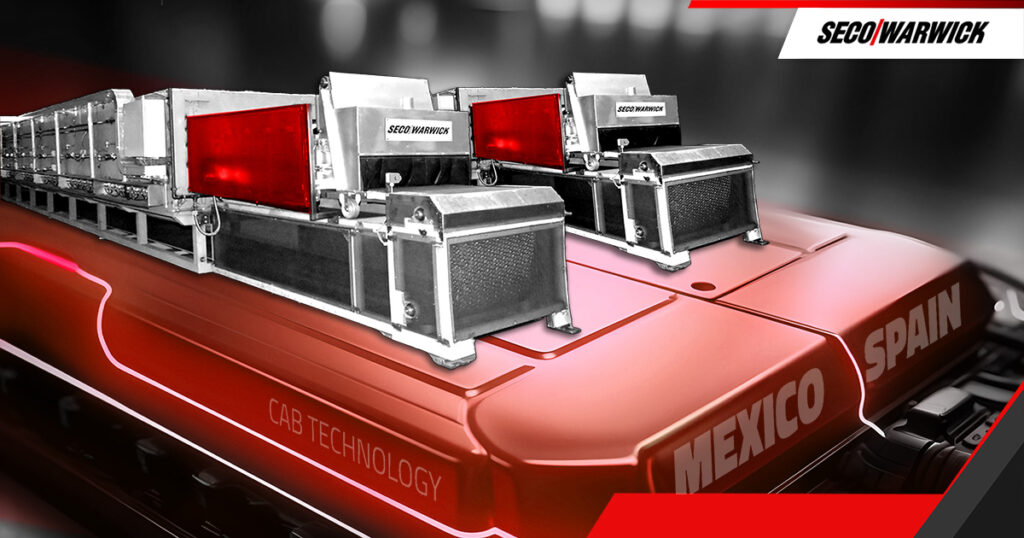
A heat treat furnace manufacturer with North American locations will provide an American partner with two identical continuous CAB lines for brazing aluminum heat exchangers, specifically battery coolers. The furnaces will be used in Mexico and Spain.
The SECO CAB lines will be used for protective atmosphere brazing aluminum of heat exchangers. Such solutions are used by leading automotive parts manufacturers and are used for mass production of battery coolers among other types of heat exchangers. This purchase was preceded by tests in the R&D laboratory.
Piotr Skarbiński, Vice President of Aluminum and CAB Product Segments, SECO/WARWICK Group (photo source: secowarwick.com)
“The purchased CAB lines,” explained Piotr Skarbiński, VP of Aluminum and CAB Product Segments, SECO/WARWICK Group, “will be the first solutions of this type in the customer’s factories.”
This press release is available in its original form here.
Find Heat Treating Products and Services When You Search on Heat Treat Buyers Guide.com
Welcome to Heat Treat Today’sThis Week in Heat Treat Social Media. We’re looking at some compelling developments in aviation manufacturing, sharing a few metallurgy quizzes, and of course, bringing some fun, social heat treat videos to you.
As you know, there is so much content available on the web that it’s next to impossible to sift through all of the articles and posts that flood our inboxes and notifications on a daily basis. So, Heat Treat Today is here to bring you the latest in compelling, inspiring, and entertaining heat treat news from the different social media venues that you’ve just got to see and read!If you have content that everyone has to see, please send the link to editor@heattreattoday.com.
1. The Power of Engineering vs. Gravity
We usually like to share something rich and technical, but check out this compelling video of dual F119 engines powering an F-22 in an attack maneuver.! “F-22 with a combat capacity of; 1× 20 mm M61A2 Vulcan rotary cannon, 6× AIM-120C/D AMRAAM or 4× AIM-120A/B AMRAAM 2× AIM-9M/X Sidewinder, 2× 1,000 lb (450 kg) JDAM or 8× 250 lb (110 kg) GBU-39 SDB, 4× under-wing pylon stations can be fitted to carry weapons, each with a capacity of 5,000 lb (2,270 kg) or 600 U.S. gallon (2,270 L) drop tanks”
2. It’s a Beautiful Day in the Heat Treat Neighborhood
What’s everyone been up to on the social channels?
Gamifying Quality?? Count Us In!
Marking Milestones
When Precision Meets Creativity
3. Learn with Us – 3 Quick Visuals
Sometimes, it’s the small things on social media that grab your attention or give you the “ah ha!” moment. Do any of these short posts make you say “eureka”?
Rotate Rotate Rotate Rotate. . .
Spring is Here, depending on the Temperature
Quiz Time
4. Open Your Ears: The Podcast Corner
You can’t read everything, we get it. Heat Treat Today is here to recommend one informative podcast to enjoy on your daily commute, suggest a quick video on laser heat treating, and put a comprehensive article on surface treatments for automotive on your radar!
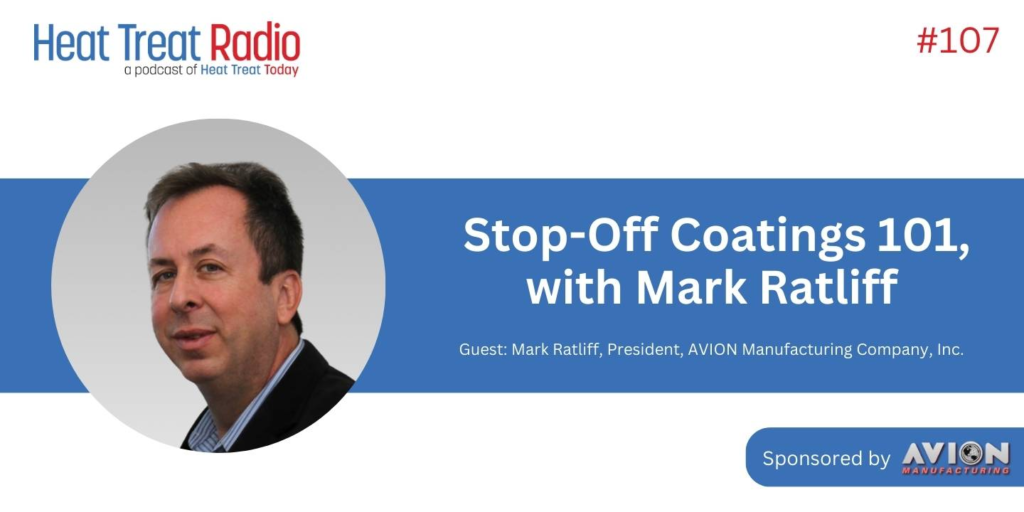
Tune in to Listen to Heat Treat Radio #107! Not Your Average Painting Class
The “Dougs” Talk
a Brazing Celebrity
5. Post-March Madness
Ever wonder the manufacturing processes behind the jump shots? Take March Manufacturing Madness: The Quiz below!
Have a great weekend!
Find Heat Treating Products and Services When You Search on Heat Treat Buyers Guide.com