An aerospace company has made a contract with Lockheed Martin to provide critical components of NASA’s spacecraft. Collins Aerospace Systems, a unit of United Technologies Corp., has obtained a contract with Lockheed Martin to provide critical subsystems to produce NASA’s Orion spacecraft fleet for Artemis missions III through VIII. The systems Collins Aerospace is providing will play an important role in enabling NASA’s goal of boots on the moon by 2024 and establish a sustained presence on and around the moon to prepare for missions to Mars.
Kevin Raftery, VP and general manager of ISR and Space Solutions, Collins Aerospace.
“We’ve been providing life-sustaining solutions for space for 50 years, and we’re proud to be working with Lockheed Martin and NASA to enable decades of future exploration to the moon, Mars, and beyond,” said Kevin Raftery, vice president and general manager, ISR and Space Solutions for Collins Aerospace.
Work for the Orion systems will be performed at Collins Aerospace facilities in Connecticut, Texas, Illinois, and California.
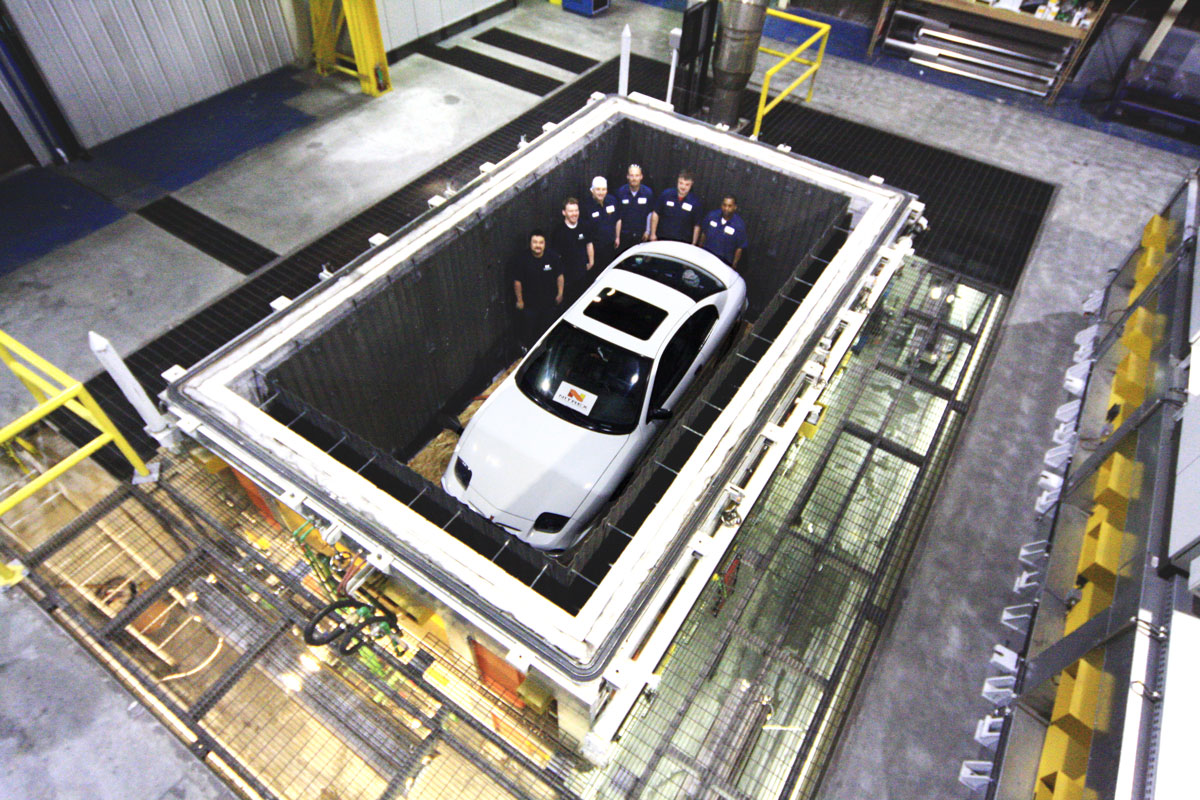
A Hauck HT plant located in the Netherlands recently received a unique high vacuum furnace. The all-metal high vacuum furnace from SECO/WARWICK with the working chamber size of 47.2″ x 47.2″ x 78.7″ was delivered to Hauck’s newly expanded plant in Eindhoven. At the same time, it is the largest furnace of that type currently in operation in that region.
According to Marcus Wendel, Hauck Heat Treatment Executive Director, “The all-metal vacuum furnace with diffusion pump was designed to achieve high vacuum conditions and ensure the highest possible purity of the heat treated parts. Accordingly, we had some special requirements regarding used components and solutions. All have been implemented by SECO/WARWICK.”
Sławomir Woźniak CEO SECO/WARWICK
Sławomir Woźniak, SECO/WARWICK Group CEO, also commented, “From the very beginning, our company philosophy has been based on meeting the highest expectations of product and technology development for our customers, including first class organizations such as Hauck Heat Treatment Group. This partnership proves that knowledge and experience are not just empty marketing slogans, but valuable features in business.”
This was the third furnace delivered there, and the two companies are discussing next steps together.
A Polish leader in automobile parts manufacturing recently completed the installation of a nitriding system at the manufacturing facility in its namesake city in southeastern Poland. FA Krosno is one of the largest players in the European gas springs market, supplying manufacturers of commercial vehicles and agricultural equipment such as Fiat SpA, Scania AB, MAN SE, and AGCO.
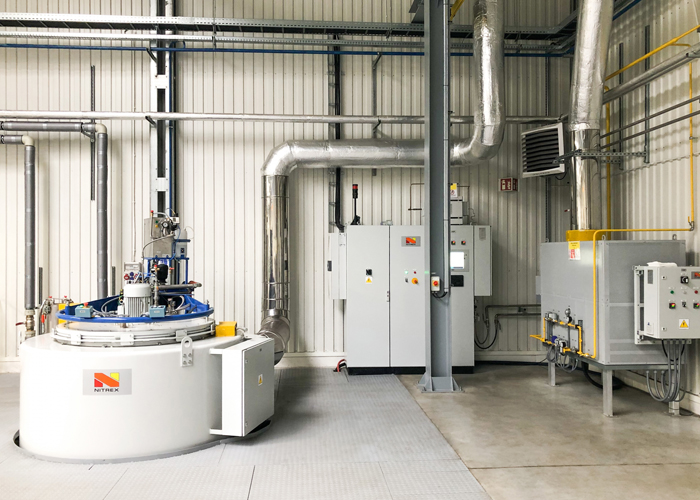
FA Krosno’s new Nitrex nitriding system
Nitrex Metal completed the installation of the nitriding system. Marcin Stoklosa, Special Projects Manager of Nitrex Metal, stated “Where collaborating suppliers are concerned, FA Krosno places strict technical, quality, process, and environmental demands on suppliers. We are extremely proud to count ourselves among the company’s preferred suppliers. Nitrex nitriding technologies were recognized as the best performing and best suited to the application’s requirements. Results from various metallurgical and mechanical tests conducted on the nitrided piston rods confirmed that the desired thickness of the white layer, the oxide thickness of the white layer, corrosion resistance, as well as the appropriate roughness were consistently obtained after Nitreg® nitriding and was maintained even after subsequent finishing operations.”
Over the last several years, FA Krosno and Nitrex have collaborated in an attempt to improve the durability of piston rods in gas spring assemblies of passenger vehicles. Production with the new system started in December 2019.
Photo Credits: Nitrex
This photo of a large size gas nitriding/nitrocarburizing furnace from Nitrex was not included in the original realease of this purchase by by FA Krosno.
A modern airplane’s fuselage is composed of multiple sheets of different materials, not unlike a phyllo dough pastry. Once these layers are stacked and molded into the shape of a fuselage, they are transferred into warehouse-sized ovens and autoclaves, where the layers fuse together to form a resilient, aerodynamic shell.
MIT engineers have now developed a method to produce the same high level of composites without the enormous ovens. This discovery may speed up the manufacturing of airplanes and other large, high-performance composite structures.
In this HTT Best of the Web Technical Tuesday feature, Design and Development Today introduces us to carbon nanotubes, their usefulness in potentially taking airplane manufacturing to new heights, and what the future of the research surrounding this discovery looks like.
Brian Wardle, professor of aeronautics and astronautics at MIT
An excerpt: “‘If you’re making a primary structure like a fuselage or wing, you need to build a pressure vessel, or autoclave, the size of a two- or three-story building, which itself requires time and money to pressurize,’ says Brian Wardle, professor of aeronautics and astronautics at MIT. ‘These things are massive pieces of infrastructure. Now we can make primary structure materials without autoclave pressure, so we can get rid of all that infrastructure.'”
A Canadian additive manufacturing powder producer, in partnership with McGill University in Montreal, has announced the results of a research project on its aluminum alloy powders. Extensive testing undertaken by the university has revealed that the Equispheres’ powders are suitable for sintering with binder jet 3D printing technology. Equispheres claims that the combination of binder jet 3D printing with aluminum alloy powder can have a significant impact on the automotive industry.
Dr. Mathieu Brochu, Associate Professor at McGill
“We are excited to begin work with Equispheres’ binder jet printing partners in the next phase to fully understand all aspects related to sintering of complex shape components and the fundamental relations with new specialized binder agents,” said Dr. Mathieu Brochu, Associate Professor at McGill and Canada Research Chair in Pulse Processing of Nanostructured Materials.
Equispheres has developed a method of powder atomization that creates spherical metal powders. On the strength of its proprietary technology, Equispheres has previously received a $5 million investment from American global aerospace and defense company Lockheed Martin. The company also received an $8 million investment from early stage and SME financing bank BDC Capital, due to its focus on the environmental advantages of 3D printing.
Currently, Equispheres is collaborating with key partners to develop specialized binder agents that are required for aluminum and for specific automotive applications.
Heat Treat Today offers News Chatter, a feature highlighting representative moves, transactions, and kudos from around the industry.
Personnel & Company Chatter
Mike Smith has joined Magnetic Specialties, Inc. as their new Business Development Manager.
Ipsen USA has announced the completion of its 2019 Corporate Academy class, which is part of an initiative to grow service capacity globally. Seven graduates will step into positions as field service engineers after several months of training and passing their final exam.
Tom Gundic recently joined Solar Atmospheres’ facility in Greenville, South Carolina, as their new plant manager.
Isostatic Toll Services Bilbao is pleased to announce the official opening of its new plant in Abanto-Zierbena, Spain, on January 29th.
Heating Furnace at Uddeholm AB, which is taking part in the electrical heating project
The Swedish Energy Agency has granted a new project that will explore the possibilities of electrifying heating processes. It will evaluate the potential of replacing gas-fired furnaces with electrically heated furnaces for material heating. Kanthal, part of the Sandvik Group, is taking part in the project.
Sean Toland has taken on the position of executive Vice President of Operations for Wire Experts Group, the parent company to Pelican Wire and Rubadue Wire, the second of which Toland is already serving as president.
NSA Industries, a provider of metal fabrication, machining, powder coating, and assembly operation, has acquired VitexExtrusion, a provider of aluminum extrusions, machining, and fabrication services for solar and automobile customers.
Jon K. Tabor is retiring from the position of Chairman Emeritus of Allied Mineral Products effective March 31, 2020. He will remain on Allied’s Board of Directors.
Vincent Esteve has been promoted to Business Development Manager at the ECM USA, Inc. subsidiary in Pleasant Prairie, Wisconsin.
Mike Smith, Business Development Manager, Magnetic Energies, Inc.
Tom Gundic, Plant Manager, Solar Atmospheres
Sean Toland, Executive Vice President of Operations, Wire Experts Group
Vincent Esteve, Business Development Manager, ECM USA
Jon K. Tabor, Chairman Emeritus, Allied Mineral Products
Equipment Chatter
Wisconsin Oven has shipped a Natural Gas (Direct) Fired Continuous Duty Conveyor Oven to an American manufacturer to be used for stress relieving steel snap rings used in automotive parts.
L&L Special Furnace Co, Inc. has shipped five model GS1714 furnaces to a worldwide leading manufacturer of chemicals and chemical coating products located in the Midwestern US.
Tenova LOI Thermprocess recently received an order from Joint Stock Company Pervouralsk Pipe Plant in Russia for a new roller hearth continuous furnace system for bright annealing stainless steel pipes in a 100% H2 atmosphere.
Lindberg/MPH announced the shipment of two Electrically Heated Nitrogen Atmosphere Pit Furnaces to the automotive industry for the purpose of heat treating automotive parts.
Natural Gas (Direct) Fired Continuous Duty Conveyor Oven
GS1714 Bench mounted box furnace
Roller hearth continuous furnace system
Electrically heated atmosphere pit furnace
Kudos Chatter
Kittyhawk Products OR LLC has been awarded Nadcap® accreditation for Heat Treating/Hot Isostatic Pressing (HIP). Kittyhawk Inc has held Nadcap® accreditation since 2014.
From Left to Right: Quality manager, AM/NS Calvert, Bobbie Hesley; GM supplier quality engineer, Mark Wu; AM/NS Calvert CEO, Jorge Oliveira and team members from the AM/NS hot dip galvanizing lines.
ArcelorMittal USA was recently honored with the General Motors Supplier Quality Excellence Award for three production facilities: AM/NS Calvert, Calvert, AL; Indiana Harbor; and I/N Tek and I/N Kote, New Carlisle, IN.
Heat Treat Today is pleased to join in the announcements of growth and achievement throughout the industry by highlighting them here on our News Chatter page. Please send any information you feel may be of interest to manufacturers with in-house heat treat departments especially in the aerospace, automotive, medical, and energy sectors to editor@heattreattoday.com
Welcome to another episode of Heat Treat Radio,a periodic podcast where Heat Treat Radio host, Doug Glenn, discusses cutting-edge topics with industry-leading personalities. Below, you can either listen to the podcast by clicking on the audio play button, or you can read an edited version of the transcript. To see a complete list of other Heat Treat Radio episodes, click here.
Audio: A Discussion with David Wolff, Nel Hydrogen, Part 1
In this conversation, Heat Treat Radio host, Doug Glenn, engages Nel Hydrogen Heat Treat Manager David Wolff in a conversation about hydrogen generation and its purposes. Find out more about what hydrogen is best used for, what hydrogen can do for your company, why hydrogen is preferred to nitrogen, and how to safely use it to the best effect.
Click the play button below to listen.
Transcript: A Discussion with David Wolff, Nel Hydrogen, Part 1
The following transcript has been edited for your reading enjoyment.
Doug Glenn (DG): We're here today with David Wolff from Nel Hydrogen and we're going to be talking a bit about on-site hydrogen generation. This really has come about because of an eBook that David and one of his colleagues, a gentleman by the name of Chris Van Name, and Heat Treat Today worked on together. The eBook was based on a presentation that you gave at FNA 2018.
Dave Wolff (DW): You're correct. The eBook was based on the FNA (Furnaces North America). I did an expansion on it for Fabtech 2019.
DG: I want our readers to know you before we jump into the content of the book. If you don't mind, Dave, would you just give us your name, rank, serial number, etc.
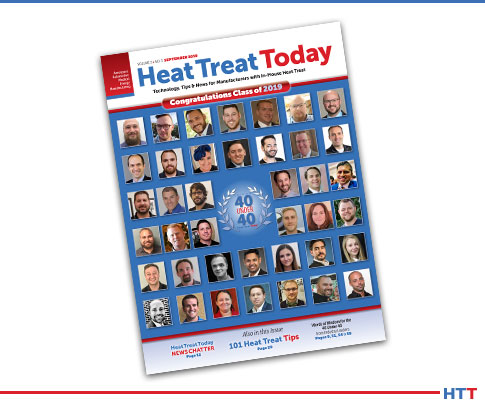
This Heat Treat Radioepisode/transcript is based on the e-book shown above. Click on the image above if you'd like to get your own download this 18-page e-book.
DW: I've been in the industrial gas industry for my whole career, (hard to believe), going well over 40 years now. I've been a little over 20 years at Nel Hydrogen. Before we were called Nel, we were called Proton Onsite. I joined relatively early in Proton's history. Proton was begun in order to commercialize attractively cost on-site hydrogen using water electrolysis. I found that incredibly exciting, as I came from the industrial gas industry, and I witnessed first hand the importance of having cost effective access to hydrogen in order to succeed in materials processing. Prior to Proton, I was with Messer, who is now back in the United States; and I was with Air Products for about 13 years prior to my time with Messer.
DG: So you've spent, let's say, 40 years in the industrial gases industry and most recently, and a good bulk of that time, with what was called Proton Onsite, now called Nel Hydrogen. For our reader's sake, Nel in the US is headquartered out of New England?
DW: Yes. Nel, in the US is headquartered in Wallingford, Connecticut, which was where Proton was based. Nel's worldwide corporate headquarters is in Norway. Nel is a corporation related to the historical Norsk Hydro, which has been around since 1927 and involved with water electrolysis since the early 20's.
DG:So today we want to talk about hydrogen, but we're going to talk specifically about on-site hydrogen generation. But before
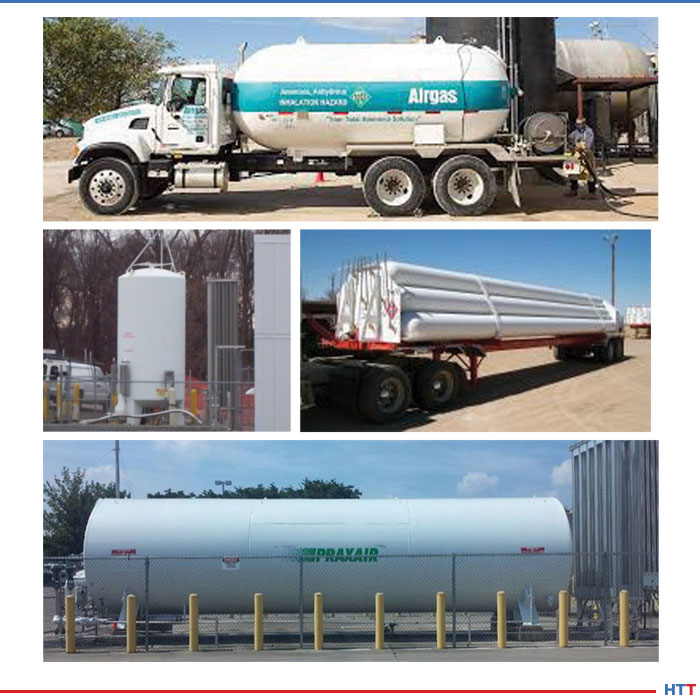
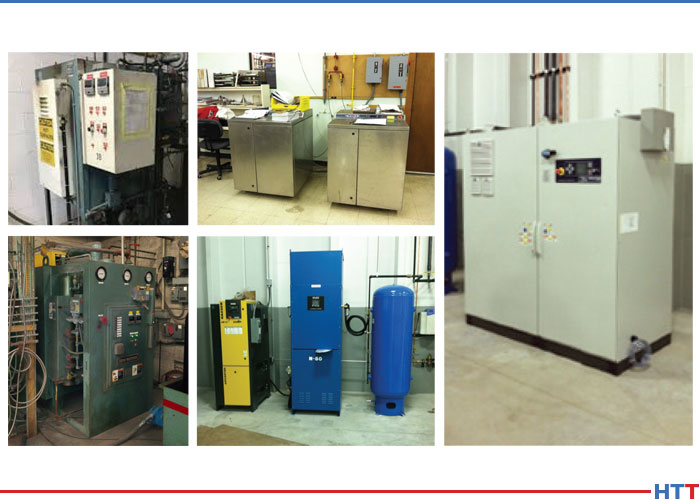
Delivered atmosphere options
we get there, if you don't mind Dave, give us a quick rundown on just the role of hydrogen in your normal, typical heat treat process. What does hydrogen do for us?
DW: You start with the fact that hydrogen is a reducing gas, which means that it can prevent or even reverse oxidation. For example, you can put oxidized parts through a hydrogen atmosphere furnace and they'll come out the other end, say if it's a belt furnace, bright and shiny. At the elevated temperatures used in metal thermal processing (heat treating), the rate of oxidation is increased, so you have to protect the metal so that it doesn't discolor from oxidation. And more concerning, oxidation will interfere with braze material flow in brazing and will prevent proper sintering of powder metal fabricated parts, so oxidation is a real problem in thermal processing.
DG: Right. So the reason of the brazing and whatnot is because of contamination on the surfaces, right? You don't get a solid braze or a solid sinter.
DW: Exactly. Now hydrogen is not the only reducing gas. CO (carbon monoxide) can also be used. But CO is highly toxic, so it is not routinely used, except if it's created incidentally in the process of making endo or exo gas.
Some people wonder why nitrogen alone is not sufficient as a heat treating atmosphere. It's inert, right? But it's essentially impossible to flow enough nitrogen through an atmosphere furnace to eliminate all of the oxygen molecules. And if you did try to flow that much nitrogen through the furnace, you would rob all of the heat out of the furnace. So the attractiveness about hydrogen is it grabs and immobilizes the stray oxygen molecules preventing oxidation but still enables you to manage the flow rate in your furnace.
DG: There are some vacuum furnace heat treaters who place a piece of metal or some substance inside of their furnace (they call it a 'getter'), which basically attracts those undesirable elements out of the atmosphere. In a sense, hydrogen (not exactly, but in a sense) can be kind of that 'getter' that goes and 'gets,' if you will, the oxygen pulls it out of that atmosphere, where nitrogen you have to be pushing it out. You'd have to be putting so much nitrogen through, you still might not get rid of all of the oxygen, whereas if you have some hydrogen, it pulls it out.
DW: You're exactly right. The hydrogen acts as a chemical 'getter' and so it's analogous. A couple of other things I should mention. In addition to its role as a reducing gas to prevent or reverse oxidation, hydrogen has the highest heat conductivity of any gas. So the high heat conductivity of hydrogen means that parts heat up faster in a hydrogen containing atmosphere, and they cool off faster too. The high heat conductivity allows for higher productivity by faster cycles in batch heat treating and faster transport speed through continuous furnaces likes belts and pushers. Parts heat up fast and they cool down quickly. The alternative, if you have lower hydrogen content in your atmospheres, is longer furnaces, slower belt speeds, or longer back furnace cycles.
DG: Coefficient heat transfer hydrogen is the best for pulling heat out or putting heat in, so you're looking at process efficiencies there as well.
DW: Productivity. One final thing. While vacuum furnaces are widely used and yield terrific results, a vacuum furnace creates an inert atmosphere, not a reducing atmosphere. So a high vacuum furnace can prevent oxidation, but typically not reverse it. So in many cases, a wisp of hydrogen is often used to create a partial pressure hydrogen atmosphere in vacuum furnaces. For example, for powder metallurgy, you enhance the sintering by reducing the surface oxidation on the powder particles.
DG: We've hit on what hydrogen can do, and I think we've already hit on this next question, which is the typical heat treat processes. Brazing you've mentioned, sintering you've mentioned; what else would we typically use a hydrogen atmosphere for?
DW: Let's start with making sure that people are aware that hydrogen is used only in furnaces which are designed for hydrogen
Atmosphere generation systems
atmosphere. They have to have the right flow path, they have to have electrical parts and safety systems such as flame curtains, which are expressly designed to safely use hydrogen. Also, and importantly, the newest thermal processing equipment is highly automated for safe use of hydrogen. While hydrogen can be used safely in older equipment that is also designed to use hydrogen, it's important to follow procedures which are specifically designed around hydrogen use. So those are key considerations.
DG: I think we ought to emphasize the caveat that you're issuing. Hydrogen does have its issues, and we need to be careful with the use of hydrogen. So don't just go throw hydrogen into your furnace. It is very, very important that the safety concerns be followed.
DW: So hydrogen is used to provide atmospheres for processes like annealing, brazing, glass metal sealing and all types of sintering including PM, MIM, and AM. Hydrogen is also widely used for processing magnetic materials, motor laminations and things like that. Keep in mind that both synthetic or blended atmospheres and also generated -- and by "generated" we typically refer to exo, endo and DA (dissociated ammonia) -- those atmospheres contain hydrogen as the primary reducing gas. As I mentioned earlier, exo and endo gas also contain CO, which is also a reducing gas, and exo and endo are often used in atmospheres for hardening. Typically you don't use a pure hydrogen atmosphere for that because that will tend to soften your parts.
DG: We've covered some of the processes that are involved, and you've alluded to this Dave, but let's flesh this out a little bit
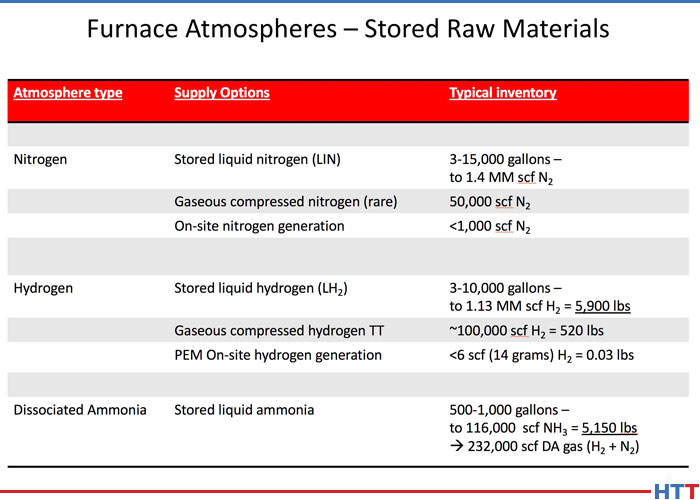
Stored atmosphere raw materials by the numbers
more--we don't often use hydrogen alone. Often it is used as one component with other gases. Let's talk about why that is. Besides the obvious safety issues of using 100% hydrogen, let's talk about why we don't see 100% hydrogen and what we're often mixing with.
DW: I like to use an analogy here. Think of hydrogen gas in a furnace atmosphere, kind of like dish washing detergent. When you're washing dishes or processing parts, the function is to clean the parts, either the metal parts or cups and saucers. Dish washing detergent is diluted with water. Hydrogen is typically diluted with nitrogen or possibly with argon. In both cases, whether you're washing dishes or processing metal parts, the detergent is more expensive than the diluent. Hence, the idea is to use only as much detergent (hydrogen) as is needed to get the job done.
There are major differences between thermal processing and washing dishes. One major consideration is that the metal that is being thermally processed is actually chemically and metallurgically interacting with the furnace atmosphere. So you have the surface effect, which is the chemical effect, but also you have a metallurgical effect. That's how metals are softened and also, in the case of carbon, hardened. Obviously dishes are unaffected by the dish washing process other than having their surface cleaned. So that is part of the reason that atmosphere composition is greatly dependent on the metallurgy of the parts that you're processing. That is also the area where metallurgists have the greatest knowledge and provide unique process knowledge and value.
DG: So basically, you're going to use as little, if you will, or an appropriate portion of hydrogen to get the job done, and that is very much dependent on materials being run, processes being performed, etc. Correct?
DW: Exactly. The workhorse thermal processing atmosphere is a nitrogen atmosphere with a variable amount of hydrogen depending on the metal being processed. Carbon steel, for example, can be processed in a 4–5% hydrogen blend with the balance of the atmosphere being 95–96% nitrogen. This blend is so widely used that it has been given a nickname, so called forming gas. Some metals react adversely with hydrogen and cannot be processed in a hydrogen containing atmosphere at all. An example of that would be titanium. Titanium, which is so widely used for aerospace and also medical applications, is not processed in hydrogen at all, and that is why batch vacuum heat treating is so popular in aerospace and medical because there is a lot of titanium use.
DG: My understanding is that hydrogen causes embrittlement when we're dealing with titanium.
DW: Exactly. It causes damage to titanium parts. Batch processing also enables you to do lot tracking and other things which are important in both aerospace and medical.
Aluminum is another commonly heat treated metal that doesn't require hydrogen. Aluminum is basically generally heat treated in pure nitrogen. But other metals that do use hydrogen containing atmosphere include copper and brass, as I mentioned, magnetic steels and stainless steels. Generally, the steels, other than carbon steel, will require an atmosphere in the 30–60% range of hydrogen in nitrogen while certain grades of stainless must be heat treated in 100% hydrogen. Often the 300 series of stainless, people prefer to use 100% hydrogen for that.
Doug Glenn, Heat Treat Today publisher and Heat Treat Radio host.
End of Part 1.
Part 2 is scheduled to be released on February 13th. Check back here for a link to that episode or go to www.heattreattoday.com/radio after February 13, 2020, and look for Part 2 in the list of Heat Treat Radioepisodes listed.
Today’s tips come to us from AFC-Holcroft, covering Thermocouples, Atmospheres, and Flow Power.
Heat Treat Tip #4
Pack Your Thermocouples
When a thermocouple is used with an open-ended protection tube, pack rope or fiber between the thermocouple and the protection tube to prevent cold air infiltration from influencing the reading.
Photo Credit: Super Systems, Inc. (SSi)
Heat Treat Tip #7
A Good Fit
If a thermocouple fits loosely in a protection tube, avoid errors by ensuring that the tip maintains good contact with the tube.
Photo Credit: Super Systems, Inc. (SSi)
Heat Treat Tip #25
Oxygen Analysis as a Cost Saver
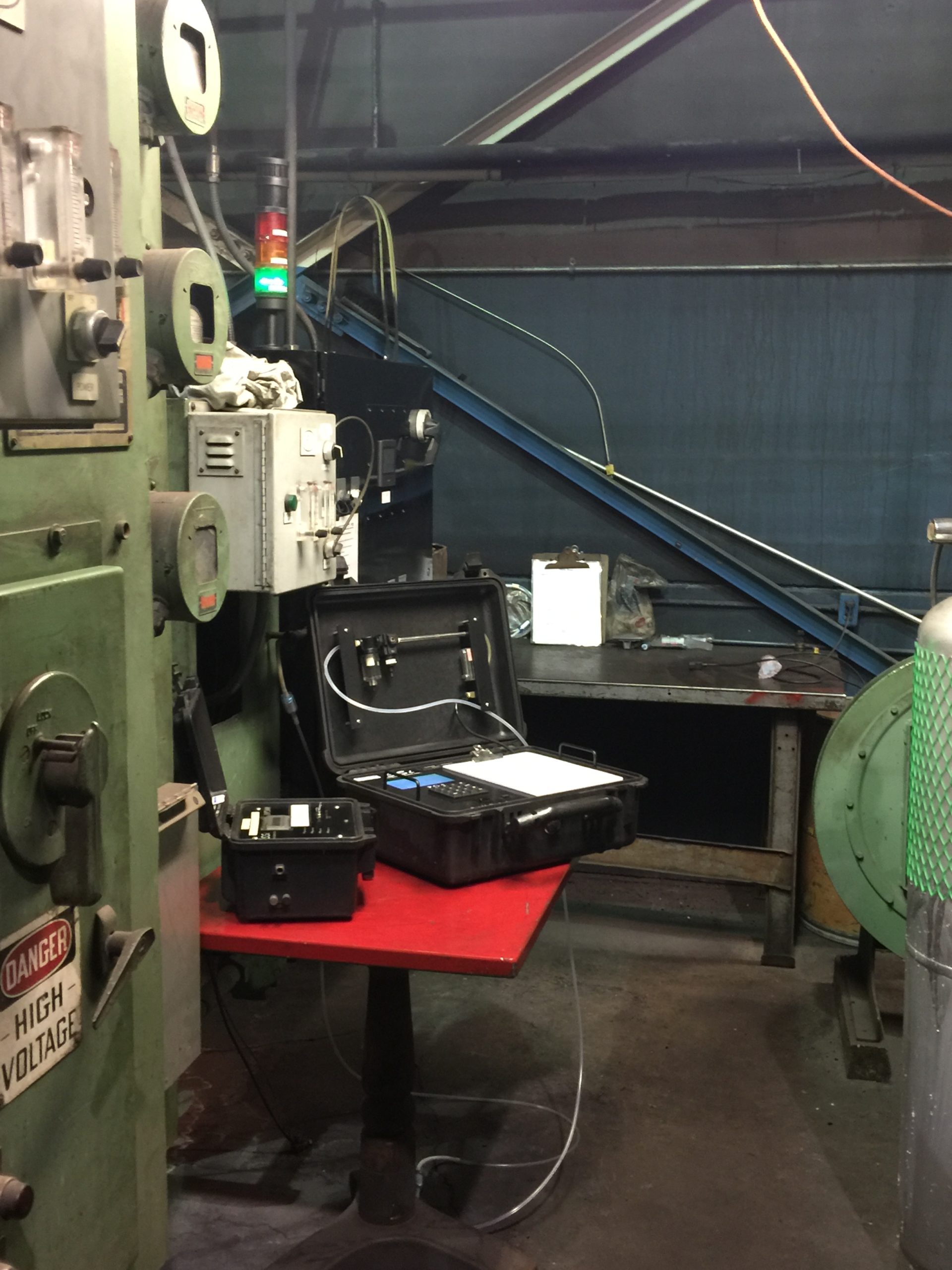
Investing in and using an oxygen analyzer on a regular basis can provide significant fuel cost savings and, at the same time, optimize uniformity and maximize capacity.
Photo Credit: Super Systems, Inc. (SSi)
Heat Treat Tip #26
Flow Power
Pressure varies as the square of the flow. This means that to double the flow, with all else being constant, pressure must increase by a factor of 4. Also, power increases as the cube of the flow. Doubling the flow produced by a fan or blower requires an 8-fold increase in horsepower.
Heat Treat Tip #77
Puzzling Polarity?
If unsure of the polarity of a type K thermocouple, remember that the negative (red) leg is magnetic; the positive (yellow) is not.
Heat Treat Tip #94
Copper as a Leak Check
If maintaining dew point is a problem, and it’s suspected that either an air or water leak is causing the problem, run a piece of copper through the furnace. Air will discolor the copper; water will not.
Heat Treat Tip #97
Optimum Dew Point
It is much easier to produce low dew point gas in a generator (within reason) than it is to lower the dew point after the atmosphere is in the furnace using enriching gas.
“There is a good bit of optimism regarding the 2020 economy,” this month’s Industrial Heating Equipment Association’s (IHEA) Executive Economic Summary begins. “The unemployment rate is still very low and there have been several months of solid job growth. The expected growth rate for the year remains close to 2.0%.”
The five index readings that are moving in a positive direction include new automobile/light truck sales, new home starts, industrial capacity utilization, metal pricing, credit movement as measured by the Credit Managers’ Index and the Transportation Activity Index. The report continues, “The latter two readings have a history of being ‘canaries in the coal mine’ as they react quickly to changes in economic momentum and tend to point the way for the rest of the economy later.” However, the power of the consumer is key to growth as the summary states, “The common factor, as far as growth, is anticipation of a decent short-term trend and the existence of confidence within the ranks of the consumer.”
The report also conveys that with the good news, there is some concern for what to expect later in 2020. The six indices that have trended in a more negative direction include steel consumption, the new orders index from the Purchasing Managers’ Index, industrial capacity utilization, capital expenditures, durable goods and factory goods. The summary reports, “The negative activity is almost entirely focused on production decisions.”
It appears as if Americans are feeling confident as they bring in 2020, “The consumer is still in a good mood and has yet to start worrying about the possibility of layoffs or the arrival of inflation. That translates into wishing to buy cars and homes and these indicators are therefore trending up a little.” However, as the reports concludes, it is an election year and, “Election years always create uncertainty.”
The report is available to IHEA member companies. For membership information and a full copy of the 12-page report, contact Anne Goyer, Executive Director of the Industrial Heating Equipment Association (IHEA). Email Anne by clicking here.
Here is what readers are saying about recent posts on Heat Treat Today. Submit your comments to editor@heattreattoday.com.
Jason Schulze has written numerous articles for HTT about AMS2750E. Check them out by searching “Jason Schulze” at www.heattreattoday.com
Jason Schulze, Conrad Kacsik
READER QUESTION: As per AMS2750E, what is the number of reuses for nonexpendable base metal thermocouples (N type MIMS TCS) above 980°C? Our application is TUS and SAT from 700°C to 1250°C. We would like to use N type MIMS thermocouples for both TUS and SAT. Recalibration period is specified as 3 months for N type thermocouples in AMS2750E. But no details are provided for the number of reuses above 650°C.
Jason Schulze (Conrad Kasik) for HTT: The number of permitted uses depends on the intended use of the thermocouple. For example, if the Type N thermocouples are used at 980°C (1796°F) as load thermocouple, the maximum permitted use would be 3 months or 180 uses, whichever comes first. If the thermocouple is used as a resident SAT thermocouple, it would need to be replaced every three months. In this case, the usage limit would be limited to 3 months. This will not be changing when the new version of AMS2750F is released.
We welcome your inquiries to and feedback on Heat Treat Today articles. Submit your questions/comments to editor@heattreattoday.com.