

Heat Treat Economic Indicators: October 2023 Results

The four heat treat industry-specific economic indicators gathered by Heat Treat Today each month --- starting in June of this year --- are predicting continued growth along with some economic contraction in the month of October.

The numbers, which were compiled the first week of October, show that responding parties anticipate inquiry levels will turn the corner and be up for October as compared to September and that the value of October bookings will continue to show growth. Backlogs are anticipated to contract by a fractional amount, and the overall health of the manufacturing economy remains slightly down. Please keep in mind that this is only the 5th month of data collection, so keep following this study as this bank of information builds.

The results from this month’s survey (October) are as follows; numbers above 50 indicate growth, numbers below 50 indicate contraction, and the number 50 indicates no change:

  • Anticipated change in the Number of Inquiries from September to October: 51.5
  • Anticipated change in Value of Bookings from September to October: 56.5
  • Anticipated change in Backlog Size from September to October: 49.2
  • Anticipated change in the Health of the Manufacturing Economy from September to October: 49.0

Data for October 2023
The four index numbers are reported monthly by Heat Treat Today and made available on the website.

Heat Treat Today's Economic Indicators measure and report on four, heat treat industry indices. Each month, approximately 800 individuals who classify themselves as suppliers to the North American heat treat industry receive the survey. Above are the results. Data started being collected in June 2023. If you would like to participate in the monthly survey, please click here to subscribe.


Find heat treating products and services when you search on Heat Treat Buyers Guide.com


Heat Treat Economic Indicators: October 2023 Results Read More »

Settling in for the Season with Sustainability Suggestions

As we get further into the heart of fall, it’s time to turn up the heat (treat)! – but how can this be done in an optimized and sustainable way?

Today’s Technical Tuesday original content round-up features tips and tricks from our summer print editions on how to optimize and sustain your heat treat operations, even during the chilly months. So, bundle up, grab a hot drink, and review these insightful pieces!


Sustainability Insights Corner 

In May, Heat Treat Today began publishing "Sustainability Insights" from the IHEA editorial team. Here's a brief overview of the recent insights all in one place:

May: New Sustainability & Decarbonization Initiatives for Heat Treat. Learn from industry-leader Brian Kelly about the stages of getting started with suitability and planning for the future of the industry.

June: NEW Sustainability and Carbonization Webinar Series. Although this year's IHEA Webinar series may have come and gone, it's not too late to establish a foundational understanding of carbon and sustainability here!

August: Reducing the Carbon Footprint of Your Heat Treating Operations. Brian Kelly of Rockford Combustion is back with yet another suitability insight, here exploring ways to assess your heat treating operation's carbon footprint, tune your combustion systems, explore renewable fuels, and much more.

September: Process Heating and the Energy-Carbon Connection. Explore the issue of greenhouse gases and how recent conversations are affecting the heat treating industry with Michael Stowe of Advanced Energy.

In Case You Missed the May Issue: Induction and Sustainability Tips  

Looking for sustainability tips for your heat treating operation, but lacking in time? Heat Treat Today's May Issue has you covered with a quick read: "13 Induction and Sustainability Tips." We'll highlight a few below which made it into a recent Technical Tuesday feature:

Induction and Sustainability Tips Part 1: Cleaning and Maintenance

Induction and Sustainability Tips Part 2: Efficient Power

Induction and Sustainability Tips Part 3: Combustion

Induction and Sustainability Tips Part 4: Vacuum Furnace and Heat Treat Energy Savings

Sustainable Energy for Furnaces? What does the Future Hold? 

What will the future run on? With growing discontent around current energy sources like natural gas and other fossil fuels, power sources for furnace equipment are due for a makeover.

Explore the question of sustainable energy for furnaces in the future with industry experts John Clarke of Helios Electric, Philippe Kerbois of Glass, various authors from Watlow, and Stuart Hakes of F.I.C. (UK) Limited.

Read the article by Heat Treat Today's Editorial Team: Energizing the Future of Furnaces - 4 Perspectives.

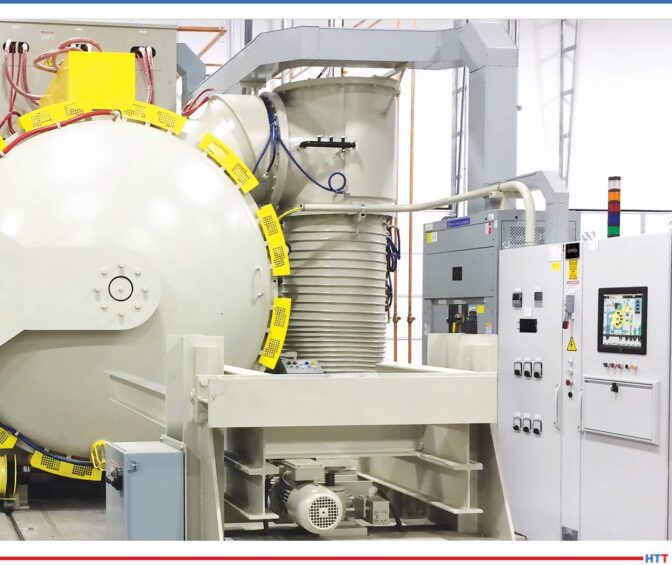
Saving Power and Dollars in Vacuum Processing 

How much electrical power is being used in the typical heat treatment plant? And how can power (and money) be saved in these operations? If these questions peak your interest, explore further with Roger A. Jones and William Jones of Solar Atmospheres.

Learn about savings in electricity and money in areas of electric motors, high vacuum diffusion pumps, gas blowers, building lighting, AC/heating, and more in this article.

Read the article, "Conserve Electric Power and Save Dollars in Vacuum Processing" here!


Find heat treating products and services when you search on Heat Treat Buyers Guide.com


Settling in for the Season with Sustainability Suggestions Read More »

Press Supplied to Lingchuang Special Material Co. 

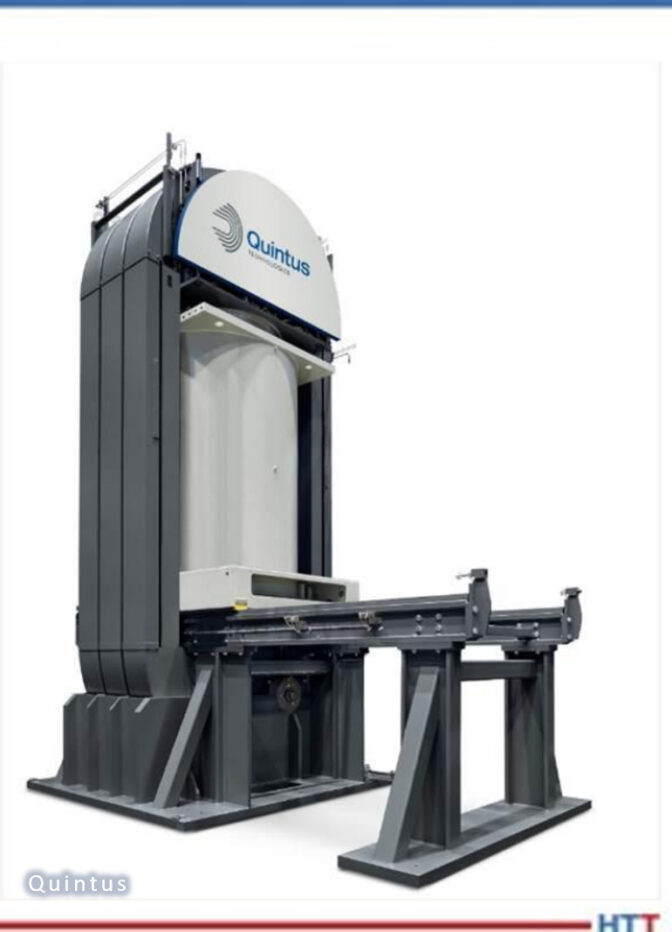
A supersized cold isostatic press from an HIP supplier with North American locations will be supplied for Lingchuang Special Material Co. to domestically produce isostatic graphite.

Quintus Technologies will be supplying a press model QIC 2.4 x 4.5 - 2000 to maximize operation and output capabilities. The press itself is setting new standards along with a new energy management system that offers energy savings of more than 30 percent compared to conventional intensifier solutions.

The cold isostatic press
Source: Quintus

Noted Lingchuang's vice president, Zhongxin Zhao, "In order to ensure the stability and consistency of product quality that reaches the international level, we have adopted the most advanced technology that has been proved in production at home and abroad. . . .Our key equipment is mainly imported, and the production process has reached a high degree of automation, stability, and environmental protection."

Lingchuang's CIP will be equipped with a new, first-of-its-kind feature: a redesigned pressure vessel that is floating during pressurizing, extending the life of the guide rail system and ensuring operation over a very long period of time.

"Lingchuang is a young company with a far-ranging outlook," comments Jan Söderström, CEO of Quintus Technologies. "Its founders saw opportunity in the shortage of domestic high-end specialty graphite materials."


Find heat treating products and services when you search on Heat Treat Buyers Guide.com


Press Supplied to Lingchuang Special Material Co.  Read More »

Check Out This Week’s Spotlight

Herb Sweny, a returning WWII veteran, founded Modern Industries, Inc. in 1946 with this foundational mission: Do the Right Thing and Do the Thing Right. This meant a tough, fair, and honest business practice with a focus on improvement. Today, these characteristics have led the company to become a primary source of heat treating services in Northwestern Pennsylvania.

Contact us with your Reader Feedback!
Flame curtain (safety feature) for atmosphere furnace.
Source: Modern Industries

To do the right thing and do the thing right, the company uses four vertically integrated divisions of manufacturing and industrial support services. The first division, heat treat, is made up of over 40 furnaces of varying type, size, and process capability. These furnaces are capable of various heat treating processes: carburizing, annealing, vacuum processing, and many more. Certifications in Nadcap, AC-7102, IATF 16949, an ITAR registration, and several zero-finding audits over the past five years aid the heat treat division in doing the thing right.

The three other divisions — machining, lab testing, and products — work with heat treat to be a one-stop-shop for certified parts. The machining division provides production manufacturing and sub-assembly. The lab testing department consists of an on-site laboratory which, through the research division, provides the ability to combine process, testing, and certification. The product department creates work and tool holding products. Herb Sweny’s tough, fair, and honest business practices are now applied to the automotive, aerospace, medical, and military industries, as well as others. A second generation family business, Modern is committed to providing certainty of outcome and demonstrating quality turn-around time. These qualities have propelled the business forward, and the company now supports customers in the U.S., Mexico, and Canada with services that were historically “local” at Erie and Kersey, PA facilities.

Loading vacuum furnace
Source: Modern Industries

For Modern Industries, the final element of doing the right thing is a continued focus on improvement. Over 75 years of business, the company has seen the evolution of heat treating capabilities and changing best practices. In the next five to 10 years, they hope to use this experience to continue to maintain adaptability and meet the evolving market requirements. Their most recent investment in this goal was the addition of the area’s largest 10 bar capable vacuum furnace. A new operating furnace control system is also advancing them towards improvement. With deep roots in the past, Modern Industries is looking steadily toward the future, doing the right thing and doing the thing right.


Find heat treating products and services when you search on Heat Treat Buyers Guide.com


Check Out This Week’s Spotlight Read More »

Arrival of Atmosphere-Controlled Retort Furnace for Aerospace Applications

A leading manufacturer of aerospace components in the Midwestern U.S. has received one of two furnaces, which will be part of a CMC manufacturing facility providing lightweight aerospace components to commercial and military aerospace applications.

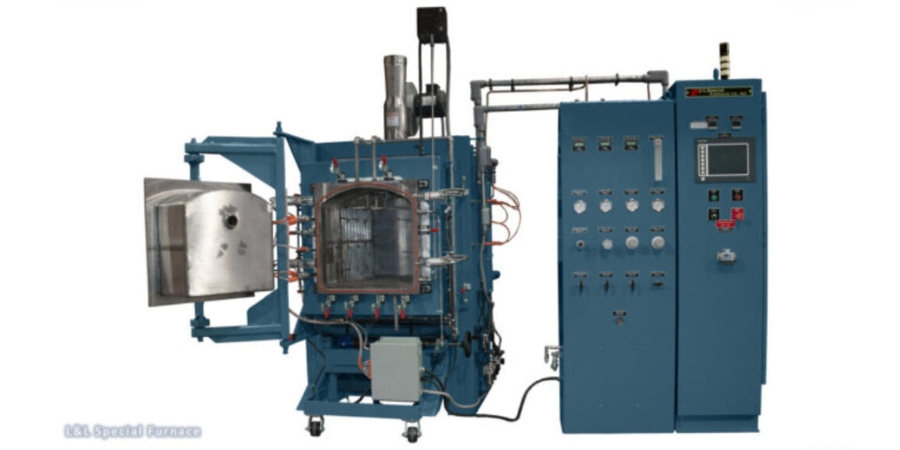
These two model XLC3348 furnaces were delivered by L&L Special Furnace. The nano threads in the CMC process are coated with proprietary resins which need to be completely removed from the substructure using heat. It is also vital that there is no oxygen present during the process as this will significantly weaken the part structure.

The model XLC3348 has a work zone of 23” wide by 23” high by 36” deep. It has a single zone of control with a temperature gradient of ±14°C/±25.2°F at temperatures between 1202°F/650°C and 1832°F/1,000°C using six zones of temperature control with biasing to balance any gradients. Constructed of low-mass insulating firebrick, which enables quicker cooldown times, the furnace also features a venturi cooling blower.

The parts are heated to a set temperature in a retort chamber that is pressurized with nitrogen. The byproducts of the outgassing part are directed by pressure and flow out of the rear of the furnace, and then heated in a vacuum furnace to temperatures in excess of 2300°F/ 1,260°C, resulting in a super-strong component that is lighter than titanium.


Find heat treating products and services when you search on Heat Treat Buyers Guide.com


Arrival of Atmosphere-Controlled Retort Furnace for Aerospace Applications Read More »

Hydrogen Supply in the Coming Hydrogen Economy: What to Expect

Hydrogen Supply in the Coming Hydrogen Economy: What to Expect

Webinar Description:

Hydrogen has gone from an unknown chemical feedstock business to a political, economic, and even diplomatic hot potato. With new hydrogen-producing and hydrogen-using technologies being developed and commercialized at an increasing rate, the eventual outcome might be a hydrogen business 1000x bigger than it is today. This Webinar will explore this future.

This webinar is for you if you are asking yourself: What the future hydrogen economy has to offer to thermal processing companies? Are major hydrogen supply/demand disruptions expected in the future? And, perhaps most importantly, How should your company prepare?

About the Speaker:

Dave Wolff has over 40 years of project engineering, industrial gas generation and application engineering, marketing, and sales experience. He has been a Sales and Marketing leader for hydrogen generation technologies since 1999. Dave holds a degree in Engineering Science from Dartmouth College. He has an extensive background in hydrogen generation at large and small scale, hydrogen distribution, storage, and industrial utilization, as well as application knowledge across a diverse range of industries.

Hydrogen Supply in the Coming Hydrogen Economy: What to Expect Read More »

Marle Group Expands Cobalt Heat Treating Potential with New Furnace

Marle Group, a global manufacturer of orthopedic prostheses, has expanded its heat treating potential with the acquisition of a new furnace. The furnace on order will be used for the heat treatment of cobalt implants.

This Vector® vacuum furnace, supplied by SECO/WARWICK, will provide the high temperatures, pure environment, temperature uniformity, and quick cooling necessary for the Cobalt alloy hardening process.

Antoine Escbach
Factory Director
Marle Group
LinkedIn

In the words of Antoine Eschbach of Marle Group, “The furnace we ordered solves the challenges faced by anyone who has to heat treat cobalt alloys in a production process. . . . Knee implantology is a field that is developing rapidly especially in developed countries, such as United States of America and in many European countries. Our mission is to create the highest quality implants which raise the living standard of people around the world, and the Vector furnace will help us to achieve this goal."

In order for cobalt alloys to be used in implantology, they must be deprived of their ferromagnetic properties. This shiny, hard metal loses this property only when it reaches a temperature higher than 1131°C/2067.8°F. Such a high temperature makes it necessary to use a vacuum furnace in the implant production process.

The solution on order uses two gases - nitrogen for cobalt hardening and argon to achieve purity of the process during heating. It is also equipped with a dew point sensor for each of the gases, thanks to which the phenomenon of water vapor condensation and, consequently, the possibility of the processed load’s surface oxidation is eliminated.

Also significant for the cobalt treatment process is also a quick cooling system based on a gas blower ensuring a maximum hardening pressure of 15 bar abs.


Find heat treating products and services when you search on Heat Treat Buyers Guide.com

Marle Group Expands Cobalt Heat Treating Potential with New Furnace Read More »

Manufacturer in Energy Expands with Heat Treat System

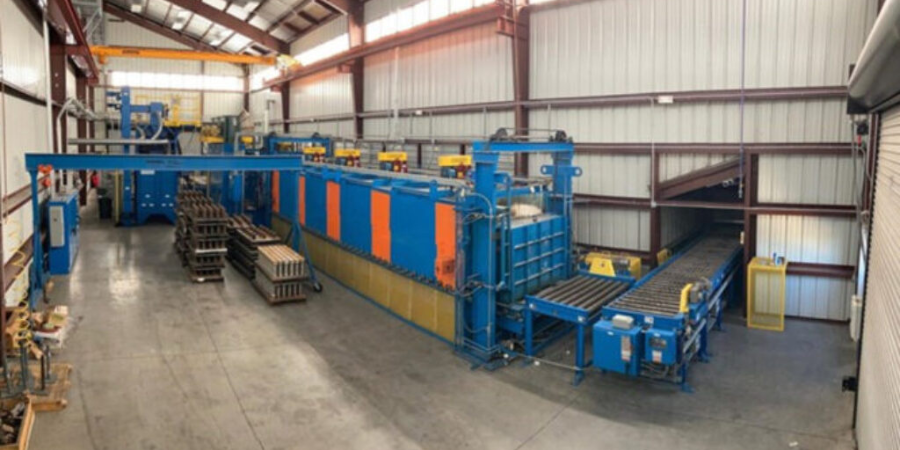
A manufacturer for the energy industry has recently announced the installment of a roller hearth furnace system. The heat treat system is comprised of two (2) box furnaces with quench tanks, a dual directional load transfer car, four (4) companion draw batch ovens, and two (2) stationary load/unload tables.

The system from Lindberg/MPH has a maximum operating temperature of 1850°F for the box furnaces, which are designed for nitrogen-based atmosphere applications. The load space dimensions of the box furnaces are 48” W x 96” D x 36” H, with larger internal chambers to provide clearance for baskets or fixtures. A snake chain pusher assembly with a dual-directional pacecar is used by each furnace to transfer the loads from the chamber to the pneumatically operating quench elevator deck.

The glycol quench tanks are designed for quick and uniform quenching, featuring an immersion oil heater and an externally mounted air-to-quench media heat exchanger. The tanks’ agitation systems include four agitators with draft tubes. The gross load capacity of the car is 10,000 lbs., and it travels linearly in front of the equipment on two embedded floor rails.


Find heat treating products and services when you search on Heat Treat Buyers Guide.com


Manufacturer in Energy Expands with Heat Treat System Read More »

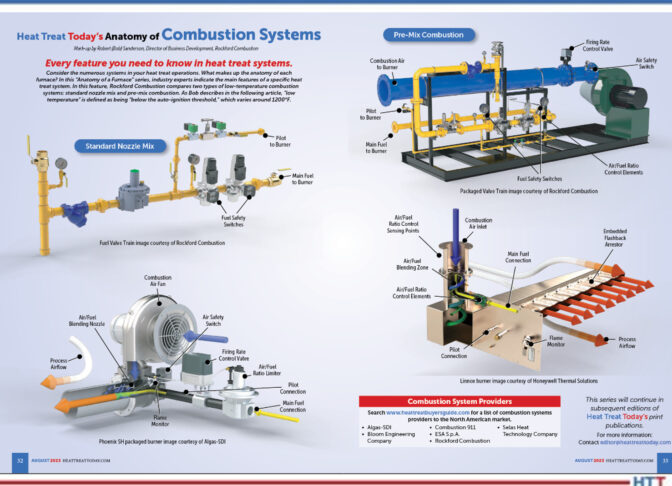
Anatomy of a Combustion System

Consider the numerous systems in your heat treat operations. What makes up the anatomy of each furnace? In this “Anatomy of a...” series, industry experts indicate the main features of a specific heat treat system. In this feature, Rockford Combustion compares two types of low-temperature combustion systems: standard nozzle mix and pre-mix combustion. As Bob describes, “low temperature” is defined as being “below the auto-ignition threshold,” which varies around 1200°F.

Contact us with your Reader Feedback!

The mark-ups for these reference images are provided by Robert (Bob) Sanderson, director of Business Development at Rockford Combustion.

Download the full graphics by clicking the images below.


This Technical Tuesday article is drawn from Heat Treat Today's August Automotive print edition.

Search www.heattreatbuyersguide.com for a list of combustion system providers to the North American market. If you are a combustion system supplier and not listed here, please let us know at editor@heattreattoday.com

This series will continue in subsequent editions of Heat Treat Today's print publications. Stay tuned!


Find heat treating products and services when you search on Heat Treat Buyers Guide.com


Anatomy of a Combustion System Read More »

New Furnace Hits the Road To Heat Treat Steel Bar Stock

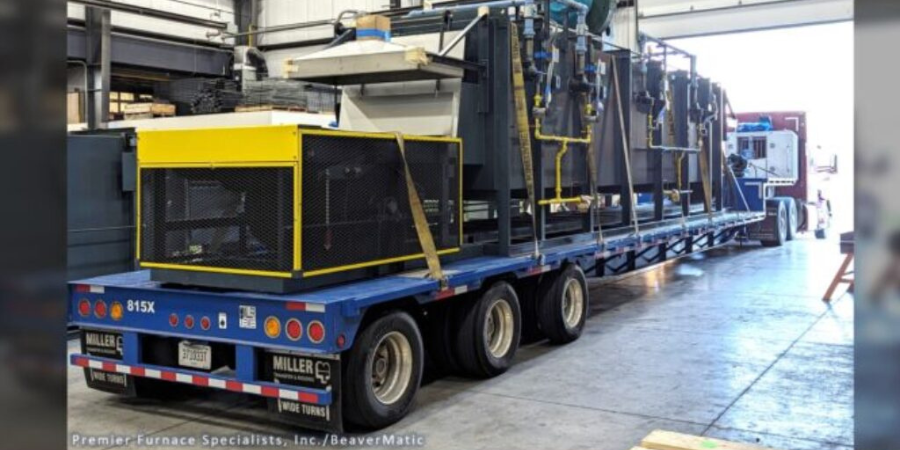
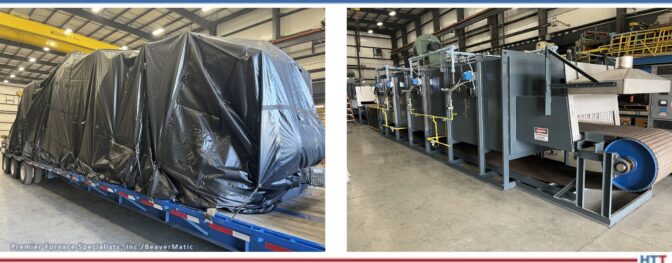
A mesh belt temper furnace has been shipped to a manufacturer in the U.S. South. The client will use this heat treat furnace for preheating and tempering steel bar stock.

Mesh belt temper furnace packed and shipped
(Source: Premier Furnace Specialists. Inc./BeaverMatic)
Steve Ignash
Sales Engineer
Premier Furnace Specialists, Inc./BeaverMatic
Source: Premier Furnace/BeaverMatic

"We had built the client a similar furnace in 2022," commented Steve Ignash, sales engineer at Premier Furnace Specialists, Inc./BeaverMatic. "Our furnace gave them the confidence to purchase five more of the similar style to replace outdated equipment and add to their current increase in production."

The remaining four furnaces from the recent purchase will be completed and installed through January 2024.


Find heat treating products and services when you search on Heat Treat Buyers Guide.com


New Furnace Hits the Road To Heat Treat Steel Bar Stock Read More »