Are there rapid changes in the North American aluminum industry to accommodate trending technology, or does the aluminum market have a different focus? Enjoy this Technical Tuesday article, in which six industry players responded to the following survey from Heat Treat Today’s editorial team in August 2023.
Steady and Increasing Melters’ Demand
Contact us with your Reader Feedback!
Is demand increasing or decreasing for aluminum processing/melting equipment?
AFC-Holcroft: “Yes, we continue to see opportunities for a variety of furnaces for T5, T6, and other aluminum heat treating processes. We recently signed a license agreement with Sanken Sangyo in Japan to offer their aluminum rotary furnace designs in the U.S. and Canada.”
Can-Eng Furnaces Intl., Ltd.: “Yes, particularly in finished component heat treatment systems (T4, T5, T6, and T7 processes). The processing demand is coming from new vehicle (ICE, hybrid, electric) model line-ups that are focusing heavily on lightweighting body in white (BIW), structural, and suspension components that are being converted from steel to aluminum.”
Lindberg/MPH: “We have seen an increase in aluminum scrap melting in the recent past with larger capacity melters being quoted.”
Premier Furnace Specialists: “We’re seeing a steady demand for aluminum processing equipment. Typically, our clients are requesting either aluminum solution furnaces, drop bottom furnaces, or pre-heat furnaces. There has been an increased demand for larger furnace chamber sizes and heavier load capacities as more customers are requesting furnaces that can handle a variety of materials, temperature ranges, and processes. It seems the aerospace industry is driving most of the demand at the moment.”
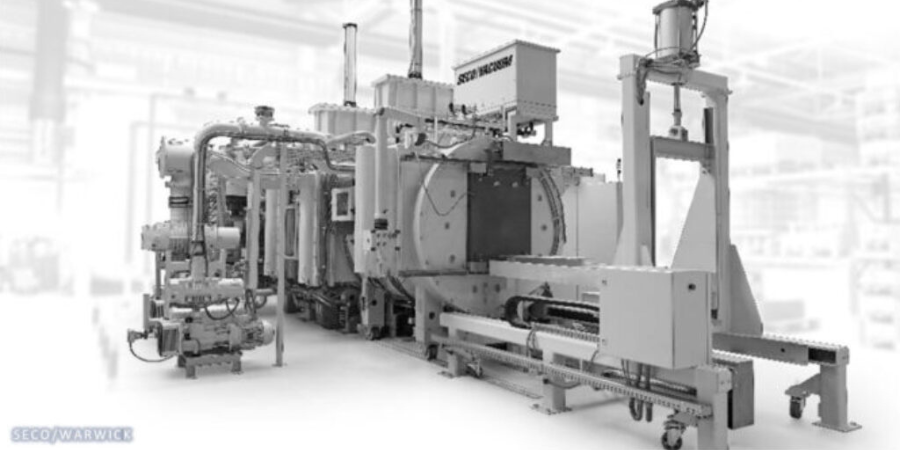
SECO/WARWICK: “On the molten metal side of the SECO/WARWICK business, there are a few significant projects out there which are active, and the level of inquiries is good!”
Wisconsin Oven: “We have seen an uptick in aluminum solution treat and aging equipment in recent years.”
Tracy Dougherty Chief Operating Officer AFC-Holcroft LLC Tim Donofrio Vice President of Sales Can-Eng Furnaces International, Ltd.Kelley Shreve General Manager Lindberg/MPHJacob Laird Mechanical Engineer Premier Furnace Specialists, Inc./BeaverMaticDan Peterson Product Manager Molten Metal Furnaces SECO/WARWICK Corp.Mike Grande Vice President of Sales Wisconsin Oven Corporation
AM/3D: Allusive Adoption
Has additive manufacturing/3D printing contributed to current business levels?
AFC-Holcroft: “It’s been an ongoing topic, but volumes are still low, which has kept heat treating equipment investments at a minimum.”
Lindberg/MPH: “There have been more requests than in the past few years for sintering applications which, I believe, is largely driven by the increase in 3D metal printing manufacturing.”
Premier Furnace Specialists: “The company has been receiving a number of requests for smaller batch style ovens for the processing of additive manufactured/3D printed materials. We have also fulfilled a number of requests to alter existing or used systems to meet new process requirements.”
SECO/WARWICK: “On the molten metal side, this would be what we call the powdered metals industry, we has not seen much interest in that area this year. One exception is an inquiry that our sister company Retech was fielding.”
Have international supply chain disruptions impacted demand for your company’s equipment?
AFC-Holcroft: “There are certainly disruptions, but we’re finally starting to see some improvements. Our team has worked hard to mitigate the supply chain challenges through unique forward-looking programs with our suppliers and clients. As far as demand goes, it has not had an impact at all. In fact, we are currently experiencing booking levels that we haven’t seen in more than 20 years.”
Can-Eng Furnaces Intl., Ltd.: “Clients are planning ahead to address the longer lead times.”
Lindberg/MPH: “We have noticed that supply chain issues in general, both domestic and international, have created an environment where lead times to build equipment have more than doubled. This has caused many clients to begin looking for alternative solutions to meet their needs, as they cannot wait two-thirds of a year for equipment. The largest delays are with refractory, gas burners, alloy, and many various control components.”
Premier Furnace Specialists: “Actually, we’ve seen an increase in demand for our equipment from various industries impacted by disruptions. Many companies seem to be reassessing their supply chains and expanding production capacity to avoid future disruptions.”
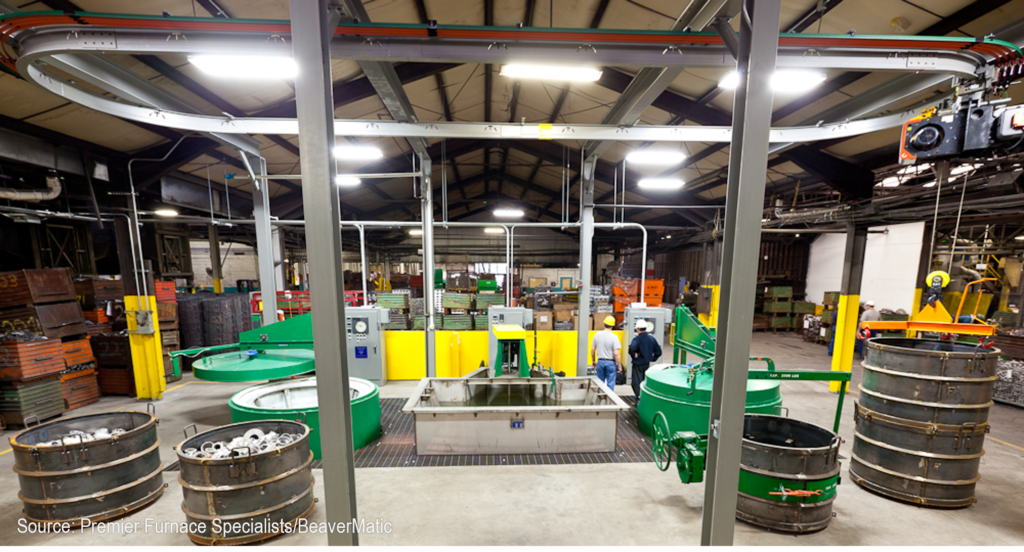
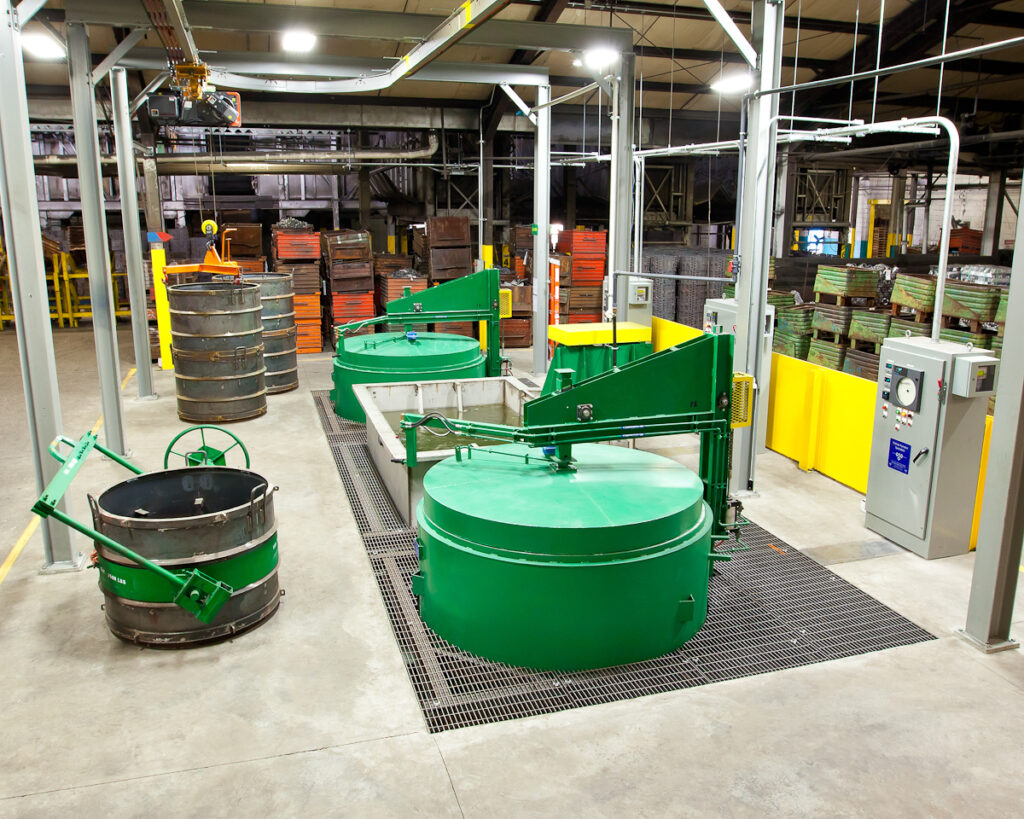
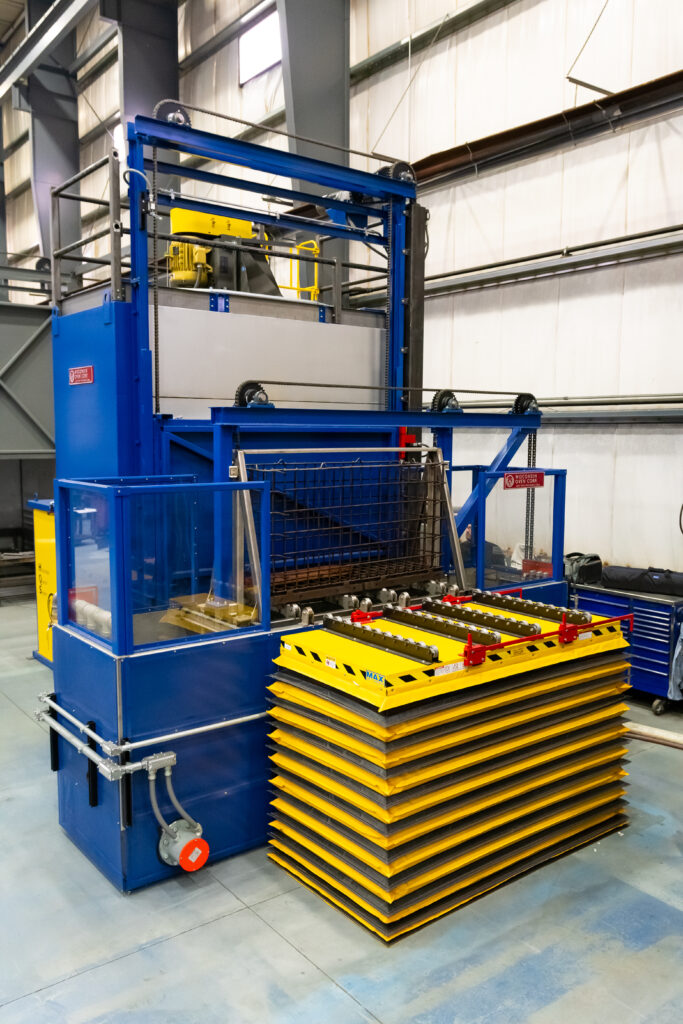
Dual pit furnace and water quench tank system designed and built for a client in the aluminum castings industry. It is used for aluminum solution heat treating of thick walled castings. Each furnace has a 4,000 pound gross load capacity and an operating temperature range of 300°F – 1100°F. (Source: Premier Furnace Specialists/BeaverMatic)
SECO/WARWICK: “Lately our clients are for projects that are further out, 1–2 years in some cases. Most of our end users are aware that prices are still moving up and deliveries are stretched out, however there have been some improvements of deliveries on MCC’s and PLC’s.”
Wisconsin Oven: “Not that we know of.”
The State of Sustainability in Aluminum Market
Has the sustainability push affected demand for your equipment?
Horizontal quench system used for the solution treatment of aluminum parts (Source: Wisconsin Oven)
AFC-Holcroft: “Again, no impact on demand, but our group has been offering many ‘green’ options on our equipment for years to assist our clients in the drive for a reduction in their carbon footprint.”
Can-Eng Furnaces Intl., Ltd.: “Yes, there’s more emphasis on reduced environment impact processes and equipment designs.”
Lindberg/MPH: “Not really. We have had a couple of RFQ[ET7] ’s come in related to green energy, but they are very slow-moving projects with a lot of R&D on the buyers’ end. Additionally, we have been asked to partner with these clients to develop a solution to help them meet the end goal.”
Premier Furnace Specialists: “For a minor segment of clients, the push for sustainability seems to be driving a demand for electrically heated equipment rather than natural gas. Even for those clients, however, the main deciding factors are still local utility costs, existing facility restrictions, and familiarity with existing equipment.”
SECO/WARWICK: “Environmental sustainability has definitely affected what our clients are looking for on most new inquires. Most have strict emissions requirements and are looking for combustion systems with lower NOx and higher fuel efficiency. Peripheral hooding is also commonly requested to capture emissions from around door openings and over charge wells. I would not say that sustainability has diminished the demand, however it has affected what they need with regard to emissions compliance.”
Wisconsin Oven: “Clients occasionally request energy-efficient features and designs, but not more often than in the past.”
Anticipating Growth and Novel Aluminum Applications
What plans are you making to meet future market demand?
AFC-Holcroft: “We are a global group and have recently restructured our organization to better serve our customers. We have also undergone a facility expansion to help reduce our carbon footprint and provide our clients with the best products and deliveries available in the market. This includes an expansion of our build to stock production planning to greatly reduce lead times on UBQ furnaces and EZ endothermic generators among other products.”
Can-Eng Furnaces Intl., Ltd.: “We have increased emphasis on electric battery vehicle component and materials processes and equipment design development. Additionally, we are planning further use of electric energy as an alternate heating source for system designs.”
Lindberg/MPH: “We are looking to work with vendors to create vendor managed inventory in order to reduce lead times, as well as hire additional employees to reduce labor driven lead times. We continually look for additional vendors to remain cost competitive and reducing the overall cost of manufacturing.”
Premier Furnace Specialists : “We’ve expanded vendor and supplier listings. We have also gained experience implementing existing and new alternatives for almost all of our furnace components. By reassessing our standard component choices and offering a variety to clients, we have been able to substantially reduce lead times which allows for more efficient and flexible production while reducing costs.
“We have also added new technology to aid in our manufacturing. Building parts in-house significantly cuts down on lead times and pricing. Thus, clients know that their equipment will have little or no downtime, saving them the time and stress of not running product.”
SECO/WARWICK: “We are adding engineers, field service technicians, etc. and having our “seasoned veterans” bring them up to speed! We have also moved to a larger new office location to accommodate future growth.”
Wisconsin Oven: “We have acquired additional floorspace in recent years and have been hiring aggressively in the last six months.”
Accurate hardness testing is a critical business for numerous industries, not least heat treatment. In this guide, we will offer our “best practice” list for getting the best possible reading for your hardness test with the most efficiency.
This Technical Tuesday article was written by Alex Austin, the managing director at Foundrax Engineering Products Ltd.
1. Tip for All Tests
Contact us with your Reader Feedback!Alex Austin Managing Director Foundrax Engineering Products Ltd. Source: Foundrax
Make sure the test equipment is properly set up. In most instances, this involves keeping the test machine serviced and calibrated in accordance with the international standards (ASTM E-10 for Brinell and ASTM E-18 for Rockwell) or the manufacturer’s instructions — whichever are more strict — along with mounting it on a level, vibration-free surface. The absence of vibration is crucial if you are using a lever and weight machine, but still desirable for hydraulic and motor-driven types, and it is mandated by the standards.
It is worth noting that for tests made using portable Brinell hardness testers that apply the full test load (albeit without the ability to maintain it uninterrupted for the full ten seconds), while it might not always be possible to mount the machine on a solid and level surface, the rest of the above still applies.
If the anvil is mounted on a leadscrew, ensure that it is properly secured. Similarly, jigs should be in good condition, correctly mounted and hold the test piece securely. It is easy to become very relaxed about the amount of energy that goes into applying 3000 kg to a 10 mm ball, but if the component shatters under load the results can be dramatic and, potentially, very dangerous.
Don’t forget your safety boots! Also, as fingerprint residue is corrosive, always wear gloves.
2. Brinell Hardness Testing
Preparation
Before performing a Brinell hardness test, make sure both the test area and the indenter ball are clean and free of all lubricants. Oil or grease on the test surface or indenter could wreck the test by lubricating the path of the indenter, making a very significant difference to the apparent hardness level. For example, at 300 HBW the material may appear around 20 HBW softer than it actually is. Moreover, it can change the appearance of the indentation edge, causing a false diameter measurement. In any case, the hardness standards are clear that test pieces must be clean and lubricant-free.
Prepare the area of the component surface where the test is to be carried out so that the indenter comes into direct contact with the core material. For this, the skin must be removed, including any decarburized layer, using a hand grinder with 60 grit abrasive (or finer, if appropriate) in 3–5 seconds, if a good automatic Brinell microscope will measure the indentation, or 10–15 seconds for a good manual microscope. This time differential is on the basis that a good automatic system will measure hundreds of diameters and ignore grinding “noise” when identifying the true edge of the indentation. On the other hand, use of a manual microscope is limited to the number one can reasonably measure by the time available and the equipment at hand. However, in the case of both automatic and manual testing, the better the surface, the better the result.
Next, place the material on the test machine’s table or anvil. Ensure that it is stable and cannot move under the test load (machines with an integral clamp are preferable from this point of view). The clamp should be holding the material so that the test surface is perpendicular to the indenter’s line of operation.
Carrying Out the Brinell Hardness Test
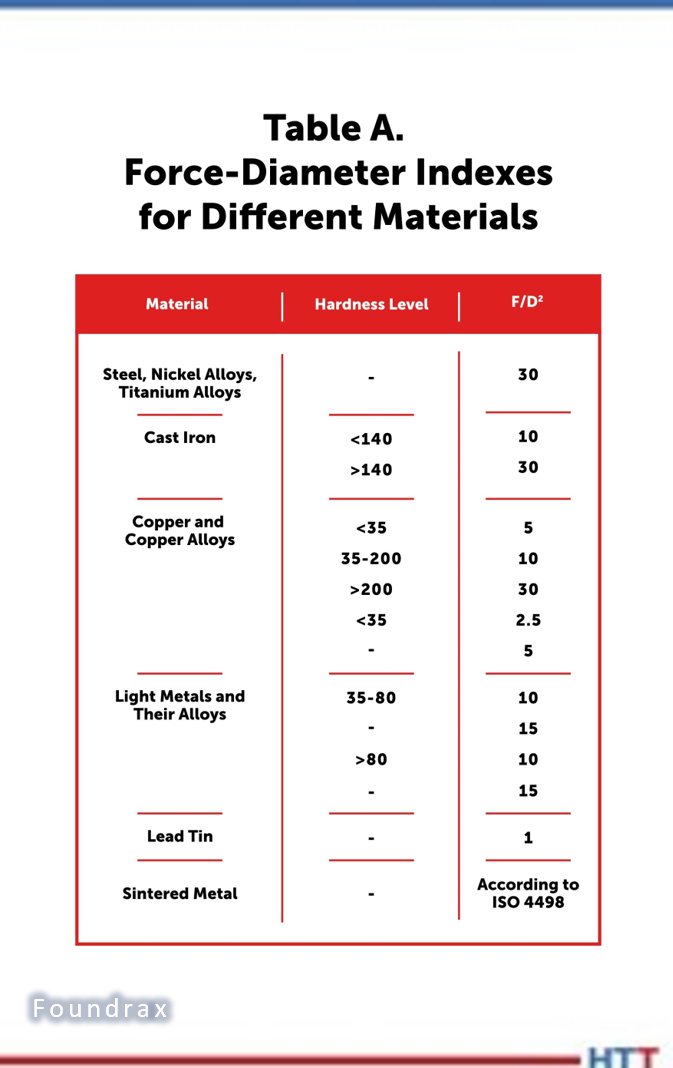
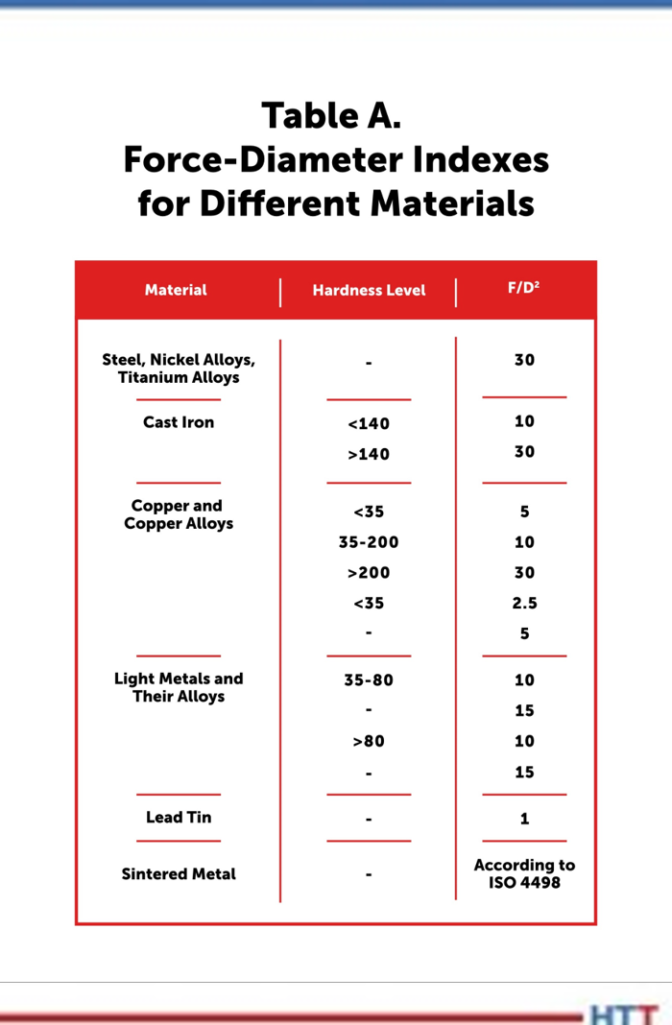
Table A. Force-diameter indexes for different materials
Use the correct force-diameter index (F/D²) for the material being tested; see Table A.
Apply the test force in accordance with ISO6506 or ASTM E-10, as appropriate. While the indenter is in downward motion and in contact with the material, avoid doing anything that might create vibrations that could reach the machine. When the indenter has withdrawn, measure the resulting indentation in a minimum of two diameters perpendicular to each other and convert the mean measurement into an HBW number.
If using a portable Brinell hardness tester, exercise caution when removing the machine from the component so that the edge of the indentation is not accidentally damaged when the machine is released.
3. Rockwell Hardness Testing
Preparation
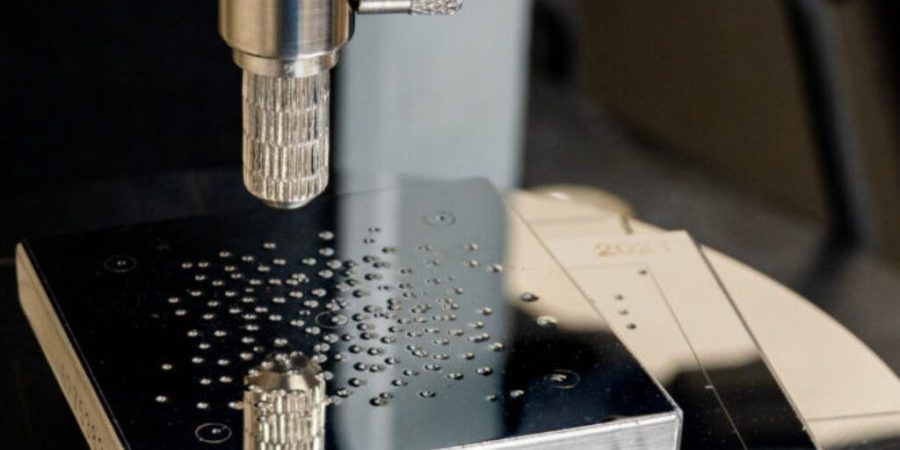
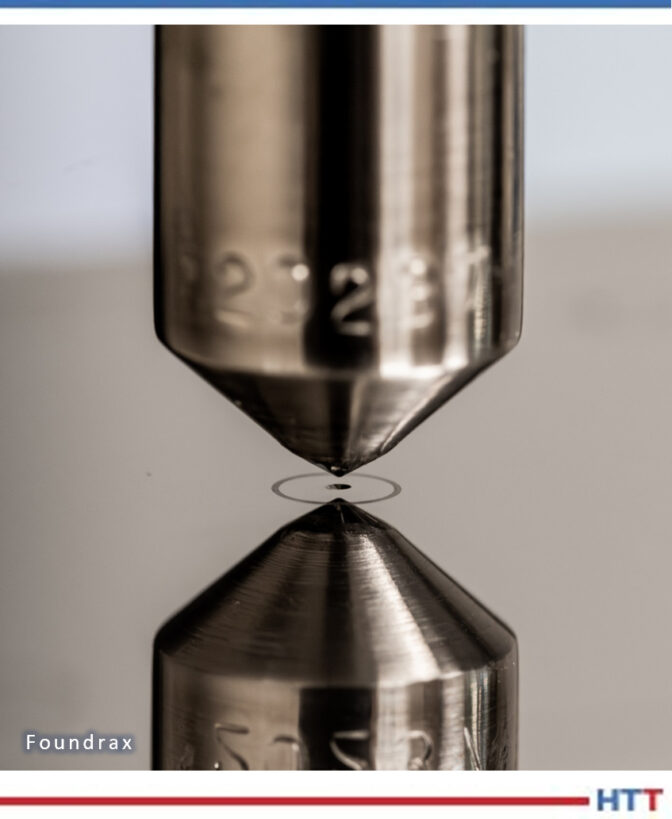
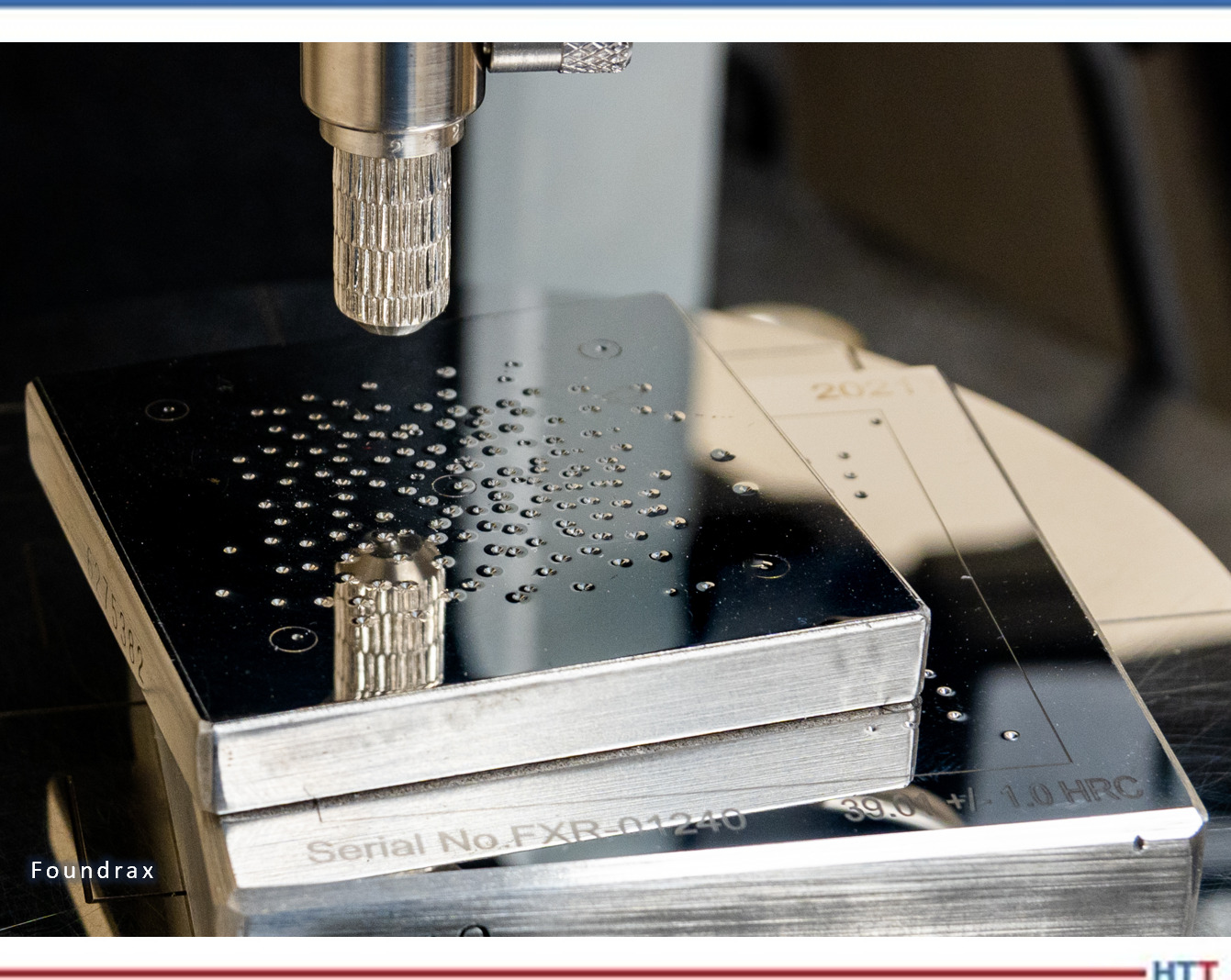
Figure 1. Close-up of Rockwell indentation
Cleanliness is everything in Rockwell testing. The indenters are much smaller than those used in Brinell testing and (as you would expect) so are the indentations (see Figure 1). And because the Rockwell test measures indentation depth, not width, any contaminant or particle that gets between the indenter and the material is a problem. Underside contamination is almost as important. There have been instances of clients finding that the testing block seemed to render two hardness points lower than we stated, yet in every instance, we found a buildup of soft contaminants (e.g., grease, oxides, micro-swarf) on the underside of the block. These contaminants “give” as the indenter is driven into the block, thereby permitting further indenter travel than would occur in the block material alone.
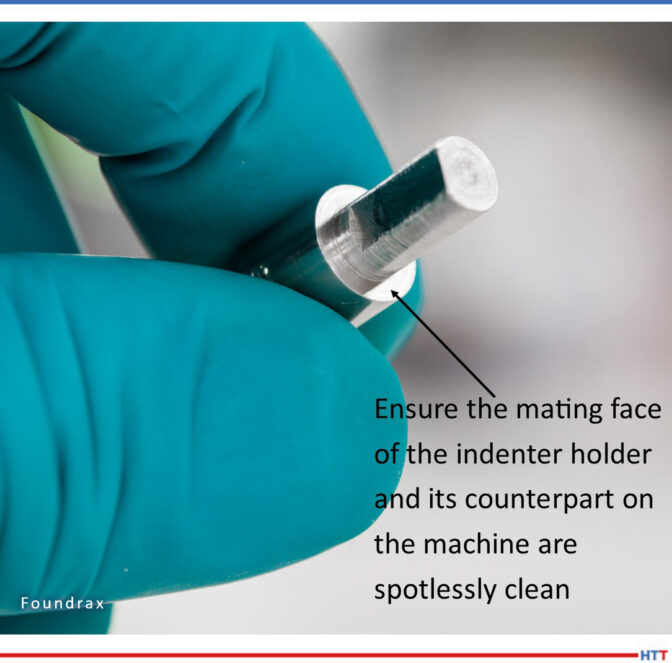
Lubricant contamination on the block surface is obviously extremely problematic. All blocks should be cleaned with a cloth and a liquid solvent that leaves minimal residue (e.g. isopropyl alcohol). Tissue paper can be used for cleaning but can scratch aluminum and brass easily; untreated cotton wipes are preferable. The anvil should also be cleaned by gentle application of a lint-free cloth dampened with solvent, and the indenter itself should be gently wiped at intervals throughout the test session. Another place where contaminants can build up (easily producing an error in excess of one Rockwell point) is the mating face where the indenter holder is inserted into the test head of the machine (see Figure 2).
Figure 2. Importance in preparation
It is obviously also essential that the anvil mount cannot budge under the indenting load. If it is mounted on a vertical threaded column, the column should be free of excess grease and tightened to the point of no movement. Column “give” is another area where we have detected consequential erroneous readings.
A further notable check worth performing is that the block, or test piece, has not been dropped and landed on a corner of the underside, which would leave a burr. This would prevent the piece from sitting flush on the anvil and probably negate the possibility of correct readings, as the piece would move under the indenter load.
Procedure
Figure 3. Softer block placed over test material during Rockwell test
If the first indentation on a block suggests a lower hardness than the remainder, there is a chance that air was trapped underneath it. The first indentations usually drives any air out, but in the case that air remained trapped beneath the indenter, the hardness reading will be falsely soft; the block will have moved downwards as it displaced the air, and the indenter will, therefore, have travelled further than if the block were truly sitting flush on the anvil. Placing a block that is softer than the test material on top of the test block and putting one indentation into it before commencing the tests will eliminate this problem (see Figure 3).
Have an aerosol duster to hand during indenting to keep the block surface clear.
Test blocks should, ideally, be stored in airtight cases to reduce the rate at which oxides form on their surfaces. Better still, wrap them in rust-reducing paper as well.
About the Author: Alex Austin has been the managing director of Foundrax Engineering Products Ltd. since 2002. Foundrax has supplied Brinell hardness testing equipment for 60+ years and is the only company in the world to truly specialize in this field. Alex sits on the ISE/101/05 Indentation Hardness Testing Committee at the British Standards Institution. He has been part of the British delegation to the International Standards Organization advising on the development of the standard ISO 6506 “Metallic materials – Brinell hardness test” and is the chairman and convener for the current ISO revision of the standard.
Oil quenching can be a dirty phrase around the heat treat shop. But with vacuum, does it have to be?
This Technical Tuesday article was written by Don Marteeny, vice president of engineering at SECO/VACUUM Technologies,forHeat Treat Today’sNovember 2023 Vacuum Heat Treating print edition.
There are metallurgical advantages to oil quenching for which there are no gas quench substitutes, but for a time, those advantages only came bundled with some disadvantages that proved incompatible with a growing preference for vacuum processes. This drove vacuum oil quenching (VOQ) to evolve and improve, often faster than its reputation. VOQ has since matured into a convenient, safe, and economical choice, offering today’s vacuum heat treaters all the metallurgical advantages of oil quench without any of the compromises.
A Familiar Scene . . .
Don Marteeny
Vice President of Engineering
SECO/VACUUM TechnologiesContact us with your Reader Feedback!
When oil quenching is mentioned in the break room of any heat treat department, it’s a sure bet that those listening have very similar thoughts. With just the mere mention of oil, their thoughts carry them, not to memories of the first time they helped their dad change the oil in their car in the family garage, but instead to a row of furnaces belching flames from their doors. Next, they are sure to see one of the doors open, and the familiar sensation of hot air moves through their mind. They may – for a moment – expect the smell of salt air, the sand between their toes, and the sun from above.
For many heat treaters, this is but a momentary escape. Soon, the taste and smell of hot oil and metal return them to the moment, and they know they are standing next to a row of batch integral quench (aka, batch IQ or BIQ) furnaces.
It’s about then they will feel the heat of those flames at the end of this furnace line or by the transfer car, wiping the sweat from their brow with a sooty hand and anticipating a return to the break room for a cool drink of water.
Sound familiar? If so, you’re one of the hundreds of heat treaters who has had the pleasure of operating a tried-and-true atmosphere integral quench line; it faithfully does its job, hardening and case hardening steels where oil is the only heavy lifter that can do the job.
While heat treaters have been diligently pumping out oil hardened steels, furnace builders and OEMs alike have been trying to find ways to move away from oil to quenchants that, primarily, reduce distortion, but also that are cleaner, require less processing, and present a safer working environment. Despite their efforts working with modified quenchants – including high pressure gas quenching (HPGQ) in vacuum furnaces – oil quenching has proven robust, maybe even stubborn.
Does that mean we are stuck with the integral quench furnace and its fire-breathing ways? Not necessarily. . . .
Figure 2. D-Type double chamber for batch work processing with conventional loading over the oil quench
Source: SECO/VACUUM Technologies
An Invention Waiting on Improvement
The concept of a vacuum oil quenching furnace is nothing new. When first developed, it was unique because it combined the advantages of vacuum heat treating with the ability to oil quench. But at the time, they were an unlikely couple that never really got along as well as the atmosphere furnace with an oil quench tank.
Vacuum oil quench furnaces were expensive, had large footprints, and were not particularly reliable. Plus, if case hardening was required, low pressure carburizing was not particularly attractive as it was still in its infancy, at least compared to gas carburizing. So, VOQ stayed in the shadows, fulfilling limited roles where the application warranted the extra complication of vacuum. In the meantime, the integral quench furnace became the workhorse of choice, churning out oil and case hardened parts for industries worldwide.
HPGQ Drives Improvement in Vacuum Furnace Technology
Despite the success of the integral quench furnace, VOQ remained present, stirring in the shadows. In the meantime, vacuum furnace technology advanced through the development of high pressure gas quenching. The design and construction of a vacuum furnace lent itself to this application well and introduced a host of advantages, such as found in Maciej Korecki’s “Case Study of CMe-T6810-25 High Volume Production”:
• Decreased distortion
• Elimination of intergranular oxidation (IGO)
• No decarburization
Vacuum Furnaces Move from Niche to Standard Issue
In addition, these design developments supported the opportunity to case harden parts through the use of low pressure carburizing (LPC). Coupled with quenching pressures up to 25 bar, the HPGQ-equipped vacuum furnace became a real option for the heat treater interested in through hardening that did not require:
• Special atmosphere generation equipment (atmosphere generator)
• Lengthy furnace-conditioning cycles to assure the correct gas carburizing conditions as is typically necessary in the batch IQ furnace
• Post-heat treating surface cleaning in the form of washing or oxidation removal
VOQ Begins to Follow Suit
Still, vacuum and HPGQ were limited in their ability to serve in the role of hardening some steels when considering common geometries. This meant that, for those steels, oil remained the go-to quenching solution. As a result, the VOQ furnace became the furnace of choice.
It still required:
• Post-quench wash
• Aggressive oil circulation to minimize distortion
• Selection of the appropriate oil
• Careful fixture design
However, the advantages were too many to ignore. The fact that one could through harden steels like 8620 in a clean environment without the safety and cleanliness concerns inherent to integral quench furnaces was a huge advantage. And although furnace footprint remained a concern until the early 2000s, advancements in areas such as mixer design, vacuum pumps, and low vapor pressure quenching oils all contributed to decreasing the footprint and increasing the reliability of VOQ, making it an even more viable option. In more recent times, environmental concerns have also renewed attention to the VOQ furnace because of its vacuum capability.
Advantages include:
• Electric heating – no natural gas consumption
• Inert gas atmosphere or vacuum environment – no atmosphere generator needed • Zero CO2 emissions, even when case hardening using LPC
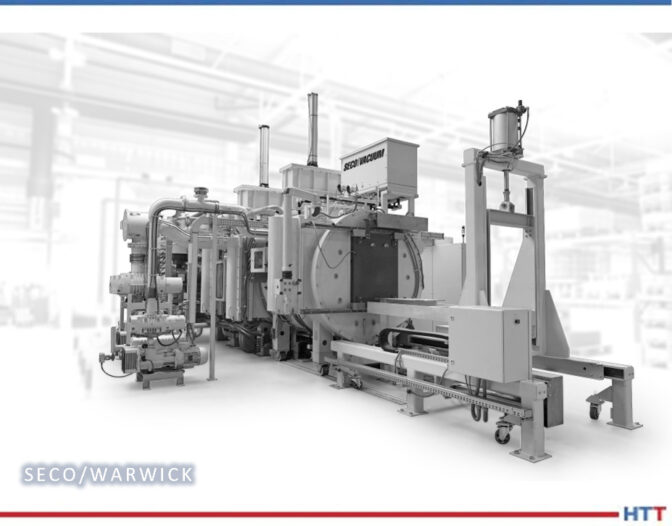
Figure 3. T-Type triple chamber for continuous batch work – oil quench or gas cooling/quenching with a separate chamber for preheating and semicontinuous operation
Source: SECO/VACUUM Technologies
Which Brings Us to Today
Vacuum oil quenching technology has progressed to overcome the challenges of yesteryear, and technological improvements have made it a flexible and configurable option for a heat treater’s current – and future – needs.
The VOQ is now available in configurations that provide both batch and semicontinuous options. This provides the opportunity to harden or case harden components with increased productivity and efficiency.
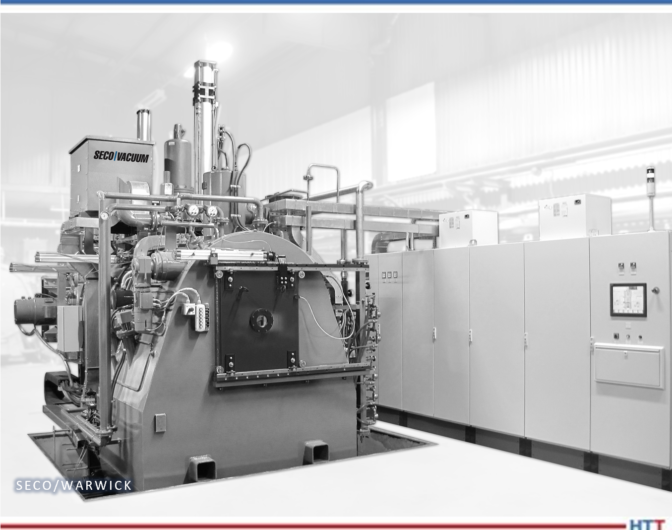
A common configuration offered is the two-chamber VOQ furnace as pictured in Figure 2. In this batch type configuration, common working zone sizes – such as 24″ x 24″ x 36″ or 36″ x 36″ x 48″ – are available with load capacities up to 2,650 lbs. A graphite-insulated hot zone provides the capability to achieve working temperatures up to 2400°F while providing the platform to case harden using LPC. This configuration also has the ability to conduct partial pressure heating using nitrogen. When quenching, the use of high-flow oil mixers promotes good oil mixing during quench to minimize distortion. This configuration can also cool in nitrogen above the oil in the quench tank, providing additional process flexibility.
In applications requiring higher productivity, a third preheating chamber can be added to the furnace system to provide the opportunity to preheat the furnace charge. The addition of the preheating chamber provides a semicontinuous operation as opposed to the batch operation provided by the two-chamber furnace. The result is a two times increase in throughput of the furnace system. Depending on the process requirements, production rates of up to 440 lb/hr are possible. The modern vacuum oil quench offers a versatile platform with a compact design capable of multiple processes and high production rates. The traditional two-chamber VOQ offers a batch platform capable of neutral and case hardening through the use of LPC. The three-chamber model provides similar options with the opportunity for high-capacity production through the addition of a preheating chamber with semicontinuous processing. Both demonstrate the advancements and the potential of this modern furnace as flexible, safe, and environmentally-friendly option in oil quenching.
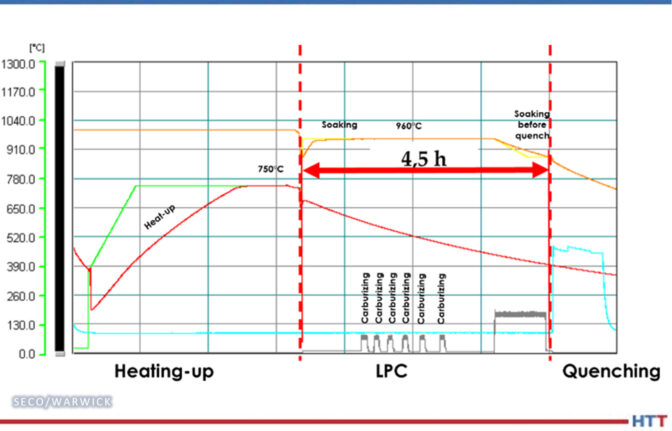
Figure 4. An LPC process that yielded a net 1,322 lb (600 kg) load of gears with an effective case depth of 0.039 in (1 mm). This resulted in a throughput of 294 lb/hr (133 kg/hr). Slight adjustments to this process have rendered production of up to 440 lb/hr. (Source: Maciej Korecki, “Case Study of CMe-T6810-25”)
Source: SECO/VACUUM Technologies
About the Author: Don Marteeny has been vice president of Engineering for SECO/VACUUM Technologies for over five years. He is a licensed professional engineer and has been a leader at the company over the last several years filling project management and engineering leadership responsibilities. Don is a member of Heat Treat Today’s 40 Under 40 Class of 2021.
For more information: Contact Don at Don.Marteeny@secowarwick.com
Find heat treating products and services when you search on Heat Treat Buyers Guide.com
There’s always more to learn, and at Heat Treat Today, we strive to help you be well informed. Thanks to our Heat TreatRadio guests, we are happy to offer much more expertise on all things vacuum processing, including hardening, ion nitriding, and the stainless steel materials in vacuum furnaces.
This Technical Tuesday article was written by the Heat Treat Today Editorial Team for theNovember 2023 Vacuum Heat Treating print edition.
Heat Treat Radio #93: Why Ion Nitride? An Exploration with Gary Sharp
Contact us with your Reader Feedback!
Perhaps the most visual of all vacuum processes, ion nitriding is known for its unique purple glow, caused by nitrogen diffusing into the surface of the workpiece. Gary Sharp gives this glowing summary of ion nitriding, including the development of vacuum equipment to fit the process and special challenges like loading vacuum chambers and parts cleaning in this recent episode.
“[Ion nitriding is] a diffusion process. If you look at a piece of equipment, a hearth plate is a cathode in a DC circuit. The vessel wall is the anode, and the gas is your carrier.
“Through the transfer of energy, you bombard the part with ions and neutral atoms. They transfer their kinetic energy, and that is what actually heats up the parts. In the early years, that was the only way you could heat the parts. Later came more developed equipment.”
“Now, you have auxiliary heating in the walls, which adds some advantage but also a little more complexity in terms of keeping and maintaining a current density on the part adequate to diffuse into the metal itself. Sometimes you put it in a vessel, and you turn on the power supply. All the energy is coming from somewhere else, and you don’t actually diffuse or harden the part itself. It’s been solved, obviously, over the years.”
As Sharp further explains, some advantages of ion (or plasma) nitriding overlap with other forms of nitriding. But specific to this purple heat treatment under vacuum are its great masking abilities.
Heat Treat Radio #82: Gun Part Treatments, Turning Up the Heat with Steve Kowalski
When it comes to stainless steels for gun components, autonomy is the name of the game. Vacuum processing is “critical” in the gun part industry, says Steve Kowalski, president of Kowalski Heat Treating, for this reason of control over the part:
“With stainlesses and the various materials that we’re currently using, having high-pressure quench vacuums/high pressure quench allows for a significant amount of flexibility. We can finetune a recipe, or cycle, to achieve properties that the customer needs where it makes it repeatable.”
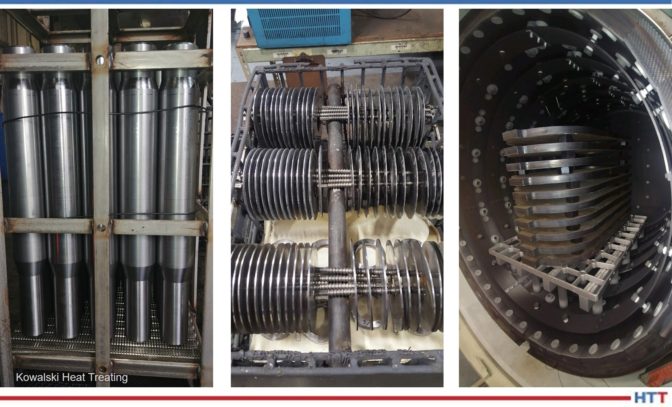
Rolls, slitter blades racked, and SS vavle seats for vacuum processing
Source: Kowalski Heat Treating
The means to reach the end of perfectly heat treated components are many, the critical step being defining the heat treat process itself. “The majority of what we process for the gun world (for the firearms world) would be either salt to salt rack austempering or marquenching, vacuum and actually plasma processing, whether it’s FNC or nitriding. We’re involved with those three areas in the gun world.” He later expands upon this list noting, “salt neutral hardening, salt hardening, and then marquenching or austempering, depending on the component.”
Heat Treat Radio #54: Metal Hardening 101 with Mark Hemsath, Part 2 of 3
“Hardening” is a broad thermal processing term that generally means increasing a material’s strength and toughness and minimizing distortion. Hardening can be done in a simple tip-up or bell furnace. So, which hardening processes require vacuum furnaces?
In addition to plasma nitriding as mentioned above, Mark Hemsath of NITREX sheds some light on carburizing as done in a vacuum furnace. He says, “Caburizing is the addition of carbon, right? So, the difference here is that when we talk low pressure . . . it’s done at a negative pressure, less so than atmosphere. We call this either low pressure carburizing or vacuum carburizing; it’s the same process. This takes place at pressures typically in the 1–15 torr range, which is about 1–20 millibar range of pressure. If you know one atmosphere is 760 torr, when we’re going down to 1–15 torr, we’re at pretty good vacuum. Just like with gas carburizing, the higher the temperature, the faster the process. What’s unique with vacuum equipment is that vacuum equipment is typically capable of going to higher temperatures which adds to the speed of carburizing.”
Unveiling the inner workings of a vacuum furnace, he adds, “Now, we didn’t discuss the design of gas carburizing furnaces that much, but typically they’re gas fired and they have radiant tubes. In the interior of the furnace, the higher temperature you go with the really nasty carburizing atmosphere, it reduces the life of those furnaces substantially, so the people that own the furnaces don’t want to go to high temperature. If you can go 100 degrees higher in temperature, like you can with the vacuum carburizing furnace, the process gets much faster. That means higher productivity.”
Find heat treating products and services when you search on Heat Treat Buyers Guide.com
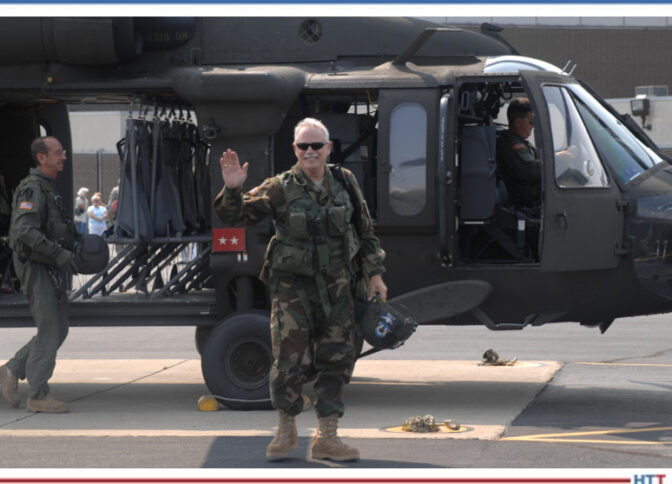
MG Timothy J. Wright (T.J. Wright) understands the heat from a heat treat furnace as well as the heat of engagement in war. As a critical actor in the history of Wirco, Incorporated, T.J. shares his background in the heat treat industry, how this intertwined with a career in the military, and the hallmarks of a life of leadership. Heat TreatTodayis honored to bring this Heat TreatRadio episode to pay respect to his long career in the U.S. Army, serving our nation and facilitating peace abroad.
Bethany Leone, managing editor at Heat TreatToday, serves as the special host for today's episode. The episode was sponsored by C3 Data.
Below, you can watch the video, listen to the podcast by clicking on the audio play button, or read an edited transcript.
The following transcript has been edited for your reading enjoyment.
Meet Major General TJ Wright (00:43)
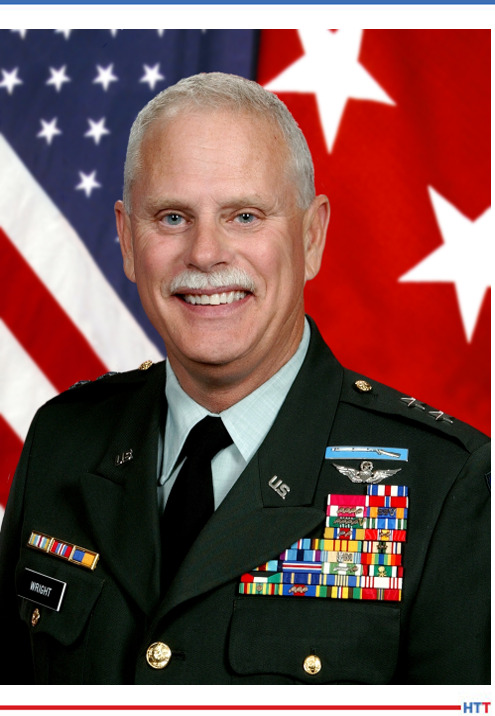
Major General TJ Wright
Source: Wright family
Bethany Leone: Let me start off by just sharing a little bit about some bio information about yourself. Could you introduce yourself, who you are, maybe where you grew up?
MG T.J. Wright: My name is Timothy Joseph Wright. I spent my younger years, up until the 8th grade, in Phoenix, Arizona with my family, of which I have three brothers. I moved back to Fort Wayne, Indiana, midterm in the 8th grade year. I went to New Haven High School and worked in a garage for my grandfather in 8th grade and through my sophomore year.
Contact us with your Reader Feedback!
After that, my dad was running a heat treat for a company called National Heat Treat, which doesn’t exist anymore; this was the reason we moved back to Fort Wayne. So, I got a job running tool steel on second shift.
There was a metallurgist there — his name was Carl Bobee — and he taught me how to mount samples and read microstructures, and I learned how to run furnaces. In those days, we took dewpoints with a little dry ice cup in a thing with a thermometer on it. That gives you some concept of how the technology has changed over the last 50 years — it’s pretty amazing.
That caused me and afforded me the ability to get a job after high school as a metallurgical technician working for International Harvester. About midway through my second year working there, I got my notice to come down and take a physical to go here to Indianapolis. When I got to the end, I asked the sergeant, “What does that mean?” and he said, “You’ll probably be back here in 60–90 days; you’ll probably be drafted,” because the Vietnam War was heating up. So, I talked to my dad. He was a WWII vet, as was my grandfather and my uncle. He said if it was me, he would enlist; make it a choice, not chance.
So, I tried to figure out what I was going to do, and I was sitting at home feeling sorry for myself, and a helicopter goes flying across the TV screen and it says the Army is looking for helicopter pilots. I said, “If I’m going, that’s what I’m going to do.” So, I enlisted in the Army, took all the physicals, took the tests, and made the qualification. That’s how my career started.
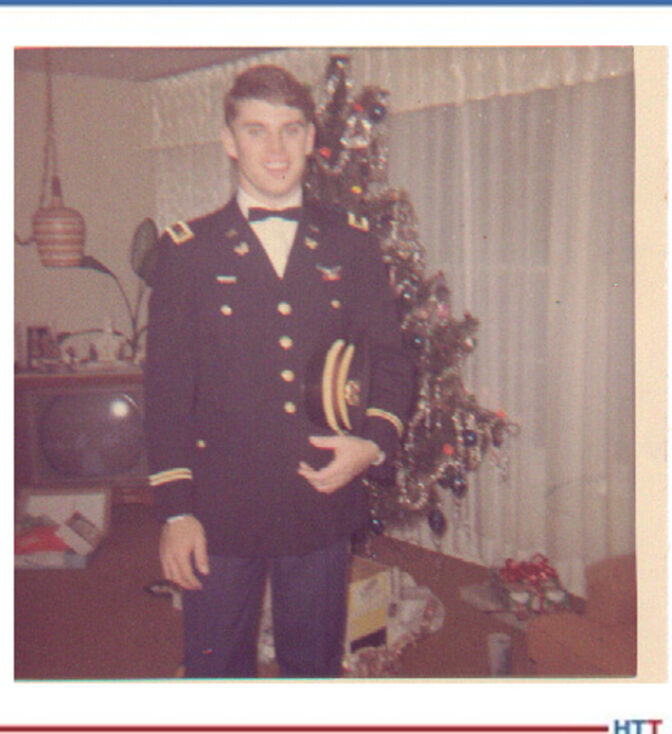
TJ new grad from Flight School School Ft Wolters TX 1967
Source: Wright family
After Enlisting (03:18)
Bethany Leone: When you’re making that decision, it sounds like your family was a big support for you as you’re making that transition to enlist.
MG T.J. Wright: Yes. Family is everything. And after you’re in the service, you learn to recognize that it’s not just your family, but it’s your compatriots and your fellow soldier and airmen’s families too that you care about. It impacts everybody, if something happens, good or bad.
Bethany Leone: What year did you enlist?
MG T.J. Wright: 1966, I believe.
Bethany Leone: And was that before you went to get your college education?
MG T.J. Wright: Correct, yes.
Bethany Leone: How did that come about? Was it through the Army that you decided to?
MG T.J. Wright: I enlisted in the Army, went to Vietnam, and came back from Vietnam. I was an instructor pilot then at Fort Wolters, Texas, where I taught young people — I call them young because I was all of 22 or 23 maybe — how to strap in the helicopter, how to wear the helmet, how to talk on the radio, how to hover. I made helicopter pilots out of them.
People didn’t hardly wear seatbelts in those days. Then, when my time was up (my enlistment of four years) they wanted me to stay in the Army and offered me a direct commission, and I said, “I don’t think I want to go back to Vietnam again, thanks,” so I got off active duty.
In the meantime, while I was in the Army, Lindsey and I got married. We were in Texas and I knew I wanted to be a pilot. Purdue has a great aviation professional pilot program and I applied to go to that. I was accepted and so we spent the next three years at Purdue.
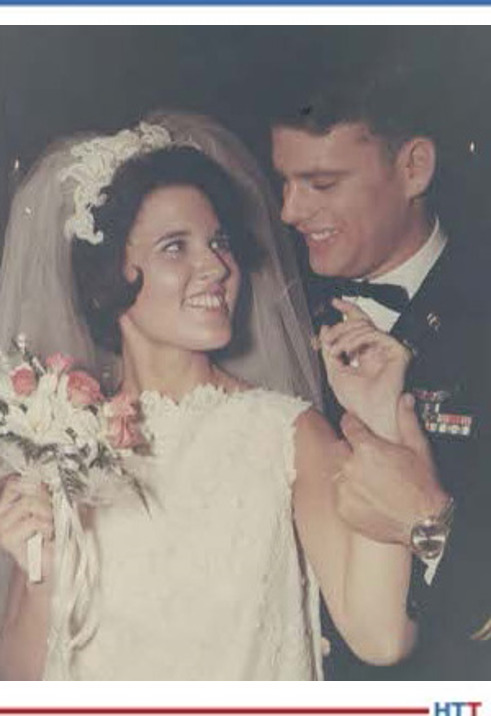
TJ and Lindsey 1969
Source: Wright family
I joined the National Guard, at that time, and I was a warrant officer initially. Once again, they offered me a direct commission to become a commissioned officer. So, I accepted it and became a Second Lieutenant.
Vietnam (05:59)
Bethany Leone: Moving back to when you were in Vietnam, because that was your first experience, I imagine it was probably pretty foundational as to how you approached your other deployments.
MG T.J. Wright: It gave me a real insight into being led and leadership. I was in an Air Calvary troopalry, and we had Cobra gunships. We had 086 Scout helicopters and UH 1 Huey liftships and we had an infantry platoon. The mission of the troop was to go out, find bad guys, and kill them. If you needed to put boots on the ground, we would insert our platoon on the ground, and we’d provide them with gunship cover.
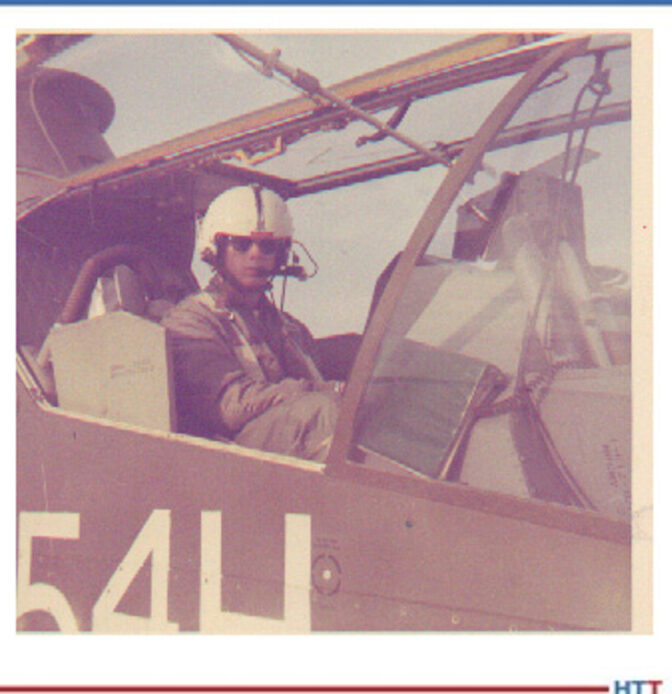
Cobra Helicopter Transition School
enroute to Vietnam 1967
Source: Wright family
I’m trying to remember the exact date, but we were down in the south and we got in a fight with a North Vietnamese regiment (which is a large troop concentration) and there were six silver stars given out that day, which is the nation’s third highest award. I was one of the recipients of it. Five of my other pilots were also recipients that day because there was a lot of heroism going on. There were a lot of aircraft getting shot down and people rescuing other people, blowing up sampans [a type of small, flat-bottomed wooden boat] and shooting people.
Bethany Leone: How long was the engagement?
MG T.J. Wright: It was probably 18 hours. Once it got dark, things kind of settled down and, by then, we got out and had a backup for the 9th Infantry Division and they had inserted several battalions into the area. We provided gun cover for those guys after that, but the initial stage was pretty hectic.
Bethany Leone: I can imagine. Do you remember where you were when you got the mission?
MG T.J. Wright: It was like an everyday mission: We’re going to go down and scout this area out. Then, when we got down there, we almost immediately got engaged and started calling for help to get the whole troop committed.
Bethany Leone: So, when you say it was like a normal day, can you flesh that out a little bit? What did a normal day look like in Vietnam?
MG T.J. Wright: We ran, generally, 24-hour operations. We did night missions and daytime missions, and we always had an aircraft on standby. For instance, one time, I was a standby gunship guy and at about 2 o’clock in the morning they came and woke me up and said, “You’ve gotta go. Call Operations and they’ll brief you on the Ops channel.”
So, I got in the aircraft which had already been preflighted and was ready to go, and I started it up and got airborne. They said there’s an ARVN company, and I read the coordinates and headed south, and they said they’re in contact and they need support. The advisor was asking for Army gunship support.
A little while after that, I got another call from Operations saying there was another ARVN company in the same general location, and they’re also receiving fire, and the advisor was asking for support. As I came up on the area, I could see these tracers going this way and going this way, and I looked at that and I thought about it for a little bit, and I told both of the advisors, “Okay, everybody cease fire.” All the firing stopped — because it was just two ARVN companies that were shooting up one another — and I just turned around and went home.
Bethany Leone: Wow. That kind of decision-making on your part — did you have to do a lot of that often?
MG T.J. Wright: Almost every day. Flying around, the scout guy would be looking for tracks or something, because as soon as they heard you coming, they would go hide, and I would be flying cover for him in case he got shot at. There was a big kind of area — mostly in the Delta — but a big nipa palm tree area near a river, and he was on one end of the palm trees and I was on the other, and I’d go around the corner to the other side and there is a DShKM .51 caliber weapon, on a big tripod, and about five guys, and they’ve got a camo net over it, and they’re trying to pull it off so they can engage me, but I engaged them a little before they ever got it done.
Bethany Leone: Was there a moment, when you were out in Vietnam, when your leadership was really put to the test, a challenging situation? Maybe it was officers you were working with.
MG T.J. Wright: One instance that comes to mind was when we were supporting an infantry battalion. They were on the ground and they were pretty heavily engaged. The battalion commander was in a C&C BIRD command and control aircraft overhead.
It became pretty obvious to me that he had lost perception of what the situation was on the ground. I was pretty aware, as a gunship pilot, about keeping track of what’s going on in the battle. On another frequency, I was telling him where his guys were and what they needed to do, and helped him do what he was supposed to do because he was just not aware of the situation; he’d lost contact with what was going on.
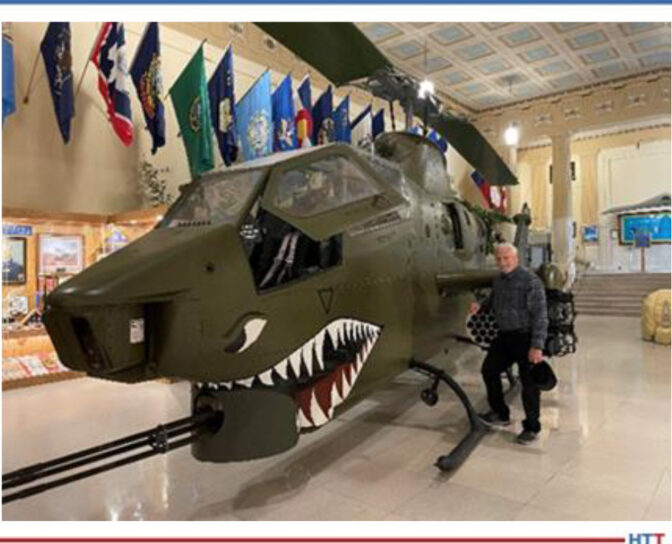
Cobra Helicopter TJ flew in VN. “Silver Spur 39 from the Multi-National Peace Mission in Bosnia 1990. CW2 Timothy J Wright” is inscribed on the outside of the aircraft. The helicopter was disassembled and reassembled by National Guard mechanics, from the Shelbyville National Guard Aviation Facility.
On permanent display at the Indiana War Memorial Museum.
Source: Wright family
The National Guard (12:02)
Bethany Leone: That would’ve been quite dangerous. Stepping in would’ve been quite a key move.
So, then, you said that you came back from Vietnam, married Lindsey, and then you started in the National Guard, at that point.
MG T.J. Wright: Yes. I think I was the second helicopter pilot to join the Indiana National Guard. In those days, they had Korean War vintage aircraft, really old stuff. One of the things that really got me interested was the Vietnam veterans just kept coming, and we had a lot in common, you know? We had a lot of expertise, and it was enjoyable to be around “my guys,” you know?
Bethany Leone: Yes. You go somewhere, you have all those experiences, daily experiences, that are so different from in the U.S. I can imagine the comradery and being able to support each other, also, in coming back.
MG T.J. Wright: It was interesting. You think about, at that point, all these guys had all this experience, as did I, and we would talk; but they were also getting on with their lives, you know? There were mostly a lot of warrant officers and they were going on to be dentists or pilots. It was interesting.
Bethany Leone: Yes, quite interesting.
At some point you were involved in Desert Storm. Where was that in the timeline?
MG T.J. Wright: As time went on, I got a direct commission, and I was a captain. I figured I was ready to be a major and, somehow, in all my assignments, I was an operator so I was involved in doing stuff in, what one would call at that level, the S-3 kind of thing. I ended up on the division staff as a G-1, which is personnel pushing.
I was very unsatisfied with my assignment, and I was pretty vocal about it. One day, the division commander called me into his office and he had this big printout and he said, “Well, when your number (whatever I was, 250th on the promotion list) is up, you’ll get promoted.” And I said, “Well, thank you, sir, but I don’t want to be promoted for just coming to drill.”
I went home that night and I got a call from a guy in the Army Reserve saying, “Hey, we’re looking for an aviator in the 21st Support Command,” and he told me what their mission was and it’s a major’s job. So, I said, “Okay,” and I transferred out of the Guard and went to the Army Reserve.
The Army Reserve (14:33)
It was a great assignment. There were great guys, smart guys. There were lots of opportunities to go overseas and participate with the real 21st Command which is the Support Command for all the European Theater.
We would test alerts. But sitting at home, one Sunday morning, I was having coffee and the phone rang. I answered the phone and they said, “This is a raging bull,” meaning it’s a real thing/alert, and you need to be at the armory as quickly as possible.
We got mobilized to go to Desert Storm, right there on the spot. They took us there, and I think we were there in a couple of weeks, probably.
Bethany Leone: That mobilization — speaking to someone who doesn’t have any experience — what does that look like?
MG T.J. Wright: We immediately sent an advance team to Saudi Arabia, so that we have a touchpoint on the ground. We loaded up all of our equipment, which we didn’t have a lot of. We got a stipend and a laundry list of stuff from General Pagonis’ staff who was the army logistics guy for the entire army in the theater — computers, copy machines, telephones, all kinds of stuff to bring. I was one of the guys that got engaged to purchase all of that stuff and get it ready to go on the 141 and go off to war with it.
In a very short period of time, we committed pretty close to $750,000 in stuff that we needed to take with us. We all packed up on three 141 Starlifters (which is the predecessor to the C-17 today) with all that equipment and all our people, and flew to Roda, Spain, refueled, got back on the airplane and went to Saudi Arabia. We landed in the middle of the night.
Bethany Leone: What was your first impression? I mean, in the middle of the night, you couldn’t really see or be impressed much.
MG T.J. Wright: It was early in the war and before Christmas in 1990. General Pagonis was absconding with everything he could do to fulfill his mission — buying busses, renting buses, trucks, whatever he needed to get — and we put the whole organization on about five school buses and went to Bahrain where we were going to be stationed. We got places to stay, to sleep and rest our heads, kind of thing.
Bethany Leone: It was right before Christmas that you arrived, you said?
MG T.J. Wright: Yes.
Bethany Leone: When you arrived in Bahrain, versus when you arrived in Vietnam, could you feel the difference in setting, in environment?
MG T.J. Wright: Yes. Vietnam was well organized, and you went in and you didn’t know where you were going so you went to the reception station and they gave you a set of orders and told you to go find yourself a cot and we’ll call you when your transportation, to wherever it was you were going, comes. That’s how I got my assignment.
Here, I stayed with the organization that I deployed with, and we all had our separate jobs. I was actually the senior aviation logistician for army aircraft in the theater, as a major; normally, that’s a full colonel’s job. So, I was making sure that we had all the fuel, bullets, parts, and maintenance that was needed.
For instance, I had operational control of 1200 DynCorp guys that were civilian contractors that were doing depot-level maintenance in the theater. We had to refit all the aircraft with filters. The sand was so damaging that we put tape on the rotor blades to keep them from eroding (being sand-blasted) and all kinds of fixes like that, on the spot.
Bethany Leone: When you were in Vietnam, the U.S. had already been there for a couple/few years, but when you let go into Desert Storm for that, you were the frontlines; you were trying to get things moving.
MG T.J. Wright: There was only one Corp. there, at the time we arrived, and they hadn’t deployed yet; they were still camped out in the desert right near where we were. Then, we got the word that the 7th Corp. was supposed to be disbanded, and they were in the process of leaving Europe and coming back to the States and they did a righthand turn with the whole Corp. and brought them to the desert too. So, we had to figure out how we’re going to house, feed and place 300,000 guys and all their equipment.
Bethany Leone: I don’t even want to try and figure out that logistical nightmare!
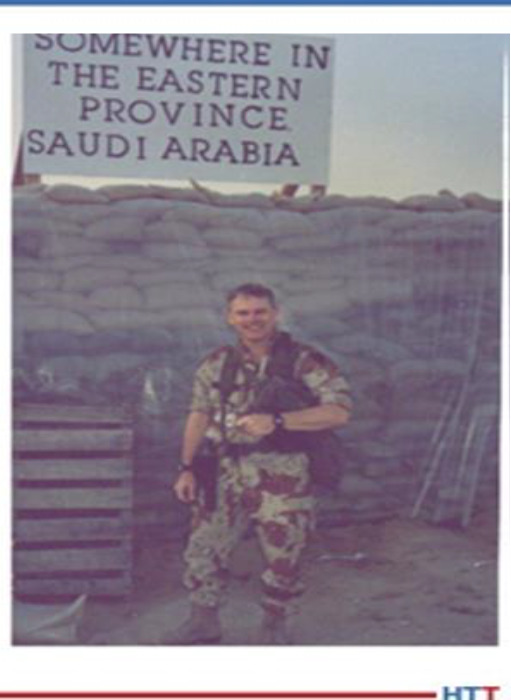
1st Gulf War 1990 Dahran, SA
Logistician for 1700 US Army aircrafts in country
Source: Wright family
MG T.J. Wright: Here’s an example of logistics to think in terms of: You’ve got 700,000 guys in the theater and each of them has two eggs for breakfast, how much oil does it take to cook them?
Bethany Leone: I don’t know! Do you know?
MG T.J. Wright: I don’t know, but I know it’s a truckload.
Bethany Leone: Wow.
So, you arrived before Christmas, and you stayed through the whole operation?
MG T.J. Wright: Yes.
Bethany Leone: What did that look like as it unfolded? There were some peak parts, I’m sure, in January.
MG T.J. Wright: As all the units deployed to their forward staging areas and got ready to start the war, we were doing all of these things that I alluded to with taking care of problems. Normally, we’d get on a set of engines on a Black Hawk or a Cobra engine, you’d get 1,000/1,200 hours on the engine before you’d take it out and overhaul it and put it back in. We were getting about 100 hours on a set of engines. The DynCorp guys were rotating these engines in and out, and they were changing them in the field.
Eventually, what happens is, there is only a specific number of parts available, and we would normally get them back and rebuild them or refurbish them and put them back in the supply system. We didn’t have a method, at that point, to recover those (we called them “repairables”) and get them back in the system. So, I had to develop a system that went to get them and police them up. Initially, I got the Air Force to supply C-130s and I rode around, going to each one of these aviation brigades and policing up all the repairables and bringing them back.
Then, the National Guard brought Sherpas, which is a twin-engine, high-wing, turbo-prop — a little mini cargo plane. I used those guys to not only get repairables back but to deliver parts. I had almost all of the parts that the Army owned in Abu Dhabi. If your aircraft broke or if you needed a part, you would submit a document request, and if it was an AOG (aircraft on ground) kind of part, they would fax a request into St. Louis, which was where the general aviation was managed from. They would put a fax in a fax machine telling the guys in Abu Dhabi to put it on the Sherpa and where to take it. We would get less than a 24-hour turnaround on parts delivery, so it was pretty effective. We had a 90-some percent availability rate, across the board.
One of the things — to give you an idea of what I did — was that when they were briefing General Schwarzkopf on how they were going to start the war, and they were going to use an attack battalion out of the 101st to go in and take the radar stations out so the Air Force could come in and do their attack without getting shot down by the air defense guys.
Lieutenant Colonel Cody, the attack battalion commander, had reached Schwarzkopf so they were going to go into the desert and refuel and attack and then come back out. Schwarzkopf said, “There is no way that you’re going to refuel in the desert.” During the Carter era, we had that Desert One fiasco and the helicopter crashed into the 130 and it was a big mess out there, and he (Schwarzkopf) said. “We’re not doing it. Find another way to do it.”
So, General Pagonis and my boss, Tom Jones, look at me (I’m the aviation guy), and I said, “Well, there’s this thing called the ERF system (Extended Range Fuel system), and I know that there’s 200 of them in Kaiserslautern and we can just send some 141 up to get what we need and unmount a rack of AGM-114 Hellfire missiles, put 300 gallons of fuel on that thing, and then go in and out without refueling, and if you need more missiles, just take more airplanes.” So, that’s exactly what happened.
Bethany Leone: It is quite amazing the logistics, and to be able to make sure that what happens in the field goes down while it needs to. Because you can plan all you want and say we’re going to send in this — these people and this is what they’re going to do — but do they have the fuel for it to come back. Someone needs to be thinking about it and if they don’t, what’s the solution?
MG T.J. Wright: Right. You’ve got to plan for rearming, refueling, recovery of downed vehicles, wounded, and POWs. After the first day of the ground war, we had 80,000 POWs. You’ve got to feed and house these guys, you know? I mean, they were just surrendering like crazy, as fast as they could because they didn’t want to die.
Bethany Leone: To honor that – how do you fulfill that?
How did you end your time with Desert Storm? Was it a slow end or was it a quick in, quick out?
MG T.J. Wright: Well, at the end of the war, the divisions all came back and prepared to redeploy back to their home stations. By then, General Pagonis had been promoted to 4-star and he had a 2-star deputy. We had a huge heliport that we kept these aircraft on but not enough to cover 1700 helicopters. So, I had a plan.
You’ve got to clean these aircraft and make sure there’s no dirt on them and get them ready to ship them back to wherever it was they were going. The deputy called me in one day and said, “You’ve got to find another place to go because I’m taking over the heliport.” His plan was to use that to redeploy all the other equipment — the tanks, APCs, trucks — everything had to be packaged up and ready to redeploy back to home station.
I stood my ground as much as I could with a 2-star general. I got a slice of the heliport and so I reorganized my plan. They would bring their aircraft in and we would wash them and get them ready to redeploy and then fly the aircraft to the port, take the rotor blades off of them, put shrink-wrap over the whole thing, put them on the ship and send them back.
Bethany Leone: How long did that take? How many days or weeks?
MG T.J. Wright: It was a better part of a month, I would say.
Bethany Leone: That’s a lot of equipment to keep count of and store.
MG T.J. Wright: A rotor blade for a Black Hawk helicopter costs about $100,000 and one (helicopter) has five rotor blades on it, I think. When they came over, they put all those rotor blades in shipping containers for rotor blades. But when they got to the desert, they turned those shipping containers upside down and used them for floor tents. So, I had to figure out how to get the rotor blades homes safely.
I didn’t have any chains to chain the aircraft down on the ship so I had to figure all of that out. One of the other guys, Larry McIntyre, who was the “everything else” guy, bought pressure washers — thousands of them. He set up a repair facility and had parts because things would die because they were using them 24/7. He’d change the oil in them regularly.
Bethany Leone: When you get back, and you’re in the National Guard still, what is your rank?
MG T.J. Wright: What happened is, when I came back from Desert Storm, I got a call from the adjutant general chief of staff and he said, “Hey, we want you to come back to the Guard.” I said, “Doing what?” He said, "Well, on the staff, we have a G-1 position,” – which was the reason I left in the first place! And he said, “It’s a lieutenant colonel’s job.” I said, “Okay, I’ll do it.” He said, "You won’t be there long.”
Back to the National Guard(29:31)
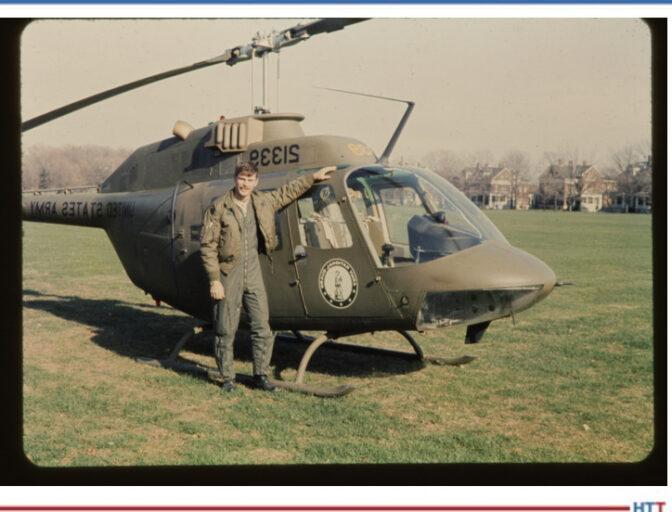
OH 58A Indiana National Guard 1973
Source: Wright family
So, I transferred back to the National Guard, got promoted to lieutenant colonel, and three months later, I got transferred to the Aviation Brigade as the operations officer. I was there three or four months and then they made me commander.
Bethany Leone: As commander, what was your role as commander in seeing these operations?
MG T.J. Wright: It was an interesting time. We talked earlier about all the old aircraft that we had, and in the meantime, we had transitioned to Hueys and OH-58s, but we were positioning ourselves now to get Black Hawks, which is the Army’s premier lift aircraft. I started sending guys to school, transitioning pilots, getting the crew maintenance guys spun up, and looking at maintenance facilities and getting them organized.
Bethany Leone: How long were you in that position?
MG T.J. Wright: I was the brigade commander, I think, for probably 18 months or so, then I got promoted to brigadier general and became the assistant division commander.
Bethany Leone: Again, more strategy planning.
MG T.J. Wright: Higher level expertise, yes.
Bethany Leone: What were some of the responsibilities that came with it, or one of the tasks that you accomplished?
Bosnia and Herzegovina (31:06)
MG T.J. Wright: I wasn’t there very long because I got activated to go take over the U.S. command in Bosnia.
Bethany Leone: How were you chosen, or activated, for that?
MG T.J. Wright: The plan was that, normally, every six months, they would rotate a unit in and out of Bosnia. I was told that we were going to be the last rotation and that the U.S. was leaving Bosnia. My job was to continue the peace enforcement and do a handoff to the EUCOM European theater to take over the mission.
We mobilized an infantry battalion out of the 38th division along with an aviation section, and the staff and I trained here in the States for 30 days, and then we went to Grafenwöhr for 30 days and got some more training spun up, and then we deployed into Bosnia with all of our equipment and people.
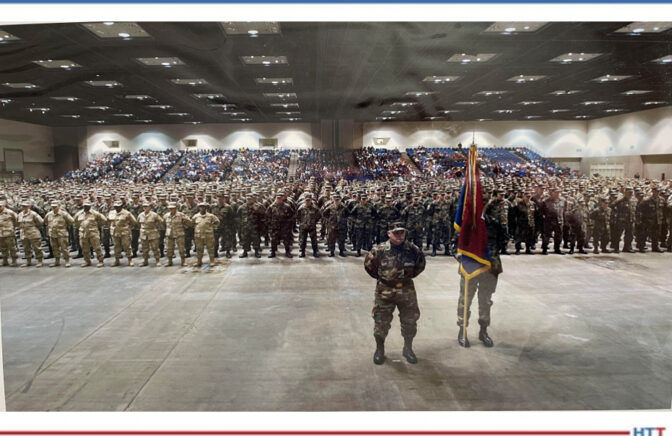
Command of SFOR Multinational 15 Stabilization Forces for Peace Enforcement in Herzegovina 1990. 5,000 troops.
Source: Wright family
Bethany Leone: Now, Bosnia and Herzegovina — that part of history is not well covered and I’m sure that people who are listening to our interview would probably appreciate a scope of what that is, at least from your perspective.
MG T.J. Wright: That all started during the Clinton era. He said we’d just be there a year, and we were there far longer than that. The mission was peace enforcement. Peace enforcement is all the protagonists that are involved tell them to ceasefire, and I’m going to force you to ceasefire and I’ve got the horsepower to do it. So, we had the Serbs, the Croats, and the Muslims all shooting at one another in various forms and fashions.
General Đukić, one of the Serbian commanders came to my office one day and he said, “So, if I start to roll my tanks down this road - we were in Tuzla – what would you do?” I said, “Do you see those eight Apache helicopters with the hellfire missiles out there? You wouldn’t make it to my compound, I can tell you that, right now.”
Bethany Leone: So, tension levels were still really high when you got there.
MG T.J. Wright: Not so much. I mean, it’s just probing — stick in to see how you feel. Probably after I was there three months, the realization that we were actually going to leave and things needed to be normalized started to set in. People started saying — leaders, we don’t want you to go. Stop; we want you to stay here. But it was time to go home.
Bethany Leone: I guess that’s kind of how it is once peace is starting to set in, the appreciation for the authority that brought that about is really evident.
MG T.J. Wright: They were very grateful. Serb, Croats, or Muslim, it didn’t matter — they were happy it was going to be over and that they could finally get back to some sense of normalcy.
There were scars, you know. The Serbs, in one fell swoop, killed 6,000 Muslims. They were throwing their bodies in the ground. That’s a lot of bodies. They had mass graves, and we were still finding mass graves when I was there in rotation 15.
We had a “no-knock” policy. Unlike in this country, unless you’ve got a warrant you can’t come into somebody’s house, we could just go in whenever we wanted. We would still find things, because there are still some idiots out there.
Here’s a for instance: One of my guys, in a no-knock search, found a U.S. Army Barrett sniper rifle which is about a $50,000 piece of equipment. It somehow made its way to Bosnia and I’ve got a nice picture of myself shooting that out at the range before we put it back into the supply system.
Bethany Leone: How did you prepare for handling the relationships that you found over there?
MG T.J. Wright: Well, Bosnia and Herzegovina was divided up into three sections: the U.S and, when I was there, the Canadian, and the Spanish had the south. General Bier (who was the Canadian commander), he and I met with our boss, General Packett, and discussed about guidance and what we wanted to do.
One of the things that we implemented was moving people out of the cantonment area (the FOB) into the villages so people would be comfortable and come and tell us where the sniper rifles were hidden and that kind of stuff. That was a very successful program, once we got it launched.
Bethany Leone: I guess, weeding out the unrest in neighborhoods, and bringing the peace to a very immediate personal level for those citizens.
Was there any resistance to that plan?
MG T.J. Wright: I don’t think so. That was always a concern of General Bell. He was the army commander in Europe, and he was my support chain. While I was a U.N. commander (NATO), he frequently visited to make sure he was giving me everything that I needed or wanted. When I told him I was going to do this program, where I put the troops out into the villages, he was not a happy camper; he did not like that idea at all. It was difficult to get the logistics for that organized.
I was telling General Packett that I was getting some resistance from General Bell, and he said, “Well, General Jones,”— who was the SACEUR commander that was coming to see me in a week — “We’ll talk to him about it.” When I told General Jones, he thought it was the greatest thing since sliced butter.
So, General Bell’s habit was every time a 4-star would come and see me, he would come down and get debriefed. I told him that General Bell thought it was a great idea, and he said, “Yeah, I do too!” And he said, "What do you need?” and I said, "Well, I need you to get that thing out of your staff because I’ve got the requirements up there and get it moving.” Within a few days, it started moving again.
Bethany Leone: So, overall, though, your plans, the plans, I guess, of the U.S. and then of NATO, were largely smooth overall, at this point.
MG T.J. Wright: Yes. I learned, by then, that everybody wants to know, after a while, “When are we going home?” Nobody could tell me when we were going home. Sometimes, you can fulfill your own destiny. I just started briefing — when all of these people would come to see me — I’d give them a little slide presentation and say, “We expect to depart on the 14th of December.”
One day, at the Army operation center, they were briefing the on what was going on around the world when the Bosnia thing came up, and they said we planned to depart on the 14th of December, so it became a fact, you know?
Bethany Leone: That’s pretty great! It’s interesting that some decisions aren’t made.
MG T.J. Wright: You can influence it.
Bethany Leone: You can influence it, yes. Some decisions just become as such.
Now, did you have a particular desire to get back, then, as soon as possible, or what were your thoughts on being there versus being with family?
MG T.J. Wright: I think, from a soldier perspective, it was a good rotation. We had good communications. Lindsey and I would text back and forth every night. Soldiers had the same capability. One of the problems that you run into in a situation like that is if it were to be a problem or an issue, everybody has a cellphone. Somehow, you had to shut all that stuff off and clamp down on it until I can tell my boss what’s going on and what’s happening.
One of the things that happened early in the rotation was General Packett told me that he thought there was a PIFWC (Person Indicted for War Crimes) hiding in a town called Pale. So, we airlifted the troops in, surrounded the town, and he gave me a British special operations group to stay in a Serbian church.
General Packett specifically told them no C-4. So, the first thing they did was they went up there and blew the doors off this church. These weren’t just little doors, they were four foot wide, 14 foot tall and three inches thick.
Unfortunately, with all the hubbub going on, the priest and his son were coming down the steps of this church when they blew those two doors off and just about killed both of them, because they got hit by the debris and the doors. Fortunately, they had an emergency medical doctor with them, and they reinflated their lungs and I got them on a medevac and got them to the hospital, and they both survived. But that’s the kind of situation where you don’t want people on their cellphones calling the press telling them what was going on.
Bethany Leone: Absolutely. You don’t want to brew tension from within.
At least to my mind, this is such a very different experience from your experience during the Desert Storm operation. There is still a lot of strategy, I’m sure, but quite different. I don’t know if you could speak to that.
MG T.J. Wright: Well, not only did we have U.S. troops there, but we also had Polish and various other NATO companies and battalions. They had a Turkish battalion, a Polish battalion, a Lithuanian platoon — so there was a lot of international coordination between organizations. Some countries would allow me to tell them to do certain things, and certain things they wouldn’t let them do it. To speak to that and keep all that stuff on track, but by and large, it was dealing with the Polish and the Turks and everybody else was enjoyable. We kept them busy.
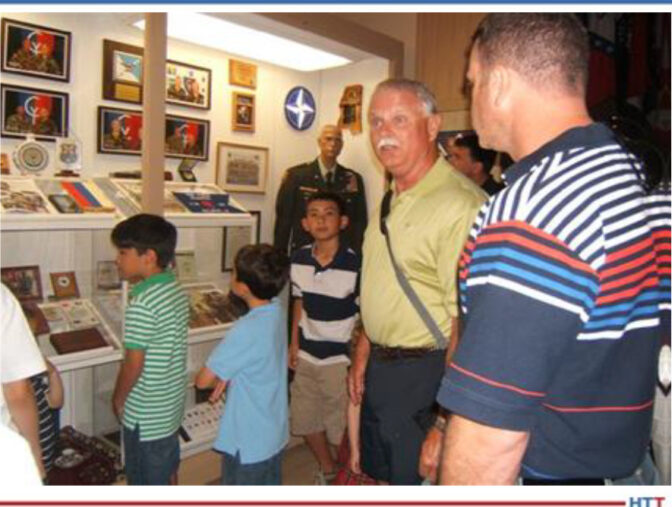
Display of artifacts, at Indiana War Memorial Museum, Indianapolis from the Multi-National Peace Mission in Bosnia 1990
Source: Wright family
Bethany Leone: Do you still have contacts from when you were over there?
MG T.J. Wright: Yes. So, General Bier, who retired from the Canadian Armed Forces, is a three-star — he’s been to our place. We have a home in Florida and he’s been down there with his wife, and we’ve been to Canada to visit them.
Bethany Leone: That’s great. It’s such a significant period of time. Specifically, for this instance, you’re working within NATO, you’re coming together for an end goal, and you actually do get to see some peace, by the end of it.
Were you pretty satisfied with how relations left off?
MG T.J. Wright: Oh, yes. I mean, we rounded up a lot of stuff. For instance, one time, in a joint operation with the Canadians, we found a whole cave full of brand new Four-deuce mortars. If you know what a mortar is: It’s a tubelike thing you put a big mortar round in it and it shoots it 8 or 10 miles out. There were probably truckloads full of ammunition to go with it. It was up in a mountain so we had to hotfoot it up and hand carry it all down to get it on the trucks, and then take it to the EOD (explosives ordnance disposal) place. The EOD guys were busy, seven days a week, just blowing up stuff that we would find.
Bethany Leone: Yes, so it doesn’t get blown up somewhere else, essentially.
MG T.J. Wright: Yes, so it doesn’t get used.
Bethany Leone: And the handoff from the North American Treaty Organization of the responsibility of peace to the EUs is not a stabilization force but I forget what the term is for that.
MG T.J. Wright: The general that was in charge of that, for the EU, was a Swedish officer. His staff all spoke English, so that made it enjoyable. It just went smoothly.
We had shipping containers — you see these things going around on trucks — we had about 180 of those setting on the airfield. I had no idea, and nobody on my staff knew what was in them, so when we got the word that it was time to wind this thing down, the bolt cutters went out and started to cut the locks on these shipping containers to see what was in them.
It was just many, many supply issues like mask mounted OH-58 site and radar system; it probably cost two or three million dollars. I was putting all this stuff back into the supply system, and the way it works is that the unit that returns it to the supply system gets credit for it and it goes into your commander’s account.
So, the Title 10 guys in Heidelberg, looking at my commander's account said, “How did you get 54 million dollars in your commander's account?” And I said, “Well, don’t touch that; I’m going to spend it!” Just joking, you know.
Bethany Leone: You had a party to throw!
MG T.J. Wright: As we emptied these containers out, we’d lift them up and put them on a truck and send them back to whoever owned them. I think we found probably six M16s and, later, M4 rifles that were lost, and that was a big deal. If you lose a weapon, you spend weeks looking for it. They were just buried under these shipping containers.
Comments on Afghanistan (47:40)
Bethany Leone: That is interesting. It makes me wonder about your thoughts on the U.S recent pulling out of Afghanistan?
MG T.J. Wright: Oh, it was a debacle.
Bethany Leone: Yes, because just as you’re describing it, from the strategy end, the strategy that happened in Afghanistan, and what we left.
MG T.J. Wright: Yes, it was like we were never there. We left 75 billion dollars’ worth of equipment and left all the people that supported us to the Taliban’s whims.
Bethany Leone: Looking at that situation, especially coming from your background with strategy, how do you think that should have been handled?
MG T.J. Wright: If I was General Milley — and I wasn’t — first of all, giving up the Bagram Air Base — that was a crazy thing. Leaving in the middle of the night, leaving our allies there, not to say a word to them is disgraceful. If we were going to withdraw, that was the perfect place to do it.
I firmly believe that had we left a support contingent to support the administration and the forces, they would’ve been successful because they had the equipment and they had the people. But they needed the intel and they needed some supply support.
But the way it worked out, with all the injuries and the supply people that were killed and maimed, not only just the U.S. forces, but other forces and civilians, I personally would call it a hasty retreat instead of a withdrawal. It was bad.
Bethany Leone: Since you’re in a position to assess that situation, I just wanted to ask that, briefly.
Major General Wright and Heat Treating (49:44)
During all this time in the U.S. Army and the Reserves and the National Guard, did you ever think, “When am I going to get back to my heat treat? What about metallurgy?”
MG T.J. Wright: One of the innate things about the Reserve situation is that everybody is “dual hatted,” so to speak; they have their civilian life and they have their military life. The civilian skills, sometimes, don’t have anything to do with what they do in the Army, but it’s a necessary skill.
Last Flight 2008. 6000 Military Flt Hours
Source: Wright family
Here is a for instance: When we deployed to the desert, fax machines had just come out, or fax computer cards by which you could fax stuff over. But there was no way to secure it, so you couldn’t send that information back and forth over a fax line because there was no secure system. One of my compatriots that worked there was a software guy and he worked for Allen-Bradley, and we cut the cord off of a KY-58, which is a secure phone, and we hooked it up to the computer and he made a jumper cable so we could fax that stuff back and forth.
Bethany Leone: Wow.
MG T.J. Wright: Yes, it was pretty cool. He was a smart guy.
He retired as a full colonel and is a good guy. I have friends — I call them our friends at KING FAHD, the guys that I went to Desert Storm with. Once a month, we get together for lunch; we’re still hearing stories about stuff we didn’t know was going on, so it’s interesting.
Bethany Leone: That is quite interesting, yes.
When you went back in the States, can you trace your heat treat involvement?
MG T.J. Wright: I told you my dad ran a heat treat company in Fort Wayne. Fast forward, he got the wherewithal and started his own heat treat in Kendallville, Indiana, called Wirco. In the beginning, it was a struggling organization, you know — cash poor and trying to figure out how to keep the lights on, keep it going, make money, pay the bills, and pay people. My brother, Dennis, worked for him.
Unfortunately, my dad was killed in an aircraft accident, unexpectedly, at age 53 (very young), and my brother was left to run the business. My mom was seriously incapacitated as a result of some surgeries she had, so she was tied to a wheelchair, and so we had to manage her issues. My brother and I talked it over and he suggested that we probably just needed to sell the heat treat company. So, we found a buyer. My brother had to agree to stay there and run the thing for five years.
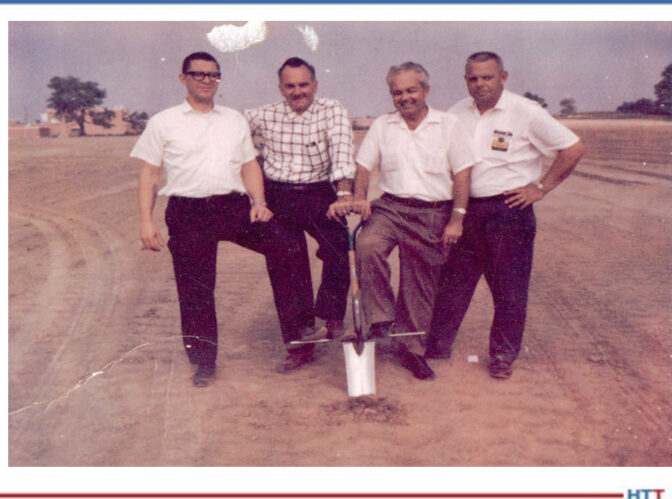
Ground breaking for the original WIRCO plant 1980
Source: Wright family
After all the smoke cleared, and everything was said and done, we still had a two-car garage with two welders in it (and welder people and the equipment). I said to him, “What are we going to do with this?” We talked it over and I said, “Well, we used to make our own baskets, maybe we can sell a few.” That was the beginning of Wirco as it exists today.
Bethany Leone: First, what was the name of your father?
MG T.J. Wright: Joseph D. Wright.
Bethany Leone: And, when you talked to Dennis about doing the fabrications of baskets — that was in what year?
MG T.J. Wright: What happened to me was I had a medical issue and I was grounded from the National Guard. When all this happened, it was about that same timeframe.
I was running “Wirco,” the fabrication business. Toward the end of my 12-month they were permanently going to retire me, at that point. My brother came to me and was very unhappy with running the heat treat because of who he worked for, I guess. He wanted to know was there room for him in this fabrication little venture that we had going, and I said, “I don’t think there’s room for both of us, but if you want to run this, I’ll go back to the Army and do that.”
So, that’s what we decided to do. And, over the years, we strategized that we wanted to be the Walmart of suppliers for the heat treating industry. It’s been quite a journey since my dad started Wirco over 50 years ago. We’ve made a lot of decisions along the way.
My brother has a great engineering mind. Rolock, Inc. used to be the standard for baskets, and we were making our baskets out of half-inch 330 and pressure welding the whole thing. They were making their baskets out of three-eighths or quarter-inch rods and stick welding every little stick in place. With every weld point, there is a potential point of failure.
At that time, furnaces went from 18, 24, 12 inches high to 30, 48, 30 inch high baskets. They were big. The requirement for big baskets to be able to handle that kind of material fell right into our timeline, so it worked out well.
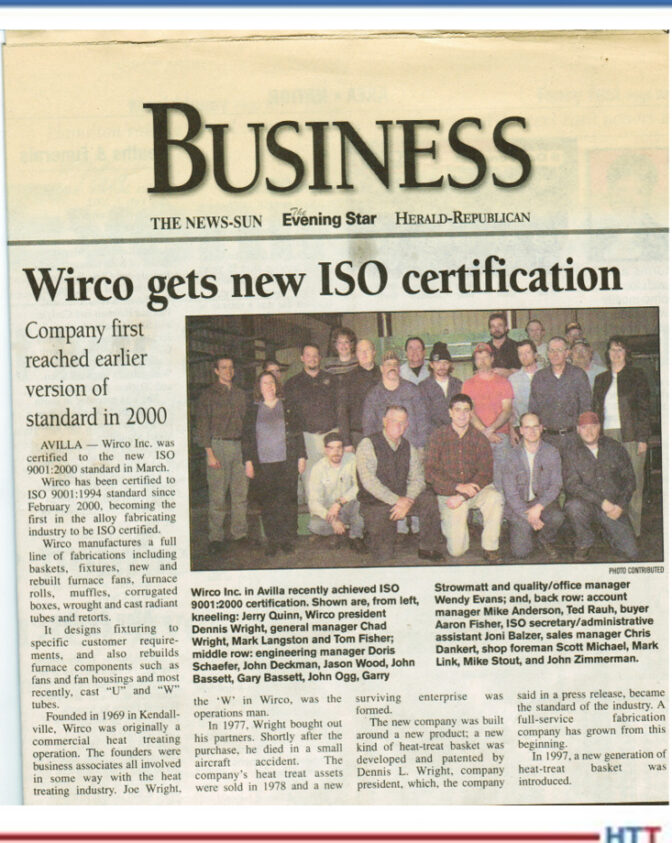
ISO Certification- an important milestone for the future of WIRCO
Source: Wright family
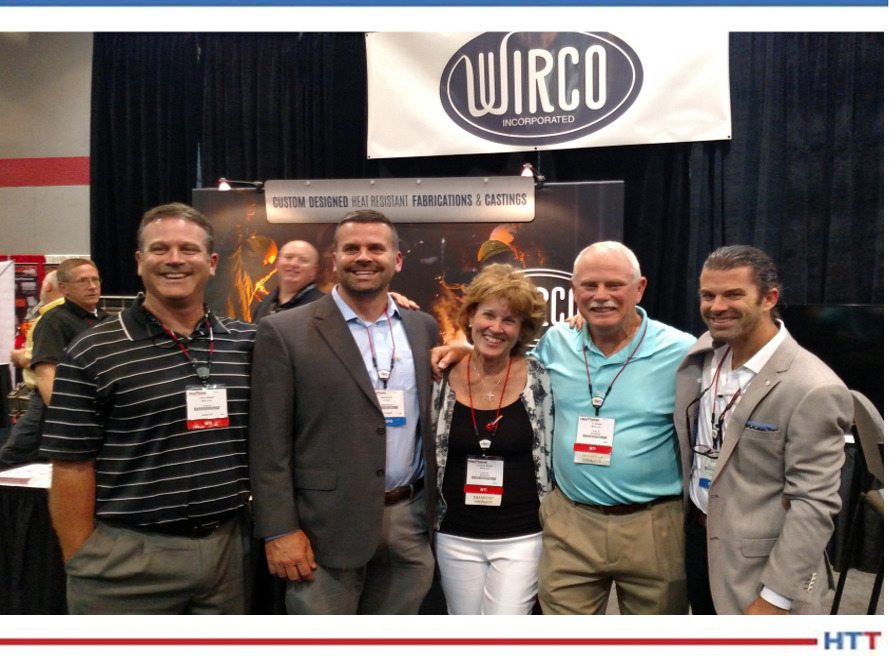
We were at a heat treating show. . . . You know how you go there and they have all the booths and the glamour and the glitz? Our first heat treating show was DL and I with a 6-foot-long foldup plastic table. The sign on the back was one you get at the show to tell you where your booth is that said Wirco, Inc. — that was us!
Some years later — actually not very long after that — I needed a fulltime job. I went to my brother, who had Wirco moving along, and he gave me a territory. So, I was a representative for Indiana, Kentucky, and Tennessee.
Bethany Leone: That was probably really beneficial as you knew how to talk the talk with heat treaters and what they needed; you understood their language, given all your experience.
MG T.J. Wright: Yes, we’d get out there and see opportunities. Here’s a for instance: We got into the furnace fan business. Baskets, but also fans.
They’ve done some pretty innovative things, over the years. Furnace fans, of old, all had water-cooled bones on it so it would set into the top or side of the furnace and you’d situate water through the thing. The fan would heat up but keep the bearings cool and keep it from seizing up. I worked with the bearing people, here in Indianapolis, and we got a set of bearings designed with little cooling fans that would sit on the shaft and blow air up through the bearings and did away with the water on the fan. It was pretty cool.
Bethany Leone: I’m sure it probably prevents some distortion by using air instead of water.
MG T.J. Wright: Well, it kept the fan from deteriorating because, generally, the problem wasn’t that the fan failed, it was the corrosion. – the bones would lime up and then it would heat up and then the bearings would seize up and then it would fail.
Bethany Leone: Yes. That’s pretty interesting. There is the strategy mind at work!
The Wright Family (1:00:12)
Could you outline, also, just the different generational ties in heat treat, where they stand now?
MG T.J. Wright: I retired, fully, from everything that I had going on in our lives in 2008. My last assignment, I was J-3 which is the operations officer for the entire National Guard in Washington D.C. When I retired from that, Lindsey and I had a home in Florida, and we had a house here in Indianapolis, and we decided to sell the house in Indianapolis and move fulltime to Florida.
TJ Wright and family- Aaron, Matthew, Lindsey, TJ, Nathan
Heat Treat Show Nashville 2017
Source: Wright family
My brother was still running Wirco, and about that time I started encouraging him to think about a succession plan. One of the things that’s interesting is that Chad (who now runs our business for us very successfully, I might add) started working there in grade school, taking the trash out and doing that kind of stuff.
During high school and through college, when he was home, he had different jobs. He was intimately familiar with all the things that went on. He’s not a very good welder but he knows how to weld. We don’t let him touch any of the customers’ products!
He worked in the office for a number of years. Phil Schlenk, my cousin, worked for Wirco; I would call him “the money guy” or the “finance guy.” Phil taught Chad all he knew, brought him up to speed, taught him how to read his balance sheet, and all of the things that are important in keeping the business afloat — making sure you were going to make payroll, etc.
DL retired. I am still on the board, as is DL, and we have board meetings and we have strategy meetings, but Chad has done a remarkable job of growing the company through acquisitions. In the meantime, one of the big things that happened was we bought Alloy Engineering & Casting Company in Champaign, Illinois, which is a foundry, and we still own it. We make castings there and subsequently we bought __Alloys who was a direct basket competitor and we bought Hyper Alloys.
There was a lot of technology, especially when we acquired Hyper Alloys — things that they did that we didn’t know how to do but now we do.
TJ Wright and DL Wright (Past President WIRCO)
Source: Wright family
Bethany Leone: Chad seems like a really good leader.
MG T.J. Wright: Chad and I had several conversations about leadership, in the beginning, and he had a right basis to start with. I took him to school on leadership and he has just embraced that and he takes care of his people. One of our employees developed cancer — and it was a long-term cancer bout for her; it took over a year to pass, and there was no cure in what she had. Chad, bless his heart, he just continued to pay her, because she needed the money.
Bethany Leone: Really caring for the person beyond the input/output. It’s not transactional, it’s more.
MG T.J. Wright: Chad, when he goes to the plant, every day he walks around the facility. Wirco has three buildings now and they’re not joined together, they’re separate places on the land that they own. He goes to every place, every day and walks around and talks to the people and finds out what’s working and what isn’t. What are your problems, what do we need to do? He’s a good leader, not only people-wise but for the business; he’s got a good business head on his shoulders.
We’re proud of him. I’m proud of the whole team, actually. Erin Fischer runs all of the facilities. He’s “the plant guy.” Derek is a Purdue grad --- he's smart and he is a people person.
A customer doesn’t always get reimbursed for some of the things we do, and we’ve had customers call us up on a Friday afternoon and their furnace is down, and they say, “I don’t have a spare. I’m going to get fired!” Well, bring us the fan; we’ll bring some guys in and build you a new one on Saturday and you can put it in on Sunday and be back to work on Monday.
Bethany Leone: Yes, looking for solutions. The problems are just challenges.
Chad Wright (President WIRCO)
Source: Wright family
Now, your two sons, they also began a business, ancillary to heat treat.
MG T.J. Wright: Yes, it’s very interesting. Nathan, our middle son, I got him a job working for Conrad Kacsik. He’s an instrument guy who goes around and calibrates instruments. He went to school for instruments and took courses in business. He and I were talking one time, and he was calibrating these instruments and I said, “Well, maybe you should start your own business.”
So, we talked it over. One of the big customers that we first took on was the Chrysler Corporation in Kokomo, Indiana. That was the foundation for starting Tru-Cal International and just expanded from there. He’s still doing very well.
Bethany Leone: You must be really proud. Your family — the Wright family — a lot of leaders, a lot of creative thinkers.
C3 Data in Mexico (1:07:15)
MG T.J. Wright: Our youngest son, Matthew, one of the things that Lindsey and I tried to instill in Nathan, though it didn’t take too well on him, was speaking Spanish. Both Matt and are fluent Spanish speakers. When I retired, Matt took over my territory, as a salesman, and after he was there a while, he asked Chad, “Who is our representative in Mexico?” and Chad said, “We don’t have one.” Matt said, “I want the territory.” So, he gets on an airplane and flies himself down to Mexico. Of course, he speaks the language, but getting a lot of the technical terms for “radiant tube” (or whatever) was a challenge. But he was a fast learner and picked all that stuff up.
While he was down there selling Wirco alloy and going to these heat treats, he noted that, unlike in the United States where we have these inspection stickers plastered all over everything, nobody did inspections down there.
So, he called his brother, Nathan, and said, “Hey, here’s an opportunity.” For months, those two would line up these jobs and they would pack up their stuff and get on an airplane and go to Mexico and spend seven days down there working 18 hours a day. After several months of that, they both said, “We can’t keep doing this; this is not going to work.”
He had met Víctor Zacarías that runs GTS now, and he worked for Dana Incorporated, and he asked Victor if he had any interest in coming to work for Nate and him. Víctor said no, he liked his job and he liked his security.
So, on a subsequent trip a month or two later, Víctor was taking Matthew back to the airport, and he said to Matt, “Is that job offer still open?” Matt said, at that point, he was about ready to hang it up, and he said he just looked at the sky and said, “Thank you, God.”
C-3 Data Display at Heat Treat Booth Indianapolis 2022
Sons- Nathan and Matthew Wright
Source: Wright family
So, Víctor runs the business down there, now, and it’s very, very successful for those guys. It’s good for the industry.
Bethany Leone: Yes, getting the resources where they need to be. It’s a great partnership, it seems like.
What Does the Future Hold? (1:09:55)
Is there anything, as you look at the heat treat industry, or what your family is doing at Wirco, Tru-Cal, C3 Data, that really excites you about the future?
MG T.J. Wright: I think, from Nathan and Matt’s perspective, the software that they’re developing for tracking calibrations and furnace acceptability according to the national standards, they are light years ahead of the industry, as you think about how technology has changed and allowed them to do what they’re able to do.
Before, you would send a technician in there and he’d calibrate all the instruments and he’d take all of these notes and he’d have to go back to his hotel room and write up a report and hopefully didn’t get numbers transposed and just make everything as it’s supposed to be.
Now, as he goes through with his phone and the software, he just plugs in the numbers and sends the report to the Cloud and the customer gets it, right there. He just downloads it off the Cloud and prints it up.
Chad is always looking for ways to improve productivity and make us more efficient. I think between those three young men, they’re an asset to the whole industry.
Bethany Leone: Oh, yes. I think that we’ve recognized all three of them in our rising young leaders of heat treat, at some point or another. Well deserved. If it were possible to nominate people twice, they’d be nominated five times, probably.
MG T.J. Wright: The program that MTI has for training leaders — the YES Program — is such an outstanding program. It allows companies — heat treats, fabricators, or whatever — to send their people up, and they get trained in leadership and making management decisions.
One of the interesting things that I find very interesting about the whole thing is that they’re a bunch of retired military guys. They use the military decision-making process to solve problems. I thought, “I recognize that!” They’re good guys.
Bethany Leone: Is there’s something else — one piece of leadership advice — that you would’ve given to Chad or Nathan or Matt, in any of these last years from the military or your manufacturing career?
MG T.J. Wright: I think they already know this, and they do a good job. But to reemphasize: Your people are who you are, and your people and your families. You start thinking about the effects of a person. Through his efforts, through the labor, he makes the car payment, he makes the house payment, and eventually, you’ll look at that. Chad has got over 150 employees and that’s a lot of house payments and car payments and college tuition bills. A good job and a good work ethic and training people.
You know, welders are one of the key employees that we have. Chad started a program called — I forget what he called it — but he got a T-shirt and tried to recruit young high school guys that didn’t know anything about welding and make them welders. He’s been successful at that. One time, I know we hired a guy right out McDonalds and, a year later, he put him on the payroll fulltime to be a welder.
Speaking about technology and utilizing it, one of the things that Chad does is not only going to heat treating shows, but he sends people to other shows — machine shows and that kind of stuff. We have a huge machining center. When you go to these other shows, you get ideas, like at welding shows, for example.
We make all of our radiant tube wells with a robot. We TIG weld every joint.
Bethany Leone: Well, thank you for being with us, Major.
About the expert: Major General T.J. Wright is a decorated military veteran of the U.S. Army, which he has served in for over half a century. During this time, MG Wright served in both the Vietnam War and Desert Storm, as well as assisting in peace efforts in Europe. Apart from his military service, MG Wright is the founding owner of Wirco, Inc., which is currently run by his nephew, Chad Wright.
Learn more about this episode's sponsor, C3 Data, at www.c3data.com.
Let’s discover new tricks and old tips on how to best serve vacuum furnace systems. In this print edition, Heat Treat Today compiled top tips from experts around the industry for optimal furnace maintenance, monitoring procedures, controls, testing, and more.
This Technical Tuesday article was written by the Heat Treat Today Editorial Team for the November 2023 Vacuum Heat Treating print edition.
#1 Three in One: Control Your Vacuum Furnaces
Contact us with your Reader Feedback!
Vacuum furnaces are an essential piece of equipment for a variety of industrial applications. They operate in a controlled environment with low pressure, high temperatures, and controlled atmospheres, making them ideal for processing high-quality materials. Here are three tips to guarantee the best results:
1. Understand your furnace’s capabilities and operating parameters:
It’s crucial to know your furnace’s design and its operating parameters — temperature range, pressure range, and cycle time, to name a few. This knowledge will help you determine the optimal setpoints for your process and ensure that you stay within a safe operating range.
2. Monitor process parameters:
To control your furnace, you need to monitor process parameters such as temperature, pressure, gas flow rate, and vacuum level. Using an automated control system like Gefran’s power controller with ethernet communication will help ensure you maintain the desired process conditions throughout the run. You should also regularly check the accuracy and age of your thermocouples and calibrate the system if necessary.
Vacuum furnaces are complex systems, and the process can be hazardous if not done correctly. Train all personnel on proper furnace use to ensure they understand the hazards associated with the process as well as know the SOPs to ensure safe and repeatable results. Your SOPs must cover all aspects of the process, including loading and unloading the furnace, start-up, shutdown, and emergency procedures. In addition, Gefran’s power controllers offer predictive maintenance functions, such as heater diagnostics and constant temperature monitoring of the power cable connection to give you advance notice before issues develop and the line goes down.
By following these tips, vacuum furnace users will improve process control, optimize performance, and reduce energy consumption and downtime. They will also see increased productivity and improved product quality.
Seals are everywhere on any furnace. Do you know where all the seals and leak points are? Door O-rings and rope gaskets are obvious examples. O-rings need to be clean and protected from abrasion. High temperature gaskets need to be flat, smooth, and unbroken. Almost every item of your furnace is sealed in some manner. It is best to replace seals as part of a preventative maintenance program. While your nose can detect ammonia, vacuum leaks require special helium leak detectors and a lot of training. Your furnace manufacturer’s service technician can assist in identifying problem areas and developing a maintenance routine to keep your furnace running. And a simple electronic manometer is great to have handy for running leak-down tests using positive pressures. Auto supply stores sell inexpensive halogen detectors, and some people use smoke bombs to detect leaks.
Table A. Force-diameter indexes for different materials (Source: Foundrax Engineering Products Ltd.)
Use the correct force-diameter index (F/D²) for the material being tested. Apply the test force in accordance with ISO 6506 or ASTM E10, as appropriate. While the indenter is in downward motion and in contact with the material, avoid doing anything that might create vibrations that could reach the machine. When the indenter has withdrawn, measure the resulting indentation in a minimum of two diameters perpendicular to each other and convert the mean measurement into an HBW number. Note: if using a portable Brinell hardness tester, caution should be exercised when removing the machine from the component so that the edge of the indentation is not accidentally damaged when the machine is released.
#4: Preparation Steps When Carrying Out Your Brinell Test
Make sure the test equipment is properly set up. In most instances, this involves keeping the test machine serviced and calibrated in accordance with the international standards (that’s ASTM E10 for Brinell and ASTM E18 for Rockwell) and/or the manufacturer’s instructions (whichever are the stricter) along with mounting it on a level, vibration-free surface. The absence of vibration is crucial if you’re using a lever and weight machine but still desirable for hydraulic and motor-driven types, and it is mandated by the standards.
A brief note for tests made using portable Brinell hardness testers that apply the full test load (albeit without the ability to maintain it uninterrupted for the full 10 seconds): While it might not always be possible to mount the machine on a solid and level surface, the rest of the above still applies.
If the anvil is mounted on a leadscrew, ensure that it is properly secured. Similarly, jigs should be in good condition, correctly mounted and holding the test piece securely. It is easy to become very relaxed about the amount of energy that goes into applying 3,000 kg to a 10 mm ball, but if the component shatters under the load, the results can be dramatic and, potentially, very dangerous. Don’t forget your safety boots! Also, as fingerprint residue is corrosive, gloves should always be worn.
“There are many factors to consider when thinking about the right vacuum level for vacuum brazing. Foremost among these is the ability to ‘wet’ the surface so that the braze filler metal will flow freely and be drawn into the braze joint by capillary action. To secure good wetting, the parts must be clean, the vacuum furnace well conditioned and leak free, and the proper level maintained.”
Source: Dan Herring, The Heat Treat Doctor®, Vacuum Heat Treatment, vol II, 2016 pp.283
#brazing #vacuum level #leakfree
#6: Voyaging Vacuum Furnace Maintenance
"[If] a vacuum furnace is to be moved from one location to another, a careful inspection and close monitoring of the water system should be done in the months that follow the move. Dislodged scale can clog cooling paths and create hot spots. Corrosion effects can be accelerated, and the integrity of connections can be compromised. Older equipment that has not been on a treated water system of some type is especially vulnerable.”
Source: Dan Herring, The Heat Treat Doctor®, Vacuum Heat Treatment, vol II, 2016 pp.283
#inspection #corrosion #movingequipment
Find heat treating products and services when you search on Heat Treat Buyers Guide.com
The question in many heat treaters’ minds is, “Why would I want more documentation on my furnaces?” TempTABs can act as an early warning sign that further temperature monitoring is necessary.
This Technical Tuesday article was written by Thomas McInnerney and Garrick Ackart of The Edward Orton Jr. Ceramic Foundation, for Heat Treat Today'sNovember 2023 Vacuum Heat Treatingprint edition.
The Need for User-Friendly Documentation
Thomas McInnerney
Engineering Manager of Pyrometric Products
Edward Orton Jr. Ceramic Foundation.
Source: Edward Orton Jr. Ceramic Foundation
Increased regulations called for in AMS2750G and CQI-9 were, for the most part, driven by the client purchasing the items. With a business climate that can generate a product-liability lawsuit quicker than a rapid quench, clients are trying to protect themselves.
Contact us with your Reader Feedback!
Consequently, most heat treating facilities will perform the necessary and required temperature uniformity surveys (TUSs) as well as thermocouple calibrations. Once the formal TUS is complete, other than the information generated from the control thermocouples, the challenge still exists for the furnace operators to ascertain what happens throughout the furnace between surveys. By passing the last survey but failing the next one, how do you detect that something changed two days after the good survey or two days before the failed survey?
It is true you can run a temperature data logger with an array of thermocouples attached through the furnace to get a complete picture of the furnace performance, but that process includes production interruption, an expenditure of precious manpower, and significant expense in maintaining the data logger. Essentially, we have just defined the need for a cost-effective, user-friendly device to monitor the day-to-day repeatability of the performance of the furnace.
Metals Industry Demands
Garrick Ackart
Marketing and Business Development Manager
Edward Orton Jr. Ceramic Foundation.
Source: Edward Orton Jr. Ceramic Foundation
Driven by the question raised above, The Edward Orton Jr. Ceramic Foundation initiated a development project to provide such a product for the metals industry.
Demands of the metals industry are quite different from those of the ceramic industry. The detection device would have to be able to withstand rapid heat-up schedules, rapid quench, a wide variety of furnace atmospheres (air, nitrogen, hydrogen), and no atmosphere (vacuum), and do all this without introducing contaminants to the products being heat treated — no small challenge for an engineered ceramic product. Following a great deal of consultation and experimentation, Orton developed a product, the TempTAB, that can be used to benchmark and monitor furnace performance in most heat treating applications.
Measuring Dimension: How a TempTAB Works
How does the device work, and how is it made and controlled? The device depends on a constant slope curve of shrinkage versus temperature. When the device is exposed to more temperature and for longer periods of time at peak temperature, the amount of shrinkage increases.
Figure 1. The temperature monitoring system consists of ceramic sensors, a
measuring gauge, and software to convert dimension to temperature.
Source: Edward Orton Jr. Ceramic Foundation
TempTABs are small disks made from exact blends of select ceramic materials prepared in an environment where the processing variables are tightly controlled. The ceramic material is selected based on its predictable shrinkage, which is affected more by temperature than time; even so, holding at or near the peak temperature will have an impact on the final dimension.
Once the TempTAB is out of the furnace, its diameter is measured with a micrometer. The dimension, in millimeters, is entered into an Excel workbook that automatically looks up the equivalent temperature inside the furnace based on the furnace cycle time.
Temperature conversion charts are available with each batch of TempTABs for converting the diameter measurement to temperature. The charts have several columns of data which allow the user to find the data that is best associated with their final furnace cycle hold times (temperatures available for 10-, 30-, 60-, 120-, and 240-minute hold times). The charts are built into the software to allow you to monitor up to nine different locations inside the furnace for up to 360 runs (Figure 2). The software is available free from Orton’s website.
The resulting temperature data generated by the software is graphically displayed in both table and numerical format for easy interpretation. The data can also be copied into other Excel spreadsheets and SPC (Statistical Process Control) programs to be incorporated into existing quality programs.
Figure 2. Orton TempTAB software allows process temperature tracking at a glance.
Source: Edward Orton Jr. Ceramic Foundation
Primary Uses: Early Warning Device & Quality Control
Heat treat companies use these disks as an early warning device and to document that their processes are under control. First, they benchmark their thermal process by running several TempTABs through the heat treat furnace.
After establishing a benchmark with upper and lower control limits, the company will run the disks on a regular schedule, placing them in the same location alongside the parts being treated in the furnace (see process temperatures graphed with TempTABs in Figure 3).
Figure 3. Temperature data is displayed by location and can be copied into existing SPC software.
Source: Edward Orton Jr. Ceramic Foundation
At a glance, the furnace operator, the quality manager, or the general manager can see if the process is under control. The size of each disk indicates if the thermal process is, or is not, within the established control limits.
The case studies that follow demonstrate these primary uses in real-world heat treat.
Case Study #1: Furnace Documentation When You Need It
A manufacturer with in-house heat treating ran TempTABs alongside the thermocouples in one of its required nine-point uniformity surveys with a data logger. After the formal survey, they continued to run disks in each load, monitoring shrinkage of the disks. The heat treating operations wanted to document the thermal treatment of the product in every load. If something did change inside their furnace before the next required survey, the TempTABs would act as an early warning system alerting them that a formal survey may be necessary.
Case Study #2: Developing Backup Facilities/Preparing for Increased Demand
A company specializing in powder metal sintering wanted to duplicate a sintering process of one of their products, currently only being done at a single manufacturing site, at a second location. Initially, they duplicated all the settings in the new location (temperature settings and belt speed) and found that the resultant parts differed from those of the original site.
The company began to consider TempTABs. They liked the idea of having a device that could provide them with furnace temperature readings since they knew that it was an important variable to the quality of their parts. For one year, TempTABs were used daily for process control of the furnace. This use proved that the furnace was consistent and stable.
Since they had developed a benchmark of the disk dimensions yielding good parts, they were able to adjust the new facility settings so their process could be duplicated in the second facility. Within weeks, the powder metal sintering experts could produce products in the new facility consistent with the original facility.
Case Study #3: High-Value Heat Treating
A heat treating facility serving the aerospace industry historically ran nine thermocouples in every load of their batch furnace for bright annealing stainless steels to document furnace performance. The method required using many type S thermocouples and a data collection unit. Labor costs included setting up the thermocouple array and replacing the certified thermocouples. It was expensive and disruptive; they wanted an alternative.
The time needed to replace the TempTABs was minutes and only required one person’s time to place and gather them. After doing a correlation study of at least five runs over a week, the heat treat facility replaced the thermocouples with TempTAB disks. Now, a single operator places TempTABs inside every load so they can gather information at a lower cost. If they see any change in the amount of TempTAB shrinkage, they will run the thermocouple array to see precisely how the temperature profile has changed.
Figure 4. TempTAB wired in place during daily monitoring.
Source: Edward Orton Jr. Ceramic Foundation
About the authors:
Thomas McInnerney is the engineering manager of Pyrometric Products at The Edward Orton Jr. Ceramic Foundation. He received his BS in Ceramic Engineering at The Ohio State University and has been a key leader in the development and application of TempTABs for 22 years.
Garrick Ackart is the Marketing and Business Development manager at The Edward Orton Jr. Ceramic Foundation. He received a Bachelor of Science degree from Alfred University in Ceramic Engineering, an MBA from The Ohio State University, and has more than 25 years of experience in the ceramic and glass industry.
Reducing the industrial carbon footprint has been at the forefront of much discussion, heat treat industry-specific or otherwise. How can heat treaters dealing with vacuum operations consider sustainability in a carbon-conscious market?
This Technical TuesdaySustainability Insight article was written by Bryan Stern, the product development manager at Gasbarre Thermal Processing Systems, for Heat TreatToday'sNovember 2023 Vacuum Heat Treating print edition.
Bryan Stern
Product development manager
Gasbarre Thermal Processing System
Source: Gasbarre
There is a growing understanding that changes in environmental policy and corporate initiatives will have an increasing impact on the landscape of domestic processing and manufacturing industries in the near future. This is of particular interest to the heat treating industry as thermal processing intrinsically consumes large amounts of energy.
Contact us with your Reader Feedback!
Energy has always been a financial reality for heat treaters, but the impact of transitioning environmental reform will reach beyond monthly utility bills. This is because large players in primary heat treat markets will seek to integrate low-carbon service and equipment suppliers into their direct and indirect supply chains to meet decarbonization objectives.
As a result of this impending trajectory, there has been more attention on furnace design and energy sources within the thermal processing industry. One topic that has received a great deal of focus is the potential benefit of vacuum furnaces as a less emissions-intensive approach to heat treating. Although fundamentally based on electrification, it would be difficult to argue that at least some of the interest in vacuum does not stem from a reactionary desire to distance thermal processing from the image of fire-breathing fossil fuel furnaces given the current political environment.
But beyond the undeniably more marketable aesthetic, the legitimate question remains: Does vacuum heat treating provide tangible environmental advantages over combustion-fired atmosphere alternatives?
Atmosphere integral quench furnace
The soundness of the argument for electrification and vacuum is not as obvious as it might first appear. To start, eliminating on-site combustion does not eliminate CO2 emissions. Electrical utilities still have emissions factors (reported in CO2 equivalent emissions per kWh) that must be accounted for as part of Scope 2 supply emissions. Counterintuitively, the national average emissions factor for electric power is 2.2 times that of natural gas to produce an equivalent amount of thermal energy.1,2 This is primarily due to the inefficiencies associated with generating and transporting electricity versus converting fossil fuels directly to thermal energy on site.
In addition to having higher emissions, electricity is 3.6 times the cost of natural gas for an equivalent amount of energy based on national averages for 2022.3,4
The cost effectiveness of gas fired atmosphere furnaces historically has been the motivator behind their use, unless the process benefitted in some other way from vacuum processing.
If electricity has a greater carbon footprint and is more expensive per unit of energy than fossil fuels, why is the industry transitioning to electrification and increasingly favoring vacuum processing? The answer lies with several factors both internal and external to the equipment itself.
Within the scope of the equipment, gas fired furnaces are intrinsically inefficient. Burners exhaust hot gas which continuously siphons energy away from the process. Although less significant for direct fired burners, this effect is amplified for indirect burners, which are commonly used. Recuperators and regenerators can dramatically improve efficiencies by recycling exhaust to pre-heat combustion air, but additional energy is always required for burner systems beyond what is needed to heat the work and overcome losses through insulation. Electric furnaces, on the other hand, have no such additional demand, and the energy they consume is more directly applied to the process. Although the type of energy used is more financially and environmentally costly per unit, electric vacuum equipment uses that energy more efficiently.
In addition to the demands from the burner exhaust, gas fired furnaces usually depend on a blanketing atmosphere to protect the work from oxidation. Endothermic gas is commonly used for this purpose, and in addition to the heat input required for endothermic gas generation, CO and CO2 are products of the reaction. Although it is an objective of endothermic gas generation to minimize the amount of CO2 present in the furnace, the CO exhausted to the atmosphere eventually reacts to form CO2, leading to a higher effective emissions rate. The use of a vacuum as a protective atmosphere is less carbon-intensive as it relies primarily on the power required to operate the vacuum pumps. This leads to much lower emissions to create the processing atmosphere.
Looking outside of the equipment at the overall manufacturing process, heat treating in vacuum can often eliminate post processing steps required when using other types of equipment. This may come in the form of less oxidation or scale, meaning less part cleanup, or low distortion gas quenching, allowing final machining to be moved forward in the manufacturing process or removed altogether. These potential production cost savings are not new, but the value of eliminating the emissions associated with additional manufacturing steps will only serve to further incentivize vacuum equipment moving forward.
There is one final dynamic outside the scope of the equipment that contributes to the explanation of the industry’s push toward vacuum. The emissions factors associated with electric power generation are decreasing, a trend which is expected to continue. The contribution of renewable energy to the domestic power grid is projected to more than double in the next seven years.5
Single chamber vacuum furnace
Although the contribution from renewable sources is still significantly less than fossil fuels, changes in generation are not the only factors at play. Significant efforts are being made to develop grid-scale energy storage solutions. Although most often associated as a prerequisite for intermittent production from renewables, these storage solutions serve an important function for the existing infrastructure. By storing excess power during low demand and releasing it during peak hours, grid scale energy storage would allow fossil fuel power plants to run at more optimized efficiencies without having to ramp up and down to match demand.
Beyond the process efficiencies of vacuum discussed above, investing in electric fired equipment is the only way to capture the benefits of ongoing improvements to electric supply and generation infrastructure. While the benefits of electrification may currently depend on contextual variables such as geographic location and equipment design, natural gas fired processing has a relatively fixed ceiling for future improvement. As an added advantage of electrification, the carbon accounting reductions from the improvement in emissions factors can be captured passively after the initial investment.
While the above advantages of electrification and vacuum do help explain the industry’s push in that direction, it is worth considering how vacuum equipment will continue to evolve to maximize energy efficiency and reduce emissions. Historically, the majority of vacuum furnaces have been single chamber batch style pieces of equipment. This configuration usually requires that loading and unloading occur at, or near, room temperature to avoid oxidation of sensitive materials. In addition to longer floor-to-floor times, this means that the energy required to heat the furnace is thrown away at the end of each cycle.
The competitive demand for low-carbon solutions will drive the use of multi-chamber batch and continuous style furnaces that allow stored energy to be conserved between cycles. This will be especially true as we see more high-volume manufacturing shift away from traditional continuous atmosphere heat treating. In the past, batch vacuum processing has been too restrictive to both part cost and throughput to be competitive. As emissions concerns gain prominence, vacuum furnace configurations that offer higher energy efficiencies and throughput will begin to close that gap.
The processing and energy advantages of electric vacuum furnaces have positioned them well to meet the low-carbon demands of an increasingly emissions-conscious market. It will be exciting to see how the equipment continues to develop to meet those needs in the future.
Bryan Stern is the product development manager at Gasbarre Thermal Processing Systems. He has been involved in the development of vacuum furnace systems for the past 7 years and is passionate about technical education and bringing value to the end-user. Bryan holds a B.S. in Mechanical Engineering from Georgia Institute of Technology and a B.A. in Natural Science from Covenant College. In addition to being a member of ASM, ASME, and a former committee member for NFPA, Bryan is a graduate of the MTI YES program and is proud to have been included in Heat TreatToday's 40 Under 40 Class of 2020.
Thirsting for knowledge about quenching, but not sure where to start? Heat TreatToday has coalesced technical information across articles and podcast episodes from key experts, including significant quenching methods, innovative developments with quenching, and how to control temperature during the process.
Discover more about these three topics in today’s Technical Tuesday original content feature.
Monitor Quench Temperatures with Unique Thermal Barrier Designs
Automotive heat treating operations require repeatable operations to ensure that the composite parts within an automobile perform reliably. Steve Offley, also known as “Dr. O," the product marketing manager at PhoenixTM, outlines case studies of several temperature-critical operations to demonstrate how unique thermal barrier design for thru-process monitoring systems can solve temperature measuring problems. These processes include sealed gas carburizing into an integrated oil quench as well as LPC followed by transfer to a sealed high-pressure gas quench chamber.
Offley comments on the quenching process following LPC, saying, "During the gas quench, the [thermal] barrier [for temperature monitoring] needs to be protected from Nitrogen N2(g) or Helium He(g) gas pressures up to 20 bar." If you are facing heat treat processing with integrated quench, learn more about this temperature monitoring solution.
Intensive Quenching: An Answer for a "Greener" Heat Treat?
Gas furnaces have the potential to be a significant source of carbon emissions in many essential heat treat processes. However, an innovative approach combining induction through heating with intensive quenching could be one answer for greener heat treating, particularly for steel production.
In this article, Chris Pedder,Edward Rylicki, and Michael Aronov share that an “ITH + IQ” technique "eliminates, in many cases, the need for a gas-fired furnace when conducting through hardening and carburizing processes." A lot of this comes down to shortening the time it takes to perform this process, but there is so much more that the authors illuminate in their tests and graphs.
Drinking from a Firehose: Answering Your Quench Questions with a Thorough Radio Review
Stay afloat in a sea of quenching tips with this Heat TreatRadio review, summarizing three recent podcast episodes centered around quenching tips, techniques, and training — especially applying to the auto industry.
Explore the "green" process of salt quenching with Bill Disler of AFC-Holcroft, the topic of water in your quench tank with Greg Steiger of Idemitsu Lubricants America, and a broad review of auto industry quenching with Scott MacKenzie of Quaker Houghton, Inc.
“Plan, do, check, act.” When it comes to caring about carbon footprint, a path forward to may seem too out-of-reach. But breaking down process heating and how to efficiently consider carbon use can be possible with industry resources.
This Sustainability Insight article was composed by Michael Stowe, PE, the senior Energy Engineer at Advanced Energy for Heat Treat Today'sSeptember 2023 People of Heat Treatingprint edition.
Michael Stowe, PE
Senior Energy Engineer
Advanced Energy
Source: IHEA
Over the past several years, process heating energy markets have shifted in response to significant global pressures. The need to understand the impact of greenhouse gases (GHGs), especially carbon based emissions, on climate change is gaining more interest from organizations that have industrial process heating. Organizations that manufacture or use process heating equipment need to understand the impact their equipment can have on carbon emissions. The terms “carbon emissions” or “carbon footprints” use the word “carbon,” but these terms can include other GHGs, and the carbon refers to carbon dioxide gas (CO2).
Process heating requires energy input. The energy sources for process heating most frequently include the combustion of carbon-based fossil fuels such as natural gas, propane, fuel oil, diesel, or coal. Also, most combustion processes have a component of electricity to operate combustion air supply blowers, exhaust blowers, circulation fans, conveyors, and other items. Figure 1 shows the chemical process for the combustion of methane (i.e., natural gas).
Figure 1 demonstrates that during combustion, methane (CH4) combines with oxygen (O2) to form carbon dioxide (CO2) and water (H2O). This same process is true for any carbon-based fuel. If you try to imagine all the combustion in progress across the globe at any given time, and knowing that all this combustion is releasing CO2, then it is easy to see the problem and the need for CO2 emission reduction.
Figure 1. Chemical process for methane combustion
(Source: Advanced Energy)
In basic terms, if you have a combustion process on your site, then you are emitting CO2. The electricity consumed to support the combustion processes also has a carbon component and the consumption of this electricity contributes to a site’s carbon footprint. Climate change impacts due to these carbon emissions have prompted government and corporate actions that are creating unique new opportunities for more sustainable and lower carbon process heating methods.
So, combustion and electricity consumption on your site contribute to your carbon footprint. Knowing this, organizations may now want to understand the actual level of their carbon footprint and ways to reduce it. There are many methods and resources available to help organizations understand and work to improve their carbon footprint.
The Industrial Heating Equipment Association (IHEA) has recognized this need to understand carbon footprints and is in the middle of a four-part webinar series on this topic. Session three (held on July 20, 2023) covered methods and resources to help organizations determine and improve their carbon footprint.
Session 3: DOE Tools and Programs for GHG Reduction
There are many options available to help determine carbon emissions for equipment, processes, sites, and organizations. This presentation will review some of these available tools and how to apply them to different situations. Carbon emissions are directly tied to energy consumption, so it is very important to understand how all your energy is consumed on site by energy type. This presentation will provide tools and programs to help you understand your energy consumption and thereby understand your carbon emissions. Additionally, energy improvement projects are also carbon emission reduction projects. This session will help you understand how to determine the impact of energy projects on your carbon footprint.
Session 4: Ongoing Sustainability — Industry Best Practices for Continual Improvement
Carbon reduction is not a project, it is a process, and must be ongoing. Earlier sessions will help you determine your carbon footprint and understand ways to track and improve your carbon footprint. In this presentation, we will review methods and programs to ensure the continual improvement of your carbon reduction efforts. Following the “plan, do, check, act” method used in many continual improvement programs, we will review steps to take for keeping your momentum moving in the right direction. We will also plan to have industry case studies for success in ongoing and improving carbon reduction programs.
Registration for these sessions can be found on the events page of www.ihea.org. If you or your organization want to learn more about your carbon footprint and how to measure and reduce it, you will not want to miss this opportunity.
In summary, heat treating, and other process heating methods, require significant energy, much of which is fueled with carbon-based fossil fuels, and associated with support electricity consumption. Both combustion and electricity consumption contribute to an organization’s carbon footprint. One of the best ways to help manage your carbon footprint is to understand and manage your energy consumption. For more information on this topic, please check out the IHEA Sustainability & Decarbonization Initiatives.
About the author:
Michael Stowe (PE) is the senior energy engineer at Advanced Energy. Michael focuses on process heating and energy efficiency in manufacturing plants. He has significant experience in the manufacturing industry serving in various roles as design engineer, production manager, plant engineer, and facilities engineer over the past 27 years.
Find heat treating products and services when you search on Heat TreatBuyers Guide.com