


Karen Gantzer

EthernetIP

EthernetIP is the future of vacuum gauge communications for vacuum furnaces. It’s simple to integrate and improves accuracy by reducing latency from legacy analog 0 to 10 V DC outputs.

Shawn Orr, Technical Business Development Manager,
Televac – The Fredericks Company

Learn about EthernetIP and its place in your heat treat department in this Technical Tuesday original Heat Treat Today article by Shawn Orr, Technical Business Development manager with Televac – The Fredericks Company

This article first appeared in the latest edition (March 2020) of Heat Treat Today’s Aerospace Heat Treating magazine.


What is EthernetIP?
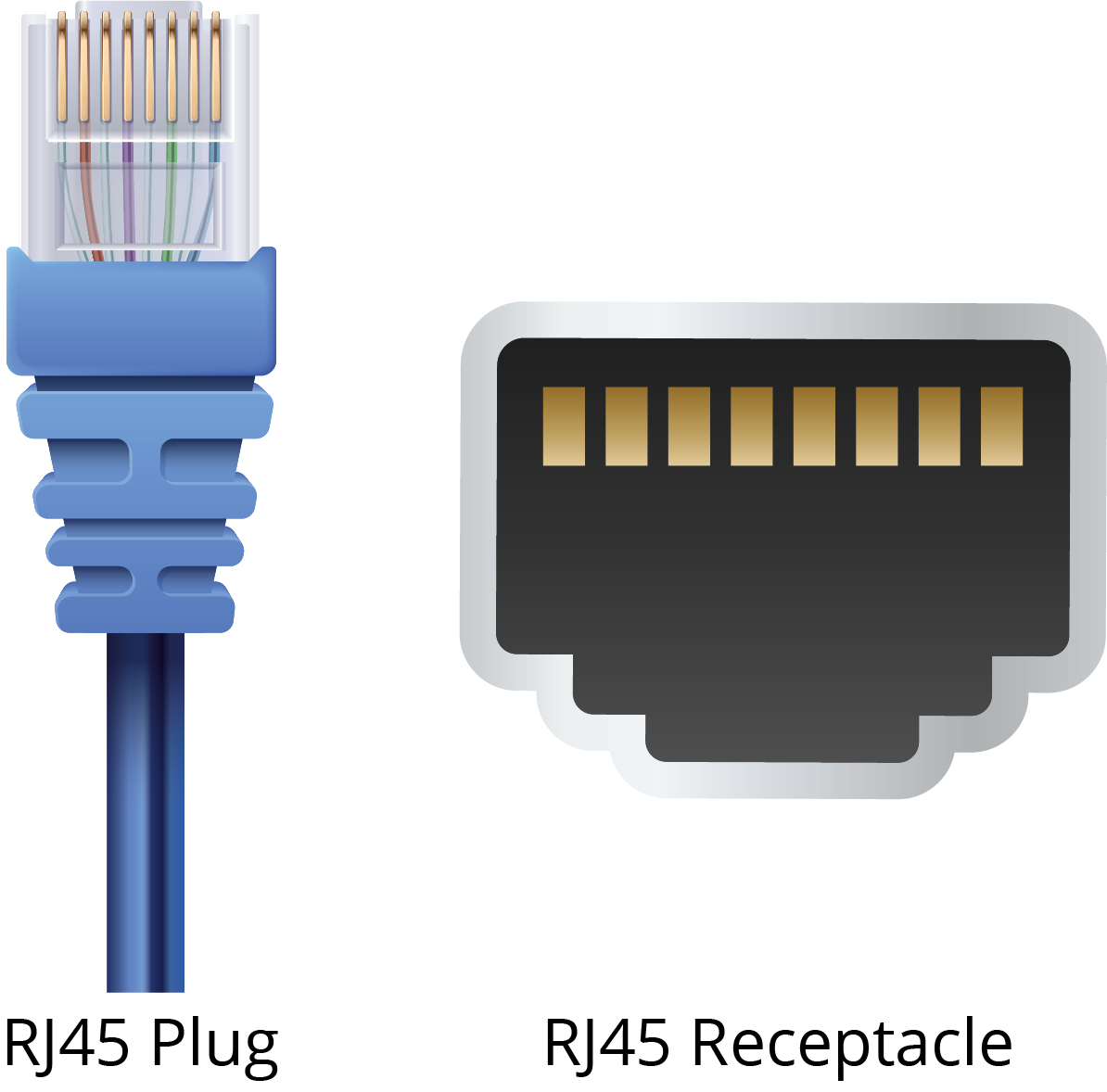
Figure 1.

EthernetIP (IP for Industrial Protocol) is an implementation of the digital communication standard referred to as the Common Industrial Protocol (CIP). It’s a modification of standard Ethernet and is managed by the organization ODVA, Inc. If you’re familiar with the OSI model (Open Systems Interconnection), EthernetIP defines the session layer, the presentation layer, and the application layer, with the other layers (1 through 4) defined by standard Ethernet.

EthernetIP uses standard RJ45 connectors (Figure 1) which are 8P8C (8 position 8 contact). The widespread use and availability of standard Ethernet cables makes them a more affordable solution compared to custom cables and connectors used by many manufacturers for their devices.
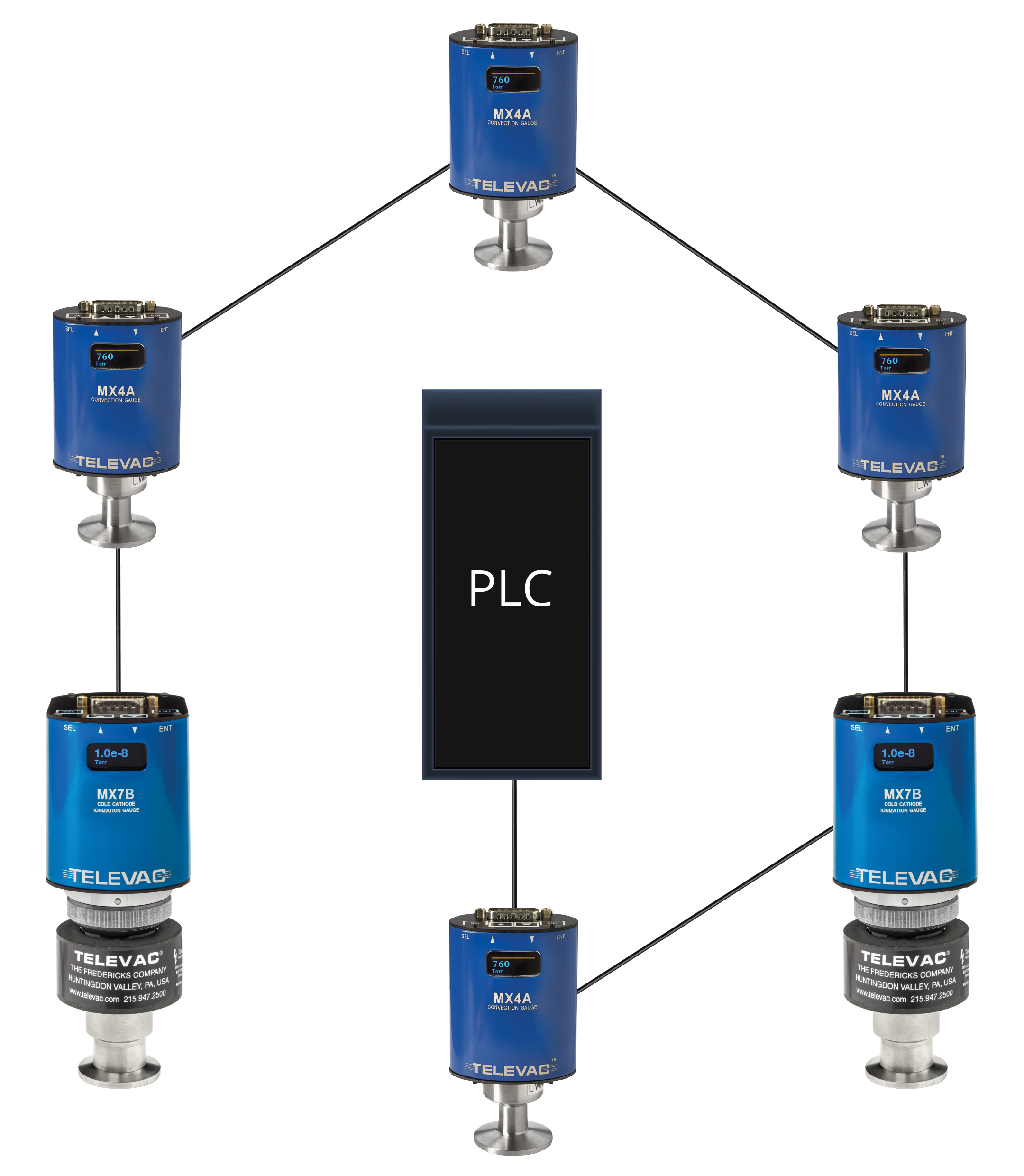
Figure 2. Ring topology with a PLC, MX4As, and MX7Bs. Each active gauge is connected to the previous active gauge.

EthernetIP can be configured with various topologies including ring (daisy chaining) and star (point-to-point) configurations (Figures 1 & 2). This can further reduce integration complexity and cable complexity by daisy chaining various components together on the same EthernetIP connection. Each device will have a unique IP address (or they can be grouped together in some cases depending on the implementation), but all configurations will allow you to communicate with all devices individually and digitally.
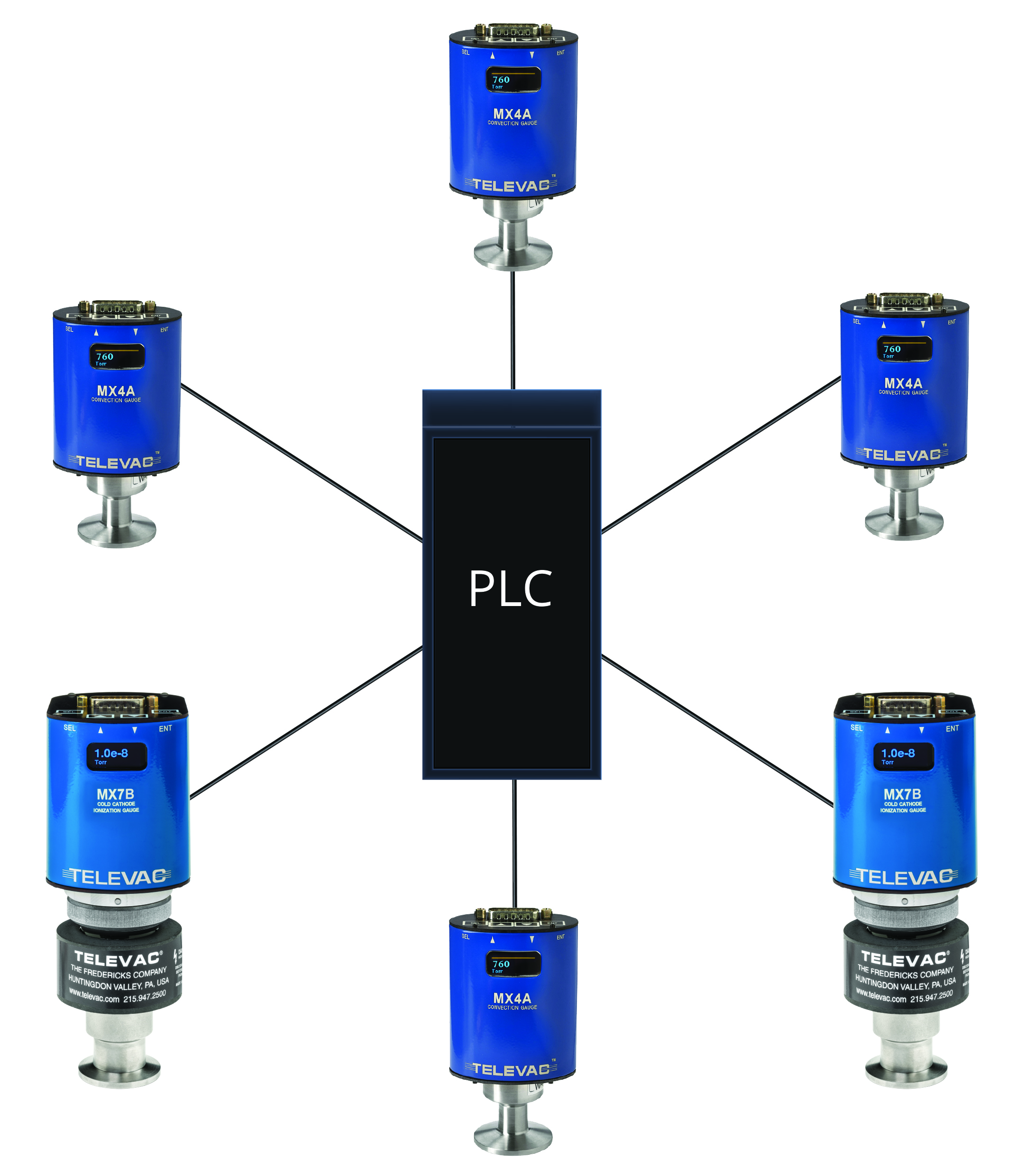
Figure 3. Star topology with a PLC, MX4As, and MX7Bs. Each active gauge is connected directly to the PLC.

Communications are done in one of two ways; cyclically (Class 1 EthernetIP connection) and acyclically (Class 3 EthernetIP connection). Cyclic communications output the same set of data over and over at a specific rate. Acyclic communications allow you to send commands and receive data back from the EthernetIP device at any time. Acyclic communications give you more control, but cyclic communications can be simpler to integrate.

How Does It Apply to Heat Treating?

So, you might be wondering, how does this apply to vacuum furnaces? All vacuum furnaces have a PLC (programmable logic controller) which is essentially the brain of the furnace. In North America, one of the most common types of PLCs is a Rockwell Automation® Allen-Bradley® PLC which has, you guessed it, EthernetIP capability! PLCs almost always have an HMI (human machine interface) where the operator can control various functions of the furnace.

The PLC takes a variety of inputs from other controllers and sensors which come in many shapes and forms. Some of the most basic are analog signals like 0 to 5 V DC or 0 to 10 V DC. Others are more complex forms of digital communication like EthernetIP. This means that you can use your PLC and HMI to take readings and adjust settings on connected EthernetIP devices.

What Are the Benefits of EthernetIP?

We already talked about some benefits of EthernetIP, but there are many others. Another significant benefit is having digital communications to your vacuum gauging and other devices on the furnace. Let’s use the example of vacuum gauge calibration.

Benefit 1 – Calibration

Many who have worked with devices on vacuum furnaces like vacuum gauges know that calibrating them can be a real hassle. Gauges often have potentiometers (sometimes called pots) that are adjusted with a set screw. This means that you’re trying to look at one reading on the HMI of your furnace while adjusting a gauge that’s possibly on top of the furnace, meaning you need two people. This is a worst-case scenario, but you get the idea; it’s not convenient.

Having digital communications over EthernetIP means that your calibration can be done from the HMI, because you can adjust the calibration digitally with most digital vacuum gauges. No more climbing on top of the furnace and adjusting pots! This is especially useful as Nadcap and AMS (specifically AMS 2769) standards become stricter, you may want to start doing more calibration at your facility instead of sending your gauges out to another facility for calibration.

Benefit 2 – Cost

One of the most significant benefits is the cost of using EthernetIP enabled devices. In addition to cheaper standard Ethernet cables, most furnaces will include other devices with EthernetIP capability, so an EthernetIP communications module for the PLC is already included. This means that if you have analog devices (such as 0 to 5 or 10 V DC), you can remove the need for costly ADC (analog to digital converter) modules by switching your devices to EthernetIP.

Benefit 3 – Power

Another benefit is powering your devices. Because there are open pins on a standard Ethernet cable with standard EthernetIP connections, it’s possible to utilize the unused pins to supply power over the Ethernet cable. There are other implementations where the power is supplied over the data lines. This is called PoE (Power over Ethernet). This eliminates the need for additional, potentially costly and complex power connections for your EthernetIP enabled devices. PoE is done many different ways, but three have been standardized by IEEE called Alternative A, Alternative B, and 4PPoE.

Benefit 4 – Accuracy
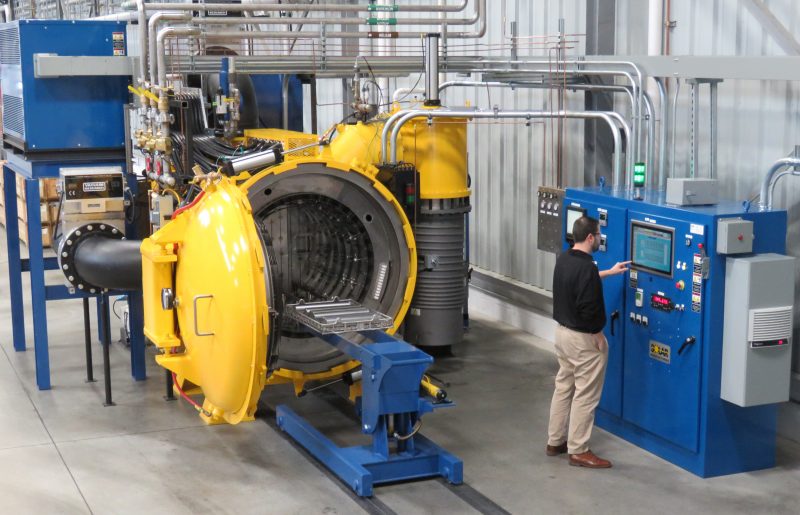
(Photo source: Solar Manufacturing/Solar Atmospheres)

The last benefit is accuracy. Using an analog signal can cause signal loss and is susceptible to signal degradation from noise depending on the cable length, particularly in industrial environments. The speed of an analog to digital conversion is also typically done with an equation and can be slow and somewhat inaccurate for a variety of reasons. Eliminating analog to digital conversions improves the latency and accuracy of readings on your HMI. No more mismatches between your gauge display and your vacuum furnace HMI!

How Do You Integrate EthernetIP into an Existing System?

Talk to your furnace manufacturer or a system integrator. First, you’ll need to make sure you have an EthernetIP enabled PLC, then you’ll need to make sure that your furnace configuration supports the addition of specific EthernetIP devices. Since each type of device communicates differently over EthernetIP, you may need to have PLC code and HMI changes made to your system to support something like an EthernetIP vacuum gauge.

About the Author: Shawn Orr is the technical business development manager for Televac – The Fredericks Company and has served as the technical liaison between its customers and engineering, responsible for identifying and implementing new growth opportunities.

(Photo Source: Figures 1-3: Televac – The Fredericks Company)
EthernetIP Read More »

Aerospace Market Manufacturer Receives Custom Atmosphere Tempering Furnace

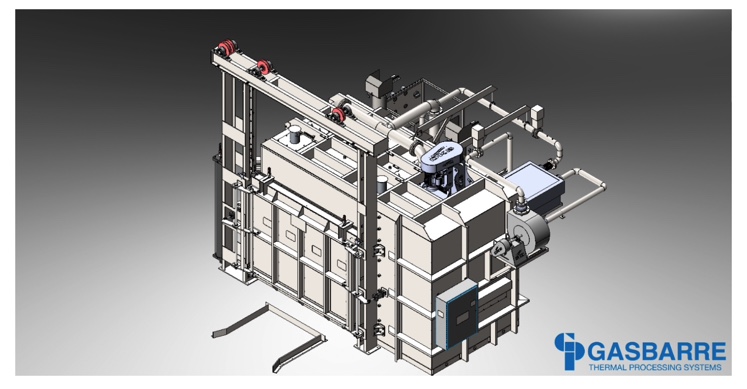
A manufacturer in the aerospace market with captive heat treating capabilities received a custom built atmosphere tempering furnace. With a working load size of 84” wide, 42” deep, and 60” tall, coupled with a max load weight of 6,000 pounds, the furnace is specifically designed for the customers' key manufactured components.

The electrically heated furnace, shipped by Gasbarre Thermal Processing Systems,  has an operating temperature range of 350℉ to 1600℉, and passes uniformity at +/- 10℉ per AMS2750E. The system is equipped with custom controls, including Eurotherm brand temperature controlling instrumentation and an Allen-Bradley PLC and HMI.

Automatic atmosphere control is included for running under nitrogen, argon, and/or a hydrogen blend. Custom designed atmosphere cooling systems are installed to reduce overall cycle time. The equipment configuration also enabled the customer to switch from pit furnace style processing, which eliminated infrastructure costs and maintenance concerns.


(Source: Art Tower from Pixabay)


Aerospace Market Manufacturer Receives Custom Atmosphere Tempering Furnace Read More »

Current Medical Alloy Trends

Thomas Wingens, Wingens International Industry Consultancy

Heat Treat Today’s Medical and Heat Treating December 2019 issue featured an article on medical alloys. Heat Treat Today talked with respected industry expert, Thomas Wingens of Wingens International Industry Consultancy, about current medical alloy trends. Here are some of his thoughts.

To read the full article to which Thomas Wingens’ comments pertain, go to Medical Alloys Their Uses and Heat Treatments

Heat Treat Today: Who is the new kid on the block in medical metals?

Thomas Wingens: Magnesium. While magnesium is a light metal used in the automotive industry, in the last five years it has become a player within the medical industry. Magnesium occurs naturally in our bodies and because our bodies can absorb it, magnesium is being engineered to last for two years and then it will deteriorate back into the body.

HTT: What are the top metals and alloys that are being used today in medical procedures and why are they beneficial to the patient?

TW: Titanium is one of the top metals because it is neutral due to the titanium oxide on the surface which makes it biocompatible.

One of the most used metals is cobalt chromium, which is highly regarded in joint and dental implants because of its outstanding osseointegration, strength, and wear resistance.

Nitinol is another top alloy. It is composed of nickel and titanium. Nickel by itself is not good for the body as it can cause headaches, however, when paired with titanium, it is a balanced alloy that is used in the spine and to produce stents for the heart. It is also a memory shape alloy that I use in STEM presentations to show students how nitinol can be twisted yet, when heated, will return to its original form.

HTT: What are your thoughts on the market forecast of medical heat treating?

TW: When taking into consideration the components of implants, tooling, and equipment, studies have shown a consistent market growth of 5-6% each year. The top joint replacements are hips with the knees, being a more complicated procedure, coming in second. Couple these with prothesis implants and x-ray tubes with copper coils, and business continues to climb.

HTT: What do you see as an exciting or disruptive heat treating technology or material in the medical field?

TW: DISRUPTION is taking place in personalized medicine. There are a bunch of very small devices for sensors and analytical devices for home use, as well for drug delivery.


A Quick Guide to Alloys and Their Applications

Titanium

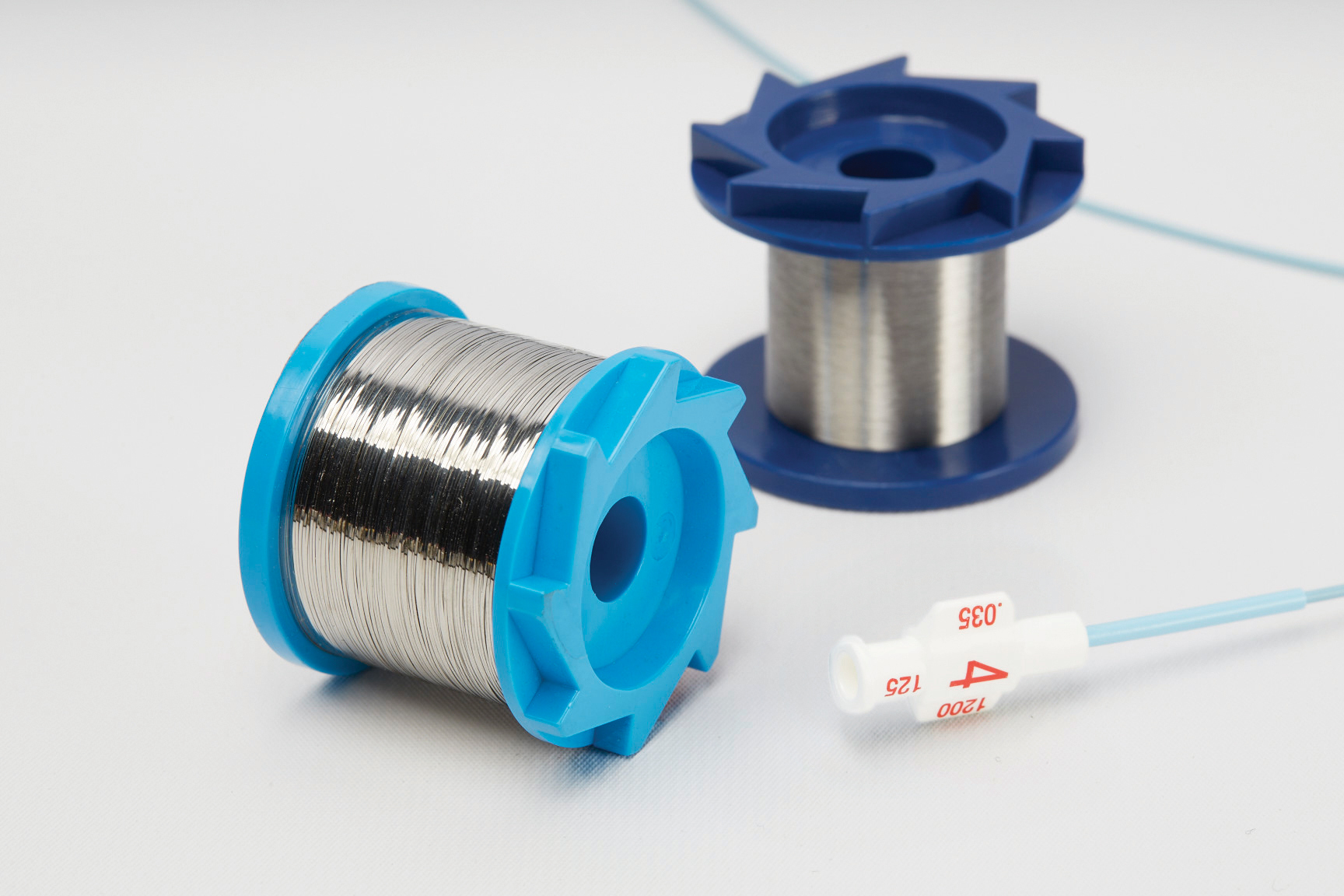
Catheter Wire
(Image source: Medical Design Briefs)

  • Implants
  • Neurostimulators
  • Orthopedic Rods
  • Pins and Plates
  • Heart Valve Housings
  • Prosthetic Eyes
  • Surgical Instruments
  • Drills
  • Forceps
  • Retractors
  • Scissors
  • Needles

Cobalt Chromium

  • Bearing Surfaces Hip/Knee Replacements

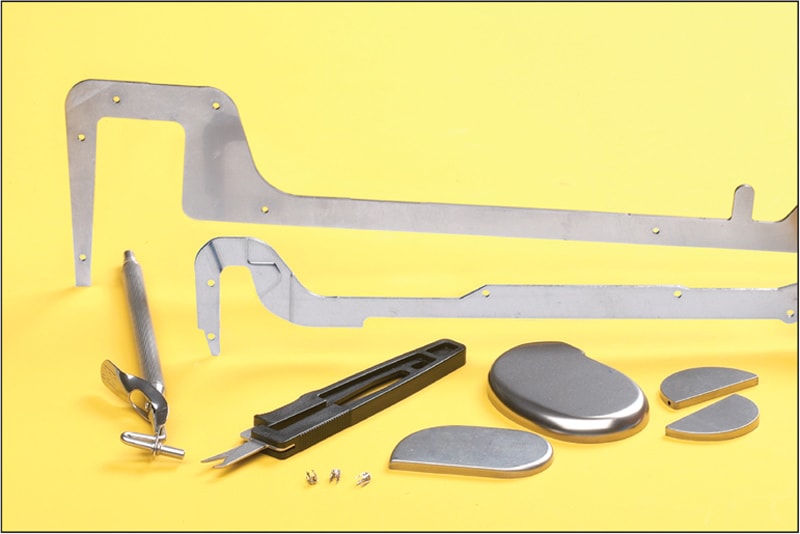
Pacemaker Parts
(Image source: Medical Design Briefs)

Niobium

  • Pacemakers

Tantalum

  • Bone Implants,
  • Vascular Clips,
  • Flexible Stents

Nitinol

  • Stents
  • Heart Valve Tools
  • Staples
  • Bone Anchors
  • Septal Defect Devices
  • Diagnostic Guide Wires
  • Arch Wires for Braces

Copper

  • Antigerm Surfaces
  • Medical Electric Devices


(Image source: Medical Design Briefs)


Current Medical Alloy Trends Read More »

Furnace Temperature Control Options

Ernesto Perez,
Director of Engineering,
Nutec Bickley

In today’s Heat Treat Today Technical Tuesday feature, Ernesto Pérez, Director of Engineering, at Nutec Bickley, introduces readers to different options when it comes to furnace temperature control.


The main aim of the temperature control function is to keep a furnace operating within certain predefined values and it is composed of two main parts:

  • Electronic control element, usually a PID (proportional–integral–derivative) controller
  • Mechanical components

In this article we will look at the various control modes used in industrial furnaces, and their applications for various heat treatment processes.

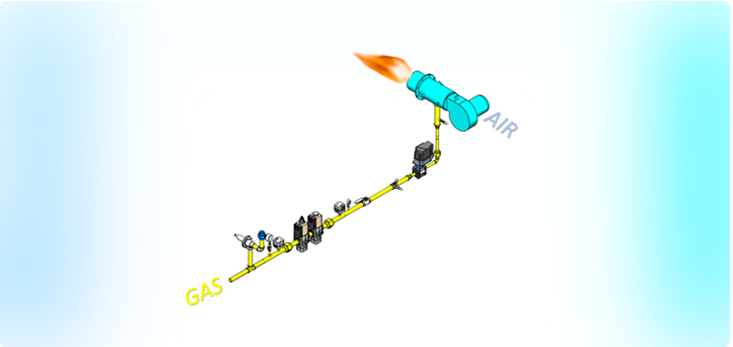
Back to the Beginning: “Zero Control” Mode

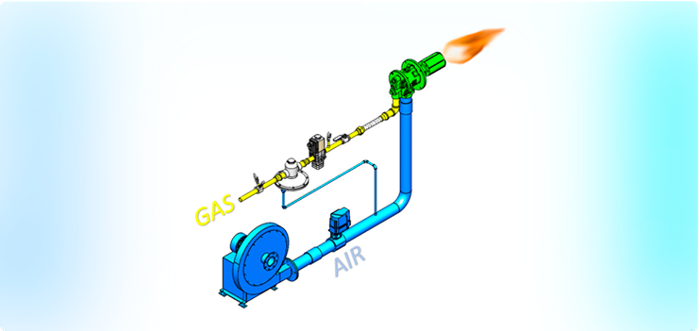
Figure 1

Before considering the modes currently used, we should briefly mention the “zero control” mode found in earlier furnace models, employed some time back, also known as “atmospheric mode.”

This mode operates by taking air from the environment by means of the venturi effect to perform combustion without controlling the air flow, resulting in an inefficient use of energy. (Figure 1)

Fuel-Only Control System

Figure 2

This operates in a similar way to zero mode, where only the gas is controlled. However, instead of the air being introduced by the venturi effect, there is a turbo fan that provides a constant flow to the process, while the gas is regulated during the different stages of combustion. (Figure 2)

  • Economic system having a single line of control.
  • It provides good temperature uniformity in applications where all items being fired in the furnace need to be at the same temperature.
  • Ideal for low temperature furnaces, kilns for ceramics and applications that require high-level heating homogeneity.

Possible Disadvantages
This technique leads to high gas consumption due to the heating of all the air present, irrespective of the size of the load in the furnace.

Proportional Control System

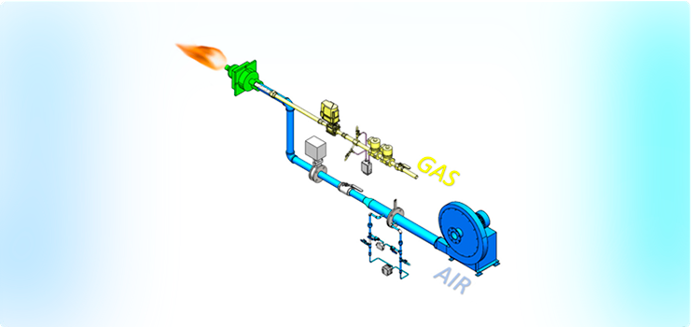
Figure 3

With this control mode, the air and the gas are controlled proportionally. (Figure 3)

The operation starts with a small flame, and as the temperature rises, it grows as the air and gas levels increase.

  • This system allows you to adjust the amount of gas based on the air present in order to achieve perfect combustion and optimal fuel consumption.
  • Ideal for any type of furnace, for example for heat treatments such as aging, tempering, forging and normalizing.

Possible Disadvantages
At the beginning of the heating process, it can be the case that temperature uniformity across the entire furnace is not so good due to the small flame, so it is not a system recommended for the treatment of very fragile pieces that can break.

Mass Flow Control System

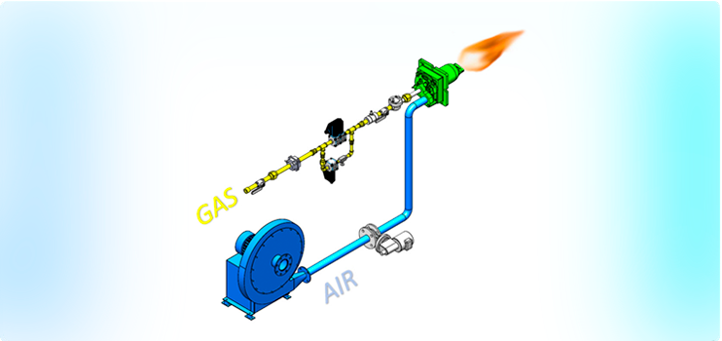
Figure 4

This system controls air/gas in the same as the previously described method, but it also gives allowance to vary the air/gas ratio during combustion process in order to optimize the fuel. (Figure 4)

  • It enables for the achievement of optimal combustion conditions with less energy input.
  • If more air is needed in a particular heat treatment stage (usually at the beginning), it can be temporarily increased.
  • Ideal for any type of furnace, like heat treatments such as aging, tempering, forging, normalizing and applications involving fragile products.

Possible Disadvantages
Because of the technology behind the system, it is more expensive.

Pulse Control System

Figure 5

This is one of the most recently introduced methods that provides a fixed air/gas ratio, but unlike the previous mentioned systems, flame velocity for product heating is always high, which generates ideal temperature uniformity right from the beginning of the cycle. (Figure 5)

The burners pulse from high-fire to low-fire, repeating this cycle every 15 to 60 seconds.

  • It is cheaper to operate than the mass flow system, allowing users to handle the entire range of products with a smaller investment.
  • It provides greater fuel efficiency by heating the product evenly from the beginning.
  • Ideal for any furnace, for example for heat treatments such as aging, tempering, forging, normalizing and applications involving fragile ceramic products.

Possible Disadvantages
The radiation of the flame can affect certain products; however, by installing an additional instrument it is possible to control this effect and to reduce flame radiation.

Experts in Temperature Control

Nutec Bickley can offer all current systems, advise on the most appropriate choice with the best cost benefits, update old systems with current technology, and provide repair and spare parts services for existing temperature control systems.


About the author: Ernesto has been sharing his expertise at Nutec for 18 years. As an electronic system engineer with a master’s degree in artificial intelligence, the 25-year industry veteran has been focused on the control aspect of software and hardware.


(All images: Nutec Bickley)

Furnace Temperature Control Options Read More »

IHEA Monthly Economic Report: No Surprises Here

“It is the time to dare and endure.” Winston Churchill made that statement in 1940, and it is apropos today, as hopefully, many of us are coming to the end of the “stay at home” quarantine and will soon be free to roam again. It has also been said that it is during particularly difficult times where possibilities are mined and take flight. We will need those encouraging words in the days, months, and perhaps years ahead as evidenced in the latest Industrial Heating Equipment Association’s (IHEA) Executive Economic Summary. The report states, “This may well be the most distressing assessment of the U.S. (and global economy) since the recession of 2008. None of the bad news that follows will come as any surprise to anyone as we are all quite aware of the damage that has been caused by the reaction to the COVID 19 pandemic.”

The report explains the difference between the 2008-09 recession and that of 2020 – the current recession is an artificial one created by the forced shutdown of the economy. The U.S. enjoyed a robust economy and healthy job numbers at the beginning of the year. “The potential silver lining to all of this is that government … can reverse the process. The day that lockdowns are declared at an end, there will be recovery. Consumers will consume again, employers will hire again, producers will produce again. How much and how fast will be the prime questions.”

In the meantime, however, “Of the twelve indicators followed in this index, there are only four that are still trending in a positive direction and they will not be holding that distinction for long.” The durable goods numbers and factory orders numbers rose a little, but this only indicates there has been a delay in terms of industry response. The activity in the durable goods category is a lagging indicator. There has not yet been enough time for the reduction in activity to manifest in the numbers, i.e., airlines, heavy construction equipment, oil field machinery, farm equipment which have all taken major hits in decline.

Durable goods tracked a bit higher this month, however, be aware that its activity is a lagging indicator.

The summary continues, “The improvement in the transportation numbers may be a bit more realistic. There has been high demand in the parcel sector as everybody has been ordering things delivered.” The other sectors in transportation have not fared as well like ocean cargo, air freight, and the rail sector.

The transportation sector is showing some positive development.

The only other area that experienced a gain was in capacity utilization, “but that will shift as there is now considerably more slack in the system than was the case earlier.” Normally these numbers would reflect the pushes and pulls of supply and demand, but that process has been interrupted … and now almost every business has an overcapacity concern.

We are all living in a “waiting” mode anticipating the “all clear” proclamation. Then, as the summary report concludes, “Once some measure of control is achieved, the economy will be restarted, and then the focus will be on the speed of recovery.”


The report is available to IHEA member companies. For membership information and a full copy of  the 12-page report, contact Anne Goyer, Executive Director of the Industrial Heating Equipment Association (IHEA). Email Anne by clicking here.

Anne Goyer, Executive Director of IHEA

IHEA Monthly Economic Report: No Surprises Here Read More »

Future Heating of Industrial Furnaces

Climate change and fossil fuels are topics that can spur many lively conversations. In today’s Heat Treat Today Technical Tuesday feature, explore their connection as it relates to heating industrial furnaces in the future with Dr. Joachim G. Wüenning, president, WS Inc. and an expert in clean efficient combustion.

This article originally appeared in Heat Treat Today’s  March 2020 Aerospace print edition.


Joachim G. Wüenning, President of WS Inc.

Many people view climate change as the biggest threat to mankind. Technical and social efforts will be required to meet the goals, formulated in the “Paris Climate Agreement,” to limit global warming to less than 35.6° F (2° C).

Combustion of fossil fuels is by far the largest human contribution to global warming. Fossil fuel-fired power plants and internal combustion engines are already in the public focus. The transformation to alternative drives for vehicles has just started, and the days of coal-fired power plants are numbered.

Combustion of fossil fuels for industrial furnaces is also a large contributor to greenhouse gases and air pollution. The industrial heating sector is not in the public focus yet, but that will change soon; therefore the topic should be addressed proactively.

For mid- to long-term future industrial process heating, there are three main scenarios:

  • heating with renewable electricity, or
  • heating with non-fossil fuels, or
  • a combination of both.

Humans used non-fossil fuels for hundreds of thousands of years and are returning to that habit after a short period of about 250 years where fossil fuels were primarily used.

Reducing CO2 Now and In the Future

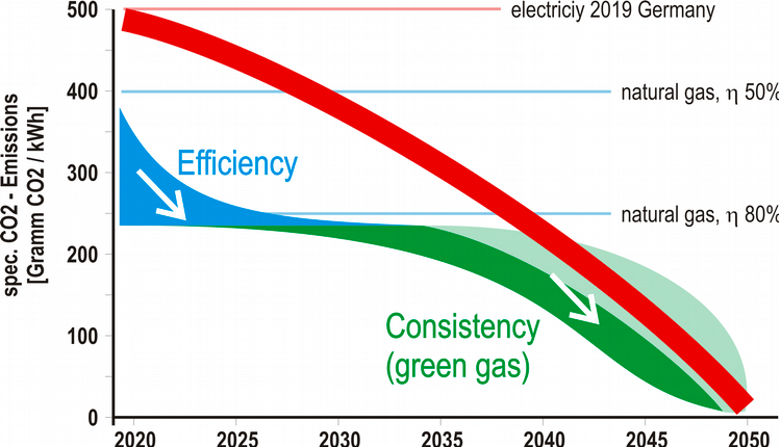
Heating a furnace using electricity is locally CO2 free, but an even greater amount of CO2 is emitted at power plants since the majority of electricity is generated by burning fossil fuels. For every kilowatt hour (kWh) produced, roughly one pound (~0.45kg) of CO2 is emitted into the atmosphere [1]. This is true for Germany, and the figures for the United States are in the same range.

Heating an industrial furnace with a typical temperature of around 1832°F (1000°C) with natural gas produces about 0.4kg CO2 for every kWh of available heat for a cold air burner, and less than 0.25kg/kWh CO2 when using a recuperative or regenerative burner where waste heat is recovered using a heat exchanger.

So, the short-term measure to reduce CO2 emissions is to use an efficient burner with heat recovery or to switch from electric to natural gas heating, which can cut CO2 emissions by 50% or more.

For a further reduction, we have to wait until electricity generation becomes predominantly regenerative, or we have to use green, non-fossil fuels. The possible paths to non-fossil heating of industrial furnaces are drafted in Figure 1. It shows that the short-term action should be improving the efficiency of burner systems or a switch from electric to gas heating. In the mid- to long-term future, there should be a healthy competition between non-fossil fuel gas and electricity, driving the prices for non-fossil energy down.

Figure 1

Changing Fuel Compositions

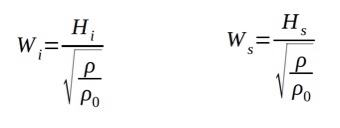
The most relevant characteristic for the interchangeability of fuel gases is the Wobbe Index (Figure 2), with the lower or upper heating value (Hi, Hs), the density of the fuel gas (r) and the density of dry air (r0). Fuel gases with the same temperature, pressure, and the same Wobbe Index will provide the same energy output from a burner. If the Wobbe Index is changing, the flow must be corrected by changing the fuel gas pressure or a flow throttle device to keep the burner power constant.

Figure 2

In most cases, the air does not need to be corrected since the ratio between stoichiometric air ratio and lower heating value is about 0.95 m3/kWh for common hydrocarbons. That means that a burner with a given heating power needs the same amount of air even when different fuel gases are used. A good rule of thumb is that one cubic meter per hour of air is required for every kilowatt of heating power.

If hydrogen is used as a fuel, about 15% less air is required. So, when hydrogen is added to natural gas and the fuel gas flow is corrected but the air flow is left unchanged, the system would be operated with somewhat more excess air, slightly less efficient but safe.

If gas fluctuations will occur in the future, adjusting the burners with more excess air would be an easy measure to ensure safe operation. With an effective heat recovery system and low exhaust gas temperatures, efficiency losses would be minimal.

Fuel Gases With High Hydrogen Content or Pure Hydrogen

The flame speed of hydrogen is much faster compared to hydrocarbons. That can cause some problems, especially in premixed burners where a flashback can occur. Another challenge resulting from faster combustion could be higher flame peak temperature leading to higher thermal NOx emissions. Modern low NOx methods are available to address this problem.

A positive effect of hydrogen can be a more reliable and easier ignition of burner systems. Many industrial burner systems can be operated with high percentages of hydrogen or with pure hydrogen with little or reasonable modifications.

Fuel Gases Containing Fuel Bound Nitrogen

Using ammonia or bio-gases with fuel bound nitrogen will produce excessive amounts of NOx-emissions when burned in most burner systems. There are a number of options to achieve low NOx-combustion with fuel bound nitrogen.

One method is fuel conditioning where fuel bound nitrogen is broken up into molecular nitrogen. This was successfully demonstrated using a stainless steel reactor in combination with a flameless oxidation burner system.[2] Another method would be exhaust gas cleaning by selective (SCR) or non-selective (SNCR) catalytic exhaust gas cleaning. Both processes require large investments and operating costs and should only be used if other options are not available.

The development of combustion systems with integrated treatment of fuel bound nitrogen would be the preferred method and will be an important topic for combustion research in the coming years. One approach is multi-stage flameless oxidation [3].

Fuel Conditioning

Fuel conditioning might be required to keep fuel gas properties within regulated limits inside the gas transport and distribution grid or for certain customers with special requirements. Fuel conditioning can be performed by blending different gases or by changing their compositions by using reformers or gas separation units like pressure swing adsorption (PSA) or membrane technology.

If future regulations propose a certain hydrogen content in the fuel gas grid, strategically placed steam reformers could keep the hydrogen content within certain ranges, even if there is no regenerative electricity available to operate electrolysers.

Reformers could also crack ammonia, ethanol, or methanol before being used as fuel gas to heat processes.

Outlook

There are several options towards non-electric, fossil-free industrial process heating. All these options have to be thoroughly investigated to keep a number of options open for future energy systems. The energy system of the future will be based on regenerative power generation but it will involve additional energy carriers to store and transport the energy. There are some challenges for combustion but there is no doubt that these can be overcome.

A fair and open competition between the different energy options will create the best solutions for society and the planet. A planned economy will not provide the fertile soil for innovations and entrepreneurship necessary to meet the challenges.

References

[1]    German Environment Agency, CO2 Grid Emission Factors from 1990 – 2018 for the German Energy Mix, March 2019

[2]    Domschke T., Becker C., Wüenning J.G., Thermal Use of Off‐Gases with High Ammonia Content – a Combination of Catalytic Cracking and Combustion, Chem. Eng. Technol., 21: 726-730

[3]   Wüenning J., Multistage Flameless Oxidation, AFRC Combustion Symposium, Waikoloa, HI, September 2019


About the Author: Joachim G. Wüenning is president of WS Wärmeprozesstechnik GmbH and his area of expertise is in clean efficient combustion, FLOX—flameless oxidation, heat recovery, radiant tubes, and recuperative, regenerative burners. This article originally appeared in Heat Treat Today’s  March 2020 Aerospace print edition.


(Image source: Seagull from pixabay.com)


Future Heating of Industrial Furnaces Read More »

IHEA’s Monthly Report: The Good Old Days

Automotive sales have been stable, which means the whole sector has been stable (Click image to enlarge)

February’s Industrial Heating Equipment Association’s (IHEA) Executive Economic Summary suggests, “The numbers revealed in this month’s index will someday be remembered as the ‘good old days.’ This will be the last version that can be termed “PCV” or pre-corona virus.” The report continues, “It will be important to look back on the last couple of months and remember that conditions looked pretty decent at the start of the year.”

The three indices that are trending positive include new automobile and light truck sales which reveal strongly that consumers favor their new vehicles. There was also a nice boost in steel consumption which suggests that there has been more construction activity in the public sector. Additionally, despite the threat, consumers remained active as factory orders were also up slightly.

While eight indices are trending downward, the summary reports, “The semi-good news is that several of the negative readings are only slight in that category.” The biggest declines were seen in “metal prices (and commodities in general) as well as capital expenditure, credit and transportation. The only one that really crashed hard was capital expenditure and that is partly due to the slump in manufacturing that started last year.”

The capacity utilization dip still registers in the high 70s (Click image to enlarge)

A little less dramatic in declines are the housing market, which still remains healthy although new home starts are down; and, capacity utilization, that has been sinking, but “is still not all that far off the pace considered normal.” The durable goods numbers and the data from the Purchasing Managers’ Index also slowed down, but not significantly.

“The next month will show drastic reductions in business activity in many sectors and the job losses will start to mount. The hope on the horizon is that COVID-19 behaves like others of its kind and starts to fade as the weather warms. If the worst of the impact is in March and April the recovery will be obvious by June and July.” states the report.

It is an uncertain time for everyone, and we can all resonate with this concluding thought, “It is hard to say what these numbers tell us. This is uncharted territory for the US.”


The report is available to IHEA member companies. For membership information and a full copy of  the 12-page report, contact Anne Goyer, Executive Director of the Industrial Heating Equipment Association (IHEA). Email Anne by clicking here.

Anne Goyer, Executive Director of IHEA


IHEA’s Monthly Report: The Good Old Days Read More »

This Week in Heat Treat Social Media


Welcome to the inaugural column of Heat Treat Today‘s first offering of This Week in Heat Treat Social MediaAs you know, there is so much content available on the web that it’s next to impossible to sift through all of the articles and posts that flood our inboxes and notifications on a daily basis. So,  Heat Treat Today is here to bring you the latest in compelling, inspiring, and entertaining heat treat news from the different social media venues that you’ve just got to see and read!

If you have content that everyone has to see, please send the link to editor@heattreattoday.com.    


1. Entropic Time (Backwards Billy Joel Parody) by A Capella Science

Let’s start your Friday off with this energetic, fun, and educational video that Paul Mason of Thermo-Calc Software shared. (And, you’ll be singing the song all day! You’re welcome!)


2. COVID-19

We have all been affected by the COVID-19 virus. It has produced experiences that none of us has ever ventured through before in our lifetime.

This week in the heat treat industry, we’ve received numerous cancellations of spring and early summer trade shows. See how  Austria’s Reed Exhibitions is helping with the healthcare needs of those in Vienna.


Additionally, many of the heat treat companies have shared their statuses and plans for business via social media posts. Here are a few of them:


3. What’s So Cool About Manufacturing?

Check out Abbott Furnace Company’s collaboration with Saint Mary’s Area Middle School to introduce kids to the world of manufacturing.


4. Reading and Podcast Corner

You may have a bit more time to catch up on the reading and podcast listening you’ve been yearning to do. May we recommend two brief articles written by industry experts and an informative podcast.

Check out Gerry McWeeney’s article, “Pros and Cons of Remote Monitoring in Heat Treat”


For those of you interested in medical devices.


And, for your listening pleasure, be sure to download the latest Heat Treat Radio episode entitled, Women in Heat Treat, with Ellen Conway Merrill and Rosanne Brunello.  They will inspire you!


5. Launch into Your Weekend with a Reading by Jackson

No additional caption needed! Happy Friday, everyone!

(Editor’s Note: Users of Firefox may have difficulty playing the below video. If so, please use another browser like Chrome.)


This Week in Heat Treat Social Media Read More »

High-Temp Differential-Expansion Problem and How to Solve It


Source: Vac Aero International Inc.


If you’ve ever tried to braze together materials that have widely different Coefficients of Thermal Expansion (COE’s), you know that the material with the higher expansion rate will grow faster than the other when heated and contract faster when cooled down. You also know that once the two different materials have been brazed together and cooling begins, the shrinkage-rate differences between those two materials can produce significant shear stresses at the brazed interface between them and be so strong that the thin brazed joint may be torn apart at either interface. Other similar weaknesses and damage can result as well.

In this HTT Best of the Web Technical Tuesday feature, Dan Kay of Kay and Associates, a vacuum and atmosphere brazing consultant, explains the details of this problem and the solution.

Dan Kay
Brazing Engineer
Kay and Associates

An excerpt: “Today’s brazing technology is based on a strong foundation of the brazing experiences of many people around the world over a period of many decades (even centuries). I’ve now been very active in the brazing world for almost 50 years and, like my predecessors in the world of brazing, I’ve learned a lot about this fascinating joining process (and I’m still learning). In the article, I’d like to share with you one of my brazing experiences from many years back, one that involved high-temperature differential-expansion between an 18″ (45 cm) diameter tool steel die and a thin carbide plate (round disc) that needed to be brazed to the die’s front surface for wear-protection.”

In this article, Dan, who is also a HTT consultant, helps readers understand the high-temp differential-expansion problem, explore what steps can be taken to prevent it, and ties it all together so that readers can clearly understand what to do.

Read the entire article from Vac Aero International,  An Old High-Temp Differential-Expansion Problem

Image source: Vac Aero International Inc.

High-Temp Differential-Expansion Problem and How to Solve It Read More »

Publisher’s Page: The Most Interesting Non-Heat Treat, Heat Treat Story You’ll Ever Watch

Doug Glenn, Publisher, Heat Treat Today

Heat Treat Today publishes four print magazines a year, and included in each is a letter from the publisher, Doug Glenn. This letter first appeared in Heat Treat Today‘s Aerospace Heat Treating magazine, March 2020. 


The first time I heard the name “Rodriguez” was at the 2015 ASM International Heat Treat Show during the “The Heat Is On” networking reception held at The Waterview Loft at Port Detroit – the same location it was held this last year (2019). I was standing beside a to-remain-nameless president of a furnace manufacturing company who had traveled extensively in his pre-heat treat days. While we were chatting at one of the outdoor cocktail tables on a lovely Detroit night, a middle-aged couple (and by that I mean a couple who were roughly my age, 54 at the time) came up and stood with us. Striking up a conversation with them, as I’m known to do with complete strangers, it became clear to us, both by their accent and by the content of the conversation itself, that they were from South Africa. They were here in the States to attend the Heat Treat Show.

When the “to-remain-nameless” furnace manufacturing president found out that this middle-aged couple was from South Africa, his eyes lit up. With enthusiasm somewhat uncharacteristic of his personality, he asked them – with great anticipation – “Do you know Rodriguez?” They looked at him as if he had two heads and after a short glance at each other replied, “Of course!” The to-remain-nameless president then looked at me, a man of roughly the same age as these two middle-aged individuals, and said, “Do YOU know Rodriguez?” Feeling a bit in the dark, I answered honestly, “No; who is Rodriquez?”

Suffice it to say, I did a lot of listening from that point forward in the conversation. It was fascinating and, to be frank, somewhat unbelievable.

As with any good story, it is best not to say too much, especially about how the story ends, but the story of Rodriguez is a fascinating story that you will NOT believe. And it is heat treat related – kind of.

I’ll tell you a bit more about Rodriguez here, but you must PROMISE to search for and watch the documentary about Rodriguez, Searching for Sugar Man. You can watch it on Netflix, and you may be able to find it other places as well. Trust me, it will be a worthwhile investment of time and, if you’re like most people who I’ve steered in that direction, your response will be something like, “No way! Not possible.”

In fact, Rodriguez was a heat treater. If you listen carefully at roughly the 1-hour mark in the documentary, you’ll find out that Rodriguez worked in the heat treat department for Chrysler, its Lynch Road Assembly plant in, interestingly enough, Detroit! According to Wikipedia, the “Lynch Road Assembly [Plant] was a Chrysler assembly plant located… near Coleman A. Young International Airport. It is now the location of The Crown Group, a powdered coatings manufacturer which supports the automotive manufacturing industry.”

That is as “heat treat” as the documentary gets, so don’t expect any more.

You need to watch this documentary, you and your entire family. My four kids were all in their teen years when we first watched Searching for Sugar Man. They were mesmerized once we got into it. Suffice it to say that Rodriguez was a musician besides being a heat treater, and what happened to him is, well… unbelievable.

If, nay, WHEN you watch it, please drop me an email (doug@heattreattoday.com) and tell me what you thought. Also, if you know of any other non-heat treat, heat treat stories, or simply movies where heat treat is mentioned, please let me know. I’m trying to compile a list of movies where at least heat treat gets a mention.

Publisher’s Page: The Most Interesting Non-Heat Treat, Heat Treat Story You’ll Ever Watch Read More »

Skip to content