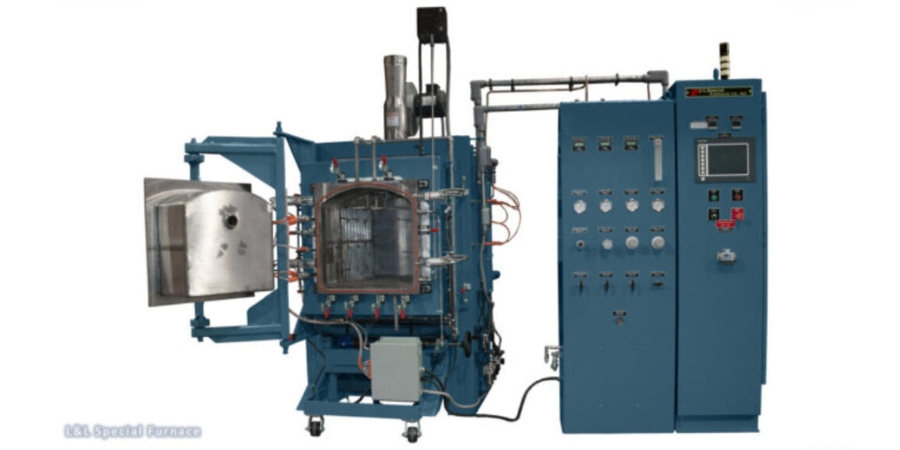
A leading manufacturer of aerospace components in the Midwestern U.S. has received one of two furnaces, which will be part of a CMC manufacturing facility providing lightweight aerospace components to commercial and military aerospace applications.
These two model XLC3348 furnaces were delivered by L&L Special Furnace. The nano threads in the CMC process are coated with proprietary resins which need to be completely removed from the substructure using heat. It is also vital that there is no oxygen present during the process as this will significantly weaken the part structure.
The model XLC3348 has a work zone of 23” wide by 23” high by 36” deep. It has a single zone of control with a temperature gradient of ±14°C/±25.2°F at temperatures between 1202°F/650°C and 1832°F/1,000°C using six zones of temperature control with biasing to balance any gradients. Constructed of low-mass insulating firebrick, which enables quicker cooldown times, the furnace also features a venturi cooling blower.
The parts are heated to a set temperature in a retort chamber that is pressurized with nitrogen. The byproducts of the outgassing part are directed by pressure and flow out of the rear of the furnace, and then heated in a vacuum furnace to temperatures in excess of 2300°F/ 1,260°C, resulting in a super-strong component that is lighter than titanium.
Find heat treating products and services when you search on Heat Treat Buyers Guide.com
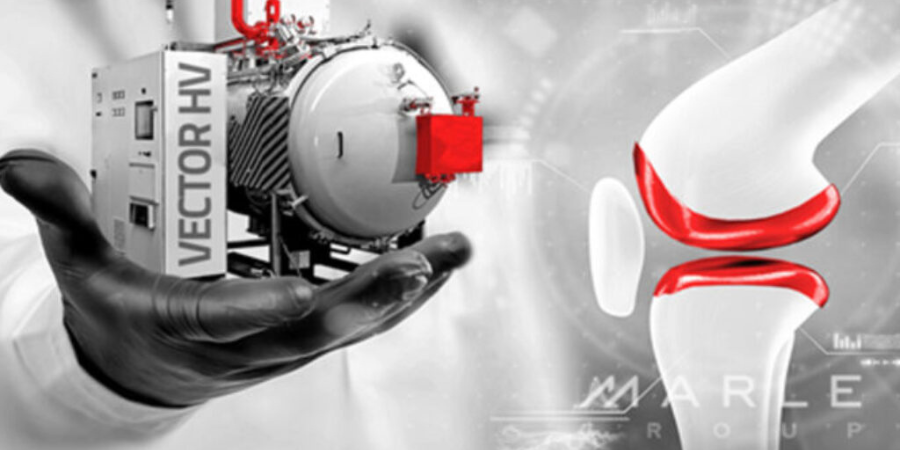
Marle Group, a global manufacturer of orthopedic prostheses, has expanded its heat treating potential with the acquisition of a new furnace. The furnace on order will be used for the heat treatment of cobalt implants.
This Vector® vacuum furnace, supplied by SECO/WARWICK, will provide the high temperatures, pure environment, temperature uniformity, and quick cooling necessary for the Cobalt alloy hardening process.
Antoine Escbach
Factory Director
Marle Group
LinkedIn
In the words of Antoine Eschbach of Marle Group, “The furnace we ordered solves the challenges faced by anyone who has to heat treat cobalt alloys in a production process. . . . Knee implantology is a field that is developing rapidly especially in developed countries, such as United States of America and in many European countries. Our mission is to create the highest quality implants which raise the living standard of people around the world, and the Vector furnace will help us to achieve this goal."
In order for cobalt alloys to be used in implantology, they must be deprived of their ferromagnetic properties. This shiny, hard metal loses this property only when it reaches a temperature higher than 1131°C/2067.8°F. Such a high temperature makes it necessary to use a vacuum furnace in the implant production process.
The solution on order uses two gases - nitrogen for cobalt hardening and argon to achieve purity of the process during heating. It is also equipped with a dew point sensor for each of the gases, thanks to which the phenomenon of water vapor condensation and, consequently, the possibility of the processed load’s surface oxidation is eliminated.
Also significant for the cobalt treatment process is also a quick cooling system based on a gas blower ensuring a maximum hardening pressure of 15 bar abs.
Find heat treating products and services when you search on Heat Treat Buyers Guide.com
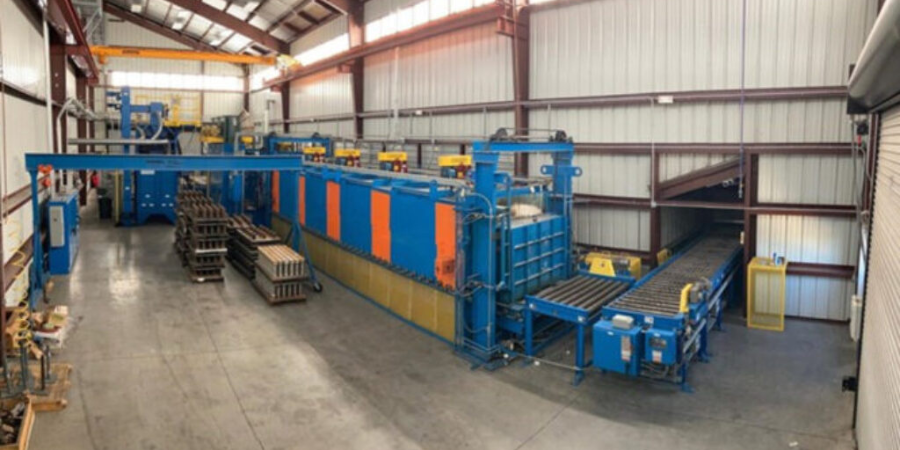
A manufacturer for the energy industry has recently announced the installment of a roller hearth furnace system. The heat treat system is comprised of two (2) box furnaces with quench tanks, a dual directional load transfer car, four (4) companion draw batch ovens, and two (2) stationary load/unload tables.
The system from Lindberg/MPH has a maximum operating temperature of 1850°F for the box furnaces, which are designed for nitrogen-based atmosphere applications. The load space dimensions of the box furnaces are 48” W x 96” D x 36” H, with larger internal chambers to provide clearance for baskets or fixtures. A snake chain pusher assembly with a dual-directional pacecar is used by each furnace to transfer the loads from the chamber to the pneumatically operating quench elevator deck.
The glycol quench tanks are designed for quick and uniform quenching, featuring an immersion oil heater and an externally mounted air-to-quench media heat exchanger. The tanks’ agitation systems include four agitators with draft tubes. The gross load capacity of the car is 10,000 lbs., and it travels linearly in front of the equipment on two embedded floor rails.
Find heat treating products and services when you search on Heat Treat Buyers Guide.com
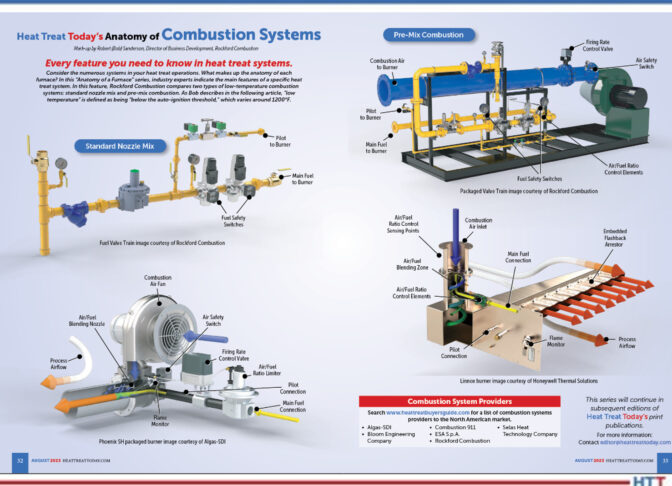
Consider the numerous systems in your heat treat operations. What makes up the anatomy of each furnace? In this “Anatomy of a...” series, industry experts indicate the main features of a specific heat treat system. In this feature, Rockford Combustion compares two types of low-temperature combustion systems: standard nozzle mix and pre-mix combustion. As Bob describes, “low temperature” is defined as being “below the auto-ignition threshold,” which varies around 1200°F.
Contact us with your Reader Feedback!
The mark-ups for these reference images are provided by Robert (Bob) Sanderson, director of Business Development at Rockford Combustion.
Download the full graphics by clicking the images below.
This Technical Tuesday article is drawn from Heat TreatToday's August Automotive print edition.
Search www.heattreatbuyersguide.com for a list of combustion system providers to the North American market. If you are a combustion system supplier and not listed here, please let us know at editor@heattreattoday.com
This series will continue in subsequent editions of Heat TreatToday'sprint publications. Stay tuned!
Find heat treating products and services when you search on Heat Treat Buyers Guide.com
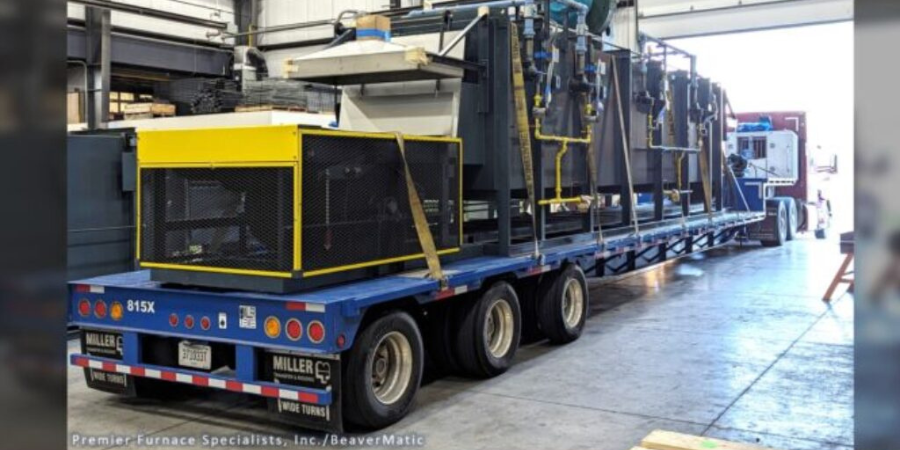
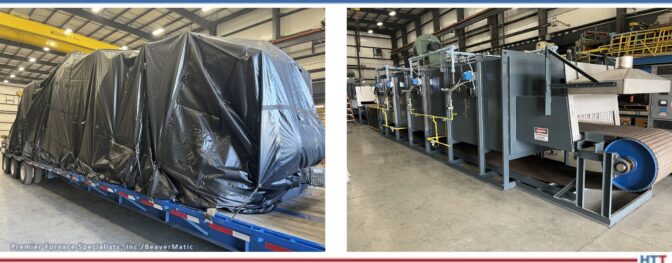
A mesh belt temper furnace has been shipped to a manufacturer in the U.S. South. The client will use this heat treat furnace for preheating and tempering steel bar stock.
Mesh belt temper furnace packed and shipped
(Source: Premier Furnace Specialists. Inc./BeaverMatic)Steve Ignash
Sales Engineer
Premier Furnace Specialists, Inc./BeaverMatic
Source: Premier Furnace/BeaverMatic
"We had built the client a similar furnace in 2022," commented Steve Ignash, sales engineer at Premier Furnace Specialists, Inc./BeaverMatic. "Our furnace gave them the confidence to purchase five more of the similar style to replace outdated equipment and add to their current increase in production."
The remaining four furnaces from the recent purchase will be completed and installed through January 2024.
Find heat treating products and services when you search on Heat Treat Buyers Guide.com
The brain drain is real. As new professionals enter the industry, Heat TreatToday is helping to ensure that young and old inquiring minds can connect with and grow from the experiences of high-value industry experts. Get to know Heat TreatToday Consultant:Jon Tirpak.
I am Jon Tirpak, professional metallurgical engineer, fellow and past president of ASM International, chief engineer of Sabattis, LLC, and managing partner of Value Selling Associates. I have decades of metallurgical engineering experience, especially with respect to manufacturing technology research and development in the federal and commercial sectors. I excel at building cross functional teams, establishing lean, sustainable processes, navigating the federal marketplace, and thinking outside of the box. Currently, I am located in Mount Pleasant, SC, but “have ticket, will travel!” I am also available through Zoom and Microsoft Teams, and I would welcome a call.
Jon’s focus is all about creating teams that focus on client-centric processes. He is more than willing to guide clients towards making the necessary, hard choices based on predetermined criteria, all while using a sane selection process. Once, Jon was noted as being the only “adult” in a room of technologists during an investment strategy session. He considers this to be the biggest compliment paid to him.
With over 40 years of experience in metallurgical engineering, Jon has some fantastic stories shrouded in NDAs. But he can share one of his taglines: “You can’t have the alloy without the heat treatment.”
In addition to being a consultant in the heat treat industry, Jon is also an Air Force Veteran. Beginning in 1982, he launched his career at the Air Force Materials Laboratory. His seminal research on fatigue, fatigue crack growth, and fracture toughness testing coupled with other programs promoted the use of aluminum castings in aircraft. Eventually, future research and the continuous improvement of casting alloys and processes coupled with heat treating led to the elimination of the casting factor. His technical reports published in the mid-1980s are still referenced today by researchers around the world.
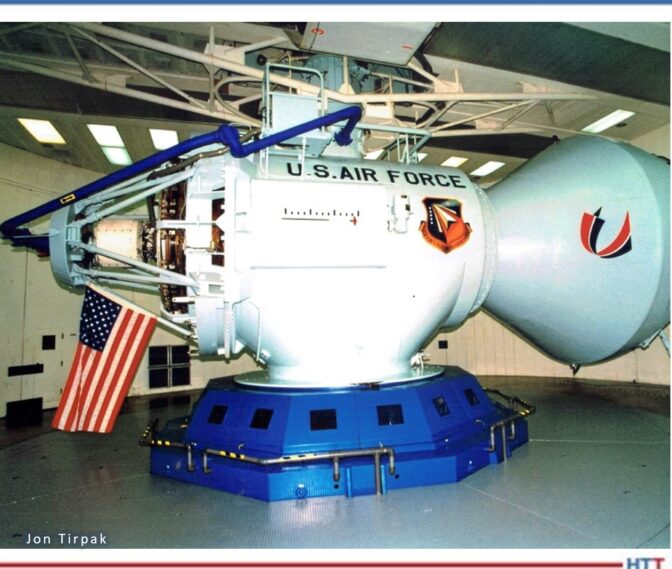
Air Force's Dynamic Environment Simulator ("Centrifuge")
(Source: USAF)
Jon served as an executive officer within Project Forecast II and focused his expertise on advanced materials and manufacturing in the Plans and Programs Office of the Air Force Materials Laboratory. In addition to his regular duties, Jon served as a test subject in the Air Force’s Dynamic Environment Simulator (DES) or the “Centrifuge.”
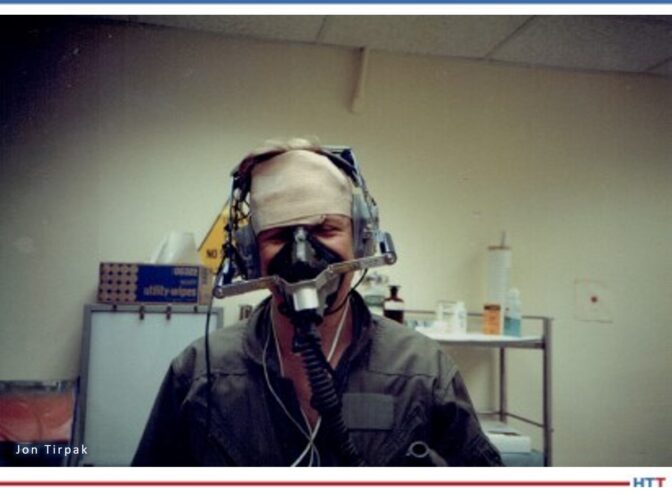
With over 40 test and proficiency runs, Jon was a research subject to evaluate new systems battling a phenomenon called G-Induced Loss of Consciousness (G-Loc). This effect occurs when pilots experience the rapid on-set of acceleration (high g-forces) causing a pilot to black out. 8.5 gs was the maximum g-force he experienced in the simulator. Watching Top Gun: Maverick reminded Jon of the graying and blacking out of a pilot subject to these extreme forces. The below photo shows Jon getting suited up for related DES studies and the DES itself which was decommissioned and replaced by the Air Force several years ago.
Lieutenant Tirpak suited up for an aeromedical research study.
(Source: Jon Tirpak)
His second assignment at the Ballistic Missile Office availed Jon to work at the Nevada Test Site conducting underground nuclear tests. All in all, his short tours with the Air Force propelled him into the balance of his civilian, industrial career revolving around different metal forming processes and heat treating. Today, he actively supports a client deploying thermal processing technology to replace carburizing.
The future of heat treat lies in two things: passionate people and cybersecurity. Without passionate professionals who see the whole picture and who are willing to contribute and serve clients, business will languish. And don’t underestimate the importance of cybersecurity! An enterprise needs to “build moats,” train employees, and upgrade software and hardware — and then train again!
Heat TreatToday offers News Chatter, a feature highlighting representative moves, transactions, and kudos from around the industry. Enjoy these 48 news bites to stay up to date on all things heat treat.
Equipment Chatter
UPC-Marathon’s gas generator was recently installed for Jomarca, one of the biggest manufacturers of fasteners, bolts, nuts, and fixing elements in Brazil.
KÜNNE Group orders the world’s first wire annealing furnace, from WS Wärmeprozesstechnik GmbH, with an innovative heating concept of burners which can use both natural gas and hydrogen.
L&L Special Furnace Co., Inc.’s retort furnace with an Inconel 602CA alloy retort has been shipped from Pennsylvania to a leading manufacturer of motor laminations, located in the U.S. Midwest
Nel Hydrogen Electrolyser AS, a subsidiary of Nel ASA, has signed a contract for 40 MW of alkaline electrolyser equipment for about € 11 million with Bondalti for its first phase of the H2 Enable project in Estarreja, Portugal.
Heat Treatments, a commercial heat treater in New Zealand has recently expanded its operations by adding another Nitrex nitrocarburizing system.
SECO/WARWICK will supply a Vector® vacuum furnace to a South American international manufacturer of weapons and military equipment.
Stahl Gerlafingen ordered from Danieli a K-Weld machine as well as a 2-MW Automation Q-Heat-system.
Rungta Mines Limited selected two Danieli high-speed bar and wire rod mills that will apply in-line heat treatment to the bars.
A service hardening plant in Spain has purchased a Vector® vacuum furnace from SECO/WARWICK.
Company and Personnel Chatter
Retech, a SECO/WARWICK Group division, will expand into a Buffalo, NY, building that will house fabrication, welding, small assemblies, and other manufacturing machinery.
Thomas Hansmann succeeds Hans Ferkel as CTO and member of the Managing Board at SMS group GmbH.
SECO/WARWICK USA, a SECO/WARWICK Group division, has outgrown its century-old current Meadville office and is moving into the recently rehabilitated Crawford Business Park, just about two miles away.
The Nadcap program — which provides critical process accreditations of suppliers in the aviation, defense, and space industries — is developing a new task group for additive manufacturing (AM).
Rockford Combustion, a company in the fuel-train management and combustion safety industry, launched a newly revamped website providing educational, engineering, and e-commerce resources to enterprises that rely on fuel-fired burners for their thermal processes.
Solar Atmospheres of California announces Airbus approval for heat treating.
Drew Daugherty takes on a new role as manager of National Sales at Paulo.
NUTEC Fibers Division has a new president — Gerardo Muraira. He was promoted from his previous role as general manager at NUTEC, Inc.
Marc DeBruyne recently joined SECO/VACUUM as manager of Process Development for the new R&D heat treat shop going in next door to the furnace assembly shop.
SMS group GmbH and Tata Steel have signed a memorandum of understanding to make arrangements for conducting a joint industrial demonstration of SMS’s innovative EASyMelt (Electric-Assisted Syngas smelter) technology.
The SECO/WARWICK Group is the winner of the Social Responsibility Program Leaders and the Emblem in the category of ECO Company (Polish: EKO Firma) 2023.
SMS group GmbH is implementing a strategic generational change: Jochen Burg is taking over as chair of the Managing Board on October 1, 2023; and Fabíola Fernandez becomes the new CFO of SMS group as of January 1, 2024.
The team at Wakefield Thermal is pleased to announce a new partnership with Johnson Company, a manufacturer’s representative.
Benjamin Golding takes on the responsibility as Chairman of the Board of ENRX Group.
Steven Sumner has joined Nitrex Heat Treat Services as director of Sales.
Alexy Metals announces the acquisition of Tampa-based AMP Rings, Inc., a manufacturer of industrial rings, brazing preforms, and precision engineering components.
Steelhead Technologies announces the grand opening of their brand new office at 2140 Grand River Annex in Brighton, MI.
Chad Schondelmayer is the new vice president of Operations with RoMan Manufacturing, Bobbi Warren is the new chief financial officer, Shea Hickman is the new chief people officer, and Kurt Hofman is president and chief technology officer.
Kudos Chatter
On March 22–24, 2023, the second China Heat Treatment Congress (CHTC) and first HIP Users Conference was held in Suzhou, China and was attended by 320+ industry professionals.
RoMan Manufacturing’s new production building will also house RoMan University, a comprehensive training and development program, as well as the Department of Labor approved apprenticeship program.
Solar Atmospheres and Vulcan Springs, along with the PMA Mid-Atlantic District, hosted a plant tour “extravaganza.”
Congratulations to President/ CEO Mark Kaiser on his 24-year anniversary with Lindquist Machine Corporation.
This year is a very special one, celebrating 150 years of SMS group GmbH.
RoMan Manufacturing has been awarded the Employer of Choice award in Western Michigan.
Bill Cowell will be retiring after being with Advanced Heat Treat Corp. since 1999, most recently as the vice president of Plasma/Ion Nitriding.
Recently in Fives North American Combustion, Inc.’s Cleveland laboratory, they ran over 12 continuous hours with a newly commissioned hydrogen fuel infrastructure.
The CanCham Mexico Business Community recognizes and congratulates NITREX for its first 10 years full of growth and many achievements.
Nitrex has been awarded the TOP 10 SPACE SOLUTIONS PROVIDER IN APAC 2023 by the Aerospace Defense Review for expertise in aerospace surface treatment solutions.
Solar Atmospheres hosted over 40 high school students enrolled in the Summer Engineering Institute at Lehigh University.
Metallurgical engineering professor Zhigang Zak Fang is a recent recipient of the prestigious Humboldt Research Award for developing a breakthrough technology that can produce high-quality, low-carbon emitting titanium powder at a significantly reduced cost.
The Metal Powder Industries Federation’s (MPIF) Awards Committee presented Mark Saline, president of Gasbarre Thermal Processing Systems, with the 2023 MPIF Distinguished Service to Powder Metallurgy (PM) Award. This recognition is for individuals who have actively served the North American PM industry for at least 25 years and are deserving of special recognition.
HT-MX Heat Treat & HIPing completed its periodic Nadcap audit, obtaining Merit status for the second year in a row.
Gasbarre sponsors Camp GLEEM and hosts a tour for students attending GLEEM (Girls Learning Entrepreneurship, Engineering, and Manufacturing) Summer Manufacturing Camp.
Jim Norton steps up as the new manager of Operations for Gefran’s North Andover, MA, plant. With 2+ decades of industrial manufacturing experience, Jim has been helping the company since April 2023 by his approach to lean manufacturing and cycle time reduction.
Aalbertssurface technologies shares news of the 40th anniversary for their team in Weiterstad.
Heat TreatToday is pleased to join in the announcements of growth and achievement throughout the industry by highlighting them here on our News Chatter page. Please send any information you feel may be of interest to manufacturers with in-house heat treat departments especially in the aerospace, automotive, medical, and energy sectors to editor@heattreattoday.com.
Find heat treating products and services when you search on Heat Treat Buyers Guide.com
Once a month, Heat Treat Today publishes an episode of Heat Treat Radio, a unique-to-the-industry podcast that covers topics in the aerospace, automotive, medical, energy, and general manufacturing industries. Each episode features an interview with an industry leader and is full of in-depth descriptions of technical content as well as heart-felt stories from industry legends.
Today's articlefeatures three industry leaders, ranging from young rising stars to seasoned industry staples. With two former 40 Under 40 honorees and one Heat Treat Legend, these are leaders you don't want to miss getting to know!
Enjoy this highlight reel of three industry leaders recently featured on Heat Treat Radio: John Becker, Sasha Tupalo, and Nic Willis.
Heat Treat Radio: Heat Treat Legend John Becker
John Becker
President
Heat Treat Equipment
Source: Heat Treat Today
Meet the heat treat legend who describes himself as "tenacious like a bulldog." John Becker, experienced salesman, manufacturer, and founder/president of Heat Treat Equipment (est. 2011), shares his heat treat story and offers advice to the next generation of heat treaters in this Heat Treat Radio episode.
Before becoming the inspirational leader in the industry that he is today, Becker got his start in the early 60's as a janitor working in for his now-wife's father, sweeping up the steel division. Becker quickly progressed from a janitor to a small business owner, running the J. L. Becker Company out of the basement of his Michigan home.
An example of true American grit and determination, he expanded his company internationally, building equipment in places as diverse as Israel, Saudi Arabia, Thailand, China, Korea, Russia, and Ukraine. In 2011, Becker sold his first company to Gasbarre and founded Heat Treat Equipment, which he still runs today at the age of 79. His advice to the young heat treater: "If you don’t come home laughing and having a good time and enjoying yourself, you’re in the wrong business."
Read the transcript, and listen to or watch the podcast here.
It is rare to find a young person who says they are working their dream job, but in Sasha Tupalo, just such a person can be found! A 2019 40 Under 40 honoree, Sasha has since more than lived up to this award in her years in the industry. Born and raised in the Ukrainian town of Dnirpo, Tupalo offers a unique and helpful perspective to the North American Heat Treat Industry. Tupalo says she got into metallurgy by sheer curiosity after graduating from high school. This curiosity first led her to obtain a master's degree in Material Science and Engineering in 2014 and to her current role as the Manager of Thermatool Labs at Thermatool Corp.
In this episode, Tupalo speaks about her experience as a female in a male-dominated industry, her expertise in the heat treat industry, and her progression from applications engineer to materials engineer to senior materials engineer, and now to lab manager. When asked to offer a word of encouragement to the rising heat treating generation, Tupalo says, "There are lots of opportunities for growth. It’s fun. It’s a really fun industry — for me, it is, at least. If it’s something that interests you, I say go for it."
Read the transcript, and listen to or watch the podcast here.
Heat Treat Radio: Making the Leap to Laser Heat Treat with Nic Willis
Nic Willis
Metallurgist/heat treat supervisor
Emerson Professional Tools — RIDGID® TOOLS.
Source: Heat Treat Today
This heat treat leader is not only the major player implementing laser heat treat in-house, but he is also a recipient of Heat Treat Today's 40 Under 40 recognition in 2020. Nic Willis is the metallurgical authority for all Emerson Professional Tools operations worldwide and is the metallurgist/heat treat supervisor of the RIDGID® TOOLS division.
It is no wonder that this young industry leader would accomplish great things in the world of heat treating. Willis has only been in the heat treat industry for about five years, but in that time, he has been a key figure in the modernization of the company's heat treat department, and he projects that laser heat treating will be brought in-house and on site for his company within the next few years.
"But what," the reader may ask, "is laser hardening?" Such a reader has come to the right podcast! Willis states, “It’s a form of selective hardening where you want some of the part to have a hard case for wear resistance. The rest of the part keeps its ductility. In this case, you’re using a laser — rather than an induction field or a flame — to heat up this specific area that you want to harden.” To find out more about Nic Willis and the laser-hardening process for heat treat, tune in to the full episode!
Read the transcript, and listen to or watch the podcast here.
Cuáles son las características más deseables de un probador de dureza Brinell? Esta reseña del equipo le permitirá evaluar si debe o no incorporarlo a su departamento de tratamiento térmico.
Read the Spanish translation of this article in the version below or read the English translation when you click the flag to the right. Both the Spanish and the English versions were originally published in Heat Treat Today's August 2023 Automotive Heat Treat print edition.
Toda empresa dedicada al tratamiento térmico deberá practicar ensayos de dureza, algunos de ellos utilizando la medición Brinell que data desde el año 1900, lo que lleva a que se amerite el análisis de tan perdurable técnica. La prueba en mención requiere de un penetrador de bola de carburo de tungsteno que impacte de manera vertical sobre la superficie del material a ser ensayado, previamente ubicado éste sobre un yunque fijo. Paso seguido, se mide el diámetro de la “huella” generada por la bola, mínimo por los ejes “x” y “y,” y se toma el promedio de estas mediciones como cifra operativa de la que se pueda valer el técnico para establecer la dureza, bien sea alimentando una ecuación o mediante la lectura de una tabla de valores en la que se relacione diámetro frente a dureza.
Contact us with your reader feedback!
Para el ensayo Brinell se dispone de una amplia gama de cargas de fuerza, al igual que de diámetros de penetradores, reflejando la gran variedad de metales a ser probados; no obstante, en la mayoría de ensayos se implementa una bola de 10mm bajo una carga de 3.000 kg. En las grandes máquinas de apoyo a suelo por lo general el penetrador es motorizado, aunque otras operan a partir de palancas y pesas, mientras que también las hay hidráulicas o neumáticas.
Existen tres razones principales por las que la prueba Brinell no deja de ser el método más opcionado para la medición de la dureza en muchas industrias de tratamiento térmico.
1. Preparación de la superficie
La preparación de la superficie de una muestra para las pruebas Brinell toma solo unos segundos con una amoladora. Siempre que la muestra esté firmemente asentada sobre el yunque presentando la cara superior en dirección perpendicular a la dirección de la fuerza del penetrador, de acuerdo a lo exigido por las normas, no es necesario lograr una superficie demasiado lisa.
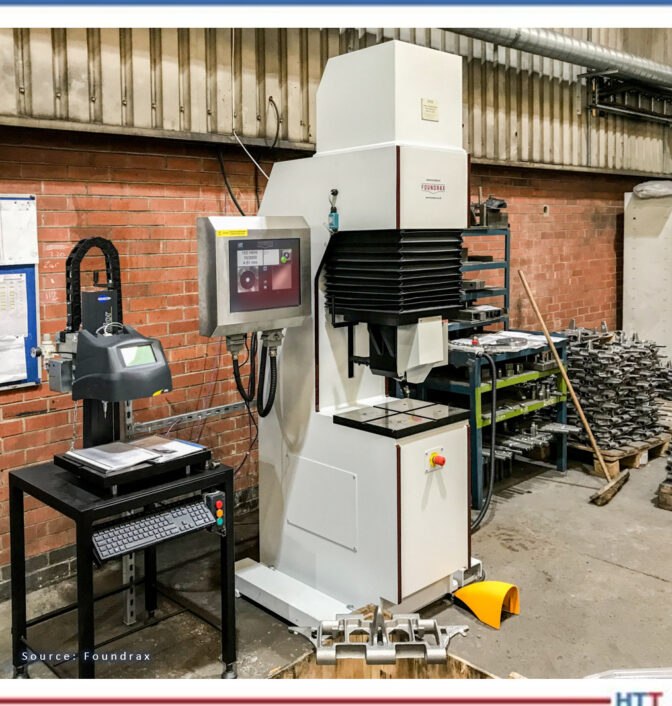
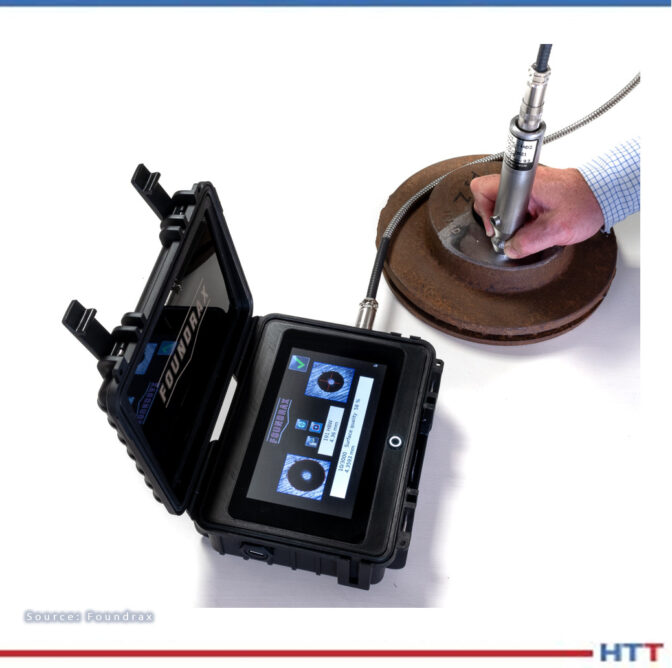
Figura 1. Robusto probador Brinell in situ
2. Contaminación de la superficie
Es poco probable que los contaminantes diminutos en una superficie generen una “prueba errónea” bajo un penetrador Brinell, a diferencia de la prueba de dureza Rockwell (el método más común en la industria). En esta prueba un pequeño indentador de diamante penetra menos de una centésima de pulgada, arrojando como resultado el que cualquier contaminante o anomalía en la superficie que pueda impedir o favorecer el progreso del penetrador (incluído el paralelismo) represente un problema, y obligando a que las muestras para la prueba Rockwell se deban preparar cuidadosamente antes de realizar la misma.
3. Portabilidad
Quizás el factor más significativo es que los robustos equipos portátiles de mano Brinell, con cabezales de prueba hidráulicos, permiten probar, in situ, piezas grandes, pesadas, de superficies rugosas o formas irregulares. Esta característica es de tal utilidad en la industria que ha motivado a que los órganos de normalización internacional otorguen una dispensación especial, una excepción si se quiere, a las máquinas portátiles, pese a que la ejecución de las mismas no sea susceptible de verificación directa como sí lo es la de sus equivalentes, las máquinas fijas.
Con fuerzas que van desde los 3000 kg hasta 1 kg, y bolas penetradoras tan pequeñas como 1 mm, las pruebas Brinell se pueden usar en una amplia gama de metales, pero los lugares en los que existiría la mayor probabilidad de encontrar un equipo de 10mm/3000kg son las forjas, las fundiciones, las plantas de tratamiento térmico, los laboratorios y las áreas de control de calidad. Previamente mencionamos que no se requiere que la superficie de las muestras de prueba sea absolutamente lisa; de hecho, es posible medir con un grado importante de precisión las superficies irregulares en materiales de configuración gruesa ya que el diámetro de la hendidura es tan grande en relación con cualquier irregularidad en la superficie.
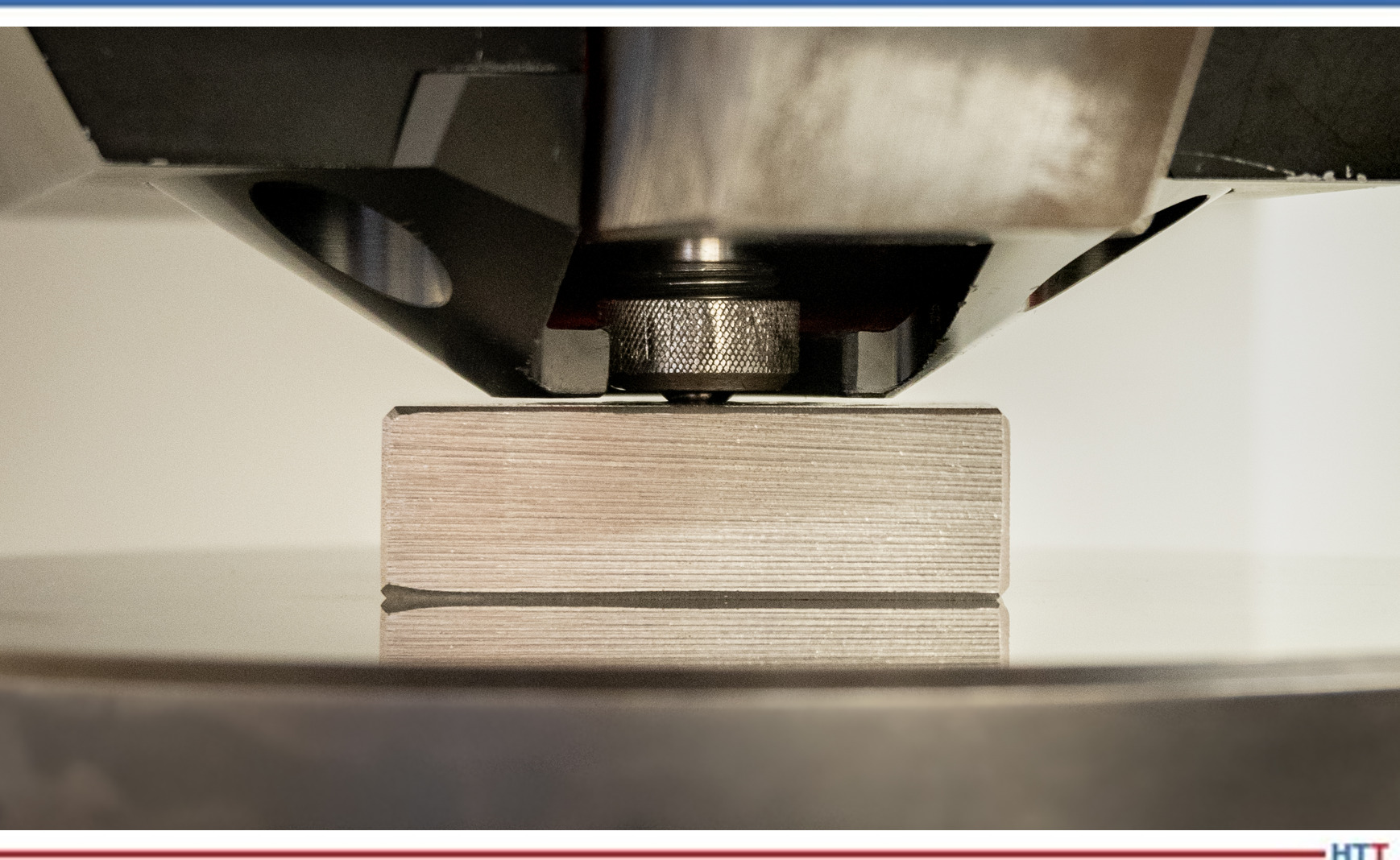
Figura 2. Probador de Brinell, grado calibrador, en primer plano
En la Figura 2 se puede apreciar cómo un probador Brinell de grado calibrador introduce la bola de carburo de tungsteno en la muestra de prueba. Se mantiene la bola en posición para estabilizar la deformación plástica.
Las normas que rigen de manera detallada las pruebas Brinell son la ASTM E-10 y la ISO 6506, pero el procedimiento práctico para los técnicos es muy sencillo, tanto que el entrenamiento no debería tardar más de una hora. Para ensayar piezas forjadas, palanquillas y otras muestras, una hendidura debería bastar aunque, desde luego, en ciertas aplicaciones de extrema importancia se podrá utilizar más de una para mayor seguridad.
Saber si analizar o no cada muestra en un lote determinado deberá decidirse con base en la inconsistencia de las muestras mismas, más no responde a problemática alguna con las pruebas de Brinell en sí. En ciertas industrias se prueba cada pieza que se produce debido a que el riesgo de error es demasiado alto. Un buen ejemplo lo encontramos en la producción de los componentes de los eslabones para las orugas utilizadas en tanques y maquinaria pesada (retroexcavadoras y demás). Cada eslabón de cada oruga de un tanque en uso en el ejército británico ha sido probado por Brinell en una máquina totalmente automática, de alta velocidad, que cuenta con una poderosa abrazadera integral para mantener el componente absolutamente rígido durante la prueba. Por cierto, esa máquina es la de la primera foto. Con un cuidado adecuado y razonable, un probador Brinell robusto podrá generar cientos de miles de pruebas; de hecho, el probador de la Figura 1 ha realizado varios millones.
Las pruebas duran aproximadamente quince segundos ya que el penetrador se debe dirigir hacia el material de manera uniforme sin permitir la posibilidad de un “rebote” y evitando por completo llegar a golpear el material. Por otro lado, el metal debe recibir la presión por un período de tiempo suficiente que garantice que la hendidura se deforme de la manera más plástica posible, es decir, minimizando al máximo el riesgo de la más ligera contracción de la hendidura una vez retirado el penetrador.
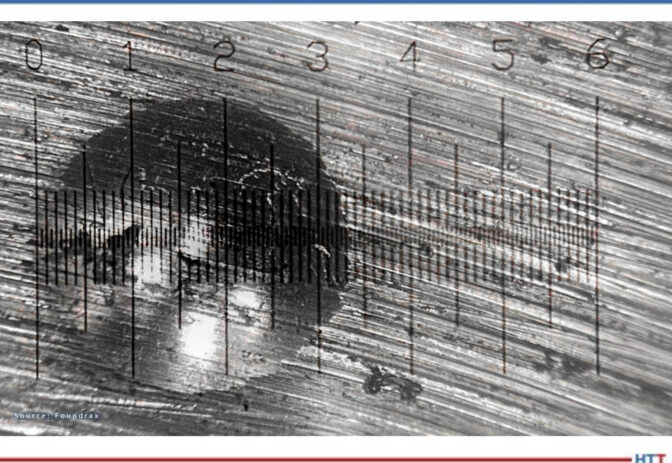
Figura 3. Medición de una hendidura de prueba de dureza Brinell
Sin embargo, es en este punto que se presentan las complicaciones. Después de generar cuidadosamente la hendidura y retirar la muestra de prueba de la “boca” de la máquina probadora, es necesario medir la hendidura en al menos dos diámetros. Dado que las hendiduras de Brinell tienen como máximo 6 mm de ancho y que una diferencia de 0,2 mm en el diámetro podría equivaler a 20 puntos de dureza, obtener la medición correcta es esencial y de alta complejidad. La mayoría de los técnicos usan un microscopio iluminado para lograrlo, pero aún así puede ser un desafío. Considere la Figura 3.
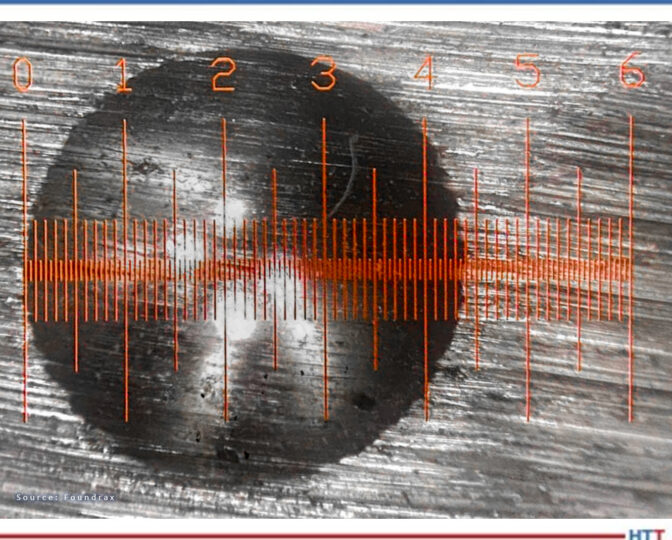
Los microscopios de medición manual han mejorado a lo largo de los años, y cuando se obtiene una hendidura relativamente “limpia” con una retícula nítidamente iluminada, se le puede facilitar al técnico experimentado realizar una medición precisa. La Figura 4 presenta un escenario menos complejo que el anterior pero, aun así, ¿cómo podemos saber si realmente se ha juzgado con precisión la posición del borde?
Figura 4. Medición con microscopio mejorado y retícula bien iluminada.
Al crearse la hendidura se genera un cordoncillo en el perímetro de la misma debido a que el metal no solo presiona hacia abajo, sino también hacia los lados. Este cordoncillo puede difi cultar la ubicación del punto en el que comienza realmente la hendidura, y tres técnicos diferentes pueden hacer fácilmente tres estimaciones diferentes de su lugar de inicio. Es esta variación en la interpretación de los resultados por parte de los operadores la que ha llevado a que, durante más de 80 años, la prueba Brinell se haya considerado un poco “ordinaria”, apta tal vez para el maquinista en el taller, pero de dudoso valor para el científi co en el laboratorio.
En 1982 llegó a los mercados el primer lector automático, siendo éste la culminación de años de investigación, y valiéndose de software privado que llevó a las computadoras de la época a sus límites. El equipo podía hacer cientos de mediciones de un lado a otro de la hendidura y calcular el diámetro medio en una fracción de segundo. Poco después llegó a ser parte integral de una máquina de prueba Brinell. La noticia de la aparición de este equipo pronto llegó a algunos usuarios importantes en la industria de las herramientas petroleras quienes exigieron a sus proveedores valerse de él; quince años más tarde se había diseminado ampliamente el uso de esta tecnología generando la transformación de la percepción que se tenía de la prueba Brinell. Podríamos decir que la prueba Brinell había llegado a la mayoría de edad.
Figura 5. La última versión de ese microscopio automático en acción
Desde luego, como con cualquier equipo de medición importante, la calibración y el mantenimiento regulares son aconsejables, si no obligatorios. Los fabricantes mismos suelen estipular un cronograma de mantenimiento que se debe tener en cuenta junto con las reglas de calibración establecidas por las agencias internacionales.
Al considerar las opciones para la prueba de dureza en muestras con tratamiento térmico, en última
instancia existen tres métodos: Brinell, Rockwell y Microdureza (Vickers o Knoop).
Pese a que no es adecuada para muestras muy pequeñas o demasiado delgadas, la prueba Brinell es relativamente “inmune” a los contaminantes pequeños, los penetradores no son costosos, y, gracias al ancho de la hendidura, las pruebas de superficies con acabado áspero e irregular no presentan dificultades. Con el desarrollo, hace 40 años, de la medición automática de la hendidura, se superó la única deficiencia grave de la prueba Brinell, proporcionando las garantías que tan vital importancia revestían para los proveedores de piezas esenciales en industrias de toda índole, incluídas las de petróleo y gas, aeroespaciales y de defensa y transporte.
Sobre el autor: Alex Austin se viene desempeñando desde 2002 como gerente de Foundrax Engineering Products Ltd. Foundrax es proveedor de equipos de prueba de dureza Brinell desde1948, siendo en realidad la única compañía en el mundo especializada en el campo.
Alex funge en el Comité de Prueba de Dureza por Hendidura ISE/101/05 del British Standards Institution. En su calidad de miembro de la delegación británica de la Organización Internacional de Normalización, ha aportado como consultor para el desarrollo de la norma ISO 6506 “Materiales metálicos–prueba de dureza Brinell” y preside en la actualidad la revisión ISO de dicha norma.
The brain drain is real. As new professionals enter the industry, Heat TreatToday is helping to ensure that young and old inquiring minds can connect with and grow from the experiences of high-value industry experts. Get to know the second Heat TreatToday Consultant: Thomas Wingens.
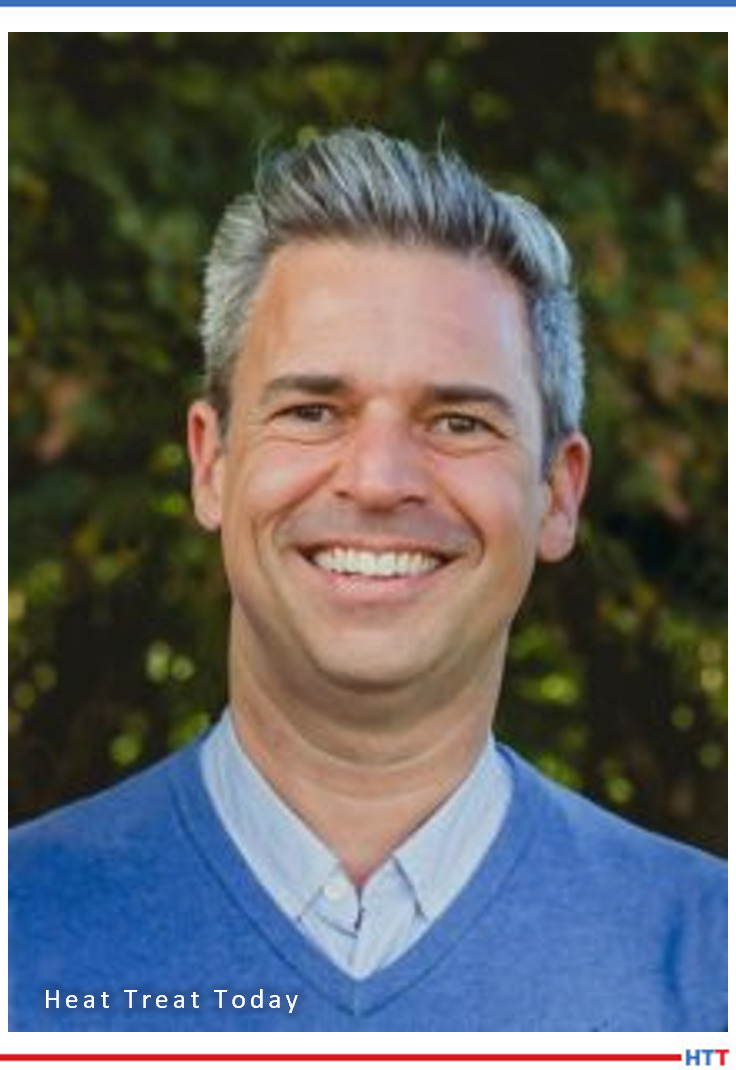
Thomas Wingens, President, WIIC - Wingens LLC
International Industry Consultancy
I am Thomas Wingens, masters in material science, MBA. During my over 35 years in the heat treat industry, I have worked with Bodycote, Ipsen, SECO/ WARWICK, Tenova, and IHI-Group in executive positions. Since 2011, I have been president of WIIC - Wingens LLC International Industry Consultancy in Pittsburgh, PA.
Thomas Wingens began his career in heat treat in 1987 as a metallurgist, heat treater, and consultant. Today, Thomas is an executive manager, experienced metallurgist, and hands-on heat treater with a knack for improving sales, solving technical problems, giving furnace advice, doing his due diligence, and advising executives. If it weren’t for NDAs, Thomas would love to share stories about the many exciting projects he has been fortunate enough to work on, but Thomas is able to share about his experience in developing novel processes for clients in the semiconductor, battery, rare earth magnet, and rocket industries. At Wingens LLC International Industry Consultancy, Thomas’ strengths are on full display. Thomas describes himself as a “hands-on” heat treater, as he consults 100% of the time on heat treating, leveraging his background as a metallurgist. His key assets strengths are his deep thermal processing knowledge and his perfect furnace selection abilities.
Powder metallurgy and thermal processing of specialty materials are areas of expertise for Thomas. These specialty materials include: titanium, tantalum, niobium, neodymium, and rare earth elements. Along with these specialty materials, Thomas has an extensive knowledge of brazing, metal cleaning, hydriding/dehydriding, tool and die heat treatment, high speed heat treating, brazing heat exchangers, and debinding/sintering, as well as sputter targets and reduction and diffusion processes. Thomas has served the medical and aerospace industries, working with medical components and heat treatment of landing gears. Thomas agrees with Elon Musk’s opinion on what comes next: “making stuff ” is the future. In the U.S., 50 years of off- shoring industrial manufacturing is finally coming to an end, and America is reindustrializing. Mines are reopening, raw material processing is becoming a trend, however, a large portion of intellectual property and practical skillsets have been lost. State of the art, environmentally friendly, safe, and automated equipment is needed to meet today’s technical and economical standards.
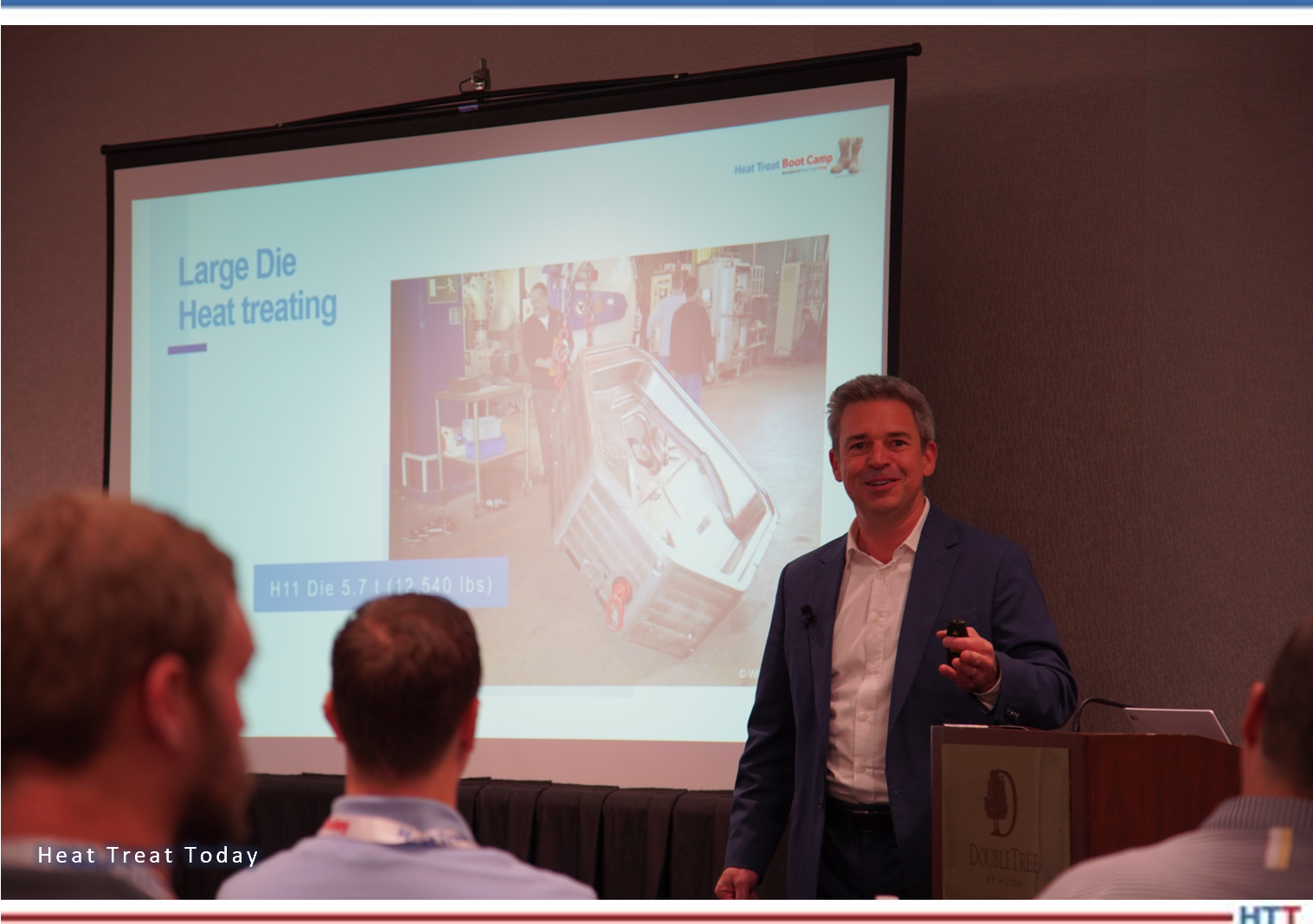
Thomas was also one of two keynote speakers at Heat TreatToday'sHeat TreatBoot Camp. Thomas’ lectures centered on the processes and materials of the North American heat treat industry; he shared some of his vast knowledge of heat treating for attendees, speaking on common processes, various alloys used in heat treating, and exciting new developments in the future of heat treating.
Thomas at Heat TreatBoot Camp (Source: Heat TreatToday)
See www.wingens.com for further info or visit Thomas’ consultants page at HeatTreatToday.com.
Find heat treating products and services when you search on Heat Treat Buyers Guide.com