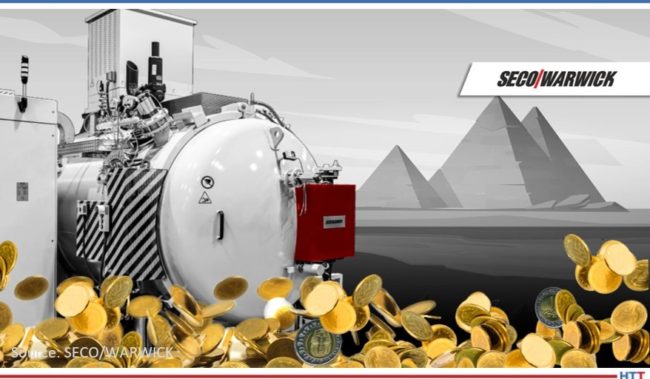
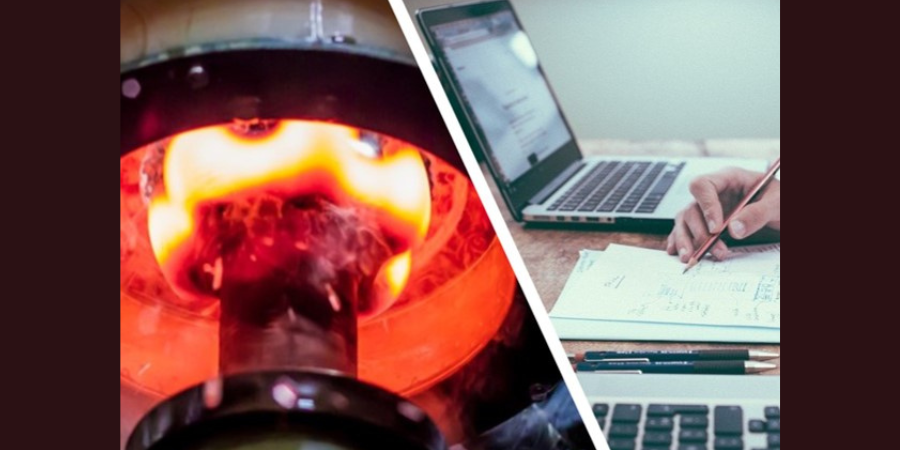
The Mint of Egypt which manufactures both circulation and numismatic coin will receive a vacuum heat treat furnace. The furnace will be used to heat treat circulation and numismatic coin, embossing dies, medals, and special orders. This furnace to the Mint of Egypt is the first furnace provided by the furnace manufacturer to the country of Egypt.
The Mint of Egypt was established in 1950. After 70 years of operation, the first Egyptian Museum of Circulating Coins was created at the mint. It displays a rare collection of special coins representing important historic figures and events, such as the construction of the Suez Canal and the Aswan High Dam. The Vector furnace will be used by the Mint of Egypt mostly for producing collection seals.
"We needed equipment that would significantly increase our production capacity," commented General / HossamKhedr, head of Egyptian Mint Authority, "With heat treatment in the vacuum furnace, our embossing dies will provide the highest possible quality and the durability that is important for the customers. Mints are very special companies. The ban on carrying embossing dies outside the mint prevents us from using commercial hardening plants. That is why it was extremely important to us that the equipment for upgrading our mint represented the highest quality."
Vector Vacuum Furnace by SECO/WARWICK
The Vector® vacuum furnace with 15 bar high-pressure gas quenching -- a product sold by North American SECO/VACUUM Technologies, which is the sister company to vacuum furnace supplier SECO/WARWICK -- is equipment that fits the operating performance requirements of mints. Furnaces with a graphite round heating chamber can be used for a majority of standard hardening, tempering, annealing, solution heat treating and brazing processes.
In the mint industry, these vacuum furnaces are popular as they ensure powerful, uniform gas cooling, which guarantees the high hardness and durability of mint tools. The perfect quality of mint punches and other products is ensured by the very high purity vacuum atmosphere. The parameters of the equipment purchased by the Egyptian Mint are very similar to the solutions delivered by SECO/WARWICK last year to the Mint of Poland — one of the most technologically advanced mints in the world. Some of the equipment installed by the Polish supplier has been operated by this customer for over 9 years.
Maciej Korecki Vice President of the Vacuum Furnace Segment SECO/WARWICK (source: SECO/WARWICK)
"Mints are very demanding customers. They manufacture high quality products that requires perfect details and production repeatability. Collectors, who are the customers of mints, expect the highest care, durability and quality of the finished products," said Maciej Korecki, Vice-President, Vacuum Furnace Segment, SECO/WARWICK Group. "This makes us even more happy that our flagship product — the Vector vacuum furnace — will be installed in another national mint."
Worldwide, there are 70 national mints and several dozen privately-owned mints, manufacturing almost 800 various coin denominations. The oldest mint in the world that has been continuously operated since 864 and the eighth oldest company in the world is Monnaie de Paris in France. The British Royal Mint is the tenth oldest company in the world, established in 886. National Mints provide the official currency for their home countries. They need to comply with rigorous standards that guarantees the weight, purity, and face value of the bullion they produce. This guarantee enables the bullion products manufactured by the state to enjoy a global reputation as the ideal source for investment in high-quality noble metals.
One of the world’s largest producers of high volume, specialty automotive fasteners based in Italy has awarded two contracts to Canadian heat treat supplier in order to expand their manufacturing capabilities with a mesh belt fastener heat treatment system.
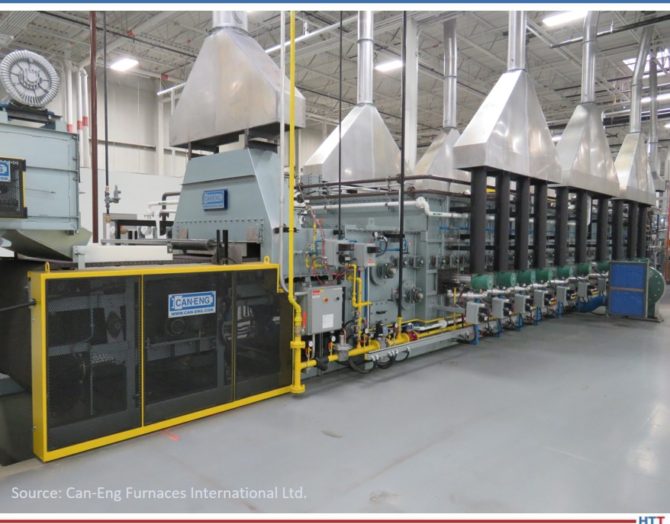
The two systems being supplied represent CAN-ENG Furnaces International Ltd. (CAN-ENG) high-capacity line of mesh belt fastener heat treatment systems.
The client returned to the furnace manufacturer in order to receive a furnace with proven low energy consumption, reduced part mixing, reduced part damage potential, and high uptime productivity when compared to conventional cast link furnace designs.
The system will include: computerized vibratory loading system, rotary phosphate removal washer, mesh belt hardening furnace, oil quench system, post quench wash system, mesh belt temper furnace, soluble oil, and part containerization system.
CAN-ENG Furnaces International Ltd. (CAN-ENG) high-capacity mesh belt fastener heat treatment system
These fully integrated systems will feature CAN-ENG’s Process Enhancement Technology – PET™ System (Supervisory Control and Data Acquisition System) which provides the client with complete product traceability through the critical thermal process, process data collection, historical event archiving, process variable trend monitoring, scheduling optimization, and energy consumption features which are unique to CAN-ENG systems.
These new systems will be commissioned to the EU in early 2022.
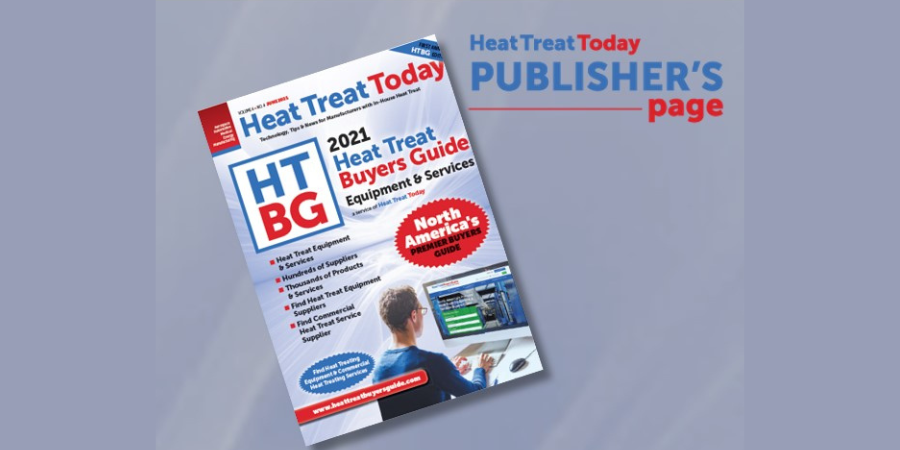
Heat TreatTodaypublishes eight print magazines a year, and included in each is a letter from the publisher, Doug Glenn. This letter first appeared in Heat TreatToday‘sJune 2021 Buyers Guide print edition.
Doug Glenn Publisher and Founder Heat TreatToday
We’re seeing the backside of COVID as it slouches off into the sunset. Masks are coming off. People are standing less than six feet apart. Hands are being shaken as opposed to elbows being bumped. And planes, trains, buses, interstate highways, office buildings, and restaurants are starting to fill up again with real live people.
So are convention centers.
Such is the case in the North American heat treat industry. . . and none too soon. ASM International recently announced that their IMAT event which includes the long-standing Heat Treat Society sponsored Heat Treat Conference and Exposition (aka Heat Treat Show) will be live and face-to-face this coming September 14-16, in St. Louis. Amen and amen!
Heat Treat Today is one of the sponsors of the ASM Heat Treat Show, and we couldn’t be happier to get together with all of our friends and colleagues at this year’s event. On page 8 of this edition, Eric Hutton explains a bit more about the event. Be sure to read his column. This publication will be heavily promoting the Heat Treat Show as something good and worthy of your attendance. Considering that the last major face-to-face industry event was the 2019 ASM Heat Treat Show, it will be a real blessing to be back in a booth, shaking hands and catching up with industry colleagues, customers, and prospects.
“People are happier and make better decision when they are well informed” has been the driving force behind all that Heat Treat Todaydoes. Our goal is to help people become well informed, and with nearly 24 months since the last face-to-face event, there is certainly a lot of informing that needs to happen. That’s why we’re excited to be one of the key promoters of this year’s event. We hope that you’ll take the time to attend the show, and bring your entire heat treat department with you.
Another way we keep people well informed is by helping them connect with suppliers who can provide them with the equipment, supplies, components, and/or services that they need. That’s exactly what this month’s issue is all about – connecting buyers and sellers of heat treat equipment and services. This is Heat Treat Today's1st Annual Buyers Guide. We’re super pleased with how it has turned out, and we are absolutely certain that next year’s Heat Treat Buyers Guide will be even bigger and better.
In the Heat Treat Buyers Guide, you will be able to find ANY heat treat equipment, supplies, components, sub-systems, or heat treating services that is known to man. If not, let us know and we’ll see if we can add it to the list of improvements for next year. On page 6, our managing editor, Karen Gantzer, explains how to get the most out of this resource. That’s a page worth referencing.
And don’t forget, all of the information presented in this annual print version of the Heat Treat Buyers Guide is updated continually at www.HeatTreatBuyersGuide.com. In the online version, you’ll be able to access the very latest information. When this print issue was going to the printer, there were still a significant number of heat treat industry suppliers who had not updated their listings. By this time next year, there will definitely be more, so don’t forget to check out the online version of this Heat Treat Buyers Guide for the very latest.
If you don’t find what you’re looking for, please let us know. We’re always glad to help.
Whether it’s the Heat Treat Buyers Guide or the upcoming ASM Heat Treat Show, we hope you become and stay well informed in 2021. If there’s anything we can do to help, please let us know. We’re wishing you the very best in 2021 – a true face-to-face, closer than six feet, hand shaking, blessed year.
Fives, an international industrial engineering group for silicon steel processing lines, will receive high efficiency burners with low emissions. This will help the company as they fulfill recent orders involving the supply of annealing and pickling lines as well as annealing and coating lines to Chinese steelmakers.
The burners were designed and supplied by WS Wärmeprozesstechnik, and with their FLOX® process, Fives will be able to manufacture using the strictest emission values without SCR (selective catalytic reduction) treatment for their furnaces for silicon steel. This was necessary as China’s steelmakers have been demanding combustion technology with lowest NOx emissions in order to meet climate-related goals.
Dr.-Ing. Joachim G. Wünning President WS Wärmeprozesstechnik GmbH
The silicon strip line with FLOX® burners from WS (pictured above) will assist Fives in their current orders as well as their continued design and supply of machines, process equipment, and production lines in various sectors. These sectors include steel, aerospace and special machining, aluminum, automotive and manufacturing industries, cement, energy, logistics and glass.
"It is our ambition at WS," states Dr.-Ing Joaching G. Wünning, president of WS Wärmeprozesstechnik GmbH, "to provide solutions for all continuously operated strip lines which can reliably attain NOx emissions well below 100 mg/Nm³, with simultaneously high combustion efficiency over 80% and which are, already today, suited for a future with green combustion gases."
Heat TreatRadio is a podcast where Doug Glenn, publisher of Heat TreatToday discusses cutting-edge topics with industry-leading personalities. Among many cutting-edge interviews and conversations on the latest technologies and commercial happenings in the industry are topics like AMS2750F, ferritic nitrocarburizing, and supply chain options.
You can subscribe to Heat TreatRadioon iTunes or SoundCloud, and even listen to these episodes on PodBean, iHeart Radio, and ListenNotes. Check out some of the top heat treat topics from the list of episodes below.
1 - The World of Ferritic Nitrocarburizing with Thomas Wingens
"A big part of the success of FNC is the combination with post oxidation. That is a big part because the combination of ferritic nitrocarburizing with post oxidation leads not only to a mechanical strong surface with compressive stresses, it also has a very high corrosion resistance."
"One of the things I always had in my mind when I first got involved with the specification was that the specifications were written by the aerospace 'primes,' but that’s not the case; it involves people, such as myself, who are end-users of this specification. I’m an end-user, so I’m able give my input and say, 'Hey, this doesn’t make sense. What you want to add into the spec is not real world.' It’s nice that people such as us get involved with these specifications."
3 - Rethinking Heat Treating for the 21st Century with Joe Powell (Part 1 of 4)
"I am a commercial heat treater who believes that part design should be integrated for heat treating by the part-maker. It’s a nuance, but what it really boils down to is that sometimes commercial heat treaters do it best, but sometimes the part-maker can do it better."
4 - Metal Hardening 101 with Mark Hemsath, Part 3 of 3
"[Nitriding], and really its cousin FNC (ferritic nitrocarburizing), are actually fairly inexpensive treatments and they can be performed on final dimension parts. There is no post machining and there is minimal distortion. That’s kind of my opinion of why it has done well.”
"Who wouldn't want to have a smoother operation? Not have to schedule people, pay overtime, justify it. We're three years into the project and I think we have a very viable tool for heat treaters to see what they currently cannot see."
6 - James Jan & Andrew Martin on Development of Modeling Software
"We model what happens with FIRE CFD code, we model what is happening at the transition of the interface between the metal component and the water. Because when something that hot gets plunged into water, it is quite an interesting thing that happens—it is called the Leidenfrost Effect. Initially, what happens is the component is so hot, it forms a film around the outside of it, a vapor film, and perversely that vapor film then insulates the component from the water. That film slowly breaks down then you get into nucleate boiling and things like that, and that becomes a lot more aggressive and the cooling happens much faster until you eventually get a single phase. But actually modeling the boiling process is what the CFD code does. That is the secret sauce that we’re bringing to the party here."
7 - A Discussion with Carl Nicolia, PSNergy President
"Their recovery cycle was reduced by 25%. Now, a recovery cycle is from the time I close the door to the time I start my controlled cycle. 25% reduction. And in that total cycle, they dropped gas consumption 5% which eventually led to an increase in output of that furnace by 10%. What we love about this, and this is kind of the theme of the article really, is that the total cost to implement this was less than $10,000. This is a perfect example of high value solution. I hate to say ‘low cost’ because cost is relative, but this is high value. If I can deliver 25% improvement with less than $10,000, or if I can deliver 10% double-digit output increases for less than $10,000, that’s a high value solution."
"The other one I think that’s going to emerge is most probably making more and more parts by powder metallurgy from metal powder which are 100% free alloyed. In other words, all the elements are in each metal powdered particle. In other words, you’re starting with a micro ingot as opposed to a big ingot that you normally use to make bars, and then from bars you cut pieces, and then from those pieces you do hard forging or machining."
9 - Justin Rydzewski on CQI-9 Rev.4 (Part 1 of 4) – Pyrometry
"Perhaps the most significant change within the temperature uniformity survey section is to the alternative temperature uniformity survey testing methods. In instances when I can’t perform a survey with sensors being trailed in, or I can’t send a data pack sort of unit or a PhoenixTM unit through that furnace system itself to collect the data, for systems like that, in the third edition, there were three or four paragraphs of information about what you could do."
"The interesting thing is that there is a phenomena precipitation hardening that goes on in aluminum and titanium. But it also goes on in these high alloy steels. It is a secondary hardening mechanism. We’ve been working on that and we feel that once we can handle secondary hardening in steel, then the jump to aluminum and titanium should be pretty straightforward."
The 31st Heat Treating Society Conference and Exposition (Heat Treat 2021) is scheduled for September 14-16 in St. Louis. This bi-annual, can’t-miss event provides an excellent opportunity for the heat treating community to meet, exchange information, and conduct business.
Eric Hutton President, ASM Heat Treating Society Vice President Operations Aerospace, Defense and, Energy Bodycote
In addition to our standing colocation with AGMA’s Motion & Power Technology Expo (MPTE), we are excited to also be co-locating with ASM’s NEW Annual Meeting, “International Materials, Applications, and Technologies (IMAT)” Conference and Expo. Heat Treat conference registration includes full access to IMAT 2021. Co-locating with IMAT 2021 will provide access to additional exhibitors and more than 400 technical presentations on a wide variety of materials-related topics.
This year’s Heat Treat organizing committee did an excellent job of ensuring that the latest research and development is included for a high level of technical content on a wide variety of important topics, including Atmosphere Technology, Additive Manufacturing, Internet of Things, Nitriding, Vacuum Technology, Applied Technology, Quenching and Cooling, etc.
The Heat Treat Expo, co-located with IMAT and MPTE, is the place to be, featuring more than 500 companies. Activities on the show floor include a VIP guided industry tour on Tuesday, Solutions Center presentations, welcome reception with exhibitors, the Fluxtrol Student Research Competition, and the HTS Strong Bar Competition.
We hope attendees will join us during our premiere networking event, “The Heat is On,” at the Anheuser Busch Biergarten, scheduled for Wednesday, September 15. This special evening will feature live music, a tempting array of locally inspired food, craft beer, and a few “hot surprises.” Attendees will have the opportunity to network with Heat Treat, IMAT, and MPTE attendees.
We know that things might look a little different this year, but, rest assured that your health and safety are always our top priorities, and the ASM team continues to closely monitor all federal, state, and local guidelines. We are confident that we can safely come together and are taking all appropriate measures to ensure a healthy and successful in-person conference and expo.
Let’s get back to business! I hope you will join me at Heat Treat 2021, a great location to reconnect, make new contacts, share information, and collaborate with attendees and exhibitors from around the world in the global heat treating industry. We look forward to seeing you in St. Louis in September.
A Canadian leader in the coating industry will expand their heat treat capabilities with a floor-standing box furnace used for ceramic coating applications for parts in the aerospace industry.
The L&L Special Furnace Company Inc. model XLE214 is used for curing and bonding ceramic coatings to various steel bodies. This process provides extra strength to aerospace parts that are subject to various heats and stresses under normal operating conditions.
The furnace has an effective work zone of 22" wide by 16" high by 20" deep. A horizontal door with ceramic hearth and support bricks is included to incorporate the customer’s loading system. Nickle chrome elements are used in the furnace that are resistant to any potential contamination the process may cause. Heat shields provide a safe-to-touch case temperature under operating conditions.
Model XLE MDS from L&L Special Furnace Company, Inc.
The model XLE214 is controlled by a Eurotherm program control with overtemperature protection, chart recorder with jack panel, solid-state relays, and zone controls for balance of temperature gradients. Thermocouples, fusing and electrical interconnections are included. The furnace control circuit is completely tested to ensure proper operation prior to shipping.
The furnace case is sealed for use with inert atmosphere to help reduce oxygen impregnation with the parts. The furnace has a manual inert flow panel to control the inert gas flow into the oven.
The model XLE214 also includes a high-convection fan for uniformity of ±10°F/5.5°C above 500°F/260°C to 1,875°F/1,023°C. There is a 4" diameter venturi with a variable frequency drive to evacuate outgassing that occurs during the curing of the ceramics to the steel part. The system is completely automated through the program control logic.
Global leader in industrial cleaning products based in North America acquires a Canadian chemical division, expanding its offerings to include molten salt for the heat treat market.
Kolene Corporation has acquired the chemical division of Park Thermal International Corporation. The president of Park Thermal, Jay Mistry, will work with Kolene going forward to assure the transition of all Park Thermal standard and proprietary heat treat chemical blends, as well as providing customer support.
Peter Shoemaker Vice President of Purchasing Kolene Source: PRNewsWire
"We are very excited to broaden our molten salt offerings into the heat treat market and utilize Jay’s extensive chemical knowledge and excellent technical customer support to do so," says Peter Shoemaker, VP of purchasing at Kolene. "It’s great to have Jay as a partner with Kolene as we relaunch the industry trusted Iso-Therm product line."
"We were challenged with the Covid downturn in our business," stated Jay Mistry, "and we were looking for a strong partner to continue supporting our established customer base. I am glad to have found the Kolene team, a trusted and competent North American partner who has the technical and commercial bandwidth to carry our heat treat salt business into the next phase."
Kolene Corporation has been a trusted brand for both ferrous and non-ferrous metal cleaning products for 82 years and is also known for their ferritic nitrocarburizing (FNC) salts.
Park Thermal International Corporation of Georgetown, Ontario, Canada, was founded in 1938. Jay Mistry started as chemist at Park Thermal in 1989 and bought out the company from Brian Reid in 2017. Since then, Park Thermal has developed chemical blends for special client demands.
Today's shared content is provided by the global information partnership between leading European heat treat news provider heatprocessing and the team at Heat TreatToday.
What's next in heat treating carbon materials? In this best of the web feature from our European industry partner, heatprocessing, take a moment to see how computer modelling demonstrates the technical feasibility and the efficiency of this dynamic combination of induction heating and radiation heat transfer. Could this method be a practical integration in your heat treating process needs? Would adopting this method save you energy? Take a read and let us know!
An excerpt:
"This dynamic combination of induction heating and radiation during the baking process improves greatly the energy efficiency and permits a very precise control of the temperature profile in the carbon."
While we typically try to send our readers to free content, this article requires a nominal fee to access. We hope that you will find this content beneficial.
Last month we began the discussion about the relationship between combustion safety and uptime, highlighting how combustion safety, reliability, emissions, and efficiency are inseparable. This month, we will explore the subject in greater detail and outline a path that can both reduce the risk of an incident and protect the bottom line.
This article written by John Clarke, technical director at Helios Electric Corporation, appears in the annual Heat TreatToday 2021 Buyer's Guide June print edition. Return to our digital editions archive on Monday June 21, 2021 to access the entire print edition online!
John B. Clarke Technical Director Helios Electrical Corporation Source: Helios Electrical Corporation
How many times have we heard the tale about the man with the leaky roof? He cannot fix his roof when it is raining, and the roof doesn’t need repaired when it is not. This story is also applicable to heating system maintenance, perhaps more so than other plant maintenance activities because it so seldom “rains.” Ovens and boilers tend to be very reliable. (This statement is true for equipment operating at low or moderate temperatures, less so for equipment operating above 1832°F (1000°C).) It is exactly when the machine is properly producing parts that the planning for combustion safety, availability, and performance must occur.
The first critical step we must take is to understand that combustion safety, routine maintenance, tuning, and calibration are parts of a larger work strategy. To focus solely on the annual inspection of safety components while ignoring system tuning will not only compromise tuning and efficiency, but also the safety. We have seen how managerial reactions to high profile incidents have caused some firms to dispatch teams to annually examine valves and pressure switches. This effort is highly compromised if it does not include all aspects of system maintenance as well as capturing what is learned each time to improve future inspections and equipment designs. There is data beyond pass and fail that is valuable if we wish to optimize the performance of our equipment
Let us assume it is a clear sunny day, and we are ready to invest some time in preparing to improve our combustion system starting with a deep dive examination of two pressure switches: the low fuel gas pressure switch (LFGPS) and high fuel gas pressure switch (HFGPS). These ubiquitous components are present on nearly every fuel train and are vital for safe operation. As their names imply, they monitor the fuel pressure and shut the safety valves if the fuel gas pressure is either too high or too low.
These switches must be listed for the service they provide by an agency independent of the manufacturer – UL, TUV, FM, etc. Simply looking for a stamp may not be enough; take the time to read the file or standard being applied by the agency and determine if it describes the application. Next, ask if the pressure switch carries the basic ratings expected, like the enclosure rating (Nema or IP). Is a Nema 1 switch operating in a Nema 12 area? Temperature ratings must be confirmed. All too often a component rated for 32°F (0°C) is applied in an outdoor environment in cold climates, or one with a maximum rating of 120°F (50°C) is applied next to the hot wall of a furnace. The component may operate out of specified environmental ranges for some time, but to apply a component in this manner is betting against the house – sooner are later we are going to lose. Ask the people of Texas if the bet against sustained cold temperatures in early 2021 was worth it.
"John Clarke, Technical Director, Helios Electrical The first critical step we must take is to understand that combustion safety, routine maintenance, tuning, and calibration are parts of a larger work strategy"
Next, let us look at the contact(s) rating of the switch and how it is applied to the burner management circuit. More often than not, these switches are in control circuits fused for more current than the contact rating. If the switch rating is too low, the electrical designer has an option to use an interposing relay to increase the current carrying capacity to this device. This relay is an added component, and as such, adds yet another possible point of failure. If the relay is interposed, is it dedicated to this one switch? Multiple devices being interposed by a single relay is prohibited by NFPA 86, for good reason. Is the relay designed to fail safely? That is, will a relay coil burn out or wiring fault close the critical safety valves? Is the wire gauge suitable for the current carried and protection device used?
Next, is the switch mounted in a safe location free from possible vibration or the foot of an eager furnace operator? If the switch must be changed, are clearances provided to perform this maintenance? What is the mean time to replace (MTTR) the component? Is the way the device is wired providing a path for combustible gas to enter the control enclosure and cause an explosion? Flexible conduit, without a means to seal the connection, is a very common error. Use a properly specified cord and consider using some type of connector to terminate the wiring at the switch. A simple 7/8-16 or DIN connector not only provides additional protection from combustion gas getting into the electrical conduit but is also a great benefit when changing the component in a rush and helps to isolate the component’s control circuit during testing and calibration.
Is the pressure switch suitably protected from bad “actors” in the fuel gas? Perhaps soot is present that could foul narrow passages or H2S that could result in corrosion. These are rare conditions, but coke oven gas may not be as clean as purchased natural gas. Do we need to specify stainless steel components? Would a filter make sense to protect the switch and increase the intervals between maintenance?
Finally, let’s discuss pressure ratings. Unfortunately, nomenclature varies by manufacturer. What is the maximum pressure the device can sustain and not fail, i.e., leak fuel gas into the environment? Many switches can experience a pressure surge without risk of leakage, but the high-pressure event will damage the switch internally. It is important when determining if this rating is adequate to consider possible failure modes that might expose the pressure switch to excessive pressure. As a rule of thumb, a pressure switch must be able to sustain a surge pressure delivered to the inlet of the pressure reducing regulator immediately upstream of the device. Think of it this way, if the upstream regulator experiences a failure, the full pressure delivered to this regulator will pass to the pressure switch in question.
Other obvious pressure ratings are the maximum and minimum set points. The pressure switch should be set to trip as close to the middle of the range as possible and should never be set close to either the minimum or maximum setpoint. Is the pressure switch manually or automatically reset after a trip? In general, it is best practice that the LFGPS resets automatically, and the HFGPS requires a reset by the operator. This recommendation is because LFGPS trips each time pressure is removed from the system, and it is generally understood that the system needs fuel to operate. On the other hand, a high-pressure event is exceedingly rare, and the operator should be made aware of this unusual event.
This article has discussed a lot about the simple pressure switch. It appears to be a heavy lift to perform this analysis on every pressure switch in a facility, but take comfort, once the exercise has been completed on the first system, it is much easier to replicate what has been learned to properly assess other systems. We should most definitely insist that our OEM provides this data, in detail, when new equipment is supplied. Why did we review all these specifications? Because I have been around for a while and have seen nearly every one of these errors in the application of pressure switches on operating combustion equipment.
Next month, we will expand on the pressure switch discussion to describe the tune/calibration and testing processes. I hope this deep and specific dive has been of value. If you have any questions or comments, please let me know.
About the Author:
John Clarke, with over 30 years in the heat processing area, is currently the technical director of Helios Corporation. John’s work includes system efficiency analysis, burner design as well as burner management systems. John was a former president of the Industrial Heating Equipment Association and vice president at Maxon Corporation.






 The Mint of Egypt which manufactures both circulation and numismatic coin will receive a vacuum heat treat furnace. The furnace will be used to heat treat circulation and numismatic coin, embossing dies, medals, and special orders. This furnace to the Mint of Egypt is the first furnace provided by the furnace manufacturer to the country of Egypt.