


Manufacturing Heat Treating

SCHMOLZ + BICKENBACH and TSINGSHAN to Form Joint Venture

Clemens Iller - CEO of SCHMOLZ + BICKENBACHClemens Iller – CEO SCHMOLZ + BICKENBACH

SCHMOLZ + BICKENBACH, a global leader in special long steel, and TSINGSHAN GROUP, a world leader in stainless steel, announced the formation of a Joint Venture in China. The JV company is 60 percent owned by SCHMOLZ + BICKENBACH and 40 percent by TSINGSHAN and will operate under the name Shanghai Xinzhen Precision Bar Co. Ltd. out of Shanghai (China).

By creating the JV, SCHMOLZ + BICKENBACH and TSINGSHAN share the common ambition of further growth in the Chinese stainless long steel market. The combination of SCHMOLZ + BICKENBACH’s technical know-how with TSINGSHAN’s strong market position in China creates a world-class supplier of special bright bars that is able to meet the growing demand in the region.

The JV focuses on the production of a wide range of drawn bright bars with a reliable and flexible supply chain, leveraging technical expertise, operational excellence and deep customer and market knowledge of both parties.

Key feedstock will comprise stainless steel wire rods from TSINGSHAN as well as from SCHMOLZ + BICKENBACH’s Business Units Ugitech and Deutsche Edelstahlwerke which are recognized as a global benchmark in quality and performance. Deep understanding of end-use applications coupled with a local manufacturing capability in China will allow to comprehensively delivering industry-specific
value proposition to customers through this partnership. To further strengthen its leading position, Shanghai Xinzhen Precision Bar will invest in additional equipment that allows expanding the offering to higher performance steel grades.

“By partnering in drawn bar activity with highly respected TSINGSHAN we will establish local downstream production capability in China,” SCHMOLZ + BICKENBACH CEO Clemens Iller commented. “This marks a milestone in our efforts to better serve global customers located in China and consolidates our leading position in technical products, mainly for the Automotive and Electronics industries. Beyond that, we can address several market segments such as Industrial Equipment or Food & Beverage that offer niches with excellent growth potential.”

Mr Huang Weifeng, Vice Chairman of TSINGSHAN GROUP, said: “TSINGSHAN is one of the worldwide major players in the stainless steel industry and Shanghai Decent Group, the JV partner, is a member company of TSINGSHAN. The joint venture is an excellent example of win-win cooperation in the stainless steel industry.”

TSINGSHAN is a global leader endeavor to the excellence operation of complete stainless steel production chain with more than 26’000 employees. It currently operates a bar drawing facility in Shanghai under the name Shanghai Xinzhen Special Steel Co. Ltd. SCHMOLZ + BICKENBACH is a leading global producer, processor and distributor of special long steel products, operating with a global sales and services network in an attractive niche market. It enjoys strong customer relationships globally in various application industries and an extensive international footprint. This partnership will help to further consolidate its existing strong presence in Chinese markets.

SCHMOLZ + BICKENBACH and TSINGSHAN to Form Joint Venture Read More »

Just Throw Some Heat at It

Source:  Flame Treating Systems

Since a blog is usually some way for the author to try and educate readers about some topic, let’s start the New Year with busting some widely held misconceptions about heat treating in general, and flame hardening in particular.

Very often larger companies have inhouse staff engineers responsible for figuring out the machinery needed to process parts throughout the production line. These P.E.’s usually have good mechanical and spatial skills, but invariably lack the specialized knowledge of heat treating. We have heard more than once, after being called in to redesign a process that couldn’t be salvaged, the engineers didn’t think the heat treating process was that complicated. “You’re just throwing some heat at it,” we’ve heard again and again.

Read More:  Just Throw Some Heat at It by Flame Treating Systems

Just Throw Some Heat at It Read More »

Jorgensen Forge Acquired

Source:  Forging

Jorgensen Forge, a Tukwila, WA, open-die forger and ring-rolling operation, has emerged from Chapter 11 bankruptcy as one of three companies now owned by CE Star Holdings LLC, a company formed to buy the assets from Constellation Enterprises, which filed for creditor protection in May.

The Seattle-area plant forges low alloy and stainless grades of steel, aluminum alloys, titanium alloys, and nickel-based alloys. Production equipment includes four open-die presses and two ring-rolling mills. It also offers heat-treating and machining, and it has special capabilities for “marine shafting” as well as full testing and inspection services. Its customers are manufacturers supplying aerospace, energy, defense, and general industrial markets.

Read More: Jorgensen Forge Acquired, “Even Better Positioned” by Robert Brooks

Jorgensen Forge Acquired Read More »

Heat Treat Basics: Nitriding and Carburizing

Pattern Energy, Siemens Determine Cause Of Ocotillo Wind Collapse, Energy Heat Treating  Source:  Metlab

Nitriding and carburizing are the two most common heat treatment practices for surface hardening functional components. The main difference is that in nitriding, nitrogen atoms are made to diffuse into the surface of the parts being processed, whereas in carburizing, carbon is used. There are advantages and disadvantages to both processes.

This excellent blog post by Metlab in the Philadelphia area is a great primer for both processes.

Read More:  Nitriding and Carburizing

Heat Treat Basics: Nitriding and Carburizing Read More »

Heat Treat Basics: Optimizing Process Heating Systems

  Source:  Reliable Plant

Dr. Arvind Thekdi, an Energy Expert for the U.S. Department of Energy, routinely conducts energy assessments to improve energy efficiency of process heating systems at industrial plants. During the assessments, he often encounters questions that indicate confusion about how process heating systems operate. In this article, Dr. Thekdi provides some basic information about process heating systems, and offers solutions for reducing heat losses to increase efficiency.

Read More: Ask an Energy Expert:  Optimizing Process Heating Systems by Dr. Arvind Thekdi

Heat Treat Basics: Optimizing Process Heating Systems Read More »

Heat Treat Basics: Metal Urgency – Carburizing

BOTW-50w  Source:  Thermal Processing Magazine

“While some heat treatments are used to soften the material or improve its machinability, most are processed to obtain strengthened or hardened properties. The majority of heat treatments apply to metallic materials and, typically, the techniques include annealing, normalizing, quenching, tempering, precipitation strengthening, surface hardening, and case hardening. Heat treatment is so critically important that we can safely say a part undergoing extensive manufacturing processes such as melting, rolling, forging, and other related machining is of little or no value without the necessary and appropriate heat treatment.”

Read More:  Metal Urgency –  Carburizing by March Li, Metallurgist

March Li Metallurgist, Manufacturing Heat Treating, Thermal Processing Magazine, CarburizingMarch Li – Metallurgist

Heat Treat Basics: Metal Urgency – Carburizing Read More »

Vacuum Heat Treatment’s Role in Additive Manufacturing (AM) 3D Printing

BOTW-50w  Source:  Global Heat Treatment Network

“Vacuum heat treatment tasks for AM manufactured parts is the same process as  traditional subtractive manufacturing and its purpose is to assure AM parts has the correct physical and metallurgical properties for specific applications.  In some cases, when a bidder is involved, the purpose of the heat treatment process is to deciding and sinter parts. Most vacuum furnaces use up to 800°C degrees to relieve stress and a higher temperature of up to 1800°C for other processes.

Vacuum furnaces with high vacuum levels are preferred to heat treatment equipment to process AM parts. AM parts made from Titanium, Cobalt, Aluminum require vacuum levels of up to 10-6 mbar with 99.9995 Argon purity.  Argon is the preferred gas because of its neutrality and that it has no adverse reaction with the above alloy components.  Creating an Alfa surface layer on titanium parts is not desirable and should be avoided.

The small parts and small production volume influences vacuum furnaces of small to medium size. The next challenge for the heat treatment industry is to integrate heat treatment process into the AM equipment in one continuous process.”

Read More:  Amazing Vacuum Furnaces:  Vacuum Heat Treatment’s Role in Additive Manufacturing 3D Printing by Janusz Kowalewski

Vacuum Heat Treatment’s Role in Additive Manufacturing (AM) 3D Printing Read More »

PVD Coatings and Tool Steel Selection

BOTW-50w  Moldmaking Technology – July 2016

“When it comes to steel selection, the standard grades and heat-treat cycles might need to be changed depending on the selected PVD coating.  The moldmaker must ensure that the application temperature of the PVD process is lower than the heat-treatment cycle temperature that is used on the steel.

…..too often the customers allow the steel and heat treatment to determine the coating that can be considered. ”

Read More:  PVD Coatings and Tool Steel Selection by Mark Falkingham

PVD Coatings and Tool Steel Selection Read More »

New Boride Material Forms Own Protective Coating

BOTW-50w  Source:  Materials Today

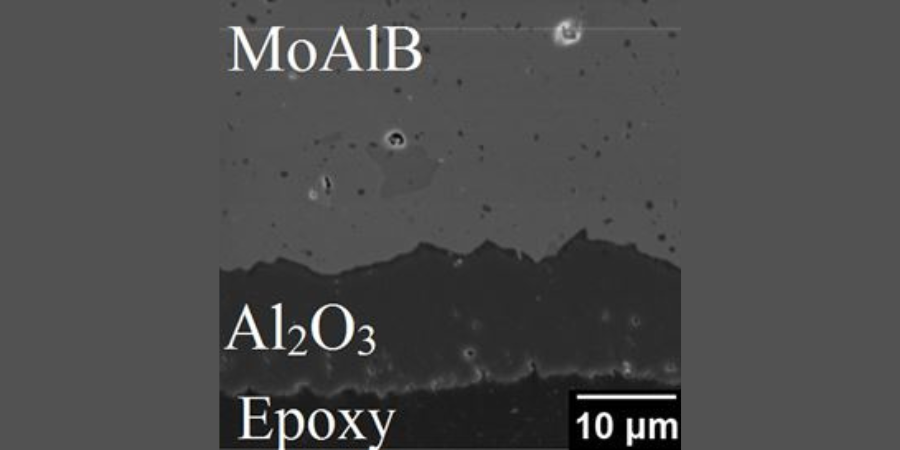
“This resistance to oxidation is possible because of the presence of aluminum in layers between molybdenum and boron layers,” Barsoum said. “When heated to high temperatures in air the aluminum atoms selectively diffuse to the surface and react with oxygen – forming a surface aluminum oxide, or alumina, protective layer that slows down further oxidation considerably. So the material forms its own protective coating.”

Read More:  New Boride Material Forms Own Protective Coating

New Boride Material Forms Own Protective Coating Read More »

Schuler Acquires Leading Die Manufacturer AWEBA

Schuler AG, the market leader in forming equipment, is to take over the die construction specialist AWEBA and thus greatly expand its activities in this business field. Based in Aue, Germany, the AWEBA Group is one of the world’s leading full-service providers of dies and fixtures. Under the terms of the purchase agreement, Schuler will acquire a 100 percent stake in AWEBA Werkzeugbau GmbH Aue.

The transaction is still subject to the approval of the relevant anti-trust authorities. AWEBA Werkzeugbau GmbH was previously held by private and institutional investors. The parties have agreed not to disclose any details about the purchase agreement.

AWEBA was founded in 1882 as “Bernhard Hiltmann Spezialfabrik für Schnitt und Stanzwerkzeug”. The company today supplies international customers in the automotive and electrical industries, as well as machine and plant manufacturers. The product portfolio includes forming, cutting, hydroforming, and die-casting dies, as well as fixtures and a comprehensive range of services.
In fiscal year 2015, the AWEBA Group generated sales revenue of around € 60 million.

Schuler CEO Stefan Klebert commented: “We are delighted to add a successfully managed company like AWEBA to our Group. With its high level of expertise in research and development and excellent engineering know-how, the company is a perfect fit for Schuler. The acquisition is part of our growth strategy. AWEBA complements our product portfolio in forming technology in line with market requirements and will expand and strengthen our existing activities in die construction.”

The AWEBA Group employs around 600 people, including almost 200 highly skilled engineers and toolmakers. The company owns 40 valuable patents in the field of die manufacturing.

AWEBA CEO Udo Binder stated: “Becoming a member of the Schuler Group opens up tremendous opportunities for the further expansion of AWEBA. Schuler’s global market standing will enable us to quickly grow our international presence and enhance our profile as a global system supplier. This gives AWEBA growth opportunities which would not have been achievable without Schuler.”

The AWEBA takeover is Schuler’s second major acquisition in the last twelve months. Last year, the company acquired a majority stake in the Chinese press manufacturer Yadon with annual sales of around € 110 million.

Schuler Acquires Leading Die Manufacturer AWEBA Read More »

Skip to content