Aerospace Heat Treating

Redundant Flame Safety

What do aerospace and industrial heating vessels have in common? Backups for essential systems. In this Technical Tuesday installment, Bruce Yates, president of Protection Controls Inc., explores how NFPA 86 Standard for Oven and Furnaces addresses redundant flame safety, compares common sensing approaches, and highlights recent advances in UV scanner technology that improve reliability and reduce maintenance risks.

This informative piece was first released in Heat Treat Today’s February 2026 Air & Atmosphere Heat Treating print edition.


Introduction

Boeing Aircraft lost billions of dollars before realizing that the 737 MAX’s MCAS (Maneuvering Characteristics Augmentation System) needed a redundant angle-of-attack vane to prevent erroneous MCAS-induced drive commands. Lockheed Martin uses dual-redundant MIL-STD-1553 data bus (that is, a shared communication pathway for exchanging data between electronic systems) on its Apache Guardian attack helicopter for target acquisition and cueing for the helicopter’s fire-control radar system. Spacecraft internal Active Thermal Control Systems (ATCSs) can either be a fully redundant thermal-control loop or a single loop system that is equipped with a redundant accumulator to be activated if needed. The accumulator represents a single point of failure that can result in a loss of crew.

Aerospace is not the only industry where redundancy is an important aspect of safety. It is critical in the industrial heating industry. NFPA 86 Standard for Ovens and Furnaces has for many years required redundant pilot gas valves and redundant main gas valves.

Let’s discuss redundant flame safety.

Redundancy in Industrial Heating

There are two types of flame sensors generally used on industrial burners: flame rods and ultraviolet scanners. Flame rods are simply stainless steel rods that intersect the burner flame. A voltage potential from the combustion safeguard is applied to the flame rod. When a flame is present, an electrical current (measured in millionths of an amp) flows from the flame rod through the ionized gases of the flame to the burner, which is grounded. This current is amplified in the combustion safeguard and energizes a relay output to power the fuel valves (see Main Image).

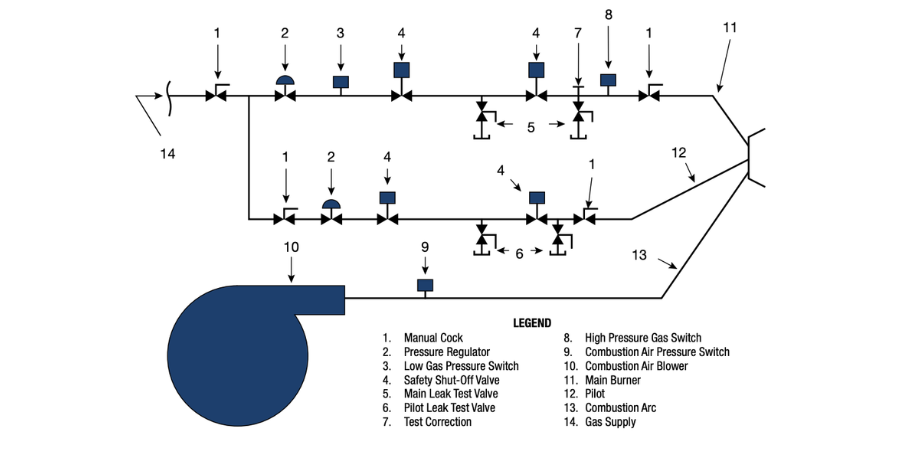
Redundancy can be achieved by using a two-burner control with one flame rod. The flame signal from the flame rod goes to the sensor input of both positions of the two-burner control (Figure 1).

We will devote the rest of this article to UV scanners (Figure 3).
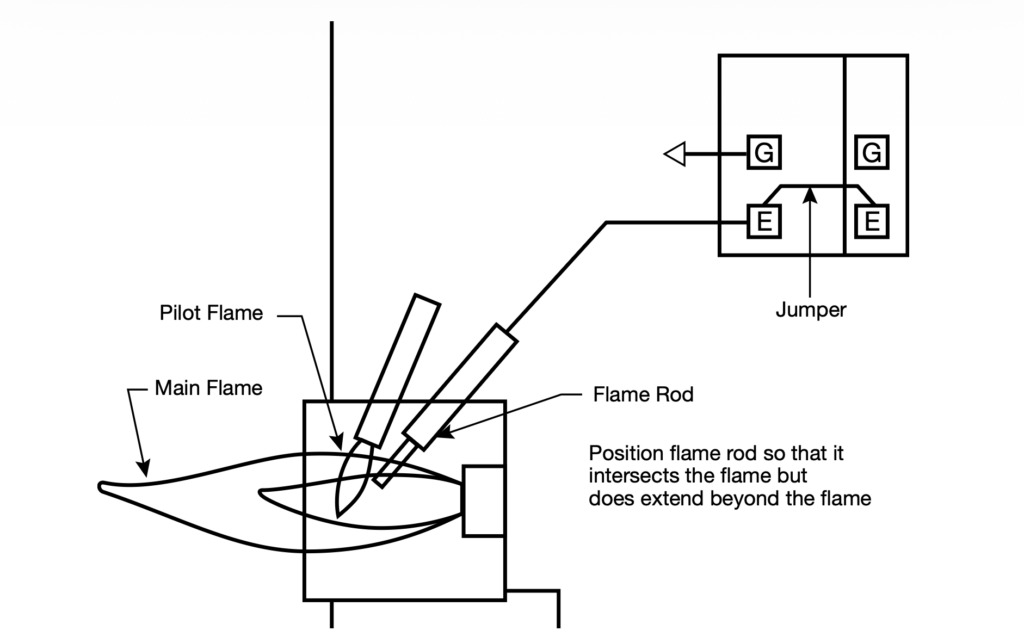
Figure 1. Redundant flame safety with a single burner flame safeguard with a flame rod sensor
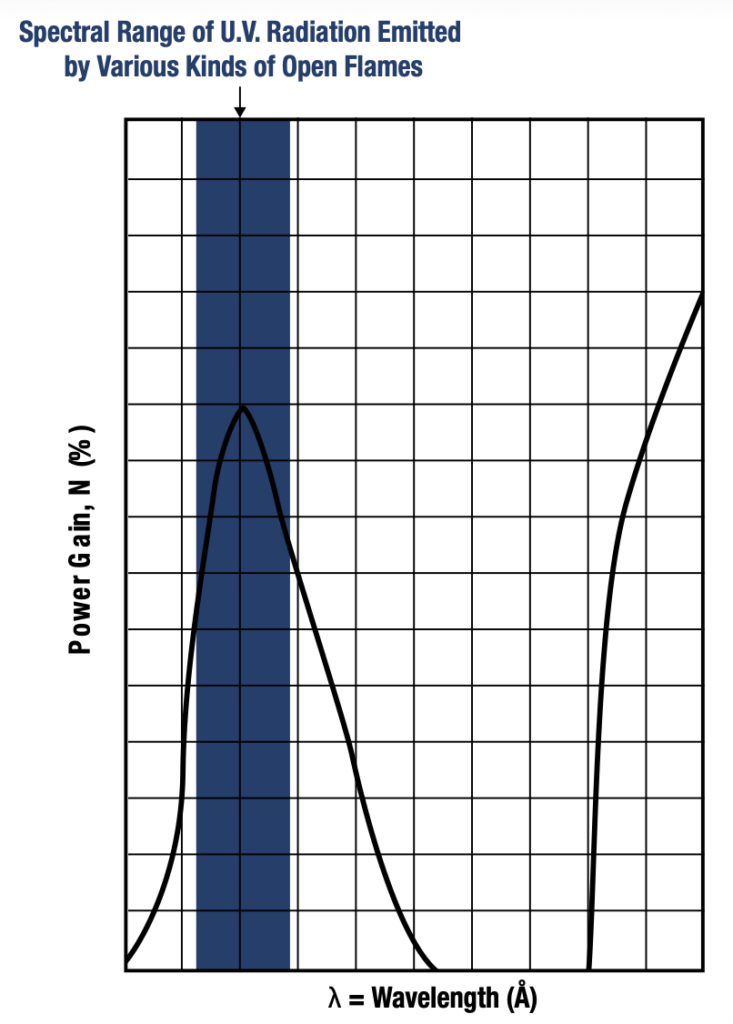
Figure 2. Solar radiation begins at approximately 2,800 Å and is therefore not detectable by the flame rod sensor.
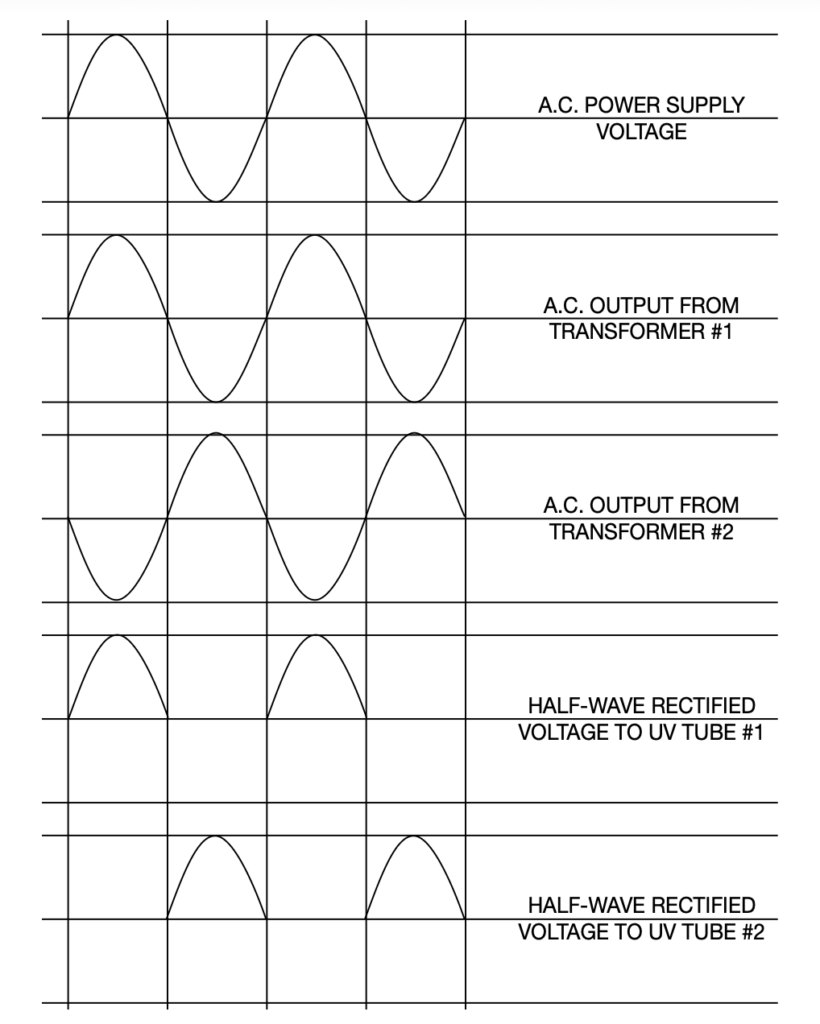
Figure 3. Demonstration of two independent UV tubes producing UV rays out of sync with one another | Image Credit: Protection Controls

Redundant Flame Safety with UV Scanners

The tube of a UV scanner responds only to radiation in the spectrum of 1,900 to 2,300 Å (Figure 2). Peak response is at 2,100 Å (210 nm). Solar UV starts at about 2,800 Å, as shown in Figure 2, and is therefore not detectable by the device. Solar radiation, of course, extends into the visible spectrum (4,000 Å) and extends into the infra-red spectrum. A UV tube consists of a fused silica or UV glass envelope, two electrodes, and a gas contained in this envelope. This is called a cold-cathode gas-discharge tube.

This tube conducts or ignites when it is irradiated with ultraviolet light and when sufficient voltage potential exists across the two electrodes. The electrodes can be made of tungsten, molybdenum, or nickel. When a photon of sufficient energy is absorbed into the cathode electrode, electrons are emitted and are drawn to the anode. A larger cathode allows more electrons to avalanche, causing higher current flow and thus higher sensitivity to UV. There are high sensitivity UV scanners designed for special burners that will produce low UV, such as one designed by Protection Controls, Inc.

The gas in the tube is usually a helium-hydrogen ionizable mix. Electrons released by the cathode release electrons in the ionized gas, becoming a self-sustaining discharge much greater than that of the originally generated electrons and producing a very high current gain or avalanche effect. The sensitivity of a tube will very slowly decrease over a period of time. Replacement should be made after 8,000 hours of operation. The current produced by the photoelectrons is measured in millionths of an ampere, so this current is amplified in the combustion safeguard to energize a relay that can then energize the fuel valves.

Critical Maintenance to Avoid Tube Gas Contamination

While UV scanners are very reliable, tube gas contamination may occur with large temperature shock (ΔTEMP/ΔTime) or large physical shock (a 2-inch drop may cause 100G shock), causing the electrode to UV glass envelope seal integrity to be compromised. Because of this, it is possible for a UV tube to conduct current when no UV is incident upon it. This would normally be detected during the flame safeguard safe start check. When an indicated flame on condition exists prior to purge or ignition, the safe start check relay prevents ignition and gas valve energization.

In addition to safe start check before every heating cycle, a monthly preventative maintenance schedule should be in place if the burner is used daily. This consists of closing a manual gas valve. The electrically powered gas valves should close in two to four seconds as the UV scanner and combustion safeguard respond to loss of flame.

If a burner is in continuous service, we recommend that this maintenance schedule be performed weekly. An alternative to this is to use a self-checking ultraviolet scanner and control. In the past, this type of scanner involved an electrically operated shutter, which alternately would block and allow UV to the tube. However, having a mechanical device operating close to the burner heat and vibration is a recipe for frequent and premature failures; it is typically rated for only 140°F to 175°F maximum and is quite expensive.

Going Shutterless
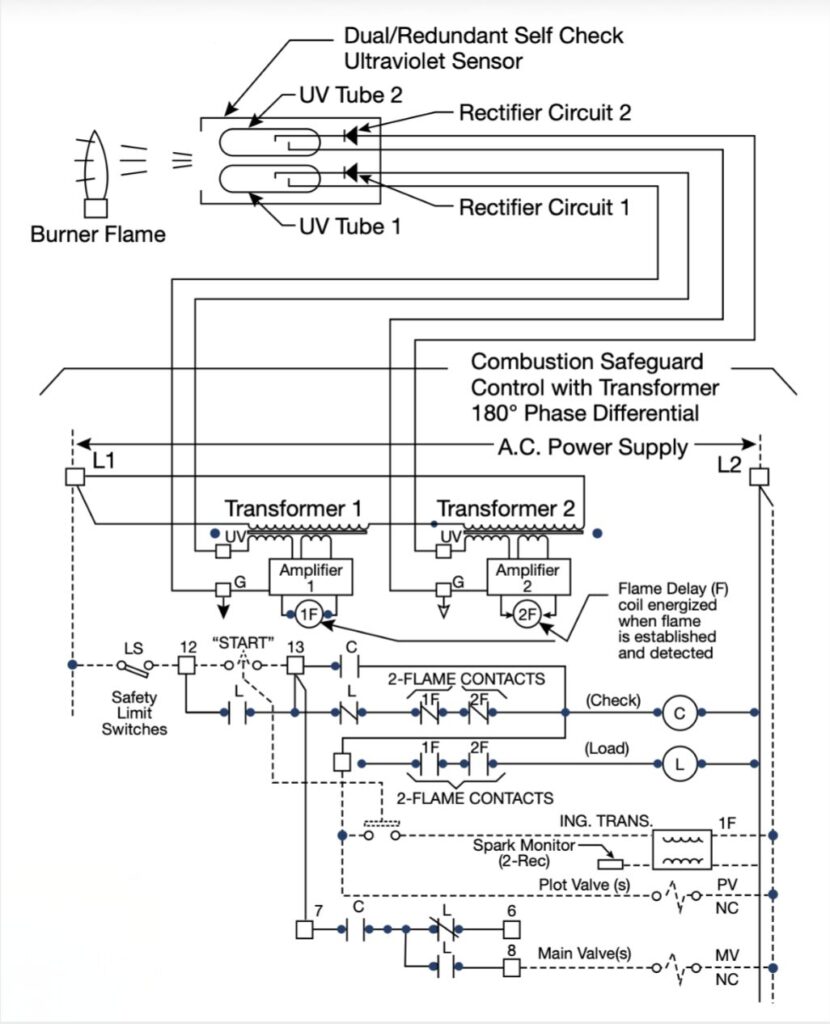
Figure 4. Note how each amplifier has its own flame relay | Image Credit: Protection Controls

Newer designs are available that completely avoid using a mechanical operating device to moderate the UV, increasing reliability and durability. For example, the Dual/Redundant Self Check UltraViolet Flame Sensor and Combustion Safeguard Control from Protection Controls includes two UV tubes in one ultraviolet sensor to monitor one burner flame. UV tubes respond to welding sparks, ignition sparks, lightning, bright incandescent or fluorescent light, solar radiation, gamma rays, and x-rays.

Since UV tubes produce UV rays when they conduct, two UV tubes in one sensor would not normally be suitable for sensing a burner flame, as one UV tube could be responding to the other tube and not the flame. But in the case of this safety control, two voltage supplies to the UV tubes are out of phase with each other. When one UV tube is powered and may respond to UV rays, the other UV tube is off. Additionally, the two UV tubes are powered through two rectifier circuits from two transformers that are out of phase with each other. The two UV tubes are powered and sense UV from the flame on alternating half cycles (Figure 3).

Each UV tube and rectifier circuit provides input to its amplifier. Each amplifier provides input to its own flame relay (Figure 4). Upon burner startup, before burner ignition, if either UV tube is in conduction, the safe start check circuit does not permit powering the fuel valve.

During the burner run cycle, if either UV tube fails in the conduction state, the cycle will safely continue with the other UV tube sensing the burner flame. See Figure 5.

Regardless of which sensor option you choose, accounting for flame redundancy and ensuring your maintenance plan is proactive enough for the method chosen is key to a safe manufacturing environment.
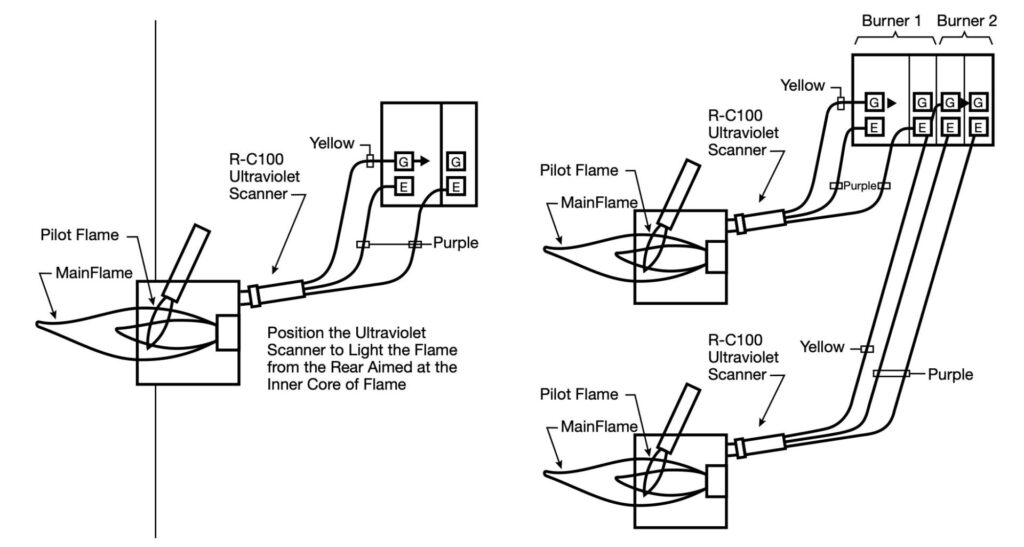
Figure 5. Redundant flame safety for single- and multi-burner flame safeguards: (a) redundant flame safety with a single burner flame safeguard with an ultraviolet sensor and (b) redundant flame safeguard (2-burner shown) with an ultraviolet sensor. | Image Credit: Protection Controls

About The Author:

Bruce Yates
President
Protection Controls, Inc.

Bruce Yates is the president of Protection Controls and is involved with management, sales, and engineering responsibilities. He graduated from the University of Illinois with a Bachelor of Science in Electrical Engineering in 1968. He works with his brother Douglas in the family-owned flame safeguard control manufacturing company, started by his father, James, and uncle, Robert, in 1953.

For more information: Contact Bruce Yates at email@protectioncontrolsinc.com.

Redundant Flame Safety Read More »
Century Aluminum Backs New U.S. Smelter Built Around Next-Generation Smelting Technology

Century Aluminum Company has emphasized that next-generation EX smelting technology will be critical to the development of its new primary aluminum smelter, one of the most advanced technologies deployed in the U.S. This platform is designed to improve productivity, reduce energy consumption per ton, and lower emissions, reinforcing both economic competitiveness and environmental performance in primary aluminum manufacturing.

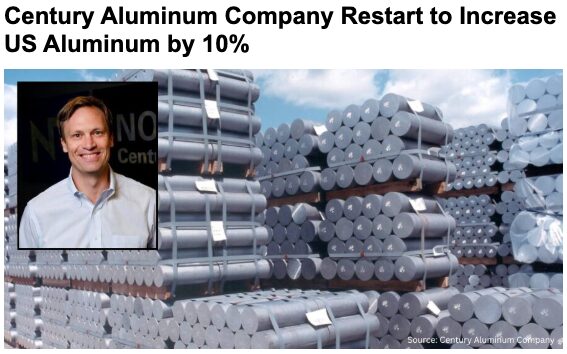
Click on the image above to read more about Century Aluminum’s recent restart to boost U.S. production by 10%.

Planned for Inola, Oklahoma, at the Tulsa Port of Inola industrial park, the proposed facility is expected to produce up to 750,000 metric tons of primary aluminum annually, more than doubling current U.S. smelting capacity once fully operational. Century Aluminum will partner with Emirates Global Aluminum (EGA) on the project, with EGA contributing its proprietary EX smelting technology and holding a majority ownership stake, while Century Aluminum provides operational expertise and leadership in the U.S.-based aluminum production. The project aims to strengthen material availability for downstream manufacturers serving automotive, aerospace, energy, and defense markets.

Jesse Gary
Chief Executive Officer
Century Aluminum Company

“Our partner EGA brings world-class smelting technology and construction expertise that are fast-tracking our collective efforts to realize a new era of domestic primary aluminum production,” said Jesse Gary, chief executive officer of Century Aluminum Company. “This expanded production will benefit critical U.S. industries and create thousands of American manufacturing jobs, reinforcing the vital role of aluminum in national defense and economic vitality.”

EX technology is EGA’s next-generation smelting platform, featuring reduction cells that provide higher productivity per square meter than EGA’s previous DX+ Ultra technology. The cells are larger and have improved current efficiency, enabling greater aluminum production from each smelting cell. The technology supports more cost-effective aluminum production with lower emissions intensity, reinforcing the project’s operational and environmental goals.

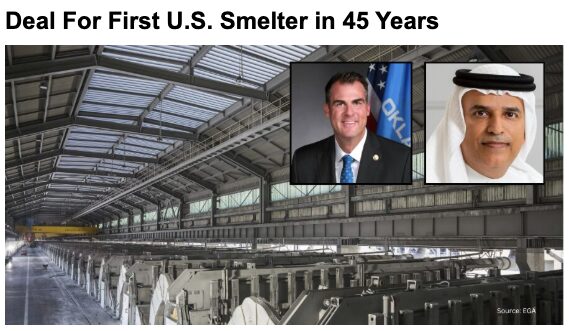
For background on the initial announcement of this historic smelter project, click on the image above for our May coverage.

The use of EX technology also positions the project within the broader global landscape of aluminum smelting innovation, strengthening its appeal as an alternative source of advanced smelting capability at a time when governments and manufacturers are increasingly focused on supply chain resilience, domestic capacity, and technology diversification. EGA’s own communications highlight EX as a key step toward large-scale industrialization and a foundation for future growth as a smelting technology provider of choice in the global aluminum industry.

Construction is expected to begin as early as 2026, with commercial production anticipated before the end of the decade. Once completed, the facility is expected to support approximately 1,000 permanent direct jobs and support roughly 4,000 construction roles, while helping reduce reliance on imported aluminum and reinforcing domestic manufacturing capabilities. Industry leaders have described the project as a critical step toward rebuilding U.S. primary aluminum production and supporting long-term supply stability for North American manufacturers.

Press release is available in its original form here. Additional information comes from EGA’s June 2025 press release here.

Century Aluminum Backs New U.S. Smelter Built Around Next-Generation Smelting Technology Read More »
Manufacturer Upgrades Hot Zone For Aerospace Industry

A prominent United States-based global aerospace company replaced a hot zone for their vacuum furnace. The company performs thermal processing on a variety of critical aerospace components used across multiple aircraft platforms.

John Hahn
Aftermarket Sales Manager
Solar Manufacturing
Source: Linkedin

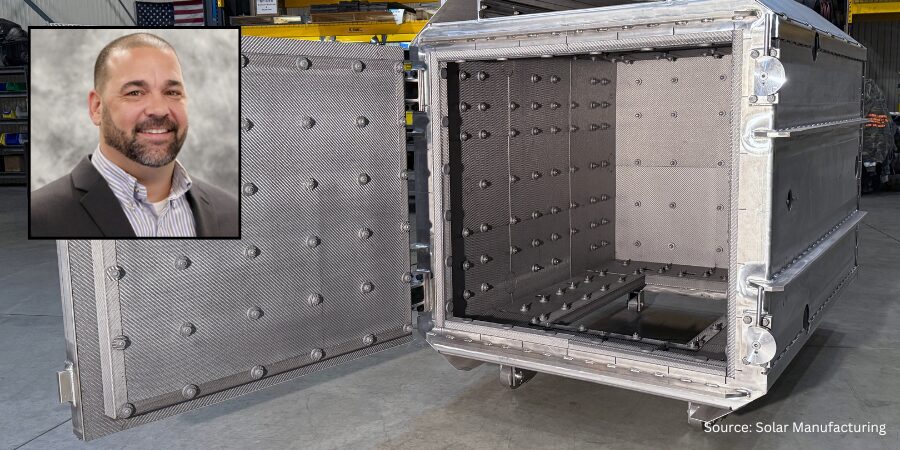
Solar Manufacturing was contracted to replace an Ipsen VFC-924 hot zone.

John Hahn, aftermarket sales manager at Solar Manufacturing, noted: “They trusted our engineering and service teams to design and build a hot zone with key modifications that would enhance performance and longevity.”

The hot zone was implemented with improvements to boost hot zone efficiency, serviceability, and lifespan, such as graphite felt insulation for thermal efficiency, CFC 0.050” hot face for increased durability, and CFC edge trim throughout (door, bottom, and top bung) to extend hot zone life.

Press release is available in its original form here.


Manufacturer Upgrades Hot Zone For Aerospace Industry Read More »

Company Expands Services In Aerospace Industry and Beyond With Vacuum Furnace

A company that services the aerospace industry has expanded its thermal processing capabilities with a new vacuum furnace, growing their operations into multinational thermal processing.

Piotr Zawistowski
Managing Director
SECO/VACUUM

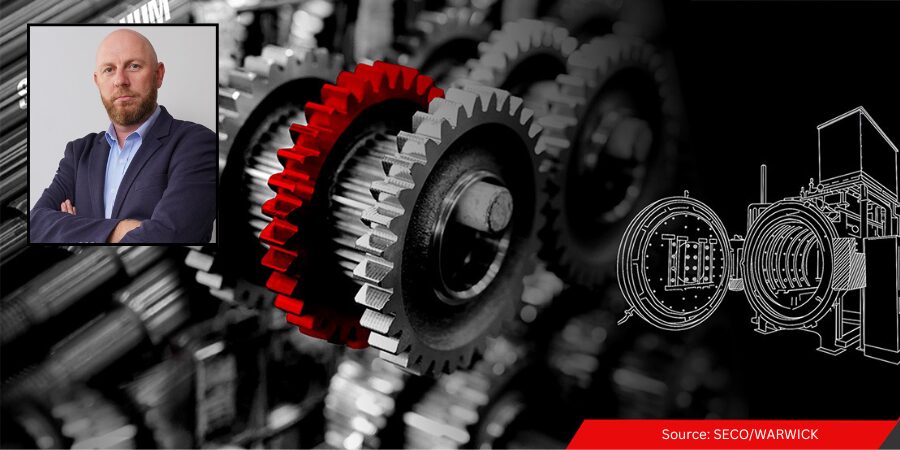
SECO/WARWICK has produced the vacuum furnace, which is customized to meet the rigorous heat treating standards of the aerospace industry, one of the industries they serve. As such, the 6-bar Vector is equipped for dual gas quench with nitrogen, argon, or any partial-pressure of the two, automatically set and maintained according to the batch recipe. It is also equipped with a high-vacuum system with a diffusion pump, key features for many aerospace-grade thermal processes.

Director of Operations, one of the family-business owners, stated, “Our ongoing success is powered by our partnership with SECO/WARWICK. This state-of-the-art furnace introduces advanced automation, ensuring faster turnaround times while maintaining the highest quality standards for our customers. Additionally, this new technology enhances our capabilities, granting us the confidence to enter new markets and secure new opportunities with exceptional reliability.”

“We never take that partnership for granted.” Piotr Zawistowski, Managing Director of SECO/VACUUM, responded.

This new Vector is horizontally configured with a 24x24x36 inch (600x600x900 mm) hot zone equipped for a payload of 1750lbs (800kg).

Press release is available in its original form here.


Company Expands Services In Aerospace Industry and Beyond With Vacuum Furnace Read More »
The Future of Vacuum Oil Quenching

Despite years of research and development that resulted in several important technological innovations, the constraints of high-pressure gas quenching are ever more evident. In today’s Technical Tuesday, Robert Hill, FASM president of Solar Atmospheres of Western PA, addresses the creation of a new, robust style of vacuum oil quench furnace. The results challenge the schematics in how the next generation of oil quench furnaces should be designed, built, and operated.

This informative piece was first released in Heat Treat Today’s November 2024 Vacuum print edition.


Introduction

After decades of research and development that resulted in several important technological innovations, the constraints of high-pressure gas quenching are ever more evident. Gas cooling runs into efficacy issues when compared to liquid quenchant cooling, chiefly for heavier cross sections. This stays true even when using specialized inert gas blends and heightened gas pressures.

Additionally, it is undeniable that stringent liquid quench Aerospace Material Specifications (AMS) standards for certain aerospace alloy steels will never change. In fact, many industry standards (e.g., SAE/AMS and U.S. defense standards) and client specifications often mandate oil quenching of alloys or component parts.

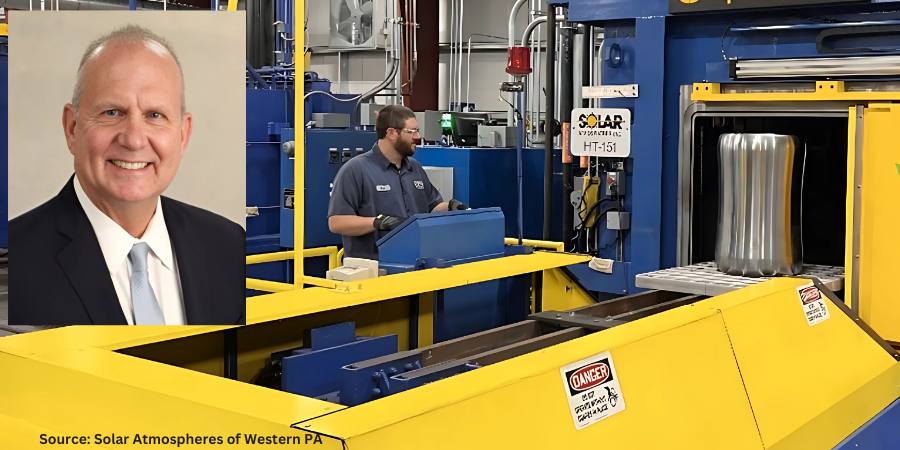
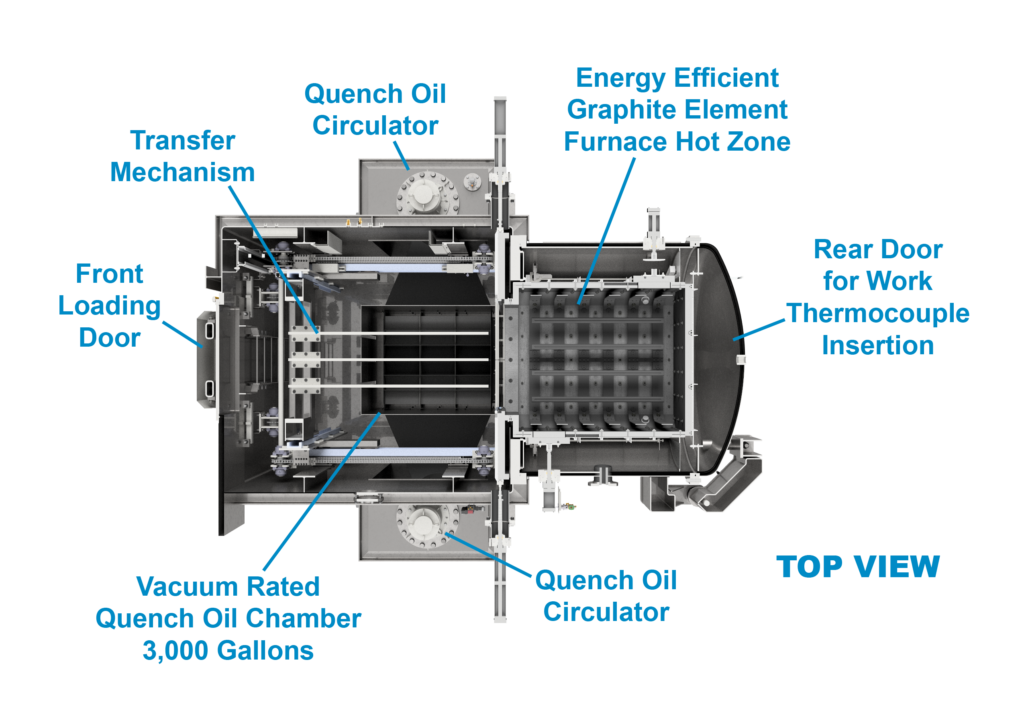
To meet the demand for an effective, sustainable liquid quench solution, Solar Manufacturing with Solar Atmospheres engineers worked through the tumultuous period of the pandemic to create a new, robust style of vacuum oil quench furnace. Their work culminated in a vacuum oil quench furnace with a 36″ x 36″ x 48″ hot zone that operates up to 2000°F and can accommodate a weight capacity of 2000 lbs. With high uptime reliability and excellent metallurgical results, the NEO™ represents a paradigm shift in how the next generation of oil quench furnaces should be designed, built, and operated.

Rigorous Design for Metallurgical Excellence

The next generation of oil quench furnaces heralds an era of metallurgical excellence. This is made apparent across three key measures: control over surface contamination, prevention of parts cracking, and flexible processing of dissimilar materials.

No Surface Contamination

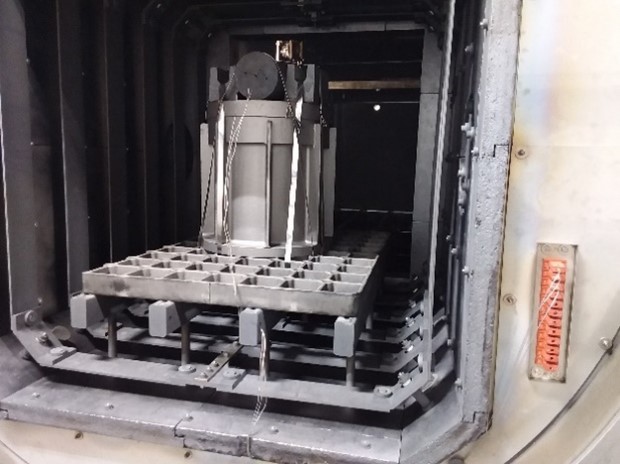
Figure 2. Loading in the NEO furnace
Source: Solar Atmospheres of Western PA

By implementing a vacuum design to the oil quench furnace, the research team avoided issues faced by traditional atmosphere oil quench furnaces, such as surface contamination and intergranular oxidation/intergranular attack (IGO/IGA). Additionally, they meticulously addressed design concerns regarding oil backstreaming in the new multichambered vacuum system. After two years of usage, the hot zone has remained pristine and oil-free.

By effectively removing the possibility of any surface contamination, both IGO and decarburized or carburized surfaces on oil quenched components are eliminated. These critical metallurgical features are unattainable in traditional gas-fired Endothermic batch furnace equipment.

Precision Prevents Part Cracking

To eliminate the potential of part cracking, quench oil temperatures should be able to be maintained between 140°F to 180°F ±5°F, which enhances consistent and repeatable metallurgical results. Furthermore, having the furnace designed so that quench oil recirculates within a closed loop oil to air cooling system keeps water contamination from infiltrating the oil.

No Carbon Content Matching

The next generation of vacuum oil quench furnaces should also have highly controllable atmospheres, devoid of oxygen, which will remove the need to mechanism, which has demonstrated flawless performance for over two years.

Additionally, it is imperative that these furnaces be capable of using more conventional quench oil. A good quench needs excellent vapor pressure, powerful enough to allow the oil to vaporize. Furnaces can be designed with this in mind, allowing operators to save costs by using more conventional quench oils. For example, after rigorous laboratory experimentation into the vaporization of various quench oils at different pressures and temperatures, it was decided to purchase 3000 gallons of Houghton G quench oil, versus the “vacuum only” quench oils that are currently on the market today.

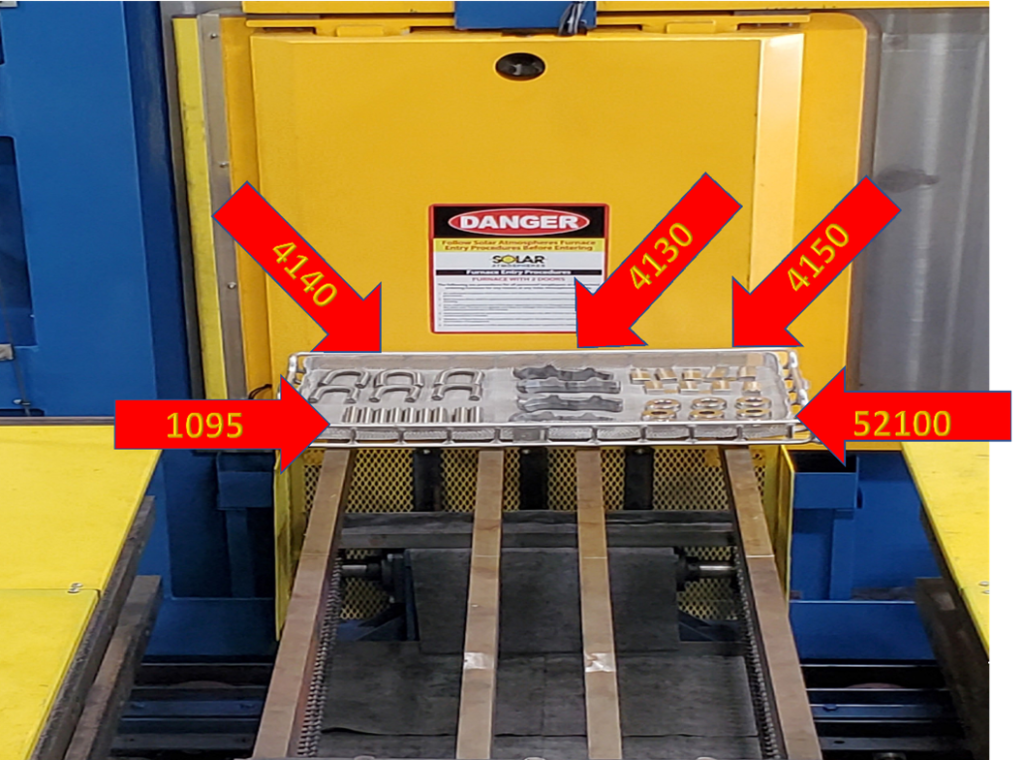
Figure 3. A display of a variety of parts which can be processed in the same run
Source: Solar Atmospheres of Western PA

The next generation of oil quench furnaces should also finally provide metallurgical and quality engineers the ability to thermocouple the oil quenched parts in accordance with AMS2750 Rev H standards. Being able to monitor part temperature with up to twelve (12) data points, as defined by the latest AMS2750 revision, ensures thorough and precise thermocouple monitoring, bolstering control and repeatability.

Lastly, in a hermetically sealed furnace, another layer of control should be established through installing an internal camera. With “eyes” into the furnace, the operator will be able to watch the load transfer in real time from a control panel.

These operational attributes are on full display in the example of an automated austenitized cycle: At the completion of the cycle, the specially-designed transfer mechanism delivers precisely heated parts from the hot zone to the 3000-gallon oil quench chamber consistently within 20 seconds — all without the expulsion of flames and the discharge of smoke.

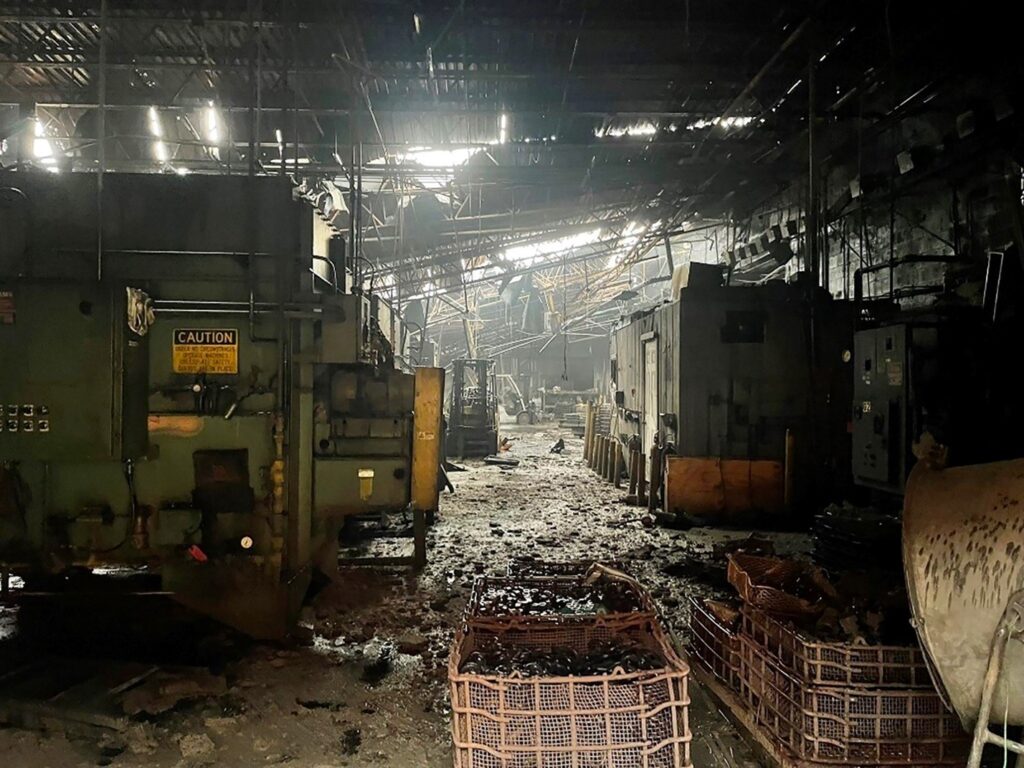
Oil flames and smoke are no longer acceptable realities in heat treatment operations. Unfortunately, the heat treating industry has been misled in the belief that a catastrophic disaster will never happen to them. There have been multiple “total losses,” mostly due to oil quench fires and explosions. Recently, it is well known that if an insurance adjuster sights a flame or smoke within a plant, they are reluctant or may even refuse to write the policy.

Vacuum furnaces offer a safe, contained alternative to the harmful open emissions and dangerous working conditions. For operations where the safety and the well being of the workforce are paramount, vacuum furnaces eliminate the risks associated with open flame exposure, explosivity, and skin burns.

Yet the next generation of vacuum oil quench furnaces should also open at both ends at the end of a cycle to expose it to atmosphere. Full air exchange mitigates the potential hazards of confined spaces.

Figure 5. Top view showing innovative design features for the next generation of vacuum oil quench furnaces
Source: Solar Atmospheres of Western PA

Meeting Environmental Demands

With ever more stringent environmental regulations, the next generation of vacuum oil quench furnaces will play a pivotal role in reducing the carbon footprint of the heat treating industry. It has been estimated that 80% of fuel used for heat treatment could be replaced by electricity, thus drastically reducing CO2 emissions: “When you burn something that contains carbon, you get carbon dioxide that you either must take care of or release into the atmosphere. With electric heating, you do not have any exhaust.”

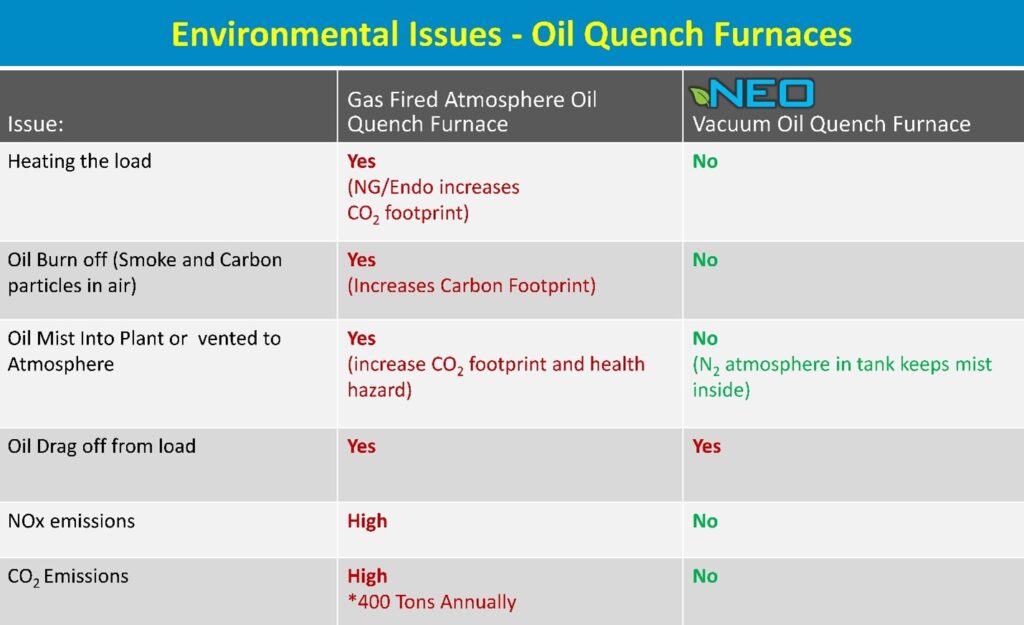
The second column in the chart on page 30 addresses the multiple environmental concerns associated with traditional batch IQ gas-fired oil quenching furnaces. The third column outlines the advantages of the design for the next generation of oil quench furnaces, which embraces electric heating as a sustainable alternative to fossil fuels. As sustainability pressures continue to mount, governments, clients, and primes alike will continue to flow down requirements on how heat treaters plan to reduce their carbon footprints.

Figure 6. Safety hazards in operating atmosphere furnaces
Source: The Monty

Conclusion

As the demands for metallurgical precision, safety, and environmental sustainability continue to mount, Solar’s new vacuum oil quench furnace emerges as a representative of the next generation of vacuum oil quenching technology. Characterized by unparalleled efficiency, precision, and sustainability, such furnaces will continue to lead the industry toward a future defined by cleanliness, safety, and environmental stewardship.

Table 1. Data from the AICHELIN Group
Source: Solar Atmospheres of Western PA

References

Kanthal, “Heat Treatment CO2 Emissions cut by 50 percent by using electricity” (April 2019), https://www.kanthal.com/en/knowledge-hub/inspiring-stories/heat-treatment-co2-emissions-cut-by-50-percent-by-using-electricity/.

Aichelin Group, “CO2 Footprints and the Heat Treat Industry,” The Monty (January 2024).

About the Author:

Robert Hill, FASM
President
Solar Atmospheres of Western PA

Robert Hill, FASM, began his career with Solar Atmospheres in 1995 at the headquarters plant in Souderton, PA. In 2000, Hill was assigned the responsibility of starting the second plant in Hermitage, PA, where he has specialized in the development of large furnace technology and titanium processing capabilities. Additionally, he was awarded the prestigious Titanium Achievement Award in 2009 by the International Titanium Association.

For more information: Contact Robert at bob@solaratm.com


The Future of Vacuum Oil Quenching Read More »

Ask the Heat Treat Doctor®: How Do Parts Fail?

The Heat Treat Doctor® has returned to offer sage advice to Heat Treat Today readers and to answer your questions about heat treating, brazing, sintering, and other types of thermal treatments as well as questions on metallurgy, equipment, and process-related issues.


Product failures (Figure 1) can often be traced to deficiencies in design, materials, manufacturing, quality, maintenance, service-related factors, and human error to name a few. Examples of failures include misalignment, buckling, excessive distortion, cracking, fracture, creep, fatigue, shock, wear, corrosion, and literally hundreds of other mechanisms. Let’s learn more. 

Figure 1. Image of damage to left fuselage and engine; fire damage to nacelle.
Source: National Transportation Safety Board
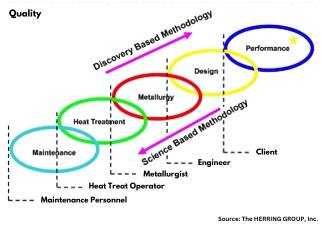
Figure 2.: Model of material science depicting— key interactions and /interrelationships
Source: The HERRING GROUP, Inc.

Whatever the source, it is important to recognize that it is next to impossible to separate the product from the process.  Performance, design (properties and material), metallurgy (microstructure), heat treatment (process and equipment), and maintenance are all interconnected (Figure 2).  

When considering ways to prevent failures from occurring, one must determine the factors involved and whether they acted alone or in combination with one another. Ask questions such as, “Which of the various failure modes were the most important contributors?” and “Was the design robust enough?” and “Were the safety factors properly chosen to meet the application rigors imposed in service?” Having a solid engineering design coupled with understanding the application, loading, and design requirements is key to avoiding failures. If failures do happen, we must know what contributed to them.  

Let’s review a few of the more common failure modes. 

Fracture Types on a Macroscopic Scale  

Applied loads may be unidirectional or multi-directional in nature and occur singularly or in combination. The result is a macroscopic stress state comprised of normal stress (perpendicular to the surface) and/or shear stress (parallel to the surface). In combination with the other load conditions, the result is one of four primary modes of fracture: dimpled rupture (aka microvoid coalescence), cleavage, decohesive rupture, and fatigue. 

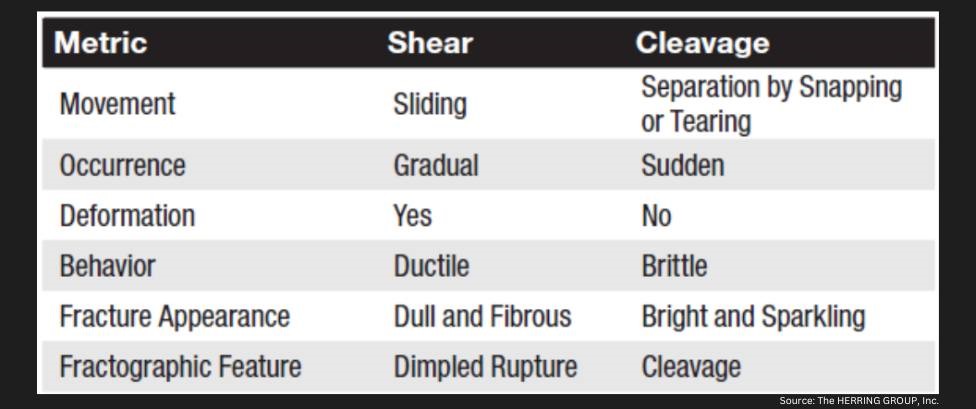
Virtually all engineering metals are polycrystalline. As a result, the two basic modes of deformation/fracture (under single loading) are shear and cleavage (Table 1). The shear mechanism, which occurs by sliding along specific crystallographic planes, is the basis for the macroscopic modes of elastic and plastic deformation. The cleavage mechanism occurs very suddenly via a splitting action of the planes with very little deformation involved. Both of these micro mechanisms primarily result in transgranular (through the grains) fracture. 

Fracture Types — Ductile and Brittle  

Numerous factors influence whether a fracture will behave in a ductile or brittle manner (Table 2). In ductile materials, plastic deformation occurs when the shear stress exceeds the shear strength before another mode of fracture can occur, with necking typically observed before final fracture. Brittle fractures occur suddenly and exhibit very little, if any, deformation before final fracture. (The following is based on information found in Wulpi, 1985.)

Ductile fractures typically have the following characteristics: 

  • Considerable plastic or permanent deformation in the failure region 
  • Dull and fibrous fracture appearance 

Brittle fractures typically have the following characteristics:

Contact us with your Reader Feedback!
  • Lack of plastic or permanent deformation in the region of the fracture 
  • Principal stress (or tensile stress) is perpendicular to the surface of the brittle fracture 
  • Characteristic markings on the fracture surface pointing back to where the fracture originated  

When examined under a scanning electron microscope, fracture surfaces seldom exhibit entirely dimpled rupture (i.e. ductile fracture) or entirely cleavage (i.e. brittle fracture), although one or the other may be more prevalent. Other fracture modes include intergranular fractures, combination (quasi-cleavage) fractures and fatigue fractures. 

Fracture Types — Wear 

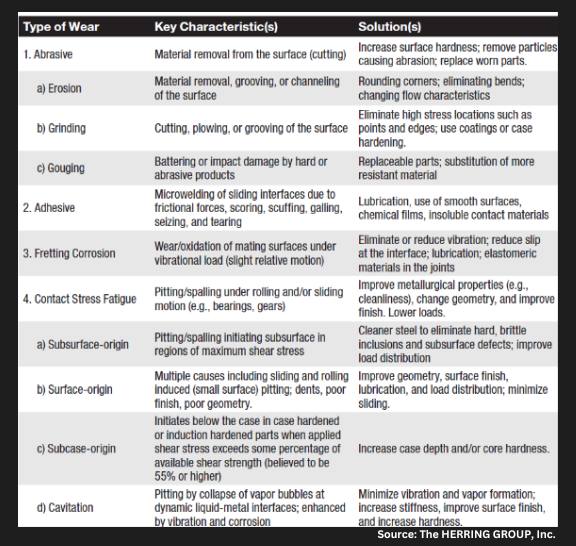
Wear (Table 3) is a type of surface destruction that involves the removal of material from the surface of a component part under some form of contact produced by a form of mechanical action. Wear and corrosion are closely linked, and it is important not only to evaluate the failure but to take into consideration design and environment and have a good understanding of the service history of a component. 

Fracture Types — Corrosion 

Corrosion is the destruction of a component by the actions of chemical or electrochemical reactions with the service environment. The major types of corrosion include galvanic action, uniform corrosion, crevice corrosion, stress-corrosion cracking, and corrosion fatigue. The mechanisms and effects created by each of these are well documented in the literature, as in Fontana and Greene’s Corrosion Engineering (1985) and Uhlig’s Corrosion and Corrosion Control (1985). It is critical to understand that the effects of corrosion are present to some degree in every failure analysis, which is one of the reasons why protecting fracture surfaces is so critical when sending parts for failure analysis. 

Table 1. Differences between shear and cleavage fracture (Data referenced from page 23 of Wulpi, see References.)
Source: The HERRING GROUP, Inc.
Table 2. Typical characteristics of ductile and brittle fractures
Source: The HERRING GROUP, Inc.
Table 3. General categories of wear
Source: The HERRING GROUP, Inc.

Final Thoughts

To avoid failures or their reoccurrence, it is important to document each step in the design and manufacture process (including heat treatment). In addition, careful documentation of failures if/when they occur is of critical importance as is assembling a team of individuals from different disciplines to perform a comprehensive investigation. This includes a thorough failure analysis to assist in determining the root cause (there is only one) and to avoid it from happening in the future. 

References

Airline Safety. www.AirlineSafety.com. Accessed September 2024.

Fontana, M. G., and N. D. Greene. Corrosion Engineering, 3e. McGraw-Hill Book Company, 1985.

Herring, Daniel H. Atmosphere Heat Treatment, Volume Nos. 1 & 2. BNP Media, 2014/2015.

Lawn, B.R. and T. R. Wilshaw. Fracture of Brittle Solids. Cambridge University Press, 1975.

Shipley, R. J. and W. T. Becker (Eds.). ASM Handbook, Volume 11: Failure Analysis and Prevention. ASM International, 2002.

Uhlig, H. H. Corrosion and Corrosion Control. John Wiley & Sons, 1963. 

Wulpi, Donald J. Understanding How Components Fail. ASM International, 1985.

About the Author

Dan Herring
“The Heat Treat Doctor”
The HERRING GROUP, Inc.

Dan Herring has been in the industry for over 50 years and has gained vast experience in fields that include materials science, engineering, metallurgy, new product research, and many other areas. He is the author of six books and over 700 technical articles.

For more information: Contact Dan at dherring@heat-treat-doctor.com.

For more information about Dan’s books: see his page at the Heat Treat Store.


Find Heat Treating Products And Services When You Search On Heat Treat Buyers Guide.Com


Ask the Heat Treat Doctor®: How Do Parts Fail? Read More »

military and business personnel in aircraft hangar with inset of engines

U.S. Army Receives T901 Engines for UH-60 Black Hawk Flight Testing

U.S. Army Receives T901 Engines for UH-60 Black Hawk Flight Testing

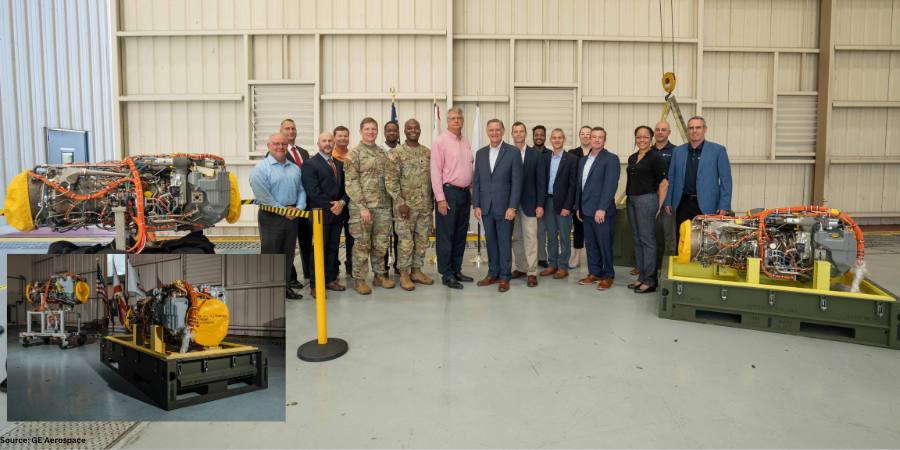
The U.S Army recently received two T901 engines from a global aerospace propulsion, services, and systems provider. The engines have been slated for the Improved Turbine Engine Program’s UH-60 Black Hawk integration and testing.

The T901-GE-900 was developed by GE Aerospace in response to a need from the U.S. Army for increased power and reduced fuel consumption with a design that incorporates 3D-modeling, the use of ceramic matrix composites (CMCs), and 3D-printed (additive) parts. The use of CMCs and additive manufacturing enables the engine to produce more power with less weight.

Amy Gowder
President & CEO
Defense & Systems
GE Aerospace
Source: GE Aerospace

“This delivery represents the beginning of a new era and a pivotal moment in our ongoing work with the U.S. Army,” said Amy Gowder, president and CEO, Defense & Systems at GE Aerospace. “The T901 engine will ensure warfighters will have the performance, power, and reliability necessary to maintain a significant advantage on the battlefield.”

This transaction follows the first ever ground run of an aircraft powered by a T901 engine, which took place in April, when a T-901 engine powered Sikorsky’s Future Attack Reconnaissance Aircraft (FARA) prototype, Radar X, gathering data to support the engine’s integration into the service’s UH-60 Blackhawk and AH-64 Apache.

“Our team is immensely proud to announce the latest T901 deliveries to the U.S. Army,” said Tom Champion, director of GE Aerospace’s T901 program. “At every stage, these engines have demonstrated a level of performance that will undoubtedly help meet the demands of military missions for decades to come.”

Source: GE Aerospace

The next-generation rotorcraft engines were unboxed during a ceremony at Sikorsky’s facility in West Palm Beach, Florida.

Photo: GE Aerospace T901 engines unboxed during a ceremony at Sikorsky’s West Palm Beach facility. Source: GE Aerospace

The press release is available in its original form here.


Find Heat Treating Products And Services When You Search On Heat Treat Buyers Guide.Com


U.S. Army Receives T901 Engines for UH-60 Black Hawk Flight Testing Read More »

image of a white airplane on a runway, sunny skies in the bg; inset of split image, blue furnace on left, furnace interior on right

Aerospace Industry Acquires Box Furnace for Heat Treating Parts

An aerospace company has purchased a rod overbend box furnace to heat treat parts under an inert atmosphere. The heat treating furnace has a maximum temperature rating of 2,000°F and a load capacity of 6,000 lbs.

The box furnace, which was manufactured and shipped by Michigan-based Lindberg/MPH, has an automated load transfer table and is designed to heat treat parts in a nitrogen atmosphere. A nitrogen gas flow meter controls the atmospheric conditions. 

The box furnace includes an automated load transfer table. Under the table, five (5) fans with a variable-frequency drive provide accelerated cooling. The load table utilizes a pusher/puller mechanism to move parts trays in and out of the furnace.

The furnace’s radiant heating system uses heavy-gauge alloy rod over-bend heating elements mounted along the side walls and the floor. Two (2) Watlow F4T controllers control and record the furnace temperature, which allows for seven (7) zones of heating. The box furnace also meets Class 3 temperature uniformity of ±15°F at 1,000°F – 1,800°F.


The press release is available in its original form here.


Find Heat Treating Products And Services When You Search On Heat Treat Buyers Guide.Com

Aerospace Industry Acquires Box Furnace for Heat Treating Parts Read More »

StandardAero Expands Component Repair Capabilities

StandardAero has acquired a global services subsidiary based in Cork, Ireland, that provides specialized component repair and manufacturing processes for industrial, aeroderivative, and aircraft gas turbines.

TRS Ireland is a privately held company that has extensive experience as an OEM-approved specialty coating provider of engine component repair and MRO services on blades, vanes, and other hot section components for both new engines and a rising number of mature engines and a variety of applications.  The company, which has more than 180 OEM approvals/licenses and unique FAA and EASA certifications, also supports gas turbine users worldwide through its services.

Russell Ford,
Chairman & CEO,
StandardAero

“TRS Ireland has a long-standing, hard-earned reputation in the industry as a reliable service partner and will bring immediate growth and opportunity for StandardAero,” said Russell Ford, Chairman & CEO of StandardAero.

Rick Stine,
President of StandardAero’s CH&A Division

“TRS Ireland’s robust and long-tenured engineering and development team has extensive intellectual property around turbine airfoil and coating technologies and we see significant opportunities to leverage these capabilities and capacity to the fast growing aerospace and aeroderivative turbine engine repair markets,” added Rick Stine, President of StandardAero’s CH&A Division.

With the addition of TRS Ireland, StandardAero now has 40 primary repair facilities located on five continents.

StandardAero Expands Component Repair Capabilities Read More »

Stack Metallurgical Group Adds Vacuum Furnace to its Capabilities

Stack Metallurgical Group, a Nadcap accredited and Northwestern U.S. commercial heat treater, recently installed  a TITAN® vacuum furnace at its location in Spokane Valley, Washington. Formerly known as Inland NW Metallurgical Services, Stack Spokane is one of the company’s four locations offering metal processing services such as vacuum heat treating, induction heat treating, aluminum chemical processing, and ion nitriding. Ipsen USA  completed the installation.

Ron Decker,
General Manager, Stack Metallurgical Services, Inc.

“It was an easy choice adding another Ipsen furnace to our offering,” said General Manager Ron Decker. “We count on Ipsen for a versatile product that delivers great results.”

Installation of the TITAN® H6 2-bar vacuum furnace was completed in late 2019 and will be used to process aerospace components. Stack operates four Ipsen furnaces in Spokane and a dozen more in Portland.


Stack Metallurgical Group Adds Vacuum Furnace to its Capabilities Read More »

Skip to content