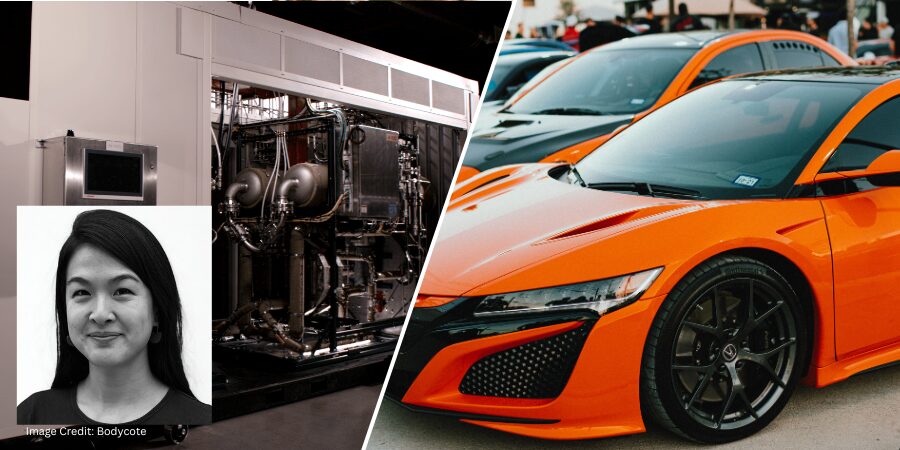
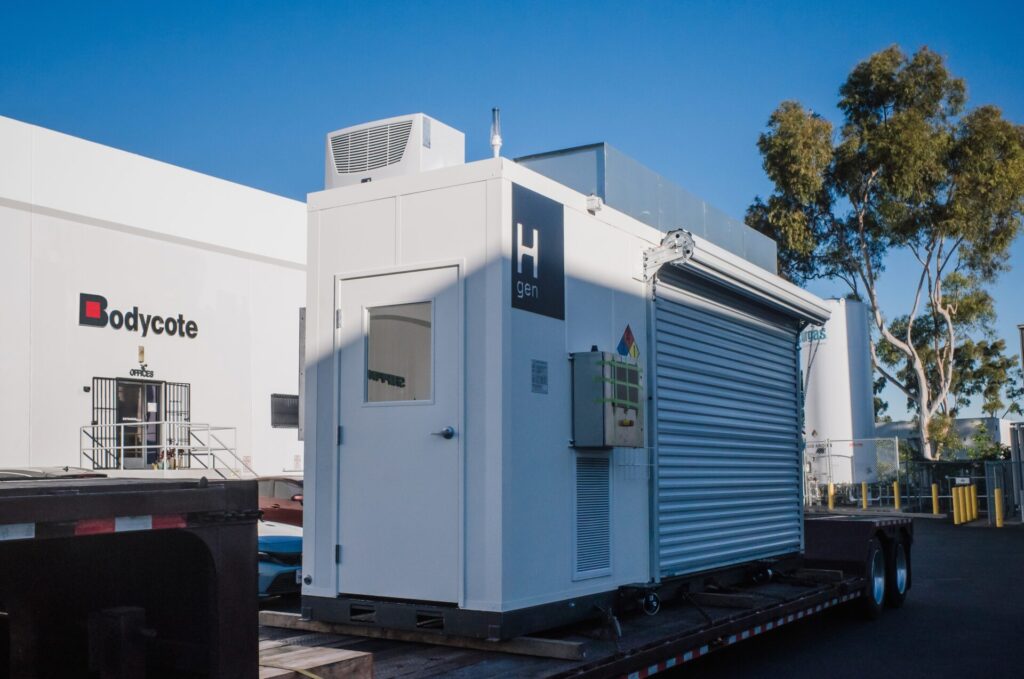
Bodycote, a global provider of advanced heat treatment and specialist thermal processing services, is improving heat treat efficiency and reducing process costs by generating hydrogen on-site at its Rancho Dominguez, California, facility. The system supports controlled-atmosphere heat treatment and brazing operations for aerospace, automotive, energy, and defense applications while reducing reliance on delivered industrial gas.
Hgen at Bodycote | Image Credit: Bodycote
Hydrogen is a critical industrial gas used in Bodycote’s precision heat treatment and surface coating operations, treating metal and metal-alloy components for industrial applications. At the Rancho Dominguez site, processes include annealing, vacuum heat treatment, diffusion bonding, and multiple brazing methods such as hydrogen, inert atmosphere, and induction brazing.
The installed system generates hydrogen from electricity and water at the point of use, eliminating the need for delivered bulk hydrogen and reducing emissions associated with transportation and handling. This approach can reduce related emissions by more than 90% while providing a more stable and lower-cost hydrogen supply.
Click on the image above to read more about Bodycote’s hydrogen strategy in action. Molly Yang Chief Executive Officer Hgen
The hydrogen generation unit, developed in partnership with Hgen, is designed as a compact, modular system that can scale with process demand. Its footprint is 20 times smaller than conventional hydrogen production systems with comparable output, allowing for more efficient use of plant space and reduced system costs.
The containerized module was delivered pre-assembled and installed in less than two weeks, minimizing integration requirements and operational disruption. It also offers an alternative to externally sourced hydrogen. “On-site gas generation avoids the need for expensive gas compression, transport, and storage,” said Molly Yang, chief executive officer at Hgen. She adds that this technology allows Bodycote to reduce gas costs while advancing its sustainability goals.
The installation is expected to pave the way for broader deployment of distributed hydrogen generation across additional sites, reinforcing Bodycote’s long-term energy transition strategy and sustainability commitments.
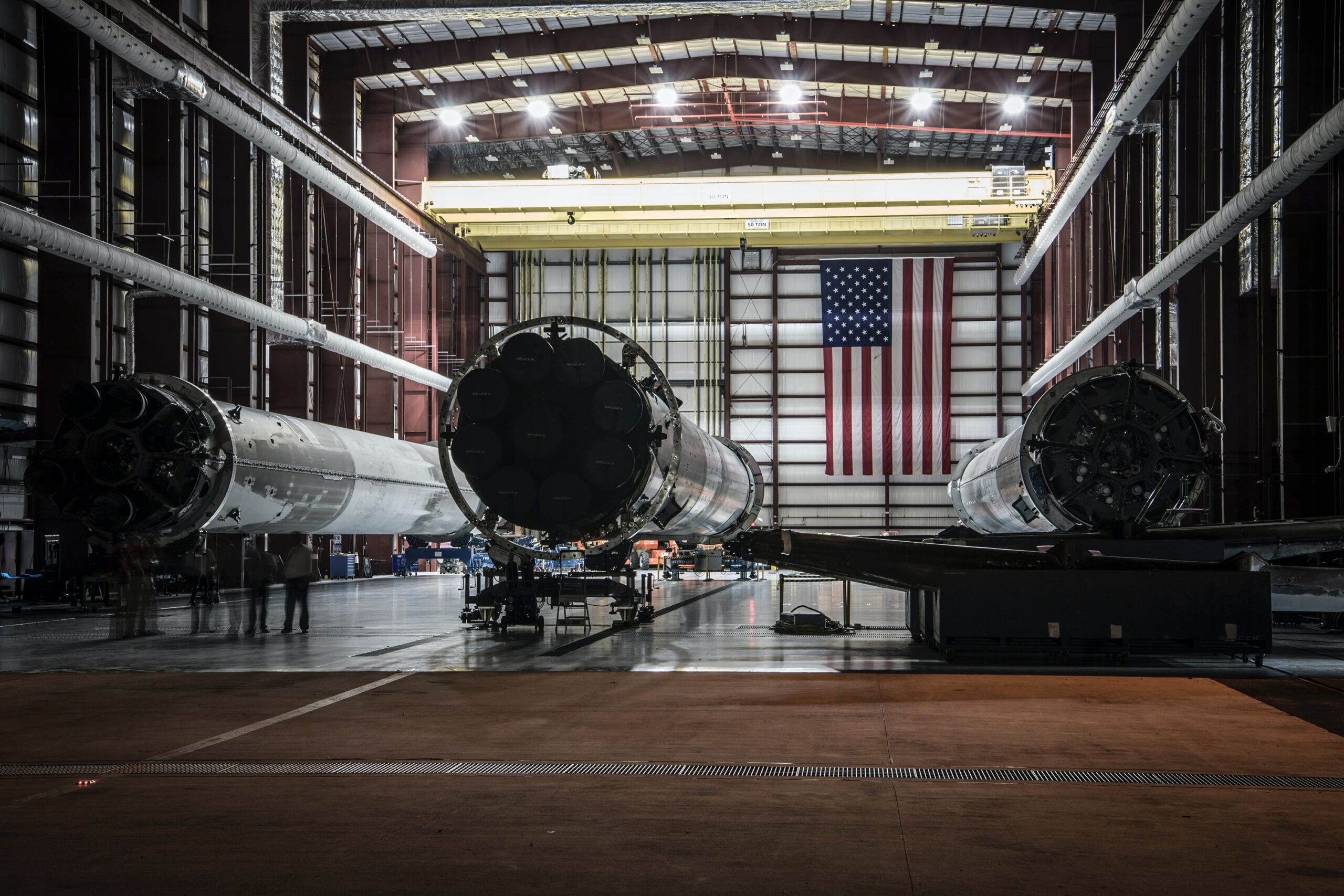
Press release is available in its original form here. The left half of the main image shows the Hgen module. | Image Credit: Bodycote
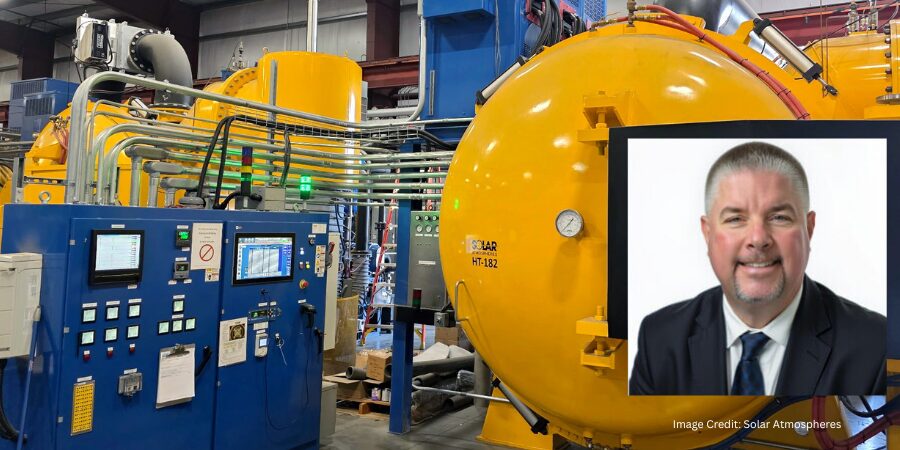
Solar Atmospheres has announced the installation and full commissioning of a new 10-bar vacuum furnace at its Fontana, California, further expanding the company’s high-pressure vacuum heat treating capacity in the western United States. The system enables vacuum heat treating and high-pressure quenching of large components essential to high-performance applications across aerospace and other critical industries.
The furnace, manufactured by sister company Solar Manufacturing, is a horizontal vacuum system with a 48″ wide x 48″ high x 96″ deep hot zone and a maximum load capacity of 12,000 pounds. Equipped with a vacuum pumping package capable of reaching an ultimate vacuum level of 1×10⁻⁶ Torr, the furnace is designed for processing titanium and other high-performance alloys that require tightly controlled, low-contamination environments.
Derek Dennis President Solar Atmospheres California
“This investment gives our [clients] another regional solution for high-pressure quenching of large components and heavy workloads,” said Derek Dennis, president of Solar Atmospheres California. It also allows the company to increase capacity and improve efficiency as demand continues to grow, he adds.
The move supports vacuum heat treating needs across aerospace, defense, medical, and power generation markets, with capacity aimed at maintaining consistent turnaround and performance.
Press release is available in its original form here.
A Chinese partner has purchased two vacuum induction melting (VIM) furnaces for melting and producing castings that will support the aerospace and energy industries.
Sławomir Woźniak CEO SECO/WARWICK Group
SECO/WARWICK Group will be providing the two VIM furnaces, which will be shipped to China. The first of the two furnaces on order is a 50 kg VIM induction furnace for producing castings in an equiaxed structure. The furnace is unique due to its high degree of automation. It is often a chosen solution in the field of vacuum metallurgy. Various metals can be processed in vacuum metallurgy furnaces, such as titanium and its alloys, silicon, nickel, or cobalt alloys. The second furnace is the JetCaster VIM DGCC, used to produce high-quality precision turbine blade castings in the aerospace and energy industries.
Sławomir Woźniak, CEO of SECO/WARWICK Group, stated how the furnace benefited “the field of unidirectional crystallization castings of nickel- and cobalt-based superalloys. Years of work by our R&D engineers on the development of new unidirectional crystallization casting technology has allowed us to create a device equipped with a supersonic argon stream cooling system.”
“The growing popularity of VIM furnaces and the increasing importance of vacuum metallurgy is a consequence of the constantly changing production needs of heavy industries.” said Liu Yedong, managing director of SECO/WARWICK China.
Liu Yedong Managing Director SECO/WARWICK China.
Press release is available in its original form here.
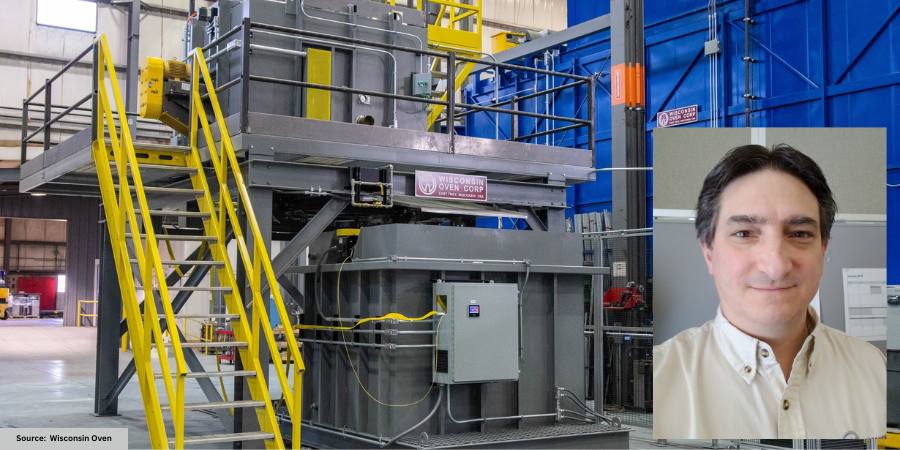
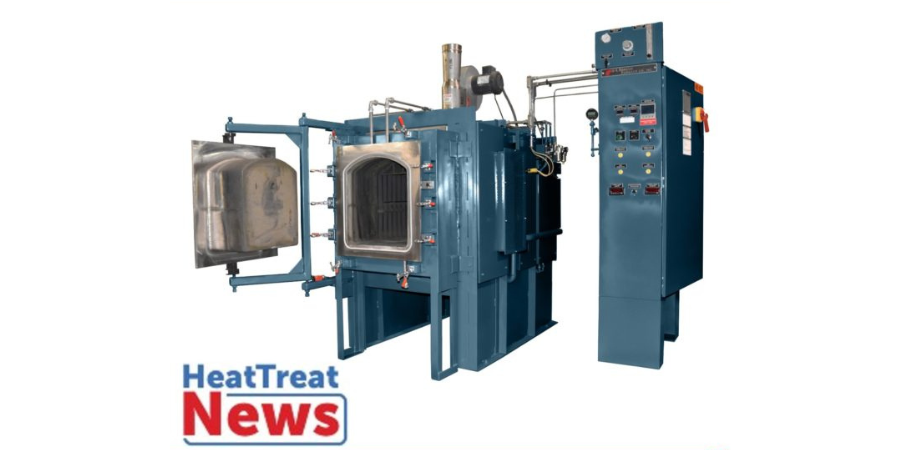
An electrically heated drop bottom furnace with a traveling quench tank and a maintenance platform has been shipped to an aerospace company for the solution heat treatmentMike Grande Vice President of Sales Wisconsin Oven Corporation Source: Wisconsin Oven Corporationof aluminum parts.
Wisconsin Oven designed the drop bottom furnace with sufficient capacity to heat 600 pounds of aluminum per load and provide a quench delay that does not exceed 5 seconds. The system also includes a slow drop speed program to be used for heating applications that do not require a quench.
“This drop bottom furnace was designed with a 5 second quench delay, and a temperature uniformity of +/- 5°F at the set points 850°F and 1,100°F. In addition, the system was tested to be in compliance with AMS2750F, Class 1 furnaces and instrumentation Type C prior to shipment from our manufacturing facility,” said Mike Grande, vice president of sales at Wisconsin Oven.
The press release is available in its original form here.
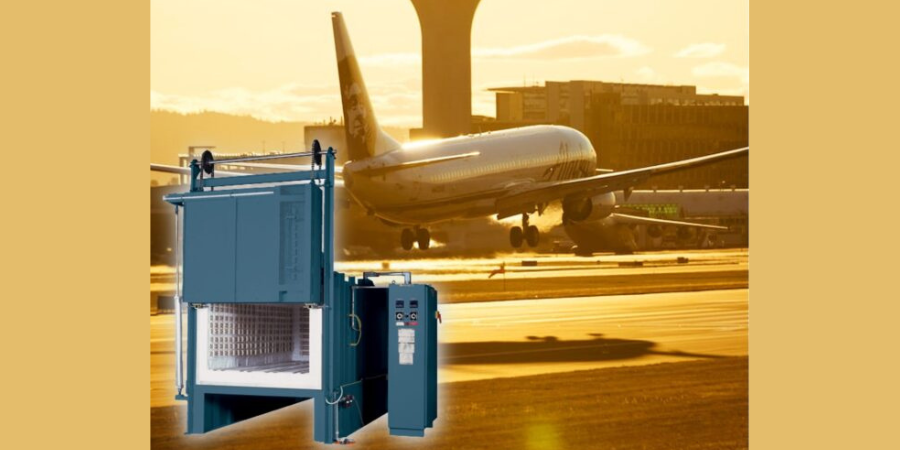
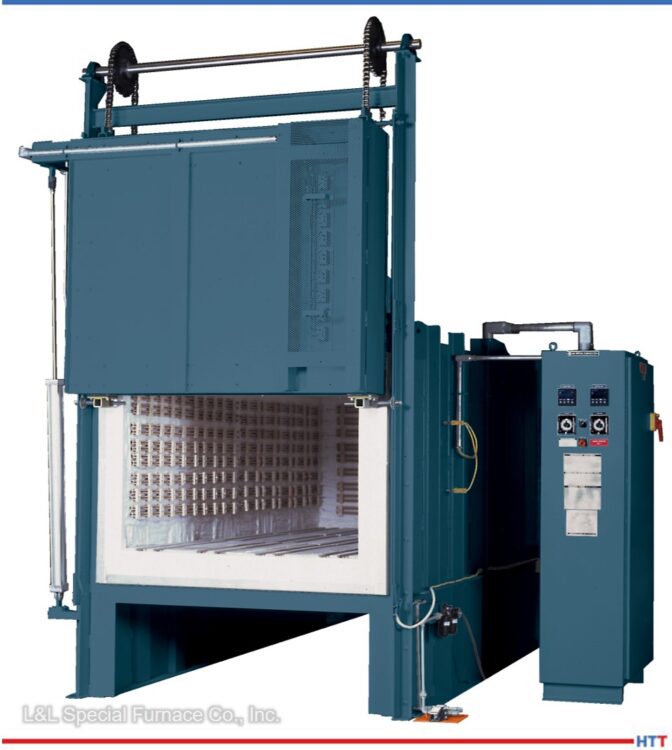
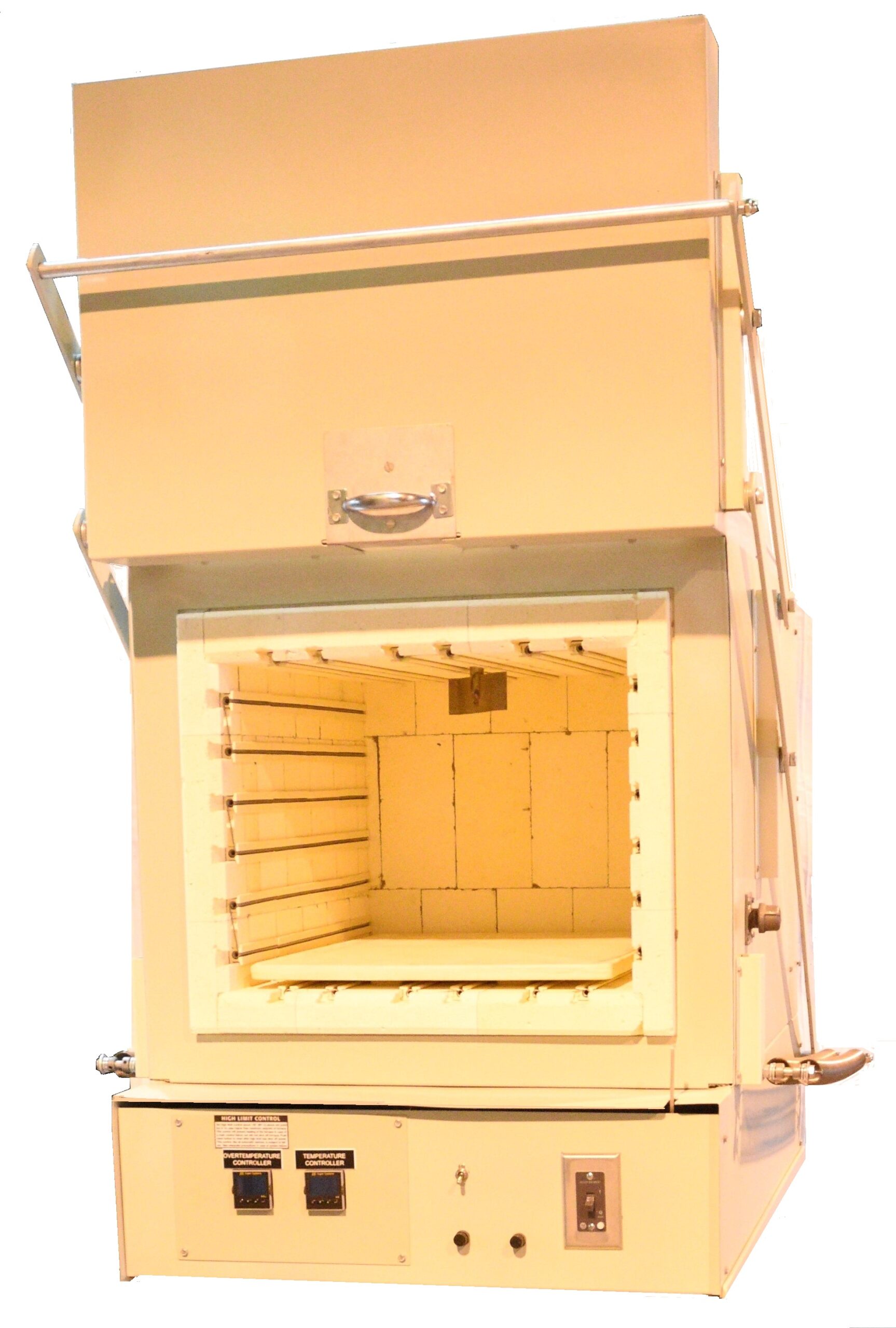
A front-loading box furnace delivered to a northeastern U.S. supplier of titanium castings will expand the manufacturer’s aerospace and gas turbine castings heat treat abilities. The company supplies to the aerospace and power generation fields and deals with exotic metals that are ideal for superior products using the lost wax process for castings, such as nickel and cobalt-based alloys.
L&L Special Furnace Co., Inc. Box Furnace Source: L&L Special Furnace Co., Inc.
The L&L Special Furnace Co., Inc. model FB435 has an effective work area of 48” wide by 32” tall by 60” deep and has certifiable temperature uniformity of ±10°F from 500 to 1,850°F. Additionally, the elements are very evenly spaced around the chamber and the furnace is lined with ceramic fiber on the sides and top.
The furnace case is sealed internally for atmosphere control, and an inert blanketing gas such as nitrogen is used to displace oxygen present within the work chamber. This provides a surface finish in which oxidization is less likely to form on the part. The atmosphere is delivered automatically through a flow panel by the furnace control.
Find heat treating products and services when you search on Heat Treat Buyers Guide.com
Trevor Jones President Solar Manufacturing, Inc. Source: Solar Manufacturing, Inc.
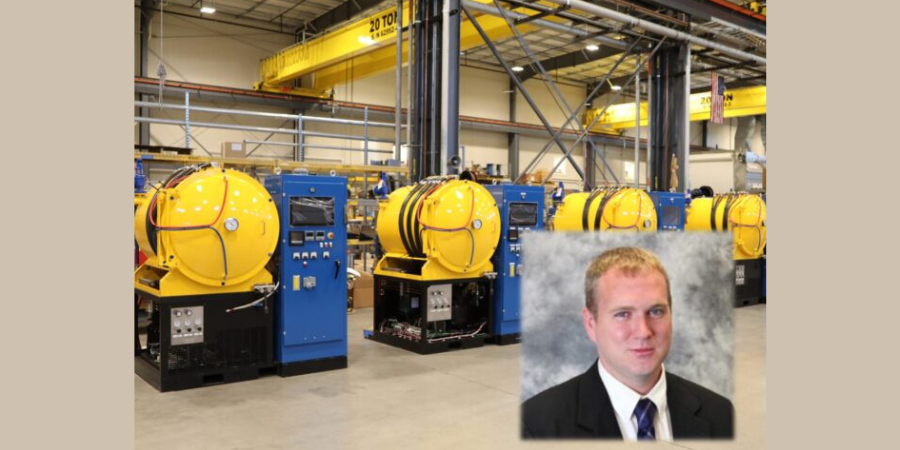
A vacuum furnace manufacturer in North America has acquired purchase orders for ten vacuum furnaces this 3rd quarter. The furnaces will be shipped to companies in the following market sectors: aerospace, commercial heat treating, and additive manufacturing.
Solar Manufacturing Inc. is based out of Pennsylvania, and the new systems will be sent to locations throughout North America. The various types of new furnace orders ranged in size from the compact Mentor® and Mentor® Pro series to a large production furnace with a work zone of up to 72” in length.
“[S]trong quotation activity levels seem to indicate customers are optimistic to expand after the pandemic ramifications continue to ease," commented Trevor Jones, President of Solar Manufacturing.
Find heat treating products and services when you search on Heat Treat Buyers Guide.com
Two atmosphere controlled retort box furnaces will be used for de-bindering ceramic matrix composite parts (CMC) as well as powder metals processing (PM) and hot isostatic pressing (HIP).
The main function of this L&L Special Furnace Co., Inc. furnace is to remove all organics and other materials used in the product prior to placing in a high fire vacuum chamber in a process called de-bindering: Parts are heated to 1220°F in a retort chamber that is pressurized with nitrogen. The by-products of the outgassing part are directed by pressure and flow out the rear of the furnace. The parts are then heated in a vacuum furnace to temperatures in excess of 2300°F. The result is a component that is stronger and lighter than titanium.
Aerospace and military have always been the key areas that CMC and additive technologies are applied. The CMC development is a key part of the subsonic ordnance project along with multitudes of other military applications. This technology allows for lighter and more durable aircraft, munitions, and body armor versus using some alloy and ceramic substitutes. Automotive has also always had a strong presence in the additive manufacturing industry as well.
It is new application areas were CMC technology is starting to shine. CMC technology is beginning to establish a presence in agricultural applications such as water desalinization, power and battery technology in providing lighter fuel cells. This technology will be applied to battery operated transportation vehicles, not only improving transportation capabilities but also lowering greenhouse emissions.
An aerospace fastener manufacturer, located in Pennsylvania, received three multipurpose bench mounted box furnaces used to test high-temperature aerospace fasteners.
The new model GS2026, from L&L Special Furnace Co., Inc. includes a spring assist vertical lift door that allows for effortless loading and unloading even at high temperatures. The control is an industrial control system that includes a Eurotherm temperature control, overtemperature protection and a recirculation fan for uniformity.
L&L Special Furnace Model GS2026 bench mounted box furnace (Photo source: L&L Special Furnace Co. Inc.)
The GS2026 has internal dimensions of 18” wide by 12” high by 24” deep. It has an operating voltage of 208, 220, 240 volts single phase, 60 or 50 hertz. The furnace is constructed from 3” lightweight IFB firebrick, backed up with 2” of board insulation. The elements are supported in hard ceramic element holders. These provide long element life and are easily replaced.
These additions now bring a total of five GS series furnaces at its facility.
Welcome to another episode of Heat Treat Radio, a periodic podcast where Heat Treat Radio host, Doug Glenn, discusses cutting-edge topics with industry-leading personalities. Below, you can either listen to the podcast by clicking on the audio play button, or you can read an edited version of the transcript. To see a complete list of other Heat Treat Radio episodes, click here.
Audio: Heat Treat Modeling With Justin Sims
In this conversation, Heat Treat Radio host, Doug Glenn, interviews Justin Sims of DANTE Solutions about heat treat modeling. As the heat treat world moves farther way from mysterious black box processes, find out how the latest advances in heat treat simulation software can help your company model specific processes and materials in advance, leading to less guesswork and more profit.
Click the play button below to listen.
Transcript: Heat Treat Modeling With Justin Sims
The following transcript has been edited for your reading enjoyment.
We're going to talk to Justin Sims, lead engineer at DANTE Solutions, Inc., about heat treat modeling. It's a pretty interesting topic. With all the advances and sensors and computing power, the heat treat world is moving further and further away from the mysterious black box processes of yesteryear and is allowing companies to model specific processes and specific materials in advance so that there is less guesswork and more profit. DANTE provides the means by which companies can accurately predict what is going to happen to their part during the heat treat process.
DG: Justin is not only the lead engineer at DANTE Solutions, he is also the author of an article that just appeared in the March 2020 issue of Heat Treat Today and the title of the article wasProcess Innovation To Reduce Distortion During Gas Quenching. It was a pretty interesting article, something worth reading if you haven't already. It has to do with DANTE controlled gas quench.
JS: I got my bachelors in mechanical engineering degree from Cleveland State. I graduated back in 2015. I actually started interning at DANTE in 2014 and went full-time in 2016. I've been the lead/principal engineer at DANTE with mainly responsibilities of managing projects, training our DANTE users, and offering support to our DANTE users. I helped develop our patent-pending DANTE controlled gas quenching process, which you had just mentioned, and then also a little bit of IT, marketing, sales, and shipping. Being a smaller company, we can kind of do it all.
Fig. 1: Bevel gear axial distortion comparison for an oil quench, high pressure gas quench, and a DANTE Controlled Gas Quench
DG: Tell us briefly about DANTE.
JS: DANTE Solutions is an engineering consulting and software company. We offer consulting services as well as licensing our software. We mainly focus on the aerospace industry, the auto industry quite a bit as well, and we've been starting to get into the mining and energy sectors also. As I said, we are a smaller company. There are six of us right now. Two to three guys mainly focus on the software side, and the rest of us focus on more of the training, the support, and the consulting side of the business.
DG: DANTE is located near Cleveland, OH, and Lynn Ferguson, who has been in the heat treat industry for many, many years, was one of the founders. Let's talk about the genesis of the software. Would you say the software is the core product that DANTE Solutions offers?
JS: Yes, it is. We mainly stay in consulting to stay current and to give those users who don't have the capability to run our software (either they don't have the hardware or they don't have the analysts to be able to do such a thing), so we still offer our consulting services for them. But mainly, software is our main line of business. DANTE was actually formed back in 1982 as Deformation Control Technology, Inc., and we changed our name in 2014 to actually reflect more of the software side, so that's when we changed to DANTE Solutions, Inc.
The project itself that DANTE came out of actually started in 1994 and 1995. It was a collaboration between Ford, GM, Eaton Corp. and then four national labs--I believe they were Los Alamos, Sandia, Oak Ridge, and Lawrence Livermore--and then us as Deformation Control Technology. The whole project came out because those large automakers were claiming millions of dollars of lost scrap from distortion. It was starting to become a major issue and they wanted a way to be able to model the process and be able to optimize the process a little bit better. After that project ended, DANTE somehow ended up with the software, which has worked out well, as we've been able to commercialize it and we've been updating all the material models and the material database for the last 20 years. It's actually come quite a long way.
DG: How did you segue over from auto industry into aerospace?
JS: It just happens that the aerospace components cost a whole lot more than the auto industry components. It was a natural fit once they realized that this software was viable and could do what they needed it to do. And aerospace seems to be more receptive to modeling because their parts are so expensive.
DG: Let's try to put a little flesh on the bones here. For a manufacturer who has their own in-house heat treat for aerospace, automotive, energy or whatever, what makes this software attractive? What makes it viable? Why would someone want it, and why and how do they use it?
JS: Let's start with viability. The first thing is that it is easy to use. DANTE is a set of material routines that link with Abaqus or Ansys finite element solvers. These are solvers that engineers and analysts in the industry already know pretty well, so there is not a lot of learning of new software. DANTE is just a material model, so all you're really responsible for is the material name and what microstructural phases you're starting with. Then we have the ability to modify a few of our control parameters, activating different models; we've introduced stress relaxation, carbon separation, carbide dissolution, and all these different models that you can activate. But the biggest thing that trips people up . . . [is] understanding your process. We like to work with people a lot on trying to help them understand what type of thermal behavior their processes are actually imparting on components. We've done a lot of work with setting up their essentially quench probes and be able to turn around and be able to take that back to heat transfer coefficients that get put into the model. As far as DANTE is concerned, it is fairly easy to use.
We've also developed what they're calling ACT (Ansys Customization Toolkit). It is essentially a series of buttons where you would click on these buttons, fill out information, and then essentially run your models. Abaqus, for the new version of DANTE, we've also developed a plug-in that essentially does the same thing. So DANTE has become very point-and-click. In this world, I think people like that simplicity.
Fig. 2: Axial distortion of a press quenched bevel gear
The next big one would be the accuracy that everybody is concerned about. Our accuracy is due to the models that we use and the algorithms that we employ. There are two types of accuracy. I've touched on the boundary condition accuracy, and that is how your process behaves thermally. That accuracy can be tough to get. It's very doable and we've helped people achieve some really amazing accuracy. The relationship I like to use here is people know static loading models and a lot of engineers have run static loading models. The loads that you put on these static models are going to determine what deflections you get. If your load is not correct, then your deflection will not be correct. In heat treat modeling, the thermal boundary condition is your load. The more accurate your heat transfer coefficient can be, the more accurate your results are. But, with that being said, you can still gain a lot of valuable information from being close enough. We'll talk a little bit about that with the uses and whatnot.
The first important model type that we use is the mechanical model. We use a multiphase internal state variable model. A conventional plasticity model considers stress as a function of strain only, where the internal state variable model actually accounts for the history of deformation by relating the stress to dislocation density. It actually accounts for the history of deformation, which is very important as the steel goes through all the stress reversals that it does going through the process. Our mechanical model defines each phase, so austinite, pearlite, ferrite, bainites martensite, tempered martensite, all of them, as a function of carbon, temperature, strain and strain rate. It also accounts for the trip phenomenon.
For our phase transformation model, we like to use analytical models instead of TTT CCT diagrams, and we do this because you don't get any transformation strain information out of the diagram. So you have no idea how much it is deforming. In order to figure that out, we like to use dilatometry tests to fit to our analytical models. We also account for carbide growth and dissolution during carburizing, which is becoming a major point of interest due to the high alloy content of some of these steels that they're now trying to carburize.
DG: Let's talk a bit more about where manufacturers, who have their own in-house heat treat, might use DANTE's software tool.
JS: One of the big things we like to use it for is what we call sensitivity analysis. This would be, "what happens if my normal process has a little bit of variation?" Or, "what happens if my process parameters change a little bit?" We've also worked into the model now normal material variation. So if your alloy content is a little on the high side, how would the material behave? If it's a little on the low side, how will it behave? [This] is a big deal. One example would be, "I just designed a new part and I want to make sure that it behaves given the range that I know my process can vary." All processes will vary. This is no way to make the process exactly the same every time. Also, in the sensitivity, you can ask the question, “What process variable is a distortion or stress most sensitive to?" By finding out what process variables cause the most sensitivity, then those are the process variables you really need to pay attention to during processing, then the other ones you can just make sure they're in range and leave them alone.
Development and design are two of the big ones that we're trying to get out there that this software can be used for. Everybody knows that it can be used for troubleshooting. Once something goes wrong, yes, sure the software is great and we help figure out a problem; but why not find the problem before it ever even happens? We've been trying to get people to use it for development of new carburizing and nitriding schedules as well as new recipe and design, and even novel processes. You had mentioned our DANTE controlled gas quench. That actually was conceived through all the modeling that we do and watching the response of the material and saying, “Wait a second. If we can control the martensite transformation rate, we can really control the distortion, so let's see if we can do this.” Things like that can come out of the software. Design as well, of optimizing shapes for quench. You can even do quench to fit, which is, "I know my part distorts this much, so let me machine it distorted and then it will fall into shape." Optimizing processes. All of that can be done through design development, and you can find these problems before they ever happen.
Another really big one that I like, and Lynn, our owner, is really keen on this one, is the understanding of your process. When you start to set up these models, you have to ask a lot of questions about your process. What is the HTC of my process, which relates back to agitation in the tanks, part racking, flow directions? You really need to know times and temperatures of every step in your process. So not just the heat to quench, but what about all those transfers in between? All of that needs to be done. So you end up asking a lot of questions like that.
The other one that I always like to say is that the heat treat software removes the black box. In the past, you know what goes in and you know what comes out, but what happens in the middle is kind of a mystery. The software helps you figure out what exactly goes on during your process. It can be very eye-opening.
Fig. 3: Minimum Principal stress of a carburized and oil quenched spur gear
DG: I've talked with James Jan and Andrew Martin over at AVL, and we talked about a variety of ways they use some of their software, and they mentioned that they work with you guys as well, and they were talking about not even just like a quench agitation, flow direction, and things of that sort, but part orientation as it goes into a quench. I assume that would be something also that you guys would be able to help analyze, right? Which way to even put the part into the quench?
JS: Sure, sure. And we've done that. The one that comes to mind is a long landing gear. This landing gear was about 3 meters in length, and we looked at even slight angles going into the quench tank can have serious consequences on the distortion. That is definitely something that we've looked at in the past.
DG: Just that orientation would help, but maybe eliminate vapor stage, or whatever, I assume? Or pockets?
JS: Right. And even beyond that, it sets up thermal gradients in different locations of the part. So now instead of cooling one section faster, you're cooling it a little slower and that kind of thing. That also relates back to actual vapor stages and how bubbles get trapped. But that goes back to defining boundary conditions, which is where software like AVL's FIRE can really be helpful in understanding flow patterns. There is a beneficial relationship there.
DG: There are a host of different materials that people are using. How broad is the database, as far as the different types of materials, that you can analyze and model?
JS: That is a good question. We have a lot of low alloy, medium alloy, and carburizing grades of steel, the 1000 series, the 8600 series, 9300 series, those types of materials. We've also worked with some of the high alloy aerospace grades like C64 and the Pyrowear 53 and that sort of thing. But right now, it's all steel. There is a lot of talk about being able to do aluminum. We get that question a lot.
DG: I was wondering about that specifically- aluminum and/or of course, when we talk aerospace, we're talking titanium. So titanium is not on the table at the moment?
JS: It is, but it isn't. The interesting thing is that there is a phenomena precipitation hardening that goes on in aluminum and titanium. But it also goes on in these high alloy steels. It is a secondary hardening mechanism. We've been working on that and we feel that once we can handle secondary hardening in steel, then the jump to aluminum and titanium should be pretty straightforward.
DG: So to recap, for those of us who are not as well-versed in the product as you are, basically you've got a simulation software that takes into account the material that is being used, also the thermal process (the recipe), which would include both a controlled heat up and potentially a controlled quench. Is that a reasonable way to describe it in a very broad way?
JS: Yes. And also, even the steps before that, like carburizing. If the part is carburized, you would carburize it first. Or nitriding; we've just introduced those models. You can literally do the entire process. And it's not just quenching either. We've done martempering, austempering, normalizing, all of these things. Most all normal thermal processing, DANTE can handle.
DG: The last question I want to ask is, Who is the ideal person/company that would really find the product/service that you're providing useful? I know you mentioned aerospace and automotive, but can we be more specific than that? Where are you finding the most success?
Fig. 4: Displacement versus temperature curves showing the shift in martensite start temperature for 3 carbon levels
JS: That's a tough question. Generally, everybody that has used our software has found real benefit in it. We've tried to get testimonials from a lot of folks, but this can be difficult because of their companies. But from Cummins, we've gotten good responses and also from GM we've gotten good responses. One of them has used it to actually introduce new material and replace legacy material that is now saving them quite a bit of money. GM has used it to look at process design and optimization. But I would say mainly the people that are going to benefit the most are the folks that have an analyst to be able to do the simulation almost on a daily basis. It's one of those things where the more you do, the more you see and the more you understand what is happening. But really anybody that does heat treatment can benefit from understanding what's going on in their process.
DG: You mentioned Cummins, and I'm looking at your website, and I just want to read a paragraph:
DANTE heat treat simulation software has been a great boon to Cummins. Since we've started using their software, we have gone through several projects that have increased our understanding of heat treatment and some of which have saved us production costs. One example was enabling us to gain the leverage needed to make a material and process change on a legacy product that is now saving us at least 25% on material costs. The team at DANTE Solutions has always been very accommodating and is very quick to give assistance and feedback whenever troubles arise, even when the troubles are caused by other parts of the simulation and not DANTE itself. I look forward to working with DANTE team in the coming years as we expand our list of engineers who use this software. -- Brian W. at Cummins
So that leads me to one other question. When a person interacts with you, are they buying software as a service? Is it cloud-based or is it something that they purchase a license for one computer, one user? How does it work?
JS: There are a couple of different ways. They can lease it annually or they can essentially buy the software and lease a license annually. The software can go either on their computer or it can go on a server at their company. We also have options for corporations where you can essentially get software at different locations. We have a lot of options and we can work with customers if they [have] unique needs. That's one of the benefits of being a smaller company, we're pretty flexible like that.
DG: DANTE's mission statement from their website has a nice ring to it: “DANTE Solutions is determined to promote the use of simulation in the heat treat industry. From design to troubleshooting, DANTE Solutions believes everyone can benefit from a little simulation in their life.”
If you'd like to get in touch with Justin Sims at DANTE, please email me, Doug Glenn, directly at doug@heattreattoday.com and I'll put you in touch with Justin.
Doug Glenn, Heat Treat Today publisher and Heat Treat Radio host.
To find other Heat Treat Radio episodes, go to www.heattreattoday.com/radio and look in the list of Heat Treat Radio episodes listed.
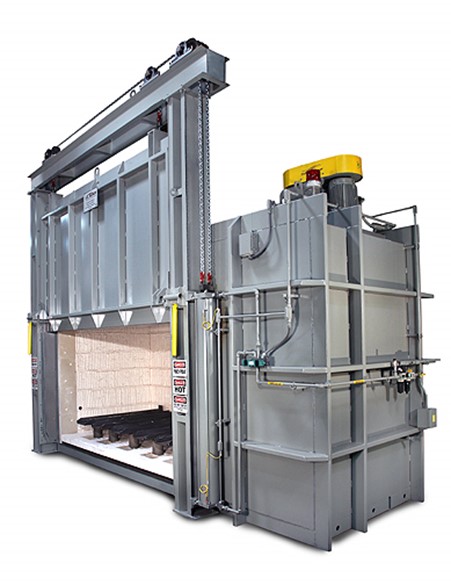
A commercial heat treating company located in the heart of the aerospace industry on the West Coast of the United States recently commissioned a custom built batch tempering furnace. With a working load size of 168” wide, 48” deep, and 48” tall, coupled with a max load weight of 10,000 pounds, the furnace from Gasbarre Thermal Processing Systems can accommodate a number of differently sized parts within its market.
The gas fired air furnace passes survey at +/- 10℉ over a temperature range of 850℉ to 1350℉ per AMS2750E. At the customer’s request, the electrical controls are UL approved and include the latest in Eurotherm brand temperature controlling instrumentation.