Temperature Uniformity Surveying for Vacuum Furnaces

BOTW-50w Source:  Solar Atmosphere’s Vacuum Reference Series Number 2

A Temperature Uniformity Survey ( TUS ) for a vacuum furnace to satisfy AMS 2750D must be performed using established procedures and methods that fully meet the requirements of the specification and allows for consistent and more accurate results of actual furnace capabilities.

Read More: Optimizing Procedures for Temperature Uniformity Surveying of Vacuum Furnaces

Temperature Uniformity Surveying for Vacuum Furnaces Read More »

Solar Manufacturing’s Vacuum Furnace Reference Series


BOTW-50w Source:  Solar Manufacturing’s Vacuum Furnace Reference Series

This series includes eight releases with the following titles.

Release 1:  Critical Melting Points and Reference Data for Vacuum Heat Treating

Release 2:  Optimizing Procedures for Temperature Uniformity Surveying of Vacuum Furnaces

Release 3:  Operating a Vacuum Furnace Under Humid Conditions

Release 4:  Understanding PID Temperature Control as Applied to Vacuum Furnace     Performance

Release 5:  Understanding Power Losses in Vacuum Furnaces

Release 6:  Important Considerations when Purchasing a Vacuum Furnace

Release 7:  Important Considerations when Selecting a Vacuum Furnace Water Cooling System

Release 9:  Understanding Vacuum and Vacuum Measurement

Read More:  Solar Manufacturing’s Resources for Vacuum Heat Treating Releases 1 – 9

Solar Manufacturing’s Vacuum Furnace Reference Series Read More »

Element Launches World-Leading Material Testing, PQT Facility

Following significant capex investment, Element Materials Technology has launched its newly expanded and upgraded Cincinnati, Ohio, facility, as one of the largest independent materials testing and product qualification testing (PQT) service facilities in the U.S. The former-Accutek location has expanded to 62,000ft2 and now provides specialist testing to both the aerospace and medical device sectors and houses three of Element’s Global Centers of Technical Excellence delivering critical testing services to these sectors.

Charles Noall, president and CEO of Element, comments: “Our investment at Element Cincinnati marks a significant step towards securing our position as the strategic partner of choice for our clients in the aerospace and medical device industries. We are committed to developing Centers of Technical Excellence across our global platform, allowing us to deliver market-leading technical expertise where needed by our partners, from aerospace primes to leading medical device manufacturers.”

Element Cincinnati is a world-leading ceramic matrix composite (CMC) Center of Technical Excellence, that is equipped with market-leading environmental controls, high temperature facilities (up to 2,400°F) and doubled capacity in CMC testing, to support its major clients in the development of the next generation of aero engines. The laboratory also houses the Element Group’s Center of Technical Excellence in low-cycle fatigue (LCF) testing, which tests aerospace forgings for airframers and their supply chain partners. Finally, the laboratory also contains the group’s medical device testing center of Technical Excellence that offers a comprehensive range of 21 test methods including accelerated aging testing capabilities and mechanical testing for physiological studies for new spine, knee and hip wear simulator evaluations.

Rick Sluiters, Element’s executive vice president, aerospace, comments: “Our investment at Element Cincinnati allows us to act as a strategic partner to primes and OEMs working at the forefront of CMCs for the aerospace sector. The CMC Center of Technical Excellence provides testing services to respond to the industry’s most demanding challenges through the laboratory’s market-leading environmental controls. The increase in quality of environmental controls also gives us a very tight tolerance, allowing for highly accurate measurement of straining of CMCs.

“The investment also enhances the location’s medical device capabilities, with the mechanical, biological and related testing services allowing us to act as a full-service testing provider for clients. Element Cincinnati is a leading center for Medical Device testing and its newly expanded scope of accreditation underlines our commitment to acting in strategic partnership with key clients.”

Element Cincinnati is Nadcap and ISO accredited, as well as having an impressive range of Original Equipment Manufacturer (OEM) approvals, including GE Aviation, Snecma, MTU, Honeywell, Kawasaki Heavy Industries, Rolls-Royce (Germany, U.K., and U.S.), Pratt & Whitney, and Bell Helicopter.

Element Launches World-Leading Material Testing, PQT Facility Read More »

In-House Heat Treatment Process Works Too Well

BOTW-75w SourceToday’s Motor Vehicles

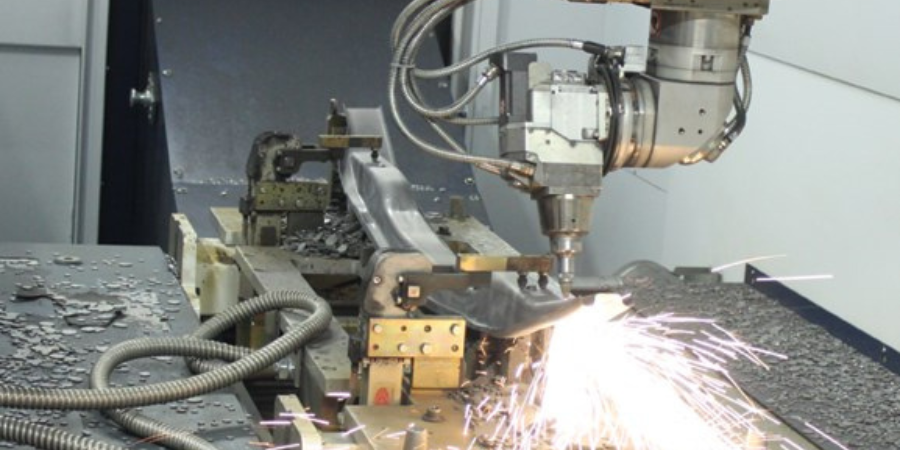
“We developed our own hot-stamping process to be cost competitive,” says Elie Mordovanaki, general manager of operations and engineering for Merit Technologies Worldwide, GNS America’s hot-stamping division. “However, mechanical trimming is not optimal after the heat treating process takes place.”

Read More:  Laser Cutting Supports Hot Stamping

In-House Heat Treatment Process Works Too Well Read More »

Bodycote Breaks Ground on Site for New Solution Treatment Capability at Westminster, California

Bodycote, the world’s leading provider of heat treating services, held a ground breaking ceremony for a new aluminum solution treatment capability at its Westminster, California location in February 2016.

With this new capability, Bodycote will be able to process aluminum alloys up to 21 feet in length at 1100ºF, able to use multiple types of quench media. This new furnace, scheduled to be in service by the end of third quarter this year, will allow the treatment of large aerospace and commercial forgings, up to 20,000 lbs.
Bodycote continues to invest in regional aerospace manufacturing markets across the USA in support of aerospace prime manufacturers and their supply chains.

Bodycote Breaks Ground on Site for New Solution Treatment Capability at Westminster, California Read More »

Ipsen Ships Seven Vacuum Furnaces

Ipsen recently shipped seven furnaces around the globe, which will be used to support the Aerospace, Automotive and Power industries. This selection of shipments included both custom-built furnaces and standard TITAN® furnaces that were sent to customers in Alabama, California, Missouri and Texas, as well as China and Japan.

The equipment shipped ranged from a vertical, bottom-loading MetalMaster® with an 84″ x 84″ (2,134 mm x 2,134 mm) molybdenum hot zone traveling to California to a TITAN® H2 vacuum furnace that was sent to Japan. Other furnaces shipped included horizontal MetalMaster furnaces, H2- and H4-sized furnaces from Ipsen’s TITAN line and a Global Vertical furnace from Ipsen’s TurboTreater® line. Overall, these shipments represent Ipsen’s ability to provide sophisticated and intuitive heat-treating solutions through an all-inclusive product line that supports various applications and processes.

Ipsen Ships Seven Vacuum Furnaces Read More »

Hitachi Metals Automotive Components to Be Division of Waupaca Foundry

Waupaca Foundry Inc., Waupaca, Wisconsin, announced it will merge with Hitachi Metals Automotive Components USA LLC (HMAC). The merger is part of a larger reorganization within Hitachi Metals Foundry America designed to position the integrated organization for growth and meet customer demand.

According to a news release, Waupaca Foundry will assume the assets and liabilities of HMAC. Both companies are currently subsidiaries of Hitachi Metals Foundry America (HMFA). After the merger, HMAC will become a division of Waupaca Foundry, but will continue to operate under the HMAC name.

Subject to customary conditions, the merger is expected to be complete on April 1.

Daily operations at Waupaca will not be impacted, and the merger is part of the firms’ strategic alignment.

“The merger with HMAC allows us to further integrate castings and value added services for our customers in diverse markets,” said Gary Gigante, CEO, Waupaca Foundry. “We are committed to being the world’s leading casting solutions provider, and this is a critical step in achieving that goal.”

In 2014, Hitachi Metals Ltd. purchased Waupaca Foundry from KPS Capital Partners LP, a New York-based private equity firm.

Waupaca Foundry produces gray iron, ductile iron and austempered ductile iron castings and employs more than 3,900 people at six manufacturing facilities, including three in Waupaca and others in Marinette, Wisconsin; Tell City, Indiana; and Etowah, Tennessee.

HMAC produces cast, machined and assembled ductile iron suspension and exhaust components for global automotive OEMs. It currently operates a machine and assembly plant in Effingham, Illinois, as well as a ductile iron casting facility in Lawrenceville, Pennsylvania.

The company employs 485 people across all locations.

“This reorganization further unites Hitachi Metals’ product design engineering expertise and materials development with Waupaca Foundry’s manufacturing excellence,” said Eddie Nakano, president and CEO, HMFA. “The merger will unite an experienced leadership team that is focused on delivering the most innovative products and technology to a growing base of global customers.”

HMAC CEO Mike Nikolai said the merger is a response to increased customer demand.

“Centralizing machine and assembly operations allows us to be more flexible in meeting the evolving demands of our customers,” Nikolai said. “We’ve already increased overall operational capacity and are positioning our organizations for long-term, sustainable growth.”

Hitachi Metals Automotive Components to Be Division of Waupaca Foundry Read More »

Alcoa Awarded up to $50 Million Contract from U.S. Army to Advance Combat Vehicles

Lightweight metals leader Alcoa (NYSE:AA) has been awarded a five-year contract from the U.S. Army worth up to $50 million for R&D projects focused on developing innovative, lightweighting solutions for ground combat vehicles. The U.S. Army Tank Automotive Research, Development and Engineering Center (TARDEC) awarded Alcoa Defense a “Ground Vehicle Light-Weighting” contract to support efforts to accelerate technology research and development and provide engineering solutions for Department of Defense ground vehicles and intelligent ground systems.

“This agreement with TARDEC builds on Alcoa Defense’s decades-long partnership with the U.S. Army to advance military ground vehicles,” said Eric Roegner, President of Alcoa Defense. “Alcoa’s lightweight solutions have improved troop protection while reducing vehicle weight and assembly time. We look forward to building on our successful track record to help develop the next generation combat vehicle.”

Alcoa’s first “work directive,” or project funded under the contract, is an initiative to advance Alcoa-developed aluminum weld wire alloys. These alloys have already been proven to increase the strength of welded joints—typically the weakest point on a vehicle—as well as reduce corrosion of those welded joints on combat vehicles. Under potential future work directives, Alcoa will provide material research, development, engineering, testing, and evaluation efforts related to ground vehicle lightweighting. These research and development efforts will address various technologies associated with lightweighting such as aluminum forming technology, fastening and joining, modeling and simulation, armor development, material development, material fabrication, energy conservation, and coating and corrosion technology.

A Strong Track Record

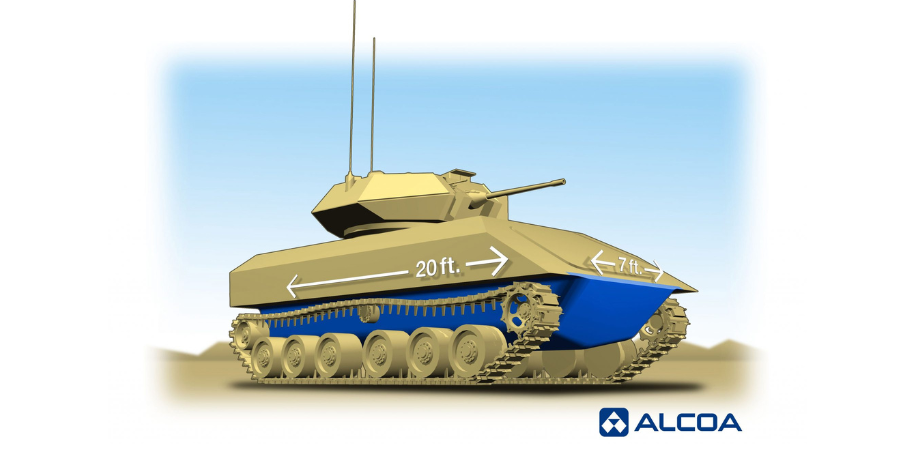
Alcoa has built a strong track record of partnering with the U.S. Army to develop solutions that advance the performance of ground combat vehicles. In 2013, Alcoa announced a joint Alcoa-U.S. Army Research Laboratory (ARL) initiative to manufacture the world’s biggest single-piece forged aluminum hull for combat vehicles—the largest closed die forging ever made. This game-changing forging replaces the lower hull of a combat vehicle, significantly improving survivability over traditional welded hulls. In Army testing, the monohull has performed exceptionally well in mitigating the effects of blast events, such as those caused by Improvised Explosive Devices.

In 2005, the U.S. Army Tank-Automotive and Armaments Command (TACOM) awarded Alcoa a research, development and engineering contract to develop aluminum structures for ground combat and tactical vehicles under the Army Lightweight Structures Initiative. Alcoa delivered structural solutions that provided on average 30 to 50 percent weight savings over baseline designs.

About Alcoa

A global leader in lightweight metals technology, engineering and manufacturing, Alcoa innovates multi-material solutions that advance our world. Our technologies enhance transportation, from automotive and commercial transport to air and space travel, and improve industrial and consumer electronics products. We enable smart buildings, sustainable food and beverage packaging, high-performance defense vehicles across air, land and sea, deeper oil and gas drilling and more efficient power generation. We pioneered the aluminum industry over 125 years ago, and today, our more than 60,000 people in 30 countries deliver value-add products made of titanium, nickel and aluminum, and produce best-in-class bauxite, alumina and primary aluminum products. For more information, visit www.alcoa.com, follow @Alcoa on Twitter at www.twitter.com/Alcoa and follow us on Facebook at www.facebook.com/Alcoa.

Alcoa has been a partner and supplier to the military for decades, enabling high-performance defense vehicles across air, land and sea. It is part of the Company’s innovative value-add business. For more information on Alcoa Defense, please visit www.alcoa.com/defense.

About TARDEC

The U.S. Army Tank Automotive Research, Development and Engineering Center (TARDEC) develops, integrates and sustains the right technology solutions for all manned and unmanned Department of Defense ground vehicle systems and combat service support equipment to improve the effectiveness of our armed forces and provide superior capabilities for our future armed forces. Headquartered at the U.S. Army Detroit Arsenal in Warren, Mich., TARDEC is a major research, development and engineering center for the Army Materiel Command’s Research, Development and Engineering Command, and is an enterprise partner in the TACOM LCMC. For more information, please visit our website at http://tardec.army.mil, our Facebook page at www.facebook.com/TARDEC, or our Twitter page at www.army.mil/TARDEC

Disclaimer: Reference herein to any specific commercial company, product, process, or service by trade name, trademark, manufacturer, or otherwise, does not necessarily constitute or imply its endorsement, recommendation, or favoring by the United States Government or the Department of the Army (DoA). The opinions of the authors expressed herein do not necessarily state or reflect those of the United States Government or the DoA, and shall not be used for advertising or product endorsement purposes.

As the author(s) is(are) not a Government employee(s), this document was only reviewed for export controls, and improper Army association or emblem usage considerations. All other legal considerations are the responsibility of the author and his/her/their employer(s).


Alcoa Awarded up to $50 Million Contract from U.S. Army to Advance Combat Vehicles Read More »