Aluminum Extrusion Expansion in Pennsylvania Supports Auto Markets

A supplier of infinite aluminum recently announced it plans to invest in two new aluminum extrusion presses to support the growing automotive, architectural and transportation markets in North America.

Hydro plans to install a 4,500-ton 10” aluminum press line at its Cressona, Pennsylvania, location to serve the traditional automotive and distribution segments and also installing a 7,000-ton dual container 12”/14” press line in the West region to serve the electric vehicle, transportation, and commercial building and construction segments.

“We are very excited about Hydro’s continued investments in North America,” said Jack Pell, Vice President of Automotive Business Development for Hydro Extrusion North America. “This new equipment merges state-of-the-art billet heating and quench capabilities with larger billet diameters and enables us to produce larger extruded aluminum shapes with thinner walls from stronger alloys – the ‘holy grail’ for our automotive customers.”

Hydro expects these presses to be operational by 2020.

Aluminum Extrusion Expansion in Pennsylvania Supports Auto Markets Read More »

Steel Rail Producer Looks to Invest in Mill Expansion

A leading North American steel rail producer is looking to invest at least $200 million into the expansion of its footprint in Pueblo, Colorado.

Evraz Rocky Mountain Steel has three mills in Pueblo and is considering building another or replacing one of the existing mills in the Steel City. The Pueblo city council approved a $15 million incentive package for the company.

“It is hard to find anybody in Pueblo who has not had a family member work at the steel mill in the last 135 years. The investment the community looks to make in this project celebrates the incredible workforce at the steel mill who will continue to make Pueblo proud. We look forward to 135 more years,” said Jeff Shaw, President and CEO of Pueblo Economic Development Corp. “Since 1882, the year that the first rail came out of the Colorado Fuel and Iron Plant, Pueblo has been known as the Steel City. The steel industry and the CF&I steel mill, now EVRAZ, has literally been the backbone of the community. Not only does the mill produce steel that is used all over the world, it also provides thousands of direct and ancillary jobs that bolster the local economy and help keep Pueblo moving forward in a strong and thriving direction. ”

Evraz has until December 2019 to make a final decision.


Steel Rail Producer Looks to Invest in Mill Expansion Read More »

Smart Alloys Break 400°C Barrier, Improve Aero Fuel Efficiency, Reduce Noise

[sc name=”aerospacepopup”]


Source: Texas A&M Today


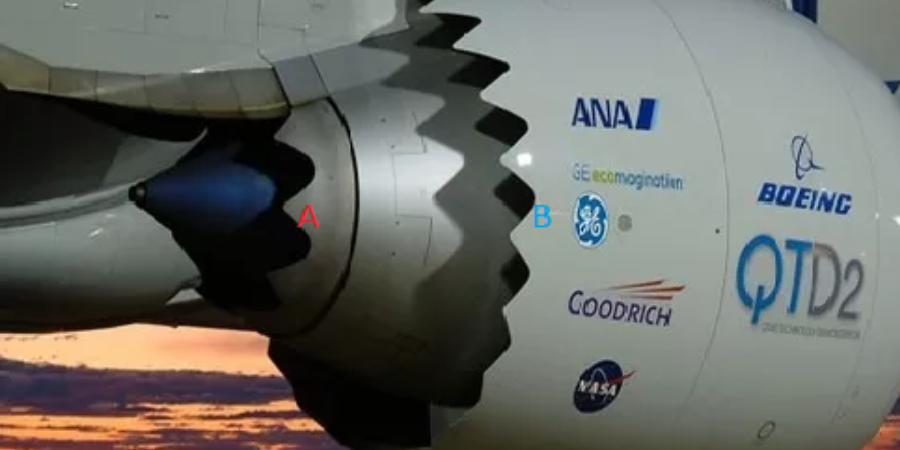
Researchers at a Texas university recently announced a discovery involving the increased capability of high-temperature shape memory alloys (HTSMAs) that will improve fuel efficiency in jet engines and reduce airplane noise, as well as applications in several other industries.

Dr. Ibrahim Karaman, Chevron Professor I and head of Texas A&M University’s Department of Materials Science and Engineering

The team of researchers, led by Dr. Ibrahim Karaman, Chevron Professor I and head of Texas A&M University’s Department of Materials Science and Engineering, and including Demircan Canadinc, William Trehern, and Ji Ma of Texas A&M, and Fanping Sun and Zaffir Chaudhry, Technical Fellow of the United Technologies Research Center (UTRC), published their work in Scripta Materialia.

The accomplishment is critical because until now the use of HTSMAs has been limited to temperatures up to but not exceeding 400°C (752°F), but changing the elements that make up the HTSMAs allow for higher temperatures and therefore wider application.

“Karaman and his colleagues decided to try increasing the operating temperatures of HTSMAs by applying principles from another new class of materials, high-entropy alloys, which are composed of four or more elements mixed together in roughly equal amounts,” explained Texas A&M Today. “The team created materials composed of four or more elements known to form shape-memory alloys (nickel, titanium, hafnium, zirconium, and palladium), but purposefully omitted gold or platinum.”

When we mixed these elements in equal proportions we found that the resulting materials could work at temperatures well over 500 degrees C—one worked at 700 degrees C—without gold or platinum. That’s a discovery. It was also unexpected because the literature suggested otherwise. . . . What excites me is that we have just scratched the surface of something new that could not only open a completely new field of scientific research but also enable new technologies. ~ Dr. Ibrahim Karaman

Read more: “Smart Materials Could Open New Research Field”

Smart Alloys Break 400°C Barrier, Improve Aero Fuel Efficiency, Reduce Noise Read More »

9 of 11 Indices Up in IHEA Economic Report

According to IHEA’s monthly economic report to member companies, nine of the eleven indices are up and the only two that are not up are still quite strong. To get the weak indices out of the way, here they are: Purchasing Managers Index (which is still quite high), and the Transportation Activity Index (which also is quite high). Both showed slippage in September, but neither is a focus of worry.

PMI for September showed slight reductions, but is still strong overall.
Transportation Activity Index was slightly off for September, but still quite strong.

On the lead page of the report, the following summary paragraph appears:

The nine categories that ended up in positive territory include “new automobile/light truck sales” and this reflects the fact that consumers are still quite confident about their job security and have no issue with taking on debt to buy a new car or truck. The “new home sales” category is healthy, although it is important to note that there is a deepening division between the cities that are seeing growth between 20% and 40% and the those that are shrinking. It has all come down to which cities are generating jobs. The existing home market has not been quite as lively as the new home sector and it is much the larger of the two. The “steel consumption” category is still reflecting the desire on the part of steel consumers to hoard cheaper steel, but there has also been evidence of returning steel demand in everything from vehicles to pipelines to construction activity. The “metal prices” readings are all going up and that has been anticipated for some time. The only one that hasn’t is gold and that would suggest that fewer people are seeking shelter from inflation in this metal. The other industrial metals are all going up in response to increased demand.

The 12-page report goes on to offer in-depth analysis of all 11 indices and what impact each might have on the thermal processing industry. The full report is available for review from the Industrial Heating Equipment Association (www.ihea.org) and is an exclusive benefit of membership in the organization. If you’re interested in seeing a copy of the report, contact Anne Goyer, Executive Director of IHEA at Anne@GoyerMgt.com.

Ann Goyer, Executive Director of IHEA

9 of 11 Indices Up in IHEA Economic Report Read More »

Aero Provider Establishes Engine Services Facility in Malaysia

Y.B. Ignatius Darell Leiking, Minister of International Trade and Industry

A global provider of aerospace engines, components, and systems for commercial, military, business and general aviation aircraft recently announced an agreement to invest in tooling, testing, and skills capabilities to support MRO services of cutting-edge engine technology in Malaysia.

GE Aviation will invest $80 million in the engine services facility where the maintenance, repair, and overhaul of CFM International’s LEAP engine will take place. In addition, GE also announced the establishment of the Global IT Service Desk, located at its headquarters in Kuala Lumpur.

The LEAP engine, produced by a 50/50 joint venture between GE and Safran Aircraft Engines, represents a leap ahead in terms of aviation technology and material, and powers aircraft such as the Boeing 737 MAX, Airbus A320neo and Comac C919 single-aisle jets. The MRO work on LEAP will introduce the next chapter of engineering excellence for the Subang workshop, making it the first such facility outside the United States for GE.

“Malaysia is a globally attractive investment location, and GE is a great example of the kind of company that we’re glad to see driving those investments,” said Y.B. Ignatius Darell Leiking, Minister of International Trade and Industry, as he witnessed the signing of the Memorandum of Understanding. “With our exceptional workforce and GE’s world-classs technology and innovation, I’m confident this is a partnership which will continue to deliver outstanding results.”

GE Chairman and CEO John Flannery

“GE has a long history of partnership in Malaysia, and we want to see that relationship continue,” said GE Chairman and CEO John Flannery. “The GE Aviation’s engine service facility in Malaysia is one of our flagship facilities in the region and the renewed lease agreement is a testament to the great work delivered by the local talent. The establishment of the GE Global IT Service Desk in Kuala Lumpur further represents our belief in the hugely beneficial shared future that GE, Malaysia and ASEAN have ahead of us.”


Aero Provider Establishes Engine Services Facility in Malaysia Read More »

Heat Treat Tips: Atmosphere Control

During the day-to-day operation of heat treat departments, many habits are formed and procedures followed that sometimes are done simply because that’s the way they’ve always been done. One of the great benefits of having a community of heat treaters is to challenge those habits and look at new ways of doing things. Heat Treat Today‘s 101 Heat Treat Tips, tips and tricks that come from some of the industry’s foremost experts, were initially published in the FNA 2018 Special Print Edition, as a way to make the benefits of that community available to as many people as possible. This special edition is available in a digital format here.

Today, we begin an intermittent series of Technical Tuesday posts of the 101 tips by category, starting with Atmosphere Control


Atmosphere Control

Heat Treat Tip 5

Out of Control Carburizing? Try This 11-Step Test
When your carburizing atmosphere cannot be controlled, perform this test:

  1. Empty the furnace of all work.
  2. Heat to 1700°F (926°C).
  3. Allow endo gas to continue.
  4. Disable the CP setpoint control loop.
  5. Set generator DP to +35°F (1.7°C).
  6. Run a shim test.
  7. The CP should settle out near 0.4% CP.
  8. If CP settles out substantially lower and the CO2 and DP higher, there’s an oxidation leak, either air, water or CO2 from a leaking radiant tube.
  9. If the leak is small the CP loop will compensate, resulting in more enriching gas usage than normal.
  10. Sometimes but not always a leaking radiant tube can be found by isolating each tube.
  11. To try and find a leaking radiant tube, not only the gas must be shut off but combustion air as well.

Submitted by AFC-Holcroft

Heat Treat Tip 13

Finding the Cause for Bad Parts

So you just ran a batch and the parts are bad. Now what? According to Jim Oakes at Super Systems Inc., here is a good checklist to use to start isolating the problem. While not exhaustive, this list can at least take you through a progression of steps to help start identifying the culprit.

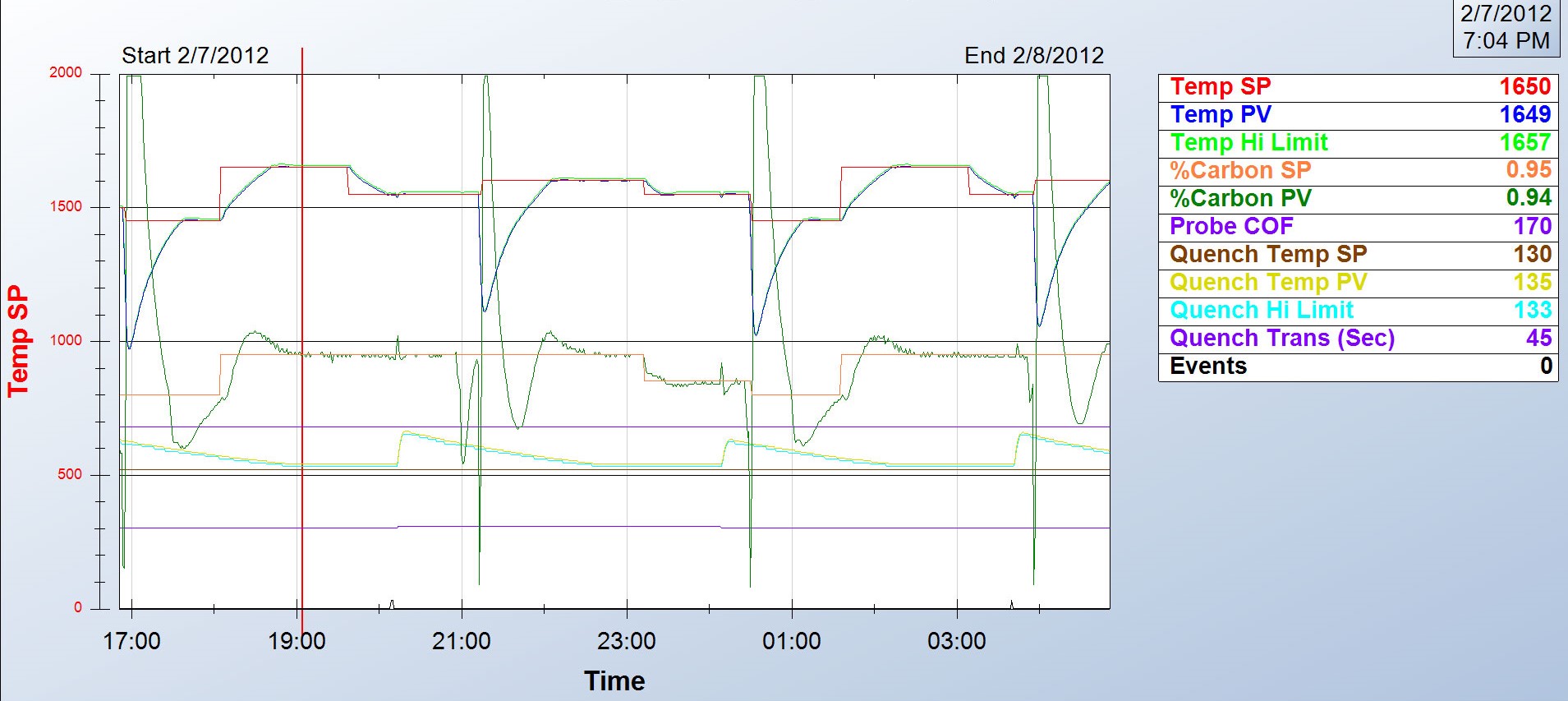
Step 1:  Review the process data for abnormalities. Did the setpoint for temperature and atmosphere get set properly? Does the process chart show good control of the temperature and atmosphere? Was the time at heat correct? Was the quench and temper processes run properly?

Step 2:  Check the generator to make sure it was pumping out the right atmosphere.

Step 3:  Check the furnace atmosphere. Even if the generator is working, there may be leaks in the furnace.

Step 4:  Check carbon controller to make sure it matches furnace atmosphere reading. Verify probe accuracy and adjust carbon controller.

Step 5:  Do probe troubleshooting. And if all else fails . . .

Step 6:  Replace the probe or call Super Systems for help.

Submitted by Super Systems Inc.

Heat Treat Tip 49

What to Do When Parts Are Light on Carbon

Many factors can contribute to why parts are not meeting the correct hardness readings. According to Super Systems Inc., here is a quick checklist of how to start narrowing down the culprit:

  1. Review process data for abnormalities: The first thing to do is make sure the parts were exposed to the right recipe. Check the recorders to make sure the temperature profile and atmosphere composition were correct. Make sure all fans and baffles were working correctly. Determine if any zones were out of scope and that quench times were acceptable. If any red flags appear, hunt down the culprit to see if it may have contributed to soft parts.
  2. Check the generator. Next, check the generator to make sure it is producing the gas composition desired for the process. If available, check the recorders to make sure the gas composition was on target. If not, check the generator inputs and then the internal workings of the generator.
  3. Check the furnace atmosphere. If the generator appears to be working correctly, the next step would be to check the furnace itself for atmosphere leaks. Depending on what type of furnace you have, common leak points will vary; for continuous furnaces, common leak points are a door, fan, T/C, or atmosphere inlet seals. Other sources of atmosphere contamination may be leaking water cooling lines in water-cooled jackets or water-cooled bearings. More than likely, if the generator is providing the correct atmosphere but parts are still soft, there is a leak into the furnace. This will often be accompanied by discolored parts.
  4. Check carbon controller to make sure it matches furnace atmosphere reading (verify probe accuracy and adjust carbon controller). This can be done using a number of different methods: dew point, shim stock, carbon bar, 3 gas analysis, coil (resistance), etc. Each of these methods provides a verification of the furnace atmosphere which can be compared to the reading on the carbon controller. If the atmosphere on the carbon controller is higher than the reading on the alternate atmosphere check, that would indicate the amount of carbon available to the parts is not as perceived. The COF/PF on the carbon controller should be modified to adjust the carbon controller reading to the appropriate carbon atmosphere. If the reading is way off, it may require the probe to be replaced.
  5. Check the carbon probe.
  6. Replace the probe – CALL SSI.

Submitted by Super Systems Inc.

Heat Treat Tip 62

Double Check Carbon Potential Control
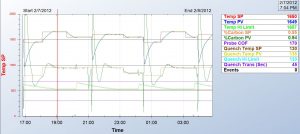
Configuring your atmosphere controller to ensure the correct carbon potential readings can sometimes be tricky. We suggest you double check your atmosphere control settings to make sure they are set up correctly. Before making a change to the carbon controller, make sure the atmosphere that the carbon probe and carbon controller are reading is matching up to an alternate method of atmosphere. This can be done using a number of different methods: dew point, shim stock, carbon bar, 3 gas analysis, coil (resistance), etc. Each of these methods provides a verification of the furnace atmosphere which can be compared to the reading on the carbon controller. The COF/PF on the carbon controller should be modified to adjust the carbon controller reading to the appropriate carbon atmosphere.

It is important to make sure that the alternate method of verifying atmosphere is done properly (sampling ports, time for atmosphere exposure, sample prep, etc).

The calculation of carbon in the atmosphere using a carbon/oxygen probe is based on the output millivolts — created based on the partial pressure of oxygen in the reference air versus partial pressure of oxygen in the furnace, the temperature of the furnace, and a calculation factor referred to as COF (CO Factor), PF (Process Factor), or Gas Factor.

The carbon controller can be modified so the COF/PF value can be changed to match up with the alternate reading. A furnace calculator on the SSI website or mobile app can help determine what these settings should be. It is important to note that you should not change these values to the point where you are masking another issue such as a bad probe or a furnace/generator issue.

Again, if the reading is way off (a setting of a COF below 130, for example), it may require the probe to be replaced.

Submitted by Super Systems Inc.

Heat Treat Tip 75

Carbon Probe Trouble Shooting

If you’re having atmosphere problems with a furnace that has been operating normally for some time, avoid the temptation to remove the carbon probe. There are several tests you can run on nearly all carbon probes while the probe is still in the furnace, at temperature, in a reducing atmosphere. Super Systems Inc. provides an 11-step diagnostic procedure in a white paper on their website, in a paper titled, “Carbon Sensor Troubleshooting” by Stephen Thompson.

Submitted by Super Systems Inc.


Heat Treat Tip 88

Slight Positive Pressures Are Best

Atmosphere furnace pressure should be only slightly above ambient. The range should be between 0.25 – 0.35 inches water column. Higher pressures in multiple zone pusher furnaces will cause carbon control issues. High pressures in batch furnaces will cause high swings when doors and elevators move.

Submitted by AFC-Holcroft

Heat Treat Tip 94

Confirm Composition of Endothermic Atmosphere
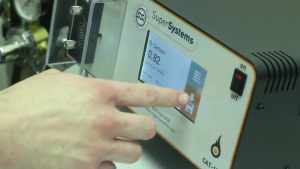
Wisdom dictates a trust-but-verify approach to your endothermic generator. Although your generator is supposed to crank out a consistent endo atmosphere, we suggest periodically verifying the integrity of that atmosphere with a dewpoint analyzer or a 3-gas analyzer. Generator control systems provide control of air gas ratio and possibly a trim system, used to maintain a dew point that could be rich (too much gas) or lean (too much air). The dew point range could typically be between 30°F and 50°F. Flowmeters are provided to maintain a base ratio (2.7 : 1) for the air/gas mixture supplied to a retort filled with nickel-coated catalyst. The gas is then passed through an air cooler (some older systems used water) to freeze the reaction so the gas can be transported through a header system to furnaces. The ratio at which the gas is generated offers a dew point that can be measured. The makeup of the endothermic gas provided by a generator is typically 40% hydrogen, 40% nitrogen, and 20% carbon monoxide. Maintaining these percentages will result in a carburizing atmosphere that is conducive to best carburizing practices.

Non-dispersive infrared analyzer (NDIR) systems are invaluable when trying to troubleshoot generator issues. The analyzer will typically measure CO, CO2, and CH4. As mentioned earlier, if we know that 20% CO is being generated, we can cross check the air/gas ratio and sticking flow meters, or determine that an adjustment of the air and/or gas ratio is required. The measurement for indication of sooted or nickel depleted catalyst can also be achieved by using an analyzer. If the indicated measurement of CH4 is higher than .5%, a burnout of the catalyst is required, using the manufacturer’s required procedures. If after a burnout the CH4 level is still high, the catalyst may need to be replaced altogether.

Submitted by Super Systems Inc.  


If you have any questions, feel free to contact the expert who submitted the Tip or contact Heat Treat Today directly. If you have a heat treat tip that you’d like to share, please send to the editor, and we’ll put it in the queue for our next Heat Treat Tips issue. 

Heat Treat Tips: Atmosphere Control Read More »

Steelmaker Commissions for Modernization of Annealing Line

A global steelmaker based in Sweden has turned to a French industrial engineering group to modernize the thermal part of its continuous annealing line at its Borlänge plant.

Fives will update the SSAB facility with the goal to increase the efficiency and capacity of the existing CAL in order to produce advanced high-strength steel (AHSS) with a view to meeting increasing demand from the automotive industry. Once complete, the line will have the capacity to produce 650 000 tons per year, up from the current production rate of 500 000 tons per year.

Fives was contracted to modernize the thermal part of the CAL by replacing the jet preheating furnace and installing inductors in cascade to increase efficiency. Fives will install a new Stein jet preheating furnace to recover the heat from the radiant tube furnace and four CELES MP inductors.

The optimized design of the preheating furnace blowing boxes and tightness of the new seal is expected to result in the recovery of more power will be recovered, allowing the strip to be preheated to higher temperatures. CELES MP inductors, a proven technology, will then increase the strip temperature before the strip entries into the radiant tube furnace.

In total, 16 MW of power will be installed as part of this project. The modernization of the thermal part will be implemented very quickly and will be completed by November 2019.

Steelmaker Commissions for Modernization of Annealing Line Read More »

Canadian Aerospace Manufacturer Joins Global Licensee Network for A20X™

A Canadian manufacturer of aerospace systems and components recently joined the global network of foundries licensed to manufacture cast parts using the advanced A20X™ aluminum alloy.

Mike Bond, Director of A20X™ at Aeromet

Aeromet International Ltd announced that Magellan Aerospace Corporation's Haley Ontario site will be added to the global A20X™ supply chain. Developed and patented by Aeromet in the UK, A20X™ is the world’s strongest aluminum casting alloy and is used in aerospace, defense, and space applications. The unique solidification mechanism and microstructure of the A20X™ aluminum alloy produces investment and sand cast parts with class-leading mechanical properties and enhanced thermal performance. A20X™ is fully approved for aerospace with MMPDS and AMS classifications and are typically used in high strength, high-temperature applications.


"Demand for A20X™ castings is growing significantly as aerospace and defense customers seek to unlock the weight and cost reduction potential offered by the high strength alloy – the global supply chain is key to supporting customers around the world," said Mike Bond, Director of A20X™ at Aeromet.

Haydn Martin, Magellan’s Vice President, Business Development, Marketing, and Contracts

"Magellan is delighted to join the global network of A20X™ foundries and to be able to offer the unique benefits of A20X™ castings to its customers," said Haydn Martin, Magellan’s Vice President, Business Development, Marketing, and Contracts. "The constant challenge for aerospace engineers is to find an optimum balance between strength and weight when designing a component.  The higher strength characteristics of this alloy open up new opportunities for engineers to utilize the advantages of cast components in critical aerospace applications where, traditionally, light alloy castings have not been able to meet the requirements."


Canadian Aerospace Manufacturer Joins Global Licensee Network for A20X™ Read More »

Matrix Forgings Manufacturer Commissions Sealed Quench Chamber Furnace

A Polish manufacturer of high-quality matrix forgings, construction connectors, and manual tools manufactured with their own forgings recently commissioned a multipurpose sealed quench chamber furnace to expand their current line of equipment.

Jarosław Talerzak, VP, Thermal Heat Treatment Furnace Systems at SECO/WARWICK

SECO/WARWICK will deliver the fully-automated furnace, a CaseMaster AFS, which is capable of a wide variety of processes but particularly carbonizing, gas carbonitriding and pure hardening, to KUŹNIA Sułkowicie S.A.. The equipment is intended for thermal and thermo-chemical treatment in a controlled endothermic atmosphere.

“We have been cooperating with SECO/WARWICK for more than 10 years. A decade ago, we purchased and implemented a process line for thermal and thermo-chemical treatment with a chamber furnace type CaseMaster AFS 10E,” said Marcin Szafrański, MSc. Ing., Commercial Director at “Kuźnia” Sułkowice S.A. The main customers for the products of KUŹNIA Sułkowice S.A. are the leading European and Polish manufacturers operating in the construction, automotive, power engineering, machinery, and mining industries.

“The appropriately selected production process guarantees the quality of forgings. Thanks to many years of experience in the production of heat treatment equipment, we perfectly understand our customers’ needs, which enables us to propose and help in selecting the most optimum solutions that meet market expectations,” said Jarosław Talerzak, VP, Thermal Heat Treatment Furnace Systems at SECO/WARWICK.

Matrix Forgings Manufacturer Commissions Sealed Quench Chamber Furnace Read More »

Heat Treat Radio #14: ITPS and ThermProcess 2019

Welcome to another episode of Heat Treat Radio, a periodic podcast where Heat Treat Radio host, Doug Glenn, discusses cutting-edge topics with industry-leading personalities. Below, you can either listen to the podcast by clicking on the audio play button, or you can read an edited version of the transcript. To see a complete list of other Heat Treat Radio episodes, click here.


In this conversation, Doug Glenn, publisher of Heat Treat Today and host of Heat Treat Radio, interviews Anne Goyer from IHEA, Eva Rowe from Messe Dusseldorf North America, and Peter Sherwin from Eurthorm by Schneider Electric to discuss the International Thermprocess Summit 2018 and Thermprocess 2019.

Click the play button below to listen.

If you’re looking for that ONE place where you can invest your time and know that you’ll walk away happy, then today’s Heat Treat Radio episode is one you’ll want to hear. In this podcast, Anne Goyer from IHEA, Eva Rowe from Messe Dusseldorf North America, and Peter Sherwin from Eurthorm by Schneider Electric join Heat Treat Radio host Doug Glenn to discuss the two most important international heat treating events – one in North America and one in Europe — the International Thermprocess Summit 2018 (ITPS) and Thermprocess 2019.

Doug’s three guests review the talks and news from the North American event, ITPS, which was held earlier this year, July 30-August 1, in Atlanta, Georgia. Peter Sherwin describes the talks that impressed or stood out to him the most. Anne Goyer addresses the floor talk from attendees and vendors regarding future shows. Eva Rowe reveals what participants can expect at Thermprocess 2019, which will be a quartet of shows which they’ve called the “Bright World of Metals.” The four events that are combined into this “Bright World of Metals” are Metec, Thermprocess, GIFA, and Newcast. All will take place in Dusseldorf, Germany, next June 25-29, 2019.

And don’t forget that here in North America, the two leading heat treating trade shows are Furnaces North America in the even-numbered years, and ASM’s Heat Treat Show in the odd-numbered years. To find out more about any North American heat treating event, visit www.heattreattoday.com and take a look at our calendar of events under the Resources Tab on our home page.

If you’d like to get in touch with any of the people from today’s Heat Treat Radio podcast, please feel free to contact me by email at doug@heattreattoday.com. And don’t forget to check out Thermprocess 2019 by going to www.thermprocess-online.com. Start making your plans to attend now. June 25-29, 2019 is just around the corner.

To find out more about the potential International Thermprocess Summit 2020, stay connected to Heat Treat Today or visit the Industrial Heating Equipment Association’s website at www.ihea.org. Both sites will post any future dates and locations for a 2020 event if or when the decision is made.

For more Heat Treat Radio, Google “heat treat radio” or look under the Resources Tab on www.heattreattoday.com.

Special thanks goes to Dry Coolers for their support of Heat Treat Radio. Dry Coolers, cooling systems for industry … on the web at www.drycoolers.com.

This episode, as with all episodes of Heat Treat Radio, are the sole property of Heat Treat Today and may not be reproduced in part or in whole without express written consent from Heat Treat Today.

If you have a topic you’d like covered on Heat Treat Radio, please contact Doug Glenn at doug@heattreattoday.com.

This episode was produced and mixed by Jonathan Lloyd, Butler, Pennsylvania.

Doug Glenn, Publisher, Heat Treat Today
Doug Glenn, Heat Treat Today publisher and Heat Treat Radio host.


To find other Heat Treat Radio episodes, go to www.heattreattoday.com/radio and look in the list of Heat Treat Radio episodes listed.

Heat Treat Radio #14: ITPS and ThermProcess 2019 Read More »