


Industrial Gas Supplier Expands Through Building, Acquisition

A leading U.S. supplier of industrial, medical and specialty gases has recently made moves to increase the company’s bulk gas production and distribution through building and expansion projects and an acquisition of a distributor of industrial gases and welding supplies.

Pascal Vinet, Chief Executive Officer of Airgas, Inc. and Air Liquide Executive Committee Member
Airgas Air Separation Unit

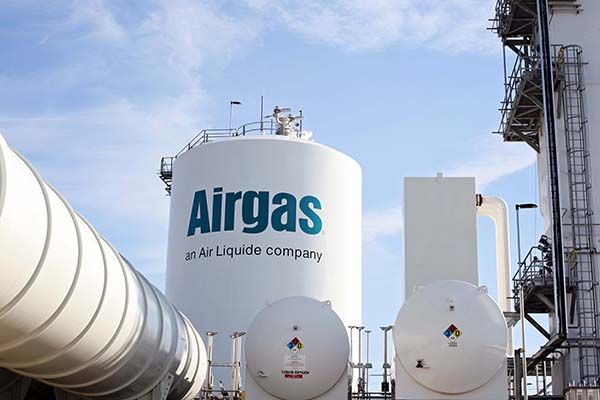
Airgas, an Air Liquide company, announced the plans to build two new air separation units (ASUs) that increase bulk gas production in the Midwest and Northeast. The two new ASUs, along with previously announced production facilities under construction in North Carolina (on-stream late 2019) and Southern California, will produce oxygen, nitrogen, and argon for use in customer applications that include heat treating, metal fabrication, and combustion enhancement.

In addition, Air Liquide announced that Airgas has signed a definitive agreement to acquire TA Corporate Holdings, Inc. (“Tech Air), a large independent distributor of industrial gases and welding supplies. Founded in 1935, Tech Air is a major distributor of industrial, medical and specialty packaged gases, welding equipment, and supplies. Tech Air is owned by CI Capital Partners, a New York-based private equity firm, and Tech Air management.

“With the construction of these two new ASUs, Airgas will deliver on our Air Liquide integration strategy to grow our independent production of bulk gases, to gain efficiencies in our dynamic supply chain, and to deliver product supply reliability to our customers,” said Pascal Vinet, Chief Executive Officer of Airgas, Inc. and Air Liquide Executive Committee Member.

Regarding the Tech Air acquisition, Vinet said, “Growth through acquisition has been a key component of Airgas’ business model and remains a core part of our long term strategy. We look forward to welcoming the Tech Air team to Airgas, and integrating their complementary capabilities and resources to enhance service for our customers.”


Industrial Gas Supplier Expands Through Building, Acquisition Read More »

IHEA Announces NFPA 86 Updates Seminar

The Industrial Heating Equipment Association (IHEA) will present a new, one-day seminar which will focus on the recent changes to NFPA 86 Standard for Ovens and Furnaces. The NFPA 86 Updates Seminar will be held on Tuesday, May 14, at Fabricators & Manufacturers Association (FMA) in Elgin, Illinois, from 9:00 AM to 3:00 PM.

This class is an overview for those who are already familiar with NFPA 86 but want to understand the recent updates and the impact on their business. Noteworthy updates include changes to furnace heating systems; safety equipment and application; programmable logic controller systems; safety shutoff valves; safety controls and devices; and commissioning, operations, maintenance, inspection, testing, and auditing. IHEA instructors are industry experts and NFPA committee members that are directly involved in the development of the standard and revision process.

Registration fee includes a printed copy of the slides and the new 2019 NFPA 86 Standard for Ovens and Furnaces. For heat treaters not familiar with NFPA 86 or who need more in-depth instruction on the standard and how it applies to a shop’s operation, the full two-day Safety Standards and Codes Seminar will be held this September in Cleveland, Ohio. Watch for details on the IHEA website, www.ihea.org.

IHEA Announces NFPA 86 Updates Seminar Read More »

Common Sense Guidelines for Loading Parts in Vacuum Furnaces


Source: 


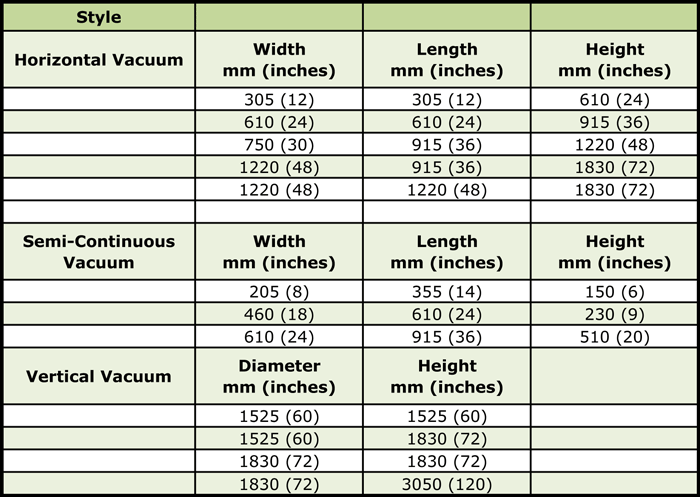
From minuscule medical implants to massive aerospace engine parts, vacuum furnaces process components that come in a variety of shapes and sizes. The challenge that faces a furnace operator is to load parts in such a way as to maximize efficiency (important) but also achieve desired metallurgical properties and minimize distortion (more important).

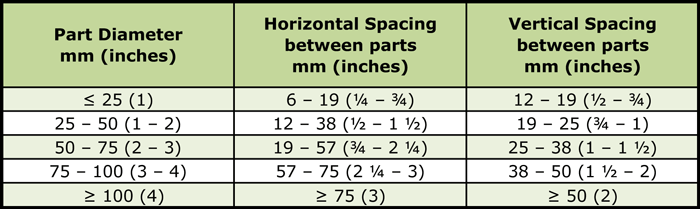
Understanding that loading options generally follow common sense rules can help with the puzzle of load arrangements, spacing parts properly, accommodating geometric irregularities, and loading orientation. This Technical Tuesday feature examines everything to consider about loading parts into a vacuum furnace — from the size and orientation of a workload to the “final spacing . . . [as] dictated by concerns for heating, soaking, flow (of partial pressure or backfill gases), the type and volume of quench media (e.g. oil, gas) and gross load weight.”


Table 1 – Common Furnace Workload Sizes

Table 2 – Typical Part Spacing Requirements


Read more: “Loading of Parts in Vacuum Furnaces”

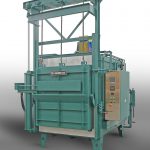
Photo credit/caption: Vac Aero International / Typical Vertical Furnace Loading Configuration

Common Sense Guidelines for Loading Parts in Vacuum Furnaces Read More »

Furnace Gas Composition Controlled with CO and CO2


Source: AZO Sensors


Many heat treat processes require protective or process gases. These gases often require careful monitoring. One of the protective and/or process gases used in many heat treat applications is an endothermic atmosphere which is made up largely of CO, CO2, H2, and N2. This article is about the creation and proper monitoring of endothermic atmospheres.

In an atmosphere furnace, the proper mix of these gases can help facilitate changes in the metal such as proper hardness and strength, resistance to temperature, or improved tensile strength to mention a few. Without careful control of temperature, time and atmosphere, metals can experience unwanted changes in properties such as hydrogen embrittlement, surface bluing, soot formation, oxidation, and decarburization. With such critical outcomes in the balance, it is necessary to control the endothermic gas.

An excerpt:

“In order for the required metal treatment to be a success, you must control and monitor the gas composition with extreme care. The concentrations of gases, CO₂, H₂O, CH₄, N₂, H₂ and CO, that make up the endothermic gas atmosphere should be measured in order to aid the prevention of unwanted reactions and ensure that the endogas generator and the furnace are operating normally.”


Read more: “CO and CO2 Control of Endothermic Gas in Heat Treatment Furnaces”

Furnace Gas Composition Controlled with CO and CO2 Read More »

A Baker’s Dozen Quick Heat Treat News Items to Keep You Current

A Baker’s Dozen Quick Heat Treat News Items to Keep You Current

Heat Treat Today offers News Chatter, a feature highlighting representative moves, transactions, and kudos from around the industry.

Personnel and Company Chatter

  • Peters’ Heat Treating, Inc. recently announces that Andrew S. Wilkosz has been named president of the company. Wilkosz, who has been with Peters’ Heat Treating, Inc. for nearly four years, was previously acting as the Vice President of Operations, overseeing the day to day operations of the company across all three facilities. Wilkosz is also a principal in Laser Hard, Inc., specializing in robotic laser heat treating and cladding. He is also a Heat Treat Today 2018 40 Under 40 recipient.
  • Geoffrey Somary has been appointed to CEO of Ipsen Group worldwide, taking over the position after former CEO Thorsten Kruger moved to the Advisory Board of the company.
  • Jake Verdoux has recently been promoted to the position of Manufacturing Manager for Plymouth, Michigan-based, Gasbarre Industrial Furnace Systems (IFS) (formerly known as J.L. Becker).
  • A ribbon-cutting ceremony was held to mark the completion and opening of a 15,000-square foot building expansion at the corporate headquarters of Advanced Heat Treat Corp. (AHT), located in Waterloo, Iowa.
  • Braidy Industries has alerted potential investors that the aluminum mill it plans to build in northeast Kentucky will open in 2021, not in 2020 as previously projected, a change due to a “minor adjustment to the construction schedule.”
  • Multiple industries have recently purchased and installed equipment in SECO/WARWICK’s Vector® vacuum furnace line, including an international electric motor producer, an emissions control device manufacturer, a forging company, a defense contractor, an automotive manufacturer, and an aircraft components manufacturer.
  • Kandil Steel, headquartered in Cairo, Egypt, recently commissioned bell annealer technology from EBNER. Kandil, which is celebrating its 150 anniversary, is expanding the EBNER HICON/H2® bell annealer located at Galva Metal by four work bases to a total of fourteen. The facility is scheduled to start production in 2020.
  • A 2000°F (1093°C), inert atmosphere, heavy-duty furnace, No. 1039, was recently purchased for heat treating turbine components at a customer’s facility. The workspace dimensions of the Grieve Corporation furnace measure 36” W x 60” D x 36” H. 73.
  • A medical device company recently acquired the assets of Options Medical LLC, a Florida-based medical device distributor. Orthofix Medical Inc., which manufactures musculoskeletal products and therapies, is purchasing the distributor of bone growth therapies devices.
  • A U.S.-based orthopedic and spinal medical device manufacturer and developer recently agreed to sell major assets related to its artificial joint, trauma and spinal product businesses to Kyocera International Inc., based in San Diego, Calif.  The assets of Renovis Surgical Technologies Inc. will be transferred into a new California-based company, wholly owned by Kyocera International Inc., to be named Kyocera Medical Technologies Inc.
  • Buehler, an ITW Company, and ASM International are celebrating 75 of continuous partnership in 2019. The pinnacle of this relationship is Buehler’s continuous support of the ASM World Training Center in Novelty, Ohio, through its innovations for metallography and hardness testing, solutions for the newest materials and participation in ASM International activities.
  • APMI International has named Joseph Tunick Strauss and John L. Johnson. as the organization’s 2019 Fellows. APMI International’s most prestigious award recognizes APMI members for their significant contributions to the goals, purpose, and mission of the organization as well as for a high level of expertise in the technology, practice, or business of the industry.
  • Chemical Coaters Association International (CCAI) recently announced its first Women in Finishing FORUM which will be held at the Embassy Suites South Bend at Notre Dame from May 9-11, 2019. CCAI began its Women in Finishing initiative with a networking reception at FABTECH 2017 in Chicago. The response exceeded expectations, leading to the official establishment of Women in Finishing (WiF) under CCAI. 2019 will feature the expansion of WiF programming, including the Women in Finishing FORUM.

Heat Treat Today is pleased to join in the announcements of growth and achievement throughout the industry by highlighting them here on our News Chatter page. Please send any information you feel may be of interest to manufacturers with in-house heat treat departments especially in the aerospace, automotive, medical, and energy sectors to the editor at editor@heattreattoday.com.

A Baker’s Dozen Quick Heat Treat News Items to Keep You Current Read More »

Salt Bath Nitriding Process Monitored by Data Logger

A distributor of data loggers, paperless recorders and data acquisition equipment recently supplied a surface treatment company with runtime data collection to continually monitor its salt bath production line.

CAS DataLoggers provided the industrial data logging solution to Northeast Coating Technologies (NCT) in Kennebunk, Maine. NCT is a surface treatment company specializing in Salt Bath Nitriding Melonite® Quench-Polish-Quench (QPQ), among other processes, to produce high-durability metal components including piston rods, axles and more. NCT is using CAS’s dataTaker DT80 Intelligent Data Logger to continually monitor its production Melonite® line, specifically the salt bath area, recording tank temperature from multiple thermocouples and using these readings to trend the run data.

The Melonite® QPQ process forms a nitrocarburized layer around components comprised of an outer compound layer (iron, nitrogen, carbon and oxygen compounds) and a diffusion layer underneath. Initially, the process preheats components to raise their surface temperature before they’re placed in a tank containing liquid Melonite® salt (MEL 1/TF 1 bath) to start the nitrocarburizing process. Alkali cyanate is the active constituent in the salt bath, and this step requires the temperature in the range of 896°F – 1166°F with a target temperature of 1076°F. The components react with the salt and start to diffuse nitrogen and carbon into the substrate. 

After a preset period of 1-2 hours, the components have the proper compound layer thickness and case depth. After immersion in the salt bath, the components are placed in a cooling bath (AB 1 bath) maintained at 700°F – 800°F for oxidative treatment which forms a magnetite layer on the components to improve corrosion resistance.

Tank temperature is the parameter NCT needed to monitor and trend for each of its 3 Melonite® salt tanks and the AB 1 oxidizing bath tank. With this in mind, CAS DataLoggers provided the facility with a Series 3 dataTaker universal data logger to automate their data collection.

“The dataTaker’s software is internal so everything this application needs is there in the dataTaker unit itself,” said CAS DataLoggers Applications Specialist Bill Hoon. “Now they have the memory, the data trending capability, and the alarming feature. That’s why the DT80’s our workhorse.”

Salt Bath Nitriding Process Monitored by Data Logger Read More »

High-Performance Metals Developed for DMLS Processing


Source: ETMM Online


A nickel-based heat resistant alloy that is very strong, corrosion resistant, and can be used at temperatures between -422°F and 1300°F has recently been released by a German specialist in custom prototypes and low-volume production parts.

Inconel 718 and Maraging Steel 1.2709 will expand Protolabs’ list of Direct Metal Laser Sintering (DMLS) materials that make up a wide range of metals available for rapid prototyping and the manufacture of functional end-use parts with complex geometries.

The high-temperature strength of Inconel 718 is derived from its ability to create a thick, stable passivating oxide layer at high temperatures, protecting the material from further attack. Inconel, which has good tensile, fatigue, creep and rupture strength, is thus ideal for the aerospace and heavy industries–particularly, in the production of jet engines, rocket engine components, gas turbine parts, instrumentation parts, power and process parts and related equipment that are exposed to extreme environments.


Photo credit/caption: Protolabs/Inconel 718 is a superalloy used in the development of turbojet engines for aircraft, among a variety of other applications.

High-Performance Metals Developed for DMLS Processing Read More »

U.S. Automaker Expands Capacity at Assembly Plants for Incoming SUVs

A major U.S. automaker recently announced plans to transform its Chicago manufacturing facility to expand capacity for the production of three new SUVs.

Ford Motor Company is investing $1 billion in Chicago Assembly and Stamping Plants, the company’s oldest continually-operated automobile manufacturing plant, to prepare for the Ford Explorer, Police Interceptor Utility and Lincoln Aviator.

Joe Hinrichs, president, Global Operations

With the Chicago investment, to begin in March and be completed later in the spring, Ford is building an all-new body shop and paint shop at Chicago Assembly and making major modifications to the final assembly area.  At Chicago Stamping, the company is adding all-new stamping lines. Advanced manufacturing technologies at the plants include a collaborative robot with a camera that inspects electrical connections during the manufacturing process. In addition, several 3D printed tools will be installed to help employees build these vehicles with even higher quality for customers.

“We are proud to be America’s top producer of automobiles. Today, we are furthering our commitment to America with this billion dollar manufacturing investment in Chicago and 500 more good-paying jobs,” said Joe Hinrichs, president, Global Operations. “We reinvented the Explorer from the ground up, and this investment will further strengthen Ford’s SUV market leadership.”

Chicago Assembly, located on the city’s south side, is Ford’s longest continually operating vehicle assembly plant. The factory started producing the Model T in 1924 and was converted to war production during World War II.


Photo credit/caption: Ford/Jason Hoskins, Ford employee, learns to build the all-new 2020 Ford Explorer.

U.S. Automaker Expands Capacity at Assembly Plants for Incoming SUVs Read More »

Temperature Monitoring and Surveying Solutions for Carburizing Auto Components: The Data Logger

This is the second in a 4-part series by Dr. Steve Offley (“Dr. O”), Product Marketing Manager at PhoenixTM, on the technical challenges of monitoring low-pressure carburizing (LPC) furnaces. The previous article explained the LPC process and explored general monitoring needs and challenges. In this segment, Dr. O talks about the data logger and its monitoring capabilities. 


The Range of the PhoenixTM Data Logger

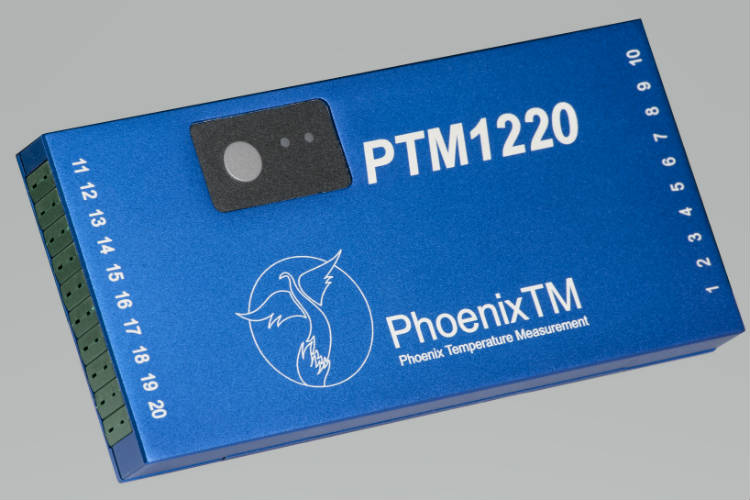
Figure 1: PhoenixTM PTM1220 20-Channel IP67 Datalogger

A data logger, an electronic device that records data over time or in relation to locatio, can be useful in a variety of configurations and modified to suit the specific demands of the process being monitored. A range of models are on the market. At PhoenixTM they include 6 to 20 channels with a variety of thermocouple options (types K, N, R, S, B) to suit measurement temperature and accuracy demands (AMS2750 & CQI-9). Provided with Bluetooth wireless connection for short-range localized download and reset (direct from within the barrier) the logger memory of 3.8M allows even the longest processes to be measured with the highest resolution to deliver the detail you need. An optional unique 2-way telemetry package offers live real-time logger control and process monitoring with the benefits detailed in a later section.


Live Radio Communication

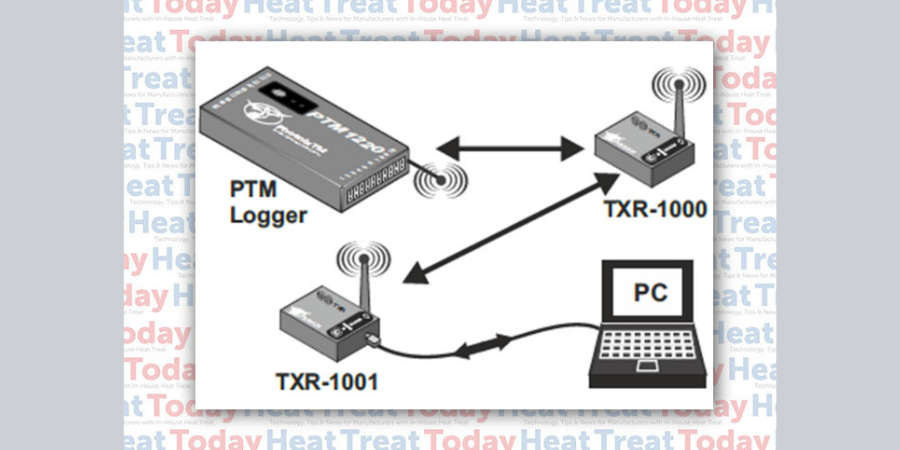
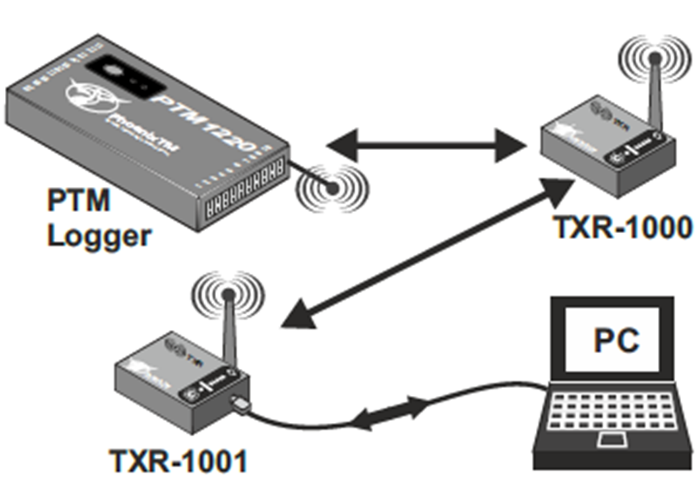
Figure 3: Schematic of RF telemetry real-time monitoring network

The logger is available with a unique 2-way RF system option allowing live monitoring of temperatures as the system travels through the carburizing processes. Furthermore, if necessary using the RF system it is possible to communicate with the logger, installed in the barrier, to reset/download at any point pre, during and post-run.

Provided with a high performance “Lwmesh” networking protocol the RF signal can be transmitted through a series of routers linked back to the main coordinator connected to the monitoring PC. The routers are located at convenient points in the process, positioned to maximize signal reception. Being wirelessly connected they eliminate the inconvenience of routing communication cables or providing external power as needed on other commercial RF systems.

In many processes, there will be locations where it is physically impossible to transmit a strong RF signal. In carburizing obviously within the oil quench, the RF signal is not capable of escaping when the system is submerged. With conventional systems, this results in process data gaps. For the PhoenixTM system, this is prevented using a unique fully automatic ‘catch up’ feature. Any data that is missed will be sent when the RF signal is re-established post-quench guaranteeing in most applications 100% thru-process data review.

Thru-Process Data Analysis and Temperature Uniformity Surveys (TUS)

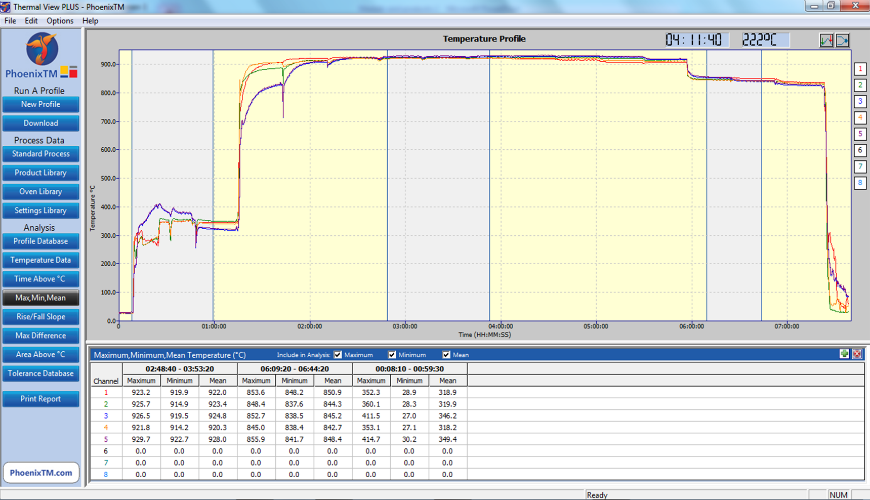
Figure 3: Thermal view SW displaying the temperature profile from a carburizing with gas quench process

In thru-process temperature monitoring, the data logger collects raw process data directly from the product or furnace as it follows the standard production flow. To understand the data to allow process control and optimization, a Thermal View software analysis is used.

Using a range of analysis tools, the engineer can interpret the raw data. Key analysis calculations can be performed such as:

  • Max / Min — Check maximum and minimum product temperature over whole product or product basket through phases of process carburizing, diffusion and quench.
  • Time @Temp — Confirm that the soak time above required carburizing temperature is sufficient for correct carbon diffusion and surface properties.
  • Temperature Slopes —Measure the quench rate of the product to ensure that the hardening process is performed correctly.


Next up in the series: Designing an Innovative Thermal Barrier — The carburizing process by its nature is very demanding when considering protection of the datalogger from high temperatures and rapid temperature and pressure changes experienced in either the gas or oil quench.


Temperature Monitoring and Surveying Solutions for Carburizing Auto Components: The Data Logger Read More »

Registration Open for IHEA’s Online Learning Course

Jack Marino

Registration is open for IHEA’s Fundamentals of Industrial Process Heating Online Learning Course that begins on April 15, 2019.

The course is ideal for students who wish to further their studies at home or work in a flexible web-based distance-learning format. It’s an affordable alternative to campus-based classes and allows students to go at their own pace. The program offers a vital tool to industrial process heating operators and users of all types of industrial heating equipment. Students learn safe and efficient operation of industrial heating equipment, how to reduce energy consumption, and ways to improve a company’s bottom-line.

The fundamentals course provides an overview of heat transfer, fuels and combustion, energy use, furnace design, refractories, automatic control, and atmospheres as applied to industrial process heating. For a complete listing of the topics covered visit www.ihea.org or click here.

Industry expert Jack Marino will lead students in this 6-week online course. Jack is a registered Professional Engineer with over 40 years’ experience in the heat processing business. He is a graduate of Rensselaer Polytechnic Institute with a bachelor’s degree in Aeronautical Engineering and has a master’s degree in Engineering Science from Penn State. Mr. Marino’s knowledge and experience offer invaluable resources that online students can access throughout the course.

IHEA will also offer an Advanced Industrial Process Heating course this fall. This course is a compliment to the Fundamentals of Industrial Process Heating and provides the student with an in-depth view of the control and efficient operation of industrial process heating equipment. Students will become familiar with a variety of oven, furnace, and kiln types used in industry.


Registration Open for IHEA’s Online Learning Course Read More »