


Heat Treat Radio #18: Ben Gasbarre on Nitriding

Welcome to another episode of Heat Treat Radio, a periodic podcast where Heat Treat Radio host, Doug Glenn, discusses cutting-edge topics with industry-leading personalities. Below, you can either listen to the podcast by clicking on the audio play button, or you can read an edited version of the transcript. To see a complete list of other Heat Treat Radio episodes, click here.


Audio: Heat Treat Radio: Ben Gasbarre on Nitriding

In this conversation, Heat Treat Radio host, Doug Glenn, interviews Ben Gasbarre, president of Gasbarre Products Industrial Furnace Systems Division, about nitriding. Gasbarre Products is located in Plymouth, Michigan, where Ben oversees one of the recent acquisitions of Gasbarre products, the former JL Becker Co. Nitriding is one of the more popular thermal processes, so you’ll want to tune in to this podcast conversation with Ben Gasbarre of Gasbarre Products, one supplier of equipment for that process. Ben talks with Doug about the growth of nitriding in the heat treating market, particularly for domestic suppliers of equipment and services. This is especially true in the automotive manufacturing industry, but also in the aerospace and energy sectors.

Click the play button below to listen.


Ben Gasbarre, president of Gasbarre Products Industrial Furnace Systems Division

Transcript: Heat Treat Radio: Ben Gasbarre on Nitriding

The following transcript has been edited for your reading enjoyment.

In this episode of Heat Treat Radio, we’re going to talk about one of the more popular and growing thermal processes and one supplier of equipment for that process. The process: nitriding. And maybe a little bit of FNC (ferritic nitrocarburizing). The equipment supplier:  Gasbarre Products.

Before we begin hearing from Ben Gasbarre, let me remind you that googling “nitriding” or “nitriding heat treatment” will bring up Heat Treat Today as the very first heat treat industry publication. Check out our site if you’re looking for nitriding or just good heat treating content. Every day our editorial team posts one new piece of heat treat content. Tuesdays are especially exciting. We call them ‘Technical Tuesdays’ because we post a new technical article every Tuesday. Pay a visit to our website, and don’t forget to support the advertisers and content providers you see on the site. Go to www.heattreattoday.com.

And one last thing—Do you know anyone under the age of 40 who is making a significant contribution to the heat treat industry?  I’m betting you do, and it would be smart on your part to nominate that young professional to be a member of Heat Treat Today’s 40 Under 40 Class of 2019. From all of the applications received, our team chooses 40 outstanding, young heat treat professionals to be in our 40 Under 40 Class of 2019. You can see last year’s winners and nominate someone for this year’s award by going to www.heattreattoday.com/40under40. If you’re a supplier to the industry, think about nominating a young person from one of your customer’s organizations.

Today, we’re going to talk to Ben Gasbarre, president of Gasbarre Products Industrial Furnace Systems Division. Ben is located in Plymouth, Michigan, where he oversees one of the recent acquisitions of Gasbarre products, the former JL Becker Co. Although Gasbarre is phasing out some of the previous company names like JL Becker and Sinterite, they have, over time, become one of the major players in the North American heat treat market. Today, we’re going to talk to Ben about nitriding.

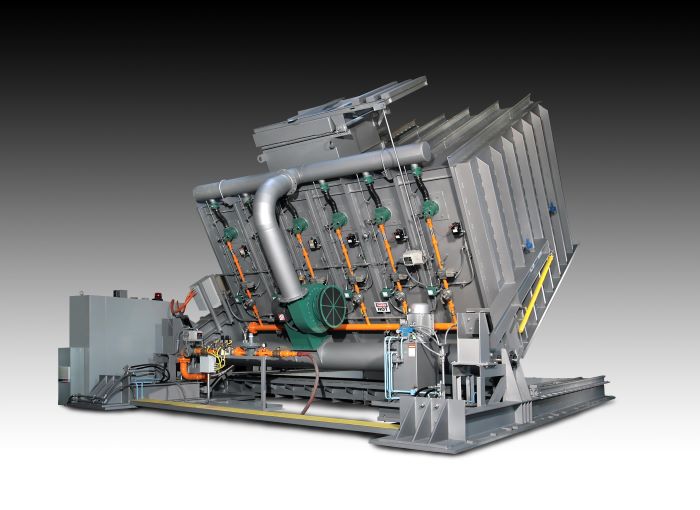
Vacuum Purge Nitriding Furnace

DG:  Let’s talk about the nitriding market. What are you hearing and seeing?

BG:  There is no doubt that nitriding has been around for a long time. It is not necessarily a brand new process, but it has certainly become a buzz word in the industry over the last number of years, and there are companies out there that have built their entire business on strictly doing different nitriding processes. We hear a lot of discussion and activity of more people wanting to get involved in it and in what aspects they can do that and where. There are a lot of process advantages to it. You get the wear and corrosion resistance, you get low distortion on the product which can lead to a lot of lower secondary processing costs for the ultimate end user. Then, on the heat treater side, there are advantages with the equipment in general. There is no oil quenching, so you’ve got environmental and plant cleanliness advantages there. There is limited part movement within the equipment, with some of the styles of equipment, so there are a lot of maintenance advantages. There are also the lower temps. With plant employees being around the equipment, operating temperatures in that 1,000 degree up range, it can be quite a bit more comfortable in the heat treat departments where this equipment is running. And then on the nitriding side, cycles are much longer, you can get higher equipment utilization, lower labor costs, and that type of thing. There are a lot of advantages for both the end user of the product and the heat treaters as well.

DG:  Out in the marketplace, does it seem like the demand for this type of equipment or this type of process is up?

Integral Quench Line

BG:  Absolutely. We’ve done our own market analysis studies and have talked to people, and all of it shows strong growth and a lot of interest here in the US market. We’ve been successful over the years as well just with our current product line. It’s been a little more niche for us, but we’ve certainly had success with our product offering. What we’re looking for now, and what we believe is out there, is a broader need in the heat treating market. We feel the demand is there and really it is for a reliable domestic support for the equipment and the process. That’s where we see the need here domestically.

DG:  So we’re getting a little more demand. Any sense of what’s driving that demand?  Are we actually doing more nitriding, and if so, what markets might they be coming from, or what processes or materials?

BG:  From our standpoint, being based right outside of Detroit, automotive is a big part of what we do and the people we talk to. There is a lot of activity on that side converting coatings and other processes from the coating over to the nitriding. We hear a lot of activity around that. It is heavy automotive, but we’ve also been taking interest and inquiries for aerospace and oil and gas applications as well. A big key to that though, again, for our end users is the flexibility—being able to run different styles, whether it be stainless steel parts or castings and things like that. The equipment has got to be able to handle both and keep it flexible for the user. You can also tie in atmosphere stress-relieving and tempering, not just nitriding, into these styles of equipment.

DG:  What are you hearing about the equipment currently being offered in that space?

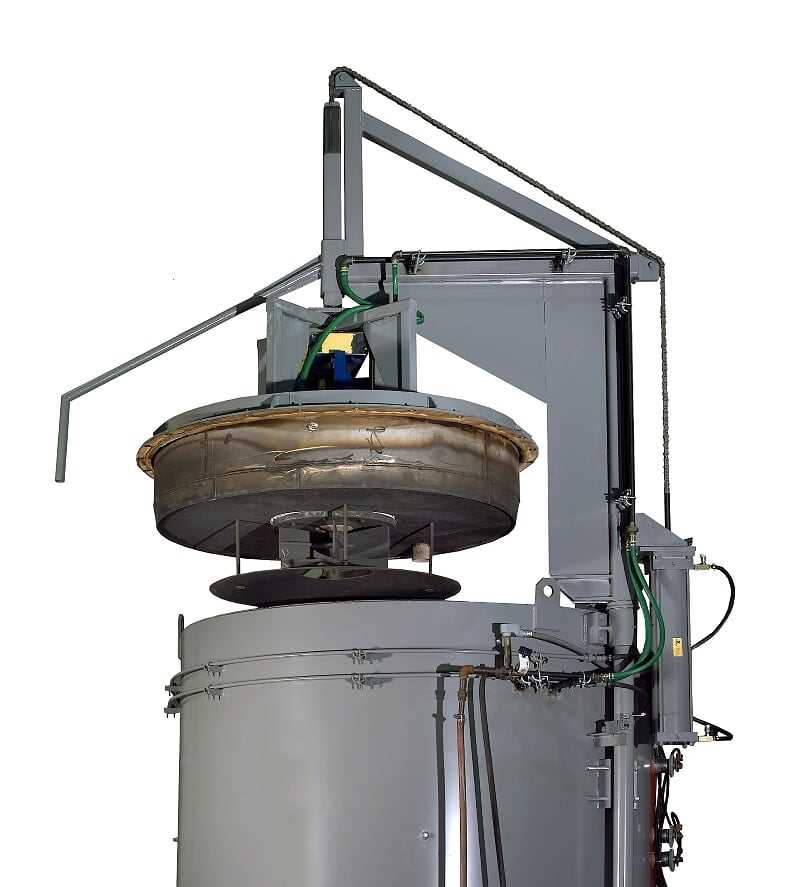
Pit Furnace

BG:  We actually did a presentation at the FNA show this last fall that really focused on all of the different styles of equipment that you could use in this process. You have what I’ll call the classic integral quench furnaces, pit furnaces, and that kind of thing. On the integral quenches, they can be very flexible; you can process multiple loads; they are very forgiving for part cleanliness. But inherently with integral quench furnaces and the atmospheres and temperatures of the nitriding FNC [ferritic nitrocarburizing] process, you’ve got some safety challenges, and there is also a lot of maintenance that comes in with integral quench furnaces. Pit furnaces, on the other hand, are more single chamber, so your volume might be a little bit less, but you get a good quality part, you’ve got strong process control, but you do have infrastructure challenges with pit furnaces and loading mechanisms and maintenance for pits, so there are some challenges there. Where a lot of the interest has been is in the horizontal retort, in a lot of cases, with vacuum purge units associated with that. Those styles of equipment have been very popular in Europe and in other parts of the world, but are gaining a lot of traction here in the US. Again, they give very good part quality, strong process control, and your maintenance and infrastructure costs can be less. It doesn’t require a pit. There are not a lot of moving parts, so your focus is more on really ensuring your door seal and those kinds of things are good. Then you just continue to run the product and keep utilization high which is what everybody’s looking for.

DG:  Let’s dig in a little deeper about what your company brings to the nitriding market.

BG:  We have a lot of equipment out there that does this process, but what we’ve been developing is the horizontal retort, not gas nitriding, system that uses a vacuum purge system to allow for more effective quick purging and turnaround times in the furnace. It is something that is offered out there, but where we are unique is that we’ve built an extremely knowledgeable team for this product. This goes back to our roots to what my grandfather started the business over 45 years ago, having that knowledgeable staff that understands the customer’s processes, needs, and challenges.

We’ve brought people in that have sold this process, that have run the equipment, that have designed recipes, and that have troubleshot the process in the equipment. That’s where we are hanging our hat right now. We’ve got that staff, we know the equipment, and we are domestic, so we can offer that support that is reliable right here in the US and that is our approach right now. We do have areas that we are looking at and are working on. There are certain parts of the nitriding process that can challenge the end user, and we’re looking at things that can make equipment improvements and process improvements to ultimately solidify ourselves in that market for the long term.

DG:  Besides your presence in the nitriding market, your company has had a pretty extensive history in the heat treat market generally, correct?

BG:  Yes. Gasbarre was started in 1973 by my grandfather, George Gasbarre. He started doing powder compaction presses for the power metallurgy industry. My

Tom Gasbarre, former CEO, Gasbarre Products

grandfather started out as a parts maker and saw an opportunity in that market to design a press specific for powder compaction and he built the foundation on having a knowledgeable staff, design flexibility, maintenance friendly, and affordable, and these are principles that we continue to live by as we’ve grown the business. My father, Tom Gasbarre, and his brother, Bill, grew the business into what it is today. We’ve acquired 8 different companies, all based around powder metal presses or powder compaction presses, furnaces, and then tool and die. Today we’re made of up of a powder compaction solutions group which manufactures compaction presses and tool and die components for the particulate materials industries. We’ve got the thermal processing systems group that

Alex Gasbarre, CEO, Gasbarre Products

manufactures a wide range of heat treating equipment. And we also have a manufacturing technologies group that just utilizes our broad resource of engineering and manufacturing capabilities to make equipment and components. We’ve been pretty successful in the glass industry, railroad industry, and mining industries. We’ve done some defense work as well. Just a couple months ago, we officially announced the transition to the third generation where my brother, Alex Gasbarre, is taking over as CEO. We’re proud of our past, and we are really excited about where we are today and the people and strategies we have in place to move us into the future.

DG:  Let’s talk about the acquisitions you referenced just a moment ago. On the heat treating side of your business, tell us about the acquisitions.

BG:  It’s kind of interesting with the re-branding we’re doing this year. We’re really pushing the Gasbarre name into the market, so that the Gasbarre name may be new, but we’ve been building equipment for 30 years. With the acquisition of Sinterite with their

Tip Up Furnace

continuous mesh belt furnace or powder metal sintering, that obviously complemented our compaction press line and got us into the thermal processing market. In 2003, we acquired C.I. Hayes, and that was really to meet our interests in getting to higher temperature applications with the pusher furnaces and vacuum furnaces, and they brought a long history and a large and solid base to us as well and got us into a bigger market outside of just powder metal. In 2011, we acquired J.L. Becker. That was really what built us out from a product line standpoint in the heat treating market. It complemented the other lines well in that we had a little bit of overlap, but with our focus out here, it’s more on the larger batch style equipment and some of the continuous processes associated with that. Therefore it really filled out our product line and gives us a broad variety of products to offer to the market.

Modular Vacuum Furnace

DG:  Where do you see Gasbarre having the strongest product offering?

BG:  With the broad product line, we’ve got a few. The mesh belt product for sintering and brazing—we lead the industry in that. You won’t find a piece of equipment more suited for those applications, and we have an extremely knowledgeable staff for those. We have a hypercooler design for sinter hardening that has shown results that eliminate the need for additional heat treat, which I know can be a touchy subject with the readers here, but it is a pretty dynamic piece of equipment.

DG:  But if it saves money for the end user, that is the key.

BG:  Exactly. Also, our vacuum line is very unique in that we specialize in the multi-chamber systems. We can adapt to a wide variety of processes and different production demands. Work flows in and out of cells with our multi-chamber designs, and we can adapt to all of that. With our variety on the batch side, we can offer equipment that processes 500-pound loads all the way up to loads that are over 100,000 pounds. We can be competitive and technically competent in all of those areas.

DG:  And your vacuum line?

Single Chamber Vacuum Furnace

BG:  We offer both batch and continuous vacuum equipment, single chamber, and multi-chamber. Most of our designs, and where we are strong, is in the multi-chamber systems. We’ve developed a modular design that allows expandability and versatility for the end user. You can start with a single chamber and adapt in oil quenches or gas quenches. You can convert it from a batch system to a continuous system. The modular design gives people a lot of flexibility in what they can do. It also helps with maintenance, with how the systems are designed, so I think that has a lot of advantages for the end user that you don’t necessarily see in the market.

DG:  And how about active markets, either markets you currently serve or markets where you see growth potential?

BG:  Obviously with vacuum equipment, you get into aerospace quite a bit. The one that we’re excited about is the 3D printing. We’ve been working closely with a number of partners there. Binder jet companies are looking on the vacuum sintering side, and we’ve got expertise there. We have also gotten involved with some vacuum annealing for people doing direct metal laser sintering applications, and we’ve seen quite a bit of activity on that front. Obviously, it’s front and center in a lot of different ways, so we are looking to be very active in that market.

DG:  If you’d like more Heat Treat Radio, it’s simple. Log onto the Google, then type in “Heat Treat Radio”. We’re the first thing that pops up. You can subscribe to Heat Treat Radio on iTunes or SoundCloud or you can find Heat Treat Radio on Heat Treat Today’s website which is www.heattreattoday.com. If you’d like to get in touch with Ben or learn more about Gasbarre products, you’re welcome to email me, Doug Glenn, at doug@heattreattoday.com, or you can email Ben Gasbarre directly at ben.gasbarre@gasbarre.com.

Don’t forget to nominate young professionals in the heat treat industry to be part of Heat Treat Today’s 40 Under 40 Class of 2019. Nominations are now open at www.heattreattoday.com/40under40.

Extra support for this episode of Heat Treat Radio was provided by the Industrial Heating Equipment Association (IHEA), where leaders in the heat treat industry meet to give back to the industry. Find out more about IHEA and especially about their fall educational seminars on September 24 and 25 in Cleveland, Ohio, by visiting www.ihea.org.

This episode of Heat Treat Radio is the sole property of Heat Treat Today and may not be reproduced without advanced written permission from Heat Treat Today.

This episode was produced and mixed by Jonathan Lloyd from Butler, Pennsylvania, who is still engaged and waiting to get married. I’m your host, Doug Glenn. Thanks for listening.


Doug Glenn, Publisher, Heat Treat Today
Doug Glenn, Heat Treat Today publisher and Heat Treat Radio host.

To find other Heat Treat Radio episodes, go to www.heattreattoday.com/radio and look in the list of Heat Treat Radio episodes listed.

Heat Treat Radio #18: Ben Gasbarre on Nitriding Read More »

Dr. Valery Rudnev on . . . Equipment Selection for Induction Hardening: Single-Shot Hardening, Part 1

This article continues the ongoing discussion on Equipment Selection for Induction Hardening by Dr. Valery Rudnev, FASM, IFHTSE Fellow. Six previous installments in Dr. Rudnev’s series on equipment selection addressed selected aspects of scan hardening and continuous/progressive hardening systems. This post continues a discussion on equipment selection for induction hardening focusing on single-shot hardening systems.

The first part on equipment selection for continuous and progressive hardening is here. The second part in this series on equipment selection for single-shot hardening is here; the third part is here. To see the earlier articles in the Induction Hardening series at Heat Treat Today as well as other news about Dr. Rudnev, click here. This installment continues a discussion on equipment selection for continuous and progressive hardening applications.


Why Single-Shot Hardening?

With the single-shot method, neither the workpiece (cylinder shaft, for example) nor the coil moves linearly relative to each other; the part typically rotates instead.¹ The entire region that is to be hardened is heated all at once rather than only a short distance, as is done with scan hardening.

With conventional scan hardening of cylindrical parts, induced eddy currents flow circumferentially. In contrast, a single-shot inductor induces eddy currents that primarily flow along the length of the part. An exception to this rule would be the half-moon regions (also called the crossover or bridge sections) of a single-shot inductor, where eddy current flow is circumferential.

Normally the single-shot method is better suited for hardening stepped parts where a relatively short (1.5–2 in. [38–50mm] long heated area is commonly minimum) or moderate length area is to be heat treated. This method is also better suited to cylindrical parts having axial symmetry and complex geometry including various diameters.

When scanning these types of parts, improper austenitization of certain areas may occur due to localized electromagnetic field distortion, for example. Insufficient quenching due to the deflection of quench flow not allowing it to properly impinge on the surface in various diameter regions may also occur. Both factors are considered undesirable and can cause low hardness, spotted hardness, or even cracking. For example, the use of scan hardening on stepped shafts with large shoulders, multiple and sizable diameter changes, and other geometrical irregularities and discontinuities (including fillets, flanges, undercuts, grooves, etc.) may produce severely non-uniform hardened patterns. In cases like this, a scan hardening inductor or progressive/continuous hardening system would be designed around the largest diameter that would have sufficient clearance for safe part processing.¹ However, variations in the shaft’s diameter, to a significant extent, will result in a corresponding substantial deviation in the workpiece-to-coil coupling in different sections of the shaft, potentially causing irregular austenization.

Besides that, sharp corners have a distinct tendency to overheat owing to the buildup of eddy currents, in particular when medium and high frequencies are used. The electromagnetic end and edge effects may also cause the shoulders to severely overheat while the smaller-diameter area near the shoulder (including undercuts and fillets) may have noticeable heat deficit. These factors may produce a hardness pattern that might grossly exceed the required minimum and maximum case depth range, making it unacceptable. Single-shot hardening is usually a better choice in such applications. As an example, Figure 1 shows some examples of components for which single-shot hardening would be a preferable method of heat treating.

Examples of components for which a single-shot hardening would be a preferable method of heat treating. (Courtesy of Inductoheat Inc., an Inductotherm Group company)


In some not so frequent cases, when hardening larger parts, there are advantages to the single-shot method over the scanning method, such as the reduction of shape/size distortion, enhanced metallurgical quality, and increased production rate.

Single-shot hardening may also be the preferred choice when shorter heat times/high production rates are desired. For example, in some applications, the time of heating for single-shot hardening can be as short as 2 s, though 4 to 8 s is more typical.

However, the single-shot method has some limitations as well. One of them is cost. Single-shot inductors are typically more expensive to fabricate compared to the coils used for scanning. This is because the single-shot inductor, to some degree, must follow the contour of the entire region required to be heated. Additionally, a single-shot inductor is usually able to harden only one specific part configuration, whereas a coil used for scanning may be able to harden a family of parts.

Besides that, in some case hardening applications using a scanning method, it is possible to apply certain pre-programmed pressure/force on a workpiece during heat treating. This allows distortion to be controlled. Single-shot hardening might also permit applying this technique but there might be some limitations.

Design Features of Single-Shot Inductors

Single-shot inductors are made of tubing, either 3-D printed or CNC-machined from solid copper to conform to the area of the part to be heated. This type of inductor requires the most care in fabrication because it usually has an intricate design and operates at high power densities, and the workpiece’s positioning is critical with respect to the coil copper profiling. Figure 2 shows several examples of induction heating of different components using single-shot inductors.

Several examples of induction heating of different components using single-shot inductors. (Courtesy of Inductoheat Inc., an Inductotherm Group company)


In order to provide the required temperature distribution before quenching, heat is sometimes applied in several short bursts (pulse heating) with a timed delay/soaking between them to allow for thermal conduction toward the areas that might be difficult to heat.

Single-shot inductors typically require higher power levels than used in scan hardening because the entire area of the workpiece that needs to be hardened is austenitized at once. This is the reason why single-shot hardening normally requires having a noticeably larger power supply compared to scan hardening, resulting in increased capital cost of power source. Additionally, the increased power usage and power densities combined with complex geometry can reduce the life of the inductor. For this reason, single-shot inductors often have shorter lives than scan inductors.

It is always important to keep in mind that, electrically speaking, the inductor is typically considered the weakest link in an induction system. For this reason, most single-shot inductors have separate coil-cooling and part-quenching circuits. The inductor will fail if power is increased to the point at which the water cannot adequately cool it. Additional cooling passages may be needed with high-power density, single-shot inductors. A high-pressure booster pump is also frequently required.

The next several installments of Dr. Valery Rudnev on . . . will continue the discussion on design features of single-shot inductors and equipment selection.


References

  1. Rudnev, D.Loveless, R.Cook, Handbook of Induction Heating, 2nd Edition, CRC Press, 2017.


Dr. Valery Rudnev on . . . Equipment Selection for Induction Hardening: Single-Shot Hardening, Part 1 Read More »

International Demographic of Bright World of Metals Factor in Success

Friedrich-Georg Kehrer, the Global Portfolio Director for Metals and Flow Technologies at Messe Düsseldorf GmbH

After five eventful days at the trade fair, the Bright World of Metals concluded successfully on Saturday, June 29, 2019, fortifying its leading position as the world’s most important trade fair platform for metallurgy and casting technology. Results were excellent for both exhibitors and visitors at GIFA, METEC, THERMPROCESS & NEWCAST, particularly in terms of how international the demographic was in comparison to previous events: 70% of the exhibitors hailed from abroad (65% in 2015) and 66% of the visitors came from foreign countries (62% in 2015).

“With approximately 2,360 exhibitors from all over the world, GIFA, METEC, THERMPROCESS & NEWCAST have almost covered the entire international market. Global players, small, innovative newcomers, and providers of niche technology alike are all represented here,” said Friedrich-Georg Kehrer, the Global Portfolio Director for Metals and Flow Technologies at Messe Düsseldorf GmbH. Around 72,500 visitors from 118 countries were welcomed into the halls during the trade fair’s five-day run. “The mix of nations in our visitor and exhibitor demographics is a crucial factor for success of the Bright World of Metals; indeed, that’s what makes this quadruple trade fair so unique. GIFA, METEC, THERMPROCESS & NEWCAST are an absolute must for metallurgy and casting professionals from all over the world,” added Kehrer.

Dipl.-Ing. Heinz Nelissen, President of GIFA & NEWCAST and CEO of Vesuvius GmbH FOSECO Foundry Division

“Right after the trade fair started, any remaining uncertainty caused by the economic slump simply lifted and the rush of visitors was enorm,” said Dipl.-Ing. Heinz Nelissen, President of GIFA & NEWCAST and CEO of Vesuvius GmbH FOSECO Foundry Division. “This huge crowd of high-quality visitors from an incredibly diverse range of international countries were here to see the innovations from our exhibitors. Above all, digitalization, automation, additive manufacturing and resource efficiency were the focal points of the talks. We undoubtedly proved that GIFA has reinforced this trade fair’s status as a global leader.

The next Bright World of Metals, comprised of the leading trade fairs GIFA, METEC, THERMPROCESS & NEWCAST will be held in June 2023; the precise date will be set over the next few months.


Photo credit: Exxpo

International Demographic of Bright World of Metals Factor in Success Read More »

5th Generation Metals Heat Treat Manufacturer Partners with Furnace Supplier

A fifth-generation furnace manufacturer supporting the metals processing industry recently entered into a strategic partnership with a Florida-based furnace equipment supplier.

Gillespie & Powers Inc., headquartered in St. Louis, Missouri, will continue to offer Remelt Technologies’ homogenizing furnaces, DC casting machines, and DC casting automation to the North American aluminum industry.

“Gillespie & Powers Inc. is proud that Gary Bowden, president of Remelt Technologies, has entrusted them to continue providing equipment and services that will continue this legacy,” said Jack Gillespie, vice president of Gillespie & Powers.

Remelt Technologies, founded and owned by Bowden, has a 26-year history of supplying quality equipment and is involved in the design, manufacture, and installation of homogenizing furnaces and DC casting machines for secondary aluminum extrusion cast houses.

Gillespie & Powers is a 5th Generation family owned design, build, supplier of specialized furnaces supporting the metals processing industry. The company has over 80 years of experience in the design, supply, and installation of furnace equipment.


5th Generation Metals Heat Treat Manufacturer Partners with Furnace Supplier Read More »

10 Quick Heat Treat News Items to Keep You Current

10 Quick Heat Treat News Items to Keep You Current

Heat Treat Today offers News Chatter, a feature highlighting representative moves, transactions, and kudos from around the industry.

Personnel and Company Chatter

  • Roger Ross has been appointed the president of StandardAero‘s Airlines & Fleets division.  He will be located at the company’s Scottsdale, Arizona, headquarters office and be responsible for the largest division of StandardAero, with multiple sites in the U.S., Canada, Europe, Africa, and Australia.
  • An automotive wheel manufacturer based in Paris, Kentucky, announced the groundbreaking on its facility expansion to support plans to increase the production capacity of aluminum wheels. These expansions will introduce “cutting-edge technology and realization of high-level on-site capabilities” at Central Motor Wheel of America‘s manufacturing operations.
  • Greg Jennings has been appointed to the position of President and CEO at Thermal Product Solutions, LLC (TPS), a global manufacturer of thermal processing equipment. Jennings has held the position of Chief Financial Officer (CFO) at TPS since 2013. During his time as CFO, he was instrumental during the acquisition of Wisconsin Oven Corporation and Baker Furnace.
  • Work is now underway to expand the heat treatment capacity at Saar-Blankstahl to expand the annealing capacity of its subsidiary, Saarstahl AG is responding to an expected increase in worldwide demand for heat-treated bar material and higher-quality steels.
  • Six Gruenberg cleanroom ovens were shipped to the medical industry from Thermal Product Solutions.
  • An electrically heated top flow conveyor oven was sold by Wisconsin Oven Corporation to a global manufacturer in the machinery industry. The furnace will be used for curing “CPIG” material on plastic housings for electronic components.
  • An innovative contract manufacturer recently invested in a new aluminum extrusion press. Alexandria Industries will be able to increase its aluminum extrusion capabilities, extrude more complex product features, and hold tighter tolerances, while utilizing a variety of alloys. The press is made by Presezzi Extrusion Group (Vimercate, MB-Italy). Alexandria Industries will gain an extra 30 percent in extrusion capacity.
  • Dr. Rod Martin, vice president of technology at Element, has been awarded the 2019 Leslie Holliday Prize from the British Composites Society (BCS). The prize is in recognition of Dr. Martin’s significant contribution to the field of composite materials.
  • BEAMIT SpA, Fornovo di Taro, Italy, has successfully passed a Nadcap audit for heat treating, receiving Nadcap accreditation as a result. The Additive Manufacturing bureau provides services for the AM of both metal and ceramic parts, and as of January 2018 had installed two high vacuum furnaces conforming to standard AMS2750.
  • Thinker Ventures recently completed a new website for Diablo Furnaces at diablofurnaces.com. The new site features a mobile-friendly responsive design that adapts for viewing on desktops, smartphones, and tablets. Diablo Furnaces is a heat treating solution provider that is able to complete custom furnace design.

Heat Treat Today is pleased to join in the announcements of growth and achievement throughout the industry by highlighting them here on our News Chatter page. Please send any information you feel may be of interest to manufacturers with in-house heat treat departments especially in the aerospace, automotive, medical, and energy sectors to the editor at editor@heattreattoday.com

10 Quick Heat Treat News Items to Keep You Current Read More »

North American Steel Company Adds New Furnace, Expands Facility

As part of a second expansion to their facility, a North American steel company plans to install a second electric arc furnace with the assistance of a group of companies internationally active in plant construction and mechanical engineering for the steel and nonferrous metals industry.

North American steel producer Big River Steel (BRS) recently commissioned SMS Group with the expansion of its steel plant in Osceola, Arkansas. SMS Group will supply BRS with additional mechanical equipment, electrical and automation systems, and digitalization, which the group reports will increase the plant’s annual output.

David Stickler, CEO of Big River Steel

“I have purchased several technologically advanced steel production facilities from SMS over the past twenty years and I am fully confident that SMS group will again deliver a high-quality mill that sets the standard in terms of product capability, energy efficiency and environmental sustainability,” commented David Stickler, CEO of Big River Steel.

Following this second expansion of their facility, the steel plant will house two electric arc furnaces and two twin-ladle furnaces. In addition, Big River Steel commissioned Systems Spray Cooled for the installation of furnace cooling equipment at Big River’s Osceola facility, including furnace sidewall, roof, elbow, and off-gas duct work. SMS reports that installing an additional gas cleaning system will ensure compliance with environmental legislation. A second strand, a second tunnel furnace, and a further downcoiler will also be added to the Big River Steel’s CSP® plant, which reportedly produces coils up to 1,930 millimeters wide.

Big River Steel produces high-quality steels, including tube grade sheet for pipeline construction, silicon steels for a wide variety of energy and electric motor applications, and advanced high-strength steels for the U.S. automotive industry.

The hot coils produced in the CSP® plant are processed into high-grade cold strip in the downstream coupled pickling line/tandem cold mill. The continuous galvanizing line (CGL) will receive an additional coiler. For all the newly installed plants, SMS group is going to supply the mechanical equipment and the X-Pact® electrical and automation systems, including level 3.

Big River Steel
Big River Steel

Also in the second construction stage, the PQA® (Product Quality Analyzer) system developed by SMS group company MET/Con will be a central module of the process automation system. By capturing and evaluating all relevant production data on a continuous basis, PQA® monitors, documents and assures the product quality down to the finished cold strip along the complete production process. The system uses stored rules defined on the basis of expert knowledge to assess the coil quality in a semi-automatic procedure and, based on these assessments, takes “ship” or “block” decisions for the downstream processing of the strip or its dispatch.

This system then sends instructions for action to the operators while production continues in order to make them aware of any onset of irregularities within the production process and suggest countermeasures to be taken. This allows the operators to predictively intervene in the process before an incident becomes a problem, reducing the occurrence of failures along the production process which otherwise might have resulted in poor quality and downtimes. Over time, the system is intended to provide higher yield while increasing product quality.

Burkhard Dahmen, Chairman of the Managing Board of SMS Group

“Working closely with the management and staff of Big River Steel, we have succeeded in digitalizing a highly complex steel plant in a way that meets the targets of stable and resource-saving production,” said Burkhard Dahmen, Chairman of the Managing Board of SMS group. “We are very pleased about Big River Steel’s decision to also award us the order for the next expansion stage of the steel plant and to continue on the proven successful way with SMS group as their partner.”

Additional News Source: Big River Steel Expands Production

North American Steel Company Adds New Furnace, Expands Facility Read More »

Cleaning Workpieces: Vacuum Vapor Degreasing

Source: VAC AERO International


In order to maintain the cleanliness of workpieces and baskets or fixtures in the vacuum heat treating or brazing process, it is helpful to establish a pre-treating cleaning practice. Vapor degreasing has emerged as a cleaning process with the acting principle that the solvents will dissolve the contaminants on the workpiece and remove them by dripping off the part. In this week’s Technical Tuesday article, a Best of the Web feature, we bring you an article from VAC AERO International addressing the development of the process, the steps involved in vapor degreasing, and comparisons with other cleaning methods.

Cleaning in a solvent offers a level of simplicity and forgiveness not seen in aqueous methods. At one time, solvent cleaning was considered mandatory for successful vacuum processing but environmental concerns (VOC and other emissions) and improvements to aqueous systems including drying technology has seen the industry shift to aqueous cleaning as the norm. Today, however, with the advent of vacuum technology, vacuum vapor degreasing has emerged as a viable alternative to aqueous processing.”

A preview:

Vacuum vapor degreaser schematic with operational sequence steps. (“Removal of Entrained Moisture from Powdered Metal Parts Using High-Temperature Solvent and Vacuum” PM2TEC 2003, via VAC AERO International)
Main image photo credit/caption: Vacuum Processing Systems LLC (via VAC AERO International) / Typical vacuum vapor degreaser 

Read more: “Vacuum Vapor Degreasing”

Cleaning Workpieces: Vacuum Vapor Degreasing Read More »

IHEA Fall Seminar Series Opens 2019 Registration

The Industrial Heating Equipment Association (IHEA) recently announced the opening of registration for its annual fall seminar series.

IHEA Fall Seminar 1: Attendees receive valuable technical information at IHEA’s Fall Seminar Series.

IHEA, a voluntary trade association representing segments of the industrial heat processing equipment industry,  opened registration for the IHEA Fall Seminar Series, to be held from September 24-25, 2019, in Cleveland, Ohio.

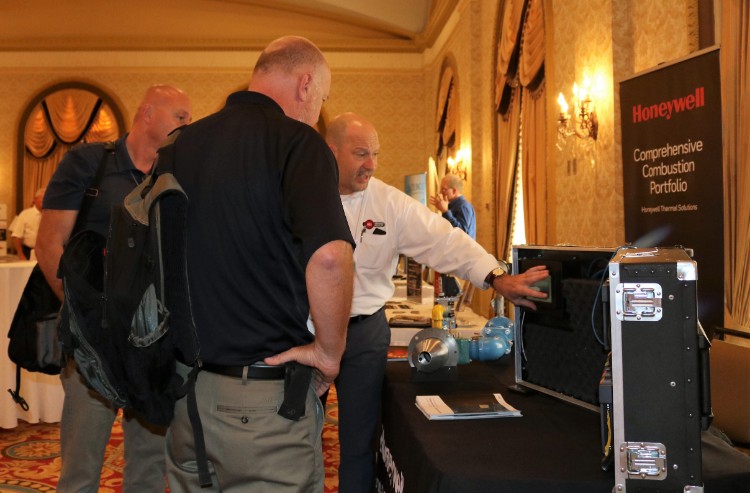
This annual series will be comprised of three seminars addressing combustion, safety standards and codes, and process heating, respectively. Attendees from all three seminars may also attend IHEA’s Tabletop Exhibition & Reception on Tuesday, September 24, to network with suppliers of thermal processing products and services.

The Combustion and Safety Standards and Codes Seminars, as well as the Tabletop Exhibition & Reception,  will be held at the InterContinental Hotel Cleveland, while the Process Heating Seminar will be held at Selas Heat Technology.

IHEA’s 50th Combustion Seminar will span two full days, featuring 16 sessions designed to give round exposure to combustion technology and led by industry professionals in a non-commercial environment.

IHEA Fall Seminar 2: IHEA Fall Seminar attendee takes advantage of visiting with tabletop exhibitors during the networking reception.

The Safety Standards and Codes Seminar will also follow the two-day format. This class will be led by instructors involved with the 2019 revision of NFPA 86 – Standards for Ovens & Furnaces. The agenda will include discussion of these recent updates as well as several safety topics.

New this year, the one-day Process Heating Seminar will be held at Selas Heat Technology, a member company of IHEA. Besides live demonstrations and a facility tour, this seminar will present information about infrared and induction technologies and the industrial applications that use these heating processes.


IHEA Fall Seminar Series Opens 2019 Registration Read More »

Vacuum Heat Treatment Provider Adds Third All-Metal Hot Zone Furnace

A vacuum heat treatment provider recently installed an all-metal hot zone vacuum furnace at their Souderton, Pennsylvania, location.

Solar Atmospheres
Solar Atmospheres

Solar Atmospheres added a third all-metal hot zone furnace for its climate-controlled room at its facility in Souderton, Pennsylvania. The additional furnace increases Solar’s capacity for processing sensitive materials such as PH stainless, nickel-chrome based superalloys, titanium, and ferritic and austenitic stainless steels.

Vacuum levels lower than 5 x 10⁻⁶ Torr can produce clean, bright results without contamination. Solar reports that the unique placement of isolation valves, an all-metal moly/stainless steel hot zone, and a stainless steel chamber in its new furnace allow it to attain the level of cleanliness mandated by aerospace and medical markets. The furnace also incorporates Solar Manufacturing’s latest SolarVac Polaris HMI control system for complete process automation.

Jamie Jones, President, Solar Atmospheres in Eastern PA

“The increasing demands for cleanliness levels in critical aerospace and medical applications, and the growth in these markets paved the way for Solar Atmospheres to add capacity through this investment,” said Jamie Jones, President of Solar Atmospheres in Eastern PA.

Vacuum Heat Treatment Provider Adds Third All-Metal Hot Zone Furnace Read More »

IHEA Economic Report Released With Split Indicators

IHEA New Orders PMI May 2019

The Industrial Heating Equipment Association (IHEA) released its 12-page monthly Executive Economic Summary which contains an analysis of 11 key heat treat industry economic indicators. The organization has been providing this monthly report as a service to its members for several years, and it is a valuable source of economic data and analysis for companies supplying equipment, components, or consumables to the heat treating industry.

This month’s report was nearly evenly split between the eleven indices, with five moving upward and six moving downward.

According to IHEA economist, Chris Kuehl of the Armada Corporate Intelligence, the underlying concerns about tariffs and trade wars seems to be the primary inhibitor of greater economic growth. While nearly all of the indices are in the “growth” range of their curves, more of them are getting closer to the “contraction” range and could easily slip into contraction with additional dampening economic news.

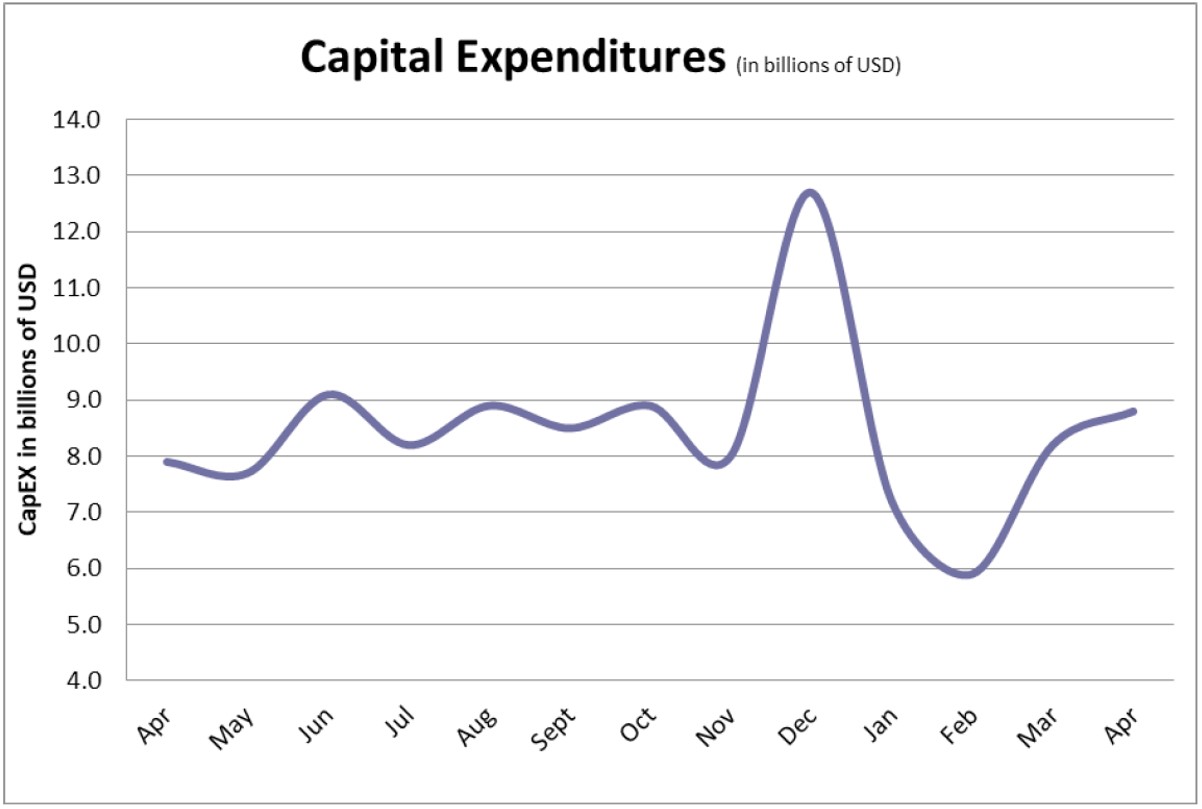
IHEA CapEx 2019 05
IHEA CapEx 2019 05

Three of the five gainers were housing starts, capital investment, and PMI new orders, each showing modest gains.

Among the sliders, new automobile and light truck sales, steel consumption, and capacity utilization.

Generally, downward movements were stronger than upward movements this month, contributing to longer-term concern about a possible slow down in the economy.

Anne Goyer, Executive Director of IHEA

To receive a copy of the full, 12-page report, contact Anne Goyer, executive director of IHEA by clicking here.

IHEA Economic Report Released With Split Indicators Read More »