A major provider of innovative heat processing solutions recently developed an augmented reality (AR) system in conjunction with a global technological corporation to adapt its holographic computer systems to metallurgical applications in the manufacturing environment.
SECO/WARWICK introduced SECO/LENS, an adaption of Microsoft’s HoloLens, to bring the advances in virtual reality to manufacturing enabling users to view equipment, systems, and processes in 3D; this is the first use of this technology by heat treatment industry.
Slawomir Wachowski, Automation Department Director for SECO/WARWICK
SECO/LENS can superimpose a 3D model of a specific piece of heat treating equipment or an entire technological line, providing the most optimal layout of the production line on the plant floor for the line’s monitoring, diagnostics, maintenance, remote repair, and planning. SECO/LENS is intended to create an accurate visualization of the system, permitting staff training on the operation of the equipment without the need for expensive and time-consuming travel.
“SECO/LENS is a new era of working with SECO/WARWICK devices—it’s the era of interaction,” said Slawomir Wachowski, Automation Department Director for SECO/WARWICK. “Introduction of virtual technologies to the production process, training, and operation of our devices are significant benefits, more intuitive device operation, increased mobility, increased efficiency and reduced response times to service requests.”
The quality department of a global manufacturer of aerostructures, composites, and metallic components for the aerospace industry recently obtained a new certification for carrying out heat treatment processes of aluminum alloys for Boeing programs.
Sofitec extends its special processes capabilities for American manufacturers with this certification, being able to develop the stretch forming activities included in commissions for aerospace heat treating.
Heat Treat 2019 is coming, and one of the great benefits of gathering with a community of heat treaters is the opportunity to challenge old habits and look at new ways of doing things. Heat TreatToday’s101 Heat TreatTips is another opportunity to learn the tips, tricks, and hacks shared by some of the industry’s foremost experts. The inaugural list of 101 Heat Treat Tips was published in the FNA 2018 Special Print Edition. This special edition is available in a digital format here.
Today's Technical Tuesday features 10 Tips -- all from the Vacuum Furnaces category and all supplied by the same equipment manufacturer.
Heat TreatTodayis compiling the 2019 101 Heat TreatTipslist for the fall issue to be distributed at Heat Treat 2019, the biennial show from the ASM Heat Treating Society to be held in Detroit, Michigan, October 14-17, 2019. If you have a heat treat-related tip that would benefit your industry colleagues, you can submit your tip(s) to doug@heattreattoday.com or editor@heattreattoday.com.
Heat TreatTip #24
Dirt In, Dirt Out!
Parts going into the furnace should be as clean as possible. Avoid placing parts in the furnace that contain foreign object debris (FOD). FOD on work surfaces going into the furnace will contaminate the furnace and the parts themselves. Dirty work in, dirty work out. FOD comes in many forms. Most common: oil, grease, sand in castings or grit blasting operations, and metal chips that generally originate from the manufacturing process before the parts are heat treated. It could also be FOD from the shipping process such as wood or plastic containers used to ship the parts.
Heat TreatTip #26
Solenoid valves could be the problem if helium detection fails.
When a Helium Leak Detector Doesn't Help
If an air leak cannot be found with a helium mass spectrometer, take apart the gas backfill or partial pressure solenoid valves to ensure they are clean. A small piece of debris can cause a valve to leak a process gas into the furnace that will not be found with a leak detector. Debris is often found in the valve seats when piping to the valve was disturbed in some way such as new piping or repair that stirs up contaminants in the line.
Heat TreatTip #46
O2 Analyzer Helps Ensure Gas Purity
In addition to monitoring dewpoint at the farthest location from the gas source in your heat treat facility, an oxygen analyzer is also recommended as an additional tool for monitoring gas purity. Generally, the analyzers used to measure dew point drift low over time. One may think they have a very low dew point gas, however, it could be the dew point analyzer is beginning to fail. Quarterly checks of the dew point analyzer's accuracy should be taken; some OEMs recommend replacing the sensors annually. Oxygen analyzers provide a more stable reading over a period of time and build redundancy in confirming gas purity when coupled with the dew point analyzer.
Heat TreatTip #48
Seal Threaded Connections
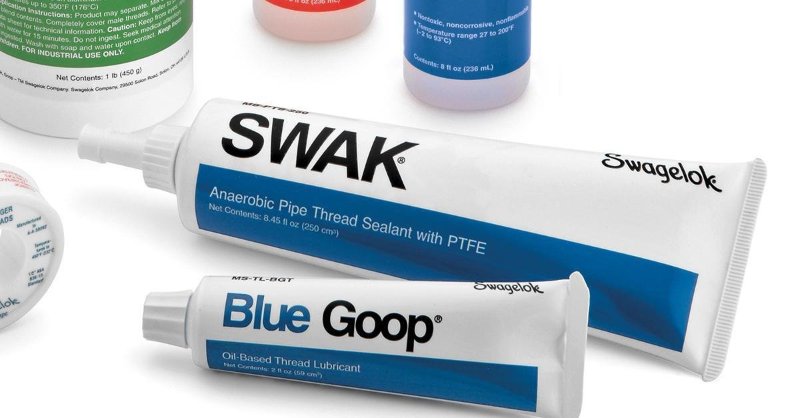
SWAK from Swagelok is a great thread sealing option. (photo source: LinkedIn)
Ensure threaded connections have adequate sealing protection on them to prevent air leaks through the threads where applicable. Wipe off excess sealant once the connection is made.
SWAK from Swagelok is excellent
Apply to the male threads only, not on any other surface as it could contaminate the system the component is being installed on.
Excess SWAK can be removed with a solvent such as acetone
Finger tight first, then tighten with a wrench
After the sealant is dry (recommend 24hrs by manufacturer) do not loosen as this could break the seal once cured.
Heat TreatTip #61
Start With the Obvious
When a problem arises with the furnace, always start the troubleshooting process with the last item that was worked on. Start with the obvious; don't look for a needle in the haystack. For example, if the furnace will not pump into high vacuum and maintenance was just performed on the furnace with the pneumatic pressure valves being shut to perform that maintenance operation, the pneumatic valve to the main poppet valve on the diffusion pump may not have been re-opened, causing the diffusion pump main poppet valve to not open.
Heat TreatTip #74
Make Sure Your Gas Meets Spec
Ensure each delivery of process gas is accompanied by a certification identifying purity, oxygen content, and dew point. For example, nitrogen should be 99.998% pure, 10 ppm oxygen max, and a dewpoint no higher than -89°F. With contaminated gas or gas that does not meet the criteria above, parts processed in the furnace and subjected to the partial pressure of the gas or quenched with the gas may also become contaminated, typically in form of oxidation and/or decarburization. Generally varying purity is not a concern, however, the specific purity of the gas required needs to be conveyed to the gas supplier and a certification supporting the gas type you ordered was delivered. An accompanying certification by the gas supplier goes a long way in audits and other disputes.
Heat TreatTip #76
Specification Checklist for Vacuum Furnace Purchase
If you're planning on purchasing a new vacuum furnace, create a technical specification for the manufacturer(s) that clearly outlines the performance, functions, and accessories required on the furnace. The specifications should be reviewed by multiple departments including but not limited to engineering, quality, production, and management.
List of department sign-offs required (engineering, production, maintenance, quality)
List of parameters to be recorded (temperature, pressure, flow rate, etc.)
List of required alarms
Physical location of furnace and associated components such as control system and surge tank
Units of measurement (°F or °C, torr or Pascals, minutes or hours)
How many process gases and what type
Cooling rate requirements (This will help decide what quench pressure design furnace is required, for example, 2 bar or 10 bar.)
How many work thermocouples are required
What pre-testing verification is required for final acceptance. For example, thermal uniformity survey temperature points and tolerances, vacuum pump downtime and levels, leak up requirements, quench tests, process validation tests.
Wipe both door flanges and O-ring every time.
Heat TreatTip #84
Clean the Door—Every Time!
Wipe down the front door O-ring and both flanges every time before the door is closed to ensure there is no debris on the O-ring or flange. Over time, the debris will damage the O-ring and pit the flange causing sealing issues.
Heat TreatTip #91
Include Maintenance Team in New Vacuum Purchase Process
Include the maintenance manager in any furnace purchase decision. The manager and team are the ones tasked with troubleshooting, repair, and preventative maintenance. The maintenance manager will make sure the furnace has clear access for maintenance and replacement of major components including vacuum pumps, cooling motor, hot zone, and heat exchanger. The longer it takes to repair the furnace, the more downtime and lost revenue because the furnace is not running.
Heat TreatTip #94
A properly greased O-ring will ensure a solid, leak-free seal.
Inspect Replacement O-Rings
When replacing an O-ring, be sure the new O-ring is clean and undamaged (free of cuts, nicks, tears, or gouges) and that the splice joint is solid and true. Use a conservative amount of vacuum grease on the O-ring to ensure a tight sealing furnace. Not too much grease is needed. Rule of thumb: a light gloss or sheen, but no build-up.
If you have a heat treat-related tip that would benefit your industry colleagues, you can submit your tip(s) to doug@heattreattoday.com or editor@heattreattoday.com
A leading provider of metal additive manufacturing solutions recently announced that it has entered into an ambitious research and development (R&D) initiative with a metallurgist expert and one of the world leaders in high-performance steels, superalloys, titanium, and aluminum and a multinational aerospace corporation.
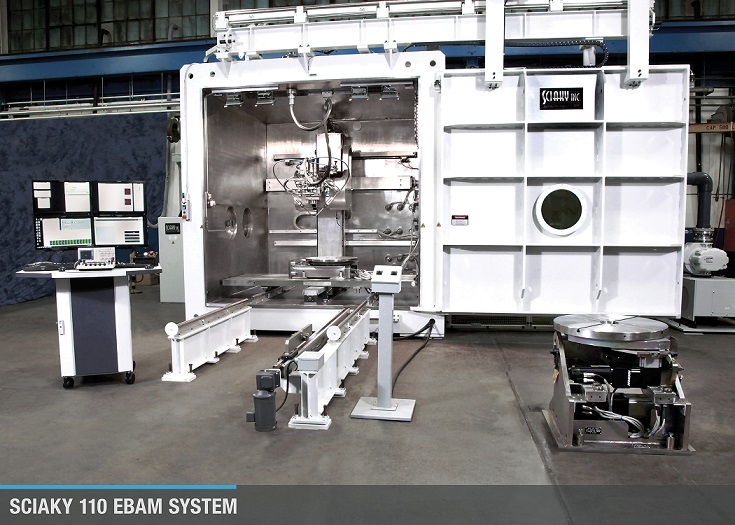
Sciaky EBAM®system
The goal of the R&D initiative between Sciaky, Inc., a subsidiary of Phillips Service Industries, Inc.; Aubert & Duval; and Airbus, and piloted by the Saint Exupéry Institute for Research in Technology (IRT) is to couple traditional metallurgy—high-power closed die forging—with emerging wire fed metal 3D printing techniques—in this case, Sciaky’s groundbreaking Electron Beam Additive Manufacturing (EBAM®) process—to develop new processes for manufacturing titanium alloys aircraft parts.
The Production Engineering laboratory of the National School of Engineering in Tarbes, France, will serve as an academic partner for this project, also known as the Metallic Advanced Materials for Aeronautics (MAMA) project.
Scott Phillips, president and CEO of Sciaky, Inc
In this first phase, the project has global funding just under $4.8M (€ 4,2 M) of which 50% are supported by the French State as part of the “Investing in the Future” program (PIA – Programme Investissement d’Avenir), the other 50% being funded by its industrial partners.
“Sciaky is proud to work with the Saint Exupéry IRT, Aubert & Duval, and Airbus on this exciting project,” said Scott Phillips, president and CEO of Sciaky, Inc. “Industrial metal additive manufacturing technology continues to break new ground every day, and Sciaky is committed to keeping EBAM at the forefront of this movement.”
Heat TreatToday distributed branded packing tape at recent industry shows, and reports are coming in about its use in multiple applications — such as binding worn appointment books!
“I couldn’t part with my little leather book. So instead of throwing it away, I taped it up with your special tape.”
Thanks, Rosanne Brunello, president of Mountain Rep in Cleveland, Ohio, for posting this photo at LinkedIn and sharing it with us.
What have you used your Heat TreatToday tape for, besides securing boxes?
A major manufacturer of nitrogen generators which provides technology for heat treating applications, as well as for many other markets, recently announced plans to expand in Wilmington, North Carolina, into a higher capacity manufacturing facility.
South-Tek Systems (STS), the nation’s highest volume manufacturer of N2GEN®), will be transitioning operations into a custom-designed 66,000-square-foot building — 10 times their current space — in order to accommodate growth in production and improve workflow.
The expansion (from 6,600 sq. ft to 66.000 sq. ft!!) will accomplish a few key developments:
Increased space for 4 more new engineers in manufacturing/production, which will flesh out R&D;
Inventory improvement, which will decrease lead times from order to shipping;
Laboratory environment on site, which will enhance N2% purity and flow rate certification;
More efficient delivery due to better highway/port access.
Scott Bodemann, president of South-Tek Systems
“In almost reaching the maximum capacity of South-Tek’s current facility, we have perfectly timed the move to our new building We are excited to transition into the larger space as it will increase our efficiencies as well as allow us to better plan for our customer’s future nitrogen generator needs,” said Scott Bodemann, president of South-Tek Systems.
Dan Herring, The Heat Treat Doctor®
“As a technical consultant for the South-Tek organization, I congratulate the company on their continued commitment to and investment in the heat treatment industry by manufacturing nitrogen generators for both atmosphere and vacuum furnace systems,” said Dan Herring, The Heat Treat Doctor®. “Their units are designed with output volumes from a few cubic feet per minute to systems that are able to produce well over 30,000 cubic feet per hour. The worldwide demand for South-Tek nitrogen units has resulted in the company growth and now the expansion of their manufacturing capabilities. Their long-life systems are capable of producing nitrogen purities of up to 99.999% (10 PPM and lower) to meet any heat treatment application need.”
You haven’t nominated anyone yet for the Heat TreatToday 40 Under 40? Maybe you’re wondering what the benefits are to receiving this industry recognition?
Danielle Cote of Worcester Polytechnic Institute (WPI) was one of 40 recipients of Heat TreatToday’s Class of 2018 40 Under 40 award. Listen to this short message from Danielle about the importance of nominating someone for this year’s award.
“Thank you very much for this honor and recognition. I am proud to be among so many other wonderful contributors to heat treating.” ~ Lesley Frame, UConn
“Thank you very much! I am honored to have received this recognition from Heat Treat Today.” ~ Sean Tarpinian, JTEKT North America Corp
A North American manufacturer of powder metal products recently announced plans to expand its Pennsylvania facility, adding new production capabilities to support additive manufacturing and other technologies.
Photo: Daily American
North American Höganäs High Alloys, founded in 1896 in Johnstown, Pennsylvania, will construct a 24,000-square-foot building this location and purchase new machinery to support the global demand for high alloy products, which include stainless steel powders, iron alloy powders, nickel alloy powders, electrolytic iron powders and chips, manganese and silicon powders, and the proprietary GLIDCOP dispersion strengthened copper products.
Linda R. Thomson, president and CEO of the non-profit economic development organization JARI
“Pennsylvania’s powder metals industry is a major contributor to our manufacturing sector,” said Pennsylvania Governor Tom Wolf. “Höganäs’ decision to expand here is great news for Pennsylvania manufacturing, and will provide at least 25 reliable, family-sustaining jobs for Cambria County workers.”
“JARI is pleased to provide support to Höganäs as the company expands their operations in the City of Johnstown,” said Linda R. Thomson, president and CEO of the non-profit economic development organization JARI. “Höganäs is a world-class, internationally recognized company with state-of-the-art products that is meeting the demands of the new manufacturing age. We appreciate the continuation of the proud Cambria County tradition of leading the way for innovation and we thank the Wolf Administration for their continuous support.”
“This exciting investment, with the greatly appreciated support from the Governor’s Action Team and JARI, will help Höganäs continue to grow in Pennsylvania and provide innovative products for our customers in several quickly developing market areas,” said Dean Howard, President Americas Continent.
A large Chinese automotive steel producer recently announced plans to expand its integrated steel production complex by installing heat treat equipment for a cold rolling mill to meet the demand for automotive grade steel in the South China and Southeast Asia markets.
Fives, a partner of steel producer Baosteel, has been contracted to supply the complete thermal part for the continuous annealing line (CAL) with a reported production capacity of 630,000 tons per year. The line’s purpose is to produce both standard steel grades and advanced high-strength steels. The company hopes to produce the line’s first coil by the end of 2021.
Fives will provide design, supply, and installation supervision of CELES induction heaters and a Stein Digiflex® furnace. Part of Fives’ equipment will be engineered and manufactured in China under the supervision of Fives’ subsidiary in Shanghai.





 SECO/WARWICK introduced SECO/LENS, an adaption of Microsoft’s HoloLens, to bring the advances in virtual reality to manufacturing enabling users to view equipment, systems, and processes in 3D; this is the first use of this technology by heat treatment industry.