


Guide To Conducting SATs According to CQI-9 4th Edition

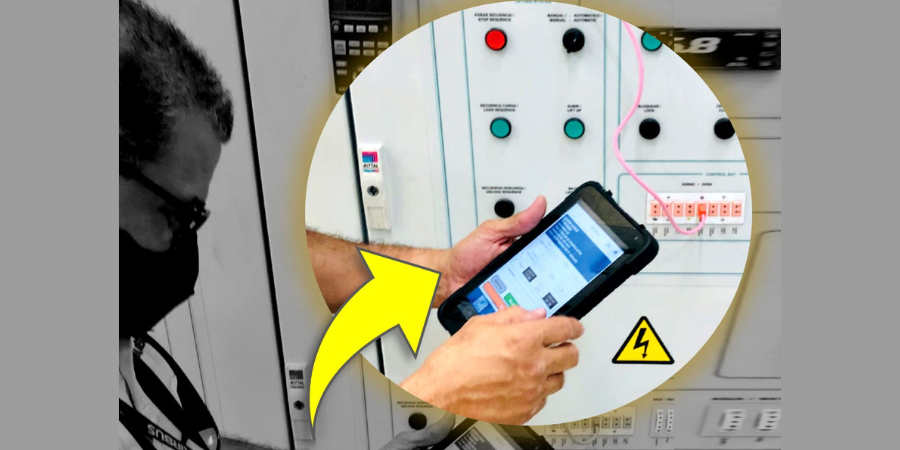
OCThe AIAG CQI-9 (Heat Treat System Assessment) is the most accepted standard in the automotive industry for the validation of heat treatment operations. This article summarizes the evaluation requirements and illustrates the benefits of conducting this test to identify variations in control systems using the probe method A.

Read the English translation of this Technical Tuesday article by Erika Zarazúa, regional purchasing manager at Global Thermal Solutions, in the version below, or read both the Spanish and the English translation of the article where it was originally published: Heat Treat Today's August 2022 Automotive print edition.

"La evaluación CQI-9 (Heat Treat System Assessment) de AIAG es el estándar mas aceptado en la industria automotriz. . . ."


Erika Zarazúa
Regional Purchasing Manager 
Global Thermal Solutions México
Source: Global Thermal Solutions México

1. Application

System Accuracy Tests (SATs) must be performed on all control, monitoring, and recording systems of thermal processing equipment. This does not apply to “high limit” systems, whose sole function is to protect the furnace from overheating.

Contact us with your Reader Feedback!

The test thermocouple used for the SAT must meet the accuracy requirements defined by CQI-9 in table P3.1.3 (±1.1°C or ±2°F maximum error). Similarly, table P3.2.1 of the same section defines the requirements for the field test instrument (±0.6°C or ±1°F maximum error).

SATs conducted by “probe method” should be performed quarterly or after any maintenance that could affect the accuracy of the measurement system such as:

  • Replacement of lead wire
  • Replacement of the control thermocouple
  • Replacement of the control/recording instrument

2. Procedure (Probe Method A)

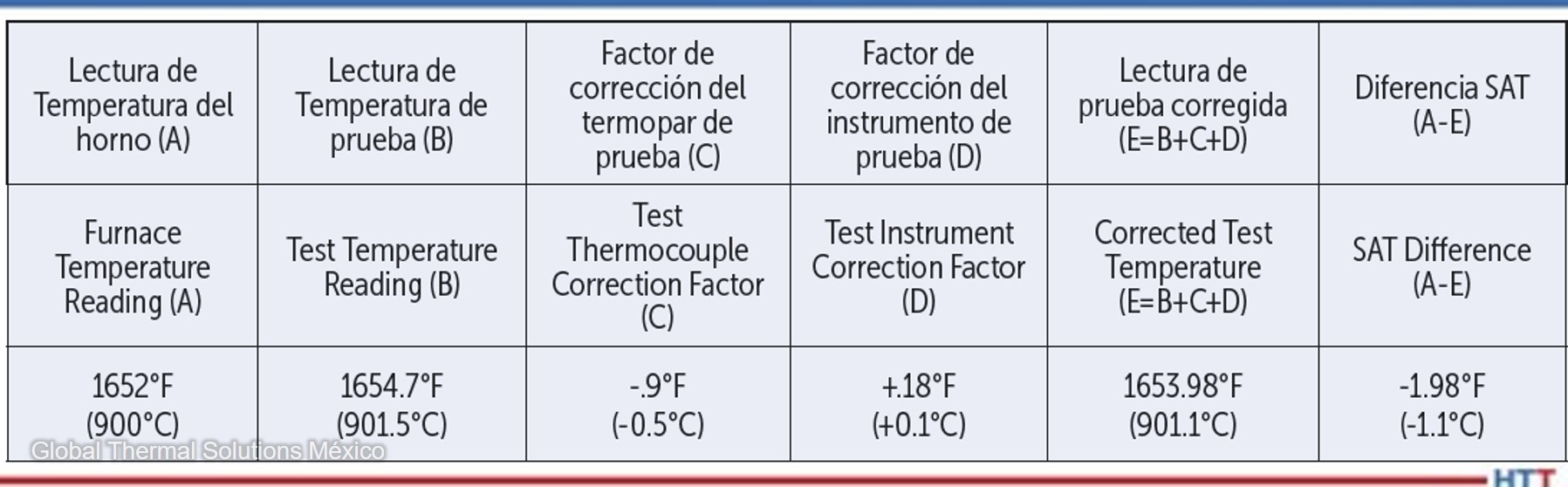
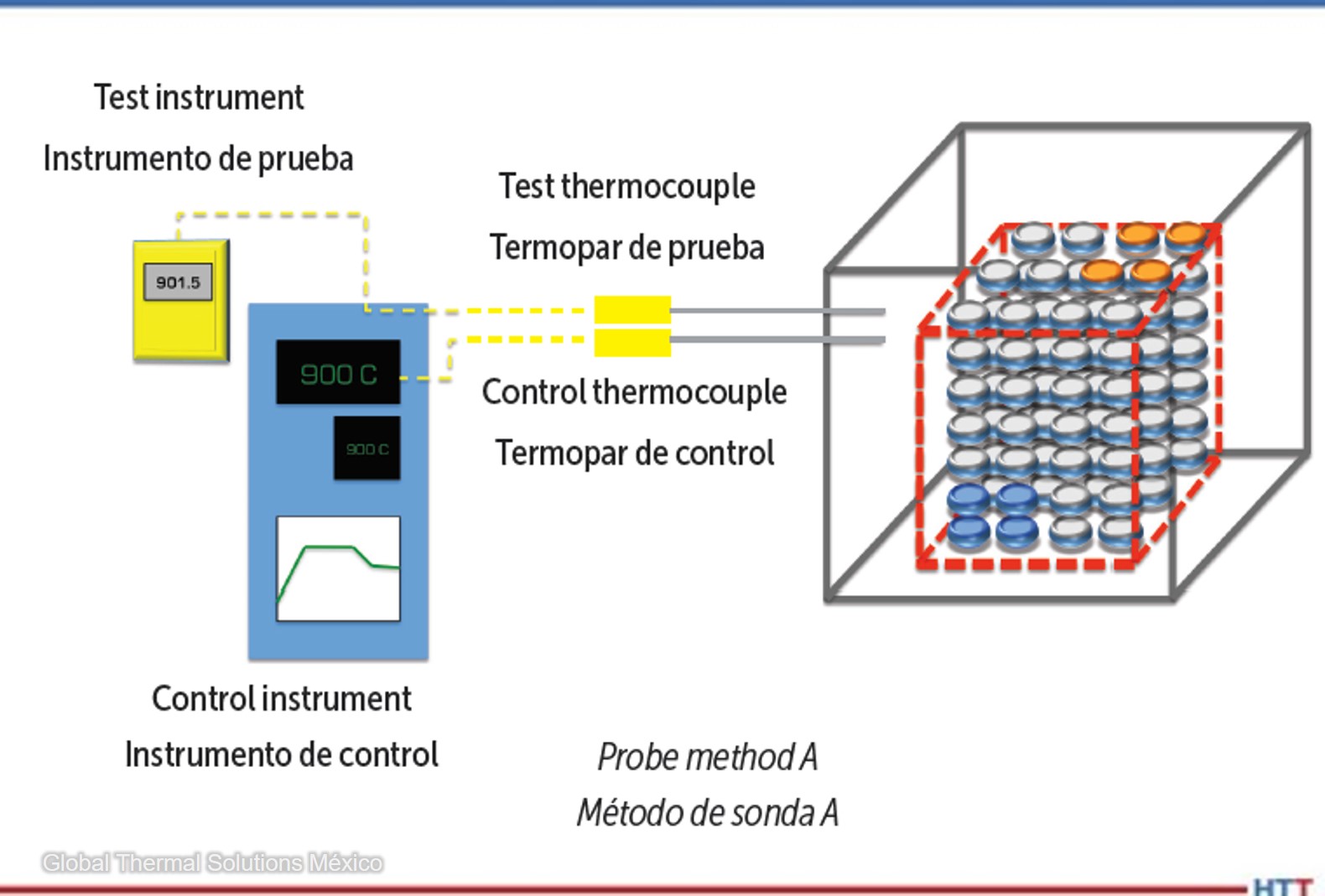
Probe method A is a comparison between the furnace temperature reading and a corrected test temperature reading.

Table 1. Probe method A
Tabla 1. Método de sonda A

When inserting the test thermocouple, ensure that the tip of the probe is placed as close as possible to the tip of the thermocouple to be tested, and no further than 50mm. Once placed in the test position, it is recommended to allow some time for both systems to reach equilibrium before conducting the test.

If the difference between the furnace temperature reading and corrected reading of the test system exceeds ±10°F (±5°C), then corrective actions must be conducted before processing a product. The most common corrective actions are to replace the control thermocouple, calibrate and adjust the control/recording instrument, or to combine both methods. According to CQI-9, these actions must be documented.

3. Records

CQI-9 revision 4 specifies that the SAT must be documented, and the records must include, at a minimum, the following information:

a. Furnace thermocouple identification
b. Test thermocouple identification
c. Identification of the test instrument
d. Date and time of the test
e. Setpoint value
f. Reading observed in the control system
g. Observed reading on test system
h. Thermocouple and test instrument correction factors
i. Test system corrected reading
j. Difference calculated from the SAT
k. Name and signature of the technician performing the test
l. Company performing the test (if external)
m. ISO/IEC 17025 accreditation of the company (if external)
n. Approval of the person responsible for heat treatment

4. Conclusion

The pyrometry section of CQI-9 lists the requirements and procedures for conducting system accuracy tests (Section P3.3). Within CQI-9, there are two important requirements heat treaters must be aware of. First, the furnace temperature measurement system must not deviate more than ±10°F (±5°C) from the test system. If this is the case, the equipment must not be used for thermal processing and corrective actions must be taken. Second, the SAT report must contain each time this test is conducted. With probe method A, variations in controls systems are easily identifiable.


References

[1] CQI-9 Special Process: Heat Treat System Assessment, 4th Edition. Automotive Industry Action Group, 2020.

[2] International Organization for Standardization; ISO/IEC 17025, General requirements for the competence of testing and calibration laboratories, 3rd Edition. International Organization for Standardization, 2017.

(Photo source: Global Thermal Solutions)


About the Author: Erika Zarazúa, a 40 Under 40 Class of 2021 member, is a metallurgical engineer with over 18 years of experience in heat treatment operations and temperature measurement and has worked in multiple engineering, quality, and project roles in the automotive and aerospace industries. Erika currently holds the position of regional purchasing manager at Global Thermal Solutions.

Contact Erika: erika@globalthermalsolutions.com


Find heat treating products and services when you search on Heat Treat Buyers Guide.com


Guide To Conducting SATs According to CQI-9 4th Edition Read More »

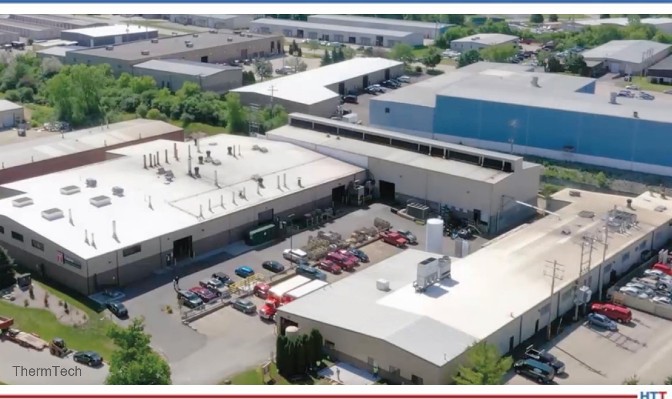
ThermTech

If ThermTech was a person, they would make it into Heat Treat Today's 40 Under 40 Class of 2022 as a notable company at 40 years old. In May, ThermTech of Waukesha, Wisconsin celebrated 40 years, having been founded in 1982 by Charles E. Wiberg. Wiberg’s previous company, Midland Metal, was sold in 1980 and he used his industry knowledge to start ThermTech and in turn worked with his son and daughter, Steven Wiberg and Mary Wiberg Springer, who now own and run the company.

Contact us with your Reader Feedback!

The company specializes in everything except induction hardening, and they have three operating business units: carburizing/bath unit, vacuum/tool steel unit, and the austemper/foundry products unit. ThermTech believes in investing in their people, so that they will invest in the company. This has proven to be true as over 70 of their 137 employees have over 10 years of experience.

ThermTech has grown significantly since the beginning when they had only a couple of used furnaces, including two Ipsen T11s from the 60s. Mary and Steve’s father always told them to “Witness the turtle: he moves forward slowly with his neck fully extended.” Though it may be slow movement, their goal is to never stop moving forward. Every couple of years they take on equipment and physical expansion projects. Current projects include a new office facility and a new austemper line for the austempering facility.

This Waukesha company serves the automotive and aerospace industries as well as military, mining, agriculture (heavy equipment), and construction (housing). Processes include hardening, tempering, vacuum treatments, annealing, and surface treatments such as flame hardening, carburizing, and
more. They can also perform blast cleaning, cryogenic treatments, normalizing, straightening, and stress relieving.

ThermTech Waukesha, WI 
Source: ThermTech

The company focuses on partnering with customers on the front end of projects to help them understand complex specifications. Their job launch team is composed of metallurgical engineers, quality experts, and people with excellent practical knowledge. The internal maintenance department is headed by an engineer with 30 years in the industry.

Many different things can pass through a heat treatment facility, whether that be parts up to 6,000 lbs., parts that have come from all over the world, or a robot! Right now, the company is most excited about their first robot which they will receive in September. They are eager to see how robotic technology can help during this labor shortage, hopefully gaining efficiency and decreasing costs.

ThermTech wants to be known as a company that does not live in the past, but moves forward in innovation, vitality, and creativity driven by a core of younger employees in the management group, always striving for quality, fair pricing, excellent service, and technical partnership.

As they look to the future, the team plans to continue taking on new customer challenges and serving them into the next century as the hands of the third generation and many dedicated staff guide the company forward with innovation and efficiency.


Find heat treating products and services when you search on Heat Treat Buyers Guide.com


ThermTech Read More »

News from Abroad: Heat Treat Modernization, Events, and Retrofitting

Heat Treat Today is partnering with heat processing, a Vulkan-Verlag GmbH publication that serves mostly the European and Asian heat treat markets. Together, we are sharing the latest news, tech tips, and cutting-edge articles that will serve our audience — manufacturers with in-house heat treat.

This Monday, we’re looking to our European information partner, heat processing, for updates on industry events around the globe. Read about trade shows in India, modernization of a foundry in Switzerland, and more “green steel” coverage.


Four Upcoming Trade Fairs

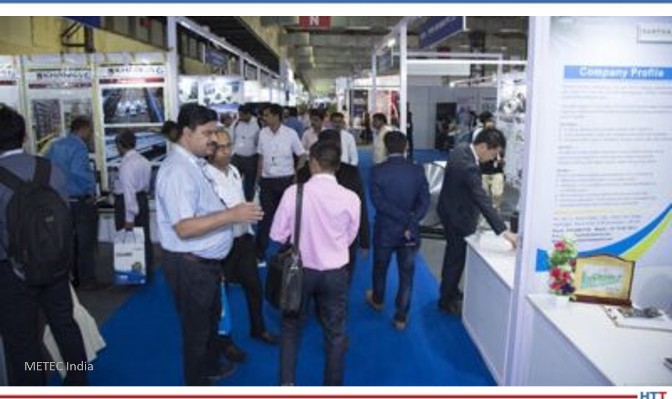
Trade fair visitors looking forward to METEC India
Source: METEC India

"From 23 to 25 November 2022, the four regional Indian metal trade fairs wire India, Tube India, METEC India and India Essen Cutting & Welding will open their doors at the Bombay Exhibition Centre in Mumbai: wire, cable, tube and pipe products are indispensable for investments in India’s growing infrastructure as well as house, road, bridge and canal construction."

Read More: "Metal industries look forward with excitement to regional trade fairs in Thailand and India"


Modernization and Retrofitting for Foundry in Switzerland

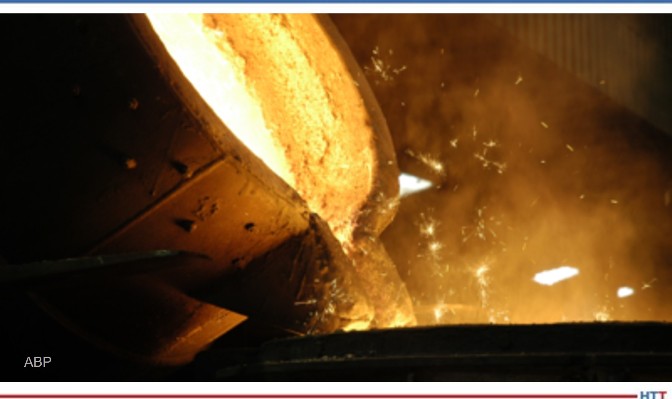
Retrofitting for foundry in Switzerland
Source: ABP

"ABP Induction has been awarded the contract for the extensive modernization of a foundry at Vonroll Casting. The order shows how retrofits can upgrade existing plants and what advantages they have in terms of plant availability, occupational safety and sustainability. "

Read More: "ABP: Modernization at Vonroll Casting with Retrofit"


ecoMetals Day: Steel Day of the Future

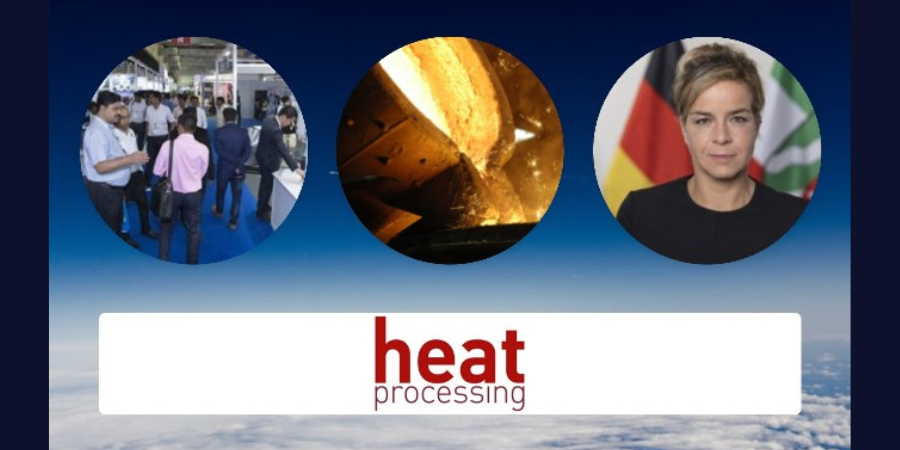
Mona Neubaur, Minister for Economy, Industry, Climate Protection and Energy of North Rhine-Westphalia to open ecoMetals Day
Source: Ralph Sondermann

"More than 25 Green Steel, Green Energy and Circular Economy pioneers from companies, associations, science and politics will present top-class lectures and panel discussions. They will illustrate why decarbonization of the steel and iron and steel industry is a joint task that can only be solved in close cooperation with the energy and digital industries."

Read More: "ecoMetals Day: Steel Day of the future with top-class program"


.

Search for heat treat solution providers and suppliers on Heat Treat Buyers Guide.com


News from Abroad: Heat Treat Modernization, Events, and Retrofitting Read More »

Guía para conducir pruebas System Accuracy Tests conforme a CQI-9 4ta. Edición

OCThe AIAG CQI-9 (Heat Treat System Assessment) is the most accepted standard in the automotive industry for the validation of heat treatment operations. This article summarizes the evaluation requirements and illustrates the benefits of conducting this test to identify variations in control systems using the probe method A.

Read the Spanish translation of this article by Erika Zarazúa, gerente regional de compras de Global Thermal Solutions México, in the version below, or read both the Spanish and the English translation of the article where it was originally published: Heat Treat Today's August 2022 Automotive print edition.

La evaluación CQI-9 (Heat Treat System Assessment) de AIAG es el estándar mas aceptado en la industria automotriz para la validación de operaciones de tratamiento térmico y, entre muchas cosas, describe los requisitos generales y el procedimiento para conducir las pruebas SAT (System Accuracy Test) a los sistemas medición de temperatura de los equipos de procesamiento térmico. Este artículo sintetiza los requerimientos de la evaluación e ilustra los beneficios de conducir esta prueba para identificar variaciones en los sistemas de control mediante el método de sonda “A”.


Erika Zarazúa
Gerente Regional de Compras 
Global Thermal Solutions México
Source: Global Thermal Solutions México

1. Aplicación

Las pruebas SAT deben realizarse a todos los sistemas de control, monitoreo y registro de los equipos de procesamiento térmico. Esto no aplica para los sistemas de ‘alto-límite” cuya única función es la de proteger al horno de un sobre calentamiento.

Contact us with your Reader Feedback!

El termopar de prueba empleado para la prueba SAT debe cumplir con los requisitos de precisión que define CQI-9 en la tabla P3.1.3 de la sección de Pirometría (±1.1°C o ±2°F máximo de error). De igual manera, la tabla P3.2.1 de la misma sección define los requisitos para el instrumento de prueba - field test instrument (±0.6°C o ±1°F máximo de error).

Las pruebas SAT por el método de sonda deben realizarse trimestralmente o después de algún mantenimiento que pudiera afectar la precisión del sistema de medición como:

  • Reemplazo del cable de extensión
  • Reemplazo del termopar de control
  • Reemplazo del instrumento de control/registro

2. Procedimiento (Método de sonda A)

El método de sonda A es una comparación entre la lectura del sistema de medición del horno y un sistema de medición de prueba corregido:

Table 1. Probe method A
Tabla 1. Método de sonda A

Al insertar el termopar de prueba, se debe asegurar que la punta se coloque lo mas cerca de la punta del termopar a ser probado, y no mas lejos de 50mm. Una vez colocado en la posición de prueba, se recomienda permitir cierto tiempo para que ambos sistemas alcancen un equilibrio antes de conducir la prueba.

Si la diferencia entre el sistema de medición del horno y sistema de prueba corregido excede de ±5°C (±10°F) entonces se deben conducir acciones correctivas antes de procesar producto. Las acciones correctivas mas comunes consisten en reemplazar el termopar de control, calibrar y ajustar el instrumento de control/registro o una combinación de ambas. De acuerdo a CQI-9, estas acciones deben ser documentadas.

3. Registros

CQI-9 revisión 4 especifica que la prueba SAT debe documentarse y los registros deben incluir como mínimo la siguiente información

a. Identificación del termopar del horno
b. Identificación del termopar de prueba
c. Identificación del instrumento de prueba
d. Fecha y hora de la prueba
e. Valor del setpoint
f. Lectura observada en el sistema de control
g. Lectura observada en el sistema de prueba
h. Factores de corrección del termopar e instrumento de prueba
i. Lectura corregida del sistema de prueba
j. Diferencia calculada del SAT
k. Nombre y firma del técnico que realiza la prueba
l. Compañía que realiza la prueba (si es externa)
m. Acreditación en ISO/IEC 17025 de la compañía (si es externa)
n. Aprobación del responsable de tratamiento térmico

4. En resumen

La sección de Pirometría de CQI-9 revisión 4 indica los requerimientos y el procedimiento para la realización de la prueba SAT (Sección P3.3).

El sistema de medición de temperatura del horno no debe presentar una desviación mayor a los ±5°C (±10°F) respecto al sistema de prueba. Si este fuera el caso, el equipo no debe usarse para procesamiento térmico y deben aplicarse acciones correctivas.

CQI-9 especifi ca la información que debe contener el informe de SAT cada vez que se conduce esta prueba.


Referencias

[1] Automotive Industry Action Group; CQI-9 Special Process: Heat Treat System Assessment, 4rd Edition, June 2020.

[2] International Organization for Standardization; ISO/IEC 17025, General requirements for the competence of testing and calibration laboratories. 3rd Edition, 2017.

(Fuente de la foto: Global Thermal Solutions)

Sobre el autor: Erika Zarazúa es Ingeniera Química Metalúrgica por parte de la Universidad Autónoma de Querétaro. Con más de 18 años de experiencia en operaciones de tratamiento térmico y medición de temperatura, ha trabajado en múltiples roles de ingeniería, calidad y proyectos en las industrias automotriz y aeroespacial. Actualmente ocupa el cargo de Gerente Regional de Compras de Global Thermal Solutions.

Contacto Erika: erika@globalthermalsolutions.com


Find heat treating products and services when you search on Heat Treat Buyers Guide.com


Guía para conducir pruebas System Accuracy Tests conforme a CQI-9 4ta. Edición Read More »

Fringe Friday: New Energy Equipment at Historic Pittsburgh Factory

HTD Size-PR LogoSometimes our editors find items that are not exactly "heat treat" but do deal with interesting developments in one of our key markets: aerospace, automotive, medical, energy, or general manufacturing. To celebrate getting to the “fringe” of the weekend, Heat Treat Today presents today’s Heat Treat Fringe Friday press release about how BCI Steel and Nextracker LLC are using new and reshored equipment to produce solar tracker equipment. 


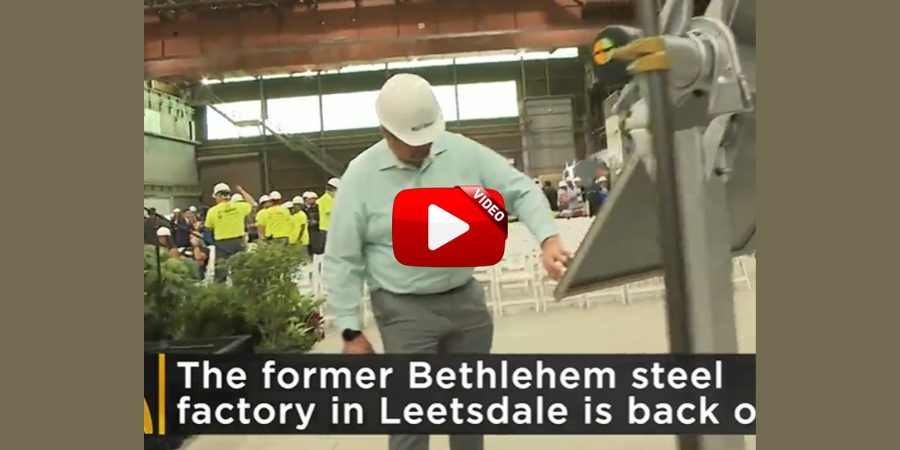
Nextracker LLC, a provider of utility-scale solar trackers, and BCI Steel, a Pittsburgh-based steel fabricator, announced the reopening of the historic Bethlehem steel manufacturing factory in nearby Leetsdale to produce solar tracker equipment for large-scale solar power plants.

The steel processing plant will incorporate both BCI Steel’s new and reshored equipment shipped to the U.S. from factories in Malaysia and Brazil. Solar tracker products produced at the factory will serve rapidly growing solar markets in Pennsylvania, Indiana, New York, and Ohio.

“BCI is proud to advance Pittsburgh’s legacy as the heart of America’s steel industry,” said Matt Carroll, CEO of BCI Steel. “This partnership with Nextracker showcases . . . unlocks additional domestic solar capacity with our low-cost manufacturing.”

This is the third solar tracker fabrication line Nextracker has commissioned with a steel manufacturing partner in 2022 as part of its commitment to rebuilding America’s steel and solar supply chains. With additional capacity in Pittsburgh, Nextracker is building out 10 GW of “Made in America” manufacturing capacity — enough to power 7.5 million homes. Earlier this year, Nextracker opened a green steel tracker production line in Texas with JM Steel, and another dedicated steel production line in Arizona with Atkore. Under this reshoring initiative, Nextracker has already procured over 100,000 tons of U.S.-made steel so far this year, enough for approximately 5 GW of solar trackers.

"This investment," commented Dan Shugar, CEO and founder of Nextracker, "will increase the resilience of the U.S. solar supply chain and bring manufacturing jobs, equipment, and capacity back to America."

The newly reopened Pittsburgh factory is situated with close proximity to river and rail transport in a location steeped in manufacturing history. The factory lies on the same grounds where steel fabricators built materials for tank landing ships (LSTs) during WWII.

The dedication ceremony was attended by top dignitaries and leaders from some of the world’s largest clean energy companies, including the CEO of EDPR Sandhya Ganapathy and the Chief Operating Officer of Lightsource bp Ann Davies.

Read more about this story here and here.


Find heat treating products and services when you search on Heat Treat Buyers Guide.com


Fringe Friday: New Energy Equipment at Historic Pittsburgh Factory Read More »

Aerospace Conversion Provider Joins “Three Second Club”

HTD Size-PR Logo

Cruz Hernández
Back-Shop Supervisor
Airborne Maintenance and Engineering Services
Source: LinkedIn

PEMCO Conversions – Airborne Maintenance and Engineering Services operators will join the "Three Second Club" with a new dual chamber heat treating system capable of quenching aviation grade aluminum aircraft parts in less than five seconds.

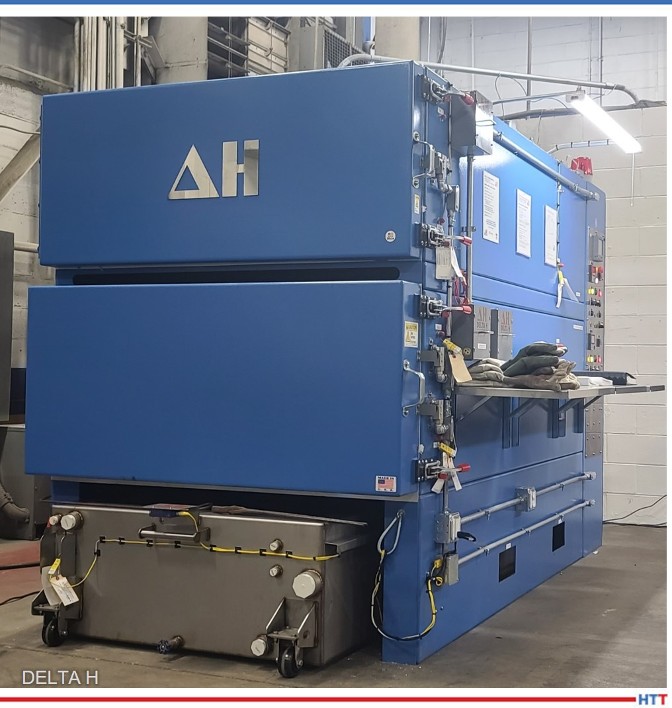
The modern DELTA H® Technologies, LLC Dual Chamber Aerospace Heat Treating (DCAHT®) system will replace PEMCO's previous DELTA H furnace which was installed in 2011 at PEMCO's location at Tampa International Airport.

The system, with an upper chamber convection oven operable to 500°F and a lower chamber convection furnace operable to 1200°F, includes soak time and quench delay recorded to within 1/10 of a second as well as full documentation systems for work order, part name, quality, and before/after condition. Honeywell controls and recorders are featured and include remote computer control, data entry, and process monitoring.  In addition to processing aluminum parts, the system is equipped for PH stainless steel aging and titanium ferrous alloy processes. The replacement system is fully compliant with SAE AMS2750G requirements.

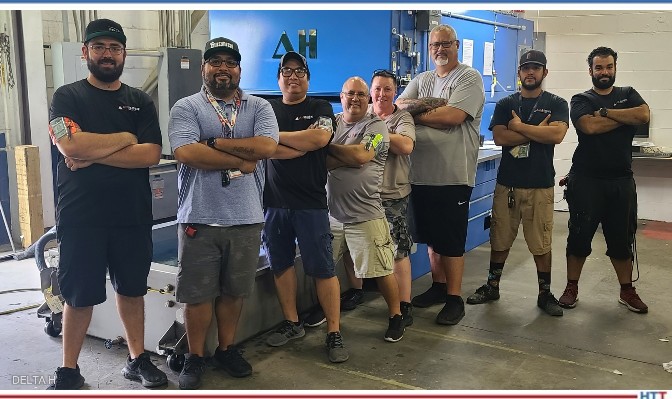
Team with DCAHT® system
Source: DELTA H

To achieve SAE compliance, DELTA H provided additional training for PEMCO employees.

DCAHT® system
Source: DELTA H

“We look forward to sharing about our continued success with [DELTA H’s] great product [. . . ]. We couldn't be any happier," Cruz Hernández, Airborne Maintenance and Engineering Services Back-Shop supervisor stated,


Find heat treating products and services when you search on Heat Treat Buyers Guide.com


Aerospace Conversion Provider Joins “Three Second Club” Read More »

Heat Treat IQ System for Härtewerk Chemnitz Hardening Plant

HTD Size-PR Logo

Kai Werlitz
Technical Operations Manager
Härtewerk Chemnitz GmbH
Source: Härtewerk Chemnitz

Härtewerk Chemnitz GmbH, a large German commercial hardening plant (Lohnhärterei), has purchased a horizontal, two-chamber furnace low-pressure carburizing and oil quenching system from an international heat treat solutions provider. In the German plant, the integral quench system will replace legacy atmosphere technology and expand their capabilities for mass-producing parts.

This is the first SECO/WARWICK furnace equipped with vacuum heating at the heat treater's German plant and the first Super IQ solution in Germany. The system has a heating chamber, loading and unloading vestibule, and a quenching bath. The equipment in the system enables users to perform a variety of heat treatment processes, heat, and chemical treatment, as well as low-pressure carburizing and quenching.

"The machines we have worked with so far had required time-consuming and expensive preparation, especially when the equipment was not at the right temperature," commented Kai Werlitz, technical operations manager at Härtewerk Chemnitz GmbH. "The Super IQ furnace that we have ordered eliminates not only these difficulties but also enables efficient heat treatment with very high repeatability and uniformity of the carburized layer, which with atmospheric furnaces was only possible to a limited extent."

The heat treater's Chemnitz and Chomutov plants provide a wide range of services related to metal heat treatment and focus on Germany and Europe's mechanical engineering, automotive, and metalworking industries.


Find heat treating products and services when you search on Heat Treat Buyers Guide.com


Heat Treat IQ System for Härtewerk Chemnitz Hardening Plant Read More »

Parallel Positioning Burner Controls for Uniform Temperature

OCIs there a way to combine pulse firing and fuel-only modulation without retaining the downsides of either method? Parallel positioning of burner controls may just be the win-win solution heat treaters are looking for.

This Technical Tuesday, written by Scott Fogle, national account executive at Siemens Combustion Controls, first appeared in Heat Treat Today's August 2022 Automotive print edition.


Scott Fogle
National Account Executive
Siemens Combustion Controls

Two common burner control methods for uniform furnace temperature needing Nadcap and AMS2750F requirements are pulse firing and fuel-only modulation. High convective heat transfer of the gases in the furnace results in good uniformity. Pulse firing keeps burners at high fire using on/off cycle times, and fuel-only modulation uses a constant high velocity of the combustion air. Both methods have a downside. When the cycle times of pulse firing are short for low temperature setpoints, the stirring effect is reduced, resulting in temperature uniformity challenges. Fuel-only modulation uses large amounts of excess air which is inefficient especially at high furnace temperatures.

Contact us with your Reader Feedback!

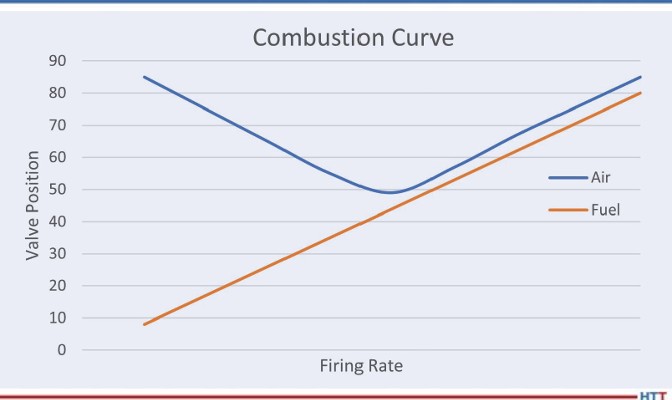
Parallel positioning offers a hybrid solution between pulse firing and fuel-only modulation. Parallel positioning independently controls the air and fuel on each burner. This control modifies the air-to-fuel ratio based on firing rate. At high firing rates of approximately 50% and above, the burner can be set to a stoichiometric ratio for the highest efficiency. When the firing rate falls below 50%, stoichiometric operation loses the high velocity stirring effect needed to obtain good uniformity. To maintain the stirring effect, excess air is added as the firing rate decreases. The air curve on a firing rate verses valve position chart looks like the letter “V.” Firing efficiently at high firing rates and adding excess air at low firing rates combines the best of pulse firing and fuel-only modulation in one solution.

Combustion curve

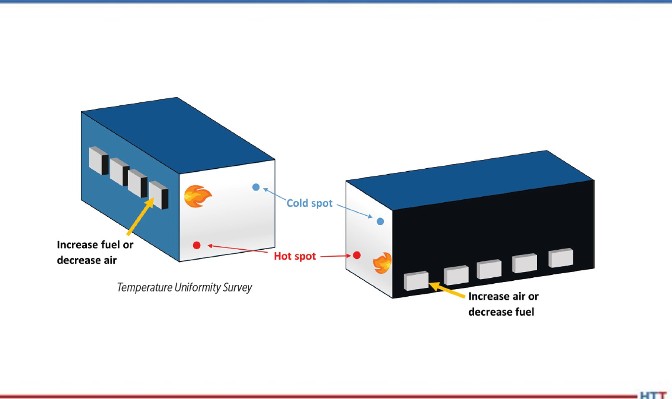
When conducting a temperature uniformity survey, parallel positioning offers flexibility to make minor adjustments to both the air and fuel of a burner. To correct cold spots and hot spots during a survey, there are four options available to tune the burner closest to the cold/hot spot at a particular firing rate: 1) increase air 2) decrease air 3) increase fuel and 4) decrease fuel. These adjustments of air and gas flow converge the temperature readings together for uniformity at multiple temperature setpoints.

Parallel positioning offers a couple other advantages as well. Many of these systems allow for an independent ignition position for each actuator: air and gas. A burner technician can set ignition for each burner at an elevated level and perhaps a rich mixture to increase the likelihood of reliable ignition in all cases, without compromising on turndown. If a specific firing rate and/or ratio does not suit a burner well, maybe the burner resonates or the flame signal weakens, the air fuel mixture can be adjusted independently at that point to minimize the undesirable characteristic.

Parallel positioning air fuel ratio control has been around for decades under the hoods of our cars, and for nearly that long in several large burner applications too. As these systems have become more reliable and less expensive, the benefits can be enjoyed by many other combustion applications. We’ve seen several furnaces take advantage of these benefits for improved operation in recent years.


About the Author: Scott Fogle is a national account executive with Siemens Combustion Controls based out of the Chicagoland area. He previously served as a combustion engineer for a globally recognized burner manufacturer. Scott holds 10 years of experience in the field of combustion and serves as an alternate on the NFPA 86 committee. Contact Scott at sfogle@scccombustion.com.


Find heat treating products and services when you search on Heat Treat Buyers Guide.com


Parallel Positioning Burner Controls for Uniform Temperature Read More »

DUAL PERSPECTIVES: Is Green Hydrogen a Game Changer in the Heat Treat Industry?

op-edChanges are inevitable, but the world today is changing so rapidly that it’s constantly keeping us on our toes. Do two men from different parts of the world, both with significant experience within the heat treating community, have vastly different perspectives on the happenings in the heat treat industry?

We want to find out, so we asked a question that focuses on the world of heat treating to Thomas Schneidewind, the editor-in-chief of heat processing magazine, and Doug Glenn, the publisher and founder of Heat Treat TodayThe question: Is green hydrogen a game changer in the heat treat industry?

Thomas’s expertise lies in the European market while Doug’s resides in the North American market. We will feature their responses in each print magazine. Will their views align? Time will tell. Enjoy this third installment of an ongoing column. This column was first published in Heat Treat Today’s  August 2022 Automotive print edition.


Is Green Hydrogen a Game Changer in the
Heat Treat Industry?

Thomas Schneidewind, Editor-in-Chief, heat processing magazine

Green hydrogen is the oil of tomorrow

Thomas Schneidewind
Editor-in-Chief
heat processing Magazine

Last year, as moderator of our “Hydrogen in Practice” webinar, I had conversations with representatives of various industries about hydrogen. We always came to the same conclusion: technically, everything is already feasible today, only hydrogen is missing. Whether combustion processes, infrastructure or even the fuel cell, ultimately all the processes and technical challenges are not only known, but already solved. After all, hydrogen is an industrial gas that has long been used in many processes and is sometimes simply produced as a waste product. When hydrogen comes into contact with atmospheric oxygen and the necessary ignition energy is supplied, both burn together to form water. In the process, up to 90% of the energy that previously had to be applied to split the water is released again. During its combustion, apart from water in the form of water vapor, only a very small amount of nitrogen oxide is formed through reaction with atmospheric nitrogen. No hydrocarbons, no sulfur oxides, no carbon monoxide and, above all, no carbon dioxide are produced. This is why hydrogen is the great hope of the energy industry and a key building block in the decarbonization of the industry.

Contact us with your Reader Feedback!

In 2050, hydrogen will be the most important energy carrier for energy-intensive industry alongside electricity produced by renewable energies. We need hydrogen for the direct reduction of iron ore (DRI) in the steel industry as well as for burners in the heat treatment industry. Many metallurgical processes require the use of gas-fired burners. Electric heating in heat treatment is not an alternative in many cases. That is why the “all electric” concept pursued by some politicians has long since been abandoned, after many engineers from the industry have spoken out. That is why hydrogen will be the green gas of heat treaters in the next decades. But it’s still a long way to get there.

Alongside renewable electricity, green gases such as hydrogen are seen as a central element of the German and European energy transition. The German government and the European Union have long recognized this and are funding government projects worth billions of euros, as in the Important Projects of Common European Interest (IPCEI Hydrogen). Nevertheless, a large-scale hydrogen economy is still a long time coming.

The first step to be able to use hydrogen as an energy carrier on a broad scale in the future is to build up an infrastructure, both here and in the future exporting countries. At least in Germany, the starting position is very good; with the existing gas infrastructure, there is already the foundation for a successful hydrogen future. Nevertheless, investments are necessary here as well, but above all the necessary development of the international infrastructure is capital-intensive. For investors, however, it will only become attractive when development and market opportunities arise in the interim to long term.

The development is driven by climate protection legislation. On June 24, 2021, the German Bundestag (German federal parliament) passed a new Federal Climate Protection Act. The amended law raises Germany’s greenhouse gas reduction target for 2030 to minus 65% compared with 1990. Previously, a reduction target of minus 55% applied. By 2040, greenhouse gases must be reduced by 88%, and greenhouse gas neutrality must be achieved on a binding basis by 2045. That is why many companies are investing in the green market.

Electrolyzer manufacturers aren’t able to handle the fast-growing demand. Metallurgical plant manufacturers are also far from being able to process all the requests from customers in the steel industry in a timely manner. The problem is not only the lack of hydrogen, but also the limited resources of plant manufacturers. The steel industry and heat treaters cannot be transformed and decarbonized within a short time. Even though these problems are focused on today, the structural change will take time. It’s the classic ketchup effect that everyone knows: You hit the bottle, and nothing comes out the front – but eventually everything comes out at once. Everyone knows that hydrogen is coming, but no one can say exactly when and in what quantity. Only some politicians claim to know this. In my opinion it’s up to the industry to manage this. I’m convinced that hydrogen will be the oil of tomorrow. We will see in 2045 if I was wrong.

Doug Glenn, Publisher, Heat Treat Today

No. Nor do I see it being a significant player within the next decade. By significant, I mean more than 5% of all heat treat combustion being fueled by green (generated by renewable or low-carbon sources) OR gray (steam/methane reformed)
hydrogen.

Doug Glenn
Publisher and Founder
Heat Treat Today

That’s the short answer.

But it’s the “why” behind the answer that is important. And the “why” is predominantly economic. As some experts I’ve been talking to say, “The price of hydrogen at the burner nozzle.” The nozzle price is impacted by three significant factors:

  1. The cost to produce the hydrogen
  2. The cost to deliver the hydrogen
  3. The cost to store and/or use the hydrogen

None of these costs are anywhere near competitive given current technology or infrastructure, and it is going to take well over 10 years to get those technologies and infrastructures in place. And that assumes that there is adequate economic incentive – not political or environmental incentives, but economic incentives – in place TODAY. These economic incentives don’t exist today, especially here in North America. Some have argued that geopolitical disruptions have made hydrogen a bit more appealing. Possibly. Nonetheless, it is drastically more profitable to fire with natural gas than hydrogen, and there are no market-driven economic incentives to push us toward hydrogen at this point. There is no scarcity of natural gas and there is no scarcity of the technology to extract it from the earth. The only thing that is scarce is the political will to allow its extraction.

Here’s one more observation about the cost of producing hydrogen compared to producing natural gas. For all practical purposes, natural gas is ready to use once it comes out of the ground – after a few and relatively inexpensive purification processes. The major cost involved with the production of natural gas is drilling.

Hydrogen, on the other hand is abundant and readily accessible. Three-fourths of the earth’s surface is made of two hydrogen atoms combined to one oxygen atom. It’s everywhere and easy and inexpensive to “extract” from the earth unlike natural gas. However, even though it is easily extracted, the molecular bond between those two hydrogen atoms and one oxygen atom is VERY STRONG – one of the strongest bonds occurring in nature. The cost of breaking that bond is what makes the production of hydrogen so economically unviable, and there are no incipient technologies currently being developed that will change that within the next decade.

Water, water everywhere and not a drop to . . . burn.

Hydrogen combustion – green or gray – will not be a significant player in the heat treat industry for at least a decade. That’s not to say that some of our more forward-looking companies will not and should not start researching and developing technologies to help increase the economic incentive to produce, distribute, and use hydrogen. I know for a fact that there are a number of combustion companies already heavily investing in this way. More power to them. I’m looking forward to the day when I can fill up my vehicle with water and drive 500 miles, and I’m sure there are heat treaters who would love to fuel their furnaces and drinking fountains from the same source.


Find heat treating products and services when you search on Heat Treat Buyers Guide.com


DUAL PERSPECTIVES: Is Green Hydrogen a Game Changer in the Heat Treat Industry? Read More »

Induction Hardening Service at Alabama Heat Treat Facility

HTD Size-PR Logo

Mikel Woods
President
Advanced Heat Treat, Corp.
(Source: www.ahtcorp.com)

Advanced Heat Treat Corp. (AHT), a heat treat services and metallurgical solutions provider, has expanded their induction hardening capabilities at its location in Cullman, AL.

While the heat treatment --- UltraGlow® Induction Hardening --- will be a new service offering at this AHT facility, this will be the sixth new induction unit at the Alabama location added in the last couple of years.

"We are pleased to offer induction hardening at a second AHT location," commented Mikel Woods, president of AHT. "After talking with many of our customers, we know this will be a welcomed service and we’ll be able to provide better turnaround times than the area is currently experiencing."


Find heat treating products and services when you search on Heat Treat Buyers Guide.com


Induction Hardening Service at Alabama Heat Treat Facility Read More »