Vacuum furnaces are widely used in the aerospace and automotive industries. These furnaces are used for multiple processes including brazing, aging, and solution heat treating for countless materials. Typically, vacuum furnaces are utilized to ensure a lack of oxidation/contamination during heat treatment. This article will talk about the origins, theory, and main parts of vacuum technology and how it is used in both aerospace and automotive industries.
This Technical Tuesday feature was written by Jason Schulze, director of technical services at Conrad Kacsik Instrument Systems, Inc., and was first published in Heat Treat Today's December 2022 print edition.
A Brief History
Vacuum furnaces began to be used in the 1930s for annealing and melting titanium sponge materials. Early vacuum furnaces were hot wall vacuum furnaces, not cold wall vacuum furnaces like we use today. Additionally, most early vacuum furnaces did not utilize diffusion pumps.
Vacuum Heat Treat Theory
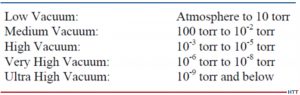
Vacuum technology includes vacuum pumping systems which enable the vessel to be pulled down to different stages through the process. Degrees of vacuum level are expressed opposite of pressure levels: high vacuum means low pressure. In common usage, the levels shown below in Figure 1 correspond to the recommendations of the American Vacuum Society Standards Committee.
Vacuum level will modify vapor pressure in a given material. The vapor pressure of a material is that pressure exerted at a given temperature when a material is in equilibrium with its own vapor. Vapor pressure is a function of both the material and the temperature. Chromium, at 760 torr, has a vapor pressure of ~4,031°F. At 10¯5, the vapor pressure is ~2,201°F. This may cause potential process challenges when processing certain materials in the furnace. As an example, consider a 4-point temperature uniformity survey processed at 1000°F, 1500°F, 1800°F, and 2250°F. This type of TUS will typically take 6-8 hours and, as the furnace heats up through the test temperatures, vacuum readings will most likely increase to a greater vacuum level. If expendable Type K thermocouples are used, there is a fair chance that, at high readings, you may begin to have test thermocouple failure due to vapor pressure.
Figure 1. Vacuum levels corresponding to the recommendations of the American Vacuum Society Standards Committee
Source: Jason Schulze, Conrad Kacsik Instrument Systems, Inc.
Vacuum Furnace Pumping System
Vacuum heat treating is designed to eliminate contact between the product being heat treated and oxidizing elements. This is achieved through the elimination of an atmosphere as the vacuum pumps engage and pulls a vacuum on the vessel. Vacuum furnaces have several stages to the pumping system that must work in sequence to achieve the desired vacuum level. In this section we will examine those states as well as potential troubleshooting methods to identify when one or more of those stages contributes to failure in the system.
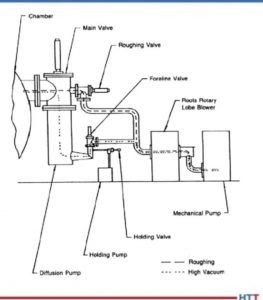
Vacuum furnaces have several stages to the pumping system that must work in sequence to achieve the desired vacuum level. Each pump within the system has the capability to pull different vacuum levels. These pumps work in conjunction with each other (see Figure 2).
Figure 2. Vacuum pumps work in conjunction with one another
Source: Jason Schulze, Conrad Kacsik Instrument Systems, Inc.
The mechanical pump is the initial stage of vacuum. This pump may pull from 105 to 10. At pressures below 20 torr the efficiency of a mechanical pump begins to decline. This is when the booster pump is initiated.
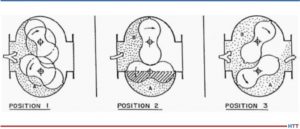
The booster pump has two double-lobe impellers mounted on parallel shafts which rotate in opposite directions (see Figure 3).
Figure 3. Booster pump positions
Source: Jason Schulze, Conrad Kacsik Instrument Systems, Inc.
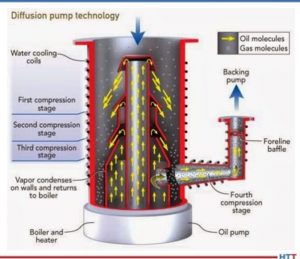
The diffusion pump (Figure 4) is activated into the pumping system between 10 and 1 microns. The diffusion pump allows the system to pump down to high vacuum and lower. The diffusion pump has no moving parts.
Figure 4. Diffusion Pump
Source: Jason Schulze, Conrad Kacsik Instrument Systems, Inc.
The pump works based on the vaporization of the oil, condensation as it falls, and the trapping and extraction of gas molecules through the pumping system.
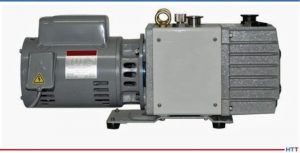
Image 1. Holding Pump
Source: Jason Schulze, Conrad Kacsik Instrument Systems, Inc.
The holding pump (Image 1) creates greater pressure within the fore-line to ensure that, when the crossover valve between the mechanical and diffusion pump is activated, the oil within the diffusion pump will not escape into the vessel.
Vacuum Furnace Hot Zone Design
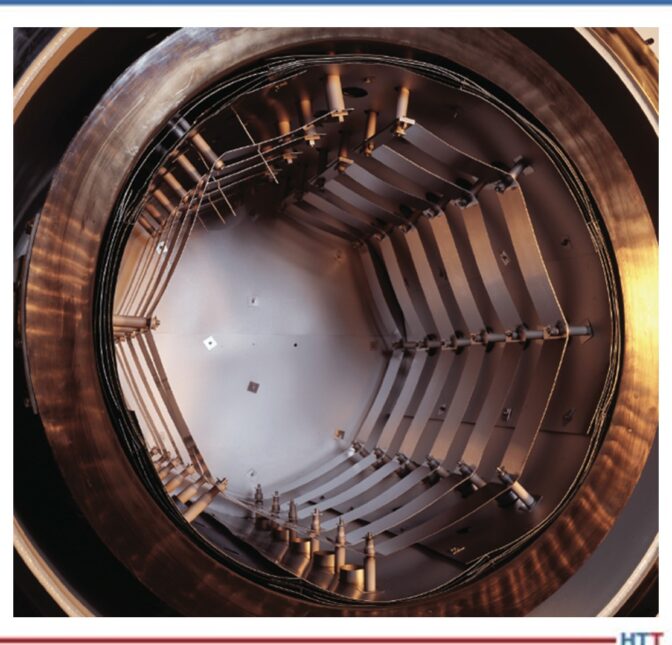
Image 2. Insulated
Source: Jason Schulze, Conrad Kacsik Instrument Systems, Inc.Image 3. Radiation
Source: Jason Schulze, Conrad Kacsik Instrument Systems, Inc.
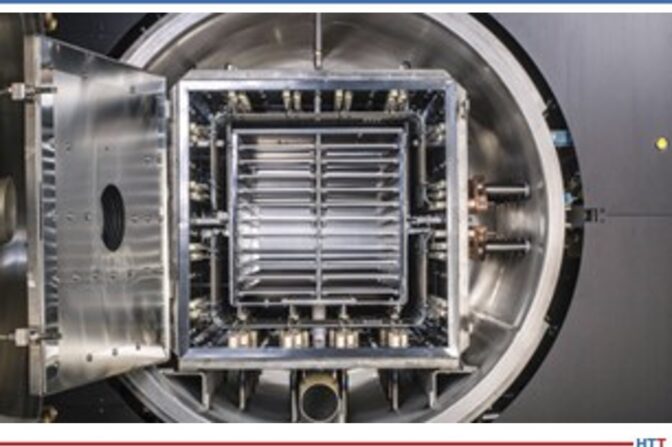
The hot zone within a vacuum furnace is where the heating takes place. The hot zone is simply an insulated chamber that is suspended away from the inner cold wall. Vacuum itself is a good insulator so the space between the cold wall and hot zone ensures the flow of heat from the inside to the outside of the furnace can be reduced. There are two types of vacuum furnace hot zones used: insulated (Image 2) and radiation style (Image 3).
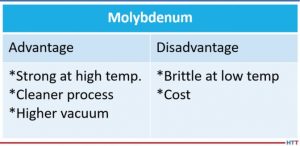
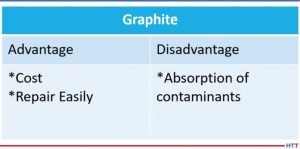
The two most common heat shielding materials are molybdenum and graphite. Both have advantages and disadvantages. Below is a comparison (Tables 1 and 2).
Table 1
Source: Jason Schulze, Conrad Kacsik Instrument Systems, Inc.Table 2
Source: Jason Schulze, Conrad Kacsik Instrument Systems, Inc.
Vacuum Furnace Quenching System
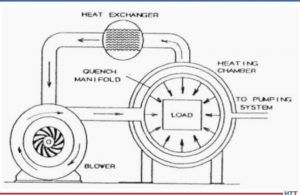
Quenching is defined as the rapid cooling of a metal to obtain desired properties. Different alloys may require different quenching rates to achieve the properties required. Vacuum furnaces use inert gas to quench when quenching is required. As the gas passes over the load, it absorbs the heat which then exits the chamber and travels through quenching piping which cools the gas. The cooled gas is then drawn back into the chamber to repeat the process (see Figure 5).
Figure 5.Diagram of gas quenching
Source: Jason Schulze, Conrad Kacsik Instrument Systems, Inc.
Vacuum Furnace Trouble Shooting
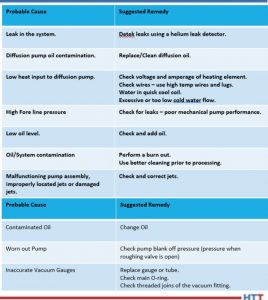
In Table 3 are some helpful suggestions with regard to problems processors may have.
Table 3
Source: Jason Schulze, Conrad Kacsik Instrument Systems, Inc.
Summary
Vacuum furnaces are an essential piece of equipment when materials need to be kept free of contamination. However, there are times when this equipment may not be necessary, and is therefore considered cost prohibitive, although this is something each processor must research. This article is meant to merely touch on vacuum technology and its uses. For additional and more in-depth information regarding vacuum furnaces, I recommend a technical book called Steel Heat Treatment, edited by George E. Totten.
About the Author: Jason Schulze is the director of technical services at Conrad Kacsik Instrument Systems, Inc. As a metallurgical engineer with over 20 years in aerospace, he assists potential and existing Nadcap suppliers in conformance as well as metallurgical consulting. He is contracted by eQuaLearn to teach multiple PRI courses, including pyrometry, RCCA, and Checklists Review for heat treat.
The Government of Canada announced it is to receive Lockheed Martin’s 5th Generation F-35 Lightning II aircrafts as a result of the Future Fighter Capability Project competition.
The Royal Canadian Air Force will add 88 of the F-35A multirole stealth fighters. The aerospace and defense industries will benefit with high value jobs in the production of these aircraft.
“Canada is our friend and a close ally. Their decision to procure almost 90 jets underscores the value of the incredible F-35 Lightning II,” said Lt. Gen. Mike Schmidt, program executive officer at F-35 Joint Program Office United States Air Force. The F-35 strengthens Canada’s operational capability with its allies as a cornerstone for interoperability with NORAD and NATO.
“Together with our Canadian industry partners, we are honored by this selection and the sustainment of critical jobs that will continue to equip Canadian workforces with advanced skills,” said Lorraine Ben, chief executive at Lockheed Martin Canada. “The F-35 program yields tremendous economic benefits for Canada’s aerospace and defense industry."
Find heat treating products and services when you search on Heat Treat Buyers Guide.com
Beginnings and endings often come together. As we begin a new year this month, we want to pause to remember a few lives that came to an end. Although the following are by no means the only important endings, Heat Treat Today would like to honor the memory of the following individuals who left their mark in the heat treating world.
This article first appeared in Heat Treat Today's December 2022 Medical and Energy print edition. Feel free to contact Bethany Leone at bethany@heattreattoday.com if you have a question, comment, or any editorial contribution you’d like to submit.
William “Bill” Cleary Surface Combustion (1960–2022)
Bill Cleary joined Surface Combustion directly after graduating college and remained with the company through the next 36 years. Working as a mechanical engineer and later as senior sales engineer, Bill was a constant presence at Surface Combustion — always the first person to help and listen.
Roger Joseph Fabian Lindberg & Bodycote (1940–2022)
Roger Fabian received his B.S. in metallurgical engineering in 1962 and his MBA in 1980 from Rensselaer Polytechnic Institute. He began his career with Lindberg Corporation in 1962 as a plant manager at Lindberg’s Boston Division, and in 1964 transferred to the Berlin Division, where he was named chief metallurgist and quality control manager. He was promoted to division manager at Berlin in 1979 and named vice president of Lindberg Heat Treating Company in 1992. When Lindberg was purchased by Bodycote Thermal Processing in 2001, Roger was named Eastern Region sales manager and finally retired in 2010 after 48 years. Roger had many professional accomplishments, including president of ASM International, president of the ASM Heat Treating Society (an affi liate society of ASM International), and was a long-time member of both societies. He also served as a president for the Metal Treating Institute (MTI), and as chairman of the ASM Technical Programming Board. He was instrumental in the development of the Center for Heat Treating Excellence (CHTE) at Worcester Polytechnical Institute and served as director-at-large and industrial liaison. He was known to be always a gentleman and a friend.
Klaus Hemsath Surface Combustion (1935–2022)
Klaus Hemsath and his family emigrated from Germany in 1967 to begin work at Surface Combustion. To this day, Klaus has over 60 patents to his name in the United States. Among his many accomplishments in the heat treating industry, Klaus founded Indugas, Inc. and wrote several books on climate change. Klaus will be greatly missed by his son, Mark Hemsath (Nitrex), as well as all others in the heat treating industry who knew him.
David Soderberg County Heat Treat (1951–2022)
With over 45 years of experience in metallurgy, Dave Soderberg had a vast knowledge of nitriding, aluminum solution aging, stress relieving, and other heat treating processes. His expertise especially honed in on aerospace heat treating, where he was appointed the designated supplier quality representative by GE Aerospace Engineering Group. Dave was a skilled metallurgist, able to develop heat treatments according to custom specifications.
Jon K. Tabor Allied Mineral Products (1933–2022)
After a 65-year career in refractories, Jon Tabor joined Allied Mineral Products in 1970 and helped to build it to the multi-national corporation it is today. Some of John’s accomplishments at Allied were transforming it into an employee-owned company and establishing a manufacturing presence in several countries, including China, South Africa, the Netherlands, and Brazil.
Keep that furnace running! Obviously, a furnace leak can be quite counterproductive and make it troublesome or even impossible to keep it going. What can be done? Thankfully, there are several solutions. This best of the web article gives helpful measures in defining leaks, detecting leaks, solutions for effectively stopping a leak, and much more.
As you move through the post, you'll encounter a tutorial that starts with the basics. A furnace leak if defined with differences described between a normal leak and something such as an outgassing problem. Then, other information is presented with descriptions on the rate of the leak and possible locations for said leak. The article continues with methods for leak checking and wraps up with a check list of sorts for vacuum furnace users.
An excerpt:
Some operators or leak checking personnel will often use a stethoscope when checking for leaks, as its ability to transmit low-volume sounds and eliminate external noise is exceptional. Often in gross leaks or some smaller leaks, a standard paint brush and soapy wash solution is helpful. Brush the solution around suspected leak areas. Big leaks will blow big bubbles at the leak while smaller leaks will form very fine foam.
The monthly Industrial Heating Equipment Association (IHEA) Executive Economic Summary released in January takes a look at the 3 common problems for the economy and provides another sector that may be surprising player. Usually, inflation, recession, and supply chain have been considered the culprits for the economic downturns in past months. There is something else edging in as cause for concern: the worker shortage. Specifically, the looming problem that the Boomer generation is retiring.
By 2030, the report projects, every worker of this generation will have reached retirement age. It is forecasted: "These people will be very hard to replace, and it will be expensive." Worker shortages have been discussed before, but now the study is showing that things are at "crises level."
"Remarkably stable" due, in part to "expansion of capital spending" Source: IHEA
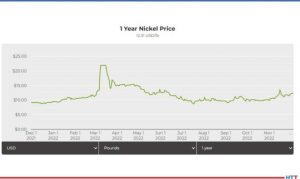
The 10 economic indices have all shown a drop except two: Durable Goods and Metal Pricing. Metal prices are remaining stable even as there are signs of reducing demand. The report credits this to companies thinking there will be a slowdown this year. Global events do make copper rather volatile, but nickel and aluminum are holding steady.
"The metal markets have been stabilizing to a degree." Source: IHEA
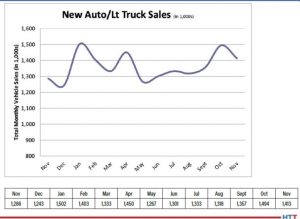
All of these indices are slowing down: New Auto Sales, New Home Start, Steel Consumption, Industrial Capacity Utilization, Purchasing Managers Index, Capital Expenditure, Factory Orders, and Transportation Activity. It's difficult to pin just a few reasons for this, but supply and demand issues, high interest rates, and high prices overall have consumers hanging on to their money if they can.
Some supply chain resolution but "consumer demand is frequently frustrated by the lack of the desired vehicle." Source: IHEA
In the automotive arena, heat treaters can find measures of security in knowing production is still expanding.
"The estimate is that another 5 million homes are needed." Source: IHEA
Yes, the numbers are down, but overall there is a great need yet for housing. Multi-family homes see numbers still up by 12%, so that reflects well for heat treaters providing construction needs.
Some slowing in the steel sector Source: IHEA
The report on steel consumption shows decline in the three major "drivers" for the industry: commercial construction, vehicle manufacturing, and the oil and gas business.
Anne Goyer, Executive Director of IHEA
2023, it would seem, is going to see a lot of spending on labor. There is hope even while seeing numbers drop, and it is possible that the nation is moving into a better time. The claim is that the "recession threat [is fading]," and supply chain circumstances are improving with China and elsewhere.
Check out the full report to see specific index growth and analysis which is available to IHEA member companies. For membership information, and a full copy of the 11-page report, contact Anne Goyer, executive director of IHEA. Email Anne by clicking here.
Find heat treating products and services when you search on Heat Treat Buyers Guide.com
Plot your heat treat events with Heat TreatToday's Industry Calendar. This planner is located under "Resources" on www.heattreattoday.com, and it is always updating with the latest industry events. As you make your spring 2023 plans, check out three of the season's events in this original content piece!
If you have an event to add -- or want to give us a heads up on an event that you and others are going to attend -- feel free to reach out to the editors at editor@heattreattoday.com.
Jump over to the "Resource" tab on the website, and you'll find the Industry Calendar located fourth down. This calendar lets you search by month in list or calendar view format so that you can visualize your season with ease.
Preview of Spring 2023 events
AEROMAT 2023
When: March 14 - March16
"For more than 30 years, ASM International has hosted the AeroMat conference and exposition which showcases the interchange of pertinent technical information on aerospace industry material and processes."
Additive Manufacturing Users Group 2023 (AMUG)
When: March 19 - March 23
"Expert, intermediate and novice users of all commercial additive manufacturing technologies are encouraged to attend the AMUG Conference. AMUG is a global community focused on accelerating the education and advancement of additive manufacturing and 3D printing. Additive Manufacturing Users Group (AMUG) Conference brings together engineers, designers, managers, and educators from around the world to share expertise, best practices, challenges . . ."
Metalcasting Congress 2023
When: April 25 - April 27
"For more than a century, Metalcasting Congress has shaped the future of foundries. From cutting-edge research on the latest breakthroughs to professional networking and business development, Metalcasting Congress is the foundry industry’s premier gathering in North America."
There's so much more! Explore theIndustry Calendarhere.
Find heat treating products and services when you search on Heat Treat Buyers Guide.com
By this time of the year, New Year's resolutions have fallen to the wayside. Rather than feeling discouraged, treat each day as a new opportunity for learning and advancement. Heat Treat Today compiled an easy-to-access resource for you chock full of heat treat technical information.
These 23 ways help you set goals to access new technology, connect with industry leaders, review old and trusted practices, and so much more. We hope this original content article is helpful and would love to hear from you in the Reader Feedback button below!
Heat Treat Today is partnering with two international publications: heat processing, a Vulkan-Verlag GmbH publication that serves mostly the European and Asian heat treat markets, and Furnaces International, a Quartz Business Media publication that primarily serves the English-speaking globe. Through these partnerships, we are sharing the latest news, tech tips, and cutting-edge articles that will serve our audience — manufacturers with in-house heat treat.
In this issue, we look at updates on industry events around the globe such as electric furnaces in Finland and new technology to accommodate additive manufacturing advances.
“After the decision taken by Stahl Gerlafingen to upgrade its Electrode Regulation System as part of its secondary steelmaking process, AMI supplied the DigitARC® PX3 ERS which was delivered in May 2022, with all onsite commissioning work finished in mid-2022.”
Read More: “AMI Automation supplies steel producer with DigitARC® PX3 ERS” at furnaces-international.com
Reducing CO2 Emissions with Electric Furnace in Finland
“Iittala to receive €10 million electric furnace investment” (Source: Furnaces International)
“Fiskars Group will replace the Iittala factory’s existing, natural gas-powered furnaces with electricity-powered furnaces. The investment will reduce the factory’s CO2 emissions by approximately 10,000 tons a year (74%) and decrease nitrogen oxide and fine particle emissions.”
From right to left: Mr. Safwan Sobhan, Vice Chairman Bashundhara Group shaking hands with Mr. Burkhard Dahmen, Chairman of the Managing Board & CEO, SMS group. BMSIL & SMS Group team members during contract signing at Dhaka. (Source: SMS group)
“Bashundhara Multisteel Industries Limited, the Steel Division of Bashundhara Group, one of the largest business conglomerates in Bangladesh, signed a contract with SMS group to install an integrated facility to produce more than two million tons of hot rolled coils annually with the goal of filling the gap in demand for flat products in Bangladesh. The plant will be located at Bangabandhu Sheikh Mujib Shilpa Nagar (BSMSN), Mirsharai, Chattogram. In the future, this plant can be expanded to produce four million tons annually.”
Read More: “Bashundhara Multisteel and SMS group sign contract for integrated CSP® plant” at heat-processing.com
New Tech Accelerates Material Deposition and Alloys in AM Advancements
Dr.-Ing. Tobias Stittgen (right) and Thomas Horr, the two Managing Directors of ponticon GmbH, are standing next to a pE3D system. (Source: ponticon)
“At Formnext, ponticon GmbH will introduce its new pE3D system for Dynamic Material Deposition (DMD), a process developed for additive manufacturing, coating and repairing complex-shaped metallic workpieces. The new system combines high process speed with utmost precision and high flexibility in terms of the choice of alloying elements. With the [DMD] process developed by ponticon, alloys of any elemental compositions can be deposited on metallic and ceramic components.”
Read More: “High-precision laser cladding with short process times” at heat-processing.com
Heat Treat Todayoffers News Chatter, a feature highlighting representative moves, transactions, and kudos from around the industry. Enjoy these 19 news bites that will help you stay up to date on all things heat treat.
Equipment Chatter
Global commodities group, Anglo American, and thyssenkrupp Steel have signed a memorandum of understanding to collaborate on developing new pathways for the decarbonization of steelmaking. The collaboration will focus on joint research to accelerate the development of high-quality input stock for lower carbon steel production, using both conventional blast furnace and direct reduction iron.
SECO/WARWICK delivered additional CAB lines to SUZHOU RETEK in China.
Tenova was contracted by Sinova Global to supply the basic engineering of a new silicon metal plant in Tennessee. The site will be North America’s most modern and efficient silicon metal plant, a greenfield development for Sinova Global.
Collaborative R&D between Anglo American and thyssenkrupp Steel for greener steelmaking technologies
Two CAB lines for SUZHOU RETEK
Sinova Silicon Metal Plant from Tenova
Company and Personnel Chatter
Brighton Science and Hubbard-Hall partner to provide the Infinity Surface Cleaning Intelligence Program, which is designed to aid manufacturers to prepare surfaces and prevent problems.
Thermal-Vac Technology, Inc. announced the completion of a new microgrid from Verdant Microgrid, LLC. Collaboration with the following companies ensured the completion: Eos Energy Enterprises of Edison, NJ; Stronghold Engineering, Inc. of Perris, CA; and GridSwitch Asset Management Services of Moon, PA.
Bryan Stern has joined Gasbarre as the product development manager for Gasbarre Thermal Processing Systems. Bryan’s experience, knowledge, and forward-thinking will allow him to support existing clients and advance the company’s growing footprint in the vacuum furnace market.
Ipsen recently launched a new website with the goal of providing a better user experience for customers worldwide. IpsenGlobal.com now incorporates all Ipsen locations, products, and services under one domain.
Furnaces North America 2022, the premier trade show and technical conference in the North American heat treating industry, attracted over 1,200 attendees from around the world. The show produced by the Metal Treating Institute in partnership with its media partner, Heat Treat Today.
Bryan Stern Product Development Manager Gasbarre Thermal Processing Systems
New website: IpsenGlobal.com
FNA Technical Sessions, many exhibitors and attendees
Kudos Chatter
Doug Peters, CEO of Peters’ Heat Treating, received the Winslow Award, an honor that is given to an individual or business that has made valuable economic improvements.
A two chamber vacuum oil quench furnace has received Nadcap accreditation. Solar Manufacturing designed the furnace for Solar Atmospheres of Western PA.
Ayla Busch was honored with the German Leadership Award 2022. This award was presented at the annual alumni convention of the Collège des Ingénieurs and is an award for innovative corporate leadership in the German economy.
Texas Heat Treating, Inc. announces that both Round Rock and Texas Heat Treating Worth just completed ISO 17025 lab audits. The audits came back with no findings.
Representatives from TAV VACUUM gave a speech during the first day of the 27th IFHTSE Congress & European Conference on Heat Treatment 2022. The talk was about the heat treatment of titanium alloys, specifically, “Vacuum heat treatment of Ti6Al4V alloy produced via SLM additive manufacturing.”
RETECH, a SECO/WARWICK Group company, was acknowledged as “The Most Innovative Metallurgical Equipment Specialist in 2022 for the USA” by Acquisition International Magazine. Additionally, Earl Good, its managing director, has been honored by The Corporate Magazine in the “Top 20 Most Dynamic Business Leaders of 2022.″
Nitrex Metal, Inc. announced that it was selected for the “American Dream” series airing on Bloomberg and Amazon Prime. The series explores the entrepreneurial stories of men and women who founded and built incredible companies from the ground up.
Jim Oakes, president of Super Systems, has been awarded the first ever Furnaces North America (FNA) Industry Award at the trade show’s opening night kickoff reception.
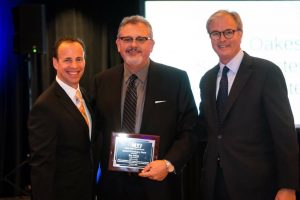
At the recent 2022 MTI fall meeting held in Indianapolis, IN, the Metal Treating Institute recognized Roy Adkins, director of Corporate Quality, with the MTI Award of Industry Merit. This award is given in recognition of current and ongoing commitment to the betterment of the commercial heat treating industry with one or more significant accomplishments.
Hubbard-Hall has been awarded the Top Workplaces 2022 honor by HearstMedia Services in Connecticut. The award is based solely on employee feedback gathered through a third-party survey that is administered by employee engagement technology partner Energage LLC.
Pelican Wire Calibration Laboratory received “ISO/IEC 17025:2017” accreditation from ANSI National Accreditation Board.
Doug Peters Receives 53rd Annual Winslow Award
Lars Wagner, COO at MTU Aero Engines AG, presents Ayla Busch with the award.
Solar Atmospheres of Western PA’s Nadcap Accredited Furnace
RETECH company and managing director receive honors
Nitrex Metal, Inc. part of “American Dream” TV series
Industry Award to Jim Oakes, president of Super Systems
Roy Adkins (center) with past MTI Presidents, Jim Oakes (left) and Don Hendry (right)
Heat Treat Today is pleased to join in the announcements of growth and achievement throughout the industry by highlighting them here on our News Chatter page. Please send any information you feel may be of interest to manufacturers with in-house heat treat departments especially in the aerospace, automotive, medical, and energy sectors to sarah@heattreattoday.com.
Find heat treating products and services when you search on Heat Treat Buyers Guide.com
While this Heat Treat Radio episode about the advances in work flow planning software will be more interesting to our commercial heat treating friends, we think this topic is a fascinating one that speaks to Industry 4.0 and IIoT questions. The question: How are data and human machine interfacing technologies advancing to make the heat treat experience more efficient?
Watch, listen, or read about it in this Heat Treat Radio conversation between host and Heat Treat Today publisher, Doug Glenn, and Jeffrey Halonen, CEO of Steelhead Technologies.
Below, you can watch the video, listen to the podcast by clicking on the audio play button, or read an edited transcript.
The following transcript has been edited for your reading enjoyment.
Doug Glenn: We’re looking forward to talking to you today about what is a growing interest, I think, to a lot of people in this industry, primarily because of the growing of technology and data and things of that sort. I know your company is heavily invested in job shop, plant-wide, organization-wide operating systems. That’s basically what we’re going to talk about today.
Contact us with your Reader Feedback!
The first question I wanted to ask you is, what do you think are, for job shop-type businesses, the two or three main reasons that makes them less profitable than they might otherwise be?
Jeff Halonen Co-founder & CEO Steelhead Technologies
Jeff Halonen: Great question. A job shop is a unique business. They don’t have the luxury of centralized planning, or planning in advance and architecting a plant, like they might do if they are making Chevy Tahoes where an immense amount of engineering goes into build a highly efficient operation so it’s highly predictable.
A job shop, on the other hand, is the opposite of predictability. Down to what parts, what hour, what time of day, how many customers, by week, by month. . . everything changes constantly. That buys a lot of inefficiency, not because what they do is overly complicated; it’s the complexity that grows both with a high quantity of customers and a high quantity of specifications they need to build to. Then, obviously, being at the end of the end-customer’s production cycle, the lead-times are often very high pressure because you have to make up time for all of previous mistakes and missed deadlines. You’re the last step before it gets on a plane or a train or goes straight to the customer.
We’ve seen room to improve these operations from a profitability and a data standpoint. Data is not something you’re going to be able to sell out in the market. In your plant itself, it is not very valuable, but it’s the decisions you can make with that data. Specifically, this is the case when it comes to profitability. For example, if you have five to twenty different processes or lines, which one is more profitable than the other? That should be something that you understand. This is what your business does: different types of business, even different part numbers, different customers, different lead times that you offer for customers, what’s your cost versus return on that.
The other opportunity, aside from analyzing the commercial side of all of your work, is your production. If you’re a job shop, generally you are parts in and parts out, go, go, go. It’s more of a service business than a slow moving, very technical manufacture.
So, basically, every time a job comes through your shop, you should be studying — what does it take to make that job go? Anything from the quote, to closing the sale, to receiving the order, to the physical paperwork, to notifying the floor, to building a schedule, to scheduling capacity, to executing production, providing instruction information, how you collect that data, even something as simple as how do you notify customers. Are you notifying customers on the phone or an email? You do twenty to thirty orders a day, 100 orders a day — it adds up quickly.
Invoicing — how do you generate your reports? Aggregate data — that’s the other thing that we see in job shops very frequently. The actual cost of executing an order on a marginal basis can be extremely high if you have many systems; or it’s paper-based; or it’s not streamlined.
Doug Glenn: Not just the processing of the part, in the sense of thermally processing the part, but you’re talking all the way from preparing the quote all the way through to shipping and anything at the end.
Jeff Halonen: Absolutely, Doug. In our experience, the job shop manufacturers are pros at what they do — the actual process. They’ve been doing it for years or sometimes decades. They have it absolutely dialed. In the physical processing of the part, sometimes there is room for improvement; but a lot of times that is a fine-tuned machine. Generally, it’s the business systems that surround it.
One thing that we like to point to is the very heavy investments that the industry makes in physical, tangible goods: natural gas, land, equipment, people, automation systems (physical automation systems). Where we see a huge opportunity is all the things you can’t actually touch and feel. It’s the digital operating system that your plant runs on, all the systems and processes that makes your business tick.
Doug Glenn: You’re talking about data in, from the very beginning of the process, all the way through. I don’t know too many companies, especially job shops, that are actually gathering that type of data. Is it possible? What are the costs involved, let’s say, of starting to gather that data from that point all the way through? It seems like that would be expensive and difficult to do.
Jeff Halonen: Absolutely, Doug. It feels like an asymptotic target. You can try really hard, and you can make progress; but that rate at which you make progress drops off really quickly. It’s what we see as a balance of cost of data and value of the data.
It’s not that manufacturers don’t value the data; they often do make an investments to get the data. They realize quickly that, with help with the proper tools, cost ramps up really quick. They essentially hit that floor or that asymptote, if you will, really quickly. They say, “OK, we are clearly extending more effort than it’s worth; so we’re going to dial it back. We’re going to go right here. That’s where we’re setting the knob, and we’re going to run our plant.”
"They are rudimentary data systems, and the cost is very low." Source: Unsplash
Unfortunately, with the tools available, that setting or their status quo tends to be paper, Excel, systems like that. If you have no system at all, not even paper, it’s very obvious that we need something. We write on paper, we highlight, we put it here, we do this, we do that, we have a whiteboard for scheduling, and you see a lot of yield from essentially those data systems.
They are rudimentary data systems, and the cost is very low. You spend a week or two, and you deploy it. You make it, run it, and get the value. Then you say, “Now, I want to track what part was in what oven at what exact time and exactly what went through. Now I want to see all the parts that went through this or that type of process. We’ve run that part number forty times — I want to see its performance every single time from a commercial standpoint. All of a sudden, the cost of obtaining that data — now you just have a wish list. You look out and say, “That’s going to be impossible. That’s way too much time to get that data.”
That’s really where deploying a centralized platform that takes in everything from the business — anything from inventory, to quoting, to operator instructions, to timing each process, to part numbers, to shippers, to invoicing — it all really is intertwined. When you can track every single movement of every single part going through the entire process, the cost of that data drops precipitously. Especially if you have reporting integrated. Now you can generate reports that will passively collect data as your operations go on. Whatever you look at on a daily, weekly, monthly basis to essentially run your plant.
We like to say, “Digitize, automate, optimize.” To us, these are three core steps to reducing the cost of data. First, digital. If you have no system, or you have paper, it’s very difficult to obtain actual data and actual insights from your plant. Even if you do digitize successfully, but you just have a mass of huge databases, that’s very low usability because now you need to be essentially a data scientist to go in and make it useful.
Next is automation. We need to automatically tailor the data to present profit margin. We need to automatically tailor the data to track reworks. That’s the next step because that gets us to actionable data information.
Then, the last is optimization. The optimization itself often actually happens at the plant level where the management team is now in, what I would say is, a luxurious position of having a lot of their systems digitized then automated as well.
They have the data. They have the time to address it. Now they’re in the position of optimizing their facility. That could mean focusing on marketing; that could mean pursuing a new industry — developing a new process, training your operators. It could mean anything in the world — getting a new permit from the city, for example. These are things that optimize your plant to provide as much value as possible to the world. You have the ability to do that because you’ve done your homework to get your plant into a position to action that data and have the time available as well.
Doug Glenn: Right. You’re collecting the data that you need to make those types of decisions. I find it interesting some of the scope of the types of decisions you just mentioned, that job shops could make based on the data. That’s pretty interesting.
Let me ask you this, Jeff: do you have any examples in the heat treat world? Or where, for example, in the heat treat world do you envision there being some real business efficiencies here? Let me preface this one other way, too: a lot of the people that listen to this podcast are not necessarily job shops; they are what we call “captive heat treaters” who run high volume/low variability. But there are some who actually run high variability — a lot of different parts, maybe not exceptionally high volumes, or at least smaller volumes than our captive heat treaters. I guess, addressing those guys, or even the guys that run low variability - what are the business efficiencies we could see?
Jeff Halonen: It’s going to be different from plant to plant as far as the value you’re going to have because everyone has different proficiencies and profiles like you just mentioned. If you’re in a situation where you have a very high degree of mix, one of the huge inefficiencies that we’ve seen is they want to keep a really tight lead time; but they don’t have the ability to quickly and easily schedule efficiently. They keep all of their equipment at maximum capacity, so they keep as much throughput in the plant as possible. The inefficiency essentially shows itself in the quantity of ovens - they just simply invested in more equipment and just keep more ovens hot. They essentially overcapacitize which is both acap efficiency and an opex efficiency because you have to heat, maintain and run that much more equipment. That’s an environment where you have a lot of complexity, and the scheduling required or the inability to schedule efficiently is leading to capital inefficiency.
If you’re in a position where you’re on the other end of that spectrum, as you mentioned, Doug, where you have lower variability by part number higher volume; some of the inefficiencies there can definitely be more on the data systems — the data processes. Again, scheduling — if it’s a very simple schedule, you can schedule it very quickly and easily and very efficiently because you don’t have a lot of change. It is tracking that information — where are all the parts, for example.
A lot of times it’s the administrative time. People are walking out, still trying to find where the parts are. Simple things like order status or we ran this part with this lot number or purchase order or shipper number or whatever identifier you have — we ran this six months ago, what happened to that part? Often times, something as simple as that can turn into a 20, 30, 40-minute exercise instead of just quickly finding that information.
Doug Glenn: How about equipment inefficiencies? How can a system like yours that’s gathering all the data - how can it help us increase efficiency, just of the equipment that we have?
Jeff Halonen: The first step, as they say, to addressing an issue is knowing you have a problem. The first step is measuring what actually happens in the real world. You can walk out into any shop and just open your eyes and things are happening, right? But your knowledge of what’s happening is almost just instantaneous. As soon as you go to the ball game later, you’ve forgotten all about that pile of parts or that empty oven that you saw. If you have a situation where at the end of the day, week, month, quarter, you have the raw numbers - we know it can do X amount of parts or racks or pounds or whatever the metric is - and it did Y and that’s X percentage below that number, the numbers speak for themselves.
Jeff Halonen and Doug Glenn Source: Heat Treat Today
As far as what the team can do to address the problem, that could be any number of things from a plant management standpoint. That’s where it really gets into the optimization side. Although one thing might be scheduling efficiency. If we find that turnovers or essentially thermal profiles or run speeds or whatever it may be, if we have an opportunity to batch production, increase density which might be a scheduling exercise, we might explore that.
That could also come back into business strategy — it’s all very related. For example, you might offer to expedite fees — fast turnaround at a higher price — but then lower price for long turnaround time because that now gives you the privilege of organizing your work in a more efficient way and providing the same value at a lower price. If that end customer has the time in their schedule, they can say — hey, I want to save money and have my job done in a week or so instead of 24 hours where I’m ready to pay a huge premium. That cost multiple can be dramatic and for good reason.
Doug Glenn: I have two more questions for you. One is a little bit hypothetical. I want you to kind of take a guess about the rate at which software and digitization, of the sort that you’re talking about, is coming into job shops. That’s the first thing. The second and last thing I want to ask is for you to just kind of take us on a walk through, to the best that you know, a heat treat business. How might a system like yours look?
A lot of people say, “Listen, I’ve got my system in hand, I’m okay the way I am.” First, is it coming? Do you think people are going to have to get to this digitalization sooner or later?
Jeff Halonen: I believe so, yes. I understand you can definitely run a shop on paper. You can run it on Excel. As far as macrotrends out in the world, consider first the technology available. The team at Steelhead is obviously very competent with a lot of really great software engineers, but the tools available have progressed dramatically over the last couple of years. We’ve run into heat treating shops that are using a system they may have installed in the ‘90s. It does functionally work, but we do see a lot of symptoms, essentially adverse symptoms, to the business by choosing to use a less effective system. That usually comes in less actionable data. It does facilitate the physical paperwork needed to run your plant, but it’s not a competitive advantage. It just is kind of there, and it’s just kind of barely acceptable. The employee morale is not great - people don’t love using systems where they have to reenter data. They can’t work from home. There are so many different currents that are coming in there.
The other one is the end customers often like more and more visibility and more and more traceability into plants. Transparency, visibility, traceability. I don’t think it’s a situation where it’s going to become unviable to run a shop without really advanced technology. I do think, over time, it will be a situation where the competitive profile is one where there are clear advantages to the shops that embrace the wholistic business advantages that come with that.
Think about your customers — they’re buyers just like anyone else. Everyone loves shopping on Amazon or their favorite website. They get the notifications; they can track everything. You order a pizza at Dominos, and you can see them rolling out the dough and putting on the sauce. The predictability and the visibility is something that is really important.
I think, over time, it is certainly something that the end manufacturer is really going to continue to drive (even automotive, traceability and everything like that). As the requirements of data go up, and the competitive landscape starts to adopt more and more of this technology, it’s going to be more and more of a disadvantage in the competitive landscape to be not at the cutting edge of that technology.
Doug Glenn: Pretty soon it’s not going to be cutting edge, is my thinking. As more and more people are adopting it, it’s going to become easier to adopt. I’m assuming it’s going to be easier to install, easier to launch into any business.
Take us through that, as a job shop. Any of either our captive heat treaters that have a high variability of products or a lot of our commercial heat treat shops which have high variability of products — how would it look? Start us as early as you can in the process and walk us through it.
Jeff Halonen: Starting at the beginning of the process, if you say, “I’m interested. I need a system. I can just feel it. I can see it. I know there is opportunity to improve our business.” Or, “We feel like we really optimized everything about our business, but we still feel like we have restrictions on growth.” This could be — it takes a lot of energy from the management team, the ownership team that are involved. One question I like to ask is: if the business going through your business or business unit doubles, do your headaches double? Do the amount of hours you work double? To me, that’s symptomatic of room for system improvement.
Early on in the process it starts with some level of interest, some level of intrigue. I think this is something we can improve on; our plant manager is complaining that they can’t work from home. Whatever all these issues are that manifest themselves; or you’re losing jobs in quoting, and you’re not sure if you’re a high price or a low price or margins might be unclear; you’re not satisfied with the level of data. Basically, that’s generally where we start our conversations with plants.
We really take an approach of both informing about what’s possible on the tool and what’s impossible on a modern platform. Then we also do a value assessment. How do you do this? How do you do that? That kind of third party provides a great, almost, sounding board to say, “Okay, here’s an itemized list of room for improvement.”
Honestly, that’s what really makes it compelling. When we can sit down with a potential partner and identify how we can actually improve the business in very real and definitive terms, not just insights that you can use to drive your business. Also here’s how much time you spent here, how much time you spent there. It’s a combination of calculating hard costs and hard opportunities and then the upside with the actionable insights from the system.
From there are the deployments at Steelhead. [blocktext align="center"]We do direct-to-direct service, so no third parties. A Steelhead team member will essentially go through a lot of meetings and plant walks, in some cases, and essentially reverse engineer your plant.[/blocktext] Where do parts come in the building, and then what? Then they go here? Do they always go there? Sometimes. Can they be run together? We will ask a million questions to essentially reverse engineer the flow of your plant, and then we design the system to reflect your current operations. Not - here’s a software, now bend your plant over backwards to match the software. Whether it’s quoting, workflow automation, or reporting or any of the other parts of the system, we’re going to want to ask as many questions as possible to configure the system to match your plant.
Doug, you mentioned the cost is going to go down, over time, of technology. Absolutely. Because one thing we can do very quickly since our platform is essentially kind of like a build-your-own; it’s almost like Excel except it’s Excel that is highly, highly engineered to work for this specific industry. One thing we can do is we can prove it out really quickly. So, in just a few hours or a couple of days, we can essentially build your plant, or a part of your plant, and then run your work through your plant and say, “Okay, pick up a quote and let’s write this quote. Here’s a purchase order, let’s do the purchase order. Let’s take this tablet and go out to your plant and step it through your exact operator interfaces. Let’s collect that data. Let’s track it; let’s sit down in the conference room. Let’s pull up the reports, the inventory.
That’s one thing that we really like to do early on — whether it’s in the late sale cycle or evaluation or sale cycle or early on in deployments — is prove it works. Because one of the things we’ve seen time and time again are the horror stories with plant operating software: we’ve tried for 18 months and we put in tens or hundreds of thousands of dollars, and we pulled the plug. We went back to whatever we were using before. So, proof of concept really quick.
The other thing is the actual deployment going fast. We like to go hot and heavy, kind of rip the Band-aid off, not drag it out over months. We like to go 2-4 weeks, training the team, iterate, iterate, iterate, test, test, test, test, test, because everyone says how it should work. We build it, and we test it and then there are always a couple of tweaks.
From there, we have a customer success team, as well. Whether it’s a phone call, email, zoom call, or training, we like to have someone available to answer the phone. Our philosophy is that your digital infrastructure isn’t something that should be optimized for low cost because we feel that the service that comes along with it — including a team of experts — is critical. Like a wiring harness for your automobile, it runs your entire plant. When your plant changes and you have changing requirements, to have “pros on your bench” to make adaptations real time in your plant is highly valuable.
Our approach is full service. We kind of own the functionality of the system in your plant — anything from the deployment to ongoing support. We’re always one degree away from engineering, as well. Occasionally when there is a bog or something is not working properly, our engineers are right there on calls with customers to make sure everything is working properly.
Doug Glenn: They can jump into the system and reprogram, as necessary.
Jeff Halonen: Absolutely.
Doug Glenn: Run us through this one then, if you would: Let’s say there’s a company — and you’re going to have to take a very generic-type job shop — that has your system already. It’s fully integrated and everything is working well. What does it look like? The reason I ask this is question, is I think a lot of people have trouble envisioning what it would look like and how it would be different than what I’m doing now.
So, a company that has your system, they go to do a quote for a job, and they receive an inquiry. Is the process they follow any different than what they would have done before your system was there? Let’s just take that first step, process and RFQ: how is that going to change from if they didn’t have your system?
Jeff Halonen: Something like quoting can be a fairly dramatic change, depending on what the current system is. Current systems can be Microsoft Word and Microsoft Outlook and maybe an Excel sheet to track the quotes. A lot of time to administer them and then there is pretty limited visibility. The transaction that we’d see there with Steelhead is that you can actually build a fully automated quote so you can define the algorithm: all of your flow charts, your Excel sheets, square root functions, looking at the mass of the part, specific gravity, material, etc. We can even reference the current price of natural gas. So, you can build models to reflect how your business runs and reference the past performance of that job.
What that looks like for quoting is that you’re able to build the quote all in one system. You might have multiple people involved in the quote: one person is working with the customer to verify requirements, verify inputs, ask questions, gather more data, and then it lands in someone else’s inbox. Now, a streamlined workflow allows the owner or the plant manager or sales manager can now approve that quote and then sending it to the customer instead of sending it through email and downloading and moving things around, we can send it right out of the platform, attach a file. We can track and see when the end customer is opening the quote. Also, your sales team has a lot of tools. They can say, “Hey, what quotes have never been opened? Hey, we should probably make a phone call. We put a lot of effort into those quotes, why don’t we call them and see what’s going on?” There are a lot more analytics but also just speed.
Another thing we’ve heard a lot is that a customer calls, they send a purchase order that references a quote to go, and find that quote can be a challenge because it’s in someone’s inbox, unread. Instead, they can have one platform to grab the quote, convert it to an order, and now you’re running production! It’s all the same data, it’s your plant. You’re not going to start quoting using different laws of physics. It’s about streamlining what you do today and replicating what you do today, but improving the customer experience, improving your team’s experience, and quoting faster, which leads to more jobs.
Everyone wants the thing quickly. If you can go from two days to two hours or from five hours to five minutes, that can have a dramatic impact on winning deals. For example, I’m in Chicago on vacation, and a customer calls, asking, “Where are my parts?” or “What happened to these parts?” Option A is you’re making phone calls back to homebase, someone is rummaging around looking for the information, and it’s not very enjoyable for you, your team, or your customer. But, it could be you put that customer even on speakerphone or mute, look for 30 seconds, and just text them the file right off your phone in real time! It’s the speed of accessing data, customer service, and actual insights, but a lot of it is workplace satisfaction.
We’ve literally been in shops where people are threatening to quit saying, “Our system is so bad” right in front of the president of the company. . . “I’ve been saying for years, we need a new system. I’m at my wit’s end because what I have to do is so painful and repetitive every day just to make the plant go.” It can manifest in a lot of different ways.
Doug Glenn: Give me a quick history on Steelhead.
Jeff Halonen: Steelhead Technologies was founded early in 2021 by a team of software engineers, mechanical engineers and manufacturing engineers. We started with the need of a single customer who talked about their pain. This particular customer was running on paper; whether it was contacting customers, instructing operators, tracking information, finding information, even something as simple as a customer calling with a phone call asking for information on a job, all were huge disruptions in their day. It took half an hour and they had to physically go find people and paper. Everything was in a huge storage room at the end. What the Steelhead team heard was a high degree of pain and essentially a plea for a solution. So, we founded Steelhead Technologies to address that need.
Source: Steelhead Technologies
The team has grown really quickly, and we’ve raised 2.5 million dollars in investment capital here in 2022. The team went from an original team of about 6 to up to 16 now. As I mentioned, everything is kind of the direct service model. Whether it’s sales, deployments or customer success, it’s all team Steelhead across the board. Everyone is an expert in the platform, and everyone is one degree backed up by our team of engineers. We have six engineers that work fulltime on Steelhead making it the best that we can.
Our customers are amazing. Everything that we work on is driven by a customer request, someone out in the field, using the tool and saying, “Hey, what if. . . ?” or “Hey, this could be better” or “This extra effort. . .” or “We would really like to know this. We are trying to achieve this business objective, but we need that.” That’s really where the Steelhead team excels is taking essentially what we view as requirements and building a platform to meet those requirements.
It's really exciting. What we found is that [we can really help] the job shop industry, specifically, and also the high throughput — or even the high-mixed captive shops as you mentioned — where there is no build materials, no engineering team, no design release, and no supply chain. It’s go, go, go. The assumptions change by the day, hour, or minute, and everything is fast paced. We’ve seen a huge lack of automation and data in the space. With high quality, purpose-built technology for this fast-paced, almost, service type of manufacturing, with specifically built tools, we’re able to achieve minimal effort to achieve each job. To minimize all of the administrative effort, but also aggregate extremely detailed data down to operators, part numbers, and equipment, without driving up costs or sacrificing ease of use. That’s our core strategy.
Our customers are incredible, and a lot of our recent success has been just keeping up with our customers since they’re always pitching for a new tool or feature. We roll out a couple thousand lines of code to address this and they’re like, “This is good, but it needs that.” That’s the other thing — software is a service, so we’ve long accepted that we are never going to build the software and just ship it: it’s a continual living beast, whether it’s cybersecurity, speed, everything. So much of it is service because this type of software [requires] pros to extract the maximum value from it.
Doug Glenn: All right, last question. This is your challenge question for the session here. You, personally: What do you find most interesting and exciting about it? When you look into the future, what are you excited about?
Jeff Halonen: What excites me the most is the transition that shops can see by adopting technology and systems whether it’s impact to the bottom line — which we’ve seen in some shops, where it’s really stunning — or something else. A marginal labor cost where one customer’s job takes three minutes and another takes nine minutes. . . The manufacturer can now address that 3X marginal labor cost with the data where, before, they were just eating it. “This customer is not profitable; we’re not doing that; we are no longer accepting batch sizes below X, because we’re armed with the data.”
What really excites me personally is the journey that each of these plants are able to go on. I also get really passionate about when I’m able to see a difference between the way things are and the way they could be. That’s what every single interaction with our partners is: we see the way that they are and we work really hard to build the best one possible. So, it’s like, hey, look at this difference? Look what we can do? It’s that sense of accomplishment on a customer basis to really get as much as is possible out of their time, resources, people and their entire enterprise.
Doug Glenn: It’s kind of nice seeing the smile on your customer’s face, I think, right? When things go well, to be able to say, “Man, that was good!”
Well, Jeff, thanks. I really appreciate it. It’s very exciting. It sounds like you guys have got a lot of interesting things going on and, hopefully, some of our readers/listeners/viewers will be able to give you a call but thanks for joining us.
Jeff Halonen: Thank you, Doug. Thank you very much.
About the expert: Jeff Halonen is a co-founder and the CEO of Steelhead Technologies, a plant operating system provider serving job shop manufacturing plants in the USA. Jeff is a Mechanical Engineer by training and spent several years at General Motors before starting in technical sales and manufacturing software. Jeff most enjoys the personal impact that he can have on customers when they discover exciting new ways to run their business. Residing in South East Michigan, Jeff enjoys time with friends and family, being outdoors, and playing hockey.





 Find heat treating products and services when you search on Heat Treat Buyers Guide.com



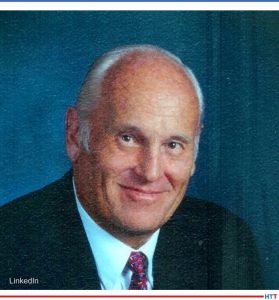
 William “Bill” Cleary


 Source:









 Heat Treat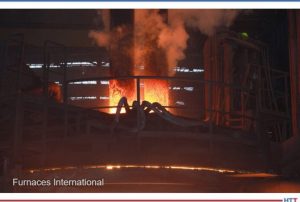










 While this





 Next is automation. We need to automatically tailor the data to present profit margin. We need to automatically tailor the data to track reworks. That’s the next step because that gets us to actionable data information.