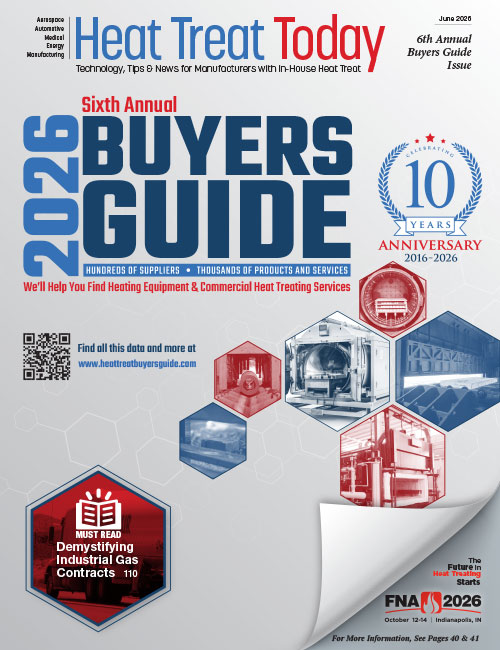
Furnaces North America (FNA) 2026 isn’t just where heat treat professionals gather — it’s where the industry’s leading suppliers, innovators, and technology experts come together to share what’s next.
With registration now open, hear what this key event sponsor has to say about why FNA remains the premier event for the heat treating community.
“If heat treating and thermal processing is a part of your business, this is a place you need to be. Even if you’re not in the market today for a piece of equipment or retrofitting something, it’s where the foundation for those things are built.” — Ben Gasbarre, Executive VP of Sales/Marketing, Gasbarre Thermal Processing Systems
Why do industry leaders keep coming back to FNA?
35+ technical sessions covering the latest trends, technology, and best practices
150+ suppliers showcasing cutting-edge equipment and services in one dynamic trade show floor
High-energy networking opportunities with peers and industry leaders from around the world
Insightful discussions on new equipment, emerging tech, and industry challenges
Who should attend?
Heat treating professionals at every level — from company leaders and department managers to engineers, operators, technical directors, and quality personnel.
When and where?
October 12–14, 2026 at the Indiana Convention Center, 100 South Capital Ave., Indianapolis, IN
Whether you’re looking for new technology, strategic partnerships, or practical solutions to today’s challenges, FNA 2026 brings the people and ideas shaping the future of heat treating together under one roof.
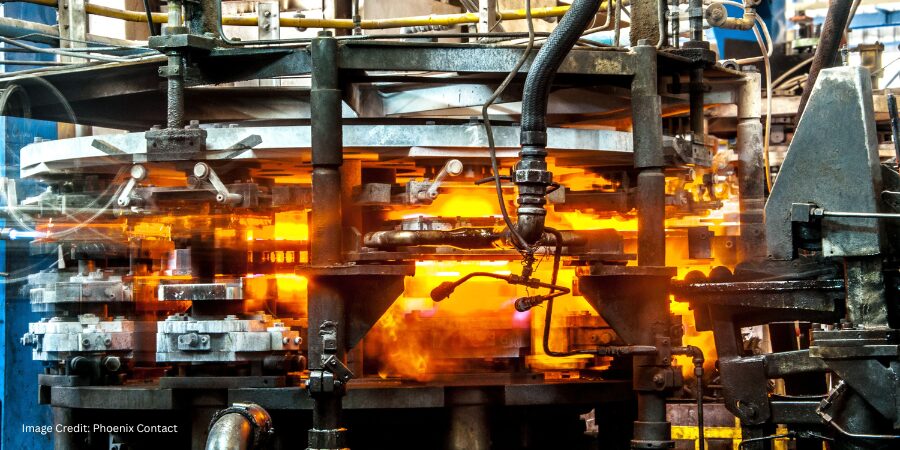
Smart controls, connected systems, and hybrid energy strategies are reshaping what American manufacturers expect from their process heat equipment. In this Technical Tuesday installment, Markus Kirk, international business development manager for Digitalization and Process Heat at Phoenix Contact, outlines how U.S. process heat OEMs can move beyond basic temperature control toward fully optimized, data-driven thermal system — covering the role of IIoT connectivity, machine learning, virtualization, and cybersecurity standards in building equipment that is audit-ready, energy-efficient, and built for long-term lifecycle value.
This Sustainability Insights article was first published inHeat Treat Today’sMay 2026 Sustainable Heat Treat Technologiesprint edition.
Across the United States, process heat OEMs are shifting from purely mechanical design to software-driven, performance-centered solutions. American manufacturers in aerospace, automotive, medical, defense, and heavy industry expect systems that adapt quickly, deliver consistent results, and support long-term energy and sustainability goals.
Hybrid heating — combining natural gas or hydrogen with electric boosting — is gaining strong momentum in the U.S. because it improves temperature uniformity, shortens recovery times, and reduces emissions. These advantages align with rising energy costs, state-level decarbonization initiatives, and corporate ESG (environmental, social, and governance) commitments. Smart electrode placement and advanced proportional–integral–derivative (PID) strategies help stabilize throughput during production changes, part transitions, and batch-continuous operations, reducing risk and improving repeatability.
Built for U.S. Compliance: Security, Connectivity, Safety & Virtualization
Real-time monitoring, IIoT connectivity, and machine learning (ML) have become essential in American heat treating environments. High-resolution temperature and energy data help operators detect anomalies early, while ML-driven control loops automatically correct deviations. This supports better part quality, higher overall equipment effectiveness (OEE), and fewer unplanned stoppages.
Security expectations in the U.S. are well-defined. NIST CSF and ISA/IEC 62443 guide cyber security hardening; NFPA 86 and ISO 13577 define burner safety and system architecture requirements. OEMs that build equipment around these standards and provide audit-ready documentation stand out in a market where internal audits, client-specific requirements, and on-site assessments are routine.
Virtualization is another driver in the U.S. market, especially within large installed bases. Virtual PLCs and software-defined architecture allow new functionality like load management or predictive energy control, and updated regulation strategies to be added without hardware lock-in. Code written in IEC 61131-3, C++, Python, or Simulink can execute securely at the edge while feeding cloud dashboards and web-based HMIs. This makes modernization and retrofits faster, cleaner, and easier to deploy across geographically distributed facilities.
Engineering Speed and Lifecycle Value for American OEMs
U.S. OEMs must deliver consistent quality across product lines while reducing lead time. Modular function blocks for signal conditioning, ratio/Lambda control, burner management, autotuning PID, ramping, interlocks, and diagnostics support standardized engineering practices from small batch furnaces to large continuous systems. Adding ML-based anomaly detection helps convert operator experience into data-driven best practices, enhancing uptime and enabling scalable remote-service programs — an increasingly important revenue source in the U.S. market.
Accurate temperature measurement remains the foundation of reliable heat treatment. Certified, cybersecure I/O modules ensure precise signal integrity, support regulatory compliance, and reduce panel complexity. This reinforces both product quality and plant safety — critical in industries governed by AMS, CQI-9, Nadcap, and OEM-specific client standards.
Whether American OEMs manufacture high-volume standard equipment or engineer custom thermal systems, the competitive formula is consistent:
Open ecosystems for rapid integration and IP protection
Security-by-design for audit-ready operation
Hybrid-energy readiness for decarbonization without compromising performance
Virtualization for scalable features
Lifecycle digital services that support recurring value
Open PLC and edge-centric platforms make this evolution practical. They enable U.S. OEMs to reuse proven code modules, expand capabilities quickly, and differentiate in a market driven by uptime, serviceability, and total cost of ownership. As the U.S. heat treat industry continues modernizing, the winners will be the OEMs combining intelligent control, secure connectivity, hybrid energy strategies, and software-defined flexibility — turning process heat equipment into resilient, future-ready performance systems.
About The Author:
Markus Kirk Intl. Business Development Manager, Digitalization & Process Heat Phoenix Contact
Markus Kick brings 25+ years of hands-on industrial expertise across process automation, thermal heat treatment systems, instrumentation, control engineering, and data-driven decision making. He is known for turning industrial digitalization trends into scalable, high-impact solutions that accelerate OEM innovation and deliver measurable value across global manufacturing environments.
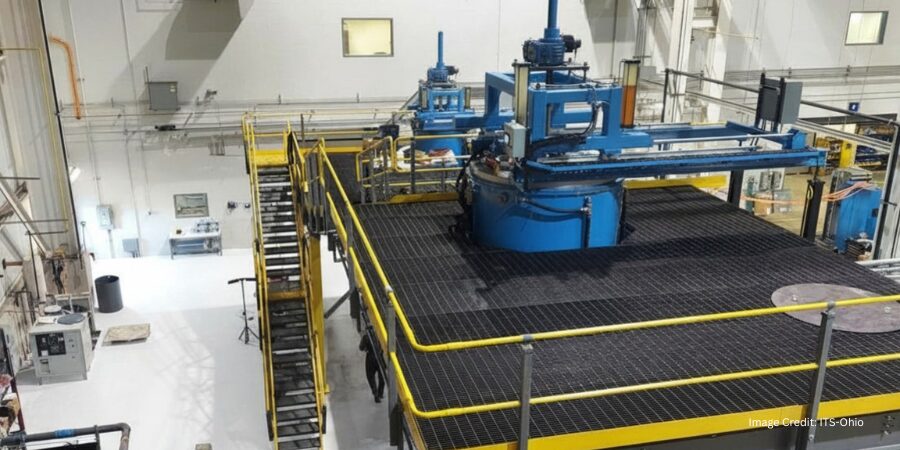
Isostatic Toll Services (ITS) has opened a new hot isostatic pressing (HIP) facility in Ohio, expanding certified thermal processing capacity for aerospace, defense, additive manufacturing, and advanced industrial applications. The new operation adds HIP processing capability to the company’s global network, supporting clients with additional capacity, scheduling flexibility, and supply-chain resilience.
Located in Mount Vernon, Ohio, the new ITS-Ohio facility joins the company’s existing operations in Bilbao, Spain, and Mississippi. All ITS facilities operate under Nadcap accreditation and AS9100D certification, providing HIP processing services for aerospace and other high-performance components.
The Ohio facility adds large-format and high-pressure HIP capability, including systems capable of processing components up to 44″ in diameter by 100″ in height at pressures up to 25,000 PSI. The facility is equipped with HIP systems manufactured by American Isostatic Presses, Inc. (AIP), based in Columbus, Ohio.
“Our investment in Ohio reflects our commitment to supporting [clients] with certified capacity, responsive service, and direct technical engagement,” said Tyler Persaud, general manager of ITS-Ohio. “The addition of ITS-Ohio strengthens our global network and positions us to meet growing demand across aerospace, additive manufacturing, and advanced industrial markets.”
ITS-Ohio has achieved Nadcap accreditation, AS9100D certification, and client approvals, including approval from Rolls-Royce, enabling the facility to support qualification programs and production requirements.
Press release is available in its original form here. The main image shows the shop floor at the ITS-Ohio facility in Mount Vernon, Ohio. Image Credit: ITS-Ohio
In today’s News from Abroadinstallment, we highlight several major global developments — from a new integrated steel complex in Vietnam and specialty steel production growth in Sweden to aluminum smelter upgrades in Norway and the startup of a high-capacity steel production line in China — reflecting continued efforts to expand output, improve efficiency, and strengthen industrial supply chains through advanced thermal and metallurgical processing technologies.
Heat TreatTodaypartners with two international publications to deliver the latest news, tech tips, and cutting-edge articles that will serve our audience — manufacturers with in-house heat treat. Furnaces International, a Quartz Business Media publication, primarily serves the English-speaking globe, and heat processing, a Vulkan-Verlag GmbH publication, serves mostly the European and Asian heat treat markets.
Steelmaking Partnership Expands Production Capabilities
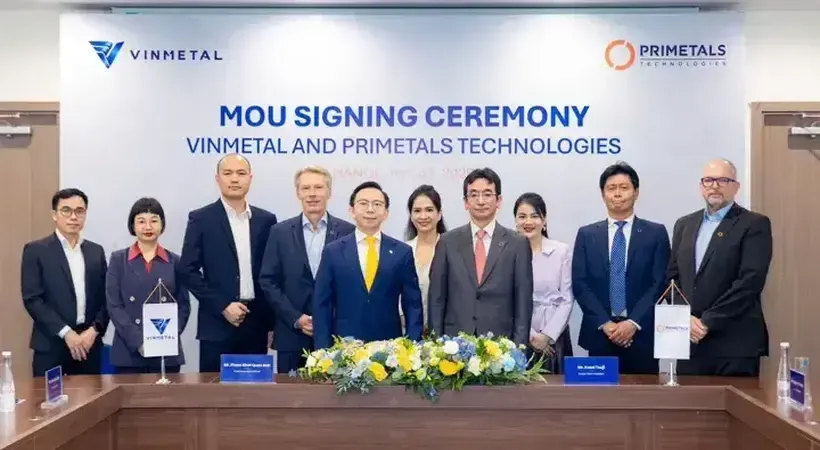
VinMetal partners with Primetals Technologies for two new production lines in Vietnam. | Image Credit: Primetals Technologies
“VinMetal, the steel manufacturing arm of Vingroup, has partnered with Primetals Technologies to create a large integrated steel complex in Ha Tinh, Vietnam.”
“Primetals will serve as the technology integrator and execute a pre-engineering package for the full scope of equipment, enabling early preparations for civil work.”
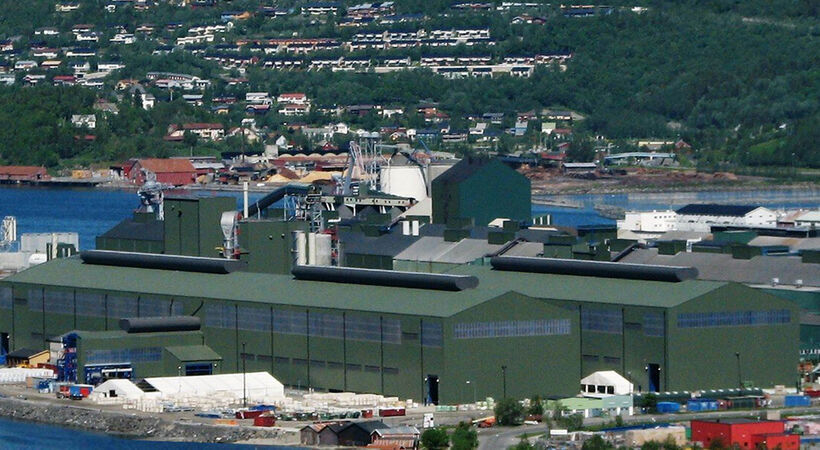
Alcoa invests in its Mosjøen aluminum smelter. | Image Credit: Alcoa Norway
“Alcoa Corporation will invest $65 million at its Mosjøen smelter, Norway. It plans to expand foundry production capabilities to include recycled content in the casting process at the facility.”
“The investment will expand and upgrade the Mosjøen casthouse, to increase production capacity by up to 75,000 metric tons.”
New Quenching Line Supports Specialty Steel Growth
SSAB is expanding production capacity for specialty steel. | Image Credit: Adobe Stock / flashmovie
“SSAB has decided to invest in a new quenching and tempering (Q&T) plant in Oxelösund, which will be crucial for growth in advanced wear and protection steels such as Hardox 500Tuf and Armox.”
“‘This new quenching plant will initially increase capacity by approximately 100,000 tons, enabling us to meet the most demanding [client] requirements,’ says Per Elfgren, head of SSAB Special Steels.”
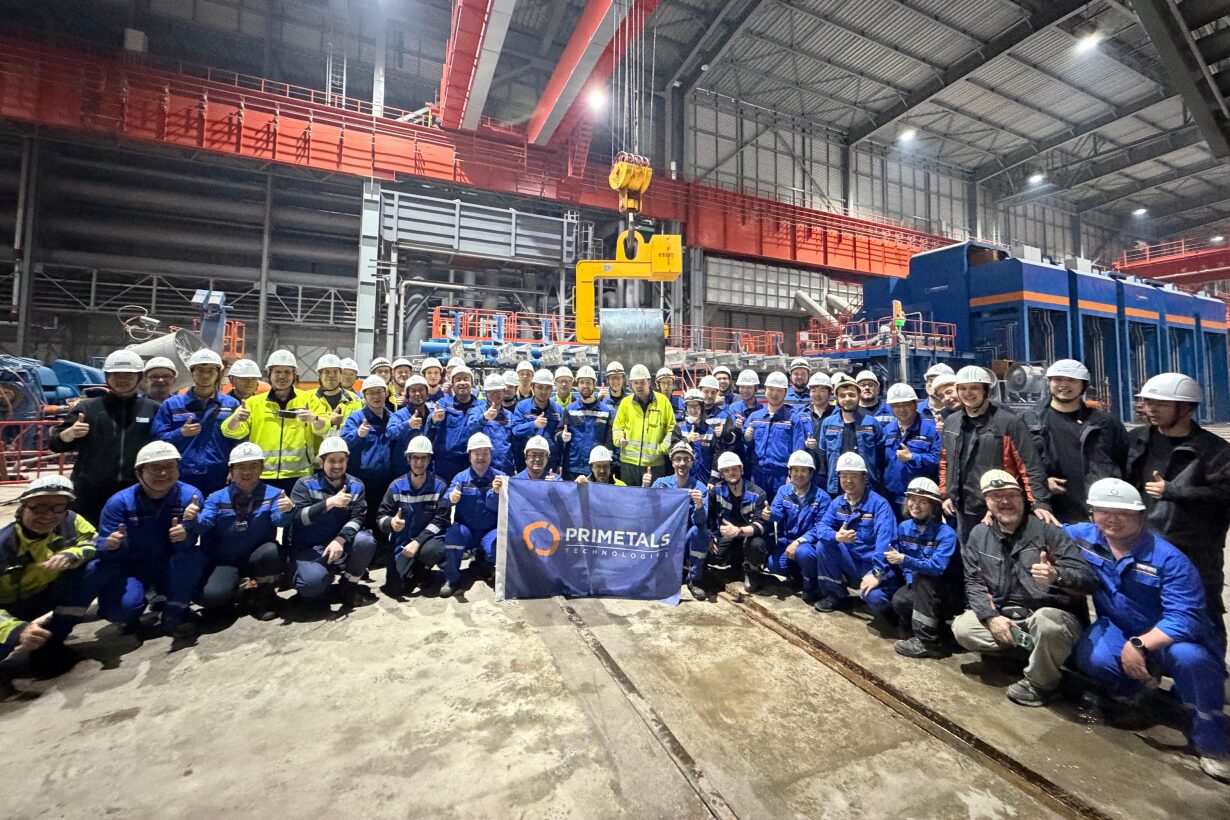
The Primetals Technologies team celebrates the first coil at Zhangshou Special Steel’s Arvedi ESP line. | Image Credit: Primetals Technologies
“On May 13, after just five days from the first cast, the first coil was successfully produced at the new Arvedi ESP (endless strip production) plant from Primetals Technologies at Zhongshou Special Steel’s facilities in Luanzhou, Hebei Province, China.”
“With its 130-millimeter-thick caster, four roughing stands, and five finishing stands, it represents the most powerful and productive Arvedi ESP line installed to date in China. The plant is designed to cover a wide mix of grades ranging from low-carbon to high-strength low-alloy steels.”
Wall Colmonoy has expanded its vacuum brazing capacity with the addition of new vacuum furnaces, supporting the production of aerospace and defense components. The investment is expected to increase capacity for vacuum brazing and vacuum heat treating operations involving stainless steel and nickel-alloy heat exchanger cores and other high-temperature assemblies.
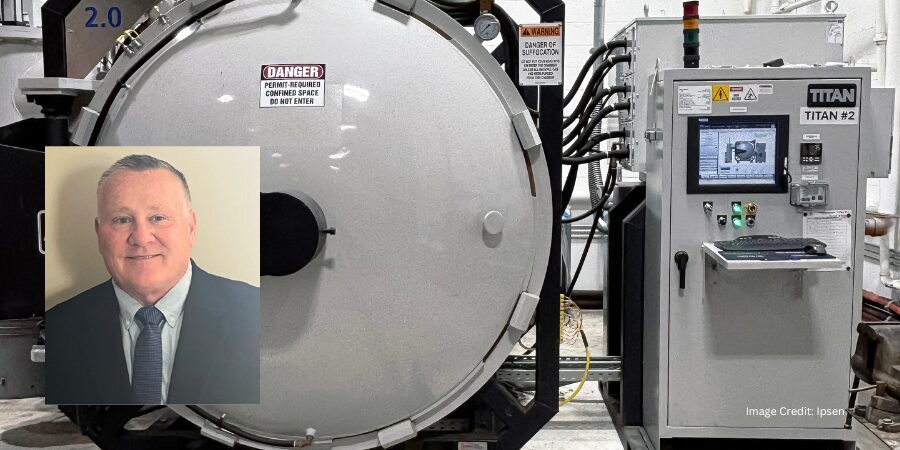
The expansion includes two TITAN H6 vacuum furnaces supplied by Ipsen. One furnace has been installed at Wall Colmonoy’s Oklahoma City facility, while a second unit is scheduled for installation at the company’s Cincinnati location this summer.
The 2-bar vacuum furnace recently installed at the Oklahoma City features a 36″ x 48″ x 36″ graphite hot zone, a 3,000-pound load capacity, a maximum operating temperature of 2400°F (1315°C), and ±10°F temperature uniformity. Designed for high-vacuum brazing, the furnace supports consistent processing of critical components while increasing capacity to meet growing demands.
John Mars Vice President / General Manager, Aerospace and Defense Division Wall Colmonoy
“Due to rapidly increasing stainless steel/nickel alloy heat exchanger core production, we needed to expand high-temperature vacuum brazing capacity,” said John Mars, vice president and general manager for Wall Colmonoy, Aerospace and Defense Division. The Oklahoma City expansion is part of a broader effort to strengthen heat treating and brazing capabilities across Wall Colmonoy’s operations.
Press release is available in its original form here.
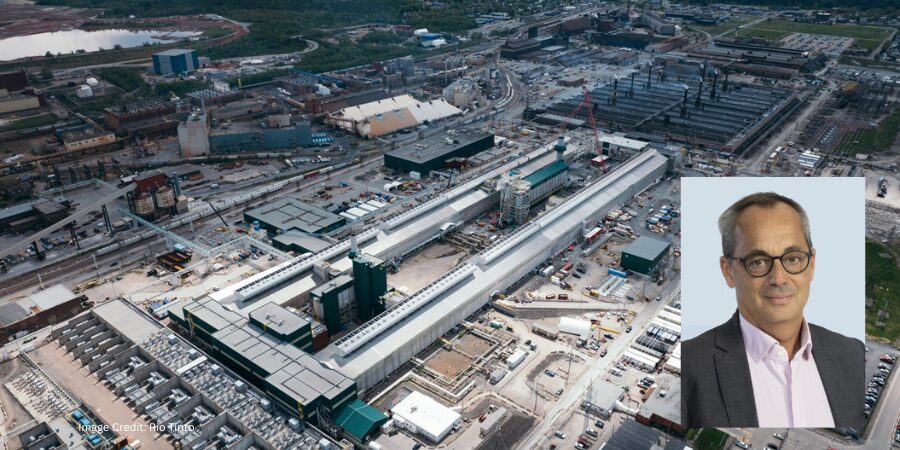
Rio Tinto has begun commissioning a major expansion of its AP60 aluminum smelter technology in Quebec, increasing primary aluminum production capacity and supporting North American supply for transportation, construction, electrical, and consumer goods markets. The project centers on aluminum smelting, a high-temperature thermal processing operation that converts alumina into primary aluminum through electrolytic reduction.
The USD$1.5 billion expansion at the Complexe Arvida facility adds 96 new AP60 smelting pots and is expected to be fully operational by the end of 2026. Once complete, the project will increase production capacity by approximately 160,00 metric tons annually, bringing total AP60 output to 220,000 metric tons of primary aluminum per year. The startup process began in March.
The AP60 technology was developed by the company’s research and development teams and, when combined with hydropower used at its Canadian operations, generates one-sixth of the greenhouse gas emissions per ton of aluminum compared with the industry average. The expansion also supports the transition to carbon-free aluminum electrolysis technology being developed through the ELYSIS partnership.
Jérôme Pécresse Chief Executive Rio Tinto Aluminium & Lithium
“For 100 years, Quebec has been at the heart of the aluminum industry, and with AP60, Rio Tinto is now strongly positioned for decades to come,” said Jérôme Pécresse, chief executive of Rio Tinto Aluminium & Lithium. He added that the expanded smelter is expected to reduce carbon emissions by up to 90% in fine particulate matter compared with the older Arvida smelter.
Rio Tinto said the AP60 expansion, together with a planned aluminum recycling center at Arvida, will more than offset production losses associated with the closure of older potrooms at the site. The project supported more than 1,500 jobs during peak construction and is expected to directly support approximately 100 permanent positions.
Press release is available in its original form here. Main image shows Rio Tinto’s AP60 smelter in Saguenay — Lac-Saint-Jean, Quebec Canada. Image Credit: Rio Tinto
For 80 years, Cook Induction Heating Co. has been a trusted partner for the aerospace, automotive, defense, mining, and oil tool industries. The company was founded in 1945 to support the induction hardening of citrus cutters in Orange County, California and has evolved over time into the go-to experts for induction heating. With induction heating as their core focus, Cook Induction Heating Co. is well known for providing high-quality engineering solutions tailored for their clients.
Third-generation president Troy Doolittle proudly holding photos of past presidents Keith Doolittle (father) and Forrest Doolittle (grandfather). | Image Credit: Cook Induction Heating Co.
As a family business with decades of legacy, they take pride in their deep industry roots and multigenerational relationships with clients and partners. They are “small enough to care and big enough to deliver” on innovation, problem solving, localized treatment, precision, efficiency — and a phone that’s always answered by a person.
The company services are focused on high-precision components for aerospace, oil and gas, tooling, and defense applications, including surface hardening, tempering, and annealing, all via advanced induction methods. From supporting ventilator development projects during COVID to treating critical components for military helicopters and missile defense, Cook Induction Heating Co. takes pride in their ability to perform under pressure.
Speaking of pressure, how about treating a part for a race? The company once processed a specialized shaft for the Red Bull Racing trophy truck after it had broken during a race in Baja, Mexico. A member of the team hand-carried the broken shaft through international flights to Cook Induction Heating Co. who then worked directly with Italian engineers to process the part immediately upon arrival and returned the part via helicopter to be reinstalled in the field — all within hours. This type of high-pressure, high-impact success story is an example of their dedication and drive.
Speaking of pressure, how about treating a part for a race? The company once processed a specialized shaft for the Red Bull Racing trophy truck after it had broken during a race in Baja, Mexico. A member of the team hand-carried the broken shaft through international flights to Cook Induction Heating Co. who then worked directly with Italian engineers to process the part immediately upon arrival and returned the part via helicopter to be reinstalled in the field — all within hours. This type of high-pressure, high-impact success story is an example of their dedication and drive.
For more information:
Cook Induction Heating Co.
4925 E. Slauson Ave. Maywood, CA 90270
info@cookinduction.com cookinduction.com
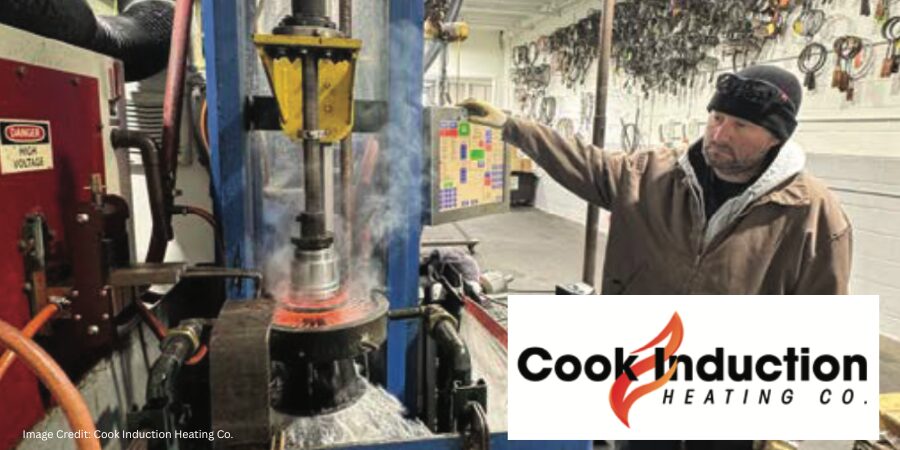
Main image: Veteran operator Juan Garcia, with 26 years at Cook Induction, monitors the induction hardening process of a drive shaft.
Solar Atmospheres, a North American commercial heat treating company, has expanded its vacuum heat treating and titanium processing capabilities with the commissioning of a new vacuum furnace designed for hydriding and dehydriding (HDH) of titanium as well as a range of thermal processing applications. The addition is expected to increase capacity for titanium processing and vacuum heat treating operations, including annealing, stress relieving, solution treating, and aging.
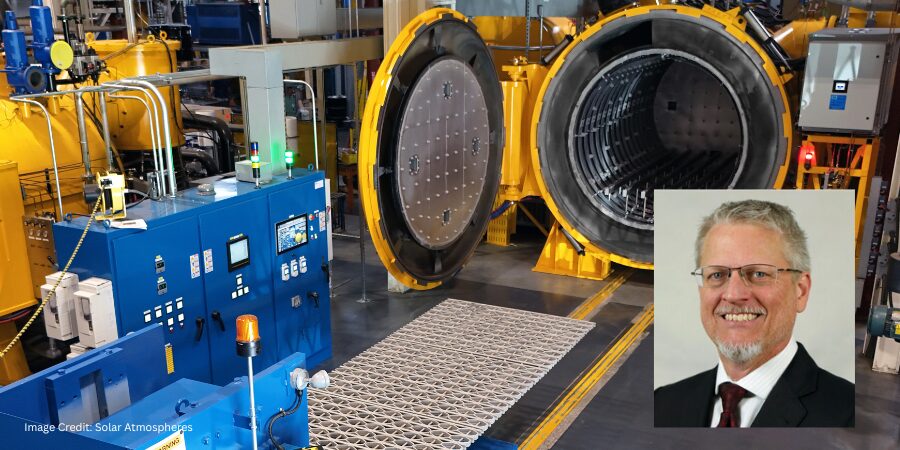
The company recently commissioned the a new 12-foot horizontal vacuum furnace at its Eastern Pennsylvania facility. The furnace was designed primarily for HDH processing of titanium but can also perform the vacuum heat treating processed commonly used throughout the company’s client base.
The furnace features a 54″ x 54″ in x 144″ in working zone and is equipped with a 15,000-pound conventional load car arrangement. Additional features include a 300 HP external forced cooling system with variable frequency drive (VFD) control, Solar Manufacturing‘s Polaris control system, and dual mechanical pumping systems.
Michael A. Moyer Vice President of Sales Solar Atmospheres
“This new furnace adds much-needed capacity to support growing HDH demands,” said Mike Moyer, vice president of sales at Solar Atmospheres. “With dual mechanical pumping systems, we are able to more efficiently process larger degas loads and improve our delivery metrics.”
Moyer added that the furnace is also equipped to support the company’s existing vacuum heat treating operations. “From annealing and stress relieving to solution treating and aging, the new furnace adds considerable capacity to meet [clients’] growing demands.”
Press release is available in its original form here.