Heat Treatment Essential for 3D-Printed Nuclear Reactors

Argonne scientists have been investigating 3D-printed steels for use in next-generation nuclear reactors. In two studies, they used X-ray diffraction and electron microscopy to reveal how heat treatments can help 3D-printed steels endure nuclear service.

Heat Treat Today has added additional resources for heat treaters, those in the nuclear energy sector, and new professionals in the industry who would like to learn more throughout this release. Make sure to click the links throughout to access all of the information!


Crucial components within nuclear reactors are often made using stainless steel; it fortifies falls and withstands decades of extreme heat, pressure, and irradiation. Additive manufacturing — or 3D-printing — offers a way to produce complex stainless steel parts more efficiently, however it can leave behind defects in the microscopic structures of steel parts, impacting their performance. Two recent studies have shown how additively manufactured steels compete with their conventional counterparts.

A grid of six images, arranged in three columns of two, shows nano oxides in 316H stainless steel at the micrometer and 200 nanometer scales. The nano oxides are shown as dark spots and grain boundaries within the otherwise smooth, light gray steel.
Scanning transmission electron microscopy images of 3D-printed 316H stainless steel before (a) and after (b and c) two heat treatment techniques. Red arrows indicate nano oxides, which greatly impact the steel’s response to heat treatment.
Source: Argonne National Laboratory

Researchers at the U.S. Department of Energy’s (DOE) Argonne National Laboratory used X-ray diffraction and electron microscopy to discover nanostructures of steel made with an additive manufacturing method called powder bed fusion (LPBF).

They printed two samples of stainless steel alloys with LPBF. In one study, they focused on 316H, an established type of stainless steel for structural components in nuclear reactors, and in the other they focused on Alloy 709 (A709), a newer alloy designed for advanced reactor applications. Both studies revealed the differences between 3D-printed steel and conventionally wrought steel, and also highlighted how printed steels responded to various heat treatments.

Before these steels can be relied upon in reactor environments, the nuclear industry has discovered their growing need for a deeper understanding of how to control 3D-printed steels.

“Our results will inform the development of tailored heat treatments for additively manufactured steels,” said Srinivas Aditya Mantri, an Argonne materials scientist who co-authored both studies. ​“They also provide foundational knowledge of printed steels that will help guide the design of next-generation nuclear reactor components.”

Using Heat Treatment for Repair

In LPBF, a laser melts precise designs into a metal powder one layer at a time until a solid, 3D metal object is formed. The repeated heating and cooling caused by the laser changes the microstructures of the steel.

Printed steels, for example, show higher numbers of dislocations — a defect of non-uniform shifts in a steel’s structure. Dislocations strengthen steel, but they also increase its internal stress, leaving it more vulnerable to fracture.

Heat treatment is a way to relieve this stress. Heat treatment changes the microstructures of a metal and can repair dislocations as high temperatures allow atoms to shift. Recrystallization is a product of heat treatment where new, strain-free grains replace the original structure. However, keeping some dislocations can have benefits of promoting precipitation of particles that can improve a material’s performance.

3D-printing 316H, a Standard for the nuclear industry

In one of the studies, researchers focused on 316H, comparing the microstructures of wrought and LPBF-printed samples by scanning electron microscopy (SEM) and scanning transmission electron microscopy.

Three images in a row depict dislocations in the microstructures of Alloy 709 stainless steel at three length scales, labeled: 1 micrometer, 500 nanometers and 100 nanometers. The dislocations appear as dark cracks and lines across the steel, which otherwise appears smooth and light gray.
Transmission electron microscopy images of 3D-printed and heat treated Alloy 709 stainless steel. The experiments revealed a high number of dislocations in their microstructures.
Source: Argonne National Laboratory

At a second office, they used in situ X-ray diffraction experiments. At beamline 1-ID, the team evaluated the samples using high-energy X-rays while they underwent varying heat treatments of solution annealing.

“The high flux of photons provided by the APS allowed us to track the evolution of the microstructures in real time during the dislocation recovery process,” said Xuan Zhang, another materials scientist at Argonne and co-author on both studies. ​“That’s something you can only achieve with a synchrotron X-ray facility like the APS.”

What was revealed is that recrystallization was inhibited by nano oxides, which are nanoscale defects common in 3D-printed steel.

“Nano oxides act as a sort of barrier to the movement of dislocations and the growth of new grains, causing some dramatic differences between the response of LPBF-printed and wrought steels to heat treatment,” Zhang said. ​“For example, the printed samples started to recrystallize at temperatures several hundred degrees higher than their wrought counterparts.”

The effects of these discoveries on the mechanical properties of the metal are essential, particularly strength under tension and resistance to creep. Creep is the slow deformation of a material under consistent mechanical load, which is relevant for nuclear applications.

3D-printing A709, An Up-And-Coming Heavy-Hitter

The other study focused on A709, a newer advanced stainless steel designed for high-temperature environments such as inside sodium fast reactors. Researchers studied samples of A709 printed with LPBF, making it the first experimental look at an additively manufactured form of the alloy.

While investigating the strengths of the heat treated samples under tension, both at room temperature and 1022°F (550°C) — a temperature relevant to sodium fast reactors — the printed A709 showed higher tensile strengths than the wrought A709. This is most likely on account of the printed samples beginning with more dislocations, which also led to the formation of more precipitates during heat treatment.

“Our research is providing practical recommendations for how to treat these alloys,” said Zhang, ​“but I believe our biggest contribution is a greater fundamental understanding of printed steels.”

Press release is available in its original form here.


Heat Treatment Essential for 3D-Printed Nuclear Reactors Read More »

Furnaces for Directionally Solidified and Single Crystal Castings

A leading aviation technology company will receive two new furnaces from a manufacturer of metal heat treatment solutions with North American locations. The furnaces will be used in the production of engine components, particularly directionally solidified and single crystal castings.

Sławomir Woźniak
CEO
SECO/WARWICK Group

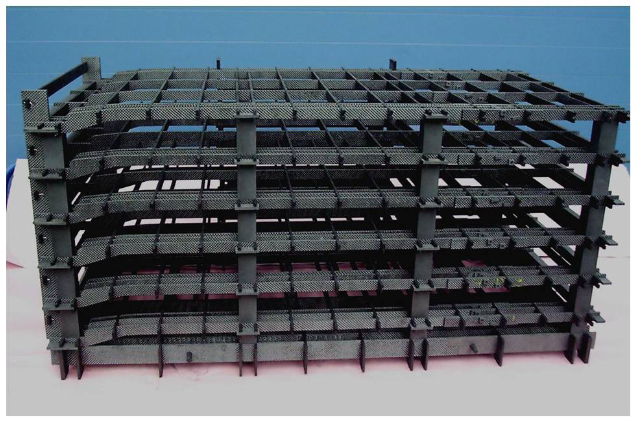
SECO/WARWICK will provide a Vector vacuum furnace and a VIM JetCaster furnace with a capacity of 25 kg, enabling the melting of nickel and cobalt alloys at temperatures up to 1700℃ (3092°F) to the Chinese aviation manufacturer.

“The device ensures a low percentage of casting defects, both macro and microstructural, as well as a significant reduction of the directional solidification casting process compared to the classical process due to increased mold withdrawal speeds,” said Sławomir Woźniak, CEO of SECO/WARWICK Group.

The latest jet engines use advanced blades cast produced by single crystal technology. The control system meets the needs of precise processes: casting, temperature control, as well as comprehensive data collection.

The Vector vacuum furnace is designed for aging and solution heat treatment processes. It achieves a maximum temperature of 1400℃ (2552°F) with a uniformity of ±5℃ (9°F) and can handle components with a total mass of up to 800 kg. Due to a high level of vacuum (up to 10⁻³ Pa), processes take place without intergranular oxidation, resulting in a quality surface for the components.

Press release is available in its original form here.


Furnaces for Directionally Solidified and Single Crystal Castings Read More »

Tracking the Heat Treat Economy

Heat Treat Today publishes twelve print magazines annually and included in each is a letter from the publisher, Doug Glenn. This letter is from the September 2025 Annual People of Heat Treat print edition.

Feel free to contact Doug at doug@heattreattoday.com if you have a question or comment. 


Knowing whether the North American thermal processing economy is up or down compared to last month or last year is a question that many want to know. And, as you may already know, there are essentially ZERO industry-specific economic indicators measuring our market. Except for one — Heat Treat Today’s Economic Indicators, or the heat treat economic indicators (HTEI).

A Little History

A little history and then let’s discuss Heat Treat Today’s HTEI. Back in the mid-1990s or early 2000s, I and the team at Industrial Heating established the first industry-specific economic indicators. Those indices survived for roughly 20 years before passing into oblivion when Industrial Heating shut their doors in 2023.

The data for the indicators were not saved…to the best of my knowledge. During those 20 years, many, many companies in the thermal processing industry relied on the data from those indices to help plan their business. I recall specifically speaking to one of the top-level guys at Bodycote who confessed that they used the economic indicators together with some other macro-economic data to help with their annual strategic planning. There were many others as well who either called or emailed asking questions about the indicators or asking for permission to use them in reports.

After Industrial Heating shuttered the indices, Heat Treat Today picked them up and has been collecting and reporting industry-specific economic data since that time.

The 4 Indices

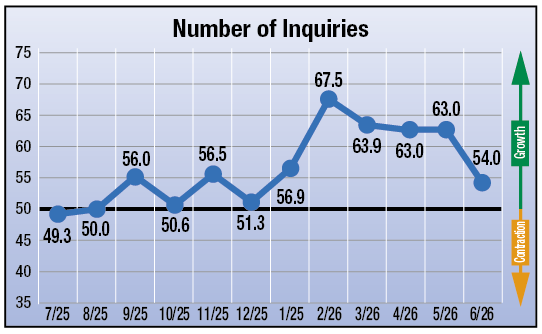
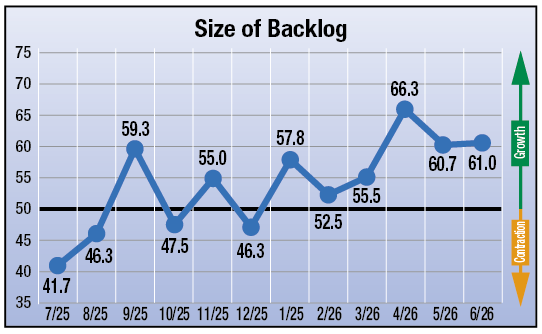
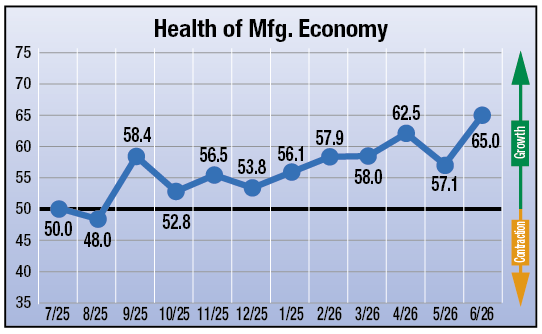
There are four indices. All four are forward looking and none require a company to report any numbers back to us. Here’s how they work.

On the first business day of each month, Heat Treat Today sends an email survey to over 800 supplier contacts in the North American heat treat market. Recipients are asked four simple opinion questions. All four questions ask essentially the same thing: Do you think the next 30 days will be better or worse or the same as the past 30 days? We ask this question for four specific areas:

  1. The number and/or value of inquiries
  2. The number and/or value of bookings
  3. The size of the company’s backlog
  4. The general health of the manufacturing economy

Respondents pick a number between −10 and +10 for each of the four questions with −10 being much, much worse and +10 being much, much better. Respondents can also skip one or more questions if they have no opinion or do not want to share.

The responses are aggregated and converted into an index very similar to the Purchasing Managers Index where the index number 50 represents no change, numbers above 50 represent growth, and numbers below 50 represent contraction.

More Responses Are Better

As with any statistical analysis, the larger the sample set, the more reliable the data. This is true for HTEI as well. With over 800 solicitations going out each month, we’re getting a pretty decent response, but more responses would be better. Responding to the survey takes less than two minutes, so time is not really an issue. No numbers need to be compiled or calculated to respond, which keeps it simple. The questions are all “opinion” questions about whether you anticipate the next 30 days will be better than the past 30 days.

We would love to have you join the ranks of people that respond regularly to the HTEI monthly emails. If you would like to receive the monthly survey on the first business day of each month, please send your email address to me and I’ll add you to the list. You can email me at doug@heattreattoday.com.

Thanks for participating. 

Doug Glenn
Publisher
Heat Treat Today
For more information: Contact Doug at
doug@heattreattoday.com


Tracking the Heat Treat Economy Read More »

Flames and Fire: Straighten Up, Move Forward… Or Not?

In this Technical Tuesday installment, Jim Roberts, president of U.S. Ignition, examines various flame profiles in heat treat operations. Today’s Combustion Corner compares gravitational lift, premix burners, fuel nozzle fixed air mixing burners, and nozzle mixing burners, while exploring design improvements to keep you well informed.

This informative piece was first released in Heat Treat Today’s August 2025 Automotive Heat Treating print edition.


A furnace guy walks into a bar and shouts, “Straighten UP!” The other furnace guys respond, “It won’t work!”

Thus begins another wander down combustion lane where we try to figure out what I’m talking about. We have discussed in other articles how various fuels and sources of air (and everything else) can affect the heating rates produced by our combustion equipment. We have talked about fire. We haven’t talked about what fire looks like.

So, in the following column and subsequent releases we are going to talk about flames and fire, and why there are a fairly substantial number of flame profiles available to heat treaters, steel makers, and all of you high-temp-type people. Why are there different flame shapes, and what does flame color do for you?

Burner Types

Figure 1. Nozzle-mixing burner ThermJet cutaway

Firstly, let’s start with the various types of burners commonly used in the art of high-temp processing work.

  1. Gravitational lift: This type of burner is exactly what it sounds like; it works just like a candle. The fuel/air mix is naturally rising with the thermal current of the flame and combusting as the flame rises, climbing the heat column.
  2. Premix burners: This is where the fuel and air are mixed together and then ignited. By controlling the percentages of fuel and air in the mixture, we control the characteristics of this flame.
  3. Fuel nozzle fixed air mixing burners: This is where a steady stream of oxidant (air) is flowing, and the fuel is throttled up and down to affect ignition and capacity of fuel.
  4. Nozzle mixing burner: Finally, and by far the most used in our industry, this is where the fuel and oxidant mix internally in the burner, and a flame configuration is determined by the burner outlet or the mixing nozzle. (See Figures 1 and 2.) You may hear burner nozzles referred to as a cup, a spinner, flame retainer, just about any type of reference. You may also hear them referred to as a danged hot thing — an accurate description as well — so don’t touch.

Design Improvements

With development of the nozzle mixing burner 60+ years ago, design improvements began in earnest. One of the first patents for nozzle mixing industrial burners was issued to Eclipse Fuel Engineering in 1967. Pretty soon there were all sorts of designs and patents, as burner companies raced to improve reliability, performance, and heat delivery characteristics.

Figure 2. Nozzle-mixing burner Eclipse Thermair

Some of the concepts that came along in the subsequent years were “air staged” burners. In this design feature, the fuel is delivered in the center of the flame nozzle. Progressively changing air holes in the nozzle stages the combustion of the fuel as it makes contact with the air. As the gas burns and the exhaust gas expands, it will often increase volumetrically by up to seven to eight times its cold state condition. That’s a lot of expansion, and it forces the pressure in the burner body to increase at an amazing rate. As the flame progresses through the burner and seeks the exit point (the part we see, you know, the fire), it can be moving along at — get this — flame speeds up to 400 feet per second!

That’s enough for today. We’ll pick this conversation back up next month.

Jim Roberts
President
US Ignition
For more information: 
Contact Jim Roberts at jim@usignition.com


Flames and Fire: Straighten Up, Move Forward… Or Not? Read More »

MTI Commercial Heat Treater of the Year 2025 Announced

On Wednesday, September 24, Heat Treat Today, in cooperation with the Metal Treating Institute (MTI), presented the 2025 Master Craftsman Award (also known as the Commercial Heat Treater of the Year Award) to Braddock Metallurgical, Inc.

The award was presented at the formal awards presentation banquet at the Metal Treating Institute Fall Meeting and Conference in Napa, California. Pictured above from left to right is Natalie Littler, Jason Kusher (Plant Manager, Braddock Metallurgical), Grace Blasco, Erik Gieger (Quality Manager, Braddock Metallurgical), Mary Braddock, Griffith Braddock (VP, Braddock Metallurgical), George Gieger (CEO, Braddock Metallurgical), Rose Gieger, Roy Adkins (Corporate Director of Quality, Braddock Metallurgical), Christine Adkins, and Doug Glenn (Publisher, Heat Treat Today).

This award, whose applicants are judged by a panel of previous recipients, is given to the company that demonstrates making a positive impact on their community and their industry. Recognition is based on quality programs, pollution and hazardous waste control, community involvement, and industry leadership.

At the award presentation, Doug Glenn highlighted how “the company’s commitment to quality and innovation is evident in the numerous quality certifications and its approach to assisting customers. To name just one quality system accomplishment, the company has achieved Merit Standing for their AS9100 Rev D Quality System for four of their locations.”

He continued, “When it comes to the company, it has been actively working towards reducing its carbon footprint, promoting resource conservation, and adopting sustainable sourcing practices by: Monitoring asset utilization to reduce wasted energy, recycling oil and wastewater, performing thermal surveys of electrical panels, tuning combustion systems, using only Federal and state regulated waste removal companies, and monitoring storm water activities at all facilities.”

Braddock Metallurgical, Inc. received a plaque commemorating this auspicious recognition and a scholarship fund of $1500 from Heat Treat Today that was matched with another $1500 from MTI’s Education Foundation. The heat treater will award this $3000 to a high school or college student who is pursuing an education in heat treat.

Congratulations to Braddock Metallurgical, Inc. on this award.


Find heat treating products and services when you search on Heat Treat Buyers Guide.com


MTI Commercial Heat Treater of the Year 2025 Announced Read More »

13 News Chatter to Keep You Current

Heat Treat Today offers News Chatter, a feature highlighting representative moves, transactions, and kudos from around the industry. Enjoy these 13 news items, featuring the Nitrex/AICHELIN Group merger, Super Systems 30th Anniversary, Heat Treat Today’s 40 Under 40 Honorees, and more!


Equipment

1. Tenova continued its collaboration with Topy Industries Ltd., starting a Phase II integration of the Tenova acoustic water detection system on the EAF shaft panels.

2. Rheintmetall and Lockheed Martin presented a world first in the field of combat vehicles at the DSEI UK trade fair: the Fuchs JAGM is a highly mobile combat vehicle designed to combat a wide range of threats on land and in the air.

3. SMS Group received final approval from WISCO for the successful modernization of its high-capacity hot strip mill. The project focused on automation upgrades, including X-Pact® Profile, Contour and Flatness Control (PCFC), and new CVC® blocks.

4. Kanthal, a global resistance materials producer, expanded its wire production capacity in Hosur, India. The new 1,980 square meter facility will more than triple its production capacity at the Hosur plant.

Company & Personnel

5. NITREX will soon be part of the AICHELIN Group. AICHELIN signed an agreement to acquire the NTS & UPC business divisions of NITREX.

6. Phoenix Heat Treating announced their acquisition of Mesa Custom Machining. Mesa Custom will continue to operate as an independent company.

7. Solar Atmospheres of California announced the addition of Eric Cavenee to their Western Region Outside Sales team.

Kudos

8. Super Systems celebrated their 30th anniversary, which included Bill Thompson (Founder), Steve Thompson (CEO), and Will Thompson (Employee), who are father, son, and grandson.

9. Advanced Heat Treat Corp achieved a 24-Month Nadcap® merit status for heat treatment. The renewed status is valid until November 30, 2027.

10. Wirco celebrated 20 years since acquiring the foundry in Champaign, Illinois. They honored long-tenured retirees at the occasion.

11. Heat Treat Today announced its 40 Under 40 Class of 2025 Honorees. The 40 Under 40 initiative is an opportunity for the heat treat community to give loud applause to the ladies and gentlemen rising up as leaders in the North American heat treat industry.

12. The MTI Educational Foundation announced that 17 outstanding students have been awarded scholarships totaling $80,000 to support their pursuit of education and careers in materials science, metallurgy, engineering, and related industrial and technical fields.

13. Trinity Forge — one of Mansfield’s oldest active manufacturers — is celebrating 70 years in business! Founded in 1955, Trinity Forge has grown from a small forging shop into a versatile manufacturer serving industries from aerospace and defense to transportation and heavy equipment.


13 News Chatter to Keep You Current Read More »
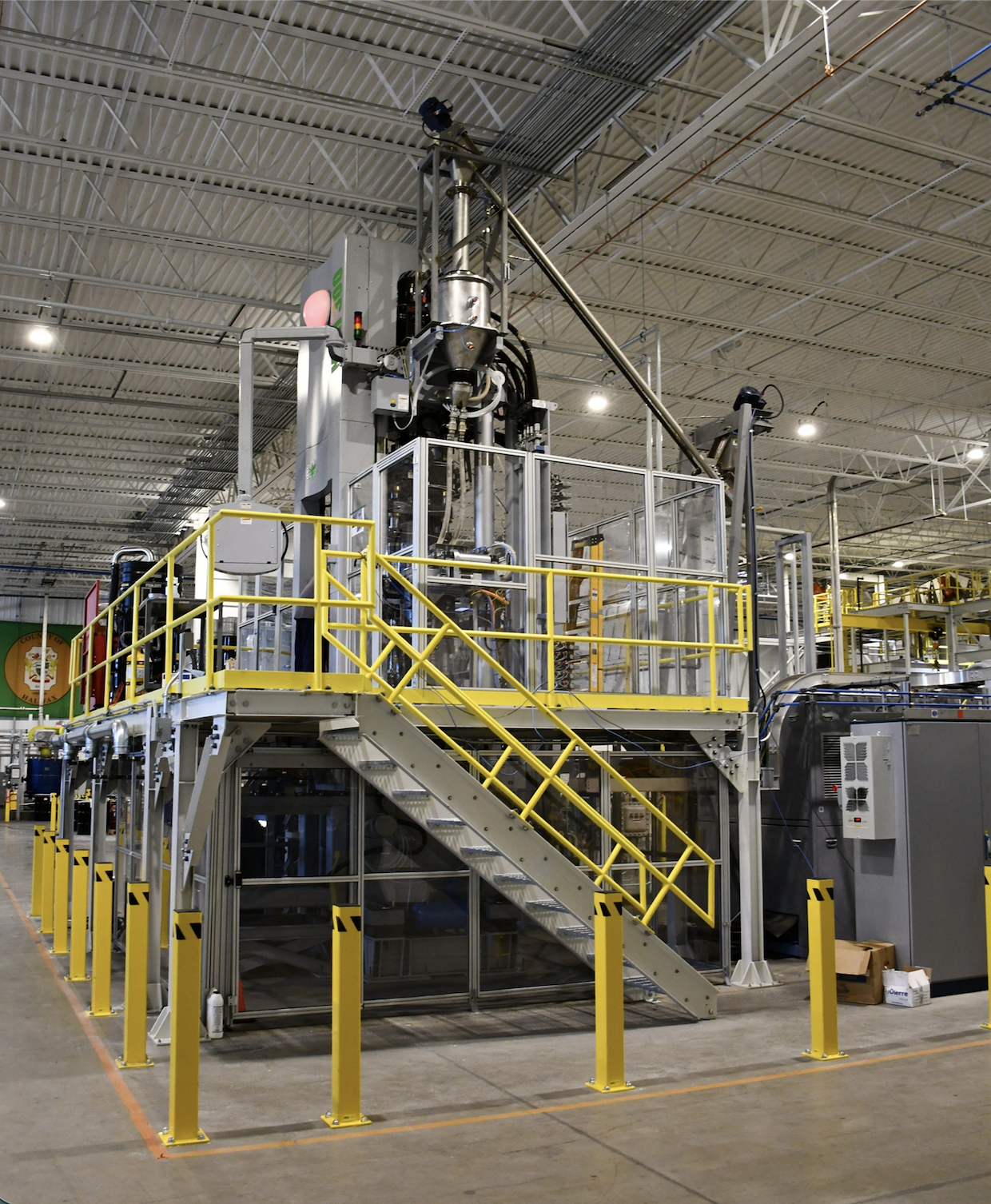
Relevant Industrial Expands Thermal Solutions, Acquires Lindberg Process Equipment

Relevant Industrial, LLC (Relevant), an industrial equipment and engineered solutions company, has announced its acquisition of Lindberg Process Equipment (Lindberg), a provider of industrial heating and combustion systems. The acquisition adds to Relevant’s geographic presence in the Midwest while expanding its ability to support its clients.

John Carte
CEO
Relevant
Source: Relevant Industrial, LLC

Lindberg’s operations will combine with Relevant’s New Brighton, MN location, adding an established thermal solutions operation. The move allows the company to provide faster response times, improved product availability, and more tailored support to industrial clients across the Midwest.

“This acquisition reinforces our commitment to being close to our customers and equipping them with the products and solutions they need to keep their operations running efficiently,” said John Carte, CEO of Relevant Industrial. “By expanding our thermal solutions capabilities in a key geography, we’re better positioned to deliver timely, practical support.”

Lindberg Process Equipment specializes in industrial heating and combustion systems, including burners, valves, pipe trains, controls, and custom control panels.

Press release is available in its original form here.


Relevant Industrial Expands Thermal Solutions, Acquires Lindberg Process Equipment Read More »
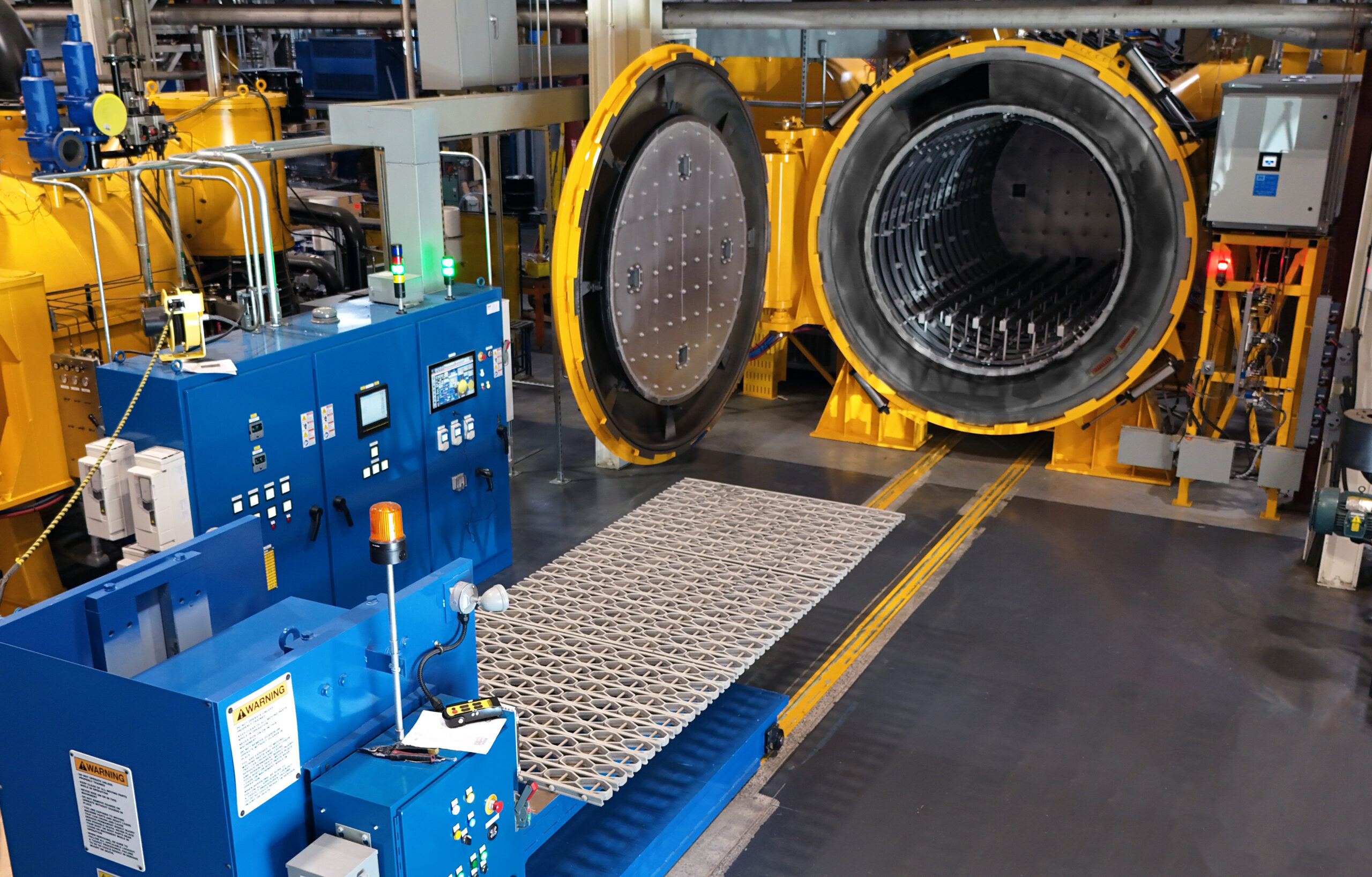
Aerospace Manufacturer Expands Heat Treating Capabilities with New Vacuum Furnace

An aerospace manufacturer is expanding with a vacuum furnace for brazing fuel system components for aircraft engines. The single-chamber vacuum furnace has a molybdenum heating chamber and gas cooling up to 1.5 bar abs.

SECO/WARWICK, which has U.S. locations, spent years in collaboration with this manufacturer to ensure it met their high precision needs.

Maciej Korecki
Vice President of Business of the Vacuum Furnace Segment
SECO/WARWICK

“This partner is one of the most specialized production centers in Europe when it comes to precision elements of fuel installations for aircraft engines. The fact that they once again chose SECO/WARWICK technology is the highest form of appreciation,” says Maciej Korecki, vice president of the Vacuum Segment at SECO/WARWICK. “Our solution is the result of technical dialogue, adaptation to the client’s requirements and optimization for process cleanliness, high vacuum, and the size of the parts to be manufactured.”

The vacuum furnace has been significantly modified to meet the client’s specific technological requirements. It includes a molybdenum heating chamber with shield insulation, which reduces heat loss and provides purity for thermal processes. A temperature uniformity of ±6°C (±11°F) ensures uniform conditions throughout the heating zone, which is crucial when brazing tubular components for fuel systems.

The device’s vacuum system, built on mechanical pumps, a roots pump, and a diffusion pump, maintains a stable and deep operating vacuum at the level of 10⁻⁴ to 10⁻5 mbar. A partial pressure system for protective gases (hydrogen, argon) has also been implemented, preventing the sublimation of alloying elements and protecting the quality of the load. A dew point sensor installed at the gas inlet secures the process against contamination from the atmosphere.

The new furnace will provide full production capabilities, handling an increased number of components for fuel systems in aircraft engines. Its implementation will have an impact on the efficiency, quality, and stability of brazing processes.

Press release is available in its original form here.


Aerospace Manufacturer Expands Heat Treating Capabilities with New Vacuum Furnace Read More »
Message from the Editor: An Editorial Eye on AI

Heat Treat Today publishes twelve print magazines a year and included in each is a letter from the editor. This letter is from the August 2025 Annual Automotive Heat Treating print edition. In today’s letter, Bethany Leone, managing editor at Heat Treat Today, describes the parameters, limitations, and benefits of using artificial intelligence in our heat treatment publication.


You have questions; AI has answers. But we have expert editorials.

Heat Treat Today delivers practical, accurate, and trustworthy information to a very niche and critical industry in North American manufacturing. With AI tools becoming more accessible and powerful, we want to be transparent about how we leverage them to maintain high editorial standards.

First, “The Don’ts”

Simply put, we don’t let AI replace our direct access to expert technical advice or content. Your heat treat efforts are too important for us to give you articles that have not been reviewed and cross-examined by our team, which is trained to review heat treat industry content.

Compose Technical Articles

We don’t use AI to generate technical articles for direct publication. Authenticity is at the heart of our editorial process, and our readers rely on us to deliver information straight from credible sources — directly from operators, engineers, and experts.

In our editorial department, technical content undergoes rigorous editorial review; we don’t rely on AI here. Our editors’ eyes are trained to catch and improve areas of technical confusion, so our readers receive help from the best practical heat treat information.

Learn Technical Concepts

I do not want to overstate this idea, because AI does generate helpful answers to common queries; you will note below that we appreciate this handy, interactive research assistant! But when it comes to learning a concept thoroughly, and especially for the first time, we prioritize validated sources:

  • Our in-house technical advisors
  • Reputable books and resources
  • Trusted websites from industry authorities

We do this to ensure accurate interpretation and traceability of knowledge.

Let me give an example: If I ask public AI for the most relevant quenching issues operators face, the answers it will give me will be based on material — often marketing material — that it can access online. While not incorrect, we always draw our material from resources with direct, on-the-floor experience to give you the benefit of more robust research and proven, hands-on expertise. (Furthermore, you can ask AI that question, too! We want to give you the benefit of more robust research and proven, hands-on expertise.)

And “The Dos”

AI can be an incredibly effective tool for supporting aspects of our editorial and communication processes. The following examples show how AI pushes us to actualize our creative juices, helps us think more clearly, and gives us time to hone more compelling and relevant content.

Hyperdrive the Early Draft

AI helps us create early drafts of editorials based on structured outlines. This accelerates the writing process, teasing out rough thoughts into a foundation that our editors will refine and often rewrite to enrich with targeted insights. Ever heard of writer’s block? Sometimes, AI is just what we need to get the ball moving!

Find Technical Gaps

Although we are not content experts, we often have a hunch when some technical aspect is missing or incorrect. AI can be helpful to scan sections where we have questions and provide suggested context for such sections — or simply tell us that we are being delusional. Once identified, our team collaborates with experts to address knowledge gaps or inconsistencies.

Research Tech Qs and News

AI helps us cut to the chase. Serving as a dialogue partner, AI conversations help editors refine research questions before consulting our technical experts and authors. This allows us to approach consultations with greater clarity, maximizing the value of expert input.

Additionally, AI scans our online lineup of industry news sources to find relevant stories, offering a more curated alternative to traditional RSS tools.

Refine Headlines & Article Summaries

Critical reader engagement calls for compelling and technically correct phrasing. For a niche trade publication, you might see how AI can help stimulate the creative iteration process to help us avoid the same wording. The headlines and introductions to articles in this magazine probably had an AI-hand help!

Revisit Technical Concepts

I’ll be frank: editors are not content experts! But as editors in this industry, we train ourselves on common concepts (and sometimes very marginal topics) enough to ensure we best assist expert authors and contributors. Therefore, we use AI to revisit technical concepts to refresh our understanding.

Since this is a “refresh,” we can discern when AI wants to do its own thing or emphasizes a concept a bit too much.

To summarize, AI is not an author nor an expert; it’s an editorial tool that spurs us on. We will continue to value people and their contributions in the ever-developing world of manufacturing.


Bethany Leone
Managing Editor
Heat Treat Today
Contact: Bethany Leone at bethany@heattreattoday.com


Message from the Editor: An Editorial Eye on AI Read More »
A Case Study in Brake Rotor Innovation at GM

Ferritic nitrocarburizing (FNC) has emerged as a powerful, low-distortion heat treatment solution for automotive components, especially brake rotors, thanks to its wear resistance, corrosion protection, and compatibility with tight dimensional tolerances.

In this Technical Tuesday installment, adapted from a recent Heat Treat Radio conversation, Mike Holly, a retired GM metallurgical engineer, shares how FNC reshaped brake rotor technology at General Motors (GM), and what its future may hold for commercial and in-house heat treaters alike.

This informative piece was first released in Heat Treat Today’s August 2025 Annual Automotive Heat Treating print edition.


A Brake Rotor Problem Worth Solving

Ferritic nitrocarburizing (FNC) may not be new to the thermal processing world, but its potential is still unfolding, especially for heat treaters working with automotive components. With over four decades in the automotive and heavy truck industry, 32 of those with GM, Mike Holly’s perspective is forged in real-world experience. In the mid-2000s, he and a colleague tackled a costly issue: brake rotor warranty claims due to pedal pulsation and corrosion. The solution? FNC, if it could be controlled tightly enough to meet the dimensional demands of finished machined rotors.

From Concept to Production

Working with Kolene (in salt bath) and later Woodworth (in gas), the GM team optimized the process to FNC rotors after finish-machining without subsequent grinding. Stress relieving the castings ahead of machining helped eliminate dimensional shifts. This process innovation led to multiple patents and debuted in the 2009 Cadillac DTS and Buick Lucerne. Today, it’s used widely across GM platforms and by other OEMs.

Figure 1. Doug Glenn and Mike Holly discussing laser cladding, grinding, and carbides in FNC

Initially, implementation required close collaboration with external heat treaters and careful process validation. GM chose to pilot the technology on low-volume, premium platforms before expanding to high-volume vehicles like trucks.

“Eventually,” said Holly, “the best setup was to co-locate FNC operations with machining and casting facilities. That reduces shipping costs and protects dimensional tolerances.”

Why FNC Works

“FNC is a thermal chemical case hardening process,” Holly explained. “It diffuses nitrogen and carbon into ferrous materials at subcritical temperatures, typically 560 to 590°C (1040°F to 1090°F). That creates a hard, wear- and corrosion-resistant surface with minimal distortion.”

The benefits are compelling: compressive residual surface stress improves fatigue life; resistance to adhesive and abrasive wear boosts durability; and there’s virtually no hazardous waste. For heat treaters managing precision parts or looking to support sustainability goals, FNC checks several boxes.

Unlike carburizing or carbonitriding, FNC operates below the critical transformation temperature of steel. This means fewer dimensional changes and minimal phase transformations, making it ideal for components that have already been finish-machined. Parts emerge from the process with a compound layer and a diffusion zone that enhances performance without requiring post-processing.

Figure 2. Close up photograph of a disc brake. Source: Pexels/Agustin Olmedo

Still, it’s not for every application. “The shallow case depth (10 to 20 microns) limits FNC’s use in high-load or rolling contact fatigue applications, like ring and pinion gears,” said Holly. “But for lightly loaded gears, brake backing plates, clutch discs, and now brake rotors, it’s a great fit.”

To make FNC viable for finished parts like brake rotors, precise control over fixturing and orientation is essential. “Vertical orientation in the furnace is crucial,” said Holly. “And you must stress relieve parts, at least where the geometry or casting process warrants it.”

Fixturing strategies are typically proprietary to commercial heat treaters, but OEMs require dimensional accuracy to be statistically validated. Proper stress relief, careful racking, and consistent atmosphere control are all part of ensuring tight tolerances and minimizing scrap.

Applications Beyond Brakes

FNC isn’t just for brake rotors. It’s used in numerous applications where wear, corrosion resistance, and dimensional control are critical. Lightly loaded gears, hood struts, locking mechanisms, clutch pack discs, and brake backing plates all benefit from FNC.

In non-automotive sectors, FNC has been applied to hydroelectric gates, military components, and even stainless steels where added surface strength and wear resistance are needed.

Opportunity for Heat Treaters

For in-house and commercial heat treaters, the expanding use of FNC presents an opportunity. Whether supplying OEMs or developing in-house capability, the process can offer a competitive edge in applications requiring low distortion and enhanced surface properties.

Figure 3. Hydroelectric gates can benefit from being FNCed

However, Holly emphasizes that consistency and precision are paramount. OEMs, he explained, don’t need to know the proprietary fixturing methods used by commercial heat treaters, just that the finished parts meet all dimensional specifications.

“Show us statistically that your lateral runout, your thickness and your wheel mount surface meet our specs,” he said.

In-house heat treat operations should prioritize tight process control, consistent dimensional outcomes, and scrap minimization. As with most thermal processes, success lies in mastering the details.

Preparing for Euro 7

The process’s low temperature and environmental profile are key drivers. And now, its role in upcoming regulatory changes could make FNC even more relevant. The European Union’s Euro 7 regulation, expected to begin rolling out in 2026, includes strict limits on brake dust emissions. Holly sees two viable solutions on the horizon: FNC and laser cladding.

“FNC with niobium alloying is the low-cost alternative,” said Holly. By alloying gray iron brake rotors with niobium before FNC, Holly’s team is developing enhanced surface hardness through niobium carbides, without post-process grinding or exotic feedstocks. It’s a scalable path for meeting wear and emission goals while keeping costs in check.

Alloying for the Future

In response to Euro 7 and increasingly aggressive friction materials, Holly is working with clients to improve the case properties of FNC rotors through alloying. Niobium, a known carbide-former, is added during the casting phase to enhance both case and core properties.

“There is a heavy truck rotor application that was niobium alloyed for many years, and that was advertised as a 1-million-mile rotor,” said Holly. “In the heavy truck industry, it’s all about uptime — keeping the trucks out of the shop and on the road.”

This alloying strategy leverages existing infrastructure and doesn’t require major capital investment, a significant advantage over competing technologies like laser cladding, which demands specialized equipment, multiple process steps, and expensive materials.

Cladding vs. FNC: The Economic Equation

While laser cladding offers impressive wear resistance, it brings substantial cost and environmental considerations. The materials involved (nickel, chromium, molybdenum) are expensive and volatile. Post-process grinding generates nickel-laden swarf, which requires special handling and disposal.

FNC, by contrast, uses common gases like ammonia and natural gas. It’s performed in batch processes that are well-suited to high volumes and heavy parts. And it can be integrated into existing facilities without massive investment.

While cladding may be necessary for extreme-duty applications, FNC, especially with niobium alloying, offers a highly competitive solution for most mainstream automotive needs.

The Road Ahead

As regulatory pressure increases and OEMs push for performance and sustainability, FNC is well-positioned to meet the challenge. Holly continues consulting with clients in North America, Europe, and South America, supporting FNC development and publishing papers at industry events like SAE Brake Colloquium and EuroBrake.

For heat treaters, whether in-house or commercial, staying ahead means understanding not just the metallurgical fundamentals but also the evolving regulatory and performance landscape. FNC presents heat treaters with a scalable, efficient, and regulation-ready solution to meet evolving performance and emissions demands.

About The Expert:

Mike Holly
Lead Consultant
Mike Holly Metals LLC

Mike is currently a consultant with Mike Holly Metals LLC, specializing in heat treatment, coating, casting, metal forming and joining operations. He has 42 years of experience in industry, including 32 years at the General Motors Materials Engineering department where he was assigned to support automotive and truck chassis applications. He holds 15 patents and was key in the development of Ferritic Nitrocarburizing Brake Rotors. Mike has a bachelor’s degree in metallurgical engineering from Wayne State University and a master’s degree from Purdue University.

For more information: Contact Mike Holly at mike.holly72@att.net.

To listen to Heat Treat Radio Episode 117: How GM Started & Grew FNC for Brake Rotors click here.


A Case Study in Brake Rotor Innovation at GM Read More »
Skip to content