


OP-ED

Cybersecurity Desk: Artificial Intelligence and Heat Treating

op-ed

Artificial intelligence remains a hot topic for every industry, not least heat treating. Understanding the how and why of AI’s potential impacts on the industry, however, is not so easily apparent.

Today’s article, written by Joe Coleman, cybersecurity officer at Bluestreak Consulting, breaks down the pros and cons of implementing AI, to help you decide if artificial intelligence might be a beneficial addition to your heat treat operations.

This article was originally published in Heat Treat Today’s December 2023’s Medical and Energy Heat Treat magazine, and can be read in fullness here.


Introduction

Joe Coleman, cyber security officer, Bluestreak Consulting

As all of you are aware, artificial intelligence (AI) is getting more and more attention, and companies are beginning to use AI to help with many aspects of running their businesses. I’m sure you’ve heard of ChatGPT and other intelligent user interfaces (IUI). You may be one of those businesses considering the idea or experimenting with it to access its potential benefits for your business.

Like any industry, there are quite a few pros and cons associated with using AI to improve the heat treating processes. This article will outline some of these advantages and disadvantages. Always make sure you do your own research before jumping into the AI world because it’s not always what it seems.

What Is Artificial Intelligence (AI)?

Artificial Intelligence is the simulation of human intelligence in machines that are programmed to think and learn like humans. It includes a wide range of techniques and approaches, including machine learning, allowing computers to perform tasks that typically require human intelligence, such as understanding natural language, recognizing patterns, solving problems, and making decisions. AI systems are designed to learn from data, improving their performance over time without direct programming. These technologies find applications in many areas, from virtual assistants and language translation services to autonomous vehicles and industrial diagnostics, revolutionizing industries and helping to shape the future of technology

Pros of AI in Heat Treating

Quality Improvement:

  • AI systems can monitor and help control the heat treatment process in real time, ensuring you have consistent quality and to minimize defects.
  • Predictive analytics in AI can anticipate potential defects, allowing for corrective actions before they occur.

Increased Efficiency:

  • AI algorithms can optimize processing parameters and reduce bottlenecks, leading to faster and more efficient heat treating processes.
  • AI-driven automation can improve employee labor throughput and increase overall production speed.

Cost Reduction:

  • By optimizing utilities usage and resources, AI can help reduce the plethora of operational costs within heat treating facilities.
  • Predictive maintenance generated by AI can prevent costly equipment breakdowns and production downtime.

Customization and Personalization:

  • AI algorithms can analyze customer requirements and tailor heat treating processes to their specific needs.
  • Improved data analysis can lead to the development of new and specialized heat treatments for different metals and alloys.

Data Analysis and Information:

  • AI systems can process enormous amounts of data generated during heat treatment, collecting valuable information that can be used for process improvements and better-quality management.
  • Pattern recognition and statistical process control (SPC) analysis by AI can identify trends and correlations that could normally be overlooked.
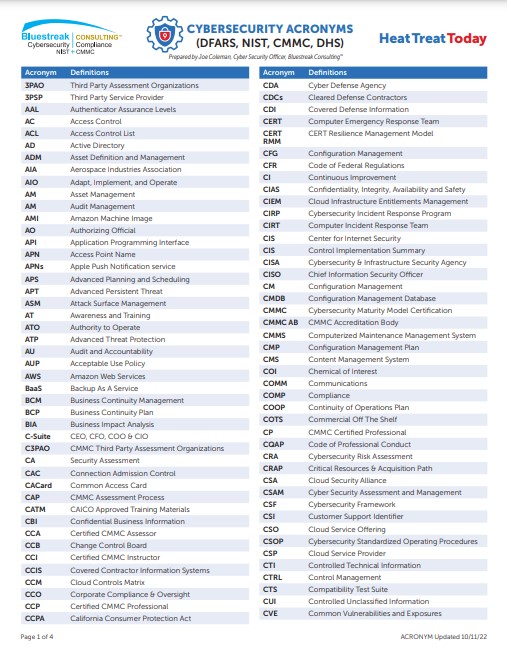
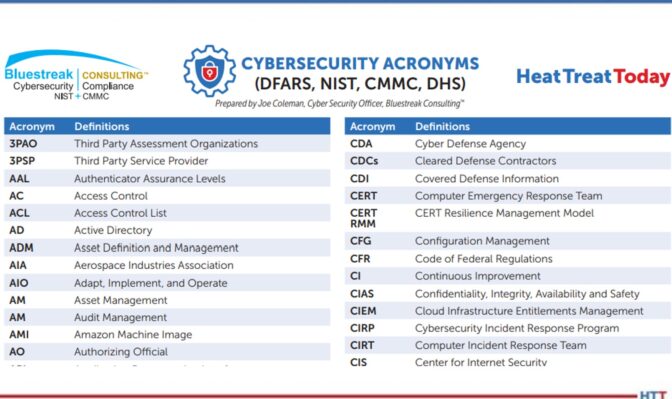
Click image to download a list of cybersecurity acronyms and definitions.

Cons of AI in Heat Treating

Initial Investment:

  • Implementing an AI system requires a significant initial investment in the technology, training, and infrastructure, which may be a showstopper for smaller businesses.

Dependency on Technology:

  • Dependencies on AI systems can be a problem if there are technical glitches or breakdowns, disrupting the entire heat treating process.

Data Security and Privacy:

  • AI systems rely heavily on data. Ensuring the security and privacy of sensitive data is critical, especially when dealing with Controlled Unclassified Information (CUI), your proprietary heat treating processes, and sensitive customer information.

Ethical Concerns:

  • AI decision-making processes raise ethical questions, especially if the technology is used in critical applications, ensuring fairness, transparency, and accountability in AI decision-making is essential.

Skilled Workers Replaced:

  • Automation using AI might reduce the need for certain manual tasks, potentially leading to skilled workers losing their jobs without the necessary skills to operate or maintain AI systems.

Here’s the bottom line: You should always do your own research to see if AI is a good fit for your business. AI is not always better. There are upsides of using it, and there are definitely downsides to using it. You can’t always trust AI to give you the best information, so always make sure you confirm the information it is giving you through V&V (verification and validation).

At the Metal Treating Institute’s (MTI) national fall meeting, held October 9–11 in Tucson, AZ, Jay Owen gave an excellent presentation entitled, “Artificial Intelligence: Be Afraid or Be Excited.” Contact MTI by visiting www.heattreat.net.


Find heat treating products and services when you search on Heat Treat Buyers Guide.Com

Cybersecurity Desk: Artificial Intelligence and Heat Treating Read More »

Merry Christmas from Heat Treat Today

We will be celebrating the holidays with family, and our offices will be closed from December 22 to January 1. Look for your next Heat Treat Daily e-newsletter on January 2nd!

2023 has been a year of many new things, and we are thankful to have seen many of you in-person. The heat treat community is one that is warm (pun intended) and vibrant.

We are looking to 2024 with much anticipation and hope for even more opportunities to work together and challenge ourselves and others with new ideas in the North American heat treat industry.

Thank you for the opportunities every day to serve and encourage you in our heat treat corner of the world. From the entire Heat Treat Today team, we wish you a very joyous and restful Christmas celebrating the birth of Jesus Christ!


Merry Christmas from Heat Treat Today Read More »

Don’t Be the Next Ransomware Victim: How To Detect, Protect, and Recover

op-ed

Ransomware is a threat to all industries, and heat treating is no exception! This article is here to give heat treaters the "how-to" of responding to ransomware, to help keep operations safe and running smoothly. 

Today's read is a feature written by Joe Coleman, cybersecurity officer at Bluestreak Consulting™. This column was first released in Heat Treat Today's November 2023 Vacuum Heat Treat print edition.


Introduction

Joe Coleman
Cybersecurity Officer
Bluestreak Consulting™
Source: Bluestreak Consulting™

Today, the threat of being infected with ransomware is everywhere. Ransomware attacks have grown increasingly sophisticated and widespread, leading to substantial financial harm, emotional distress, and damaged reputation to those unfortunate enough to become victims.

In this article, we’ll cover ransomware — describing what it is, how it works, and most importantly, how you can protect yourself from becoming its next target. Equip yourself with the knowledge and proactive strategies required to protect your digital assets, data, and systems.

What Is Ransomware?

Ransomware is a cyber threat that wreaks havoc on businesses by encrypting computer files and extorting a ransom from victims for their release. Once your system falls victim to this malicious software, it can spread to connected devices, such as shared storage drives and other network-accessible computers. Even if you comply to the ransom demand, there’s no guarantee of full data recovery, because cybercriminals may withhold decryption keys, demand additional payments, or even delete your data. It’s important to note that the federal government strongly discourages paying ransomware demands, as it fuels criminal activity.

Click on the Image for a full list of Cybersecurity Acronyms

What Can I Do To Prevent Ransomware Attacks?

Frequent and Routine Backups: Perform regular backups of your system and essential files, and consistently verify their integrity. In the case that your computer or system is infected with ransomware, you can restore them to a previous state using these backups.

Keep Software Updated: Ensure that your applications and operating systems are up to date with the latest software/security patches. Most ransomware attacks target vulnerabilities in outdated software.

Secure Backup Storage: The best practice is to store your backups on a separate device that is not connected to the network, such  as an external hard drive. Even better, consider storing your backups offsite at a different location. After completing the backup, disconnect the external hard drive or isolate the device from the network or computer.

Exercise Caution with Links: Exercise caution when dealing with links and entering website addresses. Be especially vigilant when clicking on links in emails, even if they appear to be from familiar senders. It’s advisable to independently verify website addresses. You can do this by reaching out to your organization’s helpdesk, searching the internet for the sender’s organization website, or researching the topic mentioned in the email. Pay close attention to both directly clicking the link to and manually entering the address of a website, as malicious sites often mimic legitimate ones with slight spelling variations or different domains (e.g., .com instead of .net).

Cybersecurity Awareness Training: Businesses should prioritize providing cybersecurity awareness training to their personnel. Ideally, organizations should conduct regular, mandatory cybersecurity awareness training sessions to ensure their staff stay well informed about current cybersecurity threats and techniques employed by threat actors. These training sessions should occur at least once a year. Additionally, organizations can enhance workforce awareness by testing their personnel with phishing simulations that replicate real-world phishing emails, as well as different types of face-to-face social engineering to try to get usernames/ passwords.

Responding To a Ransomware Attack

Isolate the Infected System: Disconnect the infected system immediately from the network to prevent the spread of the infection.

Identify Affected Data: Determine what data have been affected. Sensitive data, such as customer’s electronic CUI (controlled unclassified information), may require additional reporting and mitigation measures.

Check for a Decryption Key: Explore on the internet to see if a decryption key is available. Online resources like www.nomoreransom.org can be helpful.

Restore from Backups: Restore your files from regularly maintained backups.

Report the Incident: Report ransomware incidents. Consider reporting to your local Federal Bureau of Investigation (FBI) field offices or the Internet Crime Complaint Center (IC3) at www.ic3.gov.

Do Not Pay The Ransom: Emphasize the importance of not paying the ransom as it can encourage additional criminal activity.

About the Author:

Joe Coleman is the cybersecurity officer at Bluestreak Consulting™, which is a division of Bluestreak | Bright AM™. Joe has over 35 years of diverse manufacturing and engineering experience. His background includes extensive training in cybersecurity, a career as a machinist, machining manager, and an early additive manufacturing (AM) pioneer. Contact Joe at joe.coleman@go-throughput.com.


Find heat treating products and services when you search on Heat Treat Buyers Guide.com


Don’t Be the Next Ransomware Victim: How To Detect, Protect, and Recover Read More »

Sustainability Insights: Vacuum Heat Treating in a Carbon-Conscious Market

Reducing the industrial carbon footprint has been at the forefront of much discussion, heat treat industry-specific or otherwise. How can heat treaters dealing with vacuum operations consider sustainability in a carbon-conscious market? 

This Technical Tuesday Sustainability Insight article was written by Bryan Stern, the product development manager at Gasbarre Thermal Processing Systems, for Heat Treat Today's November 2023 Vacuum Heat Treating print edition.


Bryan Stern
Product development manager
Gasbarre Thermal Processing System
Source: Gasbarre

There is a growing understanding that changes in environmental policy and corporate initiatives will have an increasing impact on the landscape of domestic processing and manufacturing industries in the near future. This is of particular interest to the heat treating industry as thermal processing intrinsically consumes large amounts of energy.

Contact us with your Reader Feedback!

Energy has always been a financial reality for heat treaters, but the impact of transitioning environmental reform will reach beyond monthly utility bills. This is because large players in primary heat treat markets will seek to integrate low-carbon service and equipment suppliers into their direct and indirect supply chains to meet decarbonization objectives.

As a result of this impending trajectory, there has been more attention on furnace design and energy sources within the thermal processing industry. One topic that has received a great deal of focus is the potential benefit of vacuum furnaces as a less emissions-intensive approach to heat treating. Although fundamentally based on electrification, it would be difficult to argue that at least some of the interest in vacuum does not stem from a reactionary desire to distance thermal processing from the image of fire-breathing fossil fuel furnaces given the current political environment.

But beyond the undeniably more marketable aesthetic, the legitimate question remains: Does vacuum heat treating provide tangible environmental advantages over combustion-fired atmosphere alternatives?

Atmosphere integral quench furnace

The soundness of the argument for electrification and vacuum is not as obvious as it might first appear. To start, eliminating on-site combustion does not eliminate CO2 emissions. Electrical utilities still have emissions factors (reported in CO2 equivalent emissions per kWh) that must be accounted for as part of Scope 2 supply emissions. Counterintuitively, the national average emissions factor for electric power is 2.2 times that of natural gas to produce an equivalent amount of thermal energy.1,2 This is primarily due to the inefficiencies associated with generating and transporting electricity versus converting fossil fuels directly to thermal energy on site.

In addition to having higher emissions, electricity is 3.6 times the cost of natural gas for an equivalent amount of energy based on national averages for 2022.3,4

The cost effectiveness of gas fired atmosphere furnaces historically has been the motivator behind their use, unless the process benefitted in some other way from vacuum processing.

If electricity has a greater carbon footprint and is more expensive per unit of energy than fossil fuels, why is the industry transitioning to electrification and increasingly favoring vacuum processing? The answer lies with several factors both internal and external to the equipment itself.

Within the scope of the equipment, gas fired furnaces are intrinsically inefficient. Burners exhaust hot gas which continuously siphons energy away from the process. Although less significant for direct fired burners, this effect is amplified for indirect burners, which are commonly used. Recuperators and regenerators can dramatically improve efficiencies by recycling exhaust to pre-heat combustion air, but additional energy is always required for burner systems beyond what is needed to heat the work and overcome losses through insulation. Electric furnaces, on the other hand, have no such additional demand, and the energy they consume is more directly applied to the process. Although the type of energy used is more financially and environmentally costly per unit, electric vacuum equipment uses that energy more efficiently.

In addition to the demands from the burner exhaust, gas fired furnaces usually depend on a blanketing atmosphere to protect the work from oxidation. Endothermic gas is commonly used for this purpose, and in addition to the heat input required for endothermic gas generation, CO and CO2 are products of the reaction. Although it is an objective of endothermic gas generation to minimize the amount of CO2 present in the furnace, the CO exhausted to the atmosphere eventually reacts to form CO2, leading to a higher effective emissions rate. The use of a vacuum as a protective atmosphere is less carbon-intensive as it relies primarily on the power required to operate the vacuum pumps. This leads to much lower emissions to create the processing atmosphere.

Looking outside of the equipment at the overall manufacturing process, heat treating in vacuum can often eliminate post processing steps required when using other types of equipment. This may come in the form of less oxidation or scale, meaning less part cleanup, or low distortion gas quenching, allowing final machining to be moved forward in the manufacturing process or removed altogether. These potential production cost savings are not new, but the value of eliminating the emissions associated with additional manufacturing steps will only serve to further incentivize vacuum equipment moving forward.

There is one final dynamic outside the scope of the equipment that contributes to the explanation of the industry’s push toward vacuum. The emissions factors associated with electric power generation are decreasing, a trend which is expected to continue. The contribution of renewable energy to the domestic power grid is projected to more than double in the next seven years.5

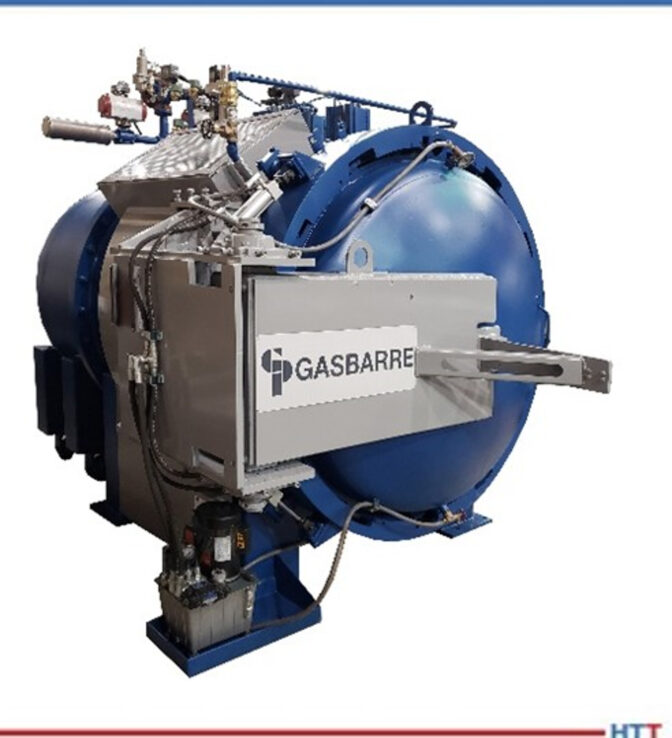
Single chamber vacuum furnace

Although the contribution from renewable sources is still significantly less than fossil fuels, changes in generation are not the only factors at play. Significant efforts are being made to develop grid-scale energy storage solutions. Although most often associated as a prerequisite for intermittent production from renewables, these storage solutions serve an important function for the existing infrastructure. By storing excess power during low demand and releasing it during peak hours, grid scale energy storage would allow fossil fuel power plants to run at more optimized efficiencies without having to ramp up and down to match demand.

Beyond the process efficiencies of vacuum discussed above, investing in electric fired equipment is the only way to capture the benefits of ongoing improvements to electric supply and generation infrastructure. While the benefits of electrification may currently depend on contextual variables such as geographic location and equipment design, natural gas fired processing has a relatively fixed ceiling for future improvement. As an added advantage of electrification, the carbon accounting reductions from the improvement in emissions factors can be captured passively after the initial investment.

While the above advantages of electrification and vacuum do help explain the industry’s push in that direction, it is worth considering how vacuum equipment will continue to evolve to maximize energy efficiency and reduce emissions. Historically, the majority of vacuum furnaces have been single chamber batch style pieces of equipment. This configuration usually requires that loading and unloading occur at, or near, room temperature to avoid oxidation of sensitive materials. In addition to longer floor-to-floor times, this means that the energy required to heat the furnace is thrown away at the end of each cycle.

The competitive demand for low-carbon solutions will drive the use of multi-chamber batch and continuous style furnaces that allow stored energy to be conserved between cycles. This will be especially true as we see more high-volume manufacturing shift away from traditional continuous atmosphere heat treating. In the past, batch vacuum processing has been too restrictive to both part cost and throughput to be competitive. As emissions concerns gain prominence, vacuum furnace configurations that offer higher energy efficiencies and throughput will begin to close that gap.

The processing and energy advantages of electric vacuum furnaces have positioned them well to meet the low-carbon demands of an increasingly emissions-conscious market. It will be exciting to see how the equipment continues to develop to meet those needs in the future.

References
[1] “Data Explorer: CO₂ total output emission rate (lb/MWh),” United States Environmental Protection Agency, last modified September 26, 2023, https://www.epa.gov/egrid/data-explorer.
[2] “Carbon Dioxide Emissions Coefficients,” U.S. Energy Information Association, released September 7, 2023, https:// www.eia.gov/environment/emissions/co2_vol_mass.php.
[3] “Natural Gas Summary,” U.S. Energy Information Association, released September 29, 2023, https://www.eia.gov/ dnav/ng/ng_sum_lsum_a_EPG0_PCS_DMcf_a.htm.
[4] “Electricity Data Browser,” U.S. Energy Information Association, accessed October 3, 2023, https:// www.eia.gov/electricity/data/browser/#/topic/7?agg=0,1&- geo=g0fvvvvvvvvvo&endsec=6&freq=A&start=2001&end=2022&ctype=linechart&ltype=pin&rtype=s&pin=&rse=0&maptype=0.
[5] “Renewables,” International Energy Agency, last modified July 11, 2023, https://www.iea.org/energy-system/renewables.

About the author:

Bryan Stern is the product development manager at Gasbarre Thermal Processing Systems. He has been involved in the development of vacuum furnace systems for the past 7 years and is passionate about technical education and bringing value to the end-user. Bryan holds a B.S. in Mechanical Engineering from Georgia Institute of Technology and a B.A. in Natural Science from Covenant College. In addition to being a member of ASM, ASME, and a former committee member for NFPA, Bryan is a graduate of the MTI YES program and is proud to have been included in Heat Treat Today's 40 Under 40 Class of 2020.

For more information:
Contact Bryan at bstern@gasbarre.com or IHEA.org.


Find heat treating products and services when you search on Heat Treat Buyers Guide.com


Sustainability Insights: Vacuum Heat Treating in a Carbon-Conscious Market Read More »

¿El paraíso perdido?

En los hermosos días de antaño –entiéndase, en el “paraíso”--,
las habilidades se adquirían con el paso del tiempo mediadas
por un tutor. Pero ¿qué de la actualidad?

Read the Spanish translation of this article in the version below or read the English translation when you click the flag to the right. Both the Spanish and the English versions were originally published in Heat Treat Today's September 2023 People of Heat Treat print edition.


Dan Herring
"The Heat Treat Doctor"
The HERRING GROUP, Inc.

Camino al portal de celestial mansión,
Topé un tratador térmico en terrible
condición
Vagabundo e infeliz, bajo dura
asignación,
–¡Nunca es tarde!– animé en sencilla
afirmación.
— Dan Herring, inspirado por El paraíso perdido,
John Milton, 1667.

Los cuantiosos años trasegados en la industria del tratamiento térmico me han enseñado dos lecciones invaluables. Primero, la nuestra es verdaderamente una ciencia empírica, una ciencia cuyos secretos se dan a conocer en el hacer y (en gran medida) a través de la prueba y el error. En segundo lugar, el sentido común triunfa cuando nada más lo logra; no hay nada que pueda sustituir la experiencia práctica.

Contact us with your reader feedback!

Así las cosas, la pregunta clave a materializar es: ¿de qué manera una persona que ingresa a la fuerza de trabajo en nuestra industria logra adueñarse del conocimiento necesario para convertirse en tratador térmico de talla mundial? El tema es de particular relevancia hoy en día dadas las demandas de rendimiento que pesan sobre los productos, al igual que la naturaleza velozmente evolutiva de la tecnología. (Figura 1)

En los hermosos días de antaño – entiéndase, en el “paraíso”--, las habilidades se adquirían con el paso del tiempo mediadas por un tutor. Las personas de mayor experiencia impartían a los aprendices la sabiduría conseguida fruto del duro esfuerzo, por lo regular en dosis bien medidas según se fueran presentando situaciones que exigieran enseñar una nueva lección o ampliar algún conocimiento. En el taller de tratamiento térmico esta modalidad cae como anillo al dedo.

Figura 1. Eslabones entre pasos críticos de la manufactura de
un producto (Fuente: The HERRING GROUP, Inc.)

Pero ¿qué de la actualidad? La presión hacia la producción que se ejerce sobre la ingeniería y la industria manufacturera ha disparado la demanda de respuestas instantáneas logradas a través de las búsquedas en internet y las investigaciones superficiales. Con frecuencia no hay ni tiempo ni tolerancia para el fracaso.

Uno de mis primeros mentores se lamentaba a menudo de que “la avaricia y la codicia serán el talón de Aquiles de los jóvenes; muy pocos quieren trabajar duro, y aprender cualquier habilidad ¡es duro trabajo!”

No obstante, encontramos muchos individuos jóvenes, esforzados, ávidos de aprender y de gran inteligencia que se vienen incorporando a la actual fuerza de trabajo. Tienden a ubicarse en una de dos categorías –los de excelentes habilidades teóricas que carecen de una experiencia práctica y los de habilidades prácticas que carecen de una comprensión básica de la interrelación entre el equipo, el proceso y el resultado.

El “secreto” del tratamiento térmico radica en controlar la variabilidad relacionada con el proceso y el equipo, pero el terreno de juego nunca permanece estable. Apenas creemos tener el proceso o el equipo bajo control, algo cambia: se presenta un escape, el medio de enfriamiento se deteriora, varía la humedad en el ambiente, y corre la lista sin fin.

¿Cómo, entonces, enseñarle a la próxima generación a enfrentar estos retos? De igual importancia, ¿cómo enseñar de manera tal que logremos retenerlos en nuestra industria? Sin el debido incentivo, motivación y dirección o elegirán un camino más gratificante o se irán en busca de una industria más “glamurosa”.

La clave del éxito en el taller del tratamiento térmico hoy en día es el trabajo en equipo, y la clave para adquirir el conocimiento radica en construir redes de información. Identifica fuentes informativas confiables y enfoca en ellas tu atención. Habla con las personas paraentender no solo lo que han aprendido sino también cómo lo aprendieron. Motiva a otros a compartir lo que saben, y comparte tu propio conocimiento. Saca provecho de los recursos que tengas a la mano, de manera especial lo que te puedan brindar las personas con mayor experiencia o quienes recién sehan retirado de la industria.

No tengas miedo ni de hacer el intento, ni de fracasar. Si fracasas, levántate, sacúdete el polvo, date el espacio de decir –Eso dolió--, y sal de nuevo a fracasar una y otra vez hasta que logres tu cometido.

Por último, piensa antes de actuar y actúa solo después de haber reflexionado tanto en tus acciones como en las consecuencias de las mismas. Nunca dejes de hacerte la pregunta, –¿Por qué no hay tiempo para hacer las cosas bien, pero siempre alcanza para repetir y repetir y repetir? Aquí tienes las claves del éxito y de una carrera gratificante y duradera.

Sobre el autor:

Dan Herring, The Heat Treat Doctor®, es el fundador de The HERRING GROUP, Inc. Más de 50 años en la industria le han sumado una inmensa experiencia en campos como la ciencia de los materiales, la ingeniería, la metalurgia, la investigación de productos nuevos y muchas áreas más. De su autoría existen seis libros y más de 700 artículos técnicos.

Para mayor información:
Contactar a Dan escribiendo a
dherring@heat-treat-doctor.com


Find heat treating products and services when you search on Heat Treat Buyers Guide.com


¿El paraíso perdido? Read More »

Paradise Lost?

Has the "Paradise" of heat treat been lost? What incentives and resources do young heat treaters need? Dan Herring, the Heat Treat Doctor®, is here to answer these questions, drawing from his own vast heat treat experience acquired over more than 50 years in the industry. 

Read the English translation of this article in the version below or read the Spanish translation when you click the flag to the right. Both the Spanish and the English versions were originally published in Heat Treat Today's September 2023 People of Heat Treat print edition.


Dan Herring
"The Heat Treat Doctor"
The HERRING GROUP, Inc.

On my way to Heaven’s gate,
I met a Heat Treater in a terrible state!
Wandering and miserable,
resolved to his fate,
I told him simply, it’s never too late!
— Dan Herring, inspired by Paradise Lost,
John Milton, 1667.

All my years spent in the heat treatment industry have taught me two invaluable lessons. First, ours is truly an empirical science, a science whose secrets reveal themselves by doing and (in large measure) through trial and error. Second, common sense triumphs when all else fails; there is no substitute for practical experience.

Contact us with your Reader Feedback!

The key question then becomes, how does a person entering the workforce in our industry gain the knowledge necessary to become a world-class heat treater? This is especially relevant today given the performance demands placed on products and the rapidly evolving nature of technology (Figure 1).

In “the good old days” — that is, in “Paradise” — skills were acquired through mentoring over time: More experienced personnel imparted hard-earned wisdom to their apprentices, usually in well-metered doses as situations arose that required a new lesson be taught or insights gained. Nowhere was this more fitting than in the heat treat shop.

But what about today? The pressure on engineering and manufacturing to produce has fueled the need for instant answers, achieved through Internet searches and superficial investigations. There is often no time, or tolerance, for failure.

Figure 1. Links between critical steps in product manufacturing
(Source: The HERRING GROUP, Inc.

One of my early mentors often lamented that “greed and avarice will be the Achilles heel of young people, too few of you want to work hard — and learning any skill is hard work!”

However, there are many hard-working, young, highly intelligent, and eager-to-learn individuals entering today’s workforce. They tend to fall into two categories — those with excellent theoretical skills who lack practical experience and those with practical skills who lack a basic understanding of the interaction between the equipment, process, and outcome.

The “secret” to heat treating is the control of process and equipment related variability. But the playing field is constantly in flux — as soon as we believe we have the process or equipment under control, something changes: a leak develops, quench media degrades, humidity in the room changes — the list goes on and on.

How, then, do we teach the next generation to meet these challenges? Equally important, how do we teach them to retain them in our industry? Without proper incentive, motivation, and guidance, they will either choose a more rewarding path or seek a more “glamorous” industry.

Teamwork is the key to success in today’s heat treat shop. And networking is the key to the acquisition of knowledge. Understand where the true sources of information lie and seek them out. Talk to people and understand not only what they’ve learned but how they learned it. Motivate others to share what they know. And share what you know. Tap into the resources available to you, especially from more experienced people, or those recently retired from the industry.

Don’t be afraid to try or to fail. If you do, pick yourself up, dust yourself off, take a moment to say, “That hurt,” and go out and fail again and again until you succeed.

Finally, think before you act, and act only after having thought through both your actions and their consequences. Constantly ask yourself, “Why is there never enough time to do something right, but always enough time to do it over (and over) again?”

These are your keys to success and a long, rewarding career.

About the Author:

Dan Herring, The Heat Treat Doctor®, is the founder of The HERRING GROUP, Inc. He has been in the industry for over 50 years and has gained vast experience in fields that include materials science, engineering, metallurgy, new product research, and many other areas. Dan is the author of six books and over 700 technical articles.

For more information:
Contact Dan at
dherring@heat-treat-doctor.com


Find heat treating products and services when you search on Heat Treat Buyers Guide.com


Paradise Lost? Read More »

Find Your Success by Giving Back

What are qualities and best practices of a good leader? Joe Theismann, former quarterback for the Washington Redskins and present-day entrepreneur, invites Heat Treat Today's readers and 40 Under 40 honorees to contemplate leadership, specifically the successful leadership that is found by giving back. 

This article was originally published in Heat Treat Today's September 2023 People of Heat Treat print edition.


Joe Theismann
Entrepreneur, Former Washington Redskins Quarterback, Football Analyst
Source: Heat Treat Today

Congratulations to the 40 Under 40 Class of 2023. What an honor to be recognized as up-and-coming leaders in the heat treat industry. I am excited for you and the opportunities you have to lead and help those around you succeed. Because success is found by giving back. That may be something you don’t hear often, but I truly believe we must measure success by the way we are helping others.

Contact us with your Reader Feedback!

With leadership comes responsibilities. As a former professional quarterback as well as an owner of several businesses, I’ve learned a few key principles that I hope will be helpful as you grow as leaders. When performed effectively, they will set up you and your team well.

To succeed by giving back to others, start with the 3 E’s — environment, expectations, and execution.

Environment

The environment, or culture, encompasses the people with whom you work and lead. Being intentional about the kind of culture you create is vital to fostering innovation and freedom of communication. Enthusiasm is the engine that drives, and your attitude precedes everything.

Relationship building is key. Mentoring others by sharing your experiences and expertise is as important as learning from your mentees. Listen and learn — seek knowledge every day and don’t think you have all the answers. It’s the whole of the team that matters. Asking yourself what you can do to help others succeed is a vital component to building a healthy culture that will enable others to shine.

Expectations

Lead by explaining your “why” — be sure you know it and articulate it well. The details are critically important; ensure your team understands your expectations.

To know your why, identify your direction and practice disciplined leadership. Bill Parcells, former head coach of the New York Giants, talked about the importance of direction and discipline. Be definitive in providing direction and model discipline to stick with the task. Embrace the failures, learn from them, and encourage others to not fear them; it’s a process. Share these insights with your team!

Execution

Finally, if you’ve built a healthy environment and your team understands your expectations, lead with present-minded execution.

So, think about today, not yesterday; ask, “What is prevalent today?” And, with every day, be sure you are available to those who need you.

Be reliable in showing up to do the hard work. And be accountable to those you are leading and those to whom you report. Have their backs. Be proud of who you are and who you represent. Execute with confidence.

When Roadblocks Open Doors to True Success

What happens when you experience an unexpected roadblock in this wild adventure called life? Because you know it’s going to happen!

In 1985, during a Monday night game against the Giants, I suffered a severe fracture to my right leg between the knee and ankle that eventually led to my retirement from football. Sure wasn’t expecting that.

What I had to do was find another path that provided me with the same passion as the one that just closed. Was it difficult at first, yes, but because I spent time learning my trade, I was able to work as a sportscaster and pro football analyst for many years and loved it!

Mental toughness will be necessary when you hit those curves. It may not throw you out of the game, but it might throw you off. Focus on persevering, finding that passion, and remembering that success is found in giving back.

Congratulations! I look forward to seeing your success in the lives of the people you lead.


About the Author:

Joe Theismann is the former two-time Pro Bowl star quarterback for the Washington Redskins where he played for 12 seasons and led them to winning Super Bowl XVII. Most recently, he spent the last two decades working for ESPN and the NFL Network as an NFL analyst. He is also a successful restauranteur.

For more information:
Visit www.joetheismann.com


Find heat treating products and services when you search on Heat Treat Buyers Guide.com


Find Your Success by Giving Back Read More »

Cybersecurity Desk: NIST SP 800-171 Is Changing But Don’t Panic . . .

How can increased cybersecurity measures benefit today’s heat treaters and their clients? Find out more with an exploration of the coming changes in CUI and the way these changes could affect heat treating companies. 

Today’s read is a feature written by Joe Coleman, cybersecurity officer at Bluestreak Consulting™. This column was first released in Heat Treat Today’s September 2023 People of Heat Treat print edition.


Introduction

Joe Coleman
Cybersecurity Officer
Bluestreak Consulting™
Source: Bluestreak Consulting™

This 10th article in the series from Heat Treat Today’s Cybersecurity Desk will explain some of the changes that are being proposed in the IPD (Initial Public Draft) of NIST SP 800-171 Revision 3. On May 10, 2023, the National Institute of Standards and Technology (NIST) released a draft version of Rev. 3 for Special Publication (SP) 800-171, the foundational framework of requirements for protecting controlled unclassified information (CUI). The final version of NIST SP 800-171 Rev. 3 is expected to be released in early 2024.

Don’t panic about these proposed changes in Rev. 3. If you handle CUI and you are working towards your compliance, continue to implement Rev. 2. Don’t wait until Rev. 3 is fully released to start. Remember, DFARS mandates that if you are a DoD prime contractor or subcontractor with CUI, you need to be compliant with NIST 800-171 Rev. 2 as well as CMMC Level 2 or 3 certified. CMMC certification deadline is in 2025 and it’s fast approaching.

Modifications & Additions to Rev. 3

The changes in Rev. 3 should have a positive impact on your ongoing compliance management program. They simultaneously made the requirements easier to understand and implement while also preserving and even adding flexibility that allows companies to make risk-based decisions about their environments and the data managed in those environments. These include the merging, addition, removal,
and clarification of several different requirements. The most obvious difference is that the requirements went from 110 controls down to 109. This was because they had withdrawn 27 of the original controls (most are migrated into another existing control) and added 26 new requirements.

Categories of Changes

• 18 Controls with “No Significant Change”: Editorial changes to requirement; no change in outcome.
• 49 Controls with “Significant Change”: Additional detail in the requirement, including more comprehensive detail on foundational tasks for archiving the outcome of the requirement.
• 18 Controls with “Minor Changes”: Editorial changes. Limited changes in the level of detail and outcome of requirements.
• 26 Controls with “New Requirements”: Newly added requirement in IPD SP 800-171 Rev. 3.
• 27 Controls with “Withdrawn Requirements”: Requirement withdrawn.
• 53 Controls with “New Organization-Defined Parameter (ODP)”: New ODPs can apply to all change types with the exception of withdrawn requirements. Each requirement includes one or more new ODPs.

Chart with Cybersecurity Acronyms
Click on the Image for a full list of Cybersecurity Acronyms

Implications for Heat Treaters

What has not changed is that companies that handle CUI must comply with the NIST 800-171 cybersecurity standards. Failure to comply can result in significant consequences, including loss of contracts and damage to the company’s reputation. With the release of Rev. 3, heat treaters must ensure they are up to date with the latest security requirements. One of the most significant changes in Rev. 3 is the addition of new security requirements. Heat treating companies must review these new requirements and ensure they have implemented the necessary controls to meet them. Also, organizations must review the updated requirements to ensure they meet the latest best practices. The reorganization of the security requirements may also impact heat treaters. The alignment with the NIST Cybersecurity Framework provides a more comprehensive approach to security. However, some companies may need to adjust their current security programs to align with the new structure. By staying informed and implementing the necessary controls, heat treat organizations can ensure they are adequately protecting CUI and meeting their compliance obligations to their clients.

About the Author:

Joe Coleman is the cybersecurity officer at Bluestreak Consulting™, which is a division of Bluestreak | Bright AM™. Joe has over 35 years of diverse manufacturing and engineering experience. His background includes extensive training in cybersecurity, a career as a machinist, machining manager, and an early additive manufacturing (AM) pioneer. Contact Joe at joe.coleman@go-throughput.com.


Find heat treating products and services when you search on Heat Treat Buyers Guide.com


Cybersecurity Desk: NIST SP 800-171 Is Changing But Don’t Panic . . . Read More »

Cybersecurity Desk: Not Using 2FA or MFA? Your Data Is Not Secure

How can increased cybersecurity measures benefit today's heat treaters and their clients? Find out more with an exploration of 2FA and MFA!

Today's read is a feature written by Joe Coleman, cybersecurity officer at Bluestreak Consulting™. This column was first released in Heat Treat Today's August 2023 Automotive Heat Treat print edition.


Joe Coleman
Cybersecurity Officer
Bluestreak Consulting™
Source: Bluestreak Consulting™

Introduction

This 9th article in the series from Heat Treat Today’s Cybersecurity Desk will explain the significance of 2FA (2-Factor Authentication) and MFA (Multi Factor Authentication), their benefits, and how they can help secure your data and your clients’ data.

2FA and MFA have proven to be effective methods to enhance online security. And, if you provide any products or services to a DoD (Department of Defense) contractor, this is mandatory for all users accessing your computer systems and critical data. Implementing 2FA is a minimum requirement and is better than just a username/password combination. MFA takes your security to a whole new level.

What Is 2FA?

2FA adds an extra layer of security to the usual username/password combination. It requires users to provide a second authentication factor, typically something they possess, in addition to their password. Common examples include a one-time verification code sent via SMS, email, or generated by an authentication app like Google Authenticator or Authy. By requiring the combination of something known (password), along with something possessed (authentication factor), an additional level of security is provided.

What is MFA?

The strengths of Multi-Factor Authentication (MFA) take security a step further by incorporating multiple authentication factors beyond the customary two. These authentication factors can be categorized into three main types: something you know (password or PIN), something you have (smartphone or security token), and something you are (biometrics like fingerprints or facial recognition). MFA offers increased security as it requires multiple factors to be verified before granting access.

Is MFA Better than 2FA?

In terms of security, the more the better should be the correct mindset. MFA is a more secure method than 2FA, because a user must respond to more checkpoints, especially if authentication factors disperse through different access points that aren’t available online (like a token or security key) and require a physical presence. Proving user identity multiple times instead of just submitting items of proof twice (i.e., 2FA), lowers the chance of a breach and helps achieve security compliance requirements.

Implementing 2FA or MFA

Enabling 2FA and MFA is becoming a more and more accessible option across many platforms and services. The most popular websites, email providers, social media networks, and online banking institutions offer 2FA and/or MFA options. Users can typically find the necessary settings in their account security or privacy preferences. It is crucial to follow the provided instructions for setting up and managing these authentication methods properly. In an age where cyber threats are always rising, protecting our online presence is critical. 2FA and MFA have proven to be effective methods in safeguarding our digital lives. By implementing these extra layers of security, companies can enhance their defenses and protect their data and their clients’ data.

What About Your Outside Personnel Support?

Chart with Cybersecurity Acronyms
Click on the Image for a full list of Cybersecurity Acronyms

Many companies have outside vendor support, and maintenance personnel access their network and systems on a regular basis. For example, they may use VPN access that requires the user to “punch a hole” in the firewall, making it much more vulnerable to unauthorized access. Additionally, it is typically a configuration nightmare for your network and the IT folks to get it working properly.

There is a better way. Through much research and testing, we have found that BeyondTrust is a great tool to use to allow outside vendors secure access to the information they need to see without connecting to your network. It is currently used by 20,000+ organizations worldwide with much success and security. BeyondTrust also records their entire online session so you can see exactly what they accessed and did during the online session. Check out www.beyondtrust.com for more information.

About the Author:

Joe Coleman is the cybersecurity officer at Bluestreak Consulting™, which is a division of Bluestreak | Bright AM™. Joe has over 35 years of diverse manufacturing and engineering experience. His background includes extensive training in cybersecurity, a career as a machinist, machining manager, and an early additive manufacturing (AM) pioneer. Contact Joe at joe.coleman@go-throughput.com.


Find heat treating products and services when you search on Heat Treat Buyers Guide.com


Cybersecurity Desk: Not Using 2FA or MFA? Your Data Is Not Secure Read More »

Seeing Double: Digital Twins in the Heat Treat Industry

What is a digital twin, and how does it relate to the heat treating industry? As noted by Mike Löpke, "The quality of the product is the most important aspect," and such quality can be supported by a digital twin. 

This article is set to be published in Heat Treat Today's November 2023 Vacuum Heat Treat print edition. While awaiting the release of the November issue, catch up on previous digital editions here


By definition (see Grieves and Vickers, 2002), the digital twin is a virtual representation of a material or immaterial object of the real world that does not necessarily exist, for example, a representation for the design phase of a machine. As the concept of digital twins is universal, it can often be applied to almost everything: machines, tools, processes, human capital, production and products, quality key performance indicators (KPI),and much more. With design driven by use case*, digital twins deliver all required data, functionalities, and information primarily to accomplish a given task and to fulfill its use case-related purposes.

Contact us with your Reader Feedback!

Digital twins require at least these three important elements: an object in the real world, its digital representation, and their connecting information which is continuously updated in real time. The characteristics of this information are various and include all kinds of data sources (e.g., process data, master data, meta data, or enterprise resource planning data); additionally, algorithms and applications in general may help to enrich this information.

Digital twins can be part of the supply chain throughout the entire lifecycle of products, machines, processes, or services and offer different value and advantages at each stage. Already applied in the design phase, a digital twin can handle complex product requirements or fast cycles of development and test different designs with specific simulations to make physical prototyping more and more redundant. This results in time and cost savings in the development of new products and optimizes aggregates and processes already in the design phase. Simulating functionalities and behavior in respect to every relevant aspect lowers the degree of uncertainty. Since all functionalities can be simulated, commissioning is easier, and processes are free of error.

Another use case of digital twins is provided by their holistic view on data. This offers the possibility of monitoring and reducing risks which may lead, for example, to a rise in the overall availability of a machine or a process line. Robust prognoses regarding the properties, the quality, and the behavior of products and machines can be identified as well as replacement planning and investigations of upcycling potentials. The concept of the digital twin leads to a holistic view on products, machines, processes, and the entire supply chain in real-time. This makes communication between suppliers, producers, and customers easier since they share the same level of knowledge.

In the heat treatment industry, the most prominent and important use case is the digital passport of a product. Since a lot of parts, especially in defense or aerospace, need to meet special requirements and quality gates, a digital passport of these parts contains all the certificates paired with the material, process, and quality data. The advantages of such a passport are obvious: it provides all data in a universal and transparent way. There are official initiatives, for example, by the Institut für Werkstofforientierte Technologien in Germany, to create a common design and interface, and also to define mandatory information such a passport should offer. Currently, the driving aspect is carbon footprint and other ecological measures.

Besides the aspect of data and information, the digital data twin of a part can be enriched with suitable applications, such as process simulations and material calculations. Having a full picture of the current state of the part allows heat treaters to simulate different process routes to achieve given specifications or execute virtual stress tests and benchmarks. Additionally, when a process is disrupted or does not perform as expected, it is possible to adjust recipes for the parts involved. By measuring or simulating the state and conditions of those parts, new starting criteria for a rerun or continuation can be determined. This helps to reduce costs by avoiding downgrading or scrapping products.

Another prominent use case is the digital twins of assets (e.g., furnaces, probes, or other auxiliary tooling). Monitoring the asset health by gathering empirical and statistical information is a good starting point to enrich the virtual representation of an asset with empirical or machine learning-based models. This provides for asset health predictions which lead us to the concept of predictive and prescriptive maintenance.

The quality of the product is the most important aspect. The quality of a product is defined by the asset health and its state, the starting conditions and properties of a part, and (last but not least) the knowledge and execution of the process. And so, to apply and master the concept of digital twins for these three aspects will mean taking a huge step forward towards predictive quality.

*use case = a written description of how users will perform tasks on your website. It outlines, from a
user’s point of view, a system’s behavior as it responds to a request. (Source: Usability.gov)


About the Author:

Mike Löpke, the head of Software & Digitalization at Nitrex, has a background in Mathematics and Physics, as well as substantial knowledge in R&D and metallurgical modelling. With expertise in AI and process prediction, he has led Nitrex to develop the very first IIoT cloud-based platform (QMULUS) and is currently in charge of Nitrex’s Software and Digitalization department. His thirst for knowledge enables him to remain ahead of evolving technology.

For more information:
Contact Mike at Mike.Loepke@nitrex.com.


Find heat treating products and services when you search on Heat Treat Buyers Guide.com


Seeing Double: Digital Twins in the Heat Treat Industry Read More »

Skip to content