

OP-ED

HIP: Technology that Takes Components into Space 

Hot isostatic press (HIP) processing is a manufacturing technology used to densify metal and ceramic parts to improve a material’s mechanical properties. It is based on applying high levels of pressure (up to 2,000 bar/200Mpa) and temperature (up to 3632°F (2000°C)) through an inert atmosphere in order to densify parts and components, mostly of metallic and ceramic material, and to give them improved mechanical properties.  

HIP technology has become the decisive tool for aerospace parts and components to certify materials and parts with the strictest quality and safety controls. These developments require highly advanced, complex, and processed materials capable of withstanding the demanding work they will be subjected to.  

There are strategic materials and components in the space sector that can only be manufactured by advanced manufacturing in a specific way. Rubén García, project manager of HIP at Hiperbaric, noted that “These developments need very advanced, complex, and processed materials that are capable of withstanding the demanding work they will be subjected to. Therefore, advanced processes are needed to ensure and certify that these materials can be part of a satellite or rocket.” In addition to elements that form part of satellites and rockets and their respective engines, turbomachines, burners, and more intended for space also see benefits from HIP processing. 

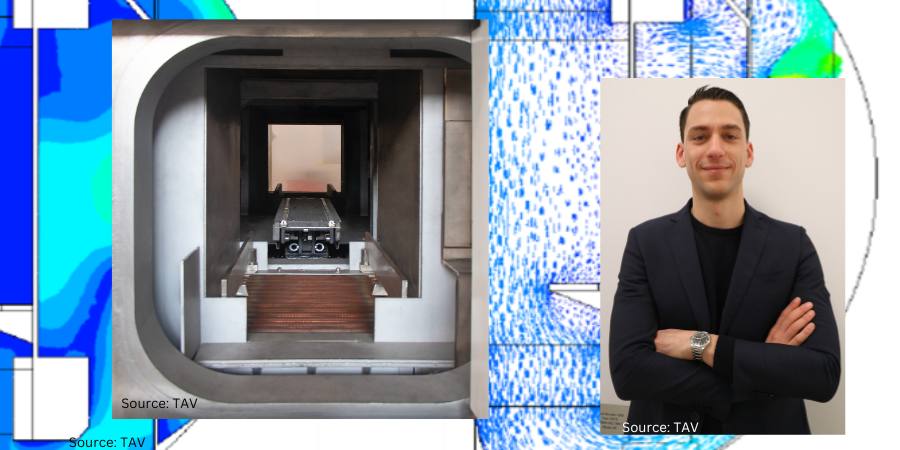
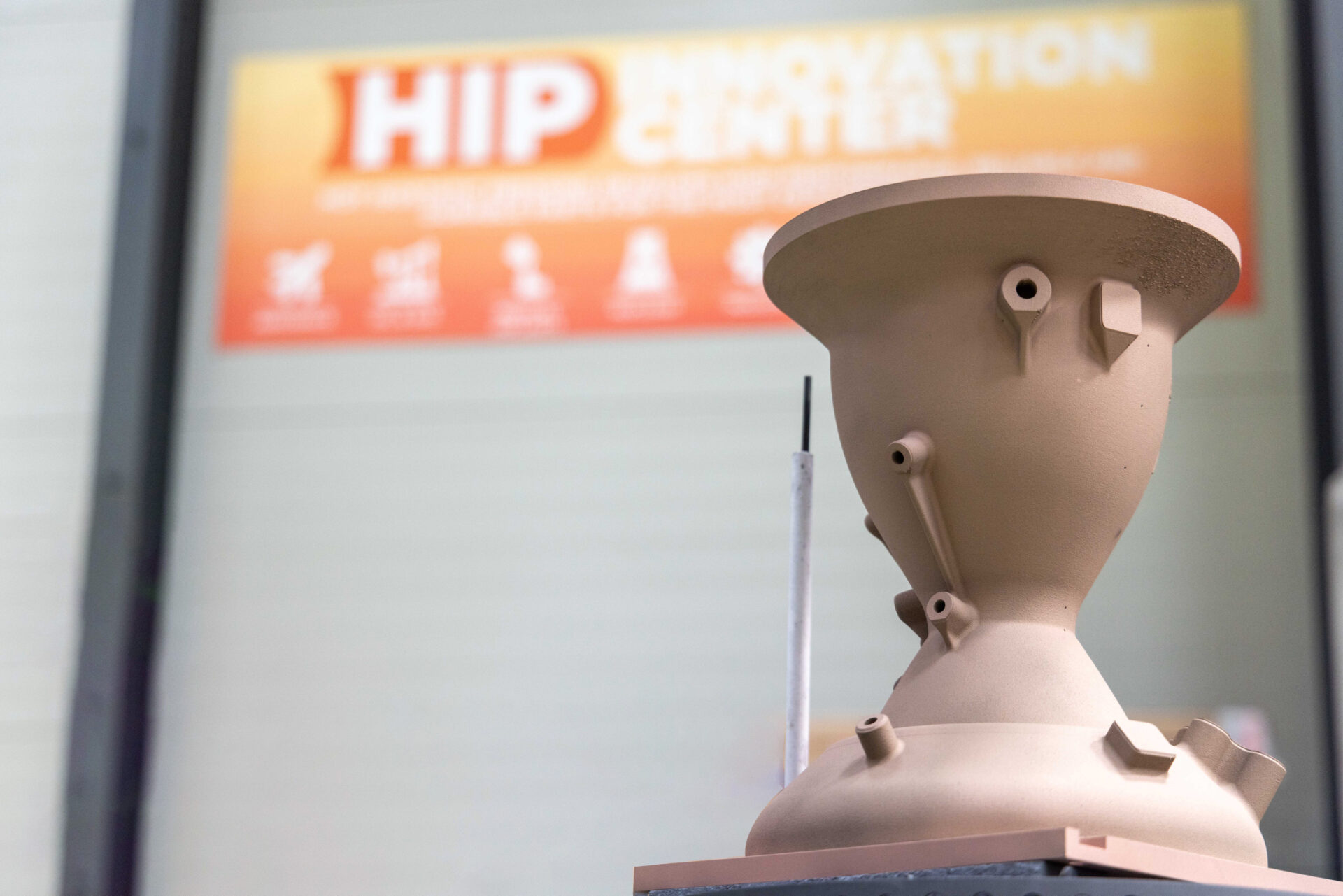
Rocket engine treated by HIP Technology
Source: Hiperbaric

An X-ray inspection of each part evaluates the suitability of the component and ensures that it will not fail during the combustion process. “If we find any pores in the part, they are repaired with HIP technology, which repairs and densifies the component,” explains García. The HIP technology supplier uses Fast Cooling technology to cool materials very quickly, especially in materials whose capabilities may be impaired if they are not cooled quickly.  

Emphasizing how HIP is the key that takes components to space, García describes, “The more complex qualification components are required to go through a HIP process to ensure that the component will not fail. Materials engineering and the metallurgical process are closely tied to these innovations to ensure what some processes can’t do 100%. That is where HIP becomes our best ally.” 

Hiperbaric has devoted a HIP press for its HIP Innovation Center in Spain for companies worldwide for the purpose of investigating and developing HIP products with a particular focus on the aeronautical sector. Here, companies will find the help and knowledge required to achieve success.

About the Expert: 

Rubén García Reizábal
HIP Project Manager 
Hiperbaric

Rubén García Reizábal is an industrial engineer with a master’s degree in Material Components and Durability of Structures and has recently obtained his PhD. After his first stage in Hiperbaric, where he held the position of Quality Manager, he has been working as project manager of several R&D projects for more than 11 years. In this role, he leads all the actions of the Spanish-based company related to its hot isostatic pressing (HIP) business line, including R&D and business development efforts. 

Contact Rubén at r.garcia@hiperbaric.com

HIP: Technology that Takes Components into Space  Read More »

Advantages of Laser Heat Treatment, Part 2: Energy Efficiency, Sustainability, and Precision

A discussion of laser heat treating begun in Heat Treat Today’s Air & Atmosphere 2024 print edition would not be complete without highlighting key sustainability advantages of this new technology. In this Technical Tuesday installment, guest columnist Aravind Jonnalagada (AJ), CTO and co-founder of Synergy Additive Manufacturing LLC, explores how sustainability and energy-efficiency are driven by precision heat application and minimal to zero distortion. The first part, “Advantages of Laser Heat Treatment: Precision, Consistency, and Cost Savings”, appeared on April 2, 2024, in Heat Treat Today, as well as in Heat Treat Today’s January/February 2024 Air & Atmosphere print edition.

This informative piece was first released in Heat Treat Today’s May 2024 Sustainability Heat Treat print edition.


Laser heat treating is a transformative process that promises superior performance and sustainable practices. Laser heat treating epitomizes precision in surface heat treatment techniques, targeting localized heating of steel or cast-iron components. Laser radiation raises the surface temperature of the metal in the range of 1652°F to 2552°F (900°C to 1400°C), inducing a transformation from ferritic to austenitic structure on the metal surface. As the laser beam traverses the material, the bulk of the component self-quenches the heated zone. During this process, carbon particles are deposited in the high temperature lattice structure and cannot diffuse outward because of quick cool down resulting in the formation of hard martensite to a case depth up to 0.080” (2 mm), crucial for enhancing material properties.

Sustainability through Energy Efficiency

Contact us with your Reader Feedback!

When considering the energy consumption of a typical laser heat treating operation, it’s essential to acknowledge the continuous advancements in laser technology. Modern laser heat treating systems integrate high-power lasers, water chillers, and motion systems, such as robots or CNC machines. With a typical wall plug efficiency of around 50% for diode lasers, these systems represent a significant improvement in energy utilization compared to conventional methods. The typical energy consumption cost for running a 6 kW laser heat treating system is $20-$30/day. The calculation is based on an 8-hour shift with a duty cycle of 80% calculated at national average electric cost of 15.45 cents/kilowatt-hour.

Self-Quenching Mechanism

Laser heat treating operates on the essential principle of self-quenching, leveraging the bulk mass of the material for rapid cooling. This eliminates the dependence on quenchants required in flame and induction heat treating processes, further reducing environmental impact and operational costs.

Precision and Minimal Distortion

At the heart of laser heat treating lies its sustainable and energy-efficient attributes, driven by two fundamental features: precision heat application and minimal to zero distortion of components post-heat treatment. When compared to the conventional methods such as flame and induction hardening, laser heat treatment offers significantly localized heating. This precision allows for targeted heat treatment within millimeter precision right where the hardness is needed, optimizing energy utilization and operational efficiency. Furthermore, the high-power density of lasers enables hardening with minimal to zero distortion, eliminating or reducing the need for subsequent machining operations like hard milling or grinding.

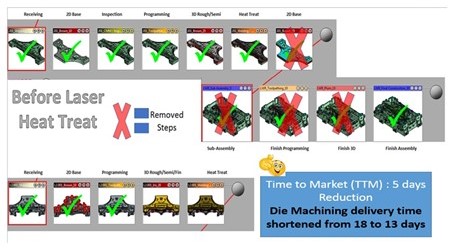
Case Study image; 16 small boxes of auto parts undergoing die machining, laser heat treat; blue inset box
Comparison of the die construction process before and after laser hardening
Source: Autodie LLC

A Case Study of Laser Heat Treating in Automotive Stamping Dies

The image above identifies process steps typically involved in construction of automotive stamping dies. During the process of manufacturing automotive stamping dies, the cast dies are first soft milled, intentionally leaving between 0.015” and 0.020” of extra stock material on the milled surfaces. This is done to account for any distortions that will result from the subsequent conventional heat treatment processes such as flame or induction. After heat treating, the dies are then hard milled back to tolerance and assembled.

In the laser heat treating process, by contrast, dies are finish machined to final tolerance in the first step and then laser heat treated without distortion. No secondary hard milling operation is necessary. Typical cost savings for our automotive tool and die customer exceeds over 20% due to elimination of hard milling operation. Total energy reduction is significant, although not computed here. This may result in savings if carbon credits become monetized.

Laser heat treating’s precision, efficiency, and minimal environmental footprint position it as an environmentally friendly option for heat treat operations. As industries continue to prioritize sustainability, laser heat treating may set new standards for excellence and environmental stewardship.

About the Author:

Aravind Jonnalagadda
CTO and Co-Founder
Synergy Additive Manufacturing LLC
Source: LinkedIn

Aravind Jonnalagadda (AJ) is the CTO and co-founder of Synergy Additive Manufacturing LLC. With over 15 years of experience, AJ and Synergy Additive Manufacturing LLC provide high-level laser systems and laser heat treating, specializing in high power laser-based solutions for complex manufacturing challenges related to wear, corrosion, and tool life. Synergy provides laser systems and job shop services for laser heat treating, metal based additive manufacturing, and laser welding.

For more information: Contact AJ at aravind@synergyadditive.com or synergyadditive.com/laser-heat-treating.


Find Heat Treating Products and Services When You Search on Heat Treat Buyers Guide.com


Advantages of Laser Heat Treatment, Part 2: Energy Efficiency, Sustainability, and Precision Read More »
Green-toned electric socket photo bg w/professional headshot in fg

US DOE Strategy: Ramifications for Heat Treaters

As heat treaters strive for a sustainable future, pressure mounts to make the right choices while running commercially viable operations. In this Technical Tuesday installment of a continuing series, guest columnist Michael Mouilleseaux, general manager at Erie Steel, Ltd., explores the potential ramifications of the DOE effort for industrial decarbonization in the heat treating industry. The first installment, “US DOE Strategy Affects Heat Treaters”, appeared on April 10, 2024, in Heat Treat Today, as well as in Heat Treat Today’s March 2024 Aerospace print edition.

This informative piece was first released in Heat Treat Today’s May 2024 Sustainability Heat Treat print edition.


As regulatory agencies set industrial decarbonization goals aimed at achieving net zero greenhouse gas emissions (GHGE) by 2050, heat treaters should prepare for action. But where do heat treatment technologies stand today, and what is the path going forward?  

Background

President Biden’s 2021 executive order calling for a “clean energy economy” led the U.S. Department of Energy (DOE) and the Environmental Protection Agency (EPA) to develop “The Industrial Decarbonization Roadmap,” a strategic plan for reducing industrial emissions. The plan identified five sectors — chemical, petroleum, iron and steel, cement, and food and beverage production — as targets for mitigation efforts. According to “The Roadmap,” process heating operations within these five industries represent the greatest opportunity to apply what were established as four pillar technologies:

  • Energy efficiency
  • Low carbon fuels, feedstocks, and energy sources (LCFFES)
  • Carbon capture, utilization, and storage (CCUS)
  • Industrial electrification using green electricity

In May 2023, heat treating was specifically named as a target process for reducing GHGE during the DOE’s Office of Energy Efficiency & Renewable Energy’s Low Carbon Process Heating Forum.  

A Closer Look at the Technology Pillars

To determine the path forward, it’s important to understand where heat treatment technology stands today regarding the four pillars.

Energy Efficiency: Among energy efficiency opportunities are furnace insulation, controls, and burner design. According to furnace and controls manufacturers that I have spoken with, advancements in insulation and heating system controls offer less than a 20% opportunity in efficiency improvement over

LCFFES: In the U.S., the primary hydrocarbon fuel for heat treating is natural gas, which has an average (commodity) cost of $2.57/MMBTU. Hydrogen has been endorsed as the preferred replacement. Hydrogen manufacturing and distribution issues aside, hydrogen has a 2023 (commodity) cost ranging from $14.00 to $40.00 per MMBTU, and a carbon footprint of 30–130% that of natural gas. “Green hydrogen” is “under development.”

CCUS: Carbon capture, utilization, and storage is currently relegated to natural gas production operations where the captured CO2 is injected into existing wells to “enhance” production. Although the DOE suggests development of advanced CO2 capture technologies are still underway, a 2023 Congressional Budget Office report states there are “fifteen CCS facilities . . . operating in the United States . . . [with] an additional 121 . . . in development.” It is fair to state there are no CCS (carbon capture and storage) facilities currently operating on the scale of a heat treating operation.

Electrification: For electrification to be impactful, electricity must be generated via green sources. Currently, 40% of the electricity generated in the U.S. comes from natural gas, 20% from coal, 19% from nuclear, 10% from wind, and 3% from solar. It is my opinion that, regardless of the incentives federal and state governments offer wind and solar energy operations, they will not reach the scale — and most certainly not the reliability — necessary to achieve the stated 2035 GHGE goals.

Cost also must be considered. The average U.S. cost for electricity was $0.086/KWH in 2023. In California, however, the cost for electricity generated with 40% renewables was $0.1819/KWH. In Germany, it was $0.289/KWH with 55% renewables. To put this into perspective, today the differential in (industrial) electricity (commodity) costs demonstrably increase as the percentage of that electricity is generated by “green” sources. To think that this trend is going to be reversed by federal mandate is paradoxical.  

A Realistic Look at the “Road Map”

While industrial decarbonization targets called for an 85% reduction in GHGE by 2023 and net zero by 2050, the goals seem unreachable using currently available technology. Replacing natural gas with hydrogen will result in significant cost increases as the commodity is 5–15 times more expensive, the equipment will require retrofitting to accommodate hydrogen, and the national infrastructure will need to be modified for hydrogen.

Electrification of existing gas-fired processes will result in a cost increase of four times, according to DOE estimates; however, based on today’s cost trends, 7–9 times higher is more likely. Additionally, the cost of converting equipment to electric operation must be considered. Mitigation efforts suggested by the DOE include improvements in efficiency that rely on yet-to-be-developed technologies and cost reductions in electricity facilitated by the wholesale use of renewable energy.

Overall, decarbonization efforts are noble. The timeframe and methodology, however, are unrealistic as they are based on the use of still-conceptual technologies.  

What Can Heat Treaters Do?

Following the lead of the automotive industry may be key. This sector reacted to the government mandates for GHGE reductions by going all in for electrification — with projections of 50% electric vehicles by 2030. A funny thing happened; these vehicles were not wholly accepted by the American public. The auto industry, led by the dealers, with the support of the UAW, and the car manufacturers petitioned their U.S. Representatives to “pause” these requirements. This political pressure caused the EPA to roll-back the implementation schedule.

Heat treaters must act now with a similar effort, but it must be aimed at preventing the promulgation of regulations that rely on still-conceptual technologies within an unachievable timeframe. Contact your local government leaders; let them know what we do means jobs and tax revenues. Contact your U.S. Representatives and Senators to let them know heat treaters are critical to our national security, the transportation system, and, in fact, the infrastructure of this country. What we do should not be outsourced, and we need to be given all the considerations of a critical industry.

The next column in this series will address the role of process heating in GHGE, analyze DOE assessments of GHGE for industry and process heating operations, and propose a fact sheet intended for use in our effort to set a realistic timeline for decarbonization goals In the next column, we’ll address potential ramifications of the DOE effort for industrial decarbonization in the heat treating industry to help you be better informed and prepared.    

About the Author:

Michael Mouilleseaux General Manager at Erie Steel, Ltd.

Michael Mouilleseaux is general manager at Erie Steel, Ltd. He has been at Erie Steel in Toledo, OH since 2006 with previous metallurgical experience at New Process Gear in Syracuse, NY, and as the director of Technology in Marketing at FPM Heat Treating LLC in Elk Grove, IL. Michael attended the stakeholder meetings at the May 2023 symposium hosted by the U.S. DOE’s Office of Energy Efficiency & Renewable Energy.

For more information: Contact Michael at mmouilleseaux@erie.com.  

Attend the SUMMIT to find out more about the DOE’s actions for the heat treat industry.

Find Heat Treating Products and Services When You Search on Heat Treat Buyers Guide.com

  1.  

US DOE Strategy: Ramifications for Heat Treaters Read More »

Streamline Essential Nadcap Certifications

Nadcap certifications are integral to aerospace heat treating. Maintaining compliance, however, can be a headache. Learn how a new technology is streamlining Nadcap certifications.

This article by Chantel Soumis was originally published in Heat Treat Today’s March 2024 Aerospace Heat Treat print edition.


Challenges to Capture Nadcap Certifications

Contact us with your Reader Feedback!

The Nadcap certification (National Aerospace and Defense Contractors Accreditation Program) plays a critical role in maintaining the integrity of heat treating processes, especially in the aerospace and defense industries. Recognized globally, the certification sets rigorous standards for heat treatment facilities, ensuring that heat treating processes produce parts and materials with the necessary strength, durability, and reliability.

The certification addresses the data that needs to be documented concerning all aspects of the heat treat processing, such as temperature control, process documentation, and quality management. A survey from the Performance Review Institute (PRI) indicates that 80% of aerospace and defense companies consider Nadcap accreditation as a requirement when selecting suppliers, and 90% of aerospace and defense prime contractors would disqualify a supplier without Nadcap accreditation. And when such a strict standard is implemented and then subject to regular audits, a 40% reduction in nonconformance costs are likely, as was reported by companies in the aerospace and defense sector in a study by the National Center for Manufacturing Sciences (NCMS).

While compliance with Nadcap and other heat treat certifications demonstrates a commitment to quality and opens doors to lucrative contracts with aerospace, defense, and other precision industries, actually capturing the data can be tedious. The effort and cost of employing disconnected systems — capturing measured data from system A, making the certification documents in system B, and then emailing the certification results to clients from system C — can be cut by synthesizing these actions into one system.

Digitizing Certification Management for Complete Compliance Control

Many organizations facilitate the certification process via digital means. This may be through the use of digital quality management systems (QMS) or enterprise resource planning (ERP) software that includes modules designed for certification management. These tools help automate record keeping, provide alerts for upcoming certification renewals, and streamline the overall certification tracking process, ensuring that heat treating operations remain compliant and efficient.

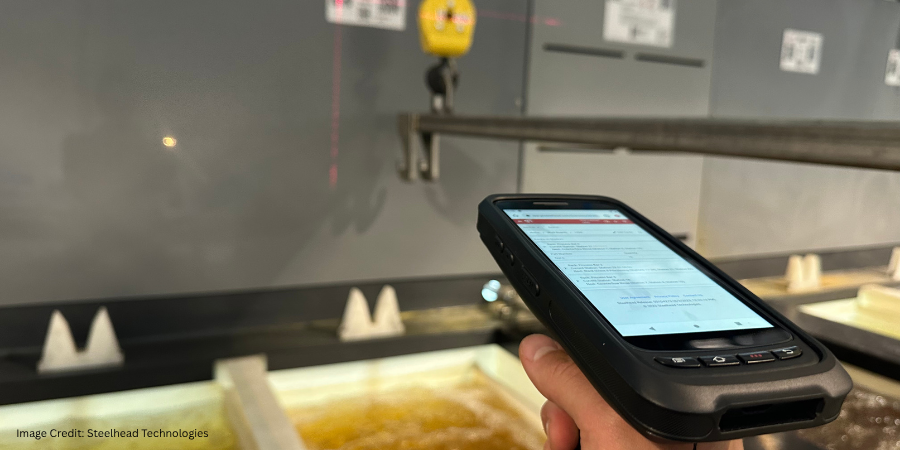
Nadcap Scanner tracking a process via QR code

But more should be done.

Veterans Metal, a metal finishing plant in Clearwater, Florida, was driving manual processes: everything was written down and data was being entered into spreadsheets for tracking purposes. Like many heat treaters, each step the company took to process a part required manual intervention to write down 20+ line items of information and then incorporate the associated data entry into spreadsheets.

The company was looking to modernize their plant.

After careful evaluation of Veterans Metal’s processes and needs, Steelhead Technologies developed and deployed the Steelhead Certification Scanner (or Nadcap Scanner) line that includes a handheld scanner and a system of QR codes to facilitate an easier user experience, including an interface that allows for swift operator proficiency, typically within minutes. This digital interface allows users to measure data, create certifications, and email this from the one system.

Smart Scanning in Action

The metal processing company received a 15-minute walk-through of the Nadcap Scanner, how to process parts, and where to find the data within the system. Using the handheld device, operators scanned QR codes (specifically created by Steelhead Technologies) that were placed on processing stations. As parts were moved from one process station to the next manually, a user would scan the accompanying QR code on the next current station, locking in data from the previous process and automatically reflecting that the next step was in process.

When operators scanned a process station, the device showed the remaining time in the process and displayed all parts being processed, custom instructions, and key data collection, such as oven temperature. This timer automatically starts when a process station QR code is scanned, gives a one minute warning when the process is nearing completion, and stops automatically when the next process station QR code is scanned.

Chet Halonen, a plant optimization expert for Steelhead Technologies, presented the “Powered by Steelhead” certification to the Veterans Metal team.

With the intuitive layout and guided steps, operators were easily able to navigate the accreditation process, significantly reducing time spent on extensive training. More importantly, the Nadcap Scanner line eliminated handwritten data entry, margin of error, and additional time needed to develop certifications since the scanner automatically generates them from the data and sends them to clients. The scanner has since been adopted by many other Nadcap-compliant operations across the United States.

Take Nadcap Digital

Achieving Nadcap accreditation is crucial for showcasing a commitment to quality, aligning with industry benchmarks, and accessing lucrative business opportunities. With the advent of digitized solutions like the Nadcap Scanner implemented within a comprehensive manufacturing ERP, companies will streamline the accreditation process, enhance operational efficiency, and bolster compliance with a system that’s “literally just button clicking,” as one manufacturer observed.

Embracing innovative tools not only saves time and resources, but also strengthens market positioning and client relationships. By merging the prestige of Nadcap accreditation with digital advancements, heat treaters can elevate their operations to reach new heights of excellence.

About the Author

Chantel Soumis, Head of Marketing, Steelhead Technologies

Chantel Soumis is serving as the head of Marketing at Steelhead Technologies. With a robust background in manufacturing technology and strategic partnerships, she leverages over 15 years of experience to shape the company’s marketing landscape.

For more information: Contact Chantel at chantel@gosteelhead.com.


Find Heat Treating Products And Services When You Search On Heat Treat Buyers Guide.Com


Streamline Essential Nadcap Certifications Read More »

CUI Considerations for the Heat Treating Industry

2024 is a big year for heat treaters who work for the DoD. As Joe Coleman, cybersecurity officer at Bluestreak Consulting, explains, Controlled Unclassified Information is a key topic you need to understand if you want to maintain or grow contracts with the DoD this year.

This Cybersecurity Corner installment was released in part in Heat Treat Today’s March 2024 Aerospace print edition.


If you are a prime contractor for the Department of Defense (DoD) or a subcontractor, then you have CUI in one form or another whether it is in paper or digital format. Learn what is, and is not, considered Controlled Unclassified Information (CUI).

What Exactly Is Considered CUI?

This image has an empty alt attribute; its file name is Reader-Feedback-announcement-of-survey-20220728-e1666277618505-edited.jpg
Click to share your Reader Feedback!

The DoD handles CUI in many forms across its operations. CUI includes sensitive information that requires safeguarding but does not meet the criteria for classification as classified information. Examples of DoD CUI include:

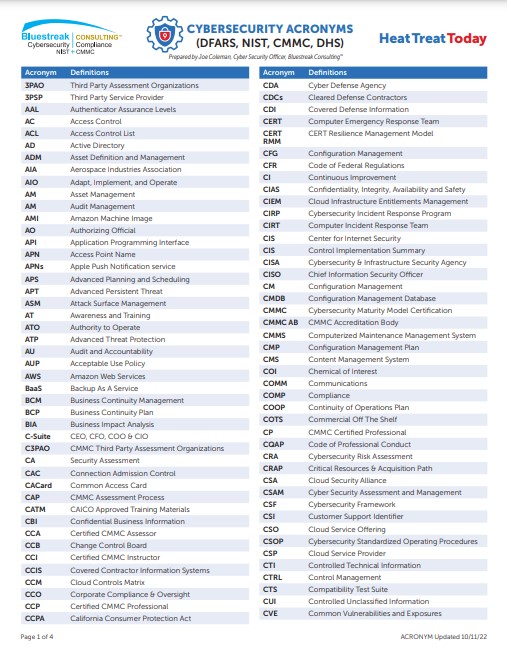
Click image to download a list of cybersecurity acronyms and definitions.
  • Export Controlled Information (ECI): Information that is subject to export control laws and regulations, such as technical data related to defense goods and services.
  • For Official Use Only (FOUO): Information that is not classified but still requires protection from unauthorized disclosure for official government use.
  • Critical Infrastructure Information (CII): Details about critical infrastructure elements like facilities, systems, networks, and assets that are essential for national security, economy, or public health.
  • Privacy information: Personal information of individuals (e.g., Social Security numbers, medical records) that needs to be protected under privacy laws and regulations.
  • Sensitive But Unclassified (SBU) Information: Information that, although unclassified, is sensitive and requires protection due to its potential impact if disclosed.
  • Contract-related information: Non-public details within contracts, such as proprietary information, financial data, or technical specifications.
  • Proprietary information: Data owned by an entity and protected by intellectual property rights or confidentiality agreements.

In the heat treating industry, DoD CUI might include various sensitive details related to heat treatment processes, materials, or specifications used in defense-related applications. Here are some potential examples of DoD CUI within the heat treating industry:

  • Material specifications: Specifications for heat treated materials used in defense equipment, weapons systems, or components. This could include details about specific alloys, heat treatment methods, tempering, or hardening processes required for certain applications.
  • Process documentation: Detailed procedures and technical information regarding heat treatment processes employed in the production of defense-related materials or components. This might involve specific temperature ranges, cooling rates, or other proprietary methods used in heat treating.
  • Quality control data: Information related to quality control measures specific to heat treating in defense-related manufacturing. This could involve data on testing methodologies, inspection techniques, or standards compliance for heat treated materials used in critical defense systems.
  • Research and development (R&D) information: Research findings, experimental data, or proprietary knowledge related to advancements in heat treatment technologies tailored for defense applications. This may include innovative heat treatment methods for enhancing material properties, durability, or performance in defense systems.
  • Supplier information: Details about suppliers providing heat treatment services or materials to the defense industry, including contractual agreements, proprietary processes, or specifications specific to DoD projects.
  • Cybersecurity measures: Information about cybersecurity measures employed within heat treatment facilities that handle DoD contracts or projects to safeguard sensitive data from cyber threats.
  • Facility security protocols: Details regarding security protocols, access controls, and clearance requirements within heat treating facilities handling defense-related projects to prevent unauthorized access to sensitive information.

Other items that may be identified as CUI provided by the DoD or generated in support of fulfilling a DoD contract or order include, but are not limited to (in both paper and digital formats):

  • Research and engineering data
  • Engineering drawings and lists
  • Technical reports
  • Technical data packages
  • Design analysis
  • Specifications
  • Test reports
  • Technical orders
  • Cybersecurity plans/controls
  • IP addresses, nodes, links
  • Standards
  • Process sheets
  • Manuals
  • Data sets
  • Studies and analyses and related information
  • Computer software executable code and source code
  • Contract deliverable requirements lists (CDRL)
  • Financial records
  • Contract information
  • Conformance reports

What Is Not Normally Considered CUI?

Here are several examples of items that may not typically fall under DoD CUI for the heat treating industry:

  • General industry standards: Information related to commonly accepted industry standards, processes, or procedures that are widely available and not specific to defense-related applications.
  • Non-proprietary heat treatment techniques: Basic information about standard heat treatment methods or techniques that are publicly known and not proprietary to a particular organization or application within the defense sector.
  • Publicly available research: Scientific or technical research findings, publications, or data that are publicly accessible, not subject to proprietary rights, and not specifically tied to defense-related advancements.
  • Commonly shared best practices: Information regarding widely accepted best practices in heat treating that do not involve proprietary or classified techniques applicable solely to defense-related materials or components.
  • Non-sensitive business operations: Routine business operations, administrative documents, or general non-sensitive communications within the heat treating industry that do not pertain to defense contracts or projects.
  • Information approved for public release: Data that has been officially approved for public release by the DoD or other relevant authorities, ensuring it does not contain sensitive or classified details.
  • Basic material specifications: Information about materials, alloys, or heat treatment processes widely used in commercial applications and not specifically tailored or modified for defense-related purposes.

I hope this information has been helpful to you. Please contact me with any questions and for a free consultation, with a complimentary detailed compliance ebook.

For more information: Contact Joe Coleman at joe.coleman@go-throughput.com.

Find Heat Treating Products and Services When You Search on Heat Treat Buyers Guide.com

CUI Considerations for the Heat Treating Industry Read More »

US DOE Strategy Affects Heat Treaters

As heat treaters strive for a sustainable future, pressure mounts to make the right choices while running commercially viable operations. This guest column by Michael Mouilleseaux, general manager at Erie Steel, Ltd., explores how and why heat treat operations are now coming under the focus of the U.S. Department of Energy.

This informative piece was first released in Heat Treat Today’s March 2024 Aerospace print edition.


The iron and steel industry contributes approximately 2.1% of energy-related CO2 emissions from primary sectors in the U.S. These statistics may seem insignificant or far removed, but the federal government has now determined that heat treating is a significant contributor and has set in motion critical changes for U.S. heat treaters.

Background

Click to share your Reader Feedback!

On December 8, 2021, President Joe Biden issued an executive order that committed the federal government to “lead by example” in U.S. efforts towards carbon-free and net zero emissions solutions. Since then, the executive has delegated the Department of Energy (DOE) and the Environmental Protection Agency (EPA) to spearhead these initiatives aimed at reducing greenhouse gas emissions (GHGE) and promoting energy efficiency across various sectors of the U.S. economy. To support these efforts, $10,000,000,000 in incentives are being allocated for the DOE and EPA to investigate and promulgate regulations.

Specifically, the government sees the “industrial sector” as responsible for close to a quarter of all greenhouse gas emissions (GHGE); the five industries named within this sector are chemical processing, petroleum processing, iron & steel production, cement production, and food & beverage manufacturing. The DOE is leading the efforts of “supercharging industrial decarbonization innovation” and leveraging the potential of “clean hydrogen.”

Following these directives, the DOE unveiled the “Industrial Decarbonization Roadmap” in September 2022. This strategic plan will guide decarbonization efforts of the five key industrial sectors to mitigate GHGE. The four pillars are:

  • Energy efficiency
  • Industrial electrification (using green electricity)
  • Adoption of low-carbon fuels, feedstocks, and energy sources (LCFFES)
  • Carbon capture, utilization, and storage at the generated source (CCUS)

The DOE determined that process heating — accounting for 63% of energy usage within the iron and steel industry — would be the best opportunity to apply these four pillars. However, until May 2023, heat treating had not been explicitly mentioned as a target for decarbonization efforts.

Why Should Heat Treaters Care?

In May 2023, the Industrial Efficiency & Decarbonization Office — an office within the DOE’s Office of Energy Efficiency & Renewable Energy — held a symposium to refine its commitment to the decarbonization of the industrial sector. It was then that heat treating was specifically defined as a process targeted for the reduction of GHGE in the steel, aluminum, and glass manufacturing industries.

The DOE’s refined commitment focuses on two things: reduce GHGE attributable to “process heating” by 85% by 2035 and achieve net-zero CO2 emissions by 2050. To reach these ambitious goals, the DOE emphasized the importance of adopting LCFFES, green electrification, and implementing strategies that promote industrial flexibility, advanced heat management, smart manufacturing, and alternative technologies.

The potential ramifications of the DOE’s efforts on the heat treating industry are momentous. With the development of regulations to support these efforts, businesses within this sector must prepare for significant changes. The focus on green hydrogen, biofuels, and electrification, coupled with advanced technological solutions like ultra-efficient heat exchangers, artificial intelligence, machine learning, and alternative no-heat technologies, are strategies being considered for potential regulation.

Conclusion

The heat treating industry stands at a crossroads, with the DOE’s decarbonization initiatives signaling a shift to adopt cleaner energy practices. As these regulations take shape, businesses will need to adapt, investing in new technologies and processes that align with the nation’s clean energy goals. In the next column, we’ll address potential ramifications of the DOE effort for industrial decarbonization in the heat treating industry to help you be better informed and prepared.

About the Author:

Michael Mouilleseaux
General Manager at Erie Steel, Ltd.

Michael Mouilleseaux is general manager at Erie Steel, Ltd. He has been at Erie Steel in Toledo, OH since 2006 with previous metallurgical experience at New Process Gear in Syracuse, NY, and as the director of Technology in Marketing at FPM Heat Treating LLC in Elk Grove, IL. Michael attended the stakeholder meetings at the May 2023 symposium hosted by the U.S. DOE’s Office of Energy Efficiency & Renewable Energy. He will be speaking on the MTI podcast about this subject on March 5, 2024, 2:30 EST, and will present on this topic at the April 3, 2024, MTI Mid-West chapter meeting.

For more information: Contact Michael at mmouilleseaux@erie.com.

Attend the SUMMIT to find out more about the DOE’s actions for the heat treat industry.

Find Heat Treating Products and Services When You Search on Heat Treat Buyers Guide.com

US DOE Strategy Affects Heat Treaters Read More »

Advantages of Laser Heat Treatment: Precision, Consistency, and Cost Savings

Laser heat treating, a form of case hardening, offers substantial advantages when distortion is a critical concern in manufacturing operations. Traditional heat treating processes often lead to metal distortion, necessitating additional post-finishing operations like hard milling or grinding to meet dimensional tolerances.

This Technical Tuesday article was originally published in first published in Heat Treat Today’s January/February 2024 Air & Atmosphere print edition.


In laser heat treating, a laser (typically with a spot size ranging from 0.5″ x 0.5″ to 2″ x 2″) is employed to illuminate the metal part’s surface. This results in a precise and rapid delivery of high-energy heat, elevating the metal’s surface to the desired transition temperature swiftly. The metal’s thermal mass facilitates rapid quenching of the heated region resulting in high hardness.

Key Benefits of Laser Heat Treating

Consistent Hardness Depth

Laser heat treatment achieves consistent hardness and hardness depth by precisely delivering high energy to the metal. Multiparameter, millisecond-speed feedback control of temperature ensures exacting specifications are met.

Minimal to Zero Distortion

Due to high-energy density, laser heat treatment inherently minimizes distortion. This feature is particularly advantageous for a variety of components ranging from large automotive dies to gears, bearings, and shafts resulting in minimal to zero distortion.

Precise Application of Beam Energy

Unlike conventional processes, the laser spot delivers heat precisely to the intended area, minimizing or eliminating heating of adjoining areas. This is specifically beneficial in surface wear applications, allowing the material to be hardened on the surface while leaving the rest in a medium-hard or soft state, giving the component both hardness and ductility.

Figure 1. Laser heat treating of automotive stamping die constructed from D6510 cast iron material (Source: Synergy Additive Manufacturing LLC)

No Hard Milling or Grinding Required

The low-to-zero-dimensional distortion of laser heat treatment reduces or eliminates the need for hard milling or grinding operations. Post heat treatment material removal is limited to small amounts removable by polishing. Eliminating hard milling or grinding operations saves substantial costs in the overall manufacturing process of the component. Our typical tool and die customers have seen over 20% cost savings by switching over to laser heat treating.

Figure 2. Laser heat treating of machine tool
components (Source: Synergy Additive Manufacturing LLC)

Applicable for a Large Variety of Materials

Any metal with 0.2% or more carbon content is laser heat treatable. Hardness on laser heat treated materials typically reaches the theoretical maximum limit of the material. Many commonly used steels and cast irons in automotive industry such as A2, S7, D2, H13, 4140, P20, D6510, G2500, etc. are routinely laser heat treated. A more exhaustive list of materials is available at synergyadditive.com/laser-heat-treating.

Conclusions

Aravind Jonnalagadda CTO and Co-Founder Synergy Additive Manufacturing LLC Source: LinkedIn

Laser heat treatment is poised to witness increased adoption in the automotive and other metal part manufacturing sectors. The adoption of this process faces no significant barriers, aside from the typical challenges encountered by emerging technologies, such as lack of familiarity, limited hard data, and a shortage of existing suppliers. The substantial savings, measured in terms of cost, schedule, quality, and energy reduction, provide robust support for the continued embrace of laser heat treatment in manufacturing processes.

For more information: Contact AJ at aravind@synergyadditive.com or synergyadditive.com/laser-heat-treating.

Find Heat Treating Products And Services When You Search On Heat Treat Buyers Guide.com 

Advantages of Laser Heat Treatment: Precision, Consistency, and Cost Savings Read More »

Sustainability Insights: How Can We Work To Get The Carbon Out Of Heating? Part 2

The search for sustainable solutions in the heat treat industry is at the forefront of research for industry experts. Michael Stowe, PE, senior energy engineer at Advanced Energy, one such expert, offers some fuel for thought on the subject of how heat treaters should prioritize the reduction of their carbon emissions by following the principles of reuse, refuel, and redesign.

This Sustainability Insights article was first published in Heat Treat Today’s January/February 2024 Air & Atmosphere print edition.


Reduce

Michael Stowe
PE, Senior Energy Engineer
Advanced Energy

We explored why the question above has come to the forefront for industrial organizations in Part 1, released in Heat Treat Today’s December 2023 print edition. Now, let’s look at the four approaches to managing carbon in order of priority.

Click to share your Reader Feedback

The best way to manage your carbon footprint is to manage your energy consumption. Therefore, the first and best step for reducing your carbon footprint is to reduce the amount of energy you are consuming. Energy management tools like energy treasure hunts, energy assessments, implementation of energy improvement projects, the DOE 50001 Ready energy management tool, or gaining third party certification in ISO 50001 can all lead to significant reduction in energy consumption year over year. Lower energy use means a smaller carbon footprint.

Additionally, ensuring proper maintenance of combustion systems will also contribute to improved operational efficiency and energy savings. Tuning burners, changing filters, monitoring stack exhaust, controlling excess oxygen in combustion air, lubricating fans and motors, and other maintenance items can help to ensure that you are operating your combustion-based heat treating processes as efficiently as possible.

Reuse

Much of the heat of the combustion processes for heat treating goes right up the stack and heats up the surrounding neighborhood. Take just a minute and take the temperature of your exhaust stack gases. Chances are this will be around 1200–1500°F. Based on this, is there any effective way to reuse this wasted heat for other processes in your facility? One of the best things to do with waste heat is to preheat the combustion air feeding the heat treating process. Depending on your site processes, there are many possibilities for reusing waste heat, including:

  • Space heating
  • Part preheating
  • Hot water heating
  • Boiler feed water preheating
  • Combustion air preheating

Refuel

Once you have squeezed all you can from reducing your process energy consumption and reusing waste heat, you may now want to consider the possibility of switching the fuel source for the heat treating process. If you currently have a combustion process for a heat treat oven or furnace, is it practical or even possible to convert to electricity as the heating energy source? Electricity is NOT carbon free because the local utility must generate the electricity, but it typically does have lower carbon emissions than your existing direct combustion processes on site. Switching heating energy sources is a complex process, and you must ensure that you maintain your process parameters and product quality. Typically, some testing will be required to ensure the new electrical process will maintain the metallurgical properties and the quality standards that your customer’s specific cations demand. Also, you will need a capital investment in new equipment to make this switch. Still, this method does have significant potential for reducing carbon emissions, and you should consider this where applicable and appropriate.

Redesign

Finally, when the time is right, you can consider starting with a blank sheet of paper and completely redesigning your heat treating system to be carbon neutral. This, of course, will mean a significant process change and capital investment. This would be applicable if you are adding a brand-new process line or setting up a new manufacturing plant at a greenfield site.

In summary, heat treating requires significant energy, much of which is fueled with carbon-based fossil fuels and associated-support electrical consumption. Both combustion and electricity consumption contribute to an organization’s carbon footprint. One of the best ways to help manage your carbon footprint is to consider and manage your energy consumption.

For more information:
Connect with IHEA Sustainability & Decarbonization Initiatives www.ihea.org/page/Sustainability
Article provided by IHEA Sustainability


Find Heat Treating Products And Services When You Search On Heat Treat Buyers Guide.Com


Sustainability Insights: How Can We Work To Get The Carbon Out Of Heating? Part 2 Read More »

Heat Treating AM Parts — Need To Know Difficulties and Solutions for Engineers

op-ed

Metal 3D additive manufacturing has grown dramatically in the last five years. Nearly every metal printed part needs to be heat treated, but this presents some challenges. This article will address some of the challenges that a heat treater faces when working with these parts.

This Technical Tuesday article, written by Mark DeBruin, metallurgical engineer and CTO of Skuld LLC, was originally published in December 2023’s Medical and Energy magazine.


Mark DeBruin Metallurgical Engineer and CTO Skuld LLC

In my experience, on average, about 10% of all 3D metal printed parts break during heat treatment; this number varies depending on the printer and the unique facility. While materials can be printed with wire or even metal foils, I’m going to mainly focus on the approximately 85% of all metal 3D printed parts that are made from metal powder and either welded or sintered together.

Most metal printed parts normally have heat added to them after printing. In addition to the heat of the printing process and wire electrical discharge machining (EDM) process to separate the part from the build plate, heat may be added up to five times. These steps are:

  1. Burnout and sintering (for some processes such as binder jet and bound powder extrusion)
  2. Stress relieving
  3. Hot isostatic pressing (HIP)
  4. Austenitizing (and quenching)
  5. Tempering

3D printing can create a non-uniform microstructure, but it will also give properties the client does not normally desire.
Heat treating makes the microstructure more uniform and can improve the properties. Please note that heat treating 3D printed parts will never cause the microstructure to match a heat treated wrought or cast microstructure. The microstructure after heat treating depends on the starting point, which is fundamentally different.

If the part is not properly sintered, there is a high chance it will break during heat treatment. It may also exhaust gases, which can damage the heat treat furnace. The off gases will recondense on the furnace walls causing the furnace to malfunction and to need repair. This can potentially cost hundreds of thousands of dollars.

During powder 3D printing, there is a wide variety of defects that can occur. These include oxide inclusions, voids, unbonded powder, or even cracks that occur due to the high stresses during printing. Even if there are not actual defects, the printing process tends to leave a highly stressed structure. All of these factors contribute to causing a print to break as the inconsistent material may have erratic properties.

In a vacuum furnace, voids can be internal and have entrapped gas. Under a vacuum, these can break. Even if something was HIP processed, the pores can open up and break. Even if they do not break and heat is applied, the metal will heat at different rates due to the entrapped gas.

Figure 1. Macroscopic view of a 3D printed surface (left) compared to machined surface (right) (Source: Skuld LLC)

There are also issues during quenching due to the differences in the surface finish. In machining, the surface is removed so there are not stress concentrators. In 3D printing, there are sharp, internal crevices that can be inherent to the process that act as natural stress risers (see Figure 1). These can also cause cracking.

When 3D printed parts break, they may just crack. This can result in oil leaking into the parts, leading to problems in subsequent steps.

Figure 2. Example wire mesh basket (Source: Skuld LLC)

However, some parts will violently shatter. This can happen when pulling a vacuum, during ramping, or during quenching. This can also cause massive damage to the furnace or heating elements. It can potentially also injure heat treat operators.

A lot of heat treaters protect their equipment by putting the parts into a wire mesh backet (Figure 2). This protects the equipment if a piece breaks apart in the furnace, and if a piece breaks in the oil, it can be found.

Print defects in metal 3D printed parts can be a challenge to a heat treater. Clients often place blame on the heat treater when parts are damaged, even though cracking or shattering is due to problems already present in the materials as they had arrived at the heat treater. As a final piece of advice, heat treaters should use contract terms that limit their risks in these situations as well as to proactively protect their equipment and personnel.

About The Author

Mark DeBruin is a metallurgical engineer currently working as the chief technical officer at Skuld LLC. Mark has started five foundries and has worked at numerous heat treat locations in multiple countries, including being the prior CTO of Thermal Process Holdings, plant manager at Delta H
Technologies,
and general manager at SST Foundry Vietnam.

For more information:
Contact Mark at mdebruin@skuldllc.com


Find heat treating products and services when you search on Heat Treat Buyers Guide.com

Heat Treating AM Parts — Need To Know Difficulties and Solutions for Engineers Read More »

Sustainability Insights: How Can We Work to Get the Carbon Out of Heating? Part 1

op-ed

The search for sustainable solutions in the heat treat industry is at the forefront of research for industry experts. Michael Stowe, PR, senior energy engineer at Advanced Energy, one such expert, offers some fuel for thought on the subject of how heat treaters can reduce their carbon emissions.

This Sustainability Insights article was first published in Heat Treat Today’s December 2023 Heat Treat Medical and Energy print magazine.


Michael Stowe
PE, Senior Energy Engineer
Advanced Energy

The question in the article title is becoming increasingly popular with industrial organizations. Understanding the carbon content of products is becoming more of a “have to” item, especially for organizations that are in the supply chain for industrial assembly plants such as in the automotive industry. Many heat treaters are key steps in the supply chain process, and their carbon footprints will be of more interest to upstream users of heat treated parts in the future. I know I am overstating the obvious here, but I am going to do it anyway for emphasis:

Click to share your Reader Feedback
  1. Heat treating requires HEAT.
  2. HEAT requires ENERGY consumption.
  3. ENERGY consumption creates a carbon footprint:
    a. Fossil fuels heating — direct carbon emissions (Scope 1)
    b. Electric heating — indirect carbon emissions (Scope 2)

Therefore, by definition and by process, if you are heat treating, then you are producing carbon emissions. Again, the question is, “How can we work to get the carbon out of heating?” Let us explore this.

Figure 1. Methane combustion (Source: Advanced Energy)

Once more, heat treating requires energy input. The energy sources for heat treating most frequently include the combustion of carbon-based fossil fuels such as natural gas (methane), propane, fuel oil, diesel, or coal. Also, most combustion processes have a component of electricity to operate combustion air supply blowers, exhaust blowers, circulation fans, conveyors, and other items.

Figure 1 shows the chemical process for the combustion of methane (i.e., natural gas). Figure 1 demonstrates that during combustion, methane (CH4) combines with oxygen (O₂) to form carbon dioxide (CO₂) and water (H₂O). This same process is true for any carbon-based fuel. If you try to imagine all the combustion in progress across the globe at any given time, and knowing that all this combustion is releasing CO₂, then it is easy to see the problem and the need for CO₂ emission reductions.

In the most basic terms, if you have a combustion-based heat treating process on your site, then you are emitting CO₂. The electricity consumed to support the combustion processes also has a carbon component, and the consumption of this electricity contributes to a site’s carbon footprint.

Figure 2. The 4 Rs of carbon footprint (Source: Advanced Energy)

So, combustion and electricity consumption on your site contributes to your carbon footprint. Knowing this, organizations may want to consider the level of their carbon footprint and explore ways to reduce it. There are many methods and resources available to help organizations understand and work to improve their carbon footprint. For this article, we will focus on the 4 Rs of carbon footprint
reduction (see Figure 2).

We will discuss each of these approaches individually in priority order in the next installment of the Sustainability Insights.

For more information:
Connect with IHEA Sustainability & Decarbonization Initiatives www.ihea.org/page/Sustainability
Article provided by IHEA Sustainability


Find Heat Treating Products And Services When You Search On Heat Treat Buyers Guide.Com


Sustainability Insights: How Can We Work to Get the Carbon Out of Heating? Part 1 Read More »

Skip to content