


OP-ED

Sustainability Insights: Process Heating and the Energy-Carbon Connection

“Plan, do, check, act.” When it comes to caring about carbon footprint, a path forward to may seem too out-of-reach. But breaking down process heating and how to efficiently consider carbon use can be possible with industry resources.

This Sustainability Insight article was composed by Michael Stowe, PE, the senior Energy Engineer at Advanced Energy for Heat Treat Today's September 2023 People of Heat Treating print edition.


Michael Stowe, PE
Senior Energy Engineer
Advanced Energy
Source: IHEA

Over the past several years, process heating energy markets have shifted in response to significant global pressures. The need to understand the impact of greenhouse gases (GHGs), especially carbon based emissions, on climate change is gaining more interest from organizations that have industrial process heating. Organizations that manufacture or use process heating equipment need to understand the impact their equipment can have on carbon emissions. The terms “carbon emissions” or “carbon footprints” use the word “carbon,” but these terms can include other GHGs, and the carbon refers to carbon dioxide gas (CO2).

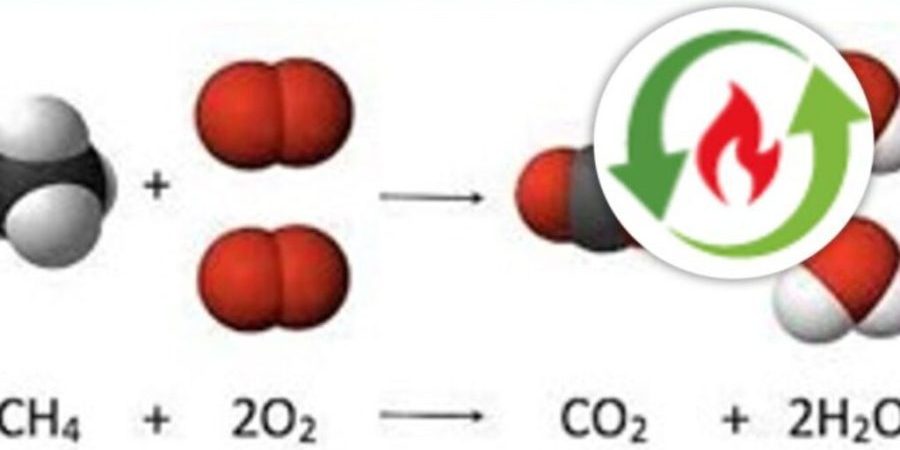
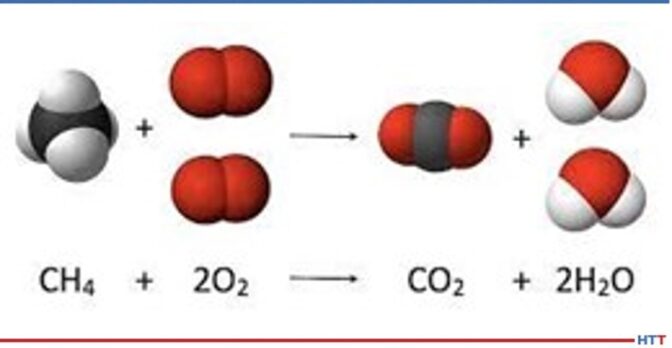
Process heating requires energy input. The energy sources for process heating most frequently include the combustion of carbon-based fossil fuels such as natural gas, propane, fuel oil, diesel, or coal. Also, most combustion processes have a component of electricity to operate combustion air supply blowers, exhaust blowers, circulation fans, conveyors, and other items. Figure 1 shows the chemical process for the combustion of methane (i.e., natural gas).

Figure 1 demonstrates that during combustion, methane (CH4) combines with oxygen (O2) to form carbon dioxide (CO2) and water (H2O). This same process is true for any carbon-based fuel. If you try to imagine all the combustion in progress across the globe at any given time, and knowing that all this combustion is releasing CO2, then it is easy to see the problem and the need for CO2 emission reduction.

Figure 1. Chemical process for methane combustion
(Source: Advanced Energy)

In basic terms, if you have a combustion process on your site, then you are emitting CO2. The electricity consumed to support the combustion processes also has a carbon component and the consumption of this electricity contributes to a site’s carbon footprint. Climate change impacts due to these carbon emissions have prompted government and corporate actions that are creating unique new opportunities for more sustainable and lower carbon process heating methods.

So, combustion and electricity consumption on your site contribute to your carbon footprint. Knowing this, organizations may now want to understand the actual level of their carbon footprint and ways to reduce it. There are many methods and resources available to help organizations understand and work to improve their carbon footprint.

The Industrial Heating Equipment Association (IHEA) has recognized this need to understand carbon footprints and is in the middle of a four-part webinar series on this topic. Session three (held on July 20, 2023) covered methods and resources to help organizations determine and improve their carbon footprint.

Session 3: DOE Tools and Programs for GHG Reduction

There are many options available to help determine carbon emissions for equipment, processes, sites, and organizations. This presentation will review some of these available tools and how to apply them to different situations. Carbon emissions are directly tied to energy consumption, so it is very important to understand how all your energy is consumed on site by energy type. This presentation will provide tools and programs to help you understand your energy consumption and thereby understand your carbon emissions. Additionally, energy improvement projects are also carbon emission reduction projects. This session will help you understand how to determine the impact of energy projects on your carbon footprint.

Session 4: Ongoing Sustainability — Industry Best Practices for Continual Improvement

Carbon reduction is not a project, it is a process, and must be ongoing. Earlier sessions will help you determine your carbon footprint and understand ways to track and improve your carbon footprint. In this presentation, we will review methods and programs to ensure the continual improvement of your carbon reduction efforts. Following the “plan, do, check, act” method used in many continual improvement programs, we will review steps to take for keeping your momentum moving in the right direction. We will also plan to have industry case studies for success in ongoing and improving carbon reduction programs.

Registration for these sessions can be found on the events page of www.ihea.org. If you or your organization want to learn more about your carbon footprint and how to measure and reduce it, you will not want to miss this opportunity.

In summary, heat treating, and other process heating methods, require significant energy, much of which is fueled with carbon-based fossil fuels, and associated with support electricity consumption. Both combustion and electricity consumption contribute to an organization’s carbon footprint. One of the best ways to help manage your carbon footprint is to understand and manage your energy consumption. For more information on this topic, please check out the IHEA Sustainability & Decarbonization Initiatives.

About the author:

Michael Stowe (PE) is the senior energy engineer at Advanced Energy. Michael focuses on process heating and energy efficiency in manufacturing plants. He has significant experience in the manufacturing industry serving in various roles as design engineer, production manager, plant engineer, and facilities engineer over the past 27 years.


Find heat treating products and services when you search on Heat Treat Buyers Guide.com


Sustainability Insights: Process Heating and the Energy-Carbon Connection Read More »

Meet the Consultant: Jon Tirpak

The brain drain is real. As new professionals enter the industry, Heat Treat Today is helping to ensure that young and old inquiring minds can connect with and grow from the experiences of high-value industry experts. Get to know Heat Treat Today Consultant: Jon Tirpak.


I am Jon Tirpak, professional metallurgical engineer, fellow and past president of ASM International, chief engineer of Sabattis, LLC, and managing partner of Value Selling Associates. I have decades of metallurgical engineering experience, especially with respect to manufacturing technology research and development in the federal and commercial sectors. I excel at building cross functional teams, establishing lean, sustainable processes, navigating the federal marketplace, and thinking outside of the box. Currently, I am located in Mount Pleasant, SC, but “have ticket, will travel!” I am also available through Zoom and Microsoft Teams, and I would welcome a call.

Jon’s focus is all about creating teams that focus on client-centric processes. He is more than willing to guide clients towards making the necessary, hard choices based on predetermined criteria, all while using a sane selection process. Once, Jon was noted as being the only “adult” in a room of technologists during an investment strategy session. He considers this to be the biggest compliment paid to him.

With over 40 years of experience in metallurgical engineering, Jon has some fantastic stories shrouded in NDAs. But he can share one of his taglines: “You can’t have the alloy without the heat treatment.”

In addition to being a consultant in the heat treat industry, Jon is also an Air Force Veteran. Beginning in 1982, he launched his career at the Air Force Materials Laboratory. His seminal research on fatigue, fatigue crack growth, and fracture toughness testing coupled with other programs promoted the use of aluminum castings in aircraft. Eventually, future research and the continuous improvement of casting alloys and processes coupled with heat treating led to the elimination of the casting factor. His technical reports published in the mid-1980s are still referenced today by researchers around the world.

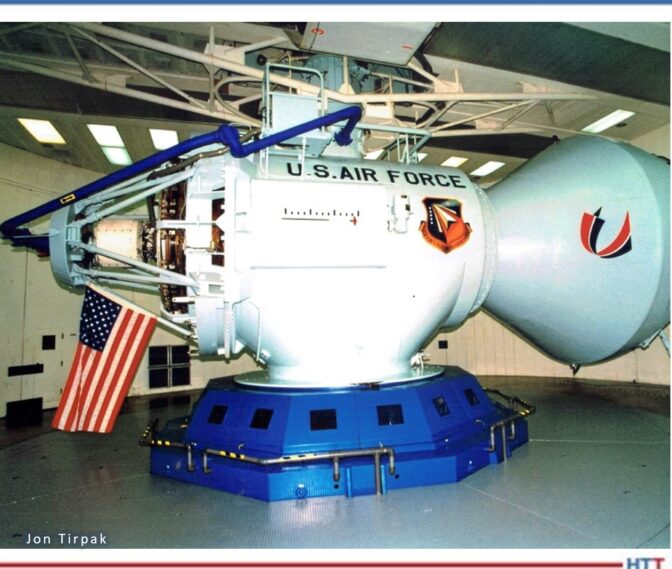
Air Force's Dynamic Environment Simulator ("Centrifuge")
(Source: USAF)

Jon served as an executive officer within Project Forecast II and focused his expertise on advanced materials and manufacturing in the Plans and Programs Office of the Air Force Materials Laboratory. In addition to his regular duties, Jon served as a test subject in the Air Force’s Dynamic Environment Simulator (DES) or the “Centrifuge.”

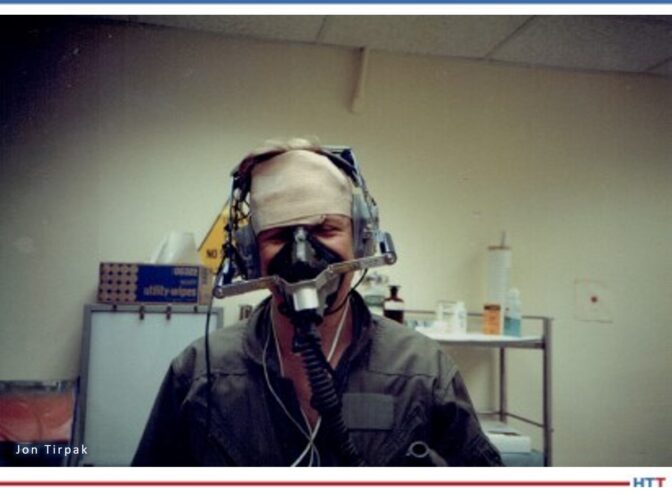
With over 40 test and proficiency runs, Jon was a research subject to evaluate new systems battling a phenomenon called G-Induced Loss of Consciousness (G-Loc). This effect occurs when pilots experience the rapid on-set of acceleration (high g-forces) causing a pilot to black out. 8.5 gs was the maximum g-force he experienced in the simulator. Watching Top Gun: Maverick reminded Jon of the graying and blacking out of a pilot subject to these extreme forces. The below photo shows Jon getting suited up for related DES studies and the DES itself which was decommissioned and replaced by the Air Force several years ago.

Lieutenant Tirpak suited up for an aeromedical research study.
(Source: Jon Tirpak)

His second assignment at the Ballistic Missile Office availed Jon to work at the Nevada Test Site conducting underground nuclear tests. All in all, his short tours with the Air Force propelled him into the balance of his civilian, industrial career revolving around different metal forming processes and heat treating. Today, he actively supports a client deploying thermal processing technology to replace carburizing.

The future of heat treat lies in two things: passionate people and cybersecurity. Without passionate professionals who see the whole picture and who are willing to contribute and serve clients, business will languish. And don’t underestimate the importance of cybersecurity! An enterprise needs to “build moats,” train employees, and upgrade software and hardware — and then train again!

Know a military veteran serving in heat treat? Let us know so they can join the growing list of Heat Treat Veterans: www.heattreattoday.com/veterans-nomination-page.


Find heat treating products and services when you search on Heat Treat Buyers Guide.com


Meet the Consultant: Jon Tirpak Read More »

Meet the Consultant: Thomas Wingens

The brain drain is real. As new professionals enter the industry, Heat Treat Today is helping to ensure that young and old inquiring minds can connect with and grow from the experiences of high-value industry experts. Get to know the second Heat Treat Today Consultant: Thomas Wingens.


Thomas Wingens, President, WIIC - Wingens LLC
International Industry Consultancy

I am Thomas Wingens, masters in material science, MBA. During my over 35 years in the heat treat industry, I have worked with Bodycote, Ipsen, SECO/ WARWICK, Tenova, and IHI-Group in executive positions. Since 2011, I have been president of WIIC - Wingens LLC International Industry Consultancy in Pittsburgh, PA.

Thomas Wingens began his career in heat treat in 1987 as a metallurgist, heat treater, and consultant. Today, Thomas is an executive manager, experienced metallurgist, and hands-on heat treater with a knack for improving sales, solving technical problems, giving furnace advice, doing his due diligence, and advising executives. If it weren’t for NDAs, Thomas would love to share stories about the many exciting projects he has been fortunate enough to work on, but Thomas is able to share about his experience in developing novel processes for clients in the semiconductor, battery, rare earth magnet, and rocket industries. At Wingens LLC International Industry Consultancy, Thomas’ strengths are on full display. Thomas describes himself as a “hands-on” heat treater, as he consults 100% of the time on heat treating, leveraging his background as a metallurgist. His key assets strengths are his deep thermal processing knowledge and his perfect furnace selection abilities.

Powder metallurgy and thermal processing of specialty materials are areas of expertise for Thomas. These specialty materials include: titanium, tantalum, niobium, neodymium, and rare earth elements. Along with these specialty materials, Thomas has an extensive knowledge of brazing, metal cleaning, hydriding/dehydriding, tool and die heat treatment, high speed heat treating, brazing heat exchangers, and debinding/sintering, as well as sputter targets and reduction and diffusion processes. Thomas has served the medical and aerospace industries, working with medical components and heat treatment of landing gears. Thomas agrees with Elon Musk’s opinion on what comes next: “making stuff ” is the future. In the U.S., 50 years of off- shoring industrial manufacturing is finally coming to an end, and America is reindustrializing. Mines are reopening, raw material processing is becoming a trend, however, a large portion of intellectual property and practical skillsets have been lost. State of the art, environmentally friendly, safe, and automated equipment is needed to meet today’s technical and economical standards.

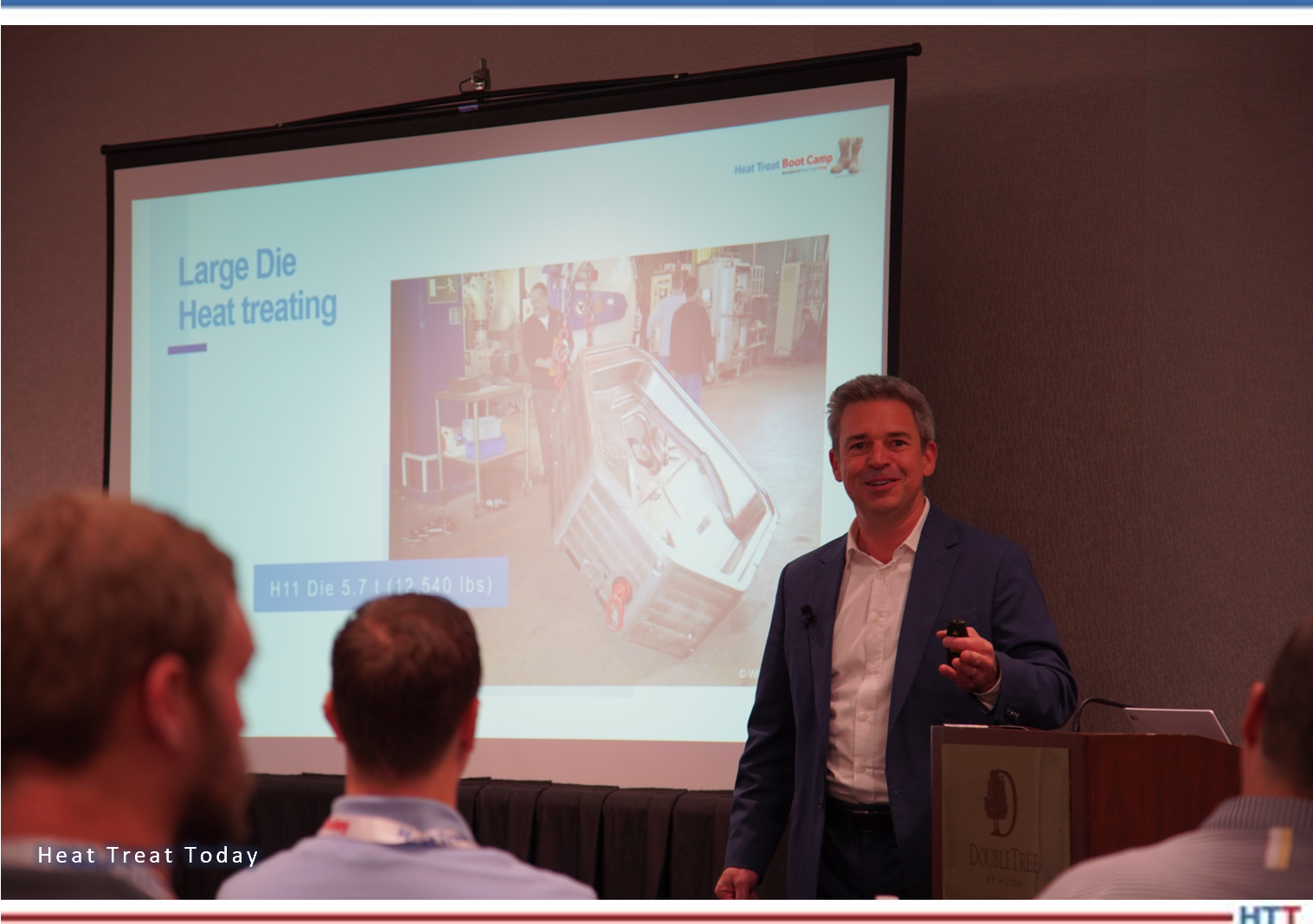
Thomas was also one of two keynote speakers at Heat Treat Today's Heat Treat Boot Camp. Thomas’ lectures centered on the processes and materials of the North American heat treat industry; he shared some of his vast knowledge of heat treating for attendees, speaking on common processes, various alloys used in heat treating, and exciting new developments in the future of heat treating.

Thomas at Heat Treat Boot Camp (Source: Heat Treat Today)

See www.wingens.com for further info or visit Thomas’ consultants page at HeatTreatToday.com.


Find heat treating products and services when you search on Heat Treat Buyers Guide.com


Meet the Consultant: Thomas Wingens Read More »

Meet the Consultant: Dan Kay

The brain drain is real. As new professionals enter the industry, Heat Treat Today is helping to ensure that young and old inquiring minds can connect with and grow from the experiences of high-value industry experts. Get to know the first Heat Treat Today Consultant: Dan Kay.


Daniel Kay
Owner
Kay & Associates

I am Dan Kay (which is a shortened form of my birth name: William Daniel Kay). Although I was born in Ohio, I grew up in New Jersey, went to college (Rensselaer Polytechnic Institute) in New York State, and graduated with a degree in Metallurgical Engineering. I grew up in a wonderful family, as the third child out of six children that my parents had. They were both strong spiritual leaders, too, shaping our Christian faith and helping us to make it a strong foundation in our lives. I am married to a wonderful woman, and we’ll be celebrating our 55th wedding anniversary together in June. She continues to be a real blessing to me in so many ways. My home is in Simsbury, CT, where we have now lived for the past 25 years

Dan Kay lectures at one of his popular seminars on brazing.
Source: Kay & Associates

Dan Kay’s biggest strength is teaching and training. Being able to effectively communicate to others, verbally and in writing, to bring about positive change in others is not easy in today’s world, but it is something Dan believes he has learned to do well. Currently, Dan uses his teaching skills at brazing seminars that help to increase productivity and reduce scrap and rework.

For almost 60 years, Dan has been involved in the heat treating industry. His specialty is brazing: the joining of metal parts together to form complex assemblies, using a brazing filler metal (BFM) that melts and flows by capillary action into joints between the component parts making up that complex assembly. Out of these 60 years, Dan has many stories, but one stands out: discovering the cause of a mushy joint in tweezers used in the medical industry. After carefully studying the manufacturer’s operations, Dan suggested waiting several seconds after brazing by induction heating and before quenching, allowing the filler metal to solidify completely. After this, the tweezers no longer broke when doctors used them to stitch up patients.

Dan Kay's biggest strength is teaching and training.
Source: Kay & Associates

In Dan’s opinion, brazing and heat treating need to form a stronger partnership in the years ahead. Increasingly more metals require heat treating to obtain optimal properties for end-use service conditions. Brazing is also a growing industry, enabling more and more complex parts to be created, many of which need enhanced properties for successful use in the field. This will typically require more and more vacuum brazing/heat treat to be done, and heat treat personnel need to become familiar with brazing and its requirements, so that mistakes will not occur. Vacuum furnaces need to have additional complex internal heat treat and quench capabilities for a wide variety of metals, including aluminum, to allow such parts to be brazed, and then heat treated and quenched in multi-bar furnaces.

To learn more from Dan, visit his website kaybrazing.com/seminars to attend his next seminar


Find heat treating products and services when you search on Heat Treat Buyers Guide.com


Meet the Consultant: Dan Kay Read More »

Sustainability Insights: Reducing the Carbon Footprint of Your Heat Treating Operations

OC

Renewable fuels or hydrogen have entered the scene as these are fuels that contain little or no carbon. So, no carbon in the fuel means no CO2! These fuels present an excellent opportunity to significantly reduce carbon.

This Sustainability Insight article was composed by Brian Kelly, manager of Application Engineering at Honeywell Smart Energy and Thermal Solutions (SETS) and president of the Industrial Heating Equipment Association. It can be found in Heat Treat Today's August 2023 Automotive Heat Treating print edition.


The need to understand the impact of greenhouse gases (GHGs), especially carbon-based emissions, on climate change is gaining much more interest recently from organizations that have industrial heating processes. Most industrial heating processes are fueled by carbon-based fossil fuels such as natural gas, propane, fuel oil, diesel, or coal. In basic terms, if you have combustion processes in your organization, you are emitting carbon (CO2). Impacts on climate change due to these carbon emissions have prompted government and corporate actions to reduce carbon. These actions are creating unique new opportunities for more sustainable and lower carbon process heating methods. In this article, we will focus on ways to reduce carbon in typical fossil fuel fired heat treat thermal processes. First step: Figure out where you are today. Do you know?

Assess Your Carbon Footprint

Brian Kelly
Image Source: Honeywell

More and more companies are interested in understanding their GHG/carbon footprints, so they can determine what processes are their biggest CO2 offenders, and on what assets to focus on in order to have the largest impact on reducing carbon. Whether your thermal processes are being heated by fossil fuels (typically natural gas) or electrically, each will have a carbon footprint. Fuel gases are being burned to provide the heat and they produce CO2 as a result. Most electrical power is currently being produced by fossil fuels, so electricity will have a CO2 amount associated per kW. What can be done to burn less fuel in your furnaces or ovens, which directly relates to reducing CO2?

Tune Your Combustion Systems

Radiant tube burner with plug recuperator in a U-tube
Source: Honeywell

Over time combustion systems drift and are not at their optimum air/fuel ratio. By simply tuning your burner system on a routine basis, you can fire at the optimum air/fuel ratio for the process and be as efficient as possible. For example, if a furnace is firing on natural gas, operating at 1800°F, and currently operating at 35% excess air, tuning your burners to 10% excess air could save approximately 15% in fuel consumed. The fuel costs will be reduced, and the resulting CO2 will be reduced by that same percentage!

Maintain Your Furnaces/Ovens

A simple review of your furnaces or ovens to observe any hot spots, openings, faulty seals, or refractory issues will identify areas that will cause your systems to operate less efficiently, thus using more energy. Repairing these problems and consistently maintaining them will have the systems running more efficiently and producing as little carbon as possible.

Upgrade Your Firing Systems To Be More Efficient

Direct fired self-recuperative burner
Source: Honeywell

Incorporating preheated combustion air into furnace combustion systems can significantly reduce fuel consumption and therefore the resulting carbon. The two main methods for introducing hot air into a combustion system are recuperation and regeneration. The most popular air preheating method in heat treating applications is recuperation. For a direct fired furnace, this can take the form of a central stack recuperator or self-recuperative burners. Self-recuperative burners have grown in popularity in recent years as they get rid of the need for hot air piping, recuperator maintenance, and most are often pulse fired, which will not only maximize efficiency but also promote temperature uniformity in the furnace and often be lower in emissions. For indirect fired (radiant tube) furnaces, you can apply/add a plug recuperator to an existing cold air fired burner in a furnace that has a U or W-tube to preheat the combustion air or apply self- recuperative burners installed in Single-Ended Radiant (SER) tubes to optimize your furnace firing. The SER tube material can be upgraded to silicon carbide which allows higher temperatures/flux rates that can provide the opportunity to increase throughput and reduce the possible CO2 per cycle.

Combustion air preheating can result in energy savings of close to 25% over cold air combustion.

Renewable Fuels/Hydrogen

Renewable fuels or hydrogen have entered the scene as these are fuels that contain little or no carbon. So, no carbon in the fuel means no CO2! These fuels present an excellent opportunity to significantly reduce carbon. Hydrogen has been of interest because it has the opportunity to be a zero-carbon industrial fuel when produced with renewable energy such as wind, solar, hydro, or nuclear power. As these methods become more prevalent, they bring down the price of hydrogen and increase its availability. This could be a significant driver to greatly reduce CO2 in thermal processes. These topics as well as many others are being discussed in an on-going Sustainability Webinar series hosted by IHEA to provide education and insight into the ever-changing sustainability landscape.

Single ended self-recuperative radiant tube burner
Source: Honeywell

About the author:

Brian Kelly is manager of Application Engineering for Honeywell Smart Energy and Thermal Solutions (SETS) and current president of the Industrial Heating Equipment Association (IHEA).


Find heat treating products and services when you search on Heat Treat Buyers Guide.com


Sustainability Insights: Reducing the Carbon Footprint of Your Heat Treating Operations Read More »

Cybersecurity Desk: Not Using 2FA or MFA? Your Data Is Not Secure

How can increased cybersecurity measures benefit today’s heat treaters and their clients? Find out more with an exploration of 2FA and MFA!

Today’s read is a feature written by Joe Coleman, cybersecurity officer at Bluestreak Consulting™. This column was first released in Heat Treat Today’s August 2023 Automotive Heat Treat print edition.


Introduction

Joe Coleman
Cybersecurity Officer
Bluestreak Consulting™
Source: Bluestreak Consulting™

This 9th article in the series from Heat Treat Today’s Cybersecurity Desk will explain the significance of 2FA (2-Factor Authentication) and MFA (Multi Factor Authentication), their benefits, and how they can help secure your data and your clients’ data.

2FA and MFA have proven to be effective methods to enhance online security. And, if you provide any products or services to a DoD (Department of Defense) contractor, this is mandatory for all users accessing your computer systems and critical data. Implementing 2FA is a minimum requirement and is better than just a username/password combination. MFA takes your security to a whole new level.

What Is 2FA?

2FA adds an extra layer of security to the usual username/password combination. It requires users to provide a second authentication factor, typically something they possess, in addition to their password. Common examples include a one-time verification code sent via SMS, email, or generated by an authentication app like Google Authenticator or Authy. By requiring the combination of something known (password), along with something possessed (authentication factor), an additional level of security is provided.

What is MFA?

The strengths of Multi-Factor Authentication (MFA) take security a step further by incorporating multiple authentication factors beyond the customary two. These authentication factors can be categorized into three main types: something you know (password or PIN), something you have (smartphone or security token), and something you are (biometrics like fingerprints or facial recognition). MFA offers increased security as it requires multiple factors to be verified before granting access.

Is MFA Better than 2FA?

In terms of security, the more the better should be the correct mindset. MFA is a more secure method than 2FA, because a user must respond to more checkpoints, especially if authentication factors disperse through different access points that aren’t available online (like a token or security key) and require a physical presence. Proving user identity multiple times instead of just submitting items of proof twice (i.e., 2FA), lowers the chance of a breach and helps achieve security compliance requirements.

Implementing 2FA or MFA

Enabling 2FA and MFA is becoming a more and more accessible option across many platforms and services. The most popular websites, email providers, social media networks, and online banking institutions offer 2FA and/or MFA options. Users can typically find the necessary settings in their account security or privacy preferences. It is crucial to follow the provided instructions for setting up and managing these authentication methods properly. In an age where cyber threats are always rising, protecting our online presence is critical. 2FA and MFA have proven to be effective methods in safeguarding our digital lives. By implementing these extra layers of security, companies can enhance their defenses and protect their data and their clients’ data.

What About Your Outside Personnel Support?

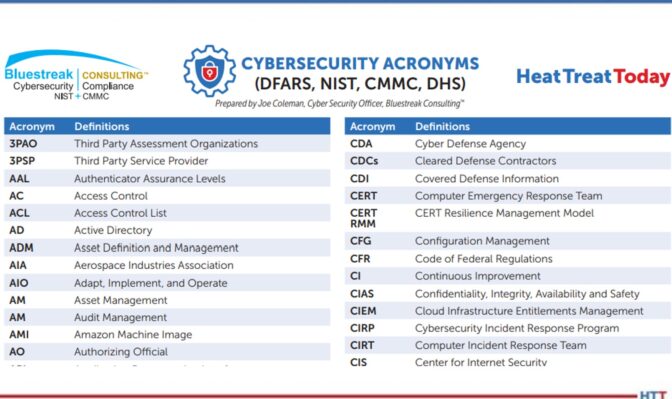
Chart with Cybersecurity Acronyms
Click on the Image for a full list of Cybersecurity Acronyms

Many companies have outside vendor support, and maintenance personnel access their network and systems on a regular basis. For example, they may use VPN access that requires the user to “punch a hole” in the firewall, making it much more vulnerable to unauthorized access. Additionally, it is typically a configuration nightmare for your network and the IT folks to get it working properly.

There is a better way. Through much research and testing, we have found that BeyondTrust is a great tool to use to allow outside vendors secure access to the information they need to see without connecting to your network. It is currently used by 20,000+ organizations worldwide with much success and security. BeyondTrust also records their entire online session so you can see exactly what they accessed and did during the online session. Check out www.beyondtrust.com for more information.

About the Author:

Joe Coleman is the cybersecurity officer at Bluestreak Consulting™, which is a division of Bluestreak | Bright AM™. Joe has over 35 years of diverse manufacturing and engineering experience. His background includes extensive training in cybersecurity, a career as a machinist, machining manager, and an early additive manufacturing (AM) pioneer. Contact Joe at joe.coleman@go-throughput.com.


Find heat treating products and services when you search on Heat Treat Buyers Guide.com


Cybersecurity Desk: Not Using 2FA or MFA? Your Data Is Not Secure Read More »

Greener Mobility from the Heat Treat Department

The trend of automotive companies in recent years has been to bet on greener ways of transportation to reduce the carbon footprint that we have left over the last decades.

In today’s article, Humberto Torres Sánchez, quality coordinator at ZF Group makes the point that as heat treatment professionals, it is our duty to look for viable alternatives that do not affect the quality of heat treated products, remain safe, and above all reduce our carbon footprint. Read this original content release in Heat Treat Today’s August 2023 Automotive print edition.


Humberto Torres Sánchez
Quality Coordinator
ZF Group
Source: ZF Group

At ZF Group, we are committed to this challenge with many heat treat efforts employing induction. In fact, the decision to incorporate induction heat treatment initially was made to reduce operating costs, improve part and plant cleanliness, and improve layout, as opposed to conventional hardening. With induction heat treat, we are able to use less quench media — avoiding waste — and work to improve the efficiency of induction heat treatment in our facilities.

As a result, we’ve seen major improvements. These include streamlined processes by reducing electricity consumption, reduction of air emissions, and the most important, in my opinion, the total elimination of the use of oil for tempering when using environmentally friendly tempering media.

But improvements didn’t happen overnight. It took at least two years to fully incorporate induction for our automotive parts production, and streamlining the processes came about in stages. Three key steps to incorporate induction for our in-house heat treat operations were:

  1. Understand required product qualities (e.g., steel quality, diameter, length).
  2. Achieve the metallurgical characteristics required by drawings and making use of the parameters of the inductor machine (e.g., power, heating speed, quench flow).
  3. Validate the product with functional tests (dynamic and static).

To accommodate all of these new changes, we must add continuous training with personnel. This is essential to avoid reprocessing parts, as well as to reinforce the importance of analytical and critical thinking in favor of ecological improvement.

Another important element to move towards sustainable automotive processing solutions is employing the use of low pressure carburizing (LPC) instead of conventional carburizing. Greater homogeneity of metallurgical characteristics such as hardness and effective case depth can be achieved. Using LPC, we can reduce air emissions and eliminate quenching oil.

Making automotive heat treat operations environmentally friendly is an all encompassing endeavor.

Humberto Torres Sánchez

Making automotive heat treat operations environmentally friendly is an all encompassing endeavor. In transitioning away from oil quenchants in heat treat operations, we have been able to use cleaning detergents that are less corrosive, and which have a longer half-life within the process. In the future, the processes the industry uses will move to more environmentally friendly chemicals, and the correct preventive maintenance to avoid liquid leaks to eliminate soil contamination will be made.

Through all these efforts, ZF Group is committed to a greener mobile future.

About the Author: Humberto Torres Sánchez is the quality coordinator at ZF Group and is responsible for the quality department, laboratories, and special processes (heat treatment and welding). Involved in a variety of plant operations, he acts as the lead auditor for both CQI-9 and CQI-15. Learn more about Humberto from his 40 Under 40 Class of 2022 profile.

For more information: Contact Humberto at humberto.torres.iq@gmail.com.


Find heat treating products and services when you search on Heat Treat Buyers Guide.com


Greener Mobility from the Heat Treat Department Read More »

Cybersecurity Desk: Work-From-Home Cybersecurity Tips and Best Practices

Work-from-home benefits and challenges extend to work-from-travel occasions! Access corporate networks and systems with 8 cybersecurity best practices.

Today’s read is a feature written by Joe Coleman, cybersecurity officer at Bluestreak Consulting™This column is in Heat Treat Today’s June 2023 Heat Treat Buyers Guide print edition.


Introduction

In this eighth Cybersecurity Desk installment, understand the benefits and challenges associated with working from home or accessing corporate networks and systems while traveling.

Why Are So Many People Working from Home?

The COVID pandemic forced many companies to adapt to remote working and work-from-home (WFH)

Joe Coleman
Cybersecurity Officer
Bluestreak Consulting
Source: Bluestreak Consulting

policies. Even though these policies have provided employees with more flexibility, they have also highlighted cyber risks that companies must consider. As of March 2022, work-from-home and working remotely have increased by 238% compared to pre-pandemic numbers. Although that number has reduced somewhat recently, it has changed the way companies operate and view WFH.

Several benefits of WFH include:

  1. Increased employee retention and productivity
  2. Reduced distractions and interruptions by coworkers
  3. Reduced company overhead costs
  4. Increased family time by eliminating commute

One of the first challenges most companies face when shifting to a WFH model is ensuring every employee has high-speed internet access. Most employees will use home Wi-Fi network or cell phone/wireless carrier as an internet “hot spot.” The first common sense rule of thumb is always try to avoid public Wi-Fi and public charging stations. Any way you choose to access high-speed internet, it must be secure. By now, most companies should have WFH or remote work policies and procedures in place, with employee awareness and training, because they MUST be followed to reduce cybersecurity risks.

Cybersecurity Best-Practices for Securing Remote Workers

If your company has employees that work from home and you’re wondering what cybersecurity measures you should put in place, here are some best practices to help you:

  1. Secure your work sessions: Using a single room that has a door that can lock is the ideal situation when possible. Many WFH employees are either sitting at their kitchen table or in the living room. In those cases, make sure to have your monitor facing a wall to prevent family or guests from viewing your work session and lock your computer when you’re away.
  2. Separate your home and business networks: Separate your Wi-Fi network so company-approved devices will be separate. Even better, use a secure network and a company-issued Virtual Private Network (VPN) to access your business accounts. You can also use BeyondTrust for secure remote access. Home routers should always be updated to the current software version when it becomes available.
  3. Separate work and personal devices: When accessing your corporate network, only use company-approved devices. Unless your company allows Bring-Your-Own-Device (BYOD), never use an unapproved device to access your company network.
  4. Think before you click: Hackers use phishing and other social engineering methods to target employees with legitimate-looking emails and social media messages. These can trick users into providing confidential data, such as usernames, passwords, credit card numbers, social security numbers, account numbers, etc. SLOW DOWN.
    Don’t click on links sent from an unknown or untrusted source. Resist the urge to click links in a suspicious email. You can hold your cursor over a link, and it will show you (in the bottom left corner of your screen) the website that it will go to if you click on it. If it’s an unknown or suspicious site, DO NOT click on it.
  5. Click the Image TO Download More Than 350 Cybersecurity AcronymsAntivirus with real-time scanning: Antivirus software detects the presence of malware on your computer. A dynamic scanning feature repeatedly checks for computer infiltration by a malicious threat. Always keep your antivirus up to date and active.
  6. Update programs, applications, and operating systems: Vulnerabilities in applications and operating systems are continually being found and exploited. Cybercriminals often use these vulnerabilities to exploit data and infiltrate devices and networks. Application vulnerabilities are a cybersecurity challenge of remote working. Make sure you are regularly performing updates as they are released.
  7. Use 2-Factor Authentication (2FA) or Multi-Factor Authentication (MFA): If you’re not using 2FA or MFA, you are NOT secure. You should use 2FA or MFA wherever it’s available. Your company should have this requirement in its policies and procedures.
  8. Use strong PINs/passwords on your devices: Strong passwords should contain a good mixture of upper/ lowercase letters, numbers, and symbols (or special characters). Passwords should also not be based on dictionary words and should contain at least twelve characters (the longer the better). Never use the same password for multiple accounts and use a password generator and a password manager.

About the Author:

Joe Coleman is the cybersecurity officer at Bluestreak Consulting™, which is a division of Bluestreak | Bright AM™. Joe has over 35 years of diverse manufacturing and engineering experience. His background includes extensive training in cybersecurity, a career as a machinist, machining manager, and an early additive manufacturing (AM) pioneer. Contact Joe at joe.coleman@go-throughput.com.


Find heat treating products and services when you search on Heat Treat Buyers Guide.com


Cybersecurity Desk: Work-From-Home Cybersecurity Tips and Best Practices Read More »

Conserve Electric Power and Save Dollars in Vacuum Processing

Generally, electric power consumption is insidious, because it is not seen and is not considered enough by operating personnel. Uncover sources of power consumption at a typical heat treat plant and ways to conserve it.

This column is written by William Jones, CEO and founder/owner of Solar Atmospheres Group of Companies, and Roger A. Jones, CEO Emeritus at Solar Atmospheres, Souderton, PA, and appeared in Heat Treat Today’s June 2023 Heat Treat Buyers Guide print edition.

If you have suggestions for topics you’d like to see in the future, please email Bethany@heattreattoday.com.


William Jones
CEO and Founder/Owner, Solar Atmospheres

Generally, electric power consumption is insidious, because it is not seen and is not considered enough by operating personnel. The following is a summary of power consumed in a typical heat treat plant along with several ways to conserve power (and money) in operating costs.

Electric Motors

Roger Jones
CEO Emeritus, Solar Atmospheres, Souderton, PA

Electric motors are prolific throughout a heat treat plant. Some areas where they would be found include:

  • Water recirculation pumps for cooling purposes
  • Vacuum pumps
  • Circulation pumps for oil used in quench tanks
  • Fans
  • Quench motors

High Vacuum Diffusion Pumps

High vacuum diffusion pumps operate with no noise, which adds to the insidious nature of their power consumption; operating costs for these pumps are more or less “out of sight.” To ensure diffusion pumps are not increasing costs, confirm that all diffusion pumps are set to run on the ConserVac® settings with full power (all three phases on) during high vacuum cycle and partial pressure cycles running on half power (one or two phases off). When possible, turn off/ shut down the diffusion pump.

Variable speeds of gas blowers can decrease power consumption, especially at the end of a cooling cycle when the heat of compression is noticeable. To do this, program all quench cycles to shut down the blower at the lower temperature as required on the work thermocouples (i.e., 125°F) and do not run blowers for excess time.

Building/Office Lighting, AC, and Heating

There’s more to saving than just focusing on vacuum equipment. Consider the following list of ways to reduce everyday power consumption:

  • Turn off all office and shop lights when not needed, except for night lights. Make sure all office lights are off during non-working hours and weekends.
  • Use newer, high efficiency type building lights.
  • Program office heating and air conditioning for setback, like office lighting.

Lesson to be learned: turn off any electric motor or light whenever it is not in operation.

Costs of Running Electric Motors @ 10 cents/KWh

Furnace Heating Rate

No furnace should be heated any faster than 15°F to 30°F/minute or 900°F to 1800°F/hour, unless specific instructions mandate otherwise.

Scheduling and Power Demand

Understanding the utility company, peak times for electricity usage, and scheduling appropriately can decrease energy consumption and cost. The following are a few suggestions to direct thinking around scheduling and power demand:

  • Utility company provides an electric power meter for kWh and demand kVA
  • Meter contains a power demand register
    • Record of electric power usage over a specific time increment
    • Instantaneous demand peak recorded each month
    • Result is the total kW hours registered in one part of the bill and the second part of the bill is kW electrical power demand
  • Ideal situation: instantaneous power demand would be flat with no demand peaks for the month, but this is not the norm
  • Batch type electric furnaces can produce major demand peaks:
    • Major electric power savings are possible if equipment can be controlled so the peak demands can be staged, i.e., over several furnaces
    • Schedule heavy production cycles to “off peak hours” usually during the evening, i.e., after 6 pm to 8 pm
    • Some utility companies will not penalize for the demand factor during “off peak hours”
  • Electric furnaces that operate with “on/off” control using electric contactors are offenders
    • The furnace will call for full power in the “on mode”
    • When temperature reaches the set point, power will be completely turned off
    • Electric power can easily be peaked if several batch furnaces operate in this mode together
    • Solution: replace the electric on/off contactors with SCR (silicon controlled rectifier) power supplies
    • SCR controllers will provide a proportional power control, minimizing peaked power demand

Operating Costs for Diffusion Pumps, Varian Diffusion Pumps

Power Factor Conclusions

It is important to be aware that:

  • Power factor can significantly affect the electric power bill if the electric utility charges a penalty for operating at power factor less than unity or bills in kVA rather than kW.
  • Electric furnaces that operate with resistance heating elements connected directly across the power line, or incandescent lighting in the plant operate at near unity power factor.
  • Utility companies penalize users in different ways for power factor and penalties vary by location.
  • Motors will have an average power factor of 0.8%.
  • Furnace power supplies will have variable power factor depending on loading, averaging about 0.65.

In Summary

There are many ways to conserve dollars in any ongoing manufacturing or heat treating plant. Knowing what — and how — power is consumed in heat treat departments helps operators identify areas to conserve energy in vacuum processing and also in day-to-day operations. Other than “turning off the lights,” many other opportunities are available to operating personnel as outlined above.

References

William R. Jones, “Conserving Electric Power: Part 1 and Part 2,” Solar Manufacturing, April 2002, https://solarmfg.com/tech-downloads/conserving-electric-power-part-i/ and https://solarmfg.com/tech-downloads/conserving-electric-power-part-ii/.

Contact Solar Atmospheres at www.solaratm.com


Find heat treating products and services when you search on Heat Treat Buyers Guide.com


Conserve Electric Power and Save Dollars in Vacuum Processing Read More »

Checking Your System’s Logic

We’re addressing problems our readers operating older equipment face: Does your safety logic measure up?

This column is a Combustion Corner feature written by John Clarke, technical director at Helios Electric Corporation, and appeared in Heat Treat Today’s June 2023 Heat Treat Buyers Guide print edition.

If you have suggestions for topics you’d like John to explore in the future, please email Bethany@heattreattoday.com.


John B. Clarke
Technical Director
Helios Electric Corporation
Source: Helios Electric Corporation

This month we will break temporarily from our discussion of radiant tubes systems to address a problem faced by our readers who operate older equipment. Does your safety logic measure up? Have you availed yourself of the latest thoughts about how to best construct a safe system?

The National Fire Protection Association (NFPA) publishes various codes and standards to guide the design of heat process equipment. These codes and standards are under constant review by experts in the field and are updated regularly. The latest versions of NFPA 85, 86, 87, and others are readily available for download at nfpa.org/Codes-and-Standards for about a hundred dollars. The investment in reviewing new versions of critical standards provides valuable insight into the thinking of experienced professionals who apply their ongoing experience as they seek to make our combustion equipment ever safer.

The standards above are generally prescriptive — in that they specify devices and locations, but they also teach the reason behind specific requirements if the reader slows down and thinks logically. An example of this is the requirement in NFPA 86 that states the motor starter which drives the combustion air blower (or other critical devices) be included in the interlock string. If the blower motor pulls too much current, the motor starter’s overload relays trip, shutting off the combustion air blower. A fuel rich condition is prevented because as soon as the blower trips, the interlock string is interrupted and the shutoff valves close, preventing any further fuel gas from being introduced to the system. The code also specifies that a low combustion air pressure switch (or draft switch) be applied; but these devices take time to react to the failure, and with safety logic, the sooner a system is rendered safe, the better.

Monitoring the motor starter and the combustion air pressure switch are on the prescriptive side of the standard, but let us think a bit more about this requirement. Loss of the combustion blower is a critical failure. Are there other failures that can shut off the blower that would not be indicated by the auxiliary contact on the motor starter? If the motor fuses were to blow, or a line of sight disconnect were to be opened, would the interlock detect this failure? What can I do to detect these conditions? Perhaps it would be appropriate to monitor not only the contact on the starter, but the current pulled by the motor using some type of current relay?

The safeties that were installed on my system were good enough when it was manufactured in 1990, why upgrade them now? That is a fair question, but one of those questions that is best answered with another question. Has technology advanced in the last 30 years? Have we gained experience, learned from our mistakes and successes? The answer is yes.

So why not avail yourself of the experience learned by the professionals that volunteer their time to ensure our codes and standards encompass their collective experience? Your assignment is to purchase and download the latest version of the applicable codes or standards and take the time to review them. The reading is pretty dry, but the payoff can be extremely beneficial.


Find heat treating products and services when you search on Heat Treat Buyers Guide.com

Checking Your System’s Logic Read More »

Skip to content