FEATURED NEWS

Heat Treat Legend #71: Dan Herring, The Heat Treat Doctor®

 

Heat Treat Today publisher and Heat Treat Radio host, Doug Glenn, is joined by Dan Herring, known in the industry as The Heat Treat Doctor® of The HERRING GROUP, Inc. In the second installment of a periodic feature called Heat Treat Legends, listen as Dan tells stories from his 50 years of expertise and experience in the industry.

Below, you can watch the video, listen to the podcast by clicking on the audio play button, or read an edited transcript.




The following transcript has been edited for your reading enjoyment.

Doug Glenn:  Dan, thank you for joining us. As you know, we’ve spoken before about this: You are actually second on our list of recordings that we’re doing in what we’re calling our Heat Treat Legends podcasts. There were several people that I had at the top of my list — you were one of them. First off, congratulations for being on that list and we’re looking forward to the interview today with you.

Dan Herring:  Doug, it’s my pleasure to be here. I just want to say that I consider this a distinct privilege to be considered one of the heat treat legends. But I’d also like to point out to everyone who listens to this that no one individual can do it by themselves. So, I’m accepting this accolade, if you will, on behalf of the many men and women who toiled in, what I’m going to call, relative obscurity and who made this industry what it is today. On their behalf, I’m more than willing to be considered one of the Heat Treat Legends.

DG:  Thank you, Dan, that’s very magnanimous of you — that’s very generous and a good way to start and keeps with the character that I know you have.

Let’s go back and talk a little bit about your history, very briefly, to give people a sense of when you started in the industry and your work history. We don’t want to go into too much detail, just where you’ve worked and things of that sort.

First time I met you, Dan, I can still recall it, was in the office of Mr. Ron Mowry at C. I. Hayes and I’m not sure whether it was Warwick or Cranston, Rhode Island, I’m not sure where they were located at the time, but I was a young buck in the industry and went up there with one of my colleagues to visit Ron, and you were there. That’s where I knew you started, where I met you at C.I. Hayes, but there may be time prior to that in the industry where you were already in the heat treat industry. Very briefly, go ahead and give us your history.

DH:  First of all, Doug, you’ve got a great memory. I remember meeting you, as well. I’ve been in the industry now a little over 50 years. My working career prior to becoming a consultant in the industry dealt with, or I worked for, three companies and they were furnace manufacturers or, what we call in the industry, original equipment manufacturers. That was Lindberg, which was in the 1970s, C.I. Hayes which was in the 1980s and early 1990s, and then briefly for Ipsen. Then, I "got smart," as the phrase goes, and I saw an opportunity and I formed my own little company called The HERRING GROUP, Inc.

One of the things throughout my career, Doug, that’s rather interesting, is I’ve held an incredible number of different jobs with different responsibilities. I was hired as a corporate trainee by Lindberg. What that meant was that the corporation paid my salary and not the plant, so they were happy to have me, but I was a junior metallurgist who became a metallurgist who ultimately became the chief metallurgist of the organization. Along the way, I worked in engineering, I worked in international marketing, I was a junior application engineer, a senior application engineer, I was a product manager, finally winding up as chief engineer of the company. I joined C.I. Hayes and worked as their corporate metallurgist then became the technical director for the midwestern region of the United States, research and development director at Ipsen, director of new product development.

"My curiosity and interest in science has fueled, if you will, my working career. Metallurgy was once defined to me to be “the chemistry of metals,” which I’ll never forget – I enjoyed that definition." - Dan Herring, The Heat Treat Doctor

So, I’ve done a variety of different tasks. You might say that I’ve been a chief cook and bottle washer of the industry, if you will.  But all those tasks, seriously, have taught me what I know today. I learned something from every job I had. Most of my career has been spent “hands-on,” what I mean by that is actively running either heat treat departments, up to a dozen furnaces in the case of Lindberg (there were atmosphere furnaces, there were vacuum furnaces, there were induction heating equipment), running thousands of processes from anything from hardening to enameling. I ran hundreds and hundreds of demonstrations for customers to prove out that the process would work in a particular furnace. I’ve also had the good fortune throughout my career for a period of about 10+ years, I traveled about 15 days a month. To put that in perspective for people, there are only 20 to 22 working days a month. I was visiting customers, visiting manufacturing facilities up to 15 days a month and did that for over 10 years. So, I got to meet quite several people in the industry who, again, shared their experiences and their knowledge. I came across an infinite number of problems in the field that needed solutions, and on and on and on.

Where it began, interestingly enough, and I’m going to put a little call-out here to my parents, that always pushed me to become what I call the best version of myself. My mother was a registered nurse, but I would swear she was an English teacher in disguise; it’s where I learned my love of writing. My father was a machinist — a hands-on guy that ran screw machines. He was one of the most inventive people that I ever met. He was really a good, common-sense individual. And, to horrify the listeners, I’ve been in machine shops since I’ve been six years old. Today, you would never, ever bring a child to work with you and only tell them, “Don’t touch anything and watch yourself.” But anyway, I learned a great deal on the shop floor, so to speak. Then, combined with my education as an undergraduate in engineering and graduate work at the Illinois Institute of Technology, I’ve learned a great deal of my craft from there.

That’s a brief overview of who I am. I’m an equipment guy, I’m a process guy, I’m a hands-on guy, and basically, I’m a problem-solver.

DG:  Yes, right. There are two other things, Dan, I’d like to highlight that you’ve humbly left out of your description. One was, back in the day, when I was working for Industrial Heating as their publisher, you and I connected, and you started authoring a monthly column for them for over 10 years, I’m guessing, and had done that for quite some time. Not just because of that, but I would assume somewhat because of that, you heightened yourself as The Heat Treat Doctor®, which you did not mention but I think that’s how you’re really known in a lot of the industry is as The Heat Treat Doctor® from your website and, of course, from some of those columns. I think that’s notable.

And you also did not mention that you are an author of four books: Vacuum Heat Treating Volumes I and II and Atmosphere Heat Treating Volumes I and II, both fairly significant tomes in and of themselves.

DH:  Well, thank you, Doug. We’ll talk a little bit more about The Heat Treat Doctor® brand perhaps a little later, but, yes, those are some of the accomplishments on my resume.

DG:  Good, good, good.

You mentioned earlier, about some people — you mentioned specifically your parents, which I think was great. It’s very, very interesting, I always find, to see what influence parents have had on people. Is there anyone else you would like to mention that has been significant in the advancement of you and your advancement in the heat treat industry throughout the years?

DH:  Well, a few people I think are noteworthy. But I’d like to begin on a rather interesting note. When I was a young boy growing up in Chicago, I want to credit my next-door neighbor, Mr. Joe Pallelo. He happened to be this strange person called a “heat treater.” I didn’t know what he did exactly, but he and my father would spend endless hours either talking between fences or in our yard or in his yard, so I grew up listening to two people talk about heat treating, among other things, which is very unique. Now, truth be told, and I probably shouldn’t admit this but I’m old enough to say it — I was probably more interested in his daughter than I was in him (true story!), but some metallurgy rubbed off along the way.

Also, I think it’s interesting that I have had the extremely good fortune of working for two or three people that actually fell in the genius category. These people were absolutely, positively of genius intellects and they worked within the heat treating industry. At Lindberg, there was a fellow by the name of Hobart Wentworth (aka Bart Wentworth) whose grandfather or great grandfather (I forget which) was actually mayor of Chicago, and he taught me the engineering discipline, if you will. In other words, translating what you learn in university into the real world.

The second one was a guy by the name of Russ Novy. Russ was the chief metallurgist at Lindberg when I started. He was actually a mechanical engineer, of all things, but was one of the smartest and finest metallurgists I ever knew. He had infinite patience, Doug, to tell you what he had learned, and explain things and talk about the root cause of things.

Then, at C.I. Hayes, I must give a shoutout to Herb Western. Herb, still to this day, by the way, holds the record, I believe it’s 300 patents in the state of Rhode Island. The first time I saw Herb he was sitting at this desk fiddling, believe it or not, with typewriter keys. He had a pile of typewriter keys on his desk — he would lift them up and drop them back into the pile, lift them up and drop them back into the pile. Now, I’m a brand-new employee. I’ve been introduced to him — that’s the only thing that stopped him from lifting and dropping typewriter keys. I watched him do this (because my office was right across kitty corner from his) for four days! I’m asking, “What are they paying this guy for?” Then, one day he got up and he walked away from his desk and a little later when I was out in the shop, I noticed that he was building a furnace. He built a furnace; he ran the typewriter keys in that furnace and C.I. Hayes was fortunate enough to get hundreds of thousands of dollars’ worth of business from this strange company called IBM to [indiscernible] typewrite keys.

"The things you learn in the industry, you must share because you strengthen the industry by doing that, you give the industry a competitive advantage by doing that and you’re helping, in your own small way, to educate the next generation of heat treaters. Because, at the end of your career, I think what you’re going to find is that what is important in our industry is to lead not to follow." -Dan Herring, The Heat Treat Doctor

So, Herb had many, many inventions. He was an extremely creative fella. One more quick story — I don’t know if you want to take the time, but it’s worth it: Herb was the only guy I ever knew that while driving through a car wash got a brilliant idea for load transfer, through and in a furnace, from a car wash. He rode back through the carwash multiple times (of course, with the windows down), looking at the transfer mechanism and then went back to the shop and designed the principal drive system that C.I. Hayes uses to this day.

All in all, I think all the people that I worked with were outstanding. And since my working career ended in the furnace manufacturing, I’ve had a lot of people in the general industry, really contribute to my knowledge and my awareness of the industry. I probably could go on and on and on with people, but I’ll just give a special shoutout to one of them which is Bill Jones who is the CEO of Solar Atmospheres. He taught me quite a few lessons both in business and also from a personal standpoint. I’ve had a whole group of people, Doug, yourself included, that have influenced my life in great ways.

DG:  That’s great. You know, Bill Jones, of course, was our first Heat Treat Legend guy, so it’s a good name to mention there.

That’s all very interesting, thank you. When you look back, now, on your career, what would you say, in your humble opinion, are the top two or three most significant accomplishments or achievements that you’ve had?

DH:  You mentioned one which was the heat treat books. I’ve had the privilege of writing actually ten books and several of them — six, as a matter of fact — have been in the field of heat treatment. I feel that that’s certainly an accomplishment I’m very proud of.  In other words, sharing what I know with others forever, if that makes sense.

The second, of course, is establishing, as you pointed out, The Heat Treat Doctor® brand. I’ll talk a little bit more on that later, perhaps.

The other thing that I guess I would say is that one of the things I’m most proud of accomplishing is doing a lot of good in the industry and doing as little harm to the industry as possible and also helping customers that have critical problems — whether they be in the aerospace industry, the medical industry, the automotive industry — helping them fix their problems and get back in operation again. I’ve been called up at three o’clock in the afternoon and asked, “How fast can you get here? We’ve shut the entire assembly plant down and there are a thousand people on layoff right now. Can you come in and help solve our problems?” That was on a Thursday afternoon, and by Saturday morning, they were back in production. Those are things I’m incredibly proud of.  Those are the ones that stand out the most.

DG:  Yes, that is impactful when it’s people you’re helping. That’s great.

Look back if you would please, Dan, on your career and say, “What are some of the lessons?” Give us two or three lessons that you’ve learned based on the experiences that you’ve been through.

DH:  When I think of what I’ve learned or the lessons that I’ve learned, I think I’ll divide it into two areas: One I’ve learned in business and the second will be what I’ve learned in life. Relative to business, I think the first one is: Be honest. And, of course, be ethical, be fair, try hard, communicate well and have infinite patience. In other words, not everyone understands what you’re saying. You must take the time to explain what you mean to the people you’re dealing with. Although that’s a strange answer on the business side, I think it’s most impactful.

Then, on the life side, my advice would be to enjoy the moment, live in the moment. No matter where you are in the world, no matter what you’re doing, enjoy the moment. I’ll give you one little aside on that: I remember the first day I started to work at Lindberg — I took the train to work, it was right across the street from the train station, I was walking across the street, I was 21-years-old, and I said to myself, “Only 44 years to go.” And I turn around and the 44 years has disappeared like it was yesterday. So, you must enjoy what you do, and you’ll never work a day in your life.

The other thing I would say is to never sacrifice family for work. Never, ever. I made myself a promise as a young man after missing a couple of my oldest son’s birthdays that I would never miss another birthday of his in my life, and I’m proud to say I haven’t. But I think that’s an important life lesson, as well.

DG:  Yes, that’s good.

Were there any disciplines? You kind of mentioned a couple here, but were there any disciplines, whether they be life-general or work-specific, that you established during your work career you think have treated you well? Things that you’ve said, “This is a discipline I’m going to do every day, every week” or whatever it is. Is there anything along that line that you can remember?

DH:  Well, I have two passions in life right now. From the time I was old enough to remember, I had a passion for science, chemistry, in particular. My curiosity and interest in science has fueled, if you will, my working career. Metallurgy was once defined to me to be “the chemistry of metals,” which I’ll never forget – I enjoyed that definition. My other great passion in life is mathematics. I think that the logical thinking and the problem-solving aspects of that discipline stand out to me as something that help every day.

DG:  You mentioned earlier, just briefly, about not missing your son’s birthdays and things of that sort, which makes me wonder about this question which I’ve asked before in other interviews and that is:  How about work-life balance? Any tips for people? I, personally, find it difficult to turn off the work at five or six o’clock, sometimes. Any guidance or any suggestions for work-life balance?

DH:  First of all, Doug, that’s a hell of a question to ask a workaholic! Howsoever, absolutely, positively, there is a life-work balance. It’s different for each individual person. I will simply share mine and that is the fact that I have the unique ability, once the workday ends (and the workday may be 12+ hours), but once the workday ends, I can immediately transition into relaxation and “fun mode,” as I call it, without one thought about work. The thinking about work maybe creeps in when, finally, about midnight you’ve gone to bed or about 4:00 a.m. when you wake up, but the idea is the fact that I have real quality time to enjoy family and friends and pursue some of my nonwork passions. I don’t know if I should mention these; I mentioned mathematics, but I enjoy poetry and critical thinking, and those are hobbies of mine.

DG:  Do you find those hobbies to be exceptionally helpful to you in the sense of giving you a mental break from what you do? Does it make you a better metallurgist, a better engineer?

DH:  Yes. I really believe — and this is where that work-life balance comes in — you have to get away from it, whether it be five minutes or five days, you have to get away from it so you can come back to it refreshed and ready to go.

DG:  Yes. There is a concept out there about what they call “focused thinking” and there is “diffused thinking.” A lot of times when you’re focused on something and you’re thinking and you just can’t get it, you get away for a while. You’re in the shower or you’re sleeping at night and suddenly, boom — there it is! It comes to you because you weren’t focused on it, you were diffused. You were out doing something else and all of a sudden, the genius moment comes.

DH:  I will warn people: Don’t shave when the genius moment comes! It can be a life altering experience. It did happen to me, but that’s another story for another day.

DG:  Well, that maybe ties into this next question and that is this: This is maybe a little bit more of a serious question because, you know, life is not, as they say, all a bed of roses. What was the most trying time for you in your work career (whatever you’re comfortable saying) and coming out the other side and looking back, are there any lessons you would have learned from that?

DH:  I think one of the things that I think people will find to be a little bit unique, is that in my professional career, I’ve had very few trying times. Yes, I’ve had insanely tight deadlines, horrible/horrific travel schedules, getting to a hotel at three o’clock in the morning when you’ve got to get up at six and go visit a customer (we’ve all been there), and trying to temper customer expectations from “the want” to “the need,” if you will. Those are trying professional times.

But some of the work lessons that I’ve learned from that is that not everyone brings the same intensity or focus to a project as you do. Everyone is not as dedicated, and I want to not say “driven” because a lot of people are, but I hold myself to a high standard and as a result of that, you must learn to temper it down, to use a heat treat term. You have to learn to make sure that the recipient of the knowledge is receptive to the knowledge. I’m very much “old school,” although you’d never guess that from looking at me, but my word has always been my bond. I was taught long ago — if you say it, do it. If you don’t want to do it, don’t say it!

So, yes, I can handle pressure, I can handle a tremendous amount of stress, and I don’t view work as work, I view it as just a true labor of love. But all of that, my personality and all my experiences and all the help I’ve been given through the years, have blunted what you’d call “trying times.” I’m very fortunate in that sense.

DG:  That is a blessing, honestly. I don’t know that there are a lot of people that could say that. Most people, I would think, if I asked what the most trying time is, something immediately pops into their head. So, that’s very fortunate, it really is.

Let’s flip that question on its head though:  If you can think of one most exhilarating time, what would it be? What was the peak of your career?

DH:  Again, I’m probably going to give you a very nonconventional answer. And I will also make the comment that this is, perhaps, a little bit of a sexist comment, as well, but I have to say it:  I’m lying in bed one evening with my wife many years ago and I do a “sit up” — “I’ve had that “genius moment” and I said, “Oh my God, I’ve got it: The heat treat doctor!” Now, my wife, who’s semi asleep at this moment in time when I have my eureka moment, glances over at me and says, “Now that’s the stupidest thing I’ve ever heard!” She rolls back over and goes to sleep. Well, it took me quite a while to get back to sleep. But, anyway, now we’re laying in bed about ten years later and she says to me, “You know, I was wrong. That heat treat doctor idea is really something.” And I’m lying there, Doug, and I’m going — I can count on one hand the number of times in life a man has ever heard a woman say, “I was wrong.” So, although I wanted to do a fist pump, I restrained myself, I lay there in bed basking in the glow of masculine superiority for all of about 30 seconds and then it’s business back as usual.

This is not a personal accolade here but establishing The Heat Treat Doctor® brand has brought heat treating into the forefront of manufacturing, into the forefront of the industry, into the forefront of engineering, that, yes, there is something called heat treating and it is a solution to your needs. So, I view the brand as not so much a personal accomplishment as an industry accomplishment.

DG:  Yes. Well, again, I think you’re being modest, because if I can just interject here:  You know The Heat Treat Doctor® idea was good, as has proven out to be the case, but there could be other people who would’ve come up with that and it would not have been as successful. Personally, Dan, I think that the reason that is the case with you, specifically, is because of your relatively unique skillset, which you’ve mentioned and I’m just going to highlight here a little bit.

I think you said it was your mother who taught you “all things words” and English and grammar and things of that sort. It’s a unique skillset to have someone who is knowledgeable about engineering, knows what they’re talking about and can do two additional things besides just knowing the engineering:  One, they’re patient enough (as you’ve mentioned in an example of someone you’ve talked about) to be able to spend time to explain it, but secondly, they’re good at explaining it. Some people are just not good teachers. You capture all three of those elements, if you will, “the engineering knowhow”: the ability and patience to teach and the ability to explain things well. I think that’s why The Heat Treat Doctor® has worked for you and worked very well.

DH:  I think that’s the case, Doug, and I agree.

DG:  Last question for you, because I always like to go away and depart on a question of:  You know, you’re an old-timer, right? (Not by my assessment but by your own statement. I still think you have a lot of years left here and we look forward to those.) But what kind of advice would you give to the younger people? You know, Heat Treat Today does 40 Under 40 — we’ve done three or four years of that, so we’ve got either 120 or 160 young people under the age of 40. Hearing advice from those more senior in the industry can be helpful. Are there any pieces of advice you would give to those young people?
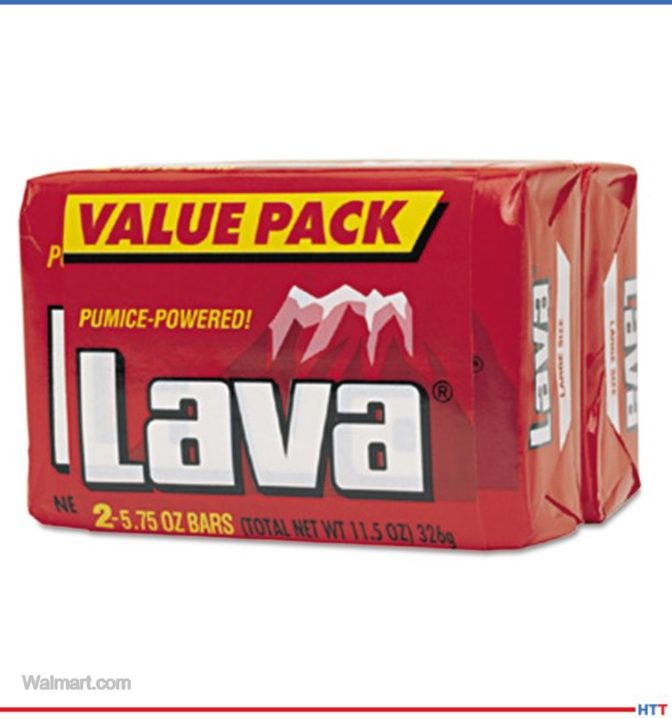
"The idea being the fact that soap is your friend, soap is not your enemy. Get out there, do good and do work with your hands, contribute to your science and you will be a success."

DH:  Yes. It’s a very, very good question. The thing that comes to mind first, and this is perhaps difficult for younger people to understand, but you have to share your knowledge openly and without reservation. Now, I’m not saying give away company secrets. The things you learn in the industry, you must share because you strengthen the industry by doing that, you give the industry a competitive advantage by doing that and you’re helping, in your own small way, to educate the next generation of heat treaters. Because, at the end of your career, I think what you’re going to find is that what is important in our industry is to lead not to follow.  In other words, heat treating has to be the most cost-competitive industry or we will cease to exist.

An example I use, and everyone under 40 won’t understand this but I beg you to try:  When I was a young man, there was something in this world called the slide rule. We could do marvelous engineering calculations with nothing more than a slide rule. Well, the slide rule is a thing of the past. It’s a device that works perfectly fine, but who would ever use it over a calculator or a computer? It’s a product that’s obsoleted itself. We cannot let our industry obsolete itself.

Another piece of advice is:  Don’t worry what people say, what they do or what they think. Do good, contribute to your science and grow the industry. I guarantee you that at the end of your careers, you will feel like you’ve never really worked a day in your life.

The last piece of advice would be to emphasize: Be a hands-on engineer. Be a hands-on person. This is from my father, of course: Look at the practical side of things, the practical skills, the common sense that it takes to do our jobs. And don’t be afraid to go out there and get your hands dirty — soap was invented specifically for that purpose.

If I can indulge and give one last story (I’m all about telling stories with morals). I always have a bar of Lava soap in the bathroom so when I come in from working outside, I can wash my hands. I was out with the grandson one day a few years ago and we went into the house, and we went in the bathroom to wash our hands, and he took one look at that Lava soap, and he said, “Boy, does that taste bad.” And I’m thinking how would he know what Lava soap tastes like if his father hadn’t washed his mouth out with it? The idea being the fact that soap is your friend, soap is not your enemy. Get out there, do good and do work with your hands, contribute to your science and you will be a success.

DG:  Thanks, Dan, so much. I appreciate the time you’ve invested, not just with us here today, but for the 50 some years you’ve put into the industry. It’s been a great pleasure knowing you and working with you. We look forward to doing more with you here at Heat Treat Today, but thanks for all the very, very positive contributions you’ve made to the industry. We appreciate your time.

DH:  Doug, it’s my pleasure and thank you for doing this. I think it’s going to be a tremendous service to the industry.

DG:  Thank you.

For more information:

www.heat-treat-doctor.com

dherring@heat-treat-doctor.com

Doug Glenn <br> Publisher <br> Heat Treat Today

Doug Glenn
Publisher
Heat Treat Today


To find other Heat Treat Radio episodes, go to www.heattreattoday.com/radio and look in the list of Heat Treat Radio episodes listed.


Find heat treating products and services when you search on Heat Treat Buyers Guide.com



Heat Treat Legend #71: Dan Herring, The Heat Treat Doctor® Read More »
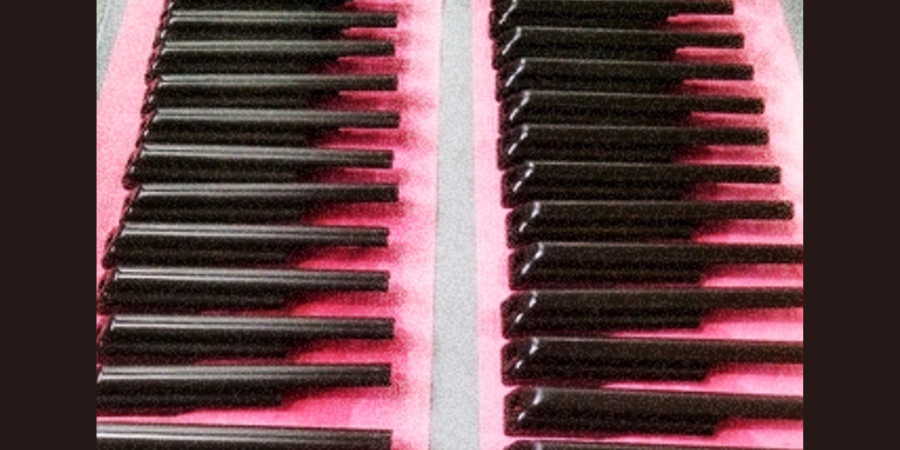
19th Century Guns vs. 21st Century Corrosion Resistance

Source: Advanced Heat Treat Corp.

Let's talk about guns.

To create a durable and corrosion resistant barrel, guns in the 19th century were made with blackening, a process related to heat treat. This application also increased the general look, reduced light reflection, and increased wear resistance in general.

This best of the web will cover general blackening of ferrous metals and summarize key points about nitriding and nitrocarburizing with blackening.

An excerpt:

"There are three types of blackening in common use: Caustic Black Oxidizing, Room Temperature Blackening and Low-temperature Black Oxide."

Read more at "Decorative and Technical Aspects of Ferrous Metals Blackening"


Find heat treating products and services when you search on Heat Treat Buyers Guide.com


19th Century Guns vs. 21st Century Corrosion Resistance Read More »

Vacuum Gas Cooling: Pressure vs. Velocity, Part 1 of 2

OCThere is an age-old adage that exists in the heat treating world. That supposition states that “the smaller the vacuum furnace, the faster it will quench.” Is this adage true? Explore Solar Atmospheres’ journey as they designed an experiment to discover if pressure or velocity most affects cooling performance.

This Technical Tuesday was written by Robert Hill, FASM, president, and Gregory Scheuring, plant metallurgist, both from Solar Atmospheres. The article originally appeared in Heat Treat Today’s March 2022 Aerospace Heat Treating print edition.


Introduction

Our study compared the cooling rates of two distinctly sized High Pressure Gas Quenching (HPGQ) vacuum furnaces — a large 10-bar vacuum furnace equipped with a 600 HP blower motor versus a smaller 10-bar vacuum furnace equipped with a 300 HP motor. Both furnaces, one with a 110 cubic feet hot zone, the other with a 40 cubic feet hot zone, were exclusively engineered and manufactured by Solar Manufacturing located in Sellersville, PA.

History

High Pressure Gas Quenching in the heat treatment of metals has made tremendous strides over recent years. Varying gas pressures within the chamber have been shown to be more governable than their oil and water quenching counterparts. The number one benefit of gas cooling versus liquid cooling remains the dimensional stability of the component being heat treated. In addition, using gas as a quench media dramatically mitigates the risk of crack initiation in a component. This is primarily due to the temperature differentials during cooling. Gas quenching cools strictly by convection. However, the three distinct phases of liquid quenching (vapor, vapor transport, and convection) impart undue stress into the part causing more distortion (Figure 1).

Figure 1. Three phases of liquid quenchants
Source: Solar Atmospheres

There are multiple variables involved with optimizing gas cooling. These include the furnace design, blower designs, heat exchanger efficiency, gas pressure, gas velocities, cooling water temperatures, the gas species used, and the surface area of the workpieces. Whenever these variables remain constant, the relative gas cooling performance of a vacuum furnace typically increases as the volume of the furnace size decreases.

The Furnace

Solar Manufacturing has built multiple high pressure gas quenching furnaces of varying sizes over the years ranging from 2 to 20-bar pressure. We have learned that vacuum furnaces, rated at 20-bar and above, became restrictive in both cost constraints and diminishing cooling improvements. Therefore, Solar Manufacturing engineers began to study gas velocities to improve cooling rates. They determined increasing the blower fan from 300 HP to 600 HP, along with other gas flow improvements, would substantially increase metallurgical cooling rates. The technology was reviewed and determined to be sound. A 48” wide x 48” high x 96” deep HPGQ 10-bar furnace, equipped with this newest technology, was purchased by Solar Atmospheres of Western PA located in Hermitage, PA.

The Test

Image 3. Test load with thermocouple placement
Source: Solar Atmospheres

Once this new vacuum furnace was installed, a cooling test was immediately conducted. A heavy load would be quenched at 10-bar nitrogen in an existing HFL 50 sized furnace (36” x 36” x 48”). The same cycle was repeated in the newly designed vacuum furnace almost three times its size! (Images 1 and 2).

The load chosen for the experiment was 75 steel bars 3” OD x 17” OAL weighing 34 lbs each. The basket and grid system supporting the load weighed 510 lbs. The total weight of the entire load was 3060 lbs. Both test runs were identically thermocoupled at the four corners and in the center of the load. All five thermocouples were deeply inserted (6" deep) into ¼" holes at the end of the bars (Image 3). Each load also contained two 1" OD x 6" OAL metallographic test specimens of H13 hot working tool steel. These specimens were placed near the center thermocouple to ensure the “worst case” in terms of quench rate severity. All tests were heated to 1850°F for one hour and 10-bar nitrogen quenched.

Results

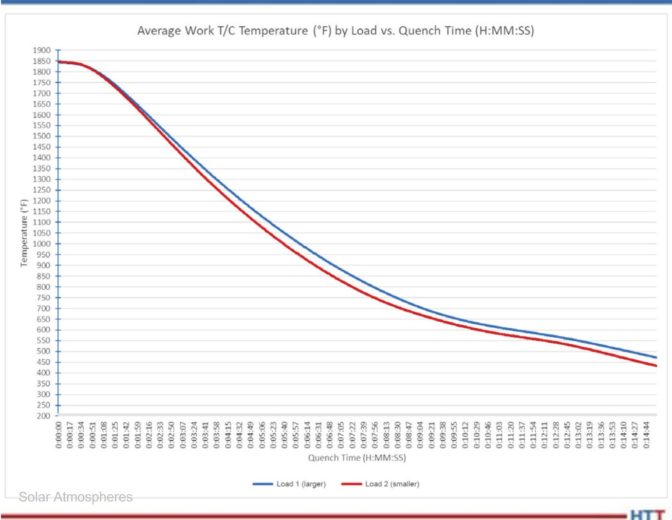
The comparative cooling curves between both HPGQ vacuum furnaces are shown in Chart 1. Table 1 reveals that in the critical span of 1850°F to 1250°F for H13 tool steel, the cooling rate in the larger furnace with more horsepower nearly matched the cooling rate of the furnace three times smaller in size.

Table 1. Critical cooling rates for H13 (1850°F –1250°F)
Source: Solar Atmospheres

Chart 1. Average quench rate for five thermocouples
Source: Solar Atmospheres

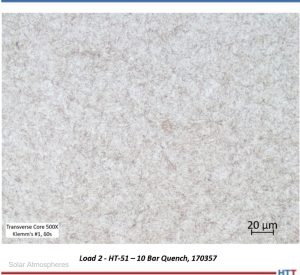
Micrographs of the H13 test specimens processed in each load were prepared (Images 4 and 5). The microstructure of each test specimen is characterized by a predominantly tempered martensitic microstructure with fine, undissolved carbides. The consistency of the microstructure across both trial loads further demonstrates that while the larger furnace utilized the higher horsepower, both resulted in a critical cooling rate sufficient to develop a fully martensitic microstructure.


Conclusions

These tests prove that the greatest impact on the cooling performance in a vacuum furnace is to increase the gas velocity within that chamber. This was achieved primarily by increasing the horsepower of the blower fan. By doing this, the ultimate cost to the customer is significantly less than manufacturing a higher pressure coded vessel. This newly designed vacuum furnace has proven to be a game changer.

Part II of this article will discuss real life case studies and how both Solar and Solar’s customers have mutually benefited from this newest technology.

About the Author:

Source: Solar
Robert (Bob) Hill, FASM
President
Solar Atmospheres of Western PA
Source: Solar Atmospheres

Robert Hill, FASM, president of Solar Atmospheres of Western PA, began his career with Solar Atmospheres in 1995 at the headquarters plant located in Souderton, Pennsylvania. In 2000, Mr. Hill was assigned the responsibility of starting Solar Atmospheres’ second plant, Solar Atmospheres of Western PA, in Hermitage, Pennsylvania, where he has specialized in the development of large vacuum furnace technology and titanium processing capabilities. Additionally, he was awarded the prestigious Titanium Achievement Award in 2009 by the International Titanium Association.

For more information contact Robert at bob@solaratm.com


Find heat treating products and services when you search on Heat Treat Buyers Guide.com


Vacuum Gas Cooling: Pressure vs. Velocity, Part 1 of 2 Read More »

Aerospace Industry Chooses Vacuum Heat Treat Solution

HTD Size-PR LogoA Chinese company has ordered a horizontal vacuum furnace which will help in producing highly specialized cast parts used in the aerospace industry. Delivery of the furnace is scheduled for June 2022.

The Vector® horizontal vacuum furnace with a graphite chamber and a gas quenching system comes from SECO/WARWICK. This type of furnace from the international manufacturer comes with a graphite hot zone and can be used for most standard hardening, tempering, annealing, solution heat treating, brazing, and sintering.

The furnace will be installed in a facility that specializes in the production of high-temperature alloys used in the aviation, shipbuilding, and power industries, offering a wide range of products, including but not limited to, bars, wires, bands, pipes, and specialized castings.


Find vacuum furnaces for brazing when you search the Heat Treat Buyers Guide.com


Aerospace Industry Chooses Vacuum Heat Treat Solution Read More »

12 Quick Heat Treat News Chatter Items to Keep You Current

Heat Treat Today offers News Chatter, a feature highlighting representative moves, transactions, and kudos from around the industry. Enjoy these 12 news bites that will help you stay up to date on all things heat treat.

Equipment Chatter

  1. National Test Pty Ltd. (NDT) has been contracted by AusGroup Ltd. to provide NDT and heat treatment services on 58 stainless steel and carbon steel tanks for the covalent lithium refinery in Kwinana in Australia.
  2. thyssenkrupp Electrical Steel supplied transformer specialist SGB-SMIT with CO2-reduced electrical steel for E.ON’s new digital stations.


Personnel/Company Chatter

  1. Braddock Metallurgical, Inc. is proud to announce the addition of a new operations manager at their Bridgewater facility. Jeff Asselta has over 15 years of experience working in the heat treating and metallurgical industry in various roles including quality and operations. They are excited to have Jeff join their team. They are also proud to announce Stanley Lopacinski as the new general manager in Bridgewater.
  2. Advanced Heat Treat Corp. announced the promotion of Kody Kottke to plant manager at its MidPort Blvd. location in Waterloo, Iowa.
  3. Bob Brock has transitioned to be the sales engineer at AFC-Holcroft. He will continue to serve the company as Modular Products.
  4. Hubbard-Hall has added Jason Potts as the product manager in their Technical Department. He will be a technical resource for customers.
  5. Friedr. Lohmann GmbH, Germany announced that Marco Möser is the new sales director of North America. Möser will be responsible for developing new business and supporting the sales team.
  6. Thomas Pfingstler of Atlas Pressed Metals in DuBois, PA has been appointed to be the president of the Center for Powder Metallurgy Technology, succeeding Arthur (Bud) Jones, Symmco, Inc.
  7. Douglass R. Brown, president of Inductoheat, to retire after 42 years in the induction heating industry. Doug’s contributions to the Inductotherm Group include 14 years as president/COO of Inductoheat, 2 years as president of Alpha 1, and 15 years as technology manager of Group Forging.


Kudos Chatter

  1. In 2021, SECO/WARWICK received six awards: “Reliable Employer of the Year,” “Innovation Leader,” “Business Leader,” an international award for the Best Economic Expansion on the North-American Market as well as “Safety Laurel,” and the title “Employer — Creator of Safe Jobs.”
  2. Thomas Wingens of WINGENS LLC – International Industry Consultancy received ASM International’s HTS Prime Contributor Recognition award for his paper presented at the 2021 Heat Treat Show.
  3. The Nitrex Heat Treating Services (HTS) facility in Franklin, Indiana, received the Nadcap accreditation for the following processes: heat treating for multiple alloy families, stress relieving, carburizing, nitriding, vacuum heat treating, hardness and metallography.


Heat Treat Today is pleased to join in the announcements of growth and achievement throughout the industry by highlighting them here on our News Chatter page. Please send any information you feel may be of interest to manufacturers with in-house heat treat departments especially in the aerospace, automotive, medical, and energy sectors to bethany@heattreattoday.com.


Find heat treating products and services when you search on Heat Treat Buyers Guide.com


12 Quick Heat Treat News Chatter Items to Keep You Current Read More »

Two Major Updates for International Events

Today, we look to our European information partner, heatprocessing, to get an update on how two huge heat treat tradeshows are gearing up: THERMPROCESS 2023 and wire and Tube 2022.


2023 Düsseldorf Update

"Till Schreiter, who contributes over 20 years of national and international experience from the electrical and metal industries to the trade fair with a symposium for thermoprocess technology, explained: 'For whoever wants to actively invest in a sustainable, future-oriented and prosperity-securing design of Europe, a visit to GIFA, METEC, THERMPROCESS and NEWCAST is an absolutely must. There is no other event in our sector that offers you this opportunity for personal exchange with the global experts and decision-makers.'"

Read More: "Dipl.-Ing. Till Schreiter elected as new President of THERMPROCESS"


2022 Summer wire and Tube Update

"[Significantly] better travel conditions for trade visitors from all over the world are given. After four years without their leading trade fairs, the professional world will finally meet again live and on site in Düsseldorf. Here they will exchange information about innovations from the wire, cable and tube industries."

Read More: "wire and Tube 2022 profit from declining pandemic situation"


Find heat treating products and services when you search on Heat Treat Buyers Guide.com


Two Major Updates for International Events Read More »

Time To Evacuate Atmospheric Pressure

Source: Ipsen Harold

Time to evacuate! When it comes to evacuating atmospheric pressure from vacuum furnace chambers, the addition of a diffusion pump can help attain a lower system pressure than the typical roughing pump and vacuum booster pump allow.

This best of the web article identifies the basics of vacuum furnace pumps and then explains how diffusion pumps in particular work and identifies a few considerations to think about to determine if you need this addition or not.

An excerpt:

"For the diffusion pump to function properly, the main and foreline valves must be open, allowing the furnace to operate in high vacuum. Fluid at the bottom of the pump is heated to boiling and forced up through the center of the jet assembly."

Read more at "Ask the Expert: How Does a Diffusion Pump Really Work?"


Find heat treating products and services when you search on Heat Treat Buyers Guide.com


Time To Evacuate Atmospheric Pressure Read More »

Keeping Up With Vacuum Furnaces: Balancing What You WANT With What You NEED

OCYou can’t always get what you want. With frequently changing specifications and a volatile economy, what heat treaters want is always evolving. But what they need changes, too. Steven Christopher of Super Systems, Inc. discusses how to balance what vacuum furnace operators NEED and what they WANT. Is the difference between those two things too great?

This article originally appeared in Heat Treat Today’s March 2022 Aerospace print edition.


Steven Christopher
West Coast Operations Manager
Super Systems, Inc.
Photo Credit: Super Systems, Inc.

I love metaphors and think of vacuum furnaces as automobiles. As an owner, the goal is to keep our cars on the road for 100,000+ miles — and why not the same for furnaces? Accomplishing this feat requires the same in both cases: (1) routine maintenance — literally changing oil and (2) addressing warnings before they become problems — such as check engine lights or vacuum leaks.

The similarities stop there, however, with a key difference in how each is upgraded. In the near future, if you want a self-driving vehicle you will have no choice but to turn in the keys of your 10-year-old sedan and buy a shiny new Tesla, opting for the autonomous driving upgrade.

But what about your vacuum furnace? As the industry releases all these new standards and specifications, do we also need a newer furnace? Or can we retrofit what we have? That answer is complicated because so much is influenced by what we WANT versus what we NEED.

Day-to-day production shapes what we want. We learn from both experiences and failures, shaping features we want to improve operations, customer experience, and reduce rejected work. Specifications and customers drive what we need. Most recently AMS2750F (and 2769C) have been revised and place a burden on operating aging equipment while maintaining compliance. Before these, NFPA86 was modified in 2019, improving furnace design and safety “best practices."

These requirements levy real costs in terms of both hardware investment and increased labor (additional quality employees). We are expected to perform additional labor with the same workforce; however, the reality is that a worsening domestic labor shortage often means we are doing more work with even fewer people. This article navigates this delicate balance, maximizing each investment dollar’s impact while reducing our reliance on labor.

What We Need

It becomes impossible to completely address such large specifications in a short article, so let me highlight a few important considerations from AMS2769C:

  • Section 3.2.3.2 requires decimal precision for thermocouples (AMS2750F)
  • Section 3.2.4.1.2 outlines leak-up rate requirements
  • Section 3.3.1 reviews partial pressure and dew point requirements
  • Section 3.5.2.1 addresses permissible outgassing
  • Section 3.5.3 covers load thermocouples

Perhaps the most talked about change is the requirement of thermocouples to record to a tenth of a degree. It is important to distinguish the difference between a temperature controller and recorder. Section 3.2.3.2 does not require a furnace to control with decimal precision, only record to it. However, best practice lends itself to controllers supporting this ability as well.

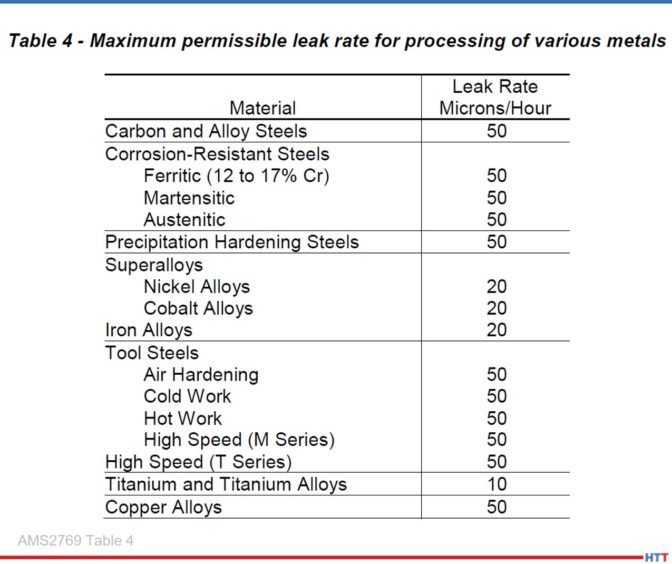
Figure 1. Maximum permissible leak rates
Photo Credit: AMS2769 Table 4

Exposure to oxygen at elevated temperatures is detrimental to part metallurgy, be it aesthetics or integrity. Leak-up rates are so important because they prove such exposure is eliminated (or significantly reduced). AMS2769C attempts to mitigate this exposure by standardizing the best practices for performing such tests. Leak-up rate tests are required weekly for (minimum) 15 minutes. Figure 1 identifies a maximum allowable leak-up rate based on the material being processed.

Historically this requires an operator to initiate a cycle, stop the evacuation (pumping), then document the beginning and ending vacuum levels by hand. While simple, this requires both time and attention, preventing any operator from performing other tasks.

AMS2769C proceeds by addressing outgassing, requiring ramp/soak controllers to either be placed on hold or to disable the heating elements if the vacuum level exceeds (1) the partial pressure target or (2) the diffusion pump operating range. Aging controllers require well-trained operators, constantly monitoring vacuum instrumentation and manually adjusting the controller. This introduces potential for operator error, again limiting their ability to perform other tasks.

Section 3.5.3 details placement and requirements for load thermocouples. Assuming load thermocouples are required, runs may be rejected should thermocouples fail below the minimum processing temperature. Disconnected control systems monitor load thermocouples using a recorder separate from the ramp/soak controller. This complicates the control system’s ability to alert operators to such failed conditions — the recorder not knowing which thermocouples are required.

AMS2769C progresses to cover partial pressure. Partial pressure has been automated for years with minimal changes to control mechanisms, though some have replaced solenoid valves with mass flow controllers (MFCs). System upgrades should strongly consider automatic gas type compensation and digital communications of vacuum levels.

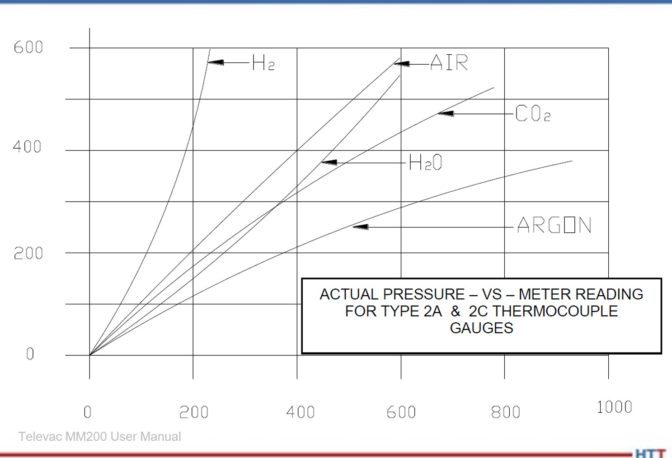
Thermocouple (or pirani) vacuum sensors estimate the heat emitted from a heating filament within the sensor. This measurement represents an exact vacuum level, though the gaseous media separating the fi lament from the measuring tip influences the reading (thermodynamics heat transfer). This phenomenon (represented in Figure 2) explains why nitrogen and argon result in very different vacuum estimates.

Figure 2. Gas compensation graph
Photo Credit: Televac MM200 User Manual

NOTE: Thermocouple gauges operate in vacuum ranges where enough gas molecules remain (e.g., in excess of 1 micron) to influence this reading; unlike cold cathode sensors which operate under complete vacuum, excluding them from such compensation.

As an example, consider a vacuum furnace operating under nitrogen partial pressure. The vacuum instrument correctly displays 200 microns (refer to the AIR curve). Now consider the same cycle, only the operator introduces argon. The display now incorrectly displays (and controls to) 200 microns; however, the furnace is truly operating closer to 100 microns (refer to the ARGON curve).

Figure 3. Dew point requirements
Photo Credit: AMS2769 Section 3.3.1.1

Historically vacuum signals have transmitted a 0-10vdc analog signal representing the vacuum level. As with all analog signals, error is introduced by both the accuracy of the instrument generating the signal as well the recorder interpreting it. This error is mitigated by routine calibrations — often aligned with temperature uniformity survey (TUS) schedules. Modern control systems replace such signals with vacuum instrumentation supporting digital communications, eliminating error in the process. As a bonus, the reduction in calibration points reduces time when performing calibrations. Such systems may even automatically compensate thermocouple sensors resolving the sensitivity of thermocouple sensors to multiple gas types.

AMS2769C references other specifications, namely AMS2750 and the Compressed Gas Association (CGA). CGA establishes minimum requirements ensuring inert gas quality. In addition to supplier certification, gas quality is proven by dew point. All gasses have a dew point, with outside air relatively high (e.g., +50°F) and inert gas very low (e.g., -100°F). Purchasing supplier certified gas results in a facilities bulk storage tank having a very low dew point, with any leaks in gas delivery system (pipe threads, fittings, etc.) resulting in a less negative dew point. The concept that dew point can only raise once exiting the storage tank illustrates the importance of sampling “as the gas enters the furnace” — measurements taken upstream fail to detect leaks downstream. The intensity of this increase directly correlates to the amount of air (oxygen) entering the gas supply, compromising the gas purity, which as previously discussed negatively impacts the parts being processed. Proving a dew point below -60°F proves the inert gas mostly free of oxygen. Measurements have long been a manual process; an operator samples gas using a portable sensor and records the findings in an entry log. Modern systems seamlessly integrate dedicated sensors continuously sampling gas quality which alert upon compromised gas.

What We Want

This article’s first draft opened this section listing a handful of features — that was November. Fast forward three calendar months (what feels like an entire year), it is now January, and priorities have changed. Three months ago we wanted features, now we just want parts. The growing supply chain disruption is feeling less temporary and more permanent. This final draft opens with availability. Any upgrades should factor both (1) component lead-time and (2) their flexibility. Lead-time should focus not just on immediate project delivery, but the long-term availability of the product. Is it in its infancy? Or near the end of its life? What is the current lead-time and strategies to maintain inventory? Flexibility should focus on limitations of the product. Is it limited to specific applications? Or can it be used in other equipment? Flexibility paired with planning results in standardization. Keeping with the automobile theme, standardization is what made Henry Ford’s Model T so special. Standardization reduces on-site spare parts, as the same component can be installed in many locations. Standardization should be a primary focus when purchasing programmable logic controllers (PLCs), vacuum instruments, and temperature controllers.

As if the supply chain worries are not enough, the U.S. faces a labor shortage projected to worsen over the next decade. This highlights another late addition to this article, stressing the importance that any upgrade considers the availability of the most important resource: people. New furnaces and upgrades alike (like it or not) develop a co-dependence between multiple parties. This relationship may be internal, between operations and engineering; or external, between an end user and a supplier. No matter the specific situation, all parties should discuss availability and access to information. Failure to discuss this early on is often exacerbated, especially when upgrades are performed by a supplier who is considered (1) unresponsive or slow to respond and (2) unwilling to share information. Purchase orders should document expectations in terms of deliverables (PLC logic, schematics, etc.) and support.

Figure 4. Projected US labor deficit
Photo Credit: US Department of Labor

This third paragraph was that ill-fated November draft’s first. Today’s buzzword, the Internet of Things (IoT ). As we are well on our way to the quarter mark of the 21st century, we have all become accustomed to a lot of quickly accessible information. Why should vacuum furnace recorders not meet the same lofty expectations? Control system upgrades should be capable of recording information and displaying it in an easily retrievable format. Recorded data should expand beyond the required process data into the status of the furnace itself (valve position, state of limit/thermal/vacuum switches, motor status, etc.). Such data can be evaluated postmortem to troubleshoot a failed production run’s root cause of the failure. Advanced systems should be able to notify personnel of issues via email or text messaging.

Often the information gathered above is passed into a Supervisory Control and Data Acquisition (SCADA) System. This system must meet industry compliance for data integrity and security. As every new software seems to have its own system, daily operation requires most to juggle many of these systems, often sharing common data. A SCADA System should be designed to operate in this unknown environment and be capable of sharing data between itself and Enterprise Resource Planning (ERP) and other supervisory systems. The first step here is to build upon common platforms; and today the most widely accepted platform is Microsoft SQL Server. SCADA Systems should be able to “offer up” data using any number of industry standard protocols (Modbus, API, OPC, etc.).

The biggest invisible threat to our industry is internet security. For those fortunate enough to have avoided a cybersecurity attack, IT’s work seems a burden. For those unfortunate to have experienced such an event, IT’s work is beloved. This rapidly changing frontier is our reality and programs like Cybersecurity Maturity Model Certification (CMMC) become a necessary (even required) precaution. Hardware for upgrades should be vetted for compliance with these evolving precautions.

Thus far this article has focused on people, hardware, and features. I now turn the focus to the vacuum furnace itself. Furnaces routinely struggle with passing TUS at both lower (<1000°F) and elevated (>2000°F) temperatures. The issue itself varies between graphite and molybdenum hot zones but the root cause remains the same: inflexibility with rheostats to adjust across a wide temperature range or the furnace’s incapability of reaching elevated temperatures. Users manually adjust the applied power to each zone in attempt to minimize the difference between the coldest and hottest TUS thermocouples. Rheostats force the user to settle for a configuration “just good enough” for all temperatures but “not perfect for any.” Modern systems replace rheostats with individual silicon controlled rectifiers (SCRs) driving each variable reactance transformer (VRT), a feature commonly called digital trim. All furnaces are candidates for digital trim, though older VRT packages using slide wire (or “corn cob”) resistors may require the addition of direct current (DC) rectifiers in addition to SCRs. The benefit of digital trim is these settings can automatically adjust with temperature allowing for the ideal configuration at every temperature.

How Do We Get There?

Resurrecting the automobile analogy which opened this article, have you ever wondered why so many people love Jeep Wranglers (and I realize Jeep could easily have been Harley Davidson or a new home purchase)? The reason is not what they are, rather what they can become. Owners see upgrades and features in their mind long before anything is modified. The key concept here is customization. This same vision applies to vacuum furnaces, any upgrades should consider robust and powerful control systems, flexible enough to evolve with the industry.

PLCs and process instrumentation should always be sourced with room to grow. Modular designed platforms easily expand to integrate new hardware. Ask suppliers how their hardware handles additional inputs, outputs, and sensors. Instrumentation should be integration-friendly and be capable of monitoring the entire vacuum ecosystem — considering the temperature, load thermocouples, and vacuum and gas control systems. Ideally, instrumentation will communicate with each other, passing relevant information between each while simultaneously eliminating calibration points.

Control systems should be sourced with an Evolution Plan in place; compliant solutions today in no way assure compliance tomorrow. Suppliers should be asked their plan for AMS2750G, H, and I. Doing so positions you to make large investments once, then grow hand-in-hand with the industry rather than fight it every time it changes.

Summary: Have a Plan

Modern controllers consolidate a furnace’s self-contained subsystems (vacuum, load thermocouples, valve control, etc.) into a singular control system. This provides the transparency necessary for the controller to alert operators or place itself on hold when necessary. The outcome is that operators require less time monitoring the subtleties of production, meaning they focus their time on more urgent tasks. A happy byproduct becomes the natural progression of data (the recorded values from all these subsystems) into information (meaningful, document values presentable to customers, reviewable by auditors, or referenced for troubleshooting).

I was once told to either open or conclude an article with a poignant quote, so let me offer this advice: When considering upgrades for any furnace “have a plan or become part of someone else’s.” Early conversations between engineers/suppliers and quality/production ensures the delivered product shares everyone’s goals.

About the Author

Steven Christopher is a Purdue University engineering graduate and a 15-year veteran of the heat treating industry. He began his career in pharmaceutical maintenance before joining a commercial heat treat facility focusing on the automotive and aerospace industries. He now manages Super Systems' West Coast operations supporting all types of industries west of the Rocky Mountains.

For more information, contact Steven at schristopher@supersystems.com


Find heat treating products and services when you search on Heat Treat Buyers Guide.com


Keeping Up With Vacuum Furnaces: Balancing What You WANT With What You NEED Read More »

The “Known – Unknown”: Preparing Your Facility for Unpredictable World Events

op-edThe “Known – Unknown,” the “Undiscovered Country,” the “Movement from cocksure ignorance to thoughtful uncertainty.” It doesn’t matter if you get your catch phrase from Donald Rumsfeld, Star-Trek, or that plaque your mother kept above the kitchen sink, the implication is the same: we really don’t know what the future holds. But, the Unknown of which I speak in this article is natural gas prices.


This column is a Combustion Corner feature written by John Clarke, technical director at Helios Electric Corporation, and appeared in Heat Treat Today’s March 2022 Aerospace print edition.

If you have suggestions for savings opportunities you’d like John to explore for future columns, please email Karen@heattreattoday.com.


John B. Clarke
Technical Director
Helios Electric Corporation
Source: Helios Electrical Corporation

Does “What happens in Eastern Europe stays in Eastern Europe” hold true? Unfortunately — no.

We have learned from recent and ongoing supply chain issues just how interconnected our economy and manufacturing sector is with the rest of the world. The standoff in Ukraine has the potential to impact the world energy markets for years to come, and I suspect this impact will be felt no matter what transpires. I am certainly no expert, but I have a sinking suspicion that our country offered some American methane molecules to Germany to stiffen their resolve to cancel the Nord Stream 2 pipeline. If the EU works to reduce their dependency on Russian natural gas, a significant portion of worldwide exports are removed from the supply side of the equation. From a practical standpoint, these shifts in supply will take some years to achieve, but we have seen a new realization on the part of business and governmental leaders about the importance of robust and reliable supplies of commodities, and manufactured goods and manufacturing capacity. So, less natural gas supply with rising demand equates to higher prices. And as we have discussed previously, liquefied natural gas transportation from the U.S. to the rest of the world is connecting our natural gas market with the world market — and our natural gas price will be affected by consumption and production factors worldwide, just as the price we pay for petroleum oil today is determined in New York, London, and Riyadh — following the consumption patterns in Beijing, Sydney, and Tokyo.

Ok — let’s get back to what we can do in our own facilities to insulate ourselves, to some degree, from unpredictable world events.

Recuperation, or preheating combustion air using the waste heat exiting the furnace or oven is a time proven method to reduce fuel gas consumption. Before we quantify the effect of preheating air, we need to briefly discuss what affects this heated air has on the combustion process. Higher combustion air temperatures are associated with the following:

  1. Peak flame temperatures are increased. As less energy is used to heat the incoming air, the energy in the natural gas can raise the products of combustion (CO2, H2O and N2) to a higher temperature than would be achieved without combustion air preheating. This can be either beneficial or problematic for a specific application. If the work being heated can accept increased radiation from these higher temperatures — heating rates are improved and throughput increased, but these higher temperatures may reduce the life of furnace components, or, in extreme cases, lead to a catastrophic failure.
  2. Flame speeds are increased, so the combustion process concludes in less space. Again, this is a double-edged sword, benefiting some and leading to a loss on temperature uniformity in others.
  3. Total products of combustion required for any quantity of heat input is reduced. Mass flow is especially important in systems where the operating temperature is below approximately 1200°F. If the energy saved leads to a loss in temperature uniformity, it may be a Pyrrhic victory.
  4. NOx formation is increased. Burner technology has come a long way in recent years to allow for systems to use these higher temperatures without greatly increasing NOx emissions, but the rule of thumb is that by increasing the combustion air temperature from 70°F to 800°F, we basically double NOx formation.

Each of these drawbacks, other than NOx formation, may be a plus rather than a minus for any application. Float glass furnaces (plate glass used in windows) and ingot reheat furnaces are examples of applications where recuperation was applied a century or so ago, at a time where fuel costs where not much of a factor. In both cases, the increased flame temperatures accelerated the heat transfer to either the glass or the steel, increasing production. These applications required furnace temperatures where combustion without preheating would have been impractical — as most of the energy would have been lost in the flues, and very little heat would be available to do any useful work.

What questions should I ask? How much can I save? What is my project’s estimated payback? All are critical questions. To start with, can your existing furnace accept these higher flame temperatures, and can you capture the heat and apply a cost-effective heat exchanger? An example would be a radiant tube furnace. Applying recuperation may require an upgrade in the alloy used in the burner and radiant tube. In direct fired applications, will my uniformity suffer? In general, this is a greater concern at temperatures below 1600°F. As the operating temperatures increase, we can generally expect better uniformity. (I can hear the furnace and burner experts reading this cry “foul,” and they are right, it is not wise to rely on my generalizations — always consult an expert about your specific application.)

How much will it cost? With recuperation, it is best to take advantage of an experienced person’s mistakes, rather than making them on your own. Consult a qualified contractor, OEM, or consultant to help with the application and costs.

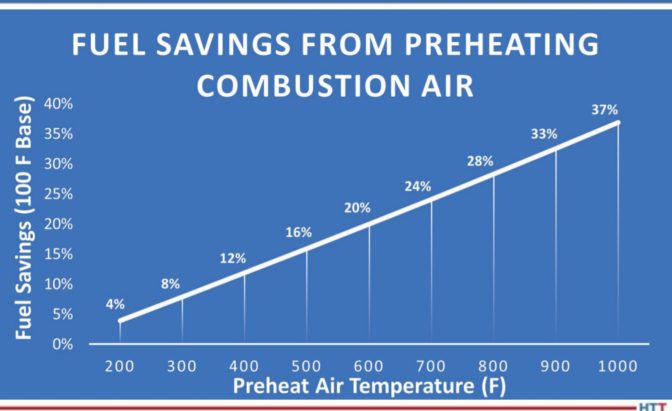
How much can be saved? To answer that question, I provide the above graph. It is not the end all be all but will provide a rough estimate of potential savings. It is for an application with an exhaust temperature of 1600°F operating with 15% excess air.

As we can see, in this application, if we apply recuperation to preheat the air to 800°F, we will save 28% of the natural gas we would otherwise consume.

Before investing your money, an individual analysis of each application is required. This article’s purpose is simply to motivate the reader to invest the time necessary to properly determine, as I mentioned last month, if they have “uncashed checks” lying around their shop.

As always, please let me know if you have any questions.

About the Author:

John Clarke, with over 30 years in the heat processing area, is currently the technical director of Helios Corporation. John’s work includes system efficiency analysis, burner design as well as burner management systems. John was a former president of the Industrial Heating Equipment Association and vice president at Maxon Corporation.


Find heat treating products and services when you search on Heat Treat Buyers Guide.com


The “Known – Unknown”: Preparing Your Facility for Unpredictable World Events Read More »

Ukraine Crisis and the Heat Treat Industry

HTD Size-PR Logo

The tragedies of war are many. In today's post, we're looking at a very small slice of the consequences of the war in the Ukraine: How might this affect the heat treat industry? What should you prepare for? We've located four insights to reflect on this Friday.


Supply Chain Bottle Necks

"Representing 200 million tons of transit potential, Ukraine is one of the foremost—yet often overlooked—components of both the European and global supply chains. Therefore, any disruption in the region can have massive knock-on effects for countries throughout the world." With that in mind, three industry considerations are energy, resilience, and capacity. (Read more)

Businesses Are Interrupting Trade with Russia

Adding to the supply chain changes, you may find businesses you work with or even your own ceasing to do business with Russian companies in an effort to show solidarity with the Ukraine. In one case, "A group of 3D printer OEMs and other companies involved in additive manufacturing have released a statement in support of Ukraine and are calling for a quick end to Russia’s war in the country." (Read more)

Heightened Cybersecurity Preparedness 

It's hard to say whether cyber attacks are absolutely increased because of the conflict since there has long been a high rate of cyberattacking originating from Russia. However, cyberattacking is a known threat in modern war, and there have been increased email phishing attacks on specific targets. (Read more)

"We are seeing cybercriminals use Russia and Ukraine-centric social engineering efforts, like phishing emails, leveraging current events to solicit an emotional response to the war,” says Rosa Smothers, former CIA cyber threat analyst and technical intelligence officer, now at KnowBe4. 'In other words, people are less likely to think before they click.'" - Dennis Schima, "Does the War in Ukraine Increase the Risk of Russian Cyberattacks?"

Humanitarian Pressures

Whether near or far, we've been seeing fundraising efforts, medical support, and humanitarian aid being sent to the frontlines. Perhaps you've done business internationally and have contacts who need support, or, like SECO/WARWICK, have found a way to raise funds and send support: "With your help, we’ve sent humanitarian aid to the border and each day we support our Ukrainian colleagues."


Find heat treating products and services when you search on Heat Treat Buyers Guide.com


Ukraine Crisis and the Heat Treat Industry Read More »

Skip to content